Why Choose Turkey for Gastric Sleeve Surgery?
Patients choose Turkey for gastric sleeve surgery because they can access experienced bariatric surgeons, accredited private hospitals, and coordinated international patient services at a lower total cost than in the UK, the USA, and much of Western Europe. The destination alone does not guarantee quality. Your result depends on the individual surgeon, the hospital, and the treatment pathway you select.
Turkey has become one of the world's most visible destinations for medical tourism. Turkey bariatric surgery programs attract thousands of international patients each year, and laparoscopic sleeve gastrectomy sits at the center of this demand. Patients compare Turkey with the UK, the USA, and other European countries for five main reasons: surgeon expertise, hospital standards, affordability, treatment coordination, and long-term support. The decision factors form the core of this article.
What Makes Turkey a Popular Destination for Gastric Sleeve Surgery?
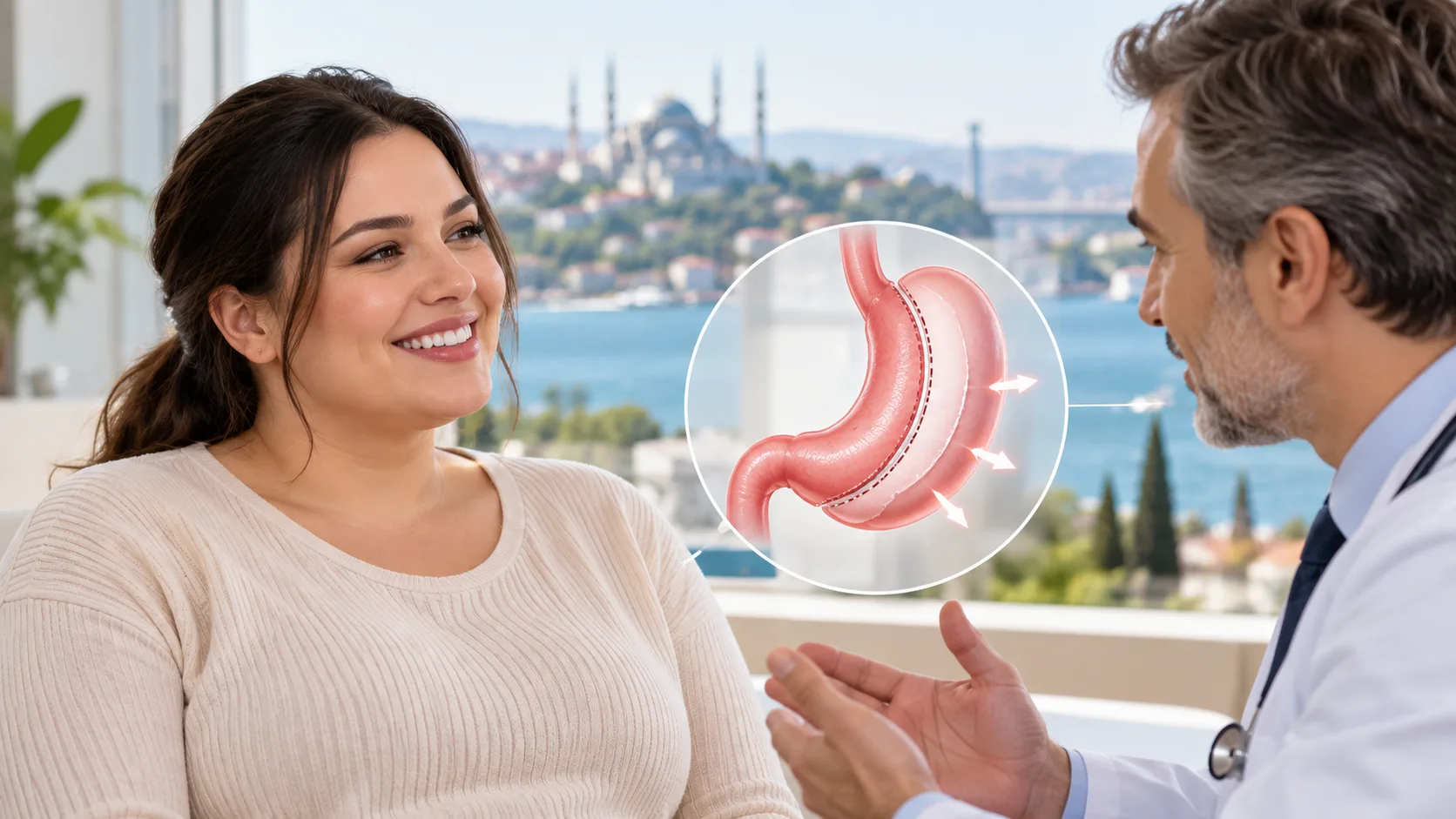
Turkey combines a large private hospital sector, high procedure volumes for weight-loss surgery, direct flight connections, and dedicated international patient departments, which together make gastric sleeve surgery in Turkey convenient and accessible for foreign patients.
Medical tourism in Turkey has grown steadily over the past two decades. Surgeons in the country perform a substantial share of the global bariatric operation volume. The IFSO Worldwide Survey placed Turkey among the leading countries for bariatric procedure numbers, and sleeve gastrectomy is now the most commonly performed bariatric operation worldwide (Angrisani et al. 2018). High annual volumes translate into surgical teams that perform sleeve gastrectomy routinely rather than occasionally.
Established private hospitals in Istanbul and other major cities run dedicated international patient departments. These departments coordinate online consultations, translation services, airport transfers, hotel accommodation, and hospital admission. For a patient traveling from London or Berlin, this coordinated structure reduces the logistical burden that otherwise comes with treatment abroad.
Flight connectivity strengthens this advantage. Istanbul sits within a three to four hour flight of most major European cities, and airlines operate frequent direct routes. A patient can complete an initial assessment online, fly in, undergo surgery, recover under supervision, and return home within a realistic two-week window.
These structural advantages matter because sleeve gastrectomy rewards experience. The more often a surgical team performs the operation, the more familiar it becomes with the anatomical variations and technical decisions that shape outcomes. This leads directly to the most important decision factor: the surgeon.
How Does Surgeon Experience Influence Gastric Sleeve Surgery Outcomes?
Surgeon experience with sleeve gastrectomy strongly influences complication rates, leak management, and long-term weight results, so patients should verify bariatric qualifications, procedure volume, and professional memberships before they book.
Bariatric surgery is a subspecialty. A general surgeon who occasionally performs weight-loss operations does not offer the same risk profile as a bariatric surgeon who performs sleeve gastrectomies every week. Research from large clinical registries shows that surgical technique and surgeon experience affect leak rates and reoperation rates in sleeve gastrectomy (Aurora et al. 2012).
Patients should evaluate three credentials. First, confirm that the surgeon holds recognized specialist training in bariatric and metabolic surgery. Second, ask about annual sleeve volume and personal complication rates. Third, check membership in the International Federation for the Surgery of Obesity and Metabolic Disorders (IFSO), which connects surgeons to international training standards and outcome reporting.
One caution matters here. High procedure volume does not automatically guarantee better outcomes. Volume correlates with experience, but team quality, hospital infrastructure, and patient selection also shape results (Hutter et al. 2011). Ask directly who will perform your operation. Some treatment packages advertise a senior surgeon but assign a junior team member to parts of the procedure.
A skilled surgeon also needs a strong hospital behind them. The next section explains what hospital standards protect you.
What Hospital Standards Should International Patients Look For?
Choose a full-service hospital with accredited operating rooms, anesthesiology coverage, intensive care capacity, diagnostic imaging, and emergency surgical backup, because these resources determine whether complications can be managed safely.
Gastric sleeve safety depends on infrastructure as much as on technique. Sleeve gastrectomy requires general anesthesia, staple-line integrity, and close postoperative monitoring for bleeding and leakage. A facility that cannot manage these events creates a serious risk for the patient.
Patients should verify Joint Commission International (JCI) accreditation for the specific hospital, not for the clinic brand. JCI accreditation audits patient safety protocols, infection prevention, medication management, and surgical standards against international benchmarks. Verification takes minutes through the accrediting body's public database.
A qualified hospital also fields a multidisciplinary team. Bariatric surgeons, anesthesiologists, dietitians, psychologists, and nursing staff should all participate in the pathway. Clinical practice guidelines from the American Society for Metabolic and Bariatric Surgery emphasize that perioperative nutritional and psychological support improves outcomes (Mechanick et al. 2013).
Hospital-based care differs fundamentally from outpatient or office-based facilities. Ask whether the hospital maintains intensive care beds, endoscopy services, interventional radiology, and 24-hour emergency surgical coverage. These resources decide whether a staple-line leak or a pulmonary embolism becomes a managed event or a medical emergency.
Hospital quality protects you during the operation and the early recovery. Affordability determines whether the pathway fits your budget. These are separate questions, and the next sections address each one.
How Much Can You Save by Having Gastric Sleeve Surgery in Turkey?

Gastric sleeve cost in Turkey typically runs far below private treatment in the UK, the USA, and Northern Europe, often by 50 to 70 percent for a comparable package, but patients must compare itemized quotations rather than advertised starting prices.
Several economic factors drive this difference. Operating costs, staffing salaries, insurance expenses, and currency exchange rates all sit lower in Turkey than in the UK or the USA. A private sleeve gastrectomy in the UK commonly exceeds £10,000, while self-pay prices in the USA frequently range from $15,000 to $25,000 or more. Equivalent packages in Turkey often quote between $3,500 and $6,500.
These figures describe packages, not surgical fees alone. A true comparison must include preoperative testing, anesthesia, hospital stay, medications, follow-up consultations, and complication management. The table below structures this comparison.
Cost component | UK private | USA self-pay | Turkey package |
Surgeon and anesthesia fees | High | Very high | Moderate |
Hospital stay (2 to 4 nights) | High | Very high | Included |
Preoperative tests | Often billed separately | Often billed separately | Usually included |
Medications and follow-up | Additional | Additional | Usually included |
Hotel and transfers | Not applicable | Not applicable | Usually included |
Typical total range | £9,000 to £13,000 | $15,000 to $25,000 | $3,500 to $6,500 |
The cheapest quotation rarely delivers the best value. An unusually low price may exclude leak testing, emergency coverage, or follow-up care. Compare itemized quotations line by line, and treat any package that hides exclusions as a warning sign.
Price clarity depends on knowing what the package includes, which is the next topic.
What Should a Gastric Sleeve Surgery Package Include?
A complete package covers surgical and anesthesia fees, preoperative consultations and tests, hospital accommodation with monitoring, medication, nutritional guidance, follow-up appointments, and clearly stated exclusions.
Verify each element in writing before you pay anything:
Surgical and anesthesia fees, with the named operating surgeon.
Preoperative blood tests, imaging, endoscopy where indicated, and specialist assessments.
Hospital accommodation with nursing monitoring, typically two to four nights.
Hotel accommodation and airport transfers where offered.
Discharge medications, dietary protocols, and scheduled follow-up consultations.
A written statement of excluded services, complication management terms, and additional charges.
This level of transparency separates professional providers from aggressive marketers. With pricing and inclusions clarified, the practical question becomes what the actual treatment journey looks like.
What Does the Gastric Sleeve Surgery Process in Turkey Involve?
The process moves from an online inquiry and medical record review to in-person consultation, preoperative testing, laparoscopic sleeve gastrectomy, a monitored hospital stay, and a supervised recovery period before you fly home.
The journey begins before you travel. You submit your medical history, weight records, and medication list for review. The surgical team assesses your candidacy and identifies tests you should complete.
On arrival, you attend an in-person consultation. The surgeon confirms your eligibility, and the team orders blood tests, anesthesia evaluation, and nutritional assessment. These steps follow established bariatric protocols (Mechanick et al. 2013).
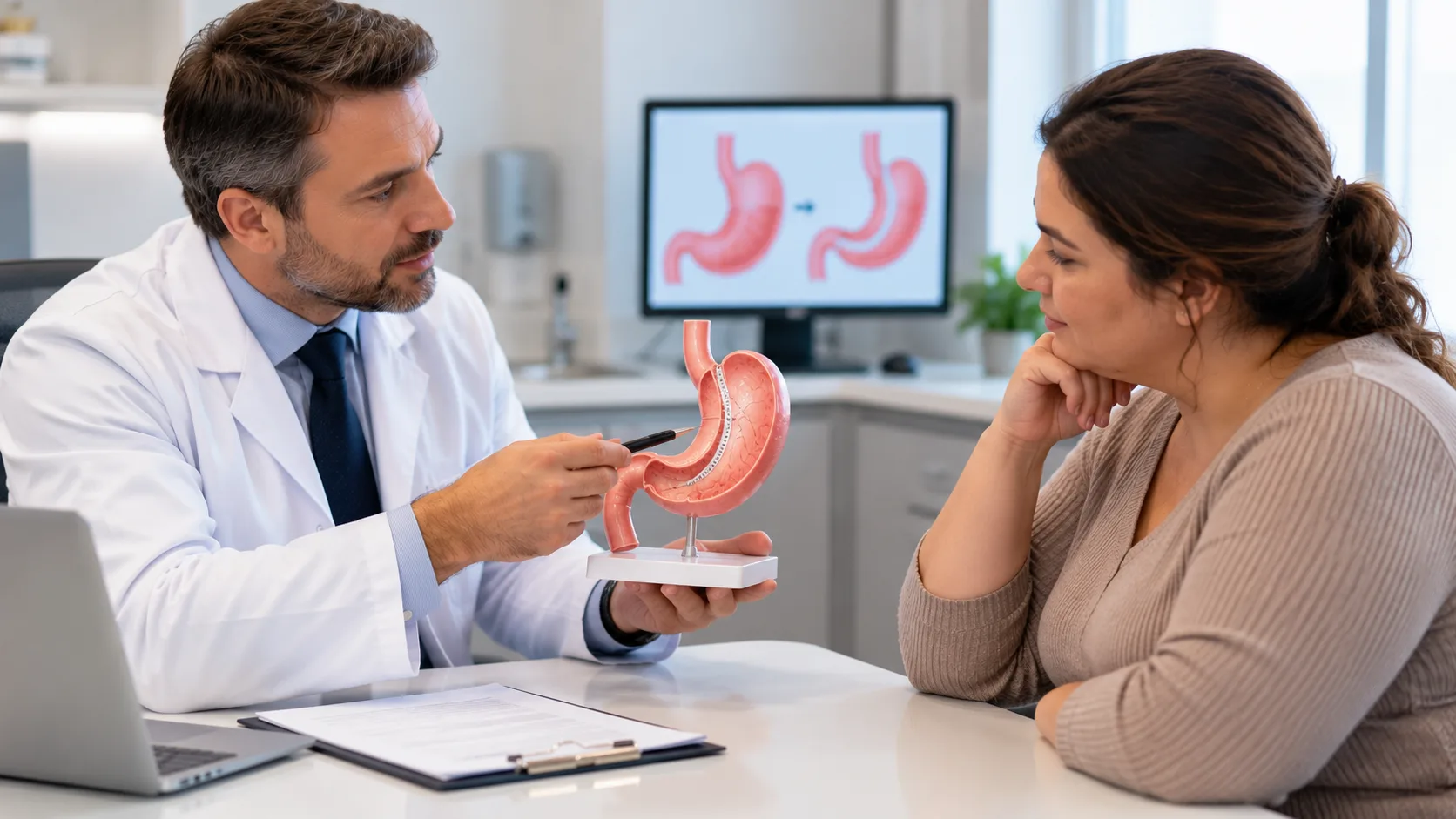
The operation itself uses laparoscopic sleeve gastrectomy. The surgeon removes approximately 70 to 80 percent of the stomach through small incisions and creates a narrow, banana-shaped sleeve. This restricts food intake and alters hunger hormones, including ghrelin.
Hospital staff monitor you for bleeding, leakage, and clotting. Early mobilization begins within hours of surgery. Staff assess your tolerance of liquid intake, and the surgical team evaluates you for discharge. The final plan always depends on the surgeon's assessment and your individual medical needs, not on a fixed itinerary.
Who Is Eligible for Gastric Sleeve Surgery in Turkey?
Eligibility follows international clinical guidelines based on body mass index (BMI), obesity-related conditions, previous weight-management attempts, and overall health, and it never depends on nationality or ability to pay.
Current international indications support surgery for patients with a BMI of 35 or greater regardless of comorbidities, and for patients with a BMI of 30 or greater who have type 2 diabetes (Eisenberg et al. 2022). Obesity-related conditions such as hypertension, obstructive sleep apnea, and dyslipidemia strengthen the case for surgical intervention.
The medical team also reviews contraindications. Previous abdominal surgery, certain medications, severe cardiopulmonary disease, and anesthesia risks all influence candidacy. Psychological assessment matters equally. Research shows that a substantial share of bariatric candidates present with mental health conditions that require evaluation before surgery (Dawes et al. 2016).
Patients must also demonstrate readiness for lasting lifestyle change. Surgery changes the stomach. The patient must change the behavior.
Is Gastric Sleeve Surgery in Turkey Safe?
Sleeve gastrectomy carries real risks in every country, including bleeding, infection, staple-line leakage, blood clots, and anesthesia complications, and patients should evaluate safety through complication rates, emergency protocols, and postoperative support rather than through accreditation or reputation alone.
No honest provider can guarantee a complication-free outcome. Peer-reviewed data consistently report leak rates after sleeve gastrectomy in the range of one to three percent, with variation by technique and case complexity (Aurora et al. 2012). Venous thromboembolism remains a measurable risk, and evidence supports individualized pharmacological prophylaxis for bariatric patients (Gould et al. 2012).
Safety rests on three pillars. Appropriate patient selection filters out poor candidates. Qualified surgical teams execute the operation with sound technique. Structured postoperative monitoring catches problems early. International registry data show that accredited, high-volume programs achieve better risk-adjusted outcomes (Hutter et al. 2011).
Ask specific questions. What is the surgeon's leak rate? How does the hospital manage an emergency at night? Who pays for unplanned intensive care? What arrangements exist if a problem emerges after you return home? Written answers protect you better than any brochure.
Why Is Aftercare Important When Having Surgery Abroad?
Gastric sleeve aftercare protects you from nutritional deficiencies, dehydration, dumping-related intolerance, and weight regain for years after surgery, so you need a written handover plan that connects the Turkish team to your local doctor.
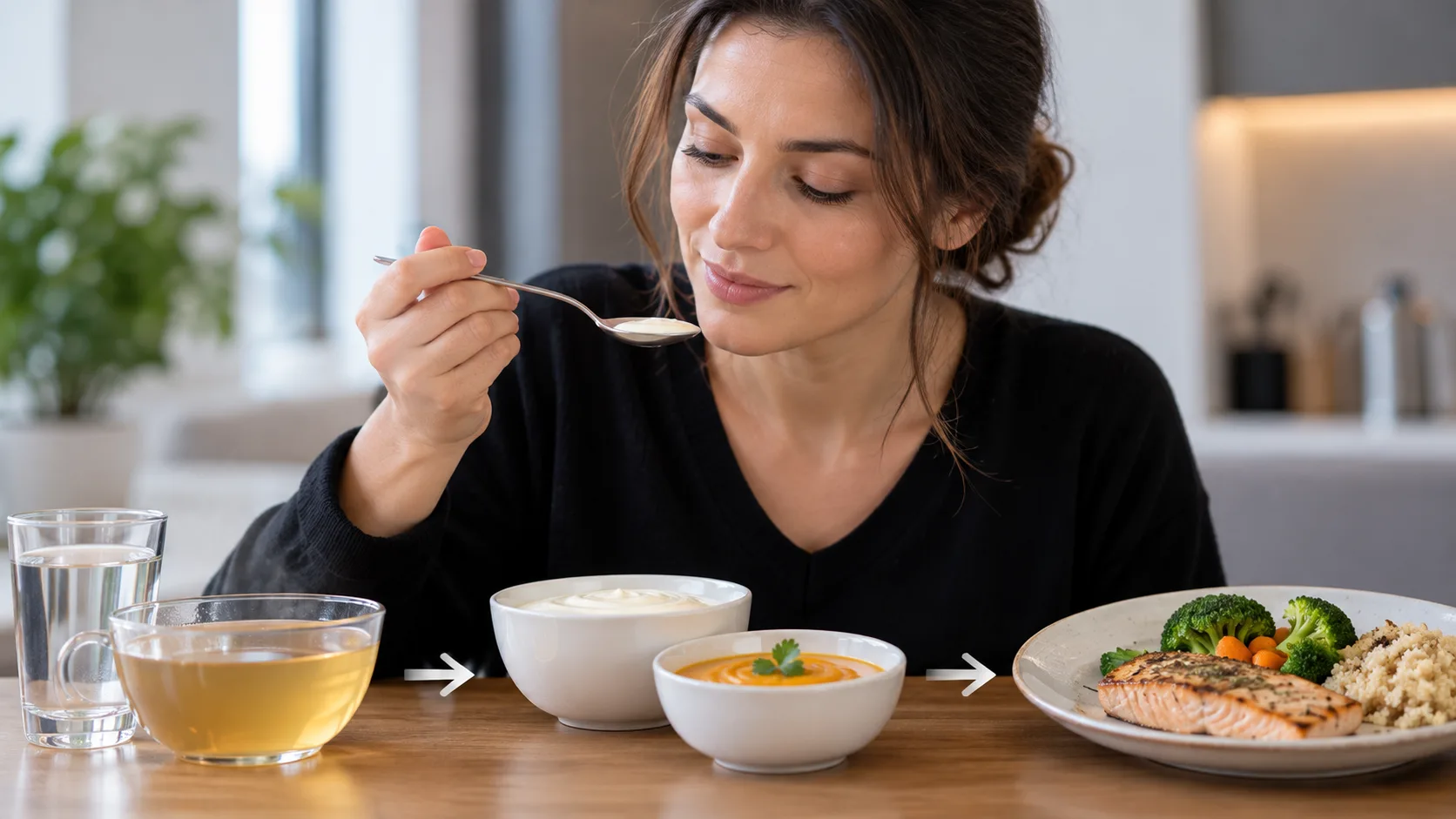
The stomach sleeve changes nutrient intake permanently. Postoperative dietary progression moves from clear liquids to soft foods and eventually to solid foods over several weeks, following clinical instructions. Protein intake, hydration habits, and vitamin and mineral supplementation require lifelong attention. Blood tests monitor iron, vitamin B12, vitamin D, folate, and other markers on a scheduled basis (Mechanick et al. 2013).
Follow-up with a bariatric dietitian and medical team identifies deficiencies and surgical complications before they become serious. Patients should arrange this continuity before they travel. Confirm how prescriptions, operative reports, and discharge summaries will reach your local physician. Establish who you contact if symptoms develop at home.
Research on bariatric populations shows that structured follow-up correlates with better weight outcomes (Schauer et al. 2012). Distance complicates follow-up, but it does not excuse its absence.
How Long Should You Stay in Turkey After Gastric Sleeve Surgery?
Most patients spend two to four nights in hospital and remain in Turkey for a total of seven to fourteen days, but your surgeon's medical clearance, not your flight booking, determines when you can safely fly.
The hospital stay and the total trip are different numbers. Discharge from the hospital signals readiness for hotel-based recovery, not readiness for air travel. Surgeons evaluate wound healing, hydration, pain control, and leak indicators before they release you to fly.
Postoperative air travel increases venous thromboembolism risk because of immobility and cabin pressure conditions. Movement, hydration, compression stockings, and individualized medical advice reduce this risk (Gould et al. 2012). Do not book non-refundable return flights before you receive medical clearance, and build flexibility into your itinerary for unexpected recovery needs.
What Results Can You Expect After Gastric Sleeve Surgery in Turkey?
Most patients lose a substantial portion of their excess body weight during the first twelve to twenty-four months, and many see improvement in type 2 diabetes, hypertension, and sleep apnea, but individual results vary with starting weight, habits, and follow-up.
Meta-analyses of bariatric surgery show that patients lose roughly 50 to 60 percent of excess weight on average after sleeve gastrectomy (Buchwald et al. 2004). Long-term data from the Swedish Obese Subjects study link bariatric surgery to reduced mortality and cardiovascular events (Sjöström et al. 2007). Randomized trial evidence demonstrates that surgery outperforms intensive medical therapy for type 2 diabetes control (Schauer et al. 2012).
These outcomes develop progressively over months, not weeks. Metabolic health, eating habits, physical activity, and follow-up adherence shape the trajectory. Surgery supports weight management but does not replace lifestyle change. Weight regain affects a subset of patients, which makes long-term surveillance essential (Karmali et al. 2013). No ethical provider will guarantee a specific kilogram figure or present before-and-after photographs as typical results.
How Does Turkey Compare With the UK, the USA, and Other European Countries?
Turkey offers lower cost and faster scheduling than private care in the UK or the USA, while the UK and the USA offer easier in-person follow-up and familiar healthcare systems, so the right choice depends on your clinical needs, budget, and support network.
The comparison should use the total treatment pathway rather than surgical fees alone. Turkey generally delivers shorter waiting times and inclusive packages. Domestic private care in the UK and the USA delivers geographic continuity. Public healthcare pathways in countries with national systems involve long waits and strict eligibility thresholds.
Scholars who study medical tourism note that patients weigh cost, quality signals, and continuity of care when they cross borders for treatment (Lunt and Mannion 2014). Travel adds communication challenges, insurance complications, and handover risks that local treatment avoids.
Factor | Turkey | UK / USA domestic |
Total cost | Low to moderate | High to very high |
Scheduling speed | Fast | Varies, often slow |
Surgeon volume | High | Varies widely |
In-person follow-up | Difficult after return home | Easy |
Continuity with local doctor | Requires planning | Natural |
Package convenience | High | Low |
No destination wins every category. Choose based on your complete situation.
How Can You Choose a Reliable Gastric Sleeve Provider in Turkey?
Verify the hospital's authorization, the surgeon's credentials, and the specific facility's accreditation, then demand a written plan with transparent pricing, emergency arrangements, and realistic information.
Work through this checklist:
Confirm the hospital's current operating license and the surgeon's professional registration.
Verify JCI accreditation for the exact hospital through the accreditor's public database.
Ask who performs the surgery and who manages postoperative care.
Request an itemized written quotation with defined inclusions and exclusions.
Review emergency protocols, complication arrangements, and post-departure follow-up terms.
Treat pressure to book quickly, guaranteed results, or surgery offered without proper medical assessment as warning signs.
Transparent providers welcome these questions. Reluctant providers reveal their priorities.
What Should You Prepare Before Traveling to Turkey for Gastric Sleeve Surgery?
Prepare your medical records, medication list, preoperative test results, travel documents, insurance coverage, time away from work, and a local medical support plan before you depart.
Gather previous test results, records of existing conditions, and a complete medication list. Complete recommended preoperative investigations at home where your surgeon requests them. Check entry requirements for Turkey and review your travel insurance policy for elective surgery coverage, which many standard policies exclude. Arrange an accompanying traveler if possible.
Plan time away from work for recovery and travel. Confirm how prescriptions, operative reports, and follow-up schedules will reach you after you return home. Agree on a monitoring plan with a local healthcare professional who can manage urgent issues and order nutritional blood tests.
What Are the Most Important Questions to Ask Before Booking Gastric Sleeve Surgery in Turkey?
Ask about the named surgeon, the hospital, emergency facilities, test inclusions, price coverage, safe flying time, complication arrangements, and follow-up duration, and require every answer in writing.
Who will perform the procedure, and what bariatric qualifications do they hold?
Which hospital will host the surgery, and what emergency facilities does it operate?
Which preoperative tests and specialist assessments does the price include?
Which expenses does the quotation exclude?
How long must I stay before I can safely fly home?
Who manages complications during the trip and after my return?
How long does follow-up continue, and who monitors my nutritional health?
What happens if I need additional treatment or an unplanned stay?
Is Choosing Turkey for Gastric Sleeve Surgery the Right Decision for You?
Turkey suits patients who value competitive pricing, established hospitals, high surgical volumes, and coordinated packages, provided they verify credentials, safety arrangements, and long-term follow-up rather than choosing on price alone.
The advantages of gastric sleeve surgery in Turkey are real. So are the responsibilities that travel adds. Your decision should rest on individual clinical suitability and the quality of the specific surgical team you select. Compare itemized treatment plans. Confirm aftercare in writing. Build a continuity bridge to your local doctor. Informed decision-making balances financial considerations with medical safety and continuity of care. Request an individualized medical assessment and an itemized quotation before any booking, and let clinical evaluation guide your timeline.
Frequently Asked Questions About Gastric Sleeve Surgery in Turkey
Why do international patients choose Turkey for gastric sleeve surgery?
Patients choose Turkey mainly for cost, hospital facilities, surgeon experience, and coordinated treatment packages. Direct flights and short travel distances from Europe strengthen the case.
Is gastric sleeve surgery cheaper in Turkey than in the UK?
Yes, Turkey packages typically cost 50 to 70 percent less than private UK treatment, but price differences reflect operating costs, staffing, and exchange rates, so compare equivalent itemized packages before you judge value.
How many days should I stay in Turkey after gastric sleeve surgery?
Plan for seven to fourteen days total, with two to four nights in hospital, and accept that medical clearance determines when flying becomes appropriate.
Does gastric sleeve surgery in Turkey include aftercare?
Aftercare varies by provider. Confirm dietary protocols, follow-up consultations, and complication arrangements in writing before you book.
Can I regain weight after gastric sleeve surgery?
Yes, weight regain can occur. Long-term dietary habits, physical activity, and medical follow-up protect results, and ongoing surveillance remains important for years (Karmali et al. 2013).
How can I verify a Turkish bariatric surgeon's credentials?
Check professional registration, specialist bariatric qualifications, annual sleeve volume, hospital affiliation, and IFSO membership through official sources.
What happens if I experience complications after returning home?
A written emergency plan, access to your local doctor, and direct communication with the treating surgical team determine how complications are managed after your return.
References
Angrisani, Luigi, et al. "IFSO Worldwide Survey 2016: Primary, Endoluminal, and Revisional Procedures." Obesity Surgery, vol. 28, no. 12, 2018, pp. 3782-3794.
Aurora, Analee R., et al. "Leaks after Sleeve Gastrectomy: A Review of the Evidence." Obesity Surgery, vol. 22, no. 10, 2012, pp. 1662-1671.
Buchwald, Henry, et al. "Bariatric Surgery: A Systematic Review and Meta-Analysis." JAMA, vol. 292, no. 14, 2004, pp. 1724-1737.
Dawes, Amy J., et al. "Mental Health Conditions Among Patients Seeking and Undergoing Bariatric Surgery: A Meta-Analysis." JAMA, vol. 315, no. 2, 2016, pp. 150-158.
Eisenberg, Dan, et al. "2022 American Society for Metabolic and Bariatric Surgery (ASMBS) and International Federation for the Surgery of Obesity and Metabolic Disorders (IFSO): Indications for Metabolic and Bariatric Surgery." Surgery for Obesity and Related Diseases, vol. 18, no. 12, 2022, pp. 1345-1356.
Gould, Michael K., et al. "Prevention of VTE in Nonorthopedic Surgical Patients: Antithrombotic Therapy and Prevention of Thrombosis, 9th ed." Chest, vol. 141, no. 2, 2012, pp. e227S-e277S.
Hutter, Matthew M., et al. "First Report from the American College of Surgeons Bariatric Surgery Center Network: Laparoscopic Sleeve Gastrectomy Has Morbidity and Effectiveness Positioned Between the Band and the Bypass." Annals of Surgery, vol. 254, no. 3, 2011, pp. 410-422.
Karmali, Shahzeer, et al. "Weight Recidivism Post-Bariatric Surgery: A Systematic Review." Obesity Surgery, vol. 23, no. 11, 2013, pp. 1922-1933.
Lunt, Neil, and Russell Mannion. "Patient Mobility in the Global Marketplace: A Multidisciplinary Perspective." Globalization and Health, vol. 10, 2014, article 73.
Mechanick, Jeffrey I., et al. "Clinical Practice Guidelines for the Perioperative Nutritional, Metabolic, and Nonsurgical Support of the Bariatric Surgery Patient." Obesity, vol. 21, suppl. 1, 2013, pp. S1-S27.
Schauer, Philip R., et al. "Bariatric Surgery versus Intensive Medical Therapy for Diabetes." New England Journal of Medicine, vol. 366, no. 17, 2012, pp. 1567-1576.
Sjöström, Lars, et al. "Effects of Bariatric Surgery on Mortality in Swedish Obese Subjects." New England Journal of Medicine, vol. 357, no. 8, 2007, pp. 741-752.