What Can You Eat After Gastric Sleeve Surgery?
You can eat almost every food group after gastric sleeve surgery, but you must eat them in a strict sequence, in much smaller portions, and in softer textures for the first few weeks. Your stomach holds only a small fraction of its former volume after laparoscopic sleeve gastrectomy (LSG), so the foods that protect your recovery are lean protein, cooked vegetables, soft fruit, and controlled portions of whole-grain carbohydrates (Mechanick et al. 2020). This guide explains the gastric sleeve diet stage by stage, backed by surgical nutrition research rather than generic diet advice.
How Does Eating Change After Gastric Sleeve Surgery?
Sleeve gastrectomy removes roughly 75–80% of the stomach, including most of the fundus. Your stomach becomes a narrow tube, hunger-hormone production drops, and your tolerance for large, dry, or fatty meals falls sharply.
A sleeve gastrectomy reduces the stomach to a thin vertical sleeve. The operation also removes most of the ghrelin-producing tissue, so many patients feel less hunger within weeks (Rosenthal et al. 2012). This anatomical change explains why food choices matter so much during recovery. A dense protein food can pass comfortably through the sleeve, while dry bread or a fizzy drink can stretch the new stomach, cause pain, or trigger vomiting.
Individual diet instructions differ between patients because surgeons adjust timelines based on staple-line healing, reflux history, diabetes control, and prior eating behavior. You should treat your bariatric team’s written protocol as the primary rule, because team protocols consistently outperform generalized meal plans in nutritional outcomes (O’Kane et al. 2020). What stays constant across nearly all programs is the direction of progress: liquids first, then purees, then soft solids, then regular textures.
What Is the Gastric Sleeve Diet Timeline?
Most patients move through four phases, clear liquids, full liquids, pureed foods, and soft foods, before returning to regular textures at roughly eight to twelve weeks. Exact dates vary by surgeon.
The table below shows the standard bariatric diet progression. Treat the timing as a range, not a schedule.
Stage | Typical window | Texture | Primary goal |
Clear liquids | Days 1–2 | Water, broth, diluted juice | Prevent dehydration |
Full liquids | Days 3–14 | Protein shakes, strained soup, milk | Protein + hydration |
Pureed | Weeks 2–4 | Smooth, spoonable, no lumps | Reintroduce protein-rich solids |
Soft foods | Weeks 4–8 | Soft, minced, easily mashed | Expand food variety |
Regular foods | Week 8 onward | Normal textures in small portions | Nutrient-dense maintenance diet |
What Can You Have During the Liquid Phase?
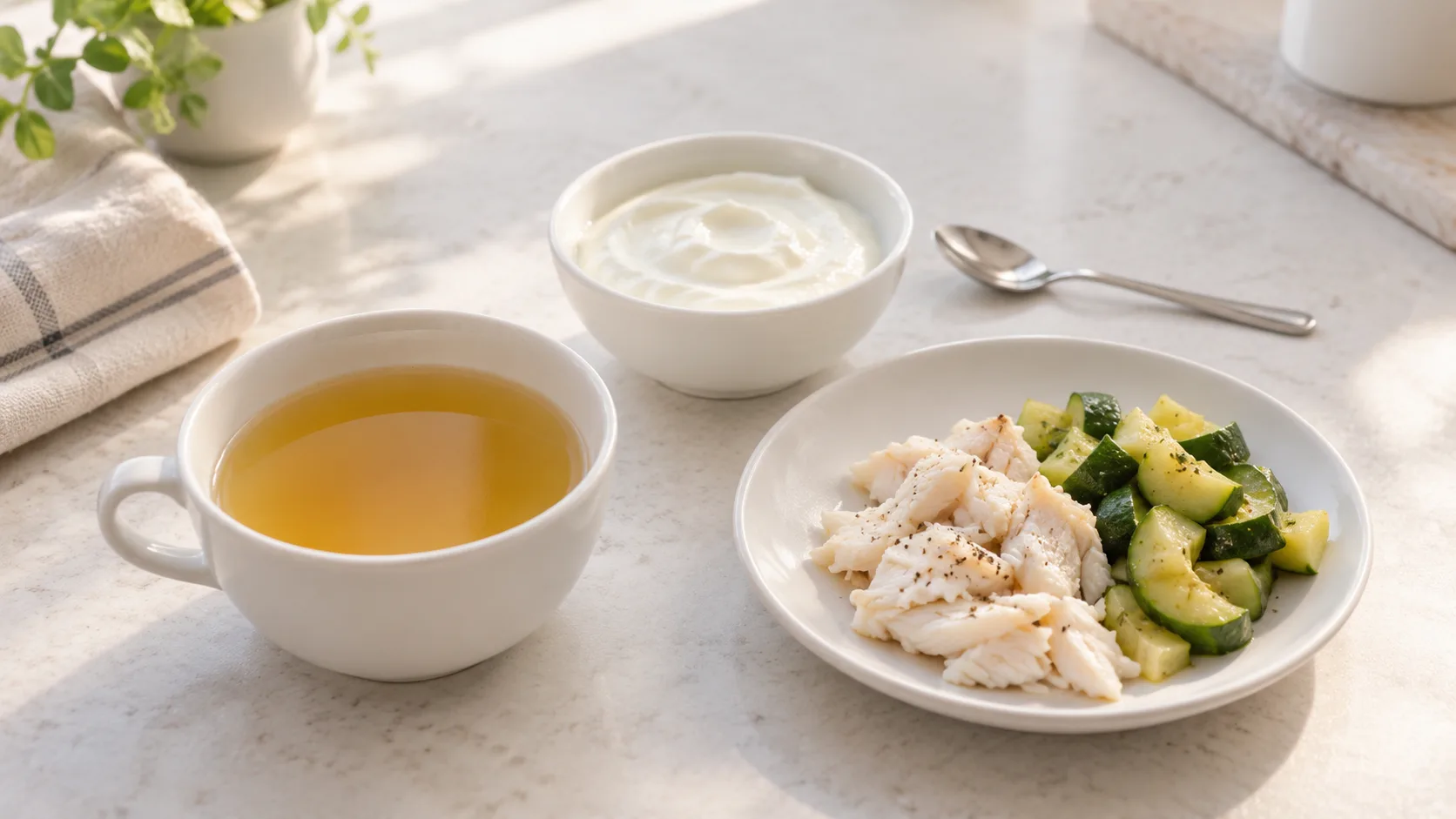
Water, unsweetened broth, decaffeinated tea, and protein-containing fluids such as skim milk or protein shakes.
Clear liquids hydrate without irritating the staple line. Full liquids add protein, the single most important nutrient after surgery, with guidelines recommending roughly 60–80 grams per day (Mechanick et al. 2020). Carbonation is often restricted early because gas distends the sleeve and causes pain; non-carbonated alternatives are always safer during healing.
When Can You Start Pureed Foods?
Usually at two to four weeks, once your surgeon confirms the staple line has healed.
Pureed foods must be completely smooth, no chunks, seeds, or strings. Good examples include blended chicken with gravy, mashed white beans, smooth ricotta, and pureed squash. Introduce one new food at a time, in one-to-two tablespoon portions. Signs a texture is not tolerated include pain, pressure, nausea, or vomiting; if any appear, return to liquids for 24 hours and retry more slowly.
When Can You Eat Soft Foods?
Most patients reach this phase at four to eight weeks.
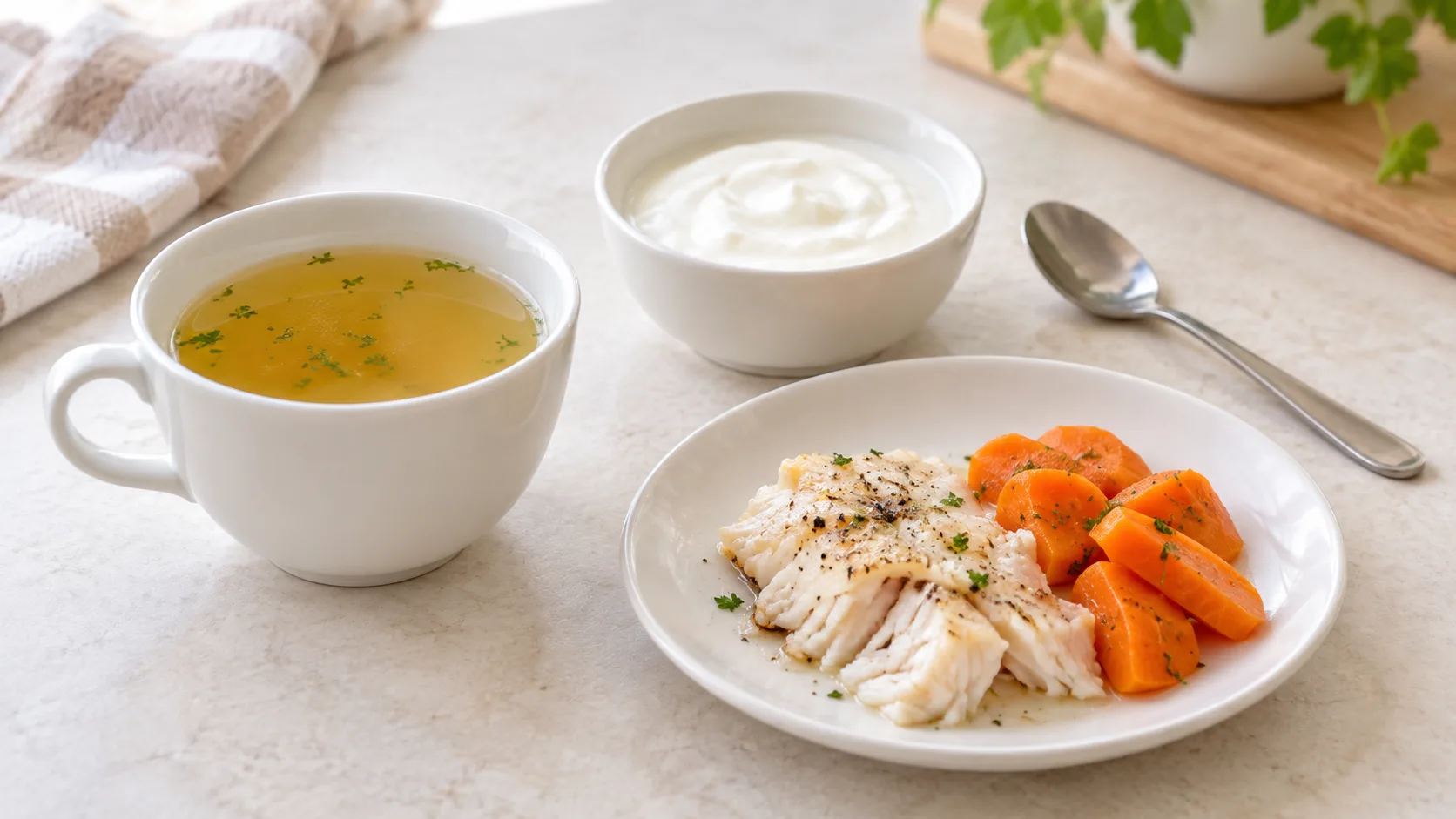
Suitable soft foods include flaky fish, tender shredded chicken, poached eggs, well-cooked carrots or zucchini, soft fruit without skins, and Greek yogurt. These foods deliver protein and micronutrients without requiring aggressive chewing from a stomach that still tires quickly.
When Can You Return to Regular Foods?
Typically around eight to twelve weeks, but some dense or dry foods stay difficult for much longer.
Research shows that even a year after surgery, patients report persistent difficulty with bread, red meat, rice, and dry snacks (Coluzzi et al. 2016). That pattern is normal anatomy, not failure. Following your surgeon’s timeline protects the staple line and prevents complications that force a diet restart.
Which Foods Provide the Most Important Nutrients After Surgery?
Protein first, then vegetables, then fruit, then measured carbohydrates, in that order of priority.
Which Protein Foods Are Suitable After Gastric Sleeve?
Eggs, fish, chicken, lean turkey, tofu, lentils, cottage cheese, and Greek yogurt form the core protein list. Fish and eggs appear most often on “well-tolerated” lists in post-sleeve food surveys, while dry red meat ranks among the least tolerated (Coluzzi et al. 2016). Plant proteins such as silken tofu, hummus, and lentil puree offer alternatives when meat textures cause discomfort. Aim to eat protein at every eating occasion before any other food on the plate.
Which Vegetables Are Easier to Tolerate?
Cooked, soft vegetables, zucchini, pumpkin, green beans, peeled eggplant, mashed cauliflower, tolerate far better than raw salads. Raw vegetables and fibrous skins usually return successfully after the soft phase, introduced gradually in small amounts.
Which Fruits Can You Eat After Gastric Sleeve?
Soft fruits such as banana, ripe melon, peeled peach, and stewed apple work best early. Portion discipline matters more than fruit choice: a small portion of whole fruit provides fiber and micronutrients with far less sugar density than juice. Prioritize naturally sweet whole fruit and avoid products with added sugars.
Which Carbohydrates Can Be Included?
Choose whole-grain bread in thin, toasted portions, small servings of well-cooked oats, quinoa, or potato. Rice and pasta are among the most commonly problematic textures after sleeve gastrectomy (Coluzzi et al. 2016). Keep portions small, and never let carbohydrates displace protein on the plate.
What Should a Typical Post-Surgery Meal Contain?
One small portion of lean protein, one soft or cooked vegetable, and, if tolerated, one measured portion of a whole-grain carbohydrate, eaten in that order.
Research on food order in metabolic surgery patients suggests that consuming vegetables and protein before carbohydrates reduces post-meal glucose excursions (Coluzzi et al. 2016). Build meals around the table below.
Meal element | Example | Reason |
Protein (first) | Poached egg, flaked fish | Protects muscle mass and satiety |
Vegetable (second) | Mashed pumpkin, cooked spinach | Micronutrient density, fiber |
Carbohydrate (last) | Spoon of oats, small potato wedge | Energy without volume overload |
Fluid (separate) | Water between meals, not with | Prevents sleeve overfilling |
How Much Food Can You Eat After Gastric Sleeve Surgery?

Portions shrink dramatically, often one-quarter to one-half cup per meal early on, gradually rising to one cup or less over months.
A small sleeve generates strong satiety signals quickly, and eating beyond comfortable fullness stretches tissue and can trigger vomiting or long-term sleeve dilation. Portion tolerance usually improves over the first year as the sleeve relaxes slightly, but the capacity never returns to pre-surgery levels. Respect the signal, not the plate.
How Should You Eat to Improve Food Tolerance?
Take bites the size of a blueberry, chew each bite to a paste, eat slowly, pause between bites, and stop at the first sign of comfortable fullness.
Controlled studies show that slower eating reduces energy intake within a meal (Andrade et al. 2008). Avoid grazing, continuous small eating prevents clear hunger and fullness signals from developing. Three planned meals plus one planned snack suit most patients better than constant nibbling.
How Should You Drink Fluids After Gastric Sleeve Surgery?
Sip non-carbonated fluids all day, target at least 1.5 liters daily, and keep drinks separate from meals.
Drinking and eating at the same time can overfill the sleeve, flush food through too fast, and trigger discomfort, so programs usually recommend a 30-minute gap around meals. Sip slowly rather than gulping, and watch for dark urine, dizziness, or headache, which signal dehydration. See the comparison below.
Beverage | Status | Reason |
Water | Best choice | Hydration without irritation |
Herbal, decaf tea | Suitable | No carbonation, no sugar |
Milk, protein drinks | Suitable | Adds protein |
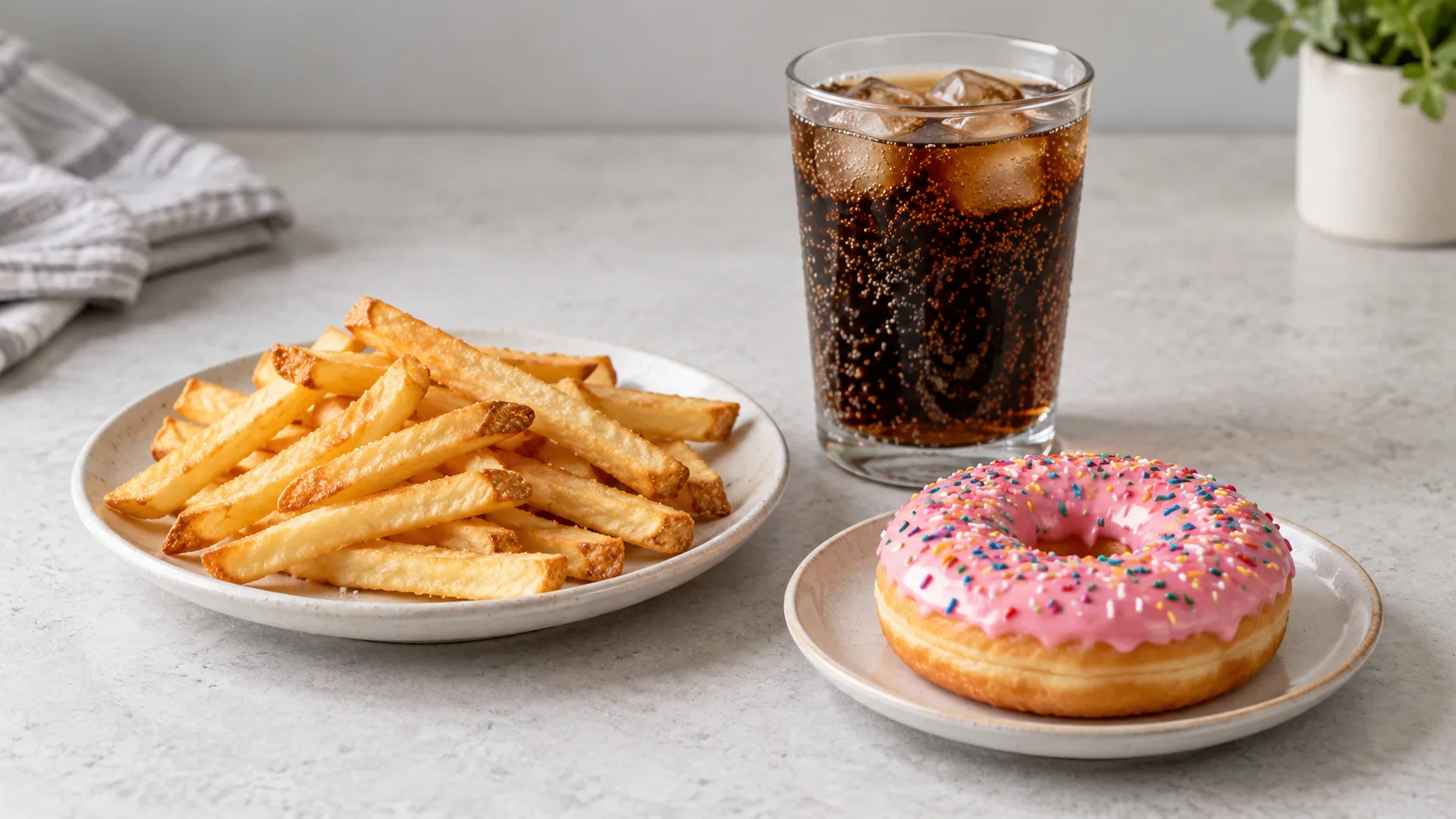
Carbonated drinks | Discouraged | Gas distends the sleeve |
Juice, sweetened drinks | Limit | Concentrated sugar, dumping risk |
Which Foods and Drinks Should You Limit After Gastric Sleeve?
Limit added sugars, high-fat fried foods, carbonated drinks, and alcohol, each one undermines comfort or nutrition in a specific, well-documented way.
Why Are High-Sugar Foods Often Restricted?
Concentrated sugar in sweets, desserts, and sweetened drinks can trigger dumping-type symptoms, flushing, palpitations, cramps, after sleeve gastrectomy (Rawlins et al. 2013). Beyond discomfort, sweet foods deliver calories with almost no micronutrient value, directly opposing the operation’s purpose.
Why Can High-Fat Foods Be Difficult to Fit Into the Diet?
Fat slows gastric emptying and concentrates calories into tiny portions. Many post-sleeve patients show reduced fat tolerance and reduced intake of fatty foods within months of surgery (Coluzzi et al. 2016). Favor grilling, baking, and steaming over frying.
Why Are Carbonated Drinks Commonly Discouraged?
Carbonation physically distends the sleeve and can cause pain, reflux, and burping discomfort. Flat alternatives, still water, diluted juice in moderation, hydrate without pressure.
When Should Alcohol Be Avoided?
Avoid alcohol during early healing and treat it with caution permanently. Bariatric surgery changes alcohol pharmacokinetics; patients reach higher blood alcohol levels faster and show increased alcohol-related problems after surgery (Changchien et al. 2019). Your bariatric team should set any alcohol rules individually.
How Can You Prevent Mindless Eating After Gastric Sleeve?
Separate physical hunger from boredom and stress, plan snacks in advance, and change the routines that trigger unnecessary eating.
Emotional and environmental cues, television, stress, food visibility, drive intake even when the sleeve limits volume. Keep tempting foods out of immediate sight, plan one deliberate snack instead of grazing, and replace eating rituals with non-food routines such as short walks. Patients who reshape eating behavior, not just stomach size, sustain better long-term outcomes (Coluzzi et al. 2016).
What Are Good Snack Options After Gastric Sleeve?
Protein-centered, portion-controlled snacks, Greek yogurt, cottage cheese, a soft-boiled egg, or a small protein pudding.
One planned snack between meals prevents extreme hunger without encouraging grazing. A snack should fit your individualized meal plan and provide at least 6–10 grams of protein. Fruit alone is acceptable occasionally, but pairing it with a protein source steadies both satiety and glucose.
How Can You Meet Your Protein and Micronutrient Needs?
Hit your daily protein target with food first, then use bariatric-specific supplements and regular blood monitoring to close the gaps.
Even with a strong diet, sleeve patients risk iron, vitamin B12, vitamin D, folate, thiamine, and zinc deficiencies; pre-existing low levels are common before surgery (O’Kane et al. 2020). Guidelines recommend a complete multivitamin-mineral daily, additional elemental iron, routine B12, calcium, and vitamin D (typically 2000–4000 IU daily to keep levels ≥75 nmol/L), and blood tests at 3, 6, and 12 months, then annually (O’Kane et al. 2020). Thiamine deserves special attention: prolonged vomiting or poor intake creates a real risk of Wernicke’s encephalopathy, a neurological emergency. A bariatric dietitian adjusts supplements when blood results shift, monitoring is what turns a supplement list into effective prevention (Ben-Porat et al. 2015).
What Should You Do If a Food Causes Discomfort?
Stop eating it immediately, review texture, portion, and eating speed, wait, then reintroduce it gradually later.
Keep a simple food log of poorly tolerated items, most patients find only a handful of repeat offenders, usually bread, rice, tough meat, or fibrous raw vegetables. If a food fails twice across different occasions, pause it for a few weeks and retry at a later stage. Persistent problems belong with your surgical team, not in repeated self-experiments.
What Symptoms After Eating Require Medical Attention?
Persistent vomiting, severe or worsening abdominal pain, inability to keep fluids down, or signs of dehydration all demand prompt assessment.
Vomiting that continues beyond brief, occasional episodes is never a normal part of diet adjustment, guidance directs patients back to the bariatric centre for investigation, and rapid treatment protects against thiamine depletion and Wernicke’s encephalopathy (O’Kane et al. 2020). Watch for dizziness, dark urine, a racing heart, or confusion alongside poor fluid intake; those signs point to dehydration and urgent review.
How Can You Build Sustainable Eating Habits After Gastric Sleeve?
Anchor three consistent meals, eat mindfully without screens, plan food in advance, and pair dietary structure with daily physical activity.
Routines reduce decision fatigue, and planned meals prevent both skipping and grazing. Nutrient-dense food choices, steady hydration, and regular movement reinforce each other: the sleeve controls volume, but habits control everything else (Mechanick et al. 2020).
Can You Eventually Eat Normally After Gastric Sleeve Surgery?
You can eat a wide, normal variety of foods long-term, but “normal” now means small, slow, protein-first meals, forever.
Follow-up studies show most patients comfortably eat ordinary meals within a year, while a minority of dense or dry foods remain difficult (Coluzzi et al. 2016). Individual tolerance develops at its own pace. The long-term rules, protein priority, slow pace, hydration between meals, and supplement adherence, never expire.
What Does a Sample Day of Eating Look Like After Gastric Sleeve?
Three small protein-led meals, one planned snack, and steady sipping between meals.
Breakfast Ideas
One scrambled egg with a spoon of mashed avocado, or Greek yogurt with blended berries.
Lunch Ideas
Flaked white fish with pureed butternut squash, or minced chicken with soft-cooked zucchini.
Dinner Ideas
Tender turkey meatballs in tomato sauce with mashed cauliflower, or lentil and vegetable puree with a spoon of Greek yogurt.
Suitable Snack Ideas
Cottage cheese, a soft-boiled egg, or protein-fortified yogurt in a small cup.
Hydration Between Meals
Water, herbal tea, or skim milk sipped steadily from morning to evening, paused 30 minutes around meals.
What Factors Determine Which Foods You Can Tolerate?
Time since surgery, texture, portion size, eating speed, your individual digestive response, and your surgical team’s specific protocol.
Each factor interacts with the others: a food that fails at week three often succeeds at month three simply because healing progressed. Follow your team’s instructions over generic timelines, because your sleeve, your reflux status, and your nutritional history differ from every other patient’s (Rosenthal et al. 2012).
Frequently Asked Questions About Eating After Gastric Sleeve
The FAQs below cover the most searched individual foods and drinks; the detailed evidence sits in the sections above.
Can I Eat Eggs After Gastric Sleeve?
Yes. Eggs rank among the best-tolerated proteins after sleeve gastrectomy. Start with soft textures, scrambled or poached, and small portions (Coluzzi et al. 2016).
Can I Eat Chicken After Gastric Sleeve?
Yes, when it is moist and tender. Dry or chewy chicken is a common trigger of discomfort, so choose slow-cooked, shredded, or minced preparations.
Can I Eat Fruit After Gastric Sleeve?
Yes, soft, peeled fruit in small portions. Whole fruit fits the diet far better than juice, which concentrates sugar and can trigger dumping symptoms (Rawlins et al. 2013).
Can I Eat Vegetables After Gastric Sleeve?
Yes, cooked and soft first. Raw vegetables return gradually in later phases and may remain uncomfortable in large amounts.
Can I Eat Rice and Pasta After Gastric Sleeve?
Eventually, yes, but both are among the least tolerated textures after surgery. Keep initial portions to a few forkfuls and choose well-cooked or sauce-bound versions (Coluzzi et al. 2016).
Can I Drink Coffee After Gastric Sleeve?
Usually yes, in moderation, once cleared by your team, caffeine can irritate the healing stomach and counts toward fluid limits. Many programs prefer decaf during early recovery.
Can I Eat Bread After Gastric Sleeve?
With caution. Bread and crackers show significant intake reductions after surgery because they expand and clump in the sleeve. Toast thin slices and eat them last, or skip them early on (Coluzzi et al. 2016).
Can I Eat Sweets After Gastric Sleeve?
Rarely and deliberately. High sugar loads risk dumping symptoms and add empty calories; guidelines classify concentrated sweets as foods to limit, not staples (Mechanick et al. 2020).
Can I Drink Alcohol After Gastric Sleeve?
Only with explicit team approval, and understand the changed risk: absorption accelerates and alcohol-related problems increase after bariatric surgery (Changchien et al. 2019).
Can I Drink Water With Meals After Gastric Sleeve?
Most programs say no. Separate fluids from meals by about 30 minutes to protect sleeve capacity and meal tolerance.
What Happens If I Eat Too Much After Gastric Sleeve?
You will feel pain, pressure, or nausea, and you may vomit. Repeated overeating stretches the sleeve over time and erodes the operation’s restriction, so stop at the first fullness signal.
What Is the Key to Long-Term Nutrition After Gastric Sleeve?
Prioritize nutrient density over volume, respect your reduced capacity, eat slowly, stay hydrated, keep supplements and blood monitoring current, and stay connected to your bariatric care team.
The sleeve gives you a physiological tool; the guidelines give you the method. Protein first, small slow meals, fluids between meals, lifelong supplementation with scheduled laboratory follow-up, that combination protects weight loss, muscle mass, and micronutrient status for decades (Mechanick et al. 2020; O’Kane et al. 2020). Patients who treat the diet as permanent infrastructure, not a temporary phase, achieve the most durable results.
References
Andrade, Ana M., Geoffrey W. Greene, and Kathleen J. Melanson. "Eating Slowly Led to Decreases in Energy Intake within Meals in Healthy Women." Journal of the American Dietetic Association, vol. 108, no. 7, 2008, pp. 1186–1191.
Ben-Porat, Tair, et al. "Nutritional Deficiencies after Sleeve Gastrectomy: Can They Be Predicted Preoperatively?" Surgery for Obesity and Related Diseases, vol. 11, no. 5, 2015, pp. 1029–1036.
Changchien, Elizabeth M., et al. "Alcohol Use after Bariatric Surgery: A Literature Review and New Insights from a Biobank Study." Alcohol, vol. 77, 2019, pp. 1–10.
Coluzzi, Ilaria, et al. "Food Intake and Changes in Eating Behavior after Laparoscopic Sleeve Gastrectomy." Obesity Surgery, vol. 26, 2016, pp. 2059–2067.
Mechanick, Jeffrey I., et al. "Clinical Practice Guidelines for the Perioperative Nutritional, Metabolic, and Nonsurgical Support of Patients Undergoing Bariatric Procedures - 2019 Update." Surgery for Obesity and Related Diseases, vol. 16, no. 2, 2020, pp. 175–247.
O'Kane, Mary, et al. "British Obesity and Metabolic Surgery Society Guidelines on Perioperative and Postoperative Biochemical Monitoring and Micronutrient Replacement for Patients Undergoing Bariatric Surgery - 2020 Update." Obesity Reviews, vol. 21, no. 4, 2020, e13087.
Rawlins, Lea, et al. "Dumping Syndrome in Patients Who Have Undergone Sleeve Gastrectomy." Surgery for Obesity and Related Diseases, vol. 9, no. 3, 2013, pp. 492–495.
Rosenthal, Raul J., et al. "International Sleeve Gastrectomy Expert Panel Consensus Statement: Best Practice Guidelines Based on Experience of >12,000 Cases." Surgery for Obesity and Related Diseases, vol. 8, no. 1, 2012, pp. 8–19.