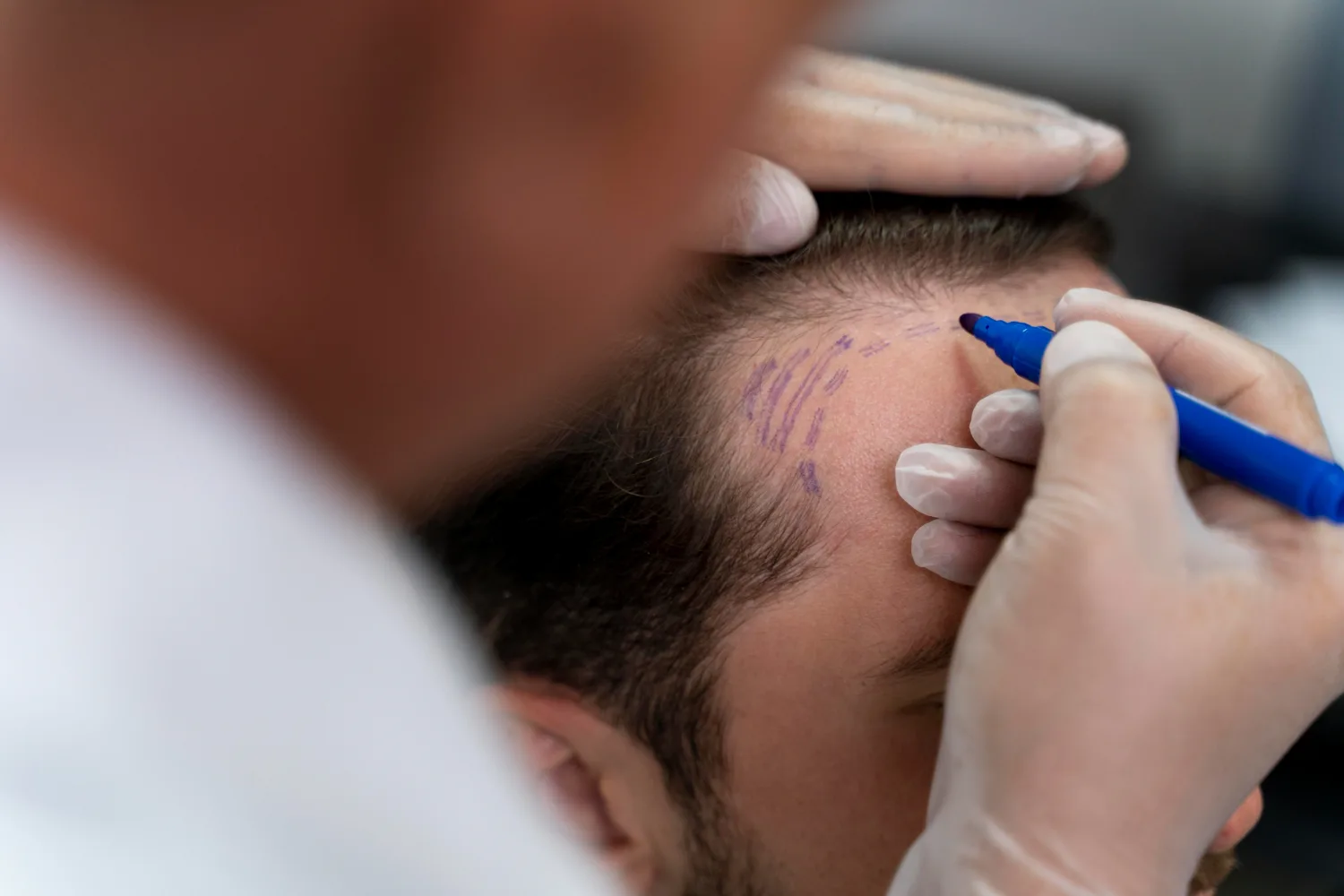
DHI-Haartransplantation: Genesungsleitfaden für internationale Patienten
DHI-HaartransplantationDer Genesungsleitfaden für internationale Patienten erklärt Ihnen genau, welche Schritte erforderlich sind, damit Sie nach einer Direct Hair Implantation im Ausland richtig heilen. Dieser Leitfaden umfasst den gesamten DHI-Heilungsverlauf — vom ersten Tag bis zu den endgültigen Ergebnissen nach 18 Monaten. Sie erfahren, wie Sie Ihre Grefts beim Reisen schützen, welche Nahrungsmittel die Heilung fördern und welche Warnzeichen sofortige ärztliche Aufmerksamkeit erfordern. Alle Aussagen werden durch wissenschaftliche Studien gestützt. Der Text folgt bewährten SEO-Praktiken und ist klar sowie fachkompetent formuliert.
Was ist eine DHI-Haartransplantation und warum ist die Nachsorge wichtig?
Direct Hair Implantation (DHI) ist eine fortschrittliche Methode zur Haarwiederherstellung. Chirurgen verwenden einen Choi-Implanter-Stift, um Grefts direkt in die Kopfhaut zu platzieren, ohne zuvor Empfängereinschnitte anzulegen. Die Nachsorge ist entscheidend, weil die Art und Weise, wie Sie Ihre Kopfhaut nach der Operation pflegen, bestimmt, wie viele Grefts überleben und wie natürlich das Ergebnis wirkt.
Was ist die Direct Hair Implantation (DHI)-Technik?
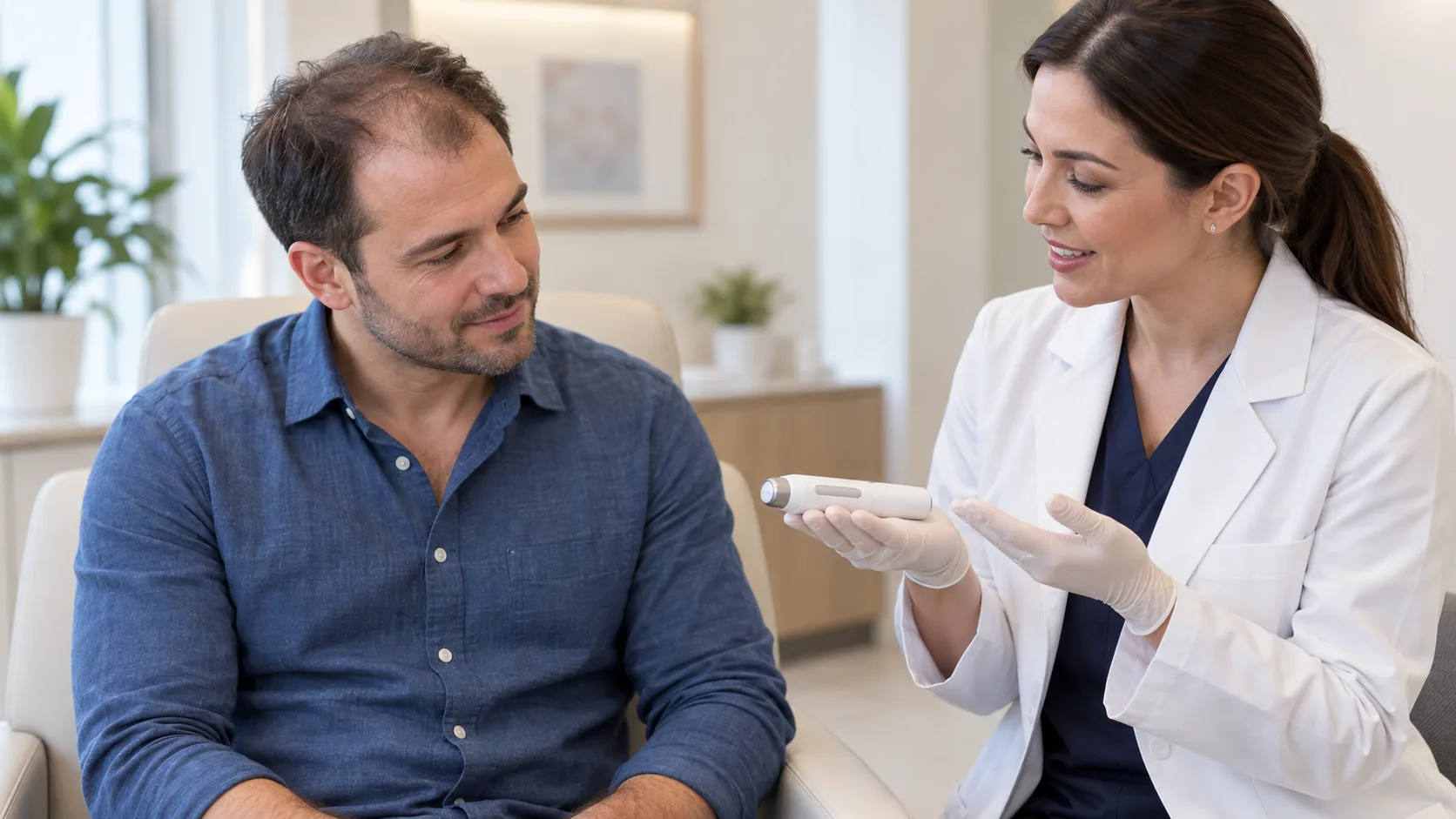
Der Choi-Implanter-Stift wurde erstmals 1992 an der Kyungpook National University in Südkorea eingesetzt. Der Stift verfügt über eine hohle Nadel, die jeden Greft einzeln aufnimmt. Der Chirurg drückt den Kolben und implantiert das Haarfollikel in einem einzigen Arbeitsgang. Diese Stech-und-Setz-Methode macht vorgefertigte Kanäle überflüssig. Sethi (2013) testete eine ähnliche direkte Implantationsmethode an 29 Patienten und stellte bei 27 von ihnen gute Ergebnisse fest. Die Studie zeigte, dass eine Verringerung der Greft-Handhabungszeit die Überlebensrate deutlich verbessert.
Wodurch unterscheidet sich die DHI-Nachsorge von der traditionellen FUE?
Die DHI-Nachsorge unterscheidet sich in mehreren wichtigen Punkten von der traditionellen FUE. DHI verursacht kleinere Wunden, da der Choi-Stift Einschnitt und Implantation in einem Schritt kombiniert. Bei FUE schneiden Chirurgen zunächst Kanäle und setzen die Grefts anschließend mit einer Pinzette ein. Dieser zweistufige Prozess führt zu mehr Gewebetrauma. DHI-Patienten heilen oft schneller, weil die Kopfhaut insgesamt weniger geschädigt wird. Studien zeigen, dass DHI-Verfahren zu weniger Blutungen führen und das Risiko des Herausspringens von Grefts reduzieren.
Faktor | DHI-Nachsorge | FUE-Nachsorge |
Wundgröße | Kleinere Wunden durch kombinierten Einschnitt und Implantation | Größere Wunden durch getrennte Kanalanlage |
Blutungen | Weniger Blutungen dank präziser Stiftplatzierung | Mehr Blutungen durch Klingeneinschnitte |
Greft-Herausspringen | Geringeres Risiko, da der Stift die Tiefe kontrolliert | Höheres Risiko durch Platzierung mit Pinzette |
Erste Heilung | 5 bis 7 Tage bis zur Krustenabgabe | 7 bis 10 Tage bis zur Krustenabgabe |
Dauer der Rötung | 10 bis 14 Tage | 14 bis 21 Tage |
Wieder arbeitsfähig | 5 bis 7 Tage | 7 bis 10 Tage |
Warum entscheidet richtige Nachsorge über langfristige Ergebnisse?
Die richtige Nachsorge bestimmt die Langzeitergebnisse, weil die Grefts Zeit benötigen, um sich in der Kopfhaut zu verankern. Die ersten 72 Stunden sind entscheidend. In diesem Zeitraum bildet der Körper Fibrinbindungen, die die Grefts an ihrem Platz halten. Werden diese Bindungen gestört, lösen sich die Grefts und sterben ab. Rodriguez et al. (2008) erklären, dass die Sauerstoffversorgung des verletzten Gewebes den Heilungsprozess antreibt. Gute Nachsorge sorgt dafür, dass sich Blutgefäße schnell wieder mit den Grefts verbinden.
Welche Faktoren beeinflussen die individuelle Heilung?
Mehrere Faktoren beeinflussen, wie schnell Sie heilen. Ihr Alter spielt eine Rolle: Jüngere Patientinnen und Patienten regenerieren Gewebe schneller. Ihr Rauchverhalten ist wichtig, weil Nikotin die Blutgefäße verengt. Ihre Ernährung zählt, da Protein die Bausteine für neues Gewebe liefert. Ihr Stresslevel ist relevant, weil Cortisol die Wundheilung verlangsamt. Auch Ihr Haartyp ist bedeutsam: kräftiges Haar erfordert eine andere Behandlung als feines Haar.
Für wen ist dieser Erholungsleitfaden gedacht?
Dieser Erholungsleitfaden richtet sich an alle, die für eine DHI-Haartransplantation ins Ausland reisen möchten. Er bietet praktische Hinweise für Patientinnen und Patienten, die kurz nach dem Eingriff zurückfliegen müssen.
Wer sind internationale Medizintouristen?
Internationale Medizintouristen reisen in Länder wie die Türkei, um kostengünstige und hochwertige Haarwiederherstellung in Anspruch zu nehmen. Diese Patientinnen und Patienten stehen vor besonderen Herausforderungen: Sie müssen sich in einer fremden Stadt erholen, Anweisungen in einer zweiten Sprache befolgen und anschließend lange Flüge aushalten. Dieser Leitfaden geht auf all diese Situationen mit klaren, umsetzbaren Schritten ein.
Welche Patientinnen und Patienten fliegen kurz nach der Operation nach Hause?
Patientinnen und Patienten, die kurz nach der Operation abreisen, benötigen spezielle Vorsichtsmaßnahmen. Die meisten Chirurgen empfehlen, mindestens 3 bis 5 Tage mit dem Fliegen zu warten. Die Richtlinien der Aerospace Medical Association sprechen von einer 14-tägigen Verzögerung nach größeren Operationen. Viele Haartransplantationspatienten fliegen jedoch früher. Falls Sie früh fliegen müssen: tragen Sie eine lockere Kopfbedeckung, trinken Sie viel Wasser und vermeiden Sie das Berühren der Kopfhaut.
Wer sind Patientinnen und Patienten, die zum ersten Mal eine Haartransplantation erhalten?
Erstmalige Haartransplantationspatientinnen und -patienten sind oft ängstlich wegen des Unbekannten. Sie sorgen sich um Schmerzen, Schwellungen und den Erfolg der Operation. Dieser Leitfaden nimmt Ihnen die Unsicherheit, indem er genau erklärt, was in jeder Phase passiert. Sie wissen dann, was normal ist und wann Sie Ihre Klinik anrufen sollten.
Welche Patientinnen und Patienten kombinieren Behandlung mit Tourismus?
Patientinnen und Patienten, die Behandlung mit Sightseeing verbinden möchten, möchten die Stadt vor oder nach dem Eingriff sehen. Wir empfehlen, Besichtigungen vor dem Eingriff einzuplanen. Nach der Operation sollten Sie sich mindestens 48 Stunden im Hotelzimmer schonen. Herumlaufen setzt Ihre Kopfhaut Staub, Sonne und versehentlichen Stößen aus.
Was sollten Patientinnen und Patienten unmittelbar nach einer DHI-Haartransplantation erwarten?
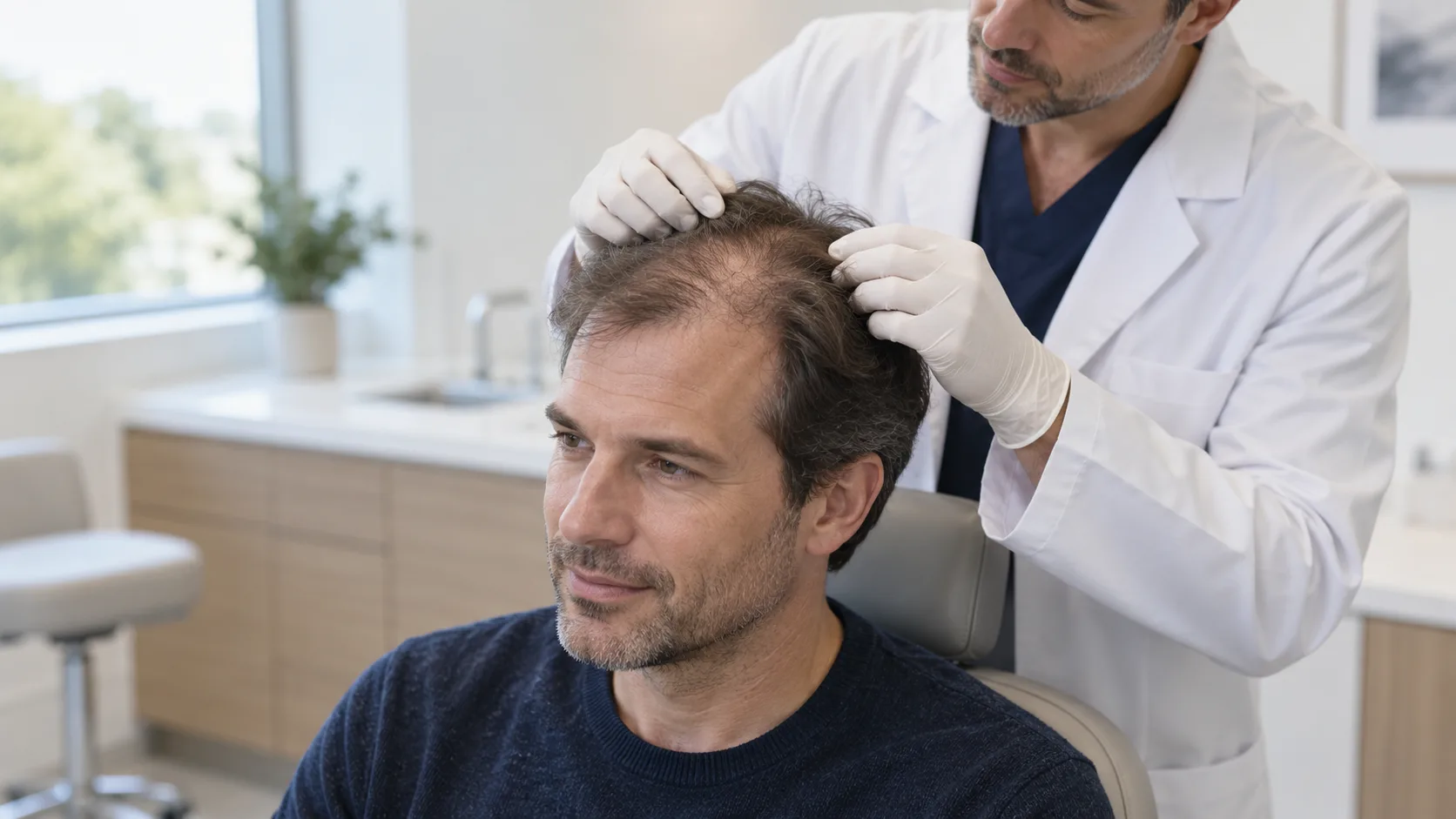
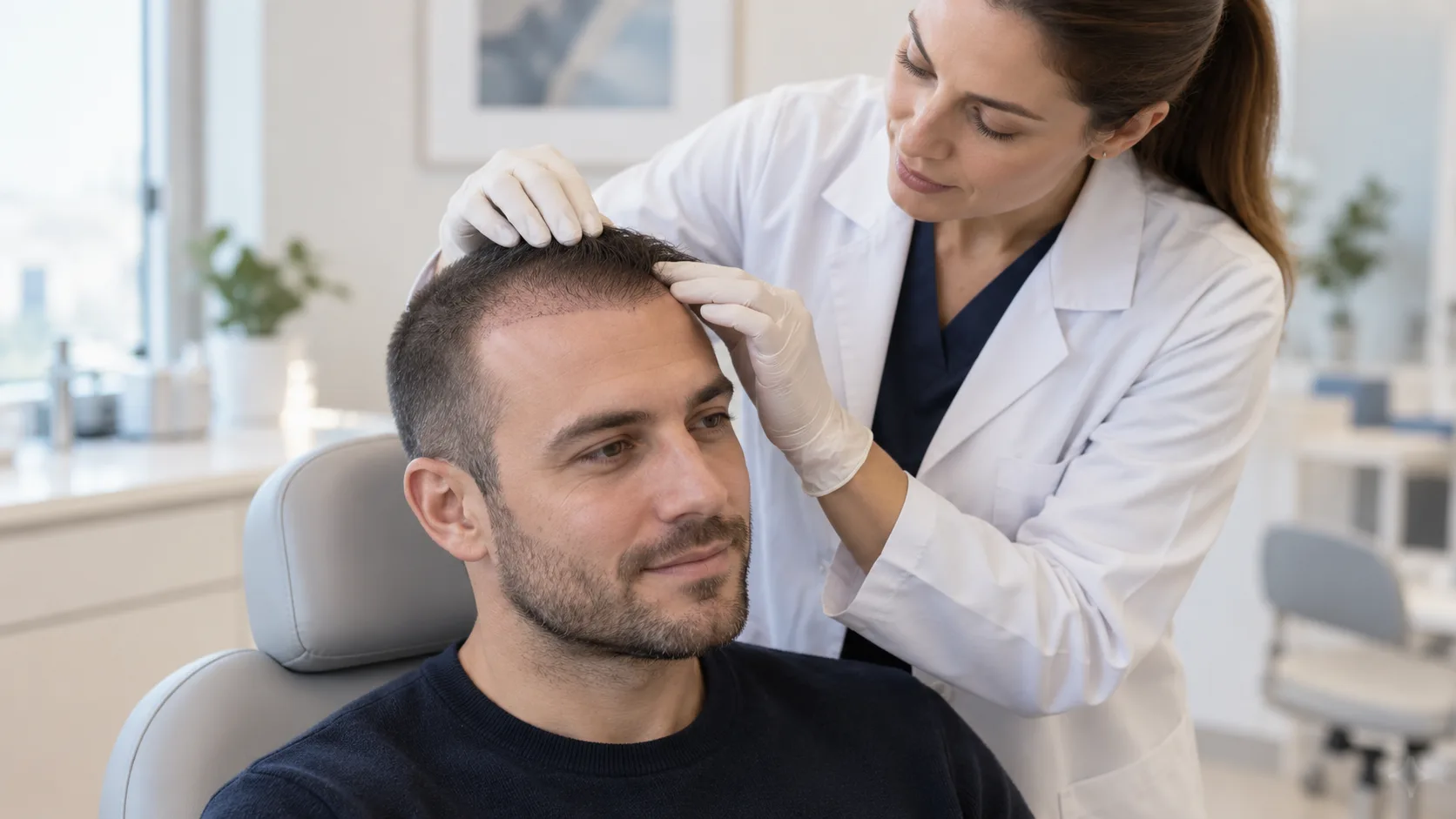
Unmittelbar nach einer DHI-Haartransplantation sind leichte Rötung, Schwellung und Druckempfindlichkeit zu erwarten. Diese Symptome sind normal und vorübergehend.
Was geschieht im Aufwachraum und bei der Entlassung?
Das OP-Team bringt Sie nach dem Eingriff in einen Aufwachraum. Eine Pflegekraft kontrolliert Blutdruck und gibt Ihnen die Nachsorgeanweisungen. Die meisten Kliniken entlassen Patientinnen und Patienten innerhalb von 1 bis 2 Stunden. Sorgen Sie dafür, dass Sie von jemandem zum Hotel begleitet werden. Fahren Sie nicht selbst.
Welche Symptome sind in den ersten 24 Stunden normal?
In den ersten 24 Stunden treten mehrere normale Symptome auf. Rötungen betreffen Empfänger- und Entnahmestellen. Schwellungen können an der Stirn beginnen. Leichte Druckempfindlichkeit führt zu einem Spannungsgefühl der Kopfhaut. An den Greftstellen können winzige Blutflecken sichtbar sein. Sie können ein Spannungsgefühl spüren, während sich die Haut an die neuen Grefts anpasst.
Welche Medikamente verschreiben Chirurgen üblicherweise?
Chirurgen verschreiben häufig Antibiotika, entzündungshemmende Medikamente und Schmerzmittel. Antibiotika verhindern Infektionen. Entzündungshemmer reduzieren Schwellungen. Schmerzmittel sorgen für Ihr Wohlbefinden. Manche Ärztinnen und Ärzte verordnen zusätzlich topische Sprays oder Schäume zur Unterstützung der Heilung.
Welche Schutzverbände und Kopfbandagen verwenden Kliniken?
Kliniken legen vor der Entlassung schützende Verbände oder Stirnbänder an. Diese reduzieren Schwellungen, indem sie leichten Druck auf die Stirn ausüben, und schützen die Transplantate vor versehentlichem Kontakt im Schlaf. Tragen Sie das Stirnband in der ersten Nacht, es sei denn, Ihr Chirurg rät anders.
Wie sieht der vollständige Erholungsverlauf nach einer DHI-Haartransplantation aus?
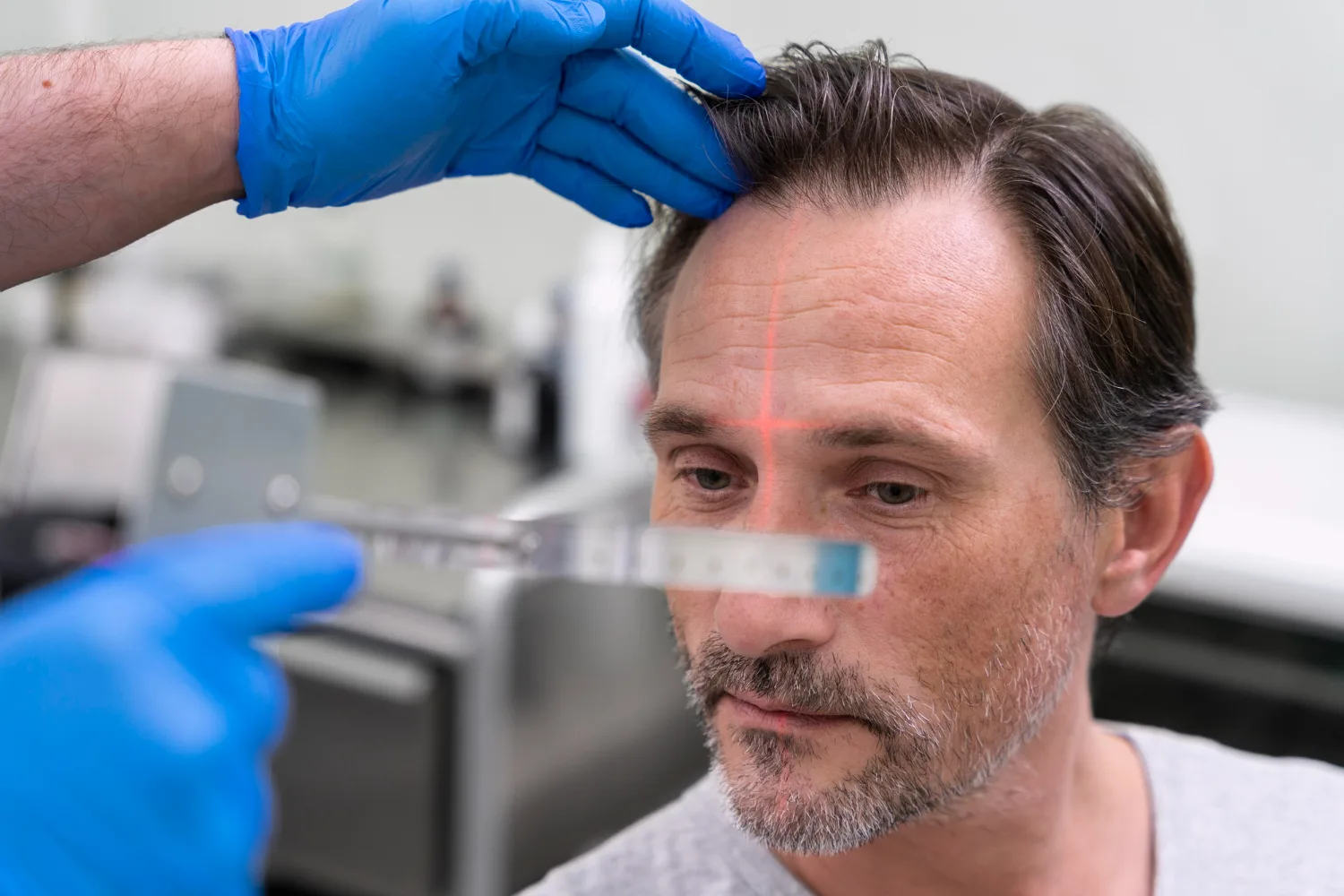
Der vollständige Erholungsverlauf nach einer DHI-Haartransplantation erstreckt sich über 12 bis 18 Monate. Jede Phase bringt typische Veränderungen an Kopfhaut und Haar mit sich.
Zeitraum | Was passiert | Pflegehinweise |
Tag 1 | Transplantate verankern sich; Schwellung beginnt | Schlafen Sie erhöht (45 Grad); fassen Sie die Kopfhaut nicht an |
Tag 2–3 | Stirnschwellung erreicht ihren Höchststand | Sprühen Sie alle 2 Stunden Kochsalzlösung; schonen Sie sich vollständig |
Tag 4–7 | Krustenbildung; Juckreiz beginnt | Beginnen Sie mit vorsichtigem Waschen; entfernen Sie keine Krusten |
Tag 8–14 | Krusten fallen ab; Rötung nimmt ab | Rückkehr zur Bürotätigkeit möglich; tragen Sie nur lockere Hüte |
Woche 2–8 | Es kann zu Schockverlust kommen | Bleiben Sie ruhig; dies ist normales Ausfallen |
Monate 3 bis 4 | Feine Babyhaare treten hervor | Setzen Sie Minoxidil fort, wenn es verschrieben wurde |
Monate 6 bis 9 | Die Dichte verbessert sich; die Haarschaft verdickt sich | Bewerten Sie den Fortschritt mit Fotos |
Monate 12 bis 18 | Die Endresultate reifen | Erwägen Sie bei Bedarf eine zweite Sitzung |
Was passiert am ersten Tag?
Am ersten Tag ist strikter Schutz der Transplantate erforderlich. Schlafen Sie auf dem Rücken mit um 45 Grad erhöhtem Kopf. Diese Position reduziert Schwellungen und verhindert, dass Transplantate am Kissen reiben. Trinken Sie viel Wasser, um ausreichend hydriert zu bleiben. Berühren Sie nicht Ihre Kopfhaut. Beugen Sie sich nicht plötzlich vor.
Was passiert an den Tagen 2–3?
An Tag 2 und 3 kommt es häufig zu leichter Schwellung an Stirn und Augenpartie. Diese Schwellung erreicht etwa an Tag 3 ihren Höchststand und lässt dann nach. Besprühen Sie den Empfängerbereich alle paar Stunden mit Kochsalzlösung. Das hält die Transplantate feucht und verhindert Krustenbildung. Ruhen Sie sich so viel wie möglich aus.
Was passiert an den Tagen 4–7?
Die Tage 4 bis 7 markieren den Beginn der sanften Reinigung. Ihr Operateur zeigt Ihnen, wie Sie die Kopfhaut mit lauwarmem Wasser und mildem Shampoo ausspülen. Um die Transplantate bilden sich Krusten. Während die Haut heilt, kann Juckreiz auftreten. Die Entnahmestelle am Hinterkopf beginnt zu verheilen.
Was passiert an den Tagen 8–14?
Die Tage 8 bis 14 bringen das Abfallen der Krusten und eine Abnahme der Rötung. Die meisten Krusten fallen bis etwa Tag 10 von selbst ab. Entfernen Sie sie nicht. Die Rötung verblasst zu einem Rosa. Viele Patienten können in diesem Zeitraum wieder Büroarbeit aufnehmen. Sie können eine lose Mütze tragen, wenn Ihr Operateur dies genehmigt.
Was passiert in den Wochen 2–8?
Die Wochen 2 bis 8 bringen den sogenannten Shock‑Loss. Die transplantierten Haare fallen aus. Dieses Ausfallen ist normal. Die Follikel bleiben unter der Haut lebendig. Sie gehen in eine Ruhephase, bevor sie neues Haar produzieren. Vañó‑Galván et al. (2023) bestätigen, dass Shock‑Loss ein vorhersehbarer Teil des Heilungszyklus ist.
Was passiert in den Monaten 3–4?
Die Monate 3 und 4 bringen den ersten Nachwuchs. Feine, unreife Haare wachsen aus der Kopfhaut. Diese Haare wirken anfangs dünn und zart. Die Follikel werden aktiv und starten einen neuen Wachstumszyklus. Sie können fleckiges Wachstum bemerken, da nicht alle Follikel gleichzeitig reaktiviert werden.
Was passiert in den Monaten 6–9?
Die Monate 6 bis 9 bringen eine verbesserte Dichte. Die Haarsträhnen verdicken und dunkeln nach. Das natürliche Erscheinungsbild entsteht, wenn das neue Haar sich mit dem vorhandenen Haar verbindet. Bis zum 9. Monat sehen die meisten Patientinnen und Patienten etwa 60 bis 70 Prozent der endgültigen Dichte.
Was passiert in den Monaten 12–18?
Die Monate 12 bis 18 liefern das endgültige kosmetische Ergebnis. Das Haar reift vollständig. Die Struktur entspricht Ihrem ursprünglichen Haar. Sie können jetzt den langfristigen Erfolg des Eingriffs beurteilen. Etwaige weitere Sitzungen sollten bis zu diesem Zeitpunkt verschoben werden.
Was ist Shock Loss nach einer DHI-Haartransplantation?
Shock Loss ist das vorübergehende Ausfallen transplantierter Haare in den ersten 2 bis 8 Wochen nach einer DHI-Operation. Die Follikel überleben unter der Haut und bilden später neues Haar.
Warum kommt es zu vorübergehendem Haarausfall?
Der vorübergehende Haarausfall entsteht, weil die Operation die Kopfhaut traumatisiert. Der Körper lenkt Energie auf die Heilung um. Haarfollikel treten in die Telogen-Ruhephase ein. Das ist ein Schutzmechanismus und kein Zeichen des Scheiterns. Kassimir (1987) beobachtete, dass Minoxidil-behandelte Transplantate weniger Shock Loss zeigten als Kontrollgruppen.
Wie lange dauert Shock Loss?
Bei den meisten Patientinnen und Patienten dauert Shock Loss 2 bis 8 Wochen. Der Haarausfall beginnt etwa in Woche 2 und kann bis Woche 8 andauern. Einige bemerken das Ausfallen früher, andere später. Der Zeitverlauf ist individuell verschieden.
Wann beginnt neues Haar zu wachsen?
Neues Haar beginnt etwa im 3. Monat zu wachsen. Der erste Nachwuchs ähnelt feinen Babyhaaren. Bis zum 4. Monat gewinnen diese Haare an Länge und Dicke. Eine volle sichtbare Bedeckung zeigt sich typischerweise bis zum 6. Monat. Sethi (2013) stellte fest, dass das Wachstum 2 bis 3 Monate nach der direkten Haartransplantation bemerkbar wurde.
Woran erkennt man normale vs. abnorme Heilung?
Normale Heilung umfasst leichte Rötung, vorhersehbare Schwellung und ein allmähliches Abfallen der Krusten. Abnorme Heilung zeigt sich durch starke Schmerzen, Eiter, Fieber oder großflächigen Transplantatverlust. Kontaktieren Sie umgehend Ihren Chirurgen, wenn Sie abnorme Zeichen bemerken.
Symptom | Normale Heilung | Abnorme Heilung |
Rötung | Rosa Farbe, die innerhalb von 14 Tagen verblasst | Leuchtend rotes Auftreten, das sich nach dem 5. Tag ausbreitet |
Schwellung | Erreicht seinen Höhepunkt am 3. Tag und bessert sich danach | Verschlechterung nach dem 5. Tag oder Beteiligung der Augen |
Schmerz | Leichte Druckempfindlichkeit, die mit Medikamenten kontrollierbar ist | Stechender oder pochender Schmerz, der sich medikamentös nicht kontrollieren lässt |
Austritt/Flüssigkeitsabsonderung | Klarer oder leicht rosa gefärbter Ausfluss | Gelblich, grünlich oder übelriechender Eiter |
Haarausfall | Allmählicher Haarverlust ab Woche 2 | Bündel von Grefts fallen mit sichtbaren Wurzeln aus |
Fieber | Keines | Temperatur über 38 Grad Celsius |
Wie sollten internationale Patientinnen und Patienten ihre Haargrefts beim Reisen schützen?
Internationale Patientinnen und Patienten schützen ihre Haargrefts, indem sie mindestens 3 bis 5 Tage vor dem Fliegen warten, lockere Kopfbedeckungen tragen und während der Reise direkten Kontakt mit der Kopfhaut vermeiden.
Wann ist Fliegen wieder sicher?
Die meisten Chirurgen sind sich einig, dass 3 bis 5 Tage die minimale sichere Wartezeit vor einem Flug nach einer DHI‑Operation sind. Die Aerospace Medical Association empfiehlt nach größeren Eingriffen 14 Tage zu warten. Haartransplantationen sind jedoch minimalinvasive Eingriffe. Zeltzer und Pikkel (2025) zeigten, dass zu frühes Fliegen nach kosmetischen Eingriffen das Infektionsrisiko erhöht und das Gewebeüberleben beeinträchtigt. Wenn Sie innerhalb von 3 Tagen fliegen müssen, holen Sie eine ausdrückliche Freigabe Ihres Operateurs ein.
Welche Tipps für den Flughafen helfen nach einer Haartransplantation?
Flughäfen bergen mehrere Risiken. Sicherheitsschlangen setzen Sie versehentlichen Stößen aus. Gepäckfächer über dem Kopf erfordern das Heben von Taschen, was den Blutdruck in der Kopfhaut erhöhen kann. Lange Warteschlangen zwingen Sie zu längeren Stehzeiten. Kommen Sie früh, um Hektik zu vermeiden. Bitten Sie um Hilfe beim Gepäck. Bewahren Sie Ihr Nachsorgespray im Handgepäck auf.
Wie können Patienten die Kopfhaut während eines Fluges schützen?
Druckveränderungen in der Kabine können die Schwellung verstärken. Die trockene Luft entwässert die Kopfhaut. Tragen Sie während des Fluges eine lockere, saubere Kappe. Sprühen Sie alle 2 Stunden Kochsalzlösung auf die Kopfhaut. Trinken Sie Wasser statt Alkohol oder koffeinhaltiger Getränke. Stellen Sie Ihren Sitz so ein, dass Ihr Kopf leicht erhöht liegt.
Welche Empfehlungen für die Erholung im Hotel sind am wichtigsten?
Wählen Sie ein Hotel in Nähe der Klinik. So verringert sich die Reisezeit nach der Entlassung. Bitten Sie um zusätzliche Kissen, um den Kopf erhöht zu lagern. Halten Sie das Zimmer kühl, um Schwitzen zu reduzieren. Vermeiden Sie Zimmerservicegerichte mit hohem Salzgehalt. Salz fördert die Schwellung.
Wie sollten Patienten Medikamente und Nachsorgeprodukte transportieren?
Packen Sie alle Medikamente ins Handgepäck. Nehmen Sie ausreichend Kochsalzspray für die gesamte Reise mit. Fügen Sie eine weiche Sprühflasche, mildes Shampoo und saubere Handtücher hinzu. Bewahren Sie eine Kopie Ihres Rezepts und des Entlassungsberichts auf. Die Flughafensicherheit kann diese Dokumente verlangen.
Wie können Patienten Jetlag während der Erholungsphase bewältigen?
Jetlag stört den Schlafrhythmus. Schlechter Schlaf verlangsamt die Heilung. Stellen Sie sich sofort nach Ankunft auf die lokale Zeitzone ein. Vermeiden Sie Nickerchen von mehr als 30 Minuten. Suchen Sie morgens Sonnenlicht, um Ihre innere Uhr zu resetten. Melatonin kann helfen, fragen Sie aber zuerst Ihren Operateur.
Was sind die wichtigsten Nachsorgeanweisungen nach einer DHI‑Haartransplantation?
Wesentliche Nachsorgeanweisungen umfassen: Rückenlage beim Schlafen, sanfte Wäsche, Befeuchtung mit Kochsalzlösung, Vermeidung von Kratzen, das Tragen lockerer Kleidung und Schutz des Entnahmebereichs.
Welche Schlafposition fördert die Heilung?
Schlafen Sie in den ersten 7 bis 10 Nächten auf dem Rücken. Legen Sie zwei Kissen unter den Kopf, um einen etwa 45‑Grad‑Winkel zu erreichen. Diese Position verhindert, dass die Grafts gegen das Kissen gedrückt werden. Sie reduziert außerdem die Flüssigkeitsansammlung in der Stirn. Schlafen Sie nicht auf der Seite oder dem Bauch.
Welchem Waschprotokoll sollen Patienten folgen?
Beginnen Sie mit dem Waschen am Tag 3 oder 4, wie von Ihrem Operateur angewiesen. Mischen Sie mildes Shampoo mit lauwarmem Wasser. Gießen Sie die Mischung behutsam über die Kopfhaut. Reiben Sie nicht. Lassen Sie das Wasser das Shampoo ausspülen. Tupfen Sie trocken mit einem weichen Papiertuch. Verwenden Sie keinen Haartrockner auf hoher Hitze.
Wie helfen Befeuchtung und Kochsalzspray?
Sprühen Sie in der ersten Woche 3‑ bis 5‑mal täglich Kochsalzlösung auf den Empfängerbereich. Kochsalz hält die Grafts feucht und verhindert Krustenbildung. Es lindert außerdem Juckreiz. Verwenden Sie eine feine Zerstäuberflasche. Berühren Sie die Düse nicht an der Kopfhaut.
Warum dürfen Patienten nicht kratzen oder Reibung aussetzen?
Juckreiz beginnt etwa am 4. Tag. Kratzen kann die Transplantate lösen. Klopfen Sie stattdessen leicht mit den Fingerspitzen auf die juckende Stelle. Halten Sie die Nägel kurz. Tragen Sie Hemden mit Knöpfen, damit Sie keine Kleidung über den Kopf ziehen müssen. Das vermindert die Reibung auf der Kopfhaut.
Warum sollten Patientinnen und Patienten lockere Kleidung tragen?
Tragen Sie während der Erholungszeit lockere, bequeme Kleidung. Enge Krägen und Hüte können am Spenderbereich reiben. Wählen Sie atmungsaktive Baumwollstoffe. Vermeiden Sie Wolle oder synthetische Materialien, die statische Aufladung und Reibung verursachen.
Wie sollten Patientinnen und Patienten den Spenderbereich schützen?
Auch der Spenderbereich am Hinterkopf benötigt Pflege. Halten Sie ihn sauber und trocken. Tragen Sie die verordneten Salben auf. Kratzen Sie den Spenderbereich nicht, auch wenn er juckt. Die kleinen Einstichwunden heilen innerhalb von 7 bis 10 Tagen.
Welche Aktivitäten sollten Patientinnen und Patienten während der Erholungsphase meiden?
Patientinnen und Patienten sollten während der anfänglichen Erholungszeit auf Sport, Schwimmen, Saunen, direkte Sonneneinstrahlung, Rauchen, Alkohol, Haarstylingprodukte und Haarschnitte verzichten.
Warum sollten Patientinnen und Patienten auf Sport und schweres Heben verzichten?
Vermeiden Sie Sport und schweres Heben mindestens 14 Tage lang. Diese Aktivitäten erhöhen den Blutdruck in der Kopfhaut. Ein erhöhter Blutdruck kann Transplantate lösen oder Blutungen verursachen. Leichte Spaziergänge sind nach Tag 3 zulässig. Warten Sie 30 Tage, bevor Sie wieder intensives Training aufnehmen.
Warum sollten Patientinnen und Patienten Schwimmbäder meiden?
Vermeiden Sie Schwimmbäder für 30 Tage. Chlor reizt heilende Wunden. Poolwasser kann Bakterien enthalten, die Infektionen verursachen. Salzwasser im Meer brennt ebenfalls in offenen Transplantatstellen. Warten Sie, bis alle Krusten abgefallen sind und die Haut vollständig geschlossen ist.
Warum sollten Patientinnen und Patienten Saunen und Dampfbäder meiden?
Vermeiden Sie Saunen und Dampfbäder für 30 Tage. Hitze und Dampf erhöhen die Durchblutung der Kopfhaut. Das erhöht das Risiko von Blutungen und Schwellungen. Schweiß bringt außerdem Bakterien in das heilende Gewebe. Bleiben Sie im ersten Monat in kühleren Umgebungen.
Warum sollten Patientinnen und Patienten direkte Sonneneinstrahlung meiden?
Vermeiden Sie direkte Sonneneinstrahlung für 30 Tage. UV-Strahlen schädigen heilende Haut. Sonnenbrand auf der Kopfhaut kann Transplantate schädigen. Falls Sie nach draußen müssen, tragen Sie einen lockeren Hut mit UV-Schutz. Tragen Sie Sonnenschutz auf den freiliegenden Spenderbereich auf.
Warum sollten Patientinnen und Patienten Rauchen und Alkohol meiden?
Vermeiden Sie Rauchen und Alkohol mindestens 14 Tage lang. Nikotin verengt Blutgefäße und reduziert die Sauerstoffzufuhr zu den Transplantaten. Alkohol verdünnt das Blut und erhöht das Blutungsrisiko. Beide Substanzen verlangsamen die Wundheilung erheblich.
Warum sollten Patientinnen und Patienten Haarstylingprodukte meiden?
Vermeiden Sie Haarstylingprodukte für 30 Tage. Gele, Wachse und Sprays enthalten Chemikalien, die die Kopfhaut reizen. Sie müssen außerdem ausgewaschen werden, was die Transplantate stören kann. Lassen Sie Ihr Haar an der Luft natürlich trocknen.
Warum sollten Patientinnen und Patienten Haarschnitte und Rasuren vermeiden?
Vermeiden Sie Haarschnitte und das Rasieren des Empfängerbereichs für 30 Tage. Haarschneider und Rasierer können Transplantate beschädigen. Scheren in Haaransatznähe bergen ein Risiko. Warten Sie, bis das neue Haar mindestens 2 Zentimeter gewachsen ist, bevor Sie einen Friseur aufsuchen.
Welche Lebensmittel und Lebensgewohnheiten fördern eine schnellere Heilung?
Eiweißreiche Lebensmittel, Vitamine, Mineralstoffe, ausreichende Flüssigkeitszufuhr, erholsamer Schlaf und Stressreduktion unterstützen eine schnellere Heilung nach einer DHI‑Operation.
Welche eiweißreichen Lebensmittel helfen am meisten?
Eiweiß ist wichtig für den Aufbau neuen Gewebes. Essen Sie täglich Eier, Huhn, Fisch, Bohnen und griechischen Joghurt. Fladerer‑Grollitsch und Fladerer‑Grollitsch (2026) weisen darauf hin, dass Keratinproteine das strukturelle Grundgerüst des Haares bilden und ihm Festigkeit verleihen. Ihr Körper benötigt Aminosäuren, um dieses Keratin zu produzieren. Zielen Sie während der Erholungsphase auf 1,2 Gramm Eiweiß pro Kilogramm Körpergewicht pro Tag.
Welche Vitamine und Mineralstoffe fördern das Haarwachstum?
Vitamine und Mineralstoffe treiben den Haarwachstumszyklus an. Biotin unterstützt die Keratinstruktur. Zink fördert die Gewebereparatur. Eisen transportiert Sauerstoff zu den Follikeln. Vitamin D reguliert den Wachstumszyklus. Vitamin C unterstützt die Kollagenbildung zur Hautreparatur. Essen Sie Blattgemüse, Nüsse, Zitrusfrüchte und mageres Fleisch, um diese Nährstoffe aufzunehmen.
Warum ist Flüssigkeitszufuhr wichtig?
Trinken Sie mindestens 2,5 Liter Wasser täglich. Flüssigkeitszufuhr fördert die Durchblutung der Kopfhaut. Sie hilft außerdem, Reste der Anästhesie aus dem Körper zu spülen. Vermeiden Sie zuckerhaltige Getränke und übermäßigen Koffeinkonsum, da beide dehydrierend wirken.
Warum ist erholsamer Schlaf wichtig?
Schlafen Sie jede Nacht 7 bis 9 Stunden. Das Wachstumshormon erreicht seine Spitzenwerte während des Tiefschlafs. Dieses Hormon repariert Gewebe und aktiviert Follikel. Schlechter Schlaf erhöht Cortisol, was die Heilung verlangsamt. Halten Sie Ihr Schlafzimmer dunkel und kühl.
Wie können Patientinnen und Patienten während der Erholungsphase Stress reduzieren?
Stress löst Entzündungen aus. Entzündungen verzögern die Wundheilung. Üben Sie morgens 10 Minuten lang tiefe Atemübungen. Vermeiden Sie in der ersten Woche Arbeits‑E‑Mails und belastende Nachrichten. Leichte Meditation oder beruhigende Musik hilft, den Cortisolspiegel zu senken.
Welche Medikamente und Haarwachstumsbehandlungen empfehlen Chirurgen möglicherweise nach der Erholungsphase?
Chirurgen empfehlen nach der DHI‑Erholung möglicherweise Minoxidil, Finasterid, PRP‑Therapie, Low‑Level‑Lasertherapie und Nahrungsergänzungsmittel.
Wie wirkt Minoxidil?
Minoxidil fördert die Durchblutung der Follikel und verlängert die Anagen‑Phase des Haarwachstums. Kassimir (1987) zeigte, dass mit Minoxidil behandelte Transplantate weiterhin wuchsen, ohne die übliche Ausfallphase. Bouhanna (1989) berichtete, dass 71 Prozent der mit Minoxidil behandelten Transplantate teilweise oder vollständig Haarwuchs beibehielten. Die meisten Chirurgen empfehlen, Minoxidil 2 bis 4 Wochen nach der Operation zu beginnen.
Wie wirkt Finasterid?
Finasterid blockiert Dihydrotestosteron (DHT). DHT verkleinert bei genetisch anfälligen Männern die Haarfollikel. Finasterid erhält das native Haar und verhindert weiteren Haarausfall. Adil und Godwin (2017) bestätigen, dass Finasterid bei Männern mit androgenetischer Alopezie wirksam das Haarwachstum fördert. Die Standarddosis beträgt 1 Milligramm täglich.
Wie wirkt die PRP‑Therapie?
Plättchenreiches Plasma (PRP) verwendet Ihr eigenes Blut, um Haarwachstum zu stimulieren. Ein Arzt entnimmt Blut, zentrifugiert es und injiziert das Plasma in Ihre Kopfhaut. Garg und Garg (2016) führten eine randomisierte Studie mit 40 FUE-Patienten durch. Die PRP-Gruppe zeigte nach 6 Monaten über 75 Prozent Haarneuwachstum. Alle PRP-Patienten hatten dichtere, längere Follikel. Giordano et al. (2017) fanden, dass PRP die Haardichte im Vergleich zum Ausgangswert um 45,9 Haare pro Quadratzentimeter erhöhte.
Wie hilft die Low-Level-Lasertherapie (LLLT)?
LLLT nutzt rotes Licht zur Stimulation der Mitochondrien in Haarfollikeln. Lanzafame et al. (2013) zeigten in einer randomisierten Studie, dass LLLT die Haarzahl gegenüber Kontrollen um 35 Prozent erhöhte. Kim et al. (2013) bestätigten diese Ergebnisse in einer 24‑wöchigen Multicenter-Studie. Delaney und Zhang (2018) veröffentlichten eine systematische Übersichtsarbeit, die zu dem Schluss kommt, dass LLLT die Haardichte bei androgenetischer Alopezie signifikant erhöht.
Welche Nahrungsergänzungen unterstützen das Wachstum?
Nahrungsergänzungen schließen ernährungsbedingte Lücken. Biotin, Zink, Eisen und Vitamin D unterstützen die Follikelfunktion. Fladerer-Grollitsch und Fladerer-Grollitsch (2026) prüfen die klinischen Nachweise und zeigen, dass Kollagenpeptide die Haarstärke verbessern und Haarbruch reduzieren. Keratinpräparate verringerten in einer 90‑tägigen Studie den Haarausfall um 34 Prozent.
Warum benötigen Patienten individuelle medizinische Beratung?
Jeder Patient benötigt eine individuelle medizinische Beratung. Ihr Chirurg bewertet Ihr Haarausfallmuster, die Spenderdichte und Ihre Krankengeschichte. Manche Patienten benötigen eine Kombinationstherapie, andere sprechen gut auf eine Monotherapie an. Befolgen Sie die spezifischen Anweisungen Ihres Chirurgen.
Behandlung | So funktioniert es | Wann anfangen | Wichtige Studien |
Minoxidil | Stimuliert die Durchblutung; verlängert die Anagenphase | 2 bis 4 Wochen nach der Operation | Kassimir (1987); Bouhanna (1989) |
Finasterid | Blockiert DHT; erhält das native Haar | 1 Woche nach der Operation | Adil und Godwin (2017) |
PRP-Therapie | Spritzt Wachstumsfaktoren aus Ihrem eigenen Blut ein | 1 Monat nach der Operation | Garg und Garg (2016); Giordano et al. (2017) |
LLLT | Rotes Licht regt die Mitochondrien an | 2 Wochen nach der Operation | Lanzafame et al. (2013); Kim et al. (2013) |
Nahrungsergänzungsmittel | Schließt ernährungsbedingte Lücken | Sofort | Fladerer-Grollitsch und Fladerer-Grollitsch (2026) |
Welche Warnzeichen erfordern sofortige ärztliche Aufmerksamkeit?
Starke Blutungen, anhaltende Schwellungen, Fieber, starke Schmerzen, Anzeichen einer Infektion und ungewöhnlicher Greftverlust erfordern sofortige ärztliche Aufmerksamkeit.
Wie sieht übermäßige Blutung aus?
Einige Blutstropfen sind in den ersten 24 Stunden normal. Von übermäßiger Blutung spricht man, wenn die Verbände durchtränkt sind oder Blut das Gesicht hinunterläuft. Üben Sie sanften Druck mit sterilem Gazepflaster aus. Wenn die Blutung länger als 10 Minuten anhält, kontaktieren Sie bitte Ihren Operateur.
Wofür steht anhaltende Schwellung?
Die Schwellung erreicht ihren Höchststand am Tag 3 und bessert sich dann. Verschlechtert sie sich nach Tag 5, ist etwas nicht in Ordnung. Anhaltende Schwellungen können auf eine Infektion oder Flüssigkeitsansammlung hinweisen. Lagern Sie den Kopf erhöht und kühlen Sie mit kalten Umschlägen. Rufen Sie Ihre Klinik an, wenn die Schwellung nicht nachlässt.
Wofür steht Fieber?
Fieber über 38 Grad Celsius deutet auf eine Infektion hin. Der Körper erhöht die Temperatur, um Bakterien zu bekämpfen. Messen Sie in der ersten Woche zweimal täglich Ihre Temperatur. Wenn Sie Fieber entwickeln, kontaktieren Sie sofort Ihren Operateur. Gegebenenfalls benötigen Sie Antibiotika.
Wofür spricht starke Schmerzintensität?
Leichte Druckempfindlichkeit ist normal. Starke Schmerzen, die auf Schmerzmittel nicht reagieren, sind es nicht. Stechende, pochende oder brennende Schmerzen können auf Nervenschäden oder eine Infektion hinweisen. Ignorieren Sie starke Schmerzen nicht. Suchen Sie umgehend ärztliche Hilfe.
Was sind die Symptome einer Infektion?
Zu den Infektionssymptomen gehören zunehmende Rötung, Wärme, Eiter und übler Geruch. Die Haut um die Transplantate kann hellrot werden. Gelber oder grüner Ausfluss weist auf Bakterienwachstum hin. Beginnen Sie so früh wie möglich mit Antibiotika, um die Transplantate zu retten.
Was zählt als ungewöhnlicher Transplantatverlust?
Einige Transplantate unter der Dusche zu verlieren ist normal. Dutzende Transplantate auf einmal zu verlieren, ist es nicht. Ungewöhnlicher Transplantatverlust kann durch schlechte Implantation, Infektion oder Trauma entstehen. Fotografieren Sie die Stelle und senden Sie die Bilder an Ihr OP‑Team.
Wie können internationale Patienten ihre Ergebnisse nach der Rückkehr nach Hause erhalten?
Internationale Patientinnen und Patienten erhalten die Ergebnisse durch Fernnachsorge, Fortschrittsfotos, langfristige Haarpflege, Wachstumskontrolle und regelmäßige Kommunikation mit dem OP‑Team.
Wie funktionieren Fernnachsorge‑Konsultationen?
Vereinbaren Sie Fernnachsorge zu 1, 3, 6 und 12 Monaten. Die meisten Kliniken bieten Videoanrufe oder E‑Mail‑Begutachtungen an. Senden Sie klare Fotos bei guter Beleuchtung. Ihr Operateur verfolgt den Verlauf und passt den Behandlungsplan an.
Wie sollten Patienten Fortschrittsfotos aufnehmen?
Machen Sie alle 2 Wochen Fortschrittsfotos. Verwenden Sie jedes Mal dieselbe Beleuchtung, denselben Winkel und Abstand. Fotografieren Sie Oberseite, Stirn, Seiten und Hinterkopf. Diese Bilder dokumentieren die Erholung vom Eingriff wöchentlich und helfen Ihrem Operateur, Probleme früh zu erkennen.
Welche langfristige HaarpflegeRoutine ist am besten?
Etablieren Sie eine langfristige Haarpflegeroutine. Verwenden Sie ein mildes, sulfatfreies Shampoo. Waschen Sie Ihr Haar alle 2 bis 3 Tage. Massieren Sie die Kopfhaut sanft zur Förderung der Durchblutung. Vermeiden Sie straffe Frisuren, die an der Haarlinie ziehen. Schneiden Sie splissige Enden regelmäßig.
Wie sollten Patienten das Haarwachstum überwachen?
Überwachen Sie das Haarwachstum, indem Sie Veränderungen in Dichte und Dicke notieren. Messen Sie die Haarlinie monatlich mit einem Lineal. Zählen Sie, wie viele neue Haare in einer 1‑Quadratzentimeter‑Fläche erscheinen. Vergleichen Sie Ihre Notizen mit dem erwarteten DHI‑Erholungsverlauf.
Warum müssen Patienten mit dem OP‑Team kommunizieren?
Halten Sie die Kontaktdaten der Klinik griffbereit. Speichern Sie die Notfallnummer in Ihren Kontakten. Antworten Sie zeitnah auf Nachsorge‑E‑Mails. Stellen Sie Fragen, wenn Sie unsicher sind. Gute Kommunikation verhindert, dass kleine Probleme groß werden.
Was sind die häufigsten Fehler während der Erholungsphase?
Zu den häufigsten Fehlern während der Erholung gehören das Berühren von Krusten, zu frühe körperliche Betätigung, das Vernachlässigen von Medikamenten, Rauchen, das Tragen enger Hüte und die Erwartung sofortigen Wachstums.
Warum ist das Berühren oder Aufkratzen von Krusten schädlich?
Krusten schützen die heilenden Grefts. Sie abzupfen löst Haarfollikel und kann Bakterien einbringen. Lassen Sie die Krusten natürlich abfallen. Das geschieht meist zwischen Tag 8 und Tag 14. Hängt eine Kruste an einem Faden, kürzen Sie sie mit einer sauberen Schere. Ziehen Sie nicht daran.
Warum ist zu frühe Rückkehr zum Sport gefährlich?
Viele Patientinnen und Patienten fühlen sich nach 3 Tagen gut und möchten ins Fitnessstudio zurück. Das ist ein Fehler. Krafttraining und Ausdauertraining erhöhen den Blutdruck in der Kopfhaut. Warten Sie mindestens 14 Tage bis zu leichteren Übungen. Vor schwerem Heben warten Sie 30 Tage.
Warum sollten Patientinnen und Patienten Medikamentenanweisungen genau befolgen?
Manche Patientinnen und Patienten brechen Antibiotika ab, wenn sie sich besser fühlen. Andere stoppen Schmerzmittel zu früh. Nehmen Sie jede Verordnung vollständig ein. Antibiotika verhindern spät auftretende Infektionen. Schmerzmedikamente halten Entzündungen unter Kontrolle.
Warum ist Rauchen während der Heilung schädlich?
Rauchen ist die schlechteste Gewohnheit während der Erholungsphase. Nikotin verengt Blutgefäße. Kohlenmonoxid reduziert den Sauerstoffgehalt im Blut. Diese Effekte entziehen den Grefts Nährstoffe. Hören Sie mindestens 2 Wochen vor der Operation mit dem Rauchen auf und warten Sie 1 Monat nach der Operation, bevor Sie wieder anfangen.
Warum sollten Patientinnen und Patienten enge Hüte vermeiden?
Enge Hüte reiben an den Grefts und schränken die Durchblutung ein. Wählen Sie bei Bedarf lockere, atmungsaktive Kopfbedeckungen. Vermeiden Sie Mützen, enge Baseballcaps und Helme für 30 Tage. Müssen Sie aus beruflichen Gründen einen Helm tragen, besprechen Sie Alternativen mit Ihrer Chirurgin bzw. Ihrem Chirurgen.
Warum sollten Patientinnen und Patienten nicht sofort mit Haarwachstum rechnen?
Haarwachstum braucht Zeit. Manche Patientinnen und Patienten geraten in Panik, wenn es in Woche 3 zum Haarausfall kommt. Andere sind im Monat 3 enttäuscht, weil die Bedeckung dünn wirkt. Vertrauen Sie dem Prozess. Das endgültige Ergebnis zeigt sich nach 12 bis 18 Monaten. Geduld bestimmt den Erfolg mehr als jedes Produkt.
Was sind die häufigsten Fragen zur Erholung nach einer DHI-Haartransplantation?
Wie schmerzhaft ist die Erholung nach DHI?
Die Erholung nach DHI verursacht mäßiges Unbehagen, aber keine starken Schmerzen. Die meisten Patientinnen und Patienten beschreiben das Gefühl als Spannungs- oder Druckempfindlichkeit. Schmerzmedikamente lindern die Beschwerden effektiv. Das Unbehagen klingt innerhalb von 3 bis 5 Tagen ab.
Wann kann ich nach einer DHI-Haartransplantation nach Hause fliegen?
Sie können 3 bis 5 Tage nach einer DHI-Haartransplantation nach Hause fliegen. Einige Patientinnen und Patienten fliegen nach 48 Stunden mit Zustimmung der Chirurgin bzw. des Chirurgen. Langstreckenflüge sind risikoreicher als kurze Flüge. Warten Sie wenn möglich 7 Tage.
Wie lange dauert die Rötung?
Bei den meisten Patientinnen und Patienten hält die Rötung 10 bis 14 Tage an. Hellhäutige Patientinnen und Patienten können 3 bis 4 Wochen Rötung sehen. Das rosafarbene Erscheinungsbild verblasst allmählich mit der Heilung der Haut.
Wann kann ich meine Haare waschen?
Sie können Ihre Haare am Tag 3 oder 4 nach der Operation waschen. Ihre Chirurgin bzw. Ihr Chirurg gibt Ihnen genaue Anweisungen. Verwenden Sie nur das empfohlene Shampoo und die angegebene Technik.
Wann verschwinden die Krusten?
Die Krusten lösen sich zwischen Tag 8 und Tag 14. Die meisten fallen bei sanftem Waschen von selbst ab. Ziehen Sie sie nicht gewaltsam ab.
Ist Schockverlust dauerhaft?
Schockverlust ist nicht dauerhaft. Die Haarfollikel bleiben unter der Haut lebendig. Neue Haare wachsen innerhalb von 3 bis 4 Monaten nach. Vañó-Galván et al. (2023) bestätigen, dass vorübergehender Haarausfall ein normaler Teil des postoperativen Zyklus ist.
Ab wann darf ich einen Hut tragen?
Sie können nach dem 7. Tag einen lockeren Hut tragen. Vermeiden Sie enge Hüte für 30 Tage. Der Hut darf die Transplantate nicht berühren oder auf ihnen drücken.
Ab wann darf ich wieder Sport treiben?
Leichtes Gehen ist ab dem 3. Tag möglich. Warten Sie 14 Tage für leichtes Cardiotraining. Für schweres Heben, Schwimmen und Kontaktsportarten warten Sie 30 Tage.
Ab wann kann ich wieder arbeiten?
Bürotätigkeiten sind nach 5 bis 7 Tagen möglich. Bei körperlicher Arbeit sollten Sie 14 Tage warten. Homeoffice: leichte Aufgaben können nach 2 Tagen wieder aufgenommen werden.
Wann sehe ich das endgültige Ergebnis?
Das endgültige Ergebnis ist nach 12 bis 18 Monaten sichtbar. Erste Haarwünsche zeigen sich ab Monat 3. Die Dichte verbessert sich ab Monat 6. Die Ausreifung ist bis Monat 12 abgeschlossen.
Heilt DHI schneller als FUE?
Bei einigen Patienten verläuft die Erholung nach DHI etwas schneller als nach FUE. Der Choi-Pen verursacht kleinere Wunden. Beide Techniken folgen jedoch ähnlichen Gesamtzeitplänen. Die individuelle Heilungsgeschwindigkeit ist wichtiger als die Wahl der Methode.
Kann ich nach der Operation allein reisen?
Sie können nach der Operation alleine reisen, ein Begleiter ist jedoch empfehlenswert. Ein Begleiter hilft beim Gepäck, erinnert an Medikamente und bietet emotionale Unterstützung. Wenn Sie alleine reisen, organisieren Sie Flughafenhilfe und informieren Sie das Hotelpersonal über Ihre Bedürfnisse.
Worauf sollten Patienten bei der DHI-Erholung achten?
Was sind die wichtigsten Punkte für eine erfolgreiche Erholung nach einer DHI-Haartransplantation?
Die Erholung verläuft in vorhersehbaren Phasen. Die Befolgung der nachsorgerelevanten Anweisungen Ihres Operateurs ist entscheidend. Vorübergehender Haarausfall ist ein normaler Bestandteil der Heilung. Internationale Patientinnen und Patienten sollten Reisen sorgfältig planen, um die Transplantate zu schützen. Langfristiger Erfolg hängt von Geduld, gesunden Lebensgewohnheiten und konsequenter Nachsorge ab.
Der DHI-Nachsorgeleitfaden für internationale Patientinnen und Patienten bietet Ihnen die nötige Orientierung. Sie kennen nun den DHI-Erholungszeitplan von Tag 1 bis Monat 18. Sie wissen, wie Sie Transplantate auf Reisen schützen. Sie verstehen den Schockverlust nach DHI und warum er vorübergehend ist. Sie haben die DHI-Nachsorgeanweisungen, die Komplikationen vorbeugen. Befolgen Sie diese Richtlinien, kommunizieren Sie mit Ihrem OP-Team und geben Sie Ihrem Haar die Zeit, die es zum Wachsen braucht. Ihre Ergebnisse spiegeln die Sorgfalt wider, die Sie während der Erholungsphase investieren.
Literaturverzeichnis
Adil, Aman, und Marshall Godwin. "The Effectiveness of Treatments for Androgenetic Alopecia: A Systematic Review and Meta-Analysis." Journal of the American Academy of Dermatology, Bd. 77, Nr. 1, 2017, S. 136–141.
Bouhanna, P. "Topical Minoxidil Used before and after Hair Transplantation." Journal of Dermatologic Surgery and Oncology, Bd. 15, Nr. 9, 1989, S. 911–913.
Delaney, Steven W., und Paul Zhang. "Systematic Review of Low-Level Laser Therapy for Adult Androgenic Alopecia." Journal of Cosmetic and Laser Therapy, Bd. 20, Nr. 4, 2018, S. 229–236.
Esmat, S. M., u. a. "Low Level Light-Minoxidil 5% Combination versus Either Therapeutic Modality Alone in Management of Female Patterned Hair Loss: A Randomized Controlled Study." Lasers in Surgery and Medicine, Bd. 49, Nr. 9, 2017, S. 835–843.
Fladerer-Grollitsch, Johannes-Paul, und Selina Fladerer-Grollitsch. "Bioactive Nutritional Macromolecules Supporting Hair Structure, Density, and Growth: A Comprehensive Review." Cosmetics, Bd. 13, Nr. 2, 2026, S. 72.
Garg, Sandeep, und Archana Garg. "Outcome of Intra-operative Injected Platelet-rich Plasma Therapy During Follicular Unit Extraction Hair Transplant: A Prospective Randomised Study in Forty Patients." Journal of Cutaneous and Aesthetic Surgery, Bd. 9, Nr. 3, 2016, S. 157–163.
Giordano, S., u. a. "The Effect of Platelet-Rich Plasma in Hair Regrowth: A Randomized, Evaluator-Blinded, Placebo-Controlled, Half-Head Group Study." Dermatologic Surgery, Bd. 43, Nr. 2, 2017, S. 270–278.
Kassimir, J. J. "Use of Topical Minoxidil as a Possible Adjunct to Hair Transplantation." Journal of the American Academy of Dermatology, Bd. 16, Nr. 3, 1987, S. 685–687.
Kim, Hyeon, u. a. "Low-Level Light Therapy for Androgenetic Alopecia: A 24-Week, Randomized, Double-Blind, Sham Device-Controlled Multicenter Trial." Dermatologic Surgery, Bd. 39, Nr. 8, 2013, S. 1177–1183.
Lanzafame, Raymond J., u. a. "The Growth of Human Scalp Hair Mediated by Visible Red Light Laser and LED Sources in Males." Lasers in Surgery and Medicine, Bd. 45, Nr. 8, 2013, S. 487–495.
Nakatsui, Thomas, u. a. "Survival of Density Packed Follicular Unit Grafts Using the Lateral Slit Technique." Dermatologic Surgery, Bd. 34, Nr. 8, 2008, S. 1016–1022.
Rodriguez, Paola G., u. a. "The Role of Oxygen in Wound Healing: A Review of the Literature." Dermatologic Surgery, Bd. 34, Nr. 9, 2008, S. 1159–1169.
Sethi, P. "Direct Hair Transplantation: A Modified Follicular Unit Extraction Technique." Journal of Cutaneous and Aesthetic Surgery, Bd. 6, Nr. 3, 2013, S. 142–146.
Vañó-Galván, Sergio, u. a. "Expert Consensus on the Management of Hair Transplantation in Androgenetic Alopecia." Journal of Dermatological Treatment, Bd. 34, Nr. 1, 2023, S. 1–12.
Zeltzer, Assaf, und Yoav Pikkel. "Rambam Research Reveals the Dangers of Flying Soon After Cosmetic Surgery." Rambam Health Care Campus, 2025.