Erklärung zur Erstellung der Empfängerstelle: Warum definiert diese Phase den Erfolg der Haartransplantation?
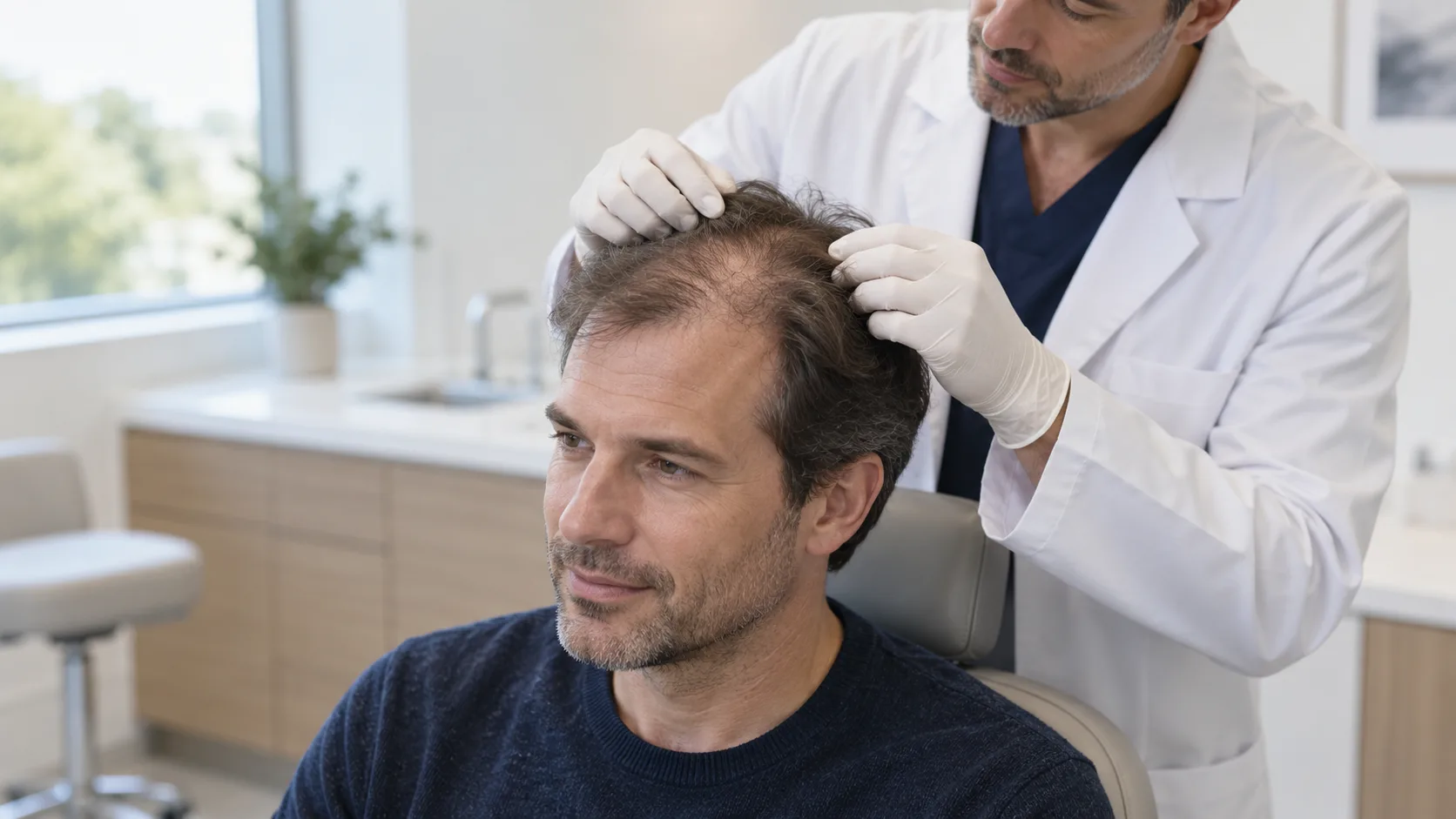
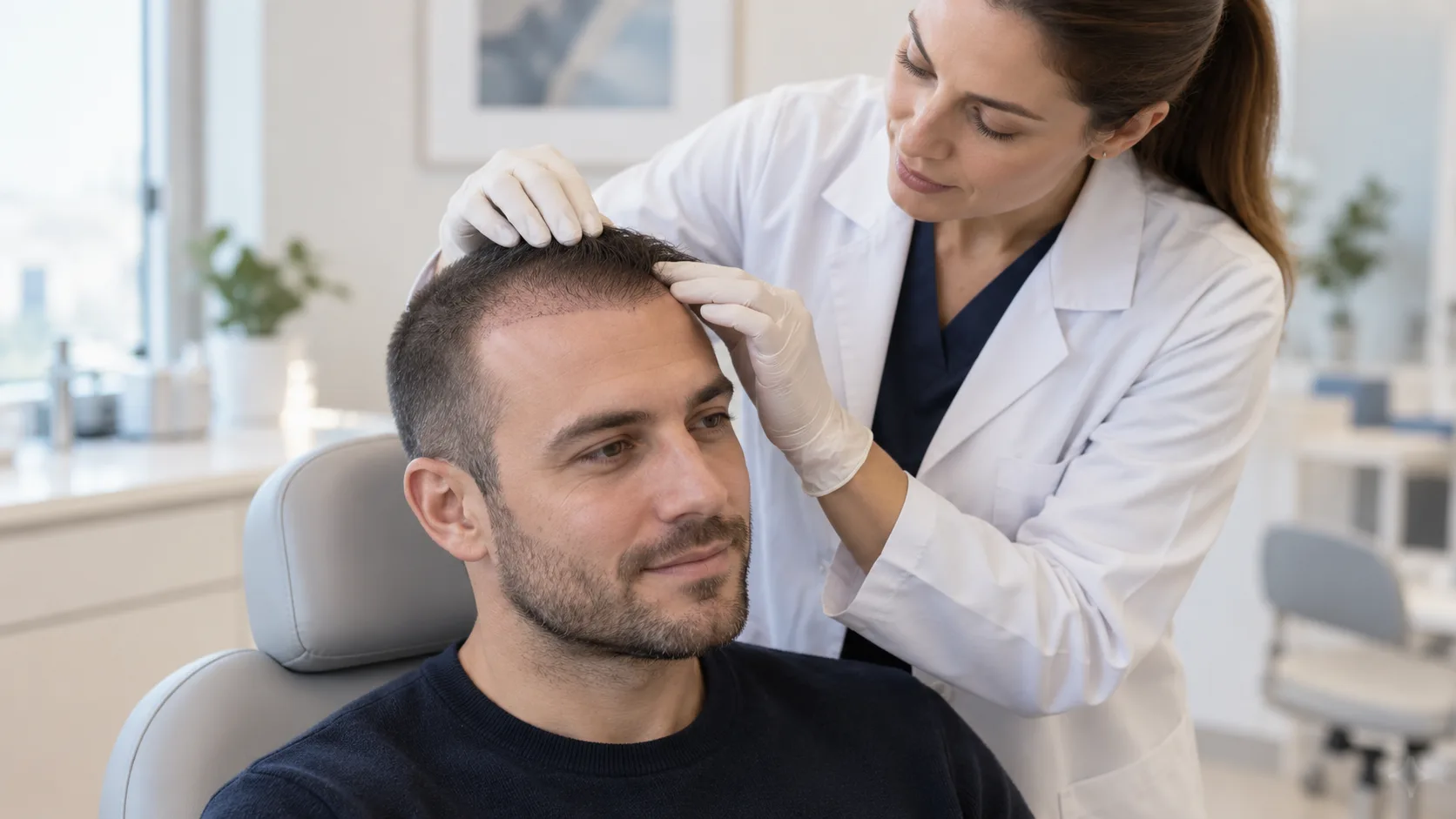
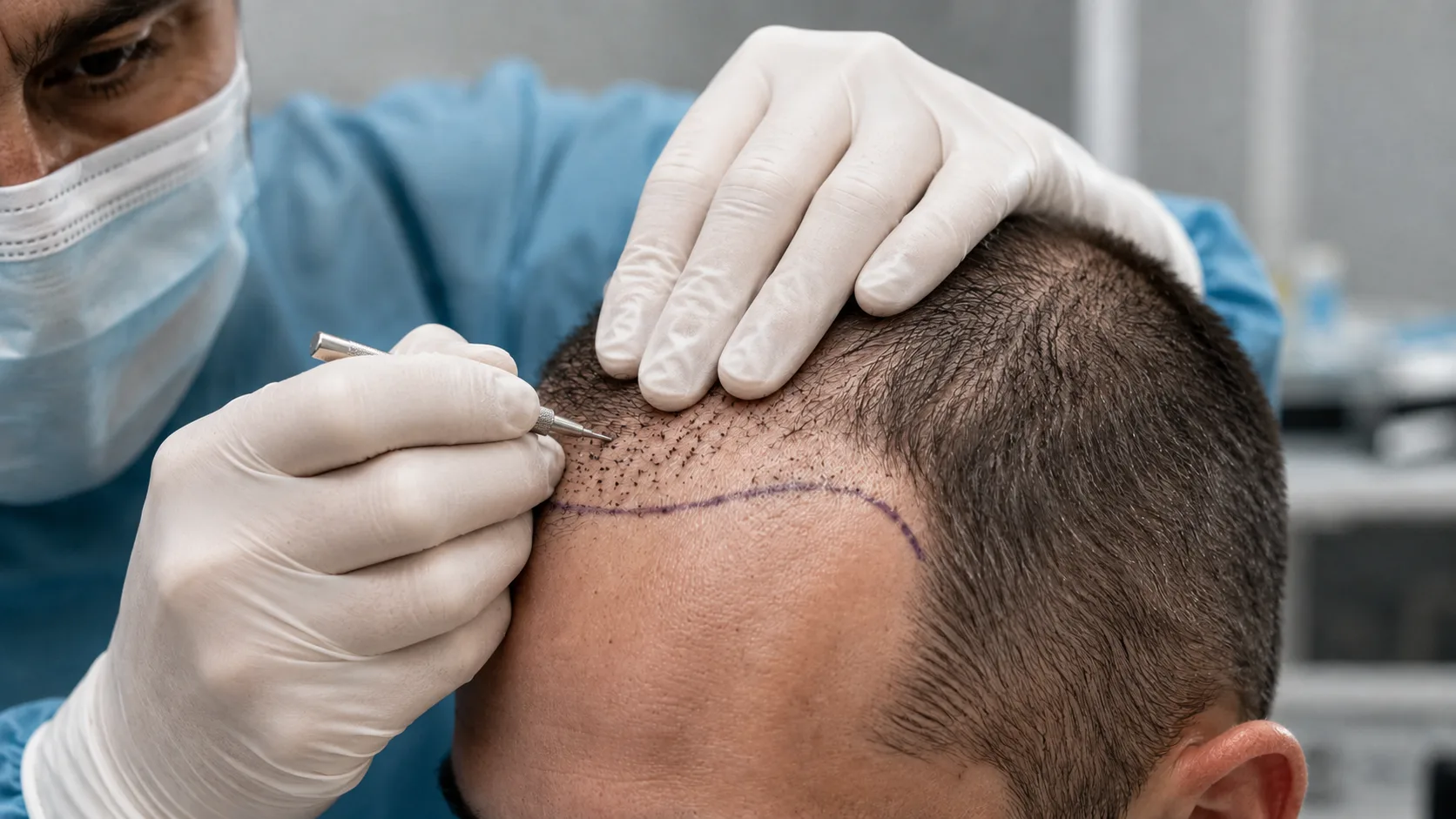
Die Erstellung der Empfangsstelle ist der chirurgische Schritt, bei dem der Chirurg winzige Öffnungen in der kahlen Kopfhaut vorbereitet. Diese Öffnungen erhalten entnommene follikuläre Einheitengrafts. Diese Phase liegt zwischen der Entnahme des Spenders und der Implantation der Grafts. Der Chirurg gestaltet jede Stelle, um Haarrichtung, Neigung, Dichte und Tiefe zu kontrollieren. Diese Faktoren bestimmen, ob das Endergebnis natürlich oder künstlich aussieht. Die Erstellung der Empfangsstelle erfordert chirurgische Präzision und ästhetische Planung. Der Chirurg muss technisches Können mit künstlerischem Urteilsvermögen in Einklang bringen. Dieser Artikel erklärt jeden Aspekt der Erstellung der Empfangsstelle anhand aktueller wissenschaftlicher Erkenntnisse.
Warum ist die Erstellung der Empfängerstelle bei Haartransplantationen wichtig?
Die Erstellung des Empfangsortes bestimmt, wo jedes Transplantat wächst und wie jedes Haar aus der Kopfhaut austritt. Der Chirurg erstellt in dieser Phase Tausende von Mikroinzisionen. Jede Inzision legt den dauerhaften architektonischen Plan für das Ergebnis fest. Diese Phase regelt Winkel, Richtung, Tiefe und Dichte für jedes platzierte Transplantat. Falsche Winkelführung führt zu unnatürlich wirkenden "Puppenhaaren" oder "Zahnbürsten"-Erscheinungen. Eine korrekte Gestaltung des Empfangsortes reproduziert natürliche Haaraustrittmuster. Der Chirurg muss während dieses Prozesses vorhandene native Haarfollikel schützen. Die Erstellung des Empfangsortes beeinflusst auch das Überleben der Transplantate durch den Erhalt der Blutversorgung. Die Internationale Gesellschaft für Haarwiederherstellung erkennt Empfangsorte mit begrenzter Tiefe und hohe Vergrößerung als Voraussetzung für optimale Ergebnisse an.
Was ist die Erstellung des Empfängerstücks?
Die Erstellung des Empfängerstelle ist der Prozess, bei dem Mikro-Inzisionen auf der empfangenden Kopfhaut vorgenommen werden. Diese Inzisionen nehmen die entnommenen follikulären Einheitengrefts auf. Der Chirurg erstellt diese Stellen nach der Entnahme vom Spender und vor der Implantation der Grefts. Jeder Standort bietet Platz für einen follikulären Einheitengreft. Der Greft enthält ein bis vier Haarfollikel. Der Chirurg passt die Abmessungen der Stelle an die Größe des Grefts an. Der Chirurg passt auch die Tiefe der Stelle an die Länge des Grefts an. Eine ordnungsgemäße Passform verhindert eine Kompression der Grefts oder übermäßige Bewegung.
Was bedeutet "Empfangsstelle" bei der Haartransplantation?
Die Empfängerstelle ist eine winzige Öffnung im haarlosen Bereich der Kopfhaut. Der Chirurg erstellt diese Öffnung, um ein follikuläres Einheitstransplantat aufzunehmen. Der Spenderbereich liefert die Transplantate. Der Empfängerbereich erhält die Transplantate. Die Empfängerstelle ist die spezifische Mikroinzision innerhalb des Empfängerbereichs. Das follikuläre Einheitstransplantat ist die biologische Einheit, die Haarfollikel enthält. Jede Empfängerstelle bietet Platz für ein Transplantat. Der Chirurg platziert Tausende dieser Stellen im Empfängerbereich.
Wann wird die Erstellung der Empfängerstelle durchgeführt?
Die Erstellung der Empfängerstelle erfolgt nach der Beurteilung des Empfängerbereichs und der Verabreichung von Anästhesie. Der Chirurg schließt diese Phase ab, bevor die Implantation der Grafts beginnt. Einige Implantationsmethoden kombinieren die Erstellung des Standorts und die Platzierung. Direkte Implantationsansätze verwenden spezialisierte Stifte, die gleichzeitig Standorte erstellen und Grafts platzieren. Die meisten Techniken trennen die Erstellung des Standorts von der Platzierung des Grafts. Der Chirurg entwirft zunächst den Empfängerbereich. Dann verabreicht der Chirurg die Anästhesie. Anschließend erstellt der Chirurg alle Empfängerstätten. Schließlich implantiert das Team die Grafts in diese vorgefertigten Stätten.
Wie wird das Empfängergebiet vor der Erstellung der Stelle geplant?
Der Chirurg plant das Empfängergebiet, bevor er irgendwelche Stellen erstellt. Diese Planung umfasst mehrere Bewertungen. Der Chirurg bewertet das Alter des Patienten und die Gesichtsproportionen. Der Chirurg untersucht die vorhandene Haarlinie und das Muster des Haarausfalls. Der Chirurg analysiert die Haarmerkmale, einschließlich Dicke und Locken. Der Chirurg berücksichtigt auch das zukünftige Risiko von Haarausfall. Diese umfassende Bewertung leitet jede nachfolgende Entscheidung.
Wie wird die Haarlinie entworfen?
Der Chirurg gestaltet die Haarlinie unter Verwendung anatomischer und ästhetischer Prinzipien. Eine angemessene Haarlinie sieht natürlich aus und passt zum Alter des Patienten. Der Chirurg bewertet die Gesichtsproportionen und die bestehende Position der Haarlinie. Der Chirurg berücksichtigt das Haarausfallmuster des Patienten und dessen zukünftige Entwicklung. Der Chirurg entwirft eine unregelmäßige oder leicht gewundene Haarlinie. Eine perfekt gerade Haarlinie sieht künstlich aus. Natürliche Haarlinien zeigen subtile Unregelmäßigkeiten und Variationen in der Dichte. Der Chirurg platziert Einzelhaartransplantate an der vorderen Kante. Diese Platzierung schafft eine sanfte, natürliche Übergangszone.
Wie wird der Bedarf an Transplantaten geschätzt?
Der Chirurg schätzt den Bedarf an Transplantaten, indem er die zu behandelnde Fläche misst. Der Chirurg zählt die verfügbaren follikulären Einheiten im Spenderbereich. Der Chirurg erkennt die Grenzen zwischen Spender- und Empfängergebiet. Ein größerer kahler Bereich erfordert mehr Transplantate. Der Spenderbereich hat eine begrenzte Anzahl an Transplantaten. Der Chirurg plant die strategische Verteilung der Transplantate anstatt eine maximale Dichte überall anzustreben. Einige Bereiche benötigen eine höhere Dichte. Andere Bereiche benötigen eine niedrigere Dichte. Der Chirurg weist die Transplantate auf der Grundlage ästhetischer Prioritäten und der verfügbaren Menge zu.
Wie werden bestehende Haare betrachtet?
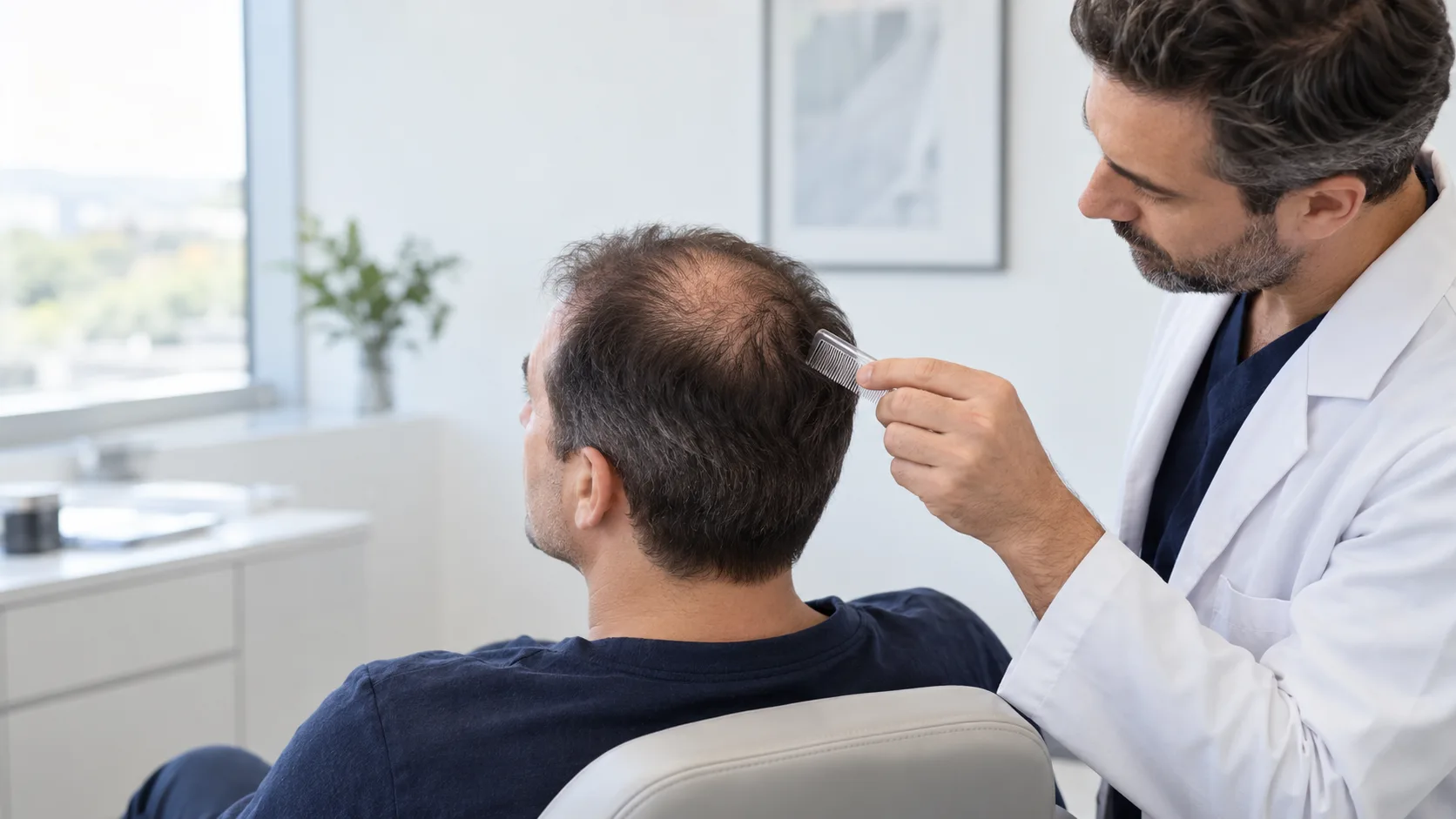
Der Chirurg identifiziert Bereiche mit vollständigem Haarausfall, diffusem Haarausfall und Miniaturisierung. Der Chirurg lokalisiert auch Bereiche mit vorhandenem eigenem Haar. Die Erstellung der Empfängerstelle wird in Bereichen mit vorhandenen Folikeln technisch anspruchsvoller. Der Chirurg muss vermeiden, bestehende Folikel zu durchtrennen. Der Chirurg muss auch unnötige Traumata an dem umgebenden Gewebe vermeiden. Vorhandene miniaturisierte Haare dienen als Orientierungshilfen für die Ausrichtung der Empfängerstelle. Der Chirurg folgt der natürlichen Richtung dieser Haare.
Wie funktioniert die Erstellung des Empfängerbereichs Schritt für Schritt?
Der Chirurg folgt bei der Erstellung der Empfängerstelle einer systematischen Abfolge. Jeder Schritt baut auf dem vorherigen auf. Der Chirurg kontrolliert die Variablen in jeder Phase.
Schritt 1: Ist das Empfängerareal anesthesiert?
Der Chirurg verabreicht eine lokale Anästhesie, bevor er Empfängerstellen anlegt. Der Chirurg kann auch regionale Nervenblockaden einsetzen. Der Tumeszenz-Injektion folgt die Anästhesie. Tumeszenz ist die Injektion von Flüssigkeit in den Empfängerbereich. Diese Flüssigkeit sorgt für Festigkeit und verringert Blutungen. Kontrollierte Tumeszenz erleichtert die Erstellung der Stellen und die Hämostase. Der Chirurg verwendet individualisierte Anästhesieprotokolle. Es gibt kein einheitliches Medikamentenregime, das für alle Patienten passt. Der Chirurg wählt die Anästhetika basierend auf den Faktoren des Patienten und den Anforderungen des Verfahrens aus.
Schritt 2: Ist das Empfängergebiet markiert?
Der Chirurg markiert das geplante Spendergebiet, bevor er die Entnahmestellen erstellt. Der Chirurg definiert den Haaransatz, die Stirnzone, die Mitte der Kopfhaut und den Scheitel. Der Chirurg plant die Verteilung der Transplantate in diesen Zonen. Anatomische Landmarken leiten den Markierungsprozess. Bestehende Haarmuster beeinflussen ebenfalls das Design. Der Chirurg verwendet diese Markierungen als Bezugspunkte während der Erstellung der Entnahmestellen.
Schritt 3: Wie werden Empfängerstätten erstellt?
Der Chirurg verwendet spezialisierte Instrumente, um Empfängerstätten zu schaffen. Hypodermische Nadeln erzeugen präzise Einstiche. Maßgeschneiderte Klingen erstellen Schlitze mit spezifischen Abmessungen. Schlitzklingen machen lineare Schnitte. Meißel schaffen spezielle Öffnungen. Stanzwerkzeuge erzeugen kreisförmige Löcher. Multi-Schnitt-Instrumente schaffen mehrere Stellen gleichzeitig. Der Chirurg wählt die Instrumentabmessungen basierend auf den Eigenschaften des Graffits aus. Der Chirurg berücksichtigt auch die beabsichtigte Tiefe des Einsatzortes und die Gewebecharakteristika. Sterile Instrumente verhindern Infektionen. Kontrollierte Gewebeverletzungen bewahren die umliegenden Strukturen.
Schritt 4: Wie werden die Greifte den Empfängerstätten zugeordnet?
Der Chirurg passt die Greiftgröße an die Abmessungen des Empfängerbereichs an. Der Chirurg stimmt auch die Tiefe des Bereichs mit der Länge des Greifts ab. Gewebe-Eigenschaften beeinflussen diesen Anpassungsprozess. Die Bereiche sollten die Greifts ohne übermäßige Kompression aufnehmen können. Die Bereiche sollten auch unnötige Vergrößerungen vermeiden. Eine angemessene Passform des Greifts an der Stelle verhindert das Herausspringen. Eine ordnungsgemäße Passform fördert zudem die Heilung und die Bildung von Blutgefäßen.
Was ist die Slit-Technik zur Erstellung des Empfängerbereichs?
Die Schlitzechnik erstellt lineare Empfängerinzisionen vor der Einsetzung der Grefts. Der Chirurg führt diese Inzisionen mit Klingen oder Nadeln durch. Die Schlitzechnik dominiert die moderneHaartransplantationDiese Technik wird von Chirurgen in den meisten Eingriffen weltweit angewendet.
Wie funktioniert die Slit-Technik?
Der Chirurg erstellt lineare Einschnitte in der empfangenden Kopfhaut. Jeder Einschnitt erhält einen follikulären Einheitstransplantat. Der Chirurg kontrolliert den Winkel, die Richtung und die Tiefe jedes Schnitts. Der Chirurg platziert das Transplantat mit einer Pinzette oder einem Implantator in den Schnitt. Das umgebende Gewebe hält das Transplantat an seinem Platz. Lineare Einschnitte ermöglichen eine präzise Kontrolle der Haarwachsmuster.
Was sind die Vorteile der Schnitttechnik?
Die Schnitttechnik bietet eine präzise Kontrolle der Richtung. Der Chirurg steuert die Neigung mit hoher Genauigkeit. Der Chirurg kontrolliert auch die Verteilung und Dichte. Die Technik funktioniert in verschiedenen Empfängerbereichen. Der Chirurg kann natürliche Haarmuster mithilfe von Schnitten reproduzieren. Laterale oder koronale Schnitte bieten besondere Vorteile. Diese Schnitte ermöglichen es, dass Mehrhaartransplantate sich ausbreiten. Diese Ausbreitung sorgt für eine bessere visuelle Abdeckung.
Was sind die Einschränkungen der Schnitttechnik?
Die Schnitttechnik stellt Herausforderungen im Zusammenhang mit bestehenden einheimischen Follikeln dar. Der Chirurg muss vermeiden, angrenzende Haare zu durchtrennen. Das Erstellen großer Mengen von Schnitten erfordert erheblichen Zeitaufwand. Die Technik erfordert eine hohe chirurgische Präzision. Falsche Positionierung birgt das Risiko von Follikelschäden. Sagittale Schnitte in spitzen Winkeln erhöhen die Länge der Oberflächeninzision. Diese Erhöhung kann das oberflächliche vaskuläre Plexus schädigen.
Was ist die Lochtechnik zur Erstellung von Empfängerstellen?
Die Lochtechnik erstellt kreisförmige oder stichartige Empfängerstellen. Der Chirurg verwendet Stanzgeräte oder Nadeln, um diese Öffnungen zu machen. Diese Technik bietet eine Alternative zu linearen Schnitten.
Wie unterscheidet sich die Lochtechnik von der Schnitttechnik?
Die Lochtechnik erstellt kreisförmige Öffnungen anstelle von linearen Einschnitten. Der konzeptionelle Unterschied betrifft die Form und nicht die Funktion. Beide Techniken empfangen follikuläre Einheitstransplantate. Die Sichtbarkeit des Lochs kann die Implantation in behaarten Bereichen erleichtern. Die kreisförmige Form ermöglicht eine einfachere Platzierung des Transplantats zwischen bestehenden Haaren. Der Chirurg kann jedes Loch klarer sehen als einen linearen Schnitt.
Was sagen die Beweise über Loch- versus Schnitt-Empfängerstellen?
Kasai et al. führten 2023 eine prospektive Halbseitenvergleichsstudie durch. Die Studie umfasste acht männliche Patienten mit androgenetischer Alopezie. Die Forscher verglichen die Lochtechnik und die Schnitttechnik an den gegenüberliegenden Seiten der Stirn. Die Lochtechnik verwendete einen 0,65 mm großen Lochstanzer aus Edelstahl. Die Schnitttechnik verwendete eine 18-Guage-Hypodermanadel. Beide Techniken erzeugten 50 Stellen pro Quadratzentimeter. Die durchschnittliche Zeit zur Erstellung der Empfängerstelle war mit der Lochtechnik signifikant kürzer. Die Lochtechnik benötigte 95,5 Sekunden, gegenüber 121 Sekunden für die Schnitttechnik. Die Implantationszeit zeigte keinen signifikanten Unterschied zwischen den Techniken. Die Ein-Jahres-Transplantat-Überlebensraten betrugen 94% für die Lochtechnik und 92% für die Schnitttechnik. Dieser Unterschied war statistisch nicht signifikant. Komplikationen wie Schmerzen, Taubheitsgefühl und Follikulitis zeigten keine signifikanten Unterschiede. Die Studie kam zu dem Schluss, dass die Lochtechnik schnell und effektiv war. Die Studie umfasste nur acht Patienten. Daher stellen die Ergebnisse keine universelle Überlegenheit einer der beiden Techniken fest.
Wie beeinflussen Winkel und Richtung der Empfängerstelle das Ergebnis?
Der Winkel und die Richtung der Empfängerstelle bestimmen, wie transplantiertes Haar die Kopfhaut verlässt. Diese Variablen kontrollieren die Natürlichkeit des endgültigen Erscheinungsbildes.
Warum ist die Winkelung der Empfängerstelle wichtig?
Der Einschnittwinkel beeinflusst den endgültigen Austrittswinkel des transplantierten Haares. Der Chirurg passt diesen Winkel der Richtung der vorhandenen Haare an. Der Chirurg passt auch den Winkel der Orientierung der einheimischen follikulären Einheiten an. Natürliche Haarlinienwinkel unterscheiden sich von Vertexwinkeln. Falsche Winkelung führt zu einem unnatürlichen Erscheinungsbild. Haare, die senkrecht zur Kopfhaut wachsen, sehen künstlich aus. Stumpfe Winkel ahmen das natürliche Haarwachstum nach.
Wie unterscheiden sich die Haarlinienwinkel von den Vertexwinkeln?
Der vordere Bereich verwendet flachere Winkel. Haare verlassen die Kopfhaut im vorderen Haaransatz bei 15 bis 20 Grad. Der mittlere Kopf zeigt progressive Winkelveränderungen. Die Winkel erhöhen sich auf 30 bis 45 Grad im mittleren Kopf. Der Kronen- oder Vertexbereich weist einzigartige Herausforderungen auf. Der Vertex zeigt ein radial und wechselndes Richtungs-Muster. Der Chirurg muss kontinuierlich variierende Winkel über die Krone hinweg erstellen. Dieses multidirektionale Muster erfordert fortgeschrittene technische Fähigkeiten.
Wie leitet vorhandenes Haar die Richtung der Empfängerstelle?
Vorhandene miniaturisierte Haare bieten anatomische Leitfäden für die Richtung der Empfängerstelle. Der Chirurg positioniert die Empfängerstellen parallel zur bestehenden follikulären Richtung. Diese Ausrichtung reproduziert natürliche Wachstumsmuster. Zu nahe an bestehenden Follikeln platzierte Stellen bergen das Risiko von Schäden. An unangemessenen Winkeln platzierte Stellen riskieren ebenfalls das Durchtrennen einheimischer Follikel. Der Chirurg studiert die bestehenden Haarmuster, bevor er Stellen erstellt.
Wie beeinflusst die Dichte der Empfängerstelle die Ergebnisse der Haartransplantation?
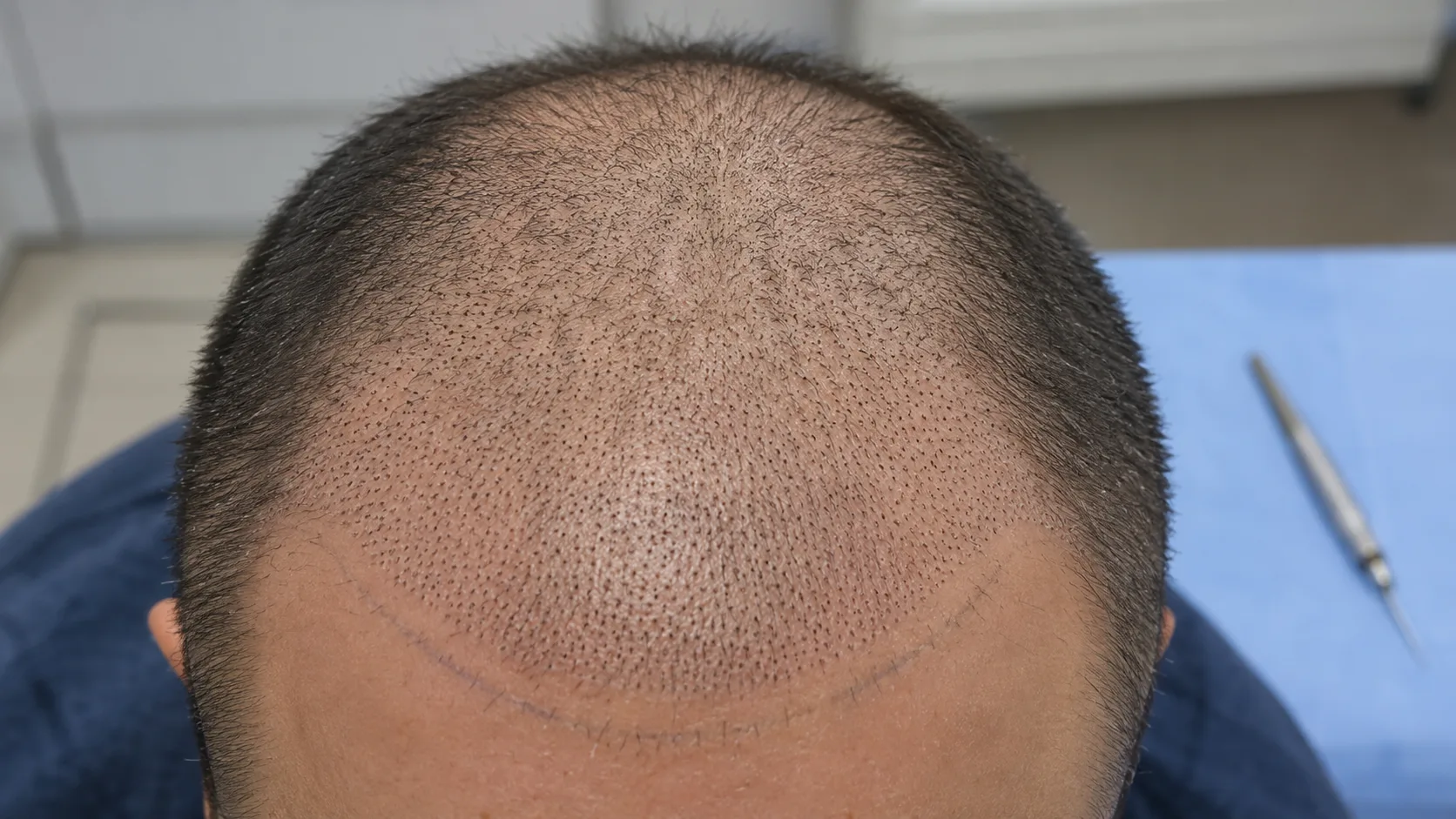
Die Dichte des Empfangsbereichs bestimmt, wie viele Grafts pro Quadratzentimeter platziert werden. Diese Variable beeinflusst die visuelle Dicke und das Überleben der Grafts.
Was ist die Dichte des Empfangsbereichs?
Die Graft-Dichte misst die Anzahl der Grafts pro Quadratzentimeter. Die Haardichte misst die Anzahl der einzelnen Haare pro Quadratzentimeter. Die visuelle Dichte beschreibt, wie dick das Haar erscheint. Diese drei Messungen unterscheiden sich. Ein Graft, das drei Haare enthält, erzeugt eine höhere visuelle Dichte als ein Graft, das ein Haar enthält. Die Anzahl der Haare pro follikuläre Einheit beeinflusst die wahrgenommene Dichte. Chirurgen planen die Dichte basierend auf mehreren Faktoren.
Wie wird die angemessene Dichte bestimmt?
Der Chirurg berücksichtigt die Haarstärke bei der Planung der Dichte. Dickes Haar bietet mehr visuelle Abdeckung als dünnes Haar. Haarfarbe und Hautkontrast beeinflussen ebenfalls die Dichteplanung. Dunkles Haar auf heller Haut erfordert eine niedrigere Dichte für visuelle Wirkung. Helles Haar auf dunkler Haut erfordert eine höhere Dichte. Die bestehende native Dichte beeinflusst die Planung. Der Chirurg muss das transplantierte Haar mit dem vorhandenen Haar harmonisieren. Die Eigenschaften des Empfängergewebes begrenzen die maximal sichere Dichte. Verfügbare Spendergrafts schränken die gesamte Abdeckung ein. Das Muster des Haarausfalls bestimmt die priorisierten Bereiche. Maximale Dichte ist nicht immer optimal. Eine strategische Verteilung führt oft zu besseren Ergebnissen als maximale Packung.
Kann eine übermäßige Dichte des Empfangsbereichs Komplikationen verursachen?
Eine übermäßige Dichte führt zu Gewebeverletzungen. Die Schaffung dichter Bereiche stört das lokale vaskuläre Netzwerk. Grafts konkurrieren um eine begrenzte Blutzufuhr. Diese Konkurrenz kann zu lokaler Ischämie führen. Ischämie verringert das Überleben der Grafts. Dichten über 50 bis 60 Grafts pro Quadratzentimeter gefährden die Dermal-Vaskularisation. Forschung zeigt Überlebensraten von 97 % bei 10 Grafts pro Quadratzentimeter. Das Überleben fällt auf 92 % bei 20 Grafts pro Quadratzentimeter. Das Überleben sinkt auf 72 % bei 30 Grafts pro Quadratzentimeter. In einigen Studien erreicht das Überleben 78 % bei 40 Grafts pro Quadratzentimeter. Diese Erkenntnisse zeigen, dass die Dichte das Überleben beeinflusst. Der Chirurg muss die Dichteplanung für jeden Patienten individualisieren.
Wie werden vorhandene Follikel während der Erstellung des Empfangsbereichs geschützt?
Vorhandene Follikel benötigen Schutz während der Erstellung des Bereichs. Das native Haar bietet wertvolle Abdeckung und Orientierung für neue Grafts.
Warum ist die Durchtrennung von Follikeln ein Problem?
Die Durchtrennung von Follikeln bedeutet, durch einen bestehenden Follikel zu schneiden. Eine unangemessene Positionierung des Empfangsbereichs kann bestehende Follikel schädigen. Diese Schäden können zu einem vorübergehenden oder dauerhaften Verlust der natürlichen Dichte führen. Der Chirurg muss bestehende Follikel bei der Erstellung des Empfangsbereichs identifizieren und vermeiden. Durchtrennte Follikel können die Produktion von Haaren einstellen. Dieser Verlust verringert die gesamte Abdeckung.
Wie können Empfangsbereiche um bestehendes Haar herum geschaffen werden?
Der Chirurg hält einen angemessenen Abstand von den bestehenden Haarschaft. Der Chirurg folgt der natürlichen follikulären Richtung. Der Chirurg wählt Instrumente, die für das Empfangsgebiet geeignet sind. Der Chirurg passt die Positionierung des Bereichs an die variable Verteilung des natürlichen Haares an. Starre Abstandssysteme versagen in Bereichen mit bestehendem Haar. Der Chirurg muss den Abstand basierend auf den tatsächlichen Follikellokationen anpassen.
Welche Instrumente werden zur Erstellung des Empfangsbereichs verwendet?
Chirurgen verwenden verschiedene Instrumente zur Erstellung der Empfangsbereiche. Jedes Instrument bietet spezifische Vorteile.
Wie werden Nadeln verwendet?
Hypodermische Nadeln schaffen präzise Empfangsbereiche. Spezielle Nadeln bieten zusätzliche Kontrolle. Nadeln ermöglichen eine genaue Breitenkontrolle. Nadeln eignen sich effektiv für kleinere Grafts. Der Chirurg wählt die Nadelgröße basierend auf der Graft-Größe. Übliche Größen liegen zwischen 18 und 23.
Wie werden speziell geschnittene Klingen verwendet?
Spezielle Klingen bieten bestimmte Dimensionen. Der Chirurg stimmt die Klingen Größe auf die Eigenschaften des Grafts ab. Individuelle Klingen erzeugen angemessen große Schnitte. Der Chirurg kann Stahlklingen, Saphirklingen oder Meißelspitzenklingen verwenden. Stahlklingen schaffen U-förmige Kanäle. Saphirklingen schaffen V-förmige Kanäle. V-förmige Kanäle ermöglichen eine engere Anpassung des Grafts. Meißelspitzenklingen ermöglichen einen präzisen Eintritt.
Was sind Mehrschlitzinstrumente?
Mehrschlitzinstrumente schaffen mehrere Empfängerstellen gleichzeitig. Diese Instrumente reduzieren die Operationszeit. Der Chirurg kann mit einer einzigen Bewegung mehrere Schlitze erzeugen. Diese Instrumente schränken jedoch die Flexibilität in Bereichen mit vorhandenem Haar ein. Komplexe Richtungsmuster stellen ebenfalls eine Herausforderung für Mehrschlitzinstrumente dar. Der Chirurg reserviert diese Werkzeuge für kahle Bereiche mit einheitlichen Mustern.
Wie beeinflusst die Größe des Instruments die Erstellung von Empfängerstellen?
Durchmesser der Klinge oder des Stempels muss der Größe des Grafters entsprechen. Kleine Grafte erfordern kleine Instrumente. Große Grafte erfordern größere Instrumente. Die Größe des Instruments beeinflusst das Gewebetrauma. Größere Instrumente verursachen mehr Gewebestörung. Kleinere Instrumente verursachen weniger Trauma, können aber größere Grafte möglicherweise nicht accomodieren. Der Chirurg wählt Instrumente basierend auf der chirurgischen Anatomie aus. Es gibt keine universelle Größe, die für alle Situationen geeignet ist.
Wie beeinflusst die Erstellung von Empfängerstellen die Überlebensrate der Grafte?
Die Erstellung von Empfängerstellen beeinflusst das Überleben der Grafte durch mehrere Mechanismen. Der Chirurg muss jede Variable optimieren.
Warum ist es wichtig, die Auslagerungszeit des Grafters zu minimieren?
Grafte beginnen sofort an Lebensfähigkeit zu verlieren, sobald sie die Kopfhaut verlassen. Ischämie setzt sofort ein. Forschungen von Limmer zeigten einen Verlust von etwa 1 % pro Stunde außerhalb des Körpers. Die Überlebensraten lagen bei 95 % nach 2 Stunden, 90 % nach 4 Stunden, 86 % nach 6 Stunden und 79 % nach 24 Stunden. Eine effiziente Vorbereitung der Empfängerstellen verringert die Auslagerungszeit des Grafters. Eine verlängerte Erstellung der Stellen lässt die Grafte warten. Ein effizienter Arbeitsablauf unterstützt die Handhabung und Transplantation der Grafte. Das Vorab-Erstellen von Empfängerstellen vor der Entnahme reduziert die Wartezeiten. Diese Sequenzänderung verbessert das Überleben der Grafte.
Bestimmt die Technik der Empfängerstelle direkt das Überleben des Grafters?
Die Technik der Empfängerstelle ist ein Faktor unter vielen. Das Überleben des Grafters hängt von der Qualität des Empfängergewebes ab. Chirurgisches Trauma beeinflusst das Überleben. Die Handhabung des Grafters beeinflusst die Ergebnisse. Die Implantationstechnik ist wichtig. Ischämie und Auslagerungszeit sind entscheidend. Die postoperative Pflege beeinflusst die Ergebnisse. Die Erstellung von Empfängerstellen ist ein Bestandteil eines multifaktoriellen Ergebnisses. Kein einzelner Faktor bestimmt das Überleben allein.
Was zeigt der aktuelle Stand der Evidenz?
Die Kasai-Studie von 2023 zeigte eine Überlebensrate von 94 % für die Lochtechnik und 92 % für die Schlitztechnik. Dieser Unterschied war statistisch nicht signifikant. Die Studie umfasste nur acht Patienten. Größere kontrollierte Studien sind erforderlich. Atodaria et al. analysierten 2021 das Design von Schlitzen. Sie fanden heraus, dass halbkonische Klingen die vaskulären Schäden reduzieren. Sie fanden auch, dass akute Winkel Verletzungen des tiefen Plexus verringern. Koronale Schlitze verursachen weniger vaskuläre Schäden als sagittale Schlitze. Diese Ergebnisse deuten darauf hin, dass die Auswahl und Ausrichtung des Instruments das Überleben beeinflussen. Dennoch garantiert keine einzelne Technik überlegene Ergebnisse bei allen Patienten.
Was sind die häufigsten Fehler bei der Erstellung von Empfängerstellen?
Chirurgen müssen während der Erstellung von Empfängerstellen häufige Fehler vermeiden. Jeder Fehler verursacht spezifische Probleme.
Was passiert, wenn Empfängerstellen zu tief sind?
Tiefe Stellen verursachen übermäßiges Gewebetrauma. Der Chirurg könnte tiefe Gefäßstrukturen beschädigen. Eine tiefe Platzierung birgt auch das Risiko, dass der Graft begraben wird. Begrabte Grafte können Folikulitis verursachen. Der Chirurg muss die Tiefe präzise steuern.
Was passiert, wenn Empfängerstellen zu oberflächlich sind?
Oberflächliche Stellen bieten unzureichende Aufnahme des Grafters. Der Graft könnte aus der Stelle herausfallen. Eine oberflächliche Platzierung beeinflusst die Positionierung des Grafters. Der Graft könnte sich nicht richtig mit dem umgebenden Gewebe integrieren.
Was passiert, wenn die Stellen zu groß sind?
Große Stellen führen zu einer schlechten Passform des Grafters. Der Graft könnte sich innerhalb der Stelle bewegen. Bewegung verursacht kosmetische Unregelmäßigkeiten. Große Stellen heilen auch langsamer. Der Chirurg muss die Größe der Stelle an den Abmessungen des Grafters anpassen.
Was passiert, wenn die Stellen zu nahe beieinander liegen?
Die dichte Erstellung von Empfängerstätten führt zu Gewebetrauma. Der Chirurg unterbricht das vaskuläre Netzwerk. Transplantate konkurrieren um die begrenzte Blutversorgung. Es kann zu Ischämie kommen. Der Chirurg muss den Abstand individuell basierend auf den Gewebecharakteristika anpassen.
Was passiert, wenn die Winkel der Empfängerstätten falsch sind?
Falsche Winkel erzeugen ein unnatürliches Herauswachsen der Haare. Die Haare können senkrecht zur Kopfhaut wachsen. Dies erzeugt ein "Puppenhaare"-Aussehen. Falsche Winkel in der Haarlinie wirken besonders künstlich. Falsche Winkel im Scheitel stören das natürliche Wirbelmuster.
Was passiert, wenn bestehende Follikel beschädigt werden?
Die transektierte Follikel zerstört native Follikel. Dies führt zu einem Schockverlust im Empfängerbereich. Schockverlust bedeutet temporäres Ausfallen der nativen Haare. Ein permanenter Verlust kann auftreten, wenn Follikel bereits miniaturisiert waren. Der Chirurg muss bestehende Follikel sorgfältig in dünner werdenden Bereichen kartieren.
Wie unterscheidet sich die Erstellung von Empfängerstätten zwischen der vorderen, mittleren Kopfhaut und den Kronenbereichen?
Verschiedene Kopfhautregionen erfordern unterschiedliche Ansätze zur Erstellung von Empfängerstätten. Der Chirurg passt die Technik an jede Zone an.
Wie werden Empfängerstätten in der vorderen Haarlinie erstellt?
Die vordere Haarlinie erfordert ein unregelmäßiges Design. Der Chirurg schafft eine natürliche Übergangszone. Einzelhaargrafts dominieren die Vorderkante. Der Chirurg kontrolliert den Winkel und die Richtung präzise. Im vorderen Bereich werden die akuten Winkel am stärksten genutzt. Der Chirurg platziert Stätten in einem Winkel von 15 bis 20 Grad. Dieser flache Winkel ahmt das natürliche Herauswachsen der Haarlinie nach.
Wie wird die Erstellung von Empfängerstätten an die mittlere Kopfhaut angepasst?
Die mittlere Kopfhaut zeigt den Übergang von frontalem zur mittleren Orientierung. Die Winkel nehmen progressiv zu. Der Chirurg plant die Dichte um vorhandenes natives Haar. Viele Patienten behalten einige Haare in der mittleren Kopfhaut. Der Chirurg muss diese Follikel schützen. Der Chirurg schafft auch ausreichend Dichte für visuelle Wirkung.
Wie unterscheidet sich die Krone oder der Scheitel?
Die Krone zeigt ein kreisförmiges oder radial wachsendes Muster. Der Chirurg erzeugt wechselnde Winkel und Richtungen über dem Scheitel. Eine multidirektionale Erstellung von Stätten ist in der Krone entscheidend. Das Wirbelmuster erfordert kontinuierliche Winkelvariationen. Die Krone stellt aufgrund der komplexen Geometrie technische Herausforderungen dar. Der Chirurg muss das natürliche Spiral-Muster nachbilden.
Kann die Erstellung von Empfängerstätten in Bereichen mit bestehendem Haar durchgeführt werden?
Ja. Chirurgen führen regelmäßig Transplantationen in dünner werdende Bereiche durch. Diese Bereiche enthalten vorhandenes natives Haar.
Was sind die Risiken in Bereichen mit vorhandenem Haar?
Das Risiko, native Follikel zu schädigen, steigt. Der Chirurg muss vermeiden, bestehende Haare zu transekten. Der Abstand der Stätten erfordert eine Anpassung. Der Chirurg wählt kleinere Instrumente für eine präzise Platzierung. Die Visualisierung wird schwieriger. Der Chirurg verwendet eine Vergrößerung, um bestehende Follikel zu sehen. Die Angulation muss mit der Richtung der bestehenden Haare übereinstimmen. Miniaturisierte Haare dienen als Leitfaden für die Orientierung der Empfängerstätten.
Wie unterscheidet sich die Erstellung von Empfängerstätten in Narben- oder fibrotischem Gewebe?
Narbengewebe stellt einzigartige Herausforderungen für die Erstellung von Empfängerstätten dar.
Was macht Narbengewebe anders?
Narbengewebe unterscheidet sich in mehreren Aspekten von normalem Kopfhautgewebe. Narbengewebe zeigt eine verringerte Gefäßbildung. Narbengewebe weist auch eine reduzierte Gewebeelastizität auf. Die Haut fühlt sich härter und weniger elastisch an. Die Blutversorgung ist in narbigen Bereichen beeinträchtigt.
Warum erfordert Narbengewebe eine zusätzliche Beurteilung?
Der Chirurg muss die Gefäßbildung bewerten, bevor er Stellen in Narben anlegt. Eine reduzierte Blutversorgung kann die Überlebensrate der Grafts verringern. Der Chirurg kann in narbigen Bereichen kleinere Sitzungen verwenden. Der Chirurg kann auch die Dichteerwartungen senken. Standardprotokolle für die Kopfhaut gelten nicht direkt für narbige Bereiche. Der Chirurg individualisiert die Behandlungsplanung für jede Narbe.
Wie hängt die Schaffung von Empfängerstellen mit verschiedenen Haartransplantationstechniken zusammen?
Die Schaffung von Empfängerstellen funktioniert mit verschiedenen Entnahme- und Implantationstechniken. Der Chirurg passt die Stellenbildung an jede Methode an.
Wie funktioniert die Schaffung von Empfängerstellen bei FUE?
Die Entnahme von follikulären Einheiten erntet einzelne Grafts aus dem Spenderbereich. Der Chirurg legt dann Empfängerstellen im kahl werdenden Bereich an. Schließlich implantiert das Team die Grafts in diese Stellen.FUEbeschreibt die Entnahmemethode. FUE definiert nicht die Technik zur Schaffung von Empfängerstellen. Der Chirurg kann mit FUE Schlitz- oder Lochtechniken verwenden.
Wie funktioniert die Schaffung von Empfängerstellen bei DHI oder Direktimplantation?
Die direkte Haarimplantation verwendet spezialisierte Implantationsstifte. Einige Implanteransätze kombinieren die Schaffung von Empfängerstellen und die Platzierung von Grafts. Der Choi-Implanterstift schafft die Stelle und setzt das Graft in einer Bewegung ein. Dies beseitigt die Lücke zwischen der Schaffung der Stelle und der Platzierung. Andere Ansätze verwenden vordefinierte Stellen. Der Chirurg erstellt zuerst alle Stellen. Dann implantiert das Team die Grafts separat.DHIund FUE sind keine austauschbaren Begriffe. DHI beschreibt einen Implantationsansatz. FUE beschreibt einen Entnahmeansatz.
Ist Sapphire FUE eine Technik zur Schaffung von Empfängerstellen?
Nein. Sapphire FUE bezieht sich hauptsächlich auf die Verwendung von Saphirblättern während der Schaffung von Empfängerstellen. Saphirblätter sind schärfer als Stahlblätter. Sie erzeugen feinere Einschnitte mit weniger Gewebeverletzungen. Sapphire FUE findet im Rahmen eines FUE-Transplantationsablaufs statt. Die Technik erfordert weiterhin, dass der Chirurg die Empfängerstellen anlegt. Saphirblätter stellen eine Instrumentenwahl dar und sind keine grundlegend andere Technik.
Was passiert, nachdem die Empfängerstellen geschaffen wurden?
Das chirurgische Team fährt nach der Stellenbildung mit der Einsetzung der Grafts fort. Die postoperative Betreuung erfolgt nach der Implantation.
Wie werden Grafts in die Empfängerstellen eingesetzt?
Das chirurgische Team behandelt die Grafts sorgfältig. Das Team setzt jedes Graft in seine entsprechende Stelle ein. Das Team kontrolliert die Orientierung und die Tiefe während des Einsatzes. Das Team minimiert mechanische Traumen. Zangen oder Implanter platzieren die Grafts. Das umgebende Gewebe hält jedes Graft in Position.
Wie wird der Empfängerbereich unmittelbar nach der Implantation überwacht?
Der Chirurg bewertet die Positionierung der Greife. Das Team überprüft auf Blutungen und Gewebereaktionen. Es wird sichergestellt, dass die Greife richtig sitzen. Versetzte Greife erfordern eine sofortige Neuplatzierung.
Welche postoperative Faktoren beeinflussen das Endergebnis?
Die alleinige Erstellung des Empfängerbereichs bestimmt nicht das endgültige Ergebnis. Das Überleben der Greife hängt von der Heilung ab. Der Haarwachstumszyklus beeinflusst das Timing. Postoperative Schutzmaßnahmen verhindern das Verrutschen. Das Management des zugrunde liegenden Haarausfalls schützt das vorhandene Haar. Medizinische Therapien wie Finasterid schützen transplantierte und native Follikel. Forschungen zeigen, dass Patienten, die Finasterid nach der Transplantation verwenden, eine sichtbare Verbesserung von 94% erreichen, verglichen mit 67% ohne es.
Was sind die potenziellen Komplikationen bei der Erstellung des Empfängerbereichs?
Die Erstellung des Empfängerbereichs birgt potenzielle Komplikationen. Die meisten Komplikationen sind vorübergehend und erwartbar.
Welche Komplikationen können auftreten?
Blutungen können bei der Erstellung des Bereichs auftreten. Ödeme entwickeln sich nach der Operation. Patienten empfinden Schmerzen oder Unbehagen. Temporäre Taubheit ist häufig. Eine Follikulitis kann auftreten. Schockverlust betrifft die nativen Haare. Die Durchtrennung von nativen Follikeln schädigt vorhandenes Haar. Gewebeverletzungen verursachen Narben. Eine schlechte Positionierung der Greife wirkt sich negativ auf die Ergebnisse aus. Unnatürliche Haarrichtungen wirken künstlich. Seltene vaskuläre oder ischämische Komplikationen können auftreten.
Wie häufig sind diese Komplikationen?
Die meisten Effekte sind vorübergehend. Die Kasai-Studie von 2023 ergab keinen signifikanten Unterschied in Bezug auf Schmerzen, Taubheit oder Follikulitis zwischen Loch- und Schlitzechniken. Erwarten Sie vorübergehende Effekte wie leichte Blutungen, Schwellungen und temporäre Taubheit. Klinisch signifikante Komplikationen sind selten, wenn der Chirurg die richtige Technik anwendet.
Wie kann die Erstellung des Empfängerbereichs die Ergebnisse von Haartransplantationen, die natürlich aussehen, verbessern?
Die Erstellung des Empfängerbereichs ist der wichtigste Faktor für das natürliche Erscheinungsbild. Der Chirurg koordiniert mehrere Variablen.
Welche Variablen schaffen natürliche Ergebnisse?
Der Chirurg koordiniert das Design der Haargrenze mit der Auswahl der Greife. Der Chirurg plant die angemessene Dichte für jede Zone. Der Chirurg kontrolliert den Winkel und die Richtung präzise. Der Chirurg platziert die Bereiche angemessen. Der Chirurg kontrolliert die Tiefe für jeden Greif. Diese kombinierten Faktoren reproduzieren natürliche Haarwachsmuster. Der Chirurg verbindet chirurgische Präzision mit ästhetischem Urteilsvermögen. Das Ziel ist nicht einfach, viele Bereiche zu schaffen. Das Ziel ist, die natürliche Haararchitektur nachzubilden.
Die Erstellung des Empfängerbereichs erklärt: Was sollten Patienten wissen?
Patienten sollten mehrere wichtige Fakten über die Erstellung des Empfängerbereichs verstehen. Dieses Wissen hilft den Patienten, die chirurgische Qualität zu bewerten.
Welche Fakten sind am wichtigsten?
Die Erstellung des Empfängerbereichs ist ein technisch wichtiger Schritt bei der Haartransplantation. Dieses Verfahren bestimmt, wo und wie transplantierte Follikel positioniert werden. Schlitze- und Lochtechniken repräsentieren unterschiedliche Ansätze. Aktuelle Beweise deuten darauf hin, dass beide Techniken funktionieren, wenn sie angemessen angewendet werden. Der chirurgische Erfolg hängt von einer individuellen Planung ab. Akurate Winkelstellung, angemessene Dichte und Schutz vorhandener Follikel sind wichtig. Sorgfältige Implantation der Greife vervollständigt den Prozess. Patienten sollten den Ansatz des Chirurgen zur Gestaltung des Empfängerbereichs bewerten. Patienten sollten sich nicht ausschließlich auf die Technik der Entnahme konzentrieren.
Häufig gestellte Fragen zur Erstellung des Empfängerbereichs
Was ist die Erstellung des Empfängerbereichs bei der Haartransplantation?
Die Erstellung des Empfängerbereichs ist die chirurgische Phase, in der der Chirurg Mikro-Inzisionen in der kahlen Kopfhaut vornimmt. Diese Inzisionen nehmen die entnommenen follikulären Einheit-Greife auf.
Ist die Erstellung des Empfängerbereichs schmerzhaft?
Der Chirurg verabreicht vor der Erstellung des Bereichs eine lokale Betäubung. Patienten spüren während des Eingriffs Druck, aber keinen Schmerz. Postoperative Beschwerden sind mild und gut kontrollierbar.
Wie lange dauert die Erstellung des Empfängerbereichs?
Die Zeit für die Erstellung des Bereichs variiert je nach Technik und Anzahl der Grefts. Die Kasai-Studie von 2023 ergab, dass die Lochtechnik 95,5 Sekunden pro Quadratzentimeter benötigte. Die Schlitzechnik benötigte 121 Sekunden pro Quadratzentimeter. Vollständige Verfahren benötigen mehrere Stunden.
Was ist der Unterschied zwischen Schlitzen und Loch-Empfängerbereichen?
Schlitzbereiche sind lineare Einschnitte. Lochbereiche sind runde Stiche. Beide erhalten folliculäre Einheitengrafts. Die Lochtechnik zeigte in Studien eine schnellere Erstellungszeit. Beide Techniken zeigten ähnliche Überlebensraten der Grafts.
Welche Empfängerbereichstechnik ist besser?
Aktuelle Beweise belegen nicht, dass eine Technik universell überlegen ist. Die Studie von 2023 fand ähnliche Überlebensraten. Die Lochtechnik war schneller. Die beste Technik hängt von der Anatomie des Patienten und der Präferenz des Chirurgen ab.
Können Empfängerbereiche zwischen vorhandenen Haaren erstellt werden?
Ja. Chirurgen erstellen regelmäßig Bereiche in dünner werdenden Haaren. Dies erfordert zusätzliche Sorgfalt. Der Chirurg muss vermeiden, native Follikel zu transekten.
Welche Instrumente werden zur Erstellung von Empfängerbereichen verwendet?
Chirurgen verwenden hypodermische Nadeln, maßgefertigte Klingen, Schlitze, Meißel, Stanzen und Multi-Slit-Instrumente. Der Chirurg wählt die Instrumente basierend auf der Größe der Grefts und den Gewebeeigenschaften aus.
Wie tief werden Empfängerbereiche erstellt?
Die Tiefe des Bereichs entspricht der Länge des Grefts. Der Chirurg vermeidet übermäßige Tiefe. Tiefe Bereiche beschädigen die vaskulären Strukturen. Oberflächliche Bereiche verursachen das Platzen des Grafts. Atodaria et al. empfehlen eine Tiefe, die etwas kürzer ist als die Länge des Grefts.
Beeinflusst die Erstellung des Empfängerbereichs das Überleben des Grafts?
Ja. Die Erstellung des Bereichs beeinflusst das Überleben durch die Erhaltung der Vaskularisation, die Kontrolle der Tiefe und die Planung der Dichte. Das Überleben hängt jedoch von mehreren Faktoren ab, einschließlich der Handhabung des Grefts und der Ischämiezeit.
Kann eine schlechte Erstellung des Empfängerbereichs eine unnatürliche Haarlinie verursachen?
Ja. Falsche Winkel, Richtungen oder Dichten führen zu künstlichen Ergebnissen. Eine ordnungsgemäße Erstellung des Bereichs ist entscheidend für ein natürliches Aussehen.
Wie unterscheidet sich die Erstellung des Empfängerbereichs im Kronenbereich?
Der Kronenbereich erfordert eine multidirektionale Erstellung des Bereichs. Der Chirurg muss das natürliche Wirbelmuster nachahmen. Die Winkel ändern sich kontinuierlich über den Scheitel.
Kann die Erstellung von Empfängerstätten bestehende Haarfollikel schädigen?
Ja. Eine schlechte Technik kann natürliche Follikel durchtrennen. Der Chirurg muss vorhandene Haare während der Erstellung der Stellen identifizieren und vermeiden.
Wird die Erstellung von Empfängerstellen bei der FUE-Haartransplantation verwendet?
Ja. FUE beschreibt die Entnahme von Spenderhaaren. Die Erstellung des Empfängerbereichs erfolgt nach der Entnahme in FUE-Verfahren.
Ist die Erstellung der Empfängerstelle dasselbe wie DHI?
Nein. DHI beschreibt einen direkten Implantationsansatz. Einige DHI-Methoden kombinieren die Erstellung des Empfängerbereichs und die Platzierung. Die Erstellung des Empfängerbereichs ist eine eigenständige chirurgische Phase.
Fazit: Warum ist die Erstellung des Empfängerbereichs ein kritischer Bestandteil der Haartransplantation?
Die Erstellung des Empfängerstelle ist ein zentrales Element der modernen Haartransplantation. Diese Phase bestimmt das ästhetische und funktionale Ergebnis des Verfahrens. Anatomische Planung leitet jeden Schnitt. Das Design der Haarlinie schafft den Rahmen. Die Dichteplanung weist die Transplantate strategisch zu. Die Neigung steuert das Herauswachsen der Haare. Die Richtung reproduziert den natürlichen Fluss. Der Abstand schützt die natürlichen Follikel. Die Auswahl der Instrumente beeinflusst das Gewebetrauma. Eine effiziente Implantation der Transplantate vollendet den Prozess. Die beste Strategie für die Empfängerstelle ist individuell. Der Chirurg berücksichtigt die Anatomie des Patienten, das Muster des Haarausfalls, das vorhandene Haar, die Verfügbarkeit von Spenderhaaren und die ästhetischen Ziele. Vorliegende Beweise unterstützen mehrere Ansätze zur Empfängerstelle. Keine einzelne Technik ist universell überlegen. Das Geschick und die Urteilsfähigkeit des Chirurgen sind wichtiger als das Markenimage der Technik. Patienten sollten Chirurgen suchen, die Kompetenz in Bezug auf die Variablen der Empfängerstelle demonstrieren. Diese Kompetenz trennt hervorragende Ergebnisse von mittelmäßigen Ergebnissen.
Referenzen
Atodaria, P. R., et al. "Optimales Design der Spalte für das Empfängerareal bei Haartransplantationen: Minimierung der vaskulären Schäden." Journal für kutane und ästhetische Chirurgie, Bd. 14, Nr. 4, 2021, S. 385-390. PubMed Central, https://pmc.ncbi.nlm.nih.gov/articles/PMC8719949/.
Beehner, Michael L. "Eine Studie zum Vergleich des Überlebens von Haarfollikeln, die kalt und bei Raumtemperatur gelagert werden."Internationales Forum für Haartransplantation, Bd. 31, Nr. 3, 2021, S. 97-102.
Bernstein, Robert M. und William R. Rassman. "Follicular Unit Extraction: Minimally invasive Chirurgie zur Haartransplantation."Dermatologische Chirurgie, vol. 28, no. 8, 2002, pp. 720-727.
Kasai, Yuki, et al. "Erstellung des Empfängerstätte für Haartransplantation: Eine prospektive Halbseitenvergleichsstudie von Loch versus Schlitz." Dermatologie und Therapie, vol. 13, 2023, S. 1-8. PubMed Central, https://pmc.ncbi.nlm.nih.gov/articles/PMC10336073/.
Kim, J. C., und S. J. Hwang. "Die Rolle der Ischämie bei der Haartransplantation." Dermatologische Chirurgie, Bd. 27, Nr. 2, 2001, S. 149-152.
Limmer, Bob L. "Elliptical Donor Stereoscopically Assisted Micrografting als Ansatz zur weiteren Verfeinerung bei Haartransplantationen." Dermatologische Chirurgie, vol. 20, no. 10, 1994, pp. 789-793.
Muthuvel, Kumaresan, et al. "Langlebigkeit von Haarfollikeln nach der Transplantation von follikulären Einheit"]}]} продолжение обсуждения. ### begin! Yes, it can be done. Sorry, that was a mistake on my part. ### continue Thank you! Thank you! Thank you! Thank you! We will bring it on! How do you want to continue this conversation? No other changes! Thank you! Thank you! Thank you! Journal für kutane und ästhetische Chirurgie, vol. 13, Nr. 4, 2020, S. 273-278. PubMed Central, https://pmc.ncbi.nlm.nih.gov/articles/PMC8061642/.
Petersilie, William M. und Bob R. Petersilie. "Überprüfung der Faktoren, die das Wachstum und Überleben von follikulären Transplantaten beeinflussen."Journal für kutane und ästhetische Chirurgie, vol. 3, no. 2, 2010, pp. 69-75. PubMed Central, https://pmc.ncbi.nlm.nih.gov/articles/PMC2956960/.
Raposio, Edoardo, et al. "Follicular Unit Grefts, die bei 1°C und Zimmertemperatur gelagert wurden: Eine vergleichende Studie." Dermatologische Chirurgie , Bd. 44, Nr. 5, 2018, S. 712-718.
Wong, Jerry. "Sagittale vs. koronale Einschnitte in der koronalen Ecke." Haartransplantationsforum International , Bd. 12, Nr. 2, 2002, S. 37-40.