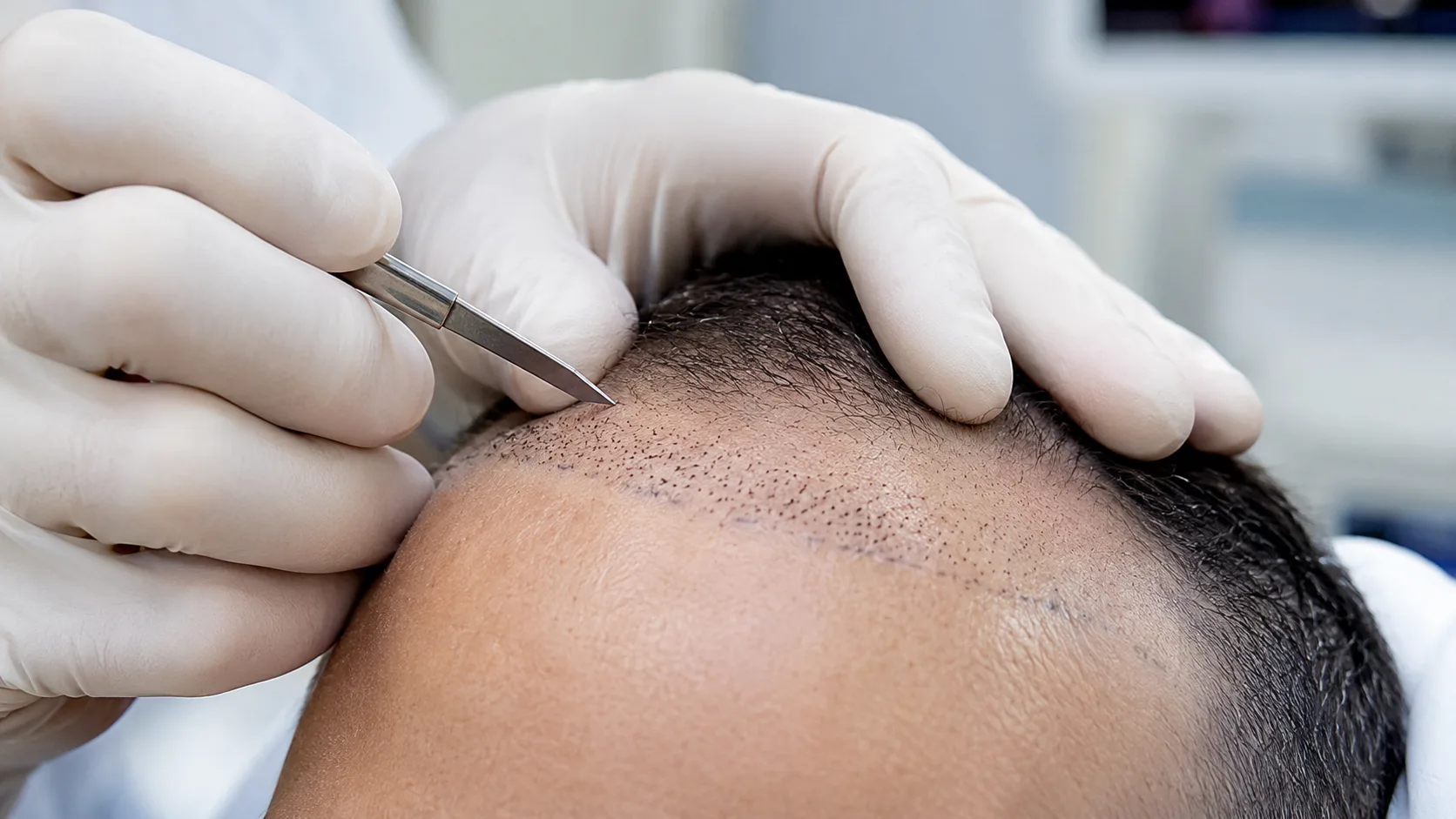
Was ist die laterale Schlitztechnik?
Die laterale Schlitztechnik stellt eine spezifische Methode dar, um Empfangsstätten zu erstellen und Transplantate währendder Haartransplantation.Chirurgen nennen diesen Ansatz auch die koronale Schlitztechnik oder die horizontale Schlitztechnik. Diese Technik konzentriert sich darauf, wie der Chirurg Öffnungen im Empfangsbereich erstellt. Es geht nicht darum, wie der Chirurg die Spender-follikulären Einheiten entfernt. Das Kernprinzip bestimmt jede Entscheidung. Der Chirurg positioniert die Empfangs-Inzisionen senkrecht zur allgemeinen Richtung des Haarwuchses. Diese senkrechte Positionierung gibt dem Chirurgen eine überlegene Kontrolle über den Transplantatwinkel, die Richtung, die Orientierung, den Abstand und die visuelle Dichte. Die laterale Schlitztechnik ist besonders wichtig, wenn Chirurgen natürliche Haartransplantationen anstreben. Sie erweist sich als besonders wertvoll entlang der vorderen Haarlinie, an den Schläfen, über dem Mittelskalp und in der Krone. Unger et al. (2011) betonen, dass das Design der Empfangsstätte eines der wichtigsten technischen Elemente bei Haartransplantationen bleibt.
Wie funktioniert die laterale Schlitztechnik?
Die laterale Schlitztechnik funktioniert, indem sie die Ausrichtung der Inzisionen im Empfangsbereich durch den Chirurgen ändert. Der Chirurg schneidet kleine Öffnungen senkrecht zur natürlichen Haarrichtung. Diese Ausrichtung ermöglicht es dem Chirurgen, zu kontrollieren, wie jedes Transplantat sitzt und wie jedes Haar herauswächst.
Was ist eine Empfangsstelle bei Haartransplantationen?
Eine Empfangsstelle ist eine kleine Öffnung, die der Chirurg in der dünner werdenden oder kahlen Kopfhaut schafft. Das chirurgische Team platziert vorbereitete follikuläre Einheitentransplantate in diese Öffnungen.
Die Erstellung der Empfangsstelle unterscheidet sich völlig von der Entnahme des Spenders. Der Chirurg entnimmt Spender-follikulare Einheiten aus dem Hinterkopf oder den Seiten des Kopfes. Dann erstellt der Chirurg Empfangsstätten in den dünner werdenden Bereichen. Schließlich platziert das Team die Transplantate in diese Stellen. Bernstein und Rassman (1997) stellten fest, dass ein sorgfältiges Design der Empfangsstelle den Erfolg des Transplantats und das kosmetische Ergebnis direkt beeinflusst. Die Empfangsstelle dient als neues Zuhause für jedes Transplantat. Ihre Größe, Tiefe und Orientierung bestimmen, wie das Haar wachsen wird.
Wie werden laterale Schlitze positioniert?
Der Chirurg orientiert die lateralen Schlitze senkrecht zur Richtung des vorhandenen Haares. Diese koronale Ausrichtung spiegelt wider, wie natürliche follikuläre Einheiten in der Kopfhaut ausgerichtet sind.
Die Ausrichtung der Inzision hilft dem Chirurgen, die natürliche Ausrichtung der follikulären Einheiten zu reproduzieren. Der Chirurg kontrolliert auch den Austrittswinkel der transplantierten Haare durch diese Positionierung. Der Transplantatwinkel bestimmt, ob die Haare flach liegen oder aufrecht stehen. Der laterale Schlitz gibt dem Chirurgen direkte Kontrolle über diesen Winkel. Der Chirurg kann die Klinge neigen, um den genauen Winkel des umgebenden natürlichen Haares zu treffen. Diese Präzision unterscheidet laterale Schlitze von älteren Ansätzen.
Wie folgt die Transplantatplatzierung dem natürlichen Wachsmuster des Haares?
Natürliches Haar wächst in verschiedenen Winkeln über die unterschiedlichen Bereiche der Kopfhaut. Haare entlang des Haaransatzes erscheinen in spitzen Winkeln. Die Haare am Scheitel wirbeln in einem Wirbelmuster.
Das Schindeln von Haaren geschieht, wenn sich Haare überlappen oder in Schichten über die Kopfhaut legen. Diese Überlappung erhöht die visuelle Abdeckung. Die Haarrichtung ist genauso wichtig wie die Anzahl der Greft, um ein natürliches Erscheinungsbild zu erzeugen. Ein Chirurg kann hundert Grefts perfekt platzieren und ein besseres Aussehen erzielen als zweihundert Grefts, die ohne Beachtung der Richtung platziert werden. Rose und Nusbaum (2013) betonen, dass die natürliche Haartransplantation die Reproduktion dieser regionalen Wachstumsbedingungen erfordert. Jedes Gebiet verlangt seinen eigenen Winkel und Richtung.
Was ist der Unterschied zwischen der lateralen und der sagittalen Schnitttechnik?
Die laterale und die sagittale Schnitttechnik unterscheiden sich hauptsächlich in der Schnittorientierung. Beide Techniken schaffen Empfängerstätten. Doch der Schnittwinkel verändert alles. Dieser Unterschied wirkt sich auf die Greftkontrolle, die Haarrichtung und das endgültige Erscheinungsbild aus.
Was ist die sagittale Schnitttechnik?
Die sagittale Schnitttechnik verwendet vertikale Empfängerstichinzisionen. Chirurgen nutzen diesen traditionellen Ansatz seit Jahrzehnten. Der Chirurg schneidet parallel zur Haarwuchsrichtung.
Dieser Ansatz schafft eine unkomplizierte Öffnung für die Greftplatzierung. Viele Chirurgen verwenden auch heute noch erfolgreich sagittale Schnitte. Die vertikale Ausrichtung verläuft entlang derselben Achse wie der Haarschaft. Diese Ausrichtung erleichtert die Greftplatzierung. Doch sie bietet weniger Kontrolle über den Austrittswinkel der Haare.
Wie unterscheidet sich der laterale Schnitt vom sagittalen Schnitt?
Die Unterschiede zwischen diesen beiden Ansätzen sind erheblich. Die folgende Tabelle fasst die wichtigsten Unterscheidungsmerkmale zusammen.
Merkmal | Lateraler Schnitt | Sagittaler Schnitt |
Schnittorientierung | Rechtwinklig zur Haarrichtung | Parallel zur Haarrichtung |
Kontrolle des Austrittswinkels | Hohe Präzision | Variable Präzision |
Haarrichtung | Unterstützt natürliche Ausrichtung | Kann zusätzliche Anpassungen erforderlich sein |
Visuelle Dichte | Verbessert das wahrgenommene Volumen | Kann eine andere Verteilung benötigen |
Komplexe Winkel | Überzeugt an Schläfen und Backenbart | In diesen Bereichen herausfordernder |
Anpassung | Individuelle Größenanpassung des Empfängerbereichs | Auch je nach Chirurg anpassbar |
Hauptziel | Natürliche Ausrichtung und Abdeckung | Erschaffung des Empfängerbereichs mit einer anderen Ausrichtung |
Der seitliche Schnitt verläuft senkrecht zum Haarwachstum. Der sagittale Schnitt verläuft parallel. Der seitliche Schnitt bietet dem Chirurgen eine bessere Kontrolle über den Austrittswinkel. Der sagittale Schnitt kann manchmal ein aufrechteres Haarbild erzeugen. Der seitliche Schnitt unterstützt das Schindeln der Haare. Der sagittale Schnitt bietet weniger ausgeprägte Schichtung. Beehner (2004) verglich beide Techniken und stellte fest, dass seitliche Schnitte eine bessere Kontrolle über die Haarrichtung und visuelle Dichte bieten.
Warum kann die Schnittorientierung das endgültige kosmetische Ergebnis beeinflussen?
Die Geometrie des Empfängerbereichs bestimmt direkt die Orientierung des Transplantats und das Auftreten der Haare. Schlecht kontrollierte Winkel lassen transplantierte Haare zu aufrecht oder künstlich erscheinen.
Die Schnittorientierung legt den physischen Weg für jedes Haar fest. Wenn der Weg in die falsche Richtung zeigt, wächst das Haar in die falsche Richtung. Der Chirurg muss die Schnittorientierung dem natürlichen Wachstumsmuster jeder Kopfhautregion anpassen. Ein seitlicher Schnitt erzeugt einen anderen Austrittswinkel als ein vertikaler Schnitt. Diese geometrische Realität prägt jedes kosmetische Ergebnis.
Was sind die Hauptvorteile der seitlichen Schnitttechnik?
Die seitliche Schnitttechnik bietet mehrere Vorteile gegenüber traditionellen Ansätzen. Zu diesen Vorteilen gehören eine bessere Kontrolle der Haarlinie, verbesserte visuelle Dichte, Erhaltung des Spenderhaars, sicherere Platzierung in der Nähe von natürlichem Haar und erfolgreiche Anwendung in schwierigen Bereichen.
Können seitliche Schnitte eine natürlichere Haarlinie erzeugen?
Ja. Laterale Einschnitte ermöglichen dem Chirurgen präzise Kontrolle über den Winkel und die Richtung einzelner Transplantate. Der Chirurg kann Einzelhaartransplantate an der Vorderseite des Haaransatzes platzieren. Anschließend kann der Chirurg allmählich zu größeren follikulären Einheiten hinter dem Haaransatz übergehen.
Dieser allmähliche Übergang ahmt die natürliche Haaransatzarchitektur nach. Ein individueller Haaransatz-Design ist wichtiger als jeder technische Schritt für sich. Shapiro (1997) hat gezeigt, dass ein systematisches Haaransatz-Design in einer Sitzung konstant natürliche Ergebnisse produziert. Der Chirurg kann jedes Haar leicht nach vorne oder leicht nach hinten neigen. Diese Kontrolle schafft den unregelmäßigen, weichen Haaransatz, den die Natur bereitstellt.
Kann die laterale Einschnitt-Technik das Aussehen der Haardichte erhöhen?
Ja. Die Technik erhöht die visuelle Dichte, auch wenn die tatsächliche Transplantatdichte gleich bleibt. Haarüberlagerung und Kopfhautabdeckung verbessern sich, wenn die Haare in natürlichen Winkeln liegen.
Überlappende Haare schaffen die Illusion von mehr Haar. Manchmal erzielen weniger Transplantate ein effektives kosmetisches Ergebnis, wenn der Chirurg die Ausrichtung optimiert. Der Unterschied zwischen der tatsächlichen Transplantatdichte und der wahrgenommenen Dichte ist von großer Bedeutung. Ein Patient mit achtzig Transplantaten pro Quadratzentimeter und perfekter Ausrichtung kann voller wirken als ein Patient mit hundert Transplantaten und schlechter Ausrichtung. Haarüberlappung macht dies möglich.
Hilft die Technik, begrenzte Spenderhaare zu erhalten?
Ja. Die laterale Einschnitt-Technik hilft, die visuelle Abdeckung jedes Transplantats zu maximieren. Das Angebot an Spenderhaaren bleibt begrenzt. Jeder Patient hat eine begrenzte Anzahl von follikulären Einheiten, die für die Transplantation zur Verfügung stehen.
Die Maximierung der visuellen Abdeckung ist besonders relevant für Patienten mit fortgeschrittenem Haarausfall. Diese Patienten benötigen jedes Transplantat, um zu zählen. Allerdings bedeutet die Erhaltung von Transplantaten nicht, dass unbegrenzte Dichte erreicht werden kann. Der Chirurg muss weiterhin biologische Grenzen respektieren. Der Spenderbereich kann nur so viel bereitstellen.
Können laterale Einschnitte die Platzierung von Transplantaten zwischen vorhandenen Haaren verbessern?
Ja. Präzise empfohlene Stellen erleichtern die Platzierung zwischen natürlichen Haaren. Der Chirurg kann Öffnungen schaffen, die genau zwischen bestehenden Follikeln passen.
Diese Präzision vermeidet unnötiges Trauma an bestehenden Follikeln. Der Erhalt von natürlichem Haar ist wichtig, da umliegendes Haar weiterhin dünner werden kann. Das Konzept der präzisen Erstellung von Empfängerstätten schützt das natürliche Haar, während neue Transplantate hinzugefügt werden. Der Chirurg gleitet das Transplantat zwischen den natürlichen Haaren hindurch, ohne sie zu stören. Diese Fähigkeit schützt die bestehende Investition des Patienten.
Können laterale Einschnitte in schwierigen Kopfhautbereichen verwendet werden?
Ja. Die Technik funktioniert besonders gut an den Schläfen und im Bartbereich. Diese Regionen weisen besonders akute natürliche Wachstumswinkel auf.
Präzise Ausrichtung wird in diesen technisch anspruchsvollen Bereichen entscheidend. Die frontale Haarlinie, die Mid-Scalp und die Krone stellen jeweils unterschiedliche Herausforderungen dar. Der laterale Einschnitt passt sich allen an. Marzola (1995) zeigte, dass eine sorgfältige Platzierung von Transplantaten in schwierigen Bereichen Aufmerksamkeit für natürliche Haarwinkel erfordert. Der Chirurg verändert den Holzschnittwinkel für jede Region.
Wie werden maßgeschneiderte Klingen in der lateralen Einschnitt-Technik verwendet?
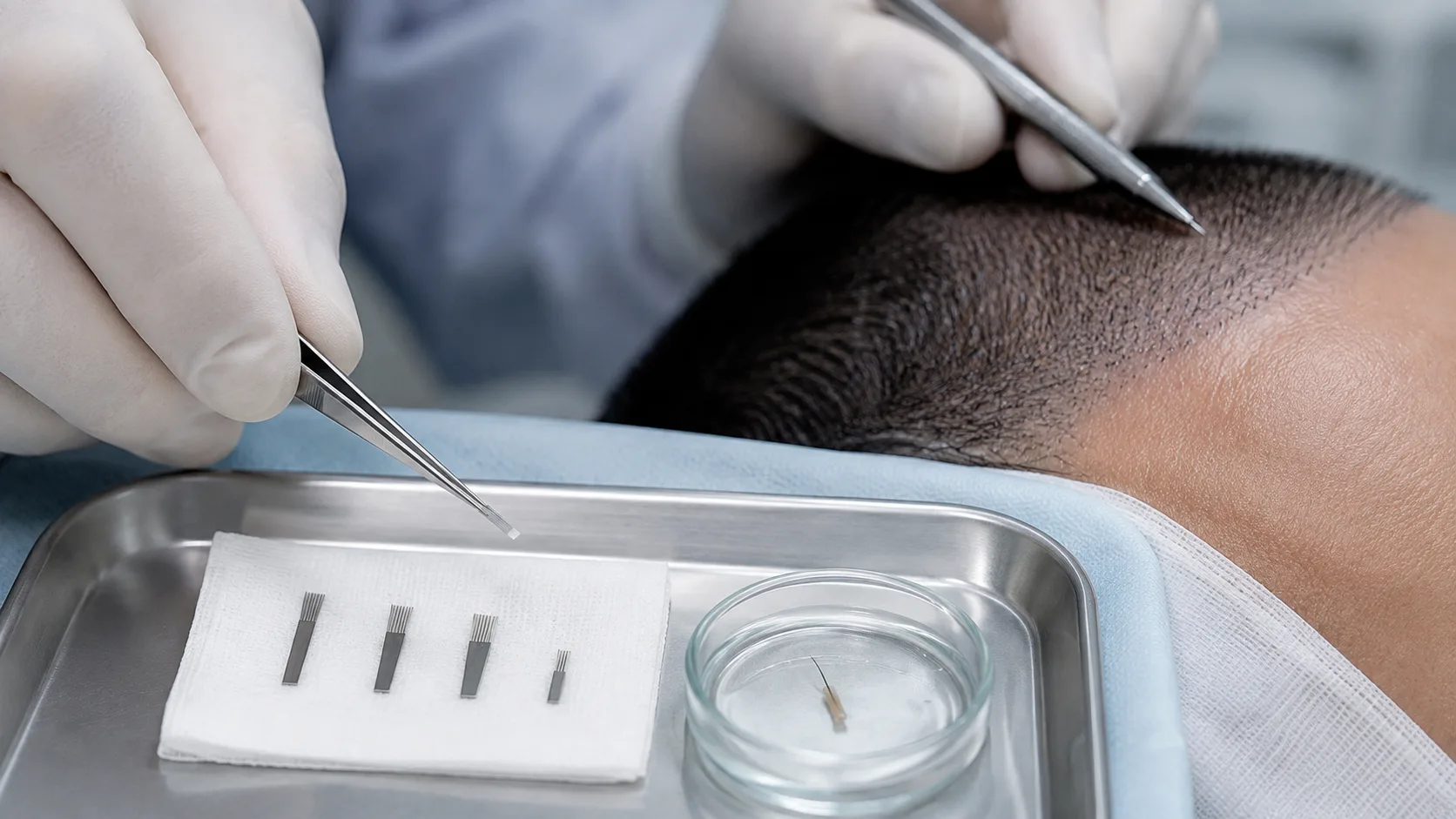
Maßgeschneiderte Klingen spielen eine wichtige Rolle bei der Durchführung des lateralen Einschnitts. Der Chirurg wählt die Klingenmaße basierend auf der Transplantatgröße und den Eigenschaften der Kopfhaut aus. Die richtige Klingenwahl verbessert die Passform und reduziert das Trauma.
Warum ist die Größe der Empfängerstelle wichtig?
Die Größe der Empfängerstelle ist wichtig, weil die Öffnung den Maßen des follikulären Einheitstransplantats entsprechen muss. Ein Einschnitt, der zu groß ist, erlaubt es dem Transplantat, sich zu bewegen. Ein Einschnitt, der zu klein ist, verursacht Kompression und Trauma.
Die Beziehung zwischen Transplantatgröße, Einschnittgröße, Gewebetrauma und Transplantatstabilität bestimmt das Ergebnis. Der Chirurg muss eine enge Passform mit minimalem Trauma ausbalancieren. Gandelman (2000) brachte ein Gerät speziell zur Erstellung von Empfängerstätten in der Haartransplantation ein. Dieses Gerät half, die Dimensionen der Stellen zu standardisieren. Heute verwenden Chirurgen verschiedene maßgeschneiderte Klingen, um ähnliche Präzision zu erreichen.
Wie werden maßgeschneiderte Klingen an individuelle Transplantate angepasst?
Follikuläre Einheiten variieren von Einzelhaar- bis Mehrhaar-Transplantaten. Der Chirurg wählt für jeden Transplantattyp eine individuelle Klingenbreite und -tiefe. Anpassbare Öffnungen erleichtern das präzise Platzieren der Transplantate.
Transplantattyp | Haarkategorie | Typische Klingenbreite | Häufige Platzierungsbereiche |
Einzelhaar-Transplantat | 1 Haar | 0,6–0,8 mm | Frontalhaarlinie, Schläfen |
Doppelhaar-Transplantat | 2 Haare | 0,8–1,0 mm | Übergang am Scheitel |
Dreifachhaar-Transplantat | 3 Haare | 1,0–1,2 mm | Scheitel, Krone |
Vierfachhaar-Transplantat | 4+ Haare | 1,2–1,4 mm | Kronen, dichte Abdeckungszonen |
Ein einzelner Haar-Transplantat benötigt eine schmalere Klinge. Ein dreihaariger Transplantat benötigt eine breitere Klinge. Harris (2003) beschrieb, wie maßgeschneiderte Klingen die Platzierungsgenauigkeit bei Haartransplantationen verbessern. Der Chirurg wechselt während des Verfahrens die Klingen. Dieses Anpassen benötigt Zeit, verbessert jedoch die Ergebnisse.
Wie können präzise Empfängerstelle die Heilung beeinflussen?
Präzise Empfängerstelle minimieren unnötige Gewebeverletzungen. Eine enge Passform des Transplantats unterstützt die lokale Blutzufuhr und die Stabilität des Transplantats. Bessere Stabilität fördert die Heilung.
Der Chirurg darf keine klinikspezifischen Erfolgsbehauptungen als etablierte wissenschaftliche Beweise präsentieren. Die Forschung untersucht weiterhin die genaue Beziehung zwischen der Präzision der Stelle und den Heilungsergebnissen. Limmer (1996) berichtete, dass die Überlebensrate von Mikrografts von sorgfältigem Umgang und präziser Standortschaffung abhängt. Minimale traumatische Empfängerstelle heilen schneller. Sie hinterlassen auch weniger sichtbare Spuren.
Wie beeinflusst die laterale Schitttechnik die Transplantatdichte?
Die Transplantatdichte ist ein zentrales Anliegen bei Haartransplantationen. Die laterale Schitttechnik beeinflusst, wie dicht der Chirurg die Transplantate platzieren kann. Die Dichte wirkt sich sowohl auf das Erscheinungsbild als auch auf das Überleben aus.
Was ist dichte Verpackung in der Haartransplantation?
Dichte Verpackung bedeutet, viele follikuläre Einheiten pro Quadratzentimeter zu platzieren. Chirurgen messen die Dichte in follikulären Einheiten pro Quadratzentimeter.
Die Verfügbarkeit von Spenderhaaren begrenzt die erreichbare Dichte. Eigenschaften der Kopfhaut, Transplantatqualität und die Gefäßversorgung der Empfängerstelle setzen ebenfalls Grenzen. Der Chirurg kann diese biologischen Grenzen nicht überschreiten. Dichte Verpackung spricht Patienten an, die maximale Fülle wünschen. Sie erfordert jedoch sorgfältige Planung.
Wie unterstützt die Orientierung des lateralen Schnitts die dichte Platzierung von Transplantaten?
Die Orientierung des lateralen Schnitts erleichtert eng beieinander liegende Transplantate. Der senkrechte Schnitt verursacht weniger Gewebeverletzungen zwischen benachbarten Stellen.
Der Chirurg kann in einem bestimmten Bereich mehr Transplantate platzieren und gleichzeitig übermäßiges Gewebe-Trauma minimieren. Hohe Dichte garantiert jedoch nicht automatisch ein natürliches Ergebnis. Der Chirurg muss dennoch Richtung und Winkel kontrollieren. Dichte Verpackung ohne richtige Orientierung sieht künstlich aus. Der laterale Schnitt hilft, dieses Problem zu vermeiden.
Ist eine höhere Transplantatdichte immer besser?
Nein. Höhere Dichte führt nicht immer zu besseren Ergebnissen. Der Chirurg muss die Dichte im Verhältnis zum Überleben der Transplantate, den Eigenschaften der Kopfhaut, der Verfügbarkeit von Spenderhaaren und den ästhetischen Aspekten ausbalancieren.
Eine individuelle chirurgische Planung bestimmt die optimale Dichte für jeden Patienten. Einige Patienten benötigen fünfzig Transplantate pro Quadratzentimeter. Andere benötigen achtzig. Der Chirurg entscheidet auf der Grundlage individueller Faktoren. Die Gefäßversorgung der Kopfhaut ist entscheidend. Die Blutzufuhr begrenzt, wie viele Transplantate in einem kleinen Raum überleben können.
Welche Bereiche der Kopfhaut können von der Platzierung mit lateralem Schnitt profitieren?
Verschiedene Kopfhautregionen stellen unterschiedliche Herausforderungen dar. Die laterale Schitttechnik passt sich jeder Region an. Jedes Gebiet benötigt eine spezifische Winkelkontrolle.
Wie wird die Technik an der frontalen Haarlinie verwendet?
Die frontale Haarlinie erfordert akute Haarwinkel. Der Chirurg verwendet feine Einzelhaartransplantate an der Vorderkante. Natürliche Übergangszone schafft eine weiche, unregelmäßige Haarlinie.
Die gerichtete Kontrolle ist hier von entscheidender Bedeutung. Der laterale Schnitt gibt dem Chirurgen diese Kontrolle. Die Haare an der Haarlinie treten in flachen Winkeln hervor. Sie zeigen nach vorne und leicht nach unten. Der Chirurg muss dies exakt nachahmen. Eine Haarlinie mit aufrechten Haaren sieht offensichtlich transplantiert aus.
Wie wird es in den Schläfen- und Bartregionen angewendet?
Die Schläfen- und Bartregionen weisen besonders akute natürliche Wachswinkel auf. Eine präzise Orientierung ist in diesen Bereichen von großer Bedeutung.
Haare in den Schläfen zeigen nach unten und nach hinten. Der Chirurg muss diese Richtung exakt nachahmen. Eine falsche Winkelung sieht hier offensichtlich künstlich aus. Die Haartransplantation in den Schläfen und die Wiederherstellung des Bartes erfordern diese Präzision. Der laterale Schnitt bewältigt diese akuten Winkel gut.
Wie wird es im mittleren Bereich der Kopfhaut angewendet?
Der mittlere Bereich der Kopfhaut zeigt nach vorne gerichtetes Wachstum. Der Chirurg integriert neue Grafts mit den vorhandenen Haaren.
Der laterale Schnitt unterstützt diese Integration, indem er eine präzise Winkelausrichtung ermöglicht. Der mittlere Bereich der Kopfhaut deckt eine große Fläche ab. Eine effiziente Abdeckung ist hier von Bedeutung. Der Chirurg kann Grafts schichten, um über diese breite Zone eine visuelle Dichte zu erzeugen.
Wie wird es im Scheitelbereich angewendet?
Der Scheitel präsentiert wechselnde Wachswinkel. Haare wirbeln in einem Wirbelmuster, anstatt gleichmäßig zu wachsen.
Der Chirurg muss diesen natürlichen Haarwirbel reproduzieren. Ein einheitliches Muster sieht im Scheitel unnatürlich aus. Der laterale Schnitt ermöglicht es dem Chirurgen, die Richtung Graft für Graft zu ändern. Die Wiederherstellung des Scheitels stellt jede*n Chirurgen vor Herausforderungen. Das Wirbelmuster variiert zwischen den Patienten. Der Chirurg muss das einzigartige Wirbelmuster jedes Patienten studieren, bevor er Einschnitte vornimmt.
Kann die laterale Schnitt-Technik mit der FUE-Haartransplantation kombiniert werden?
Ja. Die laterale Schnitt-Technik funktioniert gut mit FUE und anderen Ansätzen. Diese Methoden betreffen unterschiedliche chirurgische Phasen.
Ist der laterale Schnitt eine Technik zur Haarentnahme?
Nein. Der laterale Schnitt beschreibt die Erstellung von Empfängerstätten, nicht die Entnahme von Spenderhaaren. Es unterscheidet sich völlig von der Follikulären Einheitsextraktion (FUE).
FUE entfernt einzelne follikuläre Einheiten aus dem Spenderbereich. Der laterale Schnitt schafft Stätten im Empfängerbereich. Dies sind getrennte Phasen der Chirurgie. Patienten verwechseln oft diese Begriffe. Aber sie beschreiben völlig unterschiedliche Schritte.
Können laterale Schnitte mit FUE verwendet werden?
Ja. FUE bestimmt, wie das Team follikuläre Einheiten entnimmt. Die Technik des lateralen Schnitts bestimmt, wie der Chirurg Empfängerstätten erstellt.
Die beiden Ansätze arbeiten im Rahmen desselben Verfahrens zusammen. Der Chirurg kann Grafts mit FUE entnehmen und Empfängerstätten mit lateralen Schnitten schaffen. Diese Kombination ist in der modernen Praxis häufig. Die FUE-Haartransplantation und die Erstellung von Empfängerstätten mit lateralem Schnitt ergänzen sich perfekt.
Ist der laterale Schnitt mit anderen Ansätzen zur Transplantation von follikulären Einheiten kompatibel?
Ja. Die Technik bleibt mit allen Ansätzen zur Transplantation von follikulären Einheiten kompatibel. Die Entnahme von Spenderhaaren, die Vorbereitung von Grafts, die Erstellung von Empfängerstätten und die Einfügung von Grafts stellen separate chirurgische Phasen dar.
Der Chirurg kann Techniken in jeder Phase mixen und anpassen. Der seitliche Schnitt bezieht sich speziell auf die Phase der Schaffung der Empfängerstelle. Er schränkt andere Optionen nicht ein. Der Chirurg kann die Streifenentnahme oder FUE zur Entnahme des Spenders verwenden. Der Chirurg kann weiterhin seitliche Schnitte für die Empfängerstelle nutzen.
Wer könnte Kandidat für die Technik des seitlichen Schnitts sein?
Viele Patienten qualifizieren sich für diese Technik. Der Chirurg bewertet jeden Patienten individuell. Nicht jeder Patient benötigt seitliche Schnitte. Aber viele profitieren davon.
Ist der seitliche Schnitt für fortgeschrittenen Haarausfall geeignet?
Ja. Patienten mit erheblichem Dünnerwerden des Empfängerbereichs profitieren enorm. Visuelle Dichte erweist sich als wertvoll, wenn die Spenderreserven begrenzt sind.
Diese Patienten benötigen maximalen kosmetischen Einfluss von jedem Greft. Der seitliche Schnitt hilft, diesen Einfluss zu erreichen. Fortgeschrittener Haarausfall lässt große Bereiche zu bedecken. Der Chirurg muss die Grefts strategisch platzieren. Seitliche Schnitte helfen dem Chirurgen, dass jeder Greft zählt.
Können Patienten mit bestehenden natürlichen Haaren von seitlichen Schnitten profitieren?
Ja. Strategische Platzierung zwischen bestehenden Haaren funktioniert gut. Der Chirurg schützt die natürlichen Follikel und berücksichtigt den fortschreitenden Haarausfall.
Die Erhaltung des natürlichen Haares bleibt eine Priorität. Der seitliche Schnitt erleichtert eine präzise Platzierung, ohne das umliegende Haar zu beschädigen. Patienten mit frühem Dünnerwerden haben oft signifikantes natürliches Haar. Der Chirurg muss Grefts hinzufügen, während er das, was bleibt, schützt.
Ist die Technik für alle Haartypen geeignet?
Ja, aber mit Anpassungen. Feines Haar, grobes Haar, glattes Haar, welliges Haar und lockiges Haar weisen jeweils unterschiedliche Merkmale auf.
Die Haardicke und die Locken beeinflussen die Planung von Greft und Einschnitt. Lockiges Haar erfordert besondere Aufmerksamkeit hinsichtlich der Lockenrichtung unter der Haut. Der Chirurg passt die Klingenbreite und die Tiefe entsprechend an. Grobes Haar benötigt breitere Klingen. Feines Haar benötigt schmalere Klingen. Der Chirurg plant diese Unterschiede, bevor die Operation beginnt.
Welche Faktoren bestimmen den Erfolg einer Haartransplantation mit seitlichem Schnitt?
Mehrere Faktoren beeinflussen das Ergebnis. Kein einzelner Faktor garantiert Erfolg. Die Technik ist ein Werkzeug. Die Fähigkeiten des Chirurgen bestimmen die Ergebnisse.
Warum ist die Erfahrung des Chirurgen wichtig?
Die Erfahrung des Chirurgen ist wichtig, da die Schaffung der Empfängerstelle technische Präzision erfordert. Der Chirurg benötigt anatomisches Wissen, Fähigkeiten im Design der Haarlinie, Expertise in der Winkelkontrolle, Tiefe Kontrolle und Verteilungsfähigkeiten der Grefts.
Diese Fähigkeiten entwickeln sich über Jahre der Praxis. Ein unerfahrener Chirurg kann das Urteilsvermögen eines erfahrenen Chirurgen nicht replizieren. Die Winkelkontrolle erfordert Muskelgedächtnis. Der Chirurg macht Tausende von Einschnitten in einem einzigen Eingriff. Jeder Einschnitt muss korrekt sein.
Warum ist das Design der Haarlinie wichtig?
Natürliche Haarlinien variieren zwischen Individuen. Ein altersgerechtes Design respektiert die Gesichtsproportionen.
Ein technisch präziser Einschnitt kann ein schlechtes ästhetisches Planning nicht kompensieren. Der Chirurg muss die Haarlinie entwerfen, bevor er den ersten Schnitt macht. Dieses Design leitet jede nachfolgende Entscheidung. Eine Haarlinie, die auf einem Patienten gut aussieht, könnte bei einem anderen falsch erscheinen. Individualisierung ist wichtig.
Warum ist die Qualität des Spenderhaars wichtig?
Die Spenderdichte bestimmt, wie viele Greife verfügbar sind. Der Haardurchmesser beeinflusst die visuelle Dicke.
Die Haarmerkmale beeinflussen das Aussehen der Haare nach der Transplantation. Die Zusammensetzung der follikulären Einheiten hat Auswirkungen auf die Abdeckung. Das verfügbare Angebot an Greifen setzt die obere Grenze dessen, was die Operation erreichen kann. Dickes Haar deckt mehr Kopfhaut pro Greif ab. Dünnes Haar benötigt mehr Greife für denselben visuellen Effekt.
Warum muss zukünftiger Haarausfall berücksichtigt werden?
Transplantierte, spenderresistente Follikel verhindern nicht, dass die umgebenden natürlichen Haare möglicherweise dünner werden.
Zukünftiger Haarausfall beeinflusst die Planung der Langzeitbehandlung. Der Chirurg muss realistische Erwartungen setzen. Ein Patient mit frühem Haarausfall benötigt einen anderen Plan als ein Patient mit stabilem Haarausfall. Der Chirurg muss genügend Spenderhaare für zukünftige Eingriffe übrig lassen. Haarausfall schreitet oft voran. Der Chirurg plant für dieses Fortschreiten.
Was sind die Einschränkungen und potenziellen Risiken der lateralen Schnitttechnik?
Jede Technik hat ihre Einschränkungen. Patienten sollten diese vor der Operation verstehen. Eine ehrliche Diskussion schafft Vertrauen.
Können laterale Schnitte Kopfhautverletzungen verursachen?
Ja. Jeder Einschnitt verursacht ein gewisses Gewebetrauma. Der Chirurg muss die Tiefe und Breite des Einschnitts sorgfältig steuern.
Exzessive Tiefe beschädigt Blutgefäße. Exzessive Breite verursacht unnötige Gewebeunterbrechungen. Die richtige Technik minimiert dieses Trauma. Aber kein Einschnitt ist völlig ohne Wirkung. Die Kopfhaut muss jede Stelle heilen.
Kann eine übermäßige Dichte das Überleben der Greife beeinflussen?
Ja. Biologische Grenzen schränken ein, wie viele Greife in einem bestimmten Bereich überleben können.
Mehr Greife führen nicht zwangsläufig zu besseren Ergebnissen. Die Kopfhaut benötigt eine angemessene Blutversorgung, um jeden Greif zu unterstützen. Übermäßige Packung birgt das Risiko des Greifversagens. Einige Greife erhalten möglicherweise nicht genügend Nährstoffe. Sie sterben. Dann hat der Patient weniger Haare, nicht mehr.
Kann eine schlechte Winkelung das transplantierte Haar unnatürlich erscheinen lassen?
Ja. Eine falsche Richtung oder ein falscher Auftauchwinkel beeinträchtigen die Ästhetik.
Die regionsspezifische Haarorientierung ist enorm wichtig. Ein Haaransatzgreif, der gerade nach oben zeigt, sieht offensichtlich transplantiert aus. Der Chirurg muss diesen Fehler vermeiden. Selbst ein falsch gewinkelter Greif kann das Licht anders reflektieren. Er fällt auf.
Können die Ergebnisse zwischen den Patienten variieren?
Ja. Individuelle Unterschiede in der Spenderdichte, im Haardurchmesser, in den Eigenschaften der Kopfhaut, im Haarausfallmuster und bei der Heilung beeinflussen das Ergebnis.
Keine chirurgische Technik garantiert identische Ergebnisse. Zwei Patienten, die das gleiche Verfahren erhalten, können danach unterschiedlich aussehen. Die Genetik kontrolliert einen großen Teil des Ergebnisses. Der Chirurg kann die Biologie eines Patienten nicht ändern.
Wie vergleicht sich die laterale Schnitttechnik mit anderen Methoden für die Empfängerstelle?
Die laterale Schnitttechnik unterscheidet sich in spezifischen Aspekten von anderen Methoden für die Empfängerstelle. Die folgende Vergleichstabelle hebt diese Unterschiede hervor.
Merkmal | Lateraler Schnitt | Sagittaler Schnitt |
Schnittrichtung | Rechtwinklig zur Haarrichtung | Parallel zur Haarrichtung |
Kontrolle des Austrittswinkels | Hoch | Variabel |
Haar-Layering | Unterstützt den Schindeleffekt | Weniger ausgeprägt |
Visuelle Dichte | Kann den wahrgenommenen Haarbesatz verbessern | Kann eine unterschiedliche Verteilung der Transplantate erfordern |
Komplexe Winkel | Nützlich für Schläfen und Koteletten | In einigen Bereichen herausfordernder |
Anpassung | Individuelle Größe der Empfängerstelle | Auch abhängig vom Chirurgen anpassbar |
Hauptziel | Natürliche Ausrichtung und Abdeckung | Erstellung der Empfängerstelle mit unterschiedlicher Ausrichtung |
Die Ergebnisse hängen vom Chirurgen, der Qualität der Transplantate, der Anatomie des Patienten, der chirurgischen Planung und dem postoperativen Verlauf ab. Allein die Schnittorientierung bestimmt nicht den Erfolg. Die Fertigkeit und das Urteil des Chirurgen sind wichtiger als die gewählte Technik. Sowohl laterale als auch sagittale Schnitte können in erfahrenen Händen exzellente Ergebnisse liefern.
Was sollten Patienten vor der Wahl einer lateralen Schnitt-Haartransplantation fragen?
Patienten sollten spezifische Fragen stellen, bevor sie sich für eine Operation entscheiden. Diese Fragen geben Aufschluss über die Herangehensweise und Expertise des Chirurgen. Gute Chirurgen begrüßen solche Fragen.
Wie gestaltet der Chirurg die Empfängerstelle?
Der Chirurg sollte den Designprozess klar erklären. Gutes Design berücksichtigt Haarrichtung, Winkel, Dichte und natürliche Muster.
Der Chirurg sollte diese Elemente vor Beginn der Operation kartieren. Das Design sollte die Gesichtsproportionen berücksichtigen. Es sollte auch das altersgerechte Positionieren einbeziehen. Ein guter Chirurg zeichnet die Haarlinie, bevor er Inzisionen setzt.
Sind die Empfängerstelle auf individuelle follikuläre Einheiten angepasst?
Ja, sollten sie sein. Anpassung bedeutet, die Klingenlänge an die Größe der Transplantate anzupassen.
Einzelhaar-Transplantate benötigen kleinere Stellen. Mehrhaar-Transplantate erfordern größere Stellen. Diese Anpassung verbessert die Passgenauigkeit und das Überleben. Der Chirurg sollte bestätigen, dass die Klingen angepasst sind. Einheitsgrößen-Ansätze verringern die Präzision.
Wie werden Haarwinkel und -richtungen bestimmt?
Der Chirurg sollte das native Haar sorgfältig untersuchen. Der Chirurg sollte bestehende Muster, wo immer möglich, folgen.
In kahlen Bereichen sollte der Chirurg natürliche Muster basierend auf der Anatomie vorhersagen. Der Chirurg kann alte Fotos studieren. Diese Fotos zeigen die ursprüngliche Haarrichtung des Patienten. Diese Informationen leiten die Planung der Inzisionen.
Wie wird das bestehende Haar geschützt?
Der Chirurg sollte Techniken beschreiben, um Schäden am nativen Haar zu vermeiden. Eine präzise Erstellung der Stellen hilft.
Der richtige Abstand ist wichtig. Das chirurgische Team sollte vorhandenes Haar sanft behandeln. Eigenes Haar repräsentiert die aktuelle Abdeckung des Patienten. Es zu schädigen, würde den Zweck der Operation zunichte machen.
Welche Graft-Dichte ist für meine Kopfhaut angemessen?
Der Chirurg sollte die Dichtegrenzen erklären. Die Empfehlungen des Chirurgen sollten auf der Verfügbarkeit von Donorhaar, den Eigenschaften der Kopfhaut und den ästhetischen Zielen basieren.
Es gibt keine universelle ideale Dichte. Jede Kopfhaut hat ihre eigene Kapazität. Der Chirurg sollte diese Kapazität messen. Anschließend sollte der Chirurg entsprechende Empfehlungen abgeben.
Wie wird der zukünftige Haarausfall den Behandlungsplan beeinflussen?
Der Chirurg sollte die langfristige Planung besprechen. Der Chirurg sollte erklären, wie fortschreitender Haarausfall das Aussehen der transplantierten Haare verändern könnte.
Der Chirurg sollte, wenn angebracht, medizinische Therapien empfehlen. Finasterid oder Minoxidil können zukünftigen Verlust verlangsamen. Der Chirurg sollte diese Optionen offen besprechen.
Kann der Chirurg angemessene Vorher-Nachher-Dokumentationen bereitstellen?
Der Chirurg sollte Ergebnisse von mehreren Patienten zeigen. Diese Bilder sollten verschiedene Haartypen und Verlustmuster umfassen.
Dokumentation schafft Vertrauen und setzt realistische Erwartungen. Der Chirurg sollte Ergebnisse von Patienten mit ähnlichen Merkmalen zeigen. Diese Vorschau hilft den Patienten, mögliche Ergebnisse zu verstehen.
Wie verläuft die erwartete Genesung nach einer lateralen Haartransplantation?
Die Genesung folgt einem vorhersehbaren Muster. Patienten sollten wissen, was sie erwartet. Das Verständnis des Zeitrahmens verringert Ängste.
Was passiert unmittelbar nach der Erstellung der Empfängerstelle?
Die Kopfhaut zeigt sofort frühe Veränderungen. Die Grafts benötigen Zeit, um sich zu stabilisieren.
Rötung und Schwellung treten normalerweise auf. Diese Effekte klingen in der Regel innerhalb weniger Tage ab. Das chirurgische Team wendet einen schützenden Verband an. Patienten erhalten spezifische Anweisungen für die erste Nacht. Sie sollten mit erhöhtem Kopf schlafen. Diese Erhöhung reduziert die Schwellung.
Wie heilt der Empfängerbereich?
Die Wundheilung erfolgt in Phasen. Das Verankern der Grafts stärkt sich in der ersten Woche.
Vorübergehendes Verkrusten entwickelt sich um jedes Graft. Patienten sollten vermeiden, an diesen Krusten zu kratzen. Sanftes Waschen hilft, sie auf natürliche Weise zu entfernen. Der Chirurg stellt ein Waschprotokoll bereit. Patienten befolgen dieses Protokoll sorgfältig. Minimal traumatische Empfängerstellen heilen mit minimalen Narben.
Wann beginnt transplantiertes Haar zu wachsen?
Transplantiertes Haar folgt einem normalen postoperativen Wachstumszyklus. Zuerst erfolgt ein vorübergehender Haarausfall.
Dieser Haarausfall bedeutet nicht den Verlust von Transplantaten. Das neue Wachstum beginnt typischerweise drei bis vier Monate nach der Operation. Vollständige Ergebnisse können zwölf bis achtzehn Monate in Anspruch nehmen. Cole (2001) bemerkte, dass die optimale Verwendung von Haarfollikel-Unit-Transplantaten Geduld während dieses Wachstumszyklus erfordert. Die folgende Tabelle zeigt den typischen Zeitrahmen.
Zeitraum | Erwartete Veränderungen |
Tage 1–3 | Rötung, leichte Schwellung, Stabilisierung der Transplantate |
Tage 4–7 | Kruste bildet sich, sanfte Reinigung beginnt |
Wochen 2–3 | Vorübergehender Haarausfall der transplantierten Haare |
Monate 3–4 | Neues Haarwachstum beginnt |
Monate 6–9 | Sichtbare Abdeckung verbessert sich |
Monate 12–18 | Endergebnisse reifen |
Was ist das Fazit zur Lateralschnitt-Technik?
Die Lateralschnitt-Technik bietet ein Verfahren zur Erstellung von Empfängerstätten, das darauf abzielt, die Ausrichtung der Transplantate und den Haaraustritt zu kontrollieren. Sie unterstützt eine natürlich aussehende Haartransplantation, verbessert die optische Dichte und ermöglicht eine präzise Platzierung. Die Technik ist keine Entnahmemethode wie FUE. Erfolgreiche Ergebnisse hängen von individueller Planung, Spendermerkmalen, Transplantatqualität, Expertise des Chirurgen, Gestaltung der Empfängerstelle und langfristiger Nachsorge ab. Jeder Patient sollte eine individuelle Bewertung durchlaufen, bevor entschieden wird, ob diese Technik ihren Bedürfnissen entspricht. Die Lateralschnitt-Technik bietet Chirurgen ein leistungsstarkes Werkzeug. Doch letztlich bestimmt das Urteil des Chirurgen den Erfolg.
Häufig gestellte Fragen zur Lateralschnitt-Technik
Was ist die Lateralschnitt-Technik?
Die Lateralschnitt-Technik ist ein Verfahren zur Erstellung von Empfängerstätten. Der Chirurg macht Einschnitte, die rechtwinklig zur Haarwuchsrichtung verlaufen. Diese Ausrichtung kontrolliert den Winkel und die Richtung der Transplantate.
Ist der laterale Schnitt dasselbe wie die FUE?
Nein. Der laterale Schnitt betrifft die Erstellung des Empfängerorts. FUE betrifft die Entnahme von Spenderhaaren. Dies sind verschiedene Phasen der Operation.
Was ist der Unterschied zwischen lateralen und sagittalen Schnitten?
Laterale Schnitte verlaufen senkrecht zur Haarrichtung. Sagittale Schnitte verlaufen parallel. Laterale Schnitte bieten eine bessere Winkelkontrolle und unterstützen das Haar-Schichten.
Verleiht die laterale Schnitttechnik Haartransplantationen ein natürlicheres Aussehen?
Ja, wenn sie korrekt durchgeführt wird. Die Technik gibt dem Chirurgen präzise Kontrolle über den Haarwinkel und die Richtung. Diese Kontrolle erzeugt natürlich aussehende Ergebnisse.
Erhöht die laterale Schnitttechnik die Haardichte?
Sie erhöht die visuelle Dichte. Die Technik verbessert die Haar-Schichtung und Abdeckung. Die tatsächliche Graft-Dichte hängt von der Spenderverfügbarkeit und biologischen Grenzen ab.
Können laterale Schnitte mit FUE verwendet werden?
Ja. Die beiden Techniken betreffen verschiedene chirurgische Phasen. Sie arbeiten oft zusammen.
Kann die laterale Schnitttechnik für den Haaransatz verwendet werden?
Ja. Die Technik glänzt im Haaransatz. Sie ermöglicht eine präzise Kontrolle von Einzelhaar-Grafts und akuten Winkeln.
Kann sie für Schläfen- und Koteletten-Transplantationen verwendet werden?
Ja. Diese Bereiche benötigen eine genaue Winkelkontrolle. Der laterale Schnitt bietet diese Kontrolle.
Sind maßgeschneiderte Klingen für laterale Schnitte notwendig?
Maßgeschneiderte Klingen verbessern die Ergebnisse, sind aber nicht unbedingt erforderlich. Sie helfen, die Größen von Einschnitten und Grafts aufeinander abzustimmen. Viele Chirurgen verwenden sie routinemäßig.
Verbessert die Technik das Überleben der Grafts?
Eine richtige Technik unterstützt das Überleben der Grafts. Präzise Einschnitte minimieren das Trauma. Das Überleben hängt jedoch auch von der Qualität der Grafts, dem Umgang und den Patientenfaktoren ab.
Ist die laterale Schnitttechnik für fortgeschrittenen Haarausfall geeignet?
Ja. Sie hilft, die visuelle Abdeckung bei begrenztem Spenderangebot zu maximieren.
Hinterlässt die laterale Schnitttechnik Narben?
Alle Einschnitte hinterlassen eine gewisse Markierung. Allerdings heilen laterale Schnitte als kleine Punkte oder Linien. Diese Markierungen sind normalerweise in den umgebenden Haaren unsichtbar.
Wie lange dauert es, bis man die endgültigen Ergebnisse einer Haartransplantation sieht?
Die endgültigen Ergebnisse erscheinen normalerweise zwölf bis achtzehn Monate nach der Operation. Zunächst tritt ein vorübergehender Haarausfall auf. Das neue Wachstum beginnt ungefähr nach drei bis vier Monaten.
Referenzen
Beehner, Michael L. "Ein Vergleich des lateralen Schnitts vs. sagittalen Schnitts."Haartransplantationsforum International, Bd. 14, Nr. 4, 2004, S. 117-119.
Bernstein, Robert M., und William R. Rassman. "Follikuläre Transplantation."International Journal of Aesthetic and Restorative Surgery, Bd. 5, Nr. 2, 1997, S. 119-132.
Cole, John P. "Die optimale Verwendung von follikulären Einheitstransplantaten."Haartransplantationsforum International, Bd. 11, Nr. 4, 2001, S. 121-123.
Gandelman, Milton. "Ein neues Gerät zur Schaffung von Empfängerstellen bei Haartransplantationen."Dermatologic Surgery, Bd. 26, Nr. 5, 2000, S. 471-474.
Harris, James A. "Der Einsatz von individuell angefertigten Klingen bei Haartransplantationen."Haartransplantationsforum International, Bd. 13, Nr. 2, 2003, S. 49-52.
Limmer, Bob L. "Überleben von Mikrografts." Haarersatzherausgegeben von Dowling B. Stough und Ronald S. Haber, Mosby, 1996, S. 147-149.
Marzola, Mario. "Einzelhaargrafting." Dermatologische ChirurgieBd. 21, Nr. 9, 1995, S. 789-793.
Rose, Paul T., und Bernard Nusbaum. "Die Wissenschaft und Kunst der Haartransplantation." Fachzeitschriften für plastische Chirurgie der NordamerikaBd. 21, Nr. 3, 2013, S. 437-447.
Shapiro, Ronald. "Natürliche Haarlinien in einer Sitzung mit einem systematischen Ansatz erstellen." Dermatologische ChirurgieBd. 23, Nr. 9, 1997, S. 823-829.
Unger, Walter, Ronald Shapiro, Robin Unger und Megan Unger. Haartransplantation. 5. Aufl., Informa Healthcare, 2011.