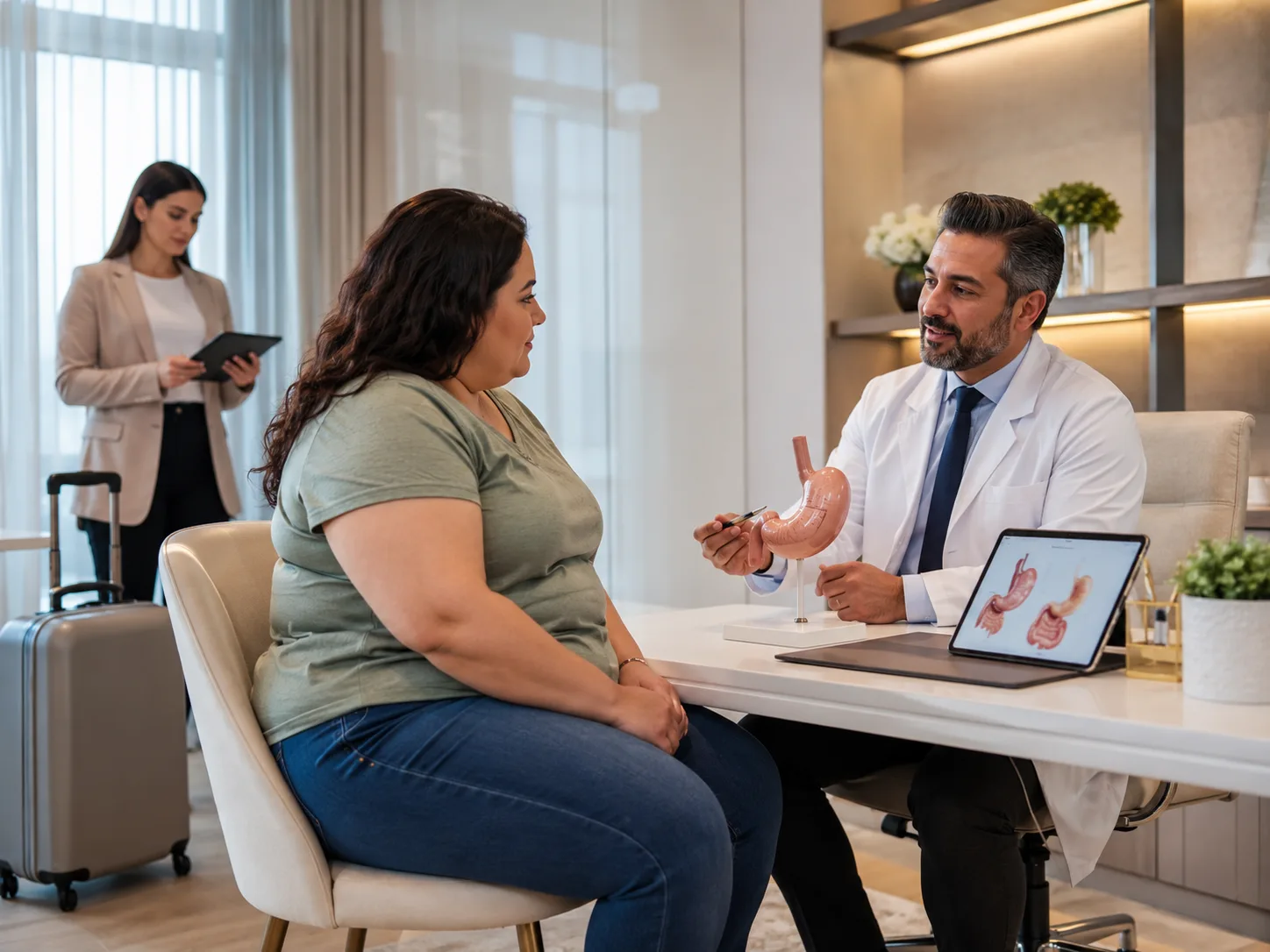
Die Türkei zieht jedes Jahr Tausende internationaler Patienten an, weil das Land erfahrene bariatrische Chirurgen, moderne Krankenhäuser, wettbewerbsfähige Kosten und eine starke Infrastruktur für Medizintourismus kombiniert. Patienten aus Europa, dem Nahen Osten und darüber hinaus entscheiden sich fürdie Türkei für Schlauchmagen, Magenbypass und andere metabolische Eingriffe. Allerdings garantiert Beliebtheit allein keine Qualität. Jeder Patient muss Chirurgen, Krankenhäuser und Nachsorgepläne individuell bewerten.
Bariatrische Chirurgiebehandelt klinisch signifikante Fettleibigkeit. Ärzte nennen sie auch metabolische Chirurgie, da sie die mit Fettleibigkeit verbundenen Krankheiten wie Typ-2-Diabetes, Bluthochdruck und Schlafapnoe verbessert. Die Türkei hat in den letzten zwei Jahrzehnten einen großen privaten Gesundheitssektor aufgebaut. Dieses Wachstum unterstützt den Medizintourismus und schafft spezialisierte Einheiten für Adipositaschirurgie in großen Städten. Internationale Patienten machen mittlerweile einen bedeutenden Teil der bariatrischen Eingriffe in führenden türkischen Krankenhäusern aus. Die Türkei bietet laparoskopische und robotergestützte Techniken, multidisziplinäre Betreuungsteams und strukturierte postoperative Unterstützung. Diese Faktoren erklären, warum die Türkei zu den Top-Zielen für Gewichtsreduzierungschirurgie gehört. Dennoch sollten Patienten bedenken, dass nicht jede Klinik die gleichen Standards aufrechterhält. Die zentrale Frage bleibt: Was macht die Türkei attraktiv für bariatrische Chirurgie, und wie sollten internationale Patienten Sicherheit und Qualität bewerten?
Was ist bariatrische Chirurgie und wer kann davon profitieren?
Was behandelt die bariatrische Chirurgie?
Bariatrische Chirurgie behandelt schwere Fettleibigkeit und die damit verbundenen Gesundheitsprobleme. Ärzte verwenden diese Verfahren, um das Magenvolumen zu verringern oder die anatomie des Darms zu verändern. Das Ziel reicht weit über die Gewichtsreduktion hinaus. Bariatrische Chirurgie verbessert die metabolische Funktion und verringert die Belastung durch chronische Krankheiten.
Zu den mit Fettleibigkeit verbundenen Begleiterkrankungen gehören Typ-2-Diabetes, Bluthochdruck, obstruktive Schlafapnoe, Dyslipidämie, metabolisches Syndrom und fettleibigkeitsbedingte Gelenkprobleme. Sohan (2024) stellt fest, dass bariatrische Chirurgie eine erhebliche und nachhaltige Gewichtsreduktion bewirkt und diese Erkrankungen über viele Jahre verbessert. Die Verfahren verändern die Darmhormone, beeinflussen die Appetitregulation und verbessern die Insulinempfindlichkeit. Patienten erleben oft innerhalb von Wochen oder Monaten nach der Operation eine bessere Blutzuckerregulation, niedrigeren Blutdruck und verbesserte Cholesterinwerte.
Wer wird normalerweise für eine bariatrische Chirurgie in Betracht gezogen?
Ärzte ziehen Patienten mit einem Body-Mass-Index (BMI) von 40 oder höher in Betracht. Sie berücksichtigen auch Patienten mit einem BMI von 35 oder höher, die Begleiterkrankungen im Zusammenhang mit Fettleibigkeit haben. Der BMI bietet einen Ausgangspunkt, doch er erzählt nicht die ganze Geschichte. Ärzte bewerten jeden Patienten individuell. Sie überprüfen frühere Gewichtskontrollversuche, den allgemeinen Gesundheitszustand und das Vorhandensein metabolischer Erkrankungen. Ein Patient mit einem BMI von 34 und schwerem Typ-2-Diabetes kann qualifiziert sein, während ein Patient mit einem BMI von 42 und ohne Begleiterkrankungen möglicherweise eine zusätzliche Bewertung benötigt. Die individualisierte Bewertung ist wichtiger als eine einzelne Zahl.
Warum wird die bariatrische Chirurgie als langfristige medizinische Behandlung angesehen?
Die bariatrische Chirurgie erfordert eine lebenslange medizinische Verpflichtung. Der Eingriff selbst dauert nur wenige Stunden, aber der Erfolg benötigt kontinuierliche Anstrengungen. Die Patienten müssen die Ergebnisse des Gewichtsverlusts durch Ernährungsumstellungen und körperliche Aktivität aufrechterhalten. Zudem benötigen sie eine metabolische Überwachung und eine ernährungsbedingte Supplementierung. Eine lebenslange Nachsorge verhindert Vitaminmangel, überwacht eine mögliche Gewichtszunahme und behandelt spätere Komplikationen. Sohan (2024) betont, dass kontinuierliche Fortschritte in den chirurgischen Techniken und der postoperativen Betreuung entscheidend bleiben, um langfristige Ergebnisse zu optimieren. Die bariatrische Chirurgie verändert den Körper dauerhaft, und die Patienten müssen ihr Verhalten ebenfalls dauerhaft anpassen.
Warum wird die Türkei als führendes Ziel für bariatrische Chirurgie angesehen?
Wie kombiniert die Türkei medizinisches Fachwissen mit medizinischem Tourismus?
Die Türkei hat ihren privaten Gesundheitssektor in den letzten zwanzig Jahren schnell entwickelt. Große Krankenhausgruppen in Istanbul, Ankara und Antalya bedienen jährlich tausende internationale Patienten. Diese Krankenhäuser beschäftigen bariatrische Chirurgen, die in der Türkei und im Ausland ausgebildet wurden. Viele Chirurgen sind Mitglieder in internationalen Organisationen wie der International Federation for the Surgery of Obesity and Metabolic Disorders (IFSO). Türkische Krankenhäuser integrieren klinische Behandlung mit internationalen Patientenservices. Sie bieten Flughafentransfers, Hotelarrangements, mehrsprachige Koordinatoren und spezielle internationale Abteilungen an. Diese Integration macht die Türkei zu einer bequemen Wahl für Patienten, die aus Europa, dem Nahen Osten, Nordafrika und Zentralasien reisen.
Warum ist die Infrastruktur für bariatrische Chirurgie in der Türkei wichtig?
Führende türkische Krankenhäuser unterhalten spezialisierte Einheiten für Adipositas- und metabolische Chirurgie. Diese Einheiten beinhalten moderne Operationssäle, fortschrittliche Anästhesieverfahren und voll ausgestattete Intensivstationen. Zudem verfügen sie über diagnostische Bildzentren und akkreditierte Labors. Eine multidisziplinäre Krankenhausinfrastruktur unterstützt die Patientensicherheit. Anästhesisten, Kardiologen, Lungenärzte und Intensivmediziner arbeiten Hand in Hand mit bariatrischen Chirurgen. Dieser Teamansatz reduziert Risiken und verbessert die Ergebnisse. Moderne Ausrüstung ermöglicht es den Chirurgen, komplexe laparoskopische und robotergestützte Eingriffe mit Präzision durchzuführen.
Bietet die Türkei international anerkannte Krankenhausstandards?
Viele führende türkische Krankenhäuser besitzen die Akkreditierung der Joint Commission International (JCI). Die JCI-Akkreditierung zeigt an, dass ein Krankenhaus internationale Standards für Patientensicherheit, Infektionskontrolle und operative Protokolle erfüllt. In der Türkei gibt es mehr als fünfzig JCI-akkreditierte Einrichtungen, eine der höchsten Konzentrationen weltweit. Allerdings gilt die Akkreditierung für das Krankenhaus, nicht für jeden einzelnen Chirurgen. Patienten sollten den aktuellen Akkreditierungsstatus direkt über die JCI-Website überprüfen, anstatt sich ausschließlich auf Marketingmaterialien zu verlassen. Die Akkreditierung zeigt das Engagement der Organisation für Qualität, dennoch müssen Patienten den jeweiligen Chirurgen und das chirurgische Team sorgfältig bewerten.
Welche bariatrischen Verfahren sind in der Türkei verfügbar?
Was ist eine Schlauchmagen-Operation?
Die Schlauchmagen-Operation entfernt etwa fünfundsiebzig bis achtzig Prozent des Magens. Der Chirurg schafft einen schmalen, schlauchförmigen Magen. Dieses Verfahren funktioniert durch zwei Hauptmechanismen. Zunächst wird die Nahrungsaufnahme durch die Verringerung des Magenvolumens eingeschränkt. Zweitens beeinflusst es die Darmhormone, die den Appetit regulieren. Die Operation reduziert die Produktion von Ghrelin, einem Hormon, das Hunger anregt. Die Patienten fühlen sich weniger hungrig und sind mit kleineren Portionen zufrieden.
Die Schlauchmagen-Operation dominiert mittlerweile die moderne bariatrische Praxis weltweit. Salminen et al. (2024) berichten, dass die Schlauchmagen-Operation kürzere Operationszeiten als der Magenbypass erfordert und niedrige perioperative Komplikationsraten aufweist. Das Verfahren bietet starken Gewichtsverlust und metabolische Verbesserungen. Dennoch birgt es auch Risiken. Einige Patienten entwickeln Refluxsymptome oder erleben im Laufe der Zeit eine Gewichtszunahme. Eine langfristige Nachsorge bleibt unerlässlich.
Was ist ein Roux-en-Y-Magenbypass?
Der Roux-en-Y-Magenbypass schafft einen kleinen Magenbeutel und verbindet ihn direkt mit dem Dünndarm. Der Chirurg umgeht einen Teil des Magens und den ersten Abschnitt des Dünndarms. Dieses Verfahren kombiniert Einschränkung und Malabsorption. Der kleine Beutel begrenzt die Nahrungsaufnahme, während die umgegangene Anatomie die Nährstoffaufnahme und die Signalübertragung der Darmhormone verändert.
Der Roux-en-Y-Magenbypass führt häufig zu einem größeren langfristigen Gewichtsverlust und stärkeren metabolischen Effekten als die Schlauchmagen-Operation. Eine systematische Überprüfung und Metaanalyse von 2025 ergab, dass der Roux-en-Y-Magenbypass zu signifikant größerem Gewichtsverlust, Gesamtkörpergewicht und Remission von Typ-2-Diabetes führte im Vergleich zur Schlauchmagen-Operation nach fünf oder mehr Jahren Nachsorge. Allerdings birgt das Verfahren auch höhere ernährungsbedingte Risiken. Patienten benötigen lebenslange Vitamin- und Mineraldosierungen. Ärzte müssen Patienten auf Mängel bei Eisen, Kalzium, Vitamin B12 und fettlöslichen Vitaminen überwachen.
Was ist ein Mini-Magenbypass?
Der Mini-Magenbypass schafft einen langen, schmalen Magenbeutel und verbindet ihn mit einer Schleife des Dünndarms. Dieses Verfahren verwendet eine einzelne Anastomose, anstelle der zwei Verbindungen, die für den Roux-en-Y-Magenbypass erforderlich sind. Die einfachere Anatomie kann die Operationszeit und technische Komplexität verringern. Dennoch birgt der Mini-Magenbypass ebenfalls Risiken. Gallenreflux und ernährungsbedingte Mängel bleiben Bedenken. Das Verfahren weist nicht die gleichen langfristigen Ergebnisdaten wie der Roux-en-Y-Magenbypass auf. Chirurgen müssen jeden Patienten individuell beurteilen, um festzustellen, ob der Mini-Magenbypass angemessene Vorteile bietet.
Sind robotergestützte und laparoskopische bariatrische Verfahren verfügbar?
Türkische Krankenhäuser bieten sowohl laparoskopische als auch robotergestützte bariatrische Chirurgie an. Die laparoskopische Chirurgie verwendet kleine Schnittwunden im Bauch und spezielle Instrumente. Dieser Ansatz reduziert die chirurgische Belastung, verringert postoperative Schmerzen und beschleunigt die Genesung. Salminen et al. (2024) fanden heraus, dass fast alle Schlauchmagen-Operationen und Magenbypass in ihrer großen randomisierten Studie laparoskopisch durchgeführt wurden.
Die robotergestützte Chirurgie bietet eine verbesserte Visualisierung und Präzision durch computerassistierte Instrumente. Der Roboter liefert eine 3D-Bildgebung und reduziert Zittern. Allerdings führt die robotergestützte Chirurgie nicht automatisch zu besseren Ergebnissen für jeden Patienten. Die Erfahrung des Chirurgen und die angemessene Patientenauswahl sind wichtiger als die Technologie selbst. Patienten sollten ihren Chirurgen nach persönlichen Erfahrungen mit robotergestützten Systemen fragen, anstatt anzunehmen, dass robotergestützte Chirurgie überlegene Ergebnisse garantiert.
Warum ist die Türkei für internationale bariatrische chirurgische Patienten attraktiv?
Ist die bariatrische Chirurgie in der Türkei erschwinglicher als in vielen westlichen Ländern?
Ja. Die Kosten sind einer der Hauptfaktoren für den medizinischen Tourismus. Patienten aus dem Vereinigten Königreich, den USA und Westeuropa stellen oft fest, dass bariatrische Chirurgie in der Türkei erheblich günstiger ist als die private Behandlung in ihren Heimatländern. Die Preise variieren jedoch stark. Die Gesamtkosten hängen von der Art des Verfahrens, der Auswahl des Krankenhauses, dem Ruf des Chirurgen, dem Gesundheitszustand des Patienten, der Verwendung robotergestützter im Vergleich zu laparoskopischen Techniken, der Dauer des Krankenhausaufenthalts, den erforderlichen diagnostischen Tests und den Nachsorgevereinbarungen ab. Verfügbare Zahlen variieren erheblich zwischen Krankenhäusern und Paketen. Patienten sollten detaillierte, aufgeschlüsselte Kostenvoranschläge anfordern, anstatt nur die Preise auf den ersten Blick zu vergleichen.
Was ist normalerweise in einem bariatrischen Chirurgie-Paket in der Türkei enthalten?
Die meisten umfassenden Pakete beinhalten eine präoperative Beratung, Blutuntersuchungen, diagnostische Bewertungen, Anästhesie, die eigentliche Operation, Krankenhausaufenthalt, Medikamente während des Aufenthalts, Ernährungsberatung, Transfers vom Flughafen und Hotel, Dolmetscherdienste und postoperative Nachsorge. Einige Pakete beinhalten auch einen speziellen internationalen Patientenkoordinator, der die Logistik während des Aufenthalts verwaltet. Patienten sollten jede enthaltene Leistung schriftlich bestätigen, bevor sie reisen.
Welche Kosten könnten nicht enthalten sein?
Patienten müssen zusätzliche Ausgaben einkalkulieren. Flüge fallen in der Regel nicht in das chirurgische Paket. Zusätzliche Hotelübernachtungen für Begleitpersonen, Reiseversicherungen und Ausgaben für Begleitpersonen liegen in der Verantwortung des Patienten. Medikamente nach der Rückkehr nach Hause, die Behandlung von Komplikationen, zusätzliche diagnostische Untersuchungen und mögliche Revisionseingriffe erfordern ebenfalls separate Mittel. Patienten sollten die Abdeckung von Komplikationen klären, bevor sie buchen.
Wie beeinflusst die Erfahrung türkischer bariatrischer Chirurgen die Behandlungsqualität?
Warum ist die Erfahrung des Chirurgen bei bariatrischer Chirurgie wichtig?
Die bariatrische Chirurgie erfordert technisches Geschick und fundiertes klinisches Urteilsvermögen. Erfahrene Chirurgen gehen mit anatomischen Variationen um, verhindern Komplikationen und treffen angemessene Entscheidungen während der Operation. Hochvolumige Chirurgen, die jährlich mehr als zweihundert bariatrische Fälle durchführen, zeigen messbar niedrigere Komplikationsraten als weniger erfahrene Kollegen. Die technische Komplexität steigt bei Patienten mit früheren Bauchoperationen, schwerer Fettleibigkeit oder erheblichen Begleiterkrankungen. Kumulative chirurgische Erfahrung verringert das Risiko und verbessert die Ergebnisse.
Was sollten internationale Patienten über einen bariatrischen Chirurgen überprüfen?
Patienten sollten den medizinischen Abschluss und die Fachqualifikation des Chirurgen in der allgemeinen Chirurgie verifizieren. Sie sollten eine spezifische Ausbildung in der bariatrischen und metabolischen Chirurgie bestätigen. Die berufliche Registrierung bei der Türkischen Ärztekammer und die Mitgliedschaft in internationalen Gesellschaften wie IFSO weisen auf berufliches Engagement hin. Patienten sollten nach dem chirurgischen Volumen, der Erfahrung mit dem geplanten Verfahren, den Komplikationsraten, den Revisionsraten, den Krankenhausprivilegien und den langfristigen Nachsorgevereinbarungen fragen. Veröffentlichten klinischen Arbeiten und geprüften Ergebnisdaten verleihen zusätzliche Glaubwürdigkeit.
Bedeutet eine hohe Anzahl an Eingriffen automatisch bessere Ergebnisse?
Nein. Das chirurgische Volumen hilft, garantiert aber nicht die Qualität. Multidisziplinäre Unterstützung, robustes Komplikationsmanagement, sorgfältige Patientenauswahl und strukturierte Nachsorge tragen alle zum Erfolg bei. Ein Chirurg, der viele Operationen durchführt, aber keine ernährungsphysiologische Unterstützung oder psychiatrische Überprüfung hat, könnte schlechtere Langzeitergebnisse erzielen als ein Chirurg mit geringerem Volumen, der innerhalb eines umfassenden Programms arbeitet. Patienten sollten den gesamten Versorgungsweg bewerten und nicht nur die Anzahl der Eingriffe.
Warum ist multidisziplinäre Versorgung in der bariatrischen Chirurgie in der Türkei wichtig?
Welche Spezialisten könnten vor der Operation beteiligt sein?
Führende türkische bariatrische Programme beziehen mehrere Spezialisten ein. Der bariatrische Chirurg leitet das Team. Ein Anästhesist bewertet das Risiko in Bezug auf die Atemwege und das Herz. Ein Ernährungsberater überprüft den Ernährungsstatus und bereitet den Patienten auf postoperative Ernährungsänderungen vor. Ein Endokrinologe behandelt Diabetes und metabolische Erkrankungen. Ein Kardiologe bewertet die Herzfunktion. Ein Pneumologe beurteilt das Atmen und Schlafapnoe. Ein Psychologe oder Psychiater screenen auf Essstörungen und bewerten die Motivation. Ein Gastroenterologe wird hinzugezogen, wenn dies erforderlich ist. Ozatkan und Agirbay (2025) beschreiben die multidisziplinäre präoperative Bewertung in türkischen Zentren, insbesondere für Patienten mit fettleibigkeitsbezogenen Begleiterkrankungen.
Warum ist die Ernährungsbewertung vor bariatrischer Chirurgie wichtig?
Die Ernährungsbewertung identifiziert Proteinmängel, Mikronährstoffdefizite und Anämien vor der Operation. Viele Patienten mit Fettleibigkeit haben bereits Mängel an Vitamin D, Eisen oder B12. Die präoperative Untersuchung legt eine Grundlage fest und ermöglicht die Korrektur vor dem Eingriff. Ernährungsberater schulen auch die Patienten über die Anforderungen an postoperative Ergänzungen. Das Verständnis dieser Bedürfnisse vor der Operation verbessert die Compliance und reduziert postoperative Komplikationen.
Warum ist die psychologische Bewertung relevant?
Die psychologische Bewertung untersucht das Essverhalten, die Erwartungen und die Motivation. Ärzte müssen wissen, ob Patienten strenge postoperative Ernährungsrichtlinien befolgen können. Einige Patienten kämpfen mit emotionalem Essen, Essanfällen oder Esssucht. Diese Muster vor der Operation zu identifizieren, ermöglicht es dem Team, Unterstützung zu bieten und realistische Erwartungen zu setzen. Patienten mit unbehandelten psychologischen Erkrankungen haben ein höheres Risiko für schlechte Einhaltung und Gewichtszunahme.
Wie unterstützt moderne Technologie die bariatrische Chirurgie in der Türkei?
Welche Rolle spielt die laparoskopische Chirurgie?
Die laparoskopische Chirurgie dominiert die bariatrische Praxis in der Türkei. Chirurgen machen kleine Bauchschnitte und führen eine Kamera und Instrumente ein. Dieser Ansatz reduziert das chirurgische Trauma, minimiert Narbenbildung, verringert postoperative Schmerzen und beschleunigt die Genesung. Patienten mobilisieren typischerweise schneller und verlassen das Krankenhaus früher als nach einer offenen Operation. Salminen et al. (2024) bestätigen, dass der laparoskopische Zugang weiterhin der Standard sowohl für die Sleeve-Gastrektomie als auch für den Magenbypass in der modernen Praxis ist.
Wann kann die robotergestützte bariatrische Chirurgie in Betracht gezogen werden?
Robotersysteme bieten eine verbesserte Präzision, dreidimensionale Visualisierung und verbesserte Ergonomie für den Chirurgen. Diese Vorteile können Patienten mit komplexer Anatomie oder Bedarf an Revisionsoperationen zugutekommen. Allerdings beweisen die aktuellen Beweise nicht, dass die robotergestützte Chirurgie bei jedem routinemäßigen bariatrischen Fall überlegene Ergebnisse erzielt. Der Unterschied zwischen technologischen Möglichkeiten und nachgewiesener klinischer Überlegenheit bleibt wichtig. Patienten sollten ihren Chirurgen nach spezifischen Indikationen für robotergestützte Unterstützung fragen, anstatt sie automatisch zu verlangen.
Wie unterstützt die moderne Krankenhausinfrastruktur die Patientensicherheit?
Fortschrittliche Anästhesiemaschinen, Intensivstationen und Notfall-Chirurgie-Einrichtungen schützen die Patienten. Moderne Krankenhäuser halten anspruchsvolle Bildgebungs- und Labordienste für eine schnelle Diagnose bereit. Infektionskontrollsysteme reduzieren postoperative Infektionen. Multidisziplinäre postoperative Überwachung erkennt Komplikationen frühzeitig. Diese Systeme schaffen ein Sicherheitsnetz, das sowohl die Operation als auch die Genesungsphase unterstützt.
Welche Ergebnisse können Patienten nach bariatrischer Chirurgie in der Türkei erwarten?
Wie viel Gewicht können Patienten nach bariatrischer Chirurgie verlieren?
Patienten und Ärzte messen den Gewichtsverlust mit zwei Hauptkennzahlen. Der Prozentsatz des Gesamteinsatzgewichts (TWL) vergleicht das verlorene Gewicht mit dem Ausgangsgewicht. Der Prozentsatz des verlorenen Übergewichts (EWL) vergleicht das verlorene Gewicht mit der Menge über einem gesunden BMI-Bereich. Die Ergebnisse variieren von Person zu Person. Faktoren sind Operationstyp, Ausgangs-BMI, Alter, Diabetes-Status, Ernährungsqualität und körperliche Aktivität.
Eine systematische Überprüfung und Meta-Analyse von 2024 ergab, dass der Roux-en-Y-Magenbypass größeren Gewichtsverlust als die Sleeve-Gastrektomie nach fünf Jahren erzeugte. Ozatkan und Agirbay (2025) berichteten von einem mittleren Verlust von überschüssigem Gewicht von 68,3 Prozent nach sechs Monaten nach einer metabolischen bariatrischen Chirurgie in der Türkei. Langfristige systematische Überprüfungsergebnisse zeigen, dass die Sleeve-Gastrektomie signifikanten nachhaltigen Verlust von überschüssigem Gewicht erzeugen kann, obwohl die Ergebnisse variieren und eine langfristige Nachverfolgung wichtig bleibt.
Kann bariatrische Chirurgie Typ-2-Diabetes verbessern?
Ja. Die bariatrische Chirurgie verbessert oft die Blutzuckerkontrolle schnell. Einige Patienten erreichen eine vollständige Remission, was bedeutet, dass sie normalen Blutzucker ohne Diabetesmedikation aufrechterhalten. Andere erfahren signifikante Verbesserungen, benötigen jedoch weiterhin eine Behandlung. Ärzte unterscheiden zwischen Verbesserung, Remission und Heilung. Der Roux-en-Y-Magenbypass erzeugt in der Regel stärkere metabolische Effekte als die Sleeve-Gastrektomie bei Typ-2-Diabetes. Eine Meta-Analyse von 2025 fand höhere Remissionsraten für Typ-2-Diabetes nach Roux-en-Y-Magenbypass im Vergleich zur Sleeve-Gastrektomie. Ozatkan und Agirbay (2025) berichteten von einer Remissionsrate von 89,5 Prozent bei Diabetes nach sechs Monaten postoperativ in ihrer türkischen Kohorte.
Kann bariatrische Chirurgie andere mit Adipositas verbundene Erkrankungen verbessern?
Ja. Patienten sehen oft Verbesserungen bei Bluthochdruck, Dyslipidämie, obstruktiver Schlafapnoe, metabolischer Dysfunktion, Lebensqualität und körperlicher Mobilität. Ozatkan und Agirbay (2025) berichteten von Remissionsraten von 94,6 Prozent für Bluthochdruck, 85,7 Prozent für Hypercholesterinämie und 100 Prozent für obstruktive Schlafapnoe nach sechs Monaten nach der Operation in der Türkei. Eine langfristige türkische Studie zur Sleeve-Gastrektomie berichtete über Verbesserungen bei Schlafapnoe, Typ-2-Diabetes, Hyperlipidämie, Bluthochdruck und Lebensqualitätsmaßstäben. Diese Erkenntnisse zeigen die breiten metabolischen Vorteile der Chirurgie über die bloße Gewichtsreduktion hinaus.
Ist bariatrische Chirurgie in der Türkei sicher für internationale Patienten?
Was bestimmt die Sicherheit der bariatrischen Chirurgie im Ausland?
Die Sicherheit hängt von mehreren Faktoren ab. Eine angemessene Patientenauswahl verhindert Operationen an Hochrisikopatienten, die eine Operation vermeiden sollten. Ein qualifizierter Chirurg mit spezifischer bariatrischer Ausbildung reduziert technische Fehler. Ein akkrediziertes oder angemessen reguliertes Krankenhaus hält Sicherheitsstandards ein. Ein erfahrenes Anästhesieteam verwaltet Risiken in Bezug auf Atmung und Herz. Notfall- und Intensivpflegefähigkeiten bewältigen unerwartete Ereignisse. Infektionspräventionsprotokolle reduzieren Komplikationen. Transparente Komplikationsrichtlinien schützen die Patienten. Die postoperative Überwachung erkennt Probleme frühzeitig.
Was sind die potenziellen Komplikationen der bariatrischen Chirurgie?
Alle bariatrischen Eingriffe sind mit Risiken verbunden. Potenzielle Komplikationen umfassen Blutungen, Infektionen, Anastomosen- oder Nahtstellenleck, venöse Thromboembolien, Dehydratation, Ernährungsdefizite, gastrointestinale Symptome, Reflux, Stenose oder Obstruktion, Gallensteine, Gewichtszunahme und die Notwendigkeit einer Revision. Dhannoon et al. (2023) dokumentierten Fälle von Magenperforationen, Anastomosenspalten und anderen schweren Komplikationen bei Patienten, die sich im Ausland einer bariatrischen Chirurgie unterzogen. Diese Fälle erforderten chirurgische Eingriffe und eine Rückumwandlung des ursprünglichen Verfahrens. Die Patienten müssen diese Risiken verstehen, bevor sie der Operation zustimmen.
Warum sollten Patienten eine Klinik nicht nur nach dem Preis auswählen?
Niedrige Kosten legen keine klinische Qualität fest. Marketingpakete können verschleiern, was der Preis tatsächlich beinhaltet. Komplikationen verursachen zusätzliche medizinische und finanzielle Kosten, die alle anfänglichen Ersparnisse bei weitem übersteigen. Die langfristige bariatrische Versorgung geht weit über den Eingriff selbst hinaus. Patienten, die sich für die günstigste Option entscheiden, entdecken häufig versteckte Gebühren, unzureichende Nachsorge oder unerfahrene Chirurgen. Die Gesamtkosten der Versorgung umfassen die präoperative Evaluierung, die Chirurgie, den Krankenhausaufenthalt, Medikamente, Nachuntersuchungen, Nahrungsergänzungsmittel und das Management möglicher Komplikationen.
Wie wichtig ist die postoperative Nachsorge nach bariatrischer Chirurgie in der Türkei?
Was umfasst die frühe postoperative Nachsorge?
Die frühe Nachsorge konzentriert sich auf die Wundbewertung, Hydratation, Schmerzmanagement und die Erkennung früher Komplikationen. Pflegekräfte und Ärzte überwachen die Vitalzeichen, überprüfen die Inzisionsstellen und stellen sicher, dass die Patienten orale Flüssigkeiten tolerieren. Patienten durchlaufen eine schrittweise Diätanpassung von klaren Flüssigkeiten zu pürierten Lebensmitteln. Eine frühe Mobilisierung reduziert das Risiko von Blutgerinnseln und beschleunigt die Genesung. Das chirurgische Team achtet in den ersten Tagen auf Anzeichen von Leck, Blutung oder Infektion.
Warum ist eine langfristige ernährungsmedizinische Überwachung notwendig?
Die bariatrische Chirurgie verändert die Nährstoffaufnahme und -zufuhr. Patienten benötigen lebenslange Überwachung auf Vitamin- und Mineralstoffdefizite. Häufige Bedenken betreffen Eisen, Vitamin B12, Folsäure, Vitamin D, Kalzium und den Proteinhaushalt. Haughton et al. (2025) fanden heraus, dass Mikronährstoffdefizite zwei oder mehr Jahre nach der Operation ernsthafte Risiken darstellen. Ihre systematische Überprüfung identifizierte Vitamin A, Kupfer und Vitamin D als häufig berichtete Defizite. Einige Defizite führten zu dauerhafter Behinderung oder Tod, wenn Ärzte diese übersehen haben. Eine lebenslange Supplementierung und jährliche Blutuntersuchungen verhindern diese Ergebnisse.
Können internationale Patienten die Nachsorge nach ihrer Rückkehr nach Hause fortsetzen?
Ja, aber das erfordert Planung. Patienten sollten sich vor ihrer Reise mit einem örtlichen Arzt abstimmen. Fernberatungen mit dem türkischen Chirurgenteam ergänzen die lokale Versorgung. Patienten können in ihrem Heimatland Laborüberwachungen erhalten und die Ergebnisse mit ihrem Chirurgen teilen. Vollständige operative und medizinische Unterlagen müssen mit dem Patienten nach Hause reisen. Eine klare Kommunikation zwischen dem türkischen Team und den örtlichen Gesundheitsdienstleistern gewährleistet die Kontinuität. Patienten sollten nicht davon ausgehen, dass die Nachsorge automatisch geschieht.
Wie lange sollten internationale Patienten nach einer bariatrischen Operation in der Türkei bleiben?
Wie viele Tage werden typischerweise für die Genesung im Krankenhaus benötigt?
Die Dauer des Krankenhausaufenthalts hängt vom Verfahren und der individuellen Genesung ab. Patienten nach einer Schlauchmagenoperation bleiben oft zwei bis drei Tage. Patienten nach einem Magenbypass können drei bis vier Tage bleiben. Die Ärzte überwachen die Hydration, Schmerzen und Vitalzeichen vor der Entlassung. Patienten müssen nachweisen, dass sie Flüssigkeiten trinken, gehen und grundlegende Selbstpflege leisten können, bevor sie das Krankenhaus verlassen.
Wann können Patienten normalerweise nach Hause reisen?
Die Patienten benötigen klinische Stabilität, bevor sie fliegen. Sie müssen Hydratation aufrechterhalten, angemessene Mobilität zeigen und keine Anzeichen von Komplikationen aufweisen. Der Chirurg muss sie für die Reise freigeben. Die meisten Patienten bleiben insgesamt sieben bis zehn Tage in der Türkei, einschließlich Krankenhauszeit und anfänglicher ambulanter Nachsorge. Ein schneller Rückflug erhöht das Risiko.
Was sollten Patienten vor dem Fliegen nach der Operation beachten?
Das Fliegen nach der Operation erhöht das Risiko einer venösen Thromboembolie. Patienten sollten während des Flugs gehen, hydratisiert bleiben und, wenn klinisch angezeigt, Kompressionsstrümpfe tragen. Die Reisekrankenversicherung muss medizinische Komplikationen im Ausland abdecken. Patienten sollten ebenfalls Notfälle planen. Sie benötigen die Kontaktdaten des chirurgischen Teams und ein klares Verständnis dafür, wo sie Hilfe suchen können, wenn Symptome am Flughafen oder während des Fluges auftreten.
Wie sollten Patienten das beste Krankenhaus für bariatrische Chirurgie in der Türkei auswählen?
Sollten Patienten nach der Akkreditierung des Krankenhauses fragen?
Ja. Die Akkreditierung dient als eines von vielen Qualitätsindikatoren. Die JCI-Akkreditierung zeigt, dass ein Krankenhaus internationalen Sicherheitsstandards entspricht. Patienten sollten den aktuellen Akkreditierungsstatus direkt überprüfen, anstatt Marketingansprüchen zu vertrauen. Sie sollten auch die Notfallinfrastruktur, die Intensivpflegefähigkeiten und die Infektionskontrollbilanz des Krankenhauses berücksichtigen. Allein die Akkreditierung garantiert keinen erfolgreichen Ausgang, gibt jedoch eine grundlegende Sicherheit über die organisatorische Qualität.
Wie können Patienten einen bariatrischen Chirurgen bewerten?
Patienten sollten die Qualifikationen, Erfahrungen und spezifische Expertise des Verfahrens überprüfen. Sie sollten nach veröffentlichten klinischen Arbeiten, geprüften Komplikationsdaten und Revisionraten suchen. Eine direkte Kommunikation vor der Behandlung zeigt die Bereitschaft des Chirurgen, Fragen zu beantworten und Risiken zu erläutern. Ein Chirurg, der klare und detaillierte Informationen bereitstellt, vermittelt mehr Vertrauen als einer, der vage Versprechungen macht.
Welche Fragen sollten Patienten vor der Buchung stellen?
Patienten sollten fragen, wer die Operation durchführen wird, welches Verfahren der Chirurg empfiehlt und warum, wie hoch die Komplikations- und Revisionsraten des Chirurgen sind, welche Tests das Team vor der Operation verlangt, wer die Anästhesie bereitstellt, wie lange der Krankenhausaufenthalt dauert, was passiert, wenn eine Komplikation auftritt, welche Notfallbehandlungen das Krankenhaus anbietet, welche Nachsorge das Krankenhaus nach der Rückkehr nach Hause bereitstellt und was im Paketpreis enthalten ist. Antworten schriftlich zu erhalten, schützt Patienten vor Missverständnissen.
Was sind die Risiken, wenn man sich für bariatrische Chirurgie im Ausland entscheidet?
Warum kann die postoperative Betreuung nach der Rückkehr nach Hause schwieriger werden?
Die geografische Trennung vom operierenden Team erschwert die Nachsorge. Patienten können auf Kommunikationsprobleme, Sprachbarrieren und unterschiedliche Gesundheitssysteme stoßen. Der Zugang zu Operationsberichten aus dem Ausland kann manchmal zu Verzögerungen führen. Lokale Ärzte sind möglicherweise nicht mit der spezifischen verwendeten Technik vertraut. Diese Faktoren können die Erkennung und Behandlung von Komplikationen verzögern. Dhannoon et al. (2023) heben hervor, dass der globale bariatrische Tourismus erhebliches Risiko birgt, wenn Patienten unzureichende postoperative Betreuung erhalten.
Warum ist die Regulierung des medizinischen Tourismus wichtig?
Die Regulierung unterscheidet seriöse Krankenhäuser von Anbietern minderer Qualität. Transparente Werbung verhindert irreführende Aussagen. Patienten benötigen genaue Informationen über Risiken, Ergebnisse und Kosten. Jüngste britische medizinische Kommentare haben Bedenken hinsichtlich des Tourismus für Gewichtsverlustoperationen hervorgehoben, insbesondere wenn Patienten im Ausland unzureichende postoperative Unterstützung erhalten. Dies verstärkt die Notwendigkeit, den gesamten Pflegeprozess zu bewerten, anstatt einen Anbieter ausschließlich aufgrund des Preises auszuwählen. Die Türkei hat seriöse Krankenhäuser, aber Patienten müssen dennoch sorgfältig recherchieren.
Warum ist Istanbul besonders beliebt für bariatrische Chirurgie?
Was macht Istanbul für internationale Patienten zugänglich?
Istanbul hat zwei große internationale Flughäfen mit umfangreichen Flugverbindungen. Die Stadt verfügt über eine etablierte Infrastruktur für den medizinischen Tourismus. Mehrsprachige Patientenservices sind in den meisten großen Privatkrankenhäusern verfügbar. Istanbul bietet ein großes Netzwerk an Privatkrankenhäusern mit speziellen internationalen Abteilungen. Diese Faktoren machen die Stadt für Patienten aus Europa, dem Nahen Osten und darüber hinaus bequem.
Bietet Istanbul mehr als eine Art von bariatrischer Chirurgie an?
Ja. Führende Krankenhäuser in Istanbul führen Sleeve-Gastrektomie, Roux-en-Y-Magenbypass, Mini-Magenbypass und ausgewählte robotergestützte Verfahren durch. Chirurgen individualisieren die Auswahl der Behandlung basierend auf dem BMI des Patienten, Begleiterkrankungen, Anatomie und Vorlieben. Patienten müssen sich nicht mit einem Einheitsansatz zufrieden geben.
Können Patienten medizinische Behandlung mit Reisen kombinieren?
Patienten sollten die medizinische Genesung über Sightseeing priorisieren. Ärzte legen nach einer Bauchoperation Aktivitätsbeschränkungen fest. Anstrengendes Gehen, schweres Heben und lange Touren erhöhen das Risiko von Komplikationen. Patienten können sanfte kulturelle Erfahrungen genießen, wenn ihr Chirurg dies genehmigt, sollten jedoch die Reise nicht zuerst als Urlaub und dann als medizinisches Verfahren betrachten. Die Genesung erfordert Ruhe, Hydration und die Einhaltung diätetischer Protokolle.
Wie schneidet die Türkei im Vergleich zu anderen Zielen für bariatrische Chirurgie ab?
Faktor | Türkei | Vereinigtes Königreich | USA | Andere medizinische Tourismusziele |
Behandlungskosten | Wettbewerbsfähig | Höhere private Kosten | Hoch | Variabel |
Infrastruktur für internationale Patienten | Umfangreich | Etabliert | Etabliert | Variabel |
Verfügbarkeit bariatrischer Eingriffe | Umfangreich | Umfangreich | Umfangreich | Variabel |
Krankenhaus-Technologie | Fortgeschritten in führenden Zentren | Fortgeschritten | Fortgeschritten | Variabel |
Internationale Zugänglichkeit | Hoch | Hoch | Hoch | Variabel |
Mehrsprachige Unterstützung | Häufig in großen Zentren | Häufig | Häufig | Variabel |
Follow-up-Logistik für ausländische Patienten | Erfordert Planung | Einfache für Anwohner | Einfache für Anwohner | Variabel |
Die Türkei vereint Fachkenntnisse, etablierte private Gesundheitsinfrastruktur, Zugänglichkeit und wettbewerbsfähige Kosten. Diese Kombination macht das Land für internationale Patienten attraktiv. Allerdings erhebt die Türkei keinen Anspruch auf medizinische Überlegenheit gegenüber dem Vereinigten Königreich oder den USA. Jedes Ziel bietet fortschrittliche Technologie und qualifizierte Chirurgen. Der Vorteil der Türkei liegt in der Kosteneffizienz und der Integration des Medizintourismus und nicht in exklusiver klinischer Überlegenheit.
Was sollten Patienten über die Kosten der bariatrischen Chirurgie in der Türkei wissen?
Welche Faktoren bestimmen den endgültigen Preis?
Der chirurgische Eingriff selbst bildet die Basis Kosten. Die Auswahl des Krankenhauses, der Ruf des Chirurgen und die Verwendung von robotergestützten versus laparoskopischen Ansätzen beeinflussen alle den Preis. Diagnosetests, Aufenthaltsdauer im Krankenhaus, Medikamente, Unterbringung, Transfer, Nachsorgetermine und zusätzliche Behandlungen erhöhen die Gesamtkosten. Patienten mit komplexen medizinischen Vorgeschichten benötigen möglicherweise zusätzliche Beratungen und Überwachungen.
Warum sollten Patienten ein detailliertes Behandlungsgutachten anfordern?
Detaillierte Angebotsanfragen verhindern unerwartete Kosten. Sie identifizieren Ausschlüsse und klären, was das Krankenhaus im Fall von Komplikationen abdeckt. Patienten können Krankenhäuser nur dann unter vergleichbaren Bedingungen vergleichen, wenn sie die vollständige Aufschlüsselung sehen. Ein Paket, das Nachsorge, Unterstützung durch einen Ernährungsberater und Flughafentransfers umfasst, kann zwar anfangs teurer sein, insgesamt aber Geld sparen.
Ist das günstigste Paket für bariatrische Chirurgie die beste Option?
Nein. Preisorientierte Vergleiche führen Patienten in die Irre. Klinische Qualität, Erfahrung des Chirurgen und Nachsorge sind wichtiger als der beworbene Preis für die Operation. Patienten sollten die Gesamtkosten und nicht nur den Listenpreis beurteilen. Das günstigste Paket könnte wesentliche Dienstleistungen ausschließen, weniger erfahrenes Personal einsetzen oder in Einrichtungen mit schwächeren Sicherheitsaufzeichnungen betrieben werden.
Was macht die Türkei zu einem führenden Ziel und nicht einfach zu einem kostengünstigen Ziel?
Kombiniert die Türkei Kosten mit klinischer Infrastruktur?
Ja. Die Türkei bietet wettbewerbsfähige Preise in Verbindung mit modernen Privatkliniken. Führende Zentren investieren in moderne Ausrüstung, JCI-Akkreditierung und Fachausbildung. Diese Kombination zieht Patienten an, die qualitative Versorgung ohne die hohen Privatkosten Westeuropas oder Nordamerikas wünschen.
Bietet die Türkei eine breite Palette von bariatrischen Eingriffen an?
Ja. Türkische Chirurgen führen Schlauchmagenoperationen, Magenbypass, Mini-Magenbypass und ausgewählte robotergestützte Verfahren durch. Diese Breite ermöglicht eine individuelle Auswahl der Behandlung. Patienten mit unterschiedlichen anatomischen, metabolischen und persönlichen Bedürfnissen finden geeignete Optionen.
Verfügt die Türkei über etablierte Dienstleistungen für internationale Patienten?
Ja. Große Krankenhäuser beschäftigen internationale Patientenkoordinatoren, Übersetzer und Logistikteams. Sie organisieren Transfers, Unterkünfte und Fernnachsorge. Diese Dienstleistungen reduzieren den Stress für internationale Patienten und schaffen ein strukturiertes Erlebnis.
Können Patienten multidisziplinäre Adipositasversorgung in Anspruch nehmen?
Ja. Führende Programme kombinieren Chirurgie mit Ernährung, Endokrinologie, Psychologie und Kardiologie. Dieser multidisziplinäre Ansatz spiegelt internationale Best Practices wider. Patienten erhalten eine umfassende Bewertung und nicht nur einen einfachen chirurgischen Eingriff.
Ist die Türkei für jeden bariatrischen Patienten geeignet?
Nein. Die Auswahl der Patienten bleibt individuell. Einige Patienten haben komplexe Begleiterkrankungen, die eine Behandlung näher am Wohnort erfordern. Andere haben nicht die Möglichkeit für lokale Nachsorge. Manche haben ein erhöhtes chirurgisches Risiko, das spezialisierte Zentren erfordert. Die Türkei bedient viele Patienten gut, aber kein einziges Ziel passt für alle.
Was sind die wichtigsten Fragen, die man vor einer bariatrischen Operation in der Türkei stellen sollte?
Patienten sollten eine Checkliste vorbereiten, bevor sie buchen. Sie sollten die Qualifikationen des Chirurgen und die Akkreditierung des Krankenhauses bestätigen. Sie sollten fragen, welches Verfahren der Chirurg empfiehlt und warum. Sie sollten Informationen über das Anästhesieteam, Komplikationsraten und Notfallversorgungsfähigkeiten einholen. Sie sollten die erforderlichen präoperativen Tests, die erwartete Aufenthaltsdauer und die genauen Paketbestandteile klären. Sie sollten nach postoperative Medikamente, Ernährungsnachsorge, Optionen für Fernnachsorge, Richtlinien für Revisionen, die Übergabe medizinischer Unterlagen und Anforderungen an die Reiseversicherung fragen. Klare Antworten auf diese Fragen verhindern Überraschungen und stärken das Vertrauen.
Häufig gestellte Fragen zur bariatrischen Chirurgie in der Türkei
Warum ist die Türkei für bariatrische Chirurgie beliebt?
Die Türkei zieht Patienten an, weil sie erfahrene Chirurgen, moderne Krankenhäuser, wettbewerbsfähige Kosten und eine starke Infrastruktur für den medizinischen Tourismus bietet. Internationale Patienten finden umfassende Pakete und mehrsprachige Unterstützung.
Ist die bariatrische Chirurgie in der Türkei sicher?
Die Sicherheit hängt vom jeweiligen Krankenhaus und Chirurgen ab. JCI-akkreditierte Krankenhäuser mit erfahrenen Teams halten hohe Sicherheitsstandards ein. Patienten müssen ihren gewählten Anbieter sorgfältig recherchieren, anstatt von universeller Sicherheit auszugehen.
Wie viel kostet die bariatrische Chirurgie in der Türkei?
Die Kosten variieren je nach Verfahren, Krankenhaus und Chirurg. Die Preise liegen generell weit unter den privaten Tarifen im Vereinigten Königreich oder in den USA. Patienten sollten detaillierte Kostenvoranschläge anfordern, um die Gesamtkosten zu verstehen.
Was ist die häufigste bariatrische Operation in der Türkei?
Die Schlauchmagenoperation bleibt das am häufigsten durchgeführte Verfahren. Es bietet starken Gewichtsverlust, kürzere Operationszeiten und relativ niedrige Komplikationsraten.
Ist die Schlauchmagenoperation oder der Magenbypass besser?
Jedes Verfahren eignet sich für unterschiedliche Patienten. Der Magenbypass führt in der Regel zu einem größeren langfristigen Gewichtsverlust und einer Remission von Diabetes. Die Schlauchmagenoperation bietet eine kürzere Operation, niedrigere Morbidität und weniger ernährungsbedingte Risiken. Der Chirurg muss das Verfahren an den Patienten anpassen.
Wie lange sollte ich nach der bariatrischen Operation in der Türkei bleiben?
Die meisten Patienten bleiben insgesamt sieben bis zehn Tage. Dies umfasst die Genesung im Krankenhaus und die anfänglichen ambulanten Nachuntersuchungen. Chirurgen geben Patienten erst nach Bestätigung der Stabilität die Reisefreigabe.
Können internationale Patienten die postoperative Nachsorge aus der Ferne erhalten?
Ja, aber Patienten müssen dies vor der Operation planen. Ferngespräche ergänzen die lokale Betreuung. Patienten benötigen einen lokalen Arzt und müssen ihre Laborergebnisse mit ihrem türkischen Chirurgen teilen.
Sind türkische bariatrische Chirurgen qualifiziert?
Viele türkische bariatrische Chirurgen haben eine fortgeschrittene Ausbildung und internationale Mitgliedschaften. Patienten sollten individuelle Qualifikationen, chirurgisches Volumen und Ergebnisdaten überprüfen, anstatt allgemeine Annahmen zu treffen.
Was sollte ich prüfen, bevor ich ein bariatrisches Krankenhaus in der Türkei wähle?
Patienten sollten die JCI-Akkreditierung, die Qualifikationen des Chirurgen, Notfallfähigkeiten, Komplikationsrichtlinien und Nachsorgearrangements überprüfen. Sie sollten auch unabhängige Bewertungen lesen und geprüfte Ergebnisdaten anfordern.
Kann die bariatrische Chirurgie in der Türkei Typ-2-Diabetes verbessern?
Ja. Sowohl die Schlauchmagenoperation als auch der Magenbypass verbessern den Typ-2-Diabetes. Der Magenbypass erzeugt oft höhere Remissionsraten. Türkische Studien berichten von einer Remission des Diabetes bei etwa 89 Prozent der Patienten nach sechs Monaten.
Was sind die Risiken, wenn man eine Gewichtsverlustoperation im Ausland hat?
Zu den Risiken gehören die geografische Trennung vom chirurgen Team, Kommunikationsbarrieren, Schwierigkeiten beim Zugang zu Unterlagen und verzögerte Erkennung von Komplikationen. Patienten können auch vor Herausforderungen stehen, die Nachsorge zu Hause zu erhalten.
Ist die Türkei besser als das Vereinigte Königreich oder die USA für bariatrische Chirurgie?
Die Türkei bietet wettbewerbsfähige Kosten und eine starke Infrastruktur für den medizinischen Tourismus. Das Vereinigte Königreich und die USA verfügen über fortschrittliche Technologie und etablierte Systeme. Die Türkei eignet sich für Patienten, die Kosteneffizienz und integrierte internationale Dienstleistungen priorisieren. Das Vereinigte Königreich und die USA sind möglicherweise für Patienten geeignet, die eine nachfolgende Betreuung im eigenen Land bevorzugen. Keines der Systeme hat eine universelle Überlegenheit.
Fazit: Warum ist die Türkei ein führendes Ziel für bariatrische Chirurgie?
Die Türkei erwirbt ihren Ruf durch eine Kombination evidenzbasierter Faktoren. Das Land beherbergt erfahrene Spezialistenteams, die jährlich Tausende von bariatrischen Eingriffen durchführen. Moderne Krankenhausinfrastrukturen unterstützen komplexe metabolische Chirurgie. Türkische Krankenhäuser bieten eine breite Auswahl an bariatrischen Verfahren, einschließlich minimalinvasiver und robotergestützter Möglichkeiten. Interdisziplinäre Versorgungsteams beurteilen die Patienten umfassend. Wettbewerbsfähige Kosten machen die Behandlung für internationale Patienten zugänglich. Eine starke Infrastruktur für internationale Patienten und die geografische Erreichbarkeit aus Europa, dem Nahen Osten und anderen Regionen runden das Bild ab.
Die Beliebtheit eines Reiseziels sollte jedoch nie eine individuelle medizinische Beurteilung ersetzen. Patienten müssen den Chirurgen, das Krankenhaus, die Akkreditierung, die Eignung des Verfahrens, die Fähigkeit zur Komplikationsbewältigung und die langfristige Nachsorge gemeinsam bewerten. Die Türkei bietet hervorragende Optionen für viele Patienten, aber der Erfolg hängt davon ab, den richtigen Anbieter auszuwählen und sich zu einer lebenslangen Verhaltens- und medizinischen Nachsorge zu verpflichten. Der sicherste Ansatz kombiniert gründliche Recherchen, direkte Kommunikation mit dem Operationsteam und realistische Erwartungen sowohl an die Vorteile als auch an die Verpflichtungen der bariatrischen Chirurgie.
Referenzen
Dhannoon, A., et al. "Herausforderungen im Zusammenhang mit dem globalen bariatrischen Medizintourismus." Irische Medizinische Zeitschrift, vol. 116, no. 7, 2023, S. 809.
Haughton, Sophie, et al. "Nährstoffmängel nach bariatrischer Chirurgie: Eine schnelle systematische Übersicht über Fallberichte von Vitamin- und Mikronährstoffmängeln, die mehr als zwei Jahre nach der Operation auftreten."Klinische Fettleibigkeit, vol. 15, no. 6, 2025, e70035.
Ozatkan, Yonca und Ismail Agirbay. "Gesundheits- und Wirtschaftsergebnisse der metabolischen bariatrischen Chirurgie." Türkische Zeitschrift für Chirurgie, 2025, pp. 398-410.
Salminen, Paulina, et al. "Vergleich von Schlauchmagen-OP vs Roux-en-Y Magenbypass: Eine randomisierte klinische Studie." JAMA Network Open, Bd. 7, Nr. 1, 2024, e2351235.
Sohan, P. R. "Langfristige Wirksamkeit und Ergebnisse der bariatrischen Chirurgie." Cureus , Bd. 16, Nr. 1, 2024, e52435.
"Aktualisierung zum Vergleich zwischen laparoskopischer Schlauchmagenoperation und laparoskopischem Roux-en-Y-Magenbypass: Eine systematische Übersicht und Meta-Analyse zu Gewichtsverlust, Begleiterkrankungen und Lebensqualität nach 5 Jahren."BMC Surgery , Bd. 24, 2024, 253.
"Langzeitfolgen bei Schlauchmagenoperation im Vergleich zum Roux-en-Y-Magenbypass: Eine systematische Übersicht und Meta-Analyse randomisierter Studien."PubMed , 2025, PMID: 40622470.
"Komplikationen der Mangelernährung nach bariatrischer Chirurgie."StatPearls , NCBI, 2023.
"Bariatrische und metabolische Chirurgie im medizinischen Tourismus."PMC , NIH.
"Entscheidungsfindung über bariatrischen und kosmetischen medizinischen Tourismus aus Ländern mit universeller Gesundheitsversorgung: Eine rapide systematische Übersicht."Globalization and Health , Bd. 22, 2026, 207.