Hair Transplant Scars: Do FUE and DHI Leave Scars?
Yes. Both follicular unit excision (FUE) and direct hair implantation (DHI) can leave small, permanent marks in the donor area. These marks usually appear as tiny dot-like scars that become difficult to see once surrounding hair grows. The technique name alone does not determine how visible the scars will be. Surgical skill, donor planning, healing biology, and hair length play a much larger role (Rassman et al. 2002; Vogel et al. 2013).
Every hair restoration procedure breaks the skin in a controlled way. Because the scalp heals by forming scar tissue, the honest question is not whether hair transplant scars exist, but how small they are and how well the hair hides them. This article answers that question in depth, using wound-healing science, surgical anatomy, and current clinical knowledge.
What Are Hair Transplant Scars?
Hair transplant scars are the marks left after follicular extraction and implantation. They can sit in the donor area, where grafts are removed, or in the recipient area, where grafts are placed. Most modern scars are microscopic or dot-like, but none of the common procedures is completely scar-free.
A scar forms whenever the skin repairs itself after an injury. During hair restoration surgery, small instruments create controlled openings in the scalp. The body then closes these openings through a sequence of inflammation, tissue formation, and remodeling (Singer and Clark 1999). This process is a normal part of hair transplant recovery, not a sign of failure.
Visible scarring and microscopic marks are two different concepts. A visible scar can be seen with short hair or the naked eye at close range. A microscopic mark exists in the skin but stays hidden under hair. Most FUE and DHI results fall into the second category. However, some patients develop marks that are easier to notice. The final result depends on biology, technique, and aftercare.
The term "scarless hair transplant" can be misleading. It usually means "no linear scar," which is true compared with the older strip method. It does not mean the skin heals without any mark. Understanding this distinction matters before choosing between FUE, DHI, or sapphire FUE.
Why Does Hair Transplant Surgery Cause Scarring?
Hair transplant surgery causes scarring because every graft removal and placement creates a small wound. The body repairs these wounds with scar tissue. Better technique produces smaller wounds, but no technique produces zero wounds.
Small punches and fine blades create controlled openings in the donor and recipient skin. Each opening interrupts the local skin architecture. The body responds with a standard wound-healing cascade: clotting, inflammatory cell activity, fibroblast activity, and collagen deposition (Gurtner et al. 2008). This cascade closes the wound and rebuilds the barrier against infection. It also replaces the original skin structure with organized scar tissue.
Follicular extraction affects the donor area most directly. Each extracted follicular unit leaves a small circular defect. If the surgeon spaces the extractions well and uses an appropriate punch size, these defects stay tiny. If extraction becomes too dense or too aggressive, the defects overlap and merge into larger visible patches.
Intentional surgical openings differ from complications. A typical extraction site heals as a small dot. Infection, poor closure, or repeated trauma can enlarge the healed mark. This is why surgical planning and aftercare shape scar visibility as much as the procedure choice itself.
Does FUE Leave Visible Scars?
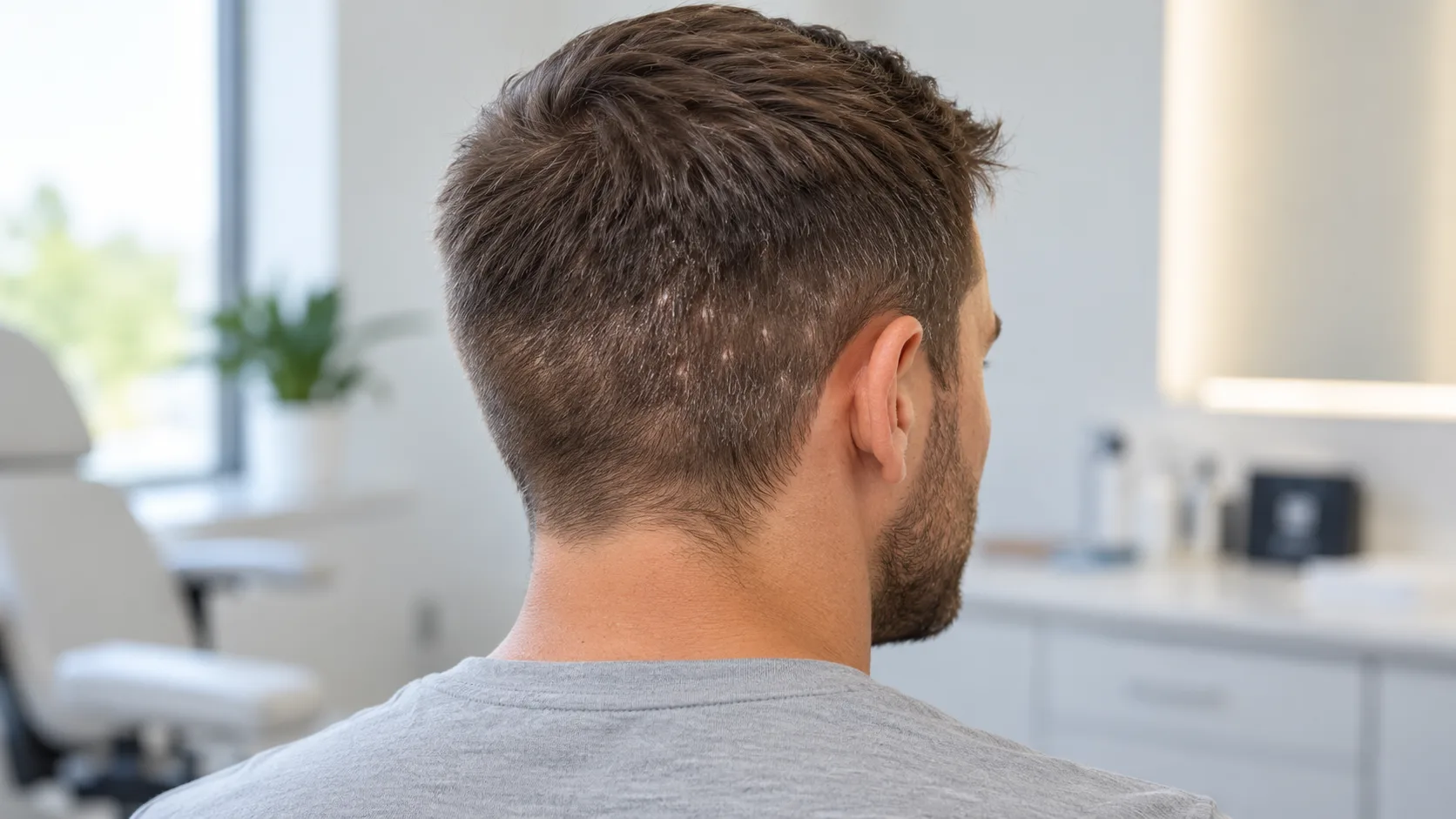
FUE can leave visible scars, but they are usually small dot-like marks rather than a linear scar. In most patients, these marks become difficult to notice once the donor hair grows to a normal length.
Follicular unit excision removes individual follicular units through circular micro-punches. Each punch takes out one follicular unit and leaves a pinpoint wound (Rassman et al. 2002). After healing, the extraction sites mature into tiny round marks. These marks are far smaller than a strip scar from follicular unit transplantation. Research on FUE describes it as minimally invasive precisely because the wounds stay discrete (Harris 2013).
Scar visibility drops sharply as surrounding hair grows. A typical extraction mark sits under the hair. With hair longer than a few millimeters, the dots disappear from casual view. Very short hairstyles expose more scalp, so the marks can show under close inspection. Donor density also matters. A dense donor area hides marks better than a thin one.
FUE is not completely scar-free. The literature is consistent on this point. FUE eliminates the linear scar, but it replaces it with many small marks (Avram et al. 2005). For most patients, this trade is favorable. For patients who want a shaved head, the trade requires careful discussion.
Does DHI Leave Scars?
Yes, DHI can leave small donor-area marks. DHI changes how grafts are implanted, not how they are extracted. Because the extraction step still uses follicular unit removal, the donor area heals the same way it does with standard FUE.
Direct hair implantation was popularized through the Choi implanter pen, which allows simultaneous channel creation and graft placement (In 1993). The implanter pen offers control over angle and direction. It can also reduce the time grafts spend outside the body. These features affect implantation quality. They do not remove the need for donor extraction.
DHI still extracts follicular units individually from the donor area. Each extraction creates a small wound. After healing, the donor area shows the same type of dot-like marks seen in FUE. Claims of "scar-free DHI" confuse implantation technology with extraction biology. No implanter pen changes the fact that removing a graft leaves a mark.
The main difference lies in the recipient area. With DHI, the surgeon implants grafts directly without pre-cutting recipient channels. With standard FUE, the team usually creates channels first and then places the grafts. This distinction affects the recipient healing pattern, but it does not eliminate donor scarring.
Are FUE and DHI Scars Different?
The donor-area scars of FUE and DHI are essentially similar. Both come from individual follicular unit extraction. Recipient-area marks differ slightly because the implantation methods differ. Overall, technique and healing matter far more than the procedure name.
The comparison below summarizes the key points.
Feature | FUE | DHI |
Extraction method | Individual follicular unit removal | Individual follicular unit removal |
Implantation method | Pre-created recipient channels | Choi implanter pen, simultaneous channel and placement |
Donor-area scars | Small dot-like marks | Small dot-like marks |
Recipient-area marks | Channel incisions that heal quickly | Pen-made openings that heal quickly |
Linear scar risk | Low, with proper spacing | Low, with proper spacing |
Scar visibility drivers | Punch size, donor density, hair length | Same as FUE |
Because both techniques extract follicular units one by one, the donor scarring mechanism stays the same. A study comparing modern methods confirms that extraction technique, not branding, drives the donor healing pattern (Avram et al. 2005). The recipient area shows more variation. Standard FUE involves two steps: channel creation and graft placement. DHI combines both steps. Either way, the recipient skin heals through the same wound-repair process.
Surgical technique and healing capacity matter more than the name on the brochure. An experienced surgeon using either method can produce subtle, well-hidden marks. A poorly planned procedure can produce visible scarring under any name. Neither technique is universally superior for scarring.
What Do FUE and DHI Scars Usually Look Like After Healing?

Fresh extraction sites look red and slightly crusted for the first days. They gradually flatten into small, pale dot-like marks. By several months after surgery, most donor marks blend into the surrounding scalp, especially under hair.
Early redness and small scabs appear as part of normal healing. The inflammatory phase peaks in the first week. During this phase, the sites can look like tiny red dots with mild crusting (Singer and Clark 1999). Patients often worry at this stage because the skin looks irritated. This appearance is temporary.
As healing progresses, the marks change. The scabs fall off. The redness fades. Collagen remodeling continues under the surface for months. Fresh puncture sites mature into dot-like marks that are level with the skin. Surrounding hair then camouflages these marks. Individual variation is real. Some patients heal with marks that are nearly invisible. Others heal with marks that remain visible under very short hair. Genetics, age, skin type, and punch technique all shape the outcome.
What Factors Make Hair Transplant Scars More Noticeable?
The number of grafts, extraction spacing, punch size, overharvesting, healing biology, donor density, hair length, and surgical experience all influence scar visibility. No single factor decides the result. The interaction between them does.
The main factors can be grouped as follows.
Factor group | Examples | Effect on scar visibility |
Surgical planning | Graft number, extraction spacing | Dense or clustered extraction raises visibility |
Instrumentation | Punch size, blade quality | Larger punches leave larger marks |
Donor biology | Hair density, skin type | Low density exposes marks |
Healing biology | Inflammation, keloid tendency | Abnormal healing enlarges scars |
Styling habits | Preferred haircut length | Very short cuts reveal dots |
Number of grafts extracted matters first. High graft counts require more extractions. More extractions create more marks in the donor area. Distribution and spacing come next. Evenly scattered extraction leaves a uniform pattern. Concentrated extraction creates thin patches.
Punch size and harvesting technique set the size of each mark. Smaller punches reduce the mark diameter, but they also demand skill to avoid graft damage. Overharvesting removes too much hair from a limited area and lowers donor density. Lower density makes each remaining mark easier to see.
Individual wound-healing characteristics shape the final texture. Some patients form thin, flat scars. Others form thicker tissue. Hair density and haircut length determine camouflage. Finally, the surgical team sets the standard for every variable above. Skill at extraction spacing and punch handling directly affects how the donor area looks years later.
Can Overharvesting Make FUE or DHI Scars More Visible?
Yes. Overharvesting removes too many follicular units from a limited donor zone. It lowers donor density and can create a patchy, moth-eaten look that makes individual extraction marks more visible.
Donor-area overharvesting means extraction beyond what the donor can tolerate while keeping a natural appearance. The donor area has a finite supply of permanent hair. Removing a high percentage of it reduces coverage. Once density falls, the scalp shows through more easily. Each dot-like scar then stands out against less hair.
Uneven extraction creates additional problems. If the surgeon concentrates extractions in one zone, that zone thins faster than the rest. The result looks patchy even before scars mature. Even distribution spreads the load and keeps the donor area uniform. Donor preservation also matters for the future. Many patients need a second procedure years later. A depleted donor area limits options. Careful graft planning protects both the current result and future flexibility.
Scar visibility and graft planning connect directly. A conservative plan with appropriate spacing produces small marks hidden by dense hair. An aggressive plan trades short-term graft yield for long-term visibility problems. This trade rarely benefits the patient.
Does Hair Length Affect the Visibility of FUE and DHI Scars?
Yes, hair length strongly affects scar visibility. Very short hairstyles expose donor-area dots. Longer surrounding hair conceals healed extraction sites almost completely.
When hair is clipped very short, the scalp shows. The small round marks from follicular extraction become visible at close range. The shorter the cut, the more visible the pattern. A buzz cut above a certain length usually hides the marks. A fully shaved head exposes them.
Longer hair changes the picture. Once hair reaches a normal length, each mark sits under a small forest of surrounding shafts. The eye reads the area as uniform density. Individual marks blend in. This camouflage effect explains why most FUE patients report satisfaction with donor appearance after full hair transplant healing.
Visibility still differs between individuals. A patient with thick, dense donor hair can wear shorter styles than a patient with fine hair. Patients who regularly wear very short styles should discuss this preference before surgery. The surgeon can adjust extraction spacing and punch placement to protect the donor aesthetic under a short cut.
Can Hair Transplant Scars Appear in the Recipient Area?
The recipient area usually heals without noticeable long-term scars. Temporary redness and small openings appear after implantation, but these settle as the skin repairs itself. Recipient healing differs from donor healing because grafts are added, not removed.
Donor extraction marks and recipient-site openings are separate concepts. The donor area loses follicular units, so each mark stays as a small permanent dot. The recipient area receives grafts. The openings made for each graft close quickly because the surrounding tissue stays intact.
After implantation, the recipient zone shows redness and tiny scabs for days to weeks. These are normal signs of healing, not complications. As the epidermis closes, the marks fade. Most recipient areas heal to a point where no scarring is visible at conversational distance.
The appearance of the recipient area immediately after surgery does not represent the final result. Crusts and pinkness dominate the first month. Mature healing takes months. Judging scar risk from early photographs misleads both patients and surgeons.
How Does Sapphire FUE Affect the Appearance of Scars?
Sapphire FUE mainly changes the recipient-channel creation step. Sapphire blades allow finer, more precise channels. Donor-area scarring still depends on follicular extraction, so sapphire FUE is not scar-free.
Conventional FUE uses steel blades to make recipient channels. Sapphire FUE replaces these blades with sapphire-tipped versions. Sapphire offers hardness and sharpness. Finer channels may reduce tissue trauma during implantation. Less trauma can support smoother recipient healing.
Channel characteristics and extraction biology must stay separate. Sapphire blades affect the recipient side. They do not change the micro-punch that removes grafts from the donor area. Donor scarring follows the same rules as standard FUE. Punch size, spacing, and donor density still decide how visible the marks become. Presenting sapphire FUE as completely scar-free is inaccurate. Patients evaluating this option should ask where the sapphire advantage applies and where it does not.
How Long Does It Take for Hair Transplant Scars to Heal?
Early skin healing completes within weeks. Scar maturation takes months to over a year. The final appearance cannot be judged during the first weeks after surgery.
Healing stage | Typical timing | What happens |
Early closure | Days 1 to 10 | Scabs form and fall off, redness persists |
Surface healing | Weeks 2 to 4 | Redness fades, marks flatten |
Scar maturation | Months 3 to 12 | Collagen remodels, marks soften and pale |
Final appearance | After 12 months | Stable donor and recipient appearance |
Initial wound healing and long-term scar maturation are different processes. The skin closes quickly through basic repair mechanisms. Maturation involves collagen reorganization that continues far longer (Gurtner et al. 2008). During maturation, scars often become flatter and lighter.
Recovery timelines vary between patients. Age, circulation, smoking status, and nutrition all influence speed. A mark that looks prominent at week three may fade dramatically by month six. Patience with the process is part of realistic expectation setting.
What Can Increase the Risk of Noticeable Hair Transplant Scarring?
Poor graft distribution, excessive extraction, inappropriate punch technique, repeated trauma, infection, abnormal healing tendencies, and inadequate aftercare all raise scar risk. Most of these factors are controllable through planning and care.
Poor graft distribution clusters marks in one zone. Excessive donor extraction thins the area beyond natural coverage. Inappropriate punch technique enlarges each mark or damages surrounding follicles. Repeated trauma to the healing scalp, such as picking scabs or rubbing, reopens wounds and extends inflammation.
Infection or delayed wound healing adds tissue damage. Individual susceptibility to abnormal scar formation also plays a role. Some patients form keloids or hypertrophic scars after minor injuries. These abnormal patterns follow distinct molecular pathways involving excessive collagen signaling (Zhu et al. 2016; Halim et al. 2012). A history of such scars should trigger a careful preoperative discussion.
Inadequate postoperative care undermines good surgery. Sun exposure, smoking, and ignoring cleaning instructions all slow healing. Each controllable factor deserves attention before and after the procedure.
How Can Patients Minimize Hair Transplant Scar Visibility?
Patients can minimize scar visibility by choosing a qualified surgical team, planning the donor area conservatively, following aftercare instructions, and discussing hairstyle goals before surgery. Prevention works far better than repair.
The surgical team sets the ceiling for outcome quality. Experience with punch selection, extraction spacing, and donor management directly shapes healing. Patients should verify the team's track record with donor-area planning. Conservative graft planning protects density. Avoiding excessive extraction from concentrated areas keeps the donor uniform. Spacing extractions across the safe donor zone spreads the impact.
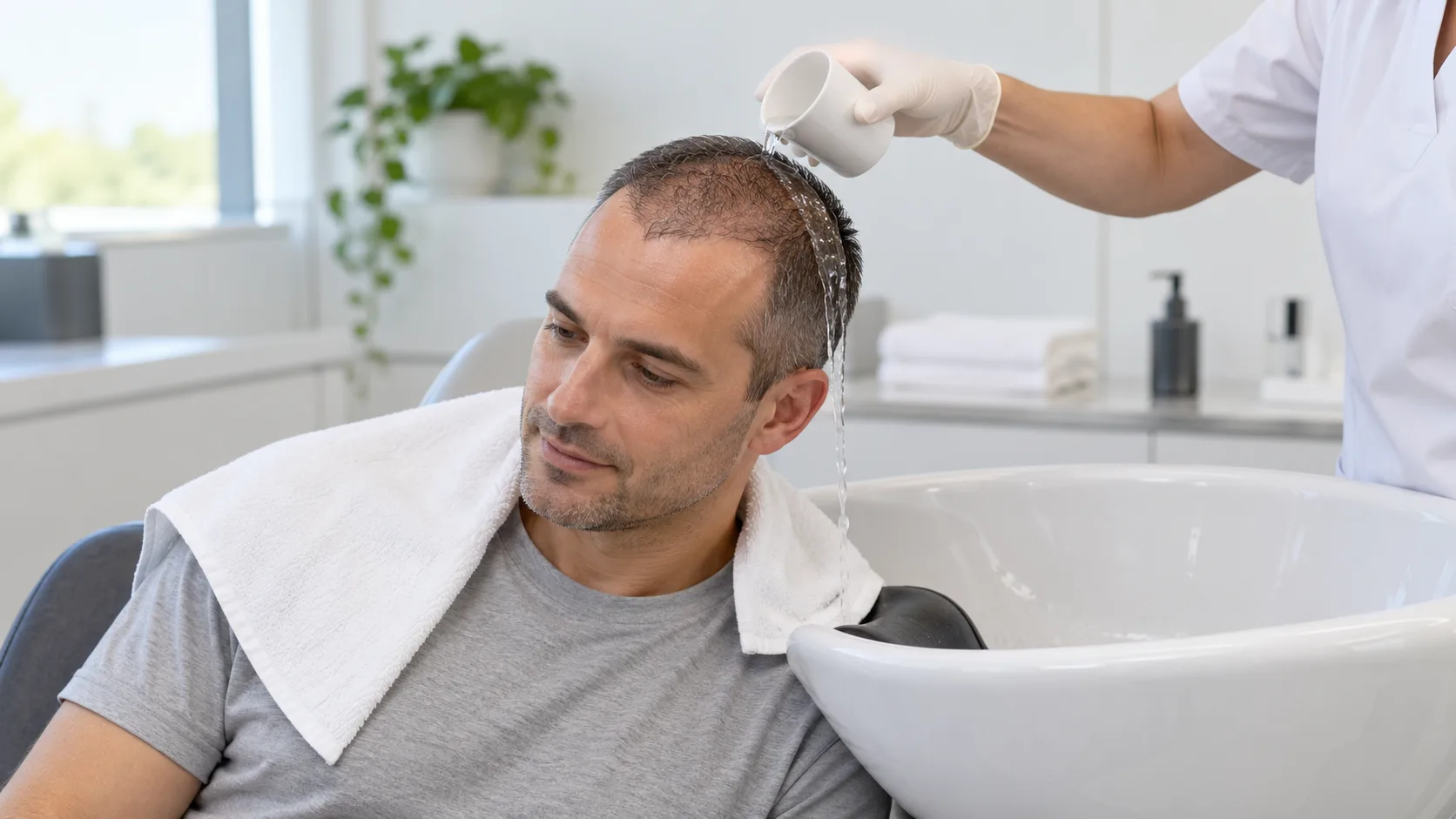
Postoperative scalp care matters equally. Gentle washing, sun protection, and avoiding friction give wounds a clean environment for repair. Protecting the scalp during the early healing period prevents trauma-related enlargement of marks. Hairstyle discussions belong before surgery, not after. A patient who wants very short cuts needs a different extraction strategy than a patient who keeps longer hair.
Can Existing Hair Transplant Scars Be Covered With New Grafts?
Sometimes. Grafts can be placed into selected scarred areas to camouflage marks. Results are less predictable than in healthy scalp because scar tissue has altered blood supply and structure.
Scar tissue differs from healthy scalp in several ways. It has fewer hair follicles, altered collagen, and reduced vascularity. Grafts placed into scar tissue depend on limited local circulation. Survival rates can therefore be lower and less predictable. Careful assessment is essential before any scar-repair transplantation.
Previous FUT scars differ structurally from FUE or DHI marks. A strip scar is a single linear band of dense scar tissue. Small dot marks are discrete points. Strip scars sometimes accommodate camouflage grafts well because the surrounding tissue remains healthy. Dot marks rarely need repair at all.
Individual assessment comes first. The surgeon evaluates scar maturity, blood supply, and available donor reserves. Attempting repair in an immature scar produces poor results. Maturation must complete before camouflage grafting.
Which Patients Should Discuss Scar Visibility Before Choosing FUE or DHI?
Patients with very short hairstyles, limited donor density, high graft requirements, previous transplant surgery, existing donor scars, or plans for future procedures should discuss scar visibility in detail before choosing a technique.
Each situation raises specific concerns. Short hairstyles expose donor marks. Limited donor density offers less camouflage. High graft counts increase extraction load. Previous surgery means the donor area already carries marks. Existing scars change how new extractions must be planned. Multiple future procedures require donor preservation.
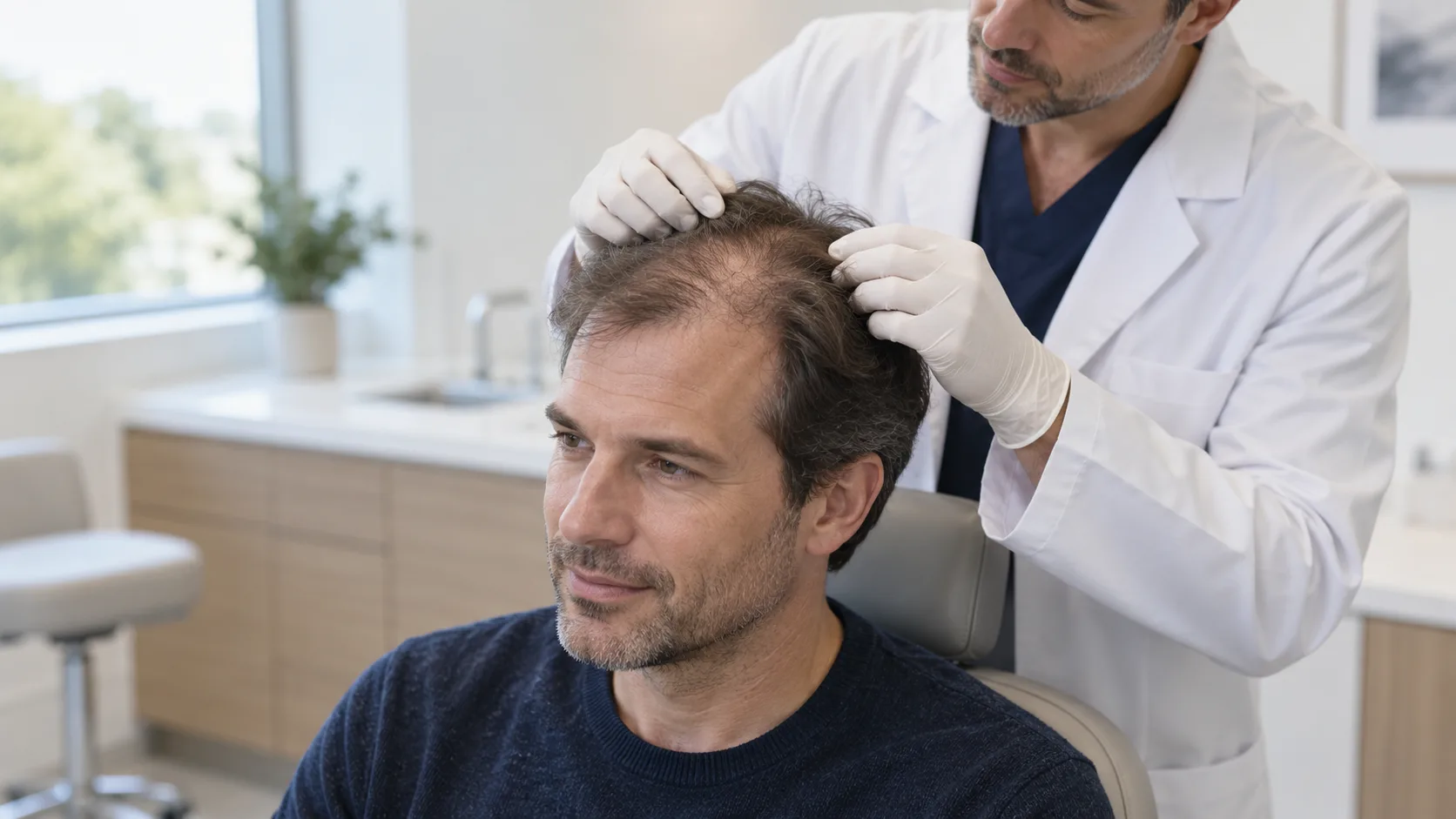
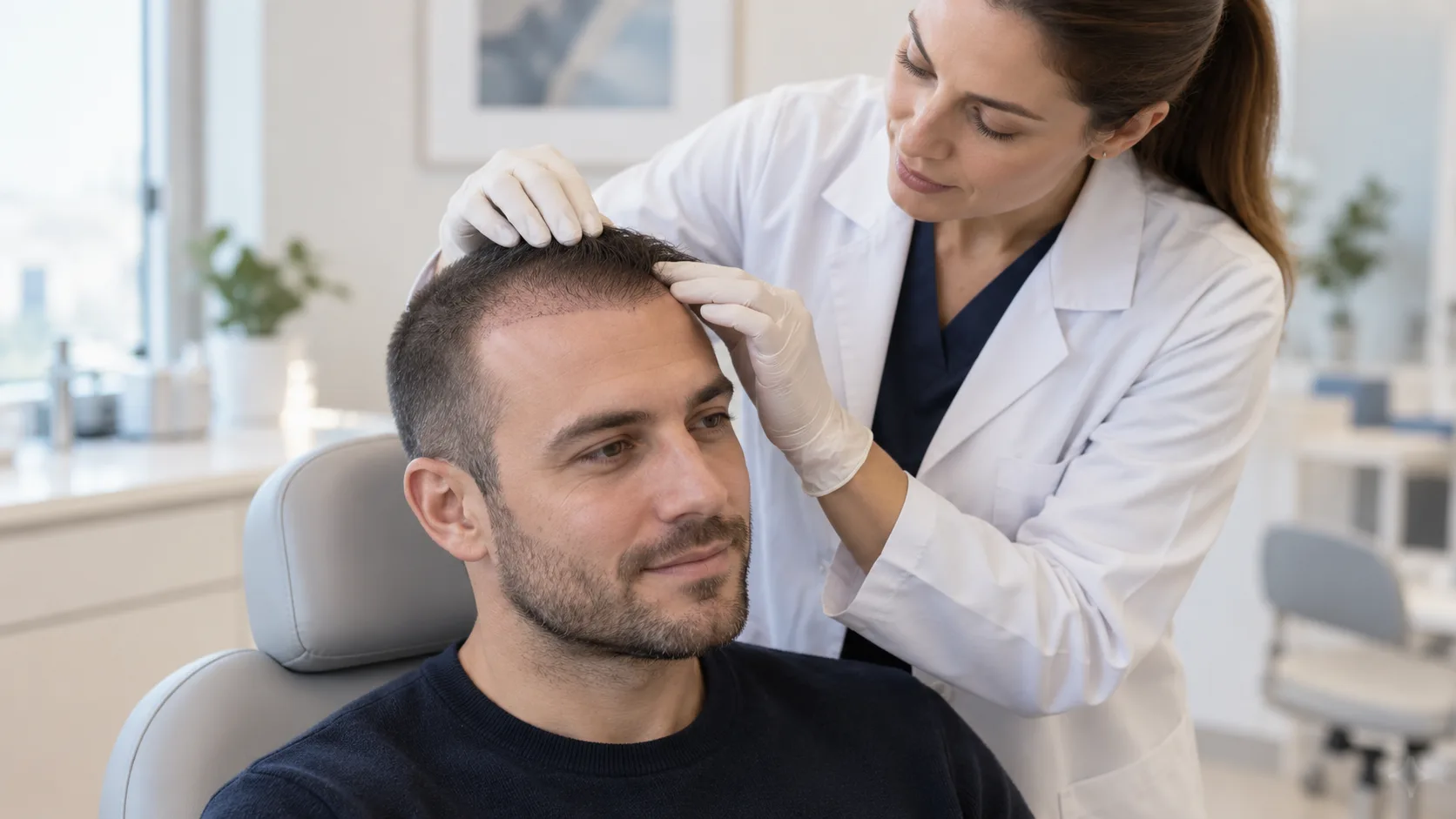
These patients benefit most from a personalized assessment. The surgeon reviews donor density, scalp laxity, healing history, and styling preferences. Technique choice follows from this review. A blanket claim that one method always scars less ignores these individual variables.
What Should You Ask a Hair Transplant Surgeon About Scarring?
Ask about the extraction method, expected donor appearance, graft number effects, extraction distribution, previous scar impact, realistic photos, and future procedure planning. Clear answers reduce the risk of unmet expectations.
Key questions include:
What extraction method will you use, and why?
How will my donor area look at three months and at twelve months?
Could the planned graft number lower my donor density?
How will you distribute extractions across the donor zone?
Will my previous scars change the plan?
Can I see unedited postoperative photos of donor healing?
What happens if I need another procedure in five years?
Each question targets a known driver of scar visibility. Detailed answers signal a surgeon who plans for long-term appearance, not just immediate graft placement. Vague answers should prompt a second opinion.
FUE vs DHI Hair Transplant Scars: What Are the Key Differences at a Glance?
Both techniques use the same extraction principle and leave similar donor marks. DHI changes implantation through the Choi implanter pen. Scar visibility in both methods depends on technique, healing, donor density, and hairstyle.
Comparison point | FUE | DHI |
Extraction | Individual follicular unit removal | Individual follicular unit removal |
Implantation | Pre-created recipient channels | Simultaneous channel and placement with implanter pen |
Donor-area scars | Small dot-like marks | Small dot-like marks |
Recipient-area marks | Temporary channel incisions | Temporary pen-made openings |
Scar visibility | Driven by technique and healing | Driven by technique and healing |
Main takeaway | Name does not determine outcome | Name does not determine outcome |
The literature supports this equivalence. FUE standardized individual unit extraction two decades ago (Rassman et al. 2002). Later refinements improved instruments and workflow (Harris 2013). DHI added a specialized implantation tool (In 1993). Neither removed the biological need for donor extraction.
Frequently Asked Questions About Hair Transplant Scars
Does FUE leave permanent scars?
FUE leaves small permanent marks, but they often become difficult to see. Permanence and visibility are different. The marks stay in the skin, yet hair usually hides them well (Avram et al. 2005).
Does DHI leave fewer scars than FUE?
No. DHI uses the same follicular-unit extraction as FUE. The implanter pen changes graft placement, not donor healing. Claims of scar-free DHI should be treated with caution.
Are FUE scars visible with short hair?
Short hair can expose FUE dots, especially with low donor density. Hair length and density together determine visibility. Patients wanting very short cuts should plan extraction patterns with their surgeon.
Can hair transplant scars disappear completely?
Scars mature and fade, but they do not disappear completely. Individual healing determines how subtle they become. Good technique makes them nearly invisible under normal hair.
Can FUE scars be repaired?
Selected scars can be camouflaged with new grafts or treated with scar-revision methods. Assessment is necessary first, because scar tissue behaves differently from healthy scalp (Mustoe et al. 2002).
Does DHI leave scars on the recipient area?
DHI creates temporary recipient-site openings that heal quickly. These differ from permanent donor extraction marks. Long-term recipient scarring is uncommon.
Is Sapphire FUE less visible than traditional FUE?
Sapphire FUE refines recipient channels. Donor scarring still depends on extraction technique. The sapphire blade does not change donor healing.
What Is the Main Takeaway About FUE and DHI Scarring?
FUE and DHI are not completely scar-free. Both can produce small donor-area dot marks. Scar visibility depends on surgical technique, donor management, healing biology, and hair length. A personalized assessment beats technique-based marketing claims.
The evidence points in one direction. Follicular unit extraction leaves small marks by design. Implantation style, whether channel-based or pen-based, does not change that biology. What changes outcomes is planning: spacing, punch selection, density preservation, and honest preoperative discussion (Vogel et al. 2013).
Patients who understand this reality make better decisions. They ask better questions. They choose surgeons based on planning skill rather than procedure branding. And they protect their donor area for the long term, which is the true foundation of natural-looking hair restoration.
References
Avram, Marc R., Nicole Rogers, and Doris Avram. "Hair Transplantation: What Is New, What Is Not." Journal of Drugs in Dermatology, vol. 4, no. 6, 2005, pp. 690–696.
Gurtner, Geoffrey C., et al. "Wound Repair and Regeneration." Nature, vol. 453, no. 7193, 2008, pp. 314–321.
Halim, Ahmad Sukari, et al. "Keloid Scar: Overview of the Therapeutic Management." International Journal of Pharmacology, vol. 8, no. 7, 2012, pp. 585–596.
Harris, James A. "Follicular Unit Extraction for Hair Restoration." Facial Plastic Surgery Clinics of North America, vol. 21, no. 3, 2013, pp. 429–437.
In, Jae Ho. "New Technique for Hair Transplantation." Archives of Otolaryngology Head and Neck Surgery, vol. 119, no. 9, 1993, pp. 950–952.
Mustoe, Thomas A., et al. "International Clinical Recommendations on Scar Management." Plastic and Reconstructive Surgery, vol. 110, no. 2, 2002, pp. 560–571.
Rassman, William R., et al. "Follicular Unit Extraction: Minimally Invasive Surgery for Hair Transplantation." Dermatologic Surgery, vol. 28, no. 8, 2002, pp. 720–728.
Singer, Adam J., and Richard A. F. Clark. "Cutaneous Wound Healing." New England Journal of Medicine, vol. 341, no. 10, 1999, pp. 738–746.
Vogel, James E., et al. "Hair Transplant: Basic Overview." Journal of Cutaneous and Aesthetic Surgery, vol. 6, no. 3, 2013, pp. 133–139.
Zhu, Zhiwei, Jie Ding, and Edward E. Tredget. "The Molecular Basis of Hypertrophic Scars." Burns and Trauma, vol. 4, no. 1, 2016, pp. 2.