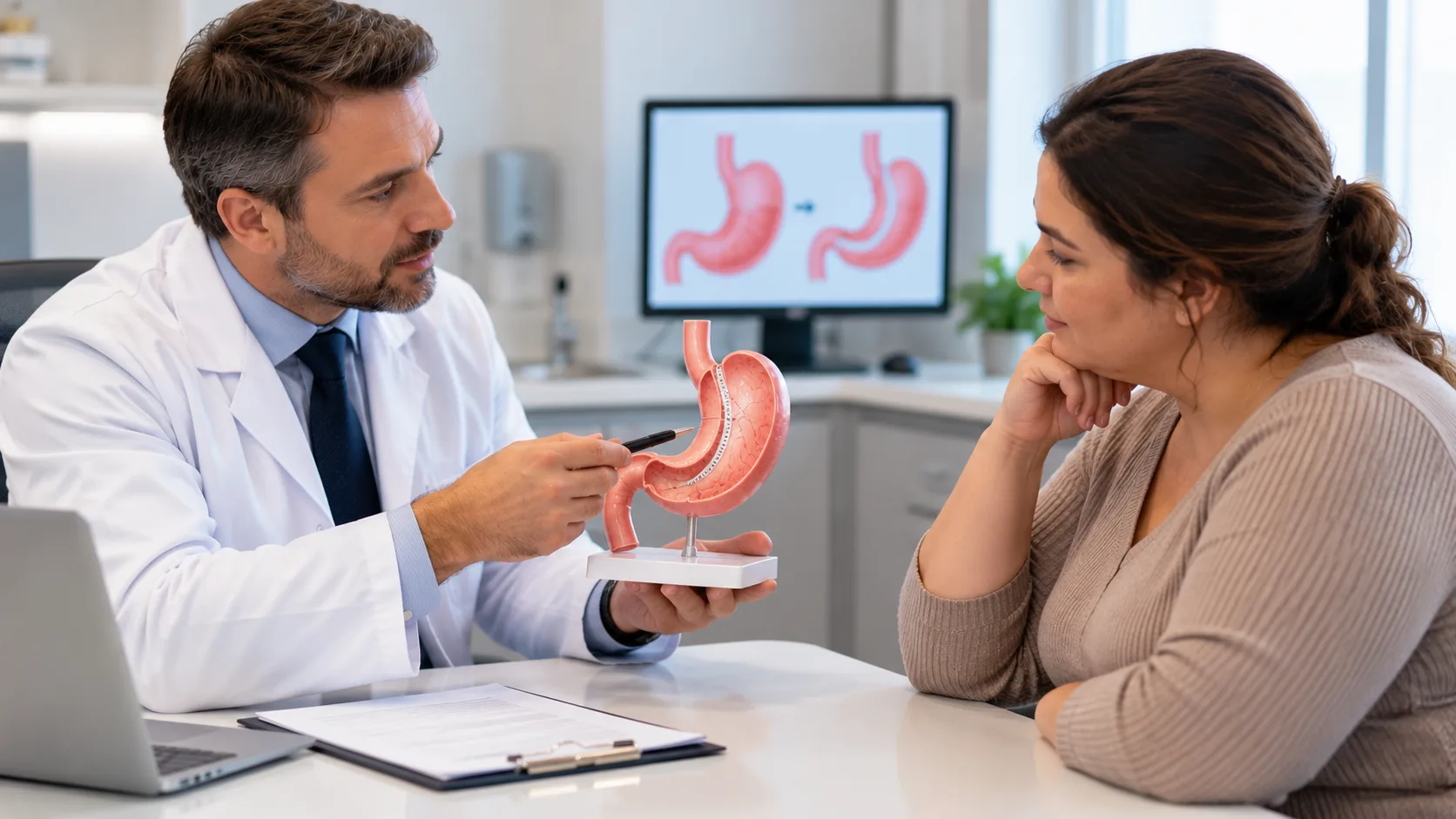
Gastric Balloon Recovery Timeline
A gastric balloon recovery timeline typically spans three distinct phases: an immediate adjustment period of two to seven days, an early recovery phase through the first month, and a long-term adaptation period that lasts for the entire duration of the balloon placement. Most patients move through the acute recovery phase within one to four weeks, although the exact timeline varies according to balloon type, individual tolerance, and the guidance of the treating medical team (Imaz 2008). Understanding these stages helps patients set realistic expectations for symptoms, diet progression, daily activities, and follow-up care.
What Happens Immediately After Gastric Balloon Placement?
Most patients spend one to three hours under observation after placement, then return home the same day with instructions to rest, hydrate, and follow a liquid diet.
The placement procedure itself is endoscopic and takes approximately twenty to thirty minutes. Patients remain in a recovery area while the medical team monitors vital signs and watches for early signs of intolerance. Once the team confirms stable breathing, swallowing, and comfort, discharge usually follows within hours (Kotzampassi 2012).
During the first evening, hydration becomes the central priority. Patients sip clear liquids slowly and avoid solid food entirely. Common early symptoms include nausea, abdominal discomfort, cramping, and occasional vomiting. These symptoms arise because the stomach suddenly contains a foreign volume that occupies a significant portion of its capacity. This first adjustment period represents the most demanding phase of the entire gastric balloon recovery timeline for most patients (Imaz 2008).
The groundwork laid during these hours matters for everything that follows. Patients who hydrate consistently and follow the prescribed liquid protocol tend to transition more smoothly into the first week.
What Is the Gastric Balloon Recovery Timeline During the First Week?
The first week follows a predictable pattern: rest and liquids during hours zero to twenty-four, peak adjustment discomfort on days two to three, and gradual symptom relief from days four to seven.
Hours 0 to 24. Patients focus on rest, small sips of clear fluids, and symptom management. Nausea and cramping may intensify during this window as the stomach contracts against the balloon. Anti-nausea medication prescribed by the treating team supports this phase.
Days 2 to 3. Stomach adaptation may still produce nausea, reflux, or cramping. Many patients describe these as the most uncomfortable days. Fluid intake should continue, even if appetite remains low, because dehydration remains the most common early complication (Kotzampassi 2012).
Days 4 to 7. Symptoms often begin to settle. Oral intake can gradually expand from clear liquids toward protein-based liquids or pureed foods, depending on the protocol. Energy typically returns, and light daily activities become manageable.
The individualized diet plan matters more than any generic schedule. Patients who advance their diet too quickly during this week frequently trigger renewed nausea, which delays the entire recovery timeline. Patients who feel well by day five to seven may return to non-physical work, while others need the full week.
How Does Recovery Progress During the Second Week?
Most patients experience a clear transition from adjustment toward comfort during week two, with expanded food options and a realistic return to work.
The stomach begins to accept the balloon as a stable presence. Food and fluid intake gradually become easier, and meal volume can increase slightly within the protocol limits. Protein-rich liquids or soft foods typically replace the initial pure liquid phase (Mechanick 2023).
Many patients return to work and routine activities during this week. Desk-based work often resumes earlier than physically demanding labor. Continued attention to hydration, small portions, and digestive symptoms remains essential. Rapid dietary progression, such as introducing bread, fibrous vegetables, or large meals, commonly causes discomfort and can push patients back toward nausea. The second week rewards patience, because the habits formed here directly shape the stable eating routine that emerges in weeks three and four.
What Can Patients Expect During Weeks 3 and 4?
Weeks three and four mark the shift toward a stable eating routine, smaller portions, and a gradual return to a structured exercise program.
The transition from soft foods toward regular textures continues, but portion sizes remain deliberately small. Patients begin adapting to earlier satiety, and meal patterns start to follow a predictable structure of three to five small meals per day. This adaptation reflects the balloon's primary mechanism: earlier fullness leads to reduced caloric intake (Genco 2006).
Physical activity can expand during this stage. Walking becomes a daily habit, and many patients reintroduce moderate exercise such as cycling or swimming, subject to medical clearance. Nutritional follow-up appointments during this window allow the care team to review protein adequacy, hydration, and micronutrient intake, which aligns with standard bariatric nutrition guidelines (Mechanick 2023). The habits solidified in weeks three and four form the foundation for the long-term weight-management phase that follows the first month.
What Does Recovery Look Like After the First Month?
After the first month, recovery evolves into an adaptation and weight-management phase rather than an acute healing period.
Dietary adjustment continues with an emphasis on portion control and nutrient-dense food choices. Physical activity becomes more consistent, often progressing toward regular aerobic and resistance exercise. Medical and nutritional monitoring continues through scheduled follow-up appointments, where weight trends, symptoms, and laboratory values are reviewed (Popov 2017).
The behavioral dimension becomes central at this point. The balloon functions as a temporary tool that suppresses intake, but sustainable outcomes depend on the eating and activity patterns that patients maintain throughout the balloon period. Patients who treat months two and beyond as a structured lifestyle program achieve better weight outcomes than those who rely on the device alone (Kotzampassi 2012).
How Long Does It Take to Feel Normal After a Gastric Balloon?
Many patients feel substantially normal within two to four weeks, but there is no single recovery duration that applies to every patient.
Two distinct processes must be separated. Physical recovery from the endoscopic placement is rapid, typically complete within days. Adaptation to the balloon, meaning comfortable tolerance of reduced intake and altered digestion, takes longer and varies widely (Imaz 2008).
Several factors shape the timeline:
Factor | Effect on Recovery |
Individual gastric tolerance | Determines intensity of early nausea |
Balloon type and fill volume | Influences satiety and symptom burden |
Dietary compliance | Speeds or delays dietary progression |
Pre-existing reflux or dyspepsia | May prolong digestive symptoms |
Persistent or worsening symptoms at any point require medical assessment rather than continued waiting.
When Can You Return to Work After a Gastric Balloon?
Desk-based workers often return within two to five days, while physically demanding roles may require one to two weeks, with clearance from the treating team.
Work Type | Typical Return Window | Key Consideration |
Desk-based, remote work | 2 to 5 days | Ability to tolerate fluids and sit comfortably |
Standing or light physical roles | 5 to 10 days | Energy levels and symptom stability |
Heavy manual labor | 1 to 2 weeks | Avoidance of straining and impact |
The decisive factors are hydration and dietary tolerance. A patient who cannot maintain adequate fluid intake is not ready for a full workday, regardless of the calendar. The treating team provides individualized clearance based on symptom status rather than a fixed schedule (Mechanick 2023).
When Can You Exercise After Gastric Balloon Placement?

Walking usually begins within the first days when medically permitted, moderate exercise typically resumes in weeks three to four, and strenuous training returns around week four to six.
Strenuous activity is limited during the initial recovery period because elevated intra-abdominal pressure and vigorous movement can intensify nausea and cramping. The progression follows a staged pattern:
Days 1 to 7: Short, gentle walks as tolerated.
Weeks 2 to 3: Longer walks and light household activity.
Weeks 3 to 4: Moderate aerobic exercise with medical clearance.
Week 4 onward: Gradual return to the established routine.
Exercise recommendations change as recovery progresses, so patients should confirm each stage with their medical team. Any concerning symptom during activity, such as sharp pain, dizziness, or persistent vomiting, requires stopping immediately and contacting the care team.
How Does the Diet Change Throughout Gastric Balloon Recovery?
The diet progresses in structured stages from clear liquids to protein liquids, then soft foods, and finally small portions of regular food, typically across four to six weeks.
Hydration anchors the early stages. Small, frequent sips prevent dehydration and support stomach adaptation. As the diet advances, portion size and eating speed become the critical variables. Small portions eaten slowly allow the stomach to process food without triggering nausea or reflux (Mechanick 2023).
Later recovery emphasizes protein-rich and nutrient-dense choices because reduced intake creates a risk of inadequate protein and micronutrient consumption. Individual plans differ according to balloon type and clinical protocol, so no single diet chart fits every patient. The diet stage reached in week one directly determines comfort in week two, which is why protocol adherence shapes the entire recovery trajectory.
What Symptoms Are Common During Gastric Balloon Recovery?
Nausea, vomiting, cramping, bloating, fullness, and reflux are the most common symptoms, and most occur during the initial adaptation window.
Meta-analytic data show that nausea and vomiting affect a substantial share of patients in the first days, while cramping and a persistent sense of fullness reflect the mechanical presence of the balloon (Imaz 2008). Reflux symptoms may emerge because gastric volume is reduced. Appetite typically drops sharply, and certain foods, especially fibrous or greasy items, may become temporarily intolerable.
Symptom | Typical Onset | Typical Duration |
Nausea and vomiting | First hours | Days 1 to 7 |
Abdominal cramping | First hours | Days 1 to 5 |
Bloating and fullness | Immediately | Weeks, gradually improving |
Reflux or heartburn | First days | Variable, manageable with medication |
Appetite changes | Immediately | Persists throughout treatment |
These symptoms are generally managed under medical supervision with antiemetic and antisecretory medication, and most resolve as adaptation progresses (Kotzampassi 2012).
Which Gastric Balloon Recovery Symptoms Require Medical Attention?
Severe or persistent vomiting, inability to drink, worsening abdominal pain, dehydration signs, or unusual bleeding require prompt medical contact.
The following signs exceed normal adaptation symptoms:
Persistent or severe vomiting that prevents any oral intake
Inability to maintain adequate fluid intake
Severe or worsening abdominal pain
Signs of dehydration such as dark urine, dizziness, or confusion
Persistent reflux unresponsive to prescribed medication
Unusual bleeding or unexpected symptoms
Patients should contact their healthcare provider rather than attempt independent management of potentially serious complications. Early identification of intolerance or rare complications such as gastric ulceration protects both recovery and safety (Kotzampassi 2012). Recognizing these warning signs completes the symptom picture from the previous section, because adaptation discomfort and complication signals must never be confused.
How Do Follow-Up Appointments Support Gastric Balloon Recovery?
Follow-up appointments monitor symptoms, hydration, nutrition, and weight trends, and they allow the care team to adjust diet and medication recommendations.
Post-procedure reviews serve a surveillance function. The team evaluates whether nausea is resolving on schedule, whether protein and fluid targets are met, and whether weight change aligns with expectations. Medication regimens, including anti-nausea treatment and acid suppression, are tapered or adjusted based on symptom status (Mathus-Vliegen 2008).
Prompt reporting of persistent symptoms between visits prevents small problems from becoming treatment-limiting complications. Over the longer term, follow-up visits evolve into support sessions for lifestyle change, where behavioral reinforcement complements the mechanical effect of the balloon. This structured monitoring links directly to the lifestyle habits that determine long-term outcomes.
What Lifestyle Changes Become Important After Gastric Balloon Recovery?
Structured meal patterns, portion control, slow eating, hydration, and regular activity are the five habits that determine long-term success.
Patients benefit from fixed meal times, deliberately small portions, and slow eating that allows fullness signals to register. Adequate hydration supports metabolism and reduces the urge to mistake thirst for hunger. Regular physical activity preserves lean mass during weight loss (Mechanick 2023).
The deeper principle matters most: sustainable eating habits outperform reliance on the balloon. The device creates an artificial ceiling on intake, but habit formation creates durable behavior. Patients who develop these patterns during the adaptation period maintain healthier outcomes after balloon removal (Popov 2017). Lifestyle adaptation therefore represents the final stage of the recovery timeline and the first stage of long-term weight management.
How Does Recovery Differ Between Gastric Balloon Types?
Recovery differs mainly in placement method, fill volume, treatment duration, and whether the balloon is adjustable, so instructions must follow the specific device protocol.
Balloon Category | Typical Duration | Recovery Distinction |
Standard fluid-filled balloon | 6 months | Single placement, defined removal date |
Adjustable balloon | 8 to 12 months | Volume can be modified, longer adaptation |
Swallowable capsule balloon | 4 to 6 months | No endoscopy for placement, different early diet |
Placement and removal methods vary between systems, and treatment duration directly shapes the patient journey. An adjustable balloon extends the adaptation curve because volume changes introduce new adjustment phases (Yorke 2016). No universal recovery schedule fits all systems, and patients should follow the protocol attached to their specific device.
What Factors Can Affect the Gastric Balloon Recovery Timeline?
Eight factors shape recovery speed: individual tolerance, balloon type and duration, pre-existing gastrointestinal symptoms, hydration, dietary adherence, medication use, activity level, and individual metabolic response.
Individual tolerance remains the strongest predictor. Two patients with identical devices can follow very different timelines. Pre-existing reflux or dyspepsia often extends the digestive symptom phase, while strict dietary adherence compresses it (Imaz 2008). Prescribed medications, particularly acid suppression, directly influence comfort. Activity level supports adaptation by stimulating normal gastrointestinal motility.
These factors interact rather than operate independently. For example, poor hydration worsens nausea, which reduces dietary tolerance, which further delays recovery. Recognizing this interplay helps patients prioritize the controllable variables: fluids, diet, and activity.
What Should You Expect From the Long-Term Gastric Balloon Journey?
The recovery phase gradually becomes a weight-management period defined by smaller meals, earlier satiety, behavioral support, and preparation for removal.
Continued adaptation to reduced portions remains the daily reality. Nutritional and behavioral support prevents nutrient gaps and reinforces habit formation. As the removal date approaches, typically at six to twelve months depending on the device, the care team prepares the patient for the transition (Genco 2006).
The final expectation is the most important one: healthy habits must extend beyond the balloon period. Long-term data indicate that patients who maintain structured eating and activity preserve more of their weight loss after removal (Kotzampassi 2012). The journey ends not when the balloon exits, but when self-sustaining habits replace the device.
Frequently Asked Questions About Gastric Balloon Recovery
How many days does it take to recover from a gastric balloon?
Most patients complete the acute adjustment within seven to fourteen days, though full adaptation may take up to four weeks. Individual tolerance, balloon type, and dietary compliance explain the variation (Imaz 2008).
Can you walk after gastric balloon placement?
Yes, gentle walking is usually encouraged within the first one to two days because it supports circulation and gastrointestinal motility. All activity should follow the treating team's specific instructions.
When can you eat normally after a gastric balloon?
Most patients reach a stable eating pattern within four to six weeks. "Normal" eating means smaller portions and slower meals, not a return to previous eating habits.
How long does nausea last after a gastric balloon?
Nausea typically peaks in the first three days and fades within one to two weeks. Persistent or severe nausea beyond this window warrants medical advice (Kotzampassi 2012).
Can you return to work immediately after a gastric balloon?
Most patients should plan for at least two to five days away from work. Timing depends on symptoms, occupation type, and the medical team's clearance.
When can you exercise normally after a gastric balloon?
Walking begins within days, moderate exercise typically resumes in weeks three to four, and strenuous exercise returns around week four to six with clearance.
What should you drink during gastric balloon recovery?
Water and prescribed clear liquids form the core of early hydration. Small, frequent sips prevent nausea. Specific beverage choices should come from the clinical team.
When should you call a doctor after gastric balloon placement?
Call the medical team for severe vomiting, inability to drink, worsening abdominal pain, dehydration signs, persistent reflux, or any unusual symptom. Prompt contact protects safety and recovery.
References
Genco, Alessio, et al. "BioEnterics Intragastric Balloon (BIB): A Short-Term, Double-Blind, Randomized, Controlled, Crossover Study on Weight Reduction in Morbidly Obese Patients." International Journal of Obesity, vol. 30, no. 1, 2006, pp. 129-133.
Imaz, I., et al. "Safety and Effectiveness of the Intragastric Balloon for Obesity. A Meta-Analysis." Obesity Surgery, vol. 18, no. 7, 2008, pp. 841-846.
Kotzampassi, K., et al. "500 Intragastric Balloons: What Happens 5 Years Thereafter?" Obesity Surgery, vol. 22, no. 6, 2012, pp. 896-903.
Mathus-Vliegen, E. M. H. "Intragastric Balloon Treatment for Obesity: What Does It Really Offer?" Digestive Diseases, vol. 26, no. 1, 2008, pp. 40-44.
Mechanick, Jeffrey I., et al. "Clinical Practice Guidelines for the Perioperative Nutritional, Metabolic, and Nonsurgical Support of the Bariatric Surgery Patient." Surgery for Obesity and Related Diseases, vol. 19, no. 2, 2023, pp. 152-191.
Popov, V. B., et al. "The Impact of Intragastric Balloons on Obesity-Related Co-Morbidities: A Systematic Review and Meta-Analysis." American Journal of Gastroenterology, vol. 112, no. 3, 2017, pp. 429-439.
Yorke, E., et al. "A Proof-of-Concept, Randomized, Placebo-Controlled Trial of an Adjustable Totally Implanted Intragastric Prosthesis." Obesity Surgery, vol. 26, no. 5, 2016, pp. 926-932.