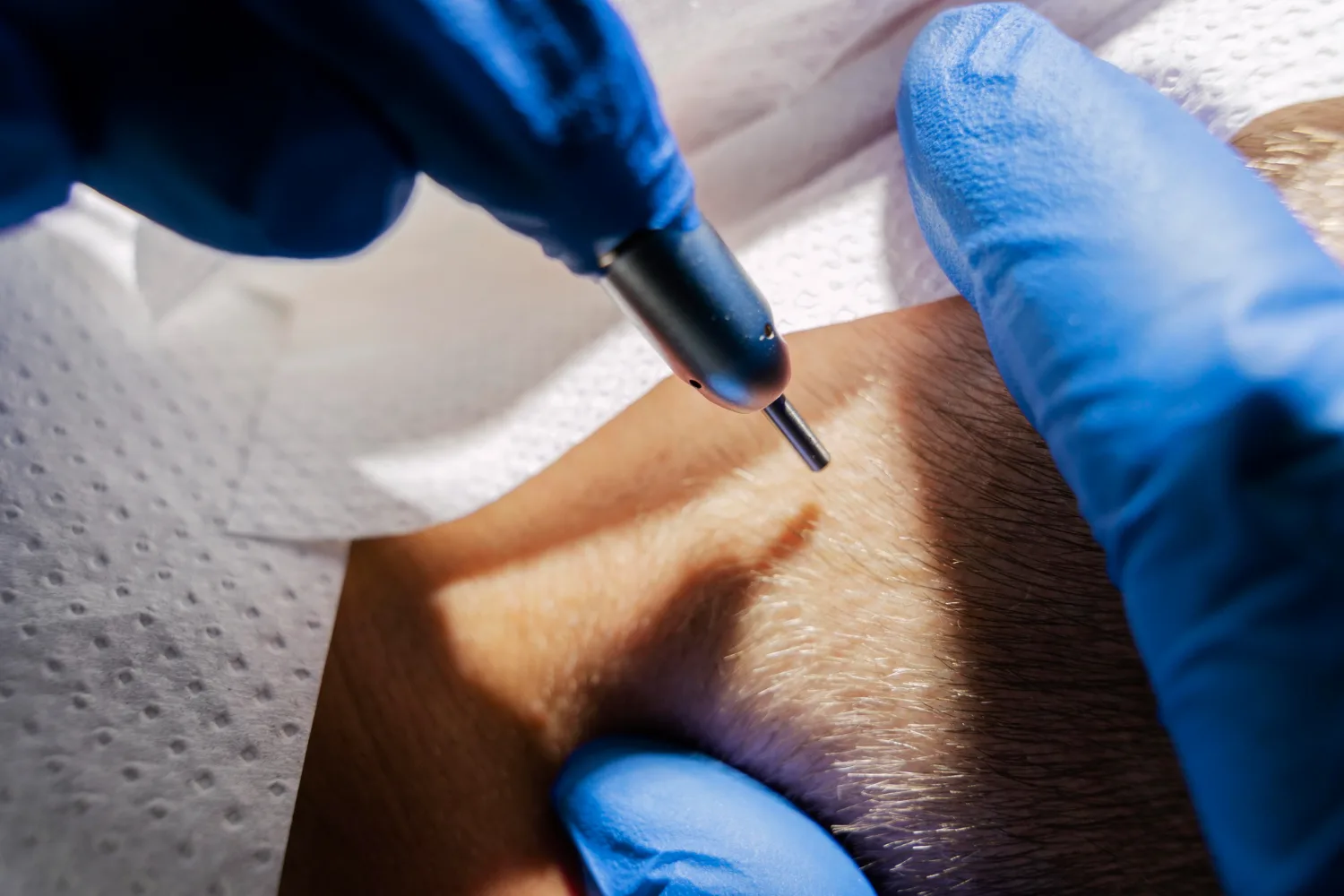
Sharp Punch vs Dull Punch in FUE Hair Transplant
Sharp punches cut tissue with a sharp edge, while dull punches separate tissue with a blunt surface. Both designs serve specific purposes in follicular unit extraction, and surgeons choose between them based on patient anatomy, hair type, and surgical goals.
Follicular unit extraction (FUE) has transformed hair restoration surgery. This technique removes individual hair grafts from the donor area without leaving a linear scar. The punch sits at the center of this procedure. It is the instrument that scores the skin, separates the follicular unit, and enables safe graft removal. Punch design directly controls graft quality, transection rates, extraction speed, donor healing, and the surgeon learning curve. No single punch design works for every patient. Patient anatomy and surgeon technique shape outcomes more than any single instrument choice. This article examines the science behind sharp and dull punch designs. It explains how each works, when each excels, and why punch selection remains one of the most important technical decisions in modern FUE surgery.
What Is the Role of the Punch in FUE Hair Transplant?
The punch creates a circular incision around each follicular unit, separates it from surrounding tissue, and allows the surgeon to extract intact grafts for transplantation.
What Is an FUE Punch?
An FUE punch is a hollow cylindrical instrument with a cutting edge that scores the skin and encircles each follicular unit for extraction.
An FUE punch consists of three main parts. The first part is the shaft. This is the hollow tube that guides the punch into the skin. The second part is the cutting edge. This is the tip that interacts with tissue. The edge can be sharp, dull, or hybrid. The third part is the depth control mechanism. This limits how far the punch advances into the scalp. Most punches range from 0.75 mm to 1.0 mm in diameter. Smaller punches create smaller wounds. Larger punches offer more room for grafts with multiple follicles. The cutting edge determines how the punch interacts with skin, collagen, and hair follicles. A sharp edge slices through tissue. A dull edge pushes tissue apart. The depth control prevents the punch from advancing too far and damaging deeper structures. Proper depth control protects the follicle bulb, which sits approximately 4 to 6 mm below the skin surface in the scalp (Bernstein and Rassman, 2004).
How Does the Punch Separate the Follicular Unit?
The punch scores the epidermis and dermis, then separates the follicular unit from surrounding connective tissue through cutting or blunt dissection.
The punch first makes a circular incision in the epidermis. This incision must follow the natural angle of the hair. If the punch enters at the wrong angle, it can cut across the follicle. This causes transection. After scoring the skin, the punch advances deeper. It separates the follicular unit from the surrounding dermis and subcutaneous tissue. Sharp punches cut through this tissue. Dull punches push the tissue apart. The surgeon then extracts the graft with forceps. The entire process requires precise alignment. The punch must encircle the follicle without touching it. Even slight contact can damage the graft. Hair angle alignment matters because follicles do not grow straight down. They exit the skin at angles ranging from 10 to 45 degrees. The punch must follow this angle to avoid transection (Harris, 2012).
What Is a Sharp Punch?
A sharp punch has a keen cutting edge that slices through tissue immediately upon contact, requiring minimal downward force.
What Are the Design Characteristics of a Sharp Punch?
Sharp punches feature a thin, keen cutting edge with low penetration resistance and a precise circular incision pattern.
Sharp punches have a thin, angled cutting edge. This edge acts like a scalpel. It slices through the epidermis and dermis with minimal resistance. The edge angle typically measures between 15 and 30 degrees. This sharp geometry allows the punch to penetrate the skin quickly. The outer rim of the punch is the sharpest part. It makes the initial incision. The inner wall may be smooth or slightly textured. Sharp punches come in various diameters. Common sizes include 0.8 mm, 0.9 mm, and 1.0 mm. The sharp edge requires less axial force. The surgeon does not need to push hard. The punch enters the skin almost effortlessly. This design works well in firm scalp tissue. It also works well when the surgeon needs fast scoring.
How Do Sharp Punches Work?
Sharp punches cut tissue immediately upon contact, require minimal downward force, and compress surrounding tissue less than blunt punches.
The sharp punch works by cutting. The keen edge slices through collagen fibers, blood vessels, and connective tissue. It does not push tissue aside. It divides it. This cutting action happens quickly. The punch scores the skin in a fraction of a second. Because the edge is sharp, the surgeon applies less downward pressure. This reduces compression of the follicle. Less compression means less trauma to the graft. The sharp punch creates a clean circular wound. The edges of this wound are well-defined. This clarity helps the surgeon see the graft clearly. It also helps during extraction. The graft separates cleanly from surrounding tissue. However, the sharp edge offers little margin for error. If the punch is not perfectly aligned, the sharp edge can slice through the follicle itself.
What Are the Advantages of Sharp Punches?
Sharp punches penetrate skin easily, score tissue faster, work well in firm scalp tissue, and require less axial force.
Sharp punches offer several clear advantages. First, they penetrate the skin easily. The keen edge cuts through the epidermis without resistance. This makes the initial scoring step fast. Second, they score tissue faster. The surgeon can complete the incision quickly. This speeds up the extraction process. Third, they work well in firm scalp tissue. Some patients have dense, fibrous donor areas. Sharp punches cut through this tissue better than blunt punches. Fourth, they require less axial force. The surgeon does not need to push hard. This reduces hand fatigue during long procedures. Fifth, they create clean wound edges. The incision is precise. This precision helps with graft visualization. It also helps with extraction. The graft comes out cleanly.
What Are the Limitations of Sharp Punches?
Sharp punches carry a higher risk of follicle transection, demand perfect alignment, and offer reduced safety margin at deeper depths.
Sharp punches have important limitations. First, they carry a higher risk of follicle transection. The keen edge can cut through the follicle if alignment is off. This destroys the graft. Second, they demand perfect alignment. The surgeon must match the punch angle to the hair angle exactly. Any deviation risks transection. Third, they offer reduced safety margin at deeper depths. As the punch advances deeper, the sharp edge remains close to the follicle. There is no buffer zone. Fourth, they require excellent visualization. The surgeon must see the hair angle clearly. Poor lighting or magnification increases transection risk. Fifth, they may cause more donor trauma in some cases. The cutting action can sever small blood vessels. This may increase bleeding in the donor area.
What Is a Dull (Blunt) Punch?
A dull punch has a rounded cutting edge that separates tissue through blunt dissection rather than cutting deeply.
What Are the Design Characteristics of a Dull Punch?
Dull punches feature a rounded cutting edge and a blunt leading surface that pushes tissue apart instead of slicing through it.
Dull punches have a rounded or blunt leading edge. This edge is not sharp. It does not slice tissue. Instead, it pushes tissue apart. The edge angle is much wider than in sharp punches. It may measure 60 to 90 degrees. This blunt geometry changes how the punch interacts with tissue. The outer rim is rounded. It does not cut the epidermis aggressively. Instead, it stretches and separates the skin. The inner wall is also important. In many blunt punches, the inner wall is smooth. This smooth surface allows the follicle to slide past without damage. Dull punches often have a slightly larger diameter than sharp punches. This extra space creates a buffer between the punch wall and the follicle. The blunt design requires more tactile feedback from the surgeon. The surgeon must feel the tissue resistance. This feedback tells the surgeon when the punch has reached the correct depth.
How Do Dull Punches Work?
Dull punches use blunt dissection to push tissue apart, preserve follicle integrity, and create a protective buffer around the graft.
The dull punch works by separation, not cutting. When the punch contacts the skin, the blunt edge pushes collagen fibers aside. It does not sever them. This pushing action creates a tunnel around the follicle. The follicle remains in the center of this tunnel. The blunt edge slides past the follicle without touching it. This preserves follicle integrity. The punch advances deeper by continuing to push tissue apart. At the correct depth, the surgeon extracts the graft. The blunt dissection creates less trauma to the surrounding tissue. Blood vessels near the follicle may remain intact. This reduces bleeding. It also preserves the blood supply to the graft. The blunt punch offers a safety margin. Because the edge is not sharp, it is less likely to cut the follicle even if alignment is slightly off.
What Are the Advantages of Dull Punches?
Dull punches produce lower transection rates, maintain better graft integrity, allow deeper safe advancement, and prove more forgiving during extraction.
Dull punches offer significant advantages. First, they produce lower transection rates. The blunt edge is less likely to cut the follicle. Studies show that blunt punches can reduce transection by 20 to 40 percent compared to sharp punches in certain patient populations (Cole, 2013). Second, they maintain better graft integrity. The graft comes out with more surrounding tissue intact. This extra tissue protects the follicle during handling and implantation. Third, they allow deeper safe advancement. The surgeon can advance the punch further without risking follicle damage. This is helpful when follicles are deeply seated. Fourth, they are more forgiving during extraction. Slight misalignment does not immediately cause transection. This makes dull punches safer for complex cases. Fifth, they preserve the vascular network around the graft. Better blood supply in the graft may improve survival after transplantation.
What Are the Potential Drawbacks of Dull Punches?
Dull punches have a slightly slower learning curve, require more tactile feedback, and may need greater extraction force.
Dull punches have some drawbacks. First, they have a slightly slower learning curve. New surgeons must learn to feel tissue resistance. This takes practice. Second, they require more tactile feedback. The surgeon cannot rely on visual cues alone. The sense of touch becomes critical. Third, they may require greater extraction force. The blunt edge does not cut tissue. It pushes it aside. This requires more downward pressure. Fourth, they may cause more tissue compression at the entry point. The blunt edge stretches the skin more than a sharp edge. This can cause temporary dimpling. Fifth, they may be slower in some cases. The extra force and tactile feedback requirements can slow extraction speed. Sixth, they may not work as well in very firm scalp tissue. The blunt edge struggles to separate dense fibrous tissue.
How Do Sharp and Dull Punches Compare Side by Side?
Sharp punches cut tissue fast with less force but carry higher transection risk. Dull punches separate tissue safely with lower transection but need more force and skill.
Feature | Sharp Punch | Dull Punch |
Cutting mechanism | Slices through tissue | Pushes tissue apart |
Tissue interaction | Cuts collagen and vessels | Separates collagen and preserves vessels |
Follicle protection | Lower; sharp edge near follicle | Higher; blunt edge creates buffer |
Transection rate | Higher in inexperienced hands | Lower; more forgiving |
Graft quality | Good with perfect technique | Consistently high |
Ease of use | Easier initial penetration | Requires more skill |
Learning curve | Moderate | Slightly longer |
Donor trauma | Clean incision; may cut vessels | More stretching; preserves vessels |
Speed | Faster scoring | Slightly slower |
Suitability for beginners | Moderate | Lower initially |
Suitability for experienced surgeons | Excellent | Excellent |
Healing characteristics | Clean wound edges | Slightly more tissue disruption |
This table shows the core differences. Sharp punches excel at speed and penetration. Dull punches excel at safety and graft protection. The choice depends on the specific clinical situation. Neither design is universally superior.
Which Punch Produces Lower Transection Rates?
Dull punches generally produce lower transection rates, though sharp punches can achieve excellent results in experienced hands.
What Is Follicular Transection?
Follicular transection is the partial or complete cutting of a hair follicle during extraction, which destroys or weakens the graft.
Transection means cutting across the follicle. There are three types. Complete transection severs the follicle entirely. The graft is destroyed. Partial transection cuts part of the follicle. The graft may survive but grows poorly. Invisible follicle injury damages the follicle without obvious signs. The graft looks intact but fails to grow after implantation. Transection is the main enemy of FUE surgery. Every transected graft is a lost graft. High transection rates waste donor hair. They also reduce the final hair density. The goal of FUE is to extract every graft intact. Punch design plays a major role in achieving this goal.
What Do Clinical Studies Show About Transection Rates?
Clinical studies generally show that blunt punches achieve lower transection rates, while hybrid punches attempt to combine the benefits of both designs.
Research supports the advantage of blunt punches in transection reduction. Cole (2013) reported that blunt punches reduced transection rates by up to 30 percent compared to sharp punches in a series of over 500 cases. Harris (2012) found that sharp punches achieved transection rates of 10 to 15 percent in experienced hands. Blunt punches achieved rates of 5 to 10 percent. Devroye (2015) demonstrated that hybrid punches, which combine a sharp outer edge with a blunt inner wall, achieved transection rates below 5 percent. These studies show a clear trend. Blunt and hybrid designs protect follicles better than pure sharp designs. However, surgeon experience matters greatly. An experienced surgeon using a sharp punch can achieve lower transection than a novice using a blunt punch. The punch is a tool. The surgeon's skill determines how well the tool works. Hybrid punches represent an attempt to capture the best of both worlds. They use a sharp outer edge for easy skin penetration. They use a blunt inner wall for follicle protection. Early data on hybrid designs is promising.
How Does Punch Design Affect Graft Quality?
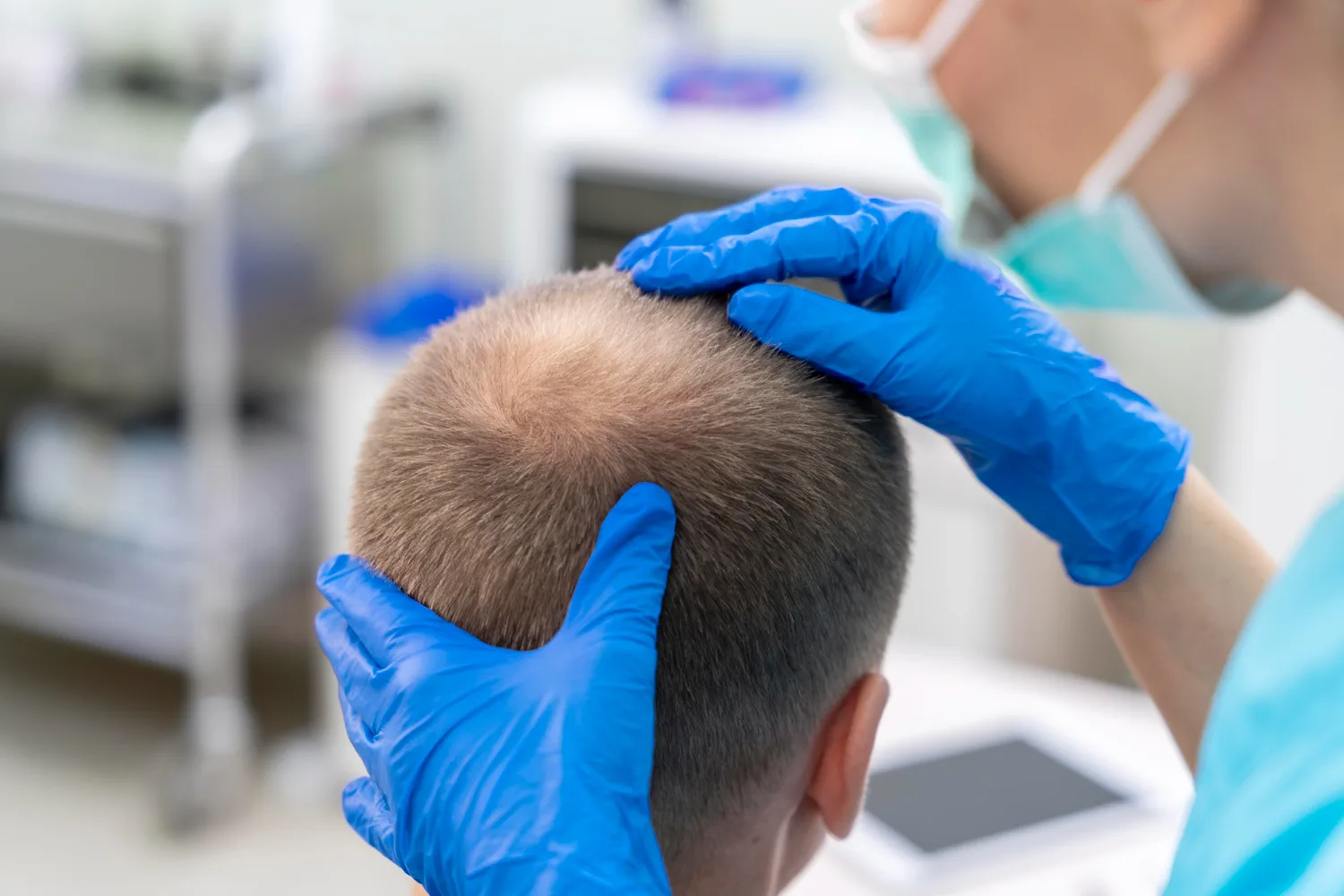
Punch design controls whether grafts remain intact, preserve root structure, and survive implantation.
Why Do Intact Follicular Units Matter?
Intact follicular units contain all the hair follicles and supporting tissue needed for successful growth after transplantation.
A follicular unit is a natural grouping of hair follicles. Most units contain 1 to 4 hairs. They also contain sebaceous glands, nerves, and blood vessels. When a graft comes out intact, it retains all these structures. This intact unit has the best chance of survival. Sharp punches can produce intact units. However, they require perfect technique. Dull punches are more likely to produce intact units because they are less likely to transect follicles. Intact units also implant better. They fit into recipient sites more easily. They maintain their natural architecture. This natural architecture helps the hairs grow in the correct direction.
How Does Punch Design Preserve Root Structure?
Dull punches preserve more root structure by creating a protective buffer around the follicle bulb.
The root of the hair follicle sits deep in the dermis. It contains the dermal papilla. The dermal papilla is the growth center of the hair. If the punch damages the dermal papilla, the hair will not grow. Sharp punches can damage the root if they advance too deep. The sharp edge can cut the root. Dull punches create a buffer zone. The blunt edge pushes tissue aside. The root remains in the center, untouched. This preservation of root structure is critical. A graft with a damaged root will not grow. It may look fine at extraction. But it will fail after implantation.
How Does Punch Design Protect Surrounding Tissue?
Dull punches protect surrounding tissue by separating rather than cutting connective tissue and blood vessels.
Surrounding tissue includes collagen, blood vessels, and nerves. This tissue supports the graft after implantation. Sharp punches cut through this tissue. This severs blood vessels. It damages the support network. Dull punches preserve this network. The blood vessels around the graft remain intact. This may improve graft survival. The extra tissue around dull-punch grafts also provides protection during handling. The graft is less fragile. It withstands the implantation process better.
How Does Punch Design Affect Hair Yield?
Dull punches generally produce higher hair yield because they reduce transection and preserve more intact grafts.
Hair yield means the number of hairs that actually grow after transplantation. It is the ultimate measure of success. Every transected graft reduces yield. Every damaged graft reduces yield. Dull punches improve yield by reducing damage. Studies suggest that blunt punch extraction can improve yield by 10 to 20 percent compared to sharp punch extraction in certain patient groups (Umar, 2016). The intact grafts from dull punches also have better survival rates. They contain more supporting tissue. This tissue helps the graft establish a blood supply in the recipient area faster.
Why Does Patient Anatomy Influence Punch Selection?
Patient anatomy including skin thickness, hair type, and follicle curvature determines which punch design works best.
How Does Thick Skin Affect Punch Choice?
Thick skin requires deeper punch advancement and may favor dull punches that offer safer deep penetration.
Thick skin is common in some ethnic groups and in certain scalp areas. The dermis is deeper. Follicles sit further from the surface. The punch must advance deeper to reach the follicle bulb. Sharp punches can work in thick skin. However, the deep advancement increases transection risk. The sharp edge remains close to the follicle for a longer distance. Dull punches offer a safety advantage here. The blunt edge creates a buffer even at deeper depths. Surgeons often prefer dull or hybrid punches for thick-skinned patients.
How Does Thin Skin Affect Punch Choice?
Thin skin allows shallow punch advancement and may work well with sharp punches that require less penetration depth.
Thin skin makes extraction easier. The follicle bulb is closer to the surface. The punch does not need to advance as far. Sharp punches work well in thin skin. The shallow depth reduces the risk of deep transection. The fast penetration of sharp punches is an advantage. The surgeon can score and extract quickly. However, thin skin is also more fragile. The sharp punch must not advance too far. It could penetrate into deeper structures. Careful depth control is essential.
How Does Curly Hair Affect Punch Choice?
Curly hair has follicles that curve beneath the skin, making dull punches safer because they follow the curve without cutting.
Curly hair presents a special challenge. The follicle does not grow straight. It curves under the skin. The punch must follow this curve. Sharp punches struggle with curved follicles. The straight cutting edge can slice across the curve. This causes transection. Dull punches handle curves better. The blunt edge pushes tissue aside. It follows the natural path of the follicle. The curve does not encounter a cutting edge. This makes dull punches the preferred choice for curly hair.
How Does Afro Hair Affect Punch Choice?
Afro hair has the most curvature and requires dull punches to avoid the high transection rates associated with sharp punches.
Afro-textured hair has the greatest curvature. The follicles curve sharply under the skin. They also have a flattened shape. This makes them especially vulnerable to sharp punches. Studies show that sharp punches can cause transection rates above 50 percent in Afro hair (Bernstein and Rassman, 2004). Dull punches reduce this dramatically. Some surgeons report transection rates below 10 percent with blunt punches in Afro hair. The dull punch follows the curved path. It does not cut across it. Afro hair also tends to have more splay. Splay means the follicles spread apart at deeper levels. Dull punches handle splay better.
How Does Asian Hair Affect Punch Choice?
Asian hair is typically straight and thick, which allows both punch types to work, though sharp punches may offer faster extraction.
Asian hair is usually straight and thick. The follicles grow at a consistent angle. This makes extraction more predictable. Sharp punches work well. The straight follicles align easily with the punch. The thick hair shafts are visible. The surgeon can see the angle clearly. Dull punches also work well. The choice depends on other factors. These include skin thickness and scalp laxity. Many surgeons use sharp punches for Asian hair because of the speed advantage.
How Does Fine Hair Affect Punch Choice?
Fine hair has thin follicles that are easily damaged, making dull punches safer because they provide more protective buffer around delicate grafts.
Fine hair has thin follicles. These follicles are fragile. They damage easily. Sharp punches can cut through fine follicles with little resistance. The transection risk is high. Dull punches protect fine follicles. The blunt edge creates space around the thin graft. This space acts as a cushion. The punch wall does not touch the follicle. Fine hair also tends to have less surrounding tissue. The graft is smaller. It needs more protection during extraction. Dull punches provide this protection.
How Does Punch Size Influence Results?
Punch size affects wound size, scarring, graft integrity, and extraction difficulty, with smaller punches creating smaller wounds but potentially increasing transection risk.
Punch diameter ranges from 0.75 mm to 1.0 mm. Each size has specific effects. A 0.75 mm punch creates the smallest wound. This reduces visible scarring. However, it offers less room for the graft. Large follicular units may not fit. The graft may get squeezed. This damages the follicles. A 0.8 mm punch balances size and function. It fits most grafts. It creates a small wound. A 0.85 mm punch offers more room. It works well for grafts with 3 to 4 hairs. A 0.9 mm punch is versatile. It fits most grafts comfortably. A 1.0 mm punch creates the largest wound. It fits all graft sizes. However, it may leave slightly more visible marks. Wound size affects healing. Smaller wounds heal faster. They leave smaller dots. However, smaller punches require more skill. The margin for error is smaller. The punch wall sits closer to the follicle. This increases transection risk. Larger punches offer more safety margin. But they trade this for slightly more visible scarring. The best punch size depends on the graft size. It also depends on the patient goals. Patients who wear very short hair may prefer smaller punches. Patients who prioritize graft safety may accept slightly larger punches.
How Do Manual and Motorized Extraction Systems Compare?
Motorized systems rotate or oscillate the punch automatically, while manual systems rely on hand rotation, with each approach affecting torsion, follicle injury, and harvesting efficiency.
What Are Manual Punch Systems?
Manual punch systems require the surgeon to rotate the punch by hand while applying downward pressure.
Manual systems use a simple handle. The surgeon holds the punch like a pen. The surgeon rotates the punch while pushing down. This rotation helps the cutting edge score the skin. The surgeon controls every movement. This offers maximum tactile feedback. The surgeon feels the tissue resistance. This feedback helps prevent over-penetration. Manual systems are slower than motorized systems. However, they offer more control. Many experienced surgeons prefer manual systems for delicate cases. Manual systems work with both sharp and dull punches.
What Are Motorized Punch Systems?
Motorized punch systems use a small motor to rotate the punch automatically, increasing extraction speed and reducing surgeon fatigue.
Motorized systems attach the punch to a handheld device. The device contains a motor. The motor rotates the punch at a set speed. Common speeds range from 500 to 2000 revolutions per minute. The surgeon holds the device. The motor does the rotation. The surgeon only guides the punch. This reduces hand fatigue. It also increases speed. The punch scores the skin quickly. Motorized systems work well for large cases. They allow the surgeon to extract thousands of grafts without hand strain. However, motorized systems offer less tactile feedback. The surgeon cannot feel the tissue resistance as clearly. This requires more visual attention.
How Do Oscillation and Rotation Differ?
Rotation spins the punch continuously in one direction, while oscillation moves the punch back and forth, with oscillation reducing torsion on the follicle.
Rotation means the punch spins in one direction continuously. This creates a clean incision. However, it can twist the follicle. This twisting is called torsion. Torsion damages the follicle. It can tear the root from the bulb. Oscillation means the punch moves back and forth. It rotates a few degrees clockwise. Then it rotates a few degrees counterclockwise. This back-and-forth motion reduces torsion. The follicle does not twist as much. Oscillation is gentler on the graft. Some studies suggest that oscillation improves graft survival (Jimenez and Ruifernandez, 2010). However, oscillation may be slightly slower than continuous rotation. Many modern devices offer both options. The surgeon can choose based on the case.
What Are Hybrid Punches?
Hybrid punches combine a sharp outer edge for easy skin penetration with a blunt inner wall for follicle protection.
Hybrid punches represent the latest evolution in FUE instrumentation. They have a sharp outer rim. This rim cuts the epidermis easily. It requires minimal force. It creates a clean entry wound. Inside, the wall is blunt. This blunt wall pushes tissue apart. It does not cut the follicle. It creates a protective tunnel. The follicle sits safely in the center. This design attempts to capture the benefits of both sharp and dull punches. The sharp outer edge gives the speed and ease of sharp punches. The blunt inner wall gives the safety of dull punches. Early clinical data is encouraging. Some surgeons report transection rates below 5 percent with hybrid punches. These rates are lower than either pure sharp or pure dull designs alone. Hybrid punches may become the standard in the future. They offer a balanced approach. However, they are newer. Long-term data is still accumulating.
When Do Surgeons Prefer Each Punch Type?
Surgeons prefer sharp punches for firm scalps and straight hair, and dull punches for curved follicles and fragile grafts.
When Do Surgeons Choose Sharp Punches?
Surgeons choose sharp punches for firm scalp tissue, low follicle splay, and when they have extensive experience.
Sharp punches work best in specific situations. Firm scalp tissue is one example. Dense, fibrous tissue resists blunt punches. Sharp punches cut through it easily. Low follicle splay is another example. Splay means the follicles spread apart at deeper levels. Low splay means the follicles stay close together. Sharp punches can encircle them without cutting. Experienced operators also favor sharp punches. Experience reduces transection risk. The surgeon knows the correct angle. The surgeon knows the correct depth. Speed is another factor. When the surgeon needs to extract many grafts quickly, sharp punches offer an advantage. The fast penetration saves time.
When Do Surgeons Choose Dull Punches?
Surgeons choose dull punches for high follicle curvature, fragile grafts, and difficult donor areas.
Dull punches excel in different situations. High follicle curvature is the main example. Curly and Afro hair have high curvature. Dull punches follow the curve safely. Fragile grafts are another example. Fine hair and thin follicles need protection. Dull punches provide this protection. Difficult donor areas also favor dull punches. Some areas of the scalp have irregular hair angles. The back of the head and the temples often have variable angles. Dull punches forgive slight misalignment. Patients with previous surgeries may have scarred donor areas. Scarred tissue is unpredictable. Dull punches navigate this tissue more safely.
What Factors Matter More Than Punch Type?
Surgeon experience, extraction angle, punch depth, magnification, patient selection, donor management, graft handling, and implantation quality all matter more than punch type alone.
Punch choice is important. But it is not the most important factor. Surgeon experience tops the list. An experienced surgeon can achieve excellent results with any punch. A novice surgeon will struggle even with the best punch. Extraction angle is critical. The punch must follow the hair angle. Wrong angle causes transection regardless of punch design. Punch depth must be precise. Too shallow leaves the graft attached. Too deep damages the root. Magnification helps. Loupes or microscopes let the surgeon see the hair angle clearly. Better vision means better alignment. Patient selection matters. Some patients are not good candidates for FUE. Their donor hair may be insufficient. Their hair characteristics may be unfavorable. Donor management is essential. The surgeon must not over-harvest. Graft handling is crucial. Even perfect extraction fails if the graft dries out or gets crushed. Implantation quality determines the final result. The graft must go into the recipient site at the correct angle and depth. All these factors work together. Punch type is one piece of the puzzle.
What Are Common Misconceptions About Punch Types?
Common myths include that sharp punches always damage follicles, dull punches never transect hair, smaller punches always produce better outcomes, one punch works for every patient, and punch type alone determines success.
Many myths surround punch selection. The first myth says sharp punches always damage follicles. This is false. Sharp punches work well in experienced hands. They achieve low transection rates. The second myth says dull punches never transect hair. This is also false. Dull punches reduce transection. But they do not eliminate it. Poor technique still causes damage. The third myth says smaller punches always produce better outcomes. Smaller punches create smaller wounds. But they also increase transection risk. The graft may not fit. The fourth myth says one punch works for every patient. This is the biggest myth. Patient anatomy varies greatly. Hair type, skin thickness, and follicle curvature all differ. The fifth myth says punch type alone determines success. This ignores the surgeon, the technique, and the patient. Success requires all these elements.
What Are the Risks and Limitations of Each Punch Type?
Sharp punches carry higher transection risk and reduced margin for error, while dull punches require more extraction force and have a longer learning curve.
What Are the Risks of Sharp Punches?
Sharp punches risk higher transection rates and offer reduced margin for error during extraction.
Sharp punches have two main risks. First, they carry higher transection risk. The keen edge cuts anything in its path. If the follicle is in the way, it gets cut. Second, they offer reduced margin for error. The surgeon must be perfect. Slight misalignment causes damage. Third, they can cause more bleeding. The cutting edge severs blood vessels. This may create more blood in the field. More blood reduces visibility. Reduced visibility increases transection risk further.
What Are the Risks of Dull Punches?
Dull punches require increased extraction force, risk buried grafts, and demand a longer learning curve.
Dull punches also have risks. First, they require more extraction force. The surgeon must push harder. This causes more hand fatigue. Second, they risk buried grafts. If the punch does not advance far enough, the graft remains attached. The surgeon pulls on the graft. This can tear it. Third, they have a longer learning curve. The surgeon must develop tactile sensitivity. This takes time and practice. Fourth, they may cause more skin dimpling. The blunt edge stretches the skin. This can create temporary depressions.
What Future Innovations Are Coming to FUE Punch Technology?
Future innovations include hybrid designs, textured punches, depth-limiting systems, intelligent motors, AI-assisted planning, and personalized punch selection.
FUE punch technology continues to evolve. Hybrid punch designs are already emerging. They combine sharp and blunt features. Future hybrids may have adjustable edges. The surgeon could change from sharp to blunt mid-procedure. Textured and serrated punches are another innovation. These punches have small ridges on the inner wall. The ridges grip the graft gently. This helps with extraction. It reduces the need for forceps. Depth-limiting punches are improving. New designs use sensors. The sensors detect tissue resistance. They stop the punch at the correct depth automatically. Intelligent motor systems are advancing. These systems adjust rotation speed based on tissue density. They slow down in firm tissue. They speed up in soft tissue. AI-assisted extraction planning is on the horizon. Software could analyze the donor area. It could map hair angles and densities. It could recommend the best punch for each area. Personalized punch selection may become standard. Each patient could receive a custom punch. The punch diameter and edge design would match their specific anatomy.
Frequently Asked Questions
Does a Dull Punch Hurt Less?
No, dull punches do not reduce pain because local anesthesia controls pain during FUE surgery.
Pain during FUE comes from the anesthesia injection, not the punch. The surgeon injects local anesthetic before extraction. This numbs the donor area. Both sharp and dull punches work on numb skin. The patient feels no difference. Post-operative discomfort is similar with both punch types. The small wound size of FUE means minimal pain regardless of punch design.
Which Punch Gives Better Graft Survival?
Dull and hybrid punches generally produce better graft survival because they reduce transection and preserve more supporting tissue.
Graft survival depends on many factors. Punch design is one. Dull punches tend to produce more intact grafts. Intact grafts survive better. They have more supporting tissue. This tissue helps them establish blood supply faster. However, sharp punches can also produce high survival rates. The key is avoiding transection. A non-transected graft from a sharp punch survives as well as one from a dull punch. The advantage of dull punches is consistency. They produce intact grafts more reliably.
Is a Blunt Punch Safer?
Yes, blunt punches are generally safer for the follicle because they create a protective buffer and reduce transection risk.
Blunt punches are safer for the follicle. The blunt edge does not cut. It pushes tissue aside. This creates space around the follicle. The follicle is less likely to contact the punch wall. This reduces transection. However, safety is relative. A skilled surgeon using a sharp punch safely is safer than an unskilled surgeon using a blunt punch. The surgeon's skill is the ultimate safety factor.
Which Punch Leaves Less Scarring?
Punch size affects scarring more than punch sharpness, with smaller punches leaving smaller dots regardless of edge design.
Scarring depends mainly on punch diameter. A 0.75 mm punch leaves a smaller dot than a 1.0 mm punch. This is true for both sharp and dull designs. Sharp punches may create cleaner wound edges. Clean edges heal with less visible marks. Dull punches may create slightly more tissue disruption. However, the difference is small. Both types heal well when used correctly. The surgeon's technique in wound creation matters more than the punch edge.
Are Hybrid Punches Better?
Early evidence suggests hybrid punches may offer the best balance of penetration ease and follicle protection, but more long-term data is needed.
Hybrid punches show promise. They combine the benefits of both designs. The sharp outer edge penetrates easily. The blunt inner wall protects the follicle. Early studies report low transection rates. Some surgeons prefer hybrids for most cases. However, hybrid punches are newer. Long-term data on graft survival and patient outcomes is still limited. More research will clarify their role.
Can Surgeons Switch Punch Types During Surgery?
Yes, experienced surgeons often switch punch types during surgery to match different areas of the donor zone.
Surgeons frequently use multiple punch types in one case. The donor area has different zones. The back of the head may have straight hair. The sides may have curved hair. The surgeon may use a sharp punch in one zone. They may switch to a dull punch in another. This flexibility optimizes results. It requires the surgeon to have skill with both types.
Does Punch Size Matter More Than Punch Sharpness?
Punch size and punch sharpness both matter, but size affects wound appearance while sharpness affects transection risk.
Punch size and sharpness serve different purposes. Size controls wound size and scarring. Sharpness controls transection risk. Both matter. A very small sharp punch may cause high transection. A large dull punch may leave more visible marks. The surgeon must balance both factors. The ideal combination depends on the patient.
Is Punch Selection Different for Curly Hair?
Yes, curly hair requires dull or hybrid punches because the curved follicles are vulnerable to transection by sharp edges.
Curly hair demands special consideration. The follicles curve under the skin. Sharp punches cut across these curves. This causes high transection. Dull punches follow the curves. They separate tissue along the follicle path. This preserves the curved follicle. Afro-textured hair has the most extreme curvature. It benefits most from dull punch designs.
Conclusion
Both sharp and dull punches have distinct biomechanical advantages, and optimal punch selection depends on patient anatomy, hair characteristics, and surgeon expertise rather than a single best design.
Sharp punches and dull punches represent two different philosophies in FUE surgery. Sharp punches cut tissue efficiently. They penetrate quickly. They work well in firm tissue and straight hair. Dull punches separate tissue gently. They protect follicles. They work well in curved hair and fragile grafts. Evidence generally shows lower transection rates with blunt and hybrid designs. Sharp punches can achieve excellent results in experienced hands. Hybrid punches attempt to combine both advantages. The future of FUE instrumentation likely lies in personalized punch selection. No punch fits every patient. Skin thickness, hair type, follicle curvature, and graft size all vary. The skilled surgeon matches the punch to the patient. The surgeon also controls extraction angle, depth, speed, and graft handling. Punch choice is one variable among many. It is an important variable. But it is not the only one. Patients should seek surgeons who understand these nuances. A surgeon who uses only one punch type may not optimize results. A surgeon who selects punches based on individual anatomy offers the best chance for success. The debate between sharp and dull punches will continue. But the real answer is not either-or. The real answer is both, used wisely, at the right time, for the right patient.
References
Bernstein, Robert M., and William R. Rassman. "Follicular Unit Extraction: Minimally Invasive Surgery for Hair Transplantation." Dermatologic Clinics, vol. 23, no. 3, 2005, pp. 439–47.
Cole, John P. "The Mechanism and Evaluation of FUE Extraction." Hair Transplant Forum International, vol. 23, no. 4, 2013, pp. 121–26.
Devroye, Jean. "Advances in FUE: The Role of Punch Design in Graft Quality." International Journal of Trichology, vol. 7, no. 2, 2015, pp. 55–61.
Gho, Coen G., et al. "Follicular Unit Extraction: The Evolution of a Technology." Hair Transplant Forum International, vol. 21, no. 2, 2011, pp. 45–52.
Harris, James A. "The SAFE System: New Methodology for Follicular Unit Extraction." Hair Transplant Forum International, vol. 22, no. 3, 2012, pp. 88–93.
Jimenez, Francisco, and Juan M. Ruifernandez. "Follicular Unit Extraction: A New Method for Hair Transplantation." Dermatologic Surgery, vol. 36, no. 8, 2010, pp. 1212–18.
Rassman, William R., et al. "Follicular Unit Extraction: Minimally Invasive Approach to Hair Transplantation." Dermatologic Surgery, vol. 28, no. 8, 2002, pp. 720–28.
Tsilosani, Akaki, et al. "Comparison of Sharp and Blunt Punch Techniques in FUE Hair Transplantation." Journal of Cosmetic Dermatology, vol. 15, no. 4, 2016, pp. 512–19.
Umar, Sanusi. "Body Hair Transplant by FUE: An Assessment of the Viability of Body Hair Grafts." Dermatologic Surgery, vol. 42, no. 5, 2016, pp. 595–604.
Woods, Raymond, and Angela Campbell. "FUE: The Evolution of a Technique." Hair Transplant Forum International, vol. 19, no. 1, 2009, pp. 15–20.