Turkey vs UK: FUE Hair Transplant Comparison
Androgenetic alopecia affects millions of men and women worldwide. This condition drives a growing demand for effective hair restoration solutions. Follicular Unit Extraction (FUE) has emerged as the leading surgical technique for hair transplantation. Patients in the United Kingdom now face a critical decision. Should they undergo FUE at a local clinic, or should they travel to Turkey for treatment? This question extends far beyond cost alone. This article compares quality, safety, surgeon experience, costs, regulations, patient journey, and long-term outcomes between Turkey and the UK. The goal is simple: give you evidence-based facts so you can make an informed choice.
What Is FUE Hair Transplantation?
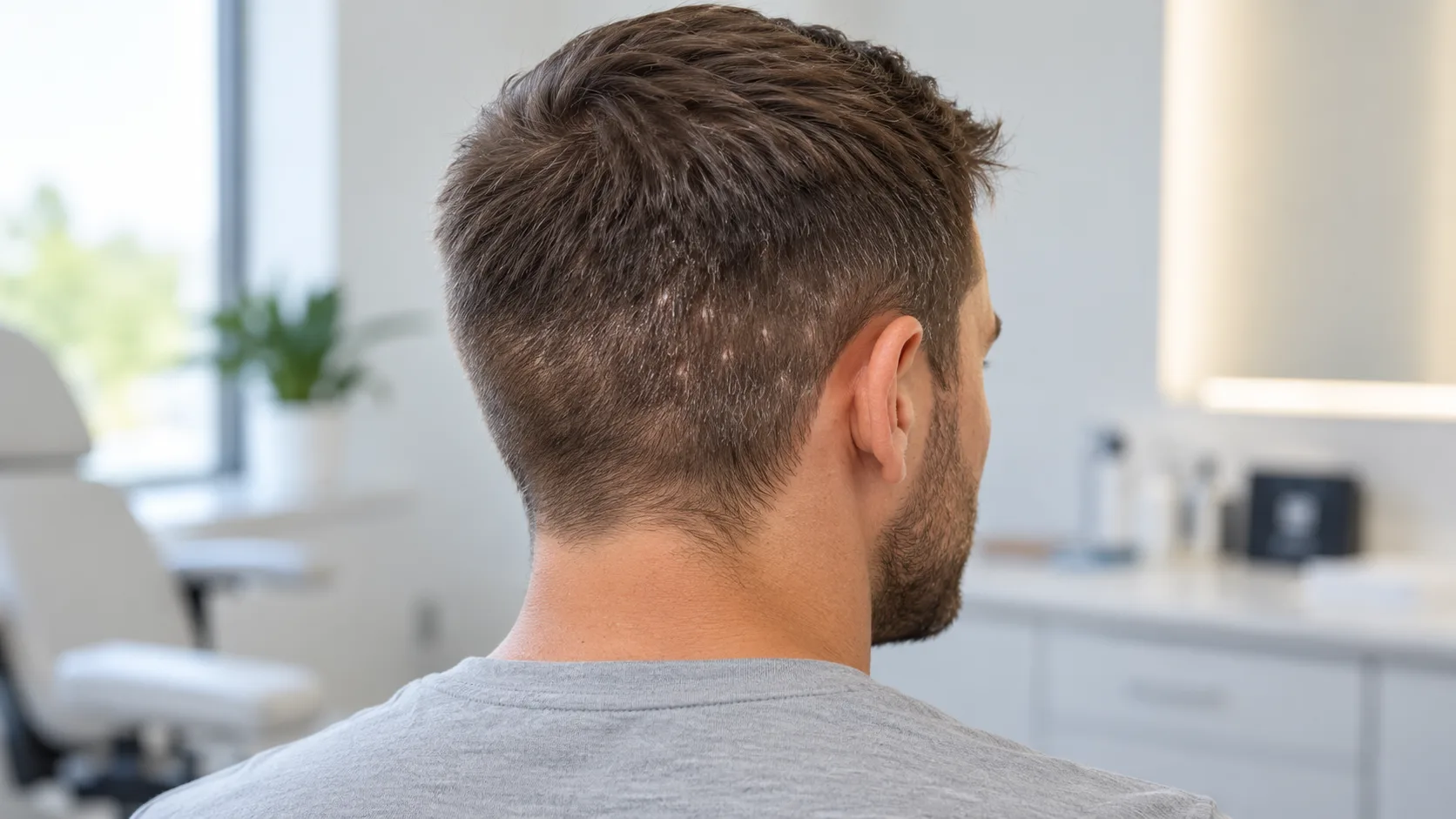
FUE is a minimally invasive technique that extracts individual hair follicles from a donor area and implants them into balding areas, leaving tiny dot scars instead of a linear scar.
FUE stands for Follicular Unit Extraction. It is a minimally invasive surgical technique that moves individual hair follicles from a donor area to a recipient area.
How Does FUE Work?
The surgeon uses a small punch tool to extract individual follicular units from the donor area, then implants them into tiny incisions in the balding zone.
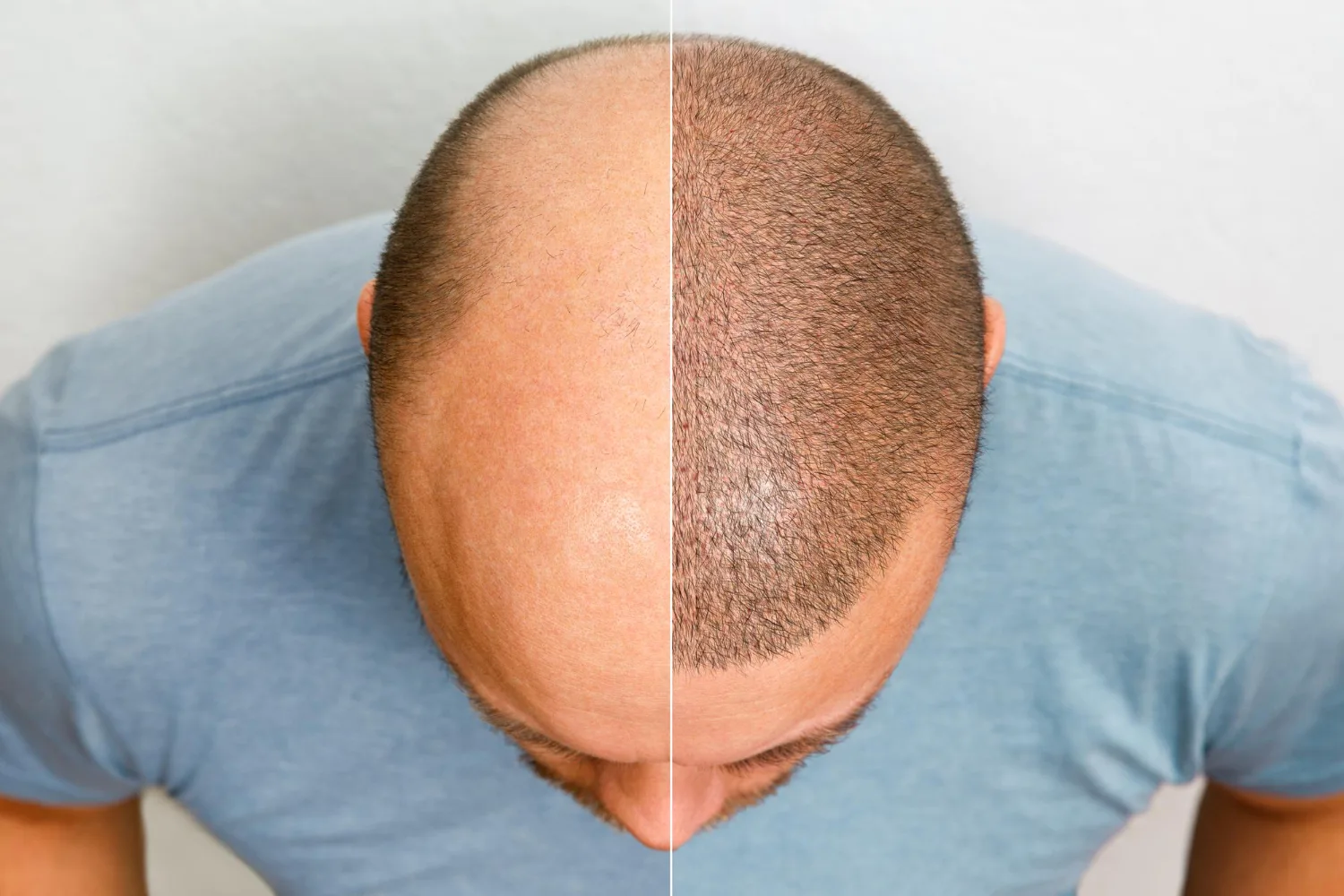
The surgeon extracts individual follicular units from the back or sides of the scalp. These areas contain DHT-resistant hair follicles. The surgeon uses a small punch tool, typically between 0.8 and 1.0 millimeters in diameter. Each graft contains one to four hair follicles. The team then implants these grafts into tiny incisions in the balding area. The procedure leaves tiny dot scars in the donor zone instead of a linear scar. Patients heal faster than with older strip methods. Modern FUE achieves graft survival rates between 90% and 95% in experienced hands (Dua and Dua 76).
Who Is an Ideal Candidate?
Men and women with adequate donor hair, good scalp health, and realistic expectations qualify for FUE.
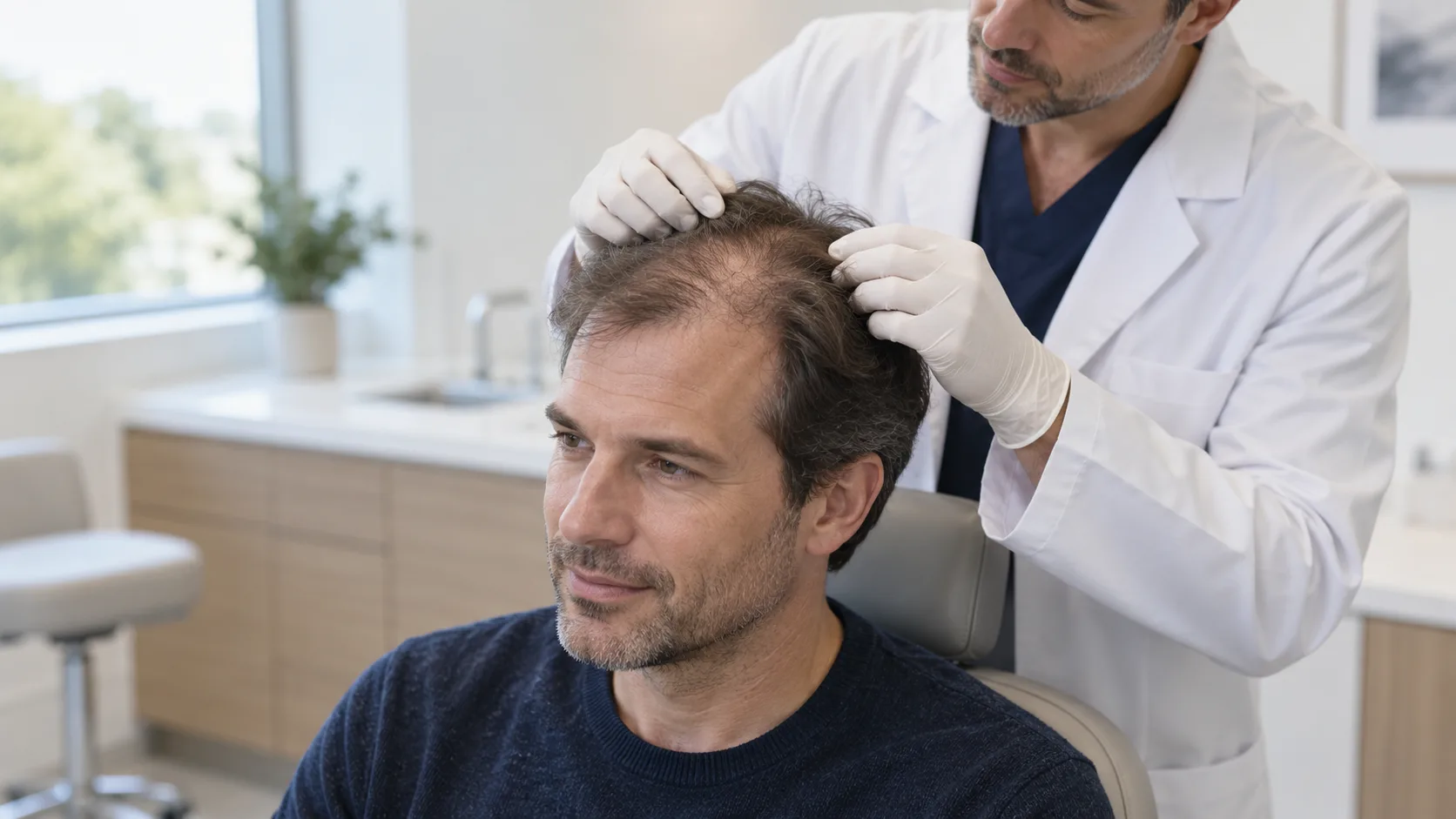
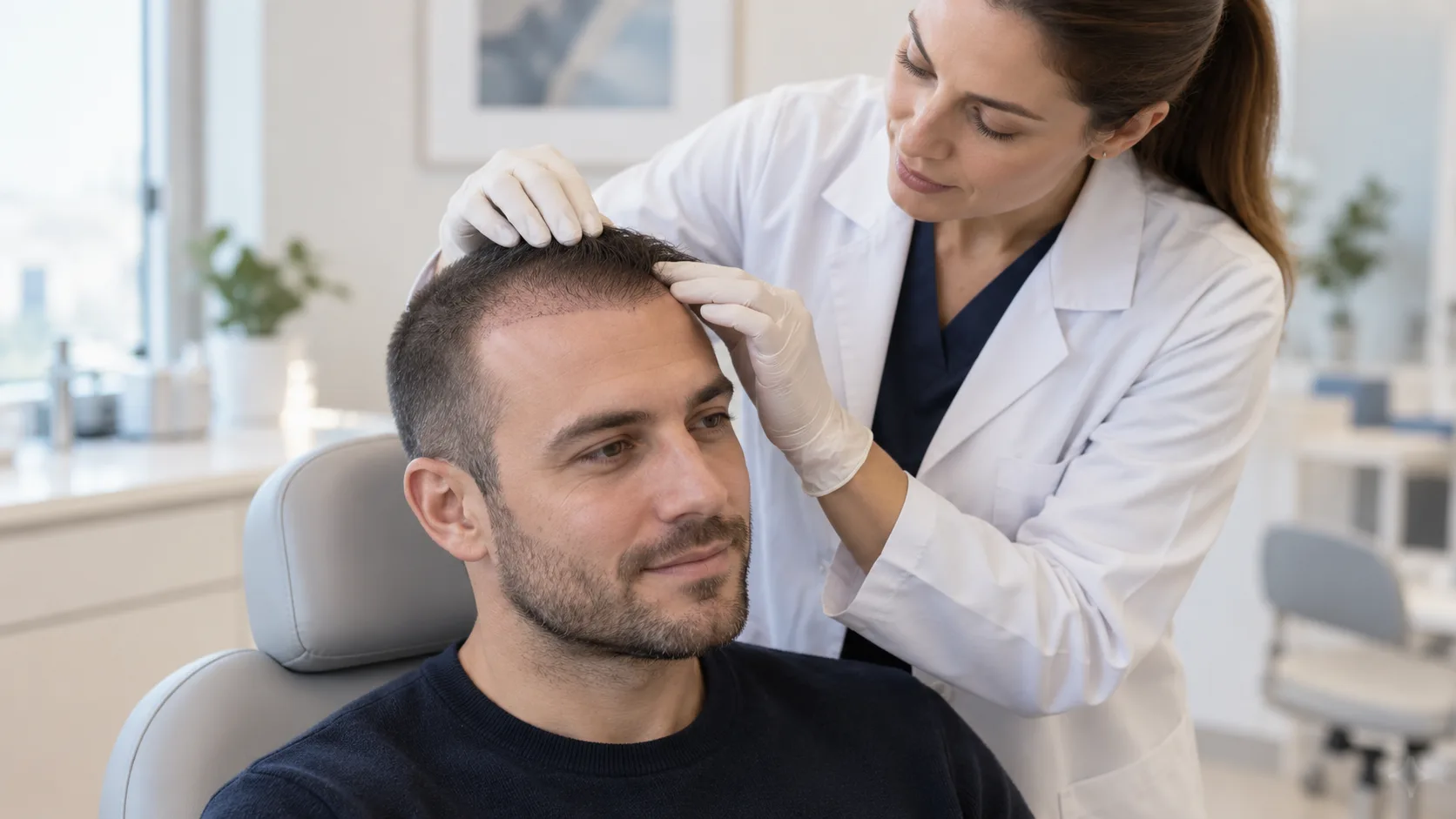
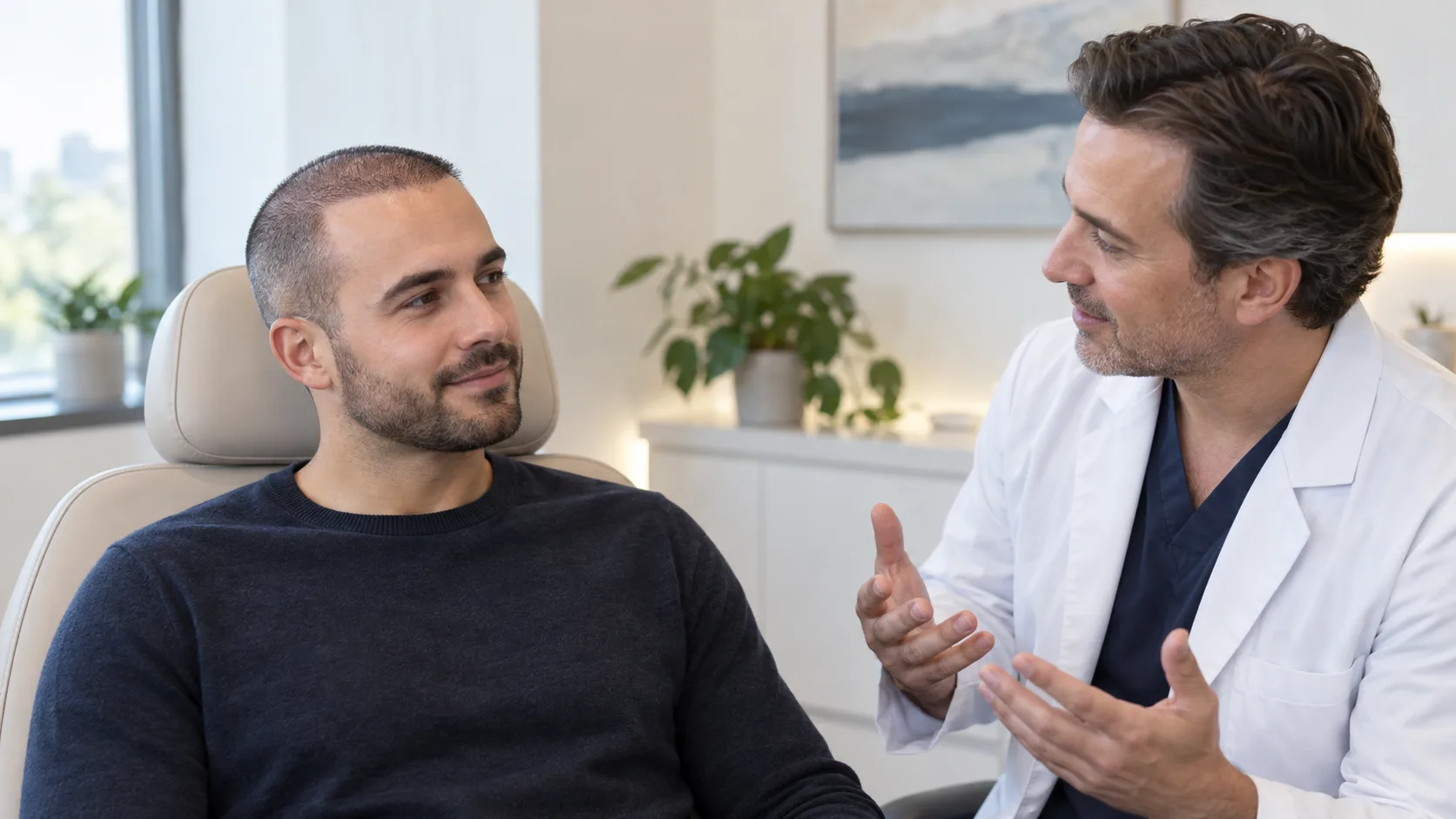
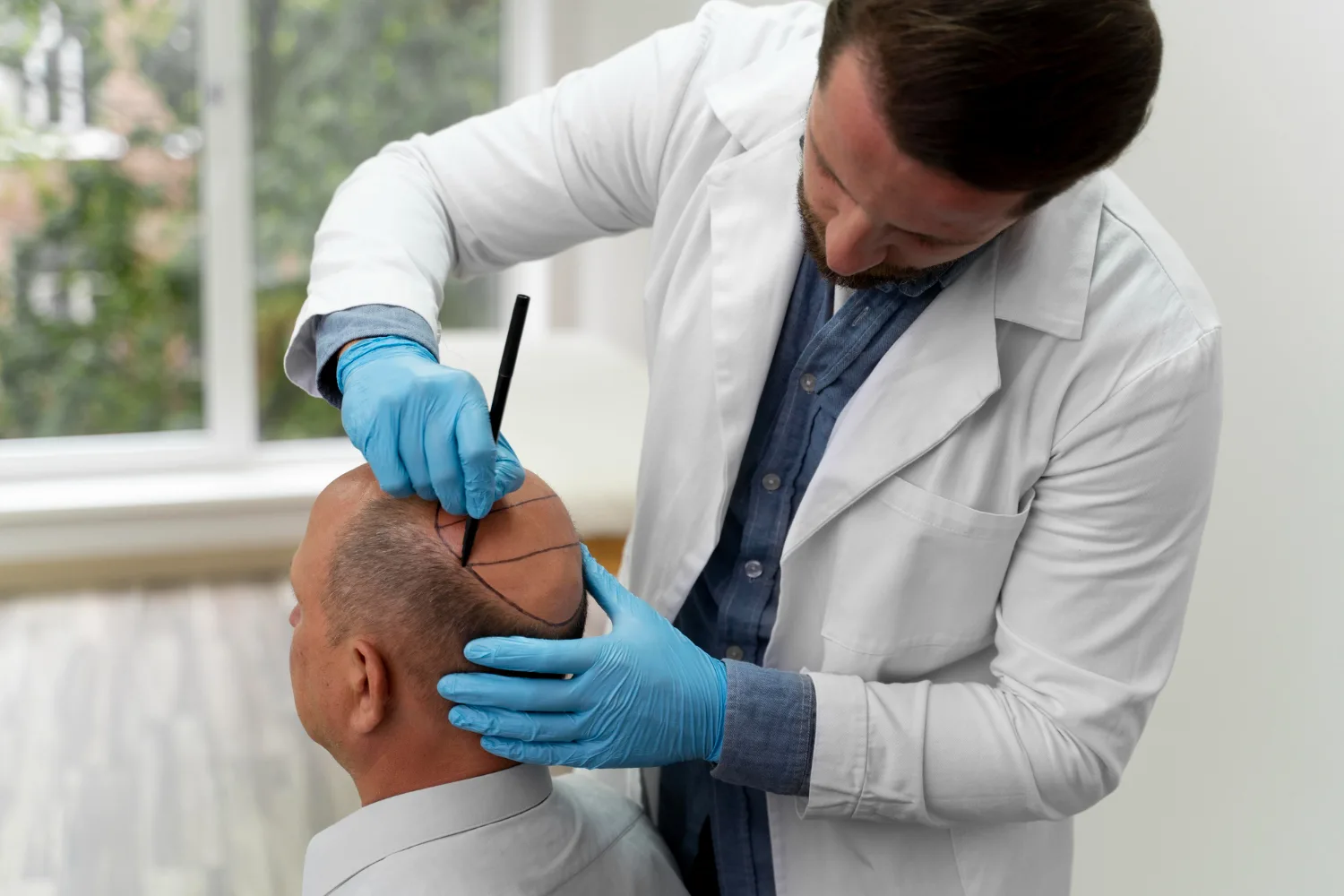
Men with pattern baldness make up the largest group of candidates. Women with diffuse hair loss also qualify. Candidates need adequate donor hair at the back of the head. The surgeon evaluates scalp laxity, hair density, and hair characteristics. FUE also works for beard restoration, eyebrow restoration, and scar revision. Patients with uncontrolled medical conditions may need to address those issues first.
Why Are Patients Comparing Turkey and the UK?
Turkey offers lower costs, faster scheduling, and high surgeon volume, while the UK offers local convenience and familiar regulations.
Medical tourism for hair transplantation has grown rapidly over the past decade. Turkey now performs more hair transplants than any other country. The UK remains a strong domestic option. Patients want to know which destination offers better value.
What Drives the Growth of Medical Tourism?
Turkey has built world-class medical tourism infrastructure with government support, JCI-accredited hospitals, and comprehensive patient packages.
Turkey has invested heavily in medical tourism infrastructure. Istanbul alone hosts hundreds of hair restoration clinics. The city offers direct flights from most UK airports. Clinics provide English-speaking staff and comprehensive packages. The Turkish government supports accredited medical tourism providers through tax incentives and regulatory frameworks. This infrastructure attracts patients from the UK, Germany, France, and the Middle East.
What Motivates UK Patients to Consider Turkey?
UK patients choose Turkey primarily for cost savings, faster availability, comprehensive packages, and high surgeon experience.
UK patients cite several reasons for choosing Turkey. Cost savings top the list. A full procedure in Turkey often costs 60% to 80% less than in the UK. Availability matters too. Turkish clinics schedule procedures within days or weeks. UK clinics sometimes require months of waiting. Comprehensive travel packages remove logistical stress. These packages include airport transfers, hotel accommodation, and post-operative care. Finally, surgeon experience plays a role. High-volume Turkish centers perform thousands of procedures annually.
Turkey vs UK: What Does the Data Show?
Turkey offers lower all-inclusive costs and higher surgical volume; the UK offers easier local follow-up and familiar regulatory oversight. Both can deliver excellent results.
A side-by-side comparison reveals clear differences and surprising similarities. The table below summarizes key factors.
Feature | Turkey | UK |
Average FUE Cost | £1,500 – £3,500 (all-inclusive package) | £4,000 – £10,000 (procedure only) |
Surgeon Experience | Very high annual case volume | Moderate annual case volume |
Annual Procedure Volume | Thousands per major clinic | Hundreds per major clinic |
Waiting Time | Days to 2 weeks | Weeks to 6 months |
Regulation | Ministry of Health + JCI accreditation | CQC + GMC oversight |
All-inclusive Packages | Standard offering | Rarely offered |
Follow-up Care | Remote digital monitoring + local partnerships | In-person clinic visits |
Technology Availability | Sapphire FUE, DHI, robotic systems widely available | Standard FUE, some DHI |
Typical Recovery Support | 12-month remote follow-up | 6 to 12 months in-person follow-up |
This table shows that Turkey offers lower costs and higher volume. The UK offers easier local follow-up and familiar regulatory structures. Both countries can deliver excellent results when patients choose reputable clinics.
How Much Does an FUE Hair Transplant Cost in Turkey vs the UK?
Turkey charges £1,500–£3,500 for all-inclusive packages; the UK charges £4,000–£10,000 for the procedure alone.
Cost remains the most visible difference between the two destinations. However, understanding the full financial picture requires looking beyond the headline price.
What Is the Average Cost in the UK?
UK clinics charge £3.50–£6.00 per graft, with total costs ranging from £4,000 to £10,000 or more.
UK clinics typically charge per graft. Prices range from £3.50 to £6.00 per graft. A standard procedure requiring 3,000 grafts costs between £7,500 and £14,000. Additional expenses add up quickly. The initial consultation often costs £200 to £300. Medications, aftercare products, and follow-up appointments may carry separate fees. Patients must also factor in travel to the clinic and time off work. Some Harley Street clinics in London charge premium rates that exceed £15,000 for large sessions.
What Is the Average Cost in Turkey?
Turkish clinics offer fixed-price packages between £1,500 and £3,500 that include surgery, hotel, transfers, and medications.
Turkish clinics usually offer fixed-price packages. A comprehensive package for 3,000 to 4,000 grafts ranges from £1,500 to £3,500. This price includes the procedure itself, airport transfers, 4-star or 5-star hotel accommodation, medications, shampoo, and a post-operative care kit. Some packages also include an interpreter and a city tour. The patient pays for flights separately. Even after adding flights, the total cost rarely exceeds £3,000 to £4,000.
Why Is Turkey More Affordable?
Lower operating costs, favorable exchange rates, high procedure volume, and government incentives make Turkey more affordable without compromising quality.
Several factors explain the price gap. Lower operating costs rank first. Rent, staff salaries, and medical supplies cost less in Turkey than in the UK. Currency differences help too. The British pound stretches further against the Turkish lira. High procedure volume creates economies of scale. Clinics purchase supplies in bulk and optimize surgical workflows. Government incentives for medical tourism reduce tax burdens on accredited facilities. Competition among Istanbul clinics also drives prices down while pushing quality up.
Do Lower Prices Mean Lower Quality?
No. Price alone does not determine quality. Accredited Turkish clinics often match or exceed UK standards.
No. Cost alone should never determine clinic selection. A low price at an unlicensed facility poses serious risks. However, many accredited Turkish hospitals deliver outcomes that match or exceed UK standards. The key is to verify credentials, not to assume cheap equals bad or expensive equals good. Research published in the Journal of Cutaneous and Aesthetic Surgery confirms that FUE outcomes depend primarily on surgeon skill and team coordination, not geographic location (Dua and Dua 76).
How Do Surgeon Experience and Case Volume Compare?
Turkish surgeons typically perform 10 to 30 procedures per week, while UK surgeons perform 5 to 15 per month.
Experience directly impacts surgical outcomes. This factor deserves careful attention.
How Many Procedures Do Surgeons Perform?
High-volume Turkish centers perform thousands of procedures annually, while UK centers perform hundreds.
A typical UK hair transplant surgeon performs 5 to 15 procedures per month. A lead surgeon at a major Turkish center may oversee 10 to 30 procedures per week. This high volume builds muscle memory and refines technique. Studies show that surgeons who perform more than 500 procedures annually achieve lower transection rates and higher graft survival. The International Society of Hair Restoration Surgery (ISHRS) emphasizes that surgeon experience correlates strongly with natural-looking results.
Why Does Surgical Experience Matter?
Experience improves hairline design, donor management, graft survival, and density planning.
Experience affects every stage of the procedure. Hairline design requires artistic judgment. An experienced surgeon creates a hairline that matches facial proportions and age. Donor area management prevents overharvesting. The surgeon must preserve enough grafts for future needs. Graft survival depends on gentle extraction and proper handling. Research in Dermatologic Surgery demonstrates that even minor graft injury during extraction can reduce survival rates significantly (Kwack et al. e191). Density planning ensures natural coverage without creating a pluggy appearance. These skills take years to develop.
What Technologies Are Commonly Available?
Both countries offer standard FUE, but Turkey more commonly provides Sapphire FUE and DHI as standard options.
Technology varies between clinics in both countries. Patients should understand what each technique offers.
What Is Standard FUE?
Standard FUE uses a motorized punch to extract grafts and remains the foundation of most procedures.
Standard FUE uses a motorized punch to extract grafts. This remains the foundation of most procedures. It offers reliable results when performed by skilled teams.
What Is Sapphire FUE?
Sapphire FUE uses sapphire blades for smaller incisions, faster healing, and 10% to 15% better graft survival.
Sapphire FUE uses blades made from synthetic sapphire instead of steel. These blades create smaller, cleaner incisions. Smaller incisions reduce scabbing and speed up healing. Research published in BMC Surgery in 2024 shows that Sapphire FUE improves graft survival by 10% to 15% and reduces postoperative inflammation by approximately 30% compared to standard FUE.
What Is DHI?
DHI uses a pen-like implanter that reduces graft handling time and may achieve 90% to 97% survival rates.
Direct Hair Implantation (DHI) uses a specialized pen-like tool called a Choi implanter. This tool allows the surgeon to extract and implant grafts in one step. DHI reduces graft handling time. Some studies suggest DHI achieves slightly higher survival rates of 90% to 97% because grafts spend less time outside the body.
What Other Tools Matter?
Digital hair analysis, high-magnification microscopes, and proper storage solutions all improve outcomes.
Digital hair analysis systems help surgeons plan graft distribution. High-magnification microscopes improve graft sorting. Manual extraction remains valuable for certain hair types. The surgeon chooses the right combination based on patient characteristics. Technique names matter less than the skill of the team using them.
How Do Safety Standards Compare?
The UK uses CQC and GMC oversight; Turkey uses Ministry of Health licensing and JCI accreditation. Both frameworks protect patients when enforced properly.
Safety should top every patient's priority list. Both countries maintain regulatory frameworks, but the structures differ.
What Regulations Govern UK Clinics?
UK clinics fall under CQC inspection and GMC surgeon registration.
UK hair transplant clinics fall under the Care Quality Commission (CQC). The CQC inspects clinics for safety, cleanliness, and proper procedures. Surgeons must register with the General Medical Council (GMC). Clinical governance ensures accountability. These regulations create a familiar safety net for UK patients.
What Regulations Govern Turkish Clinics?
Turkish clinics need Ministry of Health licenses and JCI accreditation for international standards.
Turkish clinics need a license from the Turkish Ministry of Health. Accredited hospitals meet Joint Commission International (JCI) standards. JCI accreditation means the facility follows the same rigorous protocols as top hospitals in the US and Europe. Authorized medical tourism providers receive additional government oversight. Patients should verify that their chosen clinic operates within a JCI-accredited hospital.
What Questions Should Every Patient Ask?
Ask who performs each surgical step, what accreditation the facility holds, and what emergency protocols exist.
Patients must ask specific questions before booking. Who performs the extraction? Who designs the hairline? Who implants the grafts? Some clinics use technicians for most of the work. This practice is legal in Turkey but patients deserve transparency. What emergency protocols exist? What is the facility's accreditation status? These questions protect patients regardless of destination.
Does Procedure Quality Depend on the Country or the Clinic?
Quality depends on the clinic and surgeon, not the country.
The answer is clear: quality depends on the clinic, not the country.
Why Do Individual Clinics Differ So Much?
Some clinics prioritize volume with minimal surgeon involvement; others maintain surgeon-led models with direct doctor oversight.
Some clinics prioritize volume over quality. These "hair mills" process dozens of patients daily with minimal surgeon involvement. Other clinics maintain surgeon-led models where the doctor performs or directly supervises every critical step. The difference in outcomes is dramatic.
What Red Flags Should Patients Avoid?
Avoid unrealistically low prices, guaranteed graft numbers, no surgeon consultation, poor communication, and lack of aftercare.
Unrealistically low pricing often signals corners cut on safety or staffing. Guaranteed graft numbers ignore individual donor limitations. A lack of direct surgeon consultation before booking raises concerns. Poor communication or evasive answers about who performs the surgery suggest problems. Clinics that offer no aftercare plan or publish no verifiable results should trigger caution.
What Is Included in the Overall Patient Experience?
The UK offers local convenience with in-person follow-up; Turkey offers comprehensive packages with travel, hotel, and remote follow-up.
The patient journey differs significantly between UK and Turkish clinics.
What Is the Typical UK Experience?
UK patients attend local consultations, schedule procedures weeks later, and return for in-person follow-ups.
UK patients visit a local clinic for an in-person consultation. They schedule the procedure weeks or months later. They return home the same day or stay locally. Follow-up visits happen at the same clinic. The process feels familiar and convenient.
What Is the Typical Turkey Medical Tourism Journey?
Turkish clinics arrange online consultations, airport pickups, hotel stays, surgery, post-op washing, and remote follow-up.
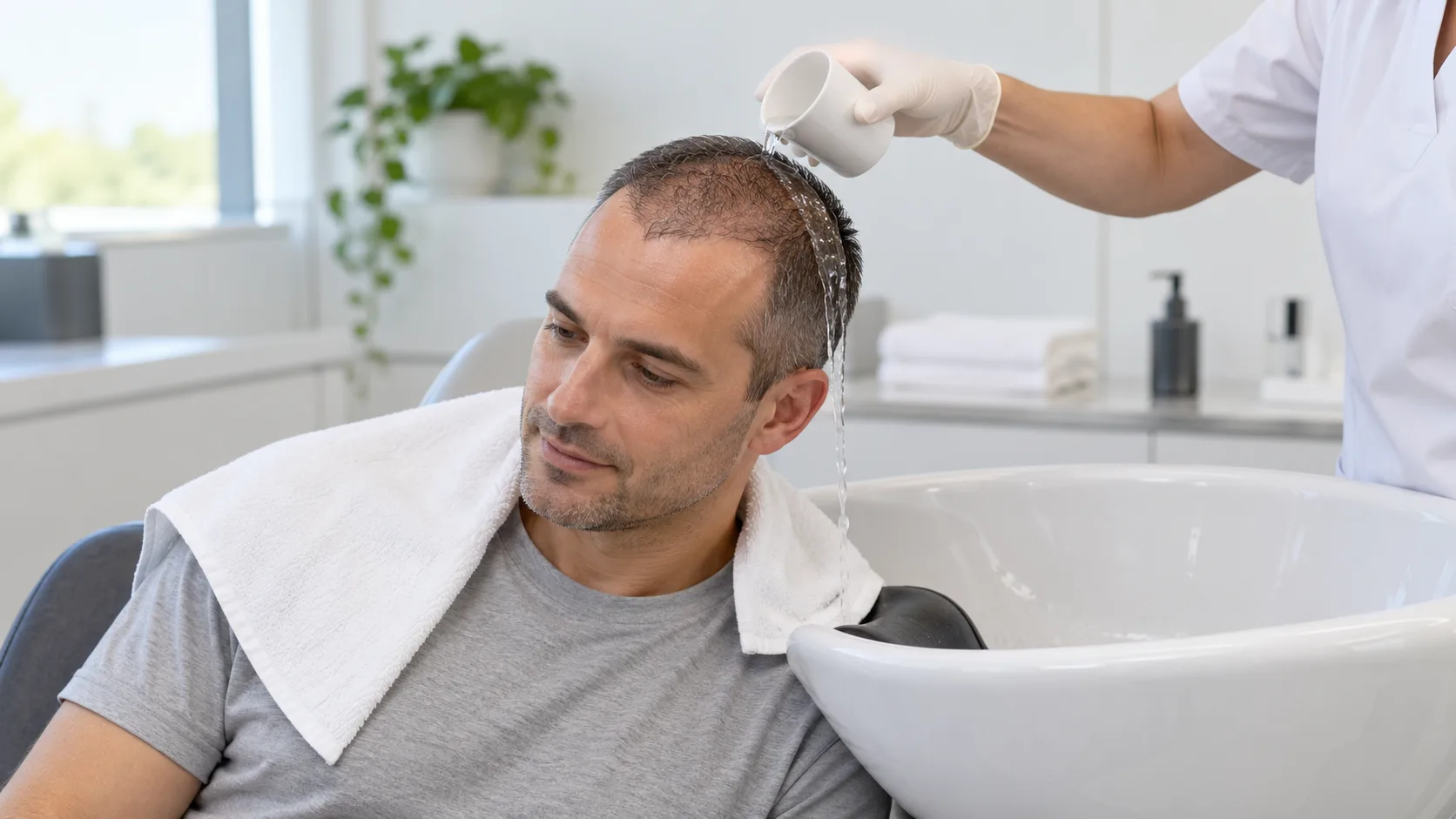
Turkish clinics start with an online consultation. Patients share photos and discuss goals via video call. The clinic books flights and hotels. A driver meets the patient at Istanbul Airport. The patient stays in a hotel near the clinic. The procedure takes one day. The clinic provides post-operative washing and instructions. The patient flies home after 2 to 3 days. Remote follow-up continues for 12 months.
What Are the Advantages of Each Model?
The UK model offers convenience and easy local follow-up. The Turkey model offers lower costs, faster scheduling, and comprehensive hospitality.
The UK model offers convenience and easy access to follow-up care. The Turkey model offers lower costs, faster scheduling, and comprehensive hospitality. Both models work well when patients choose reputable providers.
How Does Recovery Compare?
Biological healing follows the same timeline in both countries: swelling for days, shock loss at weeks, growth at months, and final results at 12 to 18 months.
Biological healing follows the same timeline regardless of where the surgery occurs. The body does not know which country the clinic sits in.
What Happens During the First Week?
Swelling, redness, and scabbing appear. Most patients return to light activities after 3 to 5 days.
Swelling and redness appear in the recipient area. Small scabs form around each graft. The donor area shows tiny dot wounds. Patients must sleep with their head elevated. Most patients feel comfortable returning to light activities after 3 to 5 days.
What Happens During the First Month?
Scabs fall off by day 14. Shock loss begins at weeks 2 to 4. This is normal and temporary.
Scabs fall off between days 7 and 14. Shock loss begins around weeks 2 to 4. This temporary shedding affects both transplanted and native hairs. It looks alarming but it is normal. The follicles remain alive beneath the skin.
What Happens at Three Months?
Fine new hairs begin to emerge. Growth is patchy at this stage.
New hair growth begins. Fine, thin hairs emerge from the scalp. Growth is patchy at this stage. Patience matters.
What Happens at Six Months?
Significant density improvement becomes visible. Hair thickens and gains color.
Significant density improvement becomes visible. Hair thickens and gains color. Patients often feel satisfied with their progress by this point.
What Happens at Twelve Months?
Final results mature between 12 and 18 months. Studies show 86% to 98% of patients rate results as good or excellent.
Final results mature between 12 and 18 months. Hair reaches full thickness and length. The hairline looks natural and settled. Studies show that 86% to 98% of patients rate their results as good or excellent at the one-year mark ("Clinical Outcome" 540).
What About Aftercare?
The UK offers in-person follow-up; Turkey offers remote digital monitoring and some UK partnerships.
Aftercare determines long-term success. Both destinations offer follow-up, but the methods differ.
How Does UK Follow-up Work?
UK patients return to the same clinic for in-person check-ups over 6 to 12 months.
UK patients return to the clinic for in-person check-ups. The surgeon examines graft growth and scalp health. Local follow-up makes it easy to address concerns quickly.
How Does Remote Follow-up Work for International Patients?
Turkish clinics use photo-based digital monitoring, WhatsApp support, and 24/7 emergency lines.
Turkish clinics use digital monitoring tools. Patients send photos via WhatsApp or email. The medical team reviews progress and answers questions. Some clinics partner with UK-based doctors for local check-ups. Emergency support lines operate 24/7. Long-term hair loss management may include recommendations for minoxidil, finasteride, or PRP therapy.
How Do Results Compare?
Results depend on surgical skill and patient characteristics, not geography.
Final results depend on surgical skill, not geography.
What Determines Hair Density?
Density depends on graft count and survival rate. Experienced teams achieve 90% to 95% graft survival.
Density depends on the number of grafts placed and the survival rate. Experienced teams achieve 90% to 95% graft survival. Overpacking grafts reduces survival. The best surgeons balance density with safety.
What Determines Hairline Naturalness?
Artistic skill in creating irregularity, matching angles, and planning for future loss determines naturalness.
Hairline design requires artistic skill. The surgeon must create irregularity, match natural angles, and plan for future hair loss. A good hairline looks like it was never surgically created.
What Determines Donor Preservation?
Proper donor management prevents overharvesting and preserves grafts for future needs.
Donor preservation prevents overharvesting. The surgeon must leave enough grafts for future needs. Poor donor management creates visible thinning at the back of the head.
What Factors Influence Final Results?
Surgeon skill, planning, patient hair characteristics, and post-operative care all influence results.
Surgeon skill tops the list. Proper planning matters. Patient characteristics like hair texture, color contrast, and scalp elasticity play roles. Post-operative care protects grafts during the critical first two weeks.
What Travel Considerations Apply to UK Patients?
Flights take 3.5 to 4 hours. UK citizens need no visa. A 3-day stay works for most patients.
Travel adds complexity but remains manageable.
How Long Is the Flight?
Direct flights from London to Istanbul take 3.5 to 4 hours.
Direct flights from London to Istanbul take approximately 3.5 to 4 hours. Manchester and Birmingham offer similar flight times.
Do UK Citizens Need a Visa?
No. UK citizens do not need a visa for stays up to 90 days.
UK citizens do not need a visa for stays up to 90 days in Turkey. A valid passport suffices.
How Long Should Patients Stay?
Most clinics recommend a 3-day stay: arrival, procedure, and departure after post-op washing.
Most clinics recommend a 3-day stay. Day 1 covers arrival and consultation. Day 2 covers the procedure. Day 3 covers post-operative washing and departure. Some patients extend their stay for sightseeing.
When Can Patients Fly Home?
Patients can fly 2 to 3 days after surgery with proper precautions.
Patients can fly 2 to 3 days after surgery. They must follow post-operative instructions during the flight. A travel pillow helps protect grafts.
When Can Patients Return to Work?
Desk workers return after 5 to 7 days. Physical laborers need 10 to 14 days.
Desk-based workers can return after 5 to 7 days. Jobs requiring physical labor may need 10 to 14 days. Redness and scabbing usually fade within 10 to 14 days.
What Are the Advantages of FUE in Turkey?
Turkey offers lower costs, experienced teams, high volume, comprehensive packages, modern facilities, and short waiting times.
Turkey offers distinct advantages for the right patient.
Lower overall treatment costs make restoration accessible to more people. Experienced surgical teams perform high volumes daily. Comprehensive packages remove logistical stress. Modern facilities rival those in Western Europe. Short waiting times mean patients start their transformation sooner.
What Are the Advantages of FUE in the UK?
The UK offers easier follow-up, familiar healthcare, no travel, local regulation, and native communication.
The UK offers advantages that matter to some patients.
Easier follow-up visits eliminate travel concerns. The familiar healthcare environment reduces anxiety. No international travel means no jet lag or currency exchange. Local regulatory oversight provides peace of mind. Communication happens in native English without interpreters.
What Risks Exist Regardless of Location?
Poor donor management, overharvesting, unnatural hairlines, inexperienced teams, and unrealistic expectations threaten patients everywhere.
Certain risks threaten patients in every country.
Poor donor management can destroy future restoration options. Overharvesting leaves permanent thinning. Unnatural hairlines signal inexperience. Inexperienced surgical teams increase complication rates. Unrealistic expectations lead to disappointment. Choosing based solely on price invites disaster. Research in Aesthetic Plastic Surgery shows that patient satisfaction correlates strongly with preoperative counseling and realistic expectation setting (Liu et al. 376).
How Should Patients Choose Between Turkey and the UK?
Evaluate surgeon credentials, results, reviews, transparency, personalized planning, and long-term follow-up rather than focusing only on cost.
The decision requires systematic evaluation.
Patients should evaluate more than cost. Surgeon credentials matter most. Before-and-after results should show consistent quality. Patient reviews should mention specific experiences. Medical transparency builds trust. A personalized treatment plan shows the surgeon cares about individual needs. Long-term follow-up ensures ongoing support.
Frequently Asked Questions
Is Turkey better than the UK for FUE hair transplantation?
Neither country is inherently better. The best clinic in Turkey outperforms a mediocre UK clinic, and vice versa.
Neither country is inherently better. The best clinic in Turkey outperforms a mediocre UK clinic, and vice versa. Focus on surgeon skill, accreditation, and transparency.
Why are hair transplants cheaper in Turkey?
Lower operating costs, favorable exchange rates, high volume, and government incentives reduce prices without lowering quality.
Lower operating costs, favorable exchange rates, high procedure volume, and government incentives for medical tourism reduce prices. These factors reflect economic efficiency, not lower quality.
Is FUE hair transplantation safe in Turkey?
Yes, at JCI-accredited facilities with licensed surgeons. Always verify credentials before booking.
Yes, when patients choose JCI-accredited facilities with licensed surgeons. Verify accreditation and surgeon credentials before booking.
How much money can UK patients save?
UK patients typically save 60% to 80% on total costs, even after adding flights.
UK patients typically save 60% to 80% on the total cost, even after adding flights and accommodation.
Will I receive follow-up care after returning home?
Reputable Turkish clinics provide 12 months of remote follow-up and some UK partnerships.
Reputable Turkish clinics provide 12 months of remote follow-up via digital platforms. Some also partner with UK-based doctors for local check-ups.
How many days should UK patients stay in Turkey?
Most patients stay 3 days: arrival day, procedure day, and departure day after post-operative washing.
Most patients stay 3 days: arrival day, procedure day, and departure day after post-operative washing.
Can I fly immediately after surgery?
Patients can fly 2 to 3 days after surgery. Follow the clinic's travel instructions.
Patients can fly 2 to 3 days after surgery. Follow the clinic's specific instructions for travel safety.
Are results different between Turkey and the UK?
No. Results depend on surgical skill, patient characteristics, and aftercare. Biology works the same everywhere.
No. Results depend on surgical skill, patient characteristics, and aftercare. Biology works the same way in both countries.
What should I ask before booking a clinic?
Ask who performs each step, about accreditation, emergency protocols, before-and-after photos, and aftercare plans.
Ask who performs each step of the surgery. Ask about accreditation. Ask about emergency protocols. Ask to see unedited before-and-after photos. Ask about aftercare plans.
Is an all-inclusive package worth choosing?
Yes, at reputable clinics. Packages remove hidden costs and logistical stress. Verify all inclusions first.
Yes, if the clinic is reputable. All-inclusive packages remove hidden costs and logistical stress. Verify exactly what the package includes before paying.
Conclusion
Choose based on clinic quality, surgeon expertise, and transparency rather than country or price alone.
The best choice depends on clinic quality rather than country alone. Surgeon expertise, transparent practices, donor preservation, patient safety, and comprehensive aftercare determine successful FUE outcomes. UK patients should compare clinics using evidence-based criteria. Cost matters, but it should never dominate the decision. A well-researched choice leads to natural, lasting results whether the procedure happens in London or Istanbul.
References
Barrera, Alfonso. "Micrograft and Minigraft Megasession Hair Transplantation: Review of 100 Consecutive Cases." Aesthetic Surgery Journal, vol. 17, no. 3, 1997, pp. 165–69.
Dua, Aman, and Kapil Dua. "Follicular Unit Extraction Hair Transplant." Journal of Cutaneous and Aesthetic Surgery, vol. 3, no. 2, 2010, pp. 76–81.
Han, Seung Ho, et al. "Quality of Life Assessment in Male Patients with Androgenetic Alopecia: Result of a Prospective, Multicenter Study." Annals of Dermatology, vol. 24, no. 3, 2012, pp. 311–18.
Kwack, Myeung Hoon, et al. "Comparative Graft Survival Study of Follicular Unit Excision Grafts With or Without Minor Injury." Dermatologic Surgery, vol. 47, no. 5, 2021, pp. e191–e194.
Liu, Yang, et al. "Evaluating the Satisfaction of Patients Undergoing Hair Transplantation Surgery Using the FACE-Q Scales." Aesthetic Plastic Surgery, vol. 43, no. 2, 2019, pp. 376–82.
Loganathan, Eswari, et al. "Complications of Hair Restoration Surgery: A Retrospective Analysis." International Journal of Trichology, vol. 6, 2014, pp. 168–72.
"Clinical Outcome and Safety Profile of Patients Underwent Hair Transplantation Surgery by Follicular Unit Extraction." Journal of Nepal Medical Association, vol. 56, no. 209, 2018, pp. 540–43.
Salanitri, Sebastiao, et al. "Surgical Complications in Hair Transplantation: A Series of 533 Procedures." Aesthetic Surgery Journal, vol. 29, 2009, pp. 72–76.
Yang, Ying, et al. "The Relationship between Self-Esteem and Hair Transplantation Satisfaction in Male Androgenetic Alopecia Patients." Journal of Cosmetic Dermatology, vol. 18, no. 2, 2018, pp. 495–502.