VDPHL01: How the Investigational Hair Growth Pill Works
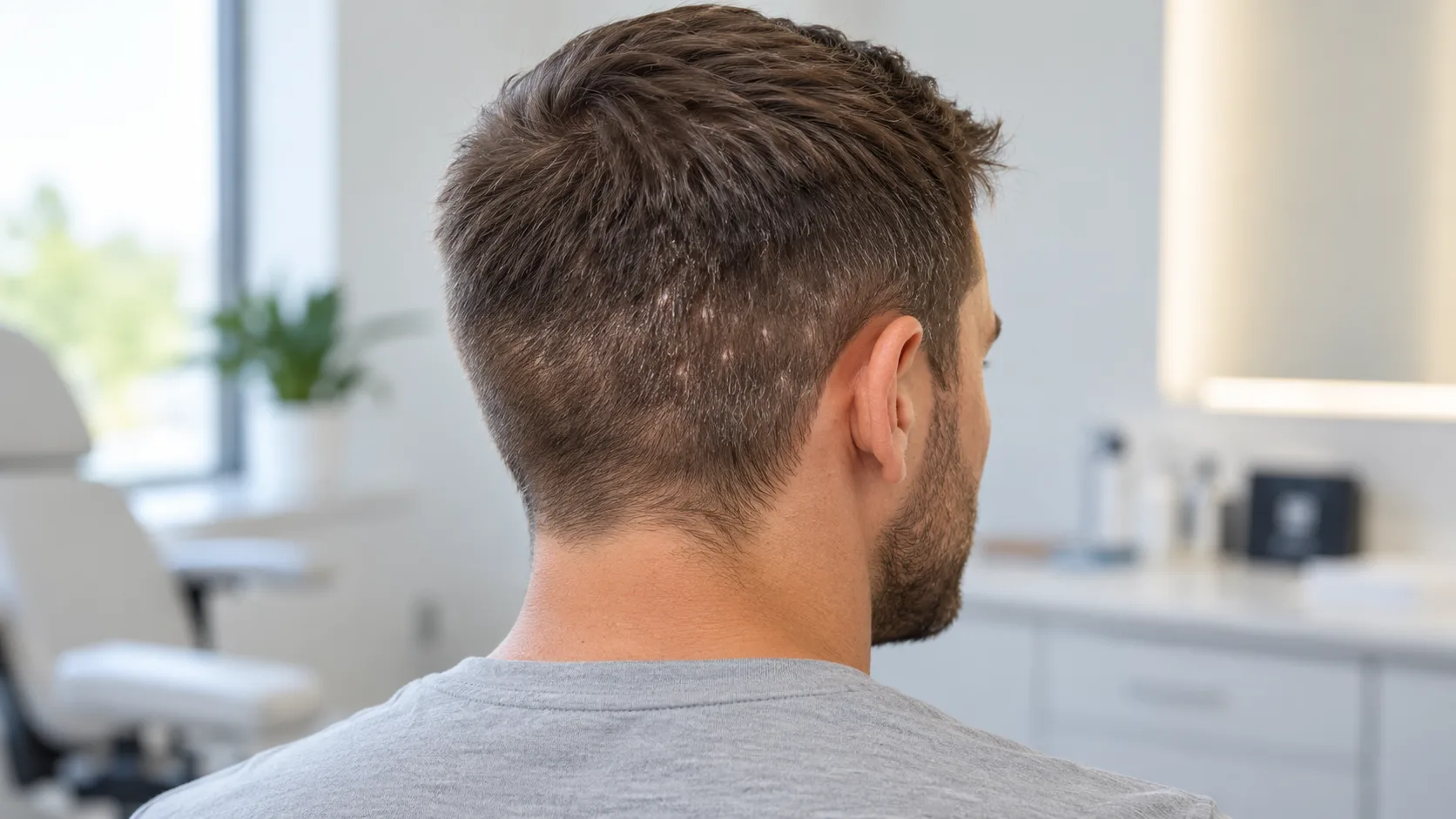
VDPHL01 is an investigational oral tablet that uses extended-release minoxidil to treat pattern hair loss. Veradermics developed it as a non-hormonal option for both men and women. The drug has not received FDA approval, but it has produced statistically significant hair regrowth in Phase 3 testing, and it now represents one of the most closely watched developments in hair restoration medicine.
Pattern hair loss affects millions of men and women, and most current treatments force a compromise. Topical minoxidil demands daily scalp application. Finasteride blocks hormones and carries risks that many patients find unacceptable. Veradermics designed VDPHL01 to close this gap. The company combines a well-studied active ingredient with proprietary release technology, and the goal is simple: deliver steady minoxidil exposure through a once-daily pill. Early clinical data suggests the approach works, and dermatology researchers now track each new announcement with genuine interest.
What Is VDPHL01 and Who Developed It?
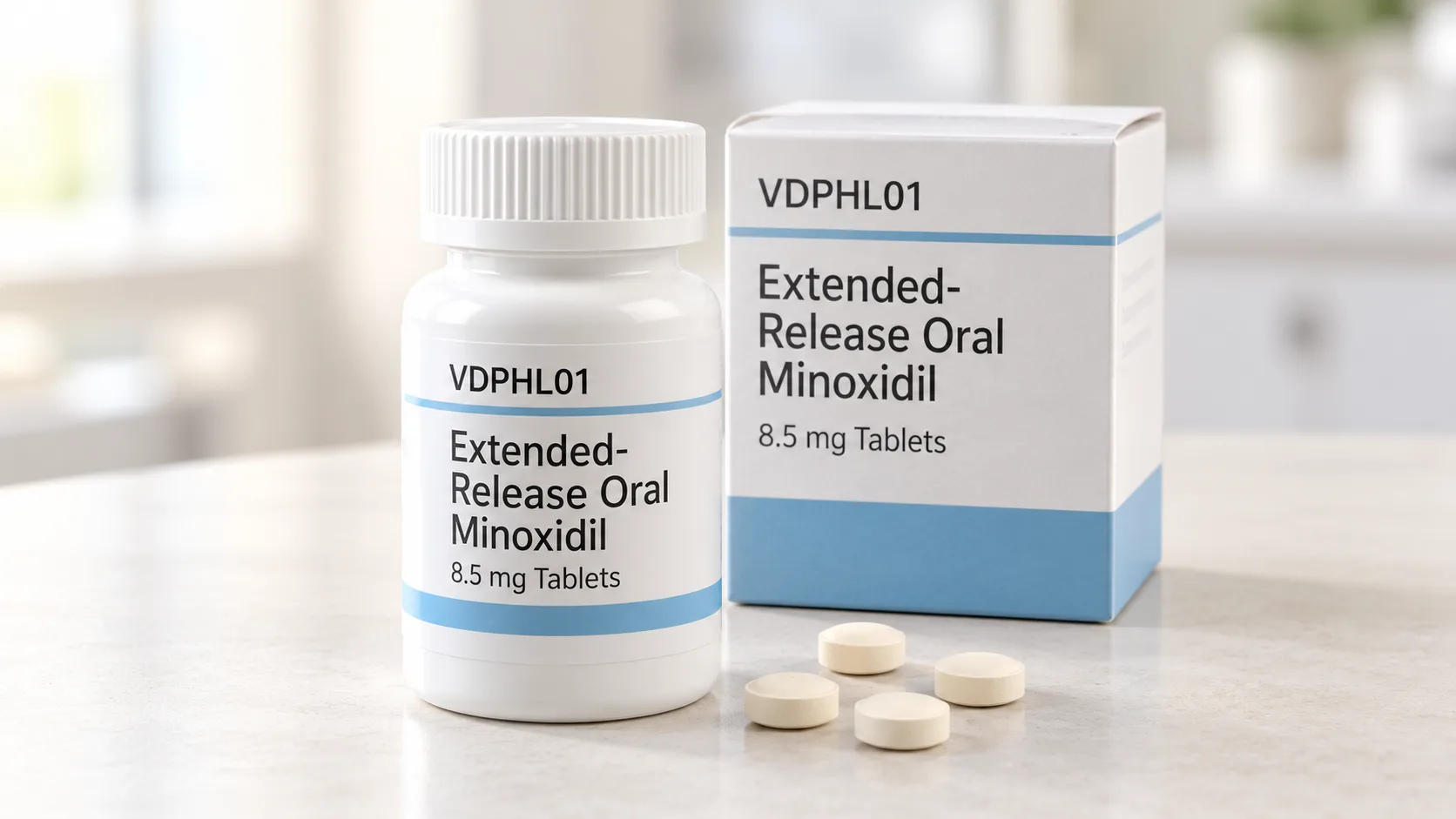
VDPHL01 is a proprietary extended-release oral tablet that contains minoxidil. Veradermics, a dermatology-focused biopharmaceutical company, developed it. The drug remains investigational, which means no regulatory agency has confirmed its safety or efficacy for public use.
Veradermics built its research pipeline around dermatological conditions with few convenient treatment options. The company chose minoxidil as its active ingredient for a practical reason: scientists have studied this molecule for decades, and they understand its hair growth effects better than almost any other compound in the field (Suchonwanit et al. 2019).
The innovation lies in the delivery system rather than the molecule itself. VDPHL01 uses a gel-matrix platform that releases minoxidil gradually after ingestion. This design addresses the main historical concern with oral minoxidil, which is the sharp spike in blood concentration that follows a standard immediate-release dose. Steadier exposure could preserve the follicle-stimulating effect while reducing systemic strain. Readers should treat all current findings as preliminary company-reported data, since independent peer-reviewed analysis has not yet fully validated the complete trial datasets.
How Does VDPHL01 Work to Promote Hair Growth?
VDPHL01 works by releasing minoxidil slowly into the bloodstream, which keeps the drug in contact with hair follicles for extended periods. The extended-release design aims to avoid the high peak concentrations of conventional oral minoxidil. Clinical proof of long-term follicle benefits still requires regulatory confirmation.
Minoxidil stimulates hair growth through several pathways. It prolongs the anagen phase, which is the active growth stage of the hair cycle. It also increases blood flow around follicles and enlarges miniaturized follicles in androgenetic alopecia (Suchonwanit et al. 2019). These effects explain why the molecule remains a first-line therapy in international treatment guidelines (Kanti et al. 2018).
The gel-matrix tablet in VDPHL01 dissolves slowly in the digestive tract. This gradual release maintains a flatter concentration curve over 24 hours. Immediate-release oral minoxidil, by contrast, produces peaks that researchers have linked to cardiovascular side effects such as fluid retention and tachycardia. The extended-release design targets this pharmacological weakness directly.
However, formulation design and clinical outcome are not the same thing. Veradermics must prove through controlled trials that the flatter exposure curve translates into regrowth without unacceptable risk. That distinction matters, and the clinical evidence section below explains what the trials actually showed.
What Makes VDPHL01 Different From Other Hair Loss Treatments?
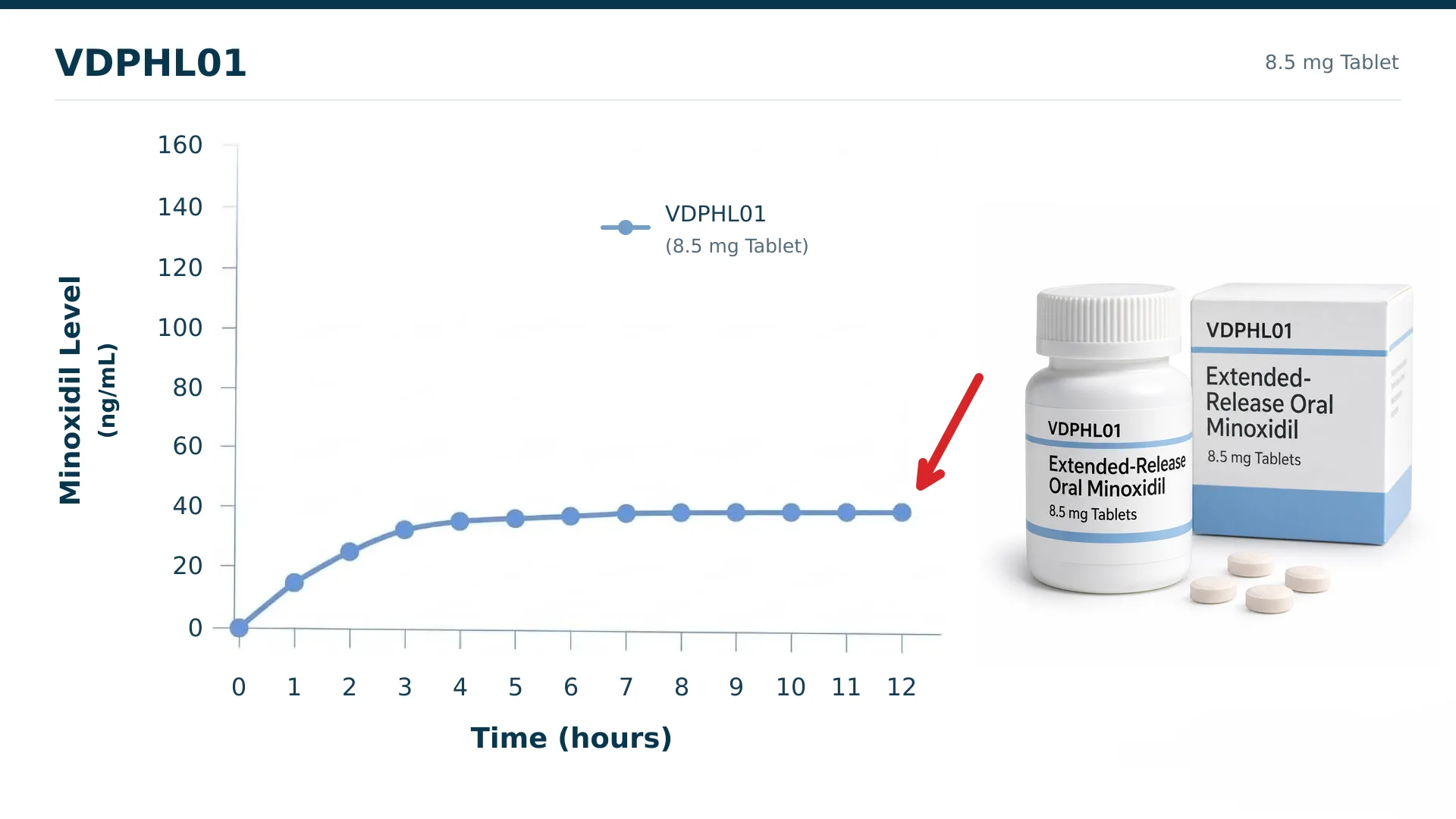
VDPHL01 differs from topical minoxidil because patients swallow it instead of applying it to the scalp. It differs from finasteride because it does not alter hormones. Its oral convenience could improve adherence, but researchers have not yet proven superiority over existing therapies in head-to-head trials.
Feature | VDPHL01 | Topical Minoxidil | Oral Finasteride |
Route | Oral tablet | Scalp application | Oral tablet |
Hormonal effect | None | None | Blocks DHT conversion |
Release profile | Extended-release | Local, immediate | Immediate |
Main limitation | Investigational status | Daily application burden | Sexual and hormonal side effects |
Typical use | Clinical trials only | First-line for decades | Men only, prescription |
Topical minoxidil works well, but adherence remains a persistent problem. Studies show patients often abandon treatment because of scalp greasiness, application time, and inconsistent routines (Olsen et al. 2003). An oral pill removes that friction entirely.
Finasteride takes a different path. It inhibits 5-alpha-reductase and reduces dihydrotestosterone, the hormone that miniaturizes follicles in male pattern baldness (Kaufman et al. 1998). This hormonal mechanism delivers strong results for many men, but a meaningful subset avoids it due to concerns about libido, mood, and other androgen-related effects.
VDPHL01 positions itself in the middle: systemic delivery without hormonal disruption. That said, no direct comparative trial has tested VDPHL01 against either established treatment. Any claim of superiority would exceed the current evidence, and responsible reporting should avoid it.
What Do VDPHL01 Clinical Trials Reveal About Hair Regrowth?
VDPHL01 produced statistically significant hair regrowth in randomized, double-blind, placebo-controlled trials. Men in the Phase 3 program gained up to 36.4 hairs per square centimeter over six months, compared with 6.6 hairs on placebo. These results come from company-reported topline data, so complete peer-reviewed publication will strengthen the evidence base further.
Researchers measure hair regrowth through non-vellus target area hair count, patient-reported coverage ratings, and investigator assessments. Each scale captures a different dimension: the first counts terminal hairs objectively, while the other two reflect visible cosmetic change. Strong alignment across all three measures strengthens a trial's conclusions.
What Were the Phase 3 Study 304 Results in Men?
Study 304 enrolled 536 men with mild-to-moderate male pattern hair loss. The once-daily 8.5 mg group gained 28.6 hairs/cm², and the twice-daily group gained 36.4 hairs/cm², versus 6.6 hairs/cm² on placebo. Veradermics reported statistical significance on co-primary endpoints and key secondary outcomes.
The trial randomized participants across three arms: 8.5 mg once daily, 8.5 mg twice daily, and placebo. After six months, the treatment groups separated clearly from placebo on the primary hair-count endpoint. The twice-daily regimen produced the largest numerical gain, which suggests a dose-response relationship, although researchers need longer data to confirm the optimal schedule.
These figures deserve context. A gain of 36 hairs per square centimeter represents a dense cosmetic change in a thinning region. For comparison, pivotal topical minoxidil trials produced meaningful but generally smaller numerical gains over similar timeframes (Olsen et al. 2003). Cross-trial comparison has limits, yet the magnitude of the VDPHL01 signal explains the attention it has attracted.
How Quickly Can VDPHL01 Show Results?
Veradermics reported statistically significant separation from placebo as early as month two, the first assessment point in Study 304. Visible cosmetic improvement typically takes longer, and individual responses vary considerably.
Month-two significance indicates a fast pharmacological onset. Hair follicles respond to minoxidil by shifting into growth phase, but new hairs need time to become visible. Researchers generally advise patients to commit to at least four to six months before judging any hair-loss treatment (Kanti et al. 2018).
Readers should also understand that statistical significance does not guarantee identical results for every patient. Trial averages conceal wide individual variation, and factors like baseline density, age, and treatment adherence shape real-world outcomes.
What Percentage of Participants Experienced Visible Improvement?
After six months, 55.7% of once-daily participants and 68.7% of twice-daily participants reported improved or much-improved hair coverage, compared with 15.0% on placebo. Investigator ratings supported these patient-reported findings.
Patient-reported outcomes capture the cosmetic reality that hair counts cannot fully express. A patient may gain measurable hairs that still fail to change appearance, or may perceive improvement that modest counts underestimate. The convergence of both scales in Study 304 strengthens the overall result.
Investigator assessments serve as an independent check. When blinded clinicians rate improvement separately from patients, and both groups agree, trial credibility rises. Study 304 showed this alignment across its measurement hierarchy.
What Did the Earlier Study 302 Show?
Study 302, a Phase 2/3 trial, produced comparable six-month hair-count improvements. Together with Study 304, it forms a two-study registration program, which regulators treat as a stronger evidence foundation than a single trial.
Two independent positive studies reduce the chance that one trial's result arose from chance or design quirks. Veradermics structured both trials to support a potential FDA submission. Complete datasets, audited results, and regulatory review still stand between topline announcements and any approval decision, but the replication of positive findings across studies represents meaningful scientific progress.
What Are the Potential Side Effects of VDPHL01?
Reported adverse events in Study 304 included peripheral edema and hypertrichosis. The company reported no treatment-related serious adverse events or cardiac-origin events of special interest. These findings are encouraging but do not prove the drug is risk-free.
Adverse Event | What It Means | Clinical Relevance |
Peripheral edema | Fluid retention, usually in ankles | Known minoxidil class effect; requires monitoring |
Hypertrichosis | Excessive hair growth on face or body | Reflects systemic minoxidil activity; often dose-related |
Cardiac events | Heart-related complications | None reported as treatment-related in Study 304 |
Hypertrichosis signals that the drug reaches follicles systemically, which is pharmacologically consistent with its mechanism. Peripheral edema deserves closer attention because oral minoxidil carries a known fluid-retention risk, and extended-release design aims to reduce rather than eliminate this concern (Suchonwanit et al. 2019).
Blood pressure and heart rate monitoring will remain central to the safety evaluation. Cardiovascular measures matter for any systemic minoxidil formulation, and regulators will scrutinize them throughout the review process.
Who Could Be a Candidate for VDPHL01?

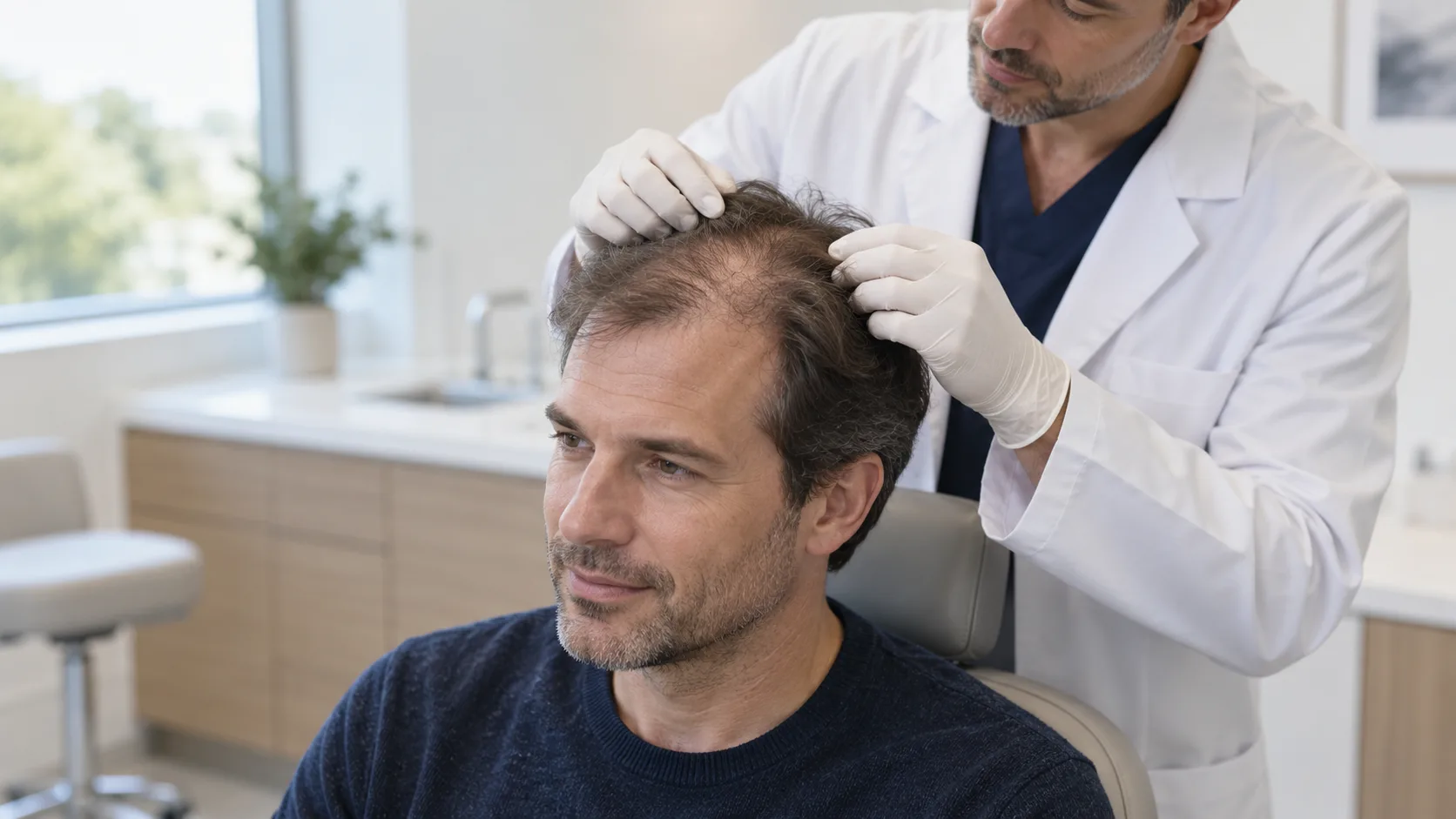
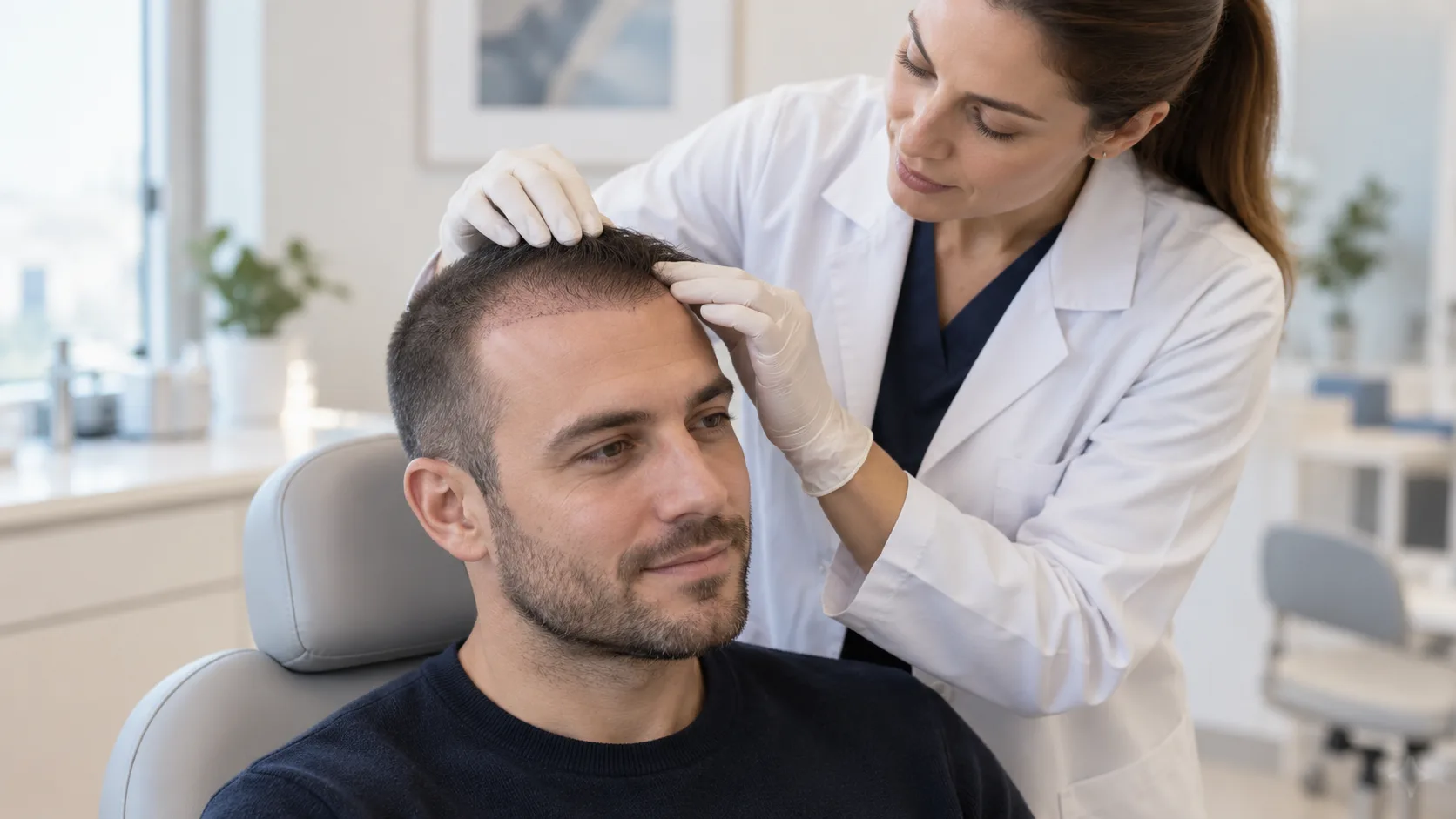
Researchers are studying VDPHL01 in men and women with pattern hair loss. A proper diagnosis, cardiovascular health review, and medication history would determine real-world eligibility. Trial eligibility differs from suitability for routine clinical use, and doctors must confirm the cause of hair loss before prescribing any treatment.
Androgenetic alopecia requires clinical confirmation because thyroid disease, iron deficiency, and other conditions can mimic it. Age, cardiovascular status, and concurrent medications all influence whether a systemic treatment fits an individual patient. Dermatologists routinely perform this risk-benefit assessment with existing oral hair-loss drugs.
Is VDPHL01 Being Studied for Female Pattern Hair Loss?
Yes. Study 306 is a registration-directed trial testing VDPHL01 in women with pattern hair loss over 52 weeks. Veradermics anticipated topline results in the first half of 2027, according to its latest reported development timeline.
The trial evaluates both once-daily and twice-daily regimens and measures hair-count changes alongside patient-reported coverage. Female pattern hair loss remains an underserved area, and a non-hormonal oral option would fill a genuine therapeutic gap (Sinclair 2007).
How Does VDPHL01 Compare With Oral and Topical Minoxidil?
VDPHL01 contains the same active ingredient as both conventional forms, but its extended-release design changes drug exposure patterns. It offers oral convenience without the peak concentrations of immediate-release oral minoxidil. Researchers cannot rank these treatments by effectiveness because no direct comparative trial exists.
Attribute | VDPHL01 | Immediate-Release Oral Minoxidil | Topical Minoxidil |
Active ingredient | Minoxidil | Minoxidil | Minoxidil |
Exposure pattern | Steady, extended | Sharp peaks | Local scalp only |
Systemic side effect profile | Under active evaluation | Higher historical concern | Limited systemic exposure |
Regulatory status | Investigational | Off-label for hair loss | Approved, decades of use |
Each option carries a distinct risk-benefit profile. Indirect comparisons across separate trials cannot establish superiority, and researchers caution against drawing that conclusion (Kanti et al. 2018).
When Could VDPHL01 Become Available?
VDPHL01 must complete regulatory review before any launch. Phase 3 success enables a marketing application, but FDA approval requires complete trial data and formal evaluation. No confirmed launch date or price exists.
Positive topline results represent one milestone in a longer process. The company must compile full study reports, submit them to the FDA, and respond to agency review. This sequence typically spans months to years, and approval never follows automatically from trial success.
Frequently Asked Questions About VDPHL01
Is VDPHL01 FDA-approved?
No. VDPHL01 remains investigational, and no available company disclosure establishes FDA approval. It is not legally available as a commercial medication.
Is VDPHL01 the same as minoxidil?
VDPHL01 contains minoxidil as its active ingredient, but it is a proprietary extended-release formulation, not a generic copy of existing minoxidil products.
Does VDPHL01 help with male pattern baldness?
Phase 3 trial data shows statistically significant regrowth in men over six months. Individual results vary, and trial averages do not guarantee outcomes for any specific patient.
Can women take VDPHL01?
Researchers are studying VDPHL01 in women through Study 306. Investigational participation in a trial differs from receiving an approved treatment, and women should not confuse the two.
Is VDPHL01 safer than conventional oral minoxidil?
The extended-release design aims to improve the safety profile, and Study 304 reported no treatment-related serious cardiac events. The evidence does not yet establish proven superiority, and long-term data remains essential.
Where can I find updates on VDPHL01 clinical trials?
Veradermics' official website, its investor announcements, and public clinical trial registries provide verified updates. These sources offer more reliable information than unofficial commentary.
References
Kanti, Vañi, et al. "Evidence-Based (S3) Guideline for the Treatment of Androgenetic Alopecia." Journal of the European Academy of Dermatology and Venereology, vol. 32, no. 11, 2018.
Kaufman, Keith D., et al. "Finasteride in the Treatment of Men with Androgenetic Alopecia." Journal of the American Academy of Dermatology, vol. 39, no. 4, 1998.
Olsen, Elise A., et al. "Global Photographic Assessment of 5% Topical Minoxidil for Treatment of Androgenetic Alopecia." Dermatologic Surgery, vol. 29, no. 3, 2003.
Sinclair, Rodney D. "Healthy Hair: What Is It?" Journal of Investigative Dermatology Symposium Proceedings, vol. 12, no. 2, 2007.
Suchonwanit, Poonkiat, et al. "Minoxidil and Its Use in Hair Disorders: A Review." Drug Design, Development and Therapy, vol. 13, 2019.