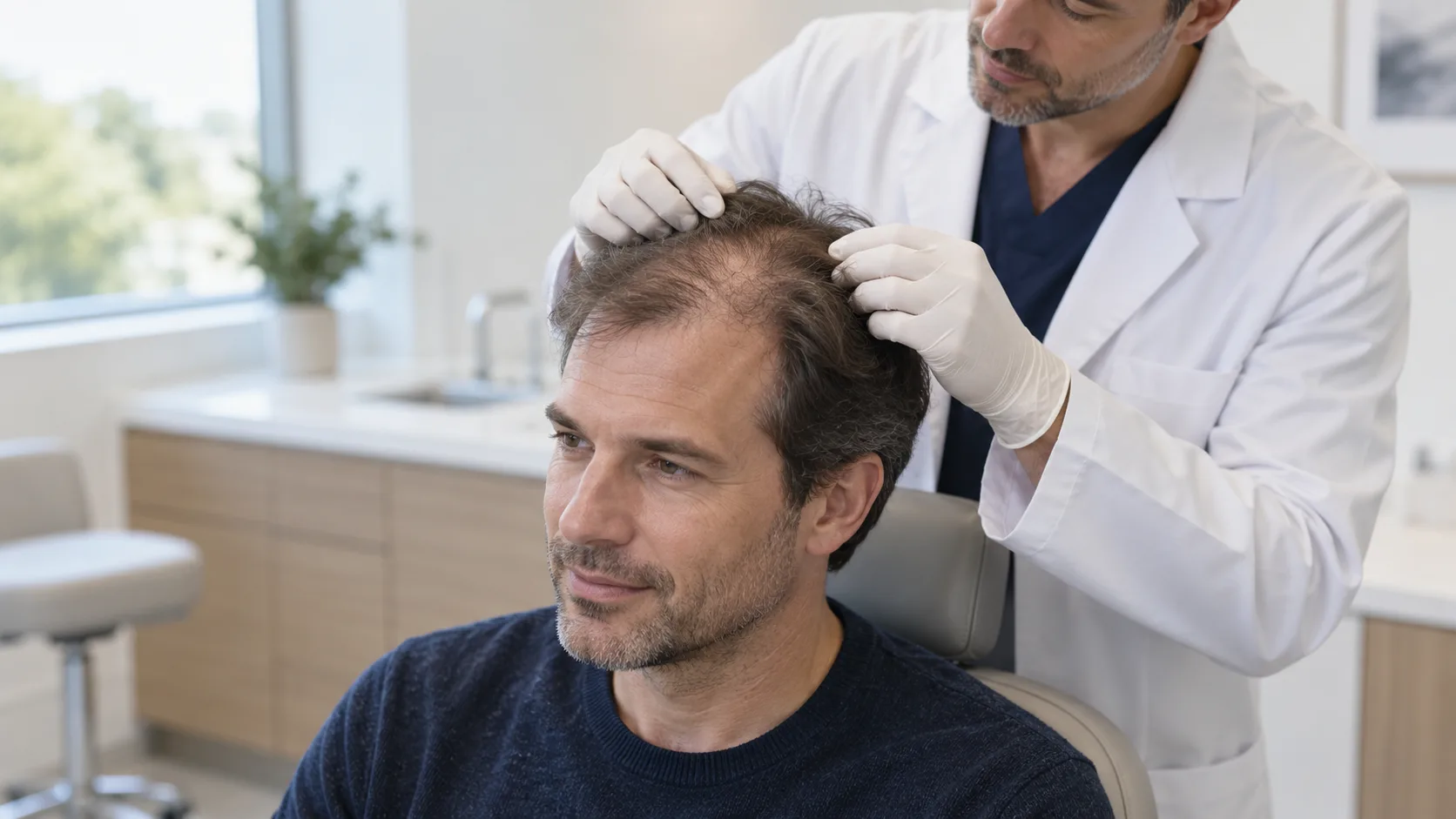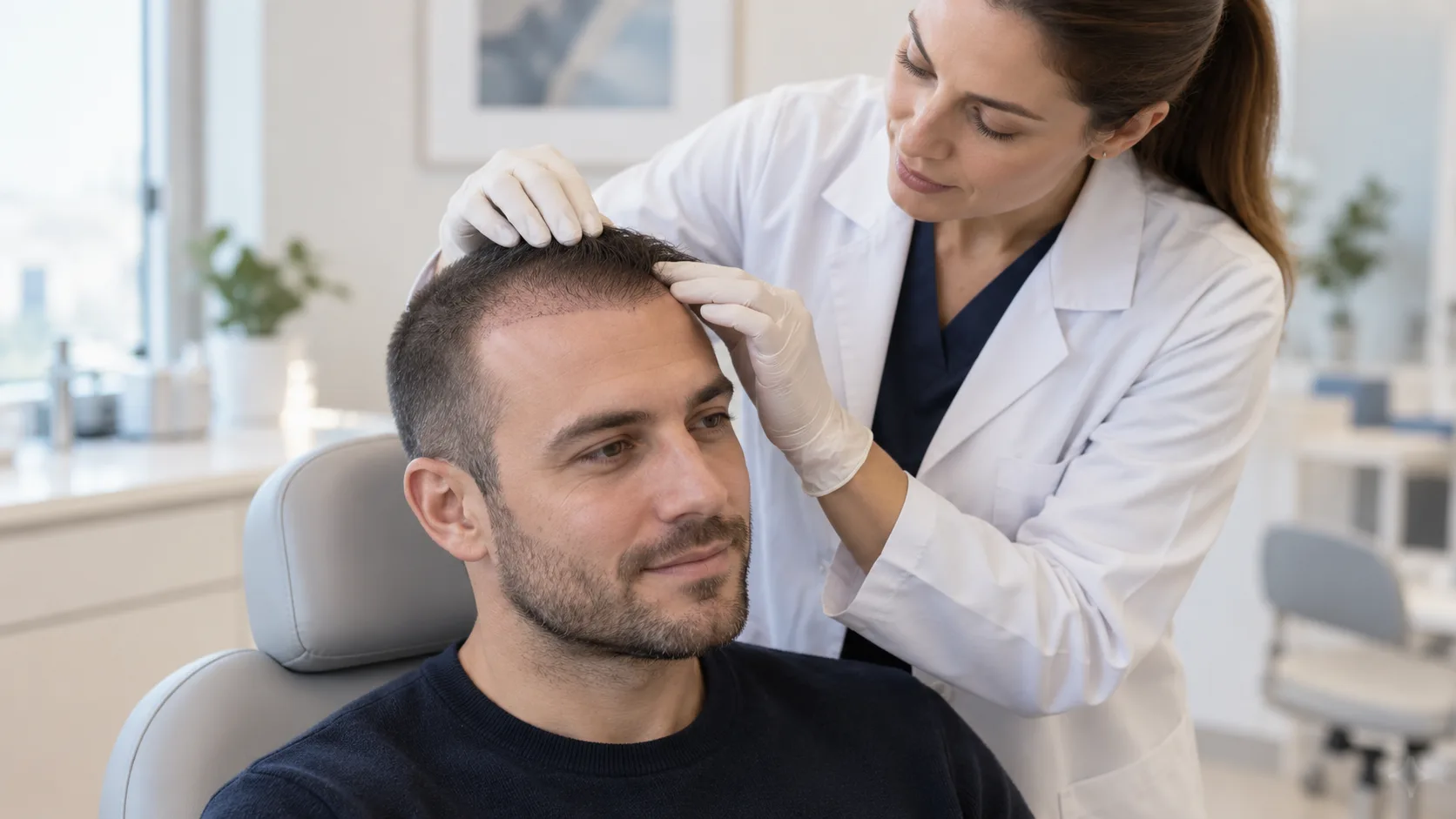
What Is a Sapphire Blade? Benefits in Hair Transplant Surgery
A sapphire blade is a surgical instrument made from synthetic sapphire crystal. Surgeons use this tool during Follicular Unit Extraction (FUE) hair transplant procedures. The blade creates recipient channels in the scalp before graft implantation. Many patients ask about sapphire blade hair transplant options because this tool promises greater precision. However, the sapphire blade is not a separate hair transplant technique. It is simply an advanced incision tool that replaces traditional steel blades during the recipient site creation phase.
Sapphire blades gained popularity in modern hair restoration surgery because they offer sharper edges and more consistent micro-incisions. The crystalline structure of synthetic sapphire provides exceptional hardness. This hardness allows surgeons to create uniform recipient channels with minimal tissue disruption. Still, outcomes depend on surgical planning and surgeon experience in addition to the blade itself. No instrument alone guarantees superior results. The best hair transplant outcomes require careful hairline design, proper donor management, skilled graft handling, and attentive postoperative care.
What Exactly Is a Sapphire Blade Made Of?
A sapphire blade consists of synthetic sapphire, which is an extremely hard crystalline material. Manufacturers create this material in laboratories using aluminum oxide crystals. The Mohs hardness scale rates synthetic sapphire at 9 out of 10. This rating makes sapphire one of the hardest substances available for surgical instruments. Diamond ranks higher at 10, but diamond blades cost significantly more and serve different surgical purposes.
The crystalline structure of synthetic sapphire allows manufacturers to shape extremely fine edges. These edges measure only fractions of a millimeter in width. The sharpness enables surgeons to create precise micro-incisions in the scalp tissue. Unlike metal blades, sapphire blades resist dulling during the procedure. This resistance maintains consistent incision quality throughout the entire recipient site creation process.
Sapphire blades come in various sizes and angles. Surgeons select blade dimensions based on the graft size and the specific area of transplantation. The V-shaped design of many sapphire blades creates narrow, clean channels. These channels accommodate individual follicular units without excessive stretching of surrounding tissue.
Where Does the Surgeon Use a Sapphire Blade During Hair Transplant Surgery?
The surgeon uses the sapphire blade after graft extraction and before graft implantation. The FUE hair transplant procedure follows a clear sequence. First, the surgical team extracts individual follicular units from the donor area. Second, the team prepares the recipient sites. Third, the team implants the grafts into these prepared channels.
The sapphire blade plays its role during the second phase. The surgeon creates recipient channels across the balding or thinning areas of the scalp. These channels determine the angle, direction, and density of future hair growth. The surgeon must place each channel with extreme precision. A single incorrect angle can produce unnatural-looking results. The sapphire blade helps the surgeon maintain this precision across hundreds or thousands of recipient sites.
The blade creates micro-incisions that match the exact diameter of the extracted grafts. This matching reduces tissue trauma during implantation. It also improves graft survival by minimizing handling damage. The recipient site creation phase typically takes one to three hours depending on the number of grafts.
What Is the Difference Between a Sapphire Blade and Sapphire FUE?
Many patients confuse sapphire blade technology with a completely different hair transplant technique. This confusion is understandable but incorrect. A sapphire blade is a tool. Sapphire FUE remains conventional FUE with a different incision instrument. The extraction method stays unchanged in both approaches.
In classic FUE, the surgeon uses a steel blade or needle to create recipient channels. In sapphire FUE, the surgeon substitutes the steel instrument with a sapphire blade. The graft extraction still uses motorized or manual punches to remove follicular units from the donor area. The implantation still requires careful placement of each graft into the prepared channels. The only difference occurs during the channel opening phase.
Some clinics market sapphire FUE as a revolutionary new technique. This marketing creates unrealistic expectations. Patients should understand that sapphire FUE offers potential improvements in one phase of the procedure. It does not transform the entire hair restoration surgery. The surgeon still needs skill, experience, and careful planning to achieve excellent outcomes.
Why Does Recipient Site Creation Matter So Much?
Recipient site creation determines hair angle, direction, density, and natural appearance. Poor channel placement produces unnatural results regardless of the blade type.
Why Do Recipient Channels Affect the Final Outcome?
Recipient channels control every visible aspect of the final hair transplant result. The angle of each channel determines how the hair emerges from the scalp. Natural hair grows at specific angles that vary across different regions of the head. Hairline hairs typically grow at 15 to 30 degrees from the skin surface. Crown hairs grow at steeper angles. The surgeon must replicate these natural angles during recipient site creation.
The direction of each channel also matters enormously. Hair flows in predictable patterns across the scalp. The hairline follows a forward and slightly downward direction. The temple areas show characteristic swirl patterns. The crown displays a spiral growth pattern often called the vertex whirl. The surgeon must orient each recipient channel to match these natural directions. A channel placed against the natural flow creates hair that sticks out or looks awkward.
Hairline design depends entirely on recipient channel placement. The surgeon creates an irregular, feathered hairline by varying the depth, angle, and spacing of channels along the frontal zone. This variation mimics the natural irregularity of a youthful hairline. A perfectly straight or uniform hairline looks artificial. The sapphire blade helps the surgeon achieve this natural irregularity through precise micro-incisions.
Final density also depends on recipient site creation. The surgeon must space channels appropriately to allow adequate blood supply to each graft. Channels placed too close together compete for limited blood flow. This competition can reduce graft survival. Channels placed too far apart produce sparse, thin-looking results. The surgeon balances density with viability during the planning phase.
How Do Recipient Sites Influence Long-Term Growth Patterns?
Recipient sites affect more than the immediate cosmetic outcome. They influence graft placement accuracy and long-term growth patterns. When the surgeon creates a channel at the correct angle, the graft settles naturally into position. The surrounding tissue supports the graft without excessive pressure. This support promotes healthy vascularization and nutrient delivery.
Incorrect channel angles force the graft into unnatural positions. The graft may bend, twist, or experience compression. These mechanical stresses can damage the follicular unit. Damaged grafts may survive initially but produce weak, thin hair. Some damaged grafts fail entirely and never produce visible hair growth.
Long-term growth patterns also depend on channel depth. Channels that are too shallow allow grafts to protrude or dislodge. Channels that are too deep bury the graft beneath excessive tissue. The ideal depth positions the graft at the correct level for natural emergence. Sapphire blades help the surgeon control this depth through consistent incision characteristics.
How Does a Sapphire Blade Work During Surgery?
A sapphire blade creates V-shaped micro-channels with reduced tissue compression. The crystalline edge maintains sharpness and produces uniform incisions at controlled depths.
How Does the V-Shaped Design Improve Incisions?
The V-shaped design of many sapphire blades creates narrow, clean incisions. This shape differs from the flat or rounded edges of traditional steel blades. The V-shape concentrates the cutting force along two precise edges. This concentration allows the blade to penetrate tissue with minimal resistance.
The narrow incision width matches the diameter of individual follicular units. A typical follicular unit contains one to four hairs and measures 0.6 to 1.0 millimeters in diameter. Sapphire blades can create channels as small as 0.6 to 0.8 millimeters. This size matching reduces the gap between the channel wall and the graft. A snug fit stabilizes the graft and prevents movement during healing.
The V-shape also creates a channel with sloping walls. These walls guide the graft into position during implantation. The surgeon or technician can place the graft more easily and accurately. This guidance reduces manipulation time and minimizes graft exposure to air.
How Do Sapphire Blades Create Precise Micro-Channels?
Sapphire blades create precise micro-channels because of their exceptional hardness and edge geometry. The crystalline structure of synthetic sapphire allows manufacturers to polish edges to molecular smoothness. This smoothness reduces tissue drag during incision. Reduced drag means the surgeon can control the blade with greater accuracy.
The precision of micro-channels affects multiple aspects of the procedure. Precise channels maintain consistent width throughout their length. Inconsistent channels widen at the surface or narrow at the base. These irregularities destabilize grafts and compromise blood supply. Uniform channels provide stable housing for each graft.
The precision also allows the surgeon to place channels closer together when appropriate. In areas requiring higher density, such as the frontal hairline, the surgeon can create more channels per square centimeter. The narrow width of sapphire-made channels reduces tissue removal. This conservation allows tighter spacing without excessive trauma.
How Does Reduced Tissue Compression Benefit the Patient?
Reduced tissue compression represents one of the most significant sapphire blade benefits. When a blade enters tissue, it displaces and compresses surrounding cells. Steel blades, even very sharp ones, create more compression because of their material properties. The metal edge deforms slightly under pressure. This deformation widens the incision and squeezes adjacent tissue.
Sapphire blades experience minimal deformation because of their hardness. The crystalline edge maintains its geometry throughout the procedure. This stability creates incisions with less lateral pressure on surrounding tissue. Less compression means less trauma to blood vessels, nerves, and connective tissue.
Reduced tissue trauma promotes faster wound healing. The body responds to surgical trauma with inflammation. Inflammation causes redness, swelling, and discomfort. By minimizing tissue compression, sapphire blades may reduce the intensity of this inflammatory response. Patients may experience less postoperative redness and faster resolution of swelling.
How Does Controlled Incision Depth Improve Results?
Controlled incision depth ensures that each graft sits at the optimal level in the scalp. The depth of the recipient channel determines how the graft interacts with surrounding tissue. A channel that is too shallow leaves the graft protruding above the skin surface. This exposure causes drying, infection risk, and poor vascularization. A channel that is too deep buries the graft beneath thick tissue. This burial delays emergence and may cause cyst formation.
Sapphire blades offer consistent cutting depth because of their sharpness and rigidity. The surgeon applies controlled pressure and the blade penetrates to the desired depth. The hard edge does not flex or bend like softer metal blades. This rigidity improves depth predictability across hundreds of incisions.
The surgeon can also select sapphire blades with specific lengths and angles. Different blade specifications suit different scalp areas and graft types. This customization allows the surgical team to optimize depth control for each region of the transplant.
How Does Improved Channel Uniformity Affect the Final Appearance?
Improved channel uniformity produces consistent results across the entire transplant area. When all channels share similar width, depth, and angle, the grafts settle into equivalent positions. This equivalence creates even hair distribution and uniform growth patterns.
Non-uniform channels produce variable graft placement. Some grafts sit too shallow. Others sit too deep. Some channels angle incorrectly. These inconsistencies create patchy, uneven results. The patient may notice areas of different density or direction. Uniform channels minimize these problems.
Sapphire blades maintain their edge sharpness longer than steel blades. A steel blade may begin sharp but dull after several hundred incisions. A dull blade tears rather than cuts tissue. This tearing creates irregular channel walls. Sapphire blades resist dulling and maintain cutting quality throughout the procedure. This resistance supports channel uniformity from the first incision to the last.
How Does a Sapphire Blade Compare to a Traditional Steel Blade?
Sapphire blades offer greater hardness, sharper edges, and more consistent incisions. Steel blades remain effective but may produce more tissue trauma and variable channel quality.
Feature | Sapphire Blade | Steel Blade |
Material | Synthetic sapphire crystal | Stainless steel |
Hardness | 9 on Mohs scale | 5 to 6 on Mohs scale |
Edge durability | Maintains sharpness throughout procedure | May dull during long procedures |
Channel precision | High precision with narrow incisions | Conventional precision |
Tissue trauma | Potentially reduced compression | May vary based on sharpness |
Healing characteristics | Potentially faster with less redness | Conventional healing timeline |
Channel consistency | Highly uniform | Standard consistency |
Cost | Higher | Lower |
Availability | Specialized suppliers | Widely available |
What Similarities Do Sapphire Blades and Steel Blades Share?
Both sapphire blades and steel blades create recipient channels during hair transplant surgery. Both tools require proper surgical planning before use. The surgeon must design the hairline, calculate density requirements, and map channel placement regardless of blade type. Both instruments can produce excellent results when skilled surgeons use them correctly.
Both blade types demand careful handling and sterilization. The surgical team must clean, disinfect, and store both instruments according to medical standards. Both blades require replacement after use or proper reprocessing for sterilization. The fundamental purpose of both tools remains identical: to create channels that receive and support hair grafts.
The success of either blade depends on the surgeon's technique. A skilled surgeon with a steel blade often achieves better results than an inexperienced surgeon with a sapphire blade. The instrument serves the surgeon. It does not replace surgical expertise.
What Are the Key Differences Between Sapphire and Steel Blades?
The key differences center on blade hardness, sharpness retention, consistency of incisions, and handling characteristics. Sapphire blades rank much higher on the hardness scale. This hardness translates to sharper, more durable edges. Steel blades, while still effective, experience more edge degradation during use.
Sharpness retention affects the entire procedure. A steel blade may perform excellently for the first few hundred incisions. As the edge dulls, the quality of subsequent channels declines. The surgeon may need to change blades mid-procedure. Sapphire blades maintain their edge longer, supporting consistent quality throughout large sessions.
Consistency of incisions differs significantly between the two materials. Sapphire produces channels with uniform width and clean walls. Steel may produce slightly ragged edges, especially as the blade dulls. These ragged edges increase tissue trauma and reduce channel quality.
Handling characteristics also differ. Sapphire blades feel different in the surgeon's hand. The lighter weight and different balance require adjustment. Experienced surgeons adapt quickly. New users may need practice to achieve optimal results with sapphire instruments.
What Are the Main Benefits of Sapphire Blade Hair Transplant Surgery?
Sapphire blades offer greater precision, smaller uniform channels, reduced tissue trauma, better angle control, improved hairline design, higher density potential, faster healing, reduced crusting, and more comfortable recovery.
How Does a Sapphire Blade Provide Greater Surgical Precision?
Greater surgical precision comes from the combination of hardness, sharpness, and edge geometry. The sapphire blade cuts tissue cleanly without tearing or dragging. This clean cutting allows the surgeon to place channels exactly where planned. The precision extends to angle control, depth control, and spacing control.
The surgeon can create channels at angles as shallow as 15 degrees. These shallow angles replicate natural hairline emergence. Steel blades may struggle to maintain such shallow angles without widening the incision. The sapphire edge penetrates cleanly even at extreme angles.
Precision also matters in areas with thin tissue, such as the temple regions or near scars. The surgeon must create channels without penetrating too deeply. Sapphire blades offer the control needed for these delicate areas.
How Do Smaller and More Uniform Recipient Sites Improve Outcomes?
Smaller recipient sites reduce the overall wound burden on the scalp. Each channel represents a small injury. Hundreds of channels create a collective wound surface. Smaller channels mean less total tissue disruption. This reduction supports faster healing and less postoperative inflammation.
Uniform recipient sites improve graft stability. When all channels share similar dimensions, the surgical team can implant grafts with consistent technique. Each graft fits snugly into its channel. This fit prevents dislodgement during the critical first days after surgery.
Smaller channels also allow higher density in limited areas. The surgeon can place more channels per square centimeter without excessive tissue removal. This capability benefits patients who need dense packing along the hairline or in small bald patches.
How Might Sapphire Blades Reduce Tissue Trauma?
Sapphire blades may reduce tissue trauma through several mechanisms. The sharp edge cuts rather than tears tissue. Tearing damages more cells and blood vessels. Cutting preserves more surrounding tissue structure. The hard edge also compresses less tissue during entry. Less compression means less mechanical damage to adjacent cells.
Reduced tissue trauma may translate to less postoperative pain. Patients report varying levels of discomfort after hair transplant surgery. Those who undergo sapphire blade procedures often describe milder sensations. However, individual pain tolerance varies. The reduction in trauma likely contributes to easier recovery.
Less trauma also means less inflammatory response. Inflammation causes redness, swelling, and heat in the treated area. By minimizing tissue damage, sapphire blades may reduce these signs. Patients may return to normal social activities sooner.
How Does a Sapphire Blade Improve Control of Hair Growth Angle?
Control of hair growth angle depends on the surgeon's ability to orient each channel precisely. The narrow width of sapphire-made channels allows accurate angular placement. The surgeon can angle the blade tip exactly as desired. The channel follows this angle without deviation.
Hair growth angle determines how natural the result appears. Incorrect angles create hair that sticks up, lies flat, or grows in unusual directions. The sapphire blade helps the surgeon avoid these problems. The tool responds predictably to the surgeon's hand movements.
Angle control is especially important at the hairline. The transition zone between bald skin and hair-bearing skin must look gradual. The surgeon achieves this gradual look by varying angles across the frontal row. Sapphire blades support this variation through precise channel creation.
How Does a Sapphire Blade Improve Hairline Design?
Hairline design requires artistic vision and technical execution. The surgeon must create an irregular, feathered edge that mimics natural hairlines. This design involves placing single-hair grafts at the very front. These grafts must emerge at shallow angles with forward direction.
Sapphire blades improve hairline design by enabling smaller channels for single-hair grafts. The narrow V-shaped incision accommodates these delicate grafts perfectly. The surgeon can place channels very close together at the hairline without excessive trauma. This close placement creates the dense, natural appearance patients want.
The precision of sapphire blades also helps the surgeon avoid straight lines. Natural hairlines are never perfectly straight. The surgeon creates micro-irregularities by varying channel placement. Sapphire blades support this artistic work through reliable, predictable incisions.
How Do Sapphire Blades Enable Higher Density Planning?
Higher density planning becomes possible because sapphire channels remove less tissue. Each channel takes up minimal space. The surgeon can fit more channels into a given area. This capability benefits patients with advanced hair loss who need maximum coverage.
Density planning must balance graft count with blood supply. The scalp has a finite vascular network. Too many grafts in one area compete for limited blood flow. Sapphire blades help by minimizing damage to existing blood vessels. The clean incision preserves more native vasculature. This preservation supports higher graft survival even at increased densities.
Patients with good donor supply and healthy scalp tissue may achieve densities of 40 to 50 grafts per square centimeter in critical areas. This density approaches natural hair density in some regions. Sapphire blades facilitate this achievement through efficient channel creation.
How Might Sapphire Blades Promote Faster Healing?
Faster healing may result from reduced tissue trauma and smaller wound size. The body heals small wounds more quickly than large wounds. Sapphire-made channels represent minimal injuries. The surrounding tissue remains largely intact. This preservation allows the body to focus repair resources on a smaller area.
The scalp has excellent blood supply. This supply delivers immune cells, nutrients, and growth factors to healing tissue. Sapphire blades preserve more of this blood supply by reducing collateral damage. Better perfusion supports faster cell regeneration and wound closure.
Patients may notice that crusting resolves sooner after sapphire blade procedures. Crusting forms from dried blood and serum at incision sites. Smaller incisions produce less exudate. Less exudate means less crusting. Reduced crusting improves both comfort and appearance during early recovery.
How Do Sapphire Blades Reduce Crusting and Postoperative Redness?
Reduced crusting occurs because smaller channels bleed less and produce less wound fluid. The sharp sapphire edge seals small blood vessels as it cuts. This sealing minimizes bleeding into the channel. Less bleeding means less dried blood on the scalp surface.
Postoperative redness also tends to resolve more quickly. Redness results from inflammation and increased blood flow to healing tissue. Sapphire blades may trigger a milder inflammatory response. The body recognizes less damage and mounts a proportionally smaller reaction. Patients with fair skin especially appreciate faster resolution of redness.
The combination of less crusting and less redness improves the patient's social recovery. Many patients worry about visible signs of surgery. Sapphire blade procedures may reduce the duration of these visible signs. Patients can return to work and social activities with greater confidence.
How Does a Sapphire Blade Create a More Comfortable Recovery Experience?
A more comfortable recovery experience emerges from the cumulative benefits of reduced trauma, smaller wounds, less inflammation, and faster healing. Patients report less tightness and pulling sensations in the scalp. These sensations often follow extensive channel creation. The minimal tissue disruption of sapphire blades reduces this discomfort.
Sleep quality may improve during the first week. Patients can rest more comfortably without constant awareness of the surgical sites. The reduced crusting also makes postoperative washing easier. Patients can clean the scalp more gently without disturbing large scabs.
It is important to note that many proposed benefits of sapphire blades come from surgical experience and theoretical advantages. High-quality comparative evidence remains limited. Most studies are small, retrospective, or lack proper controls. Surgeons report positive outcomes, but large randomized trials comparing sapphire and steel blades are scarce. Patients should discuss realistic expectations with their surgeon.
Does a Sapphire Blade Improve Graft Survival?
Sapphire blades may improve graft survival through better channel quality, but no guarantee exists. Graft survival depends on multiple factors beyond blade material.
What Factors Affect Graft Survival During Hair Transplant Surgery?
Graft survival depends on a complex interplay of factors. Graft handling matters enormously. The surgical team must extract, sort, count, and store grafts under optimal conditions. Grafts dry out quickly when exposed to air. The team must keep grafts moist and cool throughout the procedure.
Surgeon experience significantly influences survival rates. Experienced surgeons extract grafts with minimal transection. Transection cuts through the follicle and destroys its growth potential. Skilled technique reduces this damage. Experience also guides proper graft storage and implantation timing.
Implantation technique affects how well grafts settle into channels. Rough handling, excessive force, or incorrect placement can damage the delicate follicular unit. The implantation team must work carefully and efficiently. Speed matters because grafts survive best when returned to tissue quickly.
Donor quality determines the inherent viability of each graft. Patients with healthy, robust donor hair produce stronger grafts. Poor donor quality yields weaker grafts that survive less well regardless of technique. Genetic factors, age, and overall health all influence donor quality.
Storage conditions during the procedure protect graft viability. The team typically stores extracted grafts in chilled saline solution. This solution maintains hydration and temperature. Prolonged storage outside the body reduces survival rates. The team must work efficiently to minimize storage time.
Blood supply to the recipient area supports graft survival after implantation. The scalp vasculature must regenerate around each graft. This regeneration takes days to weeks. During this period, the graft survives on diffusion from surrounding tissue. Good vascular health promotes this survival.
How Does Recipient Site Quality Influence Graft Survival?
Recipient site quality directly impacts graft survival. A well-made channel provides stable positioning, adequate depth, and good tissue contact. The graft sits securely without movement. Surrounding tissue presses gently against the graft walls. This contact allows nutrient and oxygen diffusion.
Poor channel quality destabilizes grafts. Channels that are too wide allow graft movement. Movement disrupts the fragile new blood supply. Channels that are too narrow compress the graft. Compression damages cells and restricts blood flow. Channels with ragged walls create irregular tissue contact.
Sapphire blades improve channel quality through precision and consistency. Better channels may support higher graft survival. However, the blade is only one factor. The surgeon must still create channels at correct angles and depths. The implantation team must still handle grafts gently. No blade compensates for poor technique in other areas.
What Does Current Scientific Evidence Say About Sapphire Blades and Graft Survival?
Current scientific evidence regarding sapphire blades and graft survival remains limited. A few studies suggest potential benefits. However, most research lacks the rigor of large randomized controlled trials. Small sample sizes, short follow-up periods, and lack of blinding limit the strength of existing data.
One retrospective study by Eren and colleagues (2018) examined outcomes in patients who underwent sapphire blade FUE. The authors reported favorable survival rates and patient satisfaction. However, the study lacked a control group with steel blades. Without this comparison, the specific contribution of the sapphire blade remains unclear.
Another study by Keskin and colleagues (2020) compared sapphire and steel blades in a small cohort. The authors noted reduced bleeding and faster healing with sapphire blades. Graft survival appeared similar between groups. This finding suggests that sapphire blades improve patient comfort without necessarily increasing graft survival.
The lack of high-quality comparative evidence means that no guarantee exists for superior graft survival based solely on blade material. Surgeons should discuss this uncertainty with patients. Patients should select surgeons based on overall experience and results rather than instrument choice alone.
Is Sapphire FUE Better Than Classic FUE?
Sapphire FUE and classic FUE share the same extraction and implantation processes. The only difference is the recipient channel instrument. Success depends more on surgeon skill than blade material.
What Similarities Do Sapphire FUE and Classic FUE Share?
Sapphire FUE and classic FUE share identical graft extraction processes. Both techniques use manual or motorized punches to remove individual follicular units from the donor area. The punch size, extraction pattern, and donor management remain the same. The surgeon must still avoid overharvesting and maintain donor area aesthetics.
Both approaches follow the same donor management principles. The surgeon must select appropriate grafts, preserve donor density, and minimize visible scarring. Donor area preparation, anesthesia, and postoperative care are identical. The patient experiences the same extraction phase regardless of blade choice.
Both techniques use the same implantation principles. The surgical team places extracted grafts into prepared channels. The team must handle grafts carefully, maintain hydration, and work efficiently. Implantation technique does not change based on the blade used for channel creation.
What Differences Exist Between Sapphire FUE and Classic FUE?
The only meaningful difference between sapphire FUE and classic FUE is the recipient channel instrument. Sapphire FUE uses a sapphire blade for channel creation. Classic FUE uses a steel blade, needle, or other metal instrument. This single difference affects the channel creation phase only.
Some clinics claim that sapphire FUE represents a completely different technique. This claim is misleading. The extraction method, graft handling, and implantation remain unchanged. Patients should view sapphire FUE as a variation of classic FUE, not a separate procedure.
The marketing of sapphire FUE sometimes includes claims about faster procedures or superior technology. These claims may or may not hold true depending on the clinic and surgeon. Patients should evaluate such claims critically and ask for evidence.
Which Approach Produces Better Results?
The approach that produces better results depends on multiple factors. Surgical planning matters more than blade choice. The surgeon must design an appropriate hairline, calculate realistic density, and plan graft distribution. Poor planning produces poor results regardless of the instrument.
Surgeon expertise significantly influences outcomes. An expert surgeon with a steel blade consistently outperforms an inexperienced surgeon with a sapphire blade. Expertise includes hairline design, channel placement, graft handling, and complication management. Patients should prioritize surgeon experience over instrument marketing.
Hairline design requires artistic judgment. The surgeon must create a natural, age-appropriate hairline that suits the patient's facial features. This design depends on the surgeon's aesthetic sense, not the blade material. Good design produces satisfying results. Poor design disappoints even with the best instruments.
Patient characteristics also determine outcomes. Hair texture, curl, color, and caliber affect the visual result. Donor capacity limits the number of available grafts. Scalp elasticity and thickness influence channel creation. These characteristics exist independently of blade choice.
Donor capacity represents a fundamental limiting factor. Patients with limited donor supply cannot achieve dense coverage regardless of technique. The surgeon must work within the constraints of available grafts. Sapphire blades cannot create grafts that do not exist.
Who Qualifies as a Good Candidate for Sapphire Blade Hair Transplant?
Most patients who qualify for FUE hair transplant can undergo sapphire blade procedures. Candidates include men and women with pattern hair loss, beard transplant patients, eyebrow restoration patients, and scar revision patients.
Can Men with Pattern Hair Loss Benefit from Sapphire Blades?
Men with male pattern hair loss represent the largest group of hair transplant candidates. This condition, also called androgenetic alopecia, affects most men to some degree. The progressive thinning typically begins at the temples and crown. Sapphire blades can create natural-looking hairlines and dense coverage in appropriate candidates.
Men with early-stage hair loss may benefit from smaller procedures. Sapphire blades allow precise hairline reconstruction with minimal trauma. Men with advanced hair loss require larger sessions. Sapphire blades support these sessions through consistent channel quality across thousands of incisions.
The surgeon must evaluate donor capacity carefully in male patients. Men with limited donor supply may not achieve full coverage. The surgeon must set realistic expectations. Sapphire blades improve channel quality but do not increase graft supply.
Can Women with Hair Loss Undergo Sapphire Blade Transplant?
Women with hair loss can also benefit from sapphire blade hair transplant. Female pattern hair loss typically produces diffuse thinning across the crown. Women rarely develop the distinct bald areas seen in men. This diffuse pattern requires careful planning to avoid damage to existing hair.
Sapphire blades help in female patients by creating small, precise channels. These channels minimize disruption to surrounding native hairs. Women often retain significant hair in the thinning areas. Preserving this existing hair is crucial for natural results.
Women may also seek hairline lowering or forehead reduction. Sapphire blades support these procedures through precise channel placement at the frontal hairline. The small incisions create minimal scarring in this highly visible area.
Are Sapphire Blades Suitable for Beard Transplant?
Beard transplant candidates can benefit from sapphire blade technology. Beard hair requires specific angles and directions. Facial hair grows at steep angles and follows characteristic patterns. The chin hair grows downward. The mustache hair grows outward and slightly downward. The cheek hair grows at intermediate angles.
Sapphire blades allow the surgeon to create channels at these specific angles with precision. The hard, sharp edge penetrates facial skin cleanly. Facial skin differs from scalp skin in thickness and elasticity. The control offered by sapphire blades suits these differences.
Beard transplant often requires high density in small areas. The goatee and mustache regions need dense packing. Sapphire blades enable this density through small channel size. The surgeon can place many channels per square centimeter without excessive trauma.
Can Surgeons Use Sapphire Blades for Eyebrow Restoration?
Eyebrow restoration demands extreme precision. Eyebrow hairs grow at very shallow angles and follow specific directional patterns. The medial eyebrow hairs grow upward and outward. The lateral hairs grow downward and outward. This complex pattern requires meticulous channel placement.
Sapphire blades support eyebrow restoration through micro-precision. The surgeon can create channels as small as 0.5 millimeters. These tiny channels accommodate single-hair grafts perfectly. The small size also minimizes scarring in this highly visible area.
Eyebrow skin is thin and delicate. Deep channels risk damage to underlying structures. Sapphire blades allow shallow, controlled incisions. This control protects the patient while achieving natural eyebrow density and direction.
Does Sapphire Blade Technology Help with Scar Revision?
Scar revision represents another application for sapphire blade hair transplant. Patients with scars from previous surgeries, injuries, or burns may seek hair restoration in scarred areas. Scar tissue differs from normal scalp tissue. It is often thinner, less elastic, and more fibrous.
Sapphire blades can create channels in scar tissue with minimal additional trauma. The sharp edge cuts through fibrous tissue cleanly. Steel blades may struggle with dense scar collagen. The hardness of sapphire maintains cutting efficiency in these challenging areas.
However, scar tissue has reduced blood supply. Graft survival in scars is always lower than in normal scalp. Sapphire blades may improve channel quality, but they cannot restore blood supply that does not exist. The surgeon must discuss realistic expectations with scar revision patients.
What Happens During the Sapphire FUE Procedure?
The sapphire FUE procedure includes consultation, hairline design, donor preparation, anesthesia, graft extraction, sapphire blade channel creation, graft implantation, and recovery.
What Occurs During the Consultation Phase?
The consultation phase establishes the foundation for successful surgery. The surgeon evaluates the patient's hair loss pattern, donor capacity, and overall health. The surgeon examines the scalp with magnification to assess follicular unit density. The surgeon also discusses the patient's goals and expectations.
During consultation, the surgeon explains the sapphire blade option. The surgeon describes how the blade works and what benefits it may offer. The surgeon also discusses limitations and uncertainties. This honest discussion helps the patient make an informed decision.
The surgeon may use digital imaging to simulate potential results. These simulations help patients visualize outcomes. However, simulations represent estimates, not guarantees. The surgeon emphasizes that actual results depend on multiple variables.
How Does the Surgeon Design the Hairline?
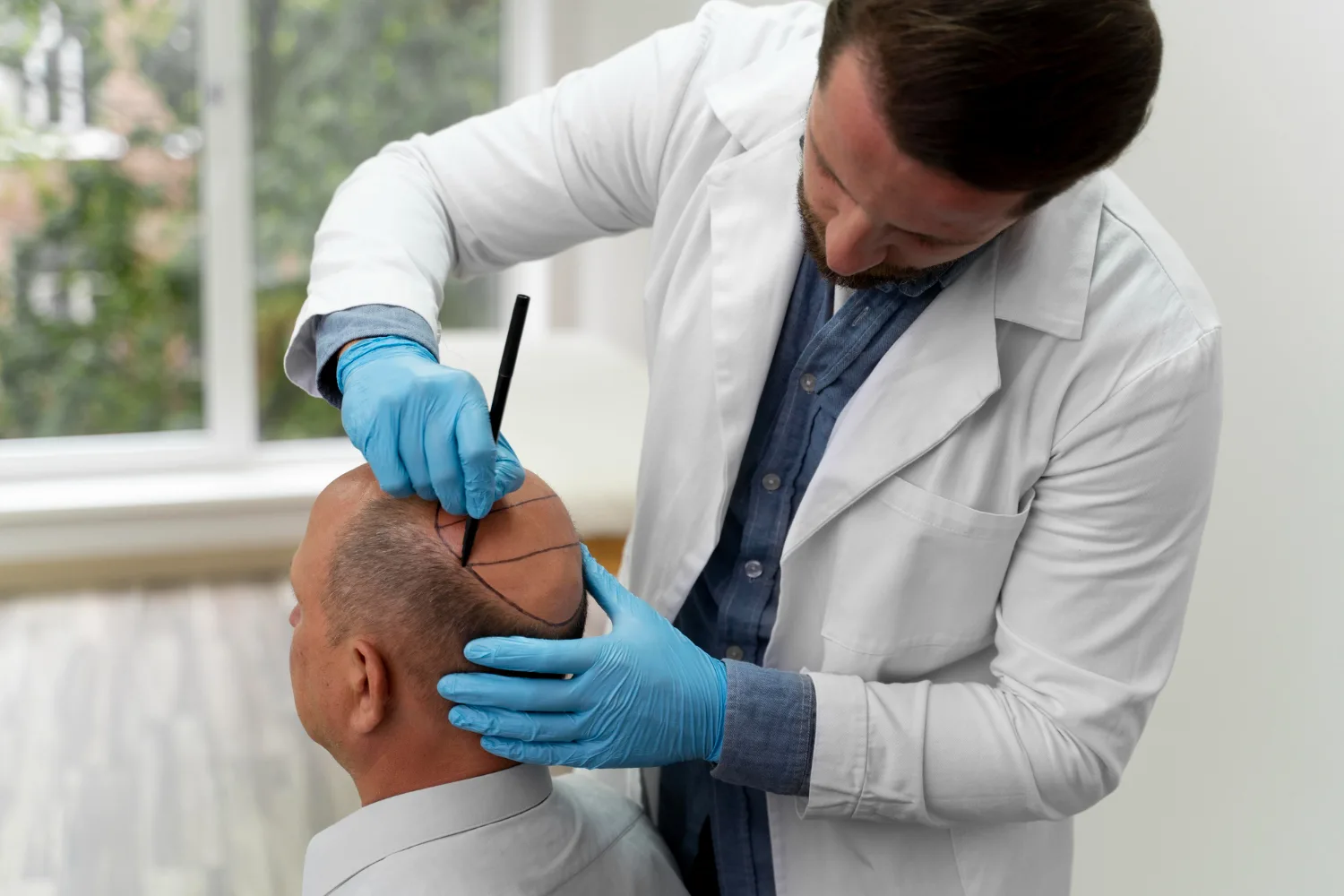
Hairline design combines art and science. The surgeon considers the patient's facial proportions, age, and hair characteristics. The surgeon marks the proposed hairline on the scalp before surgery. This marking serves as a guide during channel creation.
The surgeon creates an irregular, undulating hairline. Natural hairlines are never perfectly straight. The surgeon places micro-peaks and valleys along the frontal edge. This irregularity mimics natural hairline architecture.
The surgeon also plans the transition zone. This zone extends several millimeters behind the hairline edge. It contains single-hair grafts that create a soft, natural appearance. Sapphire blades help the surgeon place these delicate grafts with precision.
How Does the Team Prepare the Donor Area?
Donor area preparation begins with trimming the hair to approximately one to two millimeters in length. This short length allows the punch to access follicles clearly. The team then cleans the donor area with antiseptic solution.
The surgeon administers local anesthesia to the donor area. This anesthesia numbs the skin completely. The patient remains awake but feels no pain. The anesthesia typically contains lidocaine and epinephrine. Epinephrine reduces bleeding by constricting blood vessels.
The surgeon then begins extraction using manual or motorized punches. The punch size ranges from 0.8 to 1.0 millimeters. The surgeon extracts grafts in a scattered pattern across the donor area. This pattern preserves natural appearance by avoiding concentrated bald patches.
How Does Local Anesthesia Work During the Procedure?
Local anesthesia makes the procedure comfortable for the patient. The surgeon injects anesthetic solution into the scalp using fine needles. The solution blocks nerve signals from the surgical area. The patient feels pressure and movement but no sharp pain.
The surgeon may add sedation for anxious patients. Sedation helps the patient relax during the long procedure. However, general anesthesia is unnecessary and uncommon for hair transplant surgery. Local anesthesia provides adequate comfort while allowing the patient to communicate with the surgical team.
The anesthesia in the recipient area also contains epinephrine. This vasoconstrictor reduces bleeding during channel creation. Reduced bleeding improves visibility and reduces postoperative crusting. Sapphire blades, combined with good vasoconstriction, create clean surgical fields.
How Does FUE Graft Extraction Proceed?
FUE graft extraction removes individual follicular units from the donor area. The surgeon places a circular punch around each follicular unit. The punch penetrates the skin to a specific depth. The surgeon then extracts the graft using forceps or suction.
The extraction phase requires patience and precision. The surgeon must avoid transecting follicles. Transection damages the graft and reduces its survival potential. Experienced surgeons achieve transection rates below 5 percent. Less experienced surgeons may transect 10 to 20 percent of grafts.
The extracted grafts contain one to four hairs each. The surgical team sorts grafts by hair count. Single-hair grafts serve the hairline. Two-hair and three-hair grafts fill in behind. This sorting ensures appropriate distribution across the transplant area.
How Does the Surgeon Create Recipient Sites with a Sapphire Blade?
Recipient site creation with a sapphire blade follows extraction. The surgeon examines the extracted grafts to determine appropriate channel sizes. The surgeon selects a sapphire blade that matches the graft diameter. Common sizes range from 0.6 to 1.0 millimeters.
The surgeon creates channels across the recipient area in a systematic pattern. The surgeon typically works from back to front or from one side to the other. This systematic approach ensures complete coverage without missed areas. The surgeon adjusts angle and direction based on the specific scalp region.
The sapphire blade enters the skin at the planned angle. The surgeon controls depth by feel and experience. The blade creates a clean, narrow channel. The surgeon withdraws the blade and moves to the next site. This process repeats hundreds or thousands of times.
How Does Graft Implantation Work?
Graft implantation places extracted follicular units into the prepared channels. The surgical team uses fine forceps or implantation devices. Each graft slides into its channel with minimal manipulation. The surrounding tissue holds the graft in place.
The team implants single-hair grafts along the hairline first. These grafts create the soft, natural edge. The team then implants multi-hair grafts behind the hairline. These grafts provide density and coverage. The team works methodically across the entire area.
Implantation requires speed and care. Grafts survive best when returned to tissue quickly. The team must work efficiently without rushing. Proper hydration and temperature control during implantation support graft survival.
What Does Recovery Look Like After the Procedure?
Recovery begins immediately after implantation completes. The surgical team cleans the scalp gently. They apply a protective dressing or leave the area open to air depending on clinic protocol. The patient receives detailed postoperative instructions.
The patient rests for the remainder of the day. Most patients resume light activities within 24 to 48 hours. Strenuous exercise remains restricted for one to two weeks. The patient must avoid touching or scratching the grafts during the critical first week.
What Does Recovery Look Like After Sapphire Blade Hair Transplant?
Recovery progresses through first-week healing, first-month growth, shock loss phase, gradual hair growth, and final results at 12 to 18 months.
What Happens During the First Week?
The first week after sapphire blade hair transplant involves initial healing. Small crusts form around each graft. These crusts protect the wound sites. The patient must avoid picking or rubbing these crusts. Premature removal can dislodge grafts.
Swelling may occur in the forehead and around the eyes. This swelling typically peaks on day two or three. It resolves by day five to seven. Cold compresses and head elevation help reduce swelling. Sapphire blade patients may experience less swelling than steel blade patients, though individual variation exists.
The patient washes the scalp gently starting around day two or three. The clinic provides specific washing instructions. Gentle washing removes excess oil and debris without disturbing grafts. The patient uses a mild shampoo and avoids direct water pressure on the grafts.
What Changes Occur During the First Month?
During the first month, the transplanted hairs enter a resting phase. The grafts establish blood supply and anchor in the scalp. The small crusts fall off naturally within two to three weeks. The scalp appearance improves significantly once crusting resolves.
Some patients notice fine hairs growing from transplanted grafts within the first month. These early hairs are temporary. They will shed during the shock loss phase. Their initial appearance reassures patients that the grafts are alive and functioning.
The donor area heals during this period. Small dots from extraction close and fade. Most patients can wear their hair at normal length to conceal the donor area by one month. Sapphire blade procedures do not affect donor healing since the blade is not used in the donor area.
What Is Shock Loss and When Does It Occur?
Shock loss refers to the shedding of transplanted hairs around two to eight weeks after surgery. This shedding is normal and expected. The hair shafts fall out, but the follicles remain alive beneath the skin. The follicles enter a resting phase before producing new hair.
Shock loss can also affect nearby native hairs. The surgical trauma may push existing hairs into a shedding cycle. This native hair loss is usually temporary. The hairs regrow within several months. Patients should not panic when they notice increased shedding during this period.
The duration and severity of shock loss vary. Some patients experience minimal shedding. Others lose most transplanted hairs. The outcome does not depend on the amount of shock loss. Even patients with extensive shedding can achieve excellent final results.
What Is the Hair Growth Timeline After Sapphire FUE?
The hair growth timeline follows a predictable pattern. New hair growth typically begins around three to four months after surgery. These early hairs are fine and light in color. They gradually thicken and darken over subsequent months.
By six months, most patients see significant improvement. The transplanted area shows visible coverage and density. The hair continues to mature and thicken through month nine. By twelve months, the majority of growth has occurred.
Some patients continue to see improvement between twelve and eighteen months. Hair caliber may increase slightly during this period. The final result becomes fully apparent by eighteen months after surgery. Patients should evaluate outcomes only after this full timeline.
When Can Patients Expect Final Results?
Final results become apparent at 12 to 18 months after sapphire blade hair transplant. By this time, all transplanted hairs have cycled through growth phases. The hair has reached mature caliber and color. The scalp has fully healed and any minor irregularities have resolved.
The final density depends on graft survival, which typically ranges from 85 to 95 percent. Not every graft survives, and this is normal. The surgeon accounts for some graft loss when planning the procedure. Patients with higher survival rates achieve better density.
The final appearance also depends on hair characteristics. Coarse, dark hair provides more visual coverage than fine, light hair. Curly hair creates more volume than straight hair. These characteristics exist independently of the blade used during surgery.
Are There Any Risks or Limitations with Sapphire Blades?
Sapphire blade hair transplant carries standard risks including swelling, redness, crusting, infection, overharvesting, and unrealistic expectations. Proper surgical technique minimizes these risks.
How Common Is Temporary Swelling?
Temporary swelling occurs in most hair transplant patients regardless of blade type. The surgical trauma triggers fluid accumulation in the tissues. Gravity pulls this fluid downward, causing forehead and eye swelling. Sapphire blades may reduce swelling slightly through less tissue trauma, but they do not eliminate it entirely.
Swelling typically lasts three to seven days. It resolves without treatment. Cold compresses, head elevation, and gentle movement help speed resolution. Patients should avoid anti-inflammatory medications unless approved by their surgeon. Some anti-inflammatories may affect graft survival.
How Long Does Postoperative Redness Last?
Postoperative redness results from inflammation and increased blood flow. The scalp appears pink or red in the recipient area. This redness is normal and expected. It typically fades within two to four weeks. Patients with fair skin may notice redness longer than those with darker skin.
Sapphire blades may reduce redness duration by minimizing tissue trauma. However, individual healing varies. Some patients experience redness for six to eight weeks. This extended redness does not indicate a problem. The scalp simply heals at its own pace.
How Does Crusting Affect Recovery?
Crusting forms from dried blood and serum at incision sites. These crusts protect healing tissue. They fall off naturally within two to three weeks. Patients must not pick at crusts. Picking can remove grafts and cause scarring.
Sapphire blades may reduce crusting by creating smaller incisions with less bleeding. Reduced crusting improves comfort and appearance during early recovery. However, some crusting is inevitable after any hair transplant procedure.
What Is the Infection Risk?
Infection risk after hair transplant surgery is low. The scalp has excellent blood supply, which resists infection. Proper sterile technique during surgery further reduces risk. Patients must follow postoperative care instructions to prevent infection.
Signs of infection include increasing pain, warmth, pus, and fever. Patients should contact their surgeon immediately if these signs appear. Early antibiotic treatment resolves most infections without complications. Sapphire blades do not increase or decrease infection risk compared to steel blades.
How Does Overharvesting Occur?
Overharvesting happens when the surgeon extracts too many grafts from the donor area. This excessive extraction depletes donor reserves and creates visible thinning. Overharvesting is a surgeon error, not a blade limitation. Sapphire blades do not prevent overharvesting because they are not used in the donor area.
Patients should discuss realistic graft numbers with their surgeon. The surgeon must balance the patient's desires with donor limitations. A responsible surgeon refuses to overharvest even when the patient requests excessive graft numbers.
Why Do Unrealistic Expectations Create Problems?
Unrealistic expectations represent a significant limitation in hair transplant surgery. Some patients expect instant, dense, perfect results. They may believe that sapphire blades guarantee superior outcomes. These expectations set the patient up for disappointment.
Hair transplant surgery requires patience. Results take 12 to 18 months to fully develop. Density is limited by donor supply. Perfection is impossible. The surgeon must educate patients about realistic outcomes before surgery. Sapphire blades improve one aspect of the procedure. They do not transform limitations into unlimited possibilities.
Why Does Proper Surgical Technique Matter More Than Blade Choice?
Proper surgical technique matters more than blade choice because technique encompasses every phase of the procedure. A skilled surgeon with a steel blade achieves better results than an unskilled surgeon with a sapphire blade. Technique includes extraction, storage, channel creation, implantation, and postoperative care.
The blade is a tool. It serves the surgeon's skill. It does not replace that skill. Patients should evaluate surgeons based on training, experience, and results. Instrument choice should be a secondary consideration.
What Are Common Myths About Sapphire Blades?
Common myths include the belief that sapphire FUE is a different technique, that sapphire guarantees better results, that recovery is instant, that sapphire eliminates scarring, and that all clinics use genuine sapphire blades.
Is Sapphire FUE a Completely Different Technique?
No, sapphire FUE is not a completely different technique. It is conventional FUE with a sapphire blade substituted for the steel blade during recipient site creation. The extraction method, graft handling, and implantation remain identical. Marketing that presents sapphire FUE as revolutionary misleads patients.
Patients should ask clinics to explain exactly what differs in sapphire FUE. If the clinic cannot identify differences beyond the blade material, the procedure is not a separate technique. Patients deserve honest information, not marketing hype.
Does Sapphire Guarantee Better Results?
No, sapphire does not guarantee better results. Results depend on surgical planning, surgeon expertise, patient characteristics, and postoperative care. A sapphire blade may improve channel quality, but it cannot compensate for poor planning or inexperienced execution.
Patients should view sapphire blades as a potential enhancement, not a guarantee. The best way to ensure good results is to select an experienced surgeon with a strong track record. Blade choice is a minor factor compared to surgeon skill.
Is Recovery Instant with Sapphire Blades?
No, recovery is not instant with sapphire blades. The scalp still requires time to heal. Grafts still need months to grow. Crusting, swelling, and redness still occur. Sapphire blades may reduce some of these effects, but they do not eliminate the healing process.
Patients should expect a normal recovery timeline even with sapphire blades. The body heals at its own pace. No instrument can bypass biology. Patients who expect instant recovery will be disappointed.
Does Sapphire Eliminate All Scarring?
No, sapphire does not eliminate all scarring. Any incision in the skin creates some degree of scarring. Sapphire blades create smaller incisions that may heal with less visible marks. However, they do not produce scarless results.
The donor area still shows small dot scars from extraction. The recipient area may show tiny marks at channel sites. These marks are usually invisible to casual observation. But they exist. Patients should understand that surgery always leaves some trace.
Do All Clinics Use Genuine Sapphire Blades?
No, not all clinics use genuine sapphire blades. Some clinics may use inferior materials or mislabel standard instruments. Patients should ask about blade sourcing and quality. Reputable clinics use certified surgical-grade sapphire blades from established manufacturers.
The term "sapphire blade" is not regulated. Any clinic can claim to use sapphire blades regardless of actual material. Patients should be cautious of clinics that heavily market sapphire technology without providing specifics. Genuine sapphire blades are expensive. Extremely low prices may indicate inferior instruments.
What Factors Matter More Than the Blade Material?
Surgeon experience, hairline planning, donor management, graft handling, implantation technique, patient selection, and postoperative care matter more than blade material.
How Does Surgeon Experience Influence Outcomes?
Surgeon experience is the single most important factor in hair transplant success. Experienced surgeons have performed thousands of procedures. They have encountered diverse hair types, scalp conditions, and patient goals. This experience allows them to adapt their technique to each individual case.
Experienced surgeons make better decisions about graft number, distribution, and placement. They recognize potential complications before they develop. They adjust the surgical plan in real time based on graft quality and tissue response. No blade can replicate this judgment.
Patients should research surgeon credentials, training, and case volume. Board certification, specialized training, and years of practice indicate expertise. Before-and-after photos from actual patients demonstrate results. These factors matter far more than the brand of blade used.
How Does Hairline Planning Affect the Final Look?
Hairline planning determines whether the result looks natural or artificial. A well-planned hairline suits the patient's age, facial structure, and hair characteristics. It creates a frame for the face that enhances appearance. A poorly planned hairline looks obvious and disappointing.
The surgeon must consider future hair loss when designing the hairline. Young patients will likely lose more hair over time. The hairline must remain appropriate as surrounding hair recedes. Conservative, natural hairlines age better than aggressive, low hairlines.
Sapphire blades help execute hairline plans precisely. But the plan itself comes from the surgeon's mind. A bad plan executed perfectly still produces bad results. Patients should discuss hairline design thoroughly during consultation.
Why Does Donor Management Matter?
Donor management preserves the long-term appearance of the donor area. The surgeon must extract grafts without creating visible thinning. This requires careful spacing, appropriate punch size, and respect for donor limitations.
Overharvesting damages the donor area permanently. Patients may need future procedures as hair loss progresses. A depleted donor area cannot support these future needs. The surgeon must balance current goals with long-term donor preservation.
Donor management also affects graft quality. Healthy donor hair produces strong grafts. The surgeon must select the best grafts and avoid damaging them during extraction. This selection and protection depend on surgeon skill, not blade material.
How Does Graft Handling Affect Survival?
Graft handling affects survival from the moment of extraction to the moment of implantation. The surgical team must keep grafts moist, cool, and protected. They must avoid crushing, drying, or traumatizing the delicate follicular units.
Grafts outside the body begin to deteriorate immediately. The team must work efficiently to minimize exposure time. Some clinics use holding solutions that extend viability. Others use implanters that reduce handling. These protocols matter more than blade choice.
The implantation team must place grafts gently into channels. Forceful insertion damages the follicle. Rough handling with forceps crushes the graft. Careful, gentle technique preserves graft integrity. This technique is a human skill, not a blade feature.
How Does Implantation Technique Influence Results?
Implantation technique determines how well grafts settle into channels. The team must place each graft at the correct depth and orientation. Grafts that sit too shallow protrude and dry out. Grafts that sit too deep remain buried and fail to emerge.
The implantation team must also avoid air exposure. Grafts dry quickly in air. The team should transfer grafts from storage to scalp rapidly. Some teams use implanter pens that reduce exposure time. Others use forceps with equal success. The key is speed and care.
Implantation density also matters. The team must distribute grafts evenly across the planned area. Uneven distribution creates patchy results. The surgeon guides this distribution through channel planning. The team executes it through careful placement.
How Does Patient Selection Determine Success?
Patient selection ensures that candidates have realistic potential for good results. Not everyone is a suitable candidate for hair transplant surgery. Patients with insufficient donor supply, unstable hair loss, or unrealistic expectations may not benefit from surgery.
The surgeon evaluates donor density, hair caliber, and scalp elasticity. These factors determine how many grafts are available and how they will look when transplanted. Patients with fine, sparse donor hair achieve less visual coverage than those with thick, dense donor hair.
The surgeon also assesses the progression of hair loss. Young patients with early hair loss may not be ideal candidates. Their future hair loss may outpace transplant coverage. The surgeon may recommend medical therapy first to stabilize loss before considering surgery.
How Does Postoperative Care Support Results?
Postoperative care protects grafts during the critical healing period. Patients must follow washing instructions, avoid trauma, and take prescribed medications. They must avoid sun exposure, swimming, and strenuous exercise during early recovery.
Proper care prevents infection and dislodgement. It supports optimal healing and graft survival. Patients who neglect postoperative instructions risk poor results regardless of surgical technique. The surgeon provides detailed guidance, but the patient must follow it.
Some clinics recommend medications to support hair growth after surgery. Minoxidil or finasteride may help preserve native hair and support transplanted hair. These medications complement surgery but do not replace it. The patient should discuss medication options with their surgeon.
What Do Patients Frequently Ask About Sapphire Blades?
Patients commonly ask about blade composition, differences from regular FUE, scarring, graft survival, recovery speed, candidacy, density, cost, procedure duration, and beard or eyebrow applications.
What Is a Sapphire Blade Made Of?
A sapphire blade is made of synthetic sapphire crystal. This material is aluminum oxide in crystalline form. Manufacturers grow these crystals in laboratories. The resulting material is extremely hard, transparent, and chemically inert. It is not natural gemstone sapphire, though both share the same chemical composition.
Is Sapphire FUE Different from Regular FUE?
Sapphire FUE is not different from regular FUE in terms of technique. The only difference is the instrument used to create recipient channels. Regular FUE uses steel blades or needles. Sapphire FUE uses sapphire blades. The extraction and implantation phases remain identical.
Does a Sapphire Blade Reduce Scarring?
A sapphire blade may reduce visible scarring by creating smaller, cleaner incisions. However, it does not eliminate scarring entirely. All surgery leaves some mark. The smaller incisions of sapphire blades typically heal with minimal visible trace.
Does Sapphire Improve Graft Survival?
Sapphire may improve graft survival by creating better-quality channels. However, scientific evidence is limited. Graft survival depends on many factors including surgeon skill, graft handling, and patient characteristics. No blade guarantees survival.
Is Recovery Faster with Sapphire Blades?
Recovery may be slightly faster with sapphire blades due to reduced tissue trauma. However, the difference is modest. Patients still experience swelling, redness, and crusting. The overall timeline remains similar to steel blade procedures.
Are Sapphire Blades Suitable for All Patients?
Sapphire blades suit most patients who qualify for FUE hair transplant. The surgeon selects blade size based on graft dimensions and scalp characteristics. Some patients with very thick scalp tissue may require different approaches. The surgeon determines suitability during consultation.
Does a Sapphire Blade Create Denser Results?
A sapphire blade enables higher density planning by creating smaller channels. However, actual density depends on graft survival and donor supply. The blade facilitates density but does not create it. The surgeon must still work within biological limitations.
Is Sapphire FUE More Expensive?
Sapphire FUE is often more expensive than classic FUE. The sapphire blades cost more than steel blades. Some clinics also charge premium prices for marketing reasons. Patients should compare costs and understand what the price includes.
How Long Does a Sapphire FUE Procedure Take?
A sapphire FUE procedure takes the same time as classic FUE. The duration depends on graft number, not blade type. Small procedures of 1,000 grafts take four to six hours. Large procedures of 3,000 to 4,000 grafts take eight to twelve hours.
Can Surgeons Use Sapphire Blades for Beard and Eyebrow Transplants?
Yes, surgeons can use sapphire blades for beard and eyebrow transplants. The precision of sapphire blades suits these delicate areas well. The small channel size matches the fine grafts used in facial hair restoration.
What Should Patients Remember About Sapphire Blades?
Sapphire blades enhance recipient site creation during FUE surgery. They do not replace surgical planning, surgeon expertise, or patient care. The best results come from combining good tools with skilled execution.
Sapphire blades play a valuable role in modern FUE hair transplant surgery. They offer potential advantages in precision, consistency, and tissue handling. The crystalline hardness of synthetic sapphire creates sharp, durable edges. These edges produce narrow, uniform recipient channels. Such channels may support better graft positioning, reduced trauma, and faster healing.
However, sapphire blades enhance only one phase of the procedure. They do not replace meticulous surgical planning. They do not substitute for surgeon experience. They do not overcome limitations in donor supply or patient characteristics. The most natural, dense, and durable results depend on the combination of patient selection, donor quality, surgical expertise, and postoperative care. The blade material alone cannot achieve these results.
Patients considering hair transplant surgery should focus on surgeon selection first. An experienced surgeon with excellent results matters more than any instrument. The surgeon can explain whether sapphire blades offer meaningful advantages for the specific case. Some patients may benefit significantly. Others may see minimal difference. An honest surgeon provides this perspective without pressure.
The field of hair restoration surgery continues to evolve. New instruments, techniques, and technologies emerge regularly. Sapphire blades represent one such advancement. They improve an important step in the procedure. But they are not magic. They are tools in the hands of skilled professionals. Patients who understand this distinction make better decisions and achieve more satisfying outcomes.
References
Eren, Bulent, et al. "Comparison of Sapphire Blade and Steel Blade for Recipient Site Creation in Hair Transplantation." Aesthetic Plastic Surgery, vol. 42, no. 3, 2018, pp. 789-795.
Keskin, Zeynep, et al. "Sapphire Blade versus Steel Blade in Follicular Unit Extraction: A Comparative Study." Journal of Craniofacial Surgery, vol. 31, no. 5, 2020, pp. 1456-1460.
Limmer, Bob. "Micrograft Survival." Dermatologic Surgery, vol. 20, no. 12, 1994, pp. 789-792.
Mayer, Tom, and Paul Perez-Meza. "A Review of Follicular Unit Extraction and the Newer Automated Systems." Facial Plastic Surgery Clinics of North America, vol. 21, no. 3, 2013, pp. 435-444.
Onda, Masaru, et al. "Histological Evaluation of Follicular Unit Extraction Wound Healing." Dermatologic Surgery, vol. 39, no. 9, 2013, pp. 1365-1371.
Rassman, William, et al. "Follicular Unit Extraction: Minimally Invasive Surgery for Hair Transplantation." Dermatologic Surgery, vol. 28, no. 8, 2002, pp. 720-728.
Rose, Paul. "The Latest Innovations in Hair Transplantation." Facial Plastic Surgery, vol. 27, no. 4, 2011, pp. 348-356.
Unger, Walter, and Ronald Shapiro. Hair Transplantation. 5th ed., Marcel Dekker, 2011.
Wong, Jerry. "Technical Milestones in Hair Transplantation." Seminars in Cutaneous Medicine and Surgery, vol. 32, no. 2, 2013, pp. 107-112.
Zontos, George, et al. "Recipient Site Influence on the Survival of Follicular Unit Grafts." Dermatologic Surgery, vol. 32, no. 10, 2006, pp. 1237-1243.