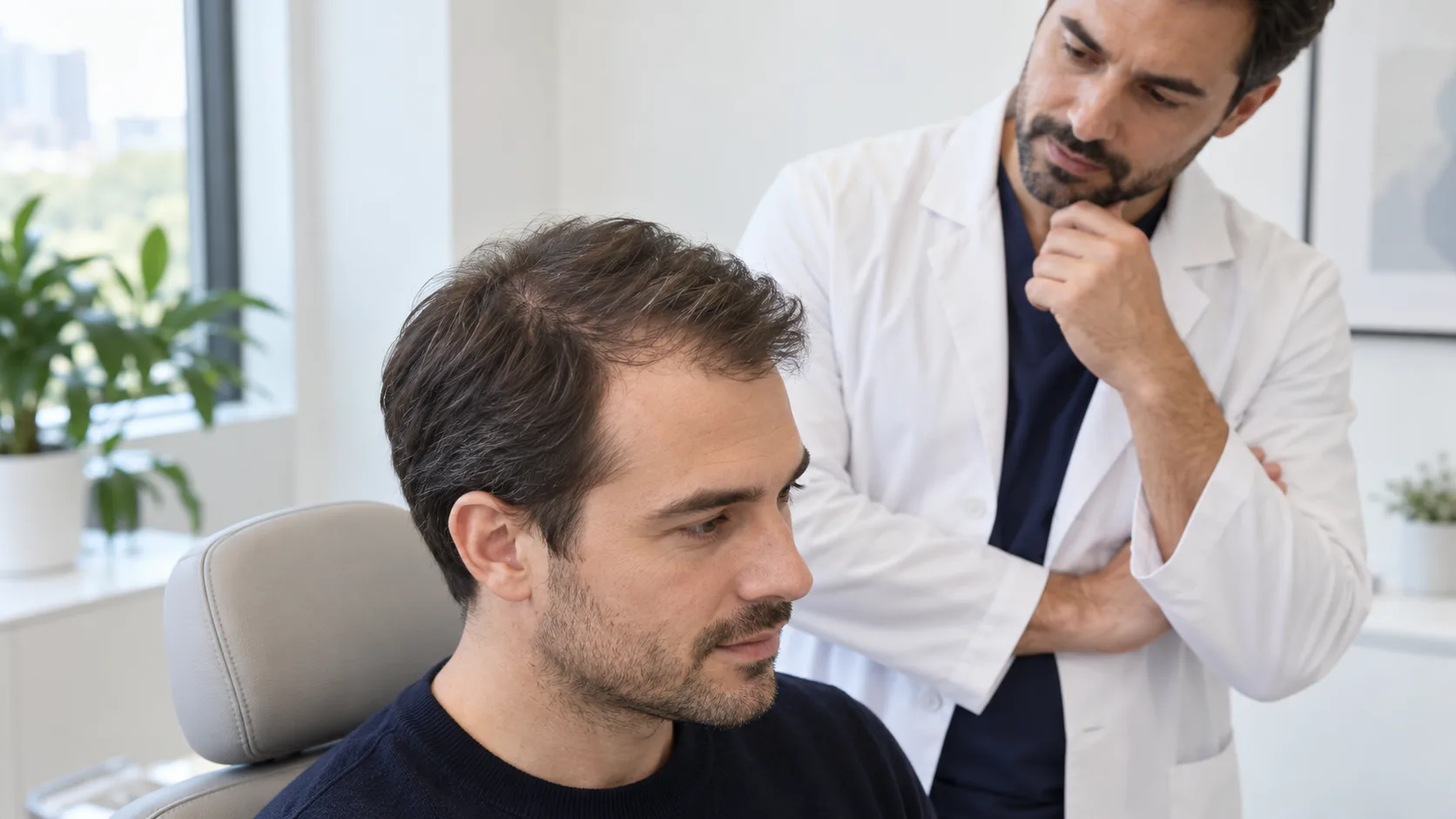
What Is the Role of Hair Direction and Angle in Hair Transplant?
Hair transplantation involves far more than counting grafts and measuring density. The angle at which each follicular unit exits the scalp and the direction in which each hair shaft points determine whether the final result looks natural or artificial. Even when every graft survives, incorrect angulation produces a result that remains visibly unnatural for years. This article explains how hair angle, hair direction, recipient-site creation, and implantation technique work together to create a transplant that blends seamlessly with native hair.
What Do Hair Direction and Hair Angle Mean in Hair Transplantation?
Hair angle measures how steeply a hair shaft emerges from the scalp surface. Hair direction describes the compass orientation of that emergence, whether the hair points forward, backward, inward, outward, or follows a radial spiral. These two variables operate independently. A surgeon can place a graft at the correct tilt but point it in the wrong lateral direction, and the result will still look artificial. Kim et al. (2018) established that four major concepts govern implanted hair growth: angle, direction, curl, and flow. Among these, angle and direction form the foundational parameters that every surgeon must control during recipient-site creation.
How Does Hair Angle Differ From Hair Direction?
Hair angle is a vertical measurement. It quantifies the tilt of the hair shaft relative to the scalp plane. A 15-degree angle means the hair lies nearly flat against the skin. Hair direction is a horizontal measurement. It specifies which compass point the hair faces across the scalp surface. Forward-oriented hair points toward the forehead. Backward-oriented hair points toward the occiput. Both parameters must be planned simultaneously during recipient-site creation because changing one without adjusting the other produces a directional mismatch that the eye detects immediately.
What Determines the Final Orientation of a Transplanted Hair?
Four factors control the final orientation of each transplanted hair. First, the surgeon sets the recipient-site angle and orientation during incision creation. Second, the graft placement technique determines how precisely the follicular unit sits within that channel. Third, natural scalp anatomy, including skin thickness, curvature, and underlying bone structure, influences how the hair emerges. Fourth, healing-related changes after implantation can slightly elevate the angle as scar tissue matures. Bernstein and Rassman (2002) noted that the body typically elevates the implanted angle slightly during healing, so surgeons must plan incisions slightly more acute than the target angle.
Why Are Hair Direction and Angle Important for a Natural Hair Transplant?
Correct hair direction and angle create a natural visual flow across the scalp. They help transplanted hair lie flat rather than stand upright. They improve the appearance of density through the shingling effect, where overlapping hair shafts block light from reaching the scalp surface. They blend transplanted grafts with native hair so observers cannot distinguish between the two populations. They also support natural styling and parting, allowing patients to comb, brush, and arrange their hair without revealing the transplant.
How Does Natural Hair Direction Vary Across the Scalp?
The scalp does not follow one universal growth pattern. Individual differences in natural hair patterns are substantial. Some patients show a single clockwise whorl. Others display a counterclockwise spiral. A minority possess double whorls. These variations make preoperative examination of existing hair essential before any recipient sites are created.
What Direction Does Hair Normally Follow at the Frontal Hairline?
Hair at the frontal hairline grows forward and emerges at a very low angle, typically 15 to 20 degrees from the scalp surface. This acute positioning creates a soft, natural transition from the forehead into denser scalp zones. The leading edge of the hairline requires exclusively single-hair follicular units placed in an irregular, non-symmetrical pattern. A straight line or uniform row signals an artificial result immediately.
How Does Hair Direction Change Around the Temples?
Temple hair follows a backward and downward sweep. Exit angles here drop to 5 to 10 degrees, the flattest angle anywhere on the scalp. Hairs point toward the ears and jaw rather than forward. Reproducing the natural temporal contour is technically demanding because even minor upward deviations create a visible "spike" effect. The frontotemporal angle zone, commonly called the "widow's peak" corner, serves as a transition between frontal and temporal patterns at 10 to 15 degrees.
What Is the Typical Growth Pattern in the Mid-Scalp?
Mid-scalp hair flows predominantly forward. Exit angles increase progressively from the frontal zone, reaching 30 to 45 degrees. This zone serves as a transition between the acute-angle hairline and the complex radial pattern of the crown. Multi-hair grafts, two to three hair follicular units, dominate this region because the angle is more forgiving and the goal is density rather than hairline softness.
How Does Hair Direction Form at the Crown?
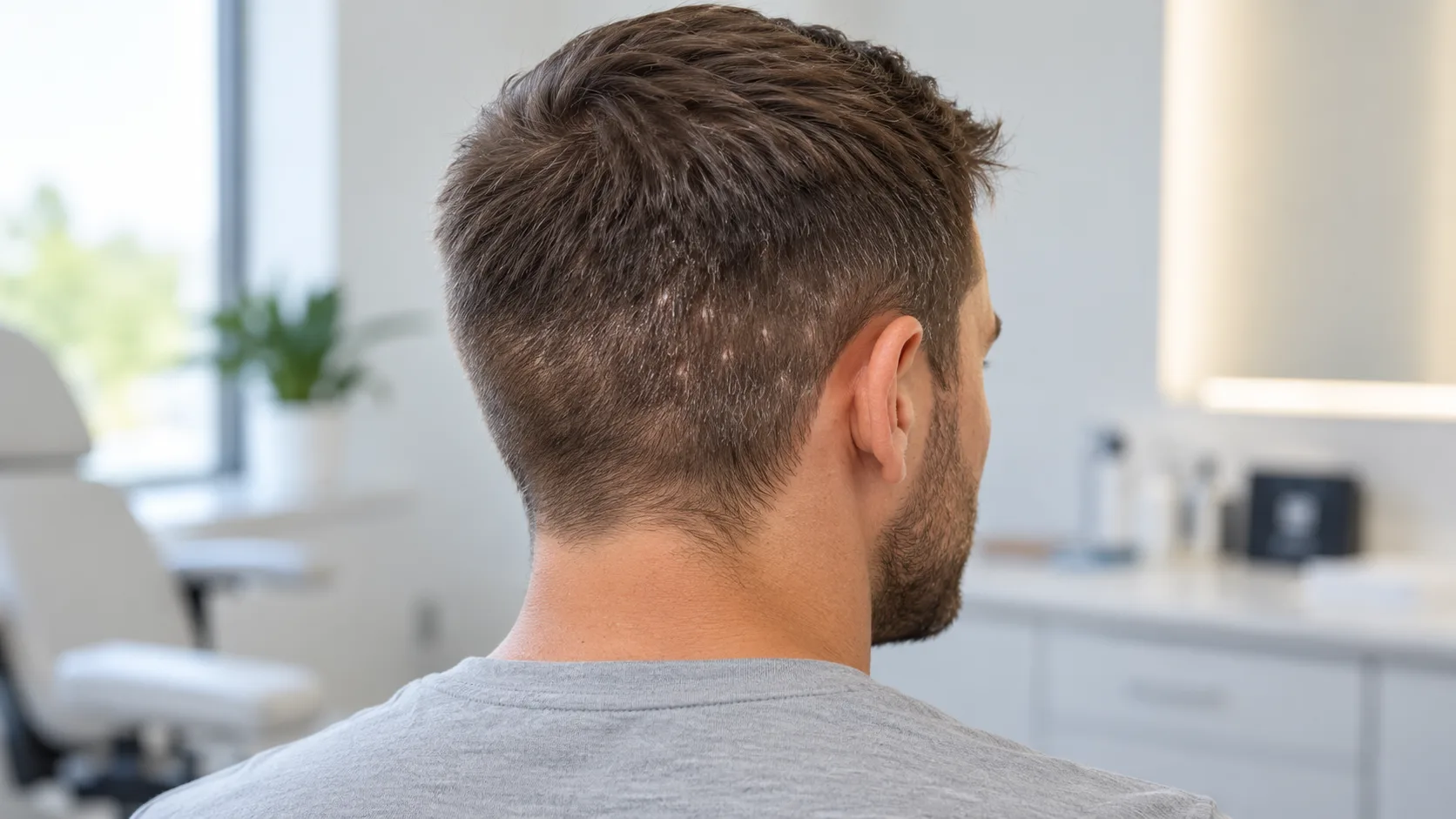
Crown hair distributes radially around a central whorl point. The whorl is a spiral in which hair direction changes 360 degrees. The whorl is usually located off-center to the right side, though variations exist. Hair does not stand straight up in the center; instead, it lies flat along the curved contour of the crown. True (2011) emphasized that reproducing the correct spiral angle while creating appropriate flatness is more technically demanding than hairline reconstruction. Crown grafts take 15 to 24 months to fully mature, meaning errors in this zone take longer to evaluate.
What Happens to Hair Direction Along the Lateral Scalp?
The lateral scalp contains the lateral hump and lateral crease, areas where orientation shifts toward the ears. Directional transitions in these exposed areas and parting zones must be smooth. Abrupt changes in orientation between the mid-scalp and lateral scalp create visible separation lines that reveal the transplant.
How Is the Correct Hair Angle Determined Before a Hair Transplant?
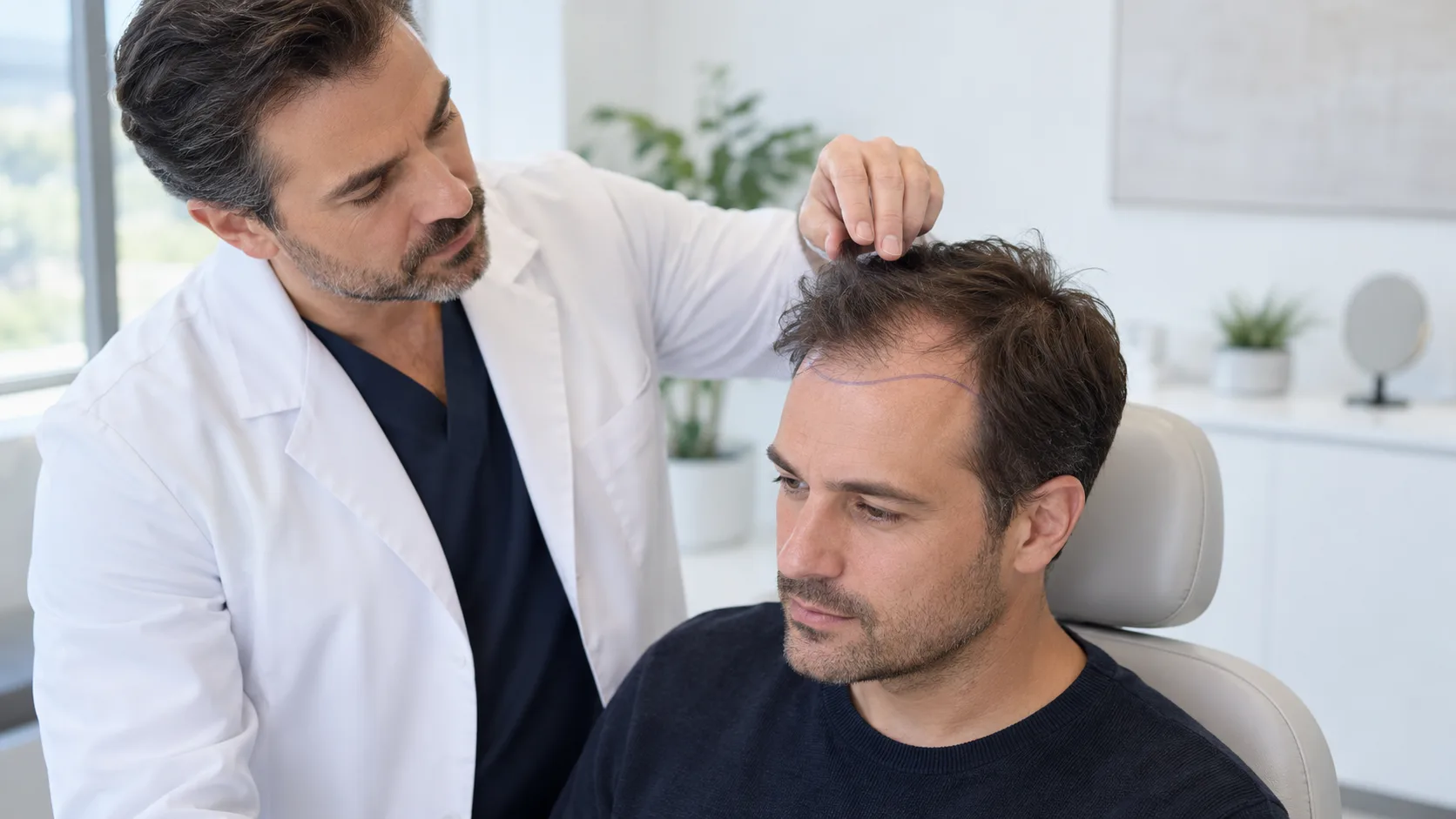
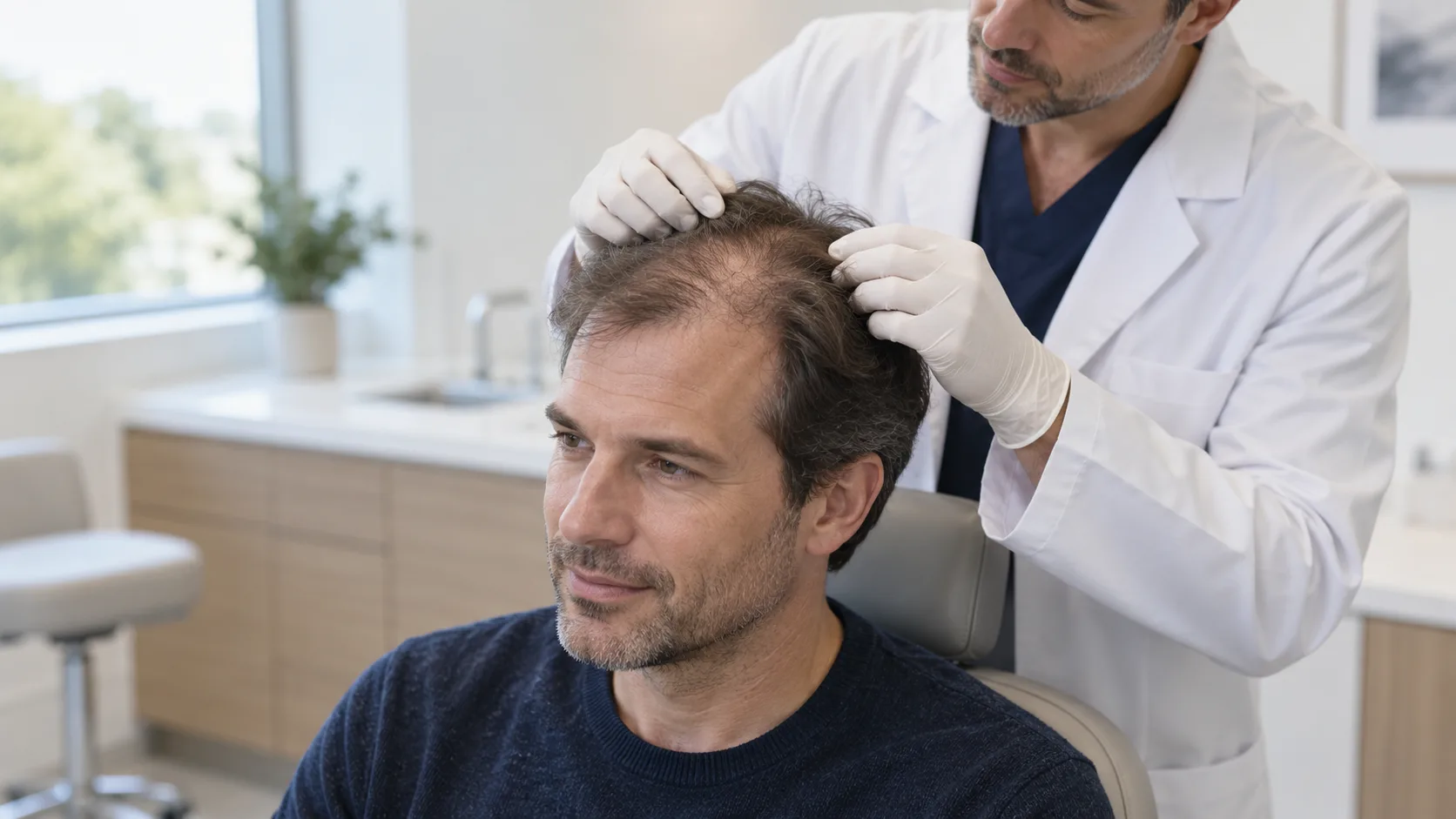
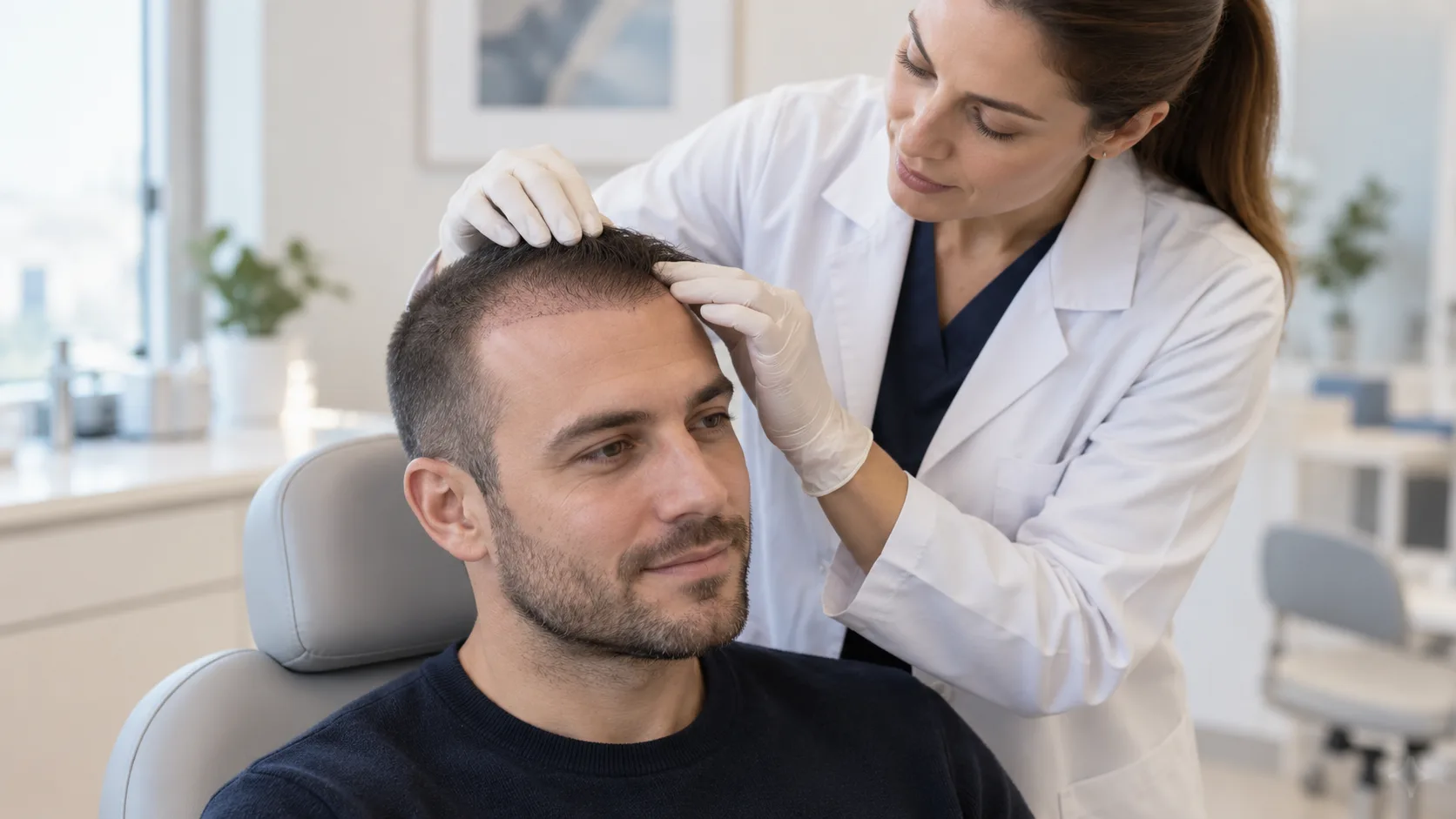
Surgeons determine correct hair angle through systematic preoperative mapping. They assess the patient's existing hair, map natural growth patterns, identify changes between scalp zones, consider hairline design and future hair loss, and plan recipient sites according to individual anatomy. This process is not guesswork; it is a zone-specific engineering discipline.
Why Should Surgeons Analyze Native Hair Before Creating Recipient Sites?
Native growth direction serves as the surgical reference. Differences between patients are significant. Matching transplanted and existing follicles requires loupe magnification to observe individual growth patterns. Existing miniaturized hairs provide anatomical guides for recipient site direction. Sites placed at inappropriate angles risk transecting native follicles and destroying hair that the patient still possesses.
How Does Hair Characteristics Affect Implantation Angle?
Straight hair, wavy hair, and curly hair each present distinct challenges. Curly hair does not grow with the angle and direction of the implanted follicle; instead, it grows according to its own curl after the shaft exits the skin. Kim et al. (2018) demonstrated that even when angle, direction, curl, and flow match preexisting adjacent hairs exactly, transplanted hair can show a different growth direction because shaft thickness and gravity interact differently with thick donor hair than with thin native hair. Fine hair requires different graft selection than coarse hair. Single-hair grafts produce softer results than multi-hair grafts at the hairline.
How Does Recipient-Site Creation Control Hair Direction?
Recipient-site creation is the single most influential step in determining final hair direction. The relationship between recipient channels and graft orientation is direct: the incision angle and orientation dictate how the hair will emerge. Maintaining consistent orientation across adjacent grafts prevents the "checkerboard" appearance that occurs when neighboring hairs point in conflicting directions.
How Do Blade Size and Incision Geometry Influence Graft Placement?
Recipient-site dimensions must match graft caliber. Blade geometry, whether coronal (lateral) or sagittal (vertical), affects both angle precision and vascular damage. Research published in the Journal of Cutaneous and Aesthetic Surgery demonstrated that coronal slits produce less vascular damage than sagittal slits, particularly at acute angles. Precision is most critical for low-angle implantation because shallow channels risk popping out while deep channels risk vascular injury.
How Does an Implanter Pen Affect Graft Orientation?
An implanter pen provides controlled graft insertion. The orientation of the graft within the recipient site depends on how the surgeon positions the instrument. The Choi implanter pen allows simultaneous control of angle, depth, and direction in a single motion. However, the instrument does not guarantee correct orientation; operator skill remains central to the final result.
How Should Hair Direction and Angle Be Planned in Different Scalp Zones?
Zone-specific planning is essential because each scalp region requires a distinct configuration of angle, direction, and density. The following table summarizes the zone-based approach:
Scalp Region | Main Directional Pattern | Angle Considerations | Main Aesthetic Goal |
Frontal hairline | Forward | 15–20 degrees, very low/acute | Soft, natural hairline |
Frontal zone | Forward | Low, progressive increase | Seamless transition |
Temples | Backward/downward | 5–10 degrees, very low | Natural temporal sweep |
Mid-scalp | Mainly forward | 30–45 degrees, low to moderate | Blend with native hair |
Lateral scalp | Forward/downward transition | Zone-dependent | Preserve lateral flow |
Vertex transition | Radial transition | Variable | Connect mid-scalp and crown |
Crown | Radial/spiral | Higher relative angle, 45–60 degrees | Recreate natural whorl |
This zone-based approach reflects the principle that different regions require different directional and angular strategies rather than one universal implantation angle.
What Happens When Hair Is Implanted at the Wrong Angle?
Incorrect angulation produces multiple visible problems. Hair appears too upright or points sideways against the native flow. A visible separation forms between transplanted and native hair. Patients experience difficulty styling the transplanted area. The result acquires an artificial or "pluggy" appearance. Visual density drops despite adequate graft survival because upright hairs create gaps that allow light to reach the scalp.
Why Can Incorrect Angulation Make a Hair Transplant Look Unnatural?
Directional mismatch is the primary culprit. Excessive verticality makes hair stand like bristles. Abrupt transitions between scalp zones destroy the smooth visual flow that characterizes natural hair. Incorrect graft distribution, such as placing multi-hair grafts at the leading edge, compounds the problem. Inconsistent orientation between neighboring grafts creates a chaotic pattern that the eye immediately recognizes as artificial.
What Causes Incorrect Hair Direction After Hair Transplantation?
Six distinct mechanisms cause incorrect hair direction. First, incorrect recipient-site creation sets the wrong angle from the start. Second, inaccurate graft insertion fails to align the follicle with the channel orientation. Third, insufficient understanding of natural growth patterns leads surgeons to apply uniform angles across all zones. Fourth, inconsistent implantation technique produces variable results within the same zone. Fifth, graft characteristics, such as follicle curvature, can cause the hair to emerge differently than intended. Sixth, healing and scar-tissue effects, combined with early postoperative pressure or trauma, can alter the final angle.
Can Hair Direction Change During the Healing and Growth Process?
Early postoperative appearance differs from final orientation. Transplanted hairs often show temporary stiffness and unusual growth during the first three to six months. As hairs mature, they settle into their final pattern. Healing can slightly elevate the final angle. Early irregularity does not automatically indicate a failed transplant; it often reflects the normal maturation timeline.
How Can You Tell if Transplanted Hair Has a Genuine Angulation Problem?
Six signs indicate a structural angulation problem rather than temporary maturation irregularity. First, hair consistently grows perpendicular to the scalp after 12 months. Second, a persistent directional mismatch remains visible. Third, hair refuses to blend with surrounding strands despite adequate length. Fourth, abnormal direction persists after full maturation. Fifth, visible problems concentrate around the hairline or temples. Sixth, styling difficulty continues despite sufficient hair length.
Can Hair Direction Be Corrected After a Hair Transplant?
Correction is possible but requires individual evaluation. The surgeon must assess the matured result, distinguish mild styling problems from structural mis-angulation, and determine whether revision surgery is appropriate. Correction should not be attempted before 12 months because early irregularities often resolve spontaneously.
How Can Mild Direction Problems Be Managed Without Surgery?
Patients can use hair length and grooming to mask mild issues. Blow-drying and brushing techniques can redirect hair temporarily. Styling products add control. However, these methods have clear limitations: grooming cannot physically reposition an incorrectly implanted follicle. The follicle orientation is fixed in the dermis.
How Does Graft Re-Angling Correct Incorrect Hair Direction?
Graft re-angling involves selective extraction of problematic grafts, creation of correctly oriented recipient sites, and re-implantation of viable grafts. In some cases, new donor grafts may be required if the original grafts cannot be salvaged. This revision work is more complex than the original procedure.
When Might Camouflage Transplantation Be Considered?
Camouflage transplantation addresses mild or localized directional problems. The surgeon places correctly oriented grafts strategically around problematic areas to blend the result rather than removing every affected graft. This approach preserves donor hair while improving appearance.
When Are Laser or Electrology-Based Options Considered?
Laser or electrology-based options apply to isolated problematic grafts where extraction or re-implantation is not practical. These approaches require specialist assessment because they permanently remove hair and must be applied with precision.
How Can Surgeons Prevent Incorrect Hair Direction During a Hair Transplant?
Prevention requires a systematic approach. Surgeons must perform detailed preoperative mapping of native hair. They must create zone-specific recipient-site plans. They must match graft orientation to native hair, select appropriate graft types, create precise incisions, control implantation, maintain consistent directional flow, and account for hair texture and follicle curvature. Each step reinforces the others.
Does FUE or DHI Determine Hair Direction?
Neither FUE nor DHI guarantees a particular direction. The technique itself does not determine angulation; the surgeon's execution does. Recipient-site orientation remains the decisive factor. Implantation instruments can support precision, but operator skill remains central to the final orientation. The misconception that a named technique automatically produces natural angulation is dangerous.
What Is the Relationship Between Hair Angle, Direction, and Visual Density?
Low angles increase visual coverage through the shingling effect. Directional consistency creates the perception of fullness. Incorrect splaying exposes the scalp by allowing light to pass between upright shafts. Graft numbers alone do not determine the visual result; angle and direction are equally important. The same number of grafts placed at acute angles can appear significantly denser than grafts placed at steep angles.
How Should Hair Direction Be Considered When Designing the Hairline?
Natural hairlines show irregularity rather than artificial uniformity. Forward flow at the frontal region must be preserved. The transition from single-hair grafts to denser graft placement must be gradual. An excessively straight or perpendicular appearance signals an artificial result. The hairline design must also remain appropriate as native hair continues to change over time.
What Should Patients Ask Before Choosing a Hair Transplant Surgeon?
Patients should ask eight specific questions. How will my native hair direction be mapped? How will the surgeon determine recipient-site angles? Who creates the recipient sites? Who inserts and orients the grafts? How are the temples and crown handled differently? How does the clinic account for hair texture and curl? How does the surgeon plan for future hair loss? Can the clinic show examples demonstrating natural directional flow?
What Does a Natural Hair Transplant Look Like From a Directional Perspective?
A natural transplant shows hair lying naturally against the scalp. Smooth transitions exist between scalp zones. Appropriate temporal movement follows the patient's anatomy. Direction is consistent but not artificially uniform. The crown whorl follows the patient's unique spiral pattern. Transplanted hair can be styled naturally without revealing the procedure.
Frequently Asked Questions About Hair Direction and Angle in Hair Transplant
Does the Angle of Implantation Determine How Transplanted Hair Grows?
Yes. The angle of the recipient site largely determines the hair direction. The body will alter the angle slightly as it heals, usually elevating it, but the initial incision sets the fundamental trajectory.
What Is the Ideal Angle for a Hair Transplant?
There is no single ideal angle. The frontal hairline requires 15 to 20 degrees. The temporal hairline requires 5 to 10 degrees. The mid-scalp requires 30 to 45 degrees. The crown requires 45 to 60 degrees following the natural whorl.
Should Transplanted Hair Be Placed Flat Against the Scalp?
At the hairline and temples, yes. These zones require the most acute angles. The mid-scalp and crown tolerate steeper angles because natural hair in those regions grows more upright.
Why Does Transplanted Hair Sometimes Grow Straight Up?
Straight-up growth usually results from recipient sites created at excessive angles or from grafts placed perpendicular to the scalp. Healing-related elevation can compound the problem.
Can Transplanted Hair Change Direction After It Grows?
The fundamental direction does not change after maturation. Early postoperative irregularity is common but temporary. The final orientation stabilizes by 12 months.
Can a Surgeon Change the Direction of Transplanted Hair?
A surgeon can change direction only through revision procedures such as graft re-angling or camouflage transplantation. Non-surgical methods cannot alter follicle orientation.
Is Incorrect Hair Direction Permanent?
Yes. Once a follicle is implanted and healing is complete, its orientation is fixed. Correction requires surgical intervention.
Can DHI Improve Control Over Hair Direction?
DHI using implanter pens can improve control during insertion, but it does not guarantee correct direction. The surgeon's skill in planning and executing recipient-site orientation remains the decisive factor.
Does Curly Hair Require a Different Implantation Approach?
Yes. Curly hair grows according to its own curl after the shaft exits the skin. Surgeons must account for curl pattern, shaft thickness, and gravity interaction when planning angle and direction.
Why Is Crown Hair Direction Different From Hairline Direction?
Crown hair follows a radial spiral pattern around a central whorl. Hairline hair flows forward at acute angles. These fundamentally different patterns reflect distinct anatomical functions and evolutionary structures.
Key Takeaways About Hair Direction and Angle in Hair Transplant
Angle and direction are separate but interconnected elements. Each scalp zone requires individualized planning. Recipient-site orientation plays a major role in final hair direction. Natural flow matters as much as graft survival and density. Early irregularities should be distinguished from mature mis-angulation. Established directional problems can sometimes be corrected through revision procedures.
References
Bernstein, Robert M., and William R. Rassman. "Follicular Unit Extraction: Minimally Invasive Surgery for Hair Transplantation." Dermatologic Surgery, vol. 28, no. 8, 2002, pp. 720-727.
Kasai, Yuki, et al. "Recipient Site Creation for Hair Transplantation: A Prospective Half-Side Comparison Study of Hole Versus Slit." JPRAS Open, vol. 37, 2023, pp. 52-54.
Kim, Kwang Seog, et al. "A Novel Concept for Determining the Direction of Implanted Hair in Hairline Correction Surgery in East Asian Women." Archives of Plastic Surgery, vol. 45, no. 3, 2018, pp. 223-229. PubMed Central, https://pmc.ncbi.nlm.nih.gov/articles/PMC5968325/.
NCBI StatPearls. "Hair Transplantation." StatPearls, National Center for Biotechnology Information, 2 Aug. 2025, https://www.ncbi.nlm.nih.gov/books/NBK547740/.
"Recipient Area." Journal of Cutaneous and Aesthetic Surgery, vol. 12, no. 1, 2019, pp. 16-23. PubMed Central, https://pmc.ncbi.nlm.nih.gov/articles/PMC6371721/.
True, Robert H. "Recreating the Crown Whorl." Hair Transplant Forum International, vol. 11, no. 3, 2001, pp. 97-99.