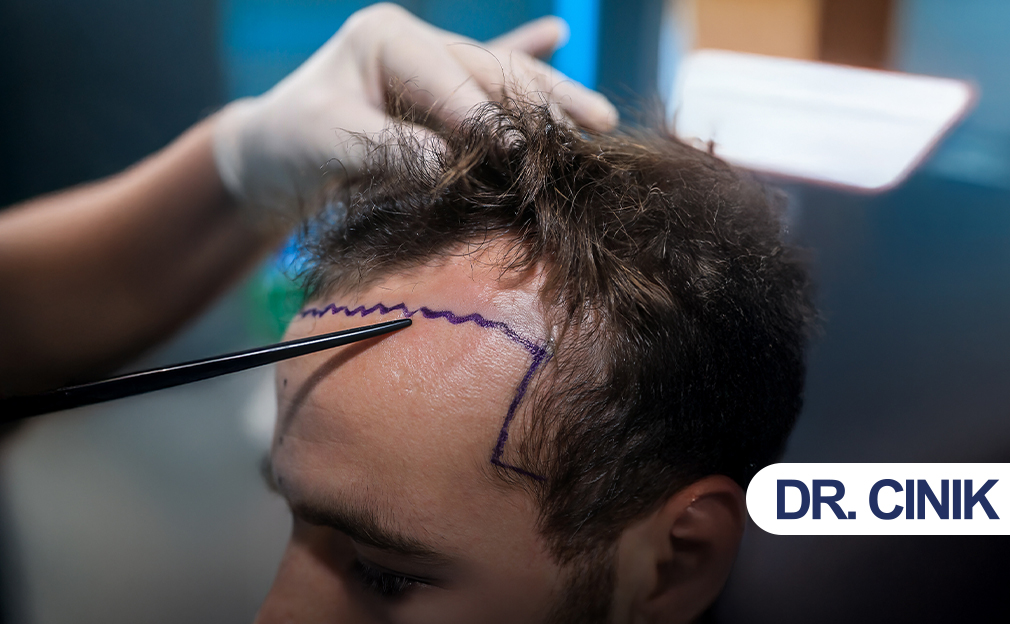
Irregular and zigzag hairline design has become a cornerstone of modern hair restoration because it produces more natural, realistic results than traditional straight hairlines. Unlike straight lines—which rarely exist in nature and often reveal surgical intervention—zigzag and irregular patterns mimic the natural variability of the human hairline, softening transitions and enhancing facial harmony. Importantly, there is no single “perfect” zigzag pattern; effective hairline design depends on individual factors such as facial structure, age, hair characteristics, and personal aesthetics. Successful outcomes require precise customization, artistic judgment, and surgical expertise.
1. Introduction
Hair is a critical factor in individual appearance, with restoration of lost hair being one of the most crucial parameters for overall aesthetic appearance. Apart from hair density and direction, configuration of the frontal hairline plays a key role in establishing a natural hair appearance. Preservation of their original hairline configuration is generally desirable in patients with a receding hairline, but changes to hairline configuration may be warranted owing to historical hair treatments, cultural influences, or other factors. Both irregular vs straight hairline may be considered suitable as a design philosophy for hair restoration. However, the irregular and zigzag pattern, which incorporates wavy, lazy-S, and zigzag formations, has gained popularity in contemporary hair restoration. The straight hairline design is more often associated with a conspicuous hair transplant hairline design appearance (Hyun Park, 2016).
The configuration of a hairline establishes a major portion of overall facial harmony and the first visual analytical cue upon frontal view of a client. The hairline shape is a significant component of the recognized pattern feature of the hairline structure. In consideration of individual hair restoration, the hairline configuration should not only be undertaken based on low, moderate, or high hairline placement, but also design in the haircut scheme for provision of personal individuality and formation of facial balance. The design guides of hairline establishment which considers more detail of character, personality of individual are now introduced.
2. How did Zigzag Hairlines Rise
Quick Answer: Zigzag hairlines rose in popularity because straight hairlines look artificial and unnatural. By introducing controlled irregularity, zigzag designs better mimic natural hairline variation, allowing surgeons to create softer, more realistic, and personalized results.
With the rising popularity of zigzag hairline designs, many hair- and beard-restoration practices are modifying their straight designs into more irregular, natural-looking patterns. A straight hairline (line 1) connects two reference points (points A—midpoint of the left eyebrow and B—midpoint of the right eyebrow) with a straight line (Hyun Park, 2016). Zigzag hairlines (line 2), created by connecting those same points with a wave pattern, are one way to create a hairline that looks more natural when compared with straight hairlines. Even though most hairlines are not zigzag by nature, the potential irregularity of hairlines makes zigzag a good option for achieving an irregular look.
Straight hairlines look artificial because they do not exist in nature. The concept of irregular hairline design has become popular because, by eliminating what cannot be done straight, it facilitates the freedom of irregular design. However, irregular design requires similar amounts of creativity, and to help in advancing the development of a truly irregular hairline, the idea of zigzag hairline design, which runs straight without being straight, has been invented. Zigzag lines are one of the irregular forms of design that exist in the world. They run straight without being straight. The line can be designed to look irregular, and when combined with other factors, a completely unique, natural hairline design is possible.
3. Why Straight Hairlines Look Artificial
Quick Answer: Straight hairlines look artificial because they do not exist naturally. Natural hairlines have subtle irregularities and variations, while straight lines create a uniform, obvious edge that makes hair restoration more noticeable.
Every person has daily exposure to images of other people that creates subconscious expectations of their own aesthetic. Such aesthetic expectations have maintained persistent popularity and, in many cases, perpetuated stigmata that embody historical prejudices. When some surgeons started observing that a straight hairline design was viewed as unnatural and a zigzag hairline design was appropriately associated with age, hair restoration surgery was propelled into eclipsing irregular designs.
Straight is not equally invalid at all ages; nonetheless, since straight hairlines look obvious at any age, they can readily be detected. Following the female sex, age ranks next; after age, degree of sculpturing comes into play; and, after degree of sculpturing, fine details. All these are factors external to the hairline shape itself. Straight hairlines elude the eye at much lesser age periods than zigzag hairlines do; and for an elderly person possessing a zigzag format to have a vision of straight was extra-ordinary indeed. Before the permanent loss of hair, irregularly-shaped hairlines of different configurations take place; on those in existence either directly after the full-loss stage or considerably longer after the same stage, irregular framing per se remains absent. Nevertheless zigzag along straight or around/ near-to in the upper frames is commonly found on both groups of patients. (Hyun Park, 2016)
4. How to Understand Irregular Hairline Design
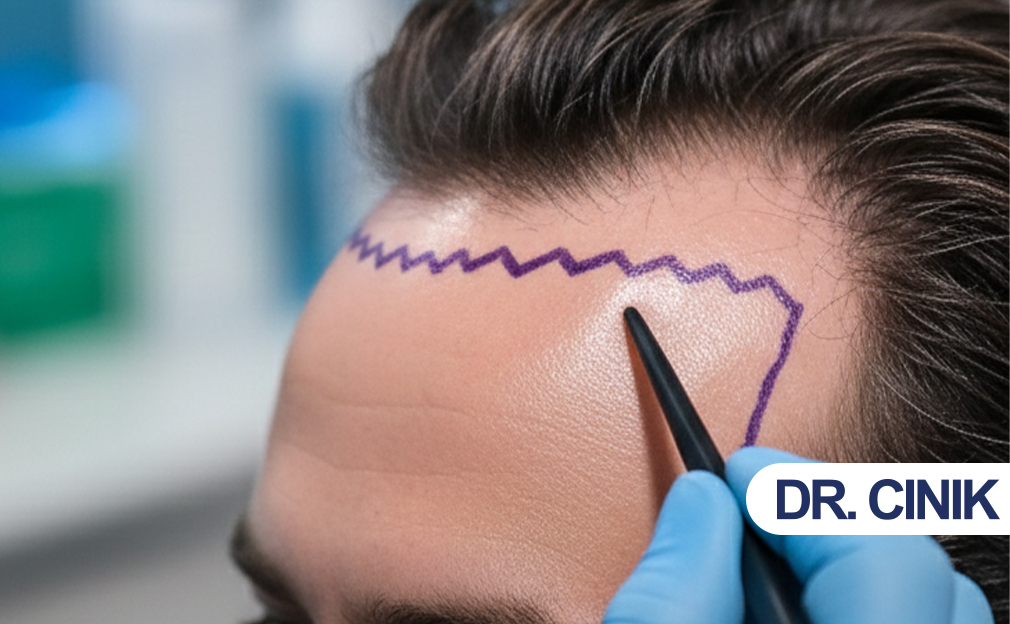
Quick Answer: Irregular hairline design is based on controlled, natural-looking variation rather than straight lines. It uses subtle changes in direction and density to mimic real hair growth, creating a softer, more realistic hairline tailored to each individual.
Proportions of the frontal hairline affect the aesthetic appearance of the face. An irregular pattern lowers the frontal hairline and softens the straightness of conventional hairlines (Hyun Park, 2016). Such hairlines appear more natural and change along with age and environmental influences.
5. How to Define the Zigzag Hairline Design
Quick Answer: A zigzag hairline design is an irregular hairline made of short, angled segments that subtly change direction. These controlled variations break up straight lines, helping the hairline blend naturally with the forehead and facial features.
The zigzag hairline represents one of the irregular patterns that can be adopted to enhance the natural appearance of hair restoration. Patients situated in areas with a heritage of such designs frequently explicitly request this pattern. The basic approach is to configure several sharp, angular deviances within the hairline, aiming to associate diverse straight segments, most commonly from 60 to 90 degrees, opening in variable vertical directions. General orientation, numeric angles, and gradient of the zigzag design must also be personalized to obtain a unique expression (Hyun Park, 2016).
Hairline design employs the concept of irregularity as a central component in numerous clinical setting, which distinguishes itself from traditional algorithms. Irregularity is deliberately integrated via angular zigzag-based, round-based, or compound irregularity-based designs. Recognizing the characteristic functional demands of zigzag-patterned irregular designs, it is essential to differentiate them from other design paradigms adhering to the principle of round-based irregularity.
6. How to Distinguish Irregular from Straight Hairlines
Quick Answer: Irregular hairlines show subtle changes in direction and height, while straight hairlines follow a single, uniform line. This natural variation allows irregular designs to blend smoothly with the forehead, whereas straight hairlines often appear artificial and noticeable.
An irregular hairline design is generally defined as a shape that has at least two changes in direction without reverting back to the original direction. It is regarded as a design that distinguishes itself from the straight-across design and provides a natural transition from the scalp to the forehead. Regardless of the specifics, the zigzag design is marketed as a distinct point that amplifies the irregularity of the design. Although these two designs differ widely, it is often overlooked that a different form and extent of irregularity permeate both.
Establishing a complex design is much more straightforward than differentiating a design with naturally flowing irregularity from a straight-across design or a design with simplistic jaggedness. To support horizontally short hair, an irregular design composed of balanced elevations and depressions frequently appears as a pattern that corresponds with curly or wavy hair. To illustrate the difference between an irregular pattern and a straight-across one, a design with only one elevation and depression has been chosen, as the lateral movement of an irregular pattern often leads one to mistake a straightforward design as irregular. (Hyun Park, 2016)
7. How to Create Natural Results with Zigzag Patterns
Quick Answer: Natural results with zigzag patterns are achieved by using small, uneven angles and spacing that mimic natural hair growth. When carefully customized to the face and hair type, these subtle irregularities create a soft, realistic hairline.
The zigzag pattern is increasingly recognized as a valuable component of irregular design in femtosecond and other hairline restoration surgery (Hyun Park, 2016). It is noteworthy that straight lines extending across the hairline might still be detectable, even as micropigmentation (MP) approaches the required degree of harmony. The zigzag pattern consists of alternating, irregularly spaced short segments. These segments intersect at acute angles with little to no curvature, and they lie almost entirely in the frontal/temporal area. Z-pattern, V-pattern, S-pattern, and similar variables can further enrich customization according to the patient’s age and sex.
8. Why does the Single Perfect Zigzag Nonexist?
Quick Answer: A single perfect zigzag does not exist because every face, hair type, and aging pattern is different. Natural hairlines require personalized variation, not a fixed or repeated zigzag template.
The designation of irregularly shaped hairlines has generated broad interest in hair restoration, particularly the zigzag type. Such patterns improve results by rendering hairlines less noticeable and can advance youthfulness, elegance, and attractiveness (Hyun Park, 2016). Zigzag hairlines may be disposed in any direction, yet all manifestations share characteristics that distinguish them from straight lines. A natural hairline comprises vertical, horizontal, and oblique lines throughout the hairline area. All straight hairlines exhibit a regular merging of curves and straight-line geometric patterns. Minimal geometric regularity conveys elegance, youth, and constitutes a critical aid in designing hairlines.
The search for the single best zigzag pattern seems to prove futile. A precisely defined regular zigzag shape common in the literature and some aesthetic guidelines, perhaps ostentatiously so, enhances neither the elegance nor the naturalness but rather defines a typical zigzag module of a design plan. The splitting of lumps—presumably to achieve smaller lumps—exhibits no perceptible improvement; at most, it may serve to modify the cutting shape as a favour addition.
Because irregular zigzag patterns confound mathematical description, they become yet closer to a composition of curves. Such patterns less readily succumb to aesthetic poetry and become devoid of additional geometrical support. A more elaborate description seeks points on the curves defined by a proportional or rule relation instead of welter coordinates. Additional invariant curve properties match a rectangular grid and mimic floral ornament. Well-controlled curves express such qualities. However, some curves—even when not adhering strictly to these rules—retain a surfeit of irregularity that precludes a summary description. It seems doubtful that a predetermined aesthetic-regulating rule can govern any zone of such a pattern.
Size constitutes another important component of natural hairline design. The establishment of a contour is deemed essential for the design of hairlines, and where to specify emphasis constitutes a important consideration. The pattern of hairline design seems extra large, fat, and luxuriant, and in certain regions even appears multiple times.
The nature of a contour curve continuously varies according to hairline specifications. A zone homogeneous over one period otherwise regular remains elaborate. A zigzag character still conveys a differentiation of coarse and fine in accordance with previous geometric order. The shape of both zigzag and curve qualify as nondeterminate; no generality, however, or universal consistency, can emerge from the description of generalised patterns.
9. What is the Role of Customization in Hairline Design?
Quick Answer: Customization ensures the hairline matches an individual’s facial structure, age, hair type, and aesthetic goals. Without personalization, even well-designed patterns can look unnatural or out of place.
Custom hairline design recognizes the unique variations in head shape, hair characteristics, facial features, and aesthetic preferences among individuals. Consequently, a hairline designed for one patient may not yield equally favorable results when applied to another. A single ideal hairline design does not exist (Hyun Park, 2016). Common guidelines help create a more natural appearance and are frequently shared on social media. Nevertheless, they should be interpreted flexibly and adapted to suit each patient individually.
10. How Surgeons Design a Natural Hairline
Quick Answer: Surgeons design a natural hairline by combining controlled irregularity, facial proportions, and hair growth direction. Each hairline is carefully customized to create a soft, realistic transition that blends naturally with the patient’s features.
In concert with the principles outlined in the previous section, hair restoration specialists develop irregular hairlines that enable return of frontal hair in geometric shapes that are natural, contemporary or both (Hyun Park et al., 2021). Surgeons achieve irregularity in the hairline design by combining four design categories: a curved line at the top of the hairline, a zigzag line at the forehead area, design on the temples and design at the lateral sides. Increasing irregularity in these four areas creates a hairline that appears less artificial and more patient-specific.
A common challenge for surgeons in defining irregularity lies in selecting a geometric shape that can accommodate unlimited hairline designs. The French curve provides one such shape, combining a straight line and a circular curve to represent irregularity in hairline design. The hair restoration specialists perform the irregularity evaluation with the French curve as a geometrical reference, consistently and precisely controlling and managing the irregularity in the hairline design.
To design hairlines with consistent irregularity, the authors recently coded a program in AutoCAD that automatically generates multiple hairline designs. Hair restoration specialists select the most suitable design that meets patient preferences and expectations after reviewing the program outputs. An additional option to further customize designs—namely, adjustments involving straight or curved portions at the centre of the hairline—ensures availability of natural irregular hairline designs while retaining request fulfilment.
11. What is the Place of Irregular Hairline Design in Hairline Restoration Surgery?
Quick Answer: Irregular hairline design plays a central role in modern hairline restoration by creating natural, undetectable results. By avoiding straight lines and using personalized irregular patterns, surgeons achieve hairlines that blend seamlessly with the face and age naturally over time.
The aesthetic ideal that straight, smooth lines are always preferable also applies to the hairline. Such hairlines therefore pose severe limitations, as they lack biorhythm, are never straight, and must be avoided if completely natural and optimal results are to be achieved (Hyun Park, 2016). A zigzag hairline is not a simple zigzag but a natural line that blends seamlessly with the existing hair, creating a clear distinction between the hair line and the forehead. With zigzag designs, even those with a naturally zigzag appearance are subject to individualised adjustments, unlike a simple straight line. Even with a natural zigzag, however, a straight line cannot be achieved; an irregular hairline remains visible. Nevertheless, the same appears different depending on whether the person has a naturally irregular line or not. Furthermore, bob-cut hair is a natural line, yet using straight lines produces an artificial look. No single, perfect zigzag exists; the design must be created in consideration of the original hairline, desired shape, and personal dignity. Customisation is therefore essential.
Hairlines display not only regular patterns that follow prescribed rules such as S, W and zigzag, but also irregular designs devoid of clear periodicity. Irregular designs are typically employed to address patients with irregular, straight hair lines or straight, patterned hair. Extensive, detailed diagrams exhibiting diverse zigzag and irregular designs have been compiled to avoid visual redundancy whenever straight-lines are entirely excluded from the reconstruction plan.
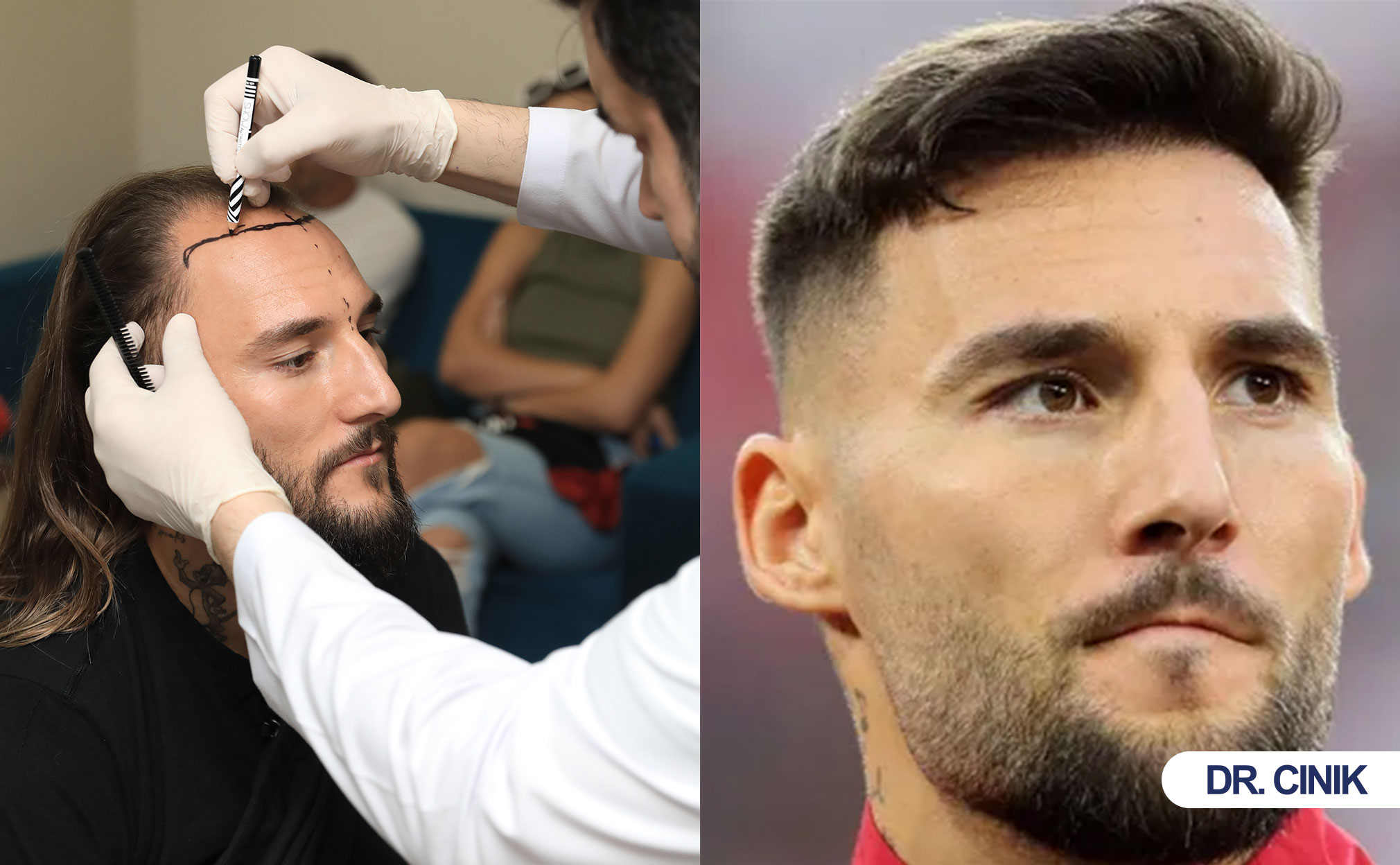
Zigzag hairlines, too, are essentially irregular lines combining short, non-periodic curves in a harmonious manner consistent with the overall facial shape and frontal proportions. Surgeons engaging in freehand drawing examine additional conditions and traits unique to each skull, including the relationship between the glabella, the mid-facial area, and the chin, when determining overall shape and outline before affixing points and establishing basic design.
12. Hairline Design Before and After: What are the Indicators of a Well-Designed Hairline?
Quick Answer: A well-designed hairline shows natural irregularity, proper height, and smooth connection to the temples. In before-and-after results, it should frame the face harmoniously without sharp lines or obvious surgical borders.
Natural hair transplant results: Well-designed hairlines exhibit certain characteristics that are readily recognizable in before-and-after images. First, the midpoint should approximately correspond to the lateral canthi. Second, patients desiring a gender-specific hairline should have it placed at an appropriate height—lower and more rounded for female and higher and more angular for male. Third, points reference for the hairline design must connect smoothly to the temporal points, with the proper balance of lateral extension to avoid outwardly unattractive ‘gummy’ appearance (Hyun Park, 2016).
13. What is the Value of Personalized Hairline Planning?
Quick Answer: Personalized hairline planning ensures each design is tailored to the patient’s facial structure, hair characteristics, and aesthetic goals. This customized approach avoids standardized patterns and delivers natural, balanced, and long-lasting results.
Before designing a zigzag hairline, it is necessary to understand the natural parameters determining the global shape and direction of a hairline. These parameters depend on the face and skull shape of the patient. Each morphological type of face determines specific features for a natural-looking hairline, and the classical longitudinal and transverse line method has been proposed to maintain specific proportions to determine the patterns of a natural hairline. Consequently, a zigzag hairline would only fall under the category of irregular hairline that should not be a patent style to be reproduced from one patient to another (C Shiell, 2008). Irrespective of the spatial configuration of the surface, a zigzag hairline and other irregular hairlines must remain physiologically natural, suitable, and pleasant to the face to avoid an ugly look. Thus, the concept of irregular hairline, including a zigzag pattern still requires careful patient-specific customization to generate this particular design (J. Rajput, 2021).
14. Conclusion
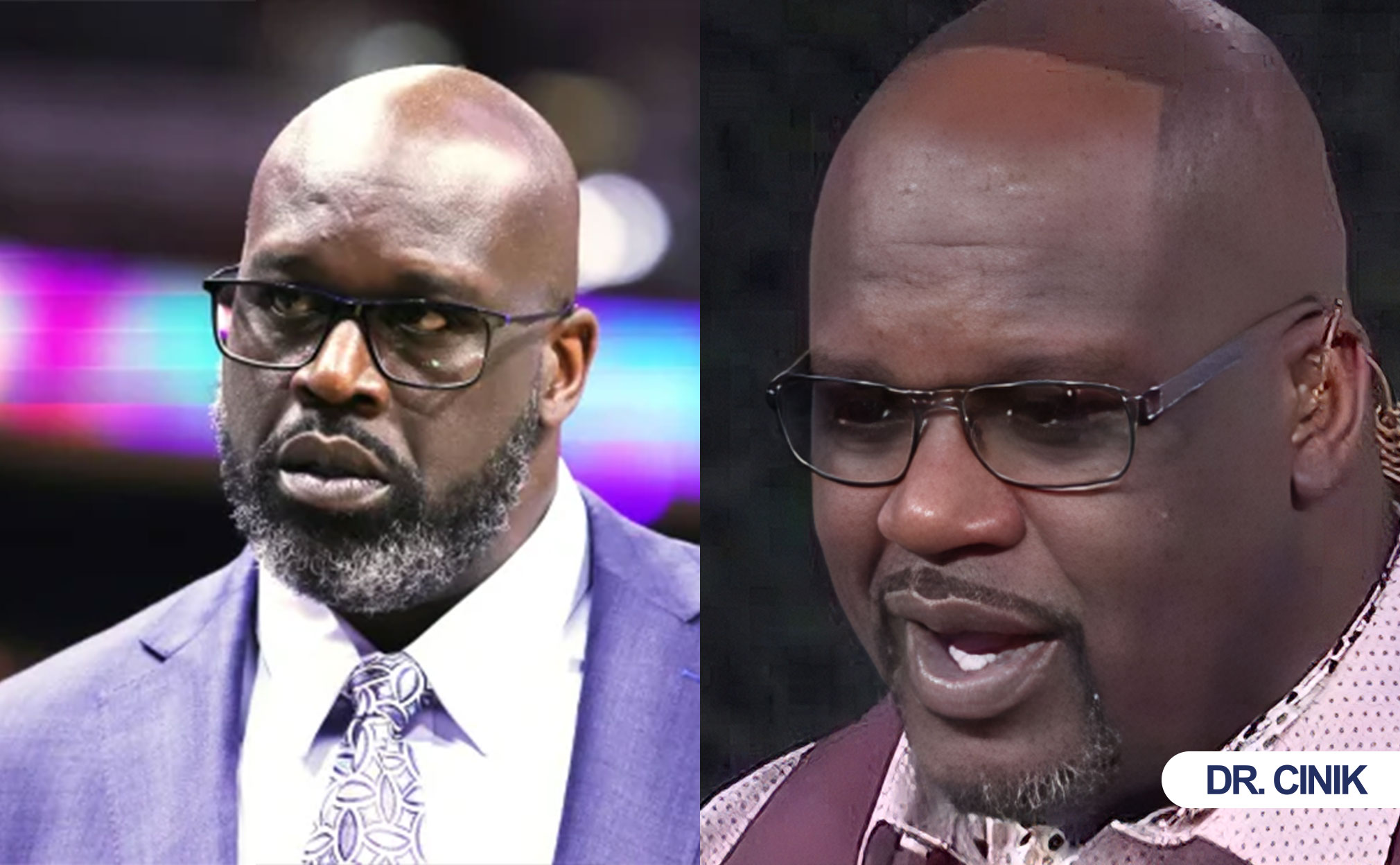
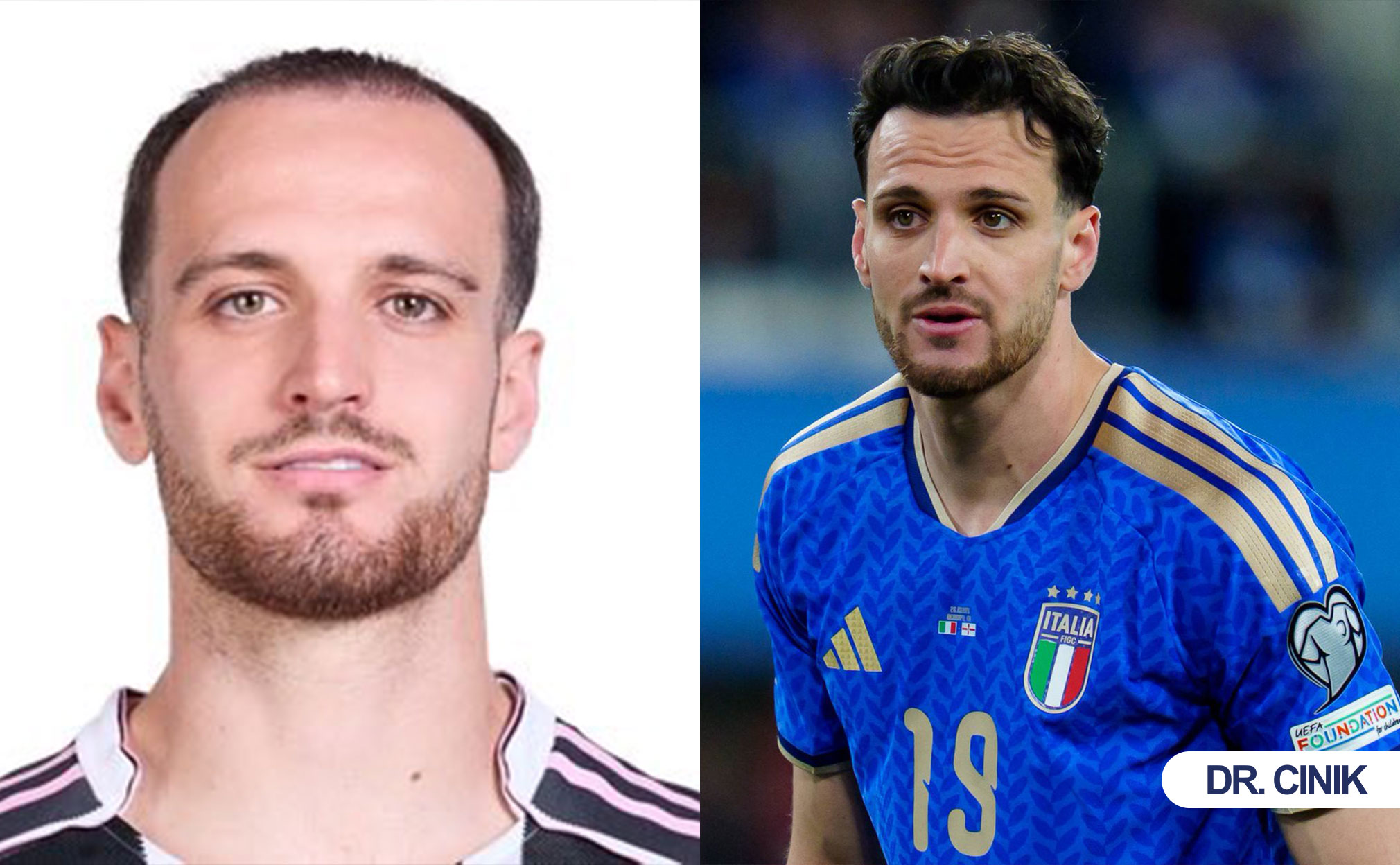
Dr. Cinik Clinic is now a known name in the hair restoration industry. The “before-and-after” images of many satisfied Dr. Cinik Clinic clients flooded social media platforms and web portals since a series of interviews and casual client experiences started to appear.
Dr. Cinik Clinic, critically acclaimed by well-known doctors and well-informed clients, specializes in natural hairline design and zigzag hairline design. Hair restoration is an inherently personalized treatment because the aesthetic result must meet the eye of each individual. Whether zigzag hairline design is the best option cannot be simply answered by pointing out the pros and cons. It entirely depends on the aesthetic value judged by the individual’s eye. Dr. Cinik Clinic further evaluates the necessity or unnecessity of zigzag hairline design in individual cases of hair restoration planning by collecting and analyzing large amounts of feedback and data. A significant number of hair restoration activities of clinic members—which include patients, relatives, friends, and acquaintances—has been documented.
Before-and-after photographs, showing extremely large hairlines designed with multiple zigzag units including prominent frontal peaks, demonstrate the natural and smooth aesthetic of well-planned hair restoration. In all instances, however, the most important consideration is that the zigzag pattern, even if utilized, must remain distinctively customized. Standardization is rigorously avoided throughout the entire treatment process.
References:
Hyun Park, J. “Novel Principles and Techniques to Create a Natural Design in Female Hairline Correction Surgery.” 2016. ncbi.nlm.nih.gov
Hyun Park, J., Rae Kim, N., and Manonukul, K. “Eyebrow Transplantation Using Long Hair Follicular Unit Excision Technique.” 2021. ncbi.nlm.nih.gov
C Shiell, R. “A Review of Modern Surgical Hair Restoration Techniques.” 2008. ncbi.nlm.nih.gov
- Rajput, R. “Hair TransplantHair transplantation is a surgical procedure that involves the extraction of hair follicles from a designated donor site, followed by... for Eyebrow Restoration.” 2021. ncbi.nlm.nih.gov