Losing 50–100 hairs per day is normal and part of the natural hair growth cycle, with temporary increases common during washing or brushing. Hair loss may be too much if shedding lasts longer than 6–8 weeks, hair feels thinner, scalp becomes more visible, patchy bald spots appear, or loss follows stress, illness, or hormonal changes these signs warrant professional evaluation.
1. What Is Considered Normal Daily Shedding?
Quick Answer: Normal daily shedding is losing about 50–100 hairs per day, which is part of the natural hair growth cycle. Shedding becomes a concern if it consistently exceeds this amount over weeks or is accompanied by visible thinning.
An average scalp has about 100,000 hairs. Hair follicles produce hairs in cycles: each follicle regrows hair for a few years, stops growing for a short time, and then sheds the hair. That means losing an average of 50 to 100 hairs per day is normal (Abril Martínez-Velasco et al., 2017). Shedding many hairs daily might feel alarming, but old hair makes way for new. Hairs go through similar cycles every few years, and when an entire scalp has strong, active follicles, daily loss will be proportional.
Determine how much hair is normal for each person. Observe the amount shed over a few days or weeks. Use clues like hairs found on clothing, floor, brushes, or in the shower drain. If these clues suggest over 100 hairs per day, that much loss may be more than average for that person.
1.1. What is Everyday Hair Loss?
Quick Answer: Everyday hair loss is the normal shedding of about 50–100 hairs per day as part of the natural hair growth cycle. It becomes a concern if shedding exceeds 700 hairs per week or increases consistently over time.
You shed 50 to 100 hairs a day. This number includes hairs dropped while sleeping and even those pulled out or pulled loose by a gentle tug. Shedding is a natural response that occurs when old hairs fall out to make way for new ones. Hair doesn’t stay on the head permanently; it regrows in a cycle lasting longer than decades.
All hair follicles go through three phases: anagen, catagen, and telogen. Shedding occurs during the telogen stage, located at the follicle’s base.
Focus on the number; count the hairs for a week. If it goes over 700, find a doctor. Follow-up counts are needed only every few weeks or months to check for peaks or consistent increases.
1.2. Why Numbers Matter?
Quick Answer: Knowing that 50–100 hairs per day is normal helps distinguish natural shedding from excessive loss. Tracking trends over weeks not daily fluctuations makes it easier to spot abnormal shedding and decide when further evaluation is needed.
50 to 100 fallen hairs each day is considered normal. Hair grows in cycles, and when the cycle ends, old hairs are released to make room for new ones, which is why normal shedding is usually not a problem. Whether your hair loss is really in this normal range can be assessed in the following ways.
With the right parameters, you can track your shedding and determine if it is excessive. Counting actual fallen hairs is impractical for most people, so consider these alternatives, which reflect unfolding hair loss. If shedding satisfies any of the following criteria, you may want to take a closer look:
Measuring against these thresholds will be more valuable over the long term than day-to-day variation because individual cycles are longer. If your haircut or styling method changes how much hair is lost, consider switching back before recording numbers. Instead of looking at total hairs lost, consider weighing fallen strands. Some people experience a spike in shedding when changes in water, brush, or hot air exposure prompt more hairs to be washed out at once. Base calculations on days when water is not applied, and use water only for rinsing. Keep a record of fallen hairs in a diary and chart averages week by week.
2. Why do You Lose More Hair in the Shower and While Brushing?
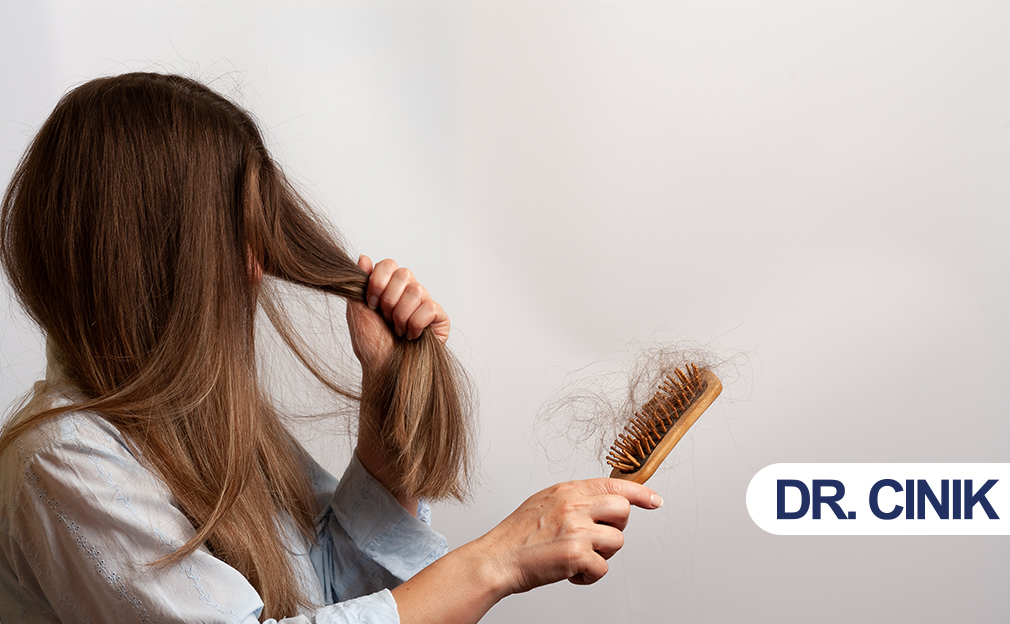
Quick Answer: You lose more hair in the shower and while brushing because water, shampooing, and brushing loosen hairs that were already in the shedding phase. This temporary increase is normal and not a concern as long as overall hair density stays the same.
The reason women lose more hairs when showering is mainly due to the hair being immersed in water for a long period, the gentle tugging of shampooing and conditioning, the myriad of hair cycles that our hair is always in, and the manner and frequency of brushing and combing the hair. With all things being equal (and the number of hair cycles balanced out!), normal excess shedding is not a cause for concern as it is just temporary due to those things mentioned above.
A common way to observe shedding in the hair is to take note of the number of hairs collected in the drain after a shower or in the hairbrush. While fixed periods of increased shedding (e.g. after a hair wash) are commonplace due to increased follicle miniaturization, temporary peaks of excess loss beyond this normal range can occur after recent stressors but should not be seen as unusual in those scenarios, particularly if hair density remains stable.
3. What are the Red Flags: Signs That Your Hair Loss Is NOT Normal?
Quick Answer: Red flags that hair loss is NOT normal include hair feeling thinner, increased scalp visibility, shedding lasting longer than 6–8 weeks, sudden heavy loss after stress or illness, patchy or circular bald spots, and scalp pain, burning, or itching. Any of these signs should be evaluated by a professional.
Hair loss that is NOT normal shares common characteristics. These include:
– Your hair feels thinner to the touch.
– You can see more of your scalp.
– Shedding lasts longer than 6-8 weeks.
– You experience higher-than-usual shedding following a trigger, such as illness, surgery, or major stress.
– You notice patchy or circular bald spots.
– The scalp feels painful, burning, or itchy.
Any of these signs warrant professional evaluation.
Not every woman experiences alopecia as a progressive thinning. Some lose hair in patches or round areas and may also see scalp irritation. A clinician can determine the underlying cause, if any, and recommend the appropriate treatment.
3.1. How hair feels thinner to the touch
Quick Answer: Hair feels thinner to the touch when strands become finer, more brittle, or waxy instead of soft and resilient. This texture change often appears before visible thinning and is an early warning sign of ongoing hair loss.
As hair loss becomes chronic, it will generally feel thinner to the touch. Hair has a distinctive sensory quality that is easy to recognize. Individual strands are soft and pliable without feeling rough or heavy. When a finger slides down attached, healthy hair, there is a subtle resistance. An increasing number of strands will feel distinctively different: finer, often more brittle, and even waxier.
Hair loss can be extensive yet undetectable because lost or shed fibers are so fine and soft they go unnoticed when brushing, styling, or even lathering. Over the months, the number of attributes distinctively wavy and blonde will gradually lessen on the scalp. Given enough time, those with a natural curl will notice that their hair appears straighter. People with dark, thick hair will gradually develop a more radical change in texture. At some point, someone will notice, a friend perhaps, that the hair feels thinner and less beautiful. Although this observation is never a pleasant one, it acts as an early warning that should not be ignored.
3.2. More scalp visibility
Normal shedding typically doesn’t lead to noticeable thinning. If your hair feels thinner to the touch, it’s a concern that warrants attention. Increased scalp visibility can be another warning sign. Although scalp exposure may be highlighted by the sun, thinning hair affects the sense of perception. Seeing hair fell on the floor but feeling that the hair on your head is thick is not how the hair growth cycle works. When hair is shed proportionally, it should typically feel the same, not look like it has patches missing. Suggestively by hair-product companies, “the scalp is the new hairline,” and it refers to women; an uninterrupted view of the scalp may be the new trend.
Sudden spikes can occur, especially in physically demanding situations: swimming; working out with a hat on; keeping your head inside a hat. These situations can add 20 to 30 strands after the first wash of the day, unlike the typical 50–100. The limit of what is regarded as “too much” is subjective; is pattern/reference-based and dependent on how shedding resolves over the next week/after being triggered. Having increased scalp visibility alone is not an alarm but rather just one element to consider. When it shifts from increasing visibility to actually feeling too thin, that becomes a warning.
3.3. What if shedding lasts longer than 6–8 weeks?
Quick Answer: If shedding lasts over 6–8 weeks or remains unusually heavy, it may signal abnormal hair loss and should be medically evaluated.
Thinning hair can be difficult to gauge. Most people have gotten used to the normal cycle of hair production and shedding, so it can feel alarming when hair feels thinner. However, it’s not just the feel of the hair that counts. Changes in scalp visibility tend to be more apparent than changes in hair thickness until the diameter becomes very thin. It’s also important to keep in mind that miniaturization—the process in which anagen hairs progressively become thinner and thinner on a hair-by-hair basis rather than through shedding and regrowth—is something that can begin much earlier. Nevertheless, these signs are often overlooked simply because they’re gradual in nature.
While shedding more than 100 hairs per day is considered excessive, shedding can also be considered excessive based on a particular pattern of hair loss. Spikes of increased shedding every now and then can be completely normal; however, if shedding is noticeably higher for about a week or two months, reaching much higher numbers (e.g. consistently shedding 150–200-plus hairs per day) than the usual “baseline amount” of “extra” hairs per day, it may be due to a known trigger (e.g. very stressful events or illnesses), medical condition, or ongoing build-up of more subtle factors (e.g. micronutrient deficiencies, chronic stress, medications). Though these triggers may not always be severe in nature, if many of them combine it may be enough for excessive shedding to occur.
3.4. What is excess shedding after a trigger?
Quick Answer: Excess shedding after a trigger is temporary hair loss after stress or illness; if it lasts over six months, seek medical advice.
Shedding excess hair after a significant life trigger should signal caution. Throughout life, we all experience stressors or health changes, and these events may lead to increased shedding. Examples include divorce, illness, major surgery, pregnancy, major weight loss, or a stressful event. While it is normal for hair shedding to accelerate following these events, if it lasts longer than six months, it is worthwhile to consult a clinician or dermatologist.
3.5. What are patchy or circular bald spots?
Quick Answer: Patchy or circular bald spots are usually a sign of alopecia areata, an autoimmune condition causing sudden localized hair loss.
Alopecia areata, which affects approximately 2% of the general population, is an autoimmune condition characterized by patchy and circular hair loss (A Gordon and Tosti, 2011). The absence of hair follicles in the affected areas leads to clearly defined white spots without inflammation, although these spots may not be immediately visible if the hair is highly pigmented. The diagnosis relies heavily on medical history, as a rapid onset of hair shedding, often following stressful events or illnesses, and a positive family history are key indicators. With early intervention, hair regrowth is possible within months, but only about 10% of the population can fully recover. The condition may remain limited to a few areas or progress to complete baldness.
3.6. What are scalp pain, burning, itching?
Quick Answer: Scalp pain, burning, or itching indicate scalp irritation or inflammation and can be linked to hair loss.
Pain, burning, and intense itching of the scalp indicate nerve irritation, most often due to friction or allergic reactions. These symptoms are associated with increased sensitivity (Starace et al., 2021) and often accompany certain types of alopecia (Brenaut et al., 2021). Other symptoms of scalp sensitivity include stinging, tingling, heat, or pinprick sensations.
4. What are Early Signs of Thinning You Should Not Ignore?
Quick Answer: Early signs of thinning include finer strands, miniaturization, a widening part or receding hairline, slower regrowth, and hair feeling thinner to the touch.
Loss of individual hairs is normal. The problem occurs when shedding increases or hair becomes thinner. Your hair might be thinning if you notice any of the following signs.
First, the diameter of your hair may be getting smaller. Second, you might be experiencing miniaturization, which is early pattern hair loss that many people don’t notice. Women, you may be widening your part. Men, you may be developing a receding hairline. Finally, hair may be regrowing slower than before. Any of these signs warrant attention, especially if they appear alongside increases in shedding.
Hair loss impacts your appearance, self-image, or friendships. It can feel terrible, especially in a society that markets beauty in hair. Be alert for other signals too. If hair feels thinner in your hand or skin shows through, those are obvious signs.
4.1. What is thinner hair diameter?
Quick Answer: Thinner hair diameter means hair strands become finer due to early miniaturization and is often one of the first signs of hair loss.
Among the earliest indicators of impending hair loss is a reduction in hair diameter. A decrease in hair diameter is an early sign of miniaturization, a common feature of patterns of hair loss (Ung Park et al., 2024). In men, diffuse thinning in the frontotemporal and midanterior scalp with preservation of the vertex is consistent with and often precedes receding of the hairline (Rojhirunsakool and Suchonwanit, 2017). For women, a reduction in hair diameter amplifies the surface area involved and results in a widening of an existing center part.
People are often well aware of these early signs of hair loss, but remain uncertain if their concerns are justified. Worrisome indications include a wider-than-normal center part, hair that feels noticeably thinner, and slower regrowth after a cut. After shedding triggers such as stress or illness, thinning hairs may appear at the temples and crown; when the next hair growth cycle starts, they taper and take longer to regrow than other hairs. Quite often, strands therefore re-growth, but hair diameter decreases and the original thickness is never regained, leading to an awkward gap.
4.2. What is miniaturization (early pattern hair loss)?
Quick Answer: Miniaturization is early pattern hair loss where follicles shrink and produce progressively thinner hairs.
Miniaturization refers to a general decrease in hair diameter. Hair follicles gradually shrink over time, producing increasingly thinner hairs. This process usually starts several years before more visible signs of hair loss become noticeable.
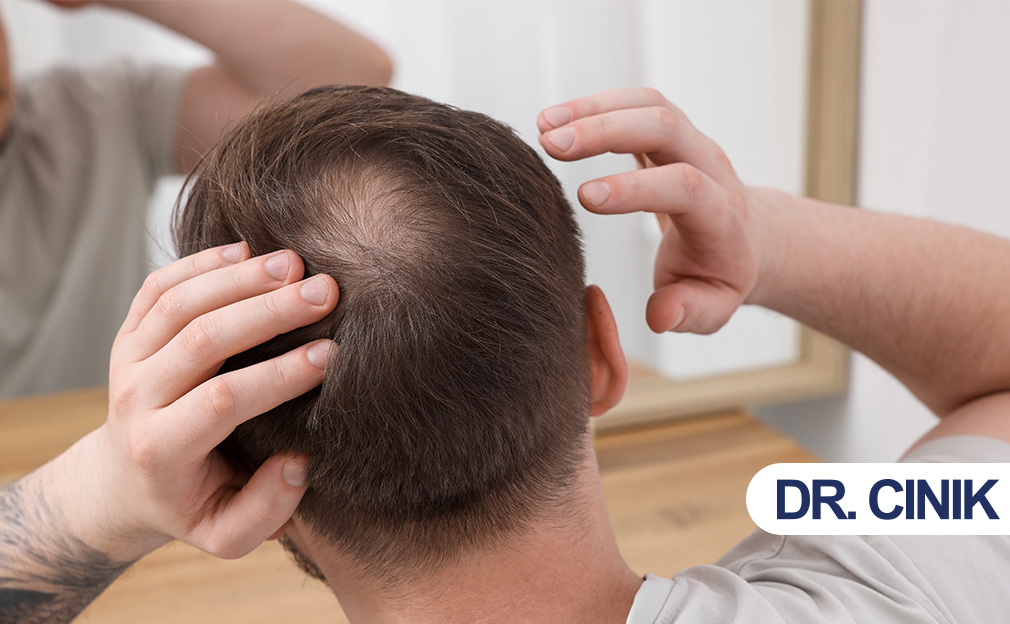
Miniaturization is an early form of pattern hair loss, affecting both men and women. In men, it often occurs first around the crown or at the temples. In women, it generally begins at the part line. Over the following years, affected areas continue to enlarge, and regeneration slows down. Eventually, the hair produced may become so fine that it’s difficult to see.
The miniaturization process is not well understood. In androgenic alopecia, enlargement of the dermal papilla occurs during catagen but not during anagen. Furthermore, the larger new follicles formed in association with the dermal papilla enlargement regress themselves, indicating that the signals driving hair-follicle regeneration are changing (C. Redmond et al., 2023). This shift in signaling may induce miniaturization, leading to progressively finer hairs, changes in morphology and cycling dynamics, and a final loss of the capacity to produce hair (Jabeen Bhat et al., 2020). Adipose substitution of the arrector pili muscle appears to occur in parallel with follicle miniaturization and may also contribute to altering cycling dynamics.
4.3. What is receding hairline (men)?
Quick Answer: A receding hairline in men is an early sign of male pattern hair loss, marked by hair thinning at the temples and front of the scalp, often forming an M-shape.
Balding is an issue that many men and women have to deal with sooner or later. The reason behind a receding hairline may go beyond genetics and actually signal something else. The frontal hairline is the anterior boundary of the hair-bearing scalp with a highly variable morphology and can therefore provide information on the extent of hair loss. Kashiyama et al. studied the frontal and temporal hairline patterns and found that among the 1,001 Japanese men investigated, the predominant types of frontal hairline morphology were linear and M-shaped, accounting for as much as 88.5%. However, a hairless region in the temporal area such as an inverted triangle or inverted round was observed in 82.8% of men; this area may be called the frontal area and temporal area of the male hairline morphology. In men, a receding hairline usually occurs as an initial sign of hair loss. According to the Hamilton–Norwood classification of male-pattern baldness, frontal hair loss belongs to the pattern group of Type II. Pechlivanis et al. illustrated that the receding hairline is associated with cardiovascular risk.
4.4. What is the widening part (women)?
Quick Answer: A widening part is an early sign of female pattern hair loss, caused by gradual thinning at the crown or central scalp.
Normal hair loss among women follows a certain pattern. The part can widen, especially at the crown, but it can also widen in other areas. Different hair loss conditions can result in the part widening in multiple areas.
A widening part is one of the first signs of female pattern hair loss. Genetically predisposed women may start to develop it in their 20s or early 30s. The thinning occurs very gradually and often goes unnoticed for quite some time. The widening is not always obvious in the front, where hair loss is often more conspicuously visible and thus looked for. The widening of the part takes place in the central, upper region of the scalp, often along the lines of a classic zig-zag parting, and can clearly show in the mirror.
Genetically predisposed women may also develop widening of the part due to less readily identifiable conditions. The characteristic pattern of hair loss can differ from woman to woman, and might not become apparent until considerable loss has already occurred. Conditions that modify the hair growth cycle after the initial phases of life can produce broader parts when they interfere with a pattern of growth cycling that has already become established (Fabbrocini et al., 2018).
4.5. What is slower regrowth?
Quick Answer: Slower regrowth means hair takes longer than usual to grow back after shedding, which can signal early or ongoing hair loss.
Younger, healthier hair regenerates quickly. If you’re noticing a longer delay before hair shafts regrow after they’ve shed, it could indicate an impending problem.
5. When Is Shedding Considered Too Much?

Quick Answer: Shedding is too much if it lasts over 6–8 weeks or comes with thinning, increased scalp visibility, patchy loss, or scalp discomfort.
Day-to-day fluctuations in hair shedding are perfectly normal. This cycle of hair loss can be impacted by factors such as stress, medications, and hormonal changes. Consequently, when excessive shedding occurs, it is vital to distinguish between genetic thinning and abnormal loss patterns. Normal daily loss usually amounts to about 50–100 hairs as aging strands are shed to create room for new growth (Abril Martínez-Velasco et al., 2017). Monitoring personal routines over weeks or even months provides the context needed to evaluate whether shedding is indeed above the normal range.
Nevertheless, certain tell-tale signs indicate that hair loss has crossed a threshold and warrants further investigation. After review, consider the following observations:
– Hair feels thinner to the touch.
– Scalp visibility has increased.
– Shedding persists beyond 6–8 weeks.
– Substantial loss occurs following an identifiable trigger.
– Patchy or circular bald spots develop.
– The scalp exhibits pain, burning, or itching.
Considered an early warning of hair loss, miniaturization is characterized by a progressive reduction in hair diameter. These thinning strands, if retained, are further evidence of increasing follicular sensitivity to dihydrotestosterone (DHT). Both increased disturbance and thinning of the hairline are other widely recognized early male signs. For females, a widening part represents an equally significant indicator. Receding hairlines and scalp visibility are also common markers of female pattern baldness. Scalp discomfort, including itching and burning, may further point to hormonal involvement in certain cases. Slowed or postponed regrowth beyond the typical period can likewise be a worrisome signal.
6. What Causes Abnormally High Shedding?
Quick Answer: Abnormally high shedding is commonly caused by stress, illness, hormonal changes, nutrient deficiencies, medications, or scalp inflammation.
If your shedding is excessive or of concern, consider these factors. Stressful life changes or trauma can trigger scalp inflammation that causes temporary excessive shedding. Infections and illnesses, especially with fever, can interrupt your hair growth cycles. Recent childbirth, medical medications (like chemotherapy), and hormonal changes are also known triggers.
Sudden nutritional shortfalls can induce shedding as well. Lengthy gaps in food groups–especially protein or iron, vitamins A and D, and certain B vitamins–should be noted. Finally, if your scalp is inflamed, irritated, sore or infected, that may be an underlying reason for excessive shedding.
7. When Should You Seek Professional Help?
Quick Answer: You should seek professional help if hair loss lasts over 6–8 weeks or comes with thinning, increased scalp visibility, patchy bald spots, sudden shedding after a trigger, or scalp pain, burning, or itching.
If your hair loss is accompanied by an unusual change in the way the hair feels or behaves, consider consulting a clinician or dermatologist. Look for any of the following:
- Hair that feels thinner to the touch.
2. Increased visibility of the scalp.
3. Shedding that continues for more than 6–8 weeks.
4. Shedding that dramatically increases after a triggering event, such as a serious illness, major surgery, or pregnancy.
5. Patchy hair loss or circular bald spots. 6. Discomfort, pain, burning, or itching in the scalp.
8. Summary and Practical Steps
Every day, it’s normal for you to shed hair typically anywhere from 50 to 100 strands. Individual variation is significant, so it’s worth checking for trends (Abril Martínez-Velasco et al., 2017). Temporary spikes in shedding are common.
Determine whether your hair loss is normal or excessive with these quick steps. Note whether your hair is thinner, your scalp is more visible, or shedding persists longer than 6 to 8 weeks. Keep an eye out for recent shedding after a stressful event, patchy circular bald spots, or discomfort such as pain, burning, or itching on the scalp (Wook Lee et al., 2011). Abnormal thinning often accompanies finer hair, miniaturization, a receding hairline (men), a widening part (women), or slower new growth.
Excessive shedding is indicated by intervals of three months or more between shifts in these patterns or by recurrent spikes after triggers that had previously ceased to affect hair status. A more than eight-hair loss pattern, combined with newly visible scalp, increased diameter on selected strands, or a shift towards hair loss specific to the androgenetic pattern, signifies a hair loss trend that warrants professional consultation.
Low-quality sleep, dietary gaps, medications, hormonal changes, physical or emotional stressors, illness, or recent illness may contribute. If you experience excessive loss combined with increased tactile thinness, visibility of your scalp, a reduced overall count, or cash loss more than eight strands more than previously, a consultation with a healthcare professional is advisable.
References:
Abril Martínez-Velasco, M., Elizabeth Vázquez-Herrera, N., John Maddy, A., Asz-Sigall, D., and Tosti, A. “The Hair Shedding Visual Scale: A Quick Tool to Assess Hair Loss in Women.” 2017. ncbi.nlm.nih.gov
A Gordon, K. and Tosti, A. “Alopecia: evaluation and treatment.” 2011. ncbi.nlm.nih.gov
Starace, M., Iorizzo, M., D. Mandel, V., Bruni, F., Misciali, C., Apalla, Z., Silyuk, T., Pellacani, G., Patrizi, A., M. Piraccini, B., and Alessandrini, A. “Scalp dysaesthesia and lichen simplex chronicus: diagnostic and therapeutic update with literature review.” 2021. ncbi.nlm.nih.gov
Brenaut, E., Misery, L., Legeas, C., Roudot, A. C., and Ficheux, A. S. “Sensitive Scalp: A Possible Association With the Use of Hair Conditioners.” 2021. ncbi.nlm.nih.gov
Ung Park, H., Bae Chung, K., and Kim, D. Y. “Quantitative measurement of hair diameter diversity as a diagnostic indicator of androgenetic alopecia in Korean males: A cross-sectional study.” 2024. ncbi.nlm.nih.gov
Rojhirunsakool, S. and Suchonwanit, P. “Parietal scalp is another affected area in female pattern hair loss: an analysis of hair density and hair diameter.” 2017. ncbi.nlm.nih.gov
- Redmond, L., Limbu, S., Farjo, B., G. Messenger, A., and A. Higgins, C. “Male pattern hair loss: Can developmental origins explain the pattern?.” 2023. ncbi.nlm.nih.gov
Jabeen Bhat, Y., Saqib, N. U., Latif, I., and Hassan, I. “Female Pattern Hair Loss An Update.” 2020. ncbi.nlm.nih.gov
Fabbrocini, G., Cantelli, M., Masarà, A., Annunziata, M. C., Marasca, C., and Cacciapuoti, S. “Female pattern hair loss: A clinical, pathophysiologic, and therapeutic review()().” 2018. ncbi.nlm.nih.gov
Wook Lee, S., Hee Jang, Y., and Young Jeong, E. “An Analysis of the Correlation between Alopecia and Chief Complaints.” 2011. ncbi.nlm.nih.gov