Ever glanced in the mirror and noticed that your eyelids looked like tiny, sleepy canopies? You might be part of the hooded eyes club. While celebrities like Blake Lively, Claudia Schiffer, Kate Hudson and Taylor Swift rock this look effortlessly, some folks find their droopy eyelids make them look perpetually exhausted, or worse, start playing peek-a-boo with their vision.
If you’re wondering what are hooded eyes, why they happen, and how to deal with them, you’ve come to the right place. Let’s break it all down, without confusing medical terms.
What Are Hooded Eyes?
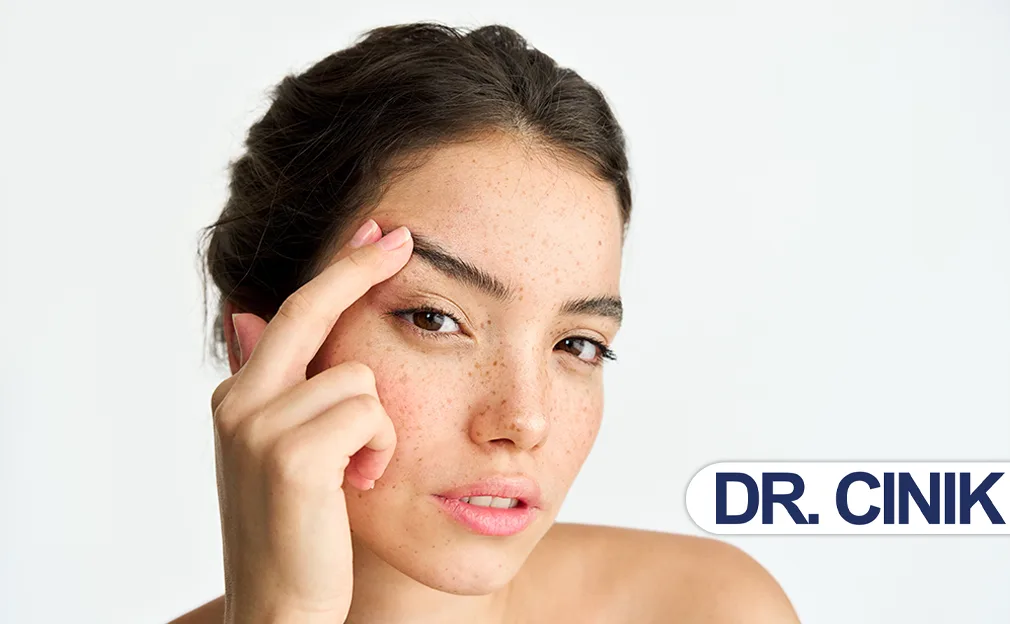
So, what are hooded eyes? In simple terms, it’s a condition when a fold of excess upper eyelid skin fold hangs over the crease of the eyelid. It makes the lids appear smaller or even completely hidden when your eyes are open. Think of it like a little “hood” of skin that drapes over the eyelid. Hooded eyes differ from droopy eyelids or eyelid ptosis (medical term), which stands for a medical condition when the upper eyelid sags down and can actually cover the pupil.
Hooded eyes are simply an anatomical feature, much like the shape of your nose or the curve of your lips. But there are severe cases (this condition is called dermatochalasis), when you have a significant amount of excess eyelid skin that could even affect your vision!
How Do You Know If You Have Hooded Eyelids?
Wondering how to tell if you have hooded eyes? You can easily figure this out with a simple mirror test.
Here’s how to do it:
- Look straight into a mirror.
- When your eyes are fully open, you should see your natural eyelid crease. If you can’t (because the skin below your brow bone covers your eyelid crease), you have hooded eyelids.
- Another clue? Eyeliner and eyeshadow seem to disappear the moment you open your eyes (a common frustration for makeup lovers).
What’s Behind Hooded Eyelids?
Figuring out what causes hooded eyes isn’t just a one-answer thing. It’s a mix of influences, and sometimes they gang up on you. Let’s walk through some of the main suspects.
Blame the Family Tree
Honestly, genetics is probably the biggest player here. Some folks are just born with that extra fold of skin over the upper lid. It’s their default setting from day one. If your parents, grandparents, or even that one aunt who insists she “never needed eyeliner” have hooded lids, odds are you might’ve inherited the look, too.
The Aging Effect
Then there’s the whole “getting older” situation. Over time, our skin says goodbye to a good share of its collagenA structural protein found in the skin and other connective tissues, which is responsible for skin firmness and elasticity.... and elasticity — the stuff that keeps everything springy and smooth. And because the skin around your eyes is super delicate, it’s usually the first to wave the white flag. As the years roll on, the muscles that hold your eyelids up lose some of their pep, and that sagging becomes more noticeable.
When Weight Loss Plays a Role
Here’s a curveball most people don’t expect: losing weight, especially a lot, especially fast, can sometimes make your eyelids look droopier. Why? Well, when facial fat disappears quickly, the skin doesn’t always bounce back right away, leaving it looser. That includes the skin over your eyes.
Lifestyle Choices: Sleep, Sun & Stress
And finally, the day-to-day stuff. Skimping on sleep can puff up your eyes and make any hooded effect look worse. Too much sun without proper protection? That’ll speed up collagen breakdown, which means sagging skin comes knocking sooner. Throw smoking into the mix, which accelerates skin aging across the board, and you’ve got a recipe for droopier lids earlier than you’d probably like. Stress doesn’t help either; it’s not a direct cause, but it sure doesn’t do your skin any favors.
In short, hooded eyelids can come from a combination of what you were born with, how you’ve lived, and what time has decided to do to you. Sometimes it’s one clear cause, other times it’s a little bit of everything.
When Should You Treat Hooded Eyes?
Most of the time, hooded eyes are just part of how your face is built (like freckles or dimples) and they don’t need fixing. You live with them, you forget about them, and life goes on. Still, there are moments when you catch yourself in the mirror or run into a practical problem and think, “Maybe it wouldn’t hurt to see what my options are.” Those reasons can be about how they look, how they feel, or even how they affect what you see.
When Vision Gets in the Way
In more serious cases, that extra fold of skin can actually hang low enough to block some of your side vision. This can make everyday things, like reading street signs while driving or even getting through a book, more challenging than they should be. At that point, it’s not just about looks; it becomes a medical concern, and seeing a professional makes sense.
When It’s About How You Feel
Maybe you’ve noticed that your eyelids make you look a bit more tired than you actually are, or you just don’t love how they appear in photos. That’s totally justified. Lots of people choose to explore cosmetic treatments simply because they want to feel a bit more confident about their appearance.
When It’s Physically Uncomfortable
Drooping lids aren’t always just a visual thing, they can also feel heavy. That constant sensation, even when you’re wide awake and full of energy, can be distracting or downright annoying. And that’s another perfectly good reason to consider options for change.
How to Fix Hooded Eyes: From Quick Fixes to slow big ones
So, you are wondering how to get rid of hooded eyes. The good news is that there are many ways to do it. Some are quick and noninvasive; others involve a surgeon’s steady hand. It really depends on how far you want to go and how long you want the results to last. Let’s break it all down.
Non-Surgical Routes
If the idea of surgery makes you squirm a little, there are still quite a few treatments that can freshen up the look of your eyes. The results might be not as jaw-dropping or permanent as surgery, but you’d be surprised how much of a lift you can get without a scalpel.
Botox Injections
Yep, Botox isn’t just for smoothing forehead lines. In case of hooded eyes, tiny injections in the muscles that pull your eyebrows downward can give a gentle lift to your brow. When the brow goes up, the skin over your upper eyelid follows. It’s quick, it’s relatively painless, but it’s also temporary, usually a few months before you’re due for a top-up.
Dermal Fillers
These gel-like injectables can work wonders when placed in just the right spots, like the temples and under the brows. By adding a touch of volume where it’s been lost over time, fillers can prop up the brow area, making the lid look less heavy. Think of it as subtle scaffolding for your eyes.
Plasma Fibroblast Lift
This one sounds like something out of a sci-fi movie, but it’s actually a skin-tightening treatment that uses a tiny plasma arc to create controlled micro-injuries on the skin’s surface. That micro-trauma gets your body to produce more collagen, which in turn tightens and lifts the eyelid skin over the weeks that follow.
Radiofrequency Skin Tightening
Here, special devices send heat energy deep into your skin layers to wake up collagen production. The effect builds gradually, but if you’re patient, you can see the skin around your eyes start to feel firmer and look smoother.
Natural & At-Home Approaches
Not into high-tech gadgets or needles? Well, there are gentler ways to support your eye area: they just won’t give you the same wow factor. Regular facial exercise, cold compresses for de-puffing, and firming eye creams with peptides or retinol can help. Add in the basics: drink enough water, eat plenty of antioxidant-rich foods, wear sunglasses, and use sunscreen, and you’re at least keeping your skin in better shape for the long haul.
Surgical Options for hooded eyes
If you’re after a bigger, longer-lasting change, then surgery might be the route to take. It’s more commitment, yes, but the results can be dramatic and, in many cases, permanent.
Upper Blepharoplasty
Often called the gold standard for hooded eyes, this procedure removes extra skin (and sometimes a bit of fat) from your upper lids. The incision is made in the natural crease, so the scar is pretty much invisible once it heals. The result? A cleaner eyelid contour and a more awake, refreshed expression. Some of the before-and-after transformations from this are genuinely impressive.
Brow Lift
Sometimes what you call “eyelid hooding” is the brow sitting lower than it used to. A brow lift repositions it higher on the forehead, which can make the eyes look more open. In certain cases, surgeons recommend combining this with blepharoplasty for the most balanced, youthful outcome.
So, What’s the Right Choice for You?
It all depends on what you’re hoping to achieve and how much time, budget, and recovery you’re willing to invest.
- Want something quick and subtle? Botox for hooded eyelids or dermal fillers could be your new best friends.
- Looking for a real, lasting change? Upper blepharoplasty is the heavy-hitter.
- Prefer to work with what you’ve got? Master the art of makeup for hooded eyes — smoky crease tricks can work magic.
At the end of the day, the “best treatment for hooded eyelids” is the one that fits your lifestyle and makes you feel good when you look in the mirror.
FAQ
Can hooded eyes cause vision problems?
Yes, in severe cases, when the excess eyelid skin hangs over the lashes and obstructs peripheral vision. This is when doctors often recommend blepharoplasty.
What age do hooded eyes start?
While many people are born with hooded eyes, the condition can also develop or worsen with age. The natural aging process, with its loss of skin elasticity, usually starts becoming noticeable in the late 20s or early 30s.
Do hooded eyes make you look older?
Yes, the heavy or tired appearance of hooded eyes can make a person look older than they are. This is one of the main reasons people seek out treatment.
Do hooded eyes get worse with age?
They typically do, as gravity and the loss of skin elasticity continue to take their toll. It means that if you noticed your eyelids getting heavier in your 40s or 50s, blame it on Father Time.
Can you prevent hooded eyelids?
While you can’t prevent genetics or aging, you can take steps to slow down the process. Protecting your eyes from the sun, staying hydrated, and not smoking can help maintain skin elasticity and prevent premature eyelid sagging.
Is upper blepharoplasty surgery painful?
Upper blepharoplasty is typically not considered a painful surgery. Most patients report mild discomfort, swelling, and bruising, but it is generally manageable with over-the-counter pain medication. A surgeon will prescribe pain medication, but many patients don’t even need it.
Are hooded eyes attractive?
Beauty is entirely subjective! Many people consider hooded eyes to be beautiful and unique. They are a prominent feature of many models and celebrities and are celebrated in many cultures.
How long does hooded eye surgery last?
The results of an upper blepharoplasty are long-lasting, with many patients enjoying the results for 10-15 years or even longer. While the aging process continues, the effects of the surgery are significant and often considered permanent.
What’s the cost of hooded eye surgery?
The cost of upper blepharoplasty can vary widely depending on the surgeon’s fee, the facility, and geographical location. On average, the surgeon’s fee alone can range from a few thousand dollars to over five thousand dollars.
How to apply makeup for hooded eyes?
The key is to create a “faux” crease. Apply a matte eyeshadow slightly above your natural crease and blend it upward towards the brow bone. This will create the illusion of a more open eyelid. You can also tightline your upper waterline to add definition and create a thin winged liner from the outer corner of the eye to elongate your eye shape.