Understanding hair loss types helps clarify why hair loss occurs and whether it is temporary or permanent. Different types of hair loss have distinct causes, patterns, and progression, and recognizing these differences is key to early identification and proper care.
By learning to identify your specific hair loss type, you can choose more effective treatments, address underlying triggers, and manage expectations about recovery, helping you protect both your hair health and peace of mind.
1. What are Male and Female Pattern Hair Loss (Androgenetic Alopecia)?
Quick Answer: Male and female pattern hair loss, known as androgenetic alopecia, is a common genetic condition caused by sensitivity to hormones that leads to gradual, permanent thinning of the hair in predictable patterns.
Hair loss, or alopecia, can arise from a multitude of factors. This guide outlines the most prevalent hair loss types and provides a self-assessment to help you identify the kind affecting you. Early recognition of the underlying hair loss type is crucial, since therapies for various conditions can differ significantly, and timely treatment is of the essence.
Male and female pattern hair loss is the most common type of hair loss for both men and women and occurs progressively. Male and female pattern hair loss both result in specific thinning of hair and typically occur in a similar sequence and following certain stages. Male pattern baldness usually follows the Hamilton-Norwood (H-N) chart, while female pattern baldness aligns more with the Ludwig scale.
Male pattern hair loss may start as early as the late teens. The most frequent early sign involves hair thinning in the bitemporal regions of the frontal hairline, which is referred to as the maturing hairline. There is no defined age when someone is considered to have juvenile male pattern hair loss because many patterns can be diagnosed at this age. Thinning across the top of the scalp that progressively worsens may also occur. It is possible to have thinning at the bitemporal and vertex regions without any vertex thinning and without a maturing hairline. Scalp hair shedding can also appear post-maturing, especially for those who do not have an early onset. Hair that is shed may take on a different form (e.g., color or wave) than normal or be shorter than other scalp hairs. The H-N stages provide example patterns for the progressive loss but, at any point, hair loss may occur down the front hairline, around the ears, occipital region, or even beard or eyebrow areas before returning to an earlier stage (Jabeen Bhat et al., 2020).
In female pattern hair loss, hair thinning may appear as early as adolescence, with noticeable thinning of the frontal midline; however, frontal reticulation is rare, and hair remains dense in these areas. Hair loss may not be noticeable until much later, often the fourth or fifth decade. Hair shedding can still occur before thinning, but hair will fall less frequently once thinning begins. The clinical pattern of female pattern hair loss closely resembles the Ludwig stages, which have stages characterized by frontal thinning, the pattern of which is more uniform than male pattern hair loss. Female-patterned hair loss eventually leads to thinning across the entire scalp, similar in principle to the Thomas pattern (Singh and Acharya, 2021).
Male and female pattern hair loss is closely associated with both male and female hormones, namely dihydrotestosterone (DHT) and testosterone, respectively. Both types are governed by androgen receptors, but normal androgen action is elevated in male pattern loss. DHT may increase at the appropriate receptor but testosterone and other male hormones may continue to affect the frontal and bifrontal regions, extending into the crown and significantly influencing male-pattern hair loss.
Male- and female-pattern alopecia is generally permanent, although various regimens may halt its progress or allow for regrowth in some circumstances. The average age of onset for male pattern is approximately eighteen, while for female pattern it is approximately thirty-five.
1.1. What are the typical signs of hair loss in men?
Quick Answer: Typical signs of hair loss in men include a receding hairline, thinning at the temples, and a bald spot forming on the crown, usually progressing gradually rather than suddenly.
Androgenetic alopecia (AGA) is the most common cause of non-scarring alopecia, affecting approximately 80% of men and around 50% of women (Kuczara et al., 2024). The majority of patients first notice signs at puberty, with early onset linked to a poorer prognosis (Singh and Acharya, 2021). The condition results from the interaction of androgens, their metabolites, and genetic factors, leading to the miniaturization of hair follicles, hair thinning, and, ultimately, loss. Clinically, men typically experience hair thinning in the frontotemporal areas, frontotemporal recession, and vertex hair loss. The classic Hamilton–Norwood classification classifies AGA in men into seven stages. Stage I encompasses a normal hair pattern, whereas Stages II to IV show various degrees of frontotemporal recession and vertex thinning or baldness. Stages V to VII represent more advanced degrees of balding, with increasingly larger intervening areas and absence of hair in the frontal and vertex regions.
Another well-established classification addresses the pattern of diffuse thinning in female AGA, which affects approximately 50% of women. This form of thinning is classified according to the Ludwig scale. Type I shows thinning in the frontal and diffuse areas, Type II involves additional thinning in the frontotemporal area, and Type III represents the acquisition of a Christmas tree pattern. In the Olsen classification, Type I consists of thinning in the central frontal area, Type II includes a Christmas tree pattern, and Type III indicates widespread thinning.
1.2. What are the typical signs of hair loss in women?
Quick Answer: Typical signs of hair loss in women include widening of the central part, overall thinning on the top of the scalp, reduced hair volume, and rarely, complete bald patches.
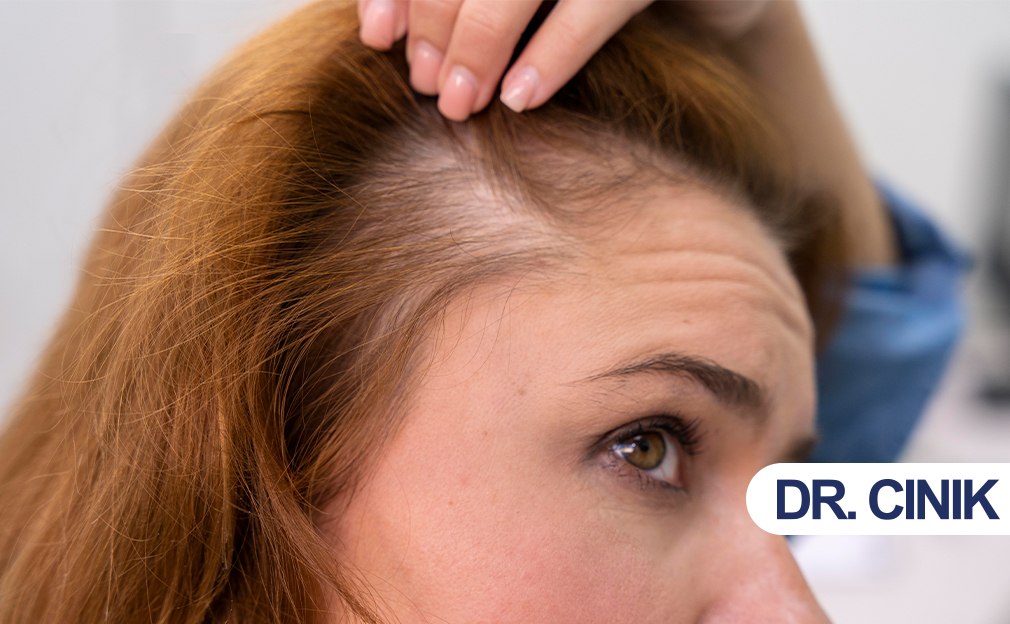
Female Pattern Hair Loss is characterized by progressive thinning of scalp hair with the front hairline usually preserved. Thinning starts from the crown, vertex or upper parietal region, which on global assessment gives the classic Christmas tree morphology. Follicular miniaturization occurs less frequently or less severely than in males (Herskovitz and Tosti, 2013). The widespread perception that Androgenetic Alopecia does not occur in women is wrong. Distinguishing Androgenetic Alopecia from other forms of hair loss such as Telogen Effluvium that may be triggered by Discontinuation of contraceptives, Stress, Weight Loss, Medications or Hormonal therapies (Jabeen Bhat et al., 2020).
Nonscarring hair loss due to reduction in the size of hair follicles is the predominant pathological mechanism responsible for the loss. Other concomitant conditions such as scalp hair loss with type 2 diabetes and frontal fibrosing alopecia of the scalp (Fabbrocini et al., 2018). Women can also suffer post-menopausal hair loss after cessation of the menstrual cycle. Various genetic loci have been identified to be linked with early-onset Androgenetic Alopecia suggesting complex genetic foundation. Both Endogenous and Exogenous factors alongside Hormonal ones predispose the individual to hair loss in this category. Classification systems used for categorizing hair loss in adults have been duly applied to women, but few modifications to address the differences in constitutional hair density of normal and hyperandrogenic women, and changes in hair counts within the affected areas.
1.3. Why does hair loss happen?
Quick Answer: Hair loss happens when factors such as genetics, hormonal changes, stress, illness, nutritional deficiencies, medications, or aging disrupt the normal hair growth cycle, causing hair to shed faster than it can regrow.
Hair is a defining feature of mammalian individuality, from lavish fur coats and painted muzzles to the contrasting hair styles and artistic paint jobs of prized stallions. Human aesthetics contemplate baldness as a desirable attribute; nonetheless, loss of scalp hair is generally regarded as an undesirable feature indicative of biological age that can compromise femininity and attractiveness and trigger anxiety, loss of self-esteem, and extensive strategies to mask, reverse, or replace threatened and lost strands. The human scalp hair shedding cycle is subdivided into three phases: anagen (growth, lasting ca. three years), catagen (regression, ca. three weeks), and telogen (resting or shedding, ca. three months). The numbers generally considered normal for daily shedding, therefore, range from ca. fifty to one hundred units. Changes in these numbers and scalp site loss may be associated with a range of hair loss types, broadly classified as non-scarring, scarring, and drug-induced (Owecka et al., 2024).
Various physiological conditions or changes, e.g., sex changes, can trigger hair loss. Androgens, e.g., testosterone and 5α-dihydrotestosterone (DHT), estrogens, and other hormonal alterations are the triggers leading to the heightened response of subjects suffering from non-endocrine hair loss. Disorders of the hypothalamus, pituitary gland, adrenal glands, or testes affecting the equilibrium between the individual’s total androgen and estrogen activity can thus initiate balding.
1.4. Is hair loss permanent?
Quick Answer: Hair loss can be temporary or permanent, depending on the cause. Conditions like stress-related shedding or nutritional deficiencies are often reversible, while genetic hair loss is usually permanent without treatment.
Androgenetic alopecia (AGA) is a common form of hair loss affecting both men and women, with the onset and pattern of hair loss varying between the sexes. In men, the hair recession typically begins at the frontal corners, eventually developing into a bald crown when the hairline is significantly receded. Women usually exhibit progressive thinning of the hair over the crown with the frontal hairline remaining unchanged (Liu et al., 2024).
AGA is caused by genetic predisposition to androgenic sensitivity of hair follicles. The hypertrophy of prostate glands during androgen activity is controlled by androgens; the upstream steroid biosynthesis is carried out by 5α-reductase type 2 (5αR2) and steroid-5α-reductase type A (SRD5A) isoenzymes. Stress factors, external stimuli, toxins (or stressors), and prolonged physiological adverse conditions result in excessive expression of 5α-reductases, consequently inducing premature and accelerated hair loss during male sex hormone restoration. For women, onset during adolescence and excessive androgen activity is a main associated factor; onset after 40 years is usually related to normal menopause and aging.
Alopecia areata is another common form of hair loss characterized by sudden localized patchy hair loss with smooth skin. It is an autoimmune disease caused by inappropriate immune attacks on the hair follicles. The triggering conditions are largely inconsistent and include stress, illness, autoimmunization to growth factors, disturbance of immune tolerance, external stimuli, and endocrine disorder; among them, stress is regarded as one of the most important.
Telogen effluvium (TE) is also a very common type of hair loss disease that causes sudden hair loss 4–6 weeks after events and lasts for 3–6 months. The triggers may include disease, fever, surgery, childbirth, mental venous thrombosis, infection, toxic materials, and disruption of skin-bacteria-infected hair follicleA hair follicle is a small, tube-like structure embedded in the scalp that produces and grows individual strands of hair.... unit, which can cause interruption of the growth cycle of hair follicles.
2. What is Telogen Effluvium (Sudden Shedding)?
Quick Answer: Telogen effluvium is a temporary form of hair loss where stress or illness causes excessive shedding a few weeks or months later.
Acute telogen effluvium is the most common type of hair loss (Asghar et al., 2020). It presents as diffuse shedding of hair that normally occurs 2 to 3 months after the initial trigger. Although it does not cause visible thinning because hair loss is not apparent until 50% of hair is lost, the average daily hair shed increases from approximately 30 to 100, sometimes reaching 200 (A Gordon and Tosti, 2011). Systemic disease, major surgery, changes in hormonal intake, fever, significant stress, weight loss of 10% or more, iron and/or vitamin D deficiency, some drugs, inflammatory scalp disorders, and post-delivery changes are common causes. A variant, telogen gravidarum, occurs during the period not only of delivery but also of breast-feeding.
Chronic telogen effluvium is more common in females and typically affects middle-aged women. The hair loss is irregular, some months even more hairs are lost than normal while during other months less or none, and hair remains present for many years. Short regrowing hairs reaching only 2 or 3 cm in length appear on the frontal and parietal areas. Abnormal regulation of the hair cycle causes 8–10% of hair in the telogen phase and increases the amount lost daily. The normal cycle lasts several years and includes anagen (growth), catagen (involution), and telogen (resting). An additional mechanism for shedding is premature entry into the telogen phase following a prolonged anagen or shortening of telogen duration.
2.1. How does telogen effluvium look?
Quick Answer: Telogen effluvium usually appears as diffuse, overall thinning of the hair rather than bald patches, with noticeably increased shedding when washing or brushing.
Shedding hair is a normal part of the hair growth cycle, but sudden excessive hair loss can indicate potential patterns of hair loss. The most common types of hair loss include telogen effluvium (sudden shedding), alopecia areata (autoimmune hair loss), and scarring alopecias (cicatricial alopecias). The presence of additional symptoms, such as scalp itching or flaking, can indicate other hair-related problems (Singh and Acharya, 2021). Hair loss resulting from scalp problems can be challenging to identify without the assistance of a specialist.
In telogen effluvium, the hair is generally well-formed and loses firmness and attachment when shed. The loss can be excessive, often estimated at over 100 hairs daily. This type of hair loss occurs typically after a significant event or change in the body triggers hair follicles to switch to the resting or shedding phase (telogen). Common triggers include a severe illness, trauma, major surgery (general or anaesthetic), pregnancy-related, hormonal contraceptives, major weight changes, stress, or episodes of COVID-19. Telogen effluvium is usually temporary, albeit with a slow recovery process (A Gordon and Tosti, 2011).
2.2. What are the common triggers of telogen effluvium?
Quick Answer: Common triggers of telogen effluvium include physical or emotional stress, illness or fever, hormonal changes, nutritional deficiencies, medications, surgery, and rapid weight loss.
Bald patches are often the first visible signs of alopecia areata, which leaves the scalp and beard bare and smooth (A Gordon and Tosti, 2011). The healthy skin surrounding the patches provides visual evidence of the condition; therefore, alopecia areata remains identifiable even if hair regrows in patches as well (Owecka et al., 2024). Alopecia areata may occur spontaneously; however, the regrowth of hair is usually final, unless triggered again, resulting in the kind called alopecia totalis (loss of scalp hair) or alopecia universalis (loss of scalp and body hair). Less emphasis is given to the regrowth of hair inside the beard area, where alopecia areata is also generally less emphasized. Nevertheless, a second pattern of alopecia areata, focused on the beard and body hair, appears in 15% of the total cases. In general, scalp hair does not regrow until at least 6 months of alopecia, while beard or body hair may start to grow back sooner than 6 months.
Triggering factors for the second pattern of alopecia areata include sexually transmitted diseases; food intolerance; dental issues; dermatological diseases; operations requiring general anesthesiaEnsuring Comfort During Hair Transplants Sedation is used in hair transplantation to help patients remain calm and comfortable throughout the...; psychological trauma; sporadic chronic stress; exposure to poisonous plants, fungi, and metals; hormonal disturbances; infections; internal diseases; and tick bites (contemporary definition of a specific condition in Italy). Hair loss may occur primarily in a diffuse or patchy mode. When patchy, other typical observations may be be relatively slow hair regrowth with a typical stubbly aspect at inception; several intermittent episodes of hair loss; an increase in hair loss frequency after each winter restoration of hair originally lost in summer; and other hair-disease disorders characterized by epidermal impairment and itching.
2.3. Is telogen effluvium permanent?
Quick Answer: No, telogen effluvium is usually temporary, and hair typically regrows once the underlying trigger is resolved.
Male and female pattern hair loss is not permanent, but may develop into a permanent form later in life. Male pattern loss presents as a receding hairline and thinning crown, while female pattern loss leads to a widening part and increased scalp visibility without hairline recession.
Health events, medication changes, and lifestyle adjustments may trigger a shedding episode. Although telogen effluvium may resolve partway through natural hair loss progression, subsequent hair loss can occur, but rarely returns to baseline.
3. What is alopecia areata (Autoimmune Hair Loss)?
Quick Answer: Alopecia areata is an autoimmune condition in which the immune system attacks hair follicles, causing sudden, round patches of hair loss on the scalp or body.
Alopecia areata (AA) is an autoimmune disease characterized by rapid and well-defined patches of hair loss, primarily affecting the scalp. Estimates suggest that 2–7% of the population worldwide is impacted, with onset often occurring between ages 15 and 29; approximately 44% of cases occur before age 20 (ŻEBERKIEWICZ et al., 2020). Lesions typically present as round or oval patches of complete scalp hair loss with normal hair at the edges. The condition can progress to alopecia totalis (complete loss of scalp hair) or alopecia universalis (total loss of body hair). Variants include ophiasis (hair loss at hairline edges), diffuse hair loss (shedding of the same shade), sudden graying (whitening of hairs), and alopecia areata incognita (loss masked by other forms). Hair regrowth after treatment may initially be white and pigment deposition can take months, occurring only in residual hairs. Complete hair recovery does not preclude future hair loss ((Jadé) Temitope Olayinka and M. Richmond, 2021). AA may resolve spontaneously, but long-term immunomodulating therapy, such as topical or injectable steroids, is often needed.
Triggers include viral infections, psychological stress, and allergens. Secondary diseases that commonly co-occur are vitiligo, thyroid dysfunction, atopy, and lupus. The condition exerts a substantial public health burden due to psychosocial effects, stigma, and appearance concerns.
3.1. How does alopecia areata look?
Quick Answer: Alopecia areata typically appears as smooth, round or oval bald patches on the scalp or other areas of the body, with otherwise healthy-looking skin.
Alopecia areata presents with sudden, patchy spots of complete hair loss. Hairs regrowing at the border of patches may exhibit blunted tips, giving a “paintbrush” appearance (A Gordon and Tosti, 2011). Close inspection using a magnifying glass or a dermatoscope reveals various signs such as exclamation mark hairs and peri-follicular erythema. Multiple areas may be affected simultaneously. Scalp and beard areas are most commonly involved, but hair loss can occur anywhere on the body. Generally, the disease runs a benign course, with hair regrowth possible within weeks to months. However, it may spontaneously recur after years and is associated with conditions like vitiligo and thyroid disease (Rakowska et al., 2008). The possibility of permanent hair loss occurs in less than 5% of cases (Liu et al., 2024).
3.2. What triggers alopecia areata?
Quick Answer: Alopecia areata is triggered by an autoimmune response, often influenced by genetics, stress, illness, or other immune system disturbances.
Alopecia areata is an autoimmune hair loss disorder characterized by patches of hair loss, involving between one and 100 patches. In alopecia totalis, all the hair is lost from the scalp, and in alopecia universalis, the complete loss of all body and scalp hair occurs. The most common trigger for alopecia areata is stress, and even so-called positive stress like pregnancy and planning a wedding can trigger it. Other factors include allergies, infections, and hormonal changes. The loss occurs suddenly, requiring the person to determine whether any of these factors recently occurred. This type of hair loss is typically not permanent, and regrowth, if it occurs, may be white or gray until the pigmentation returns (A Gordon and Tosti, 2011) ; (Owecka et al., 2024).
3.3. Is alopecia areata permanent?
Quick Answer: Alopecia areata is not always permanent; hair often regrows, but the condition can recur or become long-term in some people.
Alopecia areata appears as patchy hair loss of scalp and body hair after a short period without hair loss. It may start with a single or multiple bald patches. In 2-10% cases, the disease has a rapidly progressive course, resulting in complete loss of scalp hair (Alopecia totalis) or loss of hair from the scalp and body (Alopecia universalis). It can occur at any age, but peak onset is most common between 3-20 years of age with a subsequent peak between 40-50 years. The clinical variant includes extensive alopecia areata with areas of normal hair distribution within the bald patches; acute diffuse type, which mimics telogen effluvium; and ultrafocal type, which is characterized by small bald patches. Association with psychiatric disorders such as depression, anxiety and obsessive-compulsive disorder may occur in severe forms of the disease. Association with some autoimmune diseases such as vitiligo, Hashimoto’s thyroiditis and ulcerative colitis has been reported. However, most cases occur in healthy persons and are considered idiopathic (Jabeen Bhat et al., 2020). The disease may remit and relapse any number of times. Recurrence is frequently seen within the first year of the first episode. No effective treatment is available. Spontaneous regrowth may occur even without any treatment.
Alopecia areata is regarded as a benign disease and is not considered permanent. If the scalp hair loss progresses to alopecia totalis or severe cases with extensive body hair loss, chances for regrowth becomes low (Liu et al., 2024). Spontaneous remission occurs in a small number of cases, but those with remaining patchy hair of dark colour near the uniform bald patches have a poorer prognosis. Nonetheless, the possibility of restoration remains, and dermatologists can function more efficiently based on differential hair loss diagnosis.
4. What is scarring alopecias (Cicatricial Alopecias)?
Quick Answer: Scarring alopecias, also called cicatricial alopecias, are a group of conditions where inflammation permanently damages hair follicles, replacing them with scar tissue and causing irreversible hair loss.
Scarring alopecias are characterized by progressive hair loss from cicatricial (scarring) skin change. This process, attributed to hair follicle destruction, can affect any area of the scalp and can warrant surgical intervention when established (Singh and Muthuvel, 2021). The hair loss is usually permanent (Priyadharshini, 2018). Scarring alopecias are divided into primary (inflammatory, autoimmune processes leading to damage of hair follicles and scalp) and secondary (clinical features appear after the end of an underlying inflammatory process). Cicatricial scalp disorders, such as lichen planopilaris and discoid lupus erythematosus, are frequent causes of scarring alopecia.
4.1. How does scarring alopecias look / feel?
Quick Answer: Scarring alopecias often appear as areas of permanent hair loss with smooth, shiny, or scarred skin and may feel itchy, painful, burning, or tender due to ongoing inflammation.
Hair—its daily loss, renewal, and biography reflected in photos fascinates people throughout their lives. Hair loss is a common issue in men and women, with each sex typically exhibiting a different type. Individuals may not recognize their particular kind of hair loss but can gain knowledge to self-identify it.
Scarring alopecias are distinguished by the warm sensations or tingling felt in areas where the hair is thinning. Follicles, previously felt as a tuft or stump and loaded with sebum, transform from tiny bumps into empty hollows devoid of all sensation. The loosening of strands can occur, yet shedding remains unnoticed (Abril Martínez-Velasco et al., 2017).
The extent of hair continuity loss along existing breaks also proves useful for easy detection of all types.
4.2. What are the common conditions of alopecias?
Quick Answer: Common conditions affecting scarring alopecias include lichen planopilaris, discoid lupus erythematosus, follicular occlusion, central centrifugal cicatricial alopecia, and others.
Hair exists in any of a number of states including: normal, brittle, odorous, scaly, patchy, oily, or thinning; thinning suggests possible onset of hair-loss process. Hair loss can occur through increased shedding or interruption in normal cycles. Increased shedding (telogen effluvium) occurs if a large number of hairs moves synchronously into the dormant (telogen) phase, it regrows when underlying issue is resolved. Hair loss over a localized scalp area (alopecia areata) returns when the trigger is removed. When damage (by burning, chemicals, extraction) destroys the hair follicle completely, hair loss becomes irreversible (scarring alopecia) (A Gordon and Tosti, 2011).
Androgenetic alopecia (AGA) is linked to sensitivity to androgens, it is the most frequent form of hair loss in men and women (Owecka et al., 2024).
4.3. Is scarring alopecias permanent?
Quick Answer: Permanent hair loss occurs with various types of scarring alopecia.
The clinical picture varies depending on the underlying cause. It is crucial to determine the specific reason for thinning hair to promote correct diagnosis and proper treatment.
Lichen planus is a common condition mainly characterized by the eruption of purple spots over the skin and mucous membranes. Lichen planopilaris affecting the scalp might not be evident initially and may occur as localized areas of thinning hair. A multisystem connective tissue disorder called discoid lupus erythematosus (DLE) also involves cicatricial hair loss as one of the manifestations. Initial symptoms include commonly missed scaly plaques resembling dandruff on the scalp. Patients suffering from DLE develop greasy yellowish crusting on the scalp. Steatocystoma syndrome, also known as steatocystoma multiplex or steatocystoma hereditary, is another condition leading to irreversible hair loss. It first manifests in early childhood as a formation of cysts mostly over the jawline, neck, upper arm, breast, or thorax, and occasionally on the scalp (Liu et al., 2024).
5. How to quickly self-check to tell what type of hair loss I have?
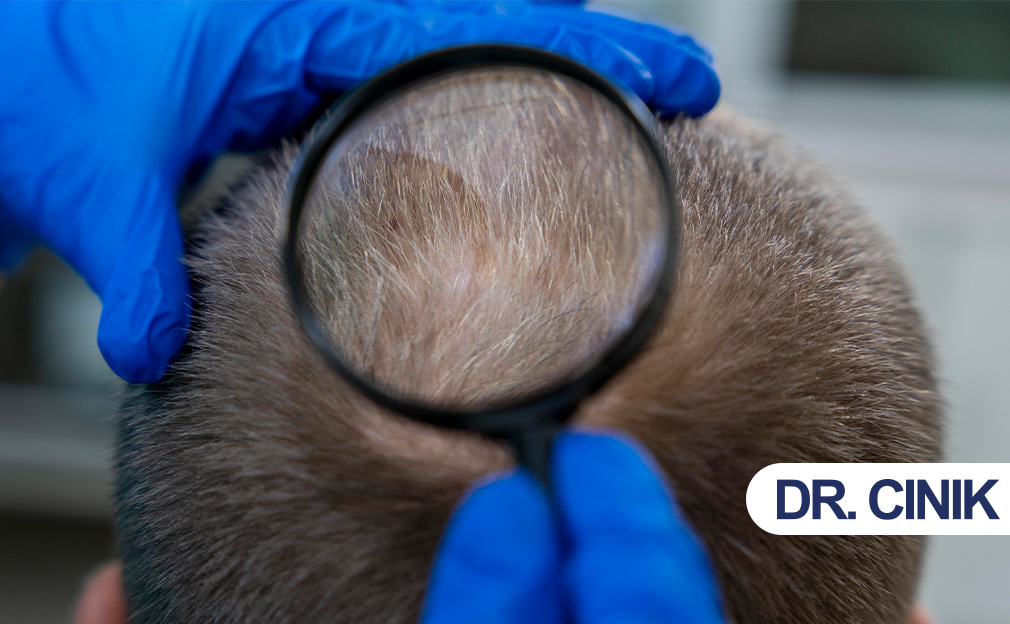
Quick Answer: Check the pattern and timing: gradual thinning suggests pattern hair loss, sudden overall shedding points to telogen effluvium, round bald patches indicate alopecia areata, and hair loss with pain or scarring may signal scarring alopecias.
Look at your scalp in the mirror and ask yourself these questions.
Are you losing hair only on your crown? It’s a sign of male pattern hair loss (androgenetic alopecia).
Are you losing hair only on your sides? It’s a sign of female pattern hair loss (androgenetic alopecia).
Are you losing hair all over your scalp? Check for recently completed or upcoming pregnancy, weight loss, surgery, illness, or seasonal change. These are common triggers of telogen effluvium, which involves sudden and diffuse shedding.
Are you losing hair irregularly and in spots? It might be alopecia areata. Stress may have triggered it.
Are you developing bald areas with redness, itching, hotness, or scabbing? These red flags suggest scarring alopecias, conditions that require special investigation and treatment.
If you’ve ruled out the five major types and their typical triggers, consider seeing a specialist.
6. When to see a specialist for hair loss?
Quick Answer: You should see a specialist if hair loss is sudden, rapidly worsening, patchy, painful, or accompanied by scalp symptoms, or if shedding lasts longer than 3–6 months without improvement.
Whether you have just started noticing thinning, have been struggling with hair loss for years, or are not even sure yet if what you are experiencing is hair loss, the first step is to understand the different types of hair loss and how to identify hair loss type of yours. Recognizing which type of hair loss you have will help you better understand the causes, whether the hair loss is reversible, and what, if anything, can be done to slow it down or restore your hair.
Most types of hair loss have a well-defined and recognizable appearance. The pattern of hair loss can give you a good clue as to which type you have, but there are also some other distinguishing factors you can look for. To make it easy to determine the type of hair loss you may be experiencing, the most common types of hair loss are described below along with their typical appearance and other distinguishing factors.
It is important to note that hair loss is a very broad category related to various underlying conditions or causes. Many people may also experience temporary hair loss due to hair treatments and hair products. If you are not at all certain about the type of hair loss you have, or if your thinning and shedding will not stop and is accompanied by unusual itching, redness, open sores, or similar unusual signs, then it is advisable to see a specialist, such as a dermatologist or trichologist (Pinedo-Moraleda et al., 2023).
Conclusion
Alopecia is a general term for hair loss that can affect both scalp and body hair. Correctly identifying the type of hair loss is essential in determining the underlying condition and its treatment options. When hair loss begins suddenly, it can be especially alarming. It is therefore helpful to understand how each common form of alopecia appears, what causes it, and how long it typically lasts. The four main types of hair loss are male and female pattern hair loss (androgenetic alopecia), telogen effluvium (sudden shedding), alopecia areata (autoimmune hair loss), and scarring alopecias (cicatricial alopecias). Their defining features make it reasonably straightforward to identify which type of hair loss is occurring. A self-check questionnaire can further confirm the diagnosis and guide when to seek specialist advice. (Pinedo-Moraleda et al., 2023)
References:
Jabeen Bhat, Y., Saqib, N. U., Latif, I., and Hassan, I. “Female Pattern Hair Loss—An Update.” 2020. ncbi.nlm.nih.gov
Singh, M. and Acharya, A. “Overview and Algorithmic Approach to Management of Male and Female Pattern Hair Loss.” 2021. ncbi.nlm.nih.gov
Kuczara, A., Waśkiel-Burnat, A., Rakowska, A., Olszewska, M., and Rudnicka, L. “Trichoscopy of Androgenetic Alopecia: A Systematic Review.” 2024. ncbi.nlm.nih.gov
Herskovitz, I. and Tosti, A. “Female Pattern Hair Loss.” 2013. ncbi.nlm.nih.gov
Fabbrocini, G., Cantelli, M., Masarà, A., Annunziata, M. C., Marasca, C., and Cacciapuoti, S. “Female pattern hair loss: A clinical, pathophysiologic, and therapeutic review()().” 2018. ncbi.nlm.nih.gov
Owecka, B., Tomaszewska, A., Dobrzeniecki, K., and Owecki, M. “The Hormonal Background of Hair Loss in Non-Scarring Alopecias.” 2024. ncbi.nlm.nih.gov
Liu, D., Xu, Q., Meng, X., Liu, X., and Liu, J. “Status of research on the development and regeneration of hair follicles.” 2024. ncbi.nlm.nih.gov
Asghar, F., Shamim, N., Farooque, U., Sheikh, H., and Aqeel, R. “Telogen Effluvium: A Review of the Literature.” 2020. ncbi.nlm.nih.gov
A Gordon, K. and Tosti, A. “Alopecia: evaluation and treatment.” 2011. ncbi.nlm.nih.gov
ŻEBERKIEWICZ, MARTA., RUDNICKA, LIDIA., and MALEJCZYK, JACEK. “Immunology of alopecia areata.” 2020. ncbi.nlm.nih.gov
(Jadé) Temitope Olayinka, J. and M. Richmond, J. “Immunopathogenesis of alopecia areata.” 2021. ncbi.nlm.nih.gov
Rakowska, A., Slowinska, M., Kowalska-Oledzka, E., Olszewska, M., and Rudnicka, L. “Trichoscopy criteria for diagnosing female androgenic alopecia..” 2008. [PDF]
Singh, S. and Muthuvel, K. “Role of Hair TransplantationHair transplantation is a surgical procedure that involves the extraction of hair follicles from a designated donor site, followed by... in Scarring Alopecia—To Do or Not to Do.” 2021. ncbi.nlm.nih.gov
Priyadharshini, J. “Cicatricial alopecia: Clinical, dermascopy and histopathological study.” 2018. [PDF]
Abril Martínez-Velasco, M., Elizabeth Vázquez-Herrera, N., John Maddy, A., Asz-Sigall, D., and Tosti, A. “The Hair Shedding Visual Scale: A Quick Tool to Assess Hair Loss in Women.” 2017. ncbi.nlm.nih.gov
Pinedo-Moraleda, F., Tristán-Martín, B., and Greta Dradi, G. “Alopecias: Practical Tips for the Management of Biopsies and Main Diagnostic Clues for General Pathologists and Dermatopathologists.” 2023. ncbi.nlm.nih.gov