Does Creatine Cause Hair Loss – Or Is It Just Another Gym Bro Myth?
Let’s face it — nothing sparks more paranoia among gym rats than the idea of losing their luscious locks while trying to bulk up. You're lifting heavier, eating cleaner, and taking your creatine religiously... but suddenly, you notice more hair in the drain. Cue the panic. Could your trusty creatine be the culprit? Or is this just another fitness myth blown out of proportion?
In this article, we’ll dig deep into the science behind creatine and hair loss. We'll explore the relationship between creatine and DHT, examine real studies, and answer common questions like “Should I take creatine after a hair transplant?” and “What if I’m on finasteride?”
And sure, we’ll try to explain everything in plain words, without science jargon.
Creatine: What Is It, and Why Is Everyone Taking It?
Creatine is one of the most popular and well-researched sports supplements in the world. Found naturally in muscle cells, it helps produce ATP (adenosine triphosphate), your muscles’ favorite energy currency during short bursts of high-intensity exercise.
When you supplement with creatine, you’re essentially supercharging your energy systems. More power. More reps. More gains.
Sounds great, right? But somewhere along the line, someone noticed their hair thinning, and creatine started getting blamed. Let’s find out why.
Where Did the Creatine and Hair Loss Rumor Start?
The whole “creatine causes hair loss” drama can be traced back to a single 2009 study published in the Clinical Journal of Sport Medicine. In this South African study, 20 college-aged male rugby players were given creatine for three weeks. Researchers weren’t measuring hair loss directly, but they did track levels of DHT (dihydrotestosterone)— a hormone often linked to male pattern baldness.
The results? After a week of creatine loading (25 grams per day), DHT levels increased by 56%, and after two more weeks of maintenance dosing (5 grams per day), DHT remained elevated at 40% above the baseline. If you don’t mind wading through zillions of scientific terms, you can read that study here on PubMed.
Whoa.
So, creatine doesn’t cause hair loss directly — but could it indirectly by increasing DHT?
Let’s Talk About DHT
Dihydrotestosterone (DHT) is a byproduct of testosterone, converted by the enzyme 5-alpha-reductase. It’s crucial for male development (thank you, puberty), but too much DHT binding to hair follicles can shrink them over time — a process called miniaturization. That’s what leads to androgenetic alopecia, or male pattern baldness.
Not everyone is equally sensitive to DHT. Your genetics play a big role. Some people have hair follicles that are like steel — they don’t flinch at DHT. Others have follicles that are drama queens, going on strike at the slightest hormonal shift.
So, if creatine boosts DHT (as that study suggests), and you're genetically prone to baldness, should you worry?
Breaking Down the Evidence: What Science Says
Before you toss your creatine tub in the trash, let’s look at what other studies have found:
- The 2009 Study Is Alone: So far, no other published study has replicated the DHT increase found in the South African rugby players.
- Other Studies Show No Hormonal Changes: Multiple trials have measured testosterone and DHT levels after creatine supplementation and found no significant changes. For instance, a 2017 position stand by the International Society of Sports Nutrition concluded that creatine supplementation does not raise testosterone or DHT in a clinically relevant way.
- A 2025 Randomized Controlled Trial, published in a peer-reviewed sports science journal (summary available via ResearchGate and other platforms), tracked DHT levels and hair density over 12 weeks. The result shows NO changes in DHT, NO changes in hair follicle health. Here’s the summary via ResearchGate.
- The explainer article published in Healthline, quoting two studies from 2001 and 2003, also emphasized that the DHT spike has not been replicated and there’s no direct proof linking creatine to hair loss.
In short: science isn’t exactly screaming “Baldness Ahead!”
Creatine’s Effect on Hair Follicles: Theoretical at Best
The phrase "creatine's effect on hair follicles" gets thrown around a lot online — usually accompanied by blurry before-and-after photos, panicked forums threads, or that one gym bro who swears he used to have Fabio-level hair before he started bulking. But here’s the thing: there is no direct scientific evidence that creatine affects hair follicles in any meaningful way.
No dermatological study, no scalp biopsy, no high-powered microscope has ever caught creatine red-handed, sneaking up on a follicle and wreaking havoc. Nada.
What we do have is a possible link between creatine and increased DHT in a small group of people — and DHT, as you may already know, is the hormone with a bit of a reputation. In genetically susceptible individuals, DHT can shrink hair follicles over time, gradually leading to thinner, wispier hair (a process delightfully known as “miniaturization”).
But even this is a stretch. Creatine doesn’t convert to DHT, doesn’t upregulate the enzyme that produces DHT, and doesn’t tap follicles on the shoulder and say, “Hey, maybe quit growing.” At most, creatine might influence the hormonal environment slightly, and only in some people.
In short: creatine is not the follicle Grim Reaper.
Think of it like this: creatine is the guy at the gym who just minds his business, slams his pre-workout, and lifts in peace. Yes, he once had a brief locker-room convo with DHT, who does have a shady history with hairlines — but blaming creatine for hair loss is like blaming your Uber driver for a traffic jam he didn’t cause.
Unless you’re genetically predisposed to male pattern baldness and your hormones are especially sensitive, creatine likely has zero effect on your scalp.
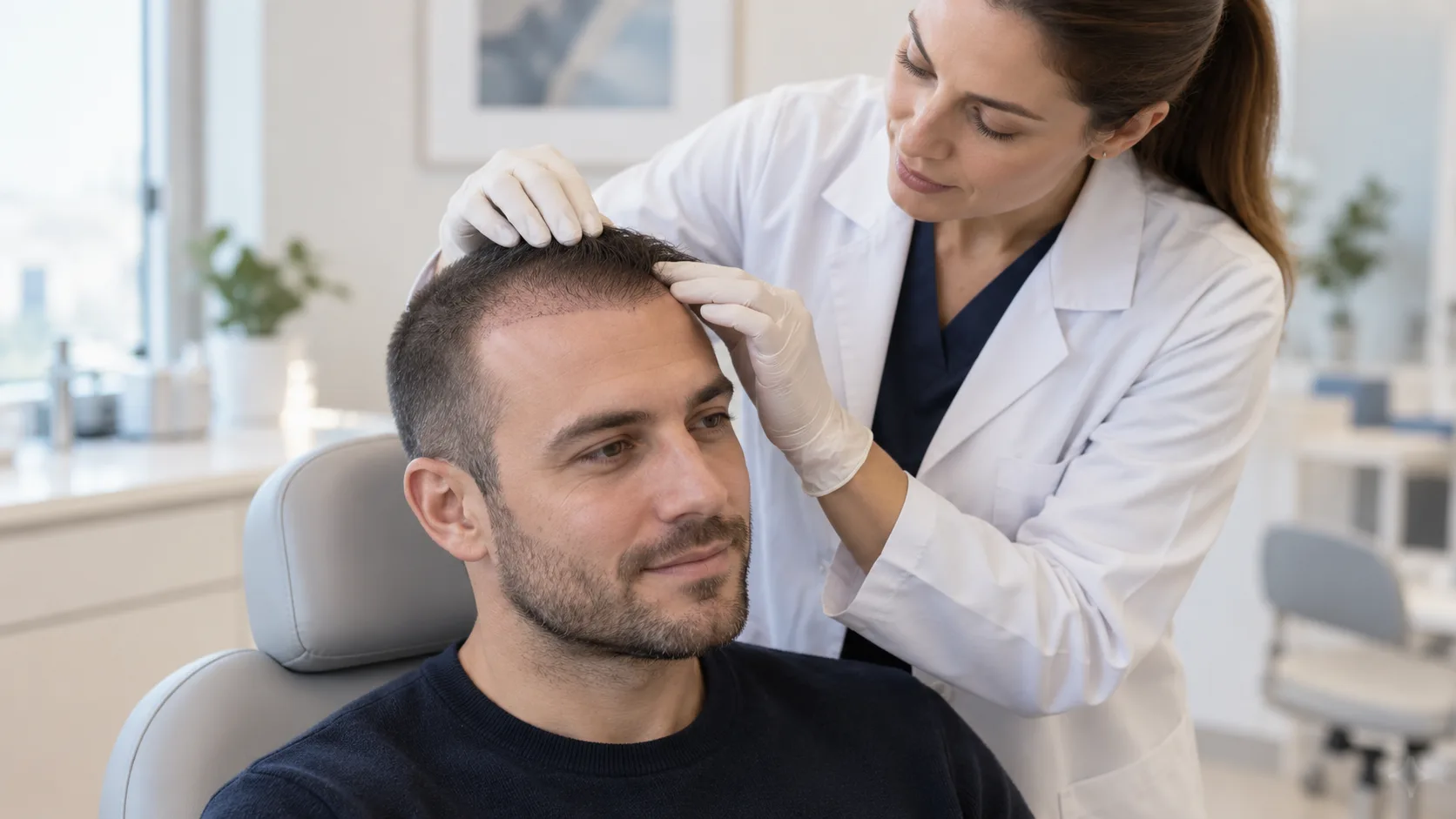
Taking Creatine After a Hair Transplant: Yay or Nay?
So, you've taken the leap, booked the flight to Istanbul (or wherever your follicular dreams took you), and you're now rocking a freshly replanted hairline. You’re following post-op instructions to the letter, sleeping upright like a vampire, and treating your new grafts like royalty. But one question remains: can you still take creatine after a hair transplant?
Let’s cut to the chase — yes, in most cases, it’s absolutely fine.
There’s currently no clinical evidence suggesting that creatine interferes with post-transplant healing, graft anchoring, or long-term hair growth. It’s not listed on any surgeon’s “things-to-avoid” list, which usually includes the likes of smoking, alcohol, sunburn, and sweating like a waterfall.
Why is creatine in the clear? Because it doesn’t interfere with circulation, inflammation, or the immune response, which are the big things that affect transplant success. Your new follicles rely on blood flow, oxygen, and a calm environment to settle in — not whether your muscles are getting an ATP boost.
Still, if you want to play it safe (and let’s face it, your new hair is precious), here are some smart post-op creatine rules of thumb:
- Wait at least 2–4 weeks before resuming creatine, especially if your surgeon recommends a healing period before returning to exercise or supplements.
- Check in with your hair restoration doctor. They’ll give you personalized guidance based on your procedure and recovery progress.
- Consider pairing it with finasteride, especially if you’re worried about DHT levels. Many hair transplant patients are prescribed finasteride anyway to protect both the transplanted and existing native hairs.
And remember: DHT sensitivity doesn’t go away just because you had a hair transplant. Creatine may very slightly shift your hormonal balance, but finasteride can help keep DHT in check — like a personal bodyguard for your scalp.
In conclusion: creatine isn’t your hair transplant’s enemy. It’s more like that friend who didn’t show up to your surgery party, but still cheers you on at the gym after.
What about taking steroids? Bodybuilding, Steroids and Hair Loss: Can You Keep both your Gains and your Mane?
Creatine and Finasteride: Friends or Frenemies?
Finasteride is the gold standard DHT blocker used to treat hair loss. It works by inhibiting 5-alpha-reductase, the enzyme that converts testosterone into DHT.
So, what happens if you’re taking both creatine and finasteride?
Here’s the likely scenario:
- Creatine might (emphasis on might) slightly increase DHT levels.
- Finasteride is a powerful DHT suppressor, reducing DHT by up to 70%.
- The two could cancel each other out, or at least keep DHT in check.
In other words, if you’re on finasteride and love creatine, don’t sweat it. Your hair follicles are probably safe.
What to Do If You Are Taking Creatine and Noticed Increased Hair Loss
Alright — let’s say you are taking creatine, and your shower drain is suddenly looking like a crime scene. What should you do?
First, don’t panic. Hair shedding happens for many reasons:
- Stress
- Seasonal changes
- Dietary shifts
- Genetics
- Overtraining
But if you suspect creatine, here’s a plan of action:
- Stop Creatine for a Month: See if the shedding slows down. This could help you isolate the cause.
- Talk to a Dermatologist: A scalp exam or bloodwork might reveal other culprits (like iron deficiency or thyroid issues).
- Start Finasteride or Minoxidil: These FDA-approved treatments can stop hair loss and even regrow some of what you’ve lost.
- Try Topical Finasteride/Dutasteride: If you want fewer side effects, topical DHT blockers are trending and effective. Here's a Medical News Today article breaking down your options.
- Consider Low-Level Laser Therapy (LLLT): Yes, laser caps are a thing — and some studies show they work.
- Keep a Hair Diary: Document your hair condition, shedding patterns, and supplements. It helps with pattern recognition.
So… Does Creatine Cause Hair Loss?
Well, let’s recap what we already said:
- One small 2009 study found creatine may increase DHT — a hormone linked to hair loss.
- No studies have shown that creatine causes actual hair loss.
- Researchers found no significant hormonal changes from creatine use.
- Genetics, stress, and other lifestyle factors likely play a bigger role in hair loss than creatine does.
So, is creatine a hair loss villain? Probably not. It’s more like that friend who gets blamed for every party mess just because he brought the keg.
Final Thoughts: To Take or Not to Take Creatine?- That is the Question
If you’re chasing gains and worried about your mane, here’s your takeaway:
- Creatine is safe for most people and incredibly effective for performance.
- If you're genetically predisposed to baldness, monitor your hair but don't panic.
- There are hair-saving tools in your arsenal — from finasteride to laser helmets.
- Always consult a professional before mixing supplements with medications or hair loss treatments.
In the end, your hairline doesn’t have to be the price of progress. With the right knowledge and a sprinkle of common sense, you’ll surely find the right balance.