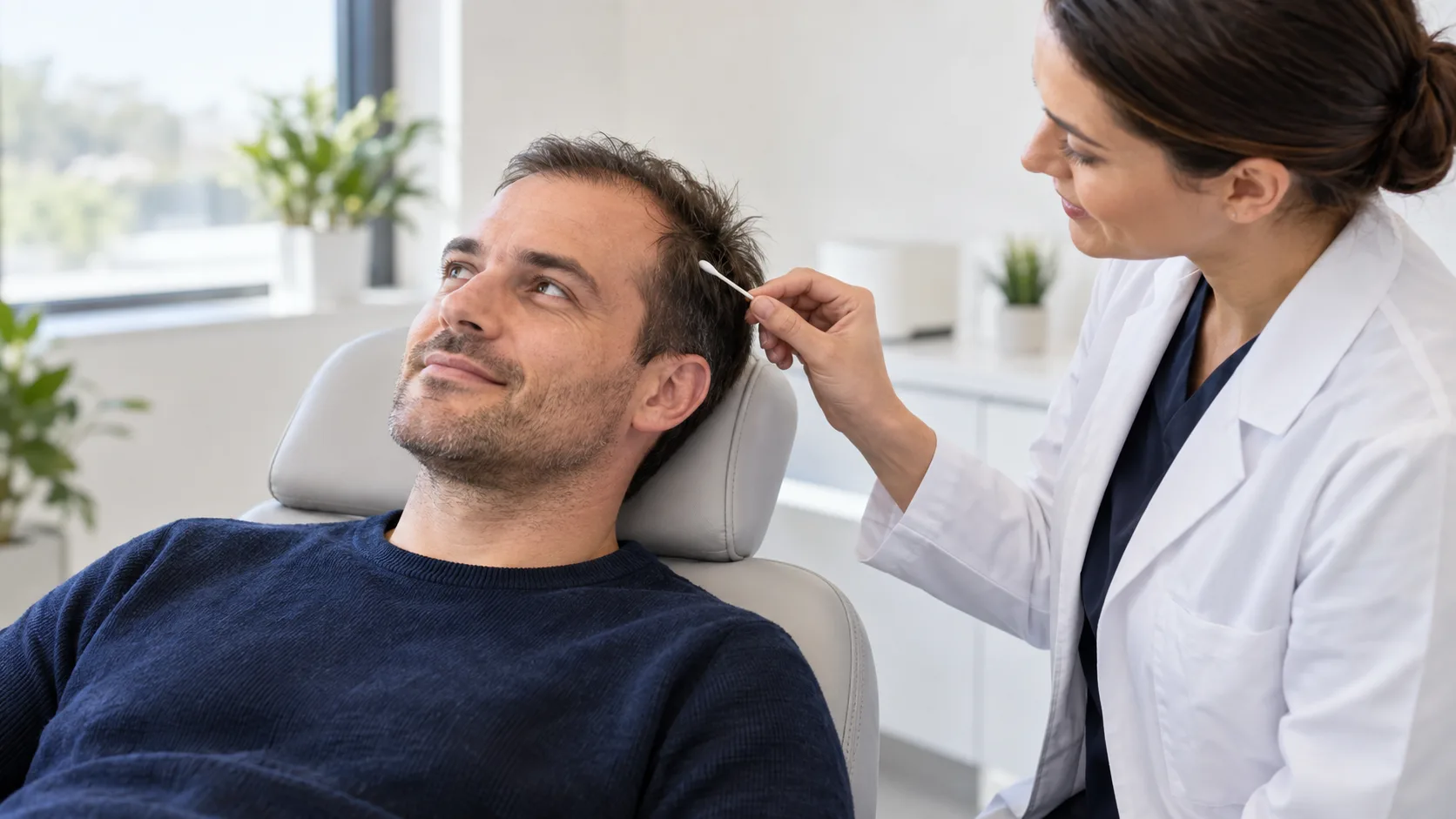
Local Anaesthesia in Hair Transplant Explained
Local anaesthesia blocks pain signals in the scalp so the patient stays awake, comfortable, and able to communicate during a hair transplant. Surgeons use it in both the donor and recipient areas during FUE and DHI procedures. The injection causes brief discomfort, but the surgery itself should feel painless once the scalp becomes numb.
Local anaesthesia sits at the centre of modern hair restoration. It protects the patient from pain during graft extraction and implantation, and it lets the surgical team work with precision. This guide explains how local anaesthesia works in hair transplantation, why it matters for patient safety, how needle-free delivery differs from traditional injection, and what patients should expect before, during, and after the procedure. The article follows current medical education standards and relies on peer-reviewed research and clinical literature (Unger and Shapiro 2004; Becker and Reed 2012).
What Is Local Anaesthesia in Hair Transplantation?
Local anaesthesia in hair transplantation is a medication that temporarily blocks pain signals in specific scalp zones. The patient remains fully conscious and can talk with the surgical team throughout the procedure.
Local anaesthesia targets nerve endings in the skin and subcutaneous tissue of the scalp. It stops sodium from entering nerve fibres, which prevents the nerves from sending pain signals to the brain (Becker and Reed 2012). Surgeons apply it to the donor area and the recipient area separately because these zones carry different nerve supplies.
Patients stay awake for a practical reason. The surgeon needs the patient to follow instructions, hold still, and report any unusual sensation. Local anaesthesia also avoids the risks of general anaesthesia, including respiratory depression and prolonged recovery. This distinction matters because general anaesthesia affects the whole body, while local anaesthesia affects only the treated tissue. Sedation may accompany local anaesthesia in some clinics, but the two are not the same. Sedation relaxes the patient; local anaesthesia removes pain.
Which Areas of the Scalp Need Local Anaesthesia?
The donor area and the recipient area both need local anaesthesia. Each zone requires separate infiltration because pain fibres in each region fire independently.
The donor area, usually the occipital and parietal scalp, supplies the grafts. The recipient area, typically the frontal hairline and crown, receives the grafts. Surgeons infiltrate both zones so that extraction and implantation feel painless. A single injection rarely covers both regions because the scalp has a wide sensory distribution. The anaesthetic must reach the full surgical field, and the team tests each zone before starting.
How Does Local Anaesthesia Block Pain During Hair Transplantation?
Local anaesthesia blocks voltage-gated sodium channels in nerve endings. The nerves cannot transmit pain signals, so the patient feels numbness or pressure instead of pain.
Pain travels through small sensory fibres called C and A-delta fibres. When lidocaine or a similar amide anaesthetic binds to these fibres, the signal stops (Tucker 1986). The patient loses sharp pain first and keeps pressure sensation longer. That is why a patient may feel tugging or pressure during graft placement without feeling pain. Numbness, pressure, and pain are three separate sensations, and local anaesthesia removes only the painful one.
Why Is Local Anaesthesia Used During a Hair Transplant?
Local anaesthesia keeps the patient still, comfortable, and cooperative. It also protects graft quality because sudden movements can damage delicate follicular units.
A hair transplant can involve thousands of grafts over several hours. Without reliable pain control, muscle tension and reflex movement would disturb the surgical field. Adequate anaesthetic coverage allows the surgeon to extract and implant grafts with steady hands. Communication also improves outcomes. The patient can report pressure, dizziness, or anxiety, and the team can respond immediately.
Pain control is part of procedural safety, not just comfort. A patient who flinches during recipient-site creation risks transected grafts or misaligned incisions. Research on hair transplant complications confirms that proper local anaesthesia and monitoring reduce intraoperative risk (Sharma and Ranjan 2021).
Can a Hair Transplant Be Performed Without Anaesthesia?
No. A hair transplant without anaesthesia would cause sharp pain during extraction and implantation. Pain control is essential for safety and for surgical precision.
Graft extraction uses punches or blades that cut through innervated skin. Implantation involves micro-incisions in the recipient zone. These steps activate dense scalp nociceptors. Without anaesthesia, the patient would move, and the surgeon could not place grafts accurately. No reputable clinic performs a hair transplant without local anaesthesia.
What Happens When Local Anaesthesia Is Administered?
The team cleans the scalp, marks the donor and recipient zones, injects the anaesthetic in stages, and tests each area before surgery begins.
How Is the Scalp Prepared Before Anaesthesia?
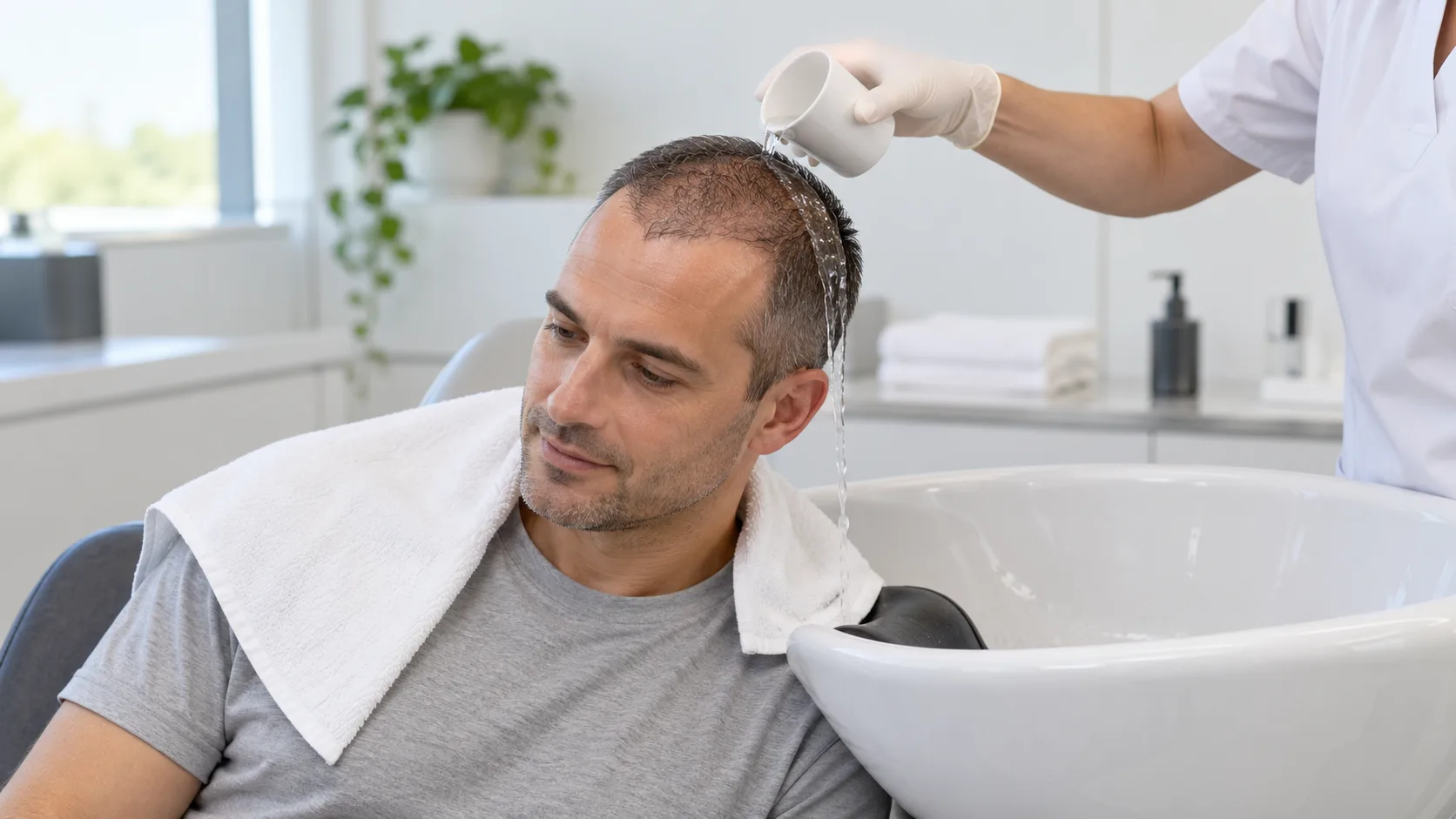
The team cleans the scalp with antiseptic, marks the surgical zones, and checks baseline sensitivity before any injection.
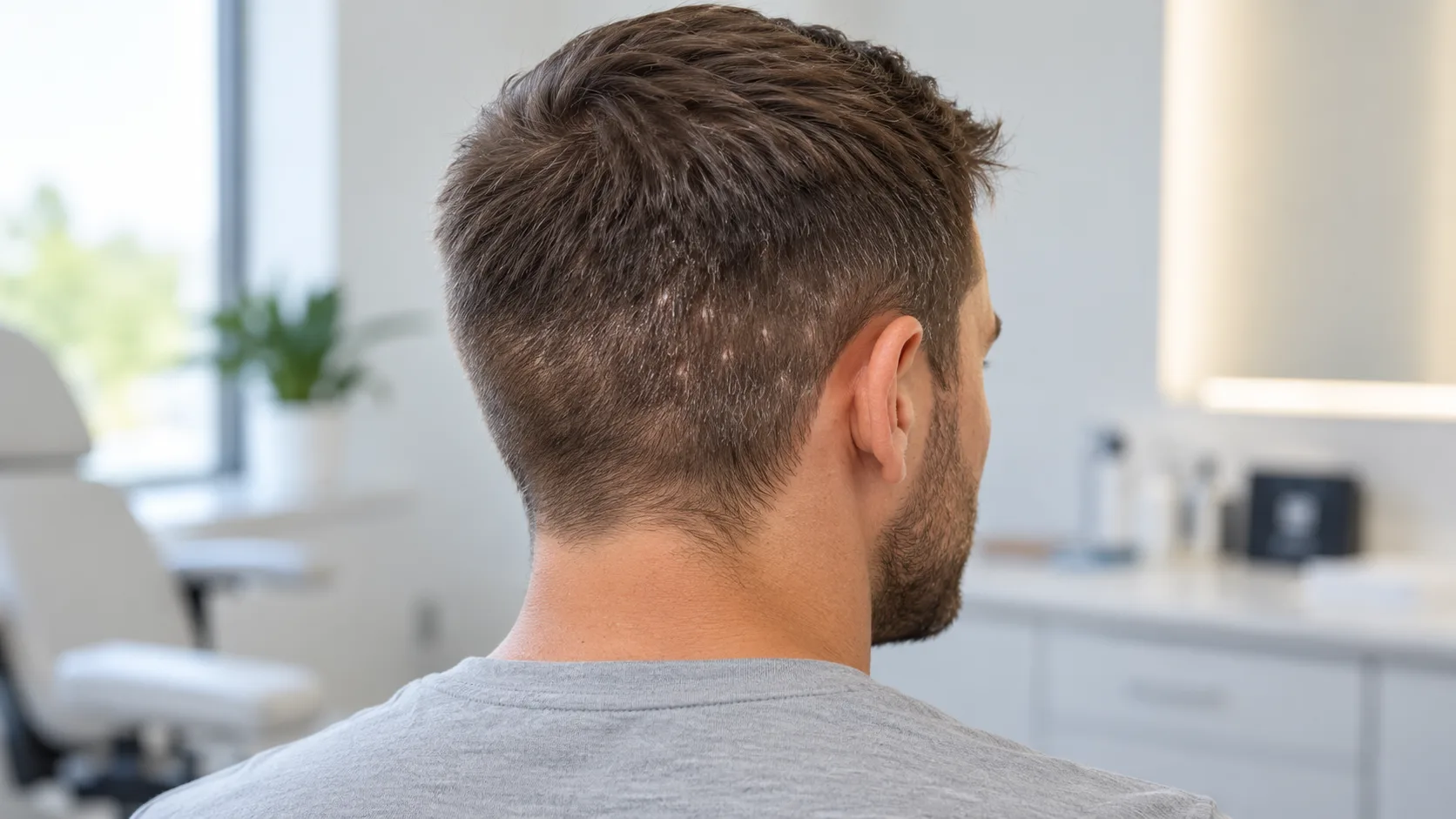
Preparation follows a strict sequence. The surgeon shaves or trims the donor area, applies antiseptic solution, and marks the hairline design. The team then palpates the scalp to identify sensitive zones. This assessment guides the injection pattern.
How Is Traditional Local Anaesthesia Injected?
The surgeon injects the anaesthetic through a fine needle in small, gradual amounts. The solution spreads through the scalp tissue and blocks the local nerves.
Traditional infiltration uses thin needles and slow delivery. Gradual injection reduces burning and tissue distortion. The anaesthetic often contains lidocaine with epinephrine. Epinephrine narrows blood vessels, which limits bleeding and prolongs the numbing effect (Unger and Shapiro 2004). Some protocols add a tumescent layer, meaning a larger volume of diluted solution that lifts the skin away from deeper structures.
How Long Does It Take for the Scalp to Become Numb?
Most local anaesthetics numb the scalp within five to fifteen minutes. The surgeon tests the area with a gentle touch or small prick before starting.
Onset depends on the drug, the dose, and the injection depth. Lidocaine works faster than longer-acting agents such as bupivacaine (Becker and Reed 2012). If the patient still feels sharp sensation, the team adds more anaesthetic. This check protects the patient from pain during the first incisions.
Does Local Anaesthesia Hurt During a Hair Transplant?
The injection causes brief stinging or burning. The surgery itself should cause little or no pain once the scalp becomes numb.
Injection discomfort and surgical pain are different events. The needle passes through sensitive skin, and the anaesthetic solution stretches the tissue. Patients often describe a pinch, pressure, and mild burning that fades within seconds. Pain perception varies with individual nerve sensitivity, anxiety, and injection technique (Becker and Reed 2012).
What Does a Patient Typically Feel During Anaesthetic Injection?
Patients feel a brief needle prick, pressure, mild burning, and then a transition to numbness.
The first seconds carry the most sensation. Slow injection, fine needles, and vibration distraction reduce discomfort. As the drug blocks the nerve endings, the burning fades and the scalp turns numb.
Can Local Anaesthesia Completely Eliminate Pain?
It nearly eliminates surgical pain, but it rarely removes every sensation. Patients may still feel pressure, tugging, or warmth.
"Minimal discomfort" is a realistic goal. "Completely painless" is not, because pressure fibres remain active. Comfort also depends on anxiety, drug dose, and whether the team adds extra anaesthetic during long sessions.
What Is Needle-Free Anaesthesia for Hair Transplantation?
Needle-free anaesthesia is a delivery method, not a different drug. A high-pressure jet pushes the anaesthetic through the skin without a needle.
Jet-injection systems use a narrow, pressurised stream of liquid. The stream penetrates the skin at high speed and deposits the anaesthetic in the superficial tissue (Mitragotri 2006). This method appeals to patients with needle phobia because it removes the initial needle stick. However, "needle-free" does not always mean "no needle at all." Some protocols use jet delivery first and add traditional infiltration if deeper numbing is needed.
How Does Jet-Injector Anaesthesia Work?
A pressure device accelerates the anaesthetic into a fine jet. The jet crosses the skin barrier and blocks the local nerves.
The jet reaches the dermis and upper subcutaneous layer. The anaesthetic then acts on nerve endings exactly as it would after a needle injection. The difference lies in delivery, not in mechanism. Needle-free systems show promise for reducing injection pain, although clinical protocols vary between clinics and studies remain limited compared with standard infiltration (Mitragotri 2006).
Who May Benefit From Needle-Free Anaesthesia?
Patients with needle phobia, strong procedural anxiety, or low tolerance for injection discomfort benefit most.
Needle phobia affects a measurable share of surgical patients and can trigger vasovagal reactions. Jet delivery reduces the psychological trigger of the visible needle. Patients who fear injections often relax once the first zone becomes numb without a needle.
How Does Traditional Anaesthesia Compare With Needle-Free Anaesthesia?
Both methods numb the scalp. Traditional injection penetrates with a fine needle, while jet delivery uses pressure. Jet delivery may ease needle anxiety, but some protocols still add needle infiltration later.
Factor | Traditional Local Anaesthesia | Needle-Free Delivery |
Delivery method | Fine-needle injection | Pressure-based jet |
Needle penetration | Yes | No during jet stage |
Main purpose | Scalp numbness | Scalp numbness with less injection discomfort |
Needle-phobia impact | Can raise anxiety | Often improves initial comfort |
Additional infiltration | Sometimes required | Sometimes still required |
Onset control | Precise, layer by layer | Fast, superficial spread |
The comparison matters because the two methods are not interchangeable. Jet delivery handles the initial discomfort barrier. Traditional infiltration provides deeper, longer, and more adjustable coverage. Many surgical teams combine both approaches to balance comfort and control.
Which Hair Transplant Techniques Use Local Anaesthesia?
Both FUE and DHI rely on local anaesthesia. The technique changes the pattern of infiltration, not the need for numbing.
How Is Anaesthesia Used During FUE Hair Transplantation?
FUE requires numbing in the donor area for extraction and in the recipient area for implantation.
Follicular unit extraction removes grafts one by one with a punch. The surgeon anaesthetises the donor zone first. After extraction, the team numbs the recipient zone, creates channels, and implants the grafts (Dua and Dua 2010). Long sessions may require top-up doses as the drug wears off.
How Is Anaesthesia Used During DHI Hair Transplantation?
DHI follows the same numbing logic as FUE, but the surgeon implants grafts immediately with an implanter pen.
DHI combines extraction and implantation in one flow. The patient stays reclined for longer periods, so comfort and dosing intervals matter more. Steady anaesthesia prevents movement during precise implanter placement. Research confirms that technique choice affects session length and graft handling demands, which in turn shape the anaesthetic plan (Dua and Dua 2010).
How Long Does Local Anaesthesia Last After Hair Transplantation?

Scalp numbness usually lasts several hours after the procedure. Sensation returns gradually over the following hours or days.
Duration depends on the drug, the dose, and whether the team added epinephrine. Lidocaine typically wears off within two to four hours. Longer-acting agents can extend numbness up to eight hours or more (Becker and Reed 2012). Patients often notice tingling as feeling returns.
Is Scalp Numbness Normal After Hair Transplantation?
Yes. Temporary numbness and tingling in the donor and recipient areas are normal after surgery.
Numbness comes from both the anaesthetic and minor nerve disturbance during surgery. Most patients regain full sensation within days to weeks. Medical literature recognises temporary numbness as a common postoperative finding, and less commonly persistent sensory change, among hair transplant complications (Sharma and Ranjan 2021).
What Side Effects Can Local Anaesthesia Cause?
Local anaesthesia can cause temporary swelling, tingling, and altered sensation. True allergic reactions are rare but possible.
Can Local Anaesthesia Cause Swelling?
Yes. The injected fluid stretches the tissue and can trigger mild swelling for one to three days.
Swelling relates to the volume of infiltrated solution and the body's local response. It usually peaks within the first 48 hours and fades without treatment. Cold compresses and head elevation reduce it.
Can Local Anaesthesia Cause Tingling or Altered Sensation?
Yes. Tingling, numbness, and brief hypersensitivity signal that sensation is returning.
These effects reflect nerve recovery, not damage. Patients may feel itching or "pins and needles" as fibres regain function. The sensations resolve as healing progresses.
Are Allergic Reactions to Local Anaesthesia Possible?
Yes, but they are rare. Patients must disclose previous reactions before surgery.
True allergy to amide anaesthetics such as lidocaine is uncommon (Simons 2009). Most reported reactions come from preservatives, epinephrine effects, or anxiety. Expected local effects include brief burning and redness. Concerning signs include hives, breathing difficulty, or facial swelling. These require immediate medical attention.
How Safe Is Local Anaesthesia for Hair Transplantation?
Local anaesthesia is safe when a qualified medical team uses appropriate dosing and reviews the patient's history. Serious complications are rare.
Safety rests on five pillars: correct drug selection, correct dosing, medical history review, intraoperative monitoring, and trained supervision. Overdose can cause systemic toxicity affecting the heart and nervous system (Becker and Reed 2012). Large hair transplant sessions require careful calculation of total dose. Literature on hair transplant complications cites allergic reactions and local anaesthetic overdosage among recognised risks, with anaphylaxis occurring rarely (Sharma and Ranjan 2021; Simons 2009).
What Should Patients Tell Their Hair Transplant Team Before Anaesthesia?
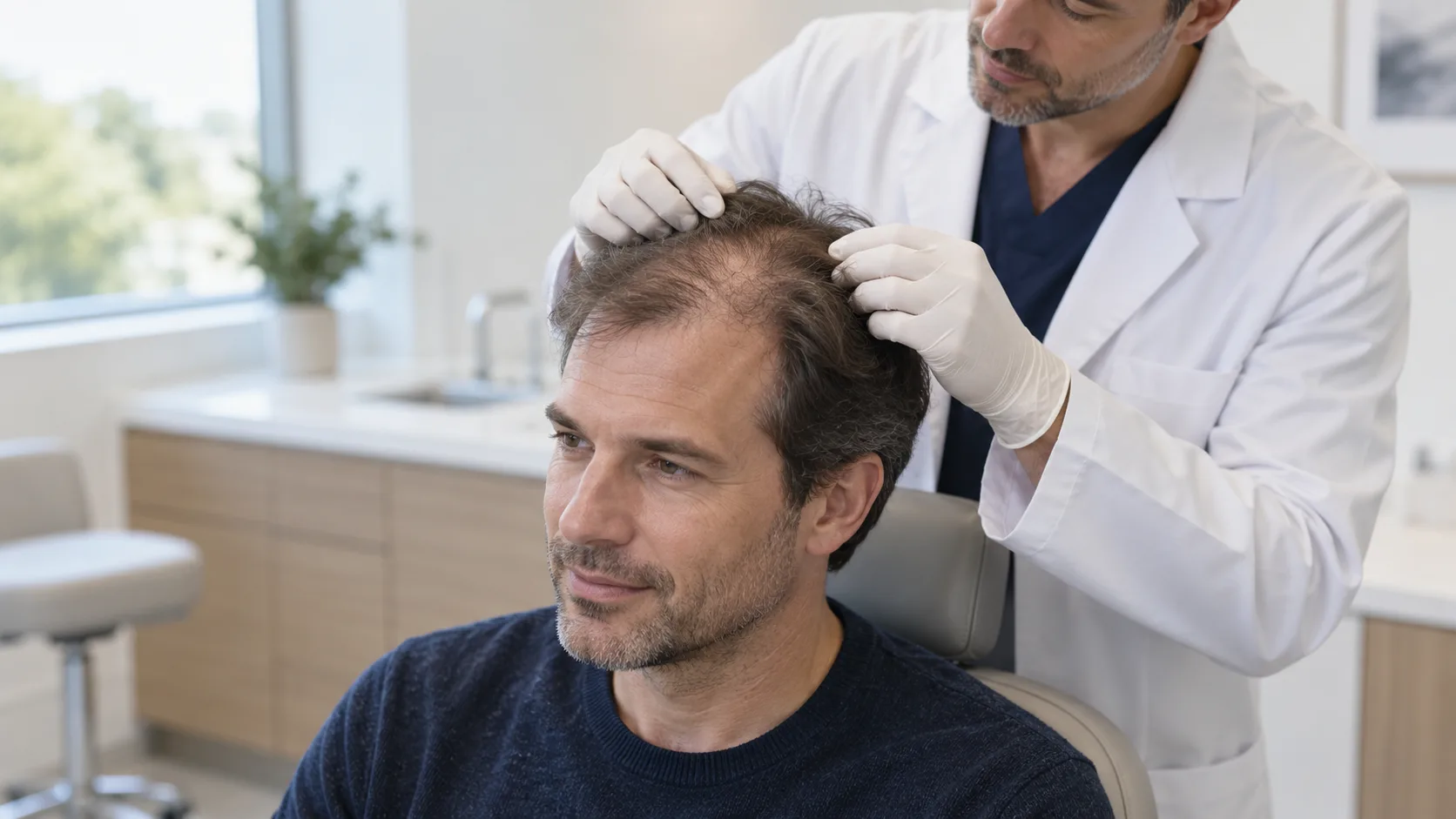
Patients should report all medications, allergies, previous anaesthetic reactions, medical history, and needle phobia.
Blood thinners, heart medication, and supplements can interact with anaesthetic protocols. A history of malignant hyperthermia, liver disease, or prior adverse reactions changes drug choice. Honest disclosure protects the patient and guides the anaesthetic plan.
Does Local Anaesthesia Affect Hair Transplant Results?
Local anaesthesia does not directly improve graft growth. It supports safe surgery, while technique, graft handling, and aftercare drive outcomes.
Anaesthesia controls pain. It does not feed follicles or speed growth. However, poor anaesthesia can harm results indirectly. A moving patient disrupts graft placement. Conversely, a calm, numb patient allows precise incisions and gentle handling. Graft survival depends on surgical skill, ischemia time, recipient-site depth, and postoperative care (Unger and Shapiro 2004). Any claim that anaesthesia alone boosts growth lacks scientific support.
What Does the Patient Experience After the Anaesthetic Wears Off?
Sensation returns gradually. Mild soreness, tightness, and tenderness in both zones are common and usually fade within days.
As numbness fades, patients notice a dull ache rather than sharp pain. The donor area may feel tight. The recipient area may itch or tingle. Clinics prescribe pain relief and advise sleeping with the head elevated. Discomfort should improve steadily after the first 48 to 72 hours.
When Should Postoperative Numbness or Pain Be Medically Assessed?
Seek medical review if pain increases, numbness persists or worsens, swelling becomes severe, or infection signs appear.
Warning signs include spreading redness, pus, fever, severe throbbing, or unexpected neurological symptoms such as facial weakness. Symptoms of a serious allergic reaction include hives, wheezing, or swelling of the lips and tongue. These events are rare but require urgent care (Simons 2009).
How Can Patients Prepare for Local Anaesthesia Before a Hair Transplant?
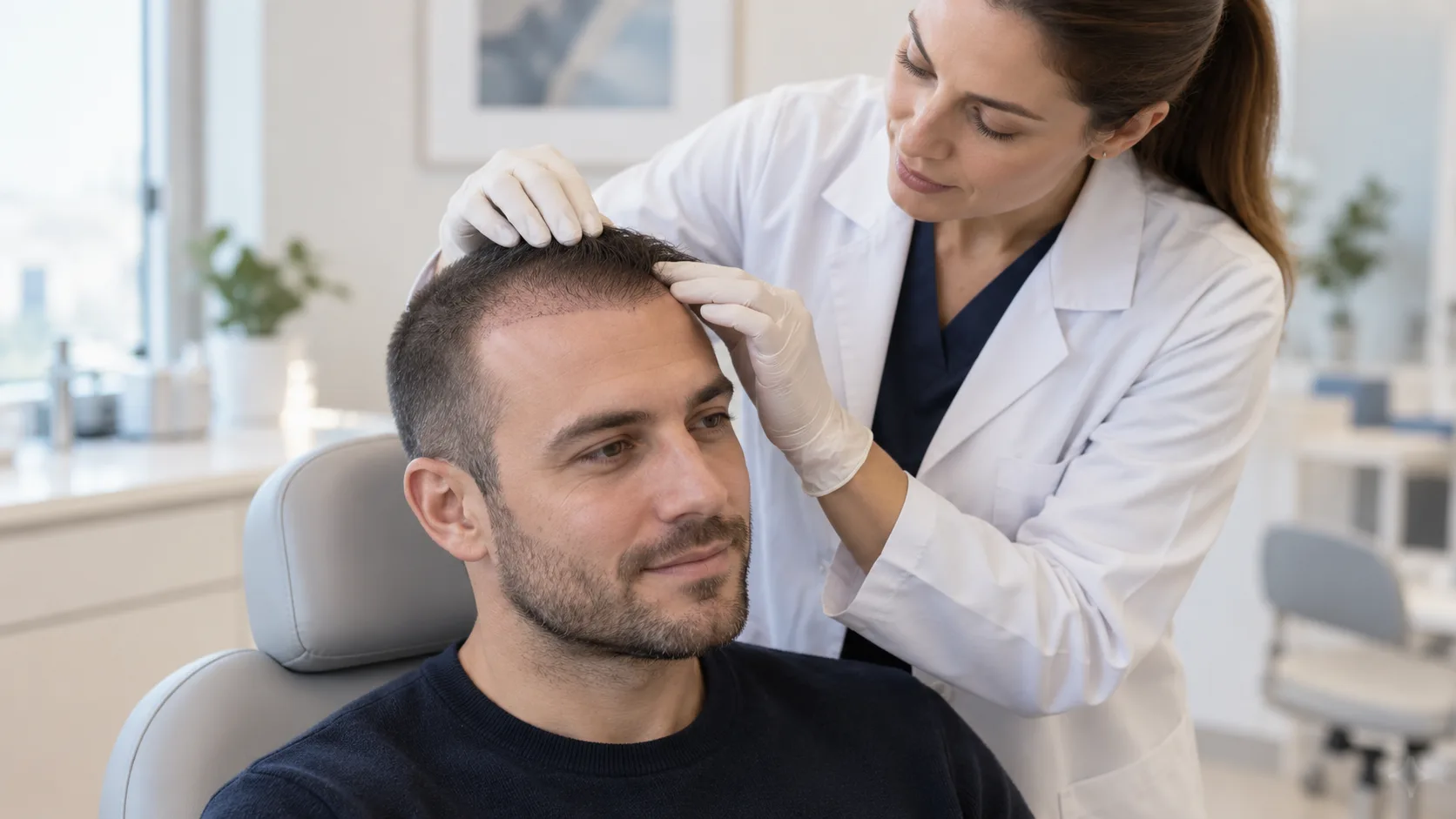
Patients should discuss concerns, report allergies, ask about the delivery method, and follow preoperative instructions.
Preparation starts at the consultation. Patients should ask which drug the team will use, whether both zones will be numbed, and whether needle-free delivery is available. They should avoid blood-thinning agents if the surgeon advises it, and they should not assume "needle-free" means "completely sensation-free." Clear questions reduce anxiety and improve cooperation on surgery day.
What Should You Ask About Anaesthesia During Your Hair Transplant Consultation?
Ask about the drug, the administrator, coverage, contingency plans, and postoperative expectations.
Which local anaesthetic medication will be used?
Most clinics use lidocaine, sometimes combined with epinephrine or a longer-acting agent.
Who will administer the anaesthesia?
A qualified physician or trained medical professional should administer and monitor the anaesthesia.
Will both the donor and recipient areas be numbed?
Yes. Both zones require separate anaesthetic coverage.
What happens if I can still feel pain during the procedure?
The team should pause and add more anaesthetic immediately.
Is needle-free anaesthesia available?
Some clinics offer jet delivery. Ask whether the protocol remains needle-free throughout or includes later infiltration.
Will additional injections be necessary?
Long sessions often need top-up doses. Ask how the team manages dosing over time.
How long should scalp numbness last?
Expect several hours of numbness. Persistent numbness beyond a few weeks warrants review.
What symptoms should I report after the procedure?
Report increasing pain, severe swelling, fever, hives, breathing difficulty, or spreading redness.
Frequently Asked Questions About Local Anaesthesia in Hair Transplantation
Is local anaesthesia necessary for a hair transplant?
Yes. Pain control is essential for safety and precision.
Is local anaesthesia painful?
The injection stings briefly. The surgery itself should not hurt.
How long does local anaesthesia last?
Two to eight hours, depending on the drug and dose.
Can you feel the hair transplant after the scalp is numb?
You may feel pressure or movement, but not sharp pain.
Is needle-free anaesthesia completely painless?
No. It reduces needle discomfort but does not remove all sensation.
Can local anaesthesia cause scalp numbness after surgery?
Yes. Temporary numbness is normal and fades as nerves recover.
Can patients with needle phobia have a hair transplant?
Yes. Jet-injection delivery and sedation options help anxious patients.
Does local anaesthesia affect hair growth?
No. It supports comfort and safety, not graft growth.
Can local anaesthesia be used for both FUE and DHI?
Yes. Both techniques rely on local anaesthesia.
Conclusion
Local anaesthesia makes modern hair transplantation possible. It blocks pain in the donor and recipient areas, keeps the patient awake and cooperative, and protects surgical precision in both FUE and DHI. Injection causes brief discomfort, while the procedure itself should feel painless. Needle-free jet delivery offers an alternative for patients with needle anxiety, although it does not replace deeper infiltration in every protocol. Side effects such as swelling and tingling remain temporary for most patients. Serious reactions are rare when a qualified team reviews medical history, calculates doses, and monitors the patient. Anyone planning a hair transplant should discuss anaesthesia openly during the consultation and report unusual symptoms after surgery.
References
Becker, Daniel E., and Kenneth L. Reed. "Local Anesthetics: Review of Pharmacological Considerations." Anesthesia Progress, vol. 59, no. 2, 2012, pp. 90–102.
Dua, Aarti, and Kamal Dua. "Follicular Unit Extraction Hair Transplant." Indian Journal of Dermatology, vol. 55, no. 4, 2010, pp. 407–415.
Mitragotri, Samir. "Current Status and Future Prospects of Needle-Free Liquid Jet Injectors." Nature Reviews Drug Discovery, vol. 5, 2006, pp. 543–548.
Sharma, Rajeev, and Amit Ranjan. "Complications of Hair Transplant." Indian Dermatology Online Journal, vol. 12, suppl. 1, 2021, pp. S51–S55.
Simons, F. Estelle R. "Anaphylaxis: Recent Advances in Assessment and Treatment." Journal of Allergy and Clinical Immunology, vol. 124, no. 4, 2009, pp. 625–636.
Tucker, G. T. "Pharmacokinetics of Local Anaesthetics." British Journal of Anaesthesia, vol. 58, no. 7, 1986, pp. 717–731.
Unger, Walter P., and Ronald Shapiro, editors. Hair Transplantation. 4th ed., Informa Healthcare, 2004.