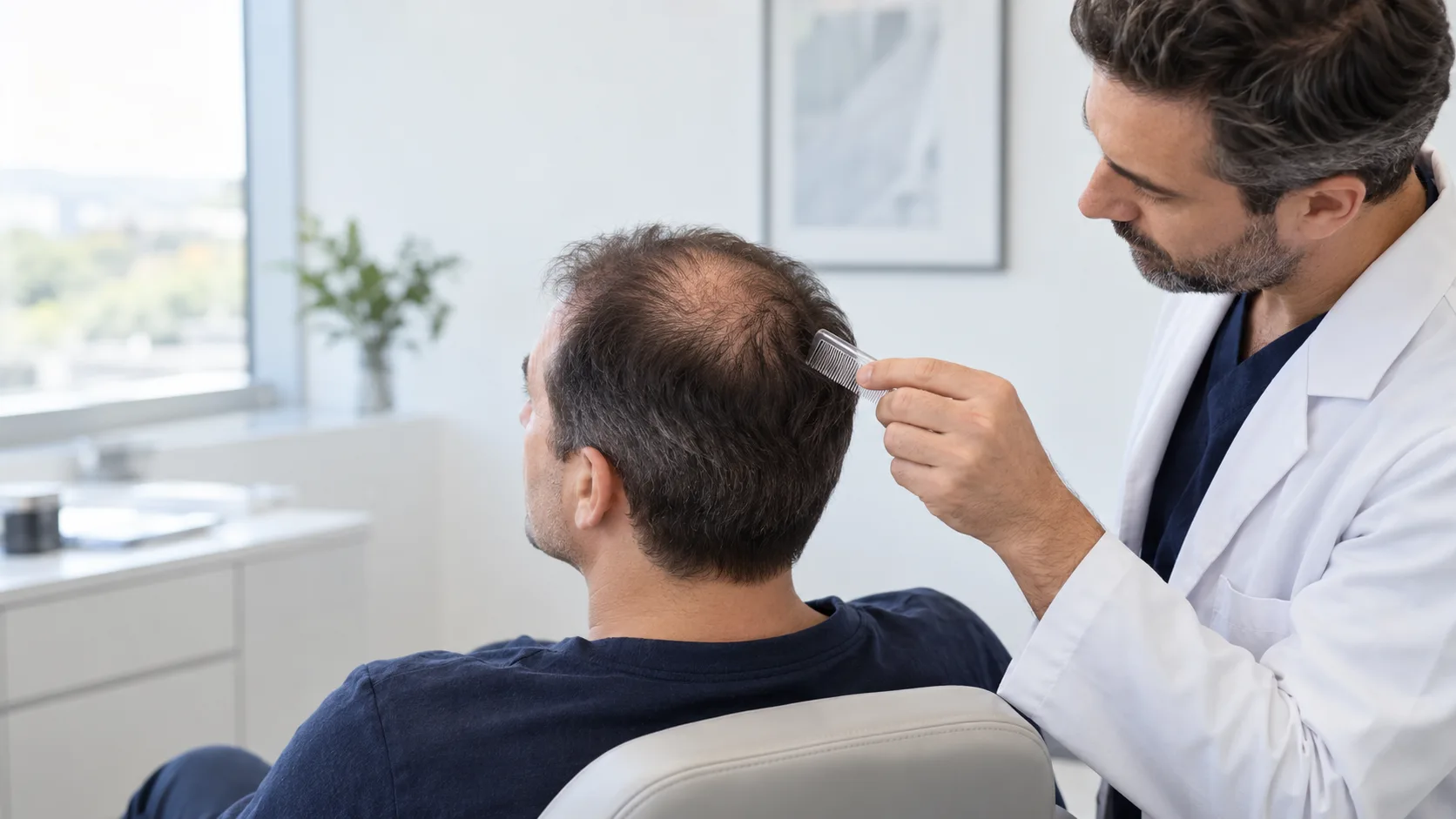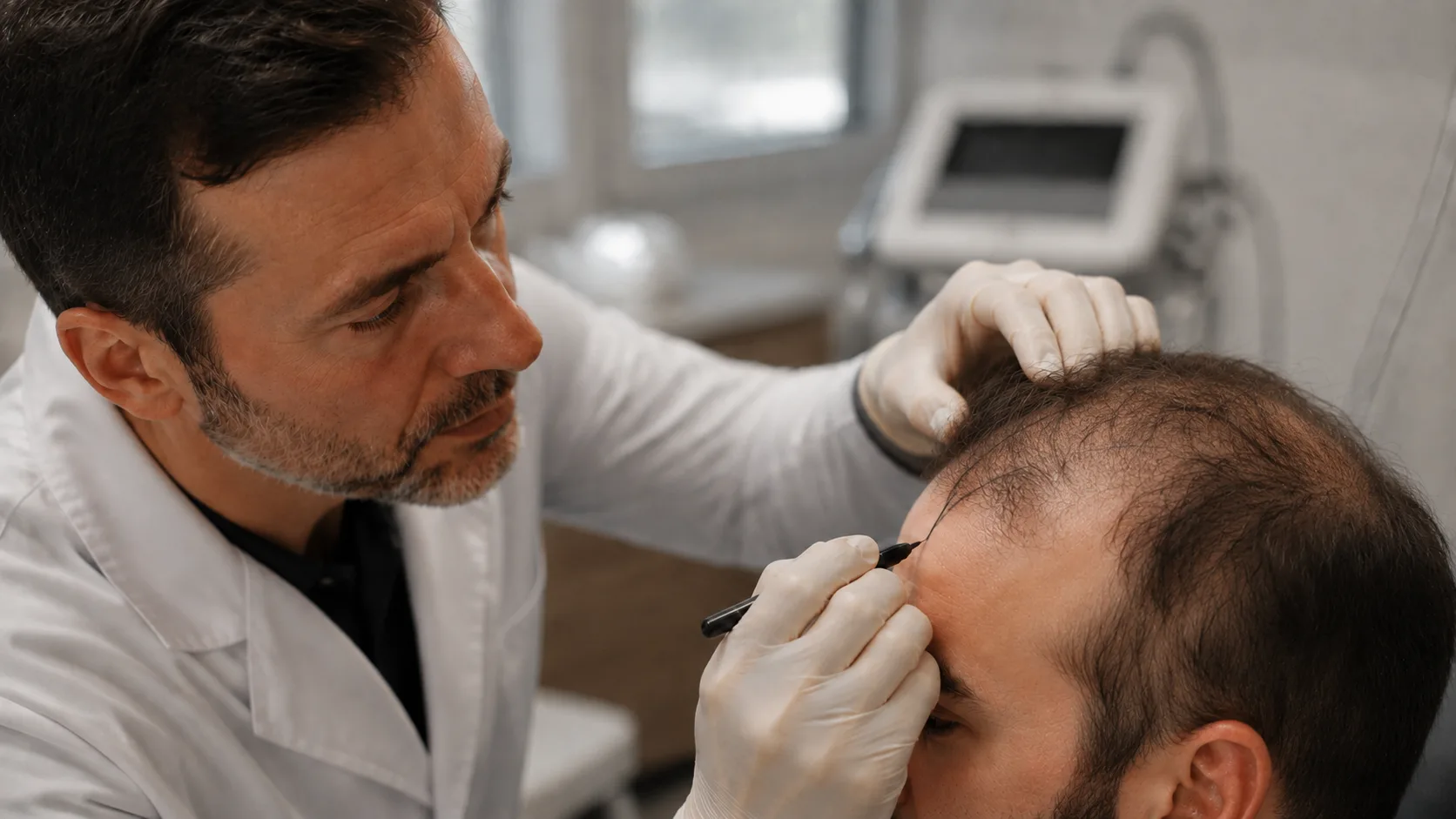
Τι Κάνει Έναν Έμπειρο Χειρουργό Μεταμόσχευσης Μαλλιών;
Η μεταμόσχευση μαλλιών απαιτεί περισσότερα από ιατρικές γνώσεις. Απαιτεί χειρουργική ακρίβεια, βαθιά ανατομική κατανόηση και εξελιγμένη αισθητική κρίση. Ένας έμπειρος χειρουργός μεταμόσχευσης μαλλιών συνδυάζει αυτά τα στοιχεία για να προσφέρει ασφαλή, φυσικά αποτελέσματα που διαρκούν. Πολλοί ασθενείς συγχέουν τη γενική ιατρική εμπειρία με την εξειδικευμένη εμπειρία αποκατάστασης μαλλιών. Ένας γιατρός μπορεί να έχει ιατρική άδεια για δεκαετίες αλλά να έχει περιορισμένη πρακτική εμπειρία στην εκχύλιση θυλακίων ή τον σχεδιασμό γραμμής μαλλιών. Αυτό το άρθρο εξετάζει τα μετρήσιμα προσόντα, την τεχνική ικανότητα και τα τεκμηριωμένα αποτελέσματα που πραγματικά καθορίζουν έναν έμπειρο χειρουργό μεταμόσχευσης μαλλιών. Θα μάθετε πώς να αξιολογείτε την χειρουργική εμπειρία πέρα από τις διαφημιστικές αξιώσεις, τις ετικέτες τιμών ή τις εμφανίσεις κλινικών. Βασιζόμαστε σε ανασκοπήσεις από ομότιμους, κατευθυντήριες γραμμές επαγγελματικών ενώσεων και καθιερωμένες χειρουργικές αρχές.
Γιατί Έχει Σημασία η Εμπειρία ενός Χειρουργού Μεταμόσχευσης Μαλλιών;
Η εμπειρία έχει σημασία γιατί η μεταμόσχευση μαλλιών συνδυάζει χειρουργική ακρίβεια με αισθητική τέχνη. Ένας έμπειρος χειρουργός ελαχιστοποιεί τις επιπλοκές, διατηρεί τα μαλλιά του δότη και δημιουργεί φυσικά αποτελέσματα που διαρκούν.
Η μεταμόσχευση μαλλιών δεν είναι μια απλή αισθητική διαδικασία. Περιλαμβάνει την εξαγωγή ζωντανών θυλακίων από μια περιορισμένη ζώνη δότη και την εμφύτευσή τους σε περιοχές παραλήπτη με ακριβή γωνία, κατεύθυνση και βάθος. Κάθε βήμα ενέχει κινδύνους. Η διατομή του μοσχεύματος μπορεί να καταστρέψει βιώσιμα θυλάκια. Η κακή εμφύτευση μπορεί να δημιουργήσει αφύσικους αναπτυξιακούς σχηματισμούς. Η υπερκατανάλωση μπορεί να βλάψει μόνιμα την περιοχή του δότη. Ένας έμπειρος χειρουργός μεταμόσχευσης μαλλιών κατανοεί αυτούς τους κινδύνους και τους διαχειρίζεται μέσω σωρευτικής χειρουργικής πρακτικής. Η έρευνα δείχνει ότι η χειρουργική ικανότητα βελτιώνεται με την επαναλαμβανόμενη εκτέλεση συγκεκριμένων διαδικασιών (Baker, 2019). Αυτή η σχέση όγκου-αποτελέσματος εφαρμόζεται άμεσα στην αποκατάσταση μαλλιών. Οι ασθενείς που επιλέγουν χειρουργούς βασιζόμενοι μόνο σε χαμηλές τιμές, κομψά εσωτερικά περιβάλλοντα κλινικών ή επιθετική διαφήμιση συχνά παραβλέπουν τον πιο κρίσιμο παράγοντα: τον πραγματικό χρόνο του χειρουργού σε ιστό και τον όγκο των περιπτώσεων. Η εμπειρία θα πρέπει να αξιολογείται μέσω μετρήσιμων προσόντων, τεχνικής ικανότητας και τεκμηριωμένων μακροπρόθεσμων αποτελεσμάτων, όχι μέσω διαφημιστικού υλικού.
Ποιες Πιστοποιήσεις Πρέπει να Έχει Ένας Έμπειρος Χειρουργός Μεταμόσχευσης Μαλλιών;
Κάνει μόνο μια Ιατρική Άδεια Κάποιον Ειδικό Χειρουργό Μεταμόσχευσης Μαλλιών;
Όχι. Μια ιατρική άδεια επιτρέπει τη γενική πρακτική αλλά δεν αποδεικνύει εξειδικευμένη εκπαίδευση στην αποκατάσταση μαλλιών, στην ανατομία του τριχωτού της κεφαλής ή στη βιολογία των θυλακίων.
Κάθε χειρουργός μεταμόσχευσης μαλλιώνπρέπει να έχει ενεργή ιατρική άδεια. Ωστόσο, μια άδεια από μόνη της δεν καθορίζει την εξειδίκευση στην αποκατάσταση μαλλιών. Γενικοί ιατροί, ειδικοί επείγουσας ιατρικής ή γιατροί από άσχετες ειδικότητες μπορούν νομίμως να εκτελούν μεταμοσχεύσεις μαλλιών σε πολλές δικαιοδοσίες χωρίς συγκεκριμένη εκπαίδευση. Αυτό δημιουργεί ένα επικίνδυνο κενό μεταξύ νομικής άδειας και κλινικής ικανότητας. Ένας qualified χειρουργός μεταμόσχευσης μαλλιών πρέπει να κατανοεί τη διάγνωση απώλειας μαλλιών, την ανατομία του τριχωτού της κεφαλής και τη βιολογία των θυλακίων (Unger και Shapiro, 2021). Οι ασθενείς θα πρέπει να επαληθεύουν την ιατρική άδεια του χειρουργού μέσω επίσημων ρυθμιστικών φορέων. Πρέπει επίσης να επιβεβαιώσουν ότι ο χειρουργός έχει συγκεκριμένη εκπαίδευση σε χειρουργικές ή δερματολογικές ειδικότητες σχετικές με την αποκατάσταση μαλλιών. Η άδεια παρέχει τη βάση. Η εξειδικευμένη εκπαίδευση χτίζει τη δομή.
Ποια Είναι Τα Πρόσθετα Εκπαιδευτικά Εφόδια Που Πρέπει να Έχει Ένας Χειρουργός Μεταμόσχευσης Μαλλιών;
Ένας χειρουργός θα πρέπει να ολοκληρώσει μεταπτυχιακή εκπαίδευση στη δερματολογία ή τη χειρουργική, να επιδιώξει εξειδικευμένη εκπαίδευση στην αποκατάσταση μαλλιών, να συμμετάσχει σε καθοδήγηση και να διατηρεί συνεχιζόμενη ιατρική εκπαίδευση.
Η μεταπτυχιακή εκπαίδευση στη δερματολογία, την πλαστική χειρουργική ή τη γενική χειρουργική παρέχει βασικές ανατομικές και χειρουργικές γνώσεις. Ωστόσο, ακόμη και αυτές οι προϋποθέσεις δεν περιλαμβάνουν αυτομάτως την αποκατάσταση μαλλιών. Ένας χειρουργός πρέπει να επιδιώξει εξειδικευμένη εκπαίδευση αποκατάστασης μαλλιών μέσω αναγνωρισμένων προγραμμάτων, εργαστηρίων ή καθοδήγησης από καθ established practitioners (Bernstein και Rassman, 2020). Η συνεχιζόμενη ιατρική εκπαίδευση διατηρεί τον χειρουργό ενήμερο σχετικά με τις εξελισσόμενες τεχνικές. Οι ασθενείς πρέπει να διακρίνουν τις επίσημες προσόντες από τα σύντομα σαββατιάτικα σεμινάρια ή τις πιστοποιήσεις βάσει συσκευών. Μια πιστοποίηση κατασκευαστή για ένα συγκεκριμένο εργαλείο δεν ισοδυναμεί με συνολική χειρουργική εκπαίδευση. Η αληθινή εκπαίδευση περιλαμβάνει τόσο τη διάγνωση όσο και τη χειρουργική διαχείριση. Ο χειρουργός πρέπει να προσδιορίσει την αιτία της απώλειας μαλλιών, να προβλέψει την μελλοντική εξέλιξη και να επιλέξει τους κατάλληλους χειρουργικούς υποψήφιους.
Αποδεικνύει η πιστοποίηση από το Διοικητικό Συμβούλιο ότι ένας χειρουργός είναι έμπειρος;
Όχι. Η πιστοποίηση από το Διοικητικό Συμβούλιο δείχνει την ολοκλήρωση τυποποιημένης εκπαίδευσης αλλά δεν εγγυάται εμπειρία στην αποκατάσταση μαλλιών ή μεγάλο όγκο περιστατικών.
Η πιστοποίηση από το Διοικητικό Συμβούλιο στη δερματολογία, την πλαστική χειρουργική ή σε άλλη σχετική ειδικότητα δείχνει ότι ένας χειρουργός έχει πληρώσει αυστηρά πρότυπα εκπαίδευσης. Ωστόσο, η πιστοποίηση από το Διοικητικό Συμβούλιο δεν μετράει συγκεκριμένα την εμπειρία στον τομέα της μεταμόσχευσης μαλλιών. Ένας ιατρός με πιστοποίηση από το Διοικητικό Συμβούλιο μπορεί να έχει εκτελέσει μόνο μερικές διαδικασίες αποκατάστασης μαλλιών. Η συμμετοχή σε επαγγελματικές ενώσεις, τα υποτροφίες και άλλες πιστοποιήσεις έχουν επίσης περιορισμούς. Η Διεθνής Εταιρεία Χειρουργικής Αποκατάστασης Μαλλιών (ISHRS) τονίζει ότι η συμμετοχή αντιπροσωπεύει επαγγελματική εμπλοκή και εκπαίδευση αλλά δεν αποδεικνύει αυτόματα ανώτερη χειρουργική ικανότητα (ISHRS, 2022). Οι πιστοποιήσεις πρέπει να υπηρετούν ως σημείο εκκίνησης για την αξιολόγηση, όχι ως το τέλος. Οι ασθενείς πρέπει να κοιτάξουν πέρα από τις πιστοποιήσεις και να επαληθεύσουν την πραγματική χειρουργική εμπειρία, τον όγκο περιστατικών και τα τεκμηριωμένα αποτελέσματα.
Πόσες διαδικασίες μεταμόσχευσης μαλλιών πρέπει να έχει εκτελέσει ένας έμπειρος χειρουργός;
Μετράει ο όγκος των χειρουργικών περιπτώσεων στη μεταμόσχευση μαλλιών;
Ναι. Ο μεγαλύτερος όγκος περιπτώσεων σχετίζεται με καλύτερο έλεγχο εργαλείων, ανατομική αναγνώριση, ποιότητα εξαγωγής μοσχευμάτων και διαχείριση επιπλοκών.
Η έρευνα σε χειρουργικές ειδικότητες δείχνει σταθερά μια σχέση όγκου-αποτελέσματος (Birkmeyer et al., 2013). Οι χειρουργοί που πραγματοποιούν διαδικασίες συχνά αναπτύσσουν καλύτερες τεχνικές ικανότητες, ταχύτερη αναγνώριση ανατομικών παραλλαγών και πιο αποτελεσματική λήψη αποφάσεων. Στη μεταμόσχευση μαλλιών, η επαναλαμβανόμενη άσκηση βελτιώνει τον έλεγχο του punch κατά την εξαγωγή, μειώνει την παραμόρφωση των μοσχευμάτων και βελτιώνει το σχέδιο του παραλήπτη. Ο όγκος των περιπτώσεων δομεί επίσης την εμπειρία στη διαχείριση επιπλοκών και απροσδόκητων προκλήσεων. Ωστόσο, ο όγκος μόνος του δεν εγγυάται την ποιότητα. Ένας χειρουργός μπορεί να εκτελεί πολλές διαδικασίες κακώς. Οι ασθενείς πρέπει να ερμηνεύουν τον όγκο περιπτώσεων μαζί με δείκτες ποιότητας όπως είναι τα ποσοστά επιβίωσης μοσχευμάτων, τα φυσικά αποτελέσματα και τα χαμηλά ποσοστά επιπλοκών.
Είναι ο αριθμός των ετών πιο σημαντικός από τον αριθμό των διαδικασιών;
Όχι. Ο αριθμός των διαδικασιών είναι πιο σημαντικός από τα χρόνια εμπειρίας. Ένας χειρουργός μπορεί να ασκεί ιατρική για δεκαετίες, αλλά να εκτελεί σπάνια μεταμοσχεύσεις μαλλιών.
«Είκοσι χρόνια ως ιατρός» δεν σημαίνει είκοσι χρόνια εμπειρίας στη μεταμόσχευση μαλλιών. Η γενική ιατρική εμπειρία διαφέρει από την εμπειρία στην κοσμητική χειρουργική. Η εμπειρία στην κοσμητική χειρουργική διαφέρει από την εμπειρία στην αποκατάσταση μαλλιών. Ακόμη και μέσα στην αποκατάσταση μαλλιών, η εμπειρία με μία τεχνική δεν μεταφέρεται αυτόματα σε άλλη. Οι ασθενείς πρέπει να θέτουν άμεσες ερωτήσεις: Πόσες διαδικασίες μεταμόσχευσης μαλλιών εκτελείτε προσωπικά κάθε χρόνο; Πόσες έχετε εκτελέσει συνολικά; Ένας χειρουργός που εκτελεί διακόσιες διαδικασίες ετησίως συγκεντρώνει περισσότερη σχετική εμπειρία σε πέντε χρόνια από έναν χειρουργό που εκτελεί είκοσι διαδικασίες ετησίως για είκοσι χρόνια. Ο σχετικός όγκος περιπτώσεων υπερτερεί της γενικής προϋπηρεσίας.
Πρέπει οι ασθενείς να ρωτούν για την εμπειρία με συγκεκριμένες διαδικασίες;
Ναι. Η εμπειρία πρέπει να αντιστοιχεί στις συγκεκριμένες ανάγκες σας, συμπεριλαμβανομένου του μοτίβου απώλειας μαλλιών, του τύπου διαδικασίας και των αισθητικών στόχων.
Δεν είναι όλες οι μεταμοσχεύσεις μαλλιών ίδιες. Ένας χειρουργός μπορεί να διαπρέπει σε περιπτώσεις ανδρικής αλωπεκίας αλλά να μην έχει εμπειρία σε διάχυτη αραίωση, γυναικεία αποκατάσταση μαλλιών ή μεταμόσχευση γενειάδας. Οι ασθενείς θα πρέπει να ρωτούν για συγκεκριμένη εμπειρία με την κατάστασή τους. Βασικοί τομείς περιλαμβάνουν: διαδικασίες υψηλού αριθμού μοσχευμάτων, διάχυτη αραίωση, προοδευτική ανδρογενετική αλωπεκία, γυναικεία αποκατάσταση μαλλιών, αποκατάσταση γενειάδας, ανασύνθεση γραμμής μαλλιών, και επανορθωτική ή διορθωτική χειρουργική (Limmer, 2018). Η ISHRS προτείνει σταθερά την αξιολόγηση σχετικής εμπειρίας αντί να αποδέχεται γενικές αξιώσεις κατάρτισης. Ένας χειρουργός που έχει εκτελέσει πεντακόσιες τυπικέςFUEδιαδικασίες μπορεί να είναι ακόμα απροετοίμαστος για πολύπλοκες περιπτώσεις αναθεώρησης.
Ποιες τεχνικές ικανότητες διακρίνουν έναν έμπειρο χειρουργό μεταμόσχευσης μαλλιών;
Πώς μειώνει ένας έμπειρος χειρουργός την παραμόρφωση μοσχευμάτων;
Ένας έμπειρος χειρουργός επιλέγει κατάλληλα μεγέθη punch, ελέγχει τη γωνία του punch, ακολουθεί την κατεύθυνση εξαγωγής και κατανοεί την ανατομία των θυλακίων για να μειώσει την παραμόρφωση.
Η παραμόρφωση μοσχευμάτων συμβαίνει όταν το εργαλείο εξαγωγής κόβει το θυλάκιο, προκαλώντας ζημιά ή καταστροφή του. Αυτό μειώνει την διαθέσιμη προμήθεια δότη και σπαταλά πολύτιμα μοσχεύματα. Οι έμπειροι χειρουργοί μειώνουν την παραμόρφωση μέσα από πολλούς τεχνικούς παράγοντες. Επιλέγουν διαμέτρους punch κατάλληλες για το μέγεθος του θυλακίου του ασθενούς. Ελέγχουν τη γωνία του punch για να ευθυγραμμιστεί με τη φυσική γωνία εξόδου των μαλλιών. Ακολουθούν την κατεύθυνση εξαγωγής που ταιριάζει με την καμπυλότητα του θυλακίου κάτω από το δέρμα. Κατανοούν τις ατομικές παραλλαγές στην ανατομία των θυλακίων και τις χαρακτηριστικές του ιστού (Cole, 2021). Ο έλεγχος του χειριστή και η σταθερότητα του χεριού παίζουν κρίσιμους ρόλους. Χαμηλά ποσοστά παραμόρφωσης υποδεικνύουν τεχνική επάρκεια. Ωστόσο, δεν υπάρχει ένα καθολικό «ιδανικό» ποσοστό που να ισχύει για όλους τους ασθενείς, καθώς τα χαρακτηριστικά της τρίχας διαφέρουν σημαντικά.
Πώς επηρεάζει η διαχείριση των μοσχευμάτων τα αποτελέσματα της μεταμόσχευσης μαλλιών;
Η σωστή διαχείριση των μοσχευμάτων προστατεύει τους θύλακες από αφυδάτωση, μηχανικό τραύμα, θερμική βλάβη και παρατεταμένη ισχαιμία μεταξύ εξαγωγής και εμφύτευσης.
Η περίοδος μεταξύ εξαγωγής και εμφύτευσης δημιουργεί ευαλωτότητα. Οι φυλλοειδείς μονάδες εκτός του σώματος αντιμετωπίζουν κινδύνους αφυδάτωσης, θερμικών τραυματισμών και μηχανικών βλαβών. Οι έμπειρες ομάδες διατηρούν την υγρασία των μοσχευμάτων μέσω κατάλληλων διαλυμάτων αποθήκευσης. Ελέγχουν τη θερμοκρασία αποθήκευσης για να διατηρήσουν την κυτταρική βιωσιμότητα. Ελαχιστοποιούν τον χρόνο χειρισμού για να μειώσουν τις ισχαιμικές βλάβες. Αποφεύγουν το μηχανικό τραύμα κατά την ταξινόμηση και φόρτωση. Οργανώνουν τα μοσχεύματα σύμφωνα με το μέγεθος και τον αριθμό τριχών ώστε να διευκολύνουν την αποτελεσματική εμφύτευση (Gandelman, 2020). Κάθε περιττή επαφή ή έκθεση αυξάνει τον κίνδυνο. Οι έμπειρες χειρουργικές ομάδες αναπτύσσουν απλοποιημένα πρωτόκολλα που προστατεύουν την ακεραιότητα των μοσχευμάτων καθ' όλη τη διάρκεια της διαδικασίας.
Πόσο σημαντικές είναι η γωνία εμφύτευσης, η κατεύθυνση και το βάθος;
Η γωνία εμφύτευσης, η κατεύθυνση και το βάθος καθορίζουν αν οι μεταμοσχευμένες τρίχες αναπτύσσονται φυσιολογικά ή φαίνονται τεχνητές.
Η τεχνική ακρίβεια της εμφύτευσης επηρεάζει άμεσα τα αισθητικά αποτελέσματα. Οι τρίχες πρέπει να αναδύονται υπό τη σωστή γωνία ώστε να ταιριάζουν με τις γύρω φυσικές τρίχες. Η κατεύθυνση πρέπει να ακολουθεί τα φυσικά πρότυπα ροής. Το βάθος πρέπει να τοποθετεί το μόσχευμα στο κατάλληλο επίπεδο στην δερμίδα χωρίς να προκαλεί συμπίεση ή εξογκώματα στην επιφάνεια. Η πυκνότητα πρέπει να δημιουργεί επαρκή κάλυψη χωρίς υπερφόρτιση. Ο σχεδιασμός της περιοχής υποδοχής πρέπει να λογαριάζει τις ζώνες μετάβασης όπου συναντώνται οι φυσικές και οι μεταμοσχευμένες τρίχες. Αυτοί οι παράγοντες γίνονται ιδιαίτερα κρίσιμοι γύρω από την εμπρόσθια γραμμή των μαλλιών, όπου κάθε λάθος είναι άμεσα ορατό (Lam και Williams, 2019). Ένας έμπειρος χειρουργός σχεδιάζει τις περιοχές υποδοχής με αυτούς τους παραμέτρους στο μυαλό και τις προσαρμόζει με βάση τα χαρακτηριστικά του τριχωτού της κεφαλής και την ποιότητα των μαλλιών.
Μπορεί ένας έμπειρος χειρουργός να προστατεύσει την περιοχή δότη;
Ναι. Ένας έμπειρος χειρουργός αξιολογεί την πυκνότητα του δότη, σέβεται την ασφαλή ζώνη δότη και διατηρεί τους πόρους του δότη για μελλοντικές ανάγκες.
Η διαχείριση της περιοχής δότη απαιτεί μακροχρόνιο προγραμματισμό. Ο χειρουργός πρέπει να αξιολογήσει την πυκνότητα, την ποιότητα και τα χαρακτηριστικά των μαλλιών του δότη πριν από την εξαγωγή. Η ασφαλής περιοχή δότη αντιπροσωπεύει την περιοχή όπου είναι πιο πιθανό τα μαλλιά να παραμείνουν μόνιμα. Η υπερβολική εξαγωγή από αυτή την περιοχή μπορεί να δημιουργήσει ορατή αραίωση, ουλές ή εξάντληση των μελλοντικών αποθεμάτων μοσχευμάτων. Ένας έμπειρος χειρουργός υπολογίζει πόσα μόσχευματα μπορεί να δωρίσει ασφαλώς ο ασθενής χωρίς να εκθέσει την εμφάνιση ή τις μελλοντικές διαδικασίες σε κίνδυνο (Unger και Shapiro, 2021). Η διαχείριση του δότη δεν είναι απλώς θέμα της ημέρας της χειρουργικής επέμβασης. Είναι ζήτημα μακροχρόνιου προγραμματισμού που επηρεάζει τις επιλογές του ασθενούς για δεκαετίες.
Πώς σχεδιάζει ένας έμπειρος χειρουργός μια φυσική γραμμή μαλλιών;
Γιατί ο σχεδιασμός της γραμμής των μαλλιών είναι περισσότερο από το να σχεδιάζεις μια ευθεία γραμμή;
Οι φυσικές γραμμές μαλλιών ακολουθούν τις αναλογίες του προσώπου, περιλαμβάνουν ανωμαλίες και λογαριάζουν τη θέση ανάλογα με την ηλικία. Οι ευθείες ή υπερβολικά χαμηλές γραμμές μαλλιών φαίνονται τεχνητές.
Ο σχεδιασμός της γραμμής μαλλιών είναι μια αισθητική πειθαρχία. Απαιτεί κατανόηση των αναλογιών του προσώπου, της συμμετρίας και των αλλαγών που σχετίζονται με την ηλικία. Ένας έμπειρος χειρουργός σχεδιάζει την εμπρόσθια γραμμή των μαλλιών ώστε να πλαισιώνει το πρόσωπο κατάλληλα. Αναπαράγει τους χρονικούς σημείων που προσδιορίζουν τα πλάγια όρια της γραμμής των μαλλιών. Εισάγει λεπτές ανωμαλίες που μιμούνται τα φυσικά πρότυπα των γραμμών μαλλιών. Δημιουργεί ζώνες μετάβασης όπου η πυκνότητα αυξάνεται σταδιακά και δεν αλλάζει απότομα (Lam και Williams, 2019). Μια υπερβολικά χαμηλή γραμμή μαλλιών μπορεί να φαίνεται αφύσικη σε έναν παλαιότερο ασθενή. Μια τέλεια ευθεία γραμμή μαλλιών αποκαλύπτει χειρουργική παρέμβαση. Οι καλύτερες γραμμές μαλλιών φαίνεται να έχουν υπάρξει πάντα.
Πώς προσαρμόζει ένας έμπειρος χειρουργός το σχέδιο της γραμμής μαλλιών σε κάθε ασθενή;
Ο χειρουργός λαμβάνει υπόψη την ηλικία, τη δομή του προσώπου, την ποιότητα των μαλλιών, την πυκνότητα, τη διαθεσιμότητα δότη, την υπάρχουσα απώλεια μαλλιών και την μελλοντική εξέλιξη για να δημιουργήσει εξατομικευμένα σχέδια.
Καμία γραμμή μαλλιών δεν ταιριάζει σε κάθε ασθενή. Ένας έμπειρος χειρουργός αξιολογεί πολλούς παράγοντες πριν σχεδιάσει τη γραμμή των μαλλιών. Η ηλικία καθορίζει το κατάλληλο ύψος και σχήμα της γραμμής των μαλλιών. Η δομή του προσώπου επηρεάζει το πώς πλαισιώνει η γραμμή των μαλλιών το πρόσωπο. Η ποιότητα των μαλλιών επηρεάζει πόση κάλυψη παρέχει το κάθε μόσχευμα. Η πυκνότητα των μαλλιών επηρεάζει τη συνολική οπτική πυκνότητα. Η διαθεσιμότητα δότη περιορίζει πόσα μόσχευματα μπορούν να κατανεμηθούν στη γραμμή μαλλιών σε σχέση με άλλες περιοχές. Τα υπάρχοντα πρότυπα απώλειας μαλλιών προβλέπουν τη μελλοντική εξέλιξη. Ο χειρουργός πρέπει να ισορροπήσει τους άμεσους αισθητικούς στόχους με τον μακροχρόνιο προγραμματισμό (Bernstein και Rassman, 2020). Ο εξατομικευμένος προγραμματισμός θεραπείας διαχωρίζει τους έμπειρους επαγγελματίες από εκείνους που εφαρμόζουν τυποποιημένα πρότυπα.
Πώς αξιολογεί ένας έμπειρος χειρουργός έναν ασθενή πριν από τη χειρουργική επέμβαση;
Χρειάζεται κάθε ασθενής με απώλεια μαλλιών να υποβληθεί σε μεταμόσχευση μαλλιών;
Όχι. Μερικές απώλειες μαλλιών είναι αναστρέψιμες, προσωρινές ή καλύτερα να αντιμετωπίζονται ιατρικά. Η χειρουργική επέμβαση δεν είναι κατάλληλη για κάθε ασθενή.
Η καθοριστική στιγμή του αιτίου και του προτύπου της απώλειας μαλλιών πρέπει να προηγείται του προγραμματισμού της χειρουργικής επέμβασης. Η ανδρογενετική αλωπεκία ακολουθεί προβλέψιμα πρότυπα και αντιπροσωπεύει την πιο κοινή ένδειξη για μεταμόσχευση. Ωστόσο, η μη τυποποιημένη απώλεια μαλλιών, το τελογενές εκφυλιστικό σύνδρομο, η αλωπεκία αareata ή οι ουλές αλωπεκίες μπορεί να απαιτούν ιατρική θεραπεία και όχι χειρουργική επέμβαση. Ορισμένες καταστάσεις είναι δυνητικά αναστρέψιμες. Η ακατάλληλη επιλογή ασθενούς παράγει απογοητευτικά αποτελέσματα και σπαταλά πόρους δότη (Blume-Peytavi et al., 2011). Ένας έμπειρος χειρουργός διενεργεί ενδελεχή ιατρική αξιολόγηση πριν προχωρήσει σε χειρουργική επέμβαση. Εντοπίζει αντενδείξεις και παραπέμπει τους ασθενείς για ιατρική διαχείριση όταν είναι κατάλληλο.
Τι Πρέπει να Αξιολογηθεί Κατά τη Διαβούλευση για Μεταμόσχευση Μαλλιών;
Ο χειρουργός θα πρέπει να αξιολογήσει το πρότυπο απώλειας μαλλιών, την πυκνότητα του δότη, το πάχος των μαλλιών, την κατάσταση του τριχωτού της κεφαλής, τις μίνι-μαλλιές, το ιατρικό ιστορικό, τις προσδοκίες και την μακροπρόθεσμη πορεία.
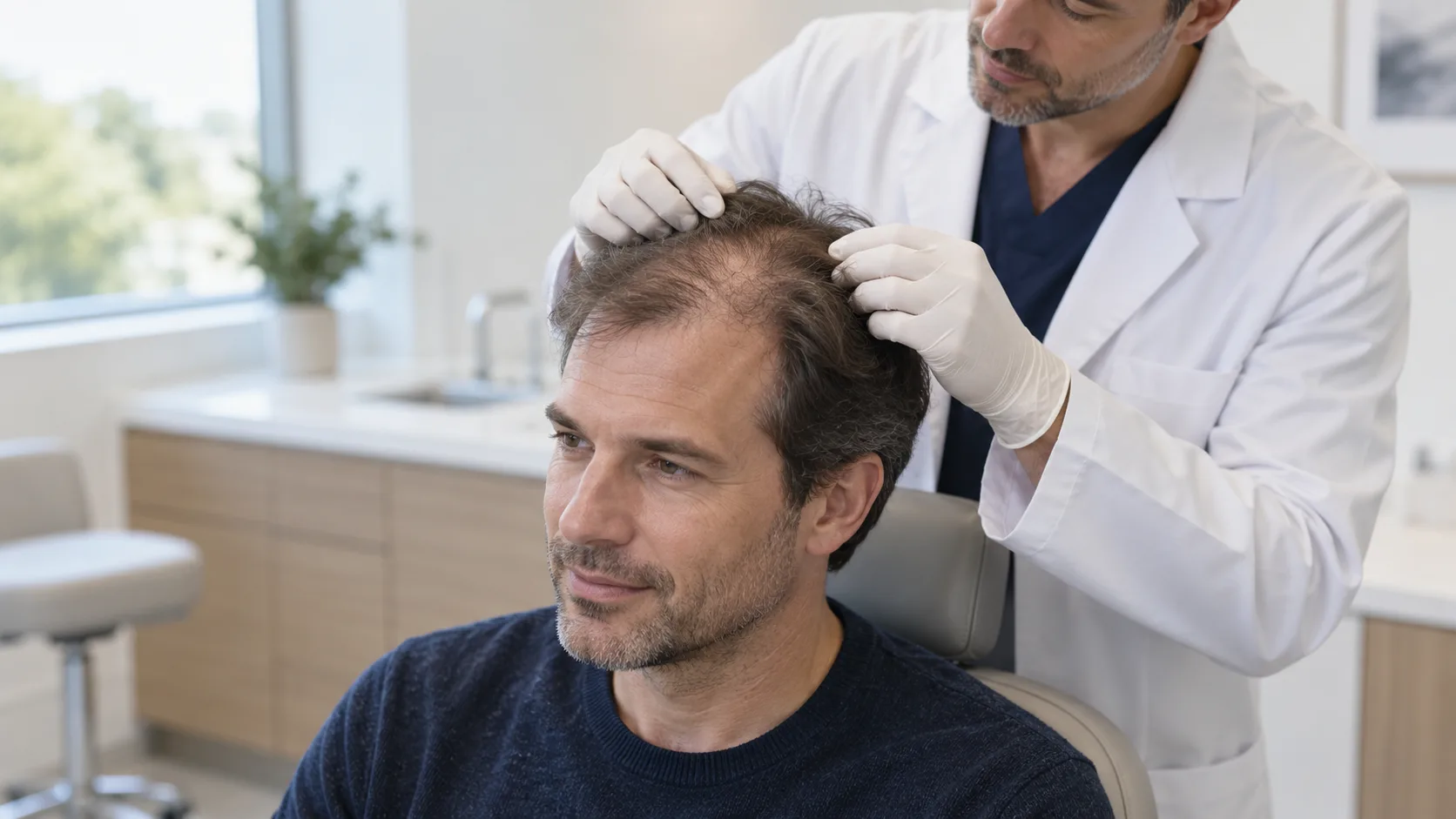
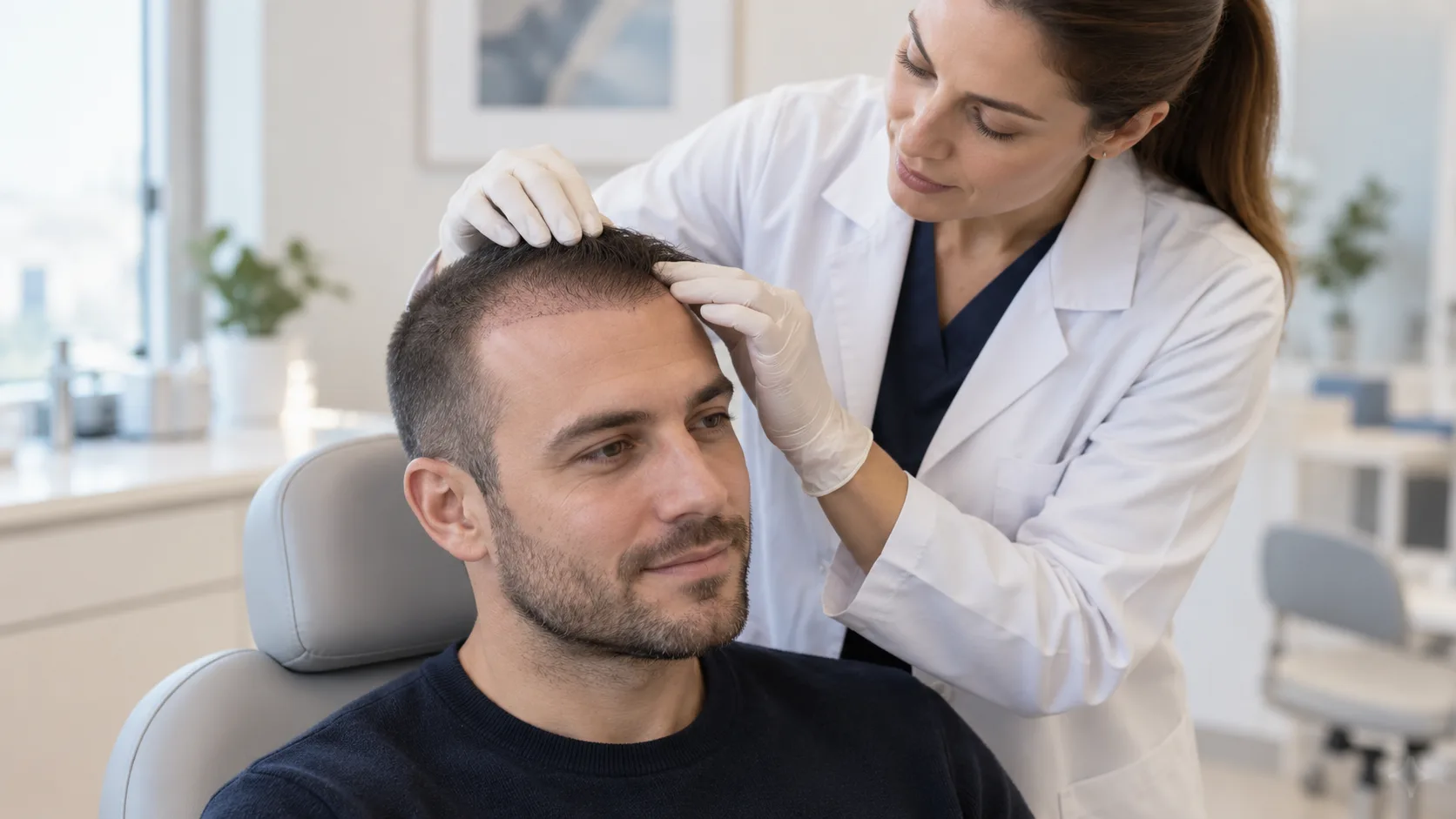
Μια ολοκληρωμένη διαβούλευση περιλαμβάνει πολλαπλές αξιολογήσεις. Ο χειρουργός εξετάζει το πρότυπο απώλειας μαλλιών και το στάδιο της προόδου. Μετρά την πυκνότητα του δότη στην ασφαλή ζώνη δότη. Αξιολογεί το πάχος και τα χαρακτηριστικά των μαλλιών. Εκτιμά την κατάσταση και την ευελιξία του τριχωτού της κεφαλής. Αναγνωρίζει τις υπάρχουσες μίνι-μαλλιές που μπορεί να συνεχίσουν να ατροφούν. Εξετάζει προηγούμενες διαδικασίες και τα αποτελέσματά τους. Παίρνει λεπτομερές ιατρικό ιστορικό για να εντοπίσει υποκείμενες καταστάσεις ή φάρμακα. Συζητά τις προσδοκίες του ασθενούς και διασφαλίζει ότι ευθυγραμμίζονται με ρεαλιστικές δυνατότητες. Προβλέπει την μακροπρόθεσμη πορεία απώλειας μαλλιών για να σχεδιάσει τις μελλοντικές ανάγκες (Unger and Shapiro, 2021). Αυτή η λεπτομερής αξιολόγηση αποτρέπει την κακή επιλογή υποψηφίων και τα αναποτελεσματικά αποτελέσματα.
Γιατί η Μακροχρόνια Σχεδίαση είναι Ένδειξη Χειρουργικής Εμπειρίας;
Οι έμπειροι χειρουργοί εξετάζουν την μελλοντική απώλεια μαλλιών, διατηρούν τους πόρους του δότη και αποφεύγουν την υποβάθμιση των επιλογών θεραπείας για το μέλλον προς όφελος του παρόντος.
Η απώλεια μαλλιών είναι συχνά προοδευτική. Ένας νέος ασθενής με πρώιμη ανδρογενετική αλωπεκία πιθανότατα θα χάσει περισσότερη φυσική τρίχα σε δεκαετίες. Ένας έμπειρος χειρουργός αναγνωρίζει αυτήν την πορεία και σχεδιάζει ανάλογα. Διατηρεί τους πόρους του δότη για μελλοντικές διαδικασίες. Αποφεύγει να χρησιμοποιήσει όλους τους διαθέσιμους μοσχεύματα σε μία μόνο συνεδρία όταν η σταδιακή μεταμόσχευση θα εξυπηρετούσε καλύτερα τους μακροχρόνιους στόχους. Σχεδιάζει τις γραμμές των μαλλιών και τα μοτίβα κάλυψης που θα παραμένουν φυσικά ακόμα και καθώς η γύρω φυσική τρίχα ατροφεί (Limmer, 2018). Το αποτέλεσμα του σήμερα δεν πρέπει να εξαλείφει τις επιλογές του αύριο. Η ISHRS επισημαίνει ότι οι ασθενείς πρέπει να κατανοήσουν το δικό τους πρότυπο απώλειας μαλλιών και τις πιθανές αιτίες πριν αποφασίσουν για μεταμόσχευση (ISHRS, 2022).
Πώς Μπορούν οι Ασθενείς να Επικυρώσουν τα Αποτελέσματα του Χειρουργού Μεταμόσχευσης Μαλλιών;
Τι Πρέπει να Ψάξετε σε Φωτογραφίες Πριν και Μετά τη Μεταμόσχευση Μαλλιών;
Ψάξτε για πολλές περιπτώσεις με παρόμοια χαρακτηριστικά, συνεπείς φωτογραφικές συνθήκες και εξέταση της γραμμής των μαλλιών, της πυκνότητας, της περιοχής του δότη και των ουλών.
Οι φωτογραφίες πριν και μετά παρέχουν οπτική απόδειξη των χειρουργικών ικανοτήτων. Ωστόσο, απομονωμένα "καλύτερα αποτελέσματα" μπορούν να παραπλανήσουν. Οι ασθενείς θα πρέπει να ζητούν πολλές περιπτώσεις παρά επιλεγμένες επιτυχίες. Πρέπει να συγκρίνουν περιπτώσεις με παρόμοιες ταξινομήσεις απώλειας μαλλιών, χαρακτηριστικά δότη, ηλικιακές ομάδες και υφές μαλλιών. Συνεπείς φωτογραφικές συνθήκες, φωτισμός, γωνίες, απόσταση, επιτρέπουν δίκαιη σύγκριση. Οι ασθενείς πρέπει να εξετάσουν συγκεκριμένες περιοχές: τη γραμμή των μαλλιών για φυσικότητα, το μέσο τριχωτό για πυκνότητα, την κορυφή για κάλυψη και την περιοχή του δότη για ουλές ή εξάντληση (American Hair Loss Association, 2021). Η Αμερικανική Ένωση για την Αλωπεκία συστήνει ειδικά την αναθεώρηση πολλών τυποποιημένων περιπτώσεων πριν και μετά και την επιβεβαίωση ότι οι εικόνες αντιπροσωπεύουν πραγματικούς ασθενείς που έχουν θεραπευτεί από τον ιατρό.
Γιατί τα Μακροχρόνια Αποτελέσματα είναι Πιο Αξιόλογα από τις Άμεσες Μετεγχειρητικές Φωτογραφίες;
Τα μαλλιά ακολουθούν έναν κύκλο ανάπτυξης. Τα ώριμα αποτελέσματα εμφανίζονται γύρω στους 12 μήνες. Οι βραχυπρόθεσμες φωτογραφίες μπορεί να υπερτονίζουν την επιτυχία πριν την πλήρη ανάπτυξη ή την απώλεια.
Τα μεταμοσχευμένα μαλλιά περνούν από έναν κύκλο ανάπτυξης. Μετά την εμφύτευση, οι τρίχες συνήθως πέφτουν πριν εισέλθουν σε μια νέα φάση ανάπτυξης. Ορατά αποτελέσματα εμφανίζονται σταδιακά μέσα σε μήνες. Πριν από περίπου 12 μήνες, οι ασθενείς μπορούν να αξιολογήσουν ώριμα αποτελέσματα. Άμεσες μετεγχειρητικές φωτογραφίες μπορεί να δείχνουν εμφυτευμένα μοσχεύματα που αργότερα αποτυγχάνουν να αναπτυχθούν. Οι πρώτες φωτογραφίες μπορεί να δείχνουν προσωρινό πρήξιμο ή ερυθρότητα που κρύβει την πραγματική πυκνότητα. Οι βραχυπρόθεσμες φωτογραφίες μπορούν να υπερτονίζουν την προφανή επιτυχία. Τα μακροχρόνια αποτελέσματα στους 12 μήνες ή αργότερα παρέχουν ακριβή αξιολόγηση της επιβίωσης των μοσχευμάτων, της πυκνότητας και της φυσικής εμφάνισης (Bernstein and Rassman, 2020). Οι ασθενείς θα πρέπει να ζητούν εικόνες μακροχρόνιας παρακολούθησης.
Πρέπει οι Ασθενείς να Ζητήσουν να Δουν Αποτελέσματα σε Βίντεο;
Ναι. Το HD βίντεο από πολλαπλές γωνίες, συμπεριλαμβανομένων των επιδείξεων χτενίσματος και των προβολών της περιοχής δότη, παρέχει πλαίσιο πέρα από τις στατικές εικόνες.
Η τεκμηρίωση σε βίντεο προσφέρει πλεονεκτήματα σε σύγκριση με τις στατικές φωτογραφίες. Το HD βίντεο μπορεί να δείξει κίνηση, υφή και πυκνότητα των μαλλιών από πολλές γωνίες. Οι επιδείξεις χτενίσματος αποκαλύπτουν πώς συνδυάζονται τα μεταμοσχευμένα μαλλιά με τα φυσικά μαλλιά. Οι προβολές της περιοχής δότη δείχνουν αν οι ουλές είναι ορατές όταν τα μαλλιά στιλβώνονται κοντά. Το βίντεο είναι πιο δύσκολο να παραμορφωθεί από τις επιλεγμένες στατικές εικόνες. Οι ασθενείς θα πρέπει να ζητούν τεκμηρίωση σε βίντεο όταν είναι διαθέσιμη για να συμπληρώσουν τα φωτογραφικά στοιχεία (American Hair Loss Association, 2021).
Πρέπει οι Ασθενείς να Μιλήσουν με Προηγούμενους Ασθενείς;
Ναι, με προσοχή. Οι ανεξάρτητες κριτικές και οι πρώτες εμπειρίες προσθέτουν αξία, αλλά οι μαρτυρίες από μόνες τους δεν μπορούν να αντικαταστήσουν την κλινική επαλήθευση.
Η συζήτηση με προηγούμενους ασθενείς παρέχει γνώση σχετικά με την χειρουργική εμπειρία, τη διαδικασία ανάρρωσης και τα επίπεδα ικανοποίησης. Ωστόσο, οι μαρτυρίες έχουν περιορισμούς. Οι κλινικές μπορεί να συνδέσουν τους ασθενείς μόνο με ικανοποιημένες περιπτώσεις. Οι ανεξάρτητες κριτικές σε τρίτες πλατφόρμες προσφέρουν πιο ισορροπημένες προοπτικές. Οι ασθενείς θα πρέπει να ζητούν πρώτες εμπειρίες αλλά να θυμούνται ότι τα ατομικά αποτελέσματα ποικίλλουν. Οι μαρτυρίες θα πρέπει να συμπληρώνουν, όχι να αντικαθιστούν, την κλινική επαλήθευση των πιστοποιητικών, του όγκου των περιπτώσεων και των καταγεγραμμένων αποτελεσμάτων.
Μετράει η Ομάδα Χειρουργών Όσο ο Χειρουργός;
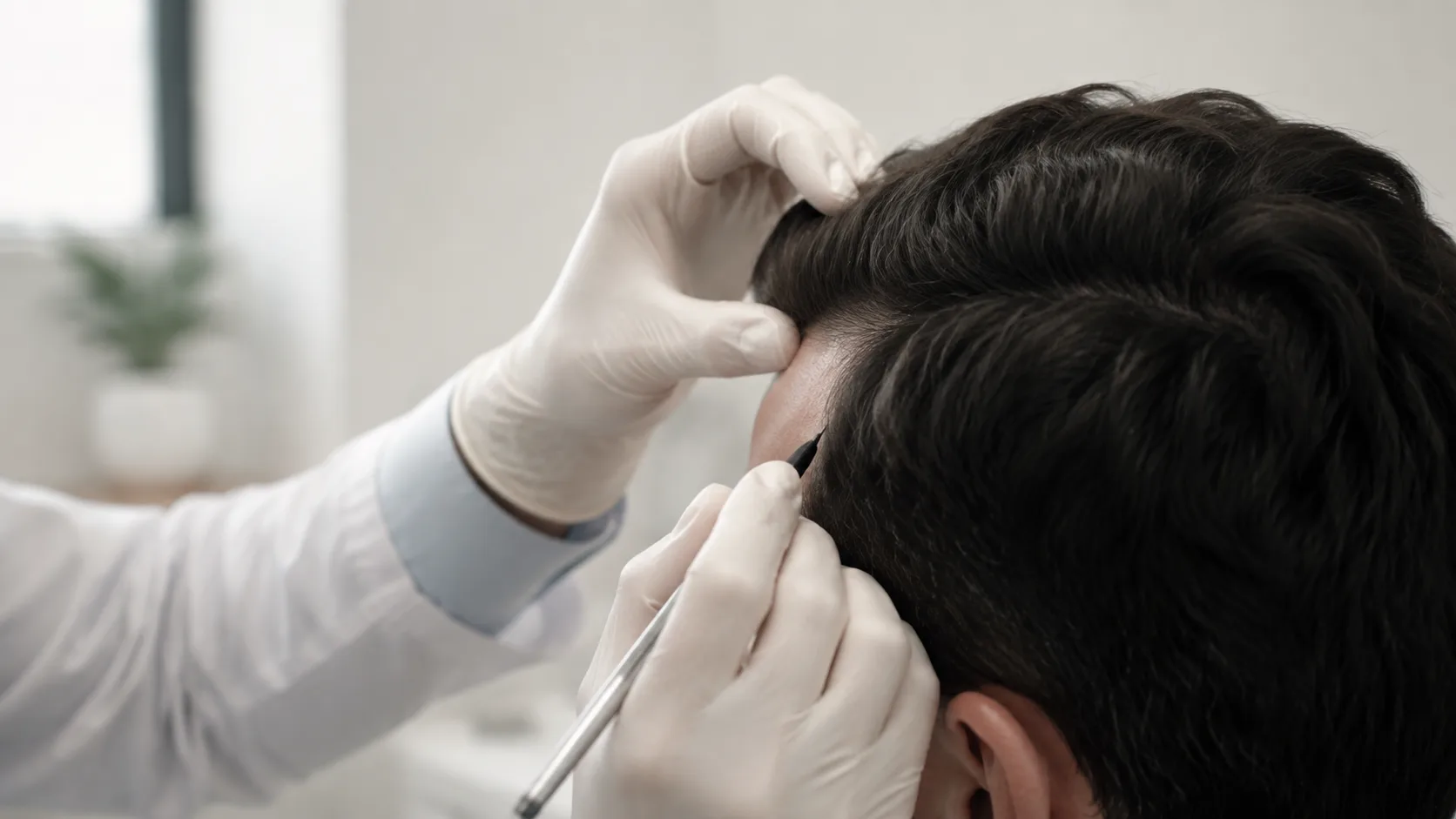
Ποιος Ενεργά Εκτελεί Κάθε Βήμα της Μεταμόσχευσης Μαλλιών;
Οι ασθενείς πρέπει να ρωτούν ποιος εκτελεί την εξαγωγή, την προετοιμασία των μοσχευμάτων, τη δημιουργία θέσεων υποδοχής και την εμφύτευση. Οι διαδικασίες που ηγούνται οι χειρουργοί διαφέρουν σημαντικά από τα μοντέλα που οδηγούνται από τεχνικούς.
Η μεταμόσχευση μαλλιών περιλαμβάνει πολλά βήματα. Σε ορισμένες κλινικές, ο χειρουργός εκτελεί μόνο τη συμβουλευτική ενώ οι τεχνικοί αναλαμβάνουν όλα τα χειρουργικά βήματα. Σε άλλες, ο χειρουργός καθοδηγεί τις κρίσιμες φάσεις με την υποστήριξη εκπαιδευμένου προσωπικού. Οι ασθενείς θα πρέπει να κατανοήσουν τη διαίρεση των ευθυνών πριν τη συγκατάθεση. Πρέπει να ρωτούν συγκεκριμένα: Ποιος εξάγει τα μοσχεύματα; Ποιος τα προετοιμάζει; Ποιος δημιουργεί τις θέσεις υποδοχής; Ποιος εμφυτεύει τα μοσχεύματα; (Αμερικανική Ένωση Απώλειας Μαλλιών, 2021). Η διάκριση των διαδικασιών που ηγούνται οι χειρουργοί από τα μοντέλα που καθοδηγούνται από τεχνικούς βοηθά τους ασθενείς να κατανοήσουν για ποιο πράγμα πληρώνουν.
Πόσο Έμπειρη Πρέπει να Είναι η Χειρουργική Ομάδα;
Η ομάδα πρέπει να δείχνει σταθερότητα, συνεπή εκπαίδευση και πρωτόκολλα ποιοτικού ελέγχου. Η υψηλή κυκλοφορία προσωπικού μπορεί να μειώσει τη συνέπεια.
Οι χειρουργικές ομάδες αναπτύσσουν αποτελεσματικότητα και ποιότητα μέσω της κοινής πρακτικής. Η σταθερότητα της ομάδας επιτρέπει την τελειοποίηση των πρωτοκόλλων και τη συντονισμένη συνεργασία. Οι έμπειρες ομάδες χειρίζονται τα μοσχεύματα με συνεπή φροντίδα και ελαχιστοποιούν τον περιττό τραυματισμό. Τα προγράμματα εκπαίδευσης διασφαλίζουν ότι όλα τα μέλη κατανοούν τις απαιτήσεις χειρισμού των μοσχευμάτων. Οι έλεγχοι ποιότητας διατηρούν τα πρότυπα σε όλη τη διαδικασία. Η υψηλή κυκλοφορία προσωπικού μπορεί να διαταράξει αυτά τα οφέλη και να εισάγει μεταβλητότητα. Η Αμερικανική Ένωση Απώλειας Μαλλιών συνιστά να ρωτούν τους ασθενείς σχετικά με την εμπειρία του χειρουργού με την χειρουργική ομάδα και τις προϋποθέσεις και ρόλους των τεχνικών που εμπλέκονται (Αμερικανική Ένωση Απώλειας Μαλλιών, 2021).
Ποιο Ρόλο Παίζει η Τεχνολογία στα Αποτελέσματα ενός Έμπειρου Χειρουργού;
Δημιουργεί η Χρήση Προηγμένης Τεχνολογίας Μεταμόσχευσης Μαλλιών Έναν Έμπειρο Χειρουργό;
Όχι. Οι συσκευές δεν αντικαθιστούν την χειρουργική κρίση. Η δεξιότητα του χειριστή μετράει περισσότερο από την μάρκα εργαλείου ή τεχνολογίας.
Η προώθηση συχνά εξισώνει την προηγμένη τεχνολογία με ανώτερα αποτελέσματα. Ωστόσο, η τεχνολογία χρησιμεύει ως εργαλείο, όχι ως υποκατάστατο της κλινικής εμπειρίας. Ένας ικανός χειρουργός μπορεί να επιτύχει εξαιρετικά αποτελέσματα με βασικά εργαλεία. Ένας ανείκανος χειρουργός δεν μπορεί να επιτύχει εξαιρετικά αποτελέσματα αποκλειστικά με ακριβή τεχνολογία. Οι ασθενείς πρέπει να διακρίνουν μεταξύ τεχνικής, εργαλείου, τεχνολογίας και δεξιότητας του χειριστή (ISHRS, 2022). Ο διαφημιστικός ορολογία συχνά προκαλεί παρόμοιες διαδικασίες να φαίνονται θεμελιωδώς διαφορετικές. Η κρίση, η ακρίβεια και η εμπειρία του χειρουργού καθοδηγούν τα αποτελέσματα, όχι το όνομα της μάρκας στη συσκευή.
Πώς Πρέπει να Αξιολογούν οι Ασθενείς τους Ισχυρισμούς για Ρομποτική ή Προηγμένη Τεχνολογία FUE;
Οι ασθενείς πρέπει να ζητούν κλινικά στοιχεία, να προσδιορίζουν τι αλλάζει πραγματικά η τεχνολογία, να αξιολογούν τα αποτελέσματα αντί για την επωνυμία και να αποφεύγουν να υποθέτουν ότι το νεότερο σημαίνει καλύτερο.
Όταν οι κλινικές προωθούν ρομποτικά ή προηγμένα συστήματα FUE, οι ασθενείς πρέπει να ρωτούν συγκεκριμένες ερωτήσεις. Υποστηρίζουν οι αναθεωρημένες έρευνες τα δηλωμένα οφέλη; Τι μέρος της διαδικασίας αλλάζει πραγματικά η τεχνολογία, η εξαγωγή, η ταξινόμηση ή η εμφύτευση; Είναι τα αποτελέσματα ανώτερα από τις χειροκίνητες τεχνικές σε συγκρίσιμες περιπτώσεις; Οι ασθενείς πρέπει να αξιολογούν τα πραγματικά αποτελέσματα αντί για τις προδιαγραφές του εξοπλισμού. Η Αμερικανική Ένωση Απώλειας Μαλλιών και ο ISHRS προειδοποιούν και οι δύο τους ασθενείς να μην επιτρέπουν τους ισχυρισμούς μάρκετινγκ σχετικά με τις τεχνικές και τις τεχνολογίες να αντικαθιστούν την προσεκτική αξιολόγηση του χειρουργού και της διαδικασίας (ISHRS, 2022; Αμερικανική Ένωση Απώλειας Μαλλιών, 2021).
Πώς Επηρεάζει η Εμπειρία τη Διαχείριση Επιπλοκών και τη Διορθωτική Χειρουργική;
Μπορεί ένας Έμπειρος Χειρουργός να Αποτρέψει Κάθε Επιπλοκή;
Όχι. Η εμπειρία μειώνει τον κίνδυνο αλλά δεν μπορεί να εξαλείψει κάθε επιπλοκή. Η σωστή ενημερωμένη συγκατάθεση και η άμεση διαχείριση παραμένουν ουσιώδεις.
Ακόμα και οι πιο έμπειροι χειρουργοί συναντούν επιπλοκές. Η εμπειρία μειώνει τη συχνότητα και τη σοβαρότητα των προβλημάτων αλλά δεν δημιουργεί ανοσία. Πιθανές επιπλοκές περιλαμβάνουν μόλυνση, κακή ανάπτυξη μοσχευμάτων, αφύσικη εμφάνιση, προβλήματα θέσης δότρου και ουλές. Ένας έμπειρος χειρουργός παρέχει κατάλληλη ενημερωμένη συγκατάθεση, εξηγώντας ρεαλιστικούς κινδύνους πριν από τη χειρουργική επέμβαση. Αναγνωρίζει έγκαιρα τις επιπλοκές και τις διαχειρίζεται αποτελεσματικά. Δεν υπόσχεται μηδενικό κίνδυνο γιατί η βιολογία δεν επιτρέπει τέτοιες εγγυήσεις.
Γιατί Είναι Σημαντική η Εμπειρία με την Επιδιόρθωση Μεταμόσχευσης Μαλλιών;
Η χειρουργική αποκατάσταση διορθώνει αφύσικες γραμμές μαλλιών, κακή τοποθέτηση μοσχευμάτων, υπερβολική εκχύλιση, ορατές ουλές και προβλήματα επιβίωσης μοσχευμάτων. Είναι συχνά πιο περίπλοκη από την πρωτογενή μεταμόσχευση.
Δεν επιτυγχάνουν όλες οι μεταμοσχεύσεις μαλλιών. Ορισμένοι ασθενείς αναζητούν διόρθωση μετά από απογοητευτικά αποτελέσματα αλλού. Οι περιπτώσεις επιδιόρθωσης παρουσιάζουν μοναδικές προκλήσεις. Ο χειρουργός πρέπει να εργαστεί με ουλώδη ιστό, εξαντλημένα αποθέματα δότη και αφύσικες υπάρχουσες μοσχεύματα. Μπορεί να χρειαστεί να αφαιρέσει και να αναδιανείμει κακώς τοποθετημένα μοσχεύματα. Πρέπει να καμουφλάρει τις ορατές ουλές. Πρέπει να επιτύχει πυκνότητα σε περιοχές που έχουν ήδη υποβληθεί σε χειρουργική επέμβαση. Η διορθωτική χειρουργική συχνά απαιτεί περισσότερη δεξιότητα από την πρωτογενή μεταμόσχευση (Lam και Williams, 2019). Ένας χειρουργός που μπορεί να αποδείξει την εμπειρία του με δύσκολες περιπτώσεις επιδιόρθωσης δείχνει προχωρημένες ικανότητες.
Τι αποκαλύπτει η προσέγγιση ενός χειρουργού στις επιπλοκές για την εμπειρία του;
Οι έμπειροι χειρουργοί επικοινωνούν διαφανώς, παρέχουν κατάλληλη παρακολούθηση, τεκμηριώνουν τα αποτελέσματα, συζητούν τις περιορισμούς με ειλικρίνεια και διαχειρίζονται τα προβλήματα με προσεγγίσεις βασισμένες σε στοιχεία.
Ο τρόπος που χειρίζεται ένας χειρουργός τις επιπλοκές αποκαλύπτει τον χαρακτήρα και την ικανότητά του. Οι έμπειροι επαγγελματίες επικοινωνούν διαφανώς σχετικά με ό,τι πήγε στραβά. Παρέχουν κατάλληλη παρακολούθηση φροντίδας χωρίς επιπλέον χρέωση όταν η επιπλοκή προήλθε από χειρουργικούς παράγοντες. Τεκμηριώνουν τα αποτελέσματα για να μάθουν και να βελτιωθούν. Συζητούν τις περιορισμούς ανοιχτά αντί να φορτώνουν την ευθύνη σε άλλους. Διαχειρίζονται τις επιπλοκές με πρωτόκολλα βασισμένα σε στοιχεία. Θέτουν ρεαλιστικές προσδοκίες για τα αποτελέσματα αναθεώρησης. Αυτή η ηθική προσέγγιση ξεχωρίζει τους έμπειρους επαγγελματίες από εκείνους που εγκαταλείπουν τους ασθενείς μετά την εμφάνιση προβλημάτων.
Πώς είναι μια ηθική πρακτική μεταμόσχευσης μαλλιών;
Πρέπει ποτέ ένας έμπειρος χειρουργός να συστήσει αντίθεση στη χειρουργική επέμβαση;
Ναι. Οι ηθικοί χειρουργοί απορρίπτουν μη κατάλληλους υποψηφίους και συνιστούν ιατρική θεραπεία ή παρακολούθηση όταν η χειρουργική επέμβαση δεν είναι η καλύτερη επιλογή.
Η κατάλληλη επιλογή ασθενών καθορίζει την ηθική πρακτική. Ορισμένοι ασθενείς έχουν μη ρεαλιστικές προσδοκίες. Άλλοι έχουν ανεπαρκή προμήθεια δωρητή. Ορισμένοι έχουν ιατρικές καταστάσεις που αυξάνουν τον κίνδυνο. Ορισμένοι έχουν πρότυπα απώλειας μαλλιών που η χειρουργική επέμβαση δεν μπορεί να αντιμετωπίσει επαρκώς. Ένας έμπειρος χειρουργός αναγνωρίζει αυτές τις καταστάσεις και συνιστά αντίθεση στη χειρουργική επέμβαση όταν είναι κατάλληλο. Μπορεί να προτείνει ιατρικές θεραπείες όπως η μινοξιδίλη ή η φιναστερίδη. Μπορεί να προτείνει παρακολούθηση για ασθενείς με πρώιμη ή ασταθή απώλεια μαλλιών. Δεν υπόσχονται ότι κάθε ασθενής είναι ιδανικός υποψήφιος γιατί αυτή η υπόσχεση θα ήταν ανέντιμη (Blume-Peytavi et al., 2011).
Γιατί πρέπει οι ασθενείς να αποφεύγουν τις τακτικές πίεσης στις πωλήσεις;
Οι τακτικές πίεσης υποδηλώνουν πρακτική που καθορίζεται από τις πωλήσεις και όχι από την ιατρική. Σημάδια προειδοποίησης περιλαμβάνουν πίεση την ίδια ημέρα, εγγυημένα αποτελέσματα, μη ρεαλιστικούς αριθμούς μοσχευμάτων, συμβουλές που επικεντρώνονται στην τιμή και περιορισμένη αλληλεπίδραση με τον γιατρό.
Η ιατρική συμβουλή διαφέρει θεμελιωδώς από τη συμβουλή πωλήσεων. Οι ηθικοί χειρουργοί παρέχουν πληροφορίες και επιτρέπουν στους ασθενείς χρόνο να αποφασίσουν. Σημάδια προειδοποίησης από κλινικές που καθορίζονται από τις πωλήσεις περιλαμβάνουν: πίεση για τον προγραμματισμό χειρουργικής επέμβασης αμέσως, εγγυήσεις για τέλεια αποτελέσματα, υποσχέσεις για μη ρεαλιστικά υψηλούς αριθμούς μοσχευμάτων, συμβουλές που επικεντρώνονται στην τιμή παρά στην ιατρική αξιολόγηση, περιορισμένη άμεση αλληλεπίδραση με τον γιατρό και δηλώσεις πως είναι "οι καλύτεροι στον κόσμο" χωρίς αντικειμενικά αποδεικτικά στοιχεία. Ο ISHRS συγκεκριμένα συμβουλεύει τους ασθενείς να αποφεύγουν κλινικές που χρησιμοποιούν σκληρές τακτικές πωλήσεων και ενθαρρύνει τους ασθενείς να αφιερώσουν επαρκή χρόνο για να αξιολογήσουν τις επιλογές τους (ISHRS, 2022).
Γιατί είναι η διαφανής επικοινωνία ένα σημάδι εμπειρίας;
Οι έμπειροι χειρουργοί εξηγούν καθαρά τα οφέλη, τους περιορισμούς, τους κινδύνους, τις εναλλακτικές επιλογές, τις αναμενόμενες χρονοδιαγράμμες και πιθανές μελλοντικές διαδικασίες.
Η διαφανής επικοινωνία χτίζει εμπιστοσύνη. Ένας έμπειρος χειρουργός εξηγεί τα οφέλη της χειρουργικής επέμβασης με ειλικρίνεια χωρίς υπερβολές. Συζητούν τους περιορισμούς, τι μπορεί και τι δεν μπορεί να πετύχει η χειρουργική επέμβαση. Περιγράφουν τους κινδύνους με συγκεκριμένα παραδείγματα. Παρουσιάζουν εναλλακτικές συμπεριλαμβανομένων των μη χειρουργικών επιλογών. Εξηγούν το αναμενόμενο χρονοδιάγραμμα από τη χειρουργική επέμβαση μέχρι τα ώριμα αποτελέσματα. Συζητούν την πιθανότητα μελλοντικών διαδικασιών αν προχωρήσει η απώλεια μαλλιών. Αποκτούν τη σωστή ενημερωμένη συναίνεση. Αυτή η λεπτομερής επικοινωνία αντικατοπτρίζει αυτοπεποίθηση, ικανότητα και σεβασμό προς τον ασθενή.
Ποιες ερωτήσεις θα πρέπει να κάνετε σε έναν χειρουργό μεταμόσχευσης μαλλιών πριν από τη χειρουργική επέμβαση;
Ρωτήστε σχετικά με τον προσωπικό σας αριθμό διαδικασιών, τον ετήσιο όγκο, την συγκεκριμένη εμπειρία αποκατάστασης μαλλιών, τους ρόλους της ομάδας, τα μακροχρόνια αποτελέσματα, τη διαχείριση επιπλοκών και τις εναλλακτικές.
Οι ασθενείς θα πρέπει να προετοιμάσουν μια πρακτική λίστα ελέγχου για τις συμβουλές. Οι βασικές ερωτήσεις περιλαμβάνουν:
Πόσες διαδικασίες μεταμόσχευσης μαλλιών έχετε εκτελέσει προσωπικά;
Πόσες διαδικασίες διενεργείτε κάθε χρόνο;
Πόσο καιρό έχετε ειδικευτεί συγκεκριμένα στην αποκατάσταση μαλλιών;
Ποιο ποσοστό της πρακτικής σας αφορά τη μεταμόσχευση μαλλιών;
Ποιο τύπο απώλειας μαλλιών θεραπεύετε πιο συχνά;
Πώς αξιολογείτε την περιοχή δότης μου;
Ποια είναι η προσέγγισή σας για τη διατήρηση της μελλοντικής μου προμήθεια δότης;
Ποιος εκτελεί κάθε χειρουργικό βήμα;
Ποια είναι η εμπειρία σας με την συγκεκριμένη διαδικασία μου;
Μπορώ να δω μακροχρόνια αποτελέσματα από ασθενείς με παρόμοια απώλεια μαλλιών;
Μπορώ να δω αποτελέσματα από την περιοχή δότης;
Ποιες επιπλοκές συναντάτε και πώς τις διαχειρίζεστε;
Τι συμβαίνει αν δεν είμαι ικανοποιημένος με το αποτέλεσμα;
Τι συμβαίνει αν τα φυσικά μου μαλλιά συνεχίσουν να αραιώνουν;
Ποιες εναλλακτικές λύσεις εκτός χειρουργείου θα πρέπει να εξετάσω;
Αυτές οι ερωτήσεις αποκαλύπτουν αν ο χειρουργός δίνει προτεραιότητα στην εκπαίδευση των ασθενών ή στην πίεση για πωλήσεις.
Ποιες είναι οι κόκκινες σημαίες ενός άπειρου ή κακώς καταρτισμένου χειρουργού μεταμόσχευσης μαλλιών;
Πρέπει να ανησυχείτε για μη ρεαλιστικές εγγυήσεις;
Ναι. Εγγυήσεις όπως "100% ανάπτυξη", "μόνιμη τέλεια πυκνότητα", "χωρίς ρίσκο" και "χειρουργική χωρίς ουλές" είναι επιστημονικά αδύνατες και υποδηλώνουν ανεντινική προώθηση.
Συγκεκριμένες δηλώσεις κόκκινων σημαιών περιλαμβάνουν: "100% εγγυημένη ανάπτυξη", "μόνιμη τέλεια πυκνότητα", "χωρίς ρίσκο", "χωρίς ανάρρωση" και "χειρουργική χωρίς ουλές" που χρησιμοποιούνται χωρίς προϋποθέσεις. Η μεταμόσχευση μαλλιών περιλαμβάνει ζωντανό ιστό. Η βιολογία δεν εγγυάται τίποτα. Η επιβίωση των μοσχευμάτων εξαρτάται από πολλούς παράγοντες, συμπεριλαμβανομένων των χαρακτηριστικών του ασθενούς, της χειρουργικής τεχνικής και της μετεγχειρητικής φροντίδας. Η ουλή είναι αναπόφευκτη σε κάποιο επίπεδο, αν και οι έμπειροι χειρουργοί την ελαχιστοποιούν. Οποιαδήποτε κλινική υποσχεθεί τελειότητα είναι είτε αφελής είτε δόλια.
Είναι μια εξαιρετικά χαμηλή τιμή προειδοποιητικό σημάδι;
Ναι. Οι πολύ χαμηλές τιμές συχνά αντικατοπτρίζουν μειωμένη εμπλοκή του χειρουργού, μη έμπειρες ομάδες, κακή υποδομή ή ανεπαρκή παρακολούθηση.
Η τιμή από μόνη της δεν μπορεί να καθορίσει την ποιότητα της χειρουργικής. Ωστόσο, εξαιρετικά χαμηλές τιμές σε σύγκριση με την αγορά αυξάνουν ανησυχίες. Η ποιοτική μεταμόσχευση μαλλιών απαιτεί χρόνο, εξειδικευμένο προσωπικό, κατάλληλες εγκαταστάσεις και διεξοδική παρακολούθηση. Οι κλινικές που προσφέρουν τιμές «ευκαιρίας» μπορεί να παρακάμψουν διαδικασίες χρησιμοποιώντας ανειδίκευτους τεχνίτες, ελαχιστοποιώντας την εμπλοκή του ιατρού ή παραμελώντας τη μετεγχειρητική φροντίδα. Οι ασθενείς θα πρέπει να αξιολογούν την αξία, τον συνδυασμό της εξειδίκευσης του χειρουργού, της ποιότητας της ομάδας, των προτύπων εγκαταστάσεων και της παρακολούθησης, αντί να επιλέγουν απλώς τη χαμηλότερη τιμή (American Hair Loss Association, 2021).
Είναι μια κλινική με ελάχιστη εμπλοκή ιατρού κόκκινη σημαία;
Ναι. Οι ασθενείς πρέπει να γνωρίζουν ποιος διεξάγει τη consulta, ποιος συντάσσει το χειρουργικό σχέδιο και ποιος εκτελεί κρίσιμα χειρουργικά βήματα.
Η προσβασιμότητα του ιατρού είναι σημαντική. Σε ορισμένες κλινικές, οι ασθενείς δεν συναντούν ποτέ τον χειρουργό μέχρι την ημέρα της εγχείρησης. Οι συντονιστές πωλήσεων διεξάγουν τις consultas. Οι τεχνικοί εκτελούν τη διαδικασία. Αυτό το μοντέλο δίνει προτεραιότητα στον όγκο αντί για την ποιότητα. Οι ασθενείς θα πρέπει να ρωτούν: Ποιος διεξάγει τη consulta; Ποιος συντάσσει το χειρουργικό σχέδιο; Ποιος εκτελεί τα κρίσιμα χειρουργικά βήματα; Η άμεση συμμετοχή του χειρουργού στην αξιολόγηση, τον προγραμματισμό και τις κύριες χειρουργικές φάσεις υποδεικνύει επαγγελματική δέσμευση.
Πρέπει οι ασθενείς να είναι προσεκτικοί με τις εικόνες πριν και μετά που προέρχονται από stock ή επιλεγμένες;
Ναι. Οι ασθενείς πρέπει να επαληθεύουν ότι οι φωτογραφίες δείχνουν πραγματικούς ασθενείς του χειρουργού, χρησιμοποιούν συνεπές φωτισμό και γωνίες και εκπροσωπούν ολοκληρωμένες γκαλερί αντί για απομονωμένες επιτυχίες.
Η επαλήθευση των εικόνων είναι ουσιώδης. Ορισμένες κλινικές χρησιμοποιούν φωτογραφίες stock που έχουν αγοραστεί από βιβλιοθήκες εικόνας. Άλλες δείχνουν αποτελέσματα από χειρουργούς που δεν εργάζονται πια εκεί. Οι ασθενείς θα πρέπει να ρωτούν αν οι φωτογραφίες ανήκουν σε πραγματικούς ασθενείς που έχουν θεραπευτεί από τον συγκεκριμένο χειρουργό. Θα πρέπει να αναζητούν συνεπή φωτισμό, γωνίες και φόντα. Θα πρέπει να ζητούν ολοκληρωμένες γκαλερί αντί για επιλεγμένες περιπτώσεις επιτυχίας. Η βιντεοσκοπημένη τεκμηρίωση παρέχει επιπλέον επαλήθευση.
Πώς μπορείτε να συγκρίνετε αντικειμενικά τους χειρουργούς μεταμόσχευσης μαλλιών;
Χρησιμοποιήστε ένα δομημένο πλαίσιο αξιολόγησης που να εκτιμά τα προσόντα, την εκπαίδευση, τον όγκο, τις τεχνικές δεξιότητες, τη διαχείριση δωρητών, τα αποτελέσματα, την ηθική και τη διαφάνεια.
Οι ασθενείς μπορούν να εφαρμόσουν ένα δομημένο πλαίσιο σύγκρισης:
Παράγοντας Αξιολόγησης | Τι να επαληθεύσετε |
Ιατρικά προσόντα | Ενεργή άδεια και επαγγελματική κατάσταση |
Εκπαίδευση στην αποκατάσταση μαλλιών | Αφιερωμένη εκπαίδευση και πρακτική εμπειρία |
Όγκος περιπτώσεων | Αριθμός προσωπικά εκτελεσθέντων διαδικασιών |
Εξειδίκευση στη συγκεκριμένη διαδικασία | Εμπειρία με την απαιτούμενη τεχνική του ασθενούς |
Τεχνικές δεξιότητες | Ποιότητα εξαγωγής, χειρισμού και εμφύτευσης μοσχευμάτων |
Διαχείριση δότη | Διατήρηση πόρων δότη |
Σχεδίαση γραμμής τριχών | Φυσικός, ηλικιακά κατάλληλος προγραμματισμός |
Μακροχρόνια αποτελέσματα | Μαθημένα αποτελέσματα από συγκρίσιμους ασθενείς |
Διαχείριση επιπλοκών | Αποδείξεις κατάλληλης παρακολούθησης |
Χειρουργική ομάδα | Προσόντα και ευθύνες |
Ηθική | Ρεαλιστικές συστάσεις και ενημερωμένη συγκατάθεση |
Διαφάνεια | Σαφείς απαντήσεις και επαληθεύσιμες αξιώσεις |
Επιστημονική συμμετοχή | Συνεχιζόμενη εκπαίδευση, έρευνα και επαγγελματική ανάπτυξη |
Αυτό το πλαίσιο μεταφέρει την αξιολόγηση πέρα από τα συναισθήματα ή τις εντυπώσεις μάρκετινγκ σε αντικειμενική εκτίμηση.
Υπάρχει ένας ενιαίος ορισμός για έναν έμπειρο χειρουργό μεταμόσχευσης μαλλιών;
Όχι. Η εμπειρία απαιτεί πολλές διαστάσεις. Κανένας ενιαίος δείκτης, χρόνια, πιστοποιήσεις ή τεχνολογία δεν τον καθορίζει επαρκώς.
Κανένα ενιαίο μέτρο δεν αποτυπώνει την χειρουργική εξειδίκευση. Ένας υψηλός αριθμός διαδικασιών δεν εγγυάται αυτόματα εξαιρετικά αποτελέσματα. Οι πιστοποιήσεις από μόνες τους δεν καθορίζουν την τεχνική επάρκεια. Η τεχνολογία μόνη της δεν δημιουργεί χειρουργική ικανότητα. Οι αξιολογήσεις ασθενών από μόνες τους δεν μπορούν να καθορίσουν την κλινική ικανότητα. Η αληθινή εμπειρία είναι πολυδιάστατη. Περιλαμβάνει τον σχετικά όγκο περιπτώσεων, την τεχνική επάρκεια, τη βαθιά γνώση της απώλειας μαλλιών, την αισθητική κρίση, την ικανότητα διατήρησης του δότη, τις συνεπείς μακροχρόνιες επιτυχίες, την ικανότητα διαχείρισης επιπλοκών, την ηθική επιλογή ασθενών και τη συνεχιζόμενη επαγγελματική ανάπτυξη (Baker, 2019). Οι ασθενείς πρέπει να αξιολογήσουν όλες αυτές τις διαστάσεις μαζί.
Τι κάνει έναν έμπειρο χειρουργό μεταμόσχευσης μαλλιών διαφορετικό από έναν ανειδίκευτο πρακτικό;
Οι έμπειροι χειρουργοί αξιολογούν τις αιτίες, εξατομικεύουν τα σχέδια, διατηρούν τους δότες, εμφανίζουν συνεπείς μακροπρόθεσμες αποτελέσματα και διαχειρίζονται τις επιπλοκές. Οι ανειδίκευτοι πρακτικοί συχνά εστιάζουν στις άμεσες διαδικασίες και τις προωθήσεις.
Η παρακάτω σύγκριση αναδεικνύει τις βασικές διαφορές:
Έμπειρος Χειρουργός | Λιγότερο Έμπειρος Πρακτικός |
Αξιολογεί την αιτία και το μοτίβο της απώλειας μαλλιών | Επικεντρώνεται κυρίως στη διαδικασία |
Αναπτύσσει ένα εξατομικευμένο σχέδιο | Χρησιμοποιεί τυποποιημένα σχέδια |
Λαμβάνει υπόψη την μελλοντική απώλεια μαλλιών | Επικεντρώνεται μόνο στην άμεση κάλυψη |
Προστατεύει τους πόρους του δότη | Μπορεί να δώσει προτεραιότητα στη μέγιστη εξαγωγή γεφυρών |
Αποδεικνύει συνεπείς μακροπρόθεσμες αποτελέσματα | Δείχνει περιορισμένα ή επιλεκτικά αποτελέσματα |
Εξηγεί τους κινδύνους και τις εναλλακτικές | Επικεντρώνεται στα οφέλη και τις προωθήσεις |
Παρακολουθεί προσεκτικά την επεξεργασία γεφυρών | Μπορεί να αναθέσει κρίσιμα βήματα χωρίς επαρκή εποπτεία |
Διαχειρίζεται τις επιπλοκές και τις επισκευές | Έχει περιορισμένη εμπειρία σε δύσκολες περιπτώσεις |
Θέτει ρεαλιστικές προσδοκίες | Μπορεί να υποσχεθεί δραματικά αποτελέσματα |
Χρησιμοποιεί τεχνολογία επιλεκτικά | Μπορεί να βασίζεται έντονα στη marketing τεχνολογία |
Πώς να επιλέξετε τον κατάλληλο χειρουργό μεταμοσχεύσεων μαλλιών για την περίπτωσή σας;
Ακολουθήστε μια ακολουθία δέκα βημάτων που επιβεβαιώνει τα διαπιστευτήρια, την εμπειρία, τα αποτελέσματα, τους ρόλους της ομάδας, τη διαχείριση του δότη και τα ηθικά πρότυπα πριν αποφασίσετε.
Οι ασθενείς θα πρέπει να ακολουθούν αυτή την ακολουθία λήψης αποφάσεων:
Βήμα 1: Επιβεβαιώστε τα ιατρικά διαπιστευτήρια μέσω επίσημων ρυθμιστικών φορέων.
Βήμα 2: Επιβεβαιώστε την ειδική εμπειρία αποκατάστασης μαλλιών, όχι μόνο την γενική ιατρική πρακτική.
Βήμα 3: Αξιολογήστε τον σχετικό όγκο περιπτώσεων και τον ετήσιο αριθμό διαδικασιών.
Βήμα 4: Ανασκοπήστε συγκρίσιμα αποτελέσματα μακροπρόθεσμα σε 12 μήνες ή περισσότερα.
Βήμα 5: Κατανοήστε ποιος εκτελεί κάθε χειρουργικό βήμα.
Βήμα 6: Αξιολογήστε τις στρατηγικές διαχείρισης και διατήρησης της περιοχής δότη.
Βήμα 7: Αξιολογήστε το σχέδιο γραμμής μαλλιών και την αισθητική κρίση μέσω φωτογραφιών και συζήτησης.
Βήμα 8: Συζητήστε ανοιχτά τους κινδύνους, τις εναλλακτικές και την μελλοντική απώλεια μαλλιών.
Βήμα 9: Ελέγξτε ανεξάρτητες επαγγελματικές και ρυθμιστικές πληροφορίες.
Βήμα 10: Επιλέξτε τον χειρουργό του οποίου τα αποδεικτικά στοιχεία, η εμπειρία και η επικοινωνία ταιριάζουν καλύτερα στις ατομικές σας ανάγκες.
Αυτή η μεθοδολογική προσέγγιση μειώνει τον κίνδυνο απογοήτευσης και μεγιστοποιεί την πιθανότητα φυσικών, μόνιμων αποτελεσμάτων.
Συχνές Ερωτήσεις Για Άτομα Με Εμπειρία Στις Μεταμοσχεύσεις Μαλλιών
Πόσα χρόνια εμπειρίας πρέπει να έχει ένας χειρούργος μεταμόσχευσης μαλλιών;
Μόνο τα χρόνια δεν είναι αρκετά. Η αφοσίωση στην εμπειρία αποκατάστασης μαλλιών και ο όγκος περιπτώσεων έχουν μεγαλύτερη σημασία από τα γενικά έτη στην πράξη.
Δεν υπάρχει μαγικός αριθμός ετών. Ένας χειρούργος μπορεί να έχει ασκήσει την ιατρική για 30 χρόνια αλλά να έχει πραγματοποιήσει μεταμοσχεύσεις μαλλιών μόνο για δύο. Ένας άλλος χειρούργος μπορεί να έχει πέντε χρόνια αφοσιωμένης εμπειρίας στην αποκατάσταση μαλλιών με υψηλό ετήσιο όγκο. Ο τελευταίος διαθέτει πιο σχετική εμπειρία. Οι ασθενείς θα πρέπει να ρωτήσουν συγκεκριμένα για τα έτη που είναι εστιασμένα στην αποκατάσταση μαλλιών και τον αριθμό των διαδικασιών που εκτελέστηκαν κατά τη διάρκεια αυτού του χρόνου.
Πόσες μεταμοσχεύσεις μαλλιών θα πρέπει να έχει εκτελέσει ένας έμπειρος χειρούργος;
Δεν υπάρχει καθολικά αποδεκτό όριο. Αξιολογήστε την εμπειρία και τα τεκμηριωμένα αποτελέσματα που σχετίζονται με τη διαδικασία παρά έναν μόνο αριθμό.
Η έρευνα υποστηρίζει τη σχέση όγκου-αποτελέσματος αλλά δεν καθορίζει ένα ακριβές όριο για τη μεταμόσχευση μαλλιών (Birkmeyer et al., 2013). Τι συνιστά το "αρκετό" εξαρτάται από την πολυπλοκότητα της περίπτωσης, την τεχνική και τους ατομικούς κύκλους μάθησης. Οι ασθενείς θα πρέπει να εστιάσουν στο αν ο χειρούργος έχει εκτελέσει επαρκείς περιπτώσεις παρόμοιες με τη δική τους και μπορεί να επιδείξει συνέπεια στην ποιότητα των αποτελεσμάτων.
Είναι ένας πιστοποιημένος από το διοικητικό συμβούλιο γιατρός αυτόματα ένας έμπειρος χειρούργος μεταμόσχευσης μαλλιών;
Όχι. Η πιστοποίηση από το διοικητικό συμβούλιο δείχνει γενικά πρότυπα εκπαίδευσης αλλά δεν αποδεικνύει εξειδικευμένη εμπειρία στην αποκατάσταση μαλλιών.
Η πιστοποίηση από το διοικητικό συμβούλιο στην δερματολογία, την πλαστική χειρουργική, ή τη γενική χειρουργική παρέχει πολύτιμη θεμελιώδη εκπαίδευση. Ωστόσο, δεν περιλαμβάνει συγκεκριμένες απαιτήσεις για τον όγκο ή τα αποτελέσματα μεταμόσχευσης μαλλιών. Ένας πιστοποιημένος χειρούργος μπορεί να έχει ελάχιστη εμπειρία στην αποκατάσταση μαλλιών. Οι ασθενείς πρέπει να επαληθεύσουν την εξειδικευμένη εκπαίδευση και τον όγκο περιπτώσεων πέρα από τα πιστοποιητικά του διοικητικού συμβουλίου.
Πρέπει ο χειρούργος να εκτελεί προσωπικά τη μεταμόσχευση μαλλιών;
Οι ασθενείς θα πρέπει να κατανοούν ποια μέρη εκτελεί ο ιατρός και ποιες εργασίες εκτελεί το εκπαιδευμένο προσωπικό, σύμφωνα με τους τοπικούς νόμους και τα επαγγελματικά πρότυπα.
Οι κανονισμοί διαφέρουν ανάλογα με τη δικαιοδοσία. Σε ορισμένες περιοχές, μόνο οι ιατροί μπορούν να εκτελούν ορισμένα χειρουργικά βήματα. Σε άλλες, εκπαιδευμένοι τεχνικοί μπορεί να βοηθούν υπό την επίβλεψη. Οι ασθενείς θα πρέπει να ρωτήσουν συγκεκριμένα για την εμπλοκή του χειρουργού στην εκχύλιση, τη δημιουργία θέσης και την εμφύτευση. Πρέπει να κατανοούν τη διαίρεση της εργασίας πριν δώσουν τη συγκατάθεσή τους.
Πώς μπορώ να επαληθεύσω την εμπειρία ενός χειρούργου στη μεταμόσχευση μαλλιών;
Επαληθεύστε μέσω αρχείων ιατρικών συμβουλίων, επαγγελματικών προσόντων, ιστορικού περιπτώσεων, τεκμηρίωσης πριν και μετά, αναφορών από ασθενείς, ανεξάρτητων αξιολογήσεων και πληροφοριών από επαγγελματικές ενώσεις.
Υπάρχουν διάφορες μέθοδοι επαλήθευσης. Ελέγξτε τις ιστοσελίδες των ιατρικών συμβουλίων για την κατάσταση άδειας και το πειθαρχικό ιστορικό. Εξετάστε τα επαγγελματικά προσόντα και τα αρχεία εκπαίδευσης. Ρωτήστε για αριθμούς περιπτώσεων και εμπειρία που σχετίζεται με συγκεκριμένες τεχνικές. Εξετάστε κριτικά τις γκαλερί πριν και μετά. Ζητήστε αναφορές ασθενών όταν είναι δυνατόν. Διαβάστε ανεξάρτητες αξιολογήσεις σε τρίτες πλατφόρμες. Ελέγξτε τις επαγγελματικές ενώσεις και οποιαδήποτε ερευνητικά δημοσιεύματα.
Τι είναι πιο σημαντικό: η εμπειρία του χειρούργου ή η τεχνολογία μεταμόσχευσης μαλλιών;
Η εμπειρία του χειρούργου είναι πιο σημαντική. Η τεχνολογία είναι συμπληρωματική, όχι υποκατάστατο της κλινικής κρίσης και της τεχνικής δεξιοτεχνίας.
Οι προηγμένοι εργαλειακοί μηχανισμοί μπορούν να βοηθήσουν τους έμπειρους χειρούργους αλλά δεν μπορούν να αντικαταστήσουν την κρίση τους. Ένα ρομποτικό σύστημα ή μία εξειδικευμένη γροθιά δεν αντισταθμίζουν τον κακό σχεδιασμό, την εσφαλμένη επιλογή γωνίας ή την ανεπαρκή διαχείριση δότη. Ο εγκέφαλος και τα χέρια του χειρούργου δημιουργούν τα αποτελέσματα. Η τεχνολογία απλώς επεκτείνει τις δυνατότητές τους.
Μπορεί ένας έμπειρος χειρούργος να εγγυηθεί τα αποτελέσματα μιας μεταμόσχευσης μαλλιών;
Όχι. Κανένας ηθικός χειρούργος δεν μπορεί να εγγυηθεί ένα συγκεκριμένο βιολογικό αποτέλεσμα, καθώς η ατομική θεραπεία και η επιβίωση του γρεφτ ποικίλλουν.
Η βιολογία περιλαμβάνει ποικιλομορφία. Η επιβίωση των μοσχευμάτων εξαρτάται από παράγοντες του ασθενούς, την χειρουργική τεχνική και τη μετεγχειρητική φροντίδα. Οι ηθικοί χειρουργοί παρέχουν ρεαλιστικές προσδοκίες και εύρη πιθανότητας αντί για εγγυήσεις. Οποιαδήποτε εγγύηση συγκεκριμένων αποτελεσμάτων θα πρέπει να προκαλεί άμεσες υποψίες.
Γιατί είναι σημαντική η διαχείριση της περιοχής δότη;
Οι τρίχες του δότη είναι πεπερασμένες. Η κακή διαχείριση σπαταλά πόρους, δημιουργεί ορατές ουλές και εξαλείφει μελλοντικές επιλογές θεραπείας.
Η ασφαλής ζώνη δότη περιέχει περιορισμένες μόνιμες τρίχες. Μόλις εξαχθούν, αυτά τα θυλάκια δεν μπορούν να ξαναγεννηθούν. Η υπερβολική συλλογή δημιουργεί ορατή αραίωση, ουλές και εξάντληση. Οι έμπειροι χειρουργοί αντιμετωπίζουν τις τρίχες του δότη ως πολύτιμο, μη ανανεώσιμο πόρο. Υπολογίζουν τα όρια ασφαλούς εξαγωγής και διατηρούν τις επιλογές για μελλοντική απώλεια μαλλιών.
Πόσος χρόνος χρειάζεται για να αξιολογηθούν τα τελικά αποτελέσματα μιας μεταμόσχευσης μαλλιών;
Τα ώριμα αποτελέσματα απαιτούν περίπου 12 μήνες λόγω του κύκλου ανάπτυξης των μαλλιών.
Τα μεταμοσχευμένα μαλλιά συνήθως πέφτουν μέσα σε εβδομάδες μετά τη χειρουργική επέμβαση. Η νέα ανάπτυξη αρχίζει γύρω στους τρεις με τέσσερις μήνες. Η πυκνότητα και η διάμετρος συνεχίζουν να βελτιώνονται στους έξι με εννέα μήνες. Μέχρι τους 12 μήνες, οι περισσότεροι ασθενείς μπορούν να αξιολογήσουν τα ώριμα αποτελέσματα. Ορισμένες βελτιώσεις μπορεί να συνεχιστούν έως τους 18 μήνες. Οι βραχυπρόθεσμες αξιολογήσεις είναι πρώιμες.
Τι πρέπει να κάνω αν δεν είμαι σίγουρος αν ο χειρουργός μεταμόσχευσης μαλλιών είναι έμπειρος;
Ζητήστε ανεξάρτητη επαλήθευση προσόντων και αποκτήστε δεύτερη διαβούλευση πριν δεσμευθείτε για χειρουργική επέμβαση.
Η αβεβαιότητα είναι σήμα για να σταματήσετε. Επαληθεύστε τα προσόντα μέσω ανεξάρτητων ιατρικών συμβουλίων. Συμβουλευτείτε έναν δεύτερο χειρουργό για σύγκριση. Ερευνήστε τη φήμη της κλινικής μέσω πολλών πηγών. Μην προχωρήσετε σε χειρουργική επέμβαση όταν υπάρχουν αμφιβολίες. Ένας έμπειρος χειρουργός καλωσορίζει την scrutiny και παρέχει σαφείς, επαληθεύσιμες πληροφορίες.
Συμπέρασμα: Τι πραγματικά καθορίζει έναν έμπειρο χειρουργό μεταμόσχευσης μαλλιών;
Η εμπειρία συνδυάζει εξειδικευμένη εκπαίδευση, υψηλό όγκο περιπτώσεων, τεχνική ακρίβεια, διαγνωστική ικανότητα, εξατομικευμένο σχεδιασμό, φυσικό σχέδιο, διατήρηση του δότη, συνεπή αποτελέσματα, ηθικά πρότυπα και διαφανή επικοινωνία.
Η εμπειρία στη μεταμόσχευση μαλλιών δεν μπορεί να μειωθεί σε έναν μόνο αριθμό. Δεν είναι απλώς χρόνια άσκησης. Δεν είναι απλώς ο αριθμός των διαδικασιών που έχουν πραγματοποιηθεί. Δεν είναι η μάρκα της τεχνολογίας που χρησιμοποιείται. Η αληθινή εμπειρία εκδηλώνεται μέσω πολλαπλών βασικών χαρακτηριστικών: εξειδικευμένη εκπαίδευση στην αποκατάσταση μαλλιών, υψηλός σχετικός όγκος περιπτώσεων, τεχνική ακρίβεια στην εξαγωγή και εμφύτευση, ισχυρή διαγνωστική ικανότητα για την αναγνώριση κατάλληλων υποψηφίων, εξατομικευμένος σχεδιασμός θεραπείας που λαμβάνει υπόψη τη μελλοντική απώλεια μαλλιών, φυσικός σχεδιασμός γραμμής τρίχας που σέβεται τις αναλογίες του προσώπου, διατήρηση του δότη που προστατεύει τις μελλοντικές επιλογές, συνεπή μακροχρόνια αποτελέσματα που τεκμηριώνονται με την πάροδο του χρόνου, κατάλληλη διαχείριση επιπλοκών όταν προκύπτουν προβλήματα, ηθική επιλογή ασθενών που αρνούνται ακατάλληλους υποψηφίους και διαφανής επικοινωνία που θέτει ρεαλιστικές προσδοκίες.
Ο καλύτερος χειρουργός μεταμόσχευσης μαλλιών δεν είναι απαραίτητα ο πιο διαφημιζόμενος ή ο φθηνότερος. Ο καλύτερος χειρουργός είναι αυτός του οποίου τα προσόντα, η σχετική εμπειρία, η τεχνική προσέγγιση και τα τεκμηριωμένα αποτελέσματα μπορούν να επαληθευτούν ανεξάρτητα. Οι ασθενείς που επενδύουν χρόνο σε εκτενή αξιολόγηση απολαμβάνουν φυσικά, διαρκή αποτελέσματα. Αυτοί που βιάζονται στην απόφαση με βάση την τιμή ή τη διαφήμιση πολύ συχνά αντιμετωπίζουν απογοήτευση, σπατάλη πόρων δότη και δαπανηρές επισκευές. Τα μαλλιά σας είναι ένας περιορισμένος πόρος. Η επιλογή χειρουργού σας καθορίζει πόσο καλά αυτός ο πόρος διατηρείται και αποκαθίσταται. Επιλέξτε με προσοχή, επαληθεύστε με επιμέλεια και εμπιστευθείτε μόνο αυτά που υποστηρίζει η απόδειξη.
Αναφορές
American Hair Loss Association. "Finding a Qualified Hair Transplant Surgeon."American Hair Loss Association2021, www.americanhairloss.org.
Baker, Stephen R. "Η Σχέση Όγκου-Αποτελέσματος στη Χειρουργική: Επιπτώσεις για τη Βελτίωση της Ποιότητας." Ετήσια του Χειρουργείου, τόμ. 269, αρ. 4, 2019, σσ. 612–618.
Bernstein, Robert M., και William R. Rassman. Μεταμόσχευση Μαλλιών: Η Τέχνη της Μικρομεταμόσχευσης Θηλωδών Μοναδικών και Μινι-μεταμόσχευσης. 2η έκδοση, Taylor & Francis, 2020.
Birkmeyer, John D., et al. "Κατανόηση της Σχέσης Όγκου-Αποτελέσματος: Αποδείξεις από το Hospital Compare." Υγειονομικές Υποθέσεις, vol. 32, no. 4, 2013, pp. 796–803.
Blume-Peytavi, Ulrike, et al. "S1 Οδηγία για τη Διαγνωστική Αξιολόγηση της Ανδρογενετικής Αλωπεκίας σε Άνδρες, Γυναίκες και Έφηβους."Βρετανικό Περιοδικό Δερματολογίας, τόμ. 164, τεύχ. 1, 2011, σσ. 5–15.
Cole, John P. "Follicular Unit Extraction: Evolution of Technique and Technology." Κλινικές Προσώπου και Πλαστικής Χειρουργικής της Βόρειας Αμερικής, τόμ. 29, αρ. 2, 2021, σ. 175–185.
Gandelman, Mario. "Υδάτωση και Αποθήκευση Γρεφτών στη Μεταμόσχευση Μαλλιών." Δερματολογική Χειρουργική, τόμ. 46, αρ. 3, 2020, σ. 389–395.
Διεθνής Ένωση Χειρουργών Αποκατάστασης Μαλλιών. "Οδηγίες για τους Ασθενείς για την Επιλογή Χειρουργού Αποκατάστασης Μαλλιών."ISHRS, 2022, www.ishrs.org.
Λαμ, Σαμουέλ Μ., και Κιμберλί Κ. Γουίλιαμς. Μεταμόσχευση Μαλλιών 360. Τόμος 1, Εκδόσεις Τζέιπι Μπράδερς, 2018.
Λίμερ, Μπομπ Λ. "Το Ζήτημα Πυκνότητας στη Μεταμόσχευση Μαλλιών." Δερματολογική Χειρουργική, τόμ. 44, αρ. 8, 2018, σ. 1105–1111.
Ούνγκερ, Βάλτερ Π., και Ρόναλντ Σαπίρο. Μεταμόσχευση Μαλλιών. 6η έκδοση, CRC Press, 2021.