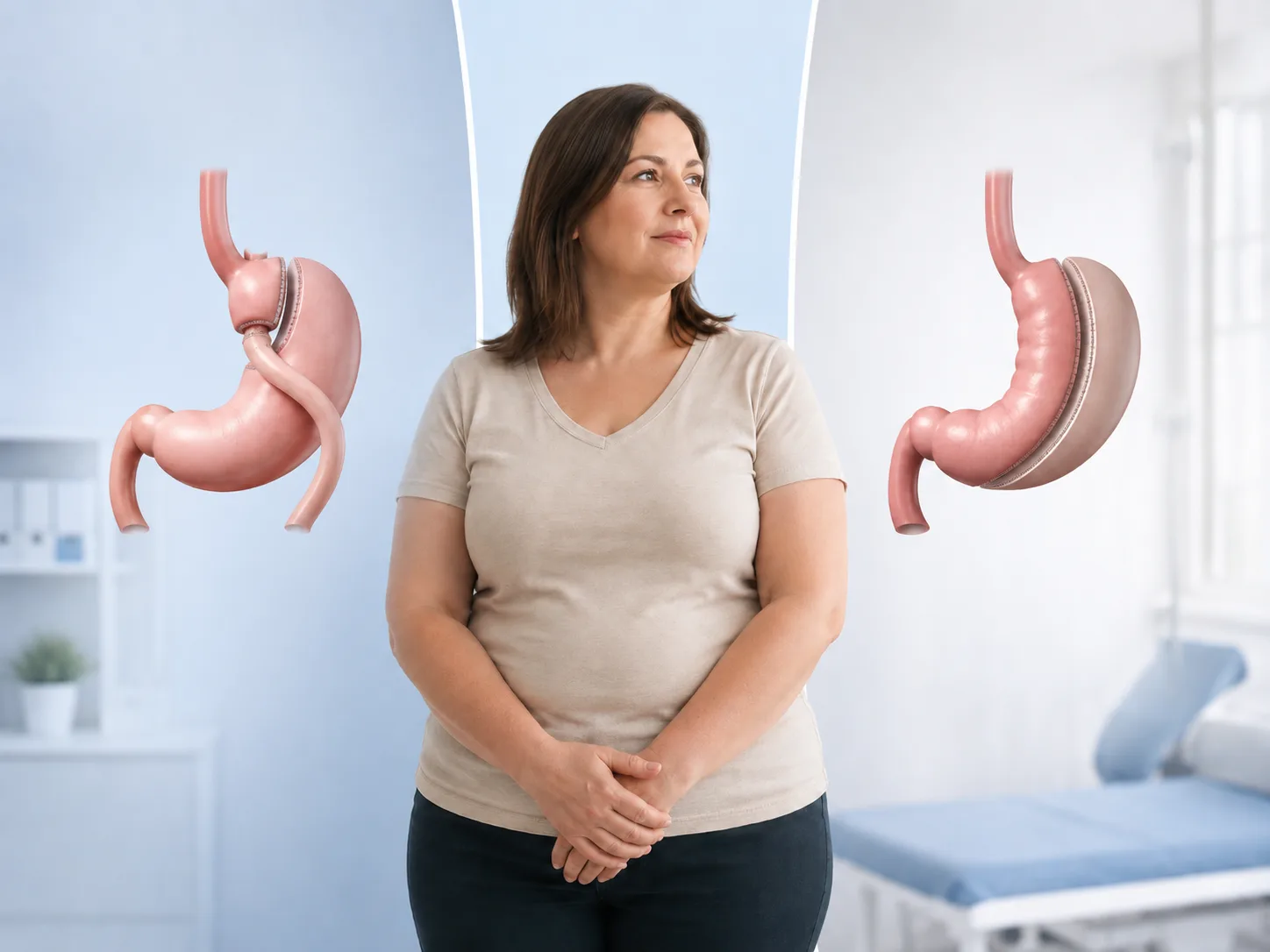
Bariyatrik cerrahi şiddetli obezitesi olan bireylerin kilo vermelerine ve sağlıklarını iyileştirmelerine yardımcı olur. Doktorlar, diyet ve egzersizin yeterli olmadığı durumlarda bu prosedürleri kullanır. En yaygın iki operasyon mide bypass ve mide kelepçesidir. Her iki prosedür de bir kişinin yiyebileceği gıda miktarını azaltır. Ayrıca tip 2 diyabet, yüksek tansiyon ve uyku apnesi gibi durumları da iyileştirebilir. Mide kelepçesi esasen midenin boyutunu küçültür. Mide bypass ise midenin boyutunu küçültür ve gıdanın bağırsaklardan geçiş şeklini değiştirir. Hiçbir prosedür herkes için en iyi şekilde çalışmaz. Doğru seçim, sağlığınıza, kilo verme hedeflerinize, asit reflü geçmişinize ve uzun vadeli beslenme planlarına ne kadar iyi uyabileceğinize bağlıdır. Bu makale, mevcut bilimsel kanıtları kullanarak her iki cerrahiyi karşılaştırmaktadır. Farklılıkları, faydaları, riskleri ve sonuçları anlamanıza yardımcı olur.
Mide Bypass Nedir?
Mide bypass, Roux-en-Y mide bypassı veya RYGB olarak da adlandırılan, en eski ve en çok araştırılan kilo verme cerrahilerinden biridir. Cerrahlar tarafından bu prosedür on yıllardır uygulanmaktadır. Şiddetli obezitesi ve metabolik hastalığı olan birçok hasta için altın standart olmaya devam etmektedir (Buchwald ve diğ., 2004).
Roux-en-Y Mide Bypassı Nasıl Çalışır?
Mide bypassı hem mideyi hem de ince bağırsakları değiştirir. İlk olarak, cerrah midenin üst kısmında küçük bir kesecik oluşturur. Bu kesecik yalnızca yaklaşık bir ons gıda tutar. İkinci olarak, cerrah ince bağırsakları keser ve bunu doğrudan yeni keseciğe bağlar. Böylece gıda, midenin çoğunu ve ince bağırsakların ilk kısmını atlar. Bu tasarım, mide kapasitesini azaltır. Ayrıca kalori ve besin emilimini azaltır. Cerrahi ayrıca bağırsak hormonlarını da değiştirir. Bu hormonlar, açlık, kan şekeri ve metabolizmayı kontrol eder. Kısıtlama, emilim bozukluğu ve hormonal değişim kombinasyonu, mide bypassını oldukça etkili hale getirir (Mingrone ve diğ., 2012).
Mide Bypassının Temel Faydaları Nelerdir?
Mide bypassı önemli ve nispeten hızlı kilo kaybı sağlar. Hastalar genellikle ilk 12 ila 18 ay içinde fazla kilolarının %60 ila %80'ini kaybederler. Prosedür, tip 2 diyabeti güçlü bir şekilde iyileştirir. Birçok hasta tamamen remisyona ulaşır. Yüksek tansiyonu ve obstrüktif uyku apnesini de iyileştirir. Bazı çalışmalar, cerrahiden sonra kardiyovasküler riskin azaldığını göstermektedir. Mide bypassı, hastalarda obezite ile birlikte ciddi metabolik hastalık bulunuyorsa özellikle etkili olur (Schauer ve diğ., 2017).
Mide Bypassının Potansiyel Riskleri Nelerdir?
Mide bypassı belirli riskler taşır. Gıda, ince bağırsaklara çok hızlı geçtiğinde dumping sendromu ortaya çıkar. Hastalar, şekerli veya yağlı gıdalar tükettikten sonra bulantı, terleme ve ishal hisseder. Bypass edilen bağırsak daha az besin emdiği için beslenme ve vitamin eksiklikleri yaygındır. Hastaların yaşam boyu takviye alması gerekmektedir. Anastomoz komplikasyonları, cerrahi bağlantılarda sızıntılar içerebilir. Bağırsak ile mide kesesi buluştuğu yerde ülserler oluşabilir. Bağırsak tıkanıklığı ve iç fıtıklar cerrahiden yıllar sonra bile meydana gelebilir. Kanama ve enfeksiyon kısa vadeli risklerdir. Tüm hastaların yaşam boyu beslenme izleme ve düzenli kan testleri gereklidir (Sjostrom ve diğ., 2007).
Mide Kelepçesi Cerrahisi Nedir?
Mide tüpü ameliyatı, tüp gastrektomi veya SG olarak da adlandırılan, dünya çapında en yaygın bariyatrik prosedür haline gelmiştir. Gastrik bypass'tan daha basit bir yaklaşım sunar. Ameliyat, midenin büyük bir kısmını çıkarır ama bağırsakları dokunulmamış bırakır (Angrisani ve diğ., 2017).
Tüp Gastrektomi Nasıl Çalışır?
Cerrah, midenin yaklaşık %75 ila %80'ini çıkarır. Kalan mide, dar bir tüp veya tüp oluşturur. Bu yeni mide çok daha az gıda tutar. Gastrik bypass'ın aksine, tüp gastrektomi bağırsakların yönünü değiştirmez. Gıda, sindirim sistemi boyunca normal yolu izler. Ameliyat ayrıca ghrelin üreten mide kısmını da çıkarır. Ghrelin, açlık hormonudur. Daha düşük ghrelin seviyeleri iştahı azaltabilir. Prosedür esasen kısıtlama ve hormonal değişim yoluyla çalışır, malabsorpsiyon ile değil (Karamanakos ve diğ., 2008).
Mide Tüpünün Ana Faydaları Nelerdir?
Tüp gastrektomi önemli kilo kaybı sağlar. Hastalar genellikle fazla kilolarının %50 ila %70'ini kaybederler. Cerrahi anatomisi gastrik bypass'tan daha basittir. Bağırsak yönlendirmesi yoktur. Bu da malabsorpsiyonla ilişkili beslenme sorunları riskinin daha düşük olduğu anlamına gelir. Prosedür, aynı zamanda tip 2 diyabet, yüksek tansiyon, uyku apnesi ve diğer obezite ile ilişkili durumları da iyileştirir. Birçok hasta, tüp gastrektomiyi daha az invaziv hissettiği ve daha az uzun vadeli beslenme değişikliği gerektirdiği için tercih etmektedir (Salminen ve diğ., 2018).
Mide Tüpünün Potansiyel Riskleri Nelerdir?
Mide tüpü, kendine has riskleri taşır. Gastroözofageal reflü hastalığı (GERD) ameliyattan sonra kötüleşebilir veya ilk kez ortaya çıkabilir. Tüp striktürü veya daralması yutmayı zorlaştırabilir. Staple hattı boyunca mide sızıntıları ciddi bir erken komplikasyondur. Ameliyat sırasında veya sonrasında kanama meydana gelebilir. Hızla kilo kaybı sonrası genellikle safra taşları gelişir. Bazı hastalar uzun vadede kilo alımı yaşar. Seçilen vakalarda, doktorlar bir tüpü daha sonra gastrik bypass'a dönüştürebilir (Peterli ve diğ., 2018).
Gastrik Bypass ve Mide Tüpü: Temel Farklar Nelerdir?
Her iki ameliyat da hastaların kilo vermesine ve sağlığını iyileştirmesine yardımcı olur. Ancak, anatomisi, mekanizması, riskleri ve sonuçları bakımından farklılık gösterirler. Bu farkların anlaşılması, hastaların ve doktorların doğru prosedürü seçmesine yardımcı olur.
Faktör | Gastrik Bypass | Mide Tüpü |
Tıbbi adı | Roux-en-Y gastrik bypass | Tüp gastrektomi |
Mide küçültme | Evet | Evet |
Bağırsak yönlendirmesi | Evet | Hayır |
Besin emilimi | Azalmış | Çoğunlukla korunmuş |
Kilo kaybı hızı | Genellikle daha hızlı | Genellikle daha yavaş |
Uzun vadeli kilo kaybı | Genellikle daha fazla | Önemli |
Diyabet remisyonu | Güçlü metabolik etki | Güçlü etki |
Gastroözofageal reflü hastalığı | Genellikle iyileştirir | Kötüleşebilir |
Dumping sendromu | Daha yaygın | Daha az yaygın |
Beslenme eksiklikleri | Daha yüksek risk | Daha düşük risk |
Cerrahi karmaşıklık | Daha yüksek | Daha düşük |
Revizyon seçenekleri | Daha karmaşık | Zaman zaman bypass'a dönüşebilir |
Ömür boyu takviye | Genellikle gereklidir | Hala izleme gerektirir |
Son dönem randomize çalışma meta-analizi, RYGB'nin genellikle daha büyük uzun vadeli kilo kaybı ve daha büyük tip 2 diyabet remisyonu sağladığını önermektedir. Sleeve gastrektomi bazı çalışmalarda daha az geç major komplikasyona sahiptir. Bireysel sonuçlar her zaman değişkenlik gösterir.
Kilo Kaybı İçin Gastrik Bypass mı Gastrik Sleeve mı: Hangisi Daha İyi Sonuç Verir?
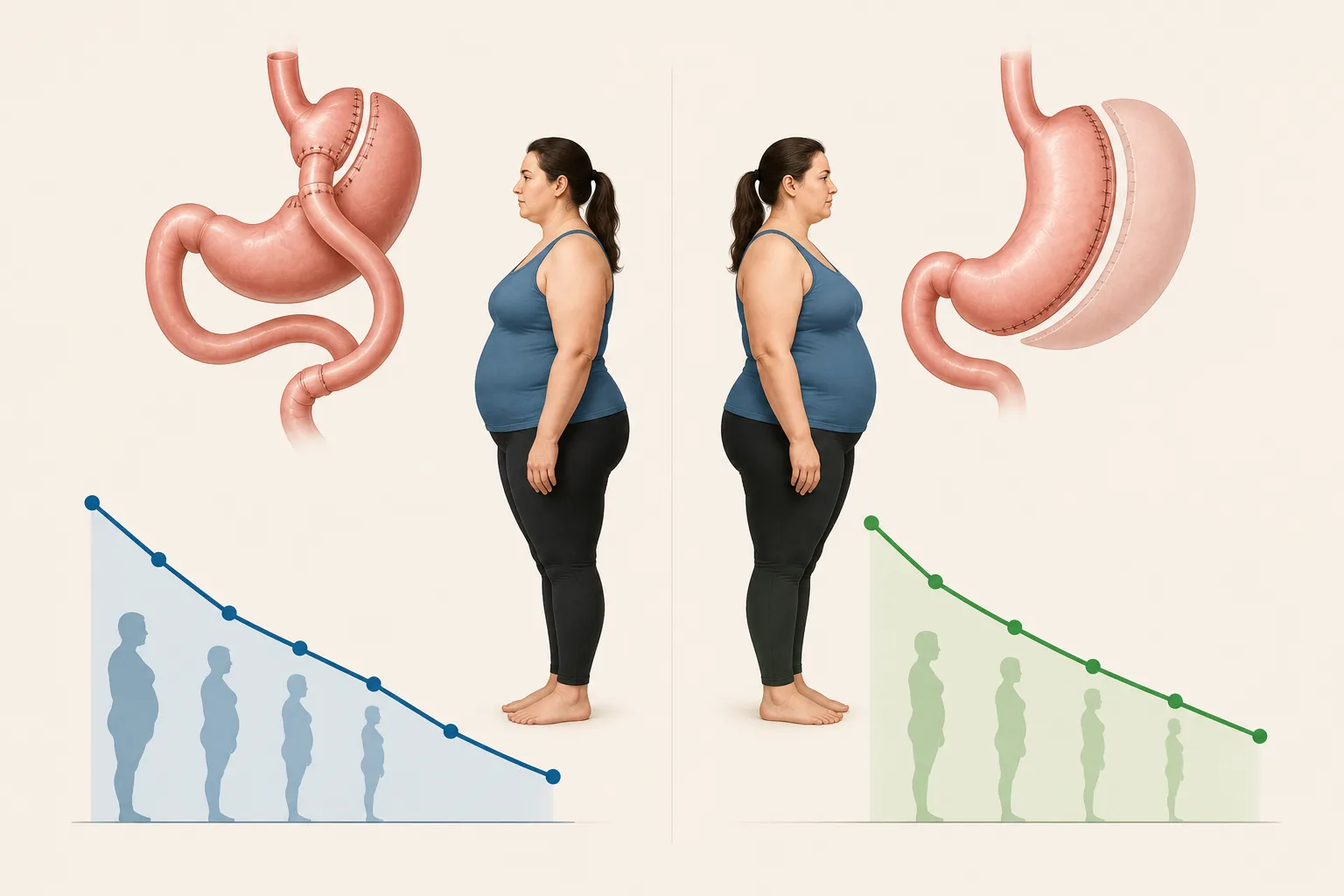
Kilo kaybı, bariyatrik cerrahinin birincil hedefidir. Her iki işlem de önemli ve sürdürülebilir kilo kaybı sağlar. Ancak, hız, miktar ve uzun vadeli bakımda farklılıklar vardır.
Hangi Cerrahi Daha Fazla Kilo Kaybı Sağlar?
Gastrik bypass genellikle sleeve gastrektomiden daha fazla toplam kilo kaybı ve fazla kilo kaybı sağlar. RYGB geçiren hastalar genellikle fazla kilonun %60 ila %80'ini kaybeder. Sleeve hastaları genellikle %50 ila %70 kaybeder. Fark, ilk 12 ila 18 ay sonrasında daha belirgin hale gelir. İlk birkaç ayda her iki işlem de hızlı kilo kaybı sağlar. Beş ila on yıl boyunca, gastrik bypass hastaları daha fazla kilo kaybını sürdürme eğilimindedir. Ancak, bireysel sonuçlar büyük ölçüde değişkenlik gösterir. Yaşam tarzı alışkanlıkları, takip bakımı ve metabolik faktörler hepsi önemli bir rol oynar. Kilo kaybının hızı uzun vadeli sürdürmeden farklıdır. Bazı sleeve hastaları yıllarca mükemmel sonuçları korur. Son dönem randomize kanıtlar, RYGB'nin daha büyük uzun vadeli fazla kilo kaybı ve toplam kilo kaybı için daha avantajlı olduğunu göstermektedir. Her iki işlem de önemli ve klinik olarak anlamlı kilo kaybı sağlamaktadır (Salminen ve ark., 2018).
Gastrik Bypass veya Sleeve'den Sonra Kilo Alabilir Misiniz?
Evet, her iki prosedürden sonra kilo alma durumu meydana gelebilir. Vücut zamanla metabolik olarak uyum sağlar. Mide poşu veya sleeve biraz genişleyebilir. Hormonal değişiklikler tekrar açlık hissini artırabilir. Yaşam tarzı faktörleri oldukça önemlidir. Yüksek kalorili gıdalara ve hareketsiz alışkanlıklara dönen hastalar daha fazla kilo alır. Anatomik faktörler de katkıda bulunur. Bazı hastalar daha büyük bir poş veya genişlemiş bir sleeve geliştirebilir. Kilo alımı belirgin hale geldiğinde ve sağlığı etkilediğinde, revizyon cerrahisi uygun hale gelebilir. Sleeve'den bypass'a geçiş bir seçenektir. Bir bypass poşunun revizyonu başka bir seçenektir. Bariyatrik ekiple düzenli takip, sorunları erken yakalamaya yardımcı olur (Sjostrom ve ark., 2007).
Gastrik Bypass vs Gastrik Sleeve için Tip 2 Diyabet: Hangi Cerrahi Daha İyi Çalışır?
Tip 2 diyabet genellikle bariyatrik cerrahiden sonra dramatik şekilde düzelir. Her iki işlem de vücudun kan şekerini nasıl işlediğini değiştirir. Ancak, metabolik etkiler farklılık gösterir.
Diyabet Remisyonu İçin Hangi Cerrahi Daha İyidir?
Mide bypassı genellikle sleeve gastrektomiden daha güçlü bir diyabet remisyonu sağlar. Bypass, insülin salınımını kontrol eden bağırsak hormonlarını değiştirir. Ayrıca, önemli bir kilo kaybı gerçekleşmeden hızlı bir şekilde insülin hassasiyetini artırır. Yönlendirilmiş bağırsak, pankreas ve karaciğere farklı sinyaller gönderir. Sleeve gastrektomi de kilo kaybı ve ghrelin azalması ile diyabeti iyileştirir. Ancak, metabolik etkisi genellikle bypass'tan daha az etkilidir. Diyabet süresi de önemlidir. Daha yeni diyabeti olan ve daha az ilaç kullanan hastalar daha iyi yanıt verir. Pankreas fonksiyonu da önemli bir rol oynar. Pankreas hala insülin üretiyorsa, remisyon olasılığı daha yüksektir. Son zamanlarda yapılan randomize çalışmalarda RYGB'nin sleeve gastrektomiye kıyasla daha yüksek tip 2 diyabet remisyonu sağladığı bildirilmiştir. Her iki işlem de yalnızca tıbbi tedaviden daha üstündür (Mingrone ve diğ., 2012; Schauer ve diğ., 2017).
Gastrik Bypass ile Mide Sleeve: Hangi Cerrahi Daha Fazla Yardımcı Olur?
Asidik reflü ve GERD, prosedür seçimini etkiler. İki cerrahi, reflüyü çok farklı şekillerde etkiler.
Mide Sleeve Asidik Reflüye Neden Olur mu?
Evet, sleeve gastrektomi bazı hastalarda asidik reflüye yol açabilir veya bunu kötüleştirebilir. Dar, tüp şeklindeki mide basıncı artırır. Bu basınç, mide asidinin yukarı doğru yemek borusuna itilmesine sebep olur. Bazı hastalar sleeve cerrahisi sonrasında yeni başlayan GERD gelişimi gösterir. Diğerleri mevcut reflülerinin kötüleştiğini görür. Her hasta bu sorunu yaşamaz. Ancak, risk gerçektir ve iyi belgelenmiştir. Önceden var olan şiddetli GERD'li hastalar, bu durumu cerrahlarına dikkatlice tartışmalıdır (Peterli ve diğ., 2018).
Gastrik Bypass GERD İçin Daha mı İyidir?
Evet, mide bypassı genellikle reflü semptomlarını iyileştirir. Küçük mide poşu daha az asit üretir. Yeniden yönlendirilmiş bağırsak, safra ve asidi yemek borusundan uzak tutar. Önemli derecede önceden var olan GERD'li hastalar için RYGB daha iyi bir seçim olabilir. Son zamanlarda yapılan randomize çalışmalar, mide bypassından sonra daha iyi GERD sonuçları göstermektedir. Sleeve gastrektomi bazı hastalarda reflüyü kötüleştirebilir veya yol açabilir. Bu da GERD tarihini cerrahi karar verme sürecinde önemli bir faktör haline getirir (Salminen ve diğ., 2018).
Gastrik Bypass ile Mide Sleeve: Riskler ve Komplikasyonlar Nelerdir?
Tüm cerrahiler risk taşır. Bariatrik işlemler genellikle güvenlidir, ancak hastalar olası komplikasyonları anlamalıdır.
Kısa Süreli Komplikasyonlar Nelerdir?
Kısa süreli komplikasyonlar cerrahiden sonraki ilk 30 gün içinde meydana gelir. Ameliyat esnasında veya sonrasında kanama meydana gelebilir. Enfeksiyon, kesi yerlerinde veya karın içinde gelişebilir. Anastomoz veya stapler hattı sızıntıları ciddidir. Mide içeriğinin karına sızmasına neden olurlar. Kan pıhtıları bacaklarda veya akciğerlerde oluşabilir. Bazı hastaların hastaneye yeniden yatırılması gerekebilir. Küçük bir grup, problemleri düzeltmek için yeniden cerrahi gerektirebilir. Her iki işlem de bu riskleri taşır, ancak belirli komplikasyonlar hafifçe farklıdır (Buchwald ve diğ., 2004).
Uzun Süreli Komplikasyonlar Nelerdir?
Uzun süreli komplikasyonlar ameliyattan aylar veya yıllar sonra gelişir.
Mide bypassının uzun vadeli riskleri şunları içerir:
Şekerli yiyecekler yedikten sonra dumping sendromu
Mide-beyin bağlantısında marjinal ülserler
İç herni veya bağırsak obstrüksiyonu
Demir, B12 ve kalsiyum dahil mikro besin eksiklikleri
Yağda eriyen vitaminlerin emilim bozukluğu
Mide baypasının uzun vadeli riskleri şunları içerir:
Gastroözofageal reflü veya kötüleşen reflü
Mide kılıfı darlığı veya daralma
Zamanla kilo kaybı
Besin yetersizlikleri, ancak bypass'a göre daha az şiddetli
Başka bir bariyatrik işleme dönüşüm riski
Karşılaştırmalı kanıtlar genellikle RYGB ile daha yüksek bir olumsuz olay yükü gösteriyor. Ancak, tam risk hasta özelliklerine, cerrahi tekniğe ve takip süresine bağlıdır. Mide küçültme, bazı büyük çalışmalarda (Angrisani ve ark., 2017) daha az geç major komplikasyona sahiptir.
Mide Bypass ve Mide Kılıfı Arasındaki Beslenme Farklılıkları Nelerdir?
Bariyatrik cerrahiden sonra beslenme son derece önemlidir. Her iki prosedür de vücudun gıdaları ve besin maddelerini almasını değiştirir.
Mide Bypass'tan Sonra Hangi Vitamin ve Mineral Yetersizlikleri Görülmektedir?
Mide bypass hastaları belirli yetersizlikler için daha yüksek risklerle karşılaşır. Bağlantılı duodenumun demiri kötü emmesi nedeniyle demir yetersizliği anemisi yaygındır. Mide, daha az içsel faktör ürettiği için B12 vitamini yetersizliği meydana gelir. Folat seviyeleri düşebilir. Kalsiyum ve D vitamini yetersizlikleri kemik kaybına yol açabilir. Yağda çözünen A, E ve K vitaminleri bazı hastalarda düşebilir. Doktorlar bu seviyeleri düzenli kan testleri ile izlerler. Hastalar hayatları boyunca takviye almalıdır (Sjostrom ve ark., 2007).
Mide Kılıfı Sonrası Beslenme İhtiyaçları Nelerdir?
Mide küçültme ameliyatı normal bağırsak fonksiyonunu korur. Besin emilimi bypass'a göre daha sağlam kalır. Ancak, takviye ve laboratuvar izleme hâlâ önemlidir. Daha küçük mide, hastaların genel olarak daha az yemek yemesi anlamına gelir. Bu, vitamin ve mineral alımının düşmesine yol açabilir. Bazı hastalar yine de demir, B12 veya D vitamini yetersizlikleri geliştirebilir. Protein alımına dikkat edilmesi gerekir çünkü küçük mide öğün boyutunu sınırlar. Beslenme uzmanı ile düzenli takip, sorunları önlemeye yardımcı olur (Karamanakos ve ark., 2008).
Neden Yaşam Boyu Takip ve Takviye Önemlidir?
Tüm bariyatrik hastalar yaşam boyu beslenme bakımına ihtiyaç duyar. Her iki süreçten sonra da çoklu vitamin takviyesi standarttır. Protein alımının yeterli kalması, kas kütlesini korumak için önemlidir. Gerekli olmayan bir yetersizlik durumunda periyodik kan testleri bu yetersizlikleri ortaya çıkmadan yakalar. Beslenme uzmanı ile takip, hastaların yeme alışkanlıklarını uyum sağlamalarına yardımcı olur. Takip bakımını atlayan hastalar, komplikasyon riski ile karşı karşıya kalabilir. Beslenme izlemesi isteğe bağlı değildir. Bariyatrik başarı için temel bir parçadır (Buchwald ve ark., 2004).
Mide Bypass ile Mide Kılıfı Sonrası İyileşme Nasıl Olur?
İyileşme süresi iş, aile ve günlük yaşamı etkiler. Her iki prosedür de mümkün olduğunda minimal invasiv teknikler kullanır.
Hastanede Kalış Süresi Ne Kadardır?
Her iki prosedür için hastanede kalış süreleri görece kısadır. Mide bypass hastaları genellikle iki ila üç gün hastanede kalır. Mide küçültme hastaları bir ila iki gün hastanede kalabilir. Bazı merkezler mide kılıfı hastalarını 24 saat içinde taburcu eder. Protokoller hastaneler ve ülkeler arasında değişiklik gösterir. Laparoskopik teknikler ağrıyı azaltır ve iyileşmeyi hızlandırır. Komplikasyon geliştiren hastalar daha uzun kalabilir (Angrisani ve ark., 2017).
Ne Zaman İşe ve Normal Aktivitelere Dönebilirsiniz?
Çoğu hasta iki ila dört hafta içinde işe döner. Masa başı işleri daha erken dönebilir. Fiziksel işler dört ila altı hafta gerektirebilir. Fiziksel aktiviteye kademeli dönüş önemlidir. Yürüyüş cerrahiden hemen sonra başlar. Ağır kaldırma ve yorucu egzersiz birkaç hafta bekler. Ameliyat sonrası diyet aşamaları sıvılardan püre haline getirilmiş yiyeceklere ve yumuşak katılara geçmektedir. Hastalar birkaç ay boyunca yapılandırılmış bir beslenme planı izler. Kesin zaman çizelgesi hastaya ve cerrahi merkeze göre değişiklik gösterir. Her iki prosedür de açık cerrahiye göre oldukça hızlı bir iyileşme sunar (Salminen vd., 2018).
Kimler Gastrik Bypass veya Gastrik Sleeve Adayıdır?
Herkes bariatrik cerrahi için uygun değildir. Doktorlar uygun hastaları seçmek için belirlenmiş kılavuzları takip ederler.
Hangi BMI ve Uygunluk Standartları Geçerlidir?
Mevcut klinik standartlar, uygunluğu belirlemek için vücut kitle indeksini (BMI) kullanmaktadır. BMI'si 40 veya daha yüksek olan hastalar cerrahi için uygun kabul edilir. BMI'si 35 ile 39.9 arasında olan hastalar, obezite ile ilişkili bir hastalığı varsa cerrahi için uygun kabul edilir. Bu hastalıklar arasında tip 2 diyabet, yüksek tansiyon, uyku apnesi veya şiddetli eklem hastalığı bulunmaktadır. Bazı kılavuzlar artık BMI'si 30 ile 34.9 arasında olan ve kötü kontrol edilen diyabeti olan hastalar için cerrahiyi dikkate almaktadır. Karar her zaman çok disiplinli bir ekibi içerir. Cerrahlar, diyetisyenler, psikologlar ve tıp doktorları her hastayı değerlendirir (Buchwald vd., 2004).
Hangi Tıbbi Durumlar Seçimi Etkiler?
Belirli sağlık durumları bypass ve sleeve arasındaki kararı yönlendirir.
Tip 2 diyabet: Gastrik bypass daha güçlü bir remisyon sağlama potansiyeline sahiptir.
Şiddetli GERD: Gastrik bypass genellikle reflüyü iyileştirirken, sleeve durumunu kötüleştirebilir.
Hipertansiyon: Her iki prosedür de kan basıncını iyileştirir.
Obstrüktif uyku apnesi: Her iki prosedür de şiddeti azaltır.
Metabolik sendrom: Gastrik bypass daha güçlü metabolik faydalar sağlayabilir.
Kardiyovasküler risk: Her ikisi de zamanla risk faktörlerini azaltır.
Hareket kısıtlamaları: Sleeve, bazı hastalar için daha basit bir iyileşme sunabilir.
Klinik ekip bu faktörleri bir arada değerlendirir. Tek bir durum, seçimi tek başına belirlemez (Schauer vd., 2017).
Gastrik Bypass mı Gastrik Sleeve mi: Hangisi Daha İyidir?
Evrensel bir cevap yoktur. En iyi prosedür, bireysel hastaya bağlıdır. Doktorlar ameliyatı hastanın sağlık profiline ve hedeflerine uygun hale getirirler.
Gastrik Bypass Ne Zaman Tercih Edilir?
Gastrik bypass, aşağıdaki durumlarda daha iyi bir seçim olabilir:
Ameliyattan önce önemli bir GERD varsa.
Tip 2 diyabeti güçlü metabolik müdahale gerektirir.
Daha fazla kilo kaybı önemli bir klinik hedeftir.
Şiddetli metabolik hastalık obeziteye eşlik eder.
Hasta, ömür boyu sürecek beslenme izleme ve destek gereksinimini kabul etmektedir.
Mide Kelepçesi Ne Zaman Tercih Edilmelidir?
Mide kelepçesi, aşağıdaki durumlarda daha iyi bir seçim olabilir:
Daha basit bir prosedür uygundur.
Bağırsak yönlendirmesinden kaçınmak önemlidir.
Hasta, malabsorpsiyon riskinin daha düşük olmasını istemektedir.
Belirgin reflü mevcut değildir.
Klinik ekip, kelepçe anatomisinin hastanın bedeni için uygun olduğunu düşünmektedir.
Mide Kelepçesi Ne Zaman Mide Baypasına Dönüştürülür?
Mide ile başlayan bazı hastalar daha sonra baypas ameliyatına ihtiyaç duyar. Bu, aşağıdaki durumlarda olur:
Devam eden veya şiddetli GERD, ilaç tedavisine yanıt vermez.
Yetersiz kilo kaybı sağlığı etkiler.
İyi alışkanlıklara rağmen belirgin kilo geri alımı gerçekleşir.
Seçilen kelepçe ile ilgili komplikasyonlar cerrahi düzeltme gerektirir.
Dönüşüm ikinci bir ameliyattır. Kendi riskleri vardır. Ancak, kelepçe hastanın ihtiyaçlarını karşılamadığında bir çözüm sunar (Peterli ve ark., 2018).
Mide Baypası ve Mide Kelepçesi için Maliyet Düşünceleri Nelerdir?
Maliyet, ameliyata erişimi etkiler. Masraflar ülkeye, hastaneye, cerraha ve sigorta planına göre geniş farklılıklar gösterir.
Cerrahi karmaşıklık fiyatı etkiler. Mide bypassı daha uzun sürer ve daha fazla beceri gerektirir. Bu, cerrah ve anestezi maliyetlerini artırır. Hastanede kalış süresi daha maliyetli olabilir. Preoperatif testler kan tahlili, görüntüleme ve kardiyak değerlendirmeyi içerir. Takip bakımı sürekli maliyetler ekler. Besin takviyeleri yaşam boyu bir masraf haline gelir. Potansiyel revizyon işlemleri gelecekteki maliyetleri artırır. Sigorta kapsamı değişiklik gösterir. Bazı planlar bariatrik cerrahiyi tamamen karşılar. Diğerleri katılım payı ister veya kapsamı reddeder. Tıbbi turizm bazı ülkelerde daha düşük fiyatlar sunar. Ancak, seyahat risk ve takip zorluğu ekler. Maliyetler önemli ölçüde çeşitlilik gösterir. Evrensel olarak sabit bir fiyat yoktur (Buchwald et al., 2004).
Mide Bypassı ile Mide Kelepçesi arasındaki Uzun Dönem Sonuçları Nelerdir?
Uzun dönem başarısı, kısa dönem kilo kaybından daha önemlidir. Hastalar, yıllar veya on yıllar süren sonuçlar isterler.
Hastalar Uzun Dönemde Kilo Nasıl Koruyor?
Mide bypassı hastaları genellikle on yıl boyunca daha fazla kilo kaybını korur. Kelepçe hastaları da önemli kayıplarını korur, ancak kilo alma durumu daha sık olabilir. Yaşam tarzı alışkanlıkları korumayı güçlü bir şekilde etkiler. Düzenli takip sonuçları iyileştirir. Destek grupları hastaların doğru yolda kalmasına yardımcı olur (Sjostrom et al., 2007).
Her iki prosedür de uzun dönemde diyabeti iyileştirir. Mide bypassı genellikle daha kalıcı remisyon sağlar. Bazı kelepçe hastalarında kilo alma durumu ortaya çıktıkça diyabetin tekrarladığı görülmektedir. Metabolik sağlık, kolesterol, kan basıncı ve iltihap belirteçlerini içerir. Her iki cerrahi de bu belirteçleri iyileştirir. İyileşmeler zamanla kardiyovasküler riski azaltır (Mingrone et al., 2012).
Kardiyovasküler Risk Faktörleri Nasıl Değişir?
Bariatrik cerrahi, kalp hastalığı riskini azaltır. Kan basıncı düşer. Kolesterol iyileşir. İltihap azalır. Uyku apnesi çözülür veya iyileşir. Bu değişiklikler kalp krizi ve inme riskini azaltır. Her iki prosedür de kardiyovasküler faydalar sağlar. Faydaların derecesi kaybedilen kilonun miktarı ve metabolik iyileşme ile ilişkilidir (Schauer et al., 2017).
Yaşam Kalitesi Nasıl İyileşir?
Her iki işlemden sonra yaşam kalitesi iyileşir. Hastalar daha iyi hareket kabiliyeti, daha az ağrı ve daha fazla enerji bildirirler. Zihinsel sağlık genellikle iyileşir. Sosyal işlevsellik artar. Özgüven yükselir. Bazı hastalar yeni beslenme alışkanlıklarına uyum sağlarken duygusal zorluklarla karşılaşabilir. Aile, arkadaşlar ve profesyonellerden destek yardımcı olur. Uzun vadeli yaşam kalitesi kazanımları her iki cerrahide de iyi belgelenmiştir (Angrisani et al., 2017).
Uzun Vadeli Komplikasyonlar ve Yeniden Operasyon Oranı Nedir?
Uzun vadeli komplikasyonlar iki prosedür arasında farklılık gösterir. 22 çalışmanın yer aldığı yeni bir meta-analiz, mide kelepçesi ile mortalite, yeniden operasyon, yeniden müdahale, hastaneye yatış ve endoskopik prosedürlerin daha düşük risklerini bulmuştur. Ancak, zamanla kelepçenin revizyon riski daha yüksektir. Randomize kontrol denemeleri, kilo kaybı, diyabet remisyonu ve GERD kontrolü açısından RYGB’yi desteklemektedir. Literatür bir prosedürün her zaman daha iyi olduğu sonucunu desteklememektedir. Her hasta bireysel değerlendirme gerektirir (Salminen et al., 2018).
Mide Bypassı ve Mide Kelepçesi Hakkında Sıkça Sorulan Sorular
Mide Bypassı Mide Kelepçesinden Daha mı İyi?
Hiçbir tek prosedür evrensel olarak daha iyi değildir. Mide bypassı daha fazla kilo kaybı ve daha güçlü diyabet remisyonu sağlar. Ayrıca GERD'yi de iyileştirir. Ancak, besin eksiklikleri ve dumping sendromu gibi daha yüksek riskleri vardır. Mide kelepçesi daha basit bir anatomi ve daha az malabsorpsiyon problemleri sunar. En iyi seçenek sağlığınıza, hedeflerinize ve yaşam boyu beslenme planlarına uyum sağlama isteğinize bağlıdır.
Hangi Ameliyat Daha Fazla Kilo Kaybı Yapar?
Mide bypassı genellikle daha fazla kilo kaybına neden olur. Hastalar fazla kilolarının yüzde 60 ila 80'ini kaybeder. Kelepçe hastaları ise yüzde 50 ila 70 kaybeder. Fark, ilk 18 ay sonra daha belirgin hale gelir ve uzun vadede devam eder. Ancak, her iki prosedür de klinik olarak anlamlı kilo kaybı sağlar.
Hangisi Daha Güvenli, Mide Kelepçesi mi Mide Bypassı mı?
Güvenlik, nasıl ölçtüğünüze bağlıdır. Mide kelepçesi, daha basit bir anatomiye ve daha düşük malabsorpsiyon riskine sahiptir. Büyük çalışmalar kelepçeyle daha az geç komplikasyon olduğunu göstermektedir. Ancak, mide bypassı daha uzun geçmişe ve iyi oluşturulmuş güvenlik protokollerine sahiptir. Kısa vadeli riskler benzerdir. Uzun vadeli riskler türüne göre farklılık gösterir. Cerrahınız bireysel risk profilinizi değerlendirecektir.
Diyabet için Hangi Cerrahi Daha İyidir?
Mide bypassı genellikle daha yüksek diyabet remisyon oranları üretir. Metabolik değişiklikler daha güçlüdür. Yeniden yönlendirilen bağırsak, insülin işlevini geliştiren güçlü sinyaller gönderir. Sleeve gastrektomi de diyabeti iyileştirir, özellikle yeni hastalığı olan ve iyi pankreas işlevine sahip hastalarda. Her iki yöntem de yalnızca tıbbi tedaviden daha başarılıdır.
GERD için Hangi Cerrahi Daha İyidir?
Mide bypassı GERD için daha iyidir. Asit üretimini azaltır ve safrayı yemek borusundan uzak tutar. Sleeve gastrektomi bazı hastalarda reflüye neden olabilir veya reflüyü kötüleştirebilir. Eğer önemli bir önceden mevcut GERD hastalığınız varsa, doktorunuz bypass önerebilir.
Sleeve Gastrektomi Daha Az Komplikasyona mı Sahip?
Sleeve gastrektomi, malabsorpsiyon ile ilgili komplikasyonları daha az taşır. Bağırsak yeniden yönlendirmesini engeller. Ancak, GERD, darlık ve yeniden kilo alma gibi belirli riskleri vardır. Karşılaştırmalı çalışmalar bazı analizlerde sleeve ile daha düşük genel olumsuz olay yükü göstermektedir. Kesin risk, hasta faktörlerine ve cerrahi tekniğe bağlıdır.
Sleeve Gastrektomi Mide Bypassına Dönüştürülebilir mi?
Evet, dönüşüm mümkündür. Doktorlar, sleeve hastalarının şiddetli GERD, yetersiz kilo kaybı veya önemli kilo alımı geliştirdiği durumlarda bu işlemi yaparlar. Dönüşüm, kendi riskleri olan ikinci bir cerrahidir. Ancak, sleeve sağlık ihtiyaçlarını karşılayamadığında bir çözüm sunar.
Hangi Cerrahinin İyileşme Süresi Daha Hızlıdır?
Sleeve gastrektomi genellikle biraz daha hızlı bir iyileşme süresine sahiptir. Hastanede kalış süreleri daha kısadır. Prosedür teknik olarak daha basittir. Ancak, her iki cerrahi de minimal invaziv teknikler kullanmaktadır. Çoğu hasta, prosedürden bağımsız olarak iki ila dört hafta içinde işe döner. Bireysel iyileşme değişkenlik gösterir.
Her İki Prosedür de Vitamin Takviyesi Gerekir mi?
Evet, her ikisi de takviye ve izleme gerektirir. Mide bypassı hastaları malabsorbsiyon nedeniyle daha yoğun takviye gerektirir. Sleeve hastaları ise yine de çoklu vitaminler, protein desteği ve periyodik kan testleri gerektirir. Her iki yöntem için de ömür boyu beslenme bakımı esastır.
Mide Bypassı veya Sleeve Sonrası Kilo Alabilir misiniz?
Evet, her iki prosedürden sonra kilo alımı gerçekleşebilir. Metabolik adaptasyon, poş veya sleeve gerilmesi ve yaşam tarzı faktörleri hepsi katkıda bulunur. Düzenli takip, sağlıklı beslenme ve fiziksel aktivite, sonuçların korunmasına yardımcı olur. Önemli bir yeniden kilo alma durumu için revizyon cerrahisi bir seçenek olabilir.
Sonuç: Mide Bypassı ve Sleeve Arasında Nasıl Seçim Yaparsınız?
Hem mide bypassı hem de sleeve gastrektomi, yerleşik ve etkili bariatrik prosedürlerdir. Sleeve, daha basit bir anatomik yapı sunar. Normal bağırsak akışını korur. Malabsorpsiyon ile ilgili sorun riskini düşürür. Mide bypassı daha büyük kilo kaybı sağlayabilir. Tip 2 diyabet ve GERD üzerinde daha güçlü etkiler üretir. Ancak, aynı zamanda dumping sendromu ve besin yetersizlikleri gibi prosedüre özgü riskleri de taşır. Sleeve, asit reflüsü ve muhtemel sonraki revizyon gibi belirli endişeleri beraberinde getirir. Son karar, çok disiplinli bir değerlendirmeyi takiben verilmelidir. Cerrahınız, diyetisyeniniz ve tıp ekibiniz, BMI, metabolik sağlık, reflü geçmişi ve kişisel hedeflerinizi değerlendirecektir. Kilo kaybı tek başına en iyi prosedürü belirlemez. Genel sağlığınız ve yaşam kaliteniz en önemli faktörlerdir. Sorular sorun. Danışmanlık görüşmelerine katılın. Ameliyat öncesi ve sonrası kılavuzlara uyun. Doğru prosedür ve uygun bakım ile bariatrik cerrahi, sağlığınızı yıllarca dönüştürebilir.
Kaynaklar
Angrisani, Luigi, ve diğerleri. "Dünya Çapında Bariyatrik Cerrahi 2013."Obezite Cerrahisicilt 27, no. 10, 2017, ss. 2277-2283.
Buchwald, Henry ve diğ. "Bariatrik Cerrahi: Sistematik İnceleme ve Meta-Analiz."JAMA , cilt 292, sayı 14, 2004, ss. 1724-1737.
Karamanakos, Stephanos N., ve diğ. "Roux-en-Y Mide Baypası ve Sleeve Gastrektomi Sonrası Kilo Kaybı, İştahta Azalma ve Açlık ile Postprandiyal Ghrelin ve Peptid-YY Seviyelerinde Değişiklikler."Annals of Surgery , cilt 247, sayı 3, 2008, ss. 401-407.
Mingrone, Geltrude ve diğ. "Tip 2 Diyabet İçin Bariatrik Cerrahi ile Konvansiyonel Tıbbi Tedavi."New England Journal of Medicine , cilt 366, sayı 17, 2012, ss. 1577-1585.
Peterli, Ralph ve diğ. "Morbid Obezitesi Olan Hastalarda Laparoskopik Sleeve Gastrektomi ile Laparoskopik Roux-en-Y Mide Baypası'nın Kilo Kaybı Üzerindeki Etkisi."JAMA , cilt 319, sayı 3, 2018, ss. 255-265.
Salminen, Paulina ve diğ. "Morbid Obezitesi Olan Hastalarda 5 Yıl Boyunca Laparoskopik Sleeve Gastrektomi ile Laparoskopik Roux-en-Y Mide Baypası'nın Kilo Kaybı Üzerindeki Etkisi."JAMA , cilt 319, sayı 3, 2018, ss. 241-254.
Schauer, Philip R., ve diğ. "Diyabet İçin Bariatrik Cerrahi ile Yoğun Tıbbi Tedavi - 5 Yıl Sonuçları."New England Journal of Medicine , cilt 376, 2017, ss. 641-651.
Sjostrom, Lars ve diğ. "Bariatrik Cerrahinin İsveçli Obez Bireylerde Ölüm Üzerindeki Etkileri."New England Journal of Medicine, vol. 357, no. 8, 2007, pp. 741-752.