10 Things to Know Before Traveling to Turkey for a Nose Job
Turkey has emerged as one of the world's most sought-after destinations for rhinoplasty. Every year, thousands of patients from the United Kingdom, Europe, North America, and the Middle East board flights to Istanbul and other Turkish cities with one goal: to reshape their nose through expert surgical care. The country now ranks among the top three global destinations for medical tourism, and rhinoplasty sits at the center of this growth. This guide delivers the essential knowledge every international patient needs before booking a nose job in Turkey. You will learn how to choose a qualified surgeon, what to expect during recovery, how long to stay in the country, and how to protect your health throughout the journey. The information rests on peer-reviewed scientific research, not marketing claims.
Why Do Thousands of Patients Travel to Turkey for Rhinoplasty Every Year?
Patients choose Turkey because the country combines experienced facial plastic surgeons, modern accredited hospitals, and competitive pricing with comprehensive medical tourism services. Turkey performs hundreds of thousands of cosmetic procedures annually, and rhinoplasty accounts for a significant share of this volume. The International Society of Aesthetic Plastic Surgery consistently ranks Turkey among the top countries for rhinoplasty procedures per capita. Surgeons in Turkey often perform a high volume of ethnic rhinoplasty cases, which gives them specialized experience with diverse nasal anatomies. Maassarani (2023) found that ethnic rhinoplasty can produce significant satisfaction improvements when surgeons understand the patient's cultural and aesthetic goals. The FACE-Q scores in that study rose from a mean of 26.65 preoperatively to 67.21 postoperatively, demonstrating that patients experience measurable quality-of-life gains after surgery. Beyond surgical skill, Turkey offers all-inclusive packages that bundle surgery, hospital stays, hotel accommodation, airport transfers, and interpreters into one price point that often costs 50 to 70 percent less than equivalent procedures in the United States or Western Europe. This combination of expertise, infrastructure, and value explains why Turkey rhinoplasty continues to attract international patients.
How Should You Choose the Right Rhinoplasty Surgeon?
You should select a surgeon who holds board certification in plastic surgery or otolaryngology, performs rhinoplasty as a primary focus rather than a occasional procedure, and maintains a documented revision rate below the published benchmarks. The surgeon should also demonstrate experience with your specific nasal anatomy, whether you need primary rhinoplasty, revision rhinoplasty, or functional septorhinoplasty. Crosara (2017) analyzed 49 studies and found that reoperation rates after primary rhinoplasty range between 1.56 and 2.73 percent depending on surgical approach. This data gives you a concrete benchmark: any surgeon with a revision rate significantly above this range warrants scrutiny.
What Credentials Should You Look For?
You should verify that your surgeon holds active board certification from a recognized national or international plastic surgery board. The surgeon should also maintain hospital privileges at accredited facilities, not just private clinic operating rooms. Ask for the surgeon's annual rhinoplasty volume. Clappier (2022) emphasizes that preoperative consultation should include a detailed medical and nasal history, and the surgeon should demonstrate technical skill and artistic judgment during this initial meeting. Request to see before-and-after photographs of patients with similar nasal anatomy to yours. Ask specifically about the surgeon's experience with ethnic rhinoplasty if you have Middle Eastern, Asian, African, or Mediterranean heritage. Maassarani (2023) notes that non-Caucasian patients may have different aesthetic expectations, and surgeons must approach ethnic rhinoplasty with culturally sensitive techniques that preserve ethnic identity while achieving refinement.
How Can You Verify a Surgeon's Expertise?
You can verify expertise by checking independent patient reviews on third-party platforms, confirming membership in professional societies such as the International Society of Aesthetic Plastic Surgery, and asking direct questions during your online consultation. Ask how many rhinoplasty procedures the surgeon performs each year. Ask what percentage of their practice focuses exclusively on nasal surgery. Ask about their protocol for managing complications. A qualified surgeon welcomes these questions and provides clear, specific answers. Avoid any surgeon who pressures you to book immediately or who offers prices that seem unrealistically low compared to market rates.
Are All Rhinoplasty Clinics in Turkey the Same?
No. Turkey hosts a wide spectrum of facilities, from full-service JCI-accredited hospitals to small private clinics with limited emergency capabilities. The facility where your surgeon operates matters as much as the surgeon's skill. Restrepo (2025) analyzed 2,324 international patients who underwent cosmetic surgery in Colombia and found that complication rates in high-volume, well-regulated centers compared favorably with published benchmarks from board-certified surgeons in the United States. This principle applies directly to Turkey: accredited hospitals with multidisciplinary teams produce safer outcomes than unaccredited surgical centers.
What Makes an Operating Facility Safe?
A safe operating facility maintains accreditation from organizations such as the Joint Commission International or equivalent national bodies. The facility should have an intensive care unit, blood bank access, and emergency resuscitation equipment immediately available. The operating room should follow strict sterilization protocols. The CDC (2026) investigated infection prevention and control at surgical centers connected to medical tourism and identified significant deficiencies in environmental cleaning, personal protective equipment use, hand hygiene practices, and surgical equipment reprocessing at some facilities. You should ask your chosen clinic directly about their accreditation status and infection control protocols.
How Do Anesthesia Standards Differ?
Anesthesia standards vary significantly between hospitals and small clinics. A full-service hospital employs board-certified anesthesiologists who manage your airway and vital signs throughout the procedure. Smaller clinics may rely on nurse anesthetists or sedation protocols that carry higher risk for longer rhinoplasty cases. Rhinoplasty typically requires general anesthesia, and the procedure lasts between two and four hours depending on complexity. Ask who administers your anesthesia. Ask whether a board-certified anesthesiologist remains present for the entire case. Ask what monitoring equipment the facility uses. These questions protect you from preventable anesthesia-related complications.
What Should Be Included in Your Rhinoplasty Package?
A comprehensive rhinoplasty package in Turkey typically includes the surgical procedure, hospital stay for one to two nights, hotel accommodation for five to seven nights, airport transfers, an interpreter, postoperative medications, and at least one follow-up appointment before departure. Some packages also include preoperative blood tests and imaging. You should receive a written itemized list of every service included in your package price.
Package Component | Typically Included | May Require Extra Payment |
Primary rhinoplasty surgery | Yes | — |
Hospital stay (1-2 nights) | Yes | Extended stay |
Hotel accommodation (5-7 nights) | Yes | Extra nights |
Airport transfers | Yes | — |
Interpreter services | Yes | — |
Postoperative medications | Yes | Extended prescriptions |
Follow-up appointments | Yes | Remote follow-up after departure |
Revision surgery | No | Yes |
Additional imaging (CT scan) | Sometimes | Yes |
Travel insurance | No | Yes |
Revision procedures almost never fall under the initial package price. Alzahrani (2024) reports that revision rhinoplasty patients often show lower satisfaction scores than primary rhinoplasty patients, which underscores the importance of getting the primary surgery right the first time. If a clinic promises unlimited free revisions, read the fine print carefully. Most reputable surgeons offer revision policies that cover specific timeframes and complication types, not cosmetic dissatisfaction.
How Long Should You Stay in Turkey After a Nose Job?
You should plan to stay in Turkey for seven to ten days after rhinoplasty. This timeline allows for the initial consultation, preoperative testing, surgery, and at least one postoperative check before you fly home. Most surgeons remove the external nasal splint between days five and seven. You should not fly before splint removal and wound assessment.
Recovery Phase | Timeline | Activity Level |
Initial consultation and testing | Day 0-1 | Normal walking |
Surgery day | Day 1-2 | Bed rest |
First postoperative check | Day 2-3 | Light walking |
Splint removal | Day 5-7 | Normal light activity |
Final clearance to fly | Day 7-10 | Cleared for air travel |
Primary rhinoplasty patients typically need seven days before flying. Revision rhinoplasty patients may need ten days or longer because the tissue has already undergone previous surgical trauma. Your surgeon should clear you for travel based on your individual healing progress, not a fixed calendar date. Factors that extend recovery time include surgical complexity, thickness of nasal skin, and whether the surgeon performed grafting procedures.
What Medical Evaluations Should You Complete Before Traveling?
You should complete a full medical history review, blood tests including coagulation studies, and a nasal examination before you travel. Clappier (2022) states that the preoperative consultation should obtain a detailed medical and nasal history, document any allergies or prior nasal trauma, and screen for conditions that impair wound healing. Your surgeon needs to know about hypertension, bleeding disorders, obstructive sleep apnea, and chronic sinusitis before they operate.
You should stop smoking at least four weeks before surgery. Theadom (2006) conducted a systematic review and found that smokers who quit less than two months before surgery faced four times the risk of pulmonary complications compared with those who stopped more than two months prior. Smokers who abstained for more than six months showed complication risks equal to non-smokers. You should also stop drinking alcohol at least one week before surgery because alcohol thins the blood and increases bleeding risk during rhinoplasty. Disclose all medications and supplements to your surgeon. Blood thinners, herbal supplements, and even high doses of vitamin E can increase intraoperative bleeding.
What Should You Expect During Rhinoplasty Recovery?
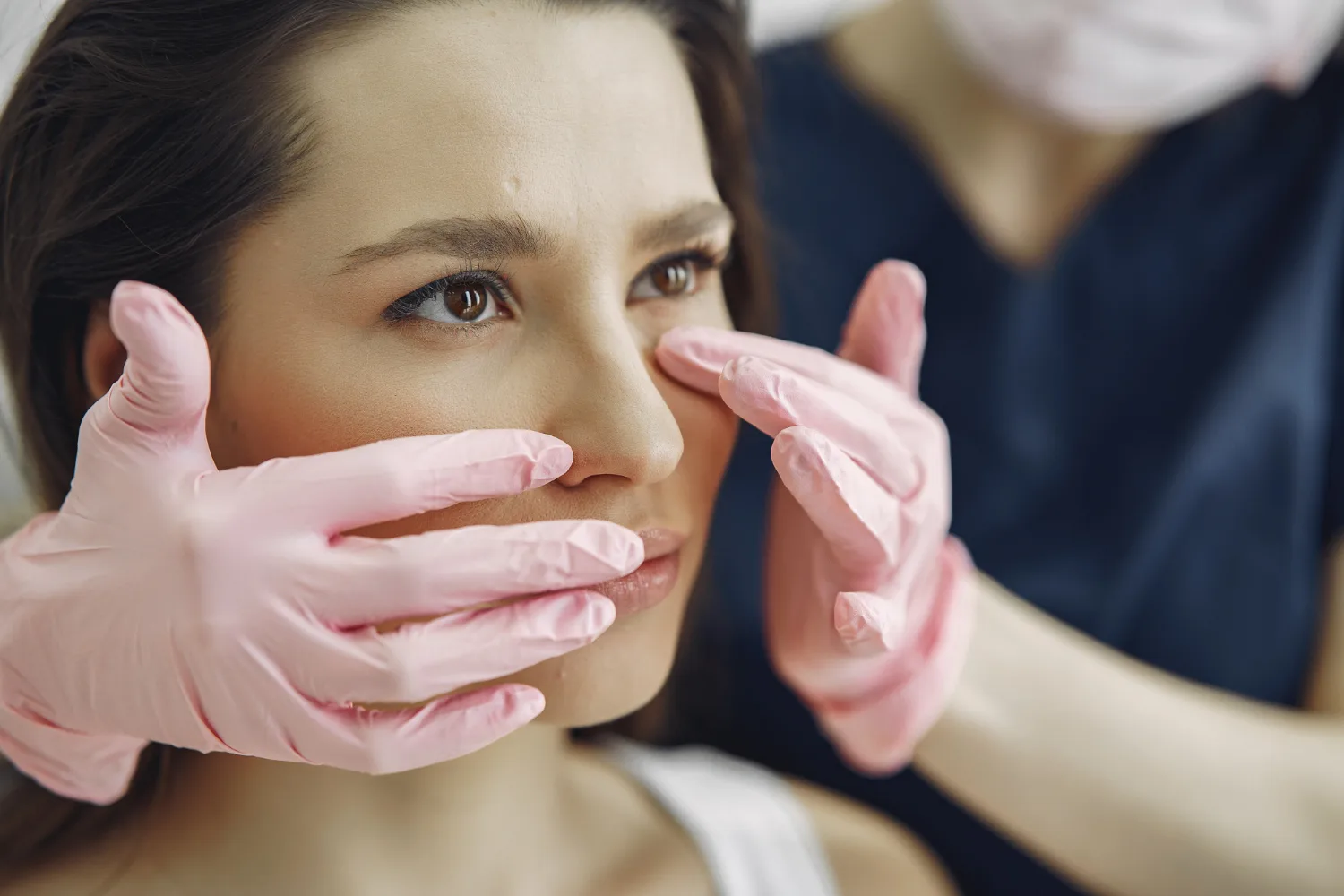
You should expect swelling, bruising, nasal congestion, and mild discomfort during the first two weeks. These symptoms represent normal healing, not complications. Sharif-Askary (2020) conducted a systematic review of 3,215 publications and found that adverse events after rhinoplasty include the need for revision in up to 10.9 percent of cases, infection in up to 4 percent, bleeding in up to 4.1 percent, and septal perforation in up to 2.6 percent. Knowing these statistics helps you distinguish normal recovery from warning signs.
Recovery Stage | Common Symptoms | Normal Milestones |
First 24 hours | Mild bleeding, pressure, grogginess | Rest with head elevated |
Days 2-3 | Peak swelling and bruising | Bruising spreads to eye area |
Days 4-7 | Splint in place, congestion | Swelling begins to decrease |
Weeks 2-4 | Residual swelling, numbness | Return to light social activity |
Months 3-6 | Subtle swelling persists | Nose shape refines |
Months 6-12 | Final contour emerges | Full results visible |
Swelling after rhinoplasty follows a predictable pattern. The most visible swelling subsides within three to four weeks. However, subtle swelling in the nasal tip can persist for six to twelve months. Patients often feel impatient during months three through six because the nose looks different from the final result. This period requires emotional patience and trust in the healing process.
When Should You Contact Your Surgeon?
You should contact your surgeon immediately if you experience fever above 38 degrees Celsius, rapidly increasing swelling on one side, severe pain that escalates instead of improving, active bleeding that does not stop with gentle pressure, or foul-smelling drainage from the nose. These signs may indicate infection, hematoma, or other complications that require urgent intervention.
Is It Safe to Fly Home After Rhinoplasty?
Flying home becomes generally safe seven to ten days after rhinoplasty, provided your surgeon has examined your nose, removed the splint, and confirmed stable healing. You should not fly earlier because cabin pressure changes, dry air, and reduced oxygen levels can stress healing tissues. The CDC (2026) documented cases where patients experienced serious adverse events after travel-related cosmetic procedures, including infections and complications that required hospitalization upon return home.
When you do fly, take specific precautions. Drink water throughout the flight to combat dehydration. Avoid salty foods that increase fluid retention. Walk the aisle every hour to maintain circulation and reduce clot risk. Keep your nasal passages moist with saline spray. Do not lift heavy luggage into overhead bins because straining can increase nasal pressure and trigger bleeding. Choose an aisle seat so you can move easily. If your flight exceeds four hours, consider wearing compression stockings to prevent deep vein thrombosis.
What Risks Should International Patients Be Aware Of?
International patients face surgical risks, language barriers, and follow-up care challenges. Sharif-Askary (2020) quantified the major adverse events after rhinoplasty: revision rates up to 10.9 percent, infection up to 4 percent, wound dehiscence up to 5 percent, and bleeding up to 4.1 percent. These risks exist in every country, but international patients face additional layers of complexity.
Hummel (2023) reviewed 228 patients who experienced complications after cosmetic surgery abroad and found that pain and discomfort affected 19 percent, aesthetic dissatisfaction affected 18 percent, wound breakdown affected 14 percent, and infection affected 11 percent. Turkey represented 16 percent of the foreign procedures in that study. The research also revealed that antibiotic-resistant strains appeared in half of the cases where surgeons collected bacterial samples, posing serious treatment challenges when patients returned home.
Language barriers can prevent you from fully understanding postoperative instructions. Follow-up care becomes complicated when you live in another country. If complications arise after you return home, your local healthcare system may not have immediate access to your surgical records from Turkey.
How Can You Reduce These Risks?
You can reduce risks by choosing a board-certified surgeon at an accredited hospital, avoiding decisions based solely on price, planning adequate recovery time in Turkey, and maintaining communication with your surgeon after you return home. Restrepo (2025) demonstrated that plastic surgery medical tourism in high-volume, well-regulated centers achieves outcomes equivalent to leading practices in the United States when strict safety protocols are followed. This research supports the conclusion that medical tourism itself does not create risk; poor patient selection and inadequate facilities create risk.
Verify your surgeon's credentials through independent sources, not just clinic websites. Plan at least seven days of recovery in Turkey before flying. Purchase travel insurance that covers medical complications abroad. Establish a clear follow-up plan that includes how to reach your surgeon and what local doctor will monitor your recovery at home.
Should You Travel Alone or With Someone?
You should bring a companion if possible. A travel partner assists you during the first 48 hours after surgery when you feel groggy from anesthesia and cannot manage luggage, medications, or navigation alone. Your companion can communicate with clinic staff if you feel too tired to process information. They can also monitor you for warning signs during the first nights after surgery.
If you must travel alone, choose a clinic that provides 24-hour patient hosting or nursing support. Book a hotel within walking distance of the clinic. Arrange airport wheelchair assistance in advance. Pack all medications, documents, and comfort items in a carry-on bag that you can access without lifting. Solo travel for rhinoplasty requires extra planning, but many patients complete successful journeys alone when they prepare thoroughly.
What Questions Should You Ask Before Booking Your Surgery?
You should ask specific questions that reveal the surgeon's experience, the facility's safety standards, and the clinic's complication management protocols. Write your questions down and demand written answers.
Ask whether the surgeon holds board certification in plastic surgery or otolaryngology. Ask how many rhinoplasty procedures they perform annually. Ask what technique they recommend for your nose and why. Ask whether they will evaluate your breathing function alongside cosmetic goals. Ask what happens if complications occur during or after surgery. Ask how the clinic manages revisions. Ask what follow-up care is available after you return to your home country.
Ask about the anesthesia plan. Ask who administers the anesthesia and what their qualifications are. Ask about emergency protocols. Ask whether the facility has an intensive care unit. These questions separate reputable clinics from operations that cut corners.
Common Mistakes to Avoid When Traveling to Turkey for Rhinoplasty
Patients who travel to Turkey for rhinoplasty often make preventable mistakes that compromise their safety and satisfaction. Avoid these errors to protect your outcome.
Booking solely based on the lowest price ranks as the most common mistake. The Hummel (2023) study found that 83 percent of patients who experienced complications abroad cited lower cost as their primary motivation for traveling. When a price seems too good to be true, the clinic may lack proper accreditation, experienced anesthesiologists, or adequate emergency equipment.
Ignoring surgeon credentials creates serious risk. Always verify board certification independently. Flying home too early represents another dangerous error. The first week after rhinoplasty is critical for tissue healing, and cabin pressure changes can disrupt blood supply to the nose.
Underestimating recovery time leads to frustration. Many patients expect to return to work within one week, but visible bruising and swelling often persist for two to three weeks. Expecting immediate final results causes unnecessary anxiety. The nose continues to refine for twelve months after surgery.
Not purchasing travel insurance leaves you financially exposed if complications require extended stay or additional treatment. Failing to arrange postoperative support at home means you have no local medical contact if problems arise after your return.
Frequently Asked Questions
Is Turkey Safe for Rhinoplasty?
Turkey is safe for rhinoplasty when you choose a board-certified surgeon at an accredited hospital. Restrepo (2025) found that complication rates in well-regulated international centers match those of leading practices in the United States. The key variable is not the country but the quality of the specific surgeon and facility you select.
How Much Time Should I Stay in Turkey After a Nose Job?
You should stay seven to ten days after rhinoplasty. This allows time for splint removal, wound assessment, and clearance for air travel. Revision rhinoplasty patients may need up to fourteen days.
Can I Travel Alone for Rhinoplasty?
Yes, but a companion provides significant advantages during the first 48 hours. If you travel alone, choose a clinic with 24-hour support and arrange all logistics in advance.
How Painful Is Rhinoplasty Recovery?
Most patients describe rhinoplasty recovery as uncomfortable rather than painful. Prescription pain medication controls discomfort effectively during the first three to five days. After that, over-the-counter medication usually suffices.
When Can I Fly Home?
You can fly home after your surgeon removes the splint and confirms stable healing, typically seven to ten days after surgery. Do not fly earlier.
How Long Does Swelling Last?
Visible swelling subsides within three to four weeks. Subtle tip swelling can persist for six to twelve months. Final results emerge around the one-year mark.
What if I Need Revision Surgery?
Revision rates after primary rhinoplasty range from 1.56 to 2.73 percent according to Crosara (2017). If you need revision, you should return to your original surgeon when possible because they understand your internal nasal anatomy. Discuss revision policies before booking.
Can Rhinoplasty Improve Breathing Problems?
Yes. Functional rhinoplasty or septorhinoplasty corrects structural issues such as deviated septums, nasal valve collapse, and turbinate hypertrophy. Clappier (2022) emphasizes that surgeons should evaluate both aesthetic and functional concerns during preoperative consultation. Ask your surgeon specifically about breathing improvement if you have nasal obstruction symptoms.
Conclusion
Traveling to Turkey for rhinoplasty can deliver excellent results when you approach the journey with thorough preparation and realistic expectations. Board-certified surgeons and accredited hospitals significantly improve your safety profile. Proper travel planning and sufficient recovery time protect your health and your outcome. Clear communication with your surgical team before, during, and after the procedure contributes to higher satisfaction. The scientific evidence supports this conclusion: patients who research their surgeon, verify facility accreditation, stop smoking before surgery, plan adequate recovery time, and maintain follow-up care achieve the best aesthetic and functional outcomes. Rhinoplasty in Turkey offers world-class expertise at accessible prices, but the responsibility for a safe journey rests with you. Use this guide as your roadmap, ask the hard questions, and never compromise on safety for the sake of savings.
References
Alzahrani, Fahad, et al. "Assessment of Postoperative Satisfaction in Patients Undergoing Rhinoplasty." Cureus, vol. 16, no. 12, 2024, p. e75509.
Centers for Disease Control and Prevention. "Adverse Outcomes Linked to Travel-Related Cosmetic Procedures." CDC Media Releases, 2 June 2026, www.cdc.gov/media/releases/2026/cdc-highlights-adverse-outcomes-linked-to-travel-related-cosmetic-procedures.html.
Clappier, Mona, et al. "Preoperative Evaluation of the Rhinoplasty Patient." Clinics in Plastic Surgery, vol. 49, no. 1, 2022, pp. 1–12.
Crosara, Paulo Fernando Tormin Borges, et al. "Rhinoplasty Complications and Reoperations: Systematic Review." International Archives of Otorhinolaryngology, vol. 21, no. 1, 2017, pp. 97–105.
Hummel, C. E., et al. "Complications Arising from Aesthetic Surgery Procedures in Foreign Countries and Switzerland." Swiss Medical Weekly, vol. 153, no. 40077, 2023, doi.org/10.57187/smw.2023.40077.
Maassarani, D., et al. "Ethnic Rhinoplasty: A Middle East-Centered Patient Satisfaction Survey Using the FACE-Q Questionnaire." Cureus, vol. 15, no. 7, 2023, p. e40048.
Restrepo, C., et al. "Safety and Outcomes in Plastic Surgery Medical Tourism." Plastic and Reconstructive Surgery Global Open, vol. 13, no. 3, 2025, p. e6234.
Sharif-Askary, Banafsheh, et al. "Incidence of Postoperative Adverse Events after Rhinoplasty: A Systematic Review." Plastic and Reconstructive Surgery, vol. 145, no. 3, 2020, pp. 501–512.
Theadom, A. "Effects of Preoperative Smoking Cessation on the Incidence and Risk of Intraoperative and Postoperative Complications in Adult Smokers: A Systematic Review." Journal of Clinical Nursing, vol. 15, no. 3, 2006, pp. 297–311.