Gastric Bypass for Type 2 Diabetes: Can It Reverse Your Condition and Reduce Long-Term Risk?
Gastric bypass can improve type 2 diabetes, reduce medication requirements, and trigger remission in many eligible patients. Roux-en-Y gastric bypass changes gut anatomy, raises GLP-1 levels, and improves insulin resistance. Remission rates vary from 30% to over 80% depending on diabetes duration, pancreatic function, and weight outcomes (Rubino et al. 2016).
Gastric bypass for type 2 diabetes works through weight loss, hormonal signaling, and metabolic adaptation. The procedure improves blood glucose control, cuts medication needs, and can lead to diabetes remission. However, remission does not mean a permanent cure. Diabetes can return, and patients need lifelong monitoring. Outcomes depend on how long a person has had diabetes, how well the pancreas still produces insulin, and how much weight stays off after surgery (Sjöström et al. 2014).
This article explains how the procedure works, who qualifies, how outcomes compare with medication and lifestyle treatment, and what risks follow surgery.
What Is Gastric Bypass Surgery and How Does It Work?
Gastric bypass, formally called Roux-en-Y gastric bypass, is a metabolic operation that creates a small stomach pouch and reroutes the small intestine. The procedure limits food intake, changes nutrient absorption, and alters gut hormone release. It treats obesity and its related metabolic diseases, including type 2 diabetes (Cummings and Overduin 2007).
Surgeons construct a pouch roughly the size of an egg and connect it directly to the middle portion of the small intestine. Food then bypasses most of the stomach and the first section of the small intestine. This anatomical change serves three functions at once:
It restricts how much food a person can eat at one time.
It reduces absorption of some calories and nutrients.
It accelerates nutrient delivery to the lower intestine, which triggers stronger GLP-1 and PYY hormone responses (le Roux et al. 2006).
These mechanisms distinguish gastric bypass from sleeve gastrectomy and adjustable gastric banding. Sleeve gastrectomy removes about 80% of the stomach but keeps the normal intestinal pathway. Adjustable banding places an inflatable ring around the stomach without rerouting the intestine. Gastric bypass combines restriction with hormonal and absorptive effects, which explains its stronger impact on glycemic control (Schauer et al. 2012).
One important clarification applies here: gastric bypass addresses type 2 diabetes, which involves insulin resistance and progressive beta-cell decline. It does not treat type 1 diabetes, which involves autoimmune destruction of insulin-producing cells.
How Gastric Bypass Improves Type 2 Diabetes?
Gastric bypass improves type 2 diabetes through three coordinated mechanisms: weight loss, gut hormone changes, and reduced liver fat. Blood glucose can improve within days of surgery, before significant weight loss occurs, because hormonal and hepatic changes begin immediately (Laferrère et al. 2007).
First, reduced calorie intake produces weight loss, and weight loss improves insulin sensitivity in muscle and fat tissue. Second, nutrients reach the lower small intestine faster, which stimulates L-cells to release more GLP-1. This incretin hormone boosts glucose-dependent insulin secretion and suppresses glucagon. Third, rapid calorie restriction drains fat from the liver, and reduced hepatic fat content lowers hepatic insulin resistance within the first week (Cummings and Overduin 2007).
This multi-mechanism model explains a key clinical observation: many patients leave the hospital with near-normal glucose levels while still carrying most of their preoperative weight. The anatomical change, the hormonal surge, and the metabolic adaptation act together rather than sequentially. Understanding these mechanisms also clarifies why the operation outperforms diet alone: dieting reduces calorie intake but does not reroute the intestine or trigger the same hormonal cascade (Laferrère et al. 2007).
Who Is a Candidate for Gastric Bypass for Type 2 Diabetes?

Candidates typically have a BMI of 35 or higher with inadequately controlled type 2 diabetes, or a BMI of 30 or higher with diabetes that remains uncontrolled despite medication and structured lifestyle treatment. Shorter diabetes duration, preserved insulin production, and good surgical fitness increase the likelihood of remission (Rubino et al. 2016).
Eligibility assessment weighs several factors at once. Clinicians review BMI, HbA1c trends, current medications, diabetes duration, cardiovascular health, and previous responses to diet and drug therapy. Patients with a longer history of diabetes and reduced beta-cell function face lower remission odds, yet they can still gain substantial glycemic benefit (Sjöström et al. 2014).
Thresholds also differ across guidelines and healthcare systems. Some criteria emphasize BMI cutoffs, while newer frameworks treat poorly controlled diabetes itself as an indication for metabolic surgery, even at moderate obesity levels. A multidisciplinary team, including a bariatric surgeon, endocrinologist, dietitian, and anesthesiologist, evaluates each case individually.
Gastric Bypass vs. Medication and Lifestyle Treatment for Type 2 Diabetes: Which Works Better?
For patients with obesity and poorly controlled type 2 diabetes, gastric bypass produces greater and more durable glycemic improvement than medication and lifestyle treatment alone. Surgery does not suit everyone, though, and medication remains necessary for many patients after the operation (Mingrone et al. 2012; Schauer et al. 2012).
The evidence base supports this comparison strongly. In two landmark randomized trials, patients assigned to bariatric surgery achieved higher remission rates and larger HbA1c reductions than patients receiving intensive medical therapy:
Outcome at 1 year | Gastric bypass / surgery group | Medical therapy group |
Diabetes remission | 42–75% | 0–12% |
HbA1c reduction | ~2.0–2.9 percentage points | ~1.5 percentage points |
Medication discontinuation | Common | Rare |
The table draws on trial data reported by Mingrone et al. (2012) and Schauer et al. (2012).
Surgery also carries risks that medication does not. Every treatment decision therefore balances expected metabolic benefit against surgical complications, patient preference, and the commitment to lifelong follow-up. Some patients continue glucose-lowering drugs after surgery, particularly when pancreatic reserve is limited. The right choice always depends on individual physiology and goals, not on a universal rule.
Can Gastric Bypass Put Type 2 Diabetes Into Remission?
Yes, many patients achieve remission after gastric bypass, but remission means sustained normal glucose levels without diabetes medication for at least three months, confirmed by laboratory testing. A single normal reading does not establish remission (Rubino et al. 2016).
Remission differs from improved glycemic control and reduced medication use. Control means better numbers with ongoing treatment. Partial remission means near-normal glucose without drugs. Complete remission means normal HbA1c and fasting glucose without drugs for an extended period.
Research findings vary because studies define remission differently and follow patients for different lengths of time. Reported remission rates after Roux-en-Y gastric bypass range widely, but consistent predictors emerge across studies:
Shorter diabetes duration, ideally under five years.
Higher residual insulin secretion before surgery.
Greater postoperative weight loss and metabolic improvement.
Lower preoperative HbA1c (Mingrone et al. 2012; Sjöström et al. 2014).
Diabetes can recur after remission, which is why endocrinologists monitor HbA1c indefinitely.
How Long Do the Diabetes Benefits of Gastric Bypass Last?
Glycemic benefits can persist for many years, but remission rates decline over time. Long-term data show that some patients maintain remission beyond a decade, while others experience a return of elevated blood glucose due to weight regain or progressive beta-cell decline (Sjöström et al. 2014).
In the Swedish Obese Subjects study, diabetes remission occurred in about 72% of surgery patients at two years, yet about half of those remissions had relapsed by ten years. Even so, surgery patients maintained better long-term glycemic control than matched control patients who received conventional treatment. Microvascular complication rates were also lower in the surgical group (Sjöström et al. 2014).
Three factors drive late recurrence: weight regain, gradual loss of pancreatic beta-cell function, and ongoing insulin resistance. Continued follow-up protects patients by tracking HbA1c, weight, nutritional markers, and diabetes complications year after year.
What Health Benefits Beyond Blood Sugar Does Gastric Bypass Provide?
Gastric bypass improves blood pressure, lipid profiles, sleep apnea, mobility, and quality of life in many patients with obesity and diabetes. These benefits stem from sustained weight loss and better glycemic control, though individual results vary (Adams et al. 2012).
Improved metabolic health reduces cardiovascular risk factors. Better glucose control lowers the risk of retinopathy, nephropathy, and neuropathy at the population level. Large cohort studies link bariatric surgery with fewer microvascular complications and lower cardiovascular event rates compared with nonsurgical care (Sjöström et al. 2014).
These findings describe group-level risk reduction, not guaranteed outcomes for any single patient. The extent of benefit depends on baseline health, adherence to postoperative nutrition, and long-term weight maintenance.
What Risks and Complications Can Gastric Bypass Cause in People With Diabetes?
Gastric bypass carries short-term surgical risks and long-term nutritional risks. Patients may face bleeding, infection, leaks, ulcers, bowel obstruction, dumping syndrome, vitamin deficiencies, and post-bariatric hypoglycemia. Careful medication review and lifelong supplementation reduce these risks (Mechanick et al. 2013).
Short-term complications include anesthesia-related events, blood clots, bleeding, infection, and anastomotic leaks during the first weeks. Long-term concerns include marginal ulcers, internal hernias, bowel obstruction, and dumping syndrome, where rapid food delivery causes nausea, sweating, and dizziness after meals.
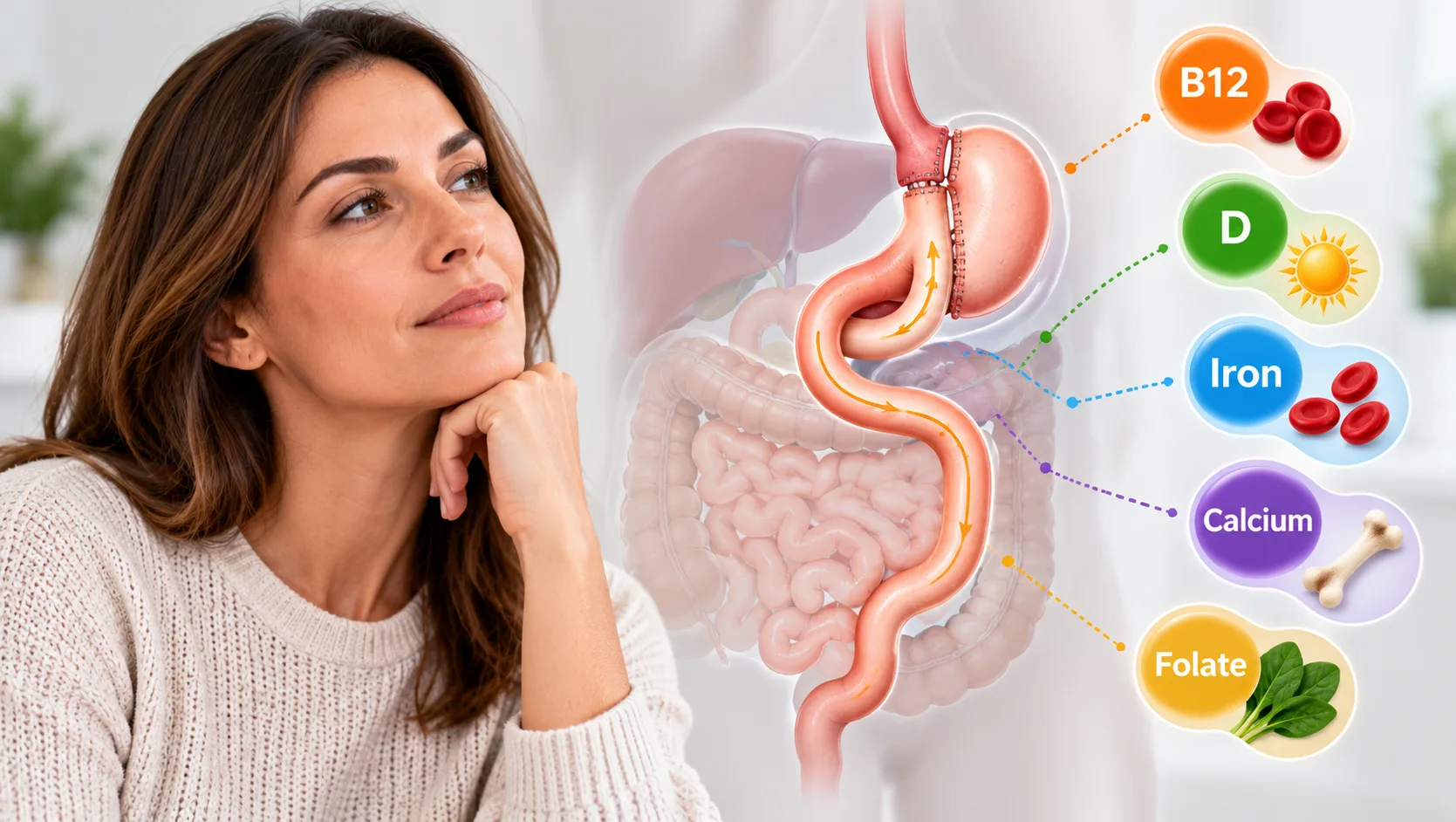
Nutritional deficiencies rank among the most common long-term issues. The bypassed anatomy limits absorption of iron, vitamin B12, folate, calcium, and vitamin D. Without supplementation and laboratory monitoring, patients can develop anemia and bone loss (Mechanick et al. 2013).
Hypoglycemia deserves special attention in diabetes patients. As glucose normalizes after surgery, preoperative medication doses can become excessive and cause low blood sugar. A distinct condition, post-bariatric hypoglycemia, can emerge months later when exaggerated GLP-1 responses drive excess insulin after carbohydrate-rich meals (Salehi et al. 2010). Clinicians must review all diabetes medications as glucose improves and distinguish medication-related lows from this late complication.
How Should You Prepare for Gastric Bypass With Type 2 Diabetes?
Preparation includes blood testing, HbA1c measurement, nutritional screening, cardiovascular evaluation, and medication review. Patients also meet the dietitian, endocrinologist, and anesthesiologist. Stopping smoking and stabilizing glucose before surgery reduces complication risk (Mechanick et al. 2013).
The preoperative phase serves a clear purpose: it lowers surgical risk and sets expectations for lifelong change. Clinicians measure baseline labs, assess cardiac fitness, and adjust insulin or oral medications to prevent perioperative hypoglycemia and hyperglycemia. Dietitians teach the staged eating plan that follows surgery, and behavioral screening identifies whether a patient can sustain the required habits.
Good glucose control before the operation speeds healing and lowers infection risk. Patients who quit smoking, follow the preoperative diet, and manage other conditions such as hypertension or sleep apnea recover more reliably. This preparation phase connects directly to the recovery period, where blood sugar behavior changes rapidly.
How Should You Manage Blood Sugar During Recovery?
Blood sugar and medication needs can shift within days after gastric bypass. Patients monitor glucose frequently, adjust insulin under clinician direction, and transition from liquids to pureed foods and then to solids over several weeks (Mechanick et al. 2013).
The recovery diet follows a strict sequence. Clear liquids come first, then protein-focused pureed foods, then soft solids, and finally regular small meals. Each stage protects the healing stomach pouch and rerouted intestine. Glucose monitoring becomes a daily task during this window because insulin sensitivity rises quickly, and preoperative doses can cause dangerous lows.
Patients should never stop prescribed medication on their own. The care team directs every dose change. Warning signs such as shakiness, confusion, rapid heartbeat, persistent vomiting, or signs of dehydration require prompt medical contact, and severe symptoms require urgent care.
What Does Long-Term Nutrition and Diabetes Management Look Like After Gastric Bypass?
Long-term management centers on small protein-rich meals, lifelong vitamin and mineral supplementation, regular lab monitoring, and consistent physical activity. Medical follow-up continues for life, even when diabetes medication is no longer needed (Mechanick et al. 2013).
The postoperative stomach accommodates only small portions, so patients prioritize protein and hydration at every meal. Chewing thoroughly and separating fluids from meals prevents discomfort and dumping syndrome. Supplementation replaces iron, vitamin B12, folate, calcium, and vitamin D based on individual lab results rather than a fixed protocol.
Annual monitoring tracks HbA1c, fasting glucose, weight, and nutritional markers. Physical activity and dietary adherence preserve metabolic gains, and behavioral support helps patients maintain new habits. This long-term framework determines whether early remission becomes a lasting outcome.
How Does Gastric Bypass Compare With Other Bariatric Procedures for Diabetes?
Roux-en-Y gastric bypass generally produces higher diabetes remission rates than sleeve gastrectomy and adjustable banding, but it also carries a higher risk of nutritional deficiencies. Procedure selection depends on diabetes severity, BMI, reflux symptoms, and patient preference (Schauer et al. 2012; Mingrone et al. 2012).
Feature | Roux-en-Y gastric bypass | Sleeve gastrectomy | Adjustable banding |
Anatomical change | Pouch plus intestinal reroute | Stomach reduction only | Restrictive band only |
Diabetes remission rate | High | Moderate | Low |
GLP-1 response | Strongly enhanced | Moderately enhanced | Minimal change |
Nutritional deficiency risk | Higher | Moderate | Lower |
Reversibility | Difficult | Not reversible | Fully reversible |
Remission rates across studies cannot be compared directly without accounting for different patient populations and remission definitions (Pournaras et al. 2012). A specialist should weigh each option against your specific metabolic profile.
Frequently Asked Questions About Gastric Bypass for Type 2 Diabetes
Can Gastric Bypass Cure Type 2 Diabetes?
No, clinicians use the term remission, not cure. Some patients achieve complete remission, while others gain partial improvement or continue medication (Rubino et al. 2016).
How Soon Can Blood Sugar Improve After Gastric Bypass?
Blood sugar can improve within days of surgery, often before meaningful weight loss occurs, because hormonal and hepatic changes begin immediately (Laferrère et al. 2007).
Does Everyone Stop Taking Diabetes Medication After Surgery?
No. Some patients reduce or stop medication under medical supervision, while others continue treatment based on their pancreatic function and glucose trends.
Is Gastric Bypass Effective for Patients With Long-Standing Diabetes?
Complete remission becomes less likely with longer diabetes duration and reduced insulin production. Meaningful improvement can still occur even when remission does not (Sjöström et al. 2014).
Can Type 2 Diabetes Return After Gastric Bypass?
Yes, diabetes can recur, often alongside weight regain or progressive beta-cell decline. Ongoing monitoring remains essential even after remission.
What Happens If Blood Sugar Becomes Too Low After Gastric Bypass?
Low blood sugar can result from excess medication or from post-bariatric hypoglycemia driven by exaggerated GLP-1 and insulin responses. Recurrent episodes need prompt clinical assessment (Salehi et al. 2010).
Is Gastric Bypass the Right Option for Your Diabetes?
Gastric bypass suits patients with obesity and poorly controlled type 2 diabetes who can commit to lifelong follow-up. The procedure offers substantial metabolic benefit and meaningful remission odds, balanced against surgical risks and nutritional demands.
The decision rests on your treatment history, current glucose control, BMI, diabetes duration, and personal health goals. A personalized consultation with a bariatric surgeon and a diabetes specialist gives you the individualized risk-benefit analysis that guidelines cannot provide. Bring your medication list, recent HbA1c results, and your goals to that conversation, and ask every question that matters to you.
References
Adams, Ted D., et al. "Health Benefits of Gastric Bypass Surgery after 6 Years." JAMA, vol. 308, no. 11, 2012, pp. 1122–1131.
Cummings, David E., and J. Overduin. "Gastrointestinal Regulation of Food Intake." Journal of Clinical Investigation, vol. 117, no. 1, 2007, pp. 13–23.
Laferrère, Blandine, et al. "Incretin Levels and Effect Are Markedly Enhanced 1 Month after Roux-en-Y Gastric Bypass Surgery in Obese Patients with Type 2 Diabetes." Diabetes Care, vol. 30, no. 7, 2007, pp. 1709–1716.
le Roux, Carel W., et al. "Gut Hormone Profiles Following Bariatric Surgery Favor an Anorectic State, Facilitate Weight Loss, and Provide Metabolic Benefits." Annals of Surgery, vol. 243, no. 1, 2006, pp. 108–114.
Mechanick, Jeffrey I., et al. "Clinical Practice Guidelines for the Perioperative Nutritional, Metabolic, and Nonsurgical Support of the Bariatric Surgery Patient." Obesity, vol. 21, no. S1, 2013, pp. S1–S27.
Mingrone, Geltrude, et al. "Bariatric Surgery versus Conventional Medical Therapy for Type 2 Diabetes." New England Journal of Medicine, vol. 366, no. 17, 2012, pp. 1577–1585.
Pournaras, Dimitri J., et al. "Effect of the Definition of Type II Diabetes Remission in the Evaluation of Bariatric Surgery for Metabolic Disorders." British Journal of Surgery, vol. 99, no. 1, 2012, pp. 100–103.
Rubino, Francesco, et al. "Metabolic Surgery in the Treatment Algorithm for Type 2 Diabetes: A Joint Statement by International Diabetes Organizations." Diabetes Care, vol. 39, no. 6, 2016, pp. 861–877.
Salehi, Marzieh, et al. "Gastric Bypass Surgery Enhances Glucagon-Like Peptide 1-Stimulated Postprandial Insulin Secretion in Humans." Diabetes, vol. 59, no. 3, 2010, pp. 591–595.
Schauer, Philip R., et al. "Bariatric Surgery versus Intensive Medical Therapy in Obese Patients with Diabetes." New England Journal of Medicine, vol. 366, no. 17, 2012, pp. 1567–1576.
Sjöström, Lars, et al. "Association of Bariatric Surgery with Long-term Remission of Type 2 Diabetes and with Microvascular and Macrovascular Complications." JAMA, vol. 311, no. 22, 2014, pp. 2297–2304.