Let’s talk about something most men think about but rarely discuss openly: hair loss. It creeps up gradually, a receding hairline here, thinning temples there. Before you know it, you’re strategically positioning yourself in photos and avoiding certain lighting.
For professional athletes, this pressure gets cranked up to eleven. Their image isn’t just personal; it’s part of their brand. Every match is broadcast in HD. Every celebration is analyzed frame by frame.
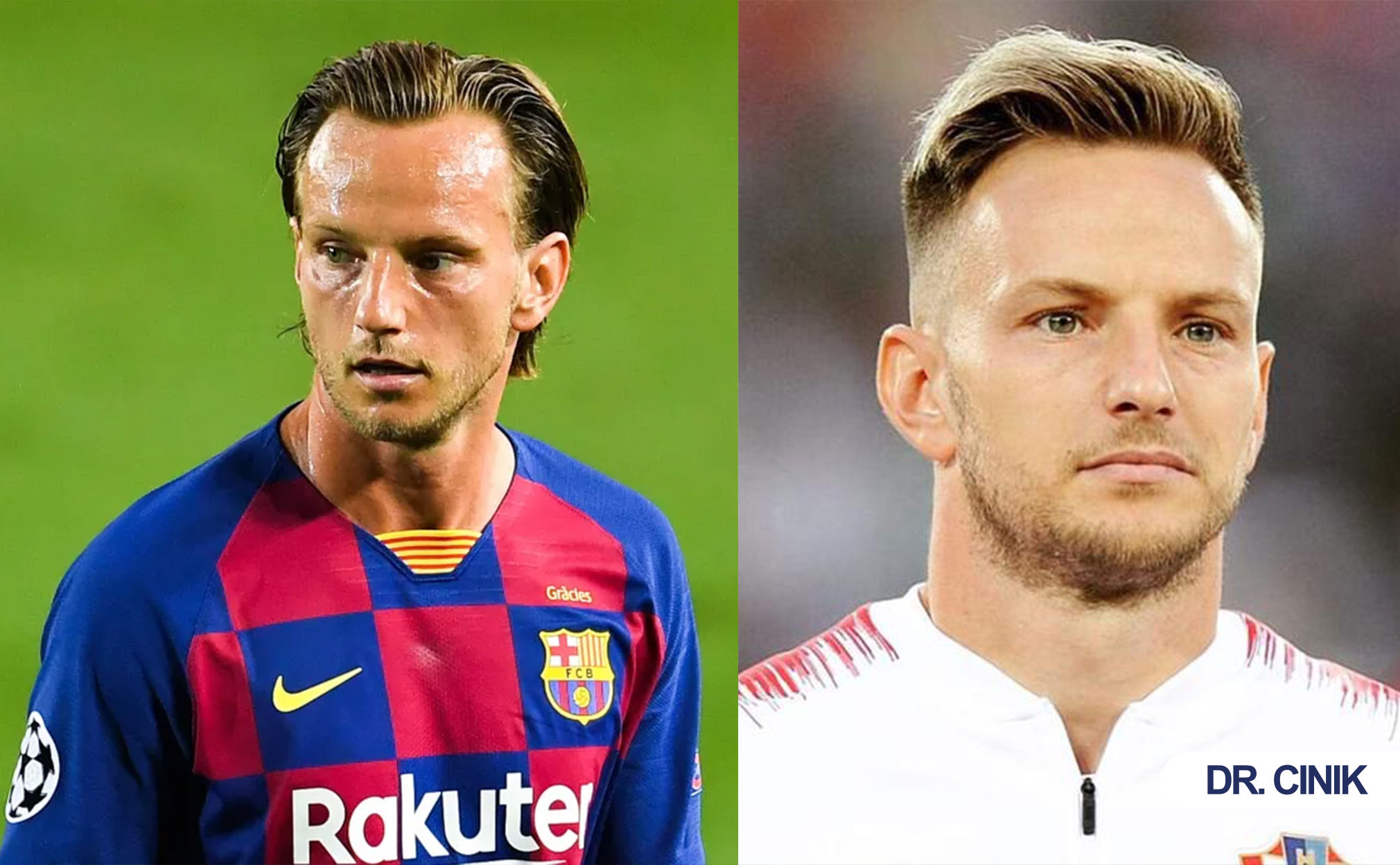
That’s exactly the situation Ivan Rakitic found himself in. The Croatian midfielder’s hairline had been slowly retreating throughout his career. By age 35, he was dealing with Stage III androgenetic alopecia on the Norwood scale, noticeable recession at the temples and frontal area that was becoming harder to ignore .
Rather than just accepting it, Rakitic made a move that thousands of men are now following. He booked a flight to Istanbul and put his trust in Dr. Emrah Cinik for his hair transplantHair transplantation is a surgical procedure that involves the extraction of hair follicles from a designated donor site, followed by... in Turkey.
Who Is Ivan Rakitic and Why Should His Choice Matter to You?
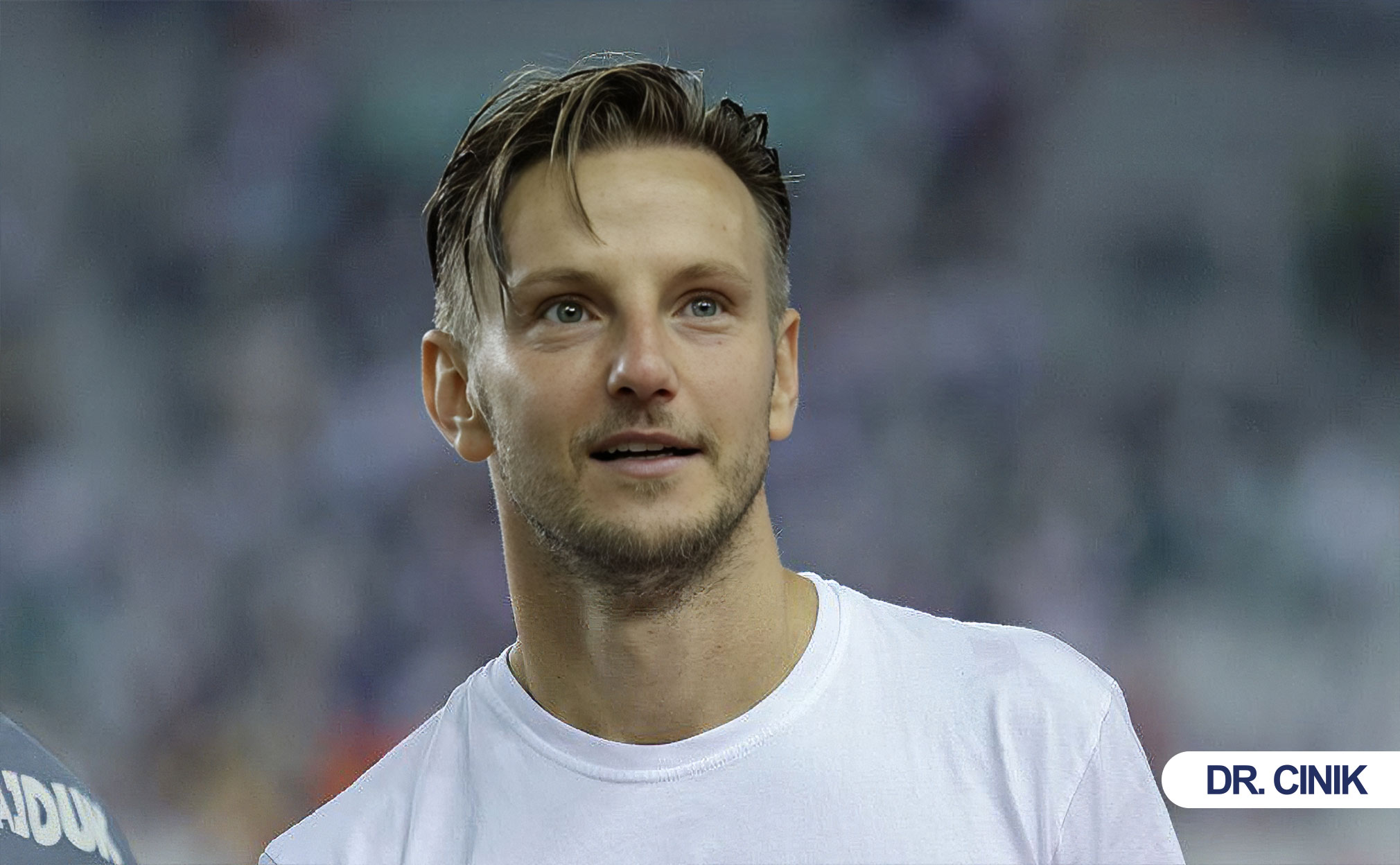
If you follow football, you already know the name. If you don’t, here’s the quick version: Rakitic has spent nearly two decades playing at the highest level.
He started at FC Basel, moved to Schalke 04 in Germany, then really made his mark at Sevilla under Unai Emery, captaining them to Europa League glory in 2014. That performance caught Barcelona’s attention. He joined the Catalan giants the same year and spent six seasons winning everything: the Champions League (scoring in the 2015 final against Juventus), multiple La Liga titles, and Copa del Rey trophies.
After Barcelona, he returned to Sevilla, then moved to Al-Shabab in Saudi Arabia. Through it all, he’s been a mainstay for the Croatian national team, representing them at World Cups and European Championships.
The point? This is someone who has options. He could walk into any clinic in London, New York, or Los Angeles. He chose Istanbul. That decision says something about what’s happening in Turkey’s hair transplant industry.
Why Istanbul? Why Dr. Cinik?
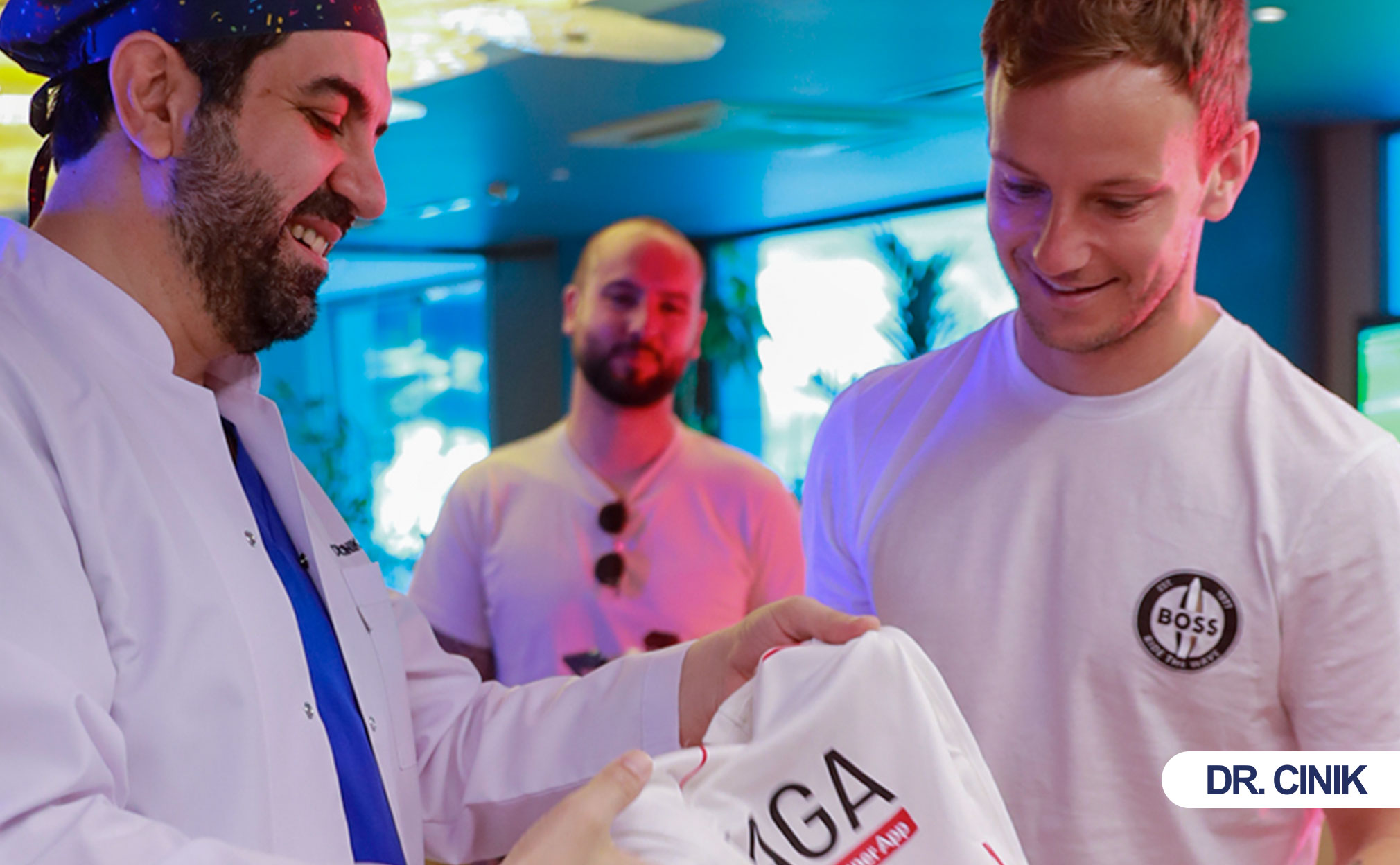
Hair transplant in Turkey has become something of a phenomenon. The country now performs more procedures annually than anywhere else in the world. But it’s not just about volume, it’s about expertise developed through that volume.
Dr. Cinik has been in this field for over 20 years. His clinic has treated more than 50,000 patients, including a roster of professional footballers: Rio Ferdinand, Nemanja Gudelj, Rivaldo, Djibril Cissé, Bacary Sagna, and Ludovic Giuly among them .
For someone like Rakitic, discretion matters as much as results. Athletes talk. They share experiences in locker rooms and training grounds. When multiple players from the same circles recommend the same clinic, that carries more weight than any advertisement.
The logistics work, too. Dr. Cinik’s clinic offers all-inclusive packages: airport pickup, 4-5 star hotel accommodation, translators, and post-op careEnsuring Long-Term Success Post-operative care is essential for protecting grafts and optimizing the results of a hair transplant. Following proper.... For a player with limited downtime between seasons, having everything handled in one place is practical.
And yes, the cost factor is real. A Sapphire FUE Istanbul typically runs 50-70% less than equivalent procedures in Western Europe or North America . For Rakitic, money wasn’t the deciding factor. But for most of the patients, that price difference, without quality compromise, is significant.
The Specifics: What Procedure Did Rakitic Actually Get?
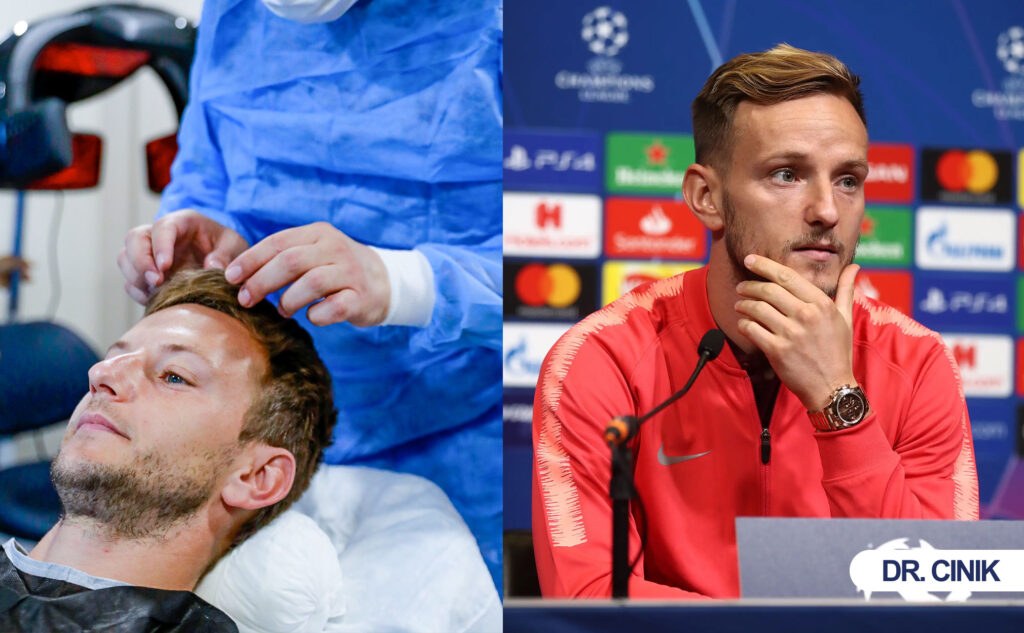
Ivan Rakitic got his hair transplant in May 2022. His procedure was performed by Dr. Emrah Cinik and his team. Here you can see the details about his surgery:
- Technique: Sapphire FUE (Follicular Unit Extraction)
- Grafts: 3,000 implanted in the frontal hairline and temple areas
- Additional treatment: PRP (Platelet-Rich Plasma) injection to accelerate healing and boost growth
Sapphire FUE differs from standard FUE in the incision tool. Instead of steel blades, the surgeon uses blades made from synthetic sapphire crystal. These create smaller, cleaner incisions with less tissue trauma. The benefits? Less scabbing, faster healing (about 30% quicker according to clinic data), and the ability to place grafts more densely for a natural look .
For a footballer, this matters. The recovery timeline is compressed. The results need to look natural under stadium lights and TV cameras, not obvious or “done.”
Rakitic’s specific pattern was classic male pattern baldness: recession at the temples creating that distinctive “M” shape, plus frontal thinning. Dr. Cinik placed single-follicle grafts at the leading edge for a soft, natural hairline, with multi-follicle units behind for density .
What Actually Happened During Rakitic’s Hair Transplant in Turkey?
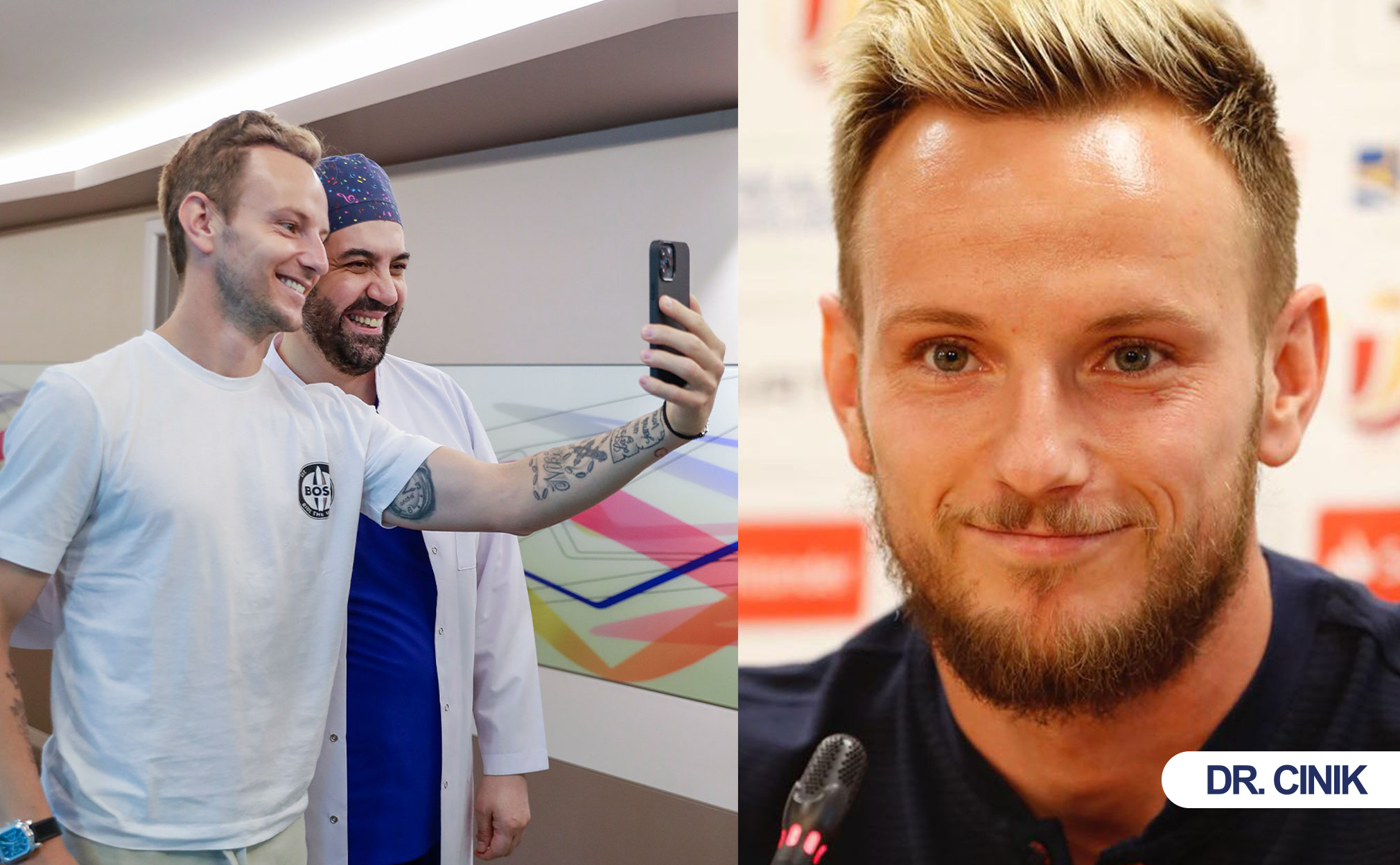
If you’re considering this, you probably want the practical details. Here’s how Rakitic’s procedure likely unfolded:
Before the trip: Video consultation, medical questionnaire, and photo submission. The clinic designs a preliminary hairline and estimates graft requirements.
Day 1: Arrival in Istanbul, VIP airport pickup, hotel check-in. Pre-operative consultation with scalp examination, blood tests, and final hairline design approval.
Surgery day: Local anesthesiaEnsuring Comfort During Hair Transplants Sedation is used in hair transplantation to help patients remain calm and comfortable throughout the.... The donor areaThe Source of Restoration The donor area plays a critical role in hair transplantation, as it serves as the source... (back of the head) is prepared. Individual follicular units are extracted and preserved. Then the sapphire bladeA Modern Innovation in Hair Transplants The sapphire blade is an advanced tool used to create precise incisions during hair... creates recipient sites following the natural angle and direction of existing hair. Finally, the team places each graft individually.
Reflecting on this stage, Rakitic himself noted, “A friend who truly knew him introduced me to Dr. Cinik. The moment I saw his work, everything just felt right between us, and from day one, I knew with complete comfort and clarity that this was the right choice for me.”
Post-op: First night instructions, next-day check-up and first wash, then discharge with a care kit and medication schedule.
The waiting game: This is the hard part. Transplanted hair typically sheds within 2-3 weeks, this is normal and expected. New growth starts around month 3. By month 6, 60-70% of the final result is seen. Full density takes 12 months .
Rakitic’s results, documented in before-and-after photos shared by Dr. Cinik Clinic, shows a restored frontal hairline with density matching his younger years. The key word here is natural, the goal isn’t just more hair, but hair that looks like it was always there .
Why Turkey Dominates the Hair Transplant Market
Several factors have converged to make Istanbul the global hub:
Volume = Experience: Turkish surgeons simply see more cases. Diverse hair types, various loss patterns, corrective work on botched procedures elsewhere. This volume builds expertise that’s hard to replicate.
Tech investment: Leading clinics maintain ISO accreditation and current equipment. Many Turkish surgeons trained in Western medical centers before returning home.
Infrastructure: The government actively supports medical tourism, streamlined visas, airport connectivity, regulatory protections.
All-inclusive model: The package approach (surgery + hotel + transfers + aftercare) removes friction for international patients.
Dr. Cinik’s clinic, opened in 2019, employs 65 medical professionals and has now expanded to include a London location for aftercare, addressing the concern many UK patients have about follow-up access .
How to Choose a Clinic (Lessons from Rakitic’s Approach)
If you’re researching hair transplant in Turkey, Rakitic’s selection for Dr. Cinik Clinic process offers a template:
- Verify surgeon credentials: Look for exclusive focus on hair restoration, not general cosmetic surgery. Subspecialization matters.
- Review unedited photos: Before-and-after galleries should show multiple angles and various patient types. Natural results across diverse cases indicate consistent skill.
- Check independent reviews: Look beyond the clinic’s website. What do patients say about post-operative support? How are complications handled?
- Understand team involvement: Does the surgeon perform extraction and placement, or is it primarily technicians? Physician involvement in key phases indicates quality commitment.
- Get a clear technical explanation: Why Sapphire FUE specifically? How many grafts are realistic for your pattern? The recommendation should be conservative, not maximum-density promises.
- Examine aftercare protocols: What support exists during the 12-month growth period? Is there remote monitoring?
The Psychological Side: Why This Matters Beyond Vanity
Hair loss affects more than your appearance. Research links it to reduced self-confidence, social withdrawal, and even professional inhibition. It’s not trivial, it’s about how you feel when you walk into a room, when you see yourself in photos, when you’re on a date or in a meeting.
Rakitic’s agent reportedly noted that “his hair gave him more than 1% confidence; it increased his self-confidence and gave him a sense of well-being” . That sentiment resonates. When you’re not worrying about angles or lighting, you’re more present. More confident.
His public acknowledgment of the procedure, rather than pretending nothing happened, has helped normalize the conversation. More men are realizing that seeking treatment isn’t vanity; it’s taking control.
Ready to Explore Your Options?
Rakitic’s case shows what’s possible when you combine the right technique, an experienced surgeon, and proper aftercare. His choice of Sapphire FUE Istanbul with Dr. Cinik wasn’t random, it was based on verified results from peers he trusted.
If you’re considering a hair transplant, the next step is getting a proper assessment. Not every case is the same, and the right approach depends on your specific pattern, donor hair availability, and goals.
Get Your Free Hair Analysis Today
Dr. Cinik’s team offers complimentary video consultations. You’ll submit photos of your scalp, complete a medical questionnaire, and receive a personalized treatment plan, including graft count estimate, technique recommendation, and pricing.
WhatsApp: +90 549 641 37 01
Email: info@emrahcinik.com
Website: https://emrahcinik.com/
The consultation is free, there’s no obligation, and you’ll have clear information to make an informed decision. Whether you’re dealing with early-stage thinning or more advanced loss, understanding your options is the first step.
Medical Disclaimer: This article discusses hair restoration procedures for informational purposes only. It does not constitute medical advice. Contact us and ask for a free consultation and get a personalized plan for your hair transplant.