What Happens After Gastric Balloon Removal?
After gastric balloon removal, your stomach returns to its natural capacity, hunger signals become stronger, and you regain responsibility for portion control. The procedure itself takes about 15 to 30 minutes, most patients go home the same day, and weight maintenance depends on the eating and activity habits you built during treatment.
A gastric balloon is a temporary weight loss device. Physicians place it inside the stomach for a limited period, usually six to twelve months, and then remove it through an endoscopic procedure. The balloon works by occupying space in the stomach, slowing gastric emptying, and helping patients feel full with smaller meals (Imaz 2008). Because the device is temporary, the question of what happens after gastric balloon removal matters as much as the treatment itself.
The weeks and months after removal bring predictable changes. Your appetite may rise because the mechanical restriction disappears. Your stomach can hold larger portions again. Your food tolerance returns to its pre-treatment state. These changes are normal physiological responses, not signs that the treatment failed.
Removal does not automatically reverse your weight loss. Clinical data show that patients who adopt structured lifestyle habits keep a large share of their results. In the REDUCE pivotal trial, patients retained about two thirds of the weight they lost during balloon therapy at the 48-week follow-up (Ponce 2015). The balloon creates the opportunity for weight loss. Your daily behavior determines how much of it you keep.
What Should You Expect on the Day of Gastric Balloon Removal?
Removal is a short outpatient endoscopic procedure. The physician deflates the balloon, extracts it through the mouth under sedation, and most patients leave the clinic within a few hours.
The removal process follows a clear sequence. You arrive fasting, usually after eight or more hours without food. The medical team administers sedation so you stay comfortable. The gastroenterologist then passes an endoscope through your mouth into your stomach, punctures the balloon, and aspirates the saline solution it contains. Once the balloon is empty, the physician grasps the collapsed silicone shell and withdraws it through the esophagus and mouth.
Sedation explains why patients generally do not feel pain during removal. You remain asleep or deeply relaxed throughout the procedure, and you do not feel the endoscope or the extraction. The entire process typically takes 15 to 30 minutes, depending on the balloon system and your clinical circumstances. Data from the REDUCE trial confirm this estimate: retrieval procedures averaged 14 minutes in that study (Ponce 2015).
After the procedure, the team monitors you in a recovery area for one to two hours. The nurses check your vital signs and confirm that you tolerate fluids before discharge. Most patients return home the same day.
Because sedation affects your reflexes and judgment for several hours, you cannot drive yourself home. You need a friend or family member to accompany you. Plan this in advance, and treat the rest of the day as a rest day.
How Does Your Body Adjust After the Gastric Balloon Is Removed?
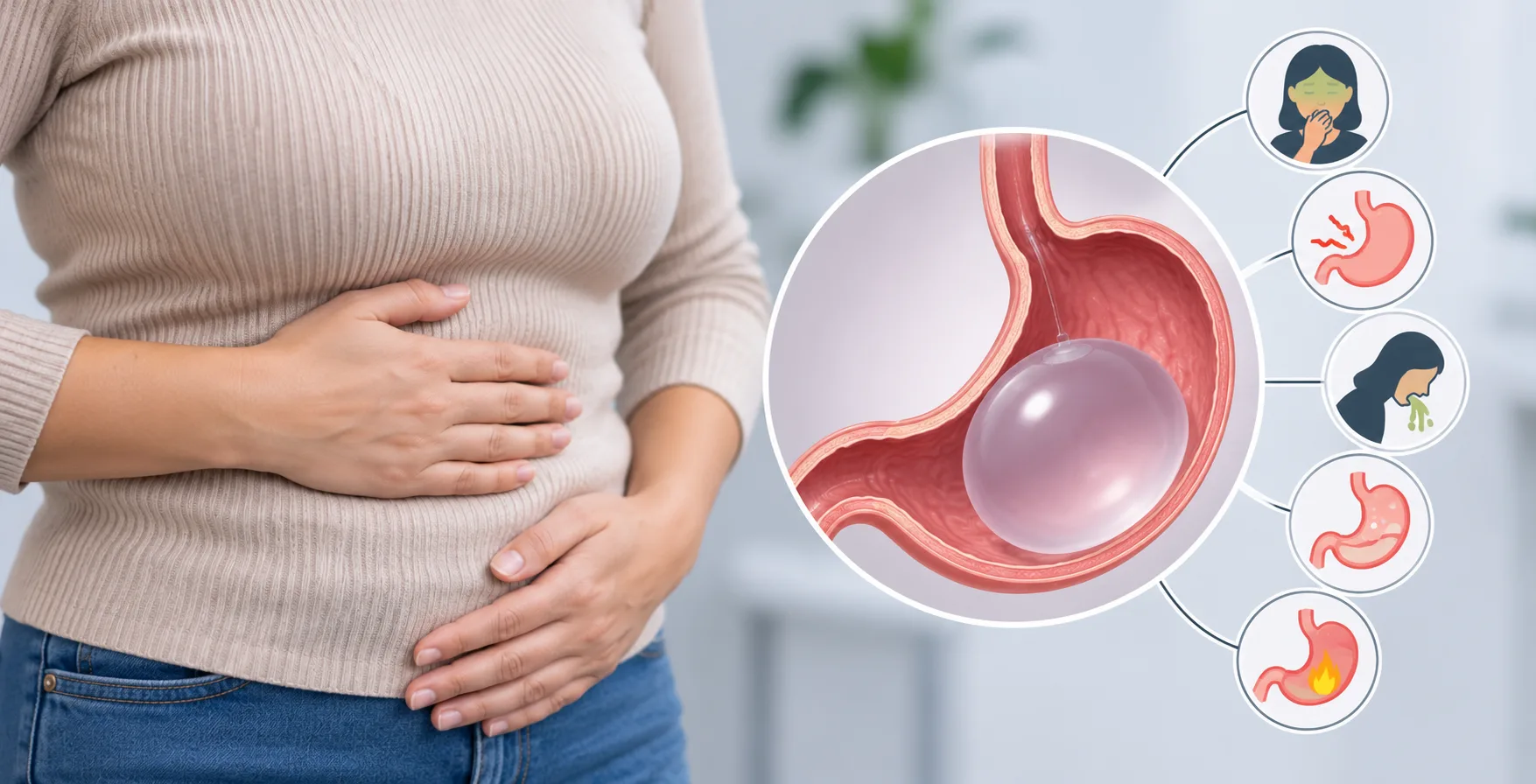
Your stomach regains its full capacity the moment the balloon leaves your body. Fullness signals weaken, meal portions can grow, and your digestive system adapts to eating without mechanical restriction within days.
The balloon is a space-occupying device. While it sits in your stomach, it fills 400 to 700 milliliters of volume and reduces the room available for food. It also delays gastric emptying, which prolongs satiety after meals (Vargas 2020). The moment the physician removes the device, both effects stop. Your stomach does not shrink permanently during treatment, and it does not stretch after removal. It simply returns to its usual capacity.
This return has direct consequences for fullness. During treatment, a small meal stretched the stomach wall enough to trigger satiety signals. After removal, the same meal produces a weaker stretch, so you feel less full. Many patients notice this difference within the first week.
Hormonal signals shift as well. Research shows that intragastric balloons influence gut hormones involved in appetite regulation, including ghrelin, leptin, and adiponectin (Konopko-Zubrzycka 2009). After removal, ghrelin, the hormone that stimulates hunger, moves back toward its baseline pattern. This hormonal adjustment adds a biological push toward larger appetite.
Individual experiences vary. Your eating habits during treatment, the amount of weight you lost, and your overall digestive health all shape how smoothly your body adapts. A patient who built structured meal routines during the balloon period usually adjusts faster than a patient who relied on the device alone.
What Short-Term Symptoms Can Occur After Balloon Removal?
Mild nausea, abdominal discomfort, stomach sensitivity, and throat irritation are common in the first few days after removal. These symptoms improve steadily and rarely last longer than a week.
The stomach needs a short adaptation period after hosting a foreign object for months. Temporary nausea and a sense of abdominal emptiness or sensitivity are common responses. Mild discomfort during the initial recovery period reflects the stomach readjusting to normal motility rather than any damage. Endoscopic removal is gentle on the stomach wall, and serious injury is rare in experienced hands (Abu Dayyeh 2015).
Throat irritation deserves a separate mention because it comes from the procedure, not the stomach. The endoscope passes through the pharynx and esophagus, and this passage can leave a sore or scratchy sensation for one to three days. Warm liquids and soft foods ease this discomfort.
Recovery experiences vary from person to person, but the general direction should be improvement. The table below separates expected symptoms from those that need medical attention.
Symptom | Expected and Temporary | Needs Medical Assessment |
Nausea | Mild, resolves within days | Persistent vomiting beyond 48 hours |
Abdominal discomfort | Mild sensitivity, improving daily | Severe or worsening pain |
Throat | Soreness for 1 to 3 days | Difficulty swallowing or bleeding |
Appetite | Gradual increase | Complete inability to tolerate fluids |
The distinction between temporary discomfort and persistent symptoms is the most practical skill you can carry into recovery. Symptoms that improve each day belong to normal recovery. Symptoms that intensify or persist require evaluation.
When Can You Return to Your Normal Eating Routine?
Most patients return to regular meals within one to two weeks. Your physician's instructions set the pace, and the transition should move from liquids to soft foods and then to full textures.
Your post-removal diet follows a staged progression. The first 24 to 48 hours usually include clear liquids and light foods, because the stomach and throat benefit from a gentle restart. Soft, easily digested foods follow for several days. Regular meals resume when you tolerate each stage without nausea or discomfort.
Reintroducing food textures works best in a deliberate order. Start with soups, yogurt, and pureed vegetables. Add soft proteins such as fish, eggs, and well-cooked legumes next. Return to firmer textures like whole grains and raw vegetables last. This sequence respects the stomach's sensitivity during the first week.
Portion size matters as much as texture. The balloon trained you to eat smaller meals, and keeping those portions protects your results. Eat slowly, because satiety signals need roughly 20 minutes to reach the brain. Pause between bites, and stop when you feel comfortably satisfied rather than completely full.
Hydration supports this transition. Drink water consistently through the day, and avoid drinking large volumes during meals, because liquid fills stomach capacity quickly. Balanced nutrient intake, with protein, fiber, and healthy fats at each meal, stabilizes hunger far better than refined carbohydrates alone.
Returning immediately to large portions or previous eating habits carries a clear risk. The physiological environment that created your weight loss is gone, so old patterns produce old results. Treat the first month as a consolidation phase, not a return to normal.
Does Your Appetite Increase After Gastric Balloon Removal?
Yes, most patients notice a stronger appetite after removal. The physical fullness the balloon provided disappears, and hunger hormones rise toward their pre-treatment pattern, but practical dietary strategies keep appetite manageable.
The sensation change has a mechanical origin. With the balloon in place, the stomach reached its stretch threshold quickly. Without it, the stomach needs more food to produce the same fullness. Studies that measured hunger hormones confirm the hormonal side of this shift. Fasting and meal-suppressed ghrelin levels change during balloon therapy and move back after removal, which partly explains renewed hunger (Mathus-Vliegen 2014).
Stomach capacity, meal portions, and appetite regulation form one connected system. A larger empty stomach, smaller meals, and faster gastric emptying together produce earlier and stronger hunger between meals. Understanding this system helps you respond with strategy rather than willpower.
Emotional eating and habitual snacking add a behavioral layer. Stress, boredom, and established routines can trigger eating independent of physical hunger. The months with the balloon often masked these triggers, so removal can reveal them again.
Practical strategies work against both layers. Prioritize protein at every meal, because protein produces the strongest satiety per calorie. Build meals around fiber-rich vegetables and whole grains, which slow digestion. Eat at consistent times to stabilize hunger rhythms. Plan snacks in advance instead of reacting to cravings. These approaches convert appetite management from a daily struggle into a routine.
Will You Regain Weight After Gastric Balloon Removal?
Weight regain is possible but not inevitable. Research shows that patients who continue structured nutrition and activity habits maintain a large share of their weight loss, while those who return to previous habits regain faster.
The data paint a realistic picture. A meta-analysis of 15 studies and 3,608 patients found average losses of 14.7 kilograms, 5.7 BMI units, and 32.1 percent of excess weight at balloon removal, but the authors noted that long-term maintenance data were limited (Imaz 2008). Longer follow-up studies fill part of that gap. In a cohort followed for at least two and a half years after removal, a meaningful share of patients kept clinically significant weight loss when they stayed engaged with a support program (Dastis 2009).
The loss of the balloon's space-occupying effect makes portion control harder, and this is the central mechanism behind regain. Contributing factors include increased calorie intake, reduced physical activity, and a gradual return to pre-treatment eating habits. Weight regain rarely has a single cause; it usually reflects several small behavioral shifts that compound over months.
The biological context reinforces the need for vigilance. Weight loss triggers hormonal adaptations, including lower leptin and higher ghrelin, that increase appetite and persist long after the weight is gone (Sumithran 2011). Maintaining weight loss therefore requires long-term behavioral change, not a one-time effort.
It also helps to separate normal fluctuation from true regain. Daily weight varies by one to two kilograms with hydration, salt intake, and digestion. Sustained regain shows up as a rising trend over four or more weeks. Track trends, not single readings.
How Can You Maintain Your Weight Loss After Gastric Balloon Removal?

Long-term maintenance rests on five pillars: structured meal planning, consistent portion control, regular physical activity, self-monitoring, and behavioral management of cravings. Patients who practice all five keep the most weight off.
Removal marks a transition from procedure-assisted weight loss to independent weight management. The balloon did part of the work before; now your habits carry the full load. This shift sounds demanding, but it also gives you complete control over the outcome.
Meal planning is the foundation. Decide your meals weekly, shop from a list, and prepare portions in advance. Planned eating removes the daily decisions where relapse begins. Portion control then reinforces the plan: use smaller plates, serve measured amounts, and avoid eating directly from packages.
Physical activity protects the result from the other side. Regular exercise, including two or more strength training sessions per week, preserves lean muscle and supports energy expenditure. Position stand research links consistent aerobic and resistance activity to better weight loss maintenance (Donnelly 2009).
Self-monitoring connects these habits to feedback. Weigh yourself weekly under consistent conditions, and record your meals honestly. Tracking identifies early upward trends while they are still easy to reverse.
Behavioral strategies handle the psychological layer. Identify your personal triggers for emotional eating, and prepare alternative responses such as walking, calling a friend, or drinking water before acting on a craving. Set realistic goals: maintaining within two to three kilograms of your removal weight over the next year is a strong, achievable target.
Which Foods Should You Prioritize After Gastric Balloon Removal?
Build your diet around lean protein, fiber-rich vegetables, whole grains, healthy fats, and water. Limit ultra-processed foods, added sugars, and high-calorie drinks, because these undermine satiety and accelerate regain.
Protein comes first because it protects muscle and produces lasting fullness. Poultry, fish, eggs, legumes, and low-fat dairy deliver high satiety per calorie. After weight loss, adequate protein intake also helps preserve the lean mass that keeps your resting metabolism stable.
Fiber follows closely. Vegetables, fruits, legumes, and whole grains add volume to meals without adding many calories. Fiber slows gastric emptying naturally, which recreates a mild version of the fullness the balloon once provided.
Healthy fats complete the plate. Olive oil, nuts, seeds, and fatty fish support hormone function and nutrient absorption. Small amounts are enough, because fats are calorie dense.
Hydration is the simplest lever. Water supports digestion and helps you distinguish thirst from hunger. Sugary drinks, sweetened coffees, and alcohol add calories without satiety, so limit them deliberately.
Prioritize | Reason | Limit | Reason |
Lean protein | Satiety and muscle maintenance | Ultra-processed snacks | Low satiety, high calories |
Vegetables and fruit | Fiber and micronutrients | Added sugars | Rapid hunger return |
Whole grains | Slow, steady energy | Sugary beverages | Liquid calories without fullness |
Healthy fats | Hormone and nutrient support | Frequent fried food | Calorie density |
Individual needs differ. Your physician or dietitian should adapt these principles to your health status, preferences, and any medical conditions.
What Role Does Nutritional Counseling Play After Balloon Removal?
Nutritional counseling converts short-term weight loss into lasting change. A dietitian sets your calorie and macronutrient targets, screens for deficiencies, and builds meal plans that control post-removal appetite.
A registered dietitian helps you move from device-supported eating to a sustainable personal pattern. After months of reduced intake, your calorie needs have changed. A smaller body burns fewer calories, so your maintenance target is lower than before treatment. Personalized macronutrient planning matches protein, carbohydrate, and fat intake to your new metabolism.
Deficiency screening is another reason counseling matters. Months of smaller meals can reduce iron, vitamin B12, vitamin D, and folate intake. A professional evaluation identifies gaps early, before they produce fatigue or other symptoms.
Meal planning support addresses the appetite challenge directly. A dietitian structures eating schedules and food combinations that keep you full on fewer calories, which reduces the willpower burden of daily choices. Continued contact after removal, rather than a single consultation, predicts better maintenance, which is why multidisciplinary programs outperform device-only approaches (Mathus-Vliegen 2005).
How Soon Can You Exercise After Gastric Balloon Removal?
Light walking is safe within a day or two. Low-impact activity resumes within the first week, and most patients return to full cardiovascular and resistance training within two to four weeks, following their physician's guidance.
Your return to activity should follow your treating physician's recommendations, because sedation recovery and individual symptoms set the early pace. Walking is the ideal starting point. It supports circulation and digestion without stressing the stomach.
From there, progress in stages. Add low-impact activities such as cycling or swimming during the first two weeks. Reintroduce cardiovascular training and resistance work gradually, increasing intensity as long as you feel no abdominal discomfort. Regular activity is not optional for maintenance: exercise supports energy balance, preserves muscle, and improves insulin sensitivity, all of which protect your weight result (Heymsfield 2017).
Caution applies only to the first days. If sedation effects linger or you feel significant discomfort, delay intense sessions. Symptoms should guide the tempo, but inactivity should never become the default.
What Follow-Up Care Do You Need After Gastric Balloon Removal?
Attend your scheduled appointments, monitor your weight and symptoms, and keep working with your dietitian and support team. Structured follow-up is the strongest predictor of maintained weight loss.
Scheduled visits with your gastroenterologist or weight management specialist serve several purposes. The team tracks your weight trend, reviews your eating habits, and checks digestive symptoms. These appointments catch small problems, such as gradual regain or nutritional gaps, while they remain easy to correct.
Nutritional status assessment belongs in this follow-up. Blood tests can confirm that vitamin and mineral levels remain adequate after months of reduced intake. Ongoing health concerns, such as reflux or blood sugar changes, also deserve review because weight loss often improves them.
The wider support team multiplies your chances. Dietitians refine your eating plan. Psychologists address emotional eating patterns. Exercise specialists keep your activity program progressing. Patients who stay in structured weight management programs after removal maintain more of their results than patients who disengage, a pattern consistent across follow-up research (Dastis 2009).
Can You Have Another Gastric Balloon After Removal?
Yes, a second balloon is possible in selected patients, but it is not automatic or necessary. Eligibility depends on your previous results, medical history, and BMI, and your physician must assess your suitability first.
A second balloon enters consideration when the first treatment produced good results but additional weight loss remains a goal, or when a patient regained weight despite genuine lifestyle effort. Your previous response matters: strong adherence and meaningful loss during the first round predict a useful second round.
Eligibility is a medical decision. Your physician weighs your current BMI, your medical history, your stomach health after the first device, and your commitment to the accompanying lifestyle program. Sequential balloon treatment has been studied as a deliberate strategy for patients who need extended support (Genco 2009).
Alternatives deserve equal attention. If a second balloon does not fit your situation, options include endoscopic sleeve gastroplasty, anti-obesity medication, or bariatric surgery, depending on your profile. The right choice is the one that matches your health status and your capacity for long-term behavior change, not the one that repeats the last procedure by default.
What Warning Signs Should You Watch for After Gastric Balloon Removal?
Contact your medical team promptly for persistent or worsening abdominal pain, repeated vomiting, inability to tolerate fluids, fever, signs of bleeding, or dehydration. These symptoms need urgent evaluation, not a wait for your next appointment.
Most post-removal symptoms are mild and temporary, but a small set of warning signs demands immediate attention. Persistent abdominal pain that intensifies rather than improves may indicate gastritis, an ulcer, or another complication. Repeated vomiting or an inability to keep fluids down risks dehydration and needs same-day contact with your team.
Fever above 38 degrees Celsius, black or bloody stools, vomiting blood, dizziness, or very dark urine all signal problems that require urgent evaluation. These signs are uncommon after straightforward endoscopic removal, which carries a low serious complication rate (Abu Dayyeh 2015), but recognizing them early prevents escalation.
The practical rule is simple. Follow your individualized discharge instructions, and treat any symptom that worsens over 24 hours as a reason to call. Routine follow-up handles the expected; urgent care handles the unexpected.
Frequently Asked Questions About Life After Gastric Balloon Removal
Does your stomach return to its normal size after gastric balloon removal?
Yes. The stomach never changed size permanently; it only shared space with the balloon. Once the device leaves, your stomach functions at its natural capacity again.
The balloon occupied space but performed no surgery. Unlike sleeve gastrectomy, it removed no tissue and altered no anatomy. This is why the treatment is fully reversible, and why the habits you built during therapy matter more than the device itself.
How long does it take to recover after gastric balloon removal?
Most patients feel normal within two to seven days. Throat irritation and mild stomach sensitivity fade first, and full dietary recovery follows within one to two weeks.
Individual factors shape the timeline. Your general health, your tolerance of the endoscopy, and how closely you follow dietary guidance all influence recovery speed. Complications are rare, but they extend recovery when they occur.
Can you eat normally immediately after gastric balloon removal?
Not immediately. You begin with liquids and soft foods for the first days, then rebuild toward regular textures over one to two weeks as your physician advises.
This staged approach protects the stomach and throat while they settle. Most patients tolerate the progression well, and patience during this phase prevents nausea and discomfort.
Does gastric balloon removal cause permanent digestive problems?
No. Endoscopic removal does not damage the digestive tract in the vast majority of cases, and persistent digestive problems after removal are rare.
Temporary discomfort belongs to normal recovery. Symptoms that persist beyond two weeks, or that grow worse, deserve medical evaluation to rule out unrelated conditions such as gastritis or reflux disease.
Can you lose more weight after gastric balloon removal?
Yes. Continued calorie management, regular physical activity, and structured eating can produce further weight loss after removal, because the fundamental drivers of weight change remain in your control.
Some patients use the post-removal months to consolidate, while others continue losing. Both paths are valid. The key variable is the consistency of your nutrition and activity habits.
Is gastric balloon removal considered a surgical procedure?
No. Removal is an endoscopic procedure performed through the mouth, with no incisions, no stitches, and no surgical wounds.
This minimally invasive nature explains the short recovery time. Patients avoid the risks of abdominal surgery, and most resume daily activities within a day or two.
Do you need to follow a special diet after gastric balloon removal?
You follow a short staged diet during recovery, then a balanced, portion-controlled eating pattern for the long term. There is no permanent restriction, but sustainable habits are essential.
Individualized guidance from your dietitian adapts this framework to your health and preferences, making the pattern easier to keep.
How long should you continue weight management support after removal?
At least six to twelve months of structured support is advisable, and many patients benefit from ongoing contact beyond that. Long-term follow-up consistently predicts better maintenance.
Obesity behaves as a chronic condition with persistent biological pressure toward regain (Sumithran 2011). Continuing nutritional, behavioral, and medical support treats it accordingly, and gives your results the longest possible life.
References
Abu Dayyeh, Barham K., et al. "ASGE Bariatric Endoscopy Task Force Systematic Review and Meta-Analysis Assessing the ASGE PIVI Thresholds for Adopting Endoscopic Bariatric Therapies." Gastrointestinal Endoscopy, vol. 82, no. 3, 2015, pp. 425-438.
Dastis, N. S., et al. "Intragastric Balloon for Weight Loss: Results in 100 Individuals Followed for at Least 2.5 Years." Endoscopy, vol. 41, no. 7, 2009, pp. 575-580.
Donnelly, Joseph E., et al. "Appropriate Physical Activity Intervention Strategies for Weight Loss and Prevention of Weight Regain for Adults." Medicine and Science in Sports and Exercise, vol. 41, no. 2, 2009, pp. 459-471.
Genco, Alfredo, et al. "Intragastric Balloon Followed by Diet vs Intragastric Balloon Followed by Another Balloon: A Prospective Study on 100 Patients." Obesity Surgery, vol. 20, no. 11, 2010, pp. 1496-1500.
Heymsfield, Steven B., and Thomas A. Wadden. "Mechanisms, Pathophysiology, and Management of Obesity." New England Journal of Medicine, vol. 376, no. 3, 2017, pp. 254-266.
Imaz, Iñaki, et al. "Safety and Effectiveness of the Intragastric Balloon for Obesity: A Meta-Analysis." Obesity Surgery, vol. 18, no. 7, 2008, pp. 841-846.
Konopko-Zubrzycka, Maria, et al. "The Effect of Intragastric Balloon on Plasma Ghrelin, Leptin, and Adiponectin Levels in Patients with Morbid Obesity." Journal of Clinical Endocrinology and Metabolism, vol. 94, no. 5, 2009, pp. 1644-1649.
Mathus-Vliegen, Elisabeth M. H., and Guido N. J. Tytgat. "Intragastric Balloon for Treatment-Resistant Obesity: Safety, Tolerance, and Efficacy of 1-Year Balloon Treatment Followed by a 1-Year Balloon-Free Follow-Up." Gastrointestinal Endoscopy, vol. 61, no. 1, 2005, pp. 19-27.
Mathus-Vliegen, Elisabeth M. H., and Ralph I. Eichenberger. "Fasting and Meal-Suppressed Ghrelin Levels Before and After Intragastric Balloons and Balloon-Induced Weight Loss." Obesity Surgery, vol. 24, no. 1, 2014, pp. 85-94.
Ponce, Jaime, et al. "The REDUCE Pivotal Trial: A Prospective, Randomized Controlled Pivotal Trial of a Dual Intragastric Balloon for the Treatment of Obesity." Surgery for Obesity and Related Diseases, vol. 11, no. 4, 2015, pp. 874-881.
Sumithran, Priya, et al. "Long-Term Persistence of Hormonal Adaptations to Weight Loss." New England Journal of Medicine, vol. 365, no. 17, 2011, pp. 1597-1604.
Vargas, Eric J., et al. "Changes in Time of Gastric Emptying After Surgical and Endoscopic Bariatrics and Weight Loss: A Systematic Review and Meta-Analysis." Clinical Gastroenterology and Hepatology, vol. 18, no. 1, 2020, pp. 57-68.