Risks and Side Effects of Gastric Balloon
The gastric balloon is a temporary, endoscopically placed weight-loss device that fills part of the stomach to increase satiety and reduce food intake. Because it avoids surgical incisions, many patients assume it carries no meaningful risk. Clinical evidence shows a different picture. Most patients experience temporary digestive symptoms such as nausea, vomiting, and abdominal pain during the first week. A smaller group develops serious complications, including gastric ulcers, perforation, intestinal obstruction, and pancreatitis (Kumar 2017).
The intragastric balloon works through a mechanical principle. A silicone device filled with saline or air occupies roughly one third of the stomach volume. This reduces the space available for food and slows gastric emptying, which prolongs the feeling of fullness. The stomach, however, recognizes the balloon as a foreign object. This explains why adjustment symptoms appear in nearly every patient during the first days after placement. Distinguishing these expected reactions from genuine medical complications forms the core of safe treatment. Understanding the risks, the patient selection criteria, and the follow-up requirements before treatment allows patients to recognize warning signs early and act on them in time.
What Are the Most Common Side Effects After Gastric Balloon Placement?
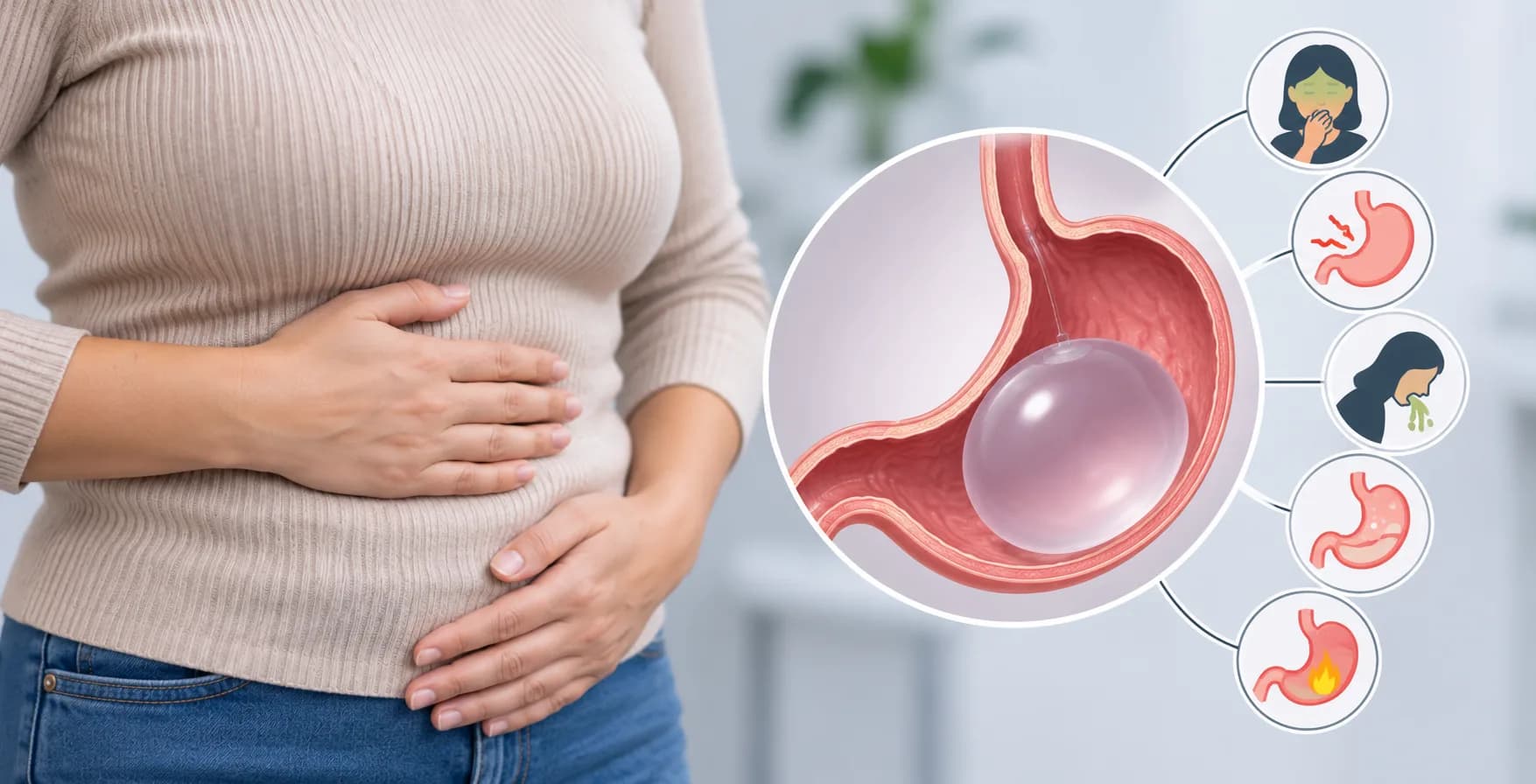
The stomach needs several days to adapt to the balloon, so nausea, vomiting, abdominal cramps, reflux, bloating, and changes in bowel habits are common during the first week. In clinical studies, nausea affects a large majority of patients after placement, and vomiting and abdominal pain follow close behind. Most symptoms improve within one to two weeks as the stomach accommodates the device (Kumar 2017).
These symptoms share a common origin. The balloon stretches the stomach wall and slows the passage of food, and the body reacts to this new mechanical condition. Knowing which symptoms belong to normal adjustment and which signal a complication helps patients respond correctly.
Nausea and Vomiting
Nausea is the most frequent side effect of the gastric balloon and usually resolves within days. Persistent vomiting beyond the first week requires medical assessment because it can lead to dehydration or indicate intolerance.
Stomach distension activates stretch receptors that send signals to the vomiting center in the brain. Delayed gastric emptying intensifies this effect, since food remains in contact with the balloon longer than usual. Clinics routinely prescribe antiemetic medications such as ondansetron during the adjustment period. If vomiting continues despite medication, doctors evaluate whether the balloon should be removed early.
Abdominal Pain, Cramps, and Stomach Discomfort
Mild to moderate cramping reflects the stomach's muscular response to the balloon and typically fades within days. Severe or progressively worsening pain is not part of normal adjustment.
The stomach is a muscular organ that contracts rhythmically. A balloon restricts these contractions, which produces pressure, cramping, and tenderness. In a systematic review, abdominal pain ranked among the three most reported symptoms after placement (Kumar 2017). Pain that escalates over time, or pain combined with fever, points to ulceration or perforation and demands urgent evaluation.
Acid Reflux and Heartburn
The balloon raises intragastric pressure and slows stomach emptying, which can push acid into the oesophagus and cause heartburn. Proton pump inhibitors usually control these symptoms.
Reflux presents as a burning sensation behind the breastbone, regurgitation, and sometimes irritation of the oesophageal lining. Doctors routinely prescribe proton pump inhibitors for the entire treatment period to protect the gastric mucosa and the oesophagus. Dietary adjustments, such as avoiding late meals and acidic foods, reduce symptom burden further.
Bloating, Gas, and Belching
Reduced stomach capacity and slower digestion produce bloating, fullness, and excessive belching, especially in the first weeks.
Simple behavioral measures limit these symptoms. Eating slowly, chewing food thoroughly, and avoiding carbonated beverages reduce the volume of swallowed air. Smaller portions also prevent overfilling an already restricted stomach.
Constipation and Changes in Bowel Habits
Reduced food intake and altered dietary patterns commonly cause constipation during balloon treatment; some patients experience occasional diarrhoea instead.
Low fiber intake, reduced meal volume, and insufficient fluids slow bowel transit. Patients can manage this through adequate hydration and, once solid foods resume, gradual fiber reintroduction. Persistent changes in bowel habits deserve medical guidance rather than self-treatment.
Bad Breath and Changes in Oral Hygiene
Halitosis during balloon treatment usually results from food retention in the stomach and reflux, and it typically resolves with hydration and oral hygiene.
Slowed gastric emptying allows food to remain in the stomach longer, where bacterial activity produces odor compounds. Reflux then carries these odors upward. Regular hydration, thorough oral hygiene, and acid suppression address the cause. Persistent bad breath combined with reflux symptoms may indicate ongoing oesophageal irritation and merits review.
What Are the Serious Complications of Gastric Balloon Treatment?
Serious complications are uncommon but clinically significant. They include gastric ulcers, gastric perforation, balloon deflation and migration, intestinal obstruction, spontaneous hyperinflation, acute pancreatitis, gastrointestinal bleeding, and aspiration pneumonia. Some require urgent endoscopic intervention or emergency surgery.
A large meta-analysis covering more than 9,000 patients found that serious adverse events occur in a small minority of treatments, yet their severity justifies structured follow-up and patient education (Imaz 2008). The table below separates expected symptoms from complications that demand medical action.
Category | Examples | Typical frequency | Required response |
Adjustment symptoms | Nausea, cramps, bloating, reflux | Very common in week one | Medication and diet |
Concerning symptoms | Persistent vomiting, worsening pain | Occasional | Medical assessment |
Serious complications | Perforation, obstruction, pancreatitis, bleeding | Rare | Urgent endoscopy or surgery |
Gastric Ulcers and Stomach Lining Damage
Prolonged mechanical contact between the balloon and the gastric mucosa can cause erosions, inflammation, and ulcers, sometimes with bleeding.
Continuous pressure reduces local blood flow to the stomach lining, which weakens its protective barrier against acid. Published case reports document gastric ulcers discovered after balloon deflation and early removal, and routine proton pump inhibitor therapy exists precisely to counter this mechanism (Fatima 2018). Persistent upper abdominal discomfort or signs of bleeding warrant endoscopic inspection.
Gastric Perforation
Gastric perforation is a rare emergency in which ulceration or mechanical injury creates a hole in the stomach wall. It requires emergency surgery.
A perforation releases gastric contents into the abdominal cavity and causes peritonitis. Patients report sudden severe abdominal pain, a rigid abdomen, and fever. A meta-analysis of fluid-filled balloon studies estimated perforation rates at well under one percent, but the condition carries a risk of death without immediate treatment (De Moura 2020). This separates it clearly from ordinary post-procedure discomfort, which never escalates in this pattern.
Balloon Deflation and Migration
A damaged or leaking balloon can lose its filling and pass from the stomach into the intestine, where it may become trapped.
Many saline-filled balloons contain methylene blue dye as a leak indicator. If the balloon deflates, the dye enters the urine and turns it blue or green, giving patients an early visual warning. A deflated balloon that migrates can no longer serve its purpose and creates a new risk: mechanical blockage downstream.
Intestinal Obstruction
A migrated balloon can obstruct the small intestine, causing severe pain, vomiting, progressive bloating, and inability to tolerate food or liquids.
Obstruction prevents the normal passage of intestinal contents and can compromise blood supply to the bowel. Treatment requires endoscopic retrieval or emergency surgery. The FDA's safety communications on liquid-filled intragastric balloons specifically highlighted unanticipated deaths associated with this device class, which led to updated labeling and closer post-market surveillance (FDA 2017).
Spontaneous Balloon Hyperinflation
Spontaneous hyperinflation occurs when a balloon unexpectedly increases in volume, likely due to gas-producing microorganisms inside the device, and causes sudden abdominal enlargement, pain, and vomiting.
Case series describe patients presenting with abdominal distension weeks or months after uncomplicated placement. The expanding balloon raises intragastric pressure sharply. Imaging confirms the diagnosis, and treatment requires prompt endoscopic deflation and removal (Papailiou 2018). Sudden abdominal enlargement after balloon placement is never normal and always requires urgent investigation.
Acute Pancreatitis
Pressure from an intragastric balloon, particularly an overdistended one, can compress the pancreas and trigger acute pancreatitis.
The pancreas lies directly behind the stomach. Analyses of device safety data identified pancreatitis as a recognized, though rare, complication, sometimes associated with hyperinflated balloons pressing against the pancreatic body (Vargas 2016). The typical presentation includes severe upper abdominal pain radiating to the back, nausea, and vomiting. Elevated pancreatic enzymes on blood testing confirm the diagnosis, and treatment involves hospital care and balloon removal.
Gastrointestinal Bleeding and Oesophageal Injury
Mucosal ulceration or endoscopic manipulation can cause gastrointestinal bleeding, and placement or removal can injure the oesophagus.
Blood in vomit or black, tarry stools signals bleeding within the digestive tract. Oesophageal tears occur rarely during insertion or extraction of the device, and they cause pain, difficulty swallowing, or bleeding. Any sign of bleeding requires same-day medical contact.
Aspiration Pneumonia and Respiratory Complications
Stomach contents can enter the airway during sedation or endoscopic procedures, causing aspiration pneumonia.
This risk applies mainly during placement and removal, when sedation suppresses protective airway reflexes. A full stomach increases the danger, which is why fasting protocols before the procedure matter. Coughing, fever, chest discomfort, or breathing difficulty in the days after treatment should prompt evaluation for respiratory infection.
What Are the Risks During Gastric Balloon Insertion and Removal?

Insertion and removal carry procedural risks independent of the balloon itself, including sedation reactions, aspiration, bleeding, and oesophageal injury. Both procedures require an experienced endoscopy team.
The balloon enters and leaves the stomach through an endoscope, and each of these steps involves medication, instruments, and an anaesthetized airway. Understanding these risks separately helps patients evaluate the full treatment course rather than focusing only on the months the device remains in place.
Risks Associated with Endoscopy and Sedation
Sedation can provoke breathing difficulties or cardiovascular reactions, and endoscopy itself can cause minor bleeding or mucosal injury.
Sedative drugs depress respiration and blood pressure, particularly in patients with obesity-related airway problems. Aspiration during the procedure remains a recognized risk, which is why anaesthetic assessment and fasting rules apply. Severe adverse events from endoscopy are rare, but pre-procedure screening reduces them further.
Complications During Balloon Removal
Removal requires the endoscopist to puncture, drain, and extract the balloon, which can cause bleeding, oesophageal injury, or difficulty retrieving a deflated or displaced device.
A balloon left beyond the manufacturer's approved treatment period, usually six to twelve months depending on the model, becomes harder to remove and more prone to deflation and degradation. Scheduling removal on time is therefore a safety measure, not a formality.
What Happens If a Gastric Balloon Needs Early Removal?
Persistent vomiting, severe pain, ulceration, dehydration, or device malfunction can make early removal medically necessary.
Doctors assess the indication through symptom review, blood tests, and endoscopy. Early removal rates in clinical studies range around five to ten percent, most often due to intolerance rather than mechanical failure (Kumar 2017). Removal typically takes minutes, although short hospital observation may follow if dehydration or complications are present.
Which Symptoms After Gastric Balloon Placement Require Immediate Medical Attention?
Severe or sudden abdominal pain, uncontrollable vomiting, progressive swelling, bleeding, fever with abdominal pain, breathing difficulty, or blue-green urine all warrant urgent medical contact. Persistent symptoms should never be dismissed as normal adjustment.
The distinction between adjustment and emergency is the single most important safety skill for a balloon patient. The following table translates warning signs into action.
Warning sign | Possible cause | Action |
Severe or sudden abdominal pain | Perforation, pancreatitis | Emergency care |
Persistent, uncontrollable vomiting | Intolerance, obstruction | Urgent contact with bariatric team |
Progressive abdominal swelling | Hyperinflation, obstruction | Urgent assessment |
Blood in vomit or black stools | Ulcer bleeding | Same-day medical contact |
Fever with abdominal pain | Infection, peritonitis | Emergency care |
Breathing difficulty or chest pain | Aspiration, cardiopulmonary event | Emergency care |
Pain radiating to the back | Pancreatitis | Urgent assessment |
Blue or green urine | Balloon leak (methylene blue) | Contact treating team promptly |
What Should Patients Do If They Suspect a Complication?
Contact the treating bariatric team first, and seek emergency care for severe pain, bleeding, breathing difficulty, or signs of obstruction.
Every patient should inform emergency clinicians that a gastric balloon is present, because the device changes the diagnostic picture and the treatment options. Typical investigations include abdominal imaging such as X-ray or CT, blood tests for infection and pancreatic enzymes, and endoscopy when direct inspection is needed.
Who Has a Higher Risk of Gastric Balloon Complications?
Patients with previous ulcers, severe reflux disease, prior gastrointestinal surgery, bleeding risks, or conditions that complicate sedation face a higher complication risk. A structured medical assessment before placement identifies these factors.
Not every stomach tolerates an intragastric device equally well. Screening exists to filter out patients in whom the mechanical burden of the balloon would predict harm.
Patients with Existing Gastrointestinal Conditions
Previous or active peptic ulcer disease, severe gastro-oesophageal reflux disease, existing mucosal inflammation, and prior gastrointestinal surgery increase the risk of complications or constitute contraindications.
The balloon presses against the stomach lining for months. Tissue already weakened by ulceration or chronic inflammation is less able to withstand this pressure. Major professional societies classify active ulcer disease and certain prior surgeries as contraindications to intragastric balloon placement (Sullivan 2015).
Patients with Other Medical Risk Factors
Bleeding disorders, medications that irritate the stomach or thin the blood, cardiopulmonary conditions that complicate sedation, and conditions that hinder hydration and nutrition all raise the risk profile.
Anticoagulants and regular non-steroidal anti-inflammatory drug use increase the chance of ulcer bleeding. Severe sleep apnoea complicates sedation. Cognitive or psychiatric conditions that prevent adherence to dietary rules undermine the safety framework that follow-up depends on.
Why Is a Detailed Medical Assessment Important?
Pre-procedure assessment reviews medical history, medications, and contraindications, and confirms that the patient can comply with diet and follow-up. It converts a generic device into an individualized treatment.
Assessment typically includes a review of previous operations, current health conditions, medication and supplement use, and baseline blood work. This process identifies patients better served by alternative treatments and prepares suitable candidates for the obligations of balloon therapy.
How Can Patients Reduce the Risk of Gastric Balloon Side Effects?
Careful patient selection, adherence to dietary progression, hydration, correct use of prescribed medication, and regular follow-up reduce preventable complications. No preventive measure removes every device-related risk.
Risk reduction rests on cooperation between patient and medical team. The following measures address the mechanisms behind the most common problems.
Follow the Recommended Dietary Progression
A staged transition from liquids to soft foods to solid foods lets the stomach adapt and reduces nausea, vomiting, and obstruction risk from undigested food.
Large portions or rapid eating overwhelm the reduced stomach capacity and provoke vomiting. Eating slowly, stopping at the first sign of fullness, and avoiding foods that aggravate reflux or bloating protect both comfort and the stomach lining. Overeating defeats the device and stresses the mucosa simultaneously.
Maintain Adequate Hydration and Nutritional Intake
Sufficient daily fluid intake prevents dehydration during the adjustment period, and attention to protein, vitamins, and minerals prevents nutritional deficiency during months of reduced intake.
Vomiting and low intake together can dehydrate a patient within days. Sip fluids between meals rather than with them. Medical teams may recommend multivitamin or protein supplementation, and blood tests during follow-up verify nutritional status.
Take Prescribed Medications Correctly
Proton pump inhibitors protect the stomach lining throughout treatment, and antiemetics control nausea during adjustment. Both work only when taken as prescribed.
Stopping acid suppression early removes the main pharmacological defense against ulceration. Self-medicating with additional drugs, particularly anti-inflammatory painkillers, can undo this protection. Every medication change belongs in discussion with the treating team.
Attend Regular Medical Follow-Up Appointments
Scheduled follow-up detects complications early, tracks hydration, nutrition, and weight loss, and keeps the removal date on schedule.
Follow-up visits allow the team to investigate new or persistent symptoms before they escalate. Adherence to the manufacturer's removal window, whether six or twelve months, prevents the deflation, degradation, and retrieval problems associated with overdue devices.
Can Gastric Balloon Side Effects Continue After Removal?
Most adjustment symptoms resolve within days to weeks after removal because the mechanical trigger disappears. Complications such as ulcers may need additional treatment, and weight regain is a recognized post-removal challenge.
Recovery after an uncomplicated treatment course is usually fast. Recovery after a complicated course depends on the complication itself.
How Quickly Do Digestive Symptoms Improve?
Nausea, bloating, and abdominal discomfort generally improve within days of removal, and reflux fades as the stomach returns to its normal capacity.
Individual variation exists. Patients who tolerated the balloon well recover fastest, while those with persistent symptoms during treatment may need several weeks for the mucosa and motility to normalize.
Can Gastric Ulcers or Stomach Irritation Persist?
Mucosal injuries can persist after removal and may require continued acid suppression and, when indicated, follow-up endoscopy.
Persistent pain or digestive symptoms after removal should always be investigated rather than attributed to residual adjustment. Healing ulcers typically respond well to proton pump inhibitor therapy over four to eight weeks.
Can Weight Regain Occur After Balloon Removal?
Weight regain is common after removal because the mechanical portion control disappears while appetite returns. Long-term success depends on nutrition, physical activity, and behavioral change.
Meta-analytic data show that patients lose roughly 25 to 32 percent of excess weight at balloon removal, but a meaningful portion of that loss returns within one to two years without structured lifestyle support (Imaz 2008). The balloon functions as a training period, and its long-term value depends on the habits built during treatment.
Is the Gastric Balloon Worth the Potential Risks?
For suitable patients, the gastric balloon offers clinically meaningful weight loss without surgery, and most side effects are temporary and manageable. Serious complications are uncommon but real, so the decision belongs in a structured conversation with a qualified bariatric specialist.
The device's temporary and reversible nature is its main advantage over bariatric surgery. Its limitation is equally clear: the benefit ends when the device comes out. Patients should compare the balloon with alternatives such as lifestyle programs, anti-obesity medication, and surgery, and weigh expected weight loss against their personal risk profile. Shared decision-making with a specialist who presents both benefits and complications honestly produces the best outcomes.
Frequently Asked Questions About Gastric Balloon Risks and Side Effects
Are Gastric Balloon Side Effects Normal?
Nausea, vomiting, abdominal discomfort, and reflux are expected during the first week and count as normal adjustment. Severe, worsening, or persistent symptoms are not normal and require medical evaluation.
How Long Do Gastric Balloon Side Effects Last?
Most adjustment symptoms resolve within one to two weeks. Symptoms that persist beyond this window, or that return later in treatment, may require medical intervention or early removal.
Can a Gastric Balloon Damage the Stomach?
Yes. The balloon can cause irritation, erosions, ulcers, and rarely perforation. Routine acid suppression and follow-up limit this risk, and minor irritation differs fundamentally from structural injury.
Can a Gastric Balloon Cause Pancreatitis?
Rarely, yes. Balloon pressure or hyperinflation can compress the pancreas and trigger inflammation. Severe upper abdominal pain radiating to the back is the key warning sign (Vargas 2016).
What Happens If a Gastric Balloon Deflates?
The device loses volume and may migrate into the intestine, where it can cause obstruction. Blue or green urine signals a leak in balloons containing methylene blue, and urgent assessment follows.
Can a Gastric Balloon Cause Long-Term Digestive Problems?
Long-term problems are uncommon after uncomplicated treatment. Persistent reflux or mucosal injury can occur and responds to medical treatment. Outcomes depend on the individual patient and any complications during therapy.
Is Gastric Balloon Removal Dangerous?
Removal is an endoscopic procedure with small but real risks, including bleeding, oesophageal injury, and aspiration. An experienced team and timely scheduling keep these risks low.
Can Gastric Balloon Complications Be Life-Threatening?
Yes, in rare cases. Gastric perforation, intestinal obstruction, and acute pancreatitis can become life-threatening without treatment. Regulatory surveillance has recorded fatal events, which is why warning signs demand immediate action (FDA 2017).
References
De Moura, Diogo Turiani Hourneaux, et al. "Risk of Pancreatitis, Gastric Perforation, and Intestinal Obstruction After Intragastric Fluid-Filled Balloon Placement: A Systematic Review and Meta-Analysis." Obesity Surgery, vol. 30, no. 7, 2020, pp. 2632-2642.
Fatima, Hiba, et al. "Intragastric Balloon-Induced Pancreatitis: Case Series and Literature Review." Annals of Gastroenterology, vol. 31, no. 3, 2018, pp. 383-387.
Imaz, Iñaki, et al. "Safety and Effectiveness of the Intragastric Balloon for Obesity: A Meta-Analysis." Obesity Surgery, vol. 18, no. 7, 2008, pp. 841-846.
Kumar, Nitin, et al. "Endoscopic Therapy for Weight Loss: Gastrointestinal Endoscopy and Meta-Analysis of the Intragastric Balloon." Gastrointestinal Endoscopy, vol. 85, no. 4, 2017, pp. 735-744.
Papailiou, Jonathon, et al. "Spontaneous Intragastric Balloon Hyperinflation: A Case Series and Review of the Literature." Surgery for Obesity and Related Diseases, vol. 14, no. 9, 2018, pp. 1382-1388.
Sullivan, Shelby, et al. "ASGE Position Statement on Endoscopic Bariatric Therapies in Clinical Practice." Gastrointestinal Endoscopy, vol. 82, no. 5, 2015, pp. 767-772.
U.S. Food and Drug Administration. "The FDA Alerts Health Care Providers About Unanticipated Deaths Involving the IntraGastric Balloon System." FDA Safety Communication, 2017, updated 2018.
Vargas, Eric J., et al. "Single Fluid-Filled Intragastric Balloon Safe and Effective for Inducing Weight Loss in a Real-World Population." Clinical Gastroenterology and Hepatology, vol. 16, no. 7, 2016, pp. 1073-1080.