BMI Explained: A Guide for Weight Loss Surgery Patients
Why Does BMI Matter for Weight Loss Surgery?
Body Mass Index (BMI) serves as a fundamental screening tool that clinicians use to assess obesity severity and evaluate potential eligibility for metabolic and bariatric surgery. BMI measures the numerical relationship between body weight and height. Surgeons, dietitians, and obesity medicine physicians rely on BMI because it offers a simple, inexpensive, and reproducible method for initial patient assessment (Flegal et al., 2012). However, BMI functions as a screening and risk-stratification instrument rather than a standalone diagnosis or surgical decision. The relationship between BMI, obesity-related diseases, surgical eligibility, and long-term weight management remains complex. This article helps prospective weight loss surgery patients understand what their BMI means and how surgeons use it during evaluation. We will explore calculation methods, eligibility thresholds, limitations, and the broader clinical context that shapes surgical candidacy.
What Is BMI and How Is It Calculated?
What Does Body Mass Index Measure?
Body Mass Index measures a numerical relationship between body weight and height. It provides an estimate of body fat based on these two readily available measurements. The standard BMI formula is:
BMI = weight (kg) ÷ height² (m²)
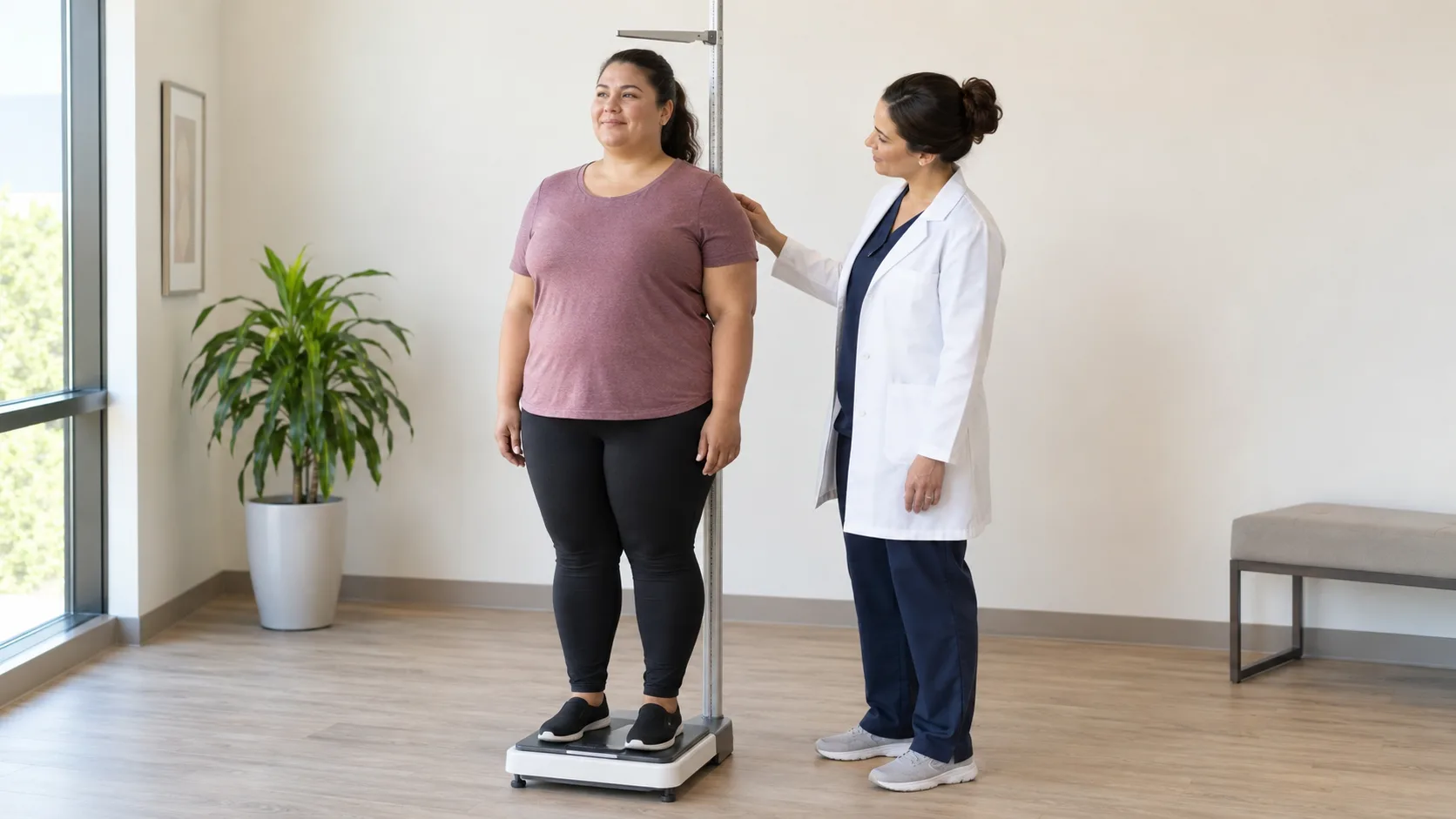
For example, a person who weighs 80 kilograms and stands 1.75 meters tall calculates their BMI as 80 ÷ (1.75 × 1.75) = 26.1. BMI does not directly measure body fat percentage. Instead, it estimates weight status and correlates with body fat in most populations (Garrow and Webster, 1985). Clinicians favor BMI because it requires only a scale and a stadiometer. It costs nothing extra to calculate. It produces consistent results across different healthcare settings. These qualities make BMI a practical starting point for obesity assessment worldwide.
What Are the Standard Adult BMI Categories?
The World Health Organization and major medical bodies use standardized BMI categories to classify weight status. These categories help clinicians communicate obesity severity and guide initial treatment discussions.
BMI Range | Weight Classification |
Below 18.5 | Underweight |
18.5–24.9 | Healthy/Normal Weight |
25.0–29.9 | Overweight |
30.0–34.9 | Class I Obesity |
35.0–39.9 | Class II Obesity |
40 or higher | Class III Obesity |
Terminology may vary between medical organizations. Some institutions use "morbid obesity" for BMI ≥40, while others prefer "severe obesity." The National Institutes of Health and the American Society for Metabolic and Bariatric Surgery (ASMBS) have shifted toward class-based terminology. These categories do not represent a complete assessment of individual health. They serve as a framework for discussion and further evaluation.
How Can Patients Calculate Their BMI Accurately?
Accurate height and weight measurements form the foundation of a correct BMI calculation. Patients should measure height without shoes and weight in light clothing. A wall-mounted stadiometer provides more reliable height data than a tape measure. For metric calculations, divide weight in kilograms by height in meters squared. For imperial calculations, multiply weight in pounds by 703, then divide by height in inches squared. Many online BMI calculators provide quick estimates. However, a bariatric team must interpret the result in clinical context. Self-calculated BMI offers a useful starting point. It does not replace professional medical assessment.
Why Is BMI Important Before Bariatric Surgery?
How Does BMI Influence Bariatric Surgery Eligibility?
BMI thresholds traditionally guide bariatric surgery assessment. Surgeons consider BMI alongside obesity-related medical conditions when evaluating candidacy. Contemporary metabolic and bariatric surgery recommendations have expanded beyond older BMI-only criteria. The ASMBS currently recommends metabolic and bariatric surgery for individuals with BMI ≥35 kg/m² regardless of comorbidities (Eisenberg et al., 2022). The society also recommends surgery for people with type 2 diabetes and BMI ≥30 kg/m². Surgery can be considered at BMI 30–34.9 kg/m² when nonsurgical treatment has not produced substantial or durable results. These evolving guidelines reflect growing recognition that metabolic disease matters as much as BMI itself.
What BMI Is Usually Required for Weight Loss Surgery?
Is BMI 40 or Higher Enough to Qualify for Bariatric Surgery?
BMI ≥40 kg/m² has traditionally represented a major eligibility threshold for bariatric surgery. Patients at this level face significantly elevated risks of obesity-related complications. However, additional medical, psychological, nutritional, and surgical assessments still apply. A number on the scale does not automatically guarantee surgical approval. Surgeons evaluate overall health status, surgical risk, and readiness for lifestyle change. Current metabolic surgery guidance supports broader consideration of individual metabolic health rather than relying solely on BMI thresholds.
Can You Have Weight Loss Surgery with a BMI of 35 to 39.9?
Patients with BMI 35–39.9 commonly qualify for bariatric surgery when significant obesity-related diseases are present. These conditions include type 2 diabetes, hypertension, obstructive sleep apnea, cardiovascular disease, metabolic disease, severe joint problems, and other obesity-related complications. The presence of these comorbidities strengthens the case for surgical intervention. Criteria can differ between clinical programs and insurers. Some programs may consider surgery at BMI 35 without comorbidities based on current ASMBS recommendations. Others may require documented comorbidities.
Can Bariatric Surgery Be Performed with a BMI of 30 to 34.9?
Metabolic surgery for class I obesity represents an evolving area of clinical practice. Type 2 diabetes and other obesity-related complications serve as important considerations at this BMI range. Clinical recommendations from ASMBS support surgery for selected patients with BMI 30–34.9, particularly those with type 2 diabetes. However, insurance coverage requirements often lag behind clinical recommendations. Many insurers still require BMI ≥35 for coverage. Eligibility should be determined by a multidisciplinary bariatric team rather than by BMI alone.
Does a Higher BMI Always Mean You Are a Better Candidate for Surgery?
A higher BMI does not automatically make someone a better surgical candidate. BMI alone cannot determine surgical suitability. Surgeons evaluate multiple factors during comprehensive assessment. These factors include obesity-related comorbidities, previous weight-loss attempts, metabolic health, nutritional status, psychological readiness, ability to follow postoperative recommendations, surgical risk, and previous abdominal or bariatric surgery. Bariatric surgery functions as a comprehensive treatment for obesity rather than simply a procedure based on a number on the scale. Leading institutions like Cleveland Clinic and UPMC emphasize multidisciplinary assessment and preparation before surgery. A patient with BMI 38 and well-controlled comorbidities may represent a better candidate than a patient with BMI 45 and uncontrolled medical conditions or poor psychological readiness.
What Health Conditions Can Strengthen the Case for Bariatric Surgery?
How Does Type 2 Diabetes Affect Bariatric Surgery Eligibility?
Type 2 diabetes significantly influences bariatric surgery eligibility. Obesity and type 2 diabetes share deep metabolic connections. Excess adipose tissue promotes insulin resistance and chronic inflammation. Metabolic surgery may be considered at lower BMI levels in patients with type 2 diabetes because surgery often improves glycemic control and other metabolic outcomes (Mingrone et al., 2012). Research demonstrates that bariatric procedures can lead to diabetes remission or substantial improvement in many patients. This metabolic benefit has driven the expansion of surgical criteria to include lower BMI thresholds for diabetic patients.
How Do Hypertension and Cardiovascular Disease Affect Eligibility?
Obesity-associated cardiovascular risk plays a major role in surgical assessment. Hypertension, dyslipidemia, and cardiovascular disease factor into eligibility decisions. These conditions indicate that obesity has already caused measurable organ damage. Bariatric surgery may reduce cardiovascular risk factors and improve long-term outcomes. Surgeons carefully evaluate cardiac function and vascular health before recommending surgery. The presence of these conditions often strengthens the case for surgical intervention.
Why Does Obstructive Sleep Apnea Matter?
Obstructive sleep apnea carries serious health implications for bariatric surgery candidates. Obesity increases the risk of sleep apnea through mechanical and metabolic mechanisms. Excess neck and abdominal fat narrows airways. Clinically significant sleep apnea can influence surgical candidacy because it increases perioperative risk. Untreated sleep apnea raises the risk of cardiac complications during and after surgery. Patients typically undergo sleep studies as part of preoperative evaluation. Treating sleep apnea before surgery improves safety and outcomes.
What Other Obesity-Related Conditions May Be Considered?
Several additional conditions may strengthen the case for bariatric surgery:
Condition | Why It Matters |
Osteoarthritis and debilitating joint pain | Excess weight accelerates joint degeneration and limits mobility |
Gastroesophageal reflux disease | Obesity worsens reflux; some procedures improve symptoms |
Metabolic dysfunction-associated steatotic liver disease | Obesity drives fatty liver disease and inflammation |
Cardiometabolic disease | Cluster of conditions that increase cardiovascular risk |
Reduced mobility | Decreased physical function affects quality of life and recovery |
Other obesity-related complications | Individual conditions identified during medical evaluation |
What Are the Limitations of BMI for Bariatric Surgery Patients?

Can BMI Accurately Measure Body Fat?
BMI estimates weight status rather than directly measuring body composition. It cannot distinguish between fat mass, muscle mass, bone density, and fluid status. This limitation becomes important in certain populations. BMI may misclassify individuals with atypical body compositions. Clinicians recognize these limitations and use BMI as one tool among many.
Why Can BMI Be Inaccurate in Muscular People?
Higher muscle mass increases body weight without representing excess adipose tissue. Athletes and physically active individuals may have BMI values in the overweight or obese range despite low body fat percentages. Muscle tissue weighs more than fat tissue per unit volume. A bodybuilder with BMI 32 may have less metabolic risk than a sedentary person with BMI 32 and high body fat. Bariatric teams consider body composition when BMI seems inconsistent with visual assessment.
Can BMI Underestimate Obesity in Older Adults?
Age-related muscle loss, called sarcopenia, affects body composition in older adults. Older patients may have normal or only mildly elevated BMI despite having high body fat percentages. Loss of muscle mass reduces overall weight while fat mass increases or remains stable. This phenomenon means BMI may underestimate obesity-related risk in elderly populations. Clinicians may consider additional measurements when appropriate for older candidates.
What Other Measurements Can Complement BMI?
Multiple measurements provide a more complete picture of metabolic health:
Measurement | What It Reveals |
Waist circumference | Central adiposity and visceral fat risk |
Body composition analysis | Fat mass versus lean mass distribution |
Blood pressure | Cardiovascular status |
Blood glucose and HbA1c | Glycemic control and diabetes risk |
Lipid profile | Cholesterol and triglyceride levels |
Liver function tests | Hepatic health and fatty liver assessment |
Sleep assessment | Presence and severity of sleep apnea |
Functional status | Physical capability and mobility |
How Does BMI Affect the Choice of Bariatric Procedure?
Is BMI Considered When Choosing Gastric Sleeve Surgery?
BMI fits into overall procedure selection as one of several clinical factors. Sleeve gastrectomy stands as one of the principal modern metabolic bariatric procedures. Surgeons remove approximately 80% of the stomach, creating a tube-shaped sleeve. This procedure reduces stomach capacity and decreases ghrelin production. BMI influences the decision, but surgeons also consider reflux disease, diabetes status, and patient preference. Sleeve gastrectomy has become the most commonly performed bariatric procedure worldwide.
Is BMI Considered When Choosing Gastric Bypass Surgery?
BMI, diabetes, reflux, metabolic disease, and other clinical factors influence the selection of Roux-en-Y gastric bypass. This procedure creates a small gastric pouch and reroutes the small intestine. It produces more profound metabolic effects than sleeve gastrectomy. Surgeons may recommend gastric bypass for patients with higher BMI, severe diabetes, or significant reflux disease. The procedure alters gut hormones and nutrient absorption more substantially. BMI contributes to this decision, but metabolic profile often drives the recommendation.
Do Patients with Very High BMI Require a Different Surgical Strategy?
Individualized procedure selection matters for patients with very high BMI. Higher BMI and severe metabolic disease may influence surgical planning. Some surgeons prefer gastric bypass for patients with BMI ≥50 due to greater and more durable weight loss. Others may recommend sleeve gastrectomy as a first-stage procedure in super-obese patients. Procedure selection depends on overall health rather than BMI alone. The multidisciplinary team weighs risks, benefits, and patient goals.
Does BMI Determine How Much Weight You Will Lose After Surgery?
Preoperative BMI does not provide an exact prediction of postoperative weight loss. Surgeons and researchers track outcomes using several metrics. Excess weight represents the amount of weight above a healthy BMI range. Percentage of excess weight loss (%EWL) measures how much of that excess weight a patient loses. Percentage of total body weight loss (%TBWL) provides another useful benchmark. Expected weight-loss trajectories vary widely among patients. Outcomes depend on procedure type, baseline health, adherence to dietary guidelines, metabolic factors, and follow-up compliance. Some patients with lower starting BMI achieve excellent proportional weight loss. Others with higher starting BMI may lose more total pounds but similar percentages. No surgeon can promise a specific percentage of weight loss for individual patients.
How Is BMI Used During the Bariatric Surgery Evaluation?
What Happens During the Initial Bariatric Consultation?
The initial bariatric consultation involves a systematic evaluation process. The team records height and weight measurement. They calculate BMI. They review medical history in detail. They assess obesity-related comorbidities. They document previous weight-loss attempts. They conduct a thorough medication review. They perform nutritional assessment. They arrange psychological or behavioral assessment. They evaluate surgical risk. They discuss appropriate treatment options. This comprehensive approach ensures that surgery matches the patient's medical needs and personal circumstances.
Why Is a Multidisciplinary Evaluation Important?
A multidisciplinary team provides comprehensive care that no single provider can offer alone. The bariatric surgeon evaluates technical feasibility and operative risk. The registered dietitian assesses nutritional status and educates about postoperative dietary requirements. The primary care or obesity medicine physician manages chronic conditions and coordinates care. The mental health professional evaluates psychological readiness and identifies barriers to success. The exercise specialist develops appropriate physical activity plans. Long-term follow-up and behavioral support prove essential for sustained success. ASMBS specifically recommends experienced bariatric surgeons and multidisciplinary follow-up teams for optimal outcomes (Mechanick et al., 2019).
Can Insurance Eligibility Differ From Medical Eligibility?
Medical candidacy and insurance coverage do not always align. Insurers may apply specific BMI and comorbidity criteria that differ from clinical recommendations. Traditional insurance thresholds commonly include BMI ≥40 or BMI 35–39.9 with a major obesity-related condition. These requirements reflect older guidelines rather than current ASMBS recommendations. Coverage policies can differ significantly by insurer and geographic location. Some insurers have begun expanding coverage based on newer metabolic surgery evidence. Patients should confirm requirements directly with their insurance provider and bariatric program. Financial counselors at bariatric centers often help patients navigate these complexities.
What Other Factors Matter Before Weight Loss Surgery?
Why Are Previous Weight-Loss Attempts Considered?
Surgical evaluation considers whether nonsurgical treatment has produced sufficient and durable results. Most programs require documentation of supervised diet attempts, physical activity interventions, behavioral programs, or other medical approaches. These attempts demonstrate commitment to lifestyle change. They also establish that conservative measures have failed to produce adequate outcomes. Insurance companies often require six to twelve months of documented medical weight-loss attempts before approving surgery.
Why Does Psychological Readiness Matter?
Psychological readiness directly impacts surgical success. Patients must understand that bariatric surgery requires permanent lifestyle changes. Behavioral adaptation and adherence determine long-term outcomes. Mental health professionals evaluate eating behaviors, coping strategies, and support systems. They identify untreated depression, anxiety, or eating disorders that could undermine success. This assessment protects patient wellbeing and improves the likelihood of positive results.
Why Is Nutritional Assessment Important?
Preoperative nutritional screening identifies deficiencies that require correction before surgery. Many obese patients have unexpected vitamin and mineral deficiencies. Postoperative vitamin and mineral supplementation becomes essential after bariatric procedures. Malabsorptive procedures like gastric bypass require lifelong supplementation. Nutritional assessment establishes baseline status and educates patients about future requirements.
Why Is Long-Term Follow-Up Essential?
Bariatric surgery requires ongoing monitoring of weight, nutrition, lifestyle, metabolic conditions, and vitamin and mineral status. Surgery functions as part of a long-term obesity treatment plan rather than a one-time intervention. Patients need regular blood work, nutritional assessments, and medical evaluations for life. This follow-up catches deficiencies early and supports sustained weight management. Programs with robust follow-up systems report better long-term outcomes.
What Does Your BMI Mean for Your Weight Loss Surgery Journey?
Your BMI category provides a useful starting point for understanding your surgical journey:
BMI Category | Typical Surgical Implications |
Below 30 | Generally outside traditional bariatric surgery criteria; treatment decisions depend on individual circumstances |
30–34.9 | Metabolic surgery may be considered for selected patients, particularly with type 2 diabetes or inadequate response to nonsurgical treatment |
35–39.9 | Commonly considered a surgical range, particularly when significant obesity-related disease is present; current ASMBS guidance is broader than older criteria |
40 or higher | Traditionally associated with strong indications for bariatric surgery, subject to comprehensive clinical evaluation |
These categories do not replace an individual medical assessment. Your bariatric team will evaluate your complete health profile before making recommendations.
Frequently Asked Questions About BMI and Weight Loss Surgery
What BMI Do You Need for Weight Loss Surgery?
Most programs consider patients with BMI ≥40 or BMI 35–39.9 with significant comorbidities. Current ASMBS guidelines support broader criteria, including selected patients with BMI 30–34.9 and type 2 diabetes.
Can I Have Bariatric Surgery with a BMI of 30?
Yes, selected patients with BMI 30–34.9 may qualify, particularly those with type 2 diabetes or inadequate response to nonsurgical treatment. Insurance coverage may vary.
Can I Have Bariatric Surgery with a BMI of 35?
Yes, BMI 35 commonly meets eligibility requirements, especially when obesity-related diseases are present. Current guidelines also support surgery at BMI ≥35 regardless of comorbidities.
Is a BMI of 40 Considered Severe Obesity?
Yes, BMI ≥40 falls into Class III obesity, also called severe obesity. This category traditionally carries the strongest indication for bariatric surgery.
Does BMI Determine Which Bariatric Surgery I Need?
No, BMI influences but does not determine procedure selection. Surgeons also consider diabetes, reflux, metabolic health, and patient preferences.
Can You Qualify for Bariatric Surgery Without Diabetes?
Yes, many patients qualify based on BMI alone or other obesity-related conditions such as hypertension, sleep apnea, or joint disease.
Can You Be Denied Bariatric Surgery Because of Your BMI?
Yes, patients with BMI below traditional thresholds may be denied surgery by some programs or insurers, even when clinical recommendations support broader criteria.
Does Insurance Use BMI to Approve Weight Loss Surgery?
Yes, most insurers apply specific BMI criteria for coverage. These requirements may differ from current clinical recommendations.
Is BMI Enough to Determine Whether I Am a Good Candidate?
No, BMI serves as a screening tool. Comprehensive evaluation includes medical, psychological, nutritional, and surgical assessments.
Will My BMI Decrease Immediately After Bariatric Surgery?
BMI decreases gradually as weight loss progresses. Most patients see significant changes within the first three to six months after surgery.
Key Takeaways: What Should Weight Loss Surgery Patients Know About BMI?
BMI remains a useful screening measurement based on height and weight. It serves as an important component of bariatric surgery assessment. Traditional eligibility thresholds commonly center on BMI ≥40 or BMI 35–39.9 with significant obesity-related disease. Contemporary ASMBS recommendations support broader consideration of metabolic and bariatric surgery, including selected patients with BMI 30–34.9. BMI has limitations and should not be interpreted in isolation. Comorbidities, metabolic health, previous treatment, nutritional status, psychological readiness, and surgical risk all contribute to candidacy. Insurance requirements may differ from clinical recommendations. A qualified bariatric team should make the final determination about eligibility and procedure selection.
References
Eisenberg, Dan, et al. "2022 American Society for Metabolic and Bariatric Surgery (ASMBS) and International Federation for the Surgery of Obesity and Metabolic Disorders (IFSO): Indications for Metabolic and Bariatric Surgery." Surgery for Obesity and Related Diseases, vol. 18, no. 12, 2022, pp. 1345–1356.
Flegal, Katherine M., et al. "Prevalence of Obesity and Trends in the Distribution of Body Mass Index Among US Adults, 1999–2010." JAMA, vol. 307, no. 5, 2012, pp. 491–497.
Garrow, J. S., and J. Webster. "Quetelet's Index (W/H²) as a Measure of Fatness." International Journal of Obesity, vol. 9, no. 2, 1985, pp. 147–153.
Mechanick, Jeffrey I., et al. "Clinical Practice Guidelines for the Perioperative Nutrition, Metabolic, and Nonsurgical Support of Patients Undergoing Bariatric Procedures - 2019 Update." Surgery for Obesity and Related Diseases, vol. 16, no. 2, 2020, pp. 175–247.
Mingrone, Geltrude, et al. "Bariatric Surgery versus Conventional Medical Therapy for Type 2 Diabetes." New England Journal of Medicine, vol. 366, no. 17, 2012, pp. 1577–1585.
World Health Organization. Obesity: Preventing and Managing the Global Epidemic. WHO Technical Report Series 894, 2000.