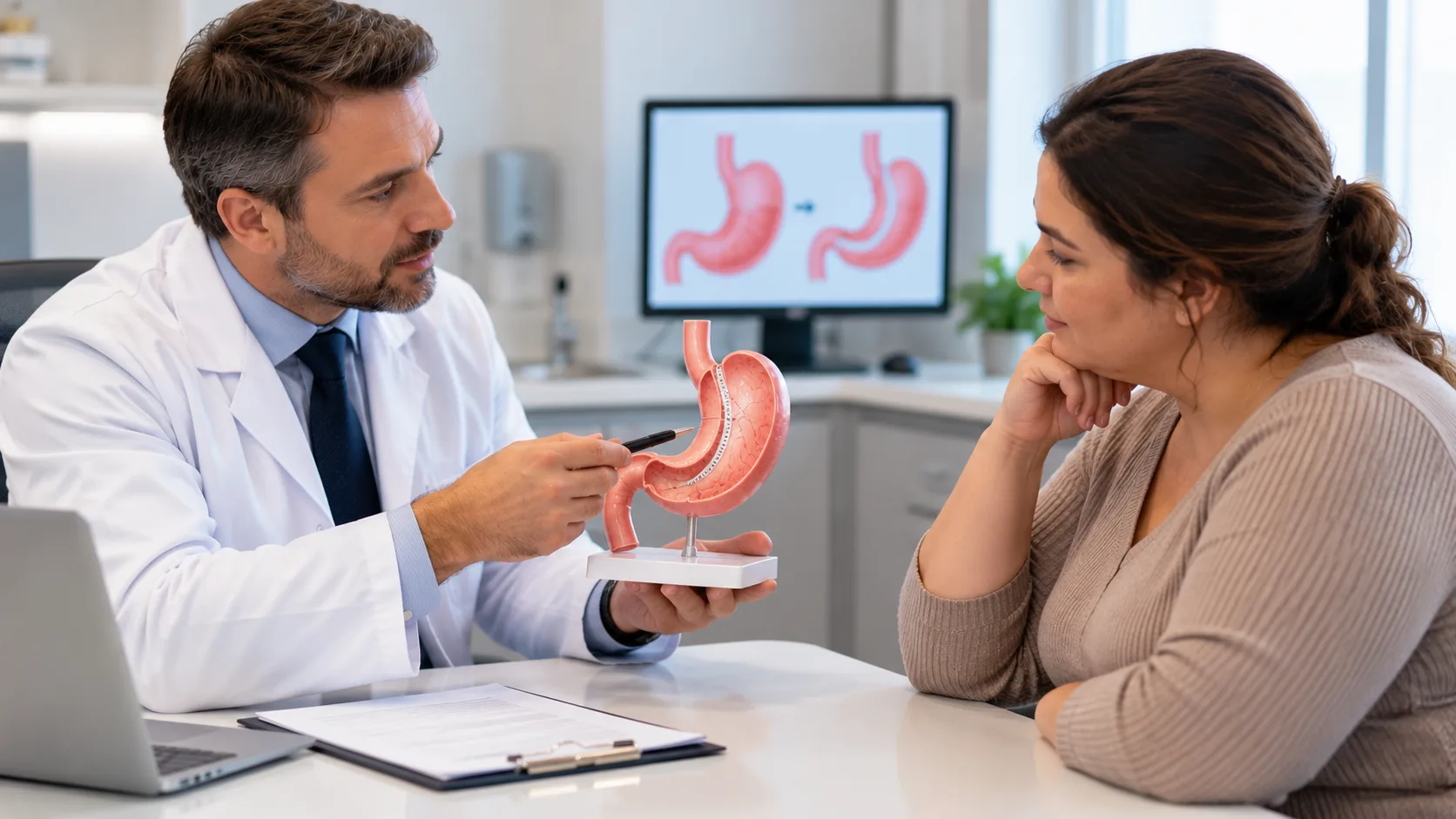
Why Choose Turkey for Gastric Bypass Surgery?
Turkey has become one of the most discussed destinations for international patients seeking gastric bypass surgery, combining private hospital infrastructure, competitive self-pay pricing, and medical tourism services built around overseas visitors. This guide answers the practical questions patients ask before booking, from costs and surgical techniques to safety, recovery, and lifelong aftercare. Suitability for gastric bypass depends on your individual medical profile, not the destination alone. Compare the complete treatment pathway, including follow-up and complication management, before you make a decision.
What Makes Turkey a Popular Destination for Gastric Bypass Surgery?
Turkey attracts international bariatric patients because private hospitals offer short waiting times, English-speaking staff, fixed-price packages, and specialist surgeons in a country where self-pay treatment costs far less than in Western Europe.
Turkey's private health sector expanded rapidly over the past two decades, and hospitals in Istanbul, Ankara, Izmir, and Antalya now run dedicated international patient departments. These departments coordinate airport transfers, interpreters, accommodation, and packaged surgical care. For patients who face long NHS waiting lists or high private fees at home, this structure makes treatment accessible and logistically simple (Ormond and Mainil 2019).
However, popularity itself is not evidence of quality. Turkey performs a large volume of bariatric operations, which supports surgeon experience, but verified outcome data for individual clinics remain limited. Patients should treat marketing claims about national success rates as context, not proof, and evaluate the specific surgeon and facility instead.
How Much Can You Save on Gastric Bypass Surgery in Turkey?
Self-pay gastric bypass in Turkey typically costs far less than equivalent private treatment in the UK, though the final price depends on the technique, surgeon, hospital, and the extent of pre- and post-operative care included.
Operating costs, staffing expenses, and private healthcare pricing structures in Turkey allow hospitals to offer bariatric surgery at lower self-pay rates than UK private providers. The table below compares typical cost factors rather than fixed prices, because advertised figures change and vary by provider.
Cost factor | Turkey (private) | UK (private) |
Surgeon and hospital fees | Generally lower due to local operating costs | Higher due to staff and facility overheads |
Pre-operative tests | Often bundled into package price | Usually billed separately |
Accommodation during stay | Frequently included in packages | Not applicable for local patients |
Flights and travel | Additional expense for the patient | Not applicable |
NHS-funded option | Not available to non-residents | Available for eligible UK patients subject to clinical criteria |
Eligible UK patients may access NHS-funded bariatric surgery through specialist weight-management services, subject to NICE criteria and local commissioning policies (NICE 2023). A BMI threshold alone does not guarantee referral. Patients should request itemized written quotes from any Turkish provider and verify exclusions such as complications, extended stays, or revision procedures. Advertised savings are not guaranteed for every patient, and the cheapest quote rarely reflects the full treatment pathway.
What Medical Expertise Should You Expect From Bariatric Surgeons in Turkey?
You should expect a surgeon with formal bariatric specialization, documented experience with your specific procedure, transparent credentials, and a clear explanation of outcomes and complications.
A bariatric surgeon evaluates obesity severity, related diseases, and previous operations to select the safest procedure for each patient. General surgical experience matters less than procedure-specific volume: surgeons who perform large numbers of Roux-en-Y gastric bypass operations develop greater technical proficiency and lower complication rates (Birkmeyer et al. 2013).
Before booking, verify the surgeon's full name, professional registration, specialist training, and hospital affiliation. Ask directly about complication rates, revision surgeries, and emergency protocols. A credible surgeon answers these questions without hesitation.
How Do Turkish Hospitals Support International Gastric Bypass Patients?
Reputable Turkish hospitals provide licensed surgical facilities, a multidisciplinary team, pre-operative testing, and interpreter support, but patients must independently verify licensing and emergency capability.
Gastric bypass requires more than a single surgeon. The care team includes an anaesthesiologist, nurses, dietitians, and sometimes cardiologists and endocrinologists. Proper facilities maintain surgical theatres, intensive care capacity, and diagnostic imaging. Pre-operative testing typically covers blood work, endoscopy, cardiac assessment, and anaesthetic evaluation. After the operation, inpatient monitoring, pain control, and discharge planning determine when you can safely travel.
Verify the facility's license through the Turkish Ministry of Health and check authorization for international health tourism through official channels such as HealthTürkiye. Accreditation provides useful signals, but no certificate guarantees an individual outcome (Chen, Xu, and Shen 2020).
Which Gastric Bypass Procedure Can You Have in Turkey?
Turkish bariatric centres offer several techniques, and the right choice depends on your medical history, weight-related conditions, and surgical risk, not on what a clinic promotes most heavily.
What Is Roux-en-Y Gastric Bypass?
Roux-en-Y gastric bypass creates a small stomach pouch and reroutes the small intestine so food bypasses most of the stomach and the first part of the small bowel.
The surgeon divides the stomach to form a pouch roughly the size of an egg and connects it directly to the jejunum. This restricts food intake and reduces absorption of calories and nutrients. The procedure produces substantial long-term weight loss and improves type 2 diabetes, hypertension, and sleep apnoea in many patients (Schauer et al. 2017). Because the rerouted intestine absorbs fewer nutrients, lifelong supplementation and blood monitoring are mandatory.
How Does Mini Gastric Bypass Differ From Roux-en-Y?
Mini gastric bypass, or one-anastomosis gastric bypass (OAGB), uses a single intestinal connection instead of two, creating a simpler and shorter operation with a different nutritional risk profile.
OAGB forms a long gastric tube connected once to the small intestine. The simpler anatomy reduces operating time, but the longer bypassed bowel segment increases exposure to bile reflux and certain deficiencies (Robert et al. 2014). Ask your surgeon to state the exact operation proposed and explain why it suits your case. No technique is universally better or safer.
Is Gastric Bypass Better Than Gastric Sleeve or Endoscopic Sleeve Gastroplasty?
These procedures work differently and suit different patients, so none is universally better.
Feature | Roux-en-Y gastric bypass | Sleeve gastrectomy | Endoscopic sleeve gastroplasty |
Mechanism | Pouch plus intestinal rerouting | Removes about 80% of the stomach | Internal sutures, no removal |
Invasiveness | Major open or keyhole surgery | Major keyhole surgery | Endoscopic, no incisions |
Typical weight loss | Greater and more durable | Moderate to substantial | Modest compared with surgery |
Diabetes improvement | Strong evidence | Moderate evidence | Limited evidence |
Nutritional risk | High, requires monitoring | Moderate | Low |
Reversibility | Technically difficult | Not reversible | Suture removal possible |
Gastric bypass suits patients with severe obesity, type 2 diabetes, or reflux disease. Sleeve gastrectomy avoids intestinal rerouting but can worsen reflux. Endoscopic sleeve gastroplasty suits patients seeking a lower-risk option and who accept smaller weight-loss effects (Sartoretto et al. 2020). These treatments are not interchangeable, and individual clinical assessment determines the choice.
Who Is Eligible for Gastric Bypass Surgery in Turkey?

Eligibility depends on BMI, obesity-related diseases, previous weight-management attempts, and overall surgical fitness, and only a qualified bariatric team can confirm it.
Clinicians assess BMI alongside conditions such as type 2 diabetes, hypertension, and obstructive sleep apnoea. They review medication use, nutritional status, psychological readiness, and previous abdominal surgery, because adhesions increase technical difficulty. International guidelines generally consider bariatric surgery for patients with a BMI of 40 or above, or 35 and above with serious related conditions (Eisenberg et al. 2022). An online calculator cannot replace clinical assessment.
What Are the Potential Health Benefits of Gastric Bypass Surgery?
Gastric bypass supports substantial weight loss and often improves or resolves type 2 diabetes, hypertension, and sleep apnoea, though results vary by individual and depend on follow-up.
The combination of a small pouch, altered gut hormones, and reduced absorption changes appetite and metabolism. In a landmark randomized trial, gastric bypass patients achieved greater diabetes remission than patients receiving medication alone (Schauer et al. 2017). Large cohort studies link bariatric surgery to lower rates of heart attack, stroke, and death over long follow-up periods (Aminian et al. 2022). Weight loss also improves mobility, joint pain, and daily functioning. Surgery does not guarantee a specific weight loss, and success requires permanent dietary and lifestyle change.
What Risks Should You Understand Before Travelling to Turkey for Surgery?
Gastric bypass carries serious risks everywhere, including bleeding, leaks, blood clots, and long-term nutritional deficiencies, and overseas travel adds follow-up challenges.
Early complications include bleeding, infection, anastomotic leaks, blood clots, anaesthetic events, and bowel obstruction. Long-term concerns include vitamin and mineral deficiencies, ulcers, gallstones, and internal hernias. Mortality after modern bariatric surgery remains low, but complication management depends on the team's skill and the facility's emergency capacity (Aminian et al. 2022).
Ask how complications are diagnosed, treated, and funded if they occur. Seek urgent medical assessment for severe abdominal pain, fever, persistent vomiting, chest pain, or difficulty breathing. These warning signs require immediate attention regardless of where you are.
How Does Gastric Bypass Surgery in Turkey Compare With the UK?
Turkey offers lower self-pay costs and fast access, while UK treatment offers easier regulation, simpler follow-up, and NHS-funded options for eligible patients.
Factor | Turkey | UK |
Private cost | Lower | Higher |
NHS access | Not applicable to visitors | Available through clinical criteria |
Regulation | Ministry of Health licensing | CQC oversight for England |
Follow-up | Requires coordination with home clinicians | Local continuity is simpler |
Emergency care after return | Depends on home-country arrangements | Direct local access |
Travel | Flight required with post-operative clot risk | No flight needed |
Choose based on the individual hospital and care pathway, not broad national claims. Staying closer to home simplifies follow-up, while overseas treatment demands extra planning for continuity of care.
What Should a Gastric Bypass Package in Turkey Include?
A credible package covers consultation, testing, surgery, hospital stay, dietary guidance, and follow-up access, with exclusions stated in writing.
Review the full package rather than the headline price. Typical inclusions are:
Initial consultation and suitability assessment
Pre-operative laboratory tests and investigations
Surgeon, anaesthesia, and hospital fees
Inpatient care and prescribed medication
Post-operative dietary guidance
Airport transfers and accommodation where applicable
Follow-up consultations
Common exclusions include flights, companion costs, extended accommodation, additional tests, and treatment for complications. Request written terms for cancellations, refunds, unexpected stays, and revision surgery.
How Should You Prepare for Gastric Bypass Surgery in Turkey?
Preparation includes medical assessments, medication review, pre-operative diet changes, and careful travel planning under the treating team's instructions.
Complete all requested blood tests, imaging, and specialist assessments before travel. Review every medication and supplement with the team, and follow individualized instructions about smoking, alcohol, and pre-operative diet, which shrinks the liver and improves surgical access. Gather previous medical records and test results. Arrange a companion when possible, confirm accommodation and insurance, and record emergency contacts. Never apply a generic plan instead of the treating team's instructions.
How Long Should You Stay in Turkey After Gastric Bypass Surgery?
Most patients stay about one to two weeks, but the exact duration depends on recovery, findings, and the surgeon's medical clearance to fly.
Inpatient recovery usually lasts three to five days, followed by an outpatient review before departure. Flying too soon raises the risk of blood clots after major surgery, so the surgeon must confirm fitness to fly. Do not book return flights around a standard package duration alone, and confirm contingency arrangements for delayed recovery before you travel.
What Aftercare Is Necessary After Gastric Bypass Surgery?
Aftercare lasts a lifetime and includes staged eating, lifelong supplements, and regular blood tests.
Recovery begins with liquids, then pureed food, then soft food over several weeks. Long-term supplementation typically covers iron, vitamin B12, folate, calcium, and vitamin D, with blood tests at scheduled intervals (Parrott et al. 2017). Hydration, adequate protein, and gradual physical activity support recovery. Bariatric dietitians, primary care clinicians, and the surgical team share responsibility. Establish a follow-up arrangement in your home country before surgery, and confirm who reviews results and responds to symptoms after you leave Turkey.
How Can You Choose a Reliable Gastric Bypass Clinic in Turkey?
Verify the hospital license, surgeon credentials, emergency capability, and written aftercare plan, and treat pressure tactics as warning signs.
Check the facility's license and health-tourism authorization through official channels. Confirm the surgeon's experience with your exact procedure and the hospital's complication-management arrangements. Look for transparent consent documents, itemized pricing, and accessible medical records. Warning signs include:
Pressure to pay a deposit before assessment
Guaranteed weight-loss results
Unclear surgeon identity or credentials
Vague answers about complications or revision costs
No written aftercare plan for after you return home
Pressure to fly home before medical clearance
What Should You Ask Before Booking Gastric Bypass Surgery in Turkey?
Ask about the technique, the surgeon, risks, costs, stay duration, and long-term follow-up, and get every answer in writing.
Key questions include: Which exact technique suits my history, and why? Who performs the operation, and how can I verify their credentials? What investigations do I need? What are the main risks in my case, and how does the hospital manage complications? What does the total price include, and which extra expenses could arise? How long must I stay, and who clears me to fly? Who arranges my blood tests and nutritional monitoring at home? How will my records transfer to my home team? What happens if I need emergency treatment after returning?
Is Choosing Turkey for Gastric Bypass Surgery the Right Decision for You?
Turkey can be a sound choice for gastric bypass surgery when you verify the provider's credentials, understand the full cost, and arrange comprehensive before-and-after care, but price should never outweigh medical suitability.
Turkey offers private treatment access, lower self-pay costs, and dedicated international patient services. These advantages balance against travel risks, follow-up challenges, and possible additional expenses. Compare itemized treatment plans, seek an independent medical opinion, and confirm continuity of care in your home country. When you can verify the surgeon, the facility, and the aftercare pathway, Turkey may be a suitable option for your gastric bypass surgery.
Frequently Asked Questions About Gastric Bypass Surgery in Turkey
Why do international patients choose Turkey for gastric bypass surgery?
Patients choose Turkey mainly for lower private costs, fast access to surgery, and established international patient services.
Private packages and experienced bariatric specialists complete the picture, though individual research remains essential.
Is gastric bypass surgery in Turkey safe?
Safety depends on patient selection, surgeon expertise, facility standards, and complication management, not the destination alone.
Verify each element independently before you commit.
Is gastric bypass cheaper in Turkey than in the UK?
Private self-pay surgery in Turkey usually costs less than private UK surgery, but eligible patients may access NHS-funded treatment instead.
Compare current, itemized quotes for equivalent procedures.
How many days should I plan to stay in Turkey after gastric bypass?
Plan for one to two weeks and confirm the exact duration with your treating team before booking flights.
Medical clearance to fly, not a package schedule, determines your departure.
Will I need to take vitamins after gastric bypass surgery?
Yes, lifelong supplementation and regular nutritional monitoring are generally necessary after gastric bypass.
Follow an individualized medical plan based on blood test results.
Can I receive follow-up care after returning home?
Yes, but you must coordinate with local healthcare professionals and obtain a written follow-up plan from the surgical provider.
Arrange this before you travel.
How do I verify a gastric bypass surgeon in Turkey?
Check professional credentials, hospital affiliation, facility authorization, and experience with your proposed procedure.
Request documentation directly and verify it through official registers.
References
Aminian, Ali, et al. "Association of Metabolic Surgery With Major Adverse Cardiovascular Outcomes in Patients With Type 2 Diabetes and Obesity." JAMA, vol. 327, no. 22, 2022, pp. 2293-2305.
Birkmeyer, John D., et al. "Surgical Skill and Complication Rates after Bariatric Surgery." New England Journal of Medicine, vol. 369, 2013, pp. 1434-1442.
Chen, Y., Xu, L., and Shen, J. "Global Landscape of Medical Tourism: Evidence and Policy Insights." Health Policy and Planning, vol. 35, no. 8, 2020, pp. 1018-1027.
Eisenberg, Dan, et al. "2022 American Society for Metabolic and Bariatric Surgery (ASMBS) and International Federation for the Surgery of Obesity and Metabolic Disorders (IFSO) Indications for Metabolic and Bariatric Surgery." Surgery for Obesity and Related Diseases, vol. 18, no. 12, 2022, pp. 1345-1356.
NICE. "Obesity: Identification, Assessment and Management." NICE Guideline CG189, National Institute for Health and Care Excellence, updated 2023.
Ormond, M., and Mainil, T. "Transnational Mobility for Surgery and Medical Treatment." Globalization and Health, vol. 15, 2019, article 15.
Parrott, Julie, et al. "American Society for Metabolic and Bariatric Surgery Integrated Health Nutritional Guidelines for the Surgical Weight Loss Patient 2016 Update." Surgery for Obesity and Related Diseases, vol. 13, no. 5, 2017, pp. 727-741.
Robert, Matthias, et al. "One Anastomosis Gastric Bypass: Long-Term Outcomes and Nutritional Deficiencies." Obesity Surgery, vol. 24, no. 10, 2014, pp. 1712-1718.
Sartoretto, Adriano, et al. "Endoscopic Sleeve Gastroplasty for Obesity: A Multicenter Study." Gastrointestinal Endoscopy, vol. 92, no. 2, 2020, pp. 342-350.
Schauer, Philip R., et al. "Bariatric Surgery versus Intensive Medical Therapy for Diabetes: 5-Year Outcomes." New England Journal of Medicine, vol. 376, 2017, pp. 641-651.