
What Is the Deep Plane Facelift and Why Is It Trending?
The deep plane facelift is a next-level facial rejuvenation procedure that remedies deep layers below the skin while providing a natural, long-term lift without the “tight” appearance common with more superficial facelifts. As more and more people are becoming aware of this treatment, patients have grown increasingly enthusiastic about their newly restored youthful appearance.
What makes the deep plane facelift distinct from other methods is that it is able to treat several age-related problems simultaneously by providing a complete resolution for facial drooping. What is the deep plane facelift, and why is it trending? So, keep on reading to find out what the deep plane facelift is, why it is trending, the benefits, who makes a good candidate, how to recover from it, and the cost of a deep plane facelift in Turkey, as well as references to celebrities who have had the surgery.
What Is a Deep Plane Facelift?
A deep plane facelift could be defined as a sophisticated technique for addressing facial aging problems that goes deeper than the skin, beyond solely the superficial layers of the face.
So, what makes it different than other facelift procedures?
Addressing this question, Dr. Orhan Tekin, one of our experts at Dr. Cinik, points out “What gives the deep plane facelift an edge over other facelift types is that it does not only operate on the surface of the face; rather, it goes beyond the underlying muscles of the skin giving you a more natural, less "wind-tunnel" look.”
Why Is a Deep Plane Facelift Performed?
You might be asking yourself, “Is a deep plane facelift truly worth it?”
Here’s the thing: The deep plane facelift can take care of a lot of common aging problems in men and women, wherein the treatment of sagging skin and muscles in the face and neck is done very effectively.
It is also very powerful at correcting aging in areas such as jowls along the jawline, vertical platysmal bands in the neck, and descent of the mid-face and mouth.
There are 5 reasons people seek a deep-plane facelift:
- Restore youth to the face
- Reduce deep wrinkles and folds
- Improve facial contours
- Improve self-esteem
- The deep plane facelift offers a lot of value to those who have age-related changes.
A Deep Plane Facelift: Why Is It Trending?
As we already learned, a deep plane facelift is a sophisticated surgical approach to lifting and rejuvenating the face by working with the deeper layers of the face.
Here are a few advantages of this incredible surgical process:
- Results appear more natural: One key feature of a deep plane facelift is the fact that outcomes often seem more natural with this procedure compared to any skin-tightening techniques.
- Lasting results: Working at a deeper layer of the face with this method leads to long-lasting results compared to superficial approaches.
- Overall improved rejuvenation: This method treats signs of aging in more than one area at a time, lifting and repositioning SMAS and deeper layers of the face to treat jowls, sagging areas of cheeks, and nasolabial folds.
- Less skin tension: Since this is a deeper procedure, much less tension is placed on the skin at closure, thus offering better healing with less scarring.
- Expressions and smile preserved: Because it operates deeper in the face, it does not interfere with the natural movement or expression of the face, mouth, or smile, nor does it prevent a full rejuvenation of the facial skin.
Who Is a Suitable Candidate for a Deep Plane Facelift?
Deep plane facelift surgery is not for everybody, and to know if you are eligible for this surgery, here are the important factors that you should first consider:
- Usually, it best suits anyone over the age of 40 with moderate to severe sagging of the face. Elasticity of the skin can vary, but some natural elasticity is an advantage.
- This is for people who tend to accumulate large jowls and possess deep nasolabial folds with sagging midface or neck region.
- He or she should also be in good general health, a non-smoker, and not have any condition that may limit the healing process.
- A candidate should be aware of what can and cannot be achieved with a deep-plane facelift.
- Ideal candidates for surgery are those who understand that there is a procedure and that time is needed to recover from a deep-plane facelift.
How Do You Prepare for a Deep Plane Facelift?
You will have to prepare physically and psychologically to make the recovery from your deep plane facelift as smooth as possible, and to get the best results possible from it.
Here are a few tips that may help you prepare your body for surgery:
- Consume a good variety of fruits and vegetables, and some lean protein and healthy fats to create a balanced nutrition that would help boost your immune system and assist in recovery.
- You should talk with your surgeon concerning what areas you want to improve.
- You should give a complete and accurate medical history and list any other health issues.
- Your surgeon will evaluate the quality of skin, tone of muscles, and tissue elasticity.
- Make sure to first understand all risks involved and the real expectations of results.
- Find whether there will be general anesthesia, or local anesthesia with sedation.
- Taking photographs before your surgery will help highlight your results.
Tips before surgery:
- Stop smoking six weeks before and after surgery.
- Don't take drugs such as blood thinners and non-steroidal anti-inflammatory drugs.
- Make sure to plan in advance for a home return after completing your procedure.
- Keep all important items within immediate reach.
How Is the Deep Plane Facelift Performed?
The incision is made near the hairline or ear to hide scarring while the patient is under general anesthesia. Then, the surgeon separates the superficial tissues sufficiently to provide access deep into the face to remove or replace sagging tissue and contour the face in deep-plane facelift surgery. A superficial plane facelift does not involve manipulation of superficial skin, which usually allows for a relatively more rapid healing process for the patient owing to the limited disturbance of the dermal surface.
Deep Plane Facelift Incisions
Those considering this procedure but scared of the scars will be comforted to learn that the incisions for the deep plane facelift are designed to minimize their visibility.
They begin at the temple, follow the natural crease in front of and behind the ear, and extend into the lower hairline, and they are designed not only to hide the scars but also to help them blend into the natural lines of the face and neck, including under the chin.
What You Can Expect from a Deep Plane Facelift?
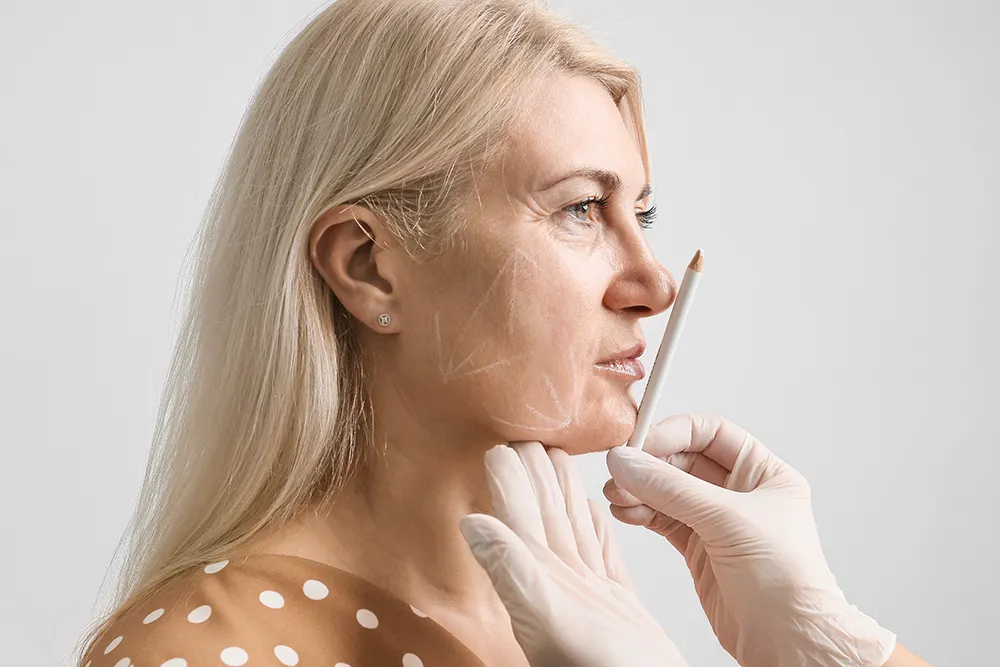
According to Dr. Tekin, “After your deep plane facelift, you can anticipate having a youthful contour, a properly defined jawline, a youthful neck, removal of wrinkles, smooth and taut skin, and an improved facial contour for a refreshed, restored look.”
How Long Do Deep Plane Facelifts Last?
A deep plane facelift usually holds its results for about 10 to 15 years. Yet, this duration does not mean that your face will return to its pre-surgery condition after this duration.
Deep Plane Facelift Recovery Instructions
Now that you have learned about “what is the deep plane facelift and why it is trending?” Plus, how the operation is done, how to prepare for it, and what to expect, it’s time to know some post-operative instructions to help you recover from the surgery:
Just after the operation:
- Rest with an elevated head.
- Ice with packs (15 min on; 20 min off).
- Have someone drive you home if possible and stay to help overnight.
In the first couple of days:
- Follow-up appointment on day 2.
- You can gently wash your face/hair, just do not use any chemicals.
- Take pain medications as needed.
- You can continue icing and resting.
After a week:
- Light activity and desk jobs are generally fine.
- No high-intensity workouts.
After a month:
- Return to regular activities, including exercising.
- Final follow-up usually occurs around 2–3 weeks.
Eating & sleeping:
- Eat soft, nutritious, anti-inflammatory foods.
- Eat & drink plenty of fluids.
- Sleep on your back with your head elevated.
Avoid:
- Smoking, alcohol, strong hair/skin products, and sun exposure.
- Don’t perform heavy lifting or high-intensity workouts until you are cleared.
What Is the Downtime for a Deep Plane Facelift?
There is usually swelling and bruising following a deep plane facelift operation, and that typically resolves within 7 to 14 days. Although each person heals differently, the majority of patients can return to full activities in two weeks.
Deep Plane Facelift Complications
You’re not alone if you’ve been skeptical about the operation’s risks; however, the deep plane facelift is regarded as very safe when performed by an experienced facelift surgeon.
That being said, all forms of surgery have a degree of risk, and the risks associated with this procedure are:
- Bleeding and haematoma formation
- Seroma, or fluid accumulation, beneath the skin.
- Wound infection
- Damage to branches of the facial nerve.
- Damage to the salivary gland or duct.
It’s worth noting that you have to choose a board-certified surgeon who has quite a long experience with deep plane facelift surgery to minimize the potential risks and complications.
Can A Deep Plane Facelift Be Combined With Other Procedures?
Absolutely, for extensive facial rejuvenation, deep plane facelifts are usually performed along with other surgeries that target areas it does not fully treat.
Below are several common surgeries that are usually performed with a facelift to maximize the overall results:
Deep Plane Facelift and Neck Lift
A simultaneous neck lift and deep plane facelift can provide fuller rejuvenation. The deep plane facelift operates at the deep layers of the face by means of lifting and repositioning muscles and tissues, while the neck lift removes sagging skin, excess fat, and muscle laxity in the neck.
Deep Plane Facelift and Eyelid Surgery (Blepharoplasty)
The sagging skin and fat around the eye also need blepharoplasty because those parts respond only partially to facelift treatments. Surgical incisions for upper eyelid surgery are done over the eyelid crease to allow for excess tissue removal, while those for lower eyelid surgeries are done either below the lashes or in the inner lid to remove puffiness and tighten the skin.
Deep Plane Facelift and Brow Lift
A brow lift operation is intended to remove forehead creases and sagging eyebrows. During the endoscopic method, small incisions are made behind the hairline while the appropriate lift of the area is guided by the camera. Because of its small incisions, the procedure is popular as minimally invasive.
What Are the Alternatives to the Deep Plane Facelift?
Now that you have a thorough understanding of deep plane facelift surgery, but are not quite convinced, other options are available to consider alternative procedures that give elevation to the face, varying in invasiveness and recovery time taken, but all achieving the same outcome. These include:
SMAS Facelift
The SMAS facelift incorporates the underlying muscles and tissues to correct sagging in the midface, jowls, and neck. Compared to the deep plane facelift, this is a much less invasive procedure, with minimal recovery time and a lesser risk of injuring some of the nerves. Nevertheless, the results are still very natural.
JW Lift
The JW Lift lifts the jowls and tightens the neck muscles by means of fat injection to add volume and give the patient a more youthful and refreshed appearance with minimal risk of looking overly "pulled." We can now adopt a more natural and three-dimensional approach.
ARC Lift
The ARC lift is an extremely minimally invasive procedure, which means it improves mild to moderate drooping of the neck and jawline. It comprises tiny incisions, radiofrequency energy, liposuction, tightening the skin and muscle, and it focuses on making extremely subtle results that require almost no recovery.
What Is the Difference Between a Deep Plane Facelift and a Regular Facelift?
Elaborating on this point, Dr. Tekin says, “The key difference between a deep plane facelift and a regular facelift is the depth of the lift. While a regular facelift addresses the skin and superficial tissues, which often creates a pulled, tight look, a deep plane facelift achieves a deep lift by repositioning the muscles and connective tissue in deeper planes, creating a more natural, longer-lasting result.”
Deep Plane Facelift vs SMAS
As noted previously, a SMAS facelift lifts tissues below the skin to enhance the cheeks, jawline, and jowls. While this is an effective method for facial rejuvenation, it can sometimes lead to an undesirable, tight, or over-stretched appearance if the technique is not carried out carefully.
A deep plane lift goes deeper and not only releases and repositions the soft tissue but also the ligaments and fat pads to provide a more natural, fuller, and longer-lasting facelift.
In sum, both SMAS and deep plane focus on lifting the lower face, but SMAS addresses the main surface layers of the face, while deep plane lifts manipulate the layers beneath for a much more dramatic and long-lasting facelift.
Deep Plane Facelift vs Vertical Facelift
The vertical restore facelift is able to lift the face vertically for a natural structure. The procedure specifically targets the outer brow, midface, jawline, and neck. It creates incisions along the ears and hairline, and it works great if you want a full rejuvenation with the vertical lift.
On the other hand, a deep plane facelift concentrates on deeper structures. It is the only facelift that lifts the skin as well as the underlying muscles. It works on the mid and lower face, jawline, and neck to create a natural result by improving the deep structures.
Deep Plane Facelift vs Extended Deep Plane Facelift
Well, the main difference between a deep plane facelift and an extended deep plane facelift Although the deep plane facelift lifts the facial tissues, but does not target the neck in the same way.
The extended deep plane facelift releases ligaments in the neck, allowing for a more complete lift of both the face and neck. Plus, the extended technique can reduce recovery time by preserving the eye muscle, leading to less swelling and a quicker healing process compared to the deep plane facelift.
Celebrities Who Have Done Deep Plane Facelift
Here are some well-known examples of celebrities who have confirmed undergoing a deep plane facelift.
Marc Jacobs
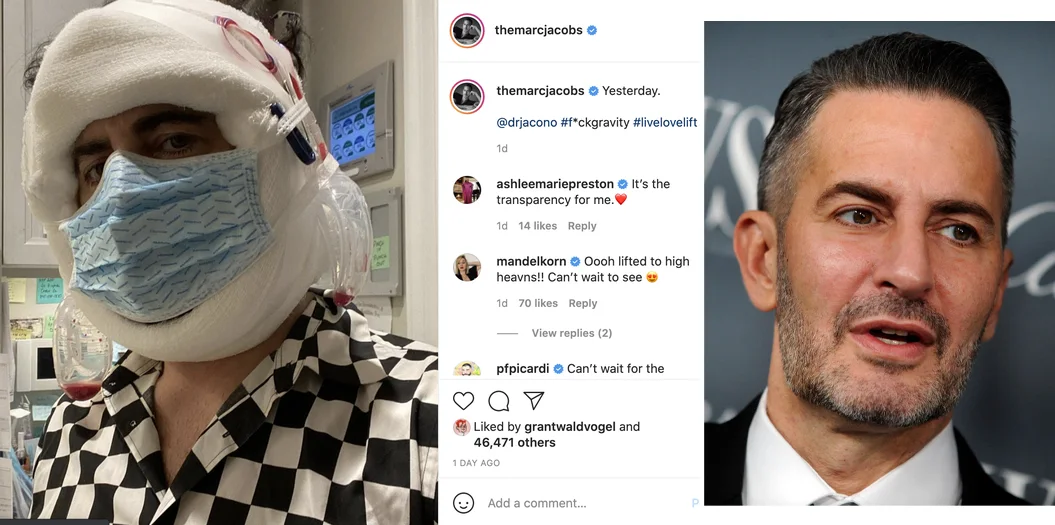
The acclaimed designer Marc Jacobs was one of the first, high-profile, public figures to admit that he had a deep plane facelift, and he even documented the process on Instagram in 2021 when he posted photos of himself during the recovery period.
Caroline Stanbury

The Real Housewives of Dubai star Caroline Stanbury was transparent about having a deep plane facelift and eyelid surgery, and she used her social media platform to promote openness in beauty procedures and to get women to be confident in their choices.
Sonja Morgan

Real Housewives of New York star Sonja Morgan had a deep plane facelift, describing it as a way to eliminate developing wrinkles and jowls. She said the results make her look about 15 years younger.
Deep Plane Facelift Cost in Turkey
You might be wondering, “Is this procedure within my budget?”
Good news—it very well could be, especially if you consider having it done in Turkey. With world-class surgeons and significantly lower prices compared to many Western countries, Turkey offers an exceptional balance of quality and affordability.
The average price for a deep plane facelift in Turkey typically ranges between €5,000 and €8,000. Factors such as the clinic’s location, the surgeon’s experience, and the complexity of the procedure can affect the overall cost.
Mini Deep Plane Facelift Cost in Turkey
The average price of a mini deep plane facelift in Turkey is generally between €1500 and €5500, and sometimes all-inclusive packages are available for around €5200, depending on the clinic and services.
The Conclusion : What Is the Deep Plane Facelift and Why Is It Trending?
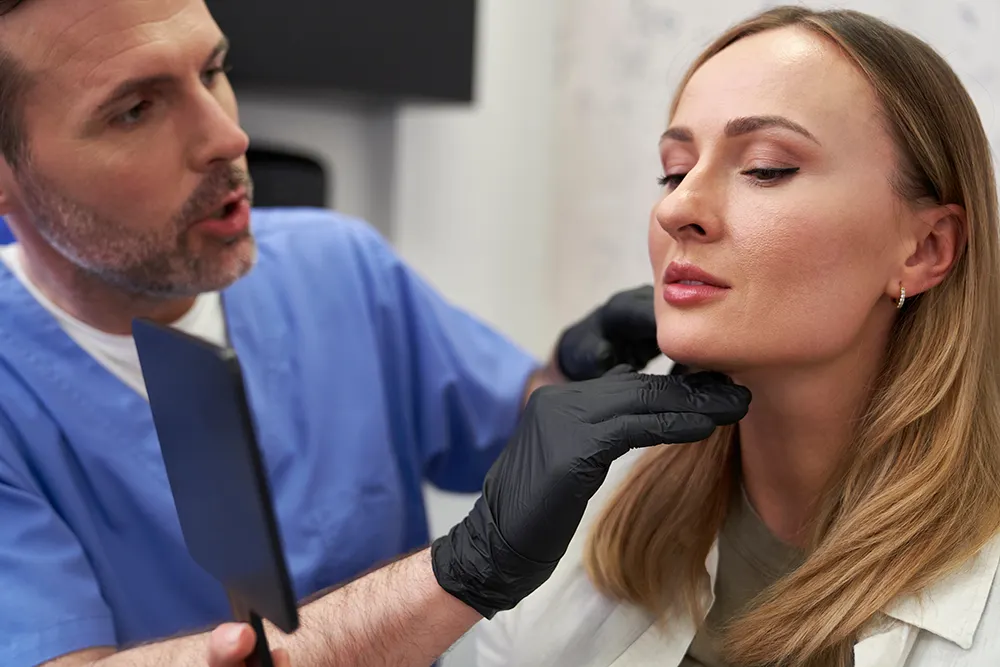
In summary, a deep plane facelift is a relatively new and exciting method of facial enhancement that produces natural, long-lasting results, as it focuses deeper in the tissues of the face. Its unique quality is that it can provide a beautiful rejuvenation of the face without the "pulled" appearance many associate with the classic facelift aesthetic. Interest in the deep plane facelift continues to grow as it offers a different approach that "lifts" the face, with less scarring, and enhanced results that have a lasting positive impact, making it a trendy option.
Whether you're seeking a deep plane facelift for aesthetic purposes or to restore your facial confidence, it's undeniable that deep plane facelift aesthetic procedures put you on a path to preferred treatment methods for facial rejuvenation. So, coming back to our main question: “What is a deep plane facelift, and why is it trending?” What we know is that the deep plane facelift is effective, and continues to see increased demand due to proven outcomes for rejuvenating the face and neck!
FAQs
How Does a Deep Plane Facelift Work?
A deep plane facelift raises or repositions the deeper facial structures, tightening muscles and skin to restore a more natural, youthful look.
What Is the Best Age for a Deep Plane Facelift?
The best time to consider a deep plane facelift surgery is typically between your 40s and 60s.
Read more: When Is the Right Time to Have a Facelift?
How Painful Is a Deep Plane Facelift?
While some patients experience pain, many others do not feel any discomfort.
Where Is the Best Country to Get a Deep Plane Facelift?
Turkey has some of the best medical facilities that are suitable to offer world-class treatment in different medical fields, including cosmetic surgery and deep plane facelifts.
Does a Deep Plane Facelift Look Natural?
Deep plane facelifts operate on the deep layer, resulting in a more natural and dramatic appearance.
How Many Hours Does a Deep Plane Facelift Take?
If done by experienced surgeons, a deep plane facelift may require 4 to 6 hours, depending on the complexity of the procedure.
Will a Deep Plane Facelift Change Your Smile?
When performed correctly, a deep plane facelift surgery will not interfere with your smile. Choosing a board-certified plastic surgeon to perform it will assist in guaranteeing the best and most natural results.
How Soon Can You Fly After a Deep Plane Facelift?
It’s recommended to wait at least 10 days after a deep plane facelift surgery before flying. This should allow for enough healing, prevent possible complications, and enhance your flying experience.
Will There Be Scarring After Deep Plane Facelift Surgery?
Although some scarring is inevitable, it is often just minor scarring usually found in a natural skin crease or hairline, and invariably disappears and fades over time.
Where Are the Scars of a Deep Plane Facelift Surgery Located?
Scars from a deep plane facelift are typically placed along the hairline, behind the ears, or below the chin in such a way that they are less noticeable when healing.
When Can I Shower After the Deep Plane Facelift Surgery?
Following the deep plane facelift surgery, patients are usually advised not to take showers for 48 to 72 hours to prevent any moisture from infecting the incision sites.
Should I Change My Diet After the Deep Plane Facelift Surgery?
It is advised to consume a well-balanced diet for a speedy recovery after undergoing deep plane facelift surgery. Staying away from alcohol and high levels of salt can reduce swelling and improve the chances of recovery.
Will There Be Sagging After Deep Plane Facelift Surgery?
Patients may expect rather substantial decreases in sagging of tissues following a deep plane facelift.