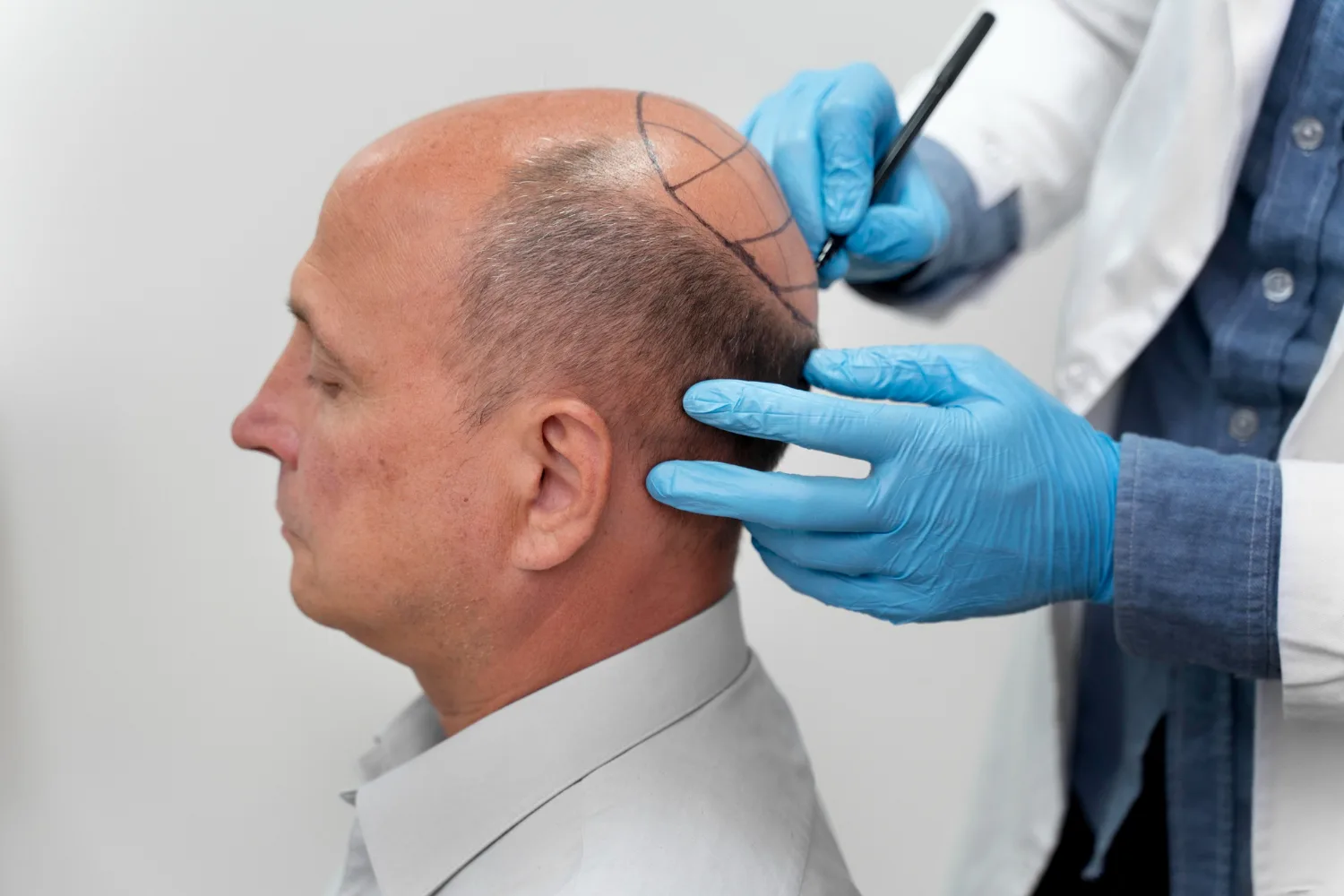
Meilleurs candidats pour la greffe de cheveux Manual FUE en Turquie
La perte de cheveux touche des millions de personnes dans le monde. L'alopécie androgénétique reste la principale cause d'amincissement capillaire chez les hommes et les femmes. De nombreux patients envisagent désormais des solutions chirurgicales. La greffe de cheveux Manual FUE en Turquie offre l'une des options les plus précises disponibles. Cet article explique qui constitue le meilleur candidat pour manual FUE hair transplant in Turkey. Nous abordons tout, des schémas de perte de cheveux à la qualité de la zone donneuse. Vous en apprendrez davantage sur l'extraction manuelle d'unités folliculaires, les critères de candidature et à quoi vous attendre lors de votre consultation de greffe de cheveux en Turquie. L'objectif est simple : vous fournir des informations claires, scientifiques et fiables afin que vous puissiez prendre une décision éclairée sur la restauration capillaire en Turquie.
Qu'est-ce que la greffe de cheveux Manual FUE ?
Manual FUE signifie extraction manuelle d'unités folliculaires. Un chirurgien expérimenté retire des unités folliculaires individuelles de la zone donneuse à l'aide d'un punch manuel. Le chirurgien fait tourner ce punch à la main. Chaque greffon contient une à quatre mèches. Le chirurgien implante ensuite ces greffons dans la zone receveuse. Cette technique exige une habileté et une patience exceptionnelles. Le chirurgien contrôle chaque mouvement. Aucun appareil motorisé n'aide l'extraction. Ce contrôle direct distingue la Manual FUE des autres méthodes.
Comprendre l'extraction manuelle d'unités folliculaires
L'extraction manuelle d'unités folliculaires commence par la pose d'un punch, tranchant ou émoussé, autour d'une unité folliculaire isolée. Le chirurgien exerce une légère pression de rotation. Ce mouvement sépare le greffon des tissus environnants. Le greffon est ensuite prélevé à l'aide de fines pinces. Chaque extraction prend du temps. Le chirurgien doit aligner le punch avec l'angle naturel du poil. Cet alignement évite d'endommager le follicule. Dua et Dua notent que cette approche contrôlée à la main permet au chirurgien de ressentir la résistance des tissus et d'ajuster la technique en temps réel (Dua and Dua 76).
Comment la Manual FUE diffère de la FUE motorisée
La FUE motorisée utilise un dispositif motorisé pour faire tourner le punch. Cet appareil tourne à grande vitesse. Il extrait les greffons plus rapidement que les méthodes manuelles. Cependant, l'approche motorisée génère chaleur et friction. Ces facteurs peuvent endommager des follicules fragiles. La Manual FUE élimine ce stress mécanique. Le chirurgien contrôle entièrement la vitesse, la profondeur et l'angle. Des études montrent que des chirurgiens expérimentés obtiennent des taux de transection comparables voire inférieurs avec l'extraction manuelle. La transection correspond à la coupe du follicule lors de l'extraction. Des taux de transection plus bas signifient qu'un plus grand nombre de greffons survivent.
Pourquoi certains chirurgiens préfèrent l'extraction manuelle
De nombreux chirurgiens de haut niveau en restauration capillaire préfèrent l'extraction manuelle pour des cas spécifiques. Les cheveux bouclés, fins et les lignes frontales complexes profitent tous de cette approche. Le chirurgien peut s'adapter instantanément aux changements de direction des cheveux. Les dispositifs motorisés ne peuvent égaler ce retour tactile. L'extraction manuelle fonctionne également bien pour la récolte de poils de barbe et de corps. Ces zones exigent un soin accru. Le contrôle manuel rend cela possible.
L'extraction manuelle dépend-elle davantage de la technique que de l'appareil ?
Oui, la FUE manuelle dépend presque entièrement de l'habileté du chirurgien. L'appareil n'est qu'un petit punch. La main, le regard et l'expérience du chirurgien déterminent le résultat. Cela signifie que la technique compte plus que la technologie. Un chirurgien hautement qualifié en FUE en Turquie peut obtenir d'excellents résultats avec des outils simples. Un chirurgien inexpérimenté ne peut pas compter sur un appareil motorisé pour compenser une mauvaise technique. Cette réalité rend le choix du chirurgien crucial pour toute personne envisageant une greffe de cheveux FUE manuelle en Turquie.
Qui est le meilleur candidat pour une greffe de cheveux FUE manuelle en Turquie ?
Le meilleur candidat présente une alopécie androgénétique stable, une densité de donneur saine et des attentes réalistes. Les bons candidats souhaitent aussi des résultats naturels et un traumatisme minimum du site donneur. L'âge, les caractéristiques du cheveu et les antécédents médicaux jouent tous un rôle. Une consultation approfondie pour greffe de cheveux en Turquie permet de déterminer l'éligibilité. Tout le monde ne convient pas. Certaines personnes doivent d'abord suivre un traitement médical. D'autres peuvent nécessiter des approches alternatives.
Patients présentant une alopécie androgénétique stable
Les hommes ayant une calvitie masculine stable sont d'excellents candidats. Leur perte de cheveux suit un schéma prévisible. L'échelle de Norwood classe ce schéma. Les candidats de Norwood 3 à 5 obtiennent souvent les meilleurs résultats. Leurs zones dégarnies sont visibles. Leurs zones donneuses restent solides. Il est important que la perte soit stable afin que le chirurgien puisse planifier des résultats durables sans craindre un amincissement rapide ultérieur (True 436). Les patients doivent n'avoir présenté aucune perte active significative pendant au moins six à douze mois.
Personnes ayant une densité de cheveux donneurs saine
La densité du donneur mesure le nombre d'unités folliculaires par centimètre carré à l'arrière et sur les côtés du cuir chevelu. La densité donneuse moyenne se situe entre 70 et 100 unités folliculaires par centimètre carré. Mysore et ses collègues ont trouvé que les hommes indiens avaient en moyenne 78,2 unités folliculaires par centimètre carré dans la zone donneuse du cuir chevelu (Mysore et al. 108). Une densité plus élevée signifie plus de greffons disponibles. Plus de greffons permettent une meilleure couverture. Les chirurgiens mesurent la densité donneuse lors de la consultation à l'aide de microscopes numériques.
Patients recherchant une précision maximale au niveau de la ligne frontale
La ligne frontale encadre le visage. Elle exige la plus grande précision. La FUE manuelle offre au chirurgien un meilleur contrôle pour ce travail délicat. Les greffons d'un seul cheveu créent une bordure douce et naturelle. Le chirurgien place ces greffons à des angles précis. La restauration naturelle de la ligne frontale requiert un placement irrégulier. Aucune ligne frontale n'est parfaitement symétrique. L'extraction manuelle apporte la finesse nécessaire à ce travail artisanal.
Personnes souhaitant un traumatisme minimal de la zone donneuse
L'extraction manuelle provoque moins de traumatisme mécanique aux tissus environnants. Le chirurgien contrôle la pression et la profondeur. Cette précision préserve la zone donneuse. Les patients qui souhaitent garder leurs cheveux courts en bénéficient le plus. Un traumatisme minimal signifie aussi une guérison plus rapide. La zone donneuse cicatrise avec de petits points. Ces cicatrices sont moins visibles lorsque le chirurgien utilise de petits punches.
Patients recherchant des résultats à l'apparence naturelle
Les résultats naturels proviennent d'un placement correct des greffons et du contrôle des angles.FUE manuelle les prend en charge. Le chirurgien sélectionne les greffons en fonction du calibre et du bouclage des cheveux. Les unités à cheveu unique sont réservées à la ligne frontale. Les unités multi-capillaires comblent l'arrière. Cette approche en couches imite la croissance capillaire naturelle. Les patients qui privilégient des résultats subtils et indétectables choisissent souvent la FUE manuelle.
Personnes présentant une perte de cheveux modérée
Les personnes ayant une perte de cheveux modérée obtiennent les meilleurs résultats. Elles ont une surface dégarnie suffisante pour justifier une intervention chirurgicale. Elles disposent aussi d'un apport donneur suffisant pour obtenir une couverture. Une calvitie avancée peut nécessiter plusieurs séances. Une perte très précoce peut ne pas nécessiter encore une chirurgie. Les cas modérés constituent le point idéal pour la FUE manuelle.
Candidats ayant des attentes réalistes
Des attentes réalistes distinguent les patients satisfaits des déçus. La greffe de cheveux redistribue les cheveux. Elle ne crée pas de nouveaux cheveux. La densité finale dépend des ressources du donneur. Les patients doivent comprendre cette limite. True avertit que des attentes irréalistes représentent l'une des principales raisons pour lesquelles les chirurgiens doivent refuser un patient (True 437). Les bons candidats acceptent que les résultats prennent douze à dix-huit mois pour se développer pleinement.
Quelles conditions de perte de cheveux peuvent bénéficier le plus de la FUE manuelle ?
La FUE manuelle traite plusieurs causes de perte de cheveux. La technique est surtout adaptée à l’alopécie androgénétique. Elle aide aussi à restaurer la pilosité faciale et à camoufler les cicatrices. Chaque situation demande une planification spécifique. Le chirurgien doit évaluer la cause et le motif de la perte avant d’intervenir.
Calvitie masculine (classification de Norwood)
La calvitie masculine touche la majorité des hommes avant cinquante ans. L’échelle de Norwood suit cette progression. La FUE manuelle est particulièrement efficace pour les stades Norwood 2 à 5. Ces stades présentent des motifs bien définis : recul de la ligne frontale et amincissement du vertex, tandis que la zone donneuse reste stable. Chouhan et al. ont rapporté que 94% des patients présentant des motifs avancés Norwood 5–7 étaient satisfaits après FUE, bien que beaucoup aient nécessité plusieurs séances (Chouhan et al. 198). Une intervention précoce préserve les cheveux donneurs pour des besoins futurs.
Alopécie féminine (cas sélectionnés)
La perte de cheveux chez la femme diffère de celle de l’homme. L’alopécie féminine entraîne souvent un amincissement diffus. L’échelle de Ludwig est utilisée pour l’évaluer. Environ 2 à 5 % des femmes sont candidates à la chirurgie de transplantation capillaire : ce sont celles qui ont une zone donneuse stable et des motifs de calvitie bien définis. La plupart des femmes présentant un amincissement diffus ne sont pas éligibles. La zone donneuse peut aussi s’amincir avec le temps. Les chirurgiens doivent donc examiner les femmes avec soin avant de recommander une FUE manuelle.
Recul de la ligne frontale
Un recul de la ligne frontale inquiète de nombreux jeunes hommes. La FUE manuelle permet de restaurer cette zone avec précision. Le chirurgien place des greffons unitaires le long de la nouvelle ligne frontale pour obtenir une bordure douce et estompée. Le dessin doit tenir compte d’une éventuelle perte future. Un positionnement conservateur évite un aspect artificiel ultérieur. Les patients doivent en outre présenter une perte stabilisée avant d’entreprendre ce traitement.
Perte au niveau du vertex
La perte au niveau du vertex crée une zone dégarnie au sommet du crâne. Cette zone requiert une couverture dense. Les greffons pluricellulaires sont les plus adaptés ici. Le tourbillon du vertex impose une planification précise des angles de sortie. La FUE manuelle permet d’aligner la direction de pousse sur le naturel. En revanche, le vertex nécessite un grand nombre de greffons ; le patient doit disposer d’un apport donneur suffisant.
Reconstruction des tempes
Le recul des tempes vieillit l’apparence du visage. Restaurer les points temporaux redessine le visage et rajeunit l’ensemble. La FUE manuelle est idéale car la région temporale demande une angulation très précise. Le chirurgien doit respecter la direction naturelle des cheveux. Cette zone a également une peau plus fine : une extraction manuelle délicate évite les lésions.
Restaurations des sourcils et de la barbe
La transplantation de la pilosité faciale gagne en popularité. Les hommes souhaitent une barbe plus fournie, et hommes comme femmes recherchent des sourcils plus denses. La FUE manuelle convient bien à ces zones. La peau faciale diffère du cuir chevelu : elle est plus fine et plus mobile, nécessitant un contrôle extrême. L’extraction manuelle offre ce contrôle. De plus, les cheveux de la barbe ont des caractéristiques différentes (boucles, calibre) ; le chirurgien en tient compte.
Transplantation pour révision de cicatrices
Les cicatrices dues à des accidents, brûlures ou interventions antérieures peuvent être masquées par une greffe capillaire. La FUE manuelle implante les greffons directement dans le tissu cicatriciel. Le chirurgien doit d’abord évaluer l’apport sanguin : une bonne vascularisation favorise la survie des greffons. Le tissu cicatriciel est souvent plus ferme que la peau normale ; le contrôle manuel aide le chirurgien à gérer ce terrain difficile.
Qui peut ne pas être un bon candidat à la FUE manuelle ?
Tout le monde n’est pas éligible à la FUE manuelle. Certaines conditions rendent la chirurgie risquée ou inefficace. Une évaluation honnête protège le patient d’un résultat décevant. Le chirurgien doit identifier ces contre-indications lors de la consultation.
Patients présentant une perte de cheveux active
Une perte de cheveux active signifie que la chute se poursuit rapidement. La chirurgie ne stoppe pas une perte progressive. Les cheveux transplantés peuvent survivre pendant que les cheveux natifs continuent de tomber, créant un motif inesthétique. Il convient de stabiliser la perte au préalable. Des médicaments comme le finastéride ou le minoxidil aident souvent. Les chirurgiens attendent généralement six à douze mois après stabilisation.
Personnes atteintes d’alopécie diffuse non cyclique (DUPA)
La DUPA cause un amincissement sur l'ensemble du cuir chevelu, y compris la zone donneuse. Ces patients n'ont pas de zone donneuse stable. Les cheveux transplantés finiraient par s'amincir comme les cheveux natifs. True identifie la DUPA comme critère d'exclusion principal pour la transplantation capillaire (True 436). Les chirurgiens repèrent la DUPA par dermoscopie. Des cheveux miniaturisés apparaissent sur tout le cuir chevelu.
Patients ayant un nombre insuffisant de cheveux donneurs
Certains patients n'ont tout simplement pas assez de cheveux donneurs. Leur densité est inférieure à 60 unités folliculaires par centimètre carré. Leurs cheveux peuvent être très fins. Les cheveux fins offrent moins de couverture visuelle. Ces patients n'obtiendront parfois que des résultats limités. Le chirurgien doit exposer honnêtement ces limites. Parfois, les poils du corps peuvent compléter les greffons du cuir chevelu. Gupta et ses collègues ont constaté que les poils de barbe atteignent 95 % de survie tandis que les poils du thorax approchent 76 % environ (Gupta et al. 160).
Infections actives du cuir chevelu ou maladies inflammatoires
Les infections comme la folliculite ou les mycoses doivent être traitées avant la chirurgie. Les maladies inflammatoires comme le psoriasis ou le lichen planopilaire sont également des contre‑indications. Chiang et ses collègues ont documenté des cas de lichen planopilaire déclenchés après une transplantation capillaire (Chiang et al. 666). L'inflammation active endommage les greffons et les cheveux natifs. Le traitement dermatologique doit primer.
Affections médicales non traitées affectant la cicatrisation
Le diabète, les troubles de la coagulation et les maladies auto‑immunes altèrent la cicatrisation. Une hypertension non contrôlée augmente le risque de saignement. Les patients doivent stabiliser ces conditions avant une intervention. Le tabagisme nuit également à la cicatrisation. Les chirurgiens demandent d'arrêter de fumer plusieurs semaines avant la procédure. Une bonne santé générale favorise la survie des greffons.
Attentes esthétiques irréalistes
Certains patients s'attendent à retrouver une chevelure d'adolescent, ce qui est impossible avec un réservoir donneur limité. D'autres veulent une ligne frontale de célébrité qui ne correspond pas à leurs proportions faciales. Les chirurgiens doivent rechercher un trouble dysmorphique corporel. Ces patients sont rarement satisfaits. Un accompagnement ou une évaluation psychologique peut aider. La chirurgie n'est pas la solution pour tout le monde.
Pourquoi la qualité de la zone donneuse détermine‑t‑elle le succès de la FUE manuelle ?
La qualité de la zone donneuse conditionne la réussite d'une greffe capillaire. C'est de cette zone que proviennent tous les greffons. Une mauvaise qualité limite les résultats. Les chirurgiens évaluent plusieurs facteurs avant d'accepter un patient.
Évaluation de la densité donneuse
Les chirurgiens mesurent la densité d'unités folliculaires dans la zone donneuse sûre. Cette zone se situe à l'arrière et sur les côtés de la tête. Elle résiste aux effets de la DHT chez la plupart des hommes. La densitométrie numérique compte les follicules par centimètre carré. Mysore et ses collègues proposent trois catégories pour la zone donneuse : limitée, standard et étendue (Mysore et al. 110). Chaque catégorie permet un nombre de greffons différent. Une mesure précise évite le prélèvement excessif.
Épaisseur des cheveux et diamètre de la tige capillaire
Les cheveux épais couvrent plus le cuir chevelu que les cheveux fins. Le diamètre de la tige capillaire est plus important que ce que beaucoup de patients imaginent. Un cheveu de 80 microns ou plus est considéré comme épais. Les cheveux épais donnent l'illusion de densité avec moins de greffons. Les cheveux fins en dessous de 60 microns nécessitent plus de greffons pour le même effet visuel. Les chirurgiens mesurent le calibre lors de la consultation.
Couleur des cheveux et texture (boucles)
Les cheveux clairs sur peau claire créent peu de contraste, ce qui rend l'amincissement moins visible. Les cheveux foncés sur peau claire révèlent chaque zone clairsemée. Les cheveux bouclés offrent une excellente couverture. Une boucle couvre plus de surface qu'un cheveu raide. Les chirurgiens intègrent ces caractéristiques dans la planification des greffons. La FUE manuelle permet d'ajuster l'orientation des greffons selon le sens des boucles lors de l'extraction.
Composition des unités folliculaires
Les unités folliculaires contiennent de une à quatre fibres capillaires. Les unités à trois ou quatre cheveux créent rapidement de la densité. Les unités à un seul cheveu donnent des lignes frontales naturelles. Les chirurgiens analysent ce ratio lors de l'évaluation donneuse. Un patient présentant de nombreuses unités multifuches obtient des résultats plus fournis. Le chirurgien doit aussi surveiller la miniaturisation. Les follicules miniaturisés ne survivront pas à long terme.
Stratégies de préservation de la zone donneuse
Les chirurgiens doivent préserver la zone donneuse pour les besoins futurs. La perte de cheveux peut progresser. Les patients jeunes nécessitent particulièrement une planification à long terme. Bernstein et Rassman soulignent que la planification chirurgicale doit tenir compte des schémas de calvitie futurs (Bernstein and Rassman 773). Les chirurgiens ne doivent jamais surextraire. Ils doivent répartir les extractions de manière homogène. Cela évite un aspect « grignoté ».
Comment l'âge influence-t-il la sélection des candidats pour la FUE manuelle ?
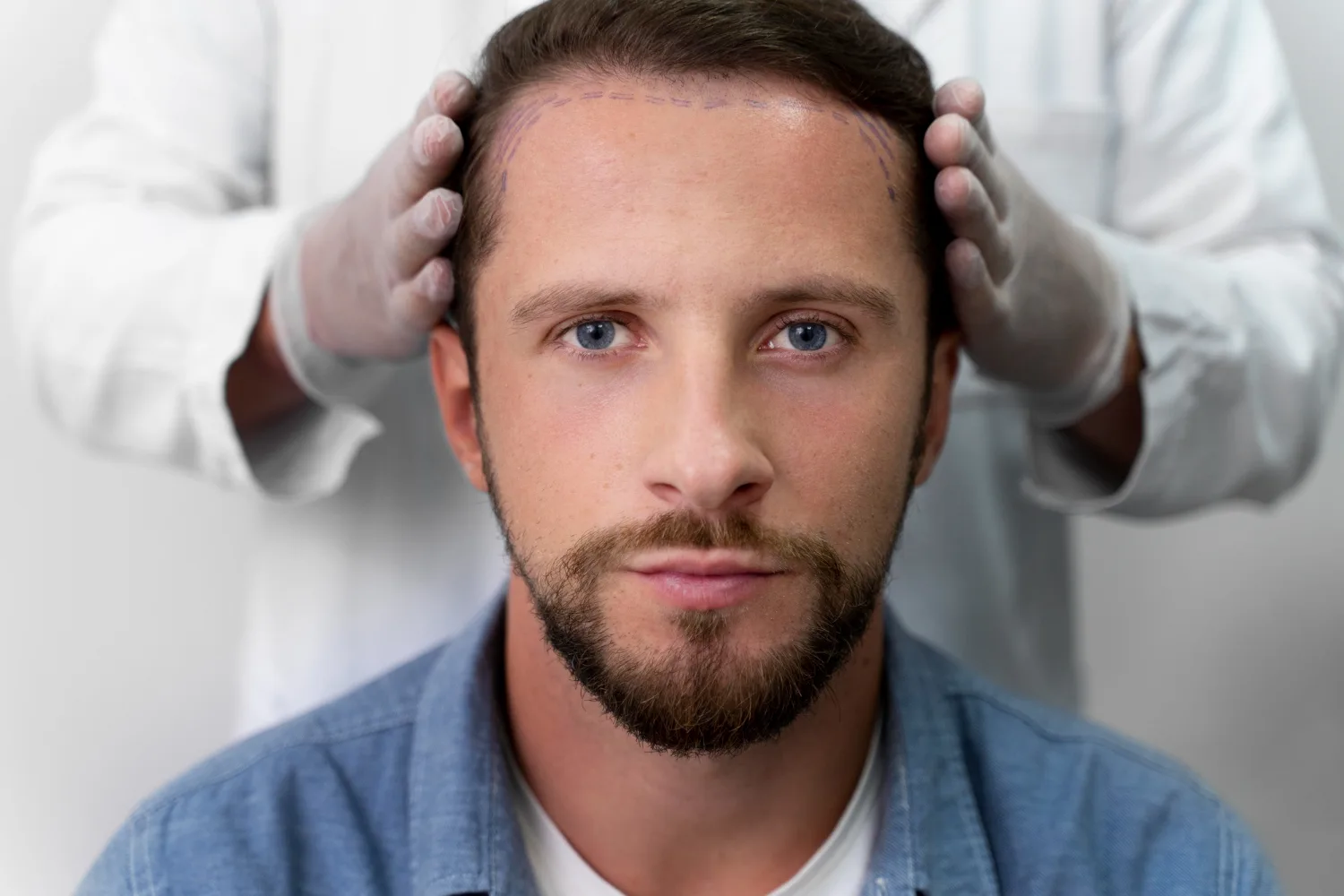
L'âge influe sur l'éligibilité mais ne la détermine pas à lui seul. Les facteurs biologiques importent davantage que l'âge inscrit sur le passeport. Les chirurgiens évaluent chaque tranche d'âge différemment.
Patients de moins de 25 ans
Les jeunes patients veulent souvent une solution immédiate. Cependant, une perte précoce peut encore progresser rapidement et le tableau final reste incertain. Les chirurgiens recommandent généralement d'abord un traitement médical. Les jeunes patients doivent comprendre que des séances supplémentaires pourront être nécessaires. Un dessin de ligne frontale conservateur protège contre un amincissement futur. Les très jeunes patients sont rarement des candidats idéaux, sauf si leur pattern de perte est clairement stable.
Patients entre 25 et 40 ans
Ce groupe représente les candidats les plus fréquents. Les schémas de perte se sont généralement affirmés. Les zones donneuses restent solides. Ces patients ont des objectifs réalistes : paraître de leur âge, pas redevenir adolescents. La FUE manuelle donne d'excellents résultats pour cette catégorie. Ils cicatrisent rapidement et ont le temps de profiter des résultats.
Candidats de plus de 40 ans
Les candidats plus âgés peuvent obtenir d'excellents résultats. Leur perte de cheveux est généralement stable. Ils n'attendent pas une densité adolescente. La qualité de la zone donneuse peut légèrement diminuer avec l'âge. Toutefois, des patients en bonne santé de plus de quarante ans observent souvent des résultats remarquables. L'âge seul ne disqualifie personne. Le chirurgien évalue l'état de santé général et la réserve donneuse.
Âge biologique vs âge chronologique
Certains quadragénaires ont un cuir chevelu semblable à celui d'un trentenaire. D'autres présentent dès à présent une miniaturisation de la zone donneuse. L'âge biologique reflète la santé réelle des tissus. Les chirurgiens examinent le cuir chevelu, pas le passeport. Une bonne alimentation, de l'exercice et l'absence de tabac améliorent l'âge biologique. Ces facteurs comptent plus que l'âge chronologique.
Pourquoi la stabilité de la perte de cheveux est-elle essentielle avant la chirurgie ?
Une perte stable permet aux chirurgiens d'élaborer des plans durables. Une évolution progressive compromet les résultats. Les patients doivent comprendre pourquoi la stabilité est importante.
Risques liés à une perte de cheveux progressive
Si la perte continue après la chirurgie, de nouvelles zones dénudées apparaissent. Les cheveux transplantés restent ; les cheveux natifs tombent. Cela crée un aspect hétérogène et peu naturel. Les patients risquent d'avoir besoin de nouvelles interventions, ce qui épuise la réserve donneuse. Faire cesser la progression avant la chirurgie évite ce problème.
Traitements médicaux avant la chirurgie
Le finastéride et le minoxidil stabilisent la perte de cheveux. Ces traitements bloquent le DHT ou améliorent la circulation locale. Les patients doivent les utiliser pendant six à douze mois avant la chirurgie. Xue et coll. ont constaté que l'association de PRP et d'une thérapie médicale améliorait significativement la survie folliculaire (Xue et al. e16665). Un traitement médical stable constitue une meilleure base chirurgicale.
Planification à long terme de la restauration capillaire
La greffe de cheveux est une stratégie à long terme. Les chirurgiens doivent planifier pour des décennies, pas des mois. Ils doivent réserver des cheveux donneurs pour les besoins futurs. Les patients présentant une perte précoce nécessitent les plans les plus conservateurs. Une chirurgie agressive précoce ne laisse aucune marge pour des retouches ultérieures.
Combiner chirurgie et traitement médical
La chirurgie et les médicaments agissent ensemble. Les cheveux transplantés sont permanents. Les cheveux natifs peuvent continuer à s'affiner. Les médicaments protègent les cheveux natifs. Cette combinaison offre les meilleurs résultats à long terme. Les patient·e·s doivent s'engager à poursuivre un traitement médical après la chirurgie.
Comment les caractéristiques des cheveux influencent-elles les résultats de la FUE manuelle ?
Le type de cheveux influe fortement sur l'aspect visuel. Le chirurgien doit adapter la technique aux caractéristiques capillaires.
Cheveux raides vs bouclés
Les cheveux bouclés offrent une excellente couverture : chaque boucle couvre plus de surface. En revanche, ils sont plus difficiles à extraire, car la courbure se prolonge sous la peau ; le chirurgien doit suivre ce trajet courbé. La FUE manuelle donne le contrôle nécessaire pour les cheveux bouclés. Les cheveux raides s'extraient plus facilement mais apportent moins de couverture par greffon.
Cheveux épais vs fins
Les cheveux épais créent la densité plus rapidement. Les cheveux fins nécessitent plus de greffons pour le même rendu. Les patient·e·s aux cheveux fins doivent avoir des attentes réalistes et pourront nécessiter davantage de séances. Le chirurgien doit aussi utiliser des poinçons plus petits pour les cheveux fins afin d'éviter la tranchation.
Cheveux clairs vs foncés
Les cheveux clairs se fondent mieux avec un cuir chevelu clair. Les cheveux foncés sur un cuir chevelu clair créent un fort contraste. Les patient·e·s présentant un fort contraste nécessitent plus de greffons par zone. Le chirurgien doit planifier la densité en conséquence. La couleur des cheveux influence aussi la visibilité des cicatrices du donneur : les cheveux clairs les dissimulent mieux.
Unités folliculaires mono- et multi-capillaires
Les unités à cheveu unique créent des lignes frontales naturelles. Les unités multi-cheveux apportent de la densité. Une zone donneuse idéale offre un bon mélange des deux. Le chirurgien doit répartir les greffons de façon stratégique. La FUE manuelle permet de sélectionner des types de greffons spécifiques pour chaque zone.
La FUE manuelle convient-elle aux femmes ?
Les femmes peuvent bénéficier de la FUE manuelle, mais les critères de sélection sont plus stricts. La perte de cheveux féminine diffère fondamentalement de la calvitie masculine.
Évaluation de la perte de cheveux féminine
La plupart des femmes présentent un amincissement diffus. Leur zone donneuse peut également s'affiner. Le chirurgien doit évaluer soigneusement la stabilité du donneur. Seules les femmes avec des motifs distincts et des zones donneuses stables sont candidates. L'échelle de Ludwig aide à classer la perte féminine. Les grades 1 et 2 peuvent ne pas nécessiter d'intervention. Le grade 3 avec donneur stable peut en bénéficier.
Restauration de la ligne frontale
Certaines femmes ont un recul des tempes, ressemblant à la calvitie masculine. Ces patientes sont de meilleurs candidats car leur zone donneuse reste stable. La FUE manuelle peut restaurer des contours frontaux féminins ; le chirurgien doit concevoir la ligne de façon conservatrice.
Considérations pour l'amincissement diffus
L'amincissement diffus touche l'ensemble du cuir chevelu. La chirurgie ne crée pas de volume dans les zones clairsemées : elle déplace simplement les cheveux d'un endroit à un autre. Les femmes présentant un amincissement diffus obtiennent généralement de mauvais résultats et ne sont pas de bonnes candidates. La thérapie médicale et le PRP sont plus adaptés dans ces cas.
Différences dans l'évaluation des candidat·e·s
Les femmes nécessitent des étapes d’évaluation supplémentaires. Il faut exclure des causes hormonales. Les troubles thyroïdiens, les carences en fer et les déséquilibres hormonaux peuvent provoquer une perte de cheveux. Ces problèmes doivent être traités en priorité. Mubki et ses collègues soulignent qu’un interrogatoire et un examen approfondis évitent les diagnostics manqués (Mubki et al. 415.e5). Les femmes présentent également un risque plus élevé de perte par shock loss. Les chirurgiens doivent les informer avec soin.
Les patientes ayant déjà subi une greffe capillaire peuvent-elles bénéficier d’une FUE manuelle ?
Oui, de nombreuses patientes ayant déjà eu une greffe peuvent bénéficier d’une FUE manuelle. Cela inclut les cas de réparation et les compléments de densité.
Greffes capillaires correctives
Les anciennes greffes en « plugs » donnaient un aspect artificiel. La FUE manuelle permet d’adoucir ce rendu. Le chirurgien ajoute des greffons entre les anciens plugs pour casser l’aspect poupée. Les cas de réparation exigent une compétence exceptionnelle. Le contrôle manuel aide le chirurgien à travailler autour des greffons existants.
Réparer des lignes frontales artificielles
Certaines patientes ont une ligne frontale placée trop basse ou trop droite. La FUE manuelle permet d’ajouter des greffons pour créer de l’irrégularité. Le chirurgien peut aussi retirer des greffons mal positionnés. Redessiner une ligne frontale demande une vision artistique. L’extraction manuelle favorise cette précision.
Améliorer la densité
Les greffes antérieures peuvent manquer de densité. Les patientes souhaitent parfois un résultat plus fourni. La FUE manuelle ajoute des greffons entre les greffons existants. Le chirurgien doit éviter d’endommager les cheveux natifs ou transplantés. Cela nécessite un espacement et un contrôle de l’angle très précis.
Gestion de la zone donneuse dans les cas de révision
Une chirurgie antérieure peut avoir appauvri la zone donneuse. Le chirurgien doit évaluer la réserve restante. Les poils du corps peuvent compléter les donneurs du cuir chevelu. Les poils de barbe offrent d’excellents taux de survie. Gupta et ses collègues ont confirmé que la barbe atteint 95% de survie à un an (Gupta et al. 160). La FUE manuelle permet au chirurgien de prélever en toute sécurité dans des zones difficiles.
Pourquoi de nombreux patients internationaux choisissent-ils la Turquie pour une greffe capillaire FUE manuelle ?
La Turquie est devenue un centre mondial de restauration capillaire. Des patients internationaux se déplacent depuis l’Europe, le Moyen-Orient et au-delà. Plusieurs facteurs expliquent cette tendance.
Chirurgiens de restauration capillaire très expérimentés
Les chirurgiens turcs réalisent des milliers d’interventions chaque année. Ce volume développe l’expertise. Beaucoup se spécialisent exclusivement dans la restauration capillaire. Ils maîtrisent les techniques manuelles et motorisées. Un fort volume de cas se traduit par des compétences affinées.
Volumes cliniques importants
Un grand nombre de cas crée de l’efficacité. Les équipes chirurgicales travaillent en parfaite coordination. Elles prennent en charge de vastes séances de greffons quotidiennement. Cette expérience réduit les erreurs et améliore le confort et le parcours patient.
Installations chirurgicales avancées
Les meilleures cliniques investissent dans du matériel moderne. Elles utilisent des microscopes haute résolution. Elles maintiennent des blocs opératoires stériles. L’imagerie numérique aide à planifier les lignes frontales. Ces outils contribuent à d’excellents résultats.
Services complets de tourisme médical
Les cliniques proposent des forfaits pour patients internationaux. Ils incluent les transferts aéroport, l’hébergement à l’hôtel et des services de traduction. Les patients bénéficient d’un accompagnement complet. Cette prise en charge réduit le stress et facilite le déroulement pour les visiteurs étrangers.
Rentable sans compromis sur la qualité
La Turquie propose des tarifs compétitifs. Le coût de la vie y est inférieur à celui d’Europe occidentale ou d’Amérique du Nord. Les patients bénéficient de soins de classe mondiale à des prix réduits. Toutefois, le prix ne doit jamais être le seul critère : la qualité et la sécurité priment.
L'importance de choisir une clinique qualifiée plutôt que de se fier uniquement au prix
Les cliniques à bas prix peuvent négliger des étapes. Elles peuvent employer du personnel peu expérimenté et prélever excessivement les zones donneuses. Il est essentiel de vérifier les qualifications du chirurgien. La certification du conseil médical et l’adhésion à l’ISHRS témoignent de professionnalisme. L’option la moins chère coûte souvent plus cher à long terme.
Que se passe-t-il lors d'une évaluation de candidature pour une FUE manuelle ?
La consultation permet de déterminer si vous êtes éligible et sert à élaborer votre plan opératoire. Attendez-vous à une évaluation complète.
Revue de l'historique médical
Le chirurgien vous interroge sur votre état de santé. Il passe en revue vos médicaments et allergies, et s’informe des antécédents familiaux de perte de cheveux. Cet historique met en évidence les risques d’évolution et révèle également des conditions susceptibles d’affecter la cicatrisation.
Analyse du motif de perte de cheveux
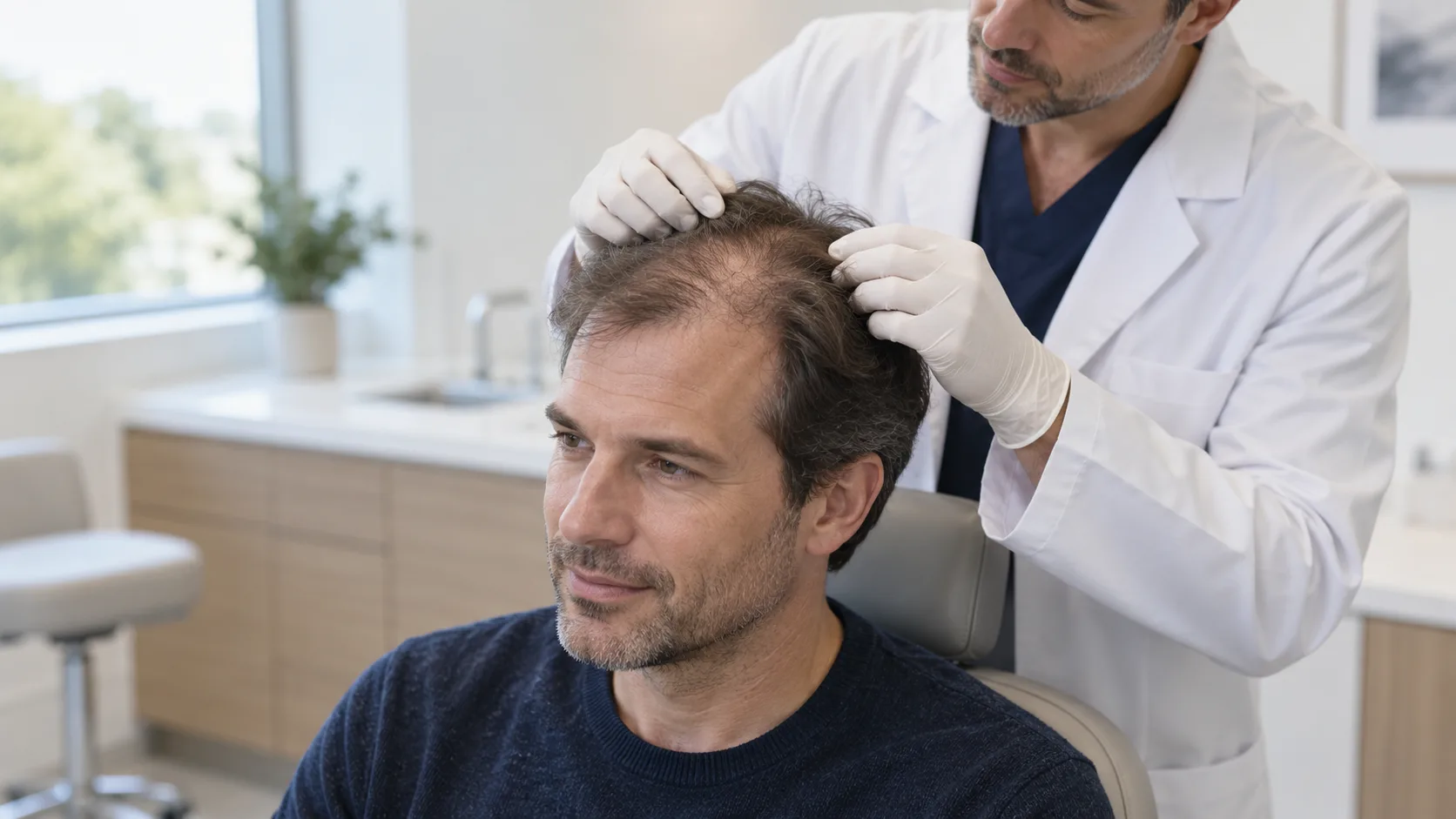
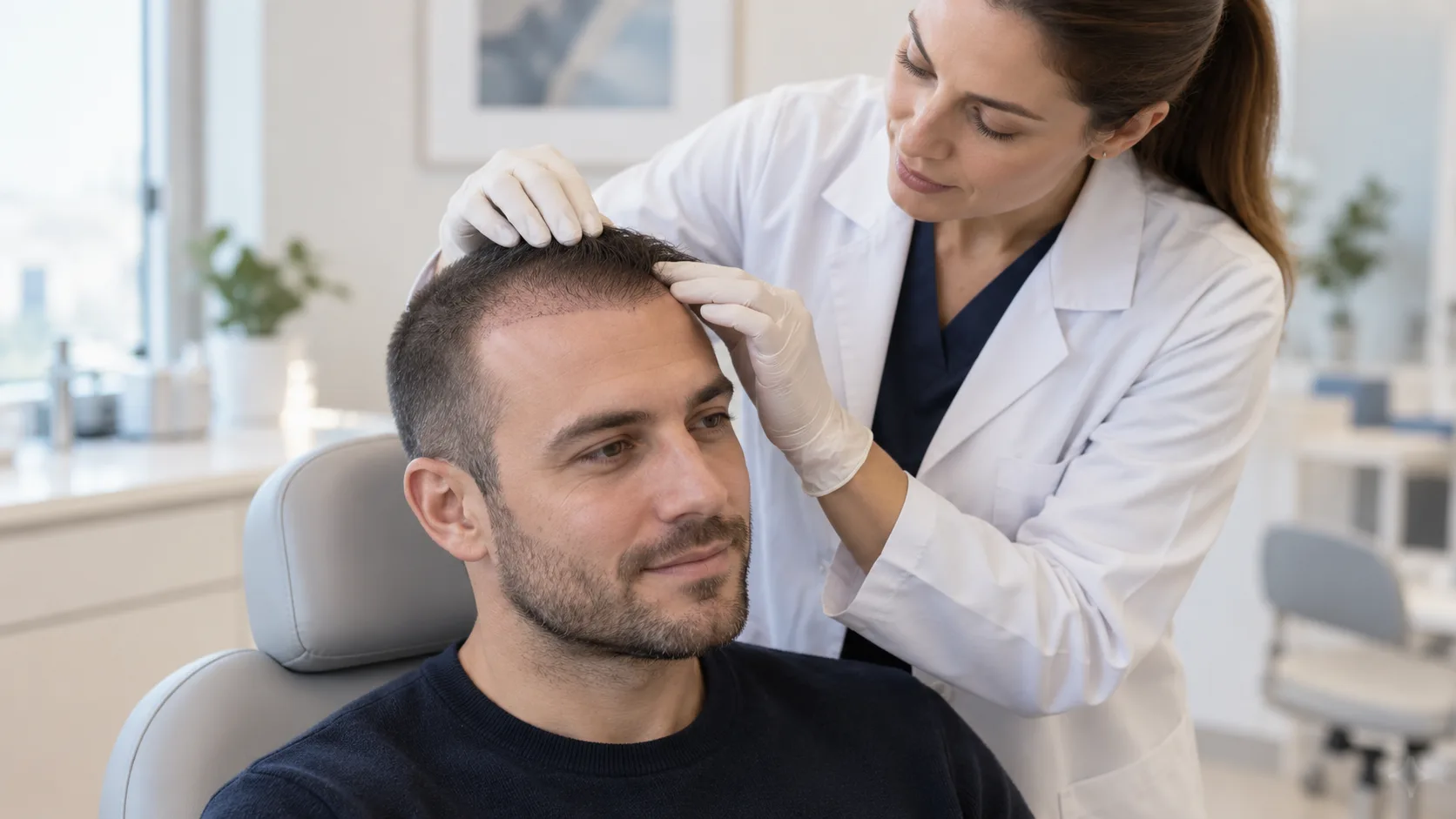
Le chirurgien examine votre cuir chevelu. Il classe votre type de perte de cheveux selon l'échelle de Norwood ou de Ludwig. Il recherche des signes de chute active et vérifie des schémas inhabituels pouvant évoquer d'autres pathologies. Rogers note que certaines affections peuvent imiter une alopécie androgénétique (Rogers 327).
Examen numérique du cuir chevelu
Les microscopes numériques révèlent des détails invisibles à l'œil nu. Le chirurgien vérifie la densité des unités folliculaires. Il recherche toute miniaturisation. Il mesure le diamètre des tiges capillaires. Ces données orientent la planification des greffons.
Évaluation de la zone donneuse
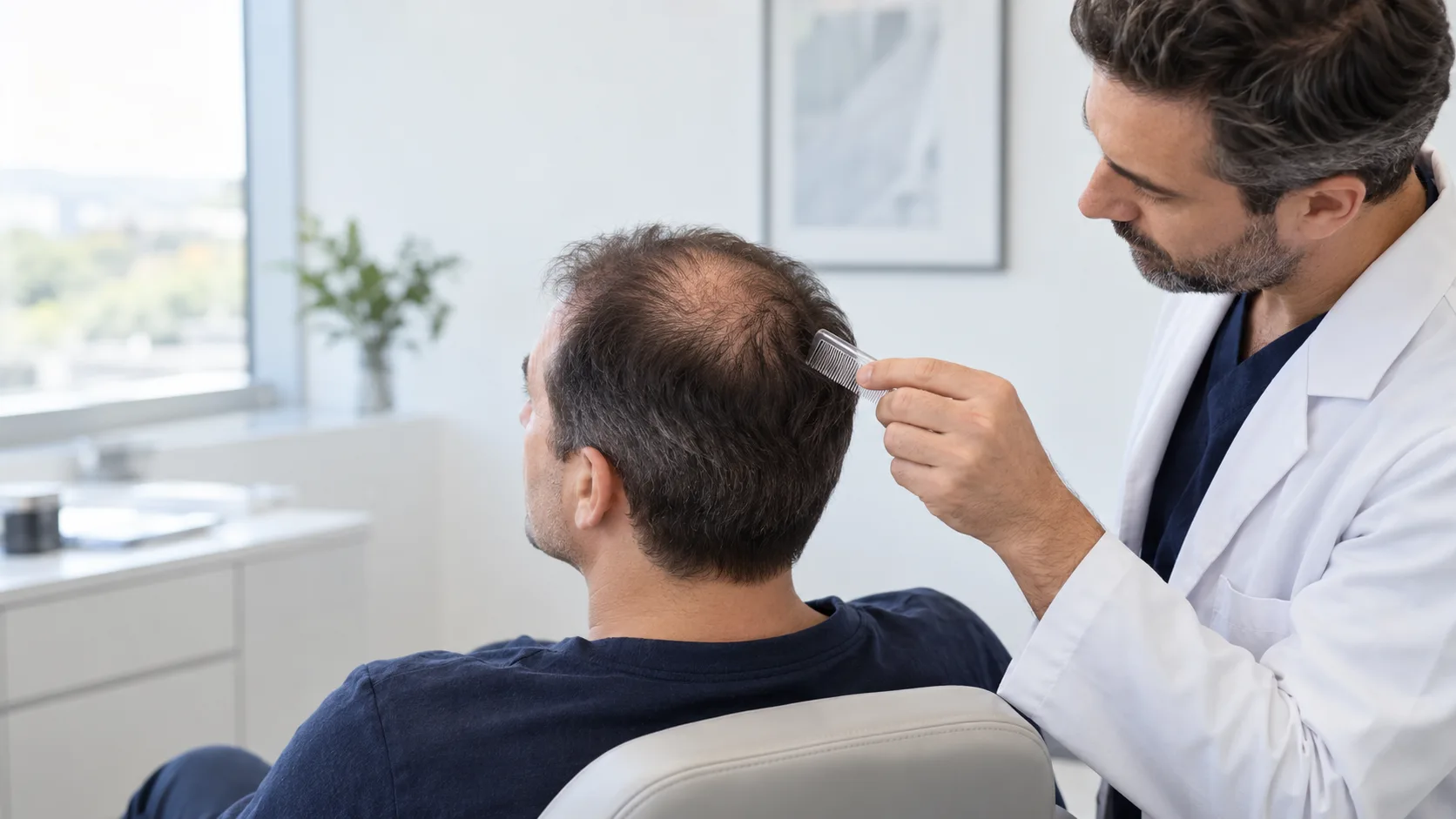
Le chirurgien évalue votre zone donneuse. Il mesure la densité à plusieurs endroits, recherche des cicatrices ou des signes d’inflammation et évalue l’élasticité du cuir chevelu. Une bonne élasticité facilite l’extraction. Il vérifie également la présence de signes d’alopécie rétrograde.
Conception de la ligne frontale
Le chirurgien dessine une ligne de cheveux proposée. Il prend en compte vos proportions faciales et l’évolution possible de la perte de cheveux. Il vous présente le tracé dans un miroir pour recueillir vos impressions. Vous donnez votre avis et le dessin final ne sera validé qu’avec votre approbation.
Estimation du nombre de greffons nécessaire
Le nombre de greffons dépend de la taille de la zone chauve et de la densité du donneur. Le chirurgien calcule le nombre de greffons dont vous avez besoin et combien vous pouvez donner en toute sécurité. Ces chiffres doivent être cohérents — des promesses excessives mènent à la déception.
Plan de traitement personnalisé
Le chirurgien élabore votre plan personnalisé. Il choisit les zones d’extraction, répartit les greffons, fixe la date de l’intervention et prescrit les médicaments préopératoires. Ce plan garantit qu’aucun détail n’est laissé au hasard.
Quels sont les avantages de la FUE manuelle pour les candidats appropriés ?
La FUE manuelle présente des atouts spécifiques pour le bon patient. Ces bénéfices expliquent pourquoi de nombreux chirurgiens de haut niveau privilégient cette technique.
Précision chirurgicale accrue
Le chirurgien contrôle chacun de ses gestes. Aucun moteur ne dicte la vitesse ou le couple. Cette maîtrise réduit les dommages aux greffons et permet l’extraction dans des zones difficiles : le praticien sent le moment où le greffon se libère.
Meilleure préservation des follicules
L’extraction manuelle minimise les traumatismes mécaniques. Les tissus environnants restent intacts, préservant les structures de soutien du follicule. Une meilleure conservation se traduit par des taux de survie supérieurs.
Traumatisme mécanique réduit
Les appareils motorisés génèrent chaleur et vibration, facteurs de stress pour les follicules. La rotation manuelle élimine ces contraintes : le greffon subit moins de traumatisme entre l’extraction et l’implantation.
Conception naturelle de la ligne frontale
La FUE manuelle permet au chirurgien de choisir des greffons spécifiques pour la ligne frontale. Les unités mono-folliculaires créent des bordures en dégradé. Le praticien maîtrise précisément l’angle et la profondeur — un travail d’orfèvre pour un résultat indétectable.
Optimisation de la conservation de la zone donneuse
Le chirurgien espace les extractions de façon homogène et évite la surexploitation. Il peut ajuster la densité en temps réel. Cette préservation protège votre zone donneuse pour l’avenir.
Potentiel élevé de survie des greffons avec des chirurgiens expérimentés
Les études montrent de manière constante des taux de survie élevés pour la FUE. Gupta et coll. ont rapporté 89 % de survie à un an pour les cheveux du cuir chevelu dans leur étude comparative (Gupta et al. 160). Les chirurgiens manuels expérimentés atteignent souvent les valeurs supérieures de cette fourchette : leur savoir-faire protège directement la viabilité des greffons.
Comment les patients doivent-ils se préparer avant une FUE manuelle ?
Une préparation adaptée améliore les résultats. Les patients doivent respecter des consignes précises avant l’intervention.
Bilan médical
Votre chirurgien peut demander des analyses sanguines pour rechercher une anémie, des troubles de la coagulation ou des infections. Elles permettent aussi de contrôler la glycémie et la tension artérielle. Vous devez déclarer tous vos médicaments.
Revue des médicaments
Les anticoagulants augmentent le risque de saignement. Vous devez les arrêter sous supervision médicale. Certains compléments alimentaires ont aussi un effet anticoagulant. Votre chirurgien vous fournira une liste des substances à éviter, notamment l'aspirine, l'ibuprofène et l'huile de poisson.
Conseils sur le tabac et l'alcool
Le tabagisme réduit le flux sanguin vers le cuir chevelu et compromet la cicatrisation. Vous devez arrêter de fumer au moins deux semaines avant l'intervention. L'alcool fluidifie également le sang : évitez d'en consommer la semaine précédant votre procédure.
Optimisation nutritionnelle
Une bonne nutrition favorise la cicatrisation. Privilégiez les aliments riches en protéines et restez bien hydraté. Pensez aux vitamines bénéfiques pour la santé des cheveux ; votre chirurgien pourra recommander des compléments spécifiques. Évitez les régimes drastiques avant l'intervention.
Instructions pour le lavage des cheveux
Lavez soigneusement vos cheveux la veille au soir ou le matin de l'intervention. Évitez les produits coiffants. Des cheveux propres réduisent le risque d'infection. Votre chirurgien peut vous fournir un shampooing spécial.
Planification du voyage pour les patients internationaux
Les patients internationaux doivent arriver un à deux jours avant l'intervention pour la consultation finale. Prévoyez de rester trois à cinq jours après la chirurgie pour les contrôles nécessaires avant le retour. Évitez les activités physiques intenses pendant le voyage.
Quels résultats les candidats idéaux au FUE manuel peuvent-ils attendre ?
Les résultats se développent progressivement : la patience est essentielle. Comprendre le calendrier d'évolution évite l'anxiété.
Chronologie de la cicatrisation
Le cuir chevelu cicatrise en plusieurs phases. La zone donneuse forme de petites croûtes qui tombent sous sept à dix jours. Les rougeurs s'estompent en deux à quatre semaines. La plupart des patients reprennent le travail au bout d'une semaine.
Phase de chute temporaire
Les cheveux transplantés tombent entre deux et quatre semaines, ce qui surprend beaucoup de patients. Cette chute est normale : le follicule reste vivant sous la peau et une nouvelle pousse apparaîtra. Ne paniquez pas en cas de chute.
Étapes de la repousse
La repousse commence autour du troisième mois. Vous verrez d'abord des cheveux fins et clairsemés. La densité augmente entre le quatrième et le sixième mois. Vers le neuvième mois, la couverture devient significative. Les cheveux s'épaississent et s'assombrissent avec le temps.
Résultats définitifs après 12–18 mois
Obtenir le résultat final demande de la patience. La plupart des patients constatent la densité définitive entre douze et dix-huit mois. Les cheveux mûrissent et se fondent avec la chevelure native. Vous pouvez les couper, coiffer et traiter normalement. Les cheveux transplantés sont permanents.
Stratégies d'entretien à long terme
La chirurgie n'arrête pas la chute des cheveux natifs. Vous devez poursuivre un traitement médical. Le finastéride, le minoxidil ou le PRP protègent les cheveux restants. Des contrôles réguliers permettent de suivre l’évolution. De bonnes habitudes de vie soutiennent également la santé capillaire.
Quels risques les candidats doivent-ils connaître avant une FUE manuelle ?
Toute intervention chirurgicale comporte des risques. La FUE manuelle est sûre, mais des complications peuvent survenir. Les patients informés y font face plus facilement.
Gonflement temporaire
Le gonflement concerne le front et les yeux. Il est maximal deux à trois jours après l’intervention et régresse en une semaine. Dormir la tête surélevée réduit le gonflement. Les compresses froides sont également utiles.
Rougeur et croûtes
La zone receveuse devient rosée. De petites croûtes se forment autour des greffons. Ces signes sont normaux et s’estompent en deux semaines. Ne pas arracher les croûtes : cela peut déplacer les greffons.
Perte par choc
La perte par choc désigne la chute de cheveux natifs après l’intervention, causée par le stress chirurgical. Elle est généralement temporaire : les cheveux repoussent en quelques mois. Rarement, la perte devient permanente dans les zones très miniaturisées.
Risques de sous- ou de sur-prélèvement
Un sous-prélèvement laisse des zones clairsemées insuffisamment comblées. Un sur-prélèvement peut endommager la zone donneuse. Ces problèmes résultent d’une mauvaise planification. Des chirurgiens expérimentés les évitent par des mesures précises.
Importance de l’expérience du chirurgien
La compétence du chirurgien influence le taux de complications. Avram et Watkins notent que les effets secondaires de la FUE sont liés à la technique et à l’expérience (Avram and Watkins 177). Choisissez un chirurgien ayant une grande expérience de la FUE manuelle. Renseignez-vous sur leurs taux de transection.
Gestion des attentes du patient
Comprendre les risques évite les déceptions. Aucune intervention n’est parfaite. De légères asymétries peuvent apparaître. La densité peut varier légèrement. Les chirurgiens honnêtes abordent ces possibilités dès le départ.
Comment choisir la bonne clinique pour une FUE manuelle en Turquie ?
Choisir la bonne clinique demande de la recherche. Ne précipitez pas cette décision.
Qualifications et expérience du chirurgien
Vérifiez la formation du chirurgien. Privilégiez une certification en dermatologie ou chirurgie plastique. L’adhésion à l’ISHRS témoigne d’un engagement en restauration capillaire. Demandez combien de FUE manuelles il a réalisées.
Transparence sur l’identité des intervenants
Certain cliniques confient l’extraction à des techniciens. Le chirurgien se contente parfois de dessiner la ligne capillaire. Si vous souhaitez que ce soit le chirurgien qui réalise les extractions, demandez qui tient le punch. Ce détail est crucial.
Preuves cliniques avant-après
Demandez des photos de vrais patients. Recherchez des résultats cohérents sur plusieurs cas. Portez une attention particulière au dessin de la ligne capillaire. Des résultats naturels varient d’un patient à l’autre ; des lignes capillaires identiques suggèrent un travail standardisé.
Environnement opératoire stérile
La clinique doit garantir une stérilité rigoureuse. Renseignez-vous sur leurs protocoles de stérilisation. La salle d’opération doit répondre aux normes médicales. Une infection peut compromettre les résultats.
Accréditation internationale
Privilégiez les cliniques disposant de certifications internationales. L’accréditation JCI témoigne d’exigences élevées. Les certifications ISO sont également importantes. Ces attestations montrent un engagement envers la qualité.
Avis patients et témoignages indépendants
Lisez les avis sur des plateformes indépendantes. Méfiez‑vous des faux témoignages. Recherchez des retours détaillés. Contactez d’anciens patients si possible. Les expériences réelles en disent plus que le marketing.
Questions à poser lors de la consultation
Demandez les taux de transection. Renseignez‑vous sur le pourcentage de survie des greffons. Demandez qui réalise l’extraction. Informez‑vous sur les protocoles d’urgence et le suivi post‑opératoire. Une clinique réputée accueille volontiers ces questions.
Questions fréquentes sur les meilleurs candidats à la FUE manuelle en Turquie
Qui est considéré comme le candidat idéal pour la FUE manuelle ?
Le candidat idéal présente une alopécie androgénétique stable, une bonne densité donneuse et des attentes réalistes. Il ou elle est en bonne santé générale et recherche un résultat naturel.
La FUE manuelle est‑elle meilleure que la FUE motorisée ?
Aucune n’est universellement supérieure. La FUE manuelle offre un meilleur contrôle tactile, tandis que la FUE motorisée permet des extractions plus rapides. Le choix dépend de votre type de cheveux et de l’expertise du chirurgien.
Les femmes peuvent‑elles bénéficier de la FUE manuelle ?
Oui, mais seules certaines femmes sont candidates. Celles qui ont une zone donneuse stable et des motifs d’amincissement bien définis tirent le plus grand bénéfice. Les femmes présentant un amincissement diffus sont généralement exclues.
Quel âge est préférable pour la FUE manuelle ?
Les patients âgés de 25 à 40 ans sont les plus fréquemment traités par FUE manuelle. Toutefois, des candidats stables de plus de 40 ans et des patients plus jeunes soigneusement sélectionnés peuvent également obtenir de bons résultats.
Combien de greffons peut-on prélever avec la FUE manuelle ?
Les chirurgiens prélèvent généralement entre 1 500 et 3 000 greffons lors d’une séance. Certaines équipes expérimentées atteignent 4 000. Le nombre dépend de la densité de la zone donneuse et des objectifs du patient.
La FUE manuelle convient-elle aux calvities avancées ?
Oui, mais avec des limites. Une calvitie avancée nécessite davantage de greffons. Les patients peuvent nécessiter plusieurs séances. Les poils corporels peuvent compléter les donneurs du cuir chevelu.
Les patients ayant déjà subi une greffe peuvent-ils bénéficier de la FUE manuelle ?
Oui. La FUE manuelle est efficace pour les corrections et l’augmentation de densité. Le chirurgien doit gérer la zone donneuse restante avec précaution.
Comment la qualité de la zone donneuse est-elle évaluée ?
Les chirurgiens évaluent la densité, le calibre du cheveu, le motif des boucles et la miniaturisation. Ils utilisent des microscopes numériques pour des mesures précises.
La FUE manuelle laisse-t-elle des cicatrices visibles ?
La FUE manuelle laisse de minuscules cicatrices en points de moins d’un millimètre de large. Celles-ci sont généralement invisibles sauf en cas de rasage complet de la tête. Un espacement approprié évite un aspect « pelé ».
Combien de temps durent les résultats de la FUE manuelle ?
Les cheveux transplantés sont permanents. Ils proviennent de la zone donneuse résistante au DHT. Toutefois, les cheveux natifs peuvent continuer à s’affiner. Un traitement médical aide à maintenir les résultats à long terme.
Références
Avram, Marc R., et Nicole Watkins. "Side-Effects from Follicular Unit Extraction in Hair Transplantation."Journal of Cutaneous and Aesthetic Surgery, vol. 7, no. 3, 2014, pp. 177-179.
Bater, Karen L., et al. "Perception of Hair Transplant for Androgenetic Alopecia."JAMA Facial Plastic Surgery, vol. 18, no. 6, 2016, pp. 369-375.
Bernstein, Robert M., et William R. Rassman. "Follicular Transplantation: Patient Evaluation and Surgical Planning." Chirurgie dermatologique, vol. 23, no. 9, 1997, pp. 771-784.
Chiang, Yu-Zung, et al. « Lichen planopilaire après une greffe de cheveux et une chirurgie de lifting facial. » British Journal of Dermatology, vol. 166, no. 3, 2012, pp. 666-670.
Chouhan, Kavish, et al. « Approche de la transplantation capillaire dans la calvitie de stade avancé par extraction d'unités folliculaires. » Journal of Cutaneous and Aesthetic Surgery, vol. 12, no. 4, 2019, pp. 196-201.
Dua, Aman, et Kapil Dua. « Extraction d'unités folliculaires pour transplantation capillaire. » Journal of Cutaneous and Aesthetic Surgery, vol. 3, no. 2, 2010, pp. 76-81.
Gupta, Jyoti, et al. « Étude comparative du taux d'effluvium anagène et des taux de survie des cheveux du cuir chevelu, de la barbe et du thorax dans les procédures de restauration capillaire du cuir chevelu. » Journal of Cutaneous and Aesthetic Surgery, vol. 12, no. 3, 2019, pp. 158-163.
Mubki, Thamer, et al. « Évaluation et diagnostic du patient présentant une perte de cheveux : partie I. Anamnèse et examen clinique. » Journal of the American Academy of Dermatology, vol. 71, no. 3, 2014, pp. 415.e1-415.e15.
Mysore, Venkataram, et al. « Évaluation de la zone donneuse sûre du cuir chevelu et de la barbe pour l'extraction d'unités folliculaires chez l'homme indien. » Journal of Cutaneous and Aesthetic Surgery, vol. 12, no. 2, 2019, pp. 106-112.
Rogers, Nicole. « Imposteurs de l'alopécie androgénétique : éléments clés pour le diagnostic du chirurgien en restauration capillaire. »Facial Plastic Surgery Clinics of North America , vol. 21, no. 3, 2013, pp. 325-334.
True, Robert H. « Tout patient souffrant de perte de cheveux est-il candidat à la greffe capillaire ? — Déterminer la candidaturе chirurgicale dans la calvitie de type masculin/féminin. »Indian Journal of Plastic Surgery , vol. 54, no. 4, 2021, pp. 435-440.
Xue, Ping, et al. « Étude prospective et comparative explorant les effets du PRP dans la greffe capillaire chez des patients atteints d'alopécie androgénétique. »Journal of Cosmetic Dermatology , vol. 24, no. 2, 2025, pp. e16665.