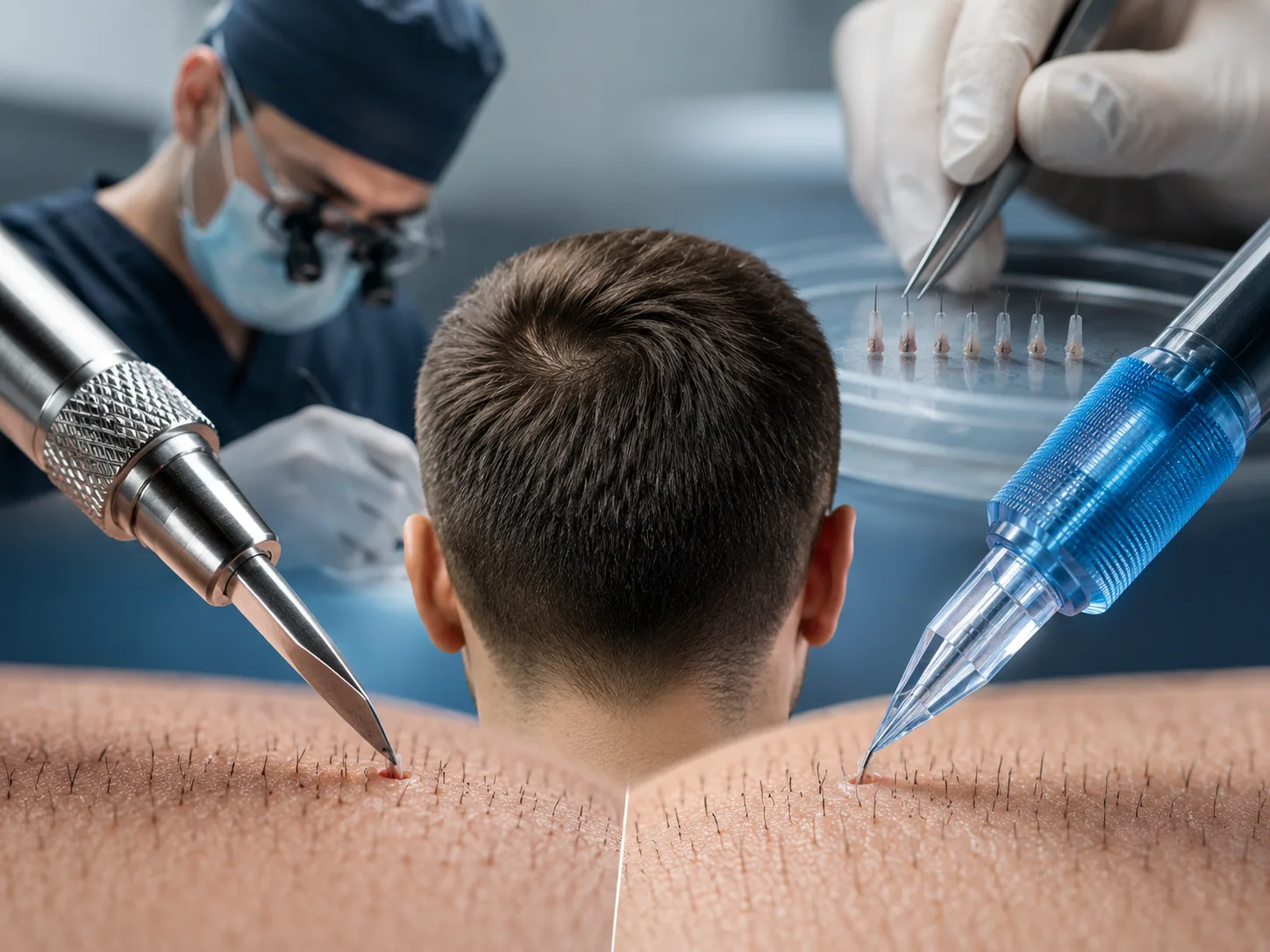
Les lames en acier et en saphir créent des incisions fonctionnelles pour chirurgie de greffe de cheveuxLes lames en saphir offrent des bords plus tranchants et une plus grande dureté. Les lames en acier assurent une fiabilité prouvée et un coût inférieur. La compétence du chirurgien est plus importante que le matériau de la lame à elle seule.
La chirurgie de greffe de cheveux dépend d'une création précise des sites de réception. Chaque incision détermine où se situent les greffons, comment ils poussent et à quel point le résultat final est naturel. Deux types de lames dominent le modern.FUE pratique : lames en acier inoxydable traditionnelles et lames en saphir plus récentes. Les patients demandent souvent quelle lame crée de meilleures incisions. Cet article examine les deux technologies à travers un prisme scientifique. Nous explorons les propriétés des matériaux, la mécanique des incisions, les preuves cliniques et les résultats concrets. Nous expliquons également pourquoi l'expertise chirurgicale demeure le facteur le plus important dans chaque procédure de greffe de cheveux.
Qu'est-ce que la création de zones réceptrices et pourquoi est-ce important ?
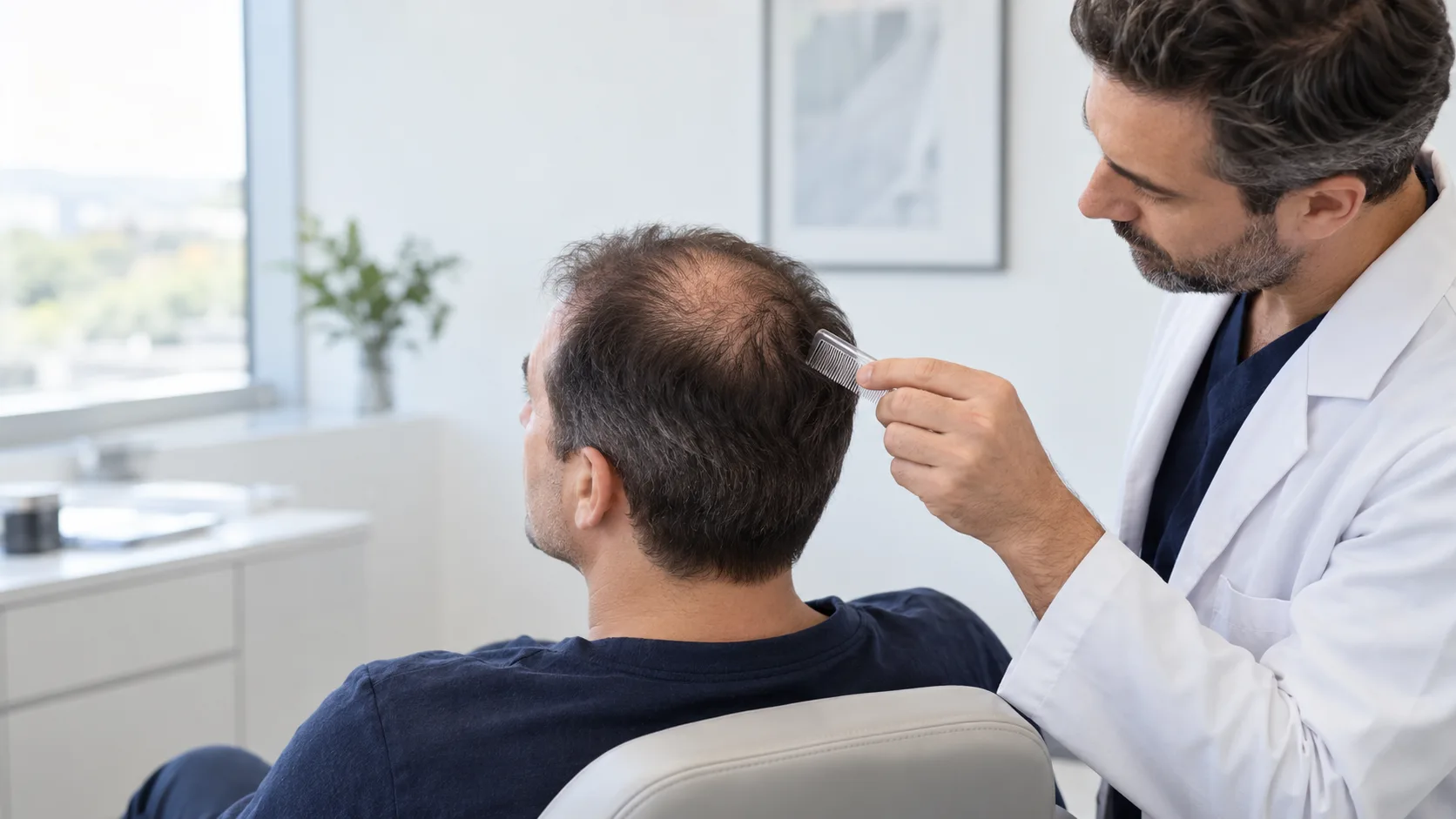
La création du site receveur signifie réaliser de petites incisions dans le cuir chevelu où les chirurgiens placent les greffons capillaires. Ces incisions permettent de contrôler la direction, l'angle, la densité et l'apparence finale des cheveux. Des incisions mal réalisées peuvent endommager les greffons et produire des résultats non naturels.
Qu'est-ce que les sites receveurs ?
Les sites de réception sont de petites ouvertures dans la zone de calvitie du cuir chevelu. Les chirurgiens créent ces sites après avoir extrait des greffons de la zone donneuse. Chaque site reçoit un greffon. La taille, la profondeur, l'angle et la direction de chaque incision déterminent la manière dont les cheveux transplantés poussent.
Les sites receveurs remplissent trois fonctions essentielles. Tout d'abord, ils fournissent un chemin pour l'insertion du greft. Ensuite, ils établissent l'angle et la direction de la future pousse des cheveux. Enfin, ils déterminent la densité et l'espacement du résultat final. Une incision bien placée permet au greft de se fixer en toute sécurité sans traumatisme excessif. Une incision mal placée endommage les tissus environnants, réduit le flux sanguin et compromet la survie du greft.
La relation entre la qualité des incisions et les résultats chirurgicaux est directe. Des incisions précises préservent les vaisseaux sanguins, minimisent le traumatisme des tissus et créent des canaux stables pour le placement des greffons. Des incisions imprécises écrasent les tissus, augmentent le saignement et produisent des cicatrices visibles. Chaque chirurgien comprend que la création du site receveur représente l'une des phases les plus techniquement exigeantes de la chirurgie de transplantation capillaire.
Pourquoi la qualité de l'incision affecte-t-elle directement les résultats chirurgicaux ?
La qualité de l'incision influence les résultats chirurgicaux de cinq manières spécifiques.
Direction des cheveux : Chaque incision détermine la direction dans laquelle les cheveux transplantés vont pousser. Les cheveux naturels suivent des motifs prévisibles. Les incisions qui correspondent à ces motifs produisent des résultats indétectables. Les incisions qui ignorent ces motifs créent une croissance évidente et non naturelle.
Angle des cheveux : L'angle de chaque incision détermine si les cheveux sont plats ou dressés. Les cheveux au niveau de la ligne frontale émergent généralement à des angles aigus. Les cheveux de la couronne émergent à différents angles. Les chirurgiens doivent varier les angles d'incision dans la zone receveuse pour imiter les motifs naturels des cheveux.
Planification de la densité : L'espacement des incisions contrôle la densité. Un espacement serré crée un aspect plus plein. Une tension excessive endommage l'apport sanguin et tue les greffons. Les chirurgiens doivent équilibrer les objectifs de densité avec les limites biologiques.
Préservation de l'apport sanguin : Le cuir chevelu contient un riche réseau de vaisseaux sanguins. Les incisions sectionnent certains vaisseaux. Une coupure excessive provoque des saignements, réduit l'apport en oxygène et menace la survie des greffons. Des incisions précises minimisent les dommages vasculaires.
Apparence cosmétique : L'apparence finale dépend entièrement de la planification des incisions. Des résultats naturels nécessitent des centaines ou des milliers d'incisions parfaitement angulées, dirigées et espacées. Même des erreurs mineures deviennent visibles lorsque les cheveux poussent.
Une lame en acier est un instrument en acier inoxydable de qualité médicale. Les chirurgiens utilisent des lames en acier dans la chirurgie de transplantation capillaire depuis des décennies. Les lames en acier coupent de manière fiable, coûtent moins cher et offrent des performances éprouvées. Elles peuvent s'émousser plus rapidement que les lames en saphir.
Quelle est la composition matérielle des lames en acier ?
Les lames en acier utilisent de l'acier inoxydable de qualité médicale. Les fabricants utilisent généralement de l'acier inoxydable de la série 300 ou 400. Ces alliages contiennent du fer, du chrome, du nickel et du carbone. Le chrome offre une résistance à la corrosion. Le carbone ajoute de la dureté. Le nickel améliore la ductilité.
Le processus de fabrication implique le forgeage, le meulage, le traitement thermique et le polissage. Le forgeage façonne le métal brut. Le meulage crée le tranchant. Le traitement thermique durcit l'acier. Le polissage produit une surface lisse qui réduit l'adhésion des tissus.
Les lames en acier servent dans d'innombrables applications chirurgicales au-delà de la transplantation capillaire. Les chirurgiens utilisent des scalpels en acier en chirurgie générale, en orthopédie et en dermatologie. Ce matériau a un historique de sécurité et d'efficacité de plusieurs décennies.
Les lames en acier créent des incisions par découpage mécanique. Le tranchant sépare les fibres tissulaires à mesure que la lame avance. L'épaisseur de la lame détermine la largeur de l'incision. Les lames plus fines créent des incisions plus étroites. Les lames plus épaisses créent des incisions plus larges.
Dans la chirurgie de transplantation capillaire, les lames en acier varient généralement entre 0,8 mm et 1,2 mm de largeur. Le chirurgien maintient la lame à un angle spécifique et l'enfonce dans le cuir chevelu. Le tranchant coupe à travers l'épiderme et le derme. La lame se retire alors, laissant un canal pour l'insertion des greffons.
La séparation des tissus se produit par une combinaison de découpage et de léger déplacement. La lame pousse certains tissus sur le côté à mesure qu'elle avance. Ce déplacement crée une petite quantité de traumatisme latéral. Une utilisation répétée provoque l'émoussement du tranchant. Une lame émoussée nécessite plus de force, augmente le traumatisme des tissus et produit des incisions moins cohérentes.
Quels sont les avantages des lames en acier ?
Les lames en acier offrent quatre avantages clairs.
Historique chirurgical éprouvé : Les chirurgiens utilisent des lames en acier dans la chirurgie de transplantation capillaire depuis les premiers jours de la FUE. Des décennies d'utilisation clinique ont établi leur sécurité et leur fiabilité.
Large disponibilité : Les lames en acier sont faciles à se procurer. Pratiquement toutes les entreprises de fournitures chirurgicales les ont en stock. Les cliniques n'ont jamais à faire face à des pénuries.
Rentabilité : Les lames en acier coûtent sensiblement moins cher que les lames en saphir. Ce coût inférieur les rend accessibles aux cliniques du monde entier. Les patients dans des marchés soucieux de leur budget bénéficient de cette accessibilité.
Performance de coupe fiable : Une nouvelle lame en acier coupe de manière nette et prévisible. Les chirurgiens expérimentés obtiennent d'excellents résultats avec des lames en acier chaque jour.
Quelles sont les limitations des lames en acier ?
Les lames en acier ont trois limitations notables.
Affûtage plus rapide : Les bords en acier perdent leur tranchant avec une utilisation répétée. Un chirurgien réalisant des milliers d'incisions peut constater une baisse de performance. De nombreux chirurgiens changent de lame en cours d'intervention pour maintenir la cohérence.
Déplacement tissulaire légèrement plus large : Les lames en acier provoquent un mouvement latéral légèrement plus important des tissus que les lames en saphir. Ce déplacement peut augmenter le micro-traumatisme autour de l'incision.
Plus de friction lors d'une utilisation répétée : Au fur et à mesure que le bord s'émousse, la friction augmente. Une friction plus élevée génère plus de chaleur et de stress mécanique sur les tissus.
Une lame en saphir utilise du cristal de saphir synthétique. Ce matériau est extrêmement dur et tranchant. Les lames en saphir créent des micro-incisions très précises avec une résistance tissulaire minimale. Elles coûtent plus cher que les lames en acier.
Quelles sont les caractéristiques matérielles des lames en saphir ?
Les lames en saphir utilisent du cristal de saphir synthétique. Ce matériau est de l'oxyde d'aluminium (Al₂O₃) sous forme cristalline. Le saphir naturel est une pierre précieuse. Le saphir synthétique est fabriqué en laboratoire pour des usages industriels et médicaux.
Le saphir est classé 9 sur l'échelle de dureté de Mohs. Le diamant est classé 10. L'acier est classé environ 5 à 6. Cette dureté extrême signifie que les bords en saphir résistent beaucoup mieux à l'affûtage que l'acier. Une lame en saphir conserve son tranchant à travers des milliers d'incisions.
Les fabricants cultivent des cristaux de saphir synthétique en utilisant le processus Verneuil ou des méthodes similaires. Ils découpent, broient et polissent ensuite le cristal sous forme de lame. L'extrémité en forme de V nécessite une fabrication précise. Les lames en saphir de haute qualité exigent des normes de production rigoureuses.
Les lames en saphir créent des incisions grâce à une pointe ultra-tranchante en forme de V. La pointe concentre la force de coupe dans une zone de contact minuscule. Cette concentration permet une pénétration en douceur avec une pression minimale.
La géométrie en forme de V diffère de la géométrie en forme de ciseau de nombreuses lames en acier. La pointe en saphir découpe les tissus de manière nette au lieu de les pousser de côté. Cette action de coupe réduit le déplacement latéral des tissus. Un déplacement réduit signifie moins de traumatisme pour les cellules environnantes.
La pénétration en douceur des lames en saphir produit des dimensions d'incision cohérentes. Chaque incision correspond à la précédente. Cette cohérence aide les chirurgiens à maintenir une taille de canal uniforme dans la zone receveuse.
Pourquoi les lames en saphir sont-elles devenues populaires dans la chirurgie de transplantation capillaire ?
Les lames en saphir ont émergé avec l'évolution de la technologie FUE. Les premières procédures FUE utilisaient des punches en acier pour l'extraction et des lames en acier pour les sites receveurs. À mesure que le domaine progressait, les chirurgiens cherchaient des instruments capables de créer des incisions plus petites et plus précises.
L'évolution de la technologie FUE a entraîné une demande pour de meilleurs outils. Les chirurgiens voulaient transplanter plus de greffons par séance, créer des résultats plus denses et minimiser les cicatrices. Les lames en saphir promettent de répondre à ces objectifs grâce à leur netteté et précision supérieures.
Le marketing a joué un rôle significatif dans l'adoption des lames en saphir. Les cliniques ont promu la FUE en saphir comme une technique avancée et premium. Les patients ont répondu à ce message. Beaucoup ont commencé à demander spécifiquement des lames en saphir.
Cependant, la réalité clinique est plus nuancée que ce que le marketing suggère. Les lames en saphir offrent des avantages matériels. Mais elles ne produisent pas automatiquement de meilleurs résultats. L'habileté, la planification et l'exécution du chirurgien restent les facteurs dominants dans chaque cas.
Les cliniques spécialisées ont adopté les lames en saphir dès le début. Ces cliniques accueillaient souvent des patients cherchant des greffes à haute densité ou un raffinement de la ligne capillaire. Au fil du temps, les lames en saphir sont devenues plus largement disponibles. Aujourd'hui, de nombreuses cliniques offrent des options en acier et en saphir.
Les lames en saphir sont plus dures, plus tranchantes et plus durables que les lames en acier. Les lames en acier sont plus abordables et largement disponibles. Les deux types de lames créent des incisions fonctionnelles lorsqu'elles sont utilisées par des chirurgiens qualifiés.
Les lames en saphir sont plus tranchantes que les lames en acier à l'échelle microscopique. La structure cristalline du saphir permet aux fabricants de créer des bords avec des pointes de plus petit rayon. Un rayon plus petit signifie que le bord entre en contact avec une surface de tissu moins grande. Moins de surface de contact signifie moins de résistance lors de la coupe.
Les lames en acier sont tranchantes lorsqu'elles sont neuves. Mais l'acier ne peut pas atteindre la même finesse de bord que le saphir en raison des propriétés matérielles. La structure granulaire du métal limite l'épaisseur que le bord peut atteindre avant de se plier ou de s'ébrécher.
En pratique, les deux types de lames coupent efficacement. La différence de netteté devient plus évidente lors de procédures longues. Une lame en saphir maintient son tranchant à travers des milliers d'incisions. Une lame en acier peut nécessiter un remplacement pour maintenir la même performance.
La durabilité du bord privilégie fortement le saphir. La dureté du saphir signifie que le bord de coupe résiste à l'usure. Une seule lame en saphir peut maintenir une performance constante tout au long d'une procédure entière.
Les bords en acier s'émoussent par l'usure mécanique. Chaque incision déforme microscopiquement le bord. Après des centaines ou des milliers de coupes, le bord s'arrondit légèrement. Cet arrondi augmente la résistance des tissus et réduit la précision.
Les chirurgiens utilisant des lames en acier changent souvent de lame lors de longues procédures. Cette pratique maintient la cohérence mais ajoute du temps et des coûts. Les chirurgiens utilisant des lames en saphir peuvent compléter l'ensemble de la procédure avec une seule lame.
Les deux types de lames offrent une haute précision lorsqu'ils sont neufs. Les lames en saphir peuvent offrir une précision légèrement meilleure grâce à leur bord plus tranchant et leur géométrie en V. La réduction du déplacement des tissus par les lames en saphir aide à maintenir des dimensions d'incision exactes.
Les lames en acier offrent une excellente précision entre des mains expérimentées. La différence de précision entre l'acier et le saphir est plus petite que ce que de nombreux patients supposent. Un chirurgien qualifié utilisant une lame en acier surpasse un chirurgien inexpérimenté utilisant une lame en saphir.
Le traumatisme tissulaire fait référence aux dommages causés aux cellules entourant l'incision. Les lames en saphir peuvent produire légèrement moins de traumatisme tissulaire. Le bord plus tranchant coupe plutôt que de déchirer les tissus. La pointe en V déplace moins de tissu latéralement.
Les lames en acier créent un déplacement tissulaire légèrement plus important. Ce déplacement peut écraser ou étirer les cellules environnantes. Cependant, la différence est subtile. Les deux types de lames créent des niveaux de traumatisme acceptables lorsqu'elles sont utilisées correctement.
[object Object]
[object Object]
[object Object]
[object Object]
[object Object]
[object Object]
[object Object]
[object Object]
[object Object]
[object Object]
[object Object] | [object Object] | [object Object] |
[object Object] | [object Object] | [object Object] |
[object Object] | [object Object] | [object Object] |
[object Object] | Modéré ; s'atténue avec l'utilisation | Excellent ; maintient son tranchant |
Résistance des tissus | Légèrement plus élevé | Plus bas |
Précision | Élevé | Très élevé |
Génération de chaleur pendant l'utilisation | Légèrement plus élevé | Plus bas |
Consistance des incisions | Bon | Excellent |
Coût par lame | Plus bas | Plus élevé |
Disponibilité | Largement disponible | Disponible dans les cliniques spécialisées |
Rétroaction tactile | Plus de résistance, plus de rétroaction | Plus fluide, moins de résistance |
Durée de vie typique en une procédure | Peut nécessiter un remplacement | Dure généralement toute la procédure |
Quel couteau crée de meilleures incisions dans la chirurgie de greffe de cheveux ?
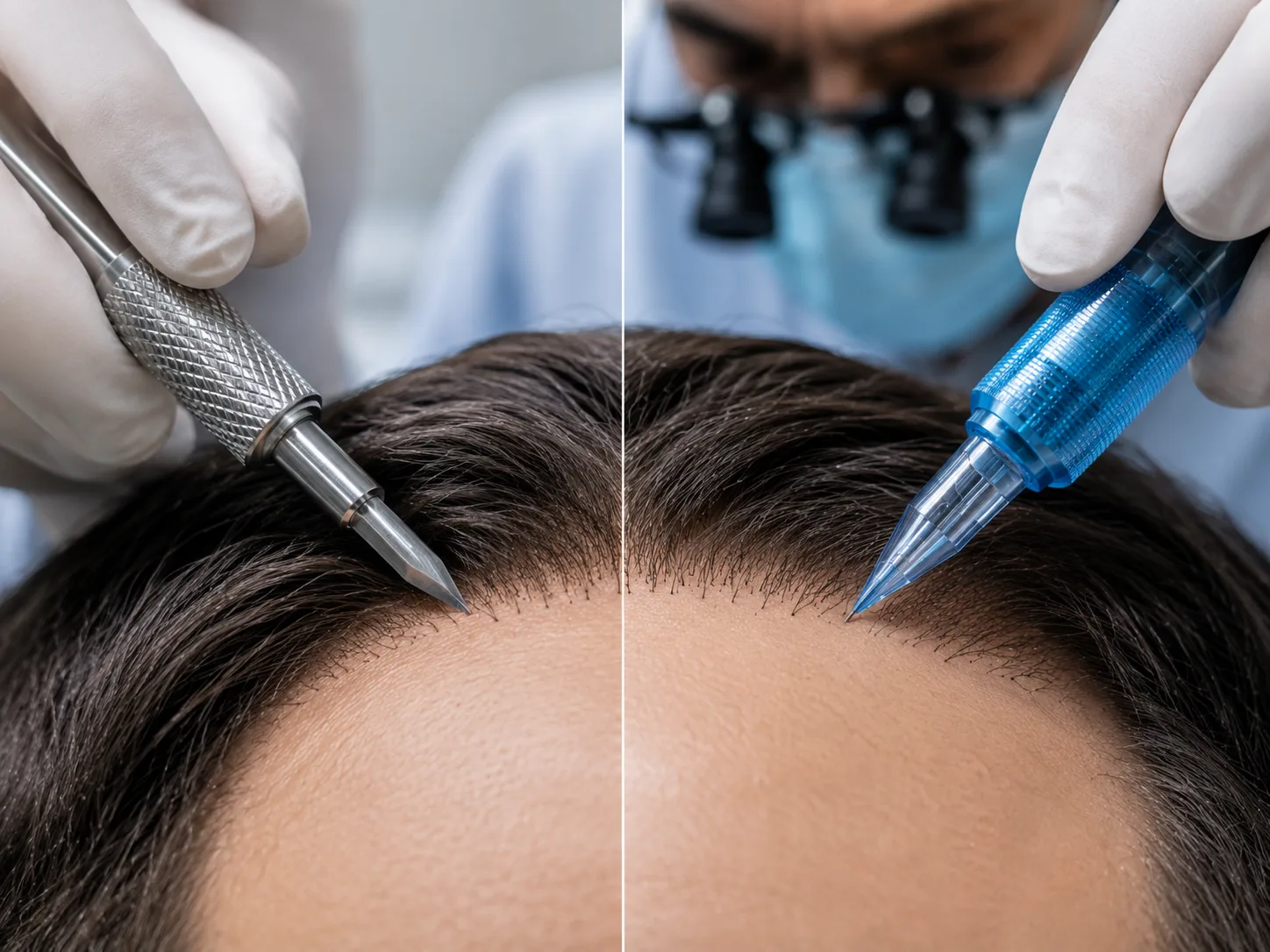
Les lames en saphir créent des incisions légèrement plus précises avec moins de traumatisme tissulaire. Les lames en acier créent des incisions fiables et fonctionnelles. La différence est plus faible que ce que le marketing suggère. L'habileté du chirurgien compte plus que le matériau de la lame.
Quel couteau crée des incisions plus étroites ?
Les lames en saphir peuvent créer des incisions plus étroites. La pointe plus aigüe et la géométrie en V permettent de plus petites zones d'entrée. Des incisions plus étroites signifient moins de marques de puncture visibles et un temps de guérison potentiellement plus rapide.
Les lames en acier créent des incisions légèrement plus larges. La différence est souvent de quelques fractions de millimètre. En pratique, les deux types de lames créent des incisions bien dans la plage acceptable de la chirurgie FUE.
Les lames en saphir créent des incisions en V cohérentes. Cette forme correspond à la géométrie naturelle de nombreux follicules pileux. La forme cohérente aide les greffons à s'adapter parfaitement.
Les lames en acier créent des incisions qui varient légèrement en fonction de l'angle et de la pression de la lame. Les chirurgiens expérimentés contrôlent ces variables avec précision. Les deux types de lames produisent des formes d'incision qui accommodent efficacement les greffons.
Quel couteau cause moins de compression tissulaire ?
Les lames en saphir causent moins de compression tissulaire. Le bord tranchant tranche les tissus sans les repousser. La compression réduite préserve l'architecture des cellules environnantes.
Les lames en acier causent légèrement plus de compression. La lame doit pousser certains tissus pour avancer. Cette compression est minimale avec une lame aigüe. Elle augmente à mesure que la lame s'émousse.
Quel couteau préserve mieux les vaisseaux sanguins ?
La préservation des vaisseaux sanguins dépend plus de la technique d'incision que du matériau de la lame. Une incision peu profonde et anglée préserve les vaisseaux quel que soit le type de lame. Une incision profonde et perpendiculaire endommage les vaisseaux quel que soit le type de lame.
Les lames en saphir peuvent offrir un léger avantage. La réduction du déplacement des tissus signifie moins de perturbation du réseau vasculaire. Cependant, aucune lame ne peut préserver les vaisseaux qui se trouvent directement sur le chemin de l'incision.
Quelle lame offre une meilleure stabilité du site receveur ?
La stabilité du site receveur se réfère à la manière dont le canal maintient sa forme après l'incision. Des canaux stables acceptent les greffons facilement et les maintiennent en sécurité.
Les lames en saphir peuvent créer des canaux légèrement plus stables. Les parois d'incision précises résistent à l'effondrement. Les lames en acier créent des canaux qui sont tout aussi fonctionnels. La différence de stabilité est cliniquement mineure.
Quelle lame offre un meilleur ajustement du greffon ?
L'ajustement du greffon dépend de l'adéquation entre la taille de l'incision et celle du greffon. Un greffon trop grand pour le canal provoque une compression. Un greffon trop petit s'assoit lâchement.
Les lames en saphir permettent un dimensionnement des canaux très précis. Les chirurgiens peuvent adapter les canaux exactement aux dimensions des greffons. Les lames en acier permettent également un dimensionnement précis. La mesure et le jugement du chirurgien déterminent plus l'ajustement que la lame elle-même.
La géométrie de la lame influence trois facteurs critiques.
Micro-incisions : Les pointes en saphir en forme de V créent des points d'entrée plus petits. Des entrées plus petites signifient moins de cicatrices visibles. Les lames en acier créent des entrées légèrement plus grandes. Les deux créent des micro-incisions selon les standards chirurgicaux.
Préservation des tissus : La réduction du déplacement tissulaire avec les lames en saphir préserve davantage de tissu natif. Le tissu préservé guérit plus rapidement et soutient mieux les greffons. Les lames en acier préservent efficacement les tissus lorsqu'elles sont utilisées avec la technique appropriée.
Précision d'implantation : Des dimensions d'incision cohérentes améliorent la précision d'implantation. Les greffons se placent à la profondeur et à l'angle souhaités. Les deux types de lames réalisent une implantation précise entre des mains expertes.
Que dit la preuve scientifique sur les lames en acier par rapport aux lames en saphir ?
Les études de haute qualité comparant directement les lames en acier et en saphir sont limitées. Les preuves disponibles suggèrent que les deux lames produisent des résultats acceptables. Aucune étude ne prouve que les lames en saphir garantissent des résultats supérieurs à long terme.
Que montrent les études cliniques publiées ?
Les études cliniques publiées sur la comparaison des lames restent limitées. La plupart des recherches se concentrent sur la technique FUE dans son ensemble plutôt que d'isoler le matériau de la lame.
Les études sur la cicatrisation après FUE montrent que la taille, la profondeur et l'angle de l'incision affectent le rétablissement davantage que la composition de la lame (Uebel et al., 2013). La recherche sur la survie des greffons démontre que la manipulation, l'hydratation et la technique d'insertion importent davantage que la lame utilisée pour créer le site receveur (Cole, 2014).
Les études examinant les saignements après FUE constatent que la densité et la profondeur de l'incision sont les déterminants principaux de la perte de sang. Le matériau de la lame ne montre aucun effet indépendant significatif sur les taux de saignement dans les données disponibles (Harris, 2017).
La recherche sur les cicatrices après FUE indique que les caractéristiques cutanées du patient, la taille de l'incision et les soins postopératoires déterminent la visibilité des cicatrices. Aucune étude publiée ne démontre que les lames en saphir éliminent les cicatrices (Bernstein et Rassman, 2015).
Les études sur les délais de guérison montrent que la plupart des patients guérissent dans un délai de 7 à 14 jours, quelle que soit la type de lame. Les protocoles postopératoires, la conformité du patient et les taux de guérison individuelle varient davantage que le matériau de la lame (Unger et Shapiro, 2018).
Les études sur la survie des greffons montrent systématiquement des taux supérieurs à 90 % pour les procédures FUE utilisant à la fois des lames en acier et en saphir. La technique du chirurgien et la manipulation des greffons expliquent mieux les variations de survie que le choix de la lame (Cole, 2014).
Quelles sont les limitations actuelles de la recherche ?
Trois limitations restreignent notre compréhension de la comparaison des lames.
Études randomisées limitées : Aucun essai contrôlé randomisé d'envergure n'a comparé directement les lames en acier et en saphir. La plupart des données disponibles proviennent de séries de cas, d'opinions d'experts ou de rapports sponsorisés par des fabricants.
Absence d'essais comparatifs à long terme : Les résultats de la greffe de cheveux se stabilisent sur une période de 12 à 18 mois. Aucune étude n'a suivi des patients pendant cette durée tout en contrôlant uniquement le matériau de la lame.
Variables dépendant du chirurgien : La performance de la lame dépend de celui qui l'utilise. Une étude comparant deux chirurgiens utilisant des lames différentes ne peut pas isoler les effets de la lame de ceux du chirurgien. Les conceptions de recherche doivent contrôler pour la compétence du chirurgien, ce qui est difficile dans la pratique.
Les lames en saphir améliorent-elles réellement les résultats des greffes de cheveux ?
Les lames en saphir peuvent légèrement améliorer la qualité des incisions. Elles n'améliorent pas automatiquement la densité, la survie ou l'apparence. Les résultats globaux dépendent de la planification chirurgicale, de la manipulation des greffons et de l'expertise du chirurgien.
Les lames en saphir améliorent-elles la densité des cheveux ?
La densité des cheveux dépend du nombre de greffons, de la survie des greffons et de l'espacement des incisions. Les lames en saphir permettent un espacement précis. Mais les lames en acier permettent également un espacement précis.
Un chirurgien peut obtenir une haute densité avec n'importe quelle lame. Les objectifs de densité sont limités par l'apport sanguin, pas par le matériau de la lame. Ajouter plus de greffons que ce que l'apport sanguin peut soutenir entraîne la mort des greffons. Cette limite biologique s'applique indépendamment du type de lame.
Les lames en saphir améliorent-elles la conception de la ligne de cheveux naturelle ?
La conception de la ligne de cheveux naturelle dépend de la planification artistique et de l'angle d'incision. Le chirurgien doit créer des motifs irréguliers et effilés qui imitent la nature.
Les lames en saphir peuvent aider à affiner la ligne des cheveux. La pointe précise permet de très petites incisions dans la zone frontale. Mais la conception elle-même provient de la vision du chirurgien, pas de la lame.
Les lames en saphir améliorent-elles la survie des greffons ?
La survie des greffons dépend de la qualité de l'extraction, de la manipulation, de l'hydratation et de l'insertion. La lame crée le canal mais ne touche pas directement le greffon.
Les lames en saphir peuvent créer des canaux qui acceptent les greffons avec moins de traumatisme à l'insertion. Cet avantage potentiel est faible par rapport aux effets d'une manipulation correcte des greffons. Les études montrent qu'il n'y a pas de différence significative dans les taux de survie entre les procédures en acier et en saphir.
Les lames en saphir réduisent-elles le temps de cicatrisation ?
Le temps de cicatrisation dépend de la taille de l'incision, de la biologie du patient et des soins postopératoires. Les lames en saphir peuvent créer des incisions légèrement plus petites. Les petites incisions cicatrisent marginalement plus vite.
Dans la pratique, la plupart des patients suivent des chronologies de cicatrisation similaires. Le cuir chevelu cicatrise rapidement, quel que soit le type de lame. Les instructions de soins postopératoires ont un impact plus important sur la vitesse de cicatrisation que le matériau de la lame.
Les lames en saphir améliorent-elles la satisfaction des patients ?
La satisfaction des patients dépend de l'apparence finale, de la communication et des attentes. Les patients qui s'attendent à ce que les lames en saphir transforment leurs résultats peuvent se sentir déçus.
La satisfaction est maximale lorsque les patients choisissent des chirurgiens expérimentés ayant un solide palmarès. Le type de lame est une considération mineure par rapport à la qualité globale de la clinique.
La récupération est similaire pour les deux types de lames. La plupart des patients guérissent en 7 à 14 jours. Les soins postopératoires, les taux de guérison individuels et la planification des incisions affectent la récupération plus que le matériau de la lame.
Le gonflement atteint son pic 2 à 4 jours après la chirurgie. Il résulte d’un traumatisme chirurgical et d’une accumulation de liquide. Les lames en acier et en saphir provoquent un gonflement similaire. Le nombre total d'incisions et le temps chirurgical affectent le gonflement plus que le type de lame.
La rougeur s’estompe progressivement sur 1 à 2 semaines. Elle indique une inflammation et une guérison normales. Le matériau de la lame ne change pas significativement la durée de la rougeur. Le type de peau du patient et sa sensibilité sont plus importants.
Des croûtes se forment lorsque le sang et le sérum sèchent sur le cuir chevelu. Elles durent généralement de 7 à 10 jours. Un lavage doux les élimine. La formation de croûtes dépend du saignement pendant la chirurgie et de l'hygiène postopératoire. Les deux types de lames produisent des croûtes similaires lorsque les incisions sont correctement réalisées.
La chronologie de guérison est presque identique pour les deux types de lames.
Étape de guérison | Lame en acier | Lame en saphir |
Croûtes initiales | Jours 1–3 | Jours 1–3 |
Pic de gonflement | Jours 2–4 | Jours 2 à 4 |
Desquamation de croûtes | Jours 7 à 10 | Jours 7 à 10 |
Diminution de la rougeur | Jours 10 à 14 | Jours 10 à 14 |
Guérison complète de la surface | 2 à 3 semaines | 2 à 3 semaines |
Quand les patients peuvent-ils reprendre leurs activités quotidiennes ?
La plupart des patients reprennent des activités non éprouvantes dans les 2 à 3 jours. Ils évitent les exercices intenses pendant 2 semaines. Ces délais s'appliquent quelle que soit le type de lame.
Les instructions de soins postopératoires ont un impact plus important sur la récupération que le matériau de la lame. Les patients qui suivent attentivement les instructions guérissent plus rapidement et mieux que ceux qui ne le font pas.
Quels sont les avantages et les inconvénients des lames en acier ?
Les lames en acier sont abordables, fiables et éprouvées. Elles peuvent s'émousser plus rapidement que les lames en saphir. Elles restent un excellent choix pour les chirurgiens expérimentés.
Quels sont les avantages des lames en acier ?
Les lames en acier offrent quatre avantages clés.
Abordables : Les lames en acier coûtent moins cher que les lames en saphir. Des coûts réduits profitent aux cliniques et aux patients. Les marchés soucieux de leur budget dépendent des lames en acier.
Fiables : Des décennies d'utilisation ont établi la fiabilité des lames en acier. Les chirurgiens savent exactement comment l'acier performe. Il n'y a pas de surprises.
Technologie éprouvée : Les lames en acier ont produit des millions de greffes de cheveux réussies. Le bilan est inégalé.
Excellent contrôle chirurgical : De nombreux chirurgiens préfèrent les retours tactiles de l'acier. La légère résistance les aide à sentir les couches de tissu et à contrôler la profondeur.
Quels sont les inconvénients des lames en acier ?
Les lames en acier ont trois inconvénients.
Peut perdre son tranchant plus tôt : Les bords en acier s'émoussent avec l'utilisation. Les chirurgiens doivent surveiller la netteté et remplacer les lames au besoin.
Légèrement plus grande résistance des tissus : L'acier crée plus de friction que le saphir. Cette résistance augmente à mesure que la lame s'émousse.
Moins d'attrait marketing : Les patients demandent de plus en plus des lames en saphir en raison du marketing. Les lames en acier manquent de la perception haut de gamme que certains patients recherchent.
Quels sont les avantages et inconvénients des lames en saphir ?
Les lames en saphir sont extrêmement dures, tranchantes et précises. Elles coûtent plus cher. Les preuves de haute qualité prouvant de meilleurs résultats à long terme restent limitées.
Quels sont les avantages des lames en saphir ?
Les lames en saphir offrent cinq avantages.
Excellente dureté : Le saphir se classe 9 sur l'échelle de Mohs. Cette dureté empêche la déformation du bord. La lame reste tranchante tout au long de la procédure.
Netteté constante : Le bord ne s'émousse pas pendant l'utilisation. Chaque incision correspond à la première en qualité.
Incisions micro-précises : La pointe en forme de V crée des ouvertures très petites et constantes. Ces ouvertures conviennent aux procédures à haute densité et de ligne capillaire.
Traumatismes tissulaire réduits : Moins de déplacement latéral signifie moins de dommages aux cellules environnantes. Un traumatisme réduit peut favoriser une guérison plus rapide.
Cicatrisation potentiellement plus fluide : Certains chirurgiens et patients rapportent une cicatrisation plus fluide avec les lames en saphir. Des rapports anecdotiques suggèrent moins de croûtes et une récupération plus rapide.
Quels sont les inconvénients des lames en saphir ?
Les lames en saphir ont trois inconvénients.
Coût plus élevé : Les lames en saphir coûtent significativement plus cher que l'acier. Ce coût peut augmenter les prix des procédures. Certaines cliniques répercutent le coût sur les patients.
Preuves de haute qualité limitées : Aucun grand essai randomisé ne prouve que les lames en saphir produisent de meilleurs résultats à long terme. Les affirmations marketing dépassent souvent le soutien scientifique.
Les résultats restent fortement dépendants de l'opérateur : Une lame en saphir ne compense pas une mauvaise technique. Les résultats dépendent du chirurgien, pas de l'instrument.
Quels facteurs influencent la qualité de l'incision plus que le matériau de la lame ?
L'expérience du chirurgien, la taille de la lame, l'angle d'incision, la profondeur, le plan de direction, les caractéristiques de la peau et la manipulation des greffons comptent plus que le matériau de la lame. La compétence chirurgicale est le principal facteur déterminant de la qualité de l'incision.
Les chirurgiens expérimentés créent de meilleures incisions, quel que soit le type de lame. Ils comprennent l'anatomie du cuir chevelu, les motifs capillaires et le comportement des tissus. Ils ajustent leur technique en temps réel. Ils gèrent les complications avec calme.
Un chirurgien novice avec une lame en saphir crée de pires incisions qu'un expert avec une lame en acier. L'expérience se développe au cours de centaines ou de milliers de cas. Aucune lame ne peut raccourcir cette courbe d'apprentissage.
La taille de la lame doit correspondre à la taille du greffon. Une lame trop grande crée des canaux lâches. Une lame trop petite compresse les greffons. La compression endommage les follicules et réduit la survie.
Les chirurgiens mesurent les greffons sous agrandissement. Ils choisissent la taille de la lame en fonction du diamètre du greffon. Ce processus de sélection est plus important que le matériau de la lame.
L'angle d'incision contrôle la direction des cheveux. Les angles varient de 10 à 45 degrés selon la zone du cuir chevelu. Les cheveux de la ligne frontale utilisent des angles faibles. Les cheveux du sommet utilisent des angles plus raides.
Des angles incorrects produisent une croissance non naturelle. Le chirurgien doit planifier les angles avant de réaliser la première incision. Cette planification nécessite un jugement artistique et des connaissances anatomiques.
La profondeur doit accueillir le greffon sans endommager les structures sous-jacentes. Une profondeur trop peu profonde provoque l'extrusion du greffon. Une profondeur trop grande endommage les vaisseaux sanguins et les nerfs.
Les chirurgiens contrôlent la profondeur par leur technique et le choix de la lame. Le jugement de la profondeur provient de l'expérience. Le matériau de la lame ne change pas l'exigence de profondeur.
Les cheveux naturels poussent en tourbillons, en vagues et en motifs irréguliers. Les chirurgiens doivent reproduire ces motifs. La planification de la direction nécessite une observation attentive des cheveux natifs et une vision artistique.
Les erreurs de direction sont visibles immédiatement après la chirurgie. Elles deviennent plus visibles à mesure que les cheveux poussent. Aucune lame ne peut corriger une erreur de direction.
L'épaisseur de la peau, l'élasticité et la richesse en huile varient d'un patient à l'autre. Une peau épaisse nécessite une technique différente de celle d'une peau fine. Une peau grasse se comporte différemment d'une peau sèche.
Les chirurgiens adaptent leur technique à la peau individuelle. Ils peuvent changer la taille de la lame, l'angle ou la pression en fonction des caractéristiques de la peau. Cette adaptation est plus importante que le matériau de la lame.
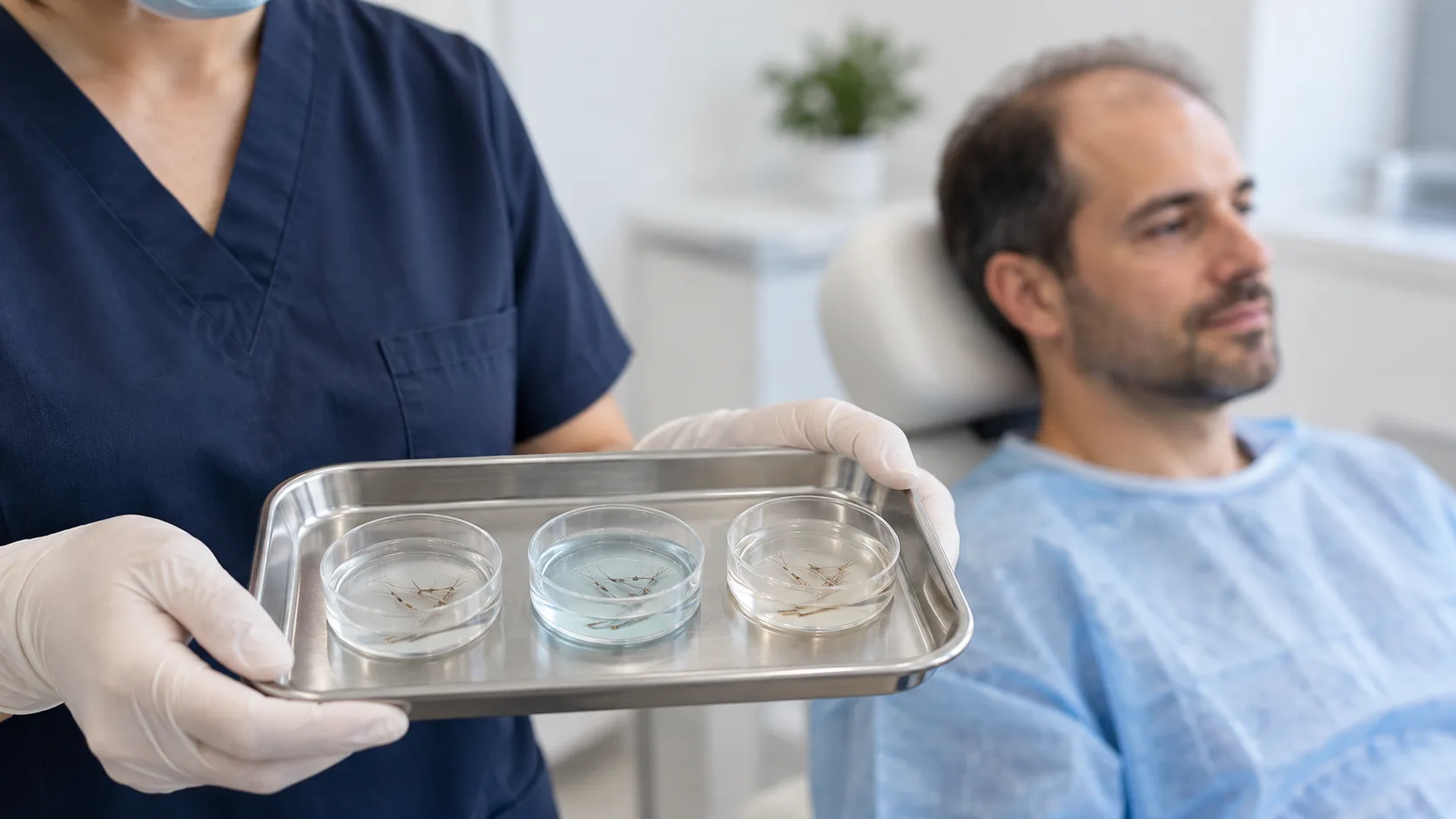
La manipulation des greffons comprend l'extraction, le stockage, le tri et l'insertion. Une manipulation brutale endommage les follicules. Une manipulation appropriée préserve la viabilité.
L'incision crée le canal. La manipulation des greffons détermine si le greffon survit dans ce canal. La qualité de la manipulation a plus d'impact que le matériau de la lame sur les résultats de survie.
Quels sont les mythes courants concernant les lames en saphir ?
De nombreux mythes exagèrent les avantages des lames en saphir. Le saphir ne garantit pas la survie, n'élimine pas les cicatrices et ne remplace pas les compétences chirurgicales. Les lames en acier ne sont pas obsolètes.
Mythe 1 : Le saphir garantit-t-il une meilleure survie des greffons ?
Non. La survie des greffons dépend de l'extraction, de la manipulation, de l'hydratation et de l'insertion. La lame crée le canal mais ne détermine pas si le greffon survit. Les études montrent des taux de survie similaires pour les procédures en acier et en saphir.
Mythe 2 : Les lames en saphir éliminent-elles les cicatrices ?
Non. Chaque incision crée une petite cicatrice. Les lames en saphir peuvent créer des cicatrices plus petites. Mais elles n'éliminent pas les cicatrices. Le type de peau du patient, la densité des incisions et la réponse de guérison déterminent la visibilité des cicatrices.
Mythe 3 : Les lames en acier sont-elles obsolètes ?
Non. Les lames en acier restent largement utilisées par des chirurgiens expérimentés dans le monde entier. Elles produisent d'excellents résultats. La technologie évolue, mais les outils éprouvés conservent leur valeur.
Mythe 4 : Chaque procédure FUE en saphir donne-t-elle des résultats supérieurs ?
Non. Les résultats dépendent du chirurgien, pas de la lame. Une FUE en saphir mal exécutée produit de pires résultats qu'une FUE en acier bien exécutée.
Mythe 5 : Le type de lame détermine-t-il seul le succès ?
Non. Le type de lame est l'un des nombreux facteurs. La planification chirurgicale, la manipulation des greffons, la sélection des patients et les soins postopératoires importent tous davantage.
Qui bénéficie le plus de la technologie des lames en saphir ?
Les patients ayant besoin de greffes à haute densité, de petits sites receveurs ou d'un affinement de la ligne capillaire peuvent bénéficier des lames en saphir. Cependant, les chirurgiens expérimentés obtiennent d'excellents résultats avec des lames en acier pour tous les types de patients.
Quels patients en bénéficient le plus ?
Cinq groupes de patients peuvent le plus bénéficier des lames en saphir.
Les patients recherchant une transplantation à haute densité : Les lames en saphir permettent un espacement précis et serré. Les cas à haute densité nécessitent des centaines d'incisions par centimètre carré. Une performance constante de la lame soutient cet objectif.
Patients ayant besoin de sites receveurs plus petits : Les lames de saphir créent de très petites ouvertures. Les petites ouvertures conviennent aux patients ayant des cheveux fins ou un approvisionnement limité en donneur.
Patients nécessitant un raffinement de la ligne de cheveux : La ligne de cheveux frontale demande la plus haute précision. Les lames de saphir aident à créer des motifs irréguliers et naturels.
Patients avec un tissu scalp plus tendu : Un tissu tendu résiste à l'incision. La netteté du saphir réduit la résistance dans ces cas.
Cas nécessitant une création de canaux précise : Certains cas complexes nécessitent des dimensions de canaux exactes. Les lames de saphir offrent cette précision.
Les lames en acier peuvent-elles obtenir les mêmes résultats ?
Oui. Les chirurgiens expérimentés obtiennent d'excellents résultats avec des lames en acier pour tous ces types de patients. La lame est un outil. Le chirurgien est l'artisan.
Les patients doivent évaluer l'expertise du chirurgien, les normes de la clinique, la planification des incisions et le protocole global. Ils ne doivent pas choisir une clinique uniquement en fonction du matériau de la lame.
Que doivent considérer les patients ?
Les patients doivent évaluer sept facteurs.
Expertise du chirurgien : Renseignez-vous sur l'expérience, la formation et le volume des cas. Demandez des photos avant et après. Parlez avec d'anciens patients si possible.
Normes de la clinique : Évaluez la propreté des installations, la formation du personnel et l'entretien des équipements. Des normes élevées sont plus importantes que tout outil en particulier.
Planification des incisions : Demandez comment le chirurgien prévoit l'angle, la direction et la densité de l'incision. Une bonne planification indique une préparation approfondie.
Protocole FUE global : Comprenez l'ensemble de la procédure, de l'extraction aux soins postopératoires. Un protocole solide produit de meilleurs résultats qu'une lame luxueuse seule.
Techniques de conservation des greffons : Demandez comment la clinique gère les greffons en dehors du corps. L'hydratation, le contrôle de la température et un temps de manipulation minimal sont critiques.
Attentes des patients : Fixez des objectifs réalistes. Aucune lame ne peut créer plus de cheveux que ce que l'approvisionnement en donneur permet.
Technologie basée sur des preuves : Choisissez des cliniques qui fondent leurs décisions sur des preuves cliniques plutôt que sur des tendances marketing.
Questions fréquentes sur les lames en acier et en saphir
Les deux lames sont efficaces. Le saphir offre des avantages matériels. L'acier offre une fiabilité éprouvée. L'habileté du chirurgien est ce qui compte le plus.
Une lame en saphir est-elle meilleure qu'une lame en acier ?
Les lames en saphir offrent des bords plus tranchants et une plus grande dureté. Les lames en acier offrent une fiabilité prouvée et un coût inférieur. Aucune d'elles n'est universellement meilleure. La meilleure lame est celle entre les mains d'un chirurgien qualifié.
La technique Sapphire FUE guérit-elle plus rapidement ?
Les délais de guérison sont similaires pour les deux types de lames. Certains patients et chirurgiens rapportent une guérison légèrement plus rapide avec le saphir. Aucune étude ne confirme une différence significative. Les soins postopératoires affectent la vitesse de guérison plus que le matériau de la lame.
Les lames en saphir sont-elles moins douloureuses ?
La douleur pendant la chirurgie est minimale avec l'anesthésie locale. L'inconfort postopératoire est similaire pour les deux types de lames. La gestion de la douleur dépend de la médication et de la tolérance individuelle, et non du matériau de la lame.
Les lames en saphir réduisent-elles les cicatrices ?
Les lames en saphir peuvent créer des cicatrices légèrement plus petites. Elles n'éliminent pas les cicatrices. La visibilité des cicatrices dépend du type de peau, de la densité des incisions et de la réponse de guérison.
Les lames en acier peuvent-elles obtenir des résultats d'apparence naturelle ?
Oui. Les lames en acier ont produit des résultats d'apparence naturelle pendant des décennies. La planification artistique et l'exécution technique du chirurgien déterminent l'apparence naturelle.
Le matériau de la lame affecte-t-il la survie des greffons ?
Aucune preuve significative ne montre que le matériau de la lame affecte indépendamment la survie des greffons. La manipulation du greffon, l'hydratation et la technique d'insertion comptent plus.
La technique Sapphire FUE vaut-elle le coût supplémentaire ?
La valeur dépend des priorités individuelles. Les patients qui souhaitent la technologie la plus récente peuvent trouver que le saphir en vaut le coût. Les patients axés sur les résultats devraient prioriser l'expertise du chirurgien plutôt que le matériau de la lame.
Quelle lame les chirurgiens expérimentés préfèrent-ils ?
Les préférences varient. Certains chirurgiens expérimentés préfèrent l'acier pour le retour tactile. D'autres préfèrent le saphir pour la cohérence. Beaucoup utilisent les deux selon le cas. Il n'y a pas de préférence consensuelle parmi les meilleurs chirurgiens.
Les lames en saphir conviennent-elles à tous les patients ?
Les lames en saphir fonctionnent pour la plupart des patients. Cependant, les caractéristiques cutanées individuelles peuvent rendre les lames en acier plus appropriées dans certains cas. Le chirurgien doit choisir le meilleur outil pour chaque patient.
La qualité de l'incision dépend-elle plus de la lame ou du chirurgien ?
La qualité de l'incision dépend beaucoup plus du chirurgien. Un chirurgien qualifié crée d'excellentes incisions avec n'importe quelle lame. Un chirurgien non qualifié ne peut pas compenser avec une lame avancée.
Conclusion
Les lames en acier et les lames en saphir sont toutes deux efficaces pour la chirurgie de greffe de cheveux. Les lames en saphir offrent une dureté supérieure, une meilleure rétention de la netteté et une précision accrue. Ces propriétés matérielles contribuent à créer des micro-incisions cohérentes avec un traumatisme tissulaire minimal. Les lames en acier offrent une fiabilité éprouvée, une large disponibilité et un coût inférieur. Elles ont produit d'excellents résultats pendant des décennies.
Les preuves scientifiques actuelles ne démontrent pas de manière concluante que les lames en saphir produisent des résultats de greffe de cheveux à long terme significativement meilleurs que les lames en acier. Des études randomisées limitées, un manque de données comparatives à long terme et des variables dépendantes du chirurgien empêchent d'arriver à des conclusions définitives.
L'expérience du chirurgien, la planification du site receveur, la manipulation des greffons et les soins postopératoires demeurent les principaux déterminants de la densité naturelle, de la survie des greffons et de la satisfaction du patient. Un chirurgien compétent avec une lame en acier surpasse constamment un chirurgien inexpérimenté avec une lame en saphir.
Les patients doivent évaluer l'approche chirurgicale globale et l'expertise clinique plutôt que de sélectionner une clinique uniquement en fonction du matériau de la lame. Les meilleurs résultats de transplantation capillaire proviennent d'une planification complète, d'une exécution minutieuse et d'un soin personnalisé, et non d'un instrument unique.
Références
Bernstein, Robert M., et William R. Rassman. "Extraction d'Unités Folliculaires : L'Évolution de la Transplantation Capillaire." Chirurgie Dermatologique, vol. 41, no. 6, 2015, pp. 719–27.
Cole, John P. "Une analyse de la survie et du rendement des greffes par extraction d'unités folliculaires." Forum International de Transplantation Capillaire, vol. 24, no. 2, 2014, pp. 45–50.
Harris, James A. "L'évolution de l'instrumentation et de la technique FUE." Cliniques de chirurgie plastique faciale en Amérique du Nord, vol. 25, no. 3, 2017, pp. 319–28.
Uebel, Carlos Oscar, et al. "Le Rôle de la Préparation du Site Récipiendaire dans la Chirurgie de Transplantation de Cheveux." Chirurgie plastique esthétique, vol. 37, no. 4, 2013, pp. 678–85.
Unger, Walter P., et Robin H. Shapiro.Transplantation de cheveux. 5e éd., Marcel Dekker, 2018.