Exercise After Gastric Sleeve Surgery
Exercise after gastric sleeve surgery rebuilds strength, protects lean muscle, and protects weight-loss results over the long term. Safe exercise after gastric sleeve surgery starts with short walks and progresses gradually over weeks and months. Only your surgeon and bariatric team can set your personal timeline, because healing speed differs for every patient.
Sleeve gastrectomy shrinks the stomach, but physical activity shapes how your body responds to that change. Regular movement supports cardiovascular health, preserves muscle during rapid weight loss, and raises daily energy. This guide explains when to start, which exercises to choose, and how to build a routine that lasts.
Why Is Exercise Important After Gastric Sleeve Surgery?
Exercise preserves lean muscle, boosts cardiovascular fitness, and helps you keep weight off. Surgery changes your stomach. Exercise changes how your body uses the smaller stomach.
Sleeve gastrectomy reduces hunger hormone production and stomach volume, which drives early weight loss. Physical activity supports that process in three ways. First, resistance exercise protects lean muscle mass during rapid weight loss. Second, aerobic exercise improves heart and lung function as body weight drops. Third, consistent movement raises mood, balance, bone density, and daily energy.
These benefits come from training, not from surgery itself. A sleeve gastrectomy creates the conditions for weight loss. Working out after gastric sleeve determines how much of that loss is fat rather than muscle (King et al., 2012).
When Can You Start Exercising After Gastric Sleeve Surgery?
Most patients start gentle walking within days of surgery. Structured workouts require weeks. Strenuous training requires medical clearance. No single calendar fits every patient.
Early movement and structured exercise demand different levels of healing. Short walks stimulate circulation, lower blood-clot risk, and speed recovery. Hard workouts stress abdominal incisions and healing tissues. Pain, fatigue, hydration, and wound condition all shape the pace of progression. Your surgeon's instructions take priority over any generic timeline.
What Physical Activities Are Appropriate During the First Week?
Brief, frequent walks at a comfortable pace. Move often, but avoid strain, and stop if symptoms worsen.
Walk several times per day for five to ten minutes. Prolonged inactivity raises clot risk and slows bowel function, so short movement breaks matter. Stop and contact your care team if pain increases, dizziness appears, or incisions look worse.
When Can You Return to Your Normal Exercise Routine?
Most patients resume normal daily activities within two to four weeks. Strenuous training takes longer and needs clearance. Returning to routine does not equal readiness for heavy training.
Laparoscopic surgery usually allows faster recovery than open surgery. Still, healing progress, not the calendar, decides the transition. Expect a gradual shift from gentle movement to longer walks and then structured workouts, with clearance at each stage.
Which Exercises Are Best After Gastric Sleeve Surgery?
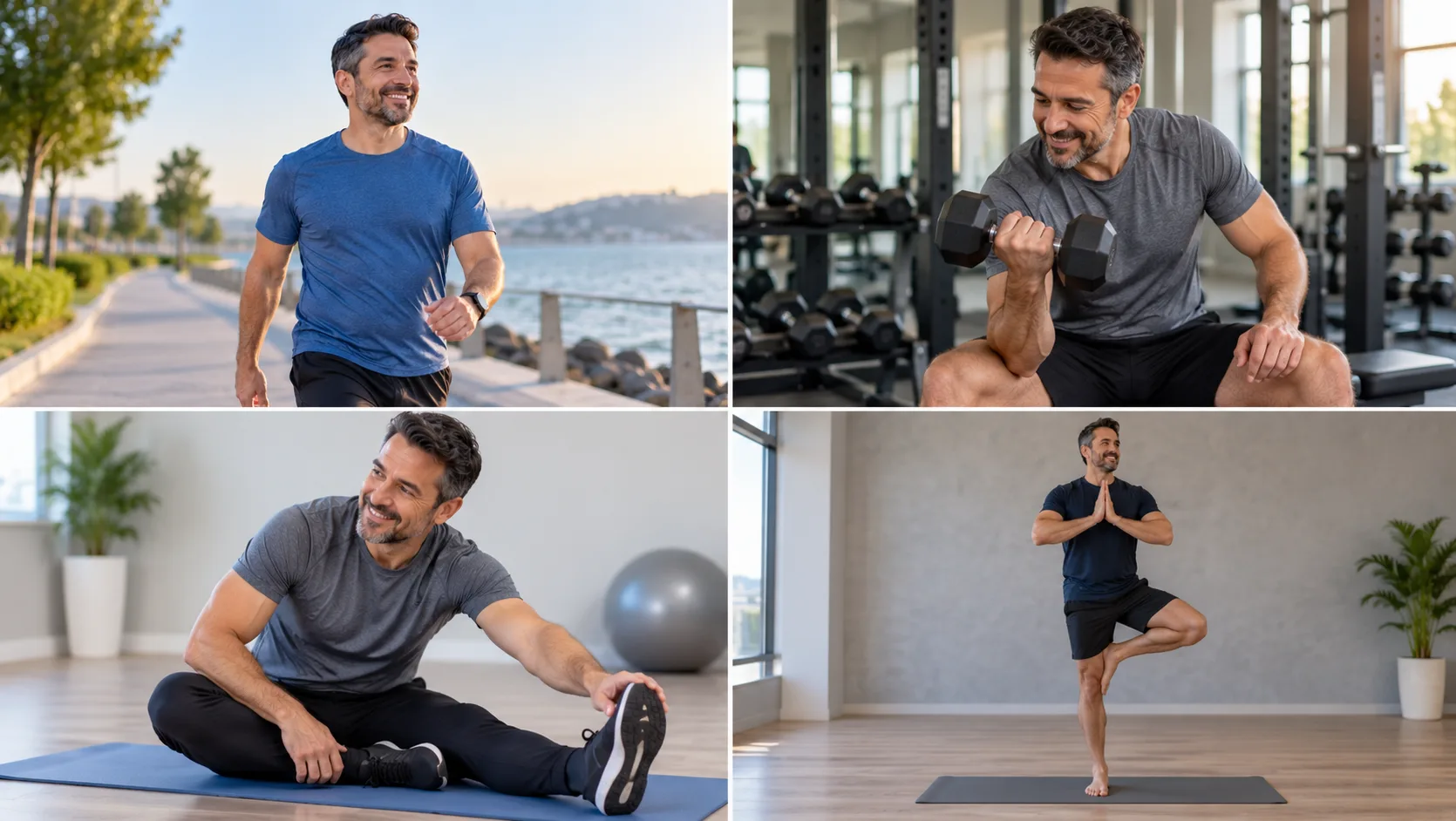
Combine aerobic exercise, resistance training, flexibility work, and balance activities. Choose low-impact options early in recovery and build variety over time.
Exercise type | Examples | Main benefit |
|---|---|---|
Aerobic | Walking, stationary cycling | Heart health, calorie burn |
Resistance | Bands, light weights | Muscle preservation |
Flexibility | Stretching, gentle yoga | Mobility, comfort |
Balance | Standing drills | Fall prevention |
Pick activities that match your mobility, fitness level, and preferences. Clinical advice steers the final choice.
Is Walking the Best Exercise to Start With?
Yes. Walking is accessible, low-impact, and easy to scale in time and intensity.
Increase duration, distance, and frequency step by step. Add short walks into daily life: walk after meals, park farther away, or take a loop around your neighborhood. Walking after gastric sleeve surgery forms the foundation of most recovery plans.
When Can You Start Swimming or Cycling?
Swimming requires fully healed incisions and medical clearance, usually after several weeks. Stationary cycling can start earlier once approved.
Outdoor cycling demands good balance, stamina, and reaction time. Those abilities return gradually, so treat road cycling as a later-stage activity.
How Does Strength Training Help After Gastric Sleeve Surgery?
Strength training preserves muscle and functional capacity during weight loss. Start with bands and bodyweight work after clearance, then add light weights.
Increase resistance and repetitions gradually. Weight lifting after gastric sleeve should not resume at preoperative loads until your surgical team permits it.
Can You Do Yoga, Pilates, or Stretching After Surgery?
Gentle stretching and mobility work support recovery. Avoid intense core work and moves that strain incisions until cleared.
Modify poses and skip deep abdominal engagement early on. Healed tissue needs time before it tolerates demanding core loads.
How Should You Structure Your Exercise Timeline After Gastric Sleeve Surgery?
Progress from gentle mobility to structured aerobic and resistance training over six weeks or more. This gastric sleeve recovery timeline is a framework, not a prescription. Follow your surgeon's protocol.
What Should Your Exercise Routine Look Like During Weeks 1–2?
Short walks and light daily movement only. Avoid strain, heavy lifting, and strenuous workouts.
Watch fatigue, pain, hydration, and incision healing every day.
How Can You Progress Your Workouts During Weeks 3–6?
Lengthen walks and add approved low-impact activities. Introduce resistance work only with individual clearance.
Change one variable at a time, such as duration or intensity, never both at once.
What Exercise Goals Can You Work Toward After Six Weeks?
With clearance, shift toward a varied program with progressive aerobic and resistance training.
Build a routine that adapts to continued weight loss and rising fitness.
How Much Exercise Should You Do After Gastric Sleeve Surgery?
Long-term, aim for at least 150 minutes of moderate aerobic activity per week plus resistance training, when medically appropriate (Garber et al., 2011). Early recovery targets stay far lower.
Split exercise into manageable sessions. Consistency beats intensity. Individual recovery needs always outrank standard targets.
How Many Minutes Should You Exercise Each Day?
Start with five to ten minutes and grow gradually. Several short sessions work better than one long session for beginners.
Consistency matters more than ambitious daily totals.
How Can You Tell Whether Your Workout Is Too Intense?
Use the talk test. During moderate effort, you speak in full sentences. Stop if breathlessness becomes extreme, pain appears, or dizziness hits.
Increase intensity only when the current level feels manageable and your care team approves.
What Are the Biggest Exercise Mistakes to Avoid After Gastric Sleeve Surgery?
Doing too much too soon, lifting heavy early, ignoring symptoms, and training inconsistently. These errors delay recovery and raise injury risk.
Recovery-friendly vs. risky habits:
Safe approach | Risky approach |
|---|---|
Gradual progression | Sudden volume jumps |
Symptom-guided pacing | Pushing through pain |
Regular rest days | Daily hard training |
Following clearance | Self-set deadlines |
Can You Lift Weights Too Soon After Surgery?
Yes. Heavy lifting strains healing tissue and abdominal incisions. Return to resistance training only with clearance, and rebuild loads slowly.
Should You Exercise Through Pain or Extreme Fatigue?
No. Ordinary exertion feels like effort. Problem symptoms feel like pain, dizziness, or unusual weakness. Stop and contact your team if symptoms persist.
What Warning Signs Mean You Should Stop Exercising?
Chest pain, fainting, severe breathlessness, sudden severe abdominal pain, or calf pain with one-sided leg swelling demand immediate medical attention. Shortness of breath at rest may signal a clot or pulmonary complication. Wound redness, drainage, fever, or worsening incision pain requires prompt contact with your surgical team (ASMBS, 2022).
Report recurrent dizziness or exercise intolerance before you resume workouts.
How Can You Stay Hydrated and Nourished While Exercising After Gastric Sleeve Surgery?
A smaller stomach limits fluid and food intake, so hydration and protein need deliberate planning. Follow your dietitian's plan, because dehydration and under-eating cause fatigue and dizziness during exercise.
How Much Water Do You Need During Exercise?
Sip fluids regularly across the day and around workouts. Follow your individual targets. Dark urine, low urine output, dizziness, and strong thirst signal dehydration.
How Does Protein Support Muscle Recovery?
Protein preserves lean tissue during weight loss. Obtain it through foods and prescribed supplements. A bariatric dietitian should set your individual target, because needs vary by patient (Moizé et al., 2013).
Should You Exercise Immediately After Eating?
Avoid workouts right after meals. Full-stomach movement can trigger nausea, reflux, or cramping after sleeve gastrectomy. Follow your team's timing guidance.
Can Exercise Prevent Muscle Loss and Loose Skin After Gastric Sleeve Surgery?
Exercise strongly protects muscle. It cannot reliably prevent loose skin.
Resistance training improves strength and body composition. However, excess skin depends on the amount of weight lost, age, genetics, and skin elasticity. Skin-removal surgery addresses loose skin; exercise does not.
How Does Exercise Affect Weight Loss After Gastric Sleeve Surgery?
Exercise raises energy expenditure and supports long-term weight control. It improves health even when scale weight changes slowly.
As fitness improves, daily movement becomes easier, which compounds results. Weight-loss plateaus happen. They do not mean exercise fails, because calorie needs shift as body weight and fitness change (Bond et al., 2016).
What Should You Do If Your Weight Loss Plateaus?
Review activity, nutrition, sleep, hydration, and adherence with your bariatric team. Do not abruptly double workout intensity. Reassess progression professionally.
How Can Beginners Build a Sustainable Exercise Habit After Gastric Sleeve Surgery?
Set small, measurable goals. Choose enjoyable activities. Track walking time, frequency, and effort. Add variety to prevent boredom. Work with a physical therapist or bariatric fitness specialist when possible.
Is a Gym Membership Necessary After Gastric Sleeve Surgery?
No. Home workouts, walking, and resistance bands build real fitness. Choose an accessible routine you can maintain consistently. A gym helps some patients, but it is optional.
How Can You Stay Motivated When Weight Loss Slows Down?
Measure stamina, strength, mobility, and consistency alongside body weight. Set short-term goals and adjust activities to keep exercise interesting within recovery limits.
Frequently Asked Questions About Exercise After Gastric Sleeve Surgery
Can You Walk Immediately After Gastric Sleeve Surgery?
Most patients walk within hours or days once the care team permits it. Duration and assistance depend on your recovery and hospital instructions.
When Can You Go to the Gym After Gastric Sleeve Surgery?
Gym access depends on clearance for each activity. Gentle cardio returns earlier. Strenuous training follows the recovery timeline in this article, always with approval.
When Can You Start Running After Gastric Sleeve Surgery?
Running is high-impact. Resume it only after stamina returns and clearance is given. Walking and low-impact options come first.
Can You Do Abdominal Exercises After Gastric Sleeve Surgery?
Not until cleared. Crunches, planks, and intense core work strain healing incisions and abdominal tissue.
Is It Normal to Feel Tired During Exercise After Gastric Sleeve Surgery?
Mild fatigue is common as food intake, hydration, and activity change. Check hydration and nutrition. Persistent or worsening fatigue needs medical evaluation.
Can Exercise Help Prevent Weight Regain After Gastric Sleeve Surgery?
Yes. Consistent activity supports long-term weight management, alongside nutrition, behavior change, and bariatric follow-up (King et al., 2012).
How Can You Make Exercise Part of Your Long-Term Life After Gastric Sleeve Surgery?
Progress gradually, choose safe exercises, hydrate, and eat adequate protein. Combine walking, aerobic training, and resistance work. Stay in regular contact with your bariatric team as your fitness evolves.
Sustainable physical activity protects your health long after the rapid weight-loss phase ends. Exercise restrictions after bariatric surgery exist to protect healing, but movement itself is medicine. Patients who build a consistent routine gain the strongest, healthiest version of their surgical result.
References
Bond, Dale S., et al. "Objectively Measured Physical Activity and Weight Loss Maintenance Following Bariatric Surgery." Obesity Surgery, vol. 26, no. 2, 2016, pp. 343-349.
Garber, Carol Ewing, et al. "American College of Sports Medicine Position Stand. Quantity and Quality of Exercise for Developing and Maintaining Cardiorespiratory, Musculoskeletal, and Neuromotor Fitness in Apparently Healthy Adults." Medicine & Science in Sports & Exercise, vol. 43, no. 7, 2011, pp. 1334-1359.
King, Wendy C., et al. "Physical Activity Levels of Patients Undergoing Bariatric Surgery in the Longitudinal Assessment of Bariatric Surgery Study." Surgery for Obesity and Related Diseases, vol. 8, no. 6, 2012, pp. 721-728.
Moizé, Violeta, et al. "Protein Intake and Lean Body Mass Preservation During Weight Loss Therapy in Obese Elderly Subjects." Obesity Surgery, vol. 23, no. 11, 2013, pp. 1866-1872.
ASMBS Clinical Issues Committee. "Allied Health Nutritional Guidelines for the Surgical Weight Loss Patient." Surgery for Obesity and Related Diseases, vol. 4, suppl. 5, 2022, S73-S108.