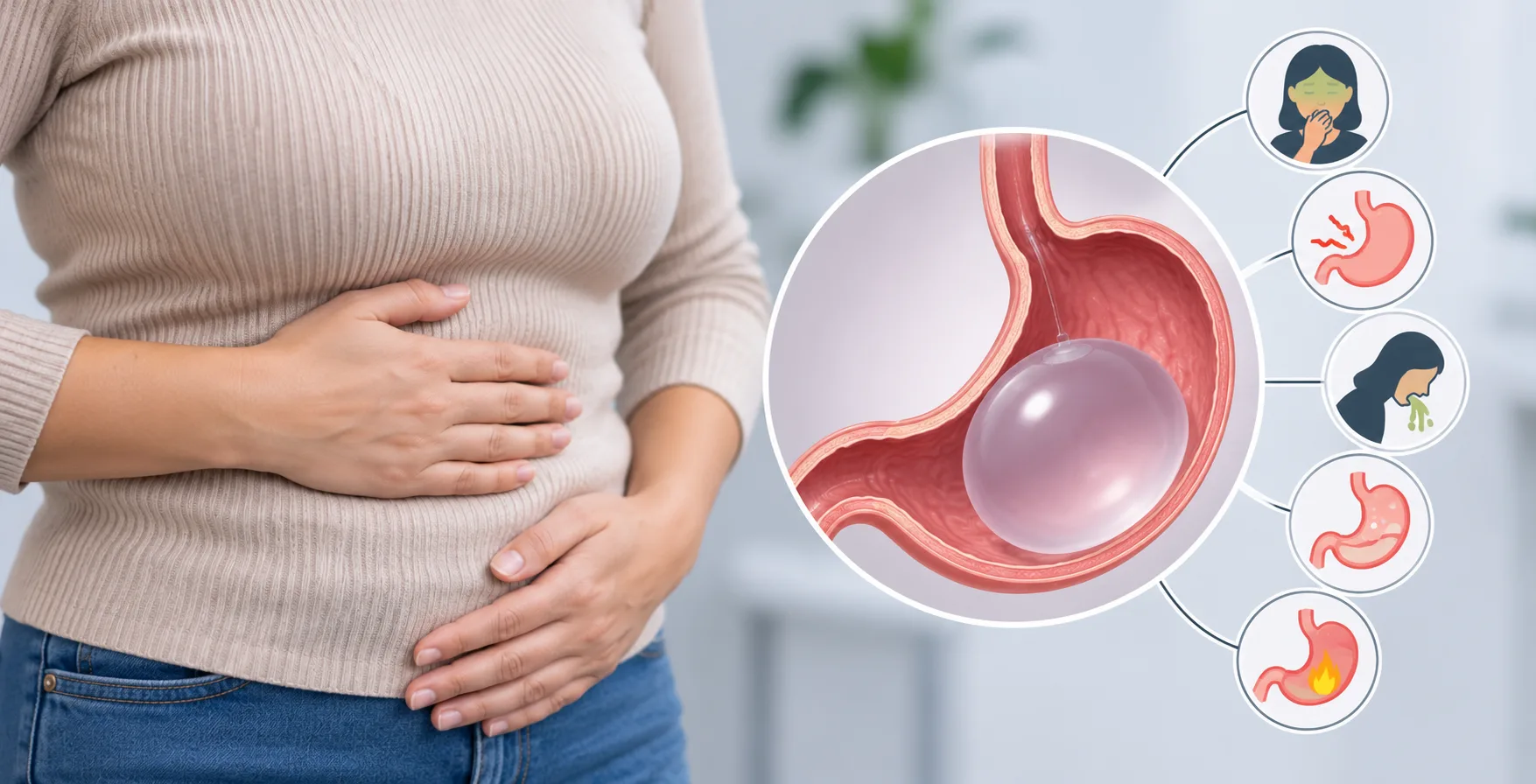
Gastric Balloon FAQs: Everything You Need to Know Before Treatment
A gastric balloon is a temporary, minimally invasive device that a specialist places inside the stomach to support weight loss. It occupies space in the stomach, so patients feel full sooner and eat smaller portions. This article answers the most common gastric balloon FAQs from international patients.
The intragastric balloon plays a defined role in obesity management. Doctors use it for patients who do not qualify for, or do not want, bariatric surgery. Unlike gastric sleeve or gastric bypass, the balloon does not cut, remove, or reroute any part of the stomach. It supports weight reduction through restriction and appetite regulation rather than permanent anatomical change.
Individual outcomes depend on three factors: the balloon type, the patient's medical history, and the commitment to lifestyle change. Clinical data confirm this variability. A meta-analysis of 15 studies with 3,608 patients found an average loss of 12.2% of initial body weight at balloon removal, with meaningful differences between treatment programs (Imaz et al. 2008). The sections below answer the key questions on eligibility, expected results, safety, recovery, and long-term weight management.
What Is a Gastric Balloon and How Does It Work?
A gastric balloon, also called an intragastric balloon or stomach balloon, is a soft medical device placed inside the stomach and filled with saline or gas. It reduces available stomach volume, promotes early satiety, and helps patients reduce portion sizes without permanently changing stomach anatomy.
The device works through mechanical and physiological mechanisms. The balloon fills a large part of the stomach cavity, so the stomach reaches stretch-related fullness signals with less food. This process activates vagal satiety pathways and reduces total calorie intake. Studies also show that the balloon slows gastric emptying, which keeps food in the stomach longer and extends the feeling of fullness between meals.
The balloon supports weight loss only while it stays in the stomach. It does not alter the stomach's structure, and the digestive tract remains intact after removal. This feature separates the weight loss balloon from surgical procedures such as gastric sleeve and gastric bypass.
Who Is Eligible for Gastric Balloon Treatment?
Doctors generally consider adults with a body mass index between 30 and 40 kg/m² as primary gastric balloon candidates. Most programs also require previous unsuccessful attempts at diet, exercise, or medical weight management. A specialist must confirm eligibility after a full medical evaluation.
BMI serves as the main screening tool, but it does not act alone. Some programs accept patients with a BMI of 27 or higher when obesity-related conditions such as type 2 diabetes, hypertension, or sleep apnea increase health risks. The specialist reviews the patient's medical history, current medications, and previous gastrointestinal procedures before approval. A pre-procedure endoscopic examination confirms that the stomach and esophagus can safely hold the device.
Eligibility criteria differ between balloon devices and countries. Each manufacturer defines its own approved patient range, and national regulators apply separate rules. Patients should confirm the criteria that apply to their chosen device and treatment location.
Who Should Avoid Gastric Balloon Treatment?
Patients with a large hiatal hernia, active stomach ulcers, inflammatory gastrointestinal diseases, structural esophageal abnormalities, previous bariatric surgery, or conditions linked to gastrointestinal bleeding should avoid gastric balloon treatment. Pregnancy and breastfeeding also rule out placement.
These contraindications exist because the balloon sits directly against the stomach wall. Previous bariatric procedures change stomach anatomy, so the balloon can damage surgical staple lines or altered tissue. Inflammatory bowel diseases and active ulcers increase the risk of perforation and bleeding. A large hiatal hernia raises the chance of device displacement and severe reflux.
Special circumstances require individual assessment. Patients with known allergies to device materials such as silicone cannot receive certain systems. Doctors always perform a pre-treatment endoscopic examination to detect hidden abnormalities. This individualized medical assessment protects the patient before any placement decision.
What Types of Gastric Balloons Are Available?
Gastric balloon systems fall into three main categories: endoscopically inserted saline-filled balloons such as Orbera, adjustable endoscopic balloons such as Spatz3, and swallowable gas-filled capsules such as Allurion. They differ in placement method, treatment duration, volume adjustment options, and removal requirements.
Saline-filled endoscopic balloons, including Orbera, enter the stomach during an endoscopy under sedation. The specialist fills the balloon with sterile saline, and it stays in place for about six months. Gas-filled endoscopic systems use nitrogen or air instead of fluid, which can reduce the feeling of heaviness. Swallowable systems, such as the Allurion capsule, require no endoscopy for placement. The patient swallows a capsule attached to a thin catheter, and the medical team fills the balloon once imaging confirms its position. The balloon later self-deflates and passes naturally.
Adjustable systems such as Spatz3 allow the doctor to increase or decrease balloon volume during treatment. Upward adjustment can restart stalled weight loss, and downward adjustment can relieve intolerance. Clinical data on adjustable balloons show a pooled mean total weight loss of about 16.4%, and downward adjustment resolved intolerance symptoms in roughly 90% of cases (Zhang et al. 2025). The most suitable balloon depends on the patient's medical needs, tolerance profile, and treatment goals.
Feature | Orbera (saline, endoscopic) | Spatz3 (adjustable, endoscopic) | Allurion (swallowable capsule) |
Placement | Endoscopy with sedation | Endoscopy with sedation | Swallowed capsule, no endoscopy |
Fill material | Sterile saline | Sterile saline | Nitrogen-based gas |
Volume adjustment | No | Yes | No |
Typical duration | About 6 months | Up to 12 months | About 4 months |
Removal | Endoscopy with sedation | Endoscopy with sedation | Self-deflates and passes naturally |
How Is the Gastric Balloon Procedure Performed?
The gastric balloon insertion takes place as an outpatient endoscopic procedure under sedation. It usually lasts 20 to 30 minutes, involves no abdominal incisions, and allows the patient to go home the same day after a short observation period.
The procedure follows a defined sequence. First, the specialist reviews the medical evaluation and confirms fasting status, usually at least 12 hours without solid food. Second, the patient receives intravenous sedation. Third, the doctor passes a thin, flexible endoscope through the mouth and inspects the esophagus, stomach, and duodenum to confirm that placement is safe. Fourth, the deflated balloon passes through the mouth into the stomach. Fifth, the specialist fills the balloon with saline or gas, commonly 400 to 700 ml for saline systems, and confirms its position endoscopically. Finally, the team monitors the patient during recovery from sedation.
The pre-procedure consultation includes blood tests, a medical history review, and an endoscopic examination of the upper gastrointestinal tract. This inspection step matters because undetected ulcers, tumors, or hernias would make placement unsafe.
Does Gastric Balloon Placement Hurt?
Gastric balloon placement itself does not hurt because sedation keeps the patient comfortable throughout the endoscopy. Patients may notice temporary throat soreness afterward, while real discomfort typically starts in the first days after the procedure as the stomach reacts to the device.
The distinction between placement discomfort and post-procedure symptoms matters. Sedation prevents pain during insertion, and the throat discomfort from the endoscope fades within one or two days. The more significant sensations, such as nausea, cramping, and pressure, belong to the adaptation phase after placement rather than to the procedure itself.
Doctors prescribe medication to manage this period. Anti-nausea drugs, antispasmodics, and acid-suppressing proton pump inhibitors form the standard symptom-control protocol (Kotzampassi et al. 2012). Patients should contact their medical team if pain becomes severe, vomiting prevents fluid intake, or symptoms persist beyond the expected adaptation window.
How Long Does a Gastric Balloon Stay in the Stomach?
Most conventional endoscopic gastric balloons remain in the stomach for approximately six months. Adjustable systems such as Spatz3 can stay up to 12 months, while swallowable systems such as Allurion follow a shorter schedule of about four months before the device self-deflates and passes.
Treatment duration reflects device engineering and regulatory approval, not preference. Conventional balloons lose structural integrity over time, so manufacturers define a maximum implantation period. The adjustable Spatz3 system holds approval for longer placement because its design supports volume modification and extended tolerance. The swallowable Allurion balloon uses a time-activated valve that opens after roughly 16 weeks and releases the filling liquid for natural passage.
Patients must follow the manufacturer's recommended removal or passage timeline. A balloon that stays beyond its approved window raises the risk of deflation and obstruction. Every gastric balloon remains a temporary medical device, never a permanent weight-loss solution.
How Much Weight Can You Lose With a Gastric Balloon?

Clinical studies report average total body weight loss of roughly 10% to 16% during gastric balloon treatment. Results vary with balloon type, starting weight, dietary habits, and lifestyle change, so doctors express outcomes as percentages rather than promising a fixed number of kilograms.
Meta-analytic evidence defines the realistic range. The landmark meta-analysis by Imaz et al. (2008) reported a mean loss of 14.7 kg, equal to 12.2% of initial body weight and 32.1% of excess weight at balloon removal. A 2024 series of more than 1,100 patients with a 12-month balloon found a median total body weight loss of 11.11% (Wiggins et al. 2024). Adjustable balloon data reached a pooled mean of 16.4% total weight loss (Zhang et al. 2025). These figures represent averages across populations, not individual guarantees.
Realistic targets protect the patient. Medical and nutritional supervision measurably influence outcomes, and structured follow-up programs achieve better results than device placement alone. Patients should discuss their personal target range with the specialist rather than expecting the highest published figure.
When Does Weight Loss Start After Gastric Balloon Placement?
Weight loss usually starts within the first days after placement, because appetite drops immediately and food intake falls sharply. The fastest reduction occurs during the first three to four months, and progress often slows or reaches a plateau in the later treatment phase.
The timeline follows the body's adaptation pattern. In the first two to three weeks, nausea and strong satiety restrict intake, so weight falls quickly. As the stomach adapts, intake rises slightly and the weekly loss rate declines. Eating habits and physical activity strongly influence this curve. Patients who keep structured meal plans and regular movement lose more than patients who rely on the device alone.
Adjustable balloon systems offer flexibility at the plateau stage. The doctor can increase the balloon volume during a weight-loss stall, and upward adjustment produced an average additional loss of 6.3 kg in pooled adjustable-balloon data (Zhang et al. 2025).
What Is the Recovery Time After Gastric Balloon Treatment?
Most patients return home the same day after gastric balloon placement and resume everyday light activities within one to three days. The body needs about one week to adapt to the device, and full return to normal routines, including exercise, usually happens within one to two weeks.
Recovery follows a predictable sequence. The medical team observes the patient for a few hours after sedation and then discharges them with medication. The first several days bring nausea, cramping, and poor food tolerance, so patients rest at home during this adjustment period. Desk work and short walks are safe early, while strenuous exercise waits until symptoms settle.
Travel considerations matter for international patients. Doctors recommend staying near the treatment facility for at least two to three days in case of severe intolerance or early complications. The treating medical team should define the individual recovery instructions, because sedation response and symptom severity differ between patients.
What Can You Eat After Gastric Balloon Placement?
Patients follow a staged post-procedure diet that moves from clear liquids to soft foods and then to regular meals over one to two weeks. Small portions, slow eating, thorough chewing, adequate hydration, and sufficient protein intake form the core rules of eating with a gastric balloon.
The liquid phase comes first because the stomach cannot process solid food during the initial inflammatory reaction. Patients start with water, broth, and low-sugar drinks, then add yogurt, pureed food, and soft protein as tolerance improves. Portion sizes increase gradually, and each meal stays small because the balloon limits stomach capacity. Fizzy drinks, very fatty food, and large rapid bites aggravate nausea, reflux, and bloating.
A dietitian plays a central role in this phase. The dietitian builds a sustainable eating plan, corrects protein and fluid deficits, and turns the temporary restriction period into permanent habits. This dietary training directly influences results after balloon removal.
Recovery stage | Typical timing | Recommended intake |
Clear liquid diet | Day 1 to day 3 | Water, clear broth, herbal tea |
Full liquid and puree | Day 4 to day 7 | Yogurt, protein shakes, blended soups |
Soft food | Week 2 | Eggs, fish, soft vegetables |
Regular small meals | From week 3 | Balanced meals, small portions, slow eating |
What Are the Most Common Side Effects of a Gastric Balloon?
The most common gastric balloon side effects are nausea, vomiting, abdominal cramps, bloating, acid reflux, heartburn, and indigestion. These symptoms reflect the stomach's initial adjustment to the device and usually peak during the first three to seven days.
The body treats the balloon as an unfamiliar foreign object, so the stomach contracts against it during the early phase. Nausea and vomiting affect a large share of patients in the first week, while reflux and bloating often continue at a lower intensity for several weeks. Most symptoms fade as the stomach adapts, and persistent severe intolerance is the exception rather than the rule.
Medication controls this phase effectively. Structured protocols combine antiemetics, antispasmodics, and proton pump inhibitors, and this approach keeps early removal rates low (Kotzampassi et al. 2012). The pooled early removal rate across 15 studies was only 4.2% (Imaz et al. 2008). Symptoms that remain intense beyond one week, or any inability to keep fluids down, require medical reassessment.
What Are the Possible Complications of Gastric Balloon Treatment?
Serious gastric balloon complications are uncommon, but they include balloon deflation with intestinal obstruction, gastric or esophageal perforation, ulcers with gastrointestinal bleeding, spontaneous hyperinflation, acute pancreatitis, and gastric outlet obstruction. These differ from temporary side effects because they can threaten health and require urgent treatment.
Temporary side effects resolve as the stomach adapts, while complications involve structural injury or device failure. A deflated balloon can migrate into the intestine and block it. The FDA reviewed adverse-event reports for fluid-filled systems and identified spontaneous hyperinflation and acute pancreatitis as specific risks, which led to updated device labeling and monitoring advice (Mohamed et al. 2025). Perforation and bleeding remain rare events, and large safety datasets keep the serious adverse event rate at or below 5% for approved endoscopic systems (Abu Dayyeh et al. 2015).
Early diagnosis limits harm. Warning signs that demand urgent medical attention include severe or persistent abdominal pain, repeated vomiting, blood in vomit or stool, fever, and sudden loss of the fullness sensation. Patients who follow device-specific safety instructions and attend scheduled reviews allow their team to detect problems before they escalate.
How Is a Gastric Balloon Removed?
Doctors remove conventional endoscopic gastric balloons through an outpatient endoscopy under sedation. The specialist punctures and deflates the balloon inside the stomach, extracts it through the mouth, and completes the procedure in about 20 to 30 minutes.
Removal is necessary for endoscopic systems because the device loses integrity after its approved treatment period. The removal follows the same route as insertion: the endoscope enters through the mouth, a needle empties the saline, and grasping tools capture the collapsed balloon shell. The patient goes home the same day after sedation wears off.
The removal date must respect the device's approved timeline. Swallowable systems such as Allurion differ fundamentally, because a time-activated valve empties the balloon automatically and the deflated shell passes through the digestive tract without an endoscopy.
Can a Gastric Balloon Be Adjusted or Removed Earlier?
Adjustable balloon systems such as Spatz3 allow volume modifications during treatment, so the doctor can reduce or increase the fill volume. Any system can undergo early removal when severe or persistent intolerance makes continued treatment unsafe.
Doctors recommend downward volume adjustment when a patient cannot tolerate the device despite medication. Pooled data show that downward adjustment resolved intolerance in about 90% of adjusted cases (Zhang et al. 2025). Upward adjustment serves a different purpose: it restarts weight loss after a plateau. Early removal remains the last option when adjustment and medication both fail.
The medical team must evaluate the patient before any change to the treatment plan. Patients should never attempt to deflate, manage, or remove the device themselves, because uncontrolled deflation can cause intestinal obstruction.
Will You Regain Weight After Gastric Balloon Removal?
Weight regain after balloon removal is possible because the stomach returns to its normal capacity once the device leaves the body. Long-term success depends on the eating habits and behavioral changes the patient maintains after treatment.
Studies that follow patients after removal show a clear pattern. Follow-up data report that 35% to 50% of patients regain weight within 6 to 12 months after removal, and only about a quarter maintain more than 20% excess weight loss at the two-to-five-year mark (Crossan and Khalil 2023). This outcome reflects the temporary nature of the device rather than device failure.
Prevention strategies work. Ongoing nutritional counseling, behavioral support, regular weight monitoring, and scheduled follow-up appointments protect the results. Patients who treat the balloon period as structured habit training keep substantially more of their weight loss than patients who return to previous eating patterns.
Is Gastric Balloon Treatment Permanent?
No, gastric balloon treatment is not permanent. The device itself provides temporary support for four to twelve months, it does not alter stomach anatomy, and its long-term value depends entirely on the lifestyle changes the patient sustains after removal.
The distinction between temporary device placement and long-term weight management defines realistic expectations. The balloon creates a training window in which the patient practices smaller portions, slower eating, and structured meal timing. Those learned behaviors can produce lasting weight maintenance even though the device is gone.
Continued medical support improves durability. Programs that extend nutritional and psychological follow-up beyond removal report better maintained outcomes, and patients should plan this support as part of the treatment from the start.
Can You Exercise With a Gastric Balloon?
Yes, patients can and should exercise with a gastric balloon. Light activity starts within the first week, moderate exercise follows after the adjustment period, and regular physical activity strongly supports both short-term results and long-term weight maintenance.
The progression respects the body's adaptation. Walking and gentle movement are safe during the first days and even help relieve gas and cramping. Low-impact activities such as swimming and cycling fit the first two weeks. Patients return to intensive training, including running and weight lifting, once nausea and discomfort resolve, usually after two to three weeks.
Two practical rules protect exercise with a balloon. Patients must avoid dehydration, because reduced stomach capacity limits fluid intake per sitting, and they must maintain adequate protein and energy intake to preserve muscle mass. Physical activity converts the device-driven calorie deficit into durable metabolic improvement.
Can You Travel or Fly After Gastric Balloon Placement?
Most patients can travel and fly a few days after gastric balloon placement, once the initial adjustment symptoms settle. International patients should plan at least two to three days of recovery near the treatment facility before a return flight.
Air travel itself poses no direct mechanical risk to a properly placed balloon. The practical concerns involve timing and support. Flying during the first days of nausea and cramping is uncomfortable, and dehydration risk rises on long flights. International patients should also arrange follow-up care and know where to find emergency medical support at their destination.
Documentation matters for travel. Patients should carry a treatment record that names the device, the fill volume, the placement date, and the planned removal date. This information allows any doctor abroad to respond correctly if a problem occurs.
Can You Take Medication While Having a Gastric Balloon?
Yes, patients take medication while having a gastric balloon, and doctors often prescribe anti-nausea drugs and acid-suppressing medication as part of the standard protocol. Patients must inform the specialist about all prescription and over-the-counter medicines before placement.
Medication management starts before the procedure. The doctor reviews the full medication list and adjusts drugs that affect the stomach or bleeding risk. During treatment, proton pump inhibitors protect the stomach lining from acid-related irritation, and antiemetics control the early adaptation symptoms.
Some drugs need caution. Nonsteroidal anti-inflammatory drugs such as ibuprofen increase the risk of gastric irritation and ulceration while a balloon occupies the stomach, so patients avoid them unless the doctor advises otherwise. Every decision to start or stop a medication during treatment belongs with the medical team.
Does a Gastric Balloon Affect Other Medical Conditions?
Yes, gastric balloon treatment often improves obesity-related metabolic conditions. Weight reduction can lower blood glucose, improve cholesterol profiles, and reduce cardiovascular risk factors, including meaningful benefits for patients with type 2 diabetes.
The mechanism is metabolic, not mechanical. As total body weight falls, insulin sensitivity rises and inflammatory markers decline. A systematic review and meta-analysis of comorbidity outcomes confirmed improvements in diabetes, hypertension, and metabolic risk markers after intragastric balloon treatment (Popov et al. 2017). These changes follow the weight loss rather than the device itself.
Patients should keep realistic expectations. Improvement is common but not guaranteed, and the size of the effect depends on the individual weight-loss response and baseline health. The balloon never replaces prescribed medication for existing conditions, and doctors adjust drug doses only after reassessment.
Is a Gastric Balloon Better Than Gastric Sleeve or Gastric Bypass?
Neither option is universally better, because each treatment fits a different patient profile. The gastric balloon suits patients who want a temporary, non-surgical, reversible option, while gastric sleeve and gastric bypass deliver larger and more durable weight loss through permanent surgical change.
The differences are structural. A balloon requires no incisions, leaves the anatomy intact, and lasts four to twelve months. Surgical procedures permanently reduce or reroute the stomach and digestive tract, demand longer recovery, and carry operative risks. Meta-analytic data show that bariatric surgery produces greater weight loss and stronger diabetes remission than non-surgical treatments (Gloy et al. 2013).
Patient selection decides the outcome. Patients with BMI 30 to 40 who reject surgery often fit the balloon. Patients with higher BMI, severe comorbidities, or failed previous conservative treatment often benefit more from surgery. A specialist evaluation must guide this choice in every case.
Factor | Gastric balloon | Gastric sleeve | Gastric bypass |
Invasiveness | Endoscopic, no incisions | Laparoscopic surgery | Laparoscopic surgery |
Anatomical change | None, temporary device | Removes about 80% of stomach | Creates small pouch, reroutes intestine |
Duration | 4 to 12 months, then removed | Permanent | Permanent |
Typical weight loss | About 10% to 16% TBWL | About 20% to 30% TBWL | About 25% to 35% TBWL |
Reversibility | Fully reversible | Not reversible | Technically difficult to reverse |
Recovery | 1 to 2 weeks | 2 to 4 weeks | 3 to 6 weeks |
How Much Does Gastric Balloon Treatment Cost?
Gastric balloon treatment cost varies widely because it depends on the balloon brand, the placement method, the country and clinic, and the contents of the treatment package. Patients should request a transparent, itemized quotation before committing.
Several components build the total price. The device itself differs in cost between Orbera, Spatz3, and Allurion. Consultations, blood tests, and the diagnostic endoscopy add separate fees. The placement procedure, sedation, and facility charges form the core price. Medication, dietitian sessions, and follow-up appointments may or may not sit inside the package.
Removal cost deserves special attention. For endoscopic systems, patients must confirm whether removal belongs to the initial price or arrives as a second bill. An itemized quotation protects the patient from hidden fees and allows a fair comparison between providers and countries.
Can You Have a Gastric Balloon More Than Once?
Yes, repeat gastric balloon treatment is possible after the previous device is removed, provided that a specialist re-evaluates gastrointestinal health and medical eligibility. Repeat treatment is not automatically suitable for every patient.
The evaluation for a second balloon follows the same rigor as the first. The doctor reviews the previous treatment outcome, examines the stomach endoscopically for ulcers or scarring, and reassesses current weight, comorbidities, and medication. A healthy stomach and a constructive first experience support candidacy.
The decision also requires honesty about results. If the initial balloon produced little sustainable change, the medical team should consider alternative weight-management approaches, including pharmacotherapy, extended behavioral programs, or bariatric surgery, rather than simply repeating the same intervention.
What Happens If a Gastric Balloon Deflates?
If a gastric balloon deflates spontaneously, it can pass into the intestine and cause a bowel obstruction, which is a medical emergency. This event is uncommon, and modern devices include design features and colored filling liquid that help detect deflation early.
Normal balloon function means stable volume throughout treatment. Spontaneous deflation changes the sensation in the stomach: patients may notice a sudden return of appetite, loss of fullness, or new abdominal discomfort. Saline-filled balloons contain methylene blue dye, so deflation turns urine blue or green and gives a clear early warning signal.
The response must be immediate. A partially deflated balloon can migrate beyond the stomach and block the small intestine, which requires urgent endoscopic or surgical removal. Patients should contact their medical team at the first warning sign, undergo prompt imaging, and follow the emergency instructions supplied with their specific device (Mohamed et al. 2025).
How Can You Prepare for Gastric Balloon Treatment?
Preparation for gastric balloon treatment involves a medical consultation with history review and BMI assessment, blood tests, a gastrointestinal endoscopy, pre-procedure fasting, medication adjustments, and lifestyle preparation such as stopping smoking. Patients should also arrange transport and support for the first days.
The preparation phase sets up the whole treatment. The initial consultation defines weight-loss goals and confirms eligibility. Laboratory tests screen for anemia, infection, and metabolic problems, while the endoscopy excludes ulcers and structural disease. The patient stops solid food at least 12 hours before the procedure and follows the team's instructions about which medications to pause.
Lifestyle preparation improves outcomes. Quitting smoking and reducing alcohol protect the stomach lining and support healing. Practicing smaller, slower meals before placement eases the dietary transition afterward. Arranging a companion for the procedure day and help during the first week removes practical stress from the recovery phase.
What Questions Should You Ask Your Gastric Balloon Specialist?
Patients should ask their specialist about the most suitable balloon type, realistic weight-loss expectations, treatment duration, possible complications, included nutritional support, intolerance management, removal costs, and follow-up care. These questions protect both safety and financial clarity.
A structured consultation covers eight core questions:
Which gastric balloon is most suitable for my medical condition?
What weight-loss results are realistic for my starting weight?
How long will the device remain in my stomach?
What complications should I understand before treatment?
What nutritional and medical support will I receive during treatment?
What happens if I cannot tolerate the balloon?
Is balloon removal included in the treatment cost?
What follow-up support will be available after removal?
Each answer reveals how the provider handles patient safety, transparency, and long-term care. A qualified specialist answers all eight without hesitation.
Final Thoughts: Is Gastric Balloon Treatment the Right Choice for You?
A gastric balloon offers a proven, reversible, non-surgical option for weight reduction, with clinical evidence supporting average losses of roughly 10% to 16% of total body weight. It suits patients who need more than diet and exercise but do not want permanent surgery.
The treatment works best as part of a medically supervised weight-management program. The device creates the calorie deficit, but nutritional counseling, behavioral change, and structured follow-up determine how much of that loss survives after removal. Evidence consistently links program quality to outcome quality (Imaz et al. 2008; Courcoulas et al. 2017).
The final decision belongs to an informed patient and a qualified specialist. Realistic expectations, honest assessment of contraindications, and commitment to long-term follow-up define success. Anyone considering this treatment should consult a bariatric or gastroenterology specialist before proceeding.
Medical disclaimer: This article provides general educational information about gastric balloon treatment. It does not replace personal medical advice, diagnosis, or treatment. Always consult a qualified bariatric or gastroenterology specialist about your individual health situation.
References
Abu Dayyeh, Barham K., et al. “ASGE Bariatric Endoscopy Task Force Systematic Review and Meta-Analysis Assessing the ASGE PIVI Thresholds for Adopting Endoscopic Bariatric Therapies.” Gastrointestinal Endoscopy, vol. 82, no. 3, 2015, pp. 425-438.
Courcoulas, Anita, et al. “Intragastric Balloon as an Adjunct to Lifestyle Intervention: A Randomized Controlled Trial.” International Journal of Obesity, vol. 41, no. 3, 2017, pp. 427-433.
Crossan, Kevin, and Hisham Khalil. “Intragastric Balloon.” StatPearls, StatPearls Publishing, 2023.
Gloy, Viktoria L., et al. “Bariatric Surgery versus Non-Surgical Treatment for Obesity: A Systematic Review and Meta-Analysis of Randomised Controlled Trials.” BMJ, vol. 347, 2013, f5934.
Imaz, Iñaki, et al. “Safety and Effectiveness of the Intragastric Balloon for Obesity: A Meta-Analysis.” Obesity Surgery, vol. 18, no. 7, 2008, pp. 841-846.
Kotzampassi, Katerina, et al. “Intragastric Balloon for Weight Management: A Structured Protocol for Therapy.” Obesity Surgery, vol. 22, no. 1, 2012, pp. 128-136.
Mohamed, Iman, et al. “Intragastric Balloon Adverse Events: A Comprehensive MAUDE Database Review.” Proceedings (Baylor University Medical Center), vol. 38, no. 1, 2025, pp. 63-68.
Ponce, Jaime, et al. “The REDUCE Pivotal Trial: A Prospective, Randomized Controlled Pivotal Trial of a Dual Intragastric Balloon for the Treatment of Obesity.” Surgery for Obesity and Related Diseases, vol. 11, no. 4, 2015, pp. 874-881.
Popov, Violeta B., et al. “The Impact of Intragastric Balloons on Obesity-Related Co-Morbidities: A Systematic Review and Meta-Analysis.” American Journal of Gastroenterology, vol. 112, no. 3, 2017, pp. 429-439.
Wiggins, Tom, et al. “Safety and Efficacy of 12-Month Intra-Gastric Balloon: Series of over 1100 Patients.” Obesity Surgery, vol. 34, no. 1, 2024, pp. 176-182.
Zhang, Jian, et al. “The Efficacy and Safety of Adjustable Intragastric Balloon for Weight Loss: A Systematic Review and Meta-Analysis.” Obesity Facts, vol. 18, no. 4, 2025, pp. 415-433.