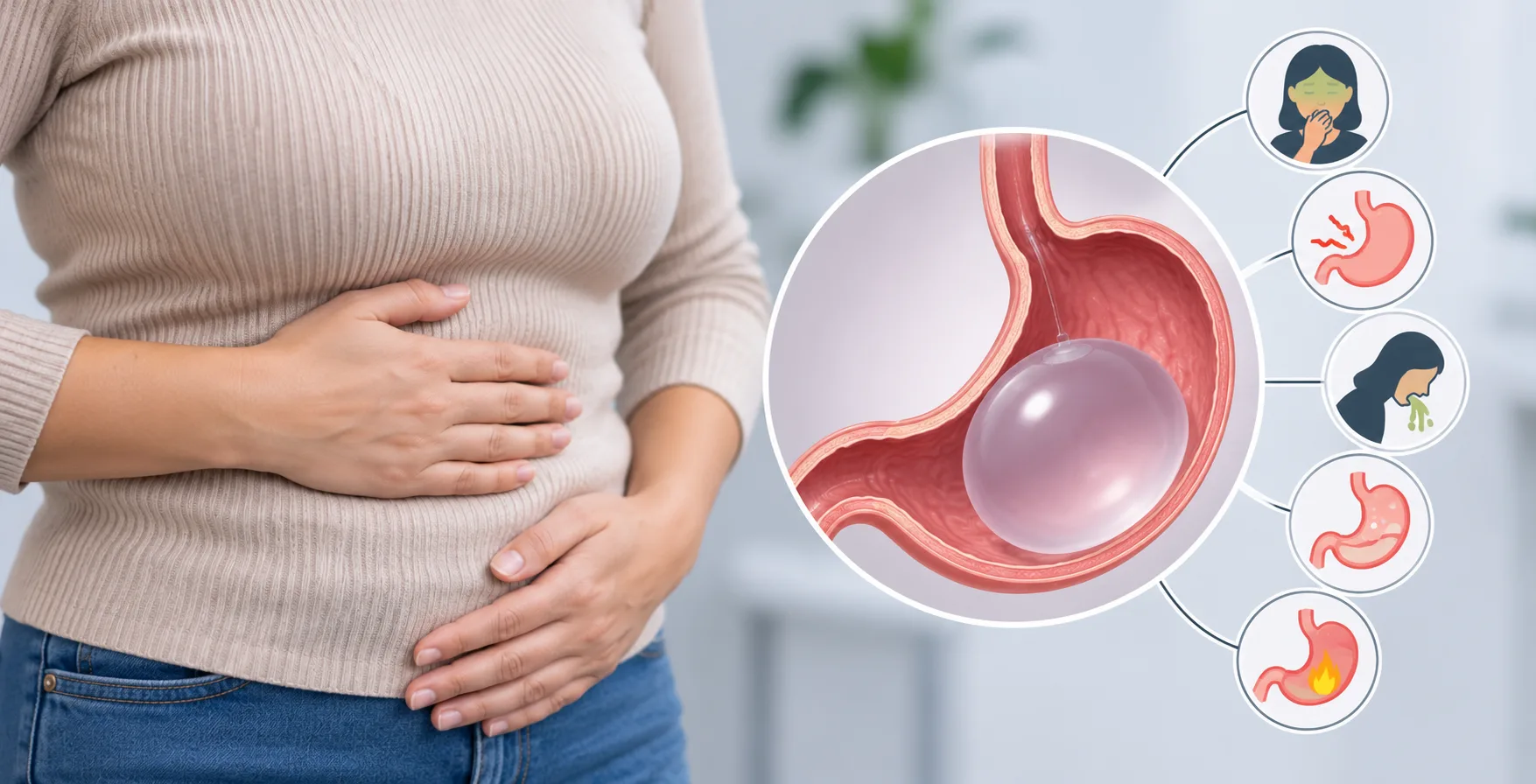
What Are Gastric Bypass Risks and Complications?
Gastric bypass is an effective bariatric operation, but it carries short-term surgical risks and long-term digestive and nutritional complications. The most serious early problems include anastomotic leaks, internal bleeding, infection, and blood clots. Long-term problems include dumping syndrome, bowel obstruction, marginal ulcers, and nutrient deficiencies. Large multicenter data place the 30-day mortality rate near 0.3 percent, although individual risk depends on health status, surgical technique, and follow-up care (Flum, 2009).
Roux-en-Y gastric bypass reshapes the stomach into a small pouch and reroutes the small intestine around most of the stomach and the first portion of the small bowel. This anatomical change produces durable weight loss and improves metabolic disease. It also explains why gastric bypass complications fall into two distinct groups. The first group appears within days or weeks of the operation. The second group emerges months or years later as the body adapts to altered digestion and absorption.
Two habits protect patients more than any others. The first is recognizing warning signs early, because complications such as leaks and clots respond best to rapid treatment. The second is lifelong bariatric surgery follow-up, because nutritional deficiencies develop silently and show up in blood tests long before they cause symptoms. The sections below examine each complication category in turn, starting with the risks that define the operation itself.
What Are the Risks of Gastric Bypass Surgery?
Gastric bypass is a major abdominal operation that permanently changes the stomach and small intestine. Its risks divide into early postoperative complications, which occur during surgery or recovery, and long-term complications, which result from altered digestion and nutrient absorption. Individual risk varies with pre-existing conditions, prior abdominal surgery, and adherence to postoperative instructions.
Gastric bypass surgery risks differ from simple side effects. A side effect, such as temporary food intolerance or fatigue during rapid weight loss, usually resolves on its own. A complication is a medical problem that requires diagnosis and often treatment. Bleeding that needs a transfusion qualifies as a complication. Mild nausea after eating too quickly does not.
The table below summarizes the two complication categories. This separation matters clinically, because the timing of a symptom often points directly to its cause.
Category | Typical onset | Examples | Main cause |
Short-term complications | Hours to 30 days | Anastomotic leak, bleeding, infection, deep vein thrombosis, anesthesia events | The operation and immediate recovery |
Long-term complications | Months to years | Dumping syndrome, internal hernia, marginal ulcer, stomal stenosis, nutritional deficiencies, post-bariatric hypoglycemia | Altered anatomy, absorption, and metabolism |
No single factor predicts an individual outcome. A patient with diabetes, a high body mass index, and previous abdominal operations faces a different risk profile than a younger patient without these conditions. Surgeon experience and hospital volume also influence results. With that framework in place, the next section examines the complications that appear first.
What Are the Immediate Complications After Gastric Bypass?
The main immediate complications are internal bleeding, surgical site infection, deep vein thrombosis, pulmonary embolism, and anesthesia-related events. Most occur within the first days after surgery, which is why hospitals monitor heart rate, temperature, oxygen levels, and laboratory values closely during the early recovery period.
Early complications share a common feature. They develop while the body heals from tissue injury, anesthesia, and the stress of a major operation. Care teams therefore screen for them systematically during the hospital stay and the first weeks at home.
Can Gastric Bypass Cause Internal Bleeding?
Yes. Bleeding can occur at the staple lines, at the surgical connections, or within the abdominal cavity. It usually appears within the first 24 to 48 hours.
Bleeding starts at the cut edges of the stomach or intestine, where surgeons place staples or sutures. Warning signs include weakness, dizziness, a racing heart, falling blood pressure, abdominal pain, and blood in vomit or stool. Doctors confirm blood loss with repeated hemoglobin measurements and imaging. Treatment ranges from observation and transfusion to endoscopic or surgical control of the bleeding vessel. Prompt recognition matters, which is also true for the next early complication, infection.
How Can Infection Develop After Gastric Bypass?
Infection develops when bacteria enter the surgical wound or the abdominal cavity. Wound infections stay near the skin, while deeper infections involve the spaces around the stomach pouch and intestine.
Signs of a wound infection include redness, warmth, swelling, drainage, and increasing pain at an incision. Deeper abdominal infections usually cause fever, rising heart rate, and worsening abdominal tenderness. Treatment combines antibiotics with wound care, and deeper collections sometimes require image-guided drainage. Surgeons reduce this risk with sterile technique and preventive antibiotics, yet infection control is only one part of early safety. Blood clot prevention addresses a different and equally serious threat.
Are Blood Clots a Risk After Bariatric Surgery?
Yes. Obesity, abdominal surgery, and reduced mobility together raise the risk of deep vein thrombosis and pulmonary embolism. Pulmonary embolism remains one of the leading causes of death after bariatric surgery (Finks, 2012).
A deep vein thrombosis forms in the leg or pelvic veins. If a fragment travels to the lungs, it becomes a pulmonary embolism, which blocks blood flow and strains the heart. Obesity promotes clot formation through chronic inflammation and sluggish venous blood flow, and surgery adds tissue injury and immobility. Prevention relies on three measures: blood-thinning medication, leg compression devices, and walking within hours of the operation. These steps also protect the lungs during recovery from anesthesia, the final early risk category.
Can Anesthesia Cause Complications During Gastric Bypass?
Yes. General anesthesia can cause respiratory, cardiovascular, and medication-related problems, and obesity increases the technical difficulty of airway management and dosing (Leykin, 2006).
Excess soft tissue around the neck can complicate breathing tube placement. Obesity-related conditions such as obstructive sleep apnea and high blood pressure raise the chance of low oxygen levels and heart rhythm problems during and after the operation. Preoperative assessment identifies these risks in advance, so anesthesiologists can adjust medications, ventilation strategy, and monitoring. Careful anesthetic planning protects the patient during surgery, but the most feared complication usually appears in the days after the operation ends.
Why Is an Anastomotic Leak One of the Most Serious Gastric Bypass Complications?
An anastomotic leak is a defect in a surgical connection that lets digestive fluid escape into the abdominal cavity. The leaked fluid triggers severe infection and can progress to sepsis, which makes this one of the most dangerous Roux-en-Y gastric bypass complications (Jacobsen, 2014).
The operation creates two anastomoses. One joins the stomach pouch to the small intestine, and the other joins two segments of intestine to each other. If either connection fails to seal, stomach acid, bile, and intestinal contents spill into spaces that should remain sterile. Bacteria multiply in this fluid, and the resulting infection can spread through the bloodstream. Speed determines the outcome. Teams that diagnose and treat leaks within hours achieve far better results than teams that wait, which makes symptom recognition the critical first step.
What Are the Symptoms of an Anastomotic Leak?
The hallmark symptoms are persistent or worsening abdominal pain, fever, and a rapid heart rate. A sustained heart rate above 120 beats per minute often appears before any other sign.
Patients may also report nausea, vomiting, pain radiating toward the left shoulder, low blood pressure, and reduced urine output. Symptoms can look mild at first, and fever is sometimes absent. Clinicians therefore treat unexplained rapid heart rate after gastric bypass as a leak until proven otherwise. Because symptoms alone cannot confirm the diagnosis, imaging and laboratory tests complete the picture.
How Do Doctors Diagnose and Treat an Anastomotic Leak?
Doctors diagnose leaks with contrast-enhanced CT scans and, when needed, upper gastrointestinal contrast studies. Treatment combines antibiotics, drainage of infected fluid, endoscopic stenting, or additional surgery, depending on severity (Marshall, 2003).
A CT scan with oral and intravenous contrast shows leaked contrast material, fluid collections, and inflammation. Small, contained leaks in stable patients often heal with antibiotics, drainage, and temporary fasting with nutritional support. Larger leaks or unstable patients need endoscopic stents to cover the defect or surgery to clean the abdomen and repair the connection. Leaks dominate the early danger period, but once the surgical connections heal, a different set of problems takes their place.
What Digestive Complications Can Develop After Gastric Bypass?
The main digestive complications are dumping syndrome, bowel obstruction, internal hernia, stomal stenosis, and marginal ulcers. Each one results from the way food and digestive fluids now travel through the rerouted anatomy.
Gastric bypass removes the normal pyloric valve from the food pathway and shortens the distance food travels through the small bowel. These changes alter the speed of gastric emptying, the mixing of food with digestive enzymes, and the mechanical behavior of the intestine. The following sections explain each consequence.
What Is Dumping Syndrome After Gastric Bypass?
Dumping syndrome occurs when food moves too quickly from the stomach pouch into the small intestine. It appears in an early form within 30 minutes of eating and a late form one to three hours later, and each form has a different mechanism (van Beek, 2017).
Early dumping happens because concentrated food pulls fluid into the intestine and triggers a surge of gut hormones. Late dumping results from reactive hypoglycemia. A rapid glucose spike drives excess insulin release, and blood sugar then falls below normal. The two forms differ in timing, mechanism, and symptoms.
Feature | Early dumping syndrome | Late dumping syndrome |
Onset after eating | 10 to 30 minutes | 1 to 3 hours |
Main mechanism | Fluid shift into the bowel and hormone release | Reactive hypoglycemia from excess insulin |
Typical symptoms | Cramps, bloating, diarrhea, nausea, sweating, palpitations, dizziness | Weakness, shakiness, sweating, confusion, faintness |
Dietary adjustment controls most cases. Patients eat smaller meals, separate fluids from solid food, and limit simple sugars. When dumping symptoms persist despite these changes, clinicians also consider structural problems such as obstruction, which the next section addresses.
Can Gastric Bypass Cause Bowel Obstruction?
Yes. Bowel obstruction after gastric bypass usually results from adhesions, internal hernias, or scarring at surgical sites. It requires prompt evaluation because a blocked intestine can lose its blood supply (Elms, 2014).
Symptoms include crampy abdominal pain, vomiting, bloating, and an inability to pass stool or gas. Adhesions, which are bands of internal scar tissue, can kink the bowel from the outside. Obstruction can also arise from a structural problem unique to bypass anatomy, the internal hernia.
What Is an Internal Hernia After Gastric Bypass?
An internal hernia occurs when a loop of intestine slips through a space created by the new anatomy. The trapped loop can twist, obstruct, or lose blood flow, so this condition is a surgical emergency (Paroz, 2006).
Rerouting the intestine leaves natural gaps, called mesenteric defects, between tissue layers. Surgeons close these gaps during the operation, but the closures can loosen as patients lose weight and fat between the tissues shrinks. Symptoms often appear intermittently, with episodes of cramping pain that resolve and return, which makes diagnosis difficult. Any sudden, severe, or persistent pain after gastric bypass warrants urgent assessment. Internal hernias obstruct the bowel from the outside, while the next complication narrows the food channel from within.
Can Gastric Bypass Cause Stenosis or Stricture?
Yes. Stomal stenosis is a narrowing of the connection between the stomach pouch and the small intestine. It typically develops within the first few months as scar tissue forms at the anastomosis (Frutos, 2007).
Patients notice progressive difficulty swallowing solid food, nausea, vomiting after meals, and food intolerance. Gastroenterologists confirm the narrowing with endoscopy or contrast imaging and usually treat it with endoscopic balloon dilation, often in a single session. Untreated narrowing exposes the pouch lining to prolonged irritation, which relates directly to the next complication.
Can Gastric Bypass Cause Ulcers?
Yes. Marginal ulcers form on the intestinal side of the connection between the pouch and the small bowel. Smoking and regular use of nonsteroidal anti-inflammatory drugs are the strongest risk factors (Coblijn, 2014).
Symptoms include burning or gnawing upper abdominal pain, nausea, and sometimes gastrointestinal bleeding that appears as black stool or vomiting blood. Stomach acid irritates intestinal tissue that never evolved to tolerate it, and tobacco smoke plus anti-inflammatory painkillers weaken the tissue's defenses. Treatment uses acid-suppressing medication, removal of the triggering factors, and endoscopic evaluation. Structural problems like ulcers explain many digestive complaints, but the most widespread long-term consequences of gastric bypass are nutritional.
What Nutritional Deficiencies Can Occur After Gastric Bypass?

Nutritional deficiencies after gastric bypass affect iron, vitamin B12, thiamine, vitamin D, folate, calcium, and protein. They develop because patients eat less food and absorb fewer nutrients, and they can appear months or years after surgery (Mechanick, 2020).
The bypass excludes the section of small intestine where the body absorbs many micronutrients most efficiently. At the same time, the small pouch limits total intake, and reduced stomach acid impairs the first steps of vitamin and mineral processing. Deficiencies rarely cause symptoms early, so guidelines recommend lifelong supplementation and scheduled laboratory monitoring rather than waiting for signs of disease (Parrott, 2017).
Can Gastric Bypass Cause Iron Deficiency and Anemia?
Yes. Iron deficiency is among the most common long-term gastric bypass side effects, and studies report anemia in a substantial share of patients within the first years after surgery (Vargas-Ruiz, 2008).
The bypassed duodenum is the main site of iron absorption, and low stomach acid reduces the conversion of dietary iron into an absorbable form. Menstruating women face the highest risk. Symptoms include fatigue, weakness, pale skin, and reduced exercise tolerance. Blood tests that measure hemoglobin and ferritin detect the problem early, and treatment uses oral or intravenous iron matched to the severity of the deficiency.
Which Vitamins Can Become Deficient After Gastric Bypass?
The vitamins monitored most closely after gastric bypass are B12, B1 (thiamine), D, folate, and A. Each deficiency causes a different pattern of harm, and early replacement prevents permanent damage.
Vitamin B12 absorption depends on stomach acid and intrinsic factor, both of which decline after bypass, and untreated deficiency can cause anemia and nerve damage. Thiamine deficiency can develop within weeks in patients who vomit repeatedly, and it can progress to Wernicke encephalopathy, a neurological emergency that causes confusion, eye movement problems, and poor coordination (Aasheim, 2008). Vitamin D deficiency accelerates bone loss. Folate deficiency impairs red blood cell production and raises risks during pregnancy. The table below summarizes the key nutrients.
Nutrient | Why deficiency develops | Possible consequences |
Vitamin B12 | Reduced acid and intrinsic factor | Anemia, neuropathy, cognitive changes |
Thiamine (B1) | Low intake plus persistent vomiting | Wernicke encephalopathy, nerve injury |
Vitamin D | Bypassed absorption sites, low sun exposure | Bone loss, muscle weakness |
Folate | Reduced intake and absorption | Anemia, fetal neural tube defects |
Vitamin A | Fat malabsorption | Night blindness, dry eyes |
Because vitamin D and calcium work together to maintain the skeleton, their deficiencies connect directly to the next topic, bone health.
Can Gastric Bypass Cause Calcium Deficiency and Bone Problems?
Yes. Reduced absorption of calcium and vitamin D can trigger secondary hyperparathyroidism, in which the parathyroid glands pull calcium from the skeleton. Population studies link gastric bypass to a higher long-term fracture rate (Nakamura, 2014).
The body keeps blood calcium constant at any cost. When dietary calcium and absorption fall short, parathyroid hormone rises and draws calcium out of bone. Years of this process thin the skeleton. Prevention combines calcium citrate and vitamin D supplementation with weight-bearing exercise, and monitoring uses blood tests plus periodic bone density scans. Minerals and vitamins are only part of the nutritional picture, because macronutrient shortfalls also matter.
Can Protein Deficiency Develop After Gastric Bypass?
Yes, although it is less common than vitamin and mineral deficiencies. Inadequate protein intake threatens muscle mass, wound healing, and immune function, and guidelines set daily protein targets to prevent it (Parrott, 2017).
The small pouch fills quickly, so patients who eat without a plan may fill up on soft, low-protein foods. Hair thinning, slow recovery from illness, and loss of lean tissue signal a shortfall. Dietitians counter this by prioritizing protein at every meal and adding protein supplements when food alone cannot meet the target. Nutritional problems represent one class of delayed consequences; metabolic and organ-specific problems form another.
What Other Long-Term Health Problems Can Occur After Gastric Bypass?
Beyond nutritional deficiencies, gastric bypass can contribute to gallstones, kidney stones, post-bariatric hypoglycemia, and weight regain. Rapid weight loss and altered absorption drive the first two, while changes in glucose regulation and long-term adaptation drive the last two.
These conditions differ from surgical complications because they arise from the body's response to rapid weight change and new digestive physiology rather than from the operation itself.
Can Gastric Bypass Cause Gallstones?
Yes. Rapid weight loss raises the cholesterol saturation of bile and promotes gallstone formation, particularly during the first year after surgery (Sugerman, 1995).
Gallstones often stay silent, but a stone that blocks the bile duct causes intense upper abdominal pain, nausea, and sometimes inflammation of the gallbladder or pancreas. Ultrasound confirms the diagnosis. Some care teams prescribe ursodeoxycholic acid during the rapid weight-loss phase to reduce stone formation, and symptomatic stones may require gallbladder removal. The same rapid metabolic change that concentrates bile also alters urine chemistry.
Can Gastric Bypass Cause Kidney Stones?
Yes. Gastric bypass increases urinary oxalate levels, which raises the risk of calcium oxalate kidney stones (Matlaga, 2009).
The bypassed intestine absorbs fat differently, and unabsorbed fat binds calcium in the gut. Oxalate then passes into the bloodstream instead of binding to calcium in the bowel, and the kidneys excrete it into urine where it forms stones. Prevention centers on generous fluid intake, moderate dietary oxalate, and adequate calcium taken with meals. While stone risk reflects mineral handling, another metabolic change affects blood sugar control.
Can Gastric Bypass Cause Hypoglycemia?
Yes. Post-bariatric hypoglycemia causes blood sugar to fall below normal one to three hours after meals, producing sweating, tremors, dizziness, weakness, and confusion (Service, 2005).
Rapid glucose delivery to the small intestine triggers an exaggerated release of insulin and incretin hormones, and blood sugar then drops too far. The condition can appear years after surgery. Management starts with dietary changes: smaller meals, fewer refined carbohydrates, and pairing carbohydrates with protein and fat. Severe cases need specialist evaluation and medication. Metabolic adaptation can also erode the primary goal of the operation, sustained weight loss.
Can Gastric Bypass Cause Weight Regain?
Yes. Some patients regain part of the lost weight after the first one to two years. Behavioral patterns, hormonal adaptation, and anatomical changes such as pouch stretching all contribute (Magro, 2008).
Weight regain is not a surgical complication in the technical sense, but it matters because it can bring back diabetes, hypertension, and sleep apnea. Twelve-year outcome data confirm that most patients maintain substantial weight loss, yet trajectories vary widely between individuals (Adams, 2017). Regular follow-up visits let the care team intervene early with dietary counseling, behavioral support, medication, or evaluation for anatomical causes. Understanding why outcomes differ leads naturally to the question of individual risk factors.
What Factors Increase the Risk of Gastric Bypass Complications?
Complication risk rises with pre-existing medical conditions, higher body mass index, previous abdominal surgery, smoking, poor nutritional status, certain medications, and poor adherence to postoperative instructions. Surgeon and hospital experience also influence outcomes. No single factor determines the result.
Risk factors act together rather than in isolation. Diabetes and heart disease complicate anesthesia and healing. Previous abdominal operations create adhesions that lengthen surgery. Smoking impairs tissue blood flow, which raises ulcer and leak rates. Pre-existing vitamin deficiencies worsen after surgery if nobody corrects them first. Medications such as steroids and blood thinners change healing and bleeding risk. High-volume bariatric centers report better outcomes than low-volume programs. Finally, patients who follow dietary stages, take supplements, and attend appointments prevent many late problems entirely. Risk awareness supports prevention, and symptom awareness supports early rescue.
Which Symptoms After Gastric Bypass Require Immediate Medical Attention?
Seek urgent medical evaluation for severe or worsening abdominal pain, a persistent rapid heart rate, fever, repeated vomiting, difficulty breathing, fainting, signs of dehydration, bloody vomit or stool, and sudden chest pain. These symptoms can signal leaks, obstruction, clots, or bleeding, and patients should never self-diagnose them.
Each red flag maps to a specific danger. A sustained rapid heart rate suggests a leak or internal bleeding. Fever points to infection. Repeated vomiting can indicate stenosis or obstruction and quickly causes dehydration and thiamine loss. Difficulty breathing and chest pain raise the possibility of pulmonary embolism. Black or bloody stool suggests ulcer bleeding. When several symptoms appear together, the urgency increases. Patients should contact their bariatric team or an emergency department rather than waiting for a routine appointment.
How Can Patients Reduce the Risk of Gastric Bypass Complications?
Patients reduce risk by following the staged postoperative diet, eating slowly, taking prescribed supplements for life, meeting protein targets, staying hydrated, avoiding smoking, and attending every scheduled follow-up visit with regular blood tests.
Prevention works through daily habits. The staged diet, which progresses from liquids to pureed food to solids, protects healing connections. Eating slowly and chewing thoroughly prevents obstruction of the small pouch outlet. Limiting sugary and high-fat foods reduces dumping episodes. Daily multivitamins, B12, calcium, and vitamin D close the absorption gap. Hydration prevents kidney stones and constipation. Smoking cessation lowers ulcer and leak risk. Scheduled laboratory monitoring catches deficiencies before they cause symptoms, and physical activity protects bone and muscle. Multidisciplinary follow-up, with surgeons, dietitians, and psychologists working together, ties these measures into a sustainable routine.
How Are Gastric Bypass Complications Treated?
Treatment depends on the complication, its severity, and when it appears. Options range from medication and dietary change to endoscopic procedures, drainage, and gastric bypass revision surgery. Early intervention almost always simplifies treatment.
The treatment spectrum matches the problem. Dietary adjustment manages most dumping syndrome and mild hypoglycemia. Acid-suppressing drugs heal most marginal ulcers. Endoscopy dilates strictures, controls some bleeding, and places stents over leaks. Image-guided drainage treats many fluid collections without open surgery. Intravenous iron and vitamin infusions correct severe deficiencies faster than pills. Emergency surgery remains necessary for bowel obstruction, uncontrolled bleeding, and severe leaks. The consistent principle is that small problems treated early rarely become large problems treated late.
Is Gastric Bypass Still Worth the Risk?
For many patients with severe obesity, yes. Long-term studies show that gastric bypass reduces overall mortality and improves or resolves type 2 diabetes, hypertension, and obstructive sleep apnea, and these benefits generally outweigh the complication risks in appropriately selected patients (Adams, 2017).
The Swedish Obese Subjects study and other long-term cohorts found lower rates of death, cardiovascular events, and cancer in surgical patients than in matched controls. The operation's risks are real but concentrated in the early period, while the metabolic benefits persist for a decade or longer. The decision still belongs to the individual. A sound choice weighs personal risk factors, expected benefits, non-surgical alternatives, and the willingness to commit to lifelong supplementation and monitoring. Honest counseling, not universal promises, produces the best outcomes.
What Are the Most Common Questions About Gastric Bypass Risks and Complications?
What Is the Most Dangerous Complication of Gastric Bypass?
Anastomotic leaks, pulmonary embolism, severe bleeding, and bowel obstruction carry the greatest danger because each can become life-threatening within hours. Severity depends on the individual case and, above all, on how quickly the team diagnoses the problem (Finks, 2012).
A leak treated within hours often resolves with antibiotics and drainage. The same leak treated after three days of delay can cause sepsis and organ failure. This is why rapid heart rate and worsening pain after surgery always warrant immediate assessment.
How Long After Gastric Bypass Can Complications Occur?
Surgical complications concentrate in the first 30 days, while digestive and nutritional complications can appear months, years, or even decades later. Long-term monitoring therefore never stops.
Leaks, bleeding, and clots belong to the early window. Internal hernias, ulcers, hypoglycemia, and deficiencies form the late window. Some deficiencies take years to deplete body stores, which explains why blood tests remain necessary long after weight stabilizes.
Can Gastric Bypass Complications Be Fatal?
Yes, severe complications can be life-threatening, but death after gastric bypass is rare. Multicenter data report a 30-day mortality rate near 0.3 percent, and outcomes depend on the complication, patient factors, and speed of treatment (Flum, 2009).
Modern bariatric programs reduce risk through patient selection, standardized protocols, and early rescue systems. Patients improve their own odds by reporting warning symptoms immediately and keeping follow-up appointments.
Is Vomiting Normal After Gastric Bypass?
Occasional vomiting after eating too fast or too much is common and usually harmless. Persistent or repeated vomiting is not normal and requires medical evaluation.
Eating behavior causes most isolated episodes, and slower meals solve them. Recurrent vomiting suggests stenosis, obstruction, or ulcer, and it also depletes thiamine rapidly. Vomiting that lasts more than a day or prevents fluid intake needs urgent attention.
Do Patients Need Vitamins for Life After Gastric Bypass?
Yes. Guidelines recommend lifelong vitamin and mineral supplementation after Roux-en-Y gastric bypass because the anatomical changes are permanent (Mechanick, 2020).
The exact supplements and doses vary between patients, so the bariatric care team tailors the regimen using annual blood tests. Stopping supplements without testing invites silent deficiencies that surface years later as anemia, nerve damage, or bone loss.
Can Gastric Bypass Complications Be Corrected Without Another Surgery?
Many can. Medication, dietary change, endoscopy, and drainage procedures resolve a large share of complications, and only some problems require gastric bypass revision surgery.
Ulcers respond to acid suppression, strictures to balloon dilation, many leaks to stents and drainage, and deficiencies to targeted supplementation. Surgery remains the answer for obstruction, internal hernias, and complications that fail conservative treatment. The guiding rule is early reporting, because nearly every complication is easier to treat at the start than at the end.
References
Aasheim, Erlend T. "Wernicke Encephalopathy after Bariatric Surgery: A Systematic Review." Annals of Surgery, vol. 248, no. 5, 2008, pp. 714-720.
Adams, Ted D., et al. "Weight and Metabolic Outcomes 12 Years after Gastric Bypass." The New England Journal of Medicine, vol. 377, no. 12, 2017, pp. 1143-1155.
Coblijn, Usha K., et al. "Development of Ulcer Disease after Roux-en-Y Gastric Bypass, Incidence, Risk Factors, and Patient Presentation: A Systematic Review." Obesity Surgery, vol. 24, no. 2, 2014, pp. 299-309.
Elms, Leila, et al. "Causes of Small Bowel Obstruction after Roux-en-Y Gastric Bypass: A Review of 2,395 Cases at a Single Institution." Surgical Endoscopy, vol. 28, no. 5, 2014, pp. 1624-1628.
Finks, Jonathan F., et al. "Predicting Risk for Venous Thromboembolism with Bariatric Surgery: Results from the Michigan Bariatric Surgery Collaborative." Annals of Surgery, vol. 255, no. 6, 2012, pp. 1100-1104.
Flum, David R., et al. "Perioperative Safety in the Longitudinal Assessment of Bariatric Surgery." The New England Journal of Medicine, vol. 361, no. 5, 2009, pp. 445-454.
Frutos, M. Dolores, et al. "Gastrojejunal Anastomotic Stricture after Laparoscopic Gastric Bypass with Hand-Sewn Gastrojejunal Anastomosis." Obesity Surgery, vol. 17, no. 3, 2007, pp. 392-395.
Jacobsen, Hans Jorgen, et al. "Management of Suspected Anastomotic Leak after Bariatric Laparoscopic Roux-en-Y Gastric Bypass." The British Journal of Surgery, vol. 101, no. 4, 2014, pp. 417-423.
Leykin, Yigal, et al. "Anesthetic Management of Morbidly Obese and Super-Morbidly Obese Patients Undergoing Bariatric Operations: Hospital Course and Outcomes." Obesity Surgery, vol. 16, no. 12, 2006, pp. 1563-1569.
Magro, Daniella O., et al. "Weight Regain after Roux-en-Y Gastric Bypass." Obesity Surgery, vol. 18, no. 6, 2008, pp. 648-651.
Marshall, John B., et al. "Selective Use of Computed Tomographic Scans to Detect Leaks after Gastric Bypass." American Journal of Surgery, vol. 186, no. 5, 2003, pp. 494-497.
Matlaga, Brian R., et al. "Effect of Gastric Bypass Surgery on Kidney Stone Disease." The Journal of Urology, vol. 181, no. 6, 2009, pp. 2573-2577.
Mechanick, Jeffrey I., et al. "Clinical Practice Guidelines for the Perioperative Nutrition, Metabolic, and Nonsurgical Support of Patients Undergoing Bariatric Procedures: 2019 Update." Surgery for Obesity and Related Diseases, vol. 16, no. 2, 2020, pp. 175-247.
Nakamura, Kellie M., et al. "Fracture Risk Following Bariatric Surgery: A Population-Based Study." Osteoporosis International, vol. 25, no. 1, 2014, pp. 151-158.
Parrott, Julie, et al. "American Society for Metabolic and Bariatric Surgery Integrated Health Nutritional Guidelines for the Surgical Weight Loss Patient 2016 Update: Micronutrients." Surgery for Obesity and Related Diseases, vol. 13, no. 5, 2017, pp. 727-741.
Paroz, Alexandre, et al. "Internal Hernias after Laparoscopic Roux-en-Y Gastric Bypass: Incidence, Diagnosis and Management." Obesity Surgery, vol. 16, no. 10, 2006, pp. 1263-1269.
Service, G. Jon, et al. "Hyperinsulinemic Hypoglycemia with Nesidioblastosis after Gastric-Bypass Surgery." The New England Journal of Medicine, vol. 353, no. 3, 2005, pp. 249-254.
Sugerman, Harvey J., et al. "A Multicenter, Placebo-Controlled, Randomized, Double-Blind, Prospective Trial of Prophylactic Ursodiol for the Prevention of Gallstone Formation Following Gastric-Bypass-Induced Rapid Weight Loss." American Journal of Surgery, vol. 169, no. 1, 1995, pp. 91-97.
van Beek, Andre P., et al. "Dumping Syndrome after Esophageal, Gastric or Bariatric Surgery: Pathophysiology, Diagnosis, and Management." Obesity Reviews, vol. 18, no. 1, 2017, pp. 68-85.
Vargas-Ruiz, Angel G., et al. "Prevalence of Iron, Folate, and Vitamin B12 Deficiency Anemia after Laparoscopic Roux-en-Y Gastric Bypass." Obesity Surgery, vol. 18, no. 3, 2008, pp. 288-293.