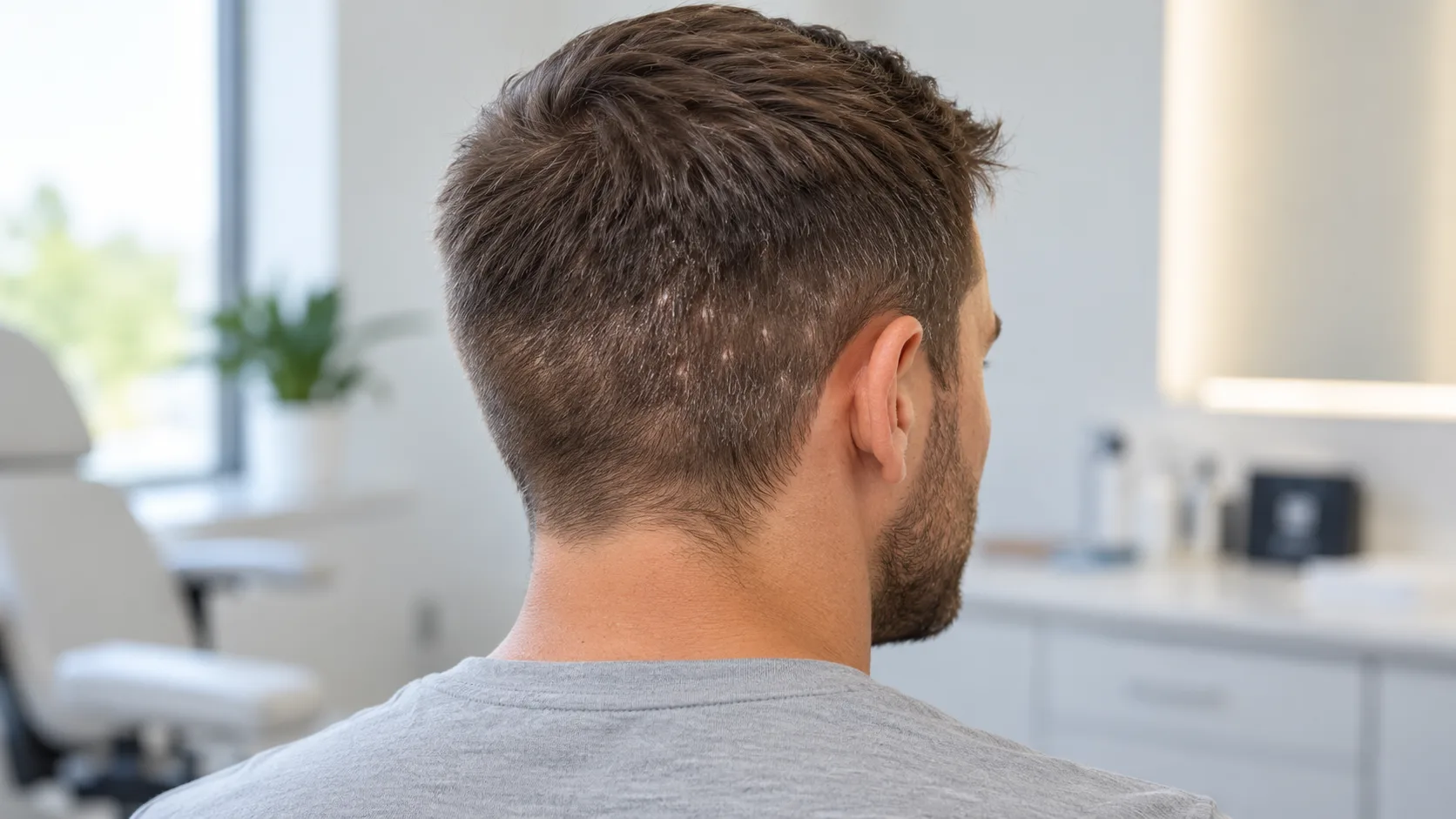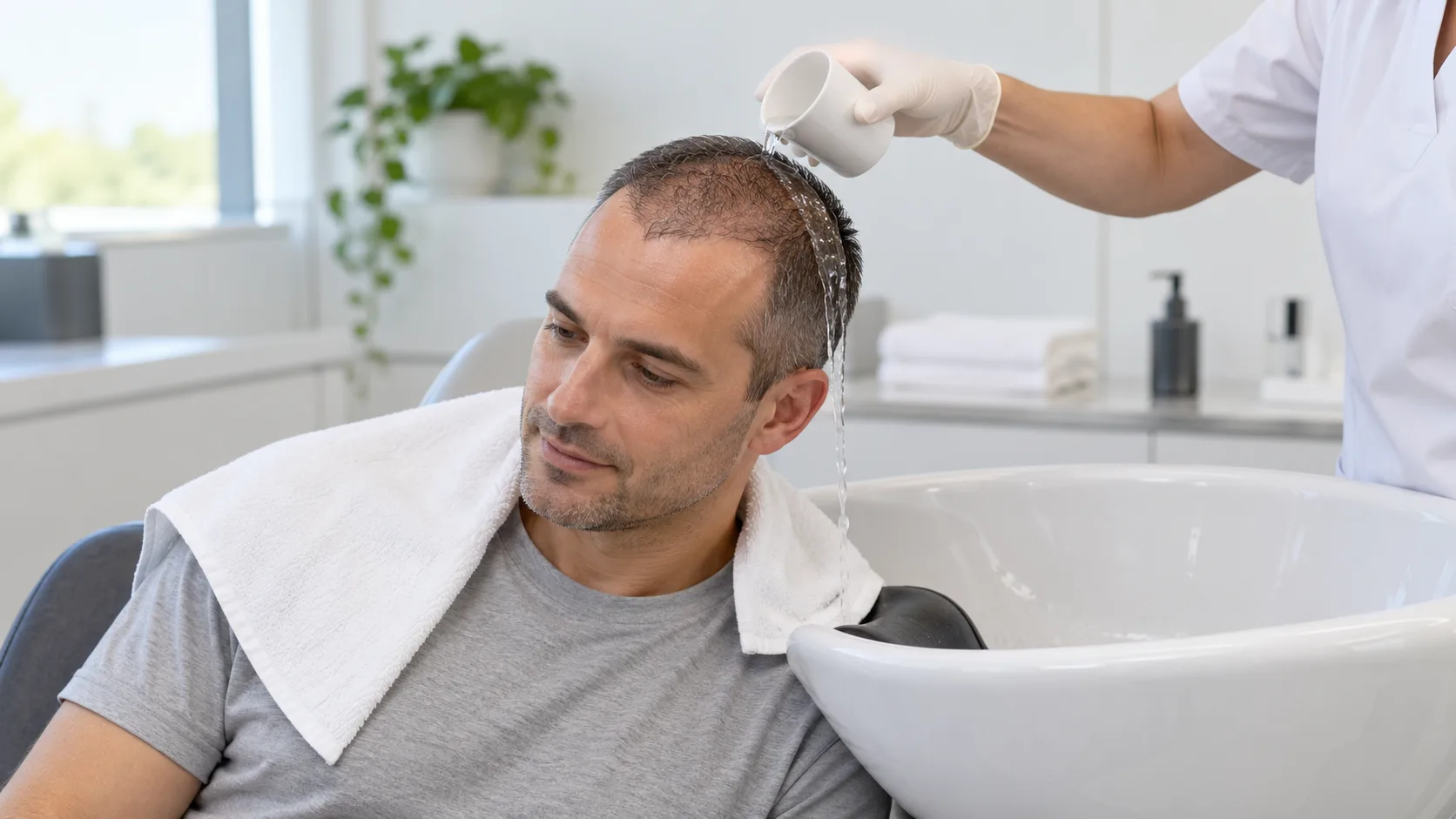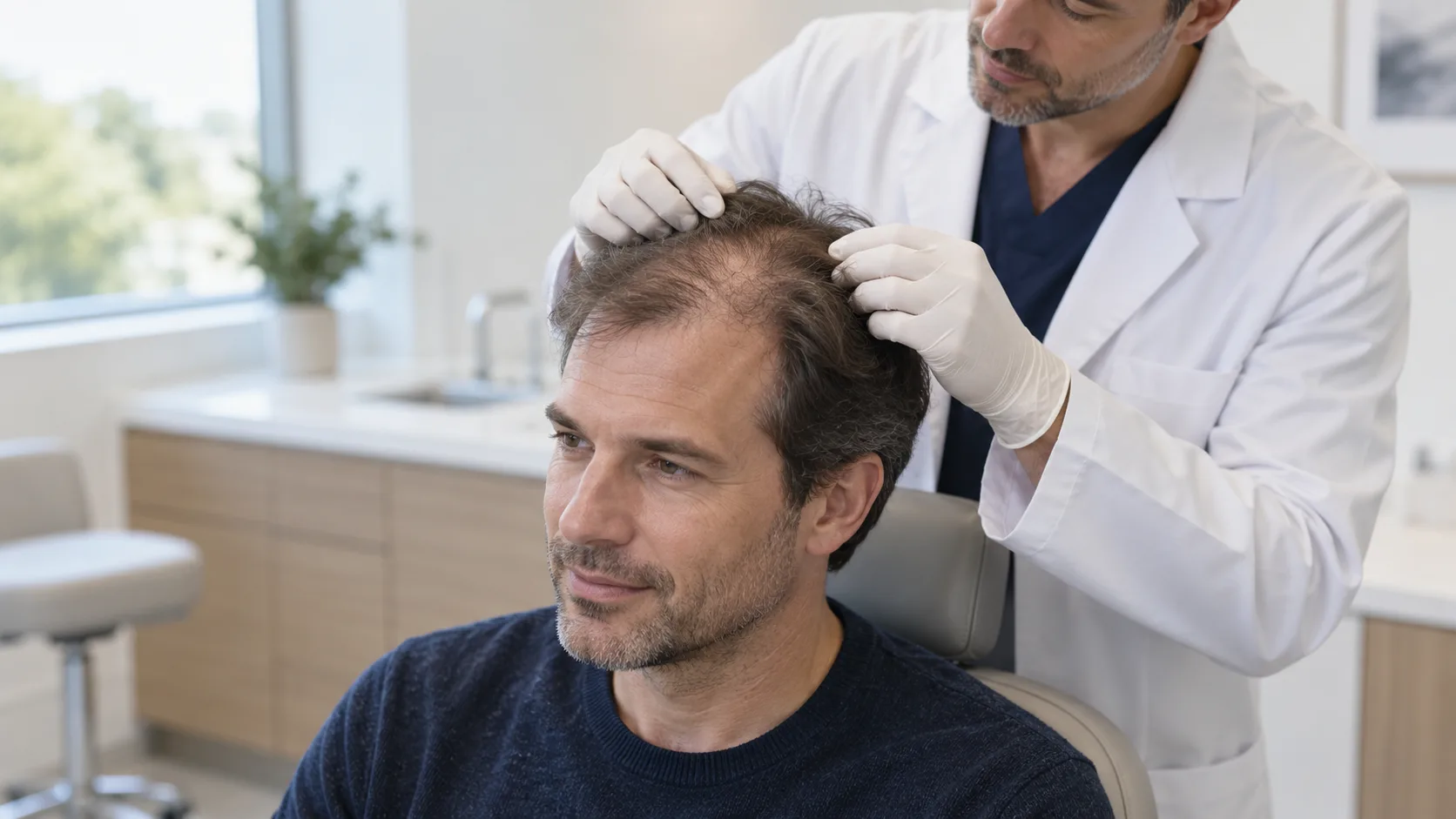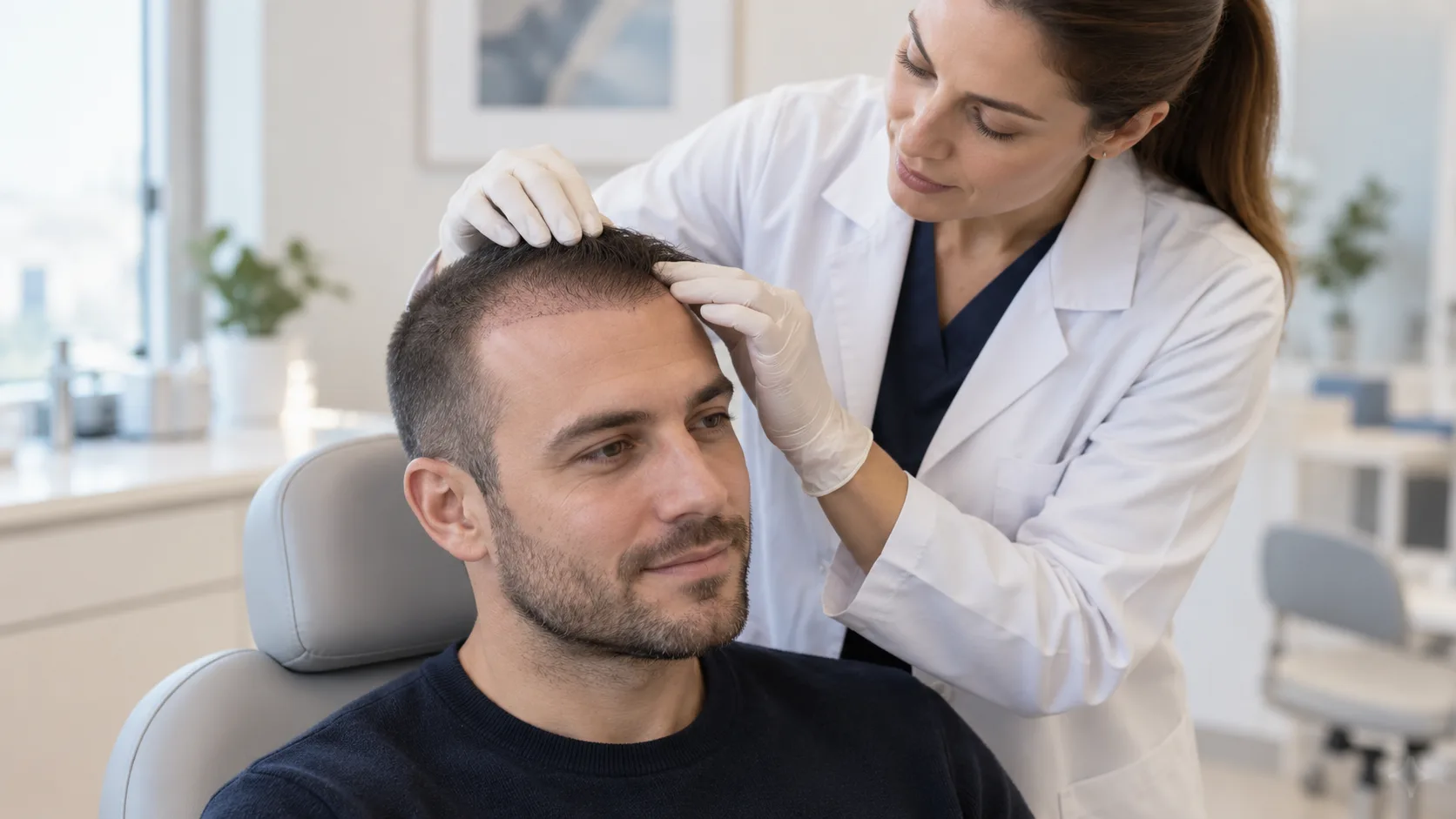
Thérapie par exosomes après une greffe de cheveux ?
thérapie par exosomes après une greffe de cheveux est un traitement régénératif complémentaire qui utilise des vésicules extracellulaires pour soutenir l'environnement du cuir chevelu, la guérison des greffons et la densité capillaire. Les preuves cliniques sont prometteuses mais encore précoces. Aucun protocole post-transplantation standardisé n'existe, donc chaque plan nécessite l'approbation du chirurgien.
Qu'est-ce que la thérapie par exosomes après une greffe de cheveux ?
C'est l'application ciblée d'exosomes, qui sont des vésicules extracellulaires de taille nanométrique, sur le cuir chevelu pendant la récupération après une greffe de cheveux pour soutenir la signalisation cellulaire et la santé folliculaire.
Les exosomes sont des vésicules extracellulaires liées par une membrane, généralement de 40 à 160 nanomètres de diamètre, que les cellules libèrent pour échanger des protéines, des lipides et des microARN avec les cellules voisines (Schaffer et al., 2025). En médecine régénérative, les cliniciens appliquent des produits d'exosomes préparés en laboratoire sur le cuir chevelu après une excision d'unités folliculaires (FUE) ou une transplantation de cheveux directe (DHI).
Ce traitement diffère de la thérapie par cellules souches. La thérapie par cellules souches introduit des cellules vivantes qui peuvent s'engager ou se diviser. La thérapie par exosomes livre du contenu de signalisation sans cellules, ce qui réduit le risque immunogénique mais limite également la permanence. Les deux approches partagent une rationale régénérative, mais elles ne sont pas interchangeables.
La thérapie par exosomes ne remplace pas la transplantation de cheveux. Une greffe déplace des follicules permanents vers des zones dégarnies. Les exosomes ne peuvent que soutenir l'environnement tissulaire autour de ces follicules et autour des cheveux natifs existants qui continuent de se miniaturiser sous l'alopécie androgénétique.
Pourquoi les exosomes sont-ils considérés après une greffe de cheveux ?
Les revues de recherche identifient quatre mécanismes d'intérêt : la signalisation cellulaire vers les cellules folliculaires, l'angiogenèse, le contrôle de l'inflammation et la réparation des tissus (Al Ameer et al., 2025).
Une greffe de cheveux crée des milliers de micro-blessures et place des greffons dans un cuir chevelu qui doit reconstruire l'approvisionnement sanguin. Les exosomes transportent des facteurs de croissance et des microARN qui peuvent moduler ces processus. Les travaux précliniques sur des modèles d'alopécie androgénétique montrent que les vésicules extracellulaires dérivées de cellules souches mésenchymateuses peuvent soutenir le cycle et la repousse des follicules (Oh et al., 2024).
L'angiogenèse est importante car les follicules transplantés survivent grâce à de nouvelles connexions capillaires pendant les premières semaines. La signalisation anti-inflammatoire est importante car une inflammation excessive peut stresser les greffons et les follicules natifs. Le contrôle du stress oxydatif ajoute une autre couche de soutien, car l'ischémie lors de la manipulation des greffons génère des radicaux libres.
Ces mécanismes expliquent l'intérêt clinique, mais ils décrivent la plausibilité biologique plutôt que des résultats prouvés chez les patients post-transplantation. La plupart des données humaines proviennent de populations ayant perdu leurs cheveux sans intervention chirurgicale, que les cliniciens extrapolent aux soins postopératoires.
Comment les exosomes peuvent-ils affecter les follicules pileux transplantés ?
Les exosomes peuvent soutenir les signaux de régénération folliculaire, améliorer le microenvironnement du cuir chevelu et augmenter la densité et l'épaisseur des cheveux, bien que les études varient considérablement en source, dose et mode d'administration.
Les exosomes pourraient-ils soutenir la régénération folliculaire ?
Les exosomes peuvent influencer les cellules de papille dermique, qui contrôlent le cycle des follicules, par le biais de voies de signalisation liées à la croissance.
Les cellules de papille dermique se trouvent à la base de chaque follicule et commandent la croissance. Le contenu des exosomes inclut des modulateurs de la voie Wnt et des microARN qui affectent ces cellules in vitro. Si les exosomes incitent les cellules de papille dermique vers l'anagène, la phase de croissance active, ils peuvent aider les follicules miniaturisés à produire des tiges plus épaisses.
Les exosomes pourraient-ils améliorer l'environnement du cuir chevelu ?
Oui, grâce à la signalisation angiogénique, à la modulation inflammatoire et à la réparation tissulaire locale.
Après la transplantation, le cuir chevelu post-opératoire a besoin d'une revascularisation rapide et d'une cicatrisation contrôlée. La signalisation exosomal peut encourager l'activité des cellules endothéliales et réduire les signaux pro-inflammatoires. Cela crée des conditions où les greffes établissent un flux sanguin plus tôt et où les follicules natifs subissent moins de stress.
Les exosomes pourraient-ils influencer la densité et l'épaisseur des cheveux ?
Des études cliniques rapportent des gains mesurables en densité des cheveux et en diamètre des tiges, mais aucune étude ne prouve que les exosomes créent de nouveaux follicules.
Lors d'un essai prospectif de 12 patients atteints d'alopécie androgénique, les injections d'exosomes de cellules souches mésenchymateuses placentaires intradermiques ont augmenté la densité des cheveux de 96,5 à 163,5 cheveux par cm² et ont augmenté le diamètre des cheveux de 0,049 mm à 0,059 mm en six semaines (Dehghani et al., 2024). Une étude de microneedling sur 39 patients a rapporté un gain de densité de 24,9 cheveux/cm² sur 12 semaines (Park et al., 2022). Ces résultats reflètent la stimulation des follicules existants, pas la néogenèse folliculaire.
Quand pouvez-vous avoir une thérapie par exosomes après une transplantation de cheveux ?
Le timing doit être individualisé, et la plupart des chirurgiens attendent la stabilisation des greffes et la cicatrisation initiale du cuir chevelu, ce qui signifie souvent plusieurs semaines après l'opération. Aucun calendrier universel n'existe.
Une application précoce risque de perturber les greffes ou d'introduire une infection dans les sites de guérison. La technique de transplantation est également importante. FUE et DHI créent des motifs de plaie et des vitesses de guérison différentes. L'évaluation post-opératoire du chirurgien, l'état de croûte et toute inflammation résiduelle déterminent la première fenêtre de sécurité possible.
Les patients doivent obtenir l'autorisation de leur chirurgien de transplantation avant toute séance. Une clinique qui propose un calendrier fixe sans examiner le cuir chevelu agit contre les limites des preuves actuelles. La question n'est pas seulement quand commencer, mais si le cuir chevelu individuel est prêt.
Comment la thérapie par exosomes est-elle appliquée après une transplantation de cheveux ?
Les cliniciens administrent les exosomes par injection intradermique, application topique combinée avec microneedling, ou les deux, selon le produit et les objectifs du traitement.
La thérapie par exosomes est-elle injectée dans le cuir chevelu ?
Oui, l'injection intradermique est la méthode la plus étudiée, utilisant des aiguilles fines pour placer le produit autour des follicules.
L'injection place une dose définie près des cellules cibles. Les études ont utilisé des techniques de nappage ou point par point avec des volumes d'environ 0,05 à 0,1 mL par site (Ersan et al., 2024).
La microneedling peut-elle être utilisée pour administrer des exosomes ?
Oui, la microneedling crée des microcanaux contrôlés qui permettent aux exosomes topiques de pénétrer la barrière cutanée.
La livraison mécanique évite la douleur liée aux injections et répartit le produit sur de larges zones. Une étude prospective de 12 mois a combiné un derma roller de 1,5 mm avec des exosomes topiques dérivés de graisse et a rapporté une augmentation de la densité de 35 cheveux/cm² (Wan et al., 2025). Les revues notent que la livraison basée sur la microneedling améliore souvent les résultats (Al Ameer et al., 2025).
Qu'est-ce qui détermine la méthode de livraison ?
Les caractéristiques du produit, la zone de traitement, les facteurs du patient et l'expérience du clinicien influencent tous le choix.
Les produits visqueux conviennent à l'injection. Les formulations à viscosité plus faible fonctionnent avec la microneedling. La dose administrée, la fréquence des séances et la mesure des résultats restent non standardisées à travers les études, donc la méthode de livraison ne peut pas encore suivre une règle basée sur des preuves fixes.
Quels sont les avantages potentiels de la thérapie par exosomes après une greffe de cheveux ?
Les avantages potentiels incluent un environnement de guérison plus fort, une amélioration de l'épaisseur des tiges capillaires, un soutien à la densité, et une stimulation des follicules natifs miniaturisés. Aucun de ces résultats n'est garanti.
Le traitement peut apporter de la valeur aux patients dont les cheveux natifs continuent de s'affiner. Le soutien des follicules existants peut améliorer la densité cosmétique globale même lorsque les greffes transplantées croissent selon leur propre calendrier. Les effets régénératifs autour du cuir chevelu peuvent également aider la zone receveuse à récupérer plus rapidement.
Les patients doivent considérées chaque avantage énuméré comme une possibilité, et non une promesse. Les preuves proviennent d'études petites et hétérogènes, et la population post-transplantation manque spécifiquement d'essais dédiés.
Les exosomes peuvent-ils accélérer les résultats de la greffe de cheveux ?

Les exosomes peuvent soutenir l'environnement biologique autour des greffes, mais aucune preuve ne montre qu'ils réduisent le cycle de croissance normal des follicules transplantés.
Les cheveux transplantés entrent dans une phase de repos, tombent et repoussent sur une période de trois à quatre mois, avec des résultats matures à douze mois. La thérapie régénérative ne peut pas compresser ce cycle car la biologie du follicule fixe le rythme. Les études ont mesuré les paramètres de densité et d'épaisseur, et non l'accélération de chaque étape de croissance (Queen et Avram, 2025).
Le soutien précoce à la récupération et les résultats esthétiques finaux sont des points d'arrivée différents. Un patient peut remarquer des conditions du cuir chevelu plus saines plus tôt, tandis que la densité finale suit encore le calendrier standard.
Combien de temps faut-il pour voir des résultats de la thérapie par exosomes ?
Les changements visibles nécessitent généralement plusieurs mois, car les cheveux poussent par cycles et la densité évolue lentement.
L'induction en anagène prend des semaines, et les changements de diamètre de la nouvelle tige capillaire nécessitent une phase de croissance complète pour devenir visibles. La photographie de suivi, la trichoscopie et l'éclairage standardisé offrent la comparaison la plus objective. Les délais rapportés varient car les études ont utilisé différentes doses, sources et fenêtres de suivi, allant de six semaines à douze mois (Al Ameer et al., 2025).
Combien de séances d'exosomes sont nécessaires après une greffe de cheveux ?
Aucun nombre universellement accepté n'existe, donc la fréquence des séances doit suivre l'évaluation médicale plutôt qu'un forfait fixe.
Les protocoles publiés varient d'une seule séance à des injections bi-hebdomadaires sur deux mois (Dehghani et al., 2024). Les facteurs qui influencent la fréquence comprennent la concentration d'exosomes, la voie de livraison, l'étendue de la zone traitée et la réponse du patient lors du suivi. Un chirurgien doit ajuster le plan en fonction des résultats mesurés, et non vendre un forfait prédéterminé.
La thérapie par exosomes est-elle sûre après une greffe de cheveux ?
Les études cliniques disponibles rapportent principalement des réactions légères et de courte durée, mais les données de sécurité à long terme restent limitées.
Les réactions courantes comprennent une sensibilité du cuir chevelu, des rougeurs transitoires, un gonflement et des démangeaisons aux sites d'application. Une cohorte a signalé une légère rougeur chez 20 % des patients, qui a disparu spontanément (Al Ameer et al., 2025). L'infection reste une complication potentielle des procédures chaque fois que la barrière cutanée est rompue, il est donc important d'utiliser une technique stérile.
Une revue clinique de neuf études humaines portant sur 125 patients a trouvé des effets secondaires locaux rares, mais a signalé au moins dix événements indésirables graves rapportés ailleurs en dermatologie et a appelé à des essais plus importants (Queen et Avram, 2025). La qualité du produit et la surveillance clinique déterminent une grande partie du risque dans le monde réel.
Quelles sont les limitations de la thérapie par exosomes après une greffe de cheveux ?
Les principales limitations sont l'absence de protocole standardisé et la qualité variable des produits entre les prestataires.
Pourquoi n'y a-t-il pas encore de protocole standardisé pour les exosomes ?
Les études diffèrent par la source biologique, les méthodes d'isolement, la composition, la concentration, la posologie, la voie d'administration, la fréquence et la mesure des résultats.
La revue systématique de 2025 a identifié onze études cliniques et a souligné cette hétérogénéité comme le principal obstacle à des conclusions fermes (Al Ameer et al., 2025). Comparer les résultats selon une telle variation ressemble à comparer différents médicaments plutôt qu'à comparer les doses d'un même médicament.
Pourquoi la qualité des produits à base d'exosomes est-elle importante ?
La source, la caractérisation, la pureté, la puissance, les normes de fabrication et le stockage changent toutes ce que contient réellement un flacon.
Les produits non caractérisés peuvent contenir peu de vésicules fonctionnelles ou des contaminants indésirables. La revue de la Société internationale de chirurgie de restauration capillaire liste la source, l'isolement, la dose, l'administration, la normalisation et l'approbation réglementaire comme des problèmes non résolus. Les patients devraient demander des données de caractérisation de tiers avant le traitement.
Comment la thérapie par exosomes se compare-t-elle au PRP après une greffe de cheveux ?
Les deux traitements visent un soutien régénératif, mais le PRP utilise le propre sang du patient tandis que la thérapie par exosomes utilise des vésicules extracellulaires préparées en laboratoire. Aucun n'est universellement supérieur.
Facteur | Thérapie par exosomes | PRP |
Source biologique | Produit biologique externe | Sang propre du patient |
Préparation | Isolement et purification en laboratoire | Collecte de sang et centrifugation |
Livraison | Injection ou application topique assistée par microneedling | Injection généralement dans le cuir chevelu |
Raisonnement principal | Charge de signalisation cellulaire, microARN | Facteurs de croissance dérivés des plaquettes |
Statut des preuves | Émergent, hétérogène | Plus établi mais variable |
Normalisation | En cours de développement | Plus défini, bien que les protocoles varient |
Une revue comparative a trouvé que les résultats des exosomes étaient globalement similaires à ceux du PRP et peut-être plus forts à court terme, mais le faible nombre d'essais cliniques chez l'homme maintient cette conclusion préliminaire (Schaffer et al., 2025). Les cliniciens combinent parfois les deux, mais les protocoles de combinaison nécessitent une évaluation par le médecin.
La thérapie par exosomes peut-elle être combinée avec d'autres traitements de la perte de cheveux ?
Oui, les médecins combinent souvent les exosomes avec un traitement médical pour l'alopécie androgénétique, mais la combinaison est une décision clinique, pas une exigence automatique.
Le minoxidil et le finastéride s'attaquent aux facteurs hormonaux de la perte continue. Les exosomes peuvent soutenir l'environnement folliculaire local. Un plan complet peut donc protéger les cheveux natifs pendant que les greffes de transplantation mûrissent. Les patients ne doivent pas supposer que l'ajout de traitements supplémentaires apporte toujours un bénéfice, car les interactions et le coût cumulatif nécessitent une évaluation.
Qui peut bénéficier de la thérapie par exosomes après une transplantation capillaire ?
Les candidats incluent les patients recherchant un soutien régénératif complémentaire, ceux présentant un amincissement des cheveux natifs en cours, et ceux ayant des préoccupations de densité ou d'épaisseur identifiées lors de l'évaluation clinique.
Les patients dont l'évaluation du cuir chevelu révèle des follicules miniaturisés mais viables peuvent en tirer le plus de bénéfice, car la stimulation fonctionne mieux sur les follicules vivants.
Qui peut ne pas être un candidat approprié ?
Les patients ayant une infection active du cuir chevelu, des contre-indications médicales pertinentes ou des attentes de repousse immédiate et garantie devraient éviter ou retarder le traitement.
Un cuir chevelu enflammé ou infecté augmente le risque de la procédure. Les patients qui s'attendent à un raccourci à travers le cycle de croissance risquent de se sentir déçus, quel que soit l'effet biologique. Quiconque omet une évaluation médicale appropriée contourne également les mesures de sécurité qui rendent cette thérapie raisonnablement sûre.
Que devriez-vous demander avant de choisir la thérapie par exosomes après une greffe de cheveux ?
Renseignez-vous sur la source du produit, sa caractérisation, sa fabrication, les preuves, la méthode de délivrance, le calendrier, les résultats réalistes, les risques, le clinicien effectuant l'intervention et le statut réglementaire.
Dix questions ciblées protègent les patients : Quelle est la source des exosomes ? Comment le produit est-il caractérisé ? Comment est-il fabriqué et stocké ? Quelles preuves soutiennent son utilisation ? Quelle méthode de délivrance sera utilisée ? Quel calendrier est proposé ? Quels résultats sont réalistes ? Quels sont les risques ? Qui réalise la procédure ? Le produit utilisé respecte-t-il un cadre réglementaire approprié ? Un fournisseur qui répond clairement fait preuve d'une bonne surveillance de la qualité.
Que dit la recherche actuelle sur les exosomes et la greffe de cheveux ?
Les preuves actuelles montrent des améliorations dans au moins un paramètre capillaire au cours de onze études cliniques, mais les échantillons petits, les protocoles hétérogènes et les suivis courts limitent la certitude (Al Ameer et al., 2025).
Les preuves comprennent deux essais contrôlés randomisés, trois études rétrospectives, trois études prospectives à bras unique, une série de cas, et deux rapports de cas. La plupart des données portent sur l'alopécie androgénétique plutôt que sur la récupération post-greffe spécifiquement. Une revue de 2023 a également trouvé principalement des preuves précliniques et aucun effet indésirable significatif signalé jusqu'à ce point (Gupta et al., 2023).
Le domaine a besoin d'essais randomisés plus larges, de protocoles standardisés et d'études qui incluent de vrais patients post-greffe.
Les exosomes sont-ils approuvés par la FDA pour le traitement de la perte de cheveux ?
Aucun produit injectable d'exosomes ne détient actuellement une approbation de la FDA pour la perte de cheveux, et le statut réglementaire dépend du produit spécifique et de la juridiction.
La recherche scientifique et l'approbation réglementaire sont des jalons différents. Un essai prometteur n'égale pas une autorisation commerciale. Les patients devraient vérifier le statut réglementaire et d'essai clinique de tout produit spécifique et traiter les prétentions de large marketing d'approbation comme un signal d'alerte.
Que doivent attendre les patients de la thérapie par exosomes après une greffe de cheveux ?
Attendez-vous à un complément potentiellement utile avec des résultats réalistes et progressifs, et non à une transformation garantie.
La réponse individuelle varie en fonction de la biologie, de la qualité du produit et du protocole. Les cheveux transplantés suivent toujours leur chronologie normale de douze mois. Un suivi dirigé par le chirurgien avec des mesures objectives demeure le moyen le plus sûr de juger si le traitement apporte une valeur ajoutée.
Questions fréquemment posées sur la thérapie par exosomes après une greffe de cheveux
Ces courtes réponses abordent les questions post-greffe les plus courantes concernant le timing, la sécurité, les comparaisons et les attentes.
Puis-je bénéficier d'une thérapie par exosomes immédiatement après une greffe de cheveux ?
Non, l'application immédiate est généralement évitée car le cuir chevelu a besoin d'une stabilisation et d'une guérison initiales des greffons. Votre chirurgien détermine la première fenêtre sûre.
Les exosomes améliorent-ils la survie des greffons de greffe de cheveux ?
La justification biologique soutient de meilleures conditions de guérison, mais aucun essai contrôlé n'a prouvé des taux de survie des greffons plus élevés avec des exosomes.
Les exosomes peuvent-ils accélérer la croissance des cheveux après une FUE ?
Aucune preuve solide ne montre une accélération du cycle de croissance après une FUE. La densité et l'épaisseur peuvent s'améliorer, mais le timing suit la biologie des follicules.
Les exosomes peuvent-ils être utilisés après une greffe de cheveux DHI ?
Oui, les patients DHI peuvent recevoir une thérapie par exosomes une fois que le chirurgien confirme la guérison, en utilisant les mêmes principes de timing individualisé que pour la FUE.
Les exosomes sont-ils meilleurs que le PRP après une greffe de cheveux ?
Aucune réponse définitive n'existe. Les preuves suggèrent des résultats à court terme comparables, et le choix dépend de la qualité du produit, du protocole et des facteurs liés au patient.
Combien de traitements par exosomes sont nécessaires après une greffe de cheveux ?
Les protocoles varient d'une session à des sessions bi-hebdomadaires sur deux mois. Votre clinicien doit déterminer le nombre en fonction de la réponse.
Combien de temps après une thérapie par exosomes la croissance des cheveux deviendra-t-elle visible ?
La plupart des patients ont besoin de plusieurs mois, car les cheveux ont un cycle de croissance lent. Une évaluation objective à trois à six mois donne une image plus claire.
Y a-t-il des effets secondaires liés à la thérapie par exosomes ?
Une rougeur légère, une sensibilité et des démangeaisons sont les effets les plus courants. Les événements graves restent rares dans les études publiées mais ne peuvent pas être exclus.
Les exosomes sont-ils approuvés par la FDA pour la restauration des cheveux ?
Non. Aucun produit à base d'exosomes n'a reçu l'approbation de la FDA pour la restauration des cheveux, donc vérifiez le statut réglementaire de tout produit spécifique.
La thérapie par exosomes peut-elle remplacer le minoxidil ou le finastéride ?
Non. Les exosomes ne traitent pas la progression hormonale de l'alopécie androgénétique de la manière dont ces médicaments le font.
La thérapie par exosomes peut-elle remplacer une greffe de cheveux ?
Non. Les exosomes soutiennent les environnements folliculaires mais ne peuvent pas restaurer un cuir chevelu chauve comme le fait la transplantation en relocalisant des follicules permanents.
Références
Al Ameer, Mohammed A., et al. “Exosomes et régénération des cheveux : une revue systématique des preuves cliniques à travers les types d'alopécie et les sources d'exosomes.”Clinical, Cosmetic and Investigational Dermatologyvol. 18, 2025, pp. 2215–2227.
Dehghani, Leila, et al. “Efficacité de la thérapie par exosomes de cellules souches mésenchymateuses dérivées du placenta dans le traitement de l'alopécie androgénétique : étude clinique.”Journal of Cosmetic Dermatology2024.
Ersan, M., et al. “Efficacité du traitement par exosomes dans l'alopécie androgénétique : résultats d'une étude prospective.”Aesthetic Plastic Surgeryvol. 48, 2024, pp. 4262–4271.
Gentile, Pietro, et al. “Microgreffes autologues contenant des nanovésicules, des exosomes et des cellules souches folliculaires dans l'alopécie androgénétique : analyse in vitro et in vivo.”Aesthetic Plastic Surgeryvol. 49, 2025, pp. 43–58.
Gupta, Aditya K., et al. “Exosomes pour la restauration des cheveux : une revue systématique.”Journal of Cosmetic Dermatology2023.
Oh, Hyeong Geun, et al. “Amélioration de l'alopécie androgénique par des vésicules extracellulaires secrétées par des cellules souches mésenchymateuses induites stimulées par l'acide hyaluronique.”Stem Cell Research & Therapy, vol. 15, 2024, p. 287.
Park, Kyung Ah, et al. « Exosomes dérivés des cellules souches mésenchymateuses du tissu adipeux humain pour l'alopécie. » Journal de dermatologie cosmétique, 2022.
Queen, Dominic, et Marc Avram. « Exosomes pour le traitement de la perte de cheveux : une revue des études cliniques. » Chirurgie dermatologique, vol. 51, no. 4, 2025, pp. 409–415.
Schaffer, Sarah, et al. « Une revue exploratoire des applications de livraison d'exosomes dans la perte de cheveux. » Cureus, vol. 17, no. 3, 2025, e81152.
Wan, Jun, et al. « Une étude prospective sur la thérapie par exosomes pour l'alopécie androgénétique. » Chirurgie plastique esthétique, vol. 49, 2025, pp. 3151–3156.