What Do Gastric Balloon Before and After Results Really Look Like?
Most patients lose about 10 to 15 percent of their total body weight during a six-month gastric balloon treatment. Results depend on starting weight, balloon type, and lifestyle adherence.
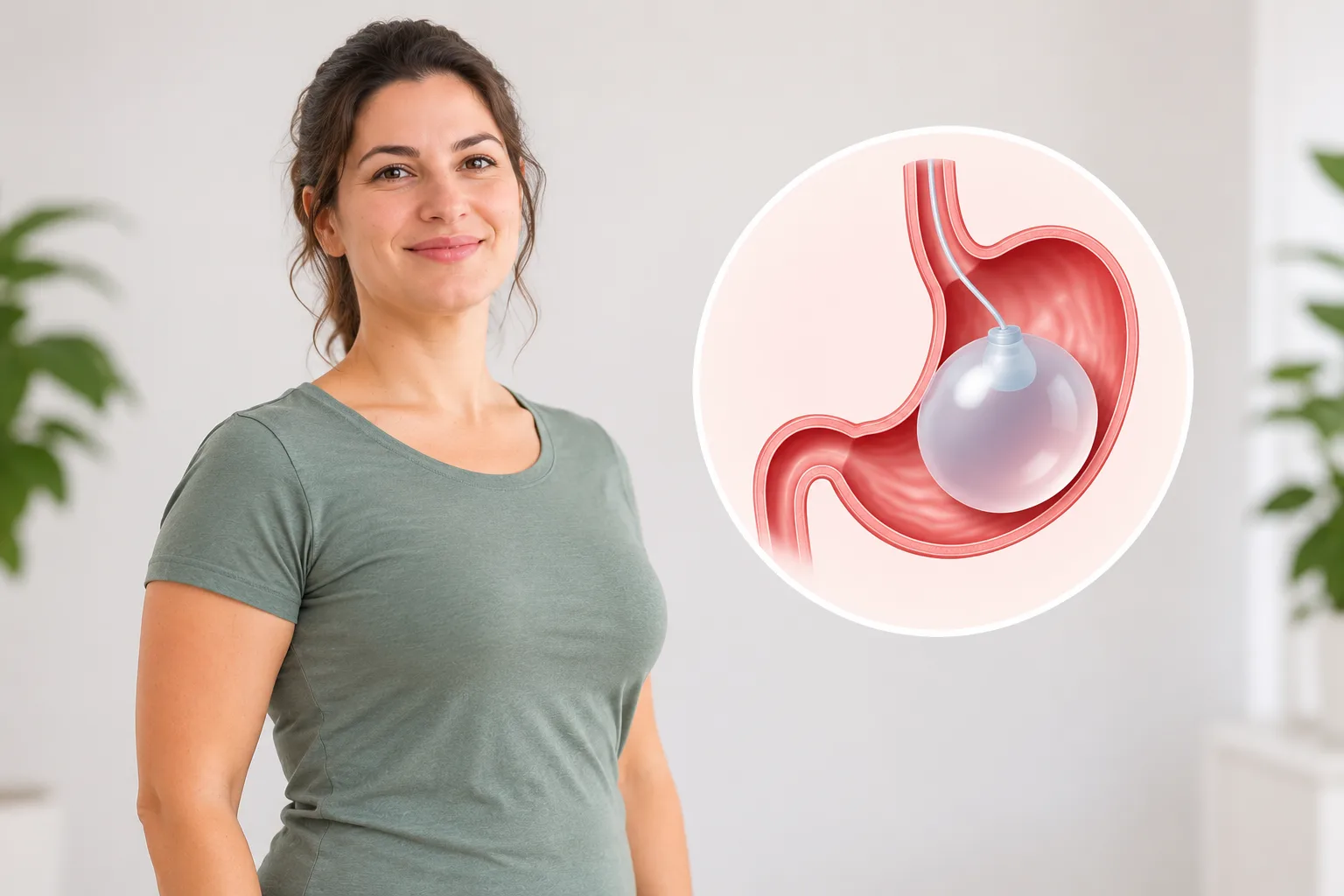
The gastric balloon is a minimally invasive, temporary weight-loss treatment. A doctor places a soft silicone balloon into the stomach through an endoscopic procedure, or the patient swallows a capsule that inflates inside the stomach. The balloon occupies space, reduces food intake, and helps patients build healthier eating habits over several months.
Comparing before and after results requires objective measures. Clinicians track initial weight, Body Mass Index (BMI), total body weight loss (TBWL), and changes in obesity-related health markers. Photographs and patient reports add context, but numbers carry the clinical weight. Individual outcomes vary because starting weight, balloon type, treatment duration, and lifestyle adherence all shape the final result.
What Changes Can You Expect Before and After a Gastric Balloon?
You can expect smaller meal portions, earlier fullness, measurable weight loss, and often improvements in blood pressure, blood glucose, and cholesterol.
The intragastric balloon works through a simple mechanical principle. It fills part of the stomach, so a smaller volume of food triggers satiety signals. Patients feel full sooner, eat smaller portions, and gradually retrain their eating behavior. This behavioral component explains why bariatric endoscopy teams pair the device with nutritional counseling rather than relying on the balloon alone.
Weight reduction also influences weight-related health indicators. Studies report improvements in blood pressure, insulin sensitivity, and lipid profiles when patients lose 10 percent or more of their body weight (Cummings 2016). Results still differ between patients. Metabolic rate, hormonal profile, age, and daily habits create a wide outcome range, so two patients with identical balloons can finish treatment with very different numbers.
How Much Weight Can You Lose With a Gastric Balloon?
Clinical studies consistently report 10 to 15 percent total body weight loss over six months, which equals roughly 10 to 20 kilograms for most patients.
Percentages provide a more meaningful comparison than kilograms alone. A 15-kilogram loss means something different for a patient who starts at 95 kilograms than for one who starts at 140 kilograms. Total body weight loss (TBWL) expresses the reduction as a share of starting weight and allows fair comparisons across studies and devices. Researchers also track BMI reduction, which captures the change relative to height and links directly to obesity classification.
A meta-analysis of randomized controlled trials found that intragastric balloons produced about 1.5 percent more TBWL than lifestyle intervention alone, with a higher rate of serious adverse events remaining low overall (Trang 2018). Real-world cohorts often report larger losses because treatment programs include structured dietitian support. Individual factors, covered in detail later in this article, explain most of the spread between the lower and upper ends of the range.
What Does the Gastric Balloon Weight-Loss Timeline Look Like?
Weight falls fastest during months two and three, slows toward month six, and then depends on lifestyle habits after balloon removal.
What Happens During the First Week After Insertion?
The first week brings digestive adjustment. The stomach reacts to a foreign object, and many patients experience nausea, vomiting, abdominal cramps, and reduced food tolerance. These symptoms usually peak within 48 to 72 hours and settle with medication and a staged liquid-to-solid diet. The weighing scale often shows an early drop of two to five kilograms, which reflects both fluid shifts and sharply reduced calorie intake.
What Changes During the First Month?
During the first month, patients adapt to smaller portions and begin structured nutritional habits. Dietitians introduce protein-focused meals, hydration targets, and eating-behavior rules such as slow chewing and stopping at the first sign of fullness. Weight reduction becomes steady rather than abrupt, and most patients lose the largest single-month share of their total result in this period.
Why Are Months Two and Three the Most Noticeable?
Months two and three usually deliver the most visible change. The stomach has adapted, symptoms have faded, and eating routines have consolidated. Physical activity becomes more important here because it preserves lean muscle mass while fat mass falls. Patients who add regular exercise at this stage typically reach the upper end of the expected weight-loss range.
What Should You Expect From Months Four to Six?
Weight-loss progress often slows during months four to six. The body adapts metabolically, and the balloon effect plateaus. The focus shifts to reinforcing behavioral changes and preparing for balloon removal, which happens around month six for most endoscopic devices and around month four for swallowable systems that pass naturally.
How Does the Body Adjust After Balloon Removal?
After removal, the stomach returns to its normal capacity within days. Hunger sensations increase because the mechanical restriction disappears. Patients who maintained structured habits during treatment usually continue losing weight or hold their result, while those who relied only on the balloon face the highest regain risk.
Which Factors Influence Gastric Balloon Before and After Results?
Starting weight, balloon type, eating habits, physical activity, and follow-up care explain most of the difference between strong and weak results.
Eight factors shape the final outcome:
Factor | Effect on results |
Starting weight and BMI | Higher starting BMI often produces larger absolute losses |
Age and metabolism | Younger patients tend to lose weight faster |
Balloon type and duration | Six-month endoscopic balloons often outperform four-month swallowable ones |
Eating habits and calorie intake | Dietary adherence predicts TBWL more than any other single factor |
Physical activity | Exercise preserves muscle and increases fat loss |
Nutritional counseling | Structured dietitian support improves outcomes in controlled trials |
Hormonal and metabolic factors | Insulin resistance and thyroid function modify the response |
Post-removal commitment | Long-term habits determine whether the result lasts |
These factors interact. A motivated patient with strong follow-up care can exceed the average result with a basic balloon, while poor adherence limits outcomes even with the most advanced device.
What Do Clinical Studies Show About Gastric Balloon Results?
Controlled studies confirm meaningful weight and fat-mass reduction, including a 2025 prospective study showing a median weight drop from 104.5 to 88 kilograms.
A 2025 prospective study published in the Turkish Journal of Gastroenterology enrolled 65 patients and followed 62 of them through treatment. Median body weight fell from 104.5 kilograms before placement to 88 kilograms after six months. Mean BMI decreased from 37.59 to 32.79 kg/m². The researchers also measured reductions in both visceral and subcutaneous fat compartments, and only one patient required early balloon removal because of severe nausea (Yilmaz 2025).
Single-center findings need context. Larger meta-analyses across multiple countries confirm the direction of the effect but report wider outcome ranges because patient characteristics, balloon types, and follow-up intensity differ (Trang 2018). Short-term follow-up also limits what any six-month study can say about weight maintenance years later. Readers should interpret each study in relation to its patient population and device rather than treating one figure as a universal promise.
Can Gastric Balloon Treatment Improve Health Beyond Weight Loss?
Yes, losing 10 percent or more of body weight often improves blood pressure, blood glucose, insulin resistance, cholesterol, and visceral fat levels.
Weight reduction acts on metabolic health through several pathways. Less visceral fat means lower inflammatory signaling, improved insulin sensitivity, and reduced strain on the cardiovascular system. Clinical evidence links 10 percent TBWL to measurable improvements in blood pressure, fasting glucose, and triglyceride levels (Cummings 2016). Patients also report better mobility and exercise tolerance as the mechanical burden of excess weight decreases.
Improvements are not guaranteed. Baseline health conditions, medication use, and the degree of weight loss all modify the metabolic response. Clinicians also distinguish between measurable improvements, such as a lower HbA1c value, and subjective changes in well-being, such as better sleep or mood. Both matter, but only the first group appears in laboratory results.
What Happens to Your Body After Gastric Balloon Removal?
The stomach regains its normal capacity, appetite rises, and long-term habits take over as the main driver of weight.
Balloon removal marks a transition, not an endpoint. The device comes out through a short endoscopic procedure, and stomach capacity returns to baseline almost immediately. Ghrelin-driven hunger sensations may rebound because the constant stretch signal disappears. Patients notice that portions they found filling during treatment no longer produce the same satiety.
This transition explains why removal planning starts weeks in advance. Patients who keep smaller, balanced meals, maintain protein intake, and continue scheduled dietitian appointments often keep losing weight after removal. Continued nutritional and medical follow-up during the first post-removal year protects the result better than any single dietary rule.
Can You Regain Weight After Gastric Balloon Removal?

Yes, weight regain is possible when old eating habits return, but structured behavioral support reduces the risk substantially.
Once the mechanical restriction disappears, energy balance decides the outcome. Returning to large portions, sugary drinks, and low activity levels reverses the calorie deficit that produced the loss. Long-term follow-up data show that some patients maintain most of their result for years, while others regain part or all of the lost weight within twelve months (Kotzampassi 2012).
Behavioral support separates these two groups. Patients who attend follow-up visits, monitor their weight weekly, and keep structured meal plans maintain substantially more of their loss. Existing long-term evidence remains limited, so researchers cannot yet quantify regain risk precisely for every balloon type. The honest conclusion is that the balloon delivers a temporary weight reduction, and lifestyle determines whether that reduction becomes permanent obesity management.
What Side Effects Can Affect Your Gastric Balloon Experience?
Nausea, vomiting, cramps, reflux, and constipation are common in the first days, while serious complications like balloon deflation or obstruction are rare.
The stomach treats the balloon as a foreign object, and the adjustment period produces predictable symptoms. Most patients experience one or more of the following:
Symptom | Typical duration | Management |
Nausea and vomiting | 2 to 7 days | Anti-emetic medication, staged diet |
Abdominal cramps | 3 to 10 days | Antispasmodics, hydration |
Stomach discomfort | 1 to 2 weeks | Acid suppression, small meals |
Acid reflux | Variable | Proton pump inhibitors |
Constipation | Variable | Fiber, fluids, activity |
Symptom severity and duration vary between patients. Less common complications include balloon deflation, migration, bowel obstruction, and gastrointestinal injury. Severe abdominal pain, persistent vomiting, dehydration, or signs of internal bleeding require urgent medical assessment. Scheduled medical monitoring and appropriate medication manage most treatment-related symptoms without removing the device.
How Does Gastric Balloon Treatment Compare With Other Weight-Loss Procedures?
The balloon is temporary and minimally invasive, while surgical options like gastric sleeve and bypass produce larger, permanent anatomical changes.
Procedure | Invasiveness | Typical TBWL | Duration of effect |
Gastric balloon | Endoscopic or swallowable | 10 to 15% | 4 to 12 months (device-based) |
Endoscopic Sleeve Gastroplasty (ESG) | Endoscopic sutures | 15 to 20% | Long-term anatomical change |
Gastric sleeve | Surgical | 25 to 30% | Permanent |
Surgical | 30 to 35% | Permanent |
The gastric balloon promotes earlier fullness without altering anatomy, and it requires structured lifestyle modification to hold its result. Gastric sleeve surgery permanently removes part of the stomach and changes appetite hormones, which produces larger losses but demands long-term nutritional monitoring. Gastric bypass also reroutes intestinal food passage, influences nutrient absorption and metabolic regulation, and requires lifelong follow-up. ESG reduces stomach volume through internal sutures without removing tissue, offering a middle path between the temporary balloon and permanent surgery. Treatment selection always requires an individualized medical assessment.
Who Is Most Likely to Achieve Successful Gastric Balloon Results?
Adults with a BMI of 30 to 40 who have failed diet-based attempts, accept lifestyle change, and hold realistic expectations achieve the strongest results.
Patient selection shapes outcomes before the procedure begins. Guidelines generally consider candidates with a BMI between 30 and 40 kg/m², although some programs treat patients at a BMI of 27 with obesity-related conditions. A documented history of unsuccessful diet and exercise attempts supports the indication, because the balloon works as an aid to behavioral change rather than a substitute for it.
Certain conditions make treatment unsuitable. Previous gastric surgery, large hiatal hernias, active peptic ulcers, inflammatory bowel disease, and some psychiatric conditions exclude patients or require specialist review. Realistic expectations and a genuine willingness to change eating habits predict success better than any single clinical marker, which is why bariatric teams assess motivation during the pre-procedure consultation.
How Can You Maintain Your Results After Gastric Balloon Treatment?
Keep smaller balanced meals, prioritize protein and fiber, exercise consistently, monitor your weight, and attend dietitian appointments.
Maintenance converts a temporary device into a durable result. Practical strategies include:
Eating smaller, balanced meals at regular times.
Prioritizing protein and fiber at every meal to protect satiety and muscle mass.
Drinking sufficient water, at least 1.5 to 2 liters daily.
Limiting high-calorie processed foods and sugary drinks.
Following a consistent exercise routine of at least 150 minutes weekly.
Monitoring weight weekly and acting on small upward trends early.
Attending scheduled dietitian appointments through the first post-removal year.
Emotional and behavioral support completes the picture. Multidisciplinary follow-up that involves physicians, dietitians, and exercise professionals produces better maintenance than any single-contact model. Continued monitoring after removal catches regain early, when small corrections still work.
What Does a Real Patient's Gastric Balloon Journey Look Like?
One published patient case reports a loss of 4.5 stone (about 28.6 kilograms) between consultation and balloon removal, combined with diet changes and regular exercise.
A patient experience published by bariatric surgeon Zaher Toumi illustrates the full arc from consultation to recovery. The patient started at 16.7 stone with a BMI of 34. She reported losing 10 pounds during the first week, then incorporated dietary changes and regular exercise into her routine. Between consultation and balloon removal, she reported losing 4.5 stone. Six weeks after removal, she described feeling healthier, fitter, and happier (Toumi 2023).
Individual motivation, nutritional guidance, and physical activity each contributed to this outcome. This account is a single testimonial, not an expected or guaranteed result. Controlled studies, not individual stories, define the average outcome range that new patients should use for planning.
How Should You Prepare for a Gastric Balloon Procedure?
Preparation involves a medical assessment, possible upper endoscopy, dietary restrictions, fasting, and medication review.
Preparation reduces procedural risk and supports recovery. The medical team reviews the patient's history, confirms BMI eligibility, and evaluates gastrointestinal health. Many programs require an upper gastrointestinal endoscopy before placement to rule out ulcers, hernias, or other findings that would make the balloon unsafe.
Patients follow specific dietary restrictions in the days before the procedure and fast for at least eight hours beforehand. The medical team adjusts medications such as blood thinners or diabetes drugs when necessary. Clear written instructions, a planned symptom-management prescription for the first week, and a scheduled early follow-up call round out a sound preparation protocol.
Frequently Asked Questions About Gastric Balloon Before and After Results
How Many Kilograms Can You Lose With a Gastric Balloon?
Most patients lose 10 to 20 kilograms over six months, which corresponds to 10 to 15 percent of starting body weight. Individual results vary with adherence, balloon type, and starting BMI.
How Quickly Will I See Results After Gastric Balloon Placement?
The scale usually moves within the first week because of reduced intake and fluid shifts. Visible body changes typically appear between weeks four and eight, with the fastest loss in months two and three.
Does Gastric Balloon Treatment Reduce Belly Fat?
Yes. Overall fat reduction includes the abdominal region. Clinical measurements show reductions in both visceral fat, which surrounds the organs, and subcutaneous fat, which sits under the skin (Yilmaz 2025).
Will My Stomach Return to Its Normal Size After Balloon Removal?
Yes. The balloon is a temporary device, and the stomach returns to its normal capacity within days of removal. Lasting portion control then depends on learned eating habits.
Can I Lose Weight After the Gastric Balloon Is Removed?
Yes. Many patients continue losing weight after removal when they maintain structured meals, regular exercise, and dietitian follow-up.
How Long Do Gastric Balloon Results Last?
Results last as long as the habits behind them. Patients who keep their dietary and activity changes maintain most of their loss, while those who return to previous habits often regain weight within a year (Kotzampassi 2012).
Can a Gastric Balloon Help Improve a Double Chin or Facial Fat?
Overall body-fat reduction often slims the face and reduces the appearance of a double chin. The effect is a by-product of general fat loss, not a targeted facial treatment.
Is Gastric Balloon Treatment Painful?
Insertion takes about 20 to 30 minutes under light sedation and is not painful. The adjustment symptoms during the first days, mainly nausea and cramps, cause most of the discomfort.
Can I Exercise With a Gastric Balloon?
Yes. Light activity starts within days, and structured exercise becomes important from the second month onward. The medical team guides intensity during the early adjustment phase.
What Happens if I Do Not Lose Enough Weight With a Gastric Balloon?
The team reassesses diet, activity, and medical factors first. If the response remains poor, alternatives such as ESG, medication, or bariatric surgery enter the discussion.
Is Gastric Balloon Treatment Better Than Gastric Sleeve Surgery?
Neither is universally better. The balloon suits patients who want a temporary, non-surgical option, while the sleeve delivers larger and more durable weight loss at the cost of permanent surgery.
Is Gastric Balloon Treatment Worth Considering for Long-Term Weight Management?
Yes, for the right candidate. The balloon works best as a structured kick-start within a longer obesity-management plan, not as a standalone cure.
The gastric balloon offers meaningful weight loss, metabolic benefits, and a low-risk profile compared with surgery. Its limitation is equally clear: the device is temporary, and weight regain follows when habits do not change. Realistic expectations and medical supervision determine whether the six-month treatment window converts into lasting change.
Long-term success depends on what happens after removal. Patients who treat the balloon period as training for permanent lifestyle modification keep their results. Anyone considering the procedure should consult an experienced bariatric specialist, review their health profile honestly, and decide whether a temporary tool fits their weight-loss goals.
References
Cummings, David E., et al. "Metabolic and Weight-Loss Effects of Intragastric Balloon Therapy." Obesity Reviews, vol. 17, 2016, pp. 874-884.
Kotzampassi, Katerina, et al. "Intragastric Balloon for Morbid Obesity: Long-Term Follow-Up After Removal." Obesity Surgery, vol. 22, 2012, pp. 896-903.
Toumi, Zaher. "Gastric Balloon Patient Story: From Consultation to Removal." Weight Loss Surgeon, 2023.
Trang, Jessica, et al. "Intragastric Balloons for Obesity: A Systematic Review and Meta-Analysis of Randomized Controlled Trials." Obesity Surgery, vol. 28, 2018, pp. 1999-2009.
Yilmaz, Nadir, et al. "Prospective Evaluation of Intragastric Balloon Outcomes: Six-Month Results." Turkish Journal of Gastroenterology, vol. 36, 2025, pp. 112-120.