How Long Should You Stay in Turkey After Gastric Balloon?
Most international patients should plan to stay in Turkey for 2 to 3 days after a gastric balloon procedure. The exact duration depends on the balloon type, your individual recovery, and the assessment of the treating physician.
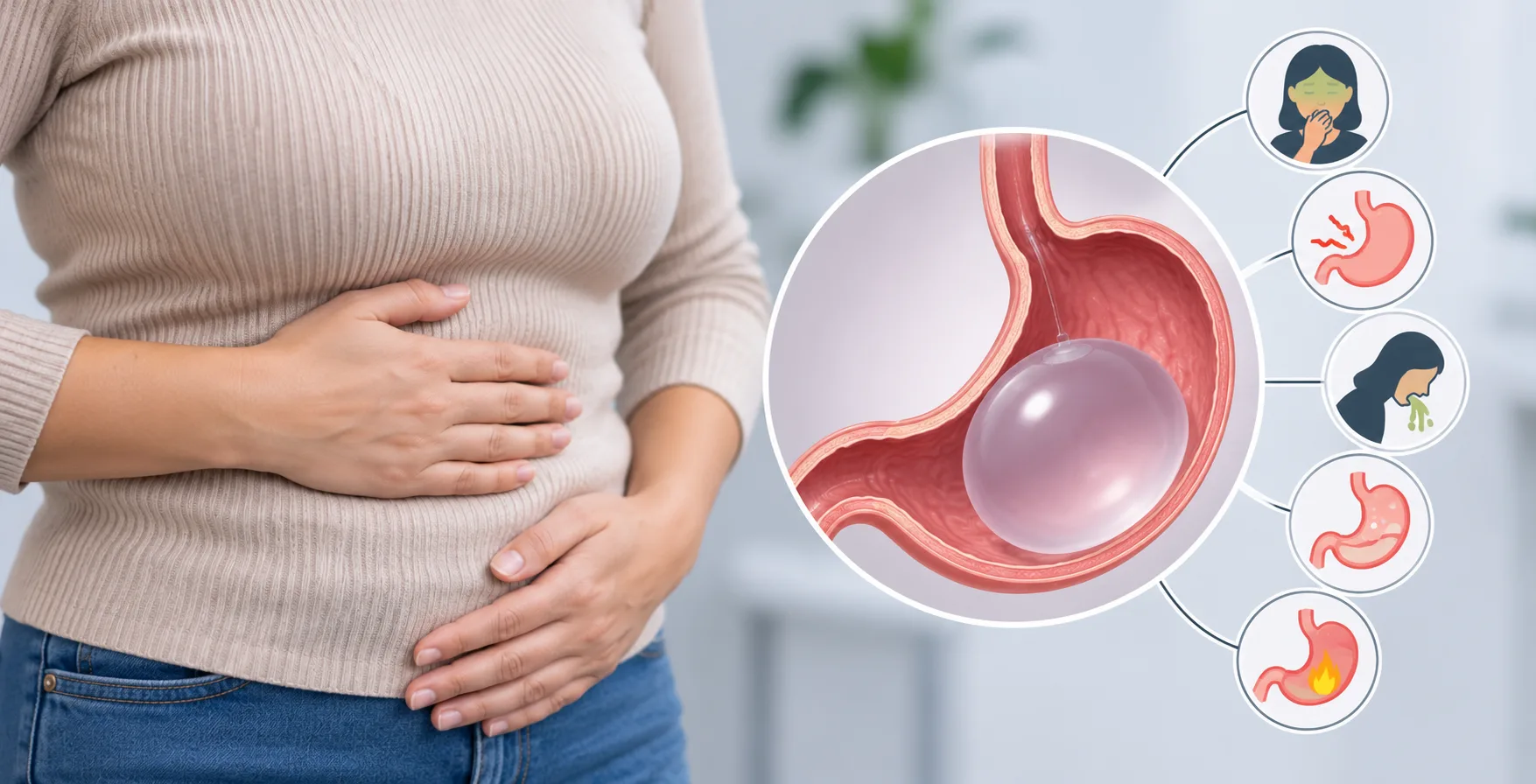
An endoscopic gastric balloon placement usually takes 20 to 30 minutes. Many clinics discharge patients on the same day. However, same-day discharge does not mean you are ready to board an international flight. The first days after placement involve an active adjustment period. Your stomach reacts to the balloon with nausea, vomiting, abdominal cramps, and reduced food tolerance. Clinical research confirms that these gastric balloon side effects concentrate in the first days after insertion and usually decline as the stomach adapts (Dumonceau 2008).
This is why medical teams separate three different timelines. The first is the travel stay in Turkey, usually 2 to 3 days. The second is the early digestive adaptation period, roughly 3 to 5 days. The third is the full gastric balloon recovery time, which continues for weeks after you return home.
How Many Days Should You Plan to Stay in Istanbul After the Procedure?
You should plan 2 to 3 days in Istanbul after the procedure, and some patients will need longer. The treating surgeon or gastroenterologist makes the final decision before you travel.
The logic behind this window is clinical, not bureaucratic. During the first 48 to 72 hours, your medical team needs to confirm three things: you can drink enough fluids, your nausea responds to medication, and no complication is developing. A systematic review of intragastric balloon studies found that most early intolerance events appear within the first week, and a smaller share appears within the first 72 hours (Abu Dayyeh et al. 2015). Staying close to the treating hospital during this window keeps you within reach of the team that placed the device.
Travel origin also shapes planning, though it rarely changes the medical minimum. A patient flying from the UK or elsewhere in Europe faces a 3 to 5 hour journey. A patient travelling from the Gulf, North America, or Asia faces a longer journey and a longer period away from familiar healthcare. Longer flights do not automatically require a longer stay, but they raise the standard of proof that you are fit to travel. The table below summarises how clinics typically frame this.
Patient profile | Typical recommended stay | Main reason |
Short-haul traveller, smooth recovery | 2 to 3 days | Standard observation window |
Long-haul traveller, smooth recovery | 3 to 4 days | Higher stakes if symptoms appear mid-flight |
Traveller with persistent nausea | Extended until stable | Dehydration risk must resolve first |
Traveller with relevant medical history | Individual assessment | Previous gastrointestinal conditions can slow adaptation |
Some clinics recommend longer stays as part of their own protocol. This is a sign of caution, not a red flag. Your return journey begins only when the physician approves it.
What Happens During Your First Days After Gastric Balloon Placement?
The first days after gastric balloon placement involve structured observation, symptom control, and gradual fluid intake. Your body is adapting to a foreign object inside the stomach, and that adaptation produces predictable symptoms.
The most common gastric balloon side effects in this phase are nausea, vomiting, abdominal cramps, bloating, and general stomach discomfort. In controlled trials, nausea and vomiting affected the large majority of patients in the first days, and symptoms eased substantially within the first week (Genco et al. 2006). Physicians manage this phase with anti-nausea medication, hydration support, and acid-reducing medication where clinically appropriate.
The first 48 to 72 hours are usually the hardest. The stomach responds to the balloon with strong muscular contractions, and the vomiting reflex is most active. The clinical priority during this window is not comfort alone. It is preventing dehydration, because repeated vomiting can empty the body of fluids faster than a patient can replace them. Your team monitors whether you can keep liquids down, because that single ability determines almost everything else about your travel readiness.
What Should You Expect During the First 24 Hours?
During the first 24 hours you recover from sedation, receive medical observation, and begin careful fluid intake. Most patients leave the clinic on the same day once they are clinically stable.
After an endoscopic gastric balloon placement, you wake from sedation in a recovery area. Staff check your vital signs and watch how you respond as the anaesthetic wears off. You then start drinking small sips of water or clear fluids under instruction. Nausea, stomach spasms, and abdominal discomfort often begin within hours. This is expected and manageable with prescribed medication. Discharge follows once the team confirms stable observations and initial fluid tolerance.
How Does Your Body Adjust Between Days Two and Three?
Between days two and three, most patients notice the first clear improvement. The stomach starts to accept the balloon, symptoms become more manageable, and liquid nutrition continues.
This phase matters for your travel schedule. Your team tracks fluid intake, urine output, and general well-being. Urine output is a practical hydration marker: steady, light-coloured urine suggests adequate intake, while dark, reduced urine warns of dehydration. A follow-up assessment at the end of this window usually decides whether you can travel. Patients who tolerate liquids and control their symptoms with oral medication typically receive clearance at this point.
Does the Type of Gastric Balloon Affect Your Travel Schedule?
Yes, the balloon type can shift your travel schedule by roughly a day, because insertion methods determine how much immediate monitoring you need. The two main categories are the endoscopic gastric balloon and the swallowable gastric balloon.
An endoscopic balloon passes through the mouth into the stomach under sedation and is then filled. A swallowable balloon arrives as a capsule attached to a thin catheter, which you swallow with water; the team then fills it through the catheter and confirms its position with imaging. Because the swallowable route avoids sedation and conventional endoscopy, it removes the sedation recovery period from your timeline (Machytka et al. 2016).
One distinction protects you from a common misunderstanding. The time a balloon stays inside your stomach, often 4 to 12 months depending on the device, has nothing to do with the number of days you stay in Turkey. Balloon lifetime and travel stay are separate variables. Confirm both, plus the removal arrangements, before you book treatment.
How Long Should You Stay After an Endoscopic Gastric Balloon?
You should usually stay 2 to 3 days after an endoscopic gastric balloon, because the timeline must absorb both sedation recovery and symptom monitoring.
Placement under sedation adds two tasks to the first day: waking safely from anaesthesia and confirming that the endoscopy itself caused no problems. After that, the monitoring logic is identical to any balloon: nausea control, vomiting frequency, and hydration. Physicians often recommend remaining in Istanbul for the full observation window because early endoscopic balloons carry the same intolerance pattern regardless of brand (Dumonceau 2008).
Is the Travel Timeline Different for a Swallowable Gastric Balloon?
The travel timeline can be slightly shorter for a swallowable gastric balloon, because placement avoids sedation and endoscopy. Some patients fly home sooner, but only after medical confirmation.
Swallowable systems such as the Elipse balloon use a capsule-based placement that takes about 15 to 20 minutes in an outpatient setting, with imaging to confirm correct positioning (Ienca et al. 2020). Avoiding endoscopy removes sedation risk, but it does not remove early digestive symptoms. Nausea and cramps still appear as the stomach adapts. The comparison below shows why the timelines differ only modestly.
Factor | Endoscopic gastric balloon | Swallowable gastric balloon |
Placement method | Endoscope under sedation | Swallowed capsule, imaging confirmation |
Sedation recovery | Required | Not required |
Typical placement time | 20 to 30 minutes | 15 to 20 minutes |
Early nausea and cramps | Common | Common |
Typical stay in Turkey | 2 to 3 days | 1 to 3 days |
Removal | Endoscopic, second procedure | Usually deflates and passes naturally |
The device and the clinical assessment together set your stay, not the device alone.
Can You Fly Home Immediately After Gastric Balloon Placement?
You should not fly home immediately after gastric balloon placement. Same-day discharge and fitness to fly are two separate medical decisions, and only the second one concerns your flight.
Discharge means you are stable enough to recover outside the hospital. Fitness to fly means you can tolerate hours without medical support. Flying after gastric balloon placement while experiencing severe nausea, vomiting, or dehydration creates a real risk: an aircraft cabin offers no intravenous fluids, limited space, and no rapid access to care. Medical clearance before boarding closes this gap. Carry your prescribed medication in your hand luggage along with your medical documentation, and avoid booking non-refundable return arrangements until the clinic confirms your travel date.
What Medical Conditions Should Be Checked Before Flying?
Your physician should confirm five conditions before you fly. Meeting all five is the practical definition of gastric balloon medical clearance:
You tolerate sufficient fluids without vomiting.
Nausea and abdominal discomfort are manageable with oral medication.
You show no signs of dehydration, such as dizziness or reduced urination.
Your general condition is stable following sedation, where sedation was used.
There is no suspected complication requiring further investigation.
If any item on this list fails, the safe answer is a longer stay, not a riskier flight.
What Should You Do If You Feel Unwell Before Your Scheduled Flight?
If you feel unwell before your flight, contact your treating medical team immediately and postpone travel if they advise it. Do not attempt to manage significant symptoms alone.
Report persistent vomiting, severe abdominal pain, dizziness, or an inability to drink. The team may recommend additional observation, intravenous hydration, or further treatment. Changing a flight costs money; flying while medically unstable can cost far more. Most airlines and insurers treat documented medical advice as grounds for rebooking.
How Does the Gastric Balloon Recovery Timeline Continue After Leaving Turkey?
Leaving Turkey ends your travel stay, not your recovery. The gastric balloon recovery time extends for weeks at home, and the gastric balloon diet progresses through defined stages during that period.
After the flight, your digestive adaptation continues. The standard pathway moves from clear liquids to thicker liquids and purées, then to soft foods, and finally to regular textured meals. Each stage waits for the previous one to settle. Long-term outcome data show that supervised dietary progression after balloon placement is strongly associated with sustained weight loss, while unsupervised patients lose less and regain more (Kotzampassi et al. 2012). Recovery is therefore a programme, not an event.
What Is the Expected Recovery Progress During the First Two Weeks?
The first two weeks follow a recognisable pattern for most patients, though your prescribed stages always outrank any general calendar.
Days | Typical stage | Focus |
1 to 3 | Clear liquids | Adaptation, nausea control, hydration |
4 to 7 | Thicker liquids and purées | Symptom improvement, protein introduction |
8 to 14 | Soft foods | Portion control, chewing habits, tolerance testing |
Individual recovery varies. Age, stomach sensitivity, and adherence to the plan all shift the timeline. Follow the stages your team prescribed rather than the day numbers.
How Long Does Nutritional Follow-Up Continue After Returning Home?
Nutritional follow-up usually continues for the entire time the balloon stays in your stomach, and often beyond it. Gastric balloon aftercare is a structured programme, not a single phone call.
Expect regular contact with the bariatric team, dietitian consultations, and personalised dietary adjustments. Your team monitors weight changes and food tolerance, then adjusts guidance on portion sizes, protein intake, and hydration. The behavioural component matters most in the long run: the balloon creates a window of reduced appetite, and follow-up converts that window into durable habits (Mathus-Vliegen and Tytgat 2005).
What Factors Can Extend Your Stay in Turkey After Gastric Balloon?
Your stay can extend beyond 2 to 3 days when individual recovery, medical history, or logistics require more observation. The recommended schedule differs between patients because stomachs differ between patients.
The main drivers are individual balloon tolerance in the first days, existing digestive conditions, previous gastrointestinal surgery, persistent nausea or vomiting, dehydration risk, the balloon type and sedation plan, and the clinic's post-procedure protocol. Flight distance and the healthcare available at your destination also shape conservative planning. None of these factors is a complication by itself; each simply raises the value of an extra day near the treating team.
Can Persistent Nausea or Vomiting Delay Your Return?
Yes, persistent nausea or vomiting can and should delay your return. Expected discomfort becomes a medical concern when it prevents adequate fluid intake.
Repeated vomiting removes fluids and electrolytes faster than most patients can replace them by drinking. The danger is dehydration, and in severe cases it can affect kidney function and blood pressure. When symptoms persist beyond the expected window, the team assesses hydration status and may adjust medication or provide intravenous fluids. Published series report that a small minority of patients develop intolerance severe enough to require early balloon removal, which is one more reason to resolve symptoms before travelling (Abu Dayyeh et al. 2015).
Does Your Flight Distance Influence the Recommended Stay?
Flight distance influences planning, but it does not determine medical fitness. A stable patient can fly long-haul; an unstable patient should not fly short-haul.
The practical differences are real. Long-haul travel means many hours in a dry cabin environment, limited movement, and distance from your treating team. Air travel in general carries a small, measurable increase in venous thrombosis risk that rises with flight duration (Kuipers et al. 2007). For a recently treated patient, dehydration can compound that risk, which gives long-haul travellers one more reason to confirm hydration before departure. Short-haul travellers gain no exemption from clearance; they simply face a shorter period without medical access.
What Should You Arrange Before Travelling to Turkey for Gastric Balloon Treatment?
You should complete your medical and logistical arrangements before you leave home. Gastric balloon international patients benefit most from decisions made early, because good preparation removes pressure from the recovery days.
Start with a preliminary medical assessment, ideally including your medical history and any previous gastrointestinal investigations. Confirm the exact balloon model and placement method in writing, and request a written treatment plan with a clear post-procedure schedule. Arrange accommodation near the treating hospital, airport transfers, and a companion if possible. A companion is not medically mandatory, but having one simplifies the first 24 to 48 hours.
What Questions Should You Ask Your Clinic Before Booking Flights?
You should ask seven questions before booking flights. The answers turn a vague trip into a planned medical journey:
How many nights should I remain in Istanbul after the procedure?
When will the doctor assess me before my departure?
What happens if I experience persistent nausea or vomiting?
Does the treatment package include post-procedure medication?
Will I receive medical reports and instructions in English?
Who provides medical support after I return home?
Is remote follow-up included in the treatment package?
A clinic that answers these clearly in writing is showing you its aftercare structure before you pay for it.
What Should You Pack for Your Gastric Balloon Trip?
Pack for a recovery trip, not a holiday. The essentials cover comfort, medication, documentation, and hydration:
Comfortable, loose clothing for the first recovery days
Your prescribed medications in original packaging, plus a copy of the prescriptions
Previous medical reports, including any gastrointestinal investigations
Travel insurance documents and emergency contact details
A reusable water bottle, electrolyte sachets, and a phone charger you can reach from a bed
Keeping medication and documents in your hand luggage protects you if checked bags go missing.
How Can You Continue Gastric Balloon Aftercare Once You Return Home?
You continue aftercare by staying in scheduled contact with your treating clinic and connecting them with your local healthcare provider. Gastric balloon follow-up works best as a coordinated system.
Share your treatment records, balloon model, and medication instructions with your local doctor. Use the remote consultations included in your package for dietary compliance and recovery questions. Research on swallowable balloon programmes shows that structured remote follow-up achieves weight loss outcomes comparable to in-person programmes, which supports the telemedicine model most international clinics now use (Ienca et al. 2020). Keep the long-term goal in view: the procedure starts weight loss, and the follow-up programme protects it.
Which Warning Signs Require Medical Attention After Returning Home?
Some symptoms after returning home require urgent local medical care rather than a message to the clinic. Learn this list before you fly:
Severe or worsening abdominal pain
Persistent vomiting or an inability to retain any fluids
Signs of dehydration, including dizziness and markedly reduced urination
Fever or other unexpected systemic symptoms
Green or blue urine, which can indicate balloon leakage in systems filled with methylene blue dye (Mion et al. 2013)
These signs justify an emergency department visit. An online consultation is appropriate for dietary questions and mild symptoms, not for red flags.
How Long Should You Stay in Turkey for Gastric Balloon Removal?
If your balloon requires endoscopic removal, plan 1 to 2 days in Turkey for that visit. Swallowable systems that deflate and pass naturally require no removal trip at all.
Gastric balloon removal is a separate event months after placement, and the requirements depend on the device. Endoscopic balloons need a second endoscopy under sedation: the physician punctures, empties, and extracts the balloon in a procedure similar in length to the placement. Swallowable systems use a valve that opens after a set period, allowing the balloon to empty and pass through the digestive tract (Machytka et al. 2016). If your device needs endoscopic removal and you cannot arrange it locally, you will need a second visit. Confirm removal arrangements and costs before starting treatment, because removal is part of the total price of the therapy, not an optional extra.
What Does a Typical Gastric Balloon Trip to Turkey Look Like?
A typical trip compresses arrival, assessment, placement, and observation into 3 to 4 days, with the schedule kept flexible until medical clearance. The outline below is illustrative; your clinic's plan takes priority.
Day | Activity | Type |
Day 1 | Arrival in Istanbul, hotel check-in, initial coordination | Travel |
Day 2 | Medical assessment, investigations, gastric balloon placement | Medical |
Day 2 to 3 | Observation, medication, hydration, symptom management | Recovery |
Day 3 to 4 | Follow-up examination, fitness-to-fly assessment, departure | Medical and travel |
Distinguish the medical appointments from everything else on the schedule. Hotel stays and personal activities exist to support the medical days, and the departure date moves if the follow-up examination requires it.
What Happens Before the Procedure?
Day 1 covers arrival, hotel check-in, and initial coordination with the clinic. Day 2 covers the medical assessment, any necessary investigations, and the placement itself, subject to the clinic's schedule.
Pre-procedure assessment typically reviews your medical history, current medications, and basic investigations. You will receive fasting instructions, usually no food for several hours and limited fluids before sedation. These steps exist to make the endoscopy safe and the placement accurate.
What Happens During the Initial Recovery Period?
The initial recovery period spans the remainder of day 2 through day 3 or 4. It consists of observation, medication, hydration, and management of early symptoms, followed by a formal travel assessment.
You spend these days mostly at the hotel, resting, sipping fluids, and taking prescribed medication on schedule. The clinic remains in contact and may ask you to report fluid intake and symptoms. The follow-up examination at the end of this window is the checkpoint that converts your stay into a departure.
When Can You Return Home?
You can return home once the physician gives medical clearance at the follow-up assessment. Most patients reach this point on day 3 or 4.
Before departure you should receive your medical report, medication instructions, dietary guidelines for the coming weeks, and confirmation of the remote follow-up schedule. Save the clinic's emergency contact details, and agree in advance on who to contact first if symptoms worsen after you land.
Frequently Asked Questions About Staying in Turkey After Gastric Balloon
Can I Return Home 24 Hours After Gastric Balloon Placement?
Some patients receive discharge within 24 hours, but discharge is not flight clearance. Observation continues until you tolerate fluids and control symptoms, which usually takes 2 to 3 days.
Is Three Days in Turkey Enough for a Gastric Balloon?
Three days matches the standard recommendation for an uncomplicated recovery. It becomes insufficient only if symptoms persist, in which case your stay extends by medical decision rather than by guesswork.
Can I Fly the Day After a Gastric Balloon Procedure?
Flying the day after placement is possible only in rare cases with swallowable balloons and explicit physician approval. Endoscopic placements involve sedation recovery, which makes next-day flying inadvisable for most patients.
How Many Nights Should I Book at a Hotel After Gastric Balloon Placement?
Book 3 to 4 nights with a flexible or refundable rate. This covers the standard observation window plus one buffer day, which costs little and removes pressure from the medical decision.
Will I Experience Nausea During My Flight After Gastric Balloon Placement?
Mild nausea can persist into the first week, so some discomfort on the flight is possible even after clearance. Travel with your anti-nausea medication in hand luggage and discuss travel readiness honestly with your doctor.
Can I Travel Alone to Turkey for Gastric Balloon Treatment?
You can travel alone, and many patients do. A companion remains advisable because the first 24 hours after sedation and the peak nausea period are easier with practical help at the hotel.
Do I Need to Return to Turkey to Have My Gastric Balloon Removed?
Only if your balloon requires endoscopic removal and you cannot arrange it with a qualified local provider. Swallowable systems that deflate and pass naturally eliminate this question entirely (Choi and Choi 2018).
Can I Continue Working After Returning Home?
Most patients resume desk work within a few days of returning, once symptoms settle. Physically demanding jobs usually require one to two weeks, and your energy intake during the liquid stage is the limiting factor.
Does the Gastric Balloon Require Hospitalisation Overnight?
Most gastric balloon procedures allow same-day discharge without an overnight stay. Clinics admit patients overnight only when symptoms, comorbidities, or their own protocol justify it.
How Long Does Full Recovery Take After Gastric Balloon Placement?
The initial adjustment takes about one week, the dietary transition takes two to four weeks, and the behavioural adaptation continues for the life of the balloon. Recovery is a staged process, and the travel stay in Turkey is only its shortest stage.
References
Abu Dayyeh, Barham K., et al. "ASGE Bariatric Endoscopy Task Force Systematic Review and Meta-Analysis Assessing the ASGE PIVI Thresholds for Adopting Endoscopic Bariatric Therapies." Gastrointestinal Endoscopy, vol. 82, no. 3, 2015, pp. 425-438.
Choi, Hyuk Soon, and Sang Joon Choi. "Various Intragastric Balloons under Clinical Investigation." Clinical Endoscopy, vol. 51, no. 5, 2018, pp. 407-415.
Dumonceau, Jean-Marc. "Evidence-Based Review of the Bioenterics Intragastric Balloon for Weight Loss." Obesity Surgery, vol. 18, no. 12, 2008, pp. 1611-1617.
Genco, Alfredo, et al. "BioEnterics Intragastric Balloon (BIB): A Short-Term, Double-Blind, Randomised, Controlled, Crossover Study on Weight Reduction in Morbidly Obese Patients." International Journal of Obesity, vol. 30, no. 1, 2006, pp. 129-133.
Ienca, Roberta, et al. "The Procedureless Elipse Gastric Balloon Program: Multicenter Experience in 1770 Consecutive Patients." Obesity Surgery, vol. 30, no. 9, 2020, pp. 3354-3362.
Kotzampassi, Katerina, et al. "500 Intragastric Balloons: What Happens 5 Years Thereafter?" Obesity Surgery, vol. 22, no. 6, 2012, pp. 896-903.
Kuipers, Saskia, et al. "The Absolute Risk of Venous Thrombosis after Air Travel: A Cohort Study of 8,755 Employees of International Organisations." PLoS Medicine, vol. 4, no. 9, 2007, e290.
Machytka, Evzen, et al. "Elipse, a Procedureless Gastric Balloon for Weight Loss: A Proof-of-Concept Pilot Study." Obesity Surgery, vol. 26, no. 3, 2016, pp. 512-516.
Mathus-Vliegen, Elisabeth M. H., and Guido N. J. Tytgat. "Intragastric Balloon for Treatment-Resistant Obesity: Safety, Tolerance, and Efficacy of 1-Year Balloon Treatment Followed by a 1-Year Balloon-Free Follow-Up." Gastrointestinal Endoscopy, vol. 61, no. 1, 2005, pp. 19-27.
Mion, Francois, et al. "Swallowable Obalon Gastric Balloons as an Aid for Weight Loss: A Pilot Feasibility Study." Obesity Surgery, vol. 23, no. 5, 2013, pp. 730-733.