Hair Graft Survival Rate: What Affects It?
Hair graft survival rate measures the percentage of transplanted follicular units that successfully establish blood supply and produce permanent hair. Multiple biological and technical factors determine this rate. These factors include donor hair quality, surgeon experience, graft handling, storage solutions, time out of body, recipient-site vascularity, and postoperative care. No single factor alone determines survival. The cumulative protection of grafts at every stage matters most.
Hair transplantation has evolved into a precise surgical discipline. Yet one question remains central to every procedure: Will the grafts survive? Understanding what drives follicular unit survival separates informed patients from those who rely solely on marketing claims. This article examines the science behind graft survival. It explains the biological journey of each follicle from extraction to revascularization. It identifies the factors that protect or threaten graft viability. And it equips readers with evidence-based criteria for evaluating clinics and outcomes.
Why Does Hair Graft Survival Rate Matter?
Graft survival rate directly determines how much hair grows after transplantation. It represents the most objective measure of surgical quality. High survival means better density, better coverage, and better use of limited donor hair.
Hair transplant success rests on one biological fact: each graft is a living tissue unit. Once extracted, it loses its blood supply. It enters a state of ischemia. It faces oxygen deprivation, ATP depletion, and cellular stress. The surgical team must protect the graft through every step until it revascularizes in the recipient scalp. If grafts die, they never grow hair. The patient loses density. The clinic wastes donor supply. And the patient may need a second procedure using finite donor reserves.
Patients often confuse several related terms. Graft survival means the follicular unit remains biologically viable. Hair growth means the visible hair shaft emerges from the scalp. Graft yield refers to how many grafts the surgeon successfully harvests. Hair density measures how many hairs occupy a given area. Aesthetic success depends on natural angle, direction, and distribution. Patient satisfaction reflects subjective perception. A procedure can achieve high graft survival yet still disappoint if the hairline design looks unnatural or the density appears uneven. That is why survival matters, but it does not tell the whole story.
Clinics often advertise survival percentages. Patients should question these numbers. A quoted percentage means little without knowing how the clinic measured it, when they measured it, and what definition of "survival" they used. The biological journey from extraction to revascularization involves dozens of variables. This article explores each one.
What Is Hair Graft Survival Rate?
Hair graft survival rate is the percentage of transplanted follicular units that remain viable and produce growing hair after transplantation. Clinicians typically assess this at 12 months post-procedure.
In clinical terms, graft survival means the follicular unit retains structural integrity and functional capacity after implantation. Researchers assess survival through several methods. Some use histological examination of grafts. Others use trichoscopy to count growing hairs. Some rely on standardized photography. Each method produces different numbers. That is why published survival rates vary widely.
Most clinicians agree that 12-month follow-up provides the earliest meaningful assessment of final hair growth. Hair grows in cycles. Transplanted grafts often shed within the first two to six weeks. This shedding, called shock loss, does not mean the graft died. The follicle enters a resting phase. It later re-enters the growth phase. By 12 months, most grafts that will survive have begun producing visible hair. By 18 months, hair has usually thickened and matured.
Researchers distinguish between follicular unit survival and individual follicle survival. A follicular unit may contain one, two, three, or four hair follicles. The unit can survive even if one follicle within it dies. Visible hair growth depends on whether enough follicles within each unit survive. This distinction matters when clinics report survival figures. A clinic might report 95% follicular unit survival while individual hair counts show lower density.
Claims of "100% graft survival" should raise skepticism. Biological variability exists in every surgical procedure. Measurement methods differ. Patient factors differ. Surgical conditions differ. No ethical surgeon can guarantee universal survival. Published survival ranges typically fall between 85% and 98% depending on methodology, patient selection, and protocol quality (Parsley and Perez-Meza 69).
What Happens to a Hair Graft After Extraction?
Extraction severs the blood supply. The graft enters ischemia. Cells lose oxygen and ATP. The graft faces dehydration, mechanical trauma, and ischemia-reperfusion injury until it revascularizes in the recipient site.
A follicular unit is not just a hair. It is a complex biological structure. It contains one to four hair follicles, sebaceous glands, the arrector pili muscle, and surrounding connective tissue. The bulb sits at the base. It produces the hair shaft. The bulge zone houses epithelial stem cells. These stem cells regenerate the follicle after each growth cycle. Damage to the bulge proves more harmful than damage to the bulb because it destroys regenerative capacity.
When the surgeon extracts the graft, the scalpel or punch severs the capillary network. Blood flow stops immediately. Ischemia begins. Without oxygen, cells switch to anaerobic metabolism. ATP stores deplete within minutes. Lactate accumulates. Cellular acidosis develops. Mitochondria begin to fail. If ischemia continues too long, programmed cell death follows.
The graft also faces dehydration. Follicles have no protective barrier once removed from the scalp. Air exposure causes desiccation. Cell membranes lose integrity. Ion transport fails. Even brief drying causes irreversible damage.
After implantation, the graft undergoes revascularization. New capillaries grow from surrounding tissue into the graft. But reperfusion brings its own danger. Sudden reoxygenation generates reactive oxygen species. These free radicals damage cellular structures. This is ischemia-reperfusion injury. The graft must survive both the lack of blood and the return of blood.
Time out of body (TOB) serves as a critical variable. Research by Limmer established a foundational survival curve: approximately 95% survival at 2 hours, 90% at 4 hours, 86% at 6 hours, and 79% at 24 hours (qtd. in Sethi et al. 150). This means every minute matters. The surgical team must minimize the gap between extraction and implantation.
Which Factors Affect Hair Graft Survival Rate?
Multiple interconnected factors affect survival. These include donor hair quality, surgeon skill, transection rates, dehydration, time out of body, storage solutions, temperature, mechanical trauma, recipient-site vascularity, implantation density, patient health, smoking status, and postoperative care. No single factor dominates. Cumulative protection at every stage determines outcome.
How Does Donor Hair Quality Affect Graft Survival?
Strong, thick, terminal hairs from dense donor areas survive better than thin, miniaturized, or sparse donor hairs. The surgeon must assess donor reserves before surgery.
Donor hair quality forms the foundation of every transplant. The surgeon harvests grafts from the occipital and parietal scalp. These areas typically resist androgenetic alopecia. But not all donor hair is equal.
Donor density matters. Patients with high follicular unit density provide more grafts per square centimeter. They also tend to have more robust follicles. Terminal hairs, thick, pigmented, fully mature hairs, survive better than miniaturized hairs. Hair caliber influences visual density. Thick hairs create more coverage than thin hairs.
Follicular units contain one, two, three, or four hairs. Multi-hair units produce better density than single-hair units. The surgeon should select the strongest units for the most visible areas, such as the frontal hairline.
Progressive androgenetic alopecia can affect even the donor area over time. Young patients with early hair loss may have excellent donor hair now but face thinning later. The surgeon must evaluate donor reserves carefully. Limited or weak donor reserves reduce both survival rates and long-term results. The clinic should never overharvest. The patient has a finite lifetime donor supply, approximately 6,000 grafts for most individuals.
How Does Surgeon Experience Affect Graft Survival?
Experienced surgeons extract grafts with lower transection rates, maintain correct angles, handle grafts gently, and follow standardized protocols. Surgical expertise often matters more than the technique name.
The surgeon's skill directly impacts graft survival. Accurate extraction requires precise punch alignment with the follicular angle beneath the skin. Misalignment by even a few degrees can transect the follicle. The surgeon must maintain the natural direction and depth of each follicle.
Minimizing mechanical trauma requires fine-tipped, non-serrated forceps. The team should grip grafts only by the epidermal end. They must never crush the bulb or bulge zone. Excessive manipulation damages stem cells and reduces long-term viability.
Standardized graft-handling protocols protect every graft equally. Elite surgeons achieve transection rates below 5%. Poor practitioners may transect 15% or more. That difference translates to hundreds of lost grafts in a single session.
Technician training and supervision also matter. In many clinics, technicians perform extraction or implantation. Without proper training, they may handle grafts roughly, place them at wrong angles, or expose them to air too long. The surgeon must supervise every step.
How Does Graft Transection Affect Survival?
Transection, cutting or partially damaging the follicle during extraction, kills or weakens the graft. Complete transection causes immediate failure. Partial injury may reduce long-term growth.
Graft transection occurs when the punch or blade cuts through the follicle during extraction. This can happen when the punch angle misaligns with the follicular direction. Curved, coiled, or splayed follicles pose special challenges. Afro-textured hair has curved follicles that follow complex subsurface trajectories. This increases transection risk compared to straight hair.
Punch selection influences transection rate. Smaller punches reduce scarring but may increase transection in patients with curved follicles. Extraction angle, depth control, and magnification all affect accuracy. Operator experience remains the most important factor.
Complete transection severs the follicle entirely. The graft cannot survive. Partial transection damages some follicles within a unit while sparing others. The unit may survive but produce fewer hairs. Research shows that intact grafts achieve approximately 71% take, while grafts with slight bulb injury drop to 44%, and fractured grafts achieve only 13% survival (qtd. in "Maximizing Follicular Unit Survival").
How Does Dehydration Affect Hair Graft Survival?
Dehydration destroys grafts within minutes. Follicles need continuous moisture during extraction, sorting, storage, and implantation. Even brief air exposure causes irreversible membrane damage.
Follicular grafts contain no protective barrier once removed from the scalp. Desiccation begins within minutes. Cell membranes lose integrity. Ion pumps fail. Metabolic function collapses. Research indicates grafts begin deteriorating after approximately 15 to 20 minutes in a dry state. Some studies suggest damage begins even sooner.
The surgical team must keep grafts moist at every stage. During extraction, grafts should move quickly from scalp to holding solution. During sorting and preparation, technicians should work over hydrated surfaces. During storage, grafts must remain submerged in appropriate solution. During implantation, the surgeon should place grafts before they dry.
Even short periods of inappropriate exposure compromise viability. This risk increases in large sessions where hundreds of grafts wait for implantation. The team must organize workflow to minimize drying time for every graft.
Does Time Out of Body Affect Graft Survival?
Yes. Longer time outside the body increases cellular stress and reduces survival. Grafts implanted within 2 to 4 hours show significantly higher survival than those waiting 6 hours or more.
Ischemia time and out-of-body time refer to the period between extraction and implantation. During this window, the graft has no blood supply. It depends entirely on storage conditions and cellular reserves.
Limmer's research established the benchmark survival curve: roughly 1% loss per hour. At 2 hours, 95% survive. At 4 hours, 90% survive. At 6 hours, 86% survive. At 24 hours, only 79% remain viable (qtd. in Sethi et al. 150). These figures assume basic storage conditions. Advanced solutions may improve them slightly.
Large sessions and mega-sessions create special challenges. A 3,000-graft procedure can take 6 to 10 hours. The last grafts extracted may wait hours before implantation. This is why efficient workflow matters. The surgical team should organize extraction, site creation, and implantation to minimize waiting time.
Direct Hair Transplantation (DHT) addresses this problem by implanting grafts immediately after extraction. Sethi and colleagues reported that DHT reduces time out of body to 2 to 20 minutes compared to 1 to 2 hours in standard FUE (150). This reduction favors survival.
How Do Storage Solutions Influence Graft Survival?
Advanced intracellular-type solutions like HypoThermosol and HTK-AD outperform normal saline and lactated Ringer's solution. The right solution maintains pH, osmolality, ionic balance, and cellular energy.
Grafts need an appropriate preservation environment. Simple normal saline has limitations. It is an extracellular solution. It does not match the ionic environment inside cells. This mismatch creates osmotic stress. Cells may swell or shrink. Membrane integrity suffers.
Lactated Ringer's solution offers slight improvement. It contains electrolytes in concentrations closer to blood plasma. But it still lacks the intracellular characteristics that best protect follicular cells.
Advanced intracellular-type solutions like HypoThermosol mimic the ionic environment inside cells. They reduce osmotic stress. They maintain proper pH and osmolality. Some clinics add ATP to these solutions. ATP provides energy substrate that depleted cells need. Cooley's data showed 72% graft survival with HypoThermosol plus ATP versus 44% for HypoThermosol alone versus 0% for plain saline after 5 days of storage (qtd. in "Hair Transplant Graft Survival Rate Factors").
A 2023 randomized controlled trial compared histidine-tryptophan-ketoglutarate solution with ATP and deferoxamine (HTK-AD) against Ringer solution. Grafts in HTK-AD maintained organized collagen structure and higher cell viability. HTK-AD significantly reduced postsurgical shedding and shortened the time to regrowth ("Evaluation of a Novel Graft-Holding Solution").
The ideal storage solution should provide:
Proper pH buffering
Correct osmolality
Ionic balance
Chilled temperature
Nutrient availability
Antioxidant protection
Does Storage Temperature Affect Hair Graft Survival?

Temperature matters, but colder is not always better. Room-temperature storage at 21°C showed 90.9% survival versus 80.3% at 4°C in one study. The optimal temperature depends on storage duration and solution type.
Chilled storage reduces metabolic activity. This should extend viable out-of-body time. But cold also carries risks. Cold injury can damage cell membranes. Ice crystal formation ruptures cells. The optimal temperature requires careful control.
Beehner's study compared grafts stored at room temperature (21°C) versus 4°C. Room-temperature grafts showed 90.9% survival versus 80.3% for chilled grafts over several hours of surgical delay (qtd. in "Hair Graft Survival Rate After a Hair Transplant"). This challenges the assumption that colder always means better.
Other research shows different results. Qian and colleagues found that outer root sheath cell culture viability reached 96% at 0°C and 92% at 4°C, with in vivo survival at 85% (0°C) and 79% (4°C) after 24 hours (qtd. in "Hair Graft Survival Rate After a Hair Transplant"). These figures suggest chilling helps for longer storage but may not benefit short delays.
The key principle: temperature should be controlled, not arbitrarily minimized. The surgical team must monitor storage conditions actively. They should avoid both excessive warmth, which accelerates metabolic exhaustion, and freezing, which causes ice crystal damage.
How Does Mechanical Trauma Affect Graft Survival?
Crushing, torsion, excessive force, and repeated handling damage follicular structures. The bulge and bulb regions are especially vulnerable. Atraumatic handling with proper forceps and minimal manipulation protects grafts.
Mechanical trauma threatens grafts at every handling step. Crushed grafts die. Twisted grafts suffer vascular damage. Forceps with serrated edges or excessive pressure injure the follicle.
The bulge zone and bulb require special protection. The bulge houses stem cells that regenerate the follicle cycle after cycle. The bulb produces the hair shaft. Damage to either region reduces survival. Research confirms that intact grafts achieve approximately 71% take. Grafts with slight bulb injury drop to 44%. Fractured grafts achieve only 13% survival (qtd. in "Maximizing Follicular Unit Survival").
Microscopic dissection helps technicians see and protect follicular structures. Fine-tipped, non-serrated forceps reduce crush injury. Gentle manipulation prevents torsion. Proper sorting surfaces, hydrated, non-abrasive, protect grafts during preparation.
Cumulative minor injuries add up. A graft that experiences slight crush during extraction, brief drying during sorting, and rough placement during implantation may fail even though no single injury seemed severe.
Does Recipient-Scalp Vascularity Affect Graft Survival?
Yes. Grafts need blood supply from the recipient site to survive. Healthy scalp tissue supports better revascularization than scarred, burned, or previously operated areas.
After implantation, the graft depends on the recipient site's vascular network. Initially, it survives through diffusion, absorbing fluid and nutrients from surrounding tissue. Within days to weeks, new capillaries grow into the graft. This neovascularization establishes permanent blood supply.
Factors that compromise recipient-site vascularity reduce survival. Scar tissue from burns, radiation, or previous surgeries has fewer blood vessels. Yii and colleagues conducted a systematic review of primary cicatricial alopecia. They found graft survival averaged 82.7% at 7 to 12 months but declined to about 55% by year four (qtd. in "Hair Graft Survival Rate After a Hair Transplant"). This shows scarred tissue provides a less hospitable environment.
Healthy scalp tissue offers robust capillary networks. Good vascularization delivers oxygen and nutrients. It removes waste products. It supports the inflammatory and proliferative phases of wound healing. The surgeon should assess recipient-site quality before planning density and distribution.
Does Recipient-Site Density Affect Graft Survival?
Excessive density can reduce survival by compromising blood supply to individual grafts. Dense packing requires individualized planning based on donor quality and recipient-site characteristics.
Dense packing means placing many grafts per square centimeter. Patients want maximum density. But biology sets limits. Each graft needs adequate blood supply. Overpacking creates competition for vascular resources. Tissue pressure increases. Oxygen delivery drops.
Research found survival rates of 97% at 10 grafts/cm², 92% at 20 grafts/cm², 72% at 30 grafts/cm², and 78% at 40 grafts/cm² (qtd. in "Hair Transplant Graft Survival Factors Explained"). These numbers show that excessive density can actually reduce survival.
High-density transplantation differs from indiscriminate overpacking. Skilled surgeons can achieve higher density in appropriate patients. They space grafts to preserve vascular corridors. They match density to donor quality and recipient-site blood supply. Individualized planning prevents the pitfall of sacrificing survival for numbers.
Can Patient Health Affect Hair Graft Survival?
Yes. Systemic conditions that impair wound healing, circulation, or immune function can reduce graft survival. Each patient needs individualized medical assessment before surgery.
Overall health creates the biological environment where grafts must establish. Poor vascular health reduces blood flow to the scalp. Metabolic disorders like uncontrolled diabetes impair microcirculation and immune response. Nutritional deficiencies slow tissue repair. Active scalp conditions such as psoriasis or seborrheic dermatitis create inflammation that threatens grafts.
The surgeon should evaluate each patient individually. A thorough medical history identifies risk factors. Laboratory tests may reveal hidden problems. Optimization before surgery improves outcomes.
However, no single condition automatically disqualifies a patient. A patient with well-controlled diabetes may achieve excellent results. A patient with mild scalp dermatitis may proceed after treatment. The key is individualized assessment, not blanket rules.
Does Smoking Affect Hair Graft Survival?
Yes. Nicotine causes vasoconstriction that reduces blood flow and oxygen delivery to grafts. Smoking cessation before and after surgery improves outcomes.
Smoking represents the single highest patient-controlled risk factor. Nicotine is a potent vasoconstrictor. It narrows blood vessels throughout the body, including scalp capillaries. Even two cigarettes per day can reduce peripheral circulation by 9% to 55% (qtd. in "Hair Transplant Smoking Effect on Results and Healing").
Carbon monoxide in cigarette smoke binds to hemoglobin with approximately 200 times greater affinity than oxygen. This forms carboxyhemoglobin and displaces oxygen. The blood reaching the scalp carries less usable oxygen. Grafts face double assault: reduced blood volume and degraded oxygen quality.
During the first two weeks after implantation, grafts depend on revascularization from surrounding tissue. Nicotine constricts the very vessels that must supply new capillaries. This impairs neovascularization and increases graft mortality.
Most surgeons recommend smoking cessation at least 2 to 4 weeks before surgery and 2 to 4 weeks after. This timeline protects the critical revascularization window. Patients should also avoid nicotine patches, vaping, and other nicotine products during this period. All nicotine delivery methods trigger vasoconstriction.
What Role Does the Implantation Technique Play in Graft Survival?
The implantation technique affects how gently grafts enter the recipient site and how quickly they establish blood supply. But technique name alone does not determine survival. Graft handling, preservation, and surgical precision matter more than marketing labels.
Does FUE Technique Affect Graft Survival?
FUE can achieve excellent survival when performed well. But FUE grafts have thinner protective tissue than FUT strip grafts. This makes careful handling and minimal time out of body especially important.
Follicular Unit Extraction (FUE) harvests individual follicular units using a circular punch. The technique preserves the donor area appearance. It leaves tiny dot scars rather than a linear scar. But FUE grafts contain less surrounding connective tissue than strip grafts. They are more fragile.
Punch size, extraction angle, transection rate, graft handling, and implantation workflow all influence survival. Wang and colleagues conducted a retrospective study of 158 male patients with androgenetic alopecia. They reported over 90% follicle survival overall, with more than 85% of patients exceeding 95% survival at 12 months (qtd. in "Hair Graft Survival Rate After a Hair Transplant"). This shows FUE can achieve excellent results in experienced hands.
Motorized punches extract faster than manual punches. But some studies suggest manual FUE demonstrates slightly higher follicular survival and lower transection rates. The surgeon must balance speed with precision.
Does DHI Improve Hair Graft Survival?
DHI may improve survival by reducing time out of body and minimizing graft handling. But DHI requires highly skilled operators. Technique selection should be individualized.
Direct Hair Implantation (DHI) uses a Choi implanter pen. The surgeon loads the graft into the pen. The pen creates the recipient site and implants the graft in one motion. This eliminates the separate step of pre-making incisions.
Sethi and colleagues introduced a direct hair transplantation modification. They implanted grafts immediately after extraction. This reduced time out of body to 2 to 20 minutes (150). Shorter ischemia time favors survival.
Von Albertini and colleagues studied whether implanters affect FUE graft quality. They found that implanter pens improve survival rates of 1-hair and 2-hair follicular units compared to forceps-based implantation (qtd. in "Hair Graft Survival Rate After a Hair Transplant").
However, DHI has limitations. It works best for smaller sessions. Large sessions take longer. The procedure demands highly trained staff. Poorly performed DHI can cause more trauma than well-performed FUE. The surgeon should select the technique based on the patient's specific needs, not marketing claims.
Does Sapphire FUE Improve Graft Survival?
Sapphire blades may create cleaner recipient-site incisions. But blade material alone does not determine survival. Extraction quality, graft preservation, and implantation technique remain more important.
Sapphire FUE uses blades made from synthetic sapphire rather than steel. Proponents claim sapphire blades create sharper, more precise incisions. This may reduce tissue trauma during recipient-site creation.
However, instrument characteristics represent only one variable in a complex system. Graft survival depends on extraction quality, graft handling, preservation conditions, recipient-site vascularity, and postoperative care. A clinic using sapphire blades but mishandling grafts will achieve worse results than a clinic using standard instruments with excellent protocols.
Patients should evaluate the entire surgical protocol, not just the blade material.
Is Graft Survival More Important Than the Hair Transplant Technique?
Yes. The cumulative protection of grafts at every stage matters more than the technique name. Surgical precision, gentle handling, proper preservation, and careful postoperative care determine survival. No technique can compensate for poor protocols.
Clinics market technique names aggressively. Patients often choose clinics based on FUE versus DHI versus Sapphire FUE. But the technique label tells only part of the story.
Consider what actually happens during surgery. The surgeon extracts grafts. Technicians sort and prepare them. The team stores them in solution. They control temperature and hydration. They minimize time out of body. They implant grafts gently. They protect them during recovery. Each step offers opportunities to protect or damage the graft.
A protocol-based approach evaluates all these steps. It asks: What holding solution does the clinic use? At what temperature do they store grafts? How do they minimize time out of body? What is the surgeon's transection rate? How does the team handle grafts? These questions reveal more about likely survival than the technique name alone.
How Important Is Graft Preparation for Survival?
Graft preparation begins immediately after extraction. Proper sorting, trimming, magnification, hydration, temperature control, and minimal manipulation protect viability. Excessive trimming damages grafts.
Preparation starts the moment extraction ends. Technicians sort grafts by hair count. They inspect each graft under magnification. They remove unnecessary tissue. But they must preserve follicular-unit architecture.
Maintaining the natural grouping of follicles protects viability. The connective tissue around the unit provides structural support. It contains blood vessels that will help revascularization. Excessive trimming strips away this protective tissue. It increases the risk of mechanical injury and desiccation.
Magnification allows technicians to see follicular structures clearly. They can identify transected grafts. They can avoid damaging the bulge or bulb. They can sort efficiently without prolonged air exposure.
Hydration and temperature control must continue during preparation. Technicians should work over hydrated surfaces. They should keep grafts in holding solution between steps. They should complete preparation quickly to minimize time out of body.
Can PRP Improve Hair Graft Survival?
PRP shows promise as an adjunct therapy. Some studies report improved survival, earlier growth, and reduced shedding. But PRP cannot replace fundamental graft-preservation principles. Evidence remains mixed.
Platelet-rich plasma (PRP) contains growth factors that may support wound healing and revascularization. These include platelet-derived growth factor (PDGF), vascular endothelial growth factor (VEGF), and transforming growth factor-beta (TGF-β).
Pathania and colleagues conducted a randomized controlled trial. They stored follicular grafts in PRP before transplantation. At 6 months, patients in the PRP group had significantly higher follicle densities and longer hair shafts than those stored in saline alone (qtd. in "Hair Graft Survival Rate After a Hair Transplant").
Xue and colleagues performed another RCT. They found follicle survival at 6 months reached 82.2% in the PRP group versus 74.0% in the control group. PRP also produced earlier growth onset and stronger hair (qtd. in "Efficacy of Platelet-Rich Plasma as an Adjunct to Hair").
However, conflicting findings exist. Some studies show minimal benefit. Methodological limitations include varying PRP preparation methods, different platelet concentrations, and inconsistent application protocols. PRP should be viewed as an adjunctive therapy that may enhance outcomes. It should not be presented as a guaranteed survival booster. Fundamental preservation principles, hydration, temperature, gentle handling, and minimal ischemia time, must come first.
What Is the Role of Oxygen in Hair Graft Survival?
Oxygen deprivation begins immediately after extraction. Supplemental oxygen and hyperbaric oxygen have theoretical benefits. But clinical evidence remains limited. Oxidative stress during reperfusion also poses risks.
When the graft leaves the scalp, oxygen supply stops. Cells switch to anaerobic metabolism. ATP depletes. Without intervention, cells die. Some researchers have proposed supplemental oxygen or hyperbaric oxygen therapy to improve graft survival.
Hyperbaric oxygen increases oxygen delivery to tissues. In theory, this could support grafts during the critical early period. Some clinics offer hyperbaric sessions after transplantation.
However, oxygen also creates risks. Reperfusion generates reactive oxygen species. These free radicals damage cell membranes, proteins, and DNA. Antioxidant additives in storage solutions target this problem. But adding more oxygen to the system could potentially worsen oxidative stress.
The theoretical benefits of oxygen-based therapies are clear. But clinical evidence in hair transplantation remains limited. Patients should view these approaches as experimental adjuncts rather than proven survival enhancers.
How Does Postoperative Care Affect Hair Graft Survival?
Postoperative care protects grafts during the critical anchoring and revascularization period. Proper washing, activity restriction, sun protection, and avoidance of trauma directly influence outcomes.
Why Are the First Two Weeks After Hair Transplant Important?
The first two weeks represent the graft anchoring period. Grafts initially attach through mechanical friction and tissue adhesion. They gradually develop blood supply. Physical protection matters most during this window.
During the first 48 to 72 hours, grafts hold in place through mechanical attachment. They have not yet established new blood vessels. They depend on diffusion from surrounding tissue. Any dislodgment can kill the graft.
Between days 3 and 14, neovascularization begins. New capillaries grow toward the graft. By day 14, most grafts have established sufficient blood supply to survive minor trauma. But early in this period, grafts remain vulnerable.
Physical protection means avoiding touching, scratching, or rubbing the scalp. Patients should sleep with their head elevated to reduce swelling. They should avoid pressure on the transplanted area.
Can Touching or Scratching Dislodge Hair Grafts?
Yes. Mechanical displacement can dislodge grafts during the first week. Patients should avoid scratching, rubbing, picking, or accidental trauma to the scalp.
Grafts sit loosely in recipient sites during the first few days. They can dislodge with friction, pressure, or pulling. Scratching is especially dangerous because fingernails can catch and lift grafts. Rubbing with towels or pillows can also displace them.
Patients should resist the urge to scratch even if itching occurs. Itching indicates healing but does not mean the grafts are secure. The surgeon may recommend gentle tapping or prescribed medications to relieve itching.
How Should the Scalp Be Washed After a Hair Transplant?
Patients should use gentle washing techniques. They should avoid direct high-pressure water and aggressive rubbing. They should follow their surgeon's specific instructions.
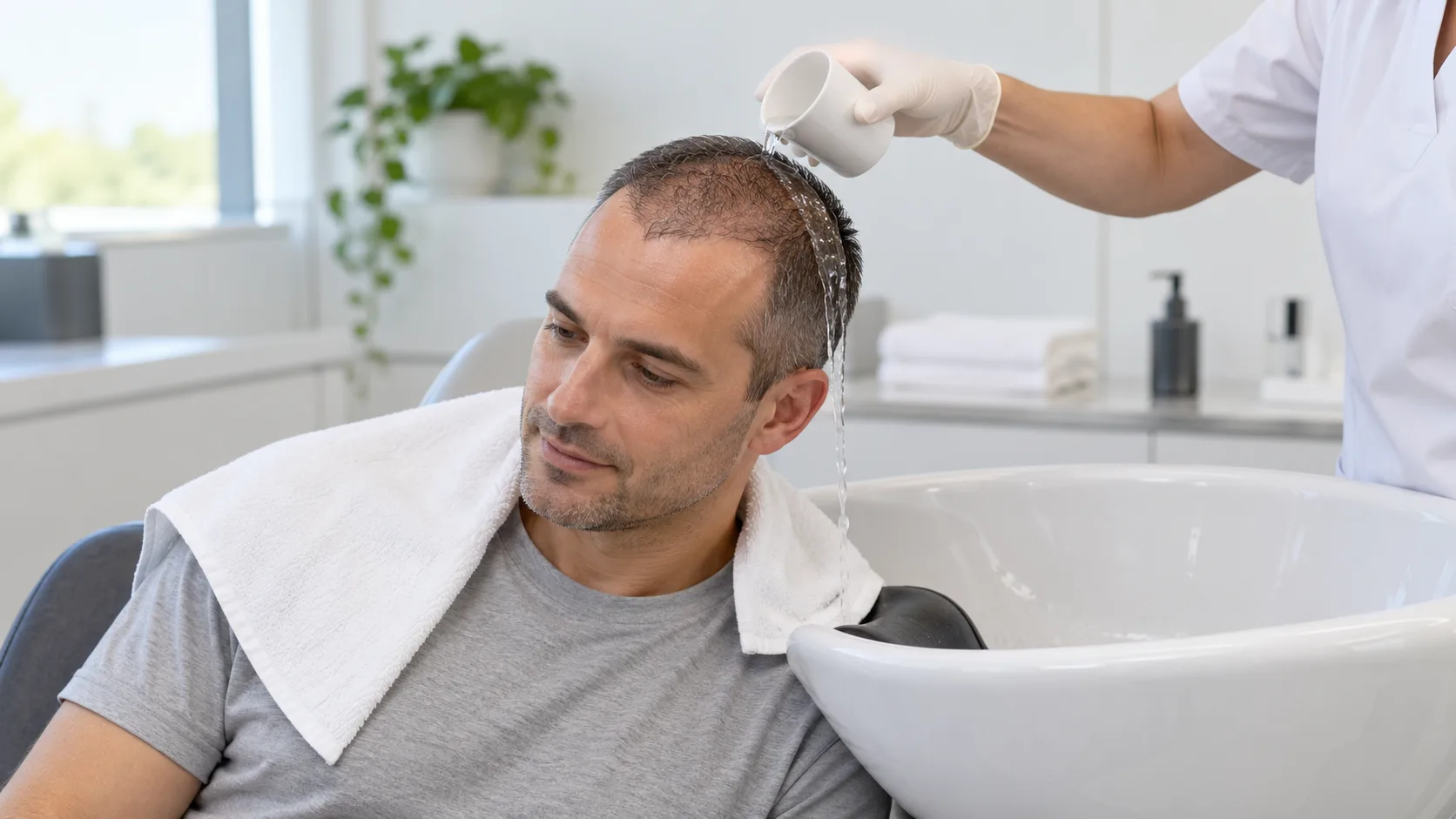
Most surgeons allow gentle washing after 48 to 72 hours. Patients should pour lukewarm water over the scalp rather than using shower spray directly. They should apply shampoo gently with fingertips. They should pat dry with a soft towel rather than rubbing.
High-pressure water can dislodge grafts. Aggressive rubbing damages healing tissue. Patients should avoid hair dryers on hot settings. They should avoid styling products until the surgeon approves.
Can Exercise Affect Graft Survival?
Strenuous exercise may increase mechanical and physiological stress during early recovery. Patients should follow their surgeon's activity restrictions.
Exercise raises blood pressure. It increases sweating. It creates friction from clothing and equipment. Accidental contact with gym equipment can traumatize the scalp. These factors threaten grafts during the first 2 to 4 weeks.
Most surgeons recommend avoiding strenuous exercise for 10 to 14 days. Light walking is usually acceptable after a few days. Patients should ask their surgeon for specific guidance based on their procedure and healing progress.
Does Sun Exposure Affect Graft Healing?
Yes. UV exposure can damage healing scalp tissue. Patients should protect the scalp from sun during early recovery and practice long-term sun protection.
Healing skin is more sensitive to UV radiation. Sun exposure can cause inflammation, pigmentation changes, and delayed healing. Patients should wear loose hats or use sunscreen on the scalp after the surgeon approves.
Long-term sun protection also matters. UV radiation damages skin and hair over time. It accelerates aging. It may contribute to hair thinning. Patients should make scalp sun protection a lifelong habit.
Does Smoking After Surgery Affect Graft Survival?
Yes. Continued nicotine exposure after surgery interferes with revascularization and wound healing. Patients should maintain smoking cessation through the critical recovery period.
The vasoconstrictive effects of nicotine continue to threaten grafts after surgery. During the first two weeks, new capillaries must form. Nicotine reduces the blood flow that supports this process. Carbon monoxide continues to displace oxygen from hemoglobin.
Patients who smoked before surgery should not resume immediately after. Most surgeons recommend maintaining cessation for at least 2 to 4 weeks postoperatively. Longer cessation provides better protection for both grafts and native hair.
Does Temporary Hair Shedding Mean the Grafts Have Died?
No. Shedding of transplanted hair shafts is normal. It is called shock loss. The follicular unit remains alive beneath the scalp. New hair will grow.
Shock loss occurs in most patients. Up to 90% of transplanted hairs shed within 2 to 6 weeks after surgery. This happens because the trauma of transplantation pushes follicles into the telogen (resting) phase. The hair shaft falls out. But the follicle itself survives.
New growth typically begins 3 to 4 months after surgery. It progresses through months 6 to 12. By 12 months, most surviving grafts have produced visible hair. By 18 months, hair has thickened and matured.
Patients should not panic when shedding occurs. It is a normal part of the hair growth cycle. Final assessment should wait until 12 months post-procedure.
When Can Hair Graft Survival Be Properly Evaluated?
Meaningful assessment requires 12 months or more. Early weeks show only healing and shedding. Hair growth progresses through early regrowth, thickening, and final maturation stages.
Judging survival during the first weeks is impossible. Grafts may look fine immediately after surgery but fail later. Alternatively, grafts may shed their hair shafts while the follicle remains viable.
The timeline proceeds as follows:
Weeks 0 to 2: Early healing and graft anchoring
Weeks 2 to 6: Shock loss and shedding
Months 3 to 6: Initial regrowth begins
Months 6 to 12: Progressive thickening and maturation
Months 12 to 18: Final maturation and density assessment
Standardized photography and trichoscopy provide objective measures. Trichoscopy allows clinicians to count hairs per square centimeter. It reveals hair caliber and growth stage. Photographs taken under consistent lighting and angles document progress. These tools produce more reliable data than casual observation.
How Can Patients Evaluate a Clinic's Claimed Graft Survival Rate?
Patients should ask specific questions about definitions, measurement methods, timing, data sources, and follow-up duration. Claims of "100% survival guaranteed" require careful scrutiny.
Patients should ask the clinic:
How do you define "survival"? Does it mean grafts, follicles, hair counts, or visible growth?
When did you measure survival? At 3 months, 6 months, or 12 months?
Does your percentage represent follicular units or individual hairs?
What data support your claim? Individual cases, retrospective cohorts, controlled studies, or independent research?
How long was your follow-up period?
How do you objectively measure graft loss?
Claims of guaranteed 100% survival are biologically implausible. Variability exists in every surgical procedure. Measurement methods differ. Patient factors differ. Reputable clinics report ranges rather than guarantees. They explain their methodology. They acknowledge individual variation.
What Is the Difference Between Graft Survival Rate and Hair Transplant Success Rate?
These terms measure different things. Graft survival measures biological viability. Success includes density, aesthetic design, naturalness, and patient satisfaction. High survival does not guarantee a successful cosmetic outcome.
Graft survival rate counts viable follicles. It is an objective biological measure. But a patient can have 95% graft survival and still feel disappointed. If the hairline looks unnatural, or the density appears uneven, or the growth direction seems wrong, the aesthetic result fails.
Hair density measures visible hairs per area. It depends on both survival and the number of grafts placed. Aesthetic success requires natural angle, direction, distribution, and hairline design. Patient satisfaction reflects subjective perception. It includes emotional and psychological factors.
A high graft survival rate is necessary but not sufficient for success. The surgeon must also plan distribution carefully. The team must control angle and direction precisely. The clinic must set realistic expectations.
What Is a Realistic Hair Graft Survival Rate?
Most accredited clinics report survival between 90% and 95%. Elite centers may reach 95% to 98%. Poorly performed procedures may fall to 75% to 85%. Individual results vary substantially.
Published survival ranges vary according to methodology and clinical setting. Historical research and contemporary clinic data differ. Some studies report lower figures because they use stricter measurement criteria. Others report higher figures based on less rigorous assessment.
Approximately 90% or higher represents a favorable clinical benchmark. But patients should understand that individual results vary. Donor quality, surgical protocol, patient health, and aftercare compliance all influence the final number.
Patients should not equate a clinic's advertised percentage with independently validated scientific evidence. They should ask for the data behind the claim.
How Can Hair Graft Survival Be Maximized?
Maximize survival through careful patient selection, healthy donor-graft selection, accurate extraction, low transection rates, gentle handling, continuous hydration, controlled temperature, minimized time out of body, appropriate storage solutions, adequate recipient-site vascularity, precise implantation, and proper postoperative protection.
The following table summarizes the key protective principles:
Factor | Best Practice | Risk if Ignored |
Patient selection | Medical assessment, health optimization | Poor healing, reduced survival |
Donor quality | Select terminal, multi-hair units | Weak grafts, poor density |
Extraction accuracy | Low transection rate, correct angle | Destroyed follicles, graft waste |
Graft handling | Gentle forceps use, minimal manipulation | Mechanical trauma, bulge damage |
Hydration | Continuous moisture during all steps | Desiccation, membrane damage |
Temperature | Controlled storage, avoid extremes | Metabolic exhaustion or cold injury |
Time out of body | Minimize to under 4 hours when possible | Ischemic damage, ATP depletion |
Storage solution | Advanced intracellular-type solutions | Osmotic stress, poor preservation |
Recipient vascularity | Assess scalp health, avoid scarred areas | Revascularization failure |
Implantation density | Individualized planning, avoid overpacking | Vascular competition, graft loss |
Postoperative care | Protect grafts, follow washing protocol | Dislodgment, infection, poor healing |
Graft survival results from cumulative protection at every stage. No single technology or treatment can compensate for failures elsewhere. The surgeon, technicians, and patient must work together to protect each graft.
Frequently Asked Questions About Hair Graft Survival Rate
What is a good hair graft survival rate?
A rate of 90% or higher represents a favorable benchmark in modern clinical practice. Elite centers may achieve 95% to 98%.
Can hair grafts fail after a successful hair transplant?
Yes. Some grafts may fail to establish blood supply even in well-performed procedures. This is why clinics place extra grafts to account for expected loss.
How long can hair grafts survive outside the body?
Graft viability declines over time. Research shows approximately 95% survival at 2 hours, 90% at 4 hours, and 79% at 24 hours under basic storage conditions. Advanced solutions may extend this slightly.
Does FUE have a higher graft survival rate than other techniques?
FUE achieves comparable survival to other techniques when performed well. It does not automatically guarantee higher survival. The surgeon's skill and protocol matter more than the technique label.
Does DHI increase graft survival?
DHI may improve survival by reducing time out of body and minimizing handling. But it requires skilled operators. Poorly performed DHI can produce worse results than well-performed FUE.
Does PRP improve graft survival?
Some studies show PRP improves survival, density, and growth onset. But evidence remains mixed. PRP serves as an adjunct, not a replacement for proper graft preservation.
Can dehydration kill a hair graft?
Yes. Dehydration causes irreversible membrane damage within minutes. Continuous hydration is essential.
Does graft storage temperature affect survival?
Yes. But colder is not always better. Controlled temperature matters more than arbitrary chilling.
How long does it take for transplanted grafts to establish blood supply?
Neovascularization begins within days. Most grafts establish sufficient blood supply by 2 weeks. Full integration continues for months.
Can smoking reduce hair graft survival?
Yes. Nicotine causes vasoconstriction and reduces oxygen delivery. Smoking cessation before and after surgery improves outcomes.
Does shock loss mean graft failure?
No. Shock loss is normal shedding of hair shafts. The follicle remains viable beneath the scalp. New hair grows in 3 to 4 months.
When can the final hair transplant result be evaluated?
Final assessment requires 12 to 18 months. Early evaluation is misleading.
Can graft survival be measured at home?
No. Accurate measurement requires trichoscopy and standardized photography. Patients cannot reliably assess survival themselves.
What should patients ask a clinic about its claimed survival rate?
Patients should ask how the clinic defines survival, when they measured it, what data supports the claim, and how long follow-up lasted.
Conclusion: What Really Determines Hair Graft Survival Rate?
Graft survival depends on multiple interconnected biological and technical factors. No single technique guarantees universal survival. Cumulative protection at every stage, from extraction through revascularization, determines outcome.
Hair graft survival is not a fixed number. It is a dynamic outcome shaped by dozens of variables. The surgeon must select appropriate candidates. The team must extract grafts accurately with minimal transection. They must handle grafts gently. They must maintain hydration and temperature. They must minimize time out of body. They must use appropriate storage solutions. They must prepare recipient sites with adequate vascularity. They must implant grafts precisely. And the patient must protect grafts during recovery.
No technique name, FUE, DHI, or Sapphire FUE, can override these principles. No additive, PRP, oxygen therapy, or advanced solution, can rescue fundamentally poor handling. Protocol discipline matters more than marketing claims.
Patients should evaluate clinics based on objective evidence. They should ask about transection rates, storage protocols, and follow-up methodology. They should seek surgeons who prioritize graft preservation over speed or volume. They should understand that realistic expectations and individualized assessment remain central to successful hair restoration.
The science of graft survival is clear. The follicle is a living tissue unit. It faces ischemia, dehydration, mechanical trauma, and oxidative stress from the moment of extraction. Every clinical decision either protects it or threatens it. Informed patients who understand these principles can make better choices. They can ask better questions. And they can achieve better outcomes.
References
"Evaluation of a Novel Graft-Holding Solution in Hair Transplantation: A Randomized Controlled Clinical Study." PubMed, U.S. National Library of Medicine, 7 Jan. 2023, pubmed.ncbi.nlm.nih.gov/37036372/.
"Efficacy of Platelet-Rich Plasma as an Adjunct to Hair Transplantation in Patients with Androgenetic Alopecia: A Systematic Review." PubMed Central, U.S. National Library of Medicine, PMC12506585.
"Hair Transplant Graft Survival Rate Factors: The 6-Threat Biological Framework." Charles Medical Group, 11 May 2026, charlesmedicalgroup.com/plastic-surgery/hair-transplant-graft-survival-rate-factors/.
"Hair Transplant Smoking Effect on Results and Healing: The 4-Threat Biological Framework." Charles Medical Group, 4 June 2026, charlesmedicalgroup.com/plastic-surgery/hair-transplant-smoking-effect-results-healing/.
"Hair Transplant Statistics: 2026 Report." Hair Transplant Center CT, 3 Aug. 2026, hairtransplantcenterct.com/blog/hair-transplant-statistics/.
Parsley, William M., and David Perez-Meza. "Review of Factors Affecting the Growth and Survival of Follicular Grafts." Journal of Cutaneous and Aesthetic Surgery, vol. 3, no. 2, 2010, pp. 69-75.
Pathania, Vikas, et al. "Randomized Control Trial to Study the Efficacy and Safety of Platelet-Rich Plasma as Intraoperative Holding Solution in Hair Restoration Surgery: A Pilot Study." 2023.
Sethi, Pradeep, et al. "Direct Hair Transplantation: A Modified Follicular Unit Extraction Technique." Journal of Cutaneous and Aesthetic Surgery, vol. 6, no. 3, 2013, pp. 149-154.
Wang, Fang, et al. "Using the Follicular Unit Extraction Technique in Treatment of Male Androgenetic Alopecia." 2024.
Yii, Valerie, et al. "Systematic Review of Follicular Unit Graft Survival Rates After Hair Transplantation in Primary Cicatricial Alopecia." 2025.