Needle-Free Anaesthesia: Does It Really Work?
Yes. Needle-free jet anaesthesia works for the initial numbing stage of a hair transplant. It does not guarantee that no needle will appear at any point. It reduces the pain and fear linked to the first injections, and it often works fast. Some patients still need a conventional injection to reach full depth of numbness.
Needle-free anaesthesia means one thing in hair transplantation: a jet injector delivers local anaesthetic through the skin without a needle. The medication stays the same. Only the delivery method changes. Local anaesthesia remains necessary in FUE and DHI procedures because the surgeon must extract and implant grafts without pain. For many patients, the anaesthesia stage, not the surgery itself, causes the most anxiety. Needles trigger real fear. That fear can raise heart rate, tighten muscles, and make the whole visit harder. This article examines the mechanism, effectiveness, patient comfort, limitations, and clinical role of needle-free anaesthesia in hair restoration.
What Is Needle-Free Anaesthesia?
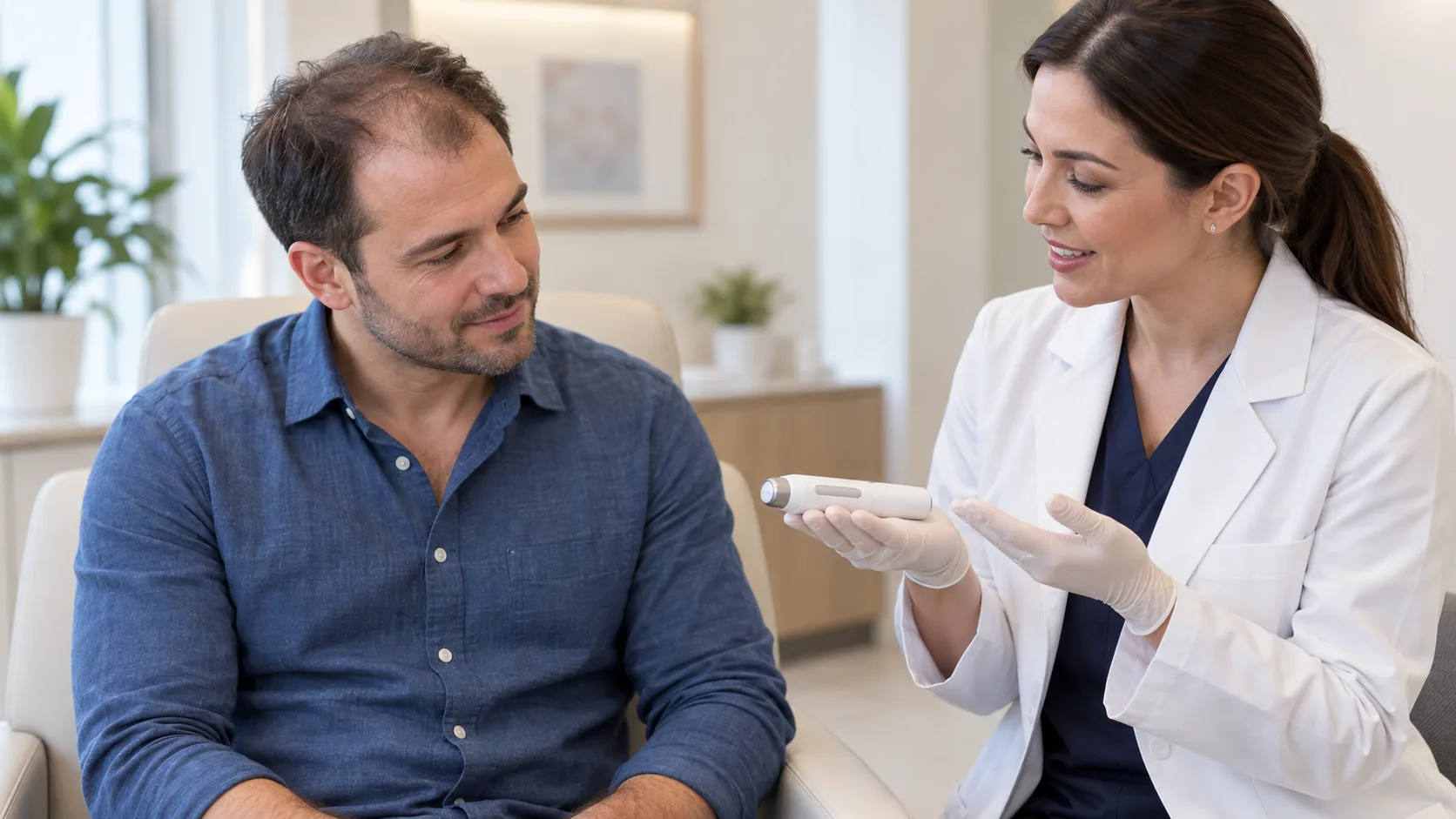
Needle-free anaesthesia is a pressure-based method that pushes local anaesthetic through the skin without a needle. A jet injector replaces the syringe for the initial delivery.
Needle-free anaesthesia, also called needleless anaesthesia, uses a jet injector instead of a syringe. The device stores mechanical energy in a spring or a gas cartridge. When the clinician presses the trigger, the device releases that energy and drives the liquid anaesthetic through a tiny orifice at high speed. The stream crosses the skin barrier in a fraction of a second. Alameeri et al. (2022) describe this as a mechanical energy source that forces a liquid drug into subcutaneous tissue without a needle.
One point confuses many patients. The anaesthetic medication does not change. Lidocaine remains the most common local anaesthetic in hair restoration. The innovation concerns delivery, not chemistry. This distinction matters because it shapes every claim in this article. A jet injector and a conventional syringe can deliver the same drug at different depths, speeds, and comfort levels. That difference explains both the advantages and the limits of the needle-free approach.
The technology holds special value for patients with needle phobia, also known as trypanophobia. These patients feel intense fear before any injection. A pressure-based device removes the visible needle from the first contact with the scalp. That single change can transform the emotional start of the procedure.
How Does Needle-Free Anaesthesia Deliver Local Anaesthetic Through the Skin?
A high-pressure stream pushes the anaesthetic through the superficial skin layers. The drug spreads around sensory nerves and blocks pain signals. The patient feels pressure or a brief snap, not a needle stick.
How Does a Jet Injector Create the Anaesthetic Stream?
A spring or gas cartridge propels the liquid through a narrow nozzle at high pressure. The stream acts like a micro liquid needle.
The injector builds pressure behind a small volume of anaesthetic solution. When the trigger fires, the liquid exits through an orifice thinner than a needle. Gao et al. (2021) measured jet exit velocities above 70 metres per second in needle-free liquid jet injection. At that speed, the stream penetrates the epidermis and upper dermis through mechanical force alone. No metal tip enters the tissue. This mechanism defines the whole technology: the liquid itself performs the penetration.
How Does the Anaesthetic Reach the Sensory Nerves?
The anaesthetic disperses in tiny droplets within the superficial tissue. It blocks sodium channels in sensory nerve endings and stops pain transmission.
Local anaesthetics such as lidocaine work at the cellular level. They block sodium channels in nerve fibres. When sodium cannot enter the cell, the nerve cannot fire an action potential. Pain signals stop before they reach the brain. The jet stream deposits the drug in a fine spray pattern. Nerve endings in the dermis absorb the solution quickly. Numbness develops within minutes. This is the same pharmacology used in conventional infiltration, only the entry route differs.
Why Does the Patient Feel Pressure Instead of a Conventional Injection?
The skin receives mechanical pressure from the liquid stream rather than a cut from a metal tip. Most patients report a brief snap, pop, or vibration.
A needle creates pain mainly through penetration and tissue displacement. A jet injector creates a different sensation. The patient feels a sudden pressure wave and sometimes a snapping sound. Alameeri et al. (2022) note that some patients feared the explosive release of the solution, while others accepted it easily. Perception varies with skin thickness, anxiety level, and device settings. Thin scalp skin at the recipient area may transmit sensation differently than denser donor skin. Clinicians adjust pressure accordingly.
Why Is Needle-Free Anaesthesia Used During Hair Transplantation?
It numbs the scalp at the start of FUE or DHI without a needle. This reduces injection pain and calms anxious patients within the first minutes of surgery.
FUE and DHI both require local anaesthesia of the donor and recipient zones. Graft extraction and implantation would cause sharp pain without it. The scalp is sensitive. Multiple injection points across a large area multiply the discomfort. Needle-free delivery addresses the hardest moment: the first contact. Once the skin is numb, the clinician can add deeper anaesthesia with far less pain if needed. A calm start shapes the entire patient experience. Lower anxiety means less movement, better cooperation, and smoother surgery.
What Happens During Needle-Free Anaesthesia for a Hair Transplant?
The team cleans the scalp, marks the zones, applies jet anaesthesia to numb the surface, checks numbness, and adds conventional infiltration if the case requires it. Surgery starts only after adequate anaesthesia is confirmed.
How Is the Scalp Prepared Before Anaesthesia?
The team cleanses the scalp with antiseptic solution and marks the donor and recipient areas before any anaesthetic is applied.
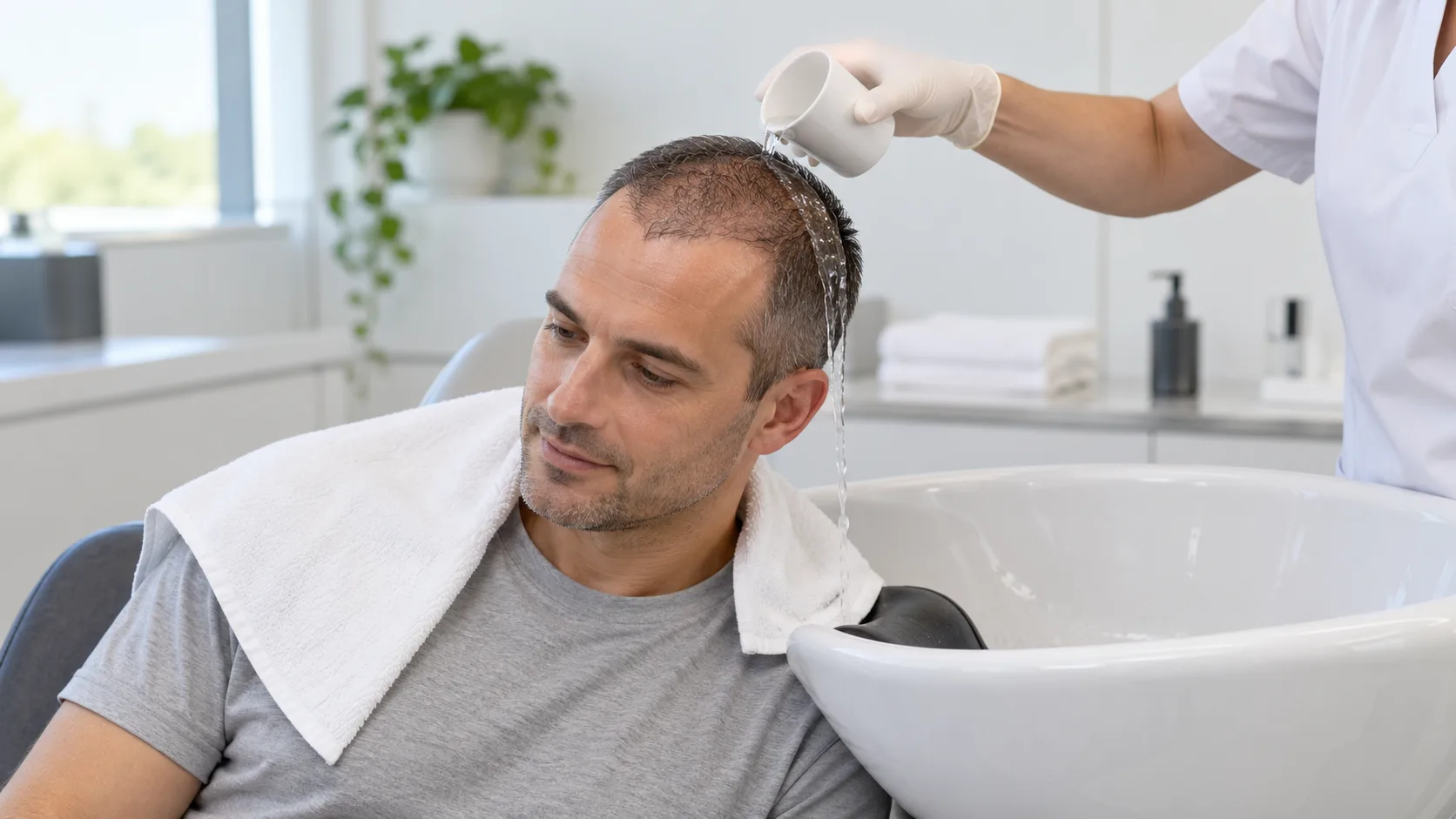
Preparation follows standard surgical protocol. Antiseptic cleansing reduces infection risk. The surgeon marks the hairline and donor zone. These steps create a sterile, mapped field. They also give the patient a moment to settle before the device fires.
How Is the Initial Anaesthetic Applied?
The clinician holds the jet injector perpendicular to the scalp and delivers short bursts across the treatment zones. Superficial numbness develops within minutes.
The clinician positions the device at a right angle to the skin for even penetration. Each burst covers a small area. The team repeats the process across the donor and recipient fields. The patient feels pressure with each burst. Within two to three minutes, the surface loses sensation.
When Is Additional Anaesthesia Considered?
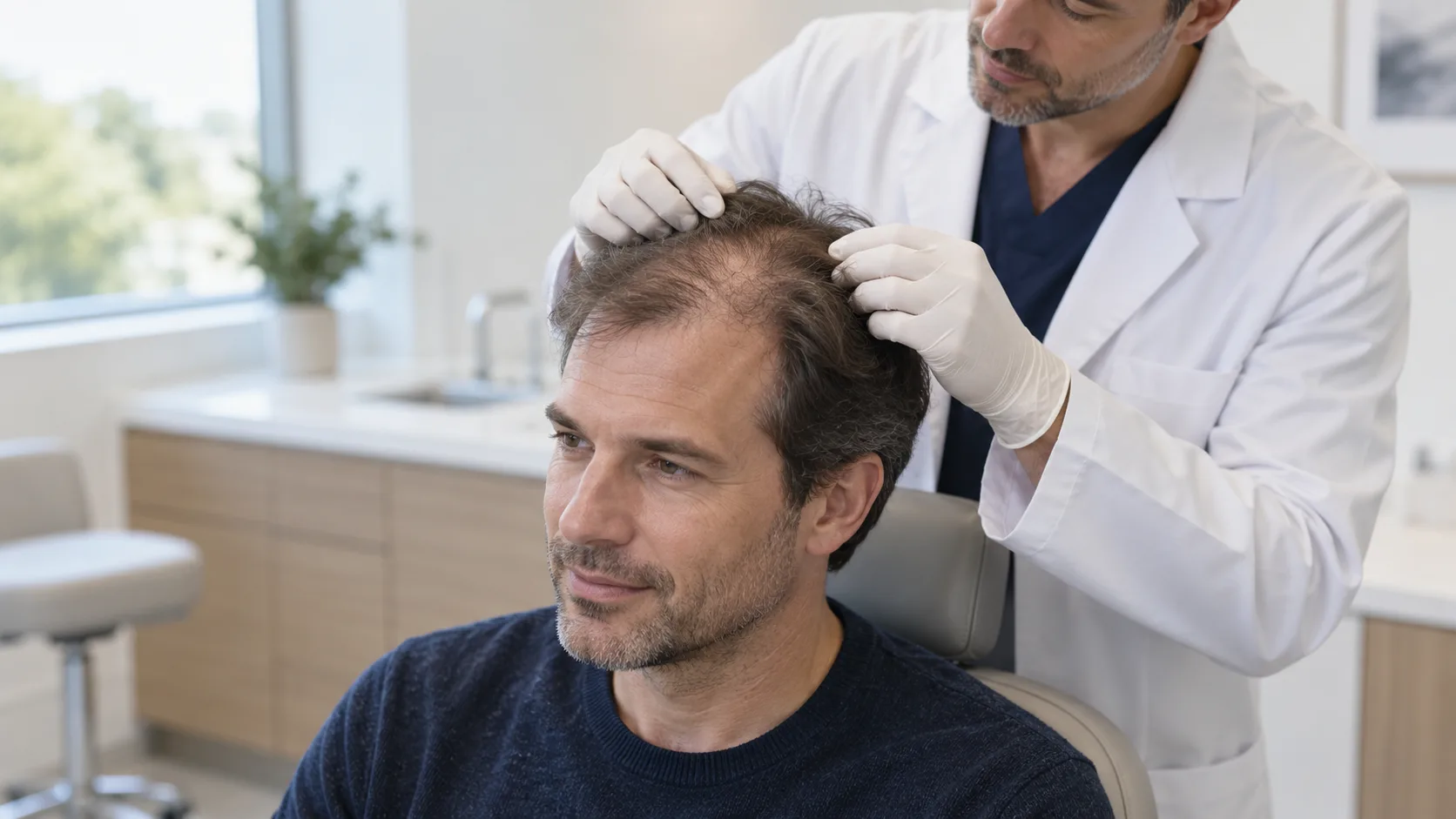
The clinician tests numbness with light touch or a small probe. If the patient still feels sharp sensation, the team adds conventional infiltration through the already-numb skin.
Jet delivery reaches mainly superficial layers. Deep extraction work sometimes requires fuller blockade. Because the surface is already numb, any supplementary needle passes through anaesthetised skin. The patient rarely feels it. Needle-free anaesthesia often serves as the initial stage, not the entire protocol. Honest clinics state this clearly before surgery.
When Does the Hair Transplant Begin?
Surgery starts after the team confirms complete numbness in both donor and recipient areas.
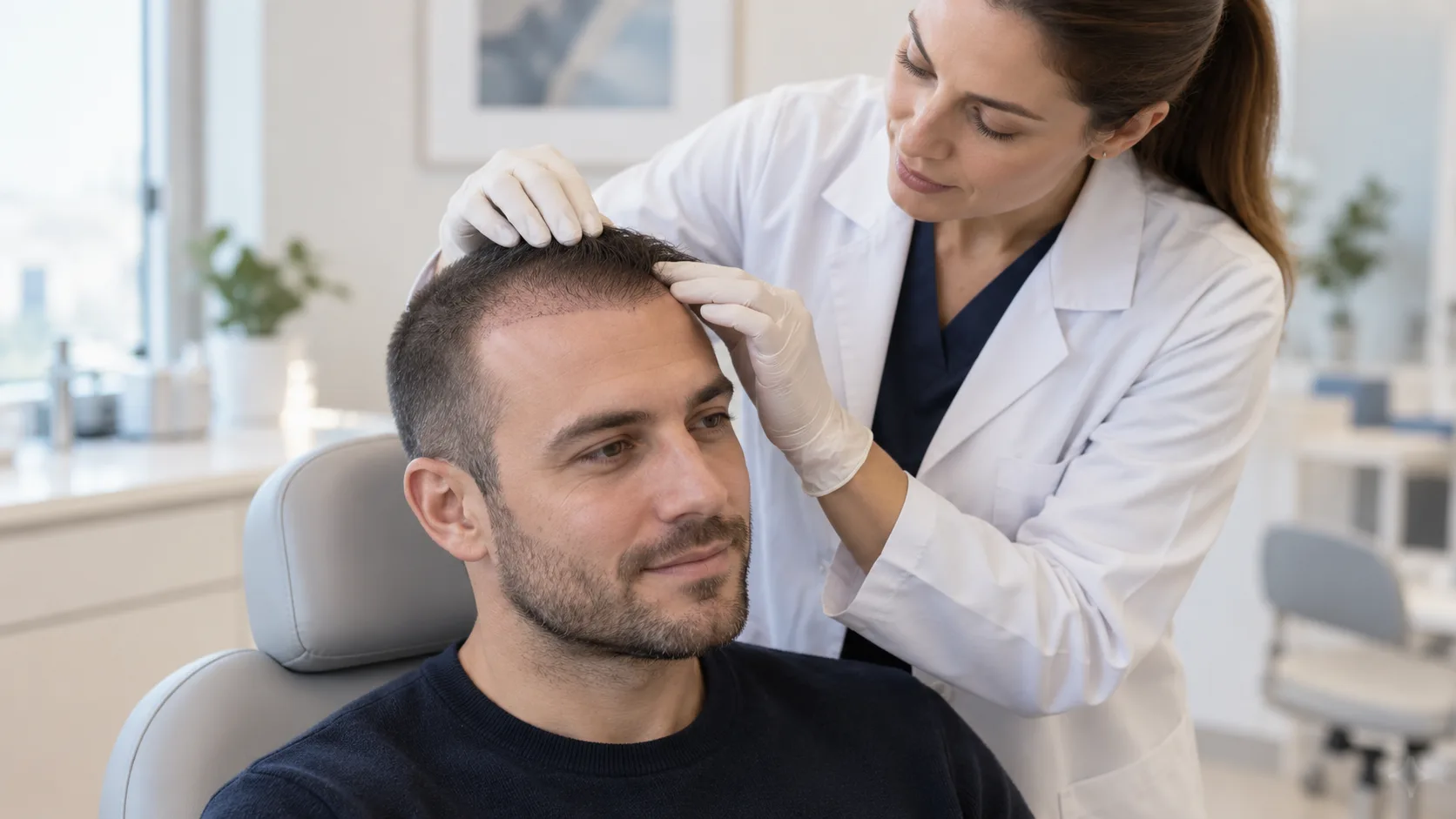
The surgeon verifies anaesthesia with a physical check. Only then does graft extraction begin. If the patient reports any sensation during surgery, the team pauses and adds more anaesthetic. Patient comfort remains the control point throughout.
Does Needle-Free Anaesthesia Really Reduce Pain?
Evidence shows it reduces pain during the anaesthetic administration itself. Results in dentistry do not transfer automatically to hair transplantation, but the mechanism and early data support real benefit.
Pain and fear are not the same. Fear amplifies pain. Injection pain comes from the needle pass and the fluid pressure inside tissue. Needleless systems remove the needle pass. Alameeri et al. (2022) found needleless jet injection particularly useful for anxious and needle-phobic patients and reported faster onset. De Oliveira et al. (2019) recorded similar pain scores for jet and needle methods during administration, with a latency of two minutes in both groups. Most published trials come from dentistry. Hair transplant evidence remains thinner, so clinics should present benefits proportionately, not as guarantees.
How Effective Is Needle-Free Anaesthesia Compared With Conventional Local Anaesthesia?

Jet anaesthesia acts fast and numbs the surface well. Conventional infiltration usually lasts longer and reaches deeper. Many cases combine both methods.
How Do the Two Delivery Methods Differ?
A syringe deposits anaesthetic at a chosen depth. A jet injector sprays it at high speed into superficial tissue. Speed favours the jet; depth control favours the needle.
Factor | Needle-Free Anaesthesia | Conventional Local Anaesthesia |
Delivery | High-pressure jet | Needle and syringe |
Needle penetration | No during initial delivery | Yes |
Initial sensation | Pressure or brief snap | Stinging and needle stick |
Onset | Rapid | Rapid, technique dependent |
Depth | Primarily superficial | Can reach deeper planes |
Supplementary anaesthesia | Often required | Sometimes required |
Needle-phobia benefit | Strong | Weak |
Duration | Often shorter | Usually longer |
Clinical role | Alternative or initial method | Established standard |
Does Needle-Free Anaesthesia Provide Adequate Numbing?
It provides reliable superficial numbness. Deep procedures may still need infiltration anaesthesia.
Soft tissue anaesthesia succeeds reliably with jet systems. Deeper blockade shows more variation. Alameeri et al. (2022) report that most treatments under jet anaesthesia required additional anaesthesia. This matches hair transplant practice, where extraction depth exceeds the jet's typical reach.
How Long Does Needle-Free Anaesthesia Last?
Onset is fast, often within two minutes. Duration tends to be shorter than conventional infiltration, so long sessions may need top-ups.
De Oliveira et al. (2019) found equal two-minute latency in both groups but longer duration with the traditional needle. Hair transplant sessions can run several hours. Shorter duration means the team may re-dose the recipient zone before implantation ends. This is a manageable limitation, not a failure.
Can a Hair Transplant Be Completely Needle-Free?
Usually no. "Needle-free" describes the initial numbing stage. Deeper anaesthesia may still use a needle, passed through skin that is already numb.
The term "needle-free" describes how the first anaesthetic enters the body. It does not promise a needle-free operation. Full anaesthetic management for a long FUE session often combines jet delivery with conventional infiltration. Patients should ask clinics exactly how the technology fits the protocol. Some marketing materials blur this line. Informed patients make better decisions.
Is Needle-Free Anaesthesia Suitable for FUE and DHI Hair Transplants?
Yes. Both FUE and DHI need local anaesthesia, and both can start with jet delivery. The technique does not remove the need for anaesthesia.
How Is It Used With FUE?
The team anaesthetises the donor zone for extraction and the recipient zone for implantation, starting with the jet injector in both areas.
FUE removes individual follicular units from the donor area. Each extraction passes through skin that must stay numb for hours. Jet anaesthesia covers the wide donor field quickly at the start. Conventional top-ups maintain depth as the session continues.
How Is It Used With DHI?
The team numbs the recipient area before direct implantation and keeps the patient comfortable with additional dosing when needed.
DHI uses an implanter pen to place grafts directly. The recipient scalp receives many small punctures. Jet anaesthesia numbs the surface before this work begins. Patient comfort remains stable through the session.
Does the Hair Transplant Technique Determine Which Anaesthesia Method Is Used?
No. FUE and DHI both require local anaesthesia. The surgeon selects the delivery method based on the patient, not the extraction technique.
Both techniques are well tolerated. Neither removes the need to block pain. Needle-free delivery changes how anaesthesia starts, not whether it happens. The surgeon assesses pain history, anxiety level, skin characteristics, and session length before choosing a protocol.
Who May Benefit Most From Needle-Free Anaesthesia?
Patients with needle phobia, high procedural anxiety, or a bad past injection experience benefit most. First-time transplant patients also gain comfort.
Trypanophobia affects a real share of the population. For these patients, avoiding the sight and feel of a needle changes the entire appointment. Anxious patients relax faster when the first contact is pressure rather than a stick. Patients who fainted or panicked during past injections respond especially well. Anyone who wants a gentler anaesthesia stage is a reasonable candidate after medical review.
What Are the Potential Advantages of Needle-Free Anaesthesia?
It can cut injection discomfort, lower needle anxiety, act quickly, reduce tissue trauma from needles, and cover a broad area fast.
Can It Reduce Injection-Related Discomfort?
Yes. Removing the needle removes the sharpest source of injection pain.
Can It Reduce Anxiety About Needles?
Yes. Patients who cannot tolerate needle sight report calmer procedures with jet delivery.
Does It Act Quickly?
Yes. Numbness often starts within two minutes of application.
Can It Reduce Needle-Related Tissue Trauma?
Yes. Repeated needle sticks bruise tissue. A liquid stream causes less mechanical damage at entry points.
Can It Provide Broad Initial Anaesthetic Coverage?
Yes. The clinician can sweep the device across a wide zone in minutes, faster than serial injections.
What Are the Limitations of Needle-Free Anaesthesia?
The effect is shallower and sometimes shorter than conventional infiltration. Supplementary injections remain common. Device cost and the snapping sensation are real drawbacks.
Jet delivery reaches the superficial layers first. Deep planes may stay responsive. Alameeri et al. (2022) found that additional anaesthesia was commonly required and that conventional needles gave longer and better pain control for some procedures. Ocak et al. (2020) reported higher discomfort scores during extraction under jet anaesthesia alone. Some patients dislike the pop sound. Devices cost more than syringes. Most comparative research comes from dentistry, not hair restoration, so evidence limits apply.
Is Needle-Free Anaesthesia Safe?
Yes, when qualified professionals operate the device with sterile technique and correct dosing. Mild local reactions can occur.
Safety depends on correct device settings, appropriate anaesthetic selection, and strict sterility. Overpressure can cause minor bleeding or surface trauma. Gao et al. (2021) showed that injection angle changes bleeding and laceration risk, with oblique delivery safer than perpendicular delivery in dental tissue. Patients may notice temporary redness or sensitivity at application sites. A full medical assessment must precede treatment. Cardiac history, allergy status, and medication use all shape the choice of anaesthetic and dose.
What Does the Scientific Evidence Say About Needleless Jet Injection?
A 2022 systematic review of ten studies found jet injection a useful alternative with faster onset, but not a universal replacement for conventional local anaesthesia.
What Did the Systematic Review Examine?
Alameeri et al. searched four databases for English studies from 2005 to 2020 and included ten studies: five randomized trials, three case-control studies, and two equivalence trials.
What Benefits Did Researchers Identify?
Faster onset, less administration discomfort, and strong value for needle-phobic patients.
What Problems Did Researchers Identify?
Frequent need for additional anaesthesia, shorter duration, weaker pain control for deep procedures, and higher equipment cost.
How Strong Is the Evidence for Hair Transplantation Specifically?
Weak. Most trials come from dentistry. Hair restoration needs its own comparative trials before strong claims are possible.
This gap matters. A dental infiltration trial does not model a six-hour FUE session. Saghi et al. (2015) studied jet injectors for wound suturing in emergency medicine and found comparable efficacy to needle infiltration, which widens the evidence base but still stops short of hair restoration. Responsible interpretation treats jet anaesthesia as a proven alternative delivery method, not a proven superiority claim for hair surgery.
Does Needle-Free Anaesthesia Make a Hair Transplant Completely Pain-Free?
No anaesthesia can promise zero sensation. Patients may feel pressure, touch, or vibration. Pain should stay absent once full anaesthesia is confirmed.
Pressure is not pain. During surgery, patients sense movement and instrument contact without sharpness. Individual pain thresholds and anxiety levels shape perception. No ethical clinic guarantees a completely pain-free operation. Good clinics guarantee attentive pain control instead.
What Should Patients Ask Before Choosing Needle-Free Anaesthesia?
Ask which device the clinic uses, whether any needle appears later, which drug and dose are planned, and who performs the anaesthesia.
Patients should also ask how the team assesses numbness, what happens if the first pass is insufficient, and whether personal medical history fits the technology. Clear answers signal an honest protocol. Vague answers deserve caution.
What Should You Expect During Recovery After Needle-Free Anaesthesia?
Numbness fades within hours. Normal post-transplant sensations follow. Prescribed pain management may still be needed.
As the anaesthetic wears off, patients feel tightness and tenderness typical of any hair transplant. This differs from anaesthesia discomfort. Mild scalp sensitivity at application points can appear. Patients should contact the medical team about unusual swelling, severe pain, or signs of infection.
Is Needle-Free Anaesthesia Worth Considering for a Hair Transplant?
Yes, especially for needle-phobic patients. It is a valuable delivery option, not a wholesale replacement for conventional anaesthesia.
The technology earns its place at the start of the procedure. It lowers the emotional and physical cost of the first injections. It works fastest where it matters most: patient comfort in the opening minutes. Surgeon experience and patient-specific planning decide how it fits the full protocol. Combined use with conventional infiltration reflects current best practice.
Frequently Asked Questions About Needle-Free Anaesthesia
Does needle-free anaesthesia actually work?
Yes. It reliably numbs the superficial scalp and works within minutes.
Is needle-free anaesthesia completely painless?
No. Most patients feel pressure or a brief snap, not pain.
Does needle-free anaesthesia eliminate needles completely?
Not always. Deep anaesthesia may still require a conventional injection.
How does a needle-free injector work?
A spring or gas cartridge fires a high-pressure stream of anaesthetic through a tiny nozzle into the skin.
Does needle-free anaesthesia hurt during a hair transplant?
It should not hurt. Pressure and vibration are normal sensations.
Is needle-free anaesthesia suitable for people with needle phobia?
Yes. It was designed with these patients in mind, and research supports this use.
Can needle-free anaesthesia be used for FUE?
Yes. Clinics use it for donor and recipient anaesthesia in FUE.
Can needle-free anaesthesia be used for DHI?
Yes. It numbs the recipient area before direct implantation.
Will I still need an injection after needle-free anaesthesia?
Possibly. Many protocols add conventional infiltration after the numb stage.
How long does needle-free anaesthesia last?
Shorter than conventional infiltration in most studies, so long sessions may need top-ups.
Are there side effects of needle-free anaesthesia?
Mild redness or sensitivity can occur. Serious complications are rare with correct use.
Is needle-free anaesthesia safer than traditional injections?
It avoids needle-stick injury and tissue trauma, but both methods are safe in professional hands.
Can every patient receive needle-free anaesthesia?
Most can, after medical assessment. Individual history guides the final decision.
Conclusion: Does Needle-Free Anaesthesia Really Work?
Yes. Needle-free jet anaesthesia works as a legitimate alternative delivery method, especially for patients who fear needles.
The mechanism is sound. High-pressure delivery places local anaesthetic into superficial tissue fast, blocks sensory nerves, and spares the patient the sight and feel of a needle. Clinical research supports faster onset and easier administration for anxious patients. Evidence also shows real limits: shallower effect, shorter duration, and frequent need for supplementary conventional anaesthesia. It reduces discomfort at the hardest moment of a hair transplant, the start. It does not replace conventional local anaesthesia in every case. Patients who understand both sides gain the most benefit.
References
Alameeri, Alreem Ahmed, et al. "The Feasibility of Needleless Jet Injection versus Conventional Needle Local Anesthesia during Dental Procedures: A Systematic Review." Journal of the Korean Association of Oral and Maxillofacial Surgeons, vol. 48, no. 6, 2022, pp. 331-341.
De Oliveira, Ana Cecília Almeida, et al. "Assessment of Anesthetic Properties and Pain during Needleless Jet Injection Anesthesia: A Randomized Clinical Trial." Journal of Applied Oral Science, vol. 27, 2019, e20180195.
Gao, Qiang, et al. "Needle-Free Injection: Dental Infiltration Anesthesia." International Journal of Pharmaceutics, vol. 598, 2021, 120765.
Ocak, Mevlut, et al. Local Anesthesia with Needleless INJEX System for Tooth Extraction. Journal of International Society of Preventive and Community Dentistry, 2020.
Saghi, Bahareh, et al. "Efficacy of the Jet Injector in Local Anaesthesia for Small Wound Sutures: A Randomised Clinical Trial Compared with the Needle Infiltration Technique." Emergency Medicine Journal, vol. 32, no. 6, 2015, pp. 478-480.