Regenera Activa: How Does It Support Hair Growth?
Regenera Activa supports hair growth by delivering autologous micrografts, rich in progenitor cells, exosomes, and extracellular matrix components, directly into areas of hair thinning. These regenerative elements communicate with miniaturized follicles, restore growth signaling, and create a healthier follicular microenvironment that can improve hair density and thickness over time.
Androgenetic alopecia, the most common form of hair loss, affects roughly 50% of men and women by age 50 (Lolli et al. 2017). The condition follows a characteristic biological pattern: dihydrotestosterone, or DHT, suppresses follicular keratinocyte growth by triggering transforming growth factor beta and DKK-1 production in dermal papilla cells, which gradually miniaturizes the hair follicle (Inui et al. 2003). A follicle that once produced a thick terminal hair shrinks until it yields only a fine, barely visible vellus hair. Because hair follicle stem cells remain preserved even as progenitor cells are lost, this miniaturization stays partially reversible, and that reversibility is the scientific foundation for regenerative treatments (Zari 2021).
Regenera Activa is an autologous micrografting approach built on this principle. Instead of blocking hormones like finasteride or stimulating follicles pharmacologically like minoxidil, it transfers living biological material from the patient's own healthy scalp into thinning areas. This article explains the science behind Regenera Activa, the evidence for its efficacy, who it suits, and how it compares with other hair loss treatments.
What Is Regenera Activa?
Regenera Activa is a single-session, minimally invasive regenerative treatment that mechanically processes a small sample of the patient's own scalp tissue into a suspension of viable micrografts, then injects that suspension into areas affected by androgenetic alopecia.
Regenera Activa operates through Autologous Micrografting Technology, known as AMT®. The procedure relies on patented Rigenera® technology, a Class IIa CE-certified medical device system that mechanically disaggregates solid tissue into micrografts without enzymatic digestion or cell culture (Trovato et al. 2015). Trovato et al. (2015) demonstrated that this mechanical processing yields viable micro-grafts that retain high regenerative potential and remain ready for immediate clinical use.
The key distinction lies in the source and state of the material. Conventional topical or oral hair loss treatments deliver a single active molecule. Regenera Activa delivers a complete biological system: progenitor cells, extracellular vesicles including exosomes, and extracellular matrix fragments, all derived from the patient. Because the material is autologous, the immune system accepts it without rejection risk, and clinicians can prepare and apply it within the same appointment.
How Does Regenera Activa Support Hair Growth?
Regenera Activa supports hair growth by restoring the signaling environment that DHT has disrupted. The micrograft suspension reactivates stem cells and progenitor cells in miniaturized follicles, reinstates growth factor communication, and provides structural and cellular support to follicles that remain alive but functionally weakened.
Three mechanisms explain this effect, and each one maps to a distinct component of the micrograft suspension. First, transplanted multipotent cells enhance follicular regeneration capacity. Second, signaling molecules restart communication between follicle cells that androgen-driven damage has silenced. Third, the extracellular matrix rebuilds the physical niche in which follicle stem cells live and divide (Zari 2021). The next sections examine each component in detail.
What Are Progenitor Cells?
Progenitor cells are partially specialized cells derived from stem cells that drive tissue repair and renewal. In Regenera Activa, they migrate into the follicular environment and help rebuild the cellular machinery that miniaturized follicles have lost.
Hair follicle stem cells reside in the bulge region and maintain the ability to self-renew and differentiate. Their activation depends on signals from the surrounding niche, especially dermal papilla cells, which regulate entry into the anagen, or growth, phase of the hair cycle through pathways such as Wnt/beta-catenin (Greco et al. 2009). In androgenetic alopecia, the population of CD200-positive progenitor cells declines, which explains why follicles shrink even though their stem cell reserve survives (Zari 2021). Delivering fresh progenitor cells from the occipital donor zone replenishes this depleted pool and gives existing stem cells functional partners again.
What Role Do Exosomes Play?
Exosomes are nanoscale extracellular vesicles that carry proteins, lipids, and microRNAs between cells. In the scalp, they mediate cell-to-cell communication between dermal papilla cells and follicle stem cells, and they represent one of the most active research areas in regenerative hair medicine.
Laboratory evidence shows that exosomes derived from dermal papilla cells promote hair growth in cultured human hair follicles and strengthen the hair-inductive capacity of dermal papilla spheres (Kwack et al. 2019). Hu et al. (2020) identified dermal exosomes carrying microRNA-218-5p that promote hair regeneration by regulating beta-catenin signaling. A pilot study on chronic wounds confirmed that the micrograft suspension produced by the Rigenera® device contains exosomes capable of driving tissue regeneration (Baglioni et al. 2024). This matters clinically because the micrografts do not merely add cells; they carry the signaling cargo that instructs existing cells to resume growth.
Why Is the Extracellular Matrix Important?
The extracellular matrix is the structural scaffold that surrounds cells and holds growth factors in place. In Regenera Activa, matrix fragments provide immediate structural support around compromised follicles and create a regenerative microenvironment where transplanted cells can survive and signal effectively.
Without matrix support, transplanted cells lose anchorage and the paracrine factors they release dissipate. The matrix component solves this problem by localizing repair where it is needed and by releasing bound growth factors gradually (Vincenzi et al. 2025). Together, progenitor cells, exosomes, and matrix form a single autologous suspension that addresses three different layers of follicular failure.
How Is Regenera Activa Performed?
The clinician collects three 2.5 mm tissue samples from the occipital scalp behind the ear, mechanically processes them in the Rigeneracons device, and injects the resulting micrograft suspension into thinning areas. The entire procedure takes about 60 to 90 minutes and follows a single-session protocol.
The donor zone behind the ear resists DHT and contains a high concentration of cell progenitors, which makes it the preferred sampling site (Vincenzi et al. 2025). After local anesthesia, the clinician places the specimens in the Rigeneracons device with sterile saline and rotates it at 80 RPM for two minutes. The suspension is diluted and then injected subdermally in small aliquots spaced roughly one centimeter apart (Zari 2021). Zari (2021) specifies 0.1 mL per injection point using a 30-gauge needle. The standard patient protocol moves through six stages: consultation, tissue extraction, mechanical processing, micrograft preparation, injection, and follow-up.
Which Types of Hair Loss Can Regenera Activa Address?
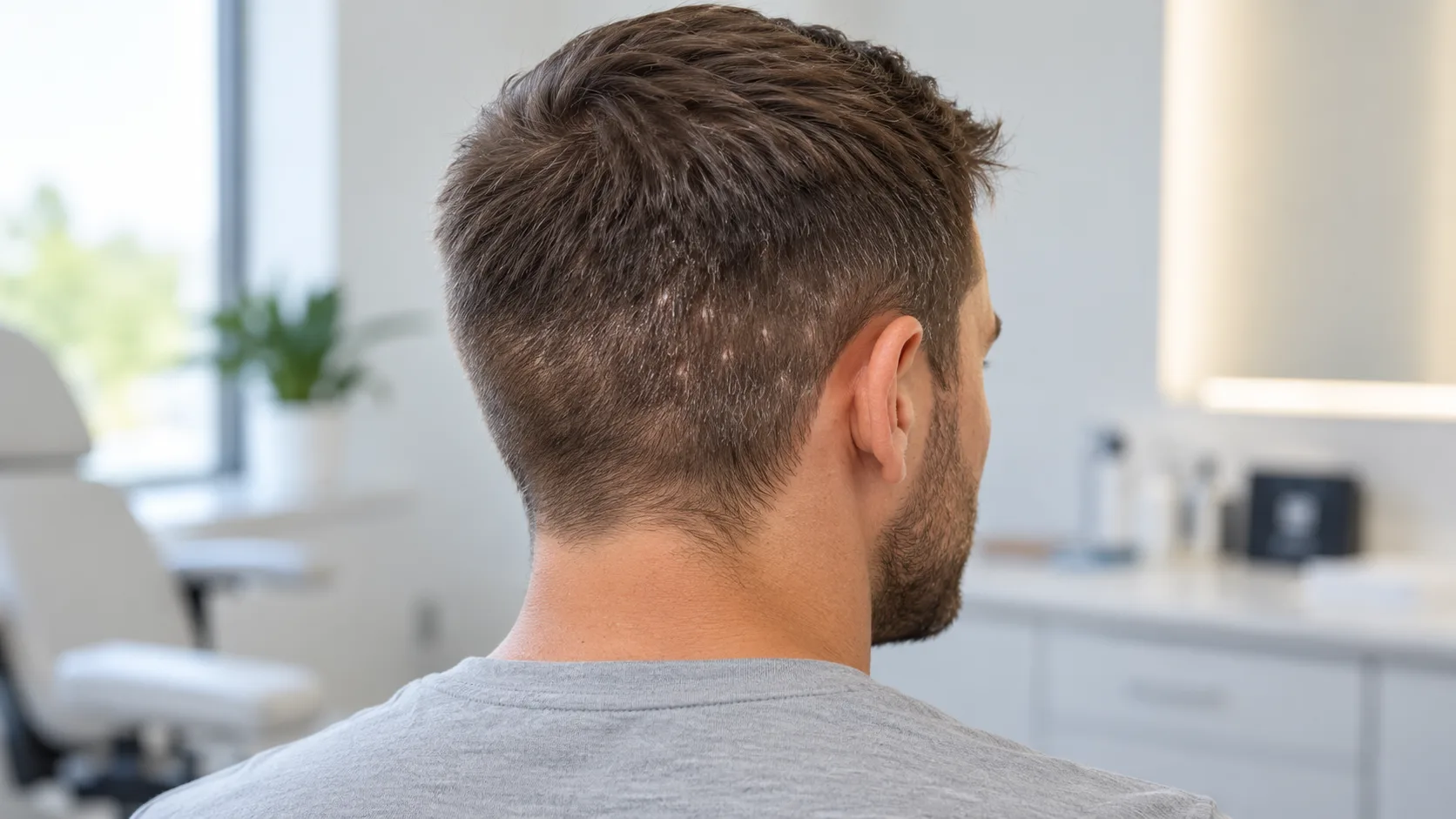
Regenera Activa is designed for androgenetic alopecia, including male pattern hair loss and female pattern hair loss at early to moderate stages of follicular miniaturization. It does not treat every cause of hair loss, so an accurate diagnosis must come first.
Disease stage determines suitability. Patients classified as Hamilton-Norwood II to IV in men or Sinclair 2 to 4 in women responded in the largest published cohort (Zari 2021). Advanced baldness, where follicles have disappeared entirely, offers no living follicles for the micrografts to rescue. Alopecia areata, scarring alopecias, telogen effluvium, and hair loss from systemic illness follow different biological pathways and require different management. Clinical materials consistently identify androgenetic alopecia as the principal indication and stress the importance of ruling out competing diagnoses before treatment (Vincenzi et al. 2025).
Who May Be a Suitable Candidate for Regenera Activa?
Suitable candidates include men with early-to-moderate androgenetic alopecia, women with diffuse or pattern-related thinning, patients with confirmed follicular miniaturization on trichoscopy, and patients seeking a minimally invasive regenerative option or adjunctive support for hair restoration surgery.
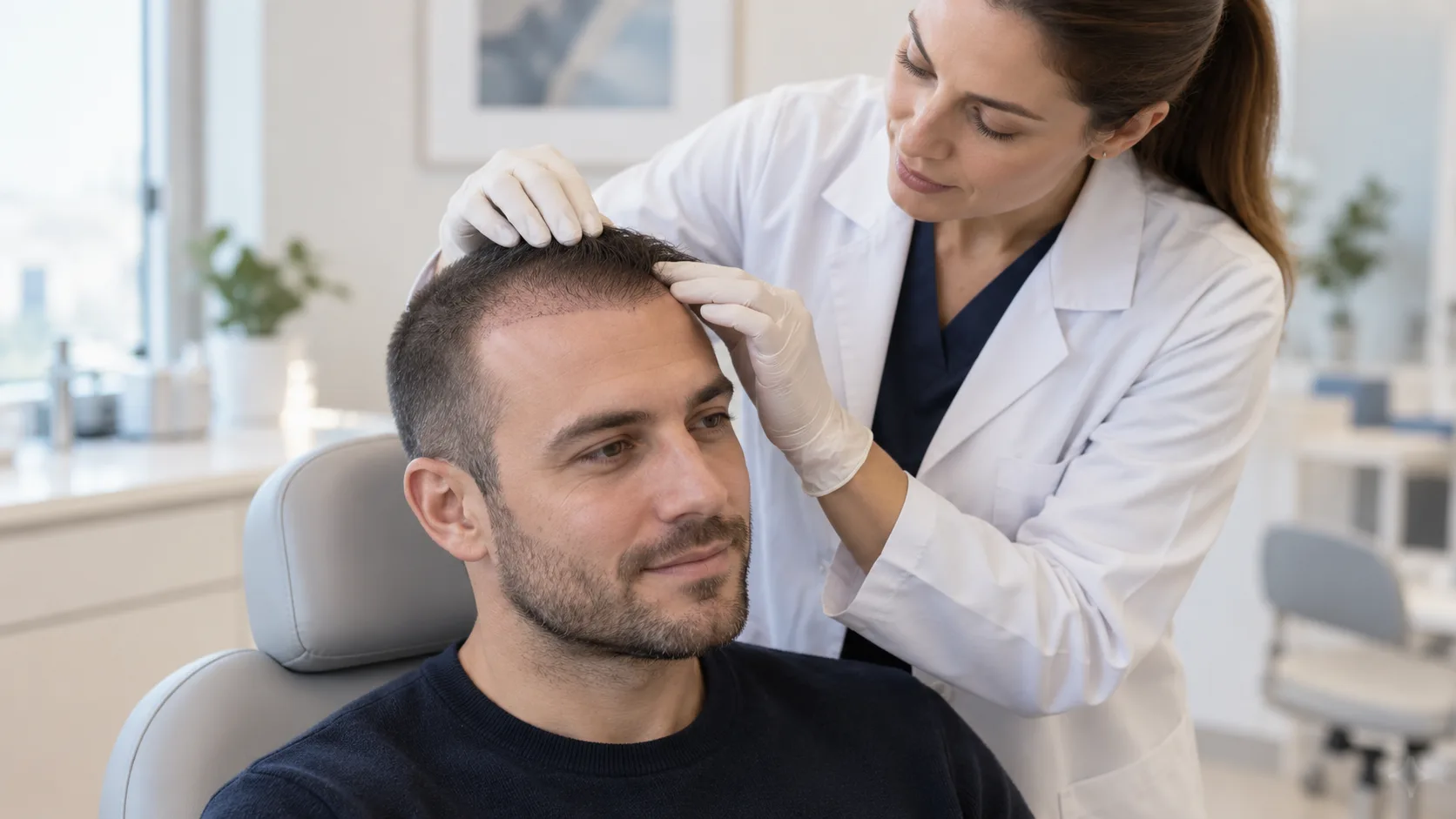
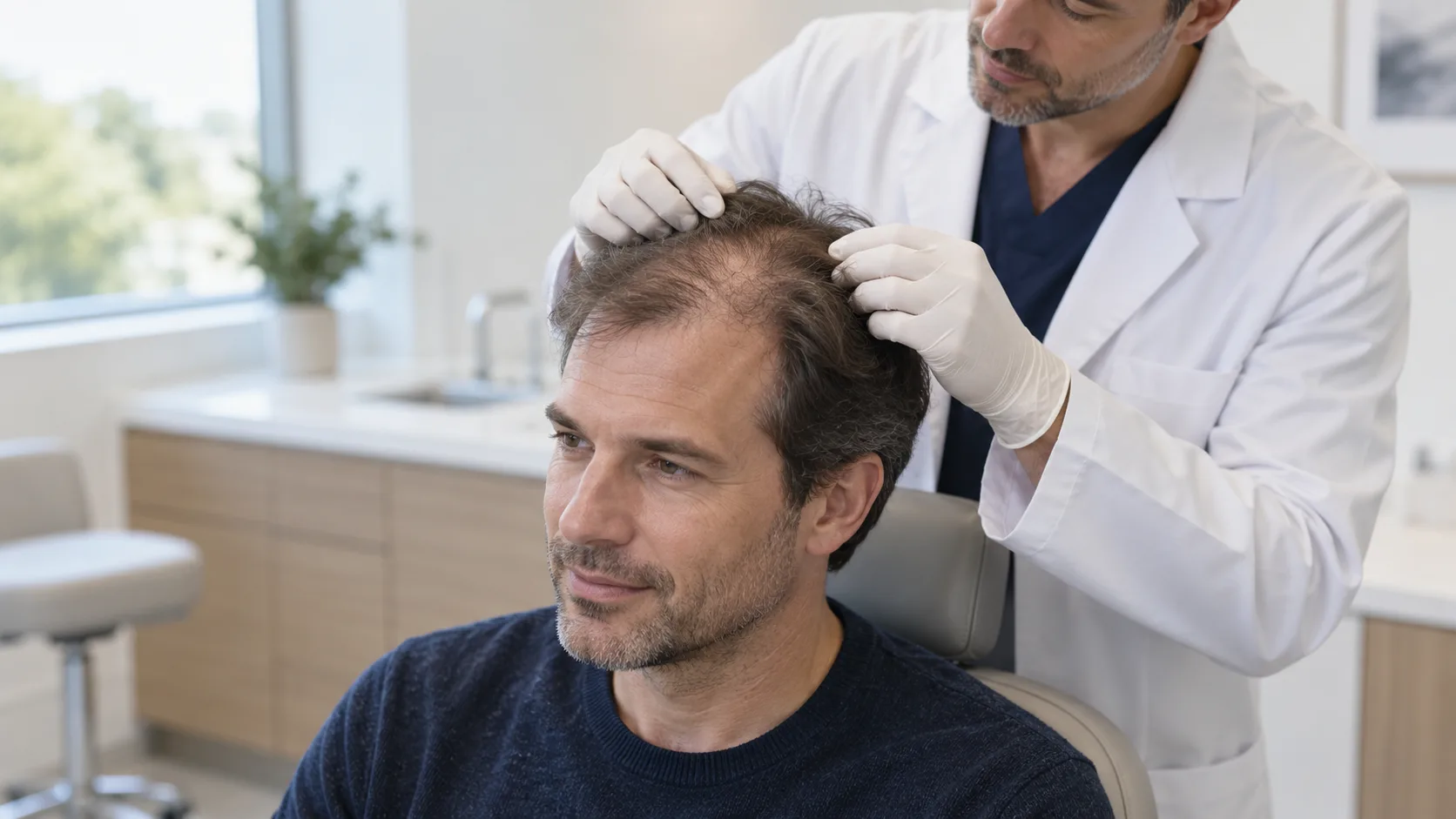
Good candidacy depends on one central condition: the follicles must still be alive. Trichoscopy, which shows hair shaft variability, single-hair follicular units, and yellow dots, confirms miniaturization and distinguishes androgenetic alopecia from other forms of hair loss (Kasprzak, Sicińska, and Tosti 2019). Women with thinning donor areas, who often cannot undergo transplantation, may benefit in particular; Zari (2021) observed significant improvement in occipital hair parameters of female patients even though that region was never injected.
What Does the Scientific Evidence Say About Regenera Activa?
Early clinical evidence is promising but not definitive. A retrospective study of 140 adults found meaningful improvements in hair density, thickness, and follicular units after one session, with about two-thirds of patients responding. However, most available data comes from retrospective and uncontrolled designs, so larger randomized trials are still needed.
Study | Design | Sample | Key finding |
Gentile et al. (2017) | Placebo-controlled trial | 11 patients | ~29% relative increase in hair density at 6 months |
Gentile et al. (2019) | Clinical evaluation with pathway analysis | Micrografts plus PRP | Improved regrowth; micrografts enriched with follicle mesenchymal stem cells |
Ruiz et al. (2020) | Prospective evaluation | 100 patients | +33.3 hairs/cm2 and +5.6% thick hair at 2 months |
Zari (2021) | Retrospective cohort | 140 patients | Density +4.5 to 7.12 hairs/cm2; thickness +0.96 to 1.88 μm; 66.4% frontal response |
Vincenzi et al. (2025) | Two clinical studies | 17 + 13 patients | 65% improvement after one session; hair diameter +7.35% at 3 months |
Krefft-Trzciniecka et al. (2024) | Short-term clinical assessment | Female AGA patients | Positive short-term response in women |
Zari (2021) reported that favorable changes occurred in hair density, average hair shaft thickness, percent thick hair, cumulative hair thickness, and follicular unit count, with the most consistent gains in the frontal region. Response varied between individuals, and the retrospective design limits how far the results generalize. Vincenzi et al. (2025) added a durability observation: a second session six months after the first produced no additional benefit, which suggests one session per remodeling cycle is enough.
When Can Hair Growth Changes Become Noticeable After Regenera Activa?
Biological changes begin within weeks, but visible cosmetic improvement typically appears around the third month, with continued progress through six months and beyond.
The delay reflects hair biology rather than treatment failure. Each follicle cycles independently through anagen, catagen, and telogen phases, and a hair shaft takes months to grow long enough to change visible coverage (Greco et al. 2009). Ruiz et al. (2020) already measured significant density gains at two months, while patient-facing materials and Vincenzi et al. (2025) describe the three-month mark as the point when patients usually notice results. Long-term evaluation of density and hair quality requires follow-up at six and twelve months.
What Changes Can Regenera Activa Potentially Produce?

Regenera Activa can potentially improve hair density, increase hair shaft thickness, enhance hair quality, reduce visible thinning, slow follicular miniaturization, and help maintain existing hair. These are potential outcomes, not guaranteed results, and individual response varies considerably.
In the 140-patient cohort, the average increase of 5 to 7 hairs per cm2 combined with thicker shafts translated into a measurable gain in the area coverage index, meaning a real cosmetic change rather than a statistical artifact (Zari 2021). Patients should hold realistic expectations: roughly one-third of participants did not respond favorably, and even responders experienced degrees of improvement.
What Factors Can Influence Regenera Activa Results?
Results depend on the type and stage of hair loss, the degree of follicular miniaturization, individual biology, scalp condition, additional hair loss diagnoses, accurate patient selection, and consistent follow-up care.
Diagnosis and candidacy sit at the top of this list because they determine whether living follicles exist to respond. Biological variability explains why two patients with identical classifications can respond differently. Ongoing management also matters: androgenetic alopecia is a chronic condition, so a single regenerative session does not neutralize the hormonal driver permanently.
What Is Recovery Like After Regenera Activa?
Recovery is short. Most patients return to normal activities the same day or the next day, with minor temporary precautions such as avoiding strenuous exercise, direct sun exposure, and aggressive scalp washing for a few days.
The procedure is minimally invasive and performed under local anesthesia in the extraction area. Post-treatment care is simple: keep the scalp clean, follow the treating physician's washing instructions, and avoid trauma to the injection sites. Because the material is autologous, systemic side effects are rare, and published series report no treatment-related adverse events (Vincenzi et al. 2025).
Can Regenera Activa Be Combined With Hair Transplantation?
Yes. Regenera Activa can serve before transplantation to strengthen the donor and recipient zones, alongside surgery to support graft survival, and after transplantation to protect existing native hair.
The two approaches solve different problems. Hair transplantation redistributes follicles from a resistant donor zone into bald skin, while Regenera Activa regenerates the environment around follicles that remain in place. Zari (2021) noted that female patients showed improved occipital parameters without direct injection, an effect with direct implications for donor area quality before future surgery. Combination with pharmacotherapy may also add value: Suchonwanit et al. (2018) reported that combined topical finasteride and minoxidil outperformed minoxidil alone, and Vincenzi et al. (2025) documented similar synergy logic for multimodal plans.
How Long Can Regenera Activa Results Last?
Results vary individually, and manufacturer materials describe an annual maintenance approach. The final schedule should follow the patient's clinical assessment rather than a fixed calendar.
Androgenetic alopecia continues to progress after any treatment, so durability depends on ongoing management. Follow-up assessments at six and twelve months let the physician measure trichometric parameters and decide whether maintenance is appropriate. Vincenzi et al. (2025) showed that repeating the session at six months added no benefit, which supports spacing maintenance further apart than initially assumed.
What Are the Limitations of Regenera Activa?
Regenera Activa does not treat every form of alopecia, cannot revive follicles that no longer exist, requires accurate diagnosis, produces variable results, and rests on evidence that is still mostly retrospective and observational.
Zari (2021) explicitly acknowledged that the retrospective, noncontrolled design limits external validity and that longer follow-up is needed. Advanced hair loss requires different strategies, such as transplantation. The honest scientific position is that Regenera Activa is a promising regenerative tool, not a universal solution.
How Does Regenera Activa Compare With Other Hair-Loss Treatments?
Regenera Activa differs from pharmacological and surgical options in source, mechanism, and commitment level. Minoxidil and finasteride deliver single molecules daily, PRP delivers platelet growth factors from blood, transplantation redistributes follicles surgically, and Regenera Activa delivers a living autologous micrograft system in a single session.
Feature | Regenera Activa | Minoxidil | Finasteride | PRP | Hair transplantation |
Source | Patient's scalp tissue | Synthetic/topical drug | Oral drug | Patient's blood | Patient's donor follicles |
Mechanism | Cellular and paracrine regeneration | Follicular stimulation | DHT reduction via 5-alpha-reductase inhibition | Growth factor release | Follicular redistribution |
Frequency | Single session, possible annual maintenance | Daily, lifelong | Daily, lifelong | 3 to 4 sessions then maintenance | One surgical procedure |
Invasiveness | Minimally invasive | None | None (systemic side effects possible) | Minimally invasive | Surgical |
Evidence level | Early retrospective data | Strong randomized data (Olsen et al. 2007) | Strong randomized data (Kaufman et al. 1998) | Moderate, heterogeneous | Well established |
Best suited for | Early to moderate AGA | Men and women with AGA | Men with AGA | Mild thinning, scalp support | Advanced baldness |
Kaufman et al. (1998) established finasteride's efficacy in a large randomized trial but also documented its side effect profile. Olsen et al. (2007) confirmed the benefit of 5% minoxidil foam, although daily adherence remains the practical weakness of both drugs. Regenera Activa avoids daily compliance and systemic exposure, at the cost of a smaller and younger evidence base.
What Should You Ask a Doctor Before Choosing Regenera Activa?
Ask seven questions before committing: whether the diagnosis of androgenetic alopecia is confirmed, what stage is present, whether the treatment fits the current follicular condition, what results are realistic, what follow-up protocol will be used, whether combination treatment makes sense, and how progress will be measured.
Trichoscopy and standardized photography provide the objective baseline for every answer. A qualified physician should classify the case with the Hamilton-Norwood or Sinclair scale, review contraindications, and define measurable targets rather than promises.
Frequently Asked Questions About Regenera Activa
The questions below address the most common practical concerns, from regrowth and pain to suitability for advanced loss.
Does Regenera Activa regrow hair?
It can support regrowth and thickening in follicles that remain viable, but results vary and one-third of patients in the largest cohort did not respond favorably (Zari 2021).
How does Regenera Activa work on miniaturized hair follicles?
It delivers progenitor cells, exosomes, and matrix components that reactivate existing stem cells and restore growth signaling.
Is Regenera Activa suitable for men and women?
Yes. Clinical series include both sexes, with males showing the strongest density gains and females showing the strongest thickness gains (Zari 2021).
How many Regenera Activa sessions are needed?
The standard protocol uses one session; a second session at six months added no benefit in one study (Vincenzi et al. 2025).
When do Regenera Activa results become visible?
Usually around three months, with measurable changes appearing as early as two months in some studies (Ruiz et al. 2020).
Is Regenera Activa painful?
Discomfort is limited. The extraction site receives local anesthesia, and patients rated pain low in published series (Vincenzi et al. 2025).
Is there downtime after Regenera Activa?
Downtime is minimal, and most patients resume normal activities the same day or the next day.
Can Regenera Activa be used after a hair transplant?
Yes, it can complement surgery by supporting the scalp environment and protecting native hair.
Can Regenera Activa stop hair loss permanently?
No. Androgenetic alopecia is chronic, so ongoing management remains necessary.
Does Regenera Activa work for advanced hair loss?
It works best at early to moderate stages. Advanced loss with no surviving follicles requires different strategies.
Conclusion: Is Regenera Activa a Valid Option for Androgenetic Alopecia?
Regenera Activa is a scientifically grounded regenerative option for early to moderate androgenetic alopecia. It uses the patient's own progenitor cells, exosomes, and extracellular matrix to rebuild the follicular environment, and early clinical data support meaningful improvements in density and thickness for many patients.
The biological principle is sound: miniaturized follicles retain stem cells, and restoring progenitor support plus signaling can reverse part of the damage (Zari 2021). The evidence is early, mostly retrospective, and individual response varies, so diagnosis, candidacy, and realistic expectations remain essential. Positioned within an individualized hair loss strategy that may include pharmacotherapy, transplantation, or maintenance sessions, Regenera Activa offers a minimally invasive way to support the hair growth environment rather than a standalone cure.
References
Baglioni, Elisa A., et al. "Efficacy of Autologous Micrografts Technology: A Promising Approach for Chronic Wound Healing and Tissue Regeneration: A Pilot Study." Frontiers in Medicine, vol. 11, 2024, article 1417920.
Gentile, Pietro, et al. "Stem Cells from Human Hair Follicles: First Mechanical Isolation for Immediate Autologous Clinical Use in Androgenetic Alopecia and Hair Loss." Stem Cell Investigation, vol. 4, 2017, article 58.
Gentile, Pietro, et al. "Platelet-Rich Plasma and Micrografts Enriched with Autologous Human Follicle Mesenchymal Stem Cells Improve Hair Re-Growth in Androgenetic Alopecia." Biomedicines, vol. 7, no. 2, 2019, article 27.
Greco, Valentina, et al. "A Two-Step Mechanism for Stem Cell Activation during Hair Regeneration." Cell Stem Cell, vol. 4, no. 2, 2009, pp. 155-169.
Hu, Shiyu, et al. "Dermal Exosomes Containing miR-218-5p Promote Hair Regeneration by Regulating beta-Catenin Signaling." Science Advances, vol. 6, no. 30, 2020, eaba1685.
Inui, Shigeki, et al. "Identification of Androgen-Inducible TGF-beta1 Derived from Dermal Papilla Cells as a Key Mediator in Androgenetic Alopecia." Journal of Investigative Dermatology Symposium Proceedings, vol. 8, no. 1, 2003, pp. 69-71.
Kasprzak, Magdalena, Joanna Sicińska, and Antonella Tosti. "Follicular Map: A Novel Approach to Quantitative Trichoscopy." Skin Appendage Disorders, vol. 5, no. 4, 2019, pp. 216-220.
Kaufman, Keith D., et al. "Finasteride in the Treatment of Men with Androgenetic Alopecia." Journal of the American Academy of Dermatology, vol. 39, no. 4, 1998, pp. 578-589.
Krefft-Trzciniecka, Katarzyna, et al. "Short-Term Clinical Assessment of Treating Female Androgenetic Alopecia with Autologous Stem Cells Derived from Human Hair Follicles." Biomedicines, vol. 12, no. 1, 2024, article 153.
Kwack, Mi Hee, et al. "Exosomes Derived from Human Dermal Papilla Cells Promote Hair Growth in Cultured Human Hair Follicles and Augment the Hair-Inductive Capacity of Cultured Dermal Papilla Spheres." Experimental Dermatology, vol. 28, no. 7, 2019, pp. 854-857.
Lolli, Francesco, et al. "Androgenetic Alopecia: A Review." Endocrine, vol. 57, no. 1, 2017, pp. 9-17.
Olsen, Elise A., et al. "A Multicenter, Randomized, Placebo-Controlled, Double-Blind Clinical Trial of a Novel Formulation of 5% Minoxidil Topical Foam versus Placebo in the Treatment of Androgenetic Alopecia in Men." Journal of the American Academy of Dermatology, vol. 57, no. 5, 2007, pp. 767-774.
Ruiz, Regina G., et al. "Progenitor-Cell-Enriched Micrografts as a Novel Option for the Management of Androgenetic Alopecia." Journal of Cellular Physiology, vol. 235, no. 5, 2020, pp. 4587-4593.
Suchonwanit, Poonkiat, et al. "A Randomized, Double-Blind Controlled Study of the Efficacy and Safety of Topical Solution of 0.25% Finasteride Admixed with 3% Minoxidil versus 3% Minoxidil Solution in the Treatment of Male Androgenetic Alopecia." Journal of the European Academy of Dermatology and Venereology, vol. 32, no. 12, 2018, pp. 2257-2263.
Trovato, Letizia, et al. "A New Medical Device Rigeneracons Allows to Obtain Viable Micro-Grafts from Mechanical Disaggregation of Human Tissues." Journal of Cellular Physiology, vol. 230, no. 10, 2015, pp. 2299-2303.
Vincenzi, Colombina, et al. "Role of Autologous Micrografting Technology through Rigenera System in the Treatment of Androgenetic Alopecia." Skin Appendage Disorders, vol. 11, no. 2, 2025, pp. 119-127.
Zari, Shadi. "Short-Term Efficacy of Autologous Cellular Micrografts in Male and Female Androgenetic Alopecia: A Retrospective Cohort Study." Clinical, Cosmetic and Investigational Dermatology, vol. 14, 2021, pp. 1725-1736.