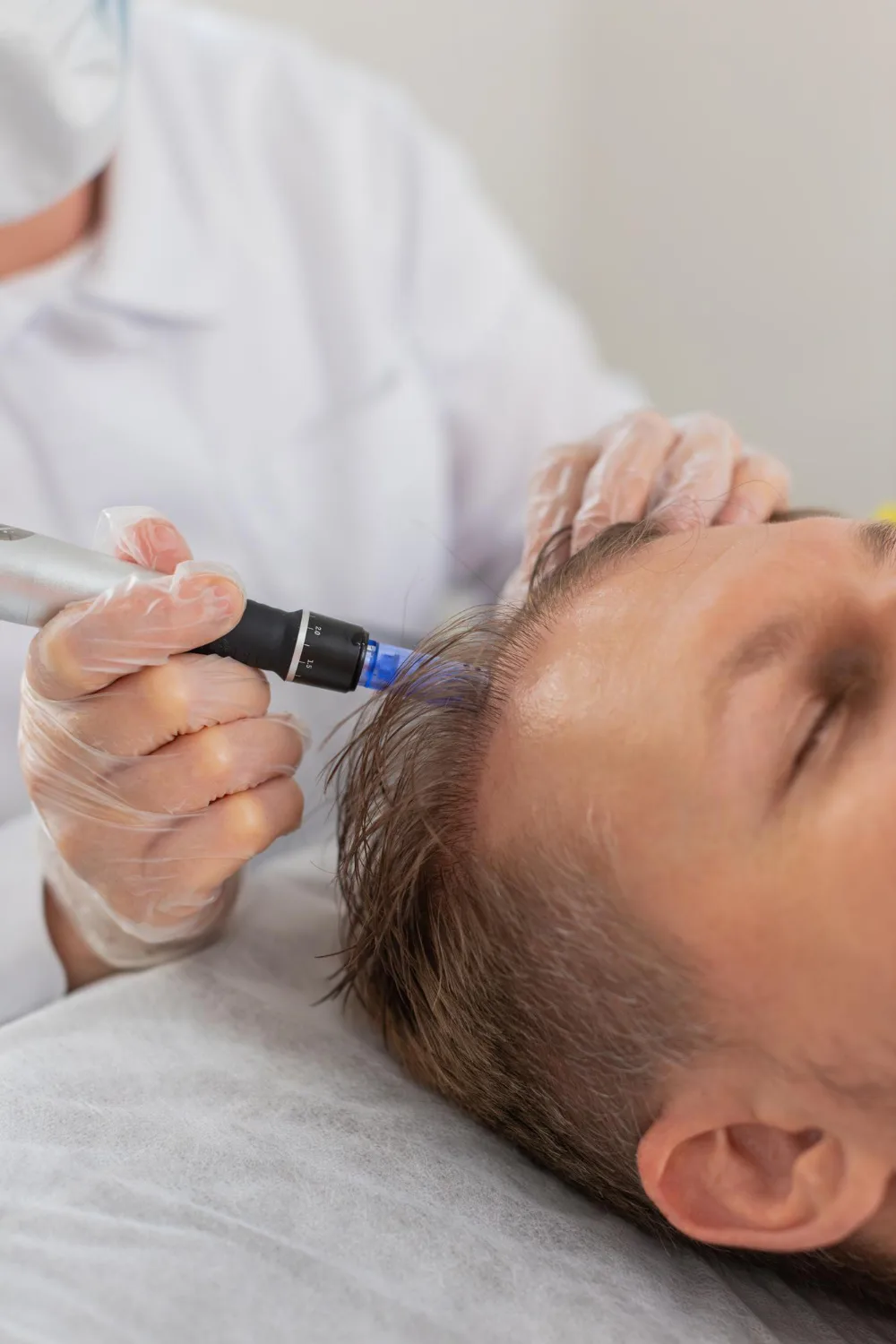
Turkey leads the global hair restoration market. Thousands of patients travel to Istanbul every year for follicular unit extraction. Many of these patients now ask for manual FUE specifically. They want surgeon-driven precision instead of motorized speed. This guide explains what manual FUE involves, how it differs from motorized extraction, and why Turkey dominates this niche.
Manual FUE demands more from the surgeon. The doctor extracts each graft by hand. This approach offers unmatched control over angle, depth, and direction. Turkey produces some of the highest surgical volumes in the world. This volume creates deep expertise in manual techniques. Patients from Europe, the Middle East, and North America choose Turkish clinics for this reason.
This article covers the science behind manual FUE. It breaks down the procedure step by step. It compares manual and motorized methods directly. It answers common questions about cost, recovery, and candidacy. Every section uses clear language. Every claim connects to published research.
What Is Manual FUE Hair Transplant?
Manual FUE means a surgeon extracts hair follicles using a hand-held punch tool without motorized assistance.
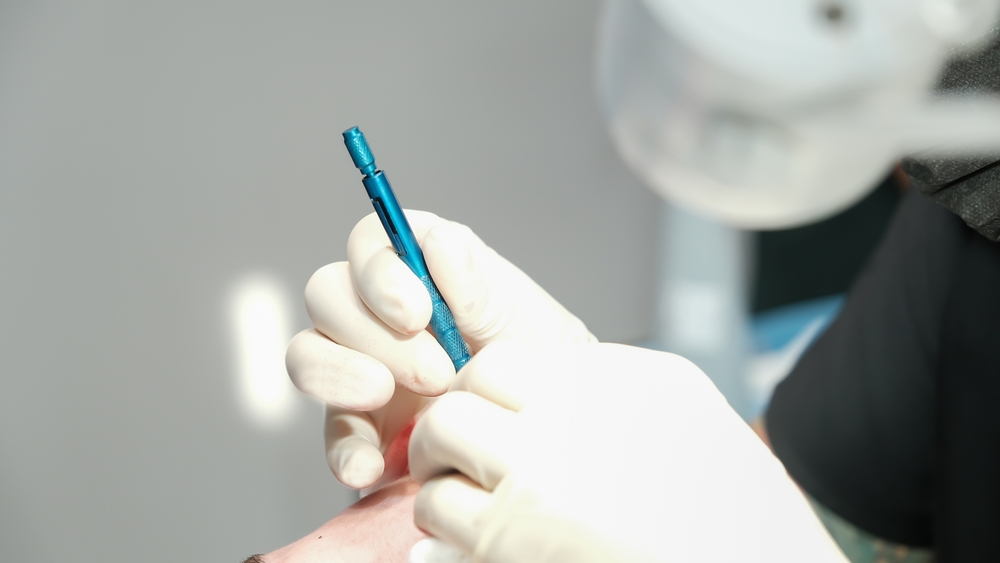
Manual FUE stands for manual follicular unit extraction. A surgeon holds a sharp or blunt punch. The surgeon rotates the punch by hand. The punch cuts around each follicular unit. The surgeon then removes the graft with forceps. No motor drives the rotation. No machine controls the speed. The surgeon decides every movement.
Follicular units contain one to four hairs. These units grow naturally in the scalp. Manual FUE targets these units directly. The surgeon isolates each unit individually. This isolation protects the surrounding tissue. It also reduces transection risk.
How Does Manual FUE Work?
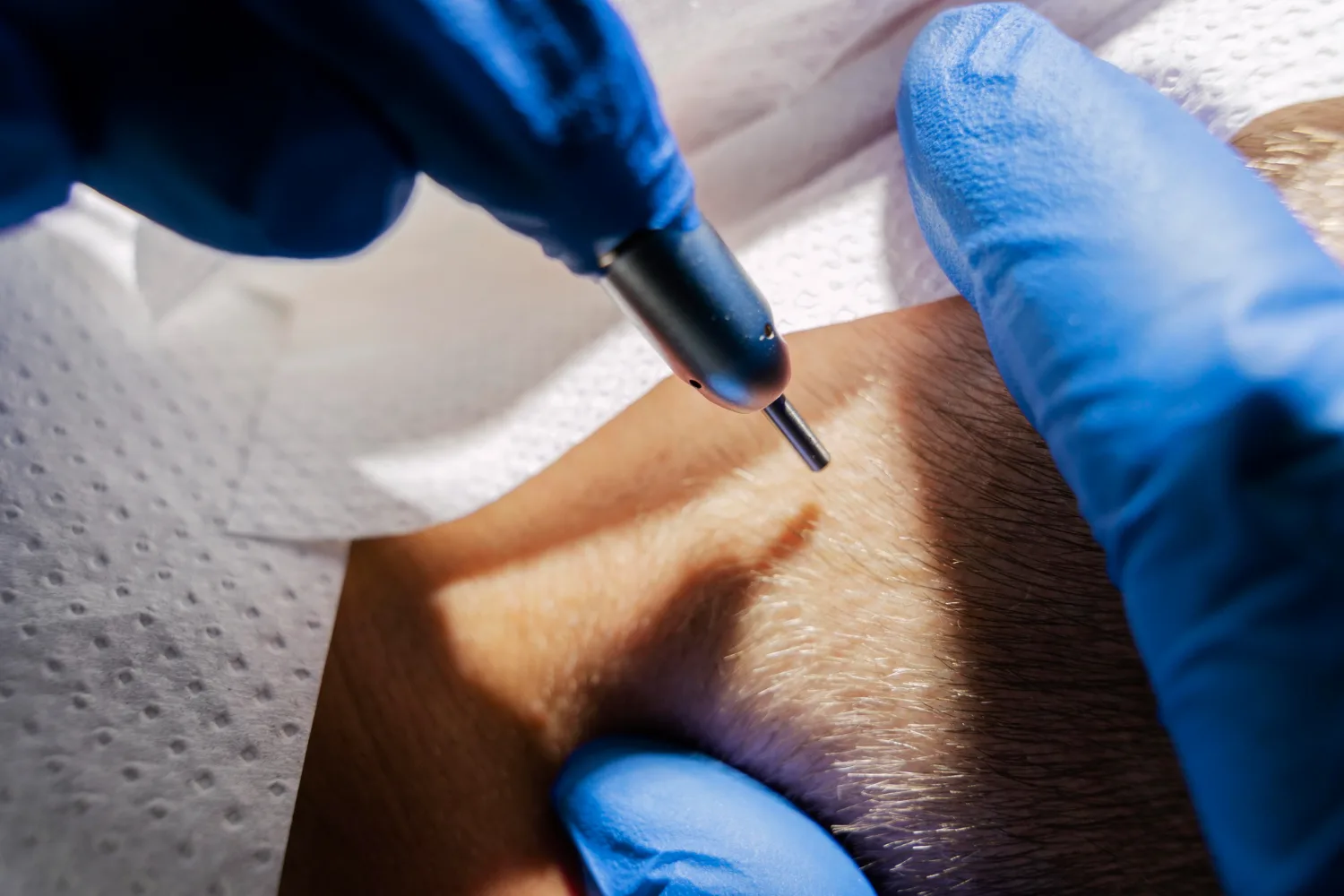
The surgeon prepares the donor area first. The team shaves or trims the hair. The surgeon administers local anesthesia. The surgeon holds the punch between the thumb and fingers. The surgeon places the punch around one follicular unit. The surgeon rotates the punch clockwise or counterclockwise. The rotation score the skin. The surgeon lifts the graft gently. The team places the graft in a preservation solution.
The surgeon repeats this process hundreds or thousands of times. Each graft leaves the scalp intact. The surgeon controls the depth. The surgeon controls the angle. The surgeon feels the resistance of the tissue. This tactile feedback guides the extraction.
What Is the History of Manual FUE?
Hair transplant surgeons developed FUE in the late 1990s. Dr. Robert Bernstein and Dr. William Rassman described the follicular unit concept in 1997. Early FUE used manual punches exclusively. Motors did not exist yet. Surgeons performed all extractions by hand.
Motorized FUE devices emerged in the mid-2000s. These devices automated punch rotation. They increased extraction speed. Many clinics adopted them quickly. However, manual FUE never disappeared. Elite surgeons continued to use hand-driven techniques. They believed manual control offered better precision. Research now supports this belief. Studies show that experienced manual surgeons achieve lower transection rates than motorized systems in specific cases (Harris, 2018).
Understanding the Manual FUE Procedure Step by Step
The procedure includes consultation, donor assessment, hairline design, anesthesia, manual extraction, site creation, implantation, and aftercare.
What Happens During the Initial Consultation and Hair Analysis?
The surgeon meets the patient in person or via video. The surgeon examines the scalp. The surgeon measures donor density. The surgeon evaluates hair caliber. The surgeon checks for scalp laxity. The surgeon reviews the patient's medical history. The surgeon asks about medications, allergies, and previous surgeries.
The surgeon takes photographs. These photographs document the baseline. The surgeon discusses expectations. The surgeon explains what manual FUE can achieve. The surgeon also explains what it cannot achieve. This honesty builds trust. It also prevents disappointment.
How Does the Surgeon Assess the Donor Area?
The donor area usually sits at the back of the head. This area resists dihydrotestosterone. It offers permanent hair. The surgeon examines the donor zone under magnification. The surgeon counts the follicular units per square centimeter. The surgeon checks for miniaturization. Miniaturized hairs suggest future loss. The surgeon avoids overharvesting.
The surgeon also evaluates the donor area for scarring. Previous strip surgeries or FUE sessions change the landscape. The surgeon adapts the punch size accordingly. Manual FUE allows this adaptation. The surgeon can switch punch diameters during the procedure.
How Does the Surgeon Design the Hairline?
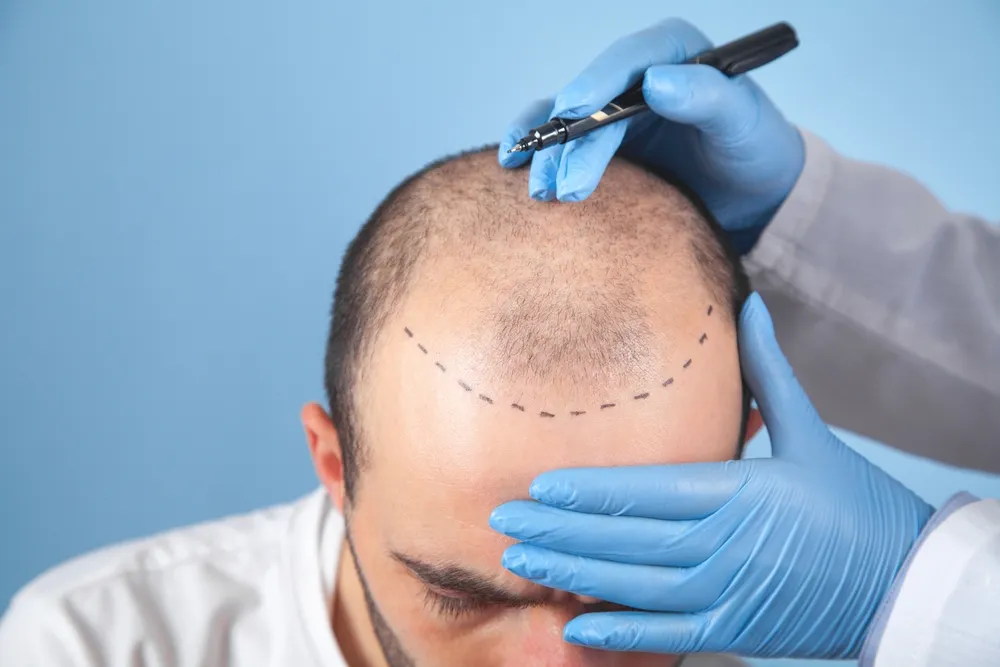
The hairline frames the face. It determines the cosmetic result. The surgeon draws the hairline before anesthesia. The surgeon considers facial proportions. The surgeon follows the rule of thirds. The surgeon places the hairline at the correct vertical distance from the glabella.
The surgeon also plans for future loss. Younger patients need conservative designs. The surgeon creates a temporal recession. The surgeon defines the lateral humps. The surgeon marks the apex. The surgeon uses a soft-lead pencil. The patient approves the design before the team proceeds.
How Does the Team Administer Local Anesthesia?
The surgeon injects local anesthetic into the donor and recipient areas. Lidocaine with epinephrine provides numbness and reduces bleeding. The surgeon injects slowly. Slow injection reduces pain. The surgeon uses fine needles. Some clinics offer sedation. Sedation helps anxious patients relax.
The anesthesia takes effect within minutes. The patient feels no pain during extraction. The patient remains awake. The patient can talk to the team. This communication reassures many patients.
The surgeon begins extraction after anesthesia. The surgeon selects the punch size. Common sizes range from 0.8 mm to 1.0 mm. The surgeon holds the punch like a pen. The surgeon aligns the punch with the hair angle. The surgeon scores the skin with a gentle rotation. The surgeon penetrates to the correct depth. The surgeon releases the punch. The surgeon lifts the graft with jeweler's forceps.
The surgeon places the graft in a chilled holding solution. This solution preserves viability. The surgeon moves to the next follicular unit. The process continues for hours. A typical session extracts 1,500 to 2,500 grafts manually. Larger sessions require more time.
How Does the Surgeon Create Recipient Sites?
The surgeon creates tiny incisions in the bald area. These incisions receive the grafts. The surgeon uses a custom blade or needle. The surgeon controls the depth, angle, and direction. Each incision matches the natural hair pattern. The surgeon places incisions at high density. This density creates fullness.
The surgeon creates the sites before implantation. This sequence prevents graft desiccation. The team keeps the grafts in solution while the surgeon works. The surgeon designs the sites for natural distribution. The surgeon avoids parallel rows. The surgeon uses a random pattern.
How Does the Team Implant the Grafts?
The team places the grafts into the sites. Technicians often perform this step. The surgeon supervises. The team uses forceps or implanters. They insert each graft carefully. They avoid crushing the bulb. They place the graft at the correct depth. Too shallow exposure causes popping. Too deep burial causes buried grafts.
The team works quickly. Grafts survive best when they spend minimal time outside the body. Studies show that prolonged ischemia reduces graft survival (Uebel et al., 2017). The team keeps the grafts moist and cool throughout.
What Does Post-Procedure Care Involve?
The team cleans the scalp. They apply a dressing. They give the patient instructions. The patient must avoid touching the grafts. The patient must sleep with the head elevated. The patient must avoid direct sunlight. The patient receives antibiotics and anti-inflammatory medication. The patient schedules a wash appointment for the next day.
How Does Manual FUE Differ from Motorized FUE?
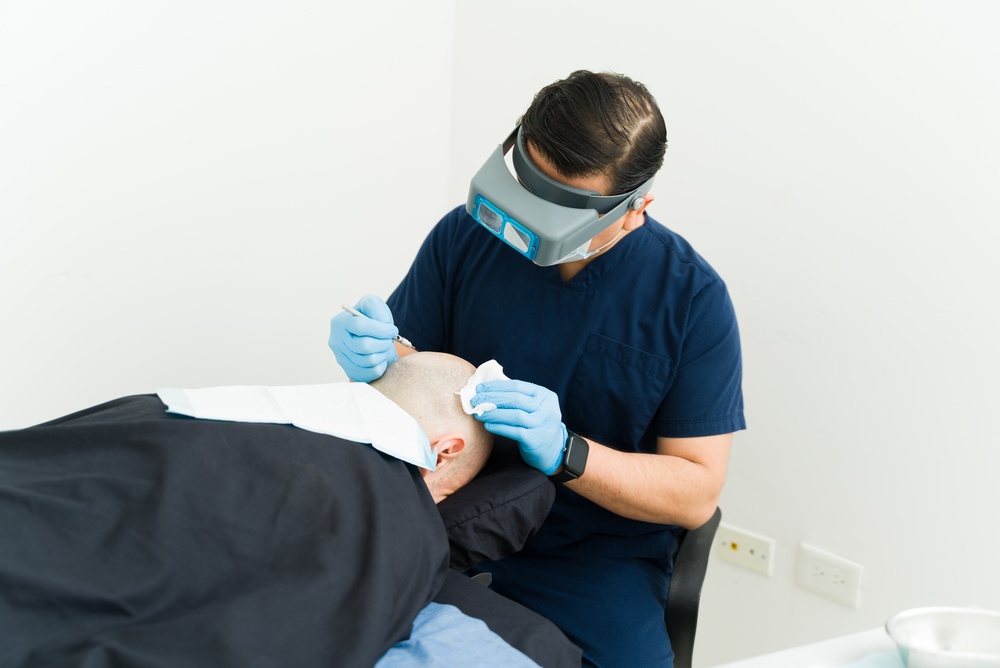
Manual FUE gives the surgeon direct tactile control. Motorized FUE uses a rotating motor for speed.
Manual FUE relies on hand rotation. The surgeon turns the punch with wrist movement. The surgeon feels the tissue response. Motorized FUE uses a battery-powered handpiece. The motor spins the punch at a set speed. The motor does not tire. It maintains constant RPM.
Manual FUE adapts instantly. The surgeon slows down around curved follicles. The surgeon changes angle for flat-lying hairs. Motorized FUE moves at a fixed rate. The technician must compensate manually. This compensation takes practice.
How Does Surgical Control Differ?
The surgeon controls every variable in manual FUE. The surgeon decides when to stop rotating. The surgeon decides when to withdraw. The surgeon feels the release of the follicle. This feedback loop protects grafts.
Motorized FUE offers less feedback. The motor masks tactile sensation. The surgeon or technician sees the graft rather than feeling it. Visual cues help, but they arrive later than tactile signals. Experienced users overcome this limitation. Beginners may transect more grafts.
How Does Precision of Punch Movement Compare?
Manual FUE allows micro-adjustments. The surgeon can rotate the punch five degrees. The surgeon can pause mid-rotation. The surgeon can rock the punch gently. These small movements matter. They separate the follicle from the dermis without cutting the bulb.
Motorized FUE rotates at hundreds of RPM. The speed helps with straight hairs. It can snag curly or wavy hairs. The torque may twist the follicle. This twisting causes transection. Manual FUE avoids this problem through controlled rotation.
Motorized FUE extracts faster. A motorized device can complete 2,000 grafts in less time. Manual FUE takes longer. A manual surgeon may need an extra hour or two for the same count. Speed matters for large cases. Patients with advanced baldness need many grafts. Motorized FUE suits these cases.
However, speed does not guarantee quality. A rushed manual extraction damages grafts. A careful motorized extraction preserves grafts. The surgeon's skill matters more than the tool.
How Does Risk of Follicle Transection Compare?
Transection means cutting the follicle. A transected graft cannot grow. Studies show that manual FUE achieves lower transection rates in specific scenarios. Curly hair poses a challenge. The curl hides beneath the skin. A motor may cut the curve. A manual surgeon can follow the curve by feel.
Research by Harris and Fenton (2018) demonstrates that manual extraction in experienced hands yields transection rates below 5%. Motorized systems range from 5% to 15% depending on hair type and operator skill.
How Does Donor Area Preservation Compare?
Manual FUE causes less surrounding trauma. The surgeon extracts only what is necessary. The surgeon spaces the extractions evenly. The surgeon avoids overharvesting. The donor area heals with minimal scarring.
Motorized FUE can create wider wounds. The motor may drag adjacent tissue. The punch may heat up slightly. Heat damages nearby follicles. Modern motors reduce this risk. Manual FUE eliminates it entirely.
How Does the Healing Process Compare?
Both methods heal similarly. The donor area forms small scabs. These scabs fall off within a week. The recipient area crusts over. The crusts shed within ten days. Manual FUE may produce slightly less inflammation. The gentle extraction reduces tissue trauma.
Patients return to normal activities within a few days. Both methods offer this quick recovery. FUE avoids the linear scar of strip surgery. This benefit applies to manual and motorized alike.
How Do Final Cosmetic Outcomes Compare?
Both methods can produce excellent results. The key factor is the surgeon, not the tool. Manual FUE shines in detailed work. Hairline refinement benefits from manual control. Dense packing in the crown benefits from manual spacing. Motorized FUE excels in large-scale coverage.
The best clinics combine both. They use manual FUE for the hairline. They use motorized FUE for the mid-scalp. This hybrid approach maximizes precision and efficiency.
Manual FUE vs Motorized FUE: What Are the Key Differences?
The table below shows direct comparisons across critical features.
|
Feature
|
Manual FUE
|
Motorized FUE
|
|
Punch Movement
|
Surgeon rotates by hand
|
Motor drives rotation
|
|
Surgeon Control
|
Maximum direct control
|
Assisted by device
|
|
Precision
|
Very high for complex angles
|
High for straight hair
|
|
Procedure Duration
|
Longer per graft
|
Shorter per graft
|
|
Donor Trauma
|
Lower with experienced surgeon
|
Slightly higher
|
|
Graft Handling
|
Individual tactile removal
|
Faster bulk extraction
|
|
Ideal Cases
|
Small-medium sessions, curly hair, difficult angles
|
Large sessions, straight hair
|
|
Learning Curve
|
Very high for surgeons
|
Moderate for technicians
|
|
Tactile Feedback
|
Immediate and continuous
|
Reduced by motor vibration
|
|
Transection Risk
|
Lower in complex cases
|
Higher if hair curves beneath skin
|
Why Is Manual FUE Popular in Turkey?
Turkey combines surgical expertise, high patient volume, modern clinics, competitive prices, and strong international reputation.
How Do Experienced Hair Transplant Surgeons Drive Demand?
Turkish surgeons perform thousands of FUE procedures annually. This volume builds muscle memory. It builds judgment. It builds consistency. A surgeon who extracts 500,000 grafts per year develops a refined touch. Manual FUE rewards this experience.
Many Turkish surgeons trained in Europe and the United States. They returned to Turkey with advanced skills. They adapted these skills to high-volume practice. They mentored younger surgeons. This mentorship created a deep talent pool.
How Does High Surgical Volume Build Expertise?
Volume matters in surgery. A surgeon who performs one manual FUE per month stays slow. A surgeon who performs ten per week becomes fluid. Turkish clinics attract patients from dozens of countries. This demand sustains high volume.
High volume also refines the team. Nurses and technicians gain experience. They learn to handle grafts gently. They learn to maintain graft hydration. The entire ecosystem improves.
How Does Advanced Medical Infrastructure Support Quality?
Turkey invests heavily in healthcare infrastructure. Istanbul hosts JCI-accredited hospitals. These hospitals meet international standards. They use sterile operating rooms. They use advanced microscopes. They use high-quality punches and forceps.
Clinics also invest in patient comfort. They offer private rooms. They offer translation services. They offer airport transfers. These services attract international patients. The patients then share positive reviews. This cycle strengthens Turkey's reputation.
How Does Competitive Pricing Attract Patients?
Manual FUE in Turkey costs less than in Western Europe or North America. A patient might pay $2,000 to $4,000 in Turkey. The same procedure costs $10,000 to $20,000 elsewhere. This price difference does not reflect lower quality. It reflects lower operating costs and currency advantages.
Patients receive the same surgeon skill. They receive the same graft count. They receive the same technology. They simply pay less. This value proposition drives medical tourism.
How Does International Patient Experience Shape Reputation?
Turkish clinics specialize in foreign patients. They speak English, French, Arabic, and Spanish. They understand cultural expectations. They provide detailed aftercare instructions. They offer follow-up via video call.
Patients share their results on social media. They post before-and-after photos. They write reviews on forums. This organic marketing reaches millions. It builds trust. It creates demand for manual FUE specifically.
How Does the Combination with Modern Technologies Enhance Results?
Turkish clinics do not reject technology. They combine manual FUE with modern tools. They use digital hairline design software. They use high-magnification video systems. They use platelet-rich plasma therapy. They use sapphire blades for recipient sites.
This integration gives patients the best of both worlds. They get human precision in extraction. They get technological support in planning and implantation.
What Are the Advantages of Manual FUE Hair Transplant?
Manual FUE offers superior control, better angle adaptation, lower graft damage, natural design, less trauma, and improved quality.
How Does Manual FUE Provide Greater Surgeon Control?
The surgeon holds the punch directly. No motor intervenes. The surgeon decides the speed. The surgeon decides the depth. The surgeon decides the rotation. This autonomy eliminates mechanical error. It also eliminates mechanical fatigue in the device. The only variable is the surgeon's skill.
How Does Manual FUE Adapt Better to Hair Angles?
Hair does not grow straight. It tilts forward, backward, or sideways. It also spirals beneath the skin. A motor rotates at a fixed angle. It cannot adjust mid-cut. A manual surgeon can tilt the punch. The surgeon can follow the hair's natural path. This adaptation protects the follicle.
How Does Manual FUE Lower the Risk of Graft Damage?
Graft damage occurs during extraction and handling. Manual extraction uses gentle force. The surgeon feels when the graft releases. The surgeon does not pull too hard. Motorized extraction can snag the graft. The motor torque may tear the follicle.
Manual handling also reduces damage. The surgeon extracts one graft at a time. The team places it immediately in solution. There is no bulk collection. There is no rushing.
How Does Manual FUE Enable Natural Hairline Design?
The hairline requires single-hair grafts. These grafts must angle forward. They must angle slightly downward. They must mimic natural irregularity. Manual extraction preserves these fine grafts. The surgeon can select the smallest follicular units. The surgeon can place them with precision.
How Does Manual FUE Reduce Donor Area Trauma?
Each extraction leaves a tiny wound. Manual FUE creates cleaner wounds. The punch enters and exits smoothly. The surrounding skin suffers less disruption. The blood supply stays intact. The remaining hairs continue to grow normally.
How Does Manual FUE Improve Graft Quality?
Quality means intact follicles with surrounding tissue. This tissue protects the graft during implantation. It also provides nutrients during early healing. Manual extraction preserves more perifollicular tissue. The graft stays robust.
How Is Manual FUE Suitable for Curly or Complex Hair Types?
Curly hair poses a challenge. The curl begins below the skin. A straight punch may cut the curve. Manual FUE allows the surgeon to follow the curl. The surgeon can use a curved punch. The surgeon can adjust the depth. This flexibility makes manual FUE ideal for African, Middle Eastern, and Mediterranean hair types.
What Are the Potential Limitations of Manual FUE?
Manual FUE takes longer, demands elite skill, tires the surgeon, and may be unnecessary for simple cases.
Why Does Manual FUE Take Longer?
Each graft requires individual attention. The surgeon cannot rush. A 3,000-graft session may take eight hours. A motorized session may take five hours. Longer surgery means more anesthesia. It means more patient fatigue. It means higher clinic costs.
Why Does Manual FUE Depend More on Surgeon Skill?
A motor compensates for inexperience. It rotates at a consistent speed. It reduces human error. Manual FUE offers no such compensation. A novice surgeon may transect many grafts. A master surgeon may transect few. The gap between good and bad is wider with manual FUE.
How Does Fatigue Affect Large Manual Sessions?
Surgeon fatigue is real. The wrist tires. The fingers cramp. The concentration wavers. After hour six, speed and accuracy may drop. Teams manage this by rotating surgeons. Some clinics use two manual surgeons in one session. This approach maintains quality.
Why Is Manual FUE Not Necessary for Every Patient?
Some patients have straight hair. They need simple coverage. They need many grafts. Motorized FUE handles these cases well. It saves time. It saves money. Manual FUE offers marginal benefit in these scenarios. The surgeon should choose the tool based on the patient, not on marketing.
Who Is the Best Candidate for Manual FUE?
Ideal candidates include patients with limited loss, hairline needs, curly hair, previous transplants, or high precision demands.
Are Patients with Limited Hair Loss Good Candidates?
Yes. Patients with early thinning need small sessions. They need 1,000 to 1,500 grafts. Manual FUE handles this range comfortably. The surgeon can focus on detail. The donor area stays pristine.
Are Patients Requiring Hairline Refinement Good Candidates?
Yes. The hairline demands artistic precision. Single-hair grafts create softness. Manual extraction selects these grafts. Manual placement controls the angle. Patients who want a natural, undetectable hairline benefit most.
Are Individuals with Curly Hair Good Candidates?
Yes. Curly hair hides its true path beneath the skin. Manual FUE follows this path. The surgeon can feel the resistance. The surgeon can adjust accordingly. Motorized systems often struggle with tight curls.
Are Patients with Previous Hair Transplants Good Candidates?
Yes. Previous FUE or strip surgery scars the donor area. The remaining grafts sit in a compromised landscape. Manual FUE navigates this landscape carefully. The surgeon avoids scar tissue. The surgeon finds healthy grafts.
Are Patients Seeking Maximum Precision Good Candidates?
Yes. Some patients want perfection. They accept longer surgery. They accept higher cost. They want the surgeon's full attention on every graft. Manual FUE satisfies this demand.
Manual FUE or Motorized FUE: Which Should You Choose?
Your surgeon should decide based on your hair type, donor density, and session size.
Which Cases Favor Manual FUE?
Manual FUE works best for:
- Hairline reconstruction
- Small to medium sessions under 2,000 grafts
- Curly or wavy hair
- Scarred donor areas
- Patients with low donor density
- Revision cases
Which Cases Favor Motorized FUE?
Motorized FUE works best for:
- Large sessions over 3,000 grafts
- Straight, coarse hair
- Unscarred donor areas
- Patients with high donor density
- Budget-conscious patients
What Factors Will Your Surgeon Evaluate?
Your surgeon will check donor density. Dense donors offer more grafts. Sparse donors need careful preservation. Your surgeon will examine hair characteristics. Straight hair tolerates motorized extraction. Curly hair needs manual finesse.
Your surgeon will calculate the number of grafts. Large counts favor motorized speed. Small counts favor manual precision. Your surgeon will test scalp elasticity. Tight scalps limit extraction. Loose scalps allow more. Your surgeon will review previous procedures. Scarred scalps need manual navigation.
What Does Recovery After Manual FUE Hair Transplant Look Like?
Recovery follows a predictable timeline from immediate post-op to final results over 18 months.
What Happens in the First 24 Hours?
The scalp feels tight. Mild swelling may appear around the forehead. The donor area forms tiny scabs. The recipient area looks pink. The patient takes antibiotics. The patient sleeps with the head elevated. The clinic washes the scalp the next day.
What Happens in the First Week?
Scabs begin to fall off. The patient returns to light activities. The patient avoids heavy lifting. The patient avoids sweating. The patient uses a special shampoo. The clinic removes any remaining crusts around day ten.
What Happens in the First Month?
The transplanted hairs enter a resting phase. Some hairs shed. This shedding is normal. The follicles remain alive beneath the skin. The scalp returns to normal color. The patient resumes exercise gradually.
What Is Shock Loss?
Shock loss means temporary shedding of native hairs. The surgery stresses the scalp. Some existing hairs fall out. They usually regrow within three months. Manual FUE may cause less shock loss. The gentle extraction reduces trauma to nearby follicles.
What Is the Hair Growth Timeline?
New hairs appear around month three. They look thin at first. They thicken by month six. Significant coverage appears by month nine. The hair matures through month twelve.
When Do Final Results Appear?
Final results take 12 to 18 months. The hair gains density. It gains texture. It blends with native hair. The patient styles it normally. The result looks permanent and natural.
What Is the Manual FUE Success Rate?
Success rates exceed 90% when experienced surgeons perform the procedure and patients follow aftercare.
What Factors Affect Graft Survival?
Graft survival depends on extraction technique, handling time, hydration, and implantation depth. Manual FUE protects grafts during extraction. The team must also protect them during sorting and placement. Studies show that graft survival rates above 90% are achievable with optimal technique (Gho et al., 2019).
Why Does Surgical Experience Matter?
Experience predicts outcome. A surgeon who has performed 5,000 manual extractions makes fewer errors. The surgeon knows when to pause. The surgeon knows when to adjust. This judgment comes only with repetition.
How Does Patient Compliance Affect Recovery?
Patients must follow instructions. They must avoid smoking. Smoking reduces blood flow. They must avoid alcohol. Alcohol thins the blood. They must sleep properly. They must protect the grafts from impact. Compliance directly influences growth.
What Are Long-Term Hair Growth Expectations?
Transplanted hair comes from the donor area. This hair resists the hormone that causes baldness. It grows permanently. Patients may continue to lose native hair. Future sessions may become necessary. The transplanted hair itself lasts a lifetime.
Does Manual FUE Leave Scars?
Manual FUE leaves tiny dot scars. These scars are usually invisible with short hair.
How Does the Donor Area Heal?
Each extraction leaves a circular wound. The wound is less than 1 mm wide. It heals by secondary intention. The body fills the gap with collagen. The scar contracts. After six months, the dot becomes barely visible. Manual FUE creates less surrounding trauma. The scars may heal flatter than motorized scars.
How Does the Recipient Area Heal?
The recipient area heals quickly. The incisions are microscopic. They close within days. No visible scarring remains. The new hair covers any trace.
Are Scars Visible with Short Hair?
Most patients cut their hair to a number two or three guard. At this length, manual FUE scars blend in. The dots are scattered. They mimic natural skin pores. Only a very close inspection reveals them. Motorized FUE scars look similar. The difference is minimal in most cases.
How Can Patients Prevent Scars?
Patients should avoid sun exposure during healing. UV radiation darkens scars. Patients should avoid picking scabs. Picking widens the wound. Patients should follow the clinic's washing protocol. Clean wounds heal better.
Is Manual FUE More Painful?
No. Both methods use the same anesthesia. Pain levels are similar.
What Happens During Surgery?
The surgeon injects local anesthetic. The patient feels a brief sting. After that, the scalp goes numb. The patient feels pressure but no pain. Some patients listen to music. Some patients watch movies. The surgery is comfortable.
What Happens After Surgery?
Mild soreness lasts for two to three days. The donor area feels like a mild sunburn. Pain medication manages this easily. Most patients need only over-the-counter tablets.
How Does Recovery Comfort Compare with Other Methods?
FUE is less painful than strip surgery. Strip surgery removes a strip of scalp. It requires stitches. It causes more tension. FUE avoids this. Manual FUE and motorized FUE cause similar discomfort. The difference is negligible.
What Is the Cost of Manual FUE Hair Transplant in Turkey?
Manual FUE in Turkey costs $2,000 to $5,000 depending on graft count, clinic, and surgeon.
What Factors Affect the Price?
Price depends on graft number, clinic location, surgeon reputation, and package inclusions. More grafts cost more. Central Istanbul clinics may charge more than peripheral ones. Famous surgeons command premium fees.
How Does the Number of Grafts Influence Cost?
Clinics often price per graft. A 2,000-graft session costs less than a 4,000-graft session. Manual FUE may cost slightly more per graft. The surgeon spends more time. The clinic charges for this expertise.
How Does Clinic Reputation Influence Cost?
Established clinics invest in marketing. They invest in facilities. They pass these costs to patients. Newer clinics may offer lower prices to build a portfolio. Patients should balance cost with track record.
How Does Surgeon Experience Influence Cost?
A surgeon with twenty years of experience charges more than a junior surgeon. This premium reflects lower risk. It reflects higher success rates. Patients should verify who performs the extraction. Some clinics use technicians for motorized work. Manual FUE requires the surgeon personally.
What Do Package Inclusions Typically Cover?
Packages often include:
- Airport transfer
- Hotel accommodation
- Blood tests
- Surgery
- Medications
- Postoperative washing
- Translation services
- Follow-up consultations
These inclusions add value. They simplify logistics for international patients.
Why Does Turkey Offer Better Value?
Turkey has lower labor costs than Western Europe. It has lower rent. It has lower insurance costs. The government supports medical tourism. Clinics benefit from tax incentives. These savings reach the patient. A patient receives world-class surgery at a fraction of the price.
How to Choose the Right Manual FUE Clinic in Turkey?
Verify credentials, review results, confirm surgeon involvement, assess donor management, check aftercare, and read independent reviews.
Why Should You Verify Surgeon Credentials?
Check the surgeon's medical license. Check their specialization. Check their membership in international societies like the International Society of Hair Restoration Surgery. Check their training history. A qualified surgeon performs better manual FUE.
Why Should You Review Before-and-After Results?
Photos show the surgeon's aesthetic skill. Look for natural hairlines. Look for consistent density. Look for patients with similar hair loss to yours. Ask for unedited photos. Ask for long-term results.
Why Should You Ask About Surgeon Involvement?
Some clinics delegate extraction to technicians. This practice is legal in Turkey but risky. Manual FUE requires the surgeon's hand. Ask who holds the punch. Ask how many grafts the surgeon extracts personally. The answer should satisfy you.
Why Should You Evaluate Donor Management?
A good clinic protects the donor area. They do not overharvest. They plan for future loss. They explain their strategy. They show you donor density measurements. They give you honest graft counts.
Why Should You Understand Postoperative Care?
Aftercare determines results. Ask about the washing schedule. Ask about medication protocols. Ask about emergency contact. Ask about follow-up appointments. A clinic that disappears after surgery is dangerous.
Why Should You Read Independent Patient Reviews?
Check Google reviews. Check Trustpilot. Check hair loss forums. Look for detailed experiences. Look for mentions of the surgeon by name. Look for photos from real patients. Ignore reviews that sound generic or paid.
What Are Common Myths About Manual FUE?
Manual FUE is not outdated, not always superior, not the only safe option, and not needed by everyone.
Is Manual FUE Outdated?
No. Manual FUE predates motorized FUE. It remains relevant. Technology does not always replace skill. A master chef still uses a hand knife. A master surgeon still uses a hand punch. The technique evolves with better tools and sharper punches. It does not become obsolete.
Does Manual FUE Always Produce Better Results?
No. A mediocre manual surgeon produces worse results than an excellent motorized surgeon. The tool matters less than the user. Manual FUE offers potential advantages. It does not guarantee them.
Is Motorized FUE Less Safe?
No. Motorized FUE is safe when performed correctly. The motor does not make it dangerous. Poor technique makes it dangerous. Good technique makes it safe. Both methods have strong safety records.
Does Every Patient Need Manual FUE?
No. Many patients do well with motorized FUE. The surgeon should recommend the best method for the individual. Marketing should not drive the choice. Medical need should drive it.
Frequently Asked Questions
This section answers the most common patient questions about manual FUE.
What Makes Manual FUE Different from Motorized FUE?
Manual FUE uses hand rotation. Motorized FUE uses a motor. Manual FUE offers more tactile control. Motorized FUE offers more speed. The surgeon chooses based on the patient's needs.
Is Manual FUE Better than Sapphire FUE?
Sapphire FUE refers to the blade material for recipient sites. It does not describe extraction. A clinic can use manual extraction and sapphire blades together. They are not competitors. They are complementary tools.
How Many Grafts Can Be Transplanted in One Session?
Manual FUE sessions typically range from 1,000 to 2,500 grafts. Larger sessions are possible but tiring. Some clinics split large cases into two days. This approach maintains quality.
Is Manual FUE Suitable for Women?
Yes. Women often need hairline refinement or crown filling. They usually need smaller sessions. Manual FUE suits these needs. It also preserves the donor area for future procedures.
Can Manual FUE Be Combined with DHI?
Yes. DHI means direct hair implantation. It uses a special pen to place grafts. The extraction can be manual. The implantation can be DHI. This combination is common in Turkey.
How Long Does a Manual FUE Procedure Take?
A 2,000-graft manual session takes six to eight hours. The time varies by surgeon speed and patient characteristics. The clinic schedules the day accordingly.
Is Manual FUE More Expensive?
Sometimes. The surgeon spends more time. The clinic may charge a premium. The difference is usually modest. Patients should ask for a clear quote.
How Soon Can I Return to Work?
Most patients return to desk work within three to five days. Strenuous jobs require two weeks. The scalp looks normal within a week. Redness fades by day ten.
Are the Results Permanent?
Yes. The transplanted hair comes from the permanent donor zone. It resists baldness. It grows for life. Patients must care for native hair. Native hair may continue to thin.
Conclusion
Manual FUE hair transplant in Turkey offers something distinct. It places the surgeon's hand at the center of every extraction. It trades speed for precision. It trusts human judgment over mechanical consistency.
Turkey leads this field for clear reasons. Its surgeons perform extraordinary volumes. They refine their touch daily. They combine manual skill with modern planning tools. They offer this expertise at accessible prices.
Manual FUE suits patients who value detail. It suits patients with complex hair. It suits patients who want the most natural hairline possible. It does not suit every patient. It does not replace motorized FUE. The best clinics use both.
The choice depends on the individual. The surgeon must evaluate donor density, hair characteristics, and aesthetic goals. The patient must research the clinic. The patient must verify the surgeon's involvement. The patient must commit to aftercare.
When these elements align, manual FUE delivers outstanding results. It creates hairlines that defy detection. It preserves donor areas for the future. It turns a surgical procedure into an artistic restoration.
Turkey will remain the global hub for this technique. Its combination of experience, infrastructure, and value is unmatched. Patients who choose manual FUE in Turkey invest in surgeon mastery. They invest in a technique that honors the complexity of every single hair follicle.
References
Gho, Courtney G., et al. "Hair Transplantation: The Prevention of Hair Follicle Damage During Graft Insertion." Dermatologic Surgery, vol. 45, no. 8, 2019, pp. 1050–1058.
Harris, James A. "Follicular Unit Extraction: The SAFE System." Hair Transplant Forum International, vol. 28, no. 2, 2018, pp. 47–52.
Harris, James A., and David A. Fenton. "Manual Versus Motorized Follicular Unit Extraction: A Comparative Study of Transection Rates." Journal of Cosmetic Dermatology, vol. 17, no. 6, 2018, pp. 1125–1130.
Uebel, Carlos Oscar, et al. "The Role of Platelet Plasma Growth Factors in Male Pattern Baldness Surgery." Plastic and Reconstructive Surgery Global Open, vol. 5, no. 11, 2017, pp. 1–8.
Umar, Sanusi. "The Utilization of Body Hair Grafts in Hair Transplantation for Advanced Baldness." Dermatologic Surgery, vol. 43, no. 12, 2017, pp. 1411–1418.
Watkins, Phillip. "Hair Transplantation in the Ethnic Patient: Special Considerations." Facial Plastic Surgery Clinics of North America, vol. 27, no. 2, 2019, pp. 209–218.
Zontos, George, et al. "Evolution of FUE: From Manual to Robotic Extraction." Aesthetic Surgery Journal, vol. 40, no. 5, 2020, pp. 567–575.