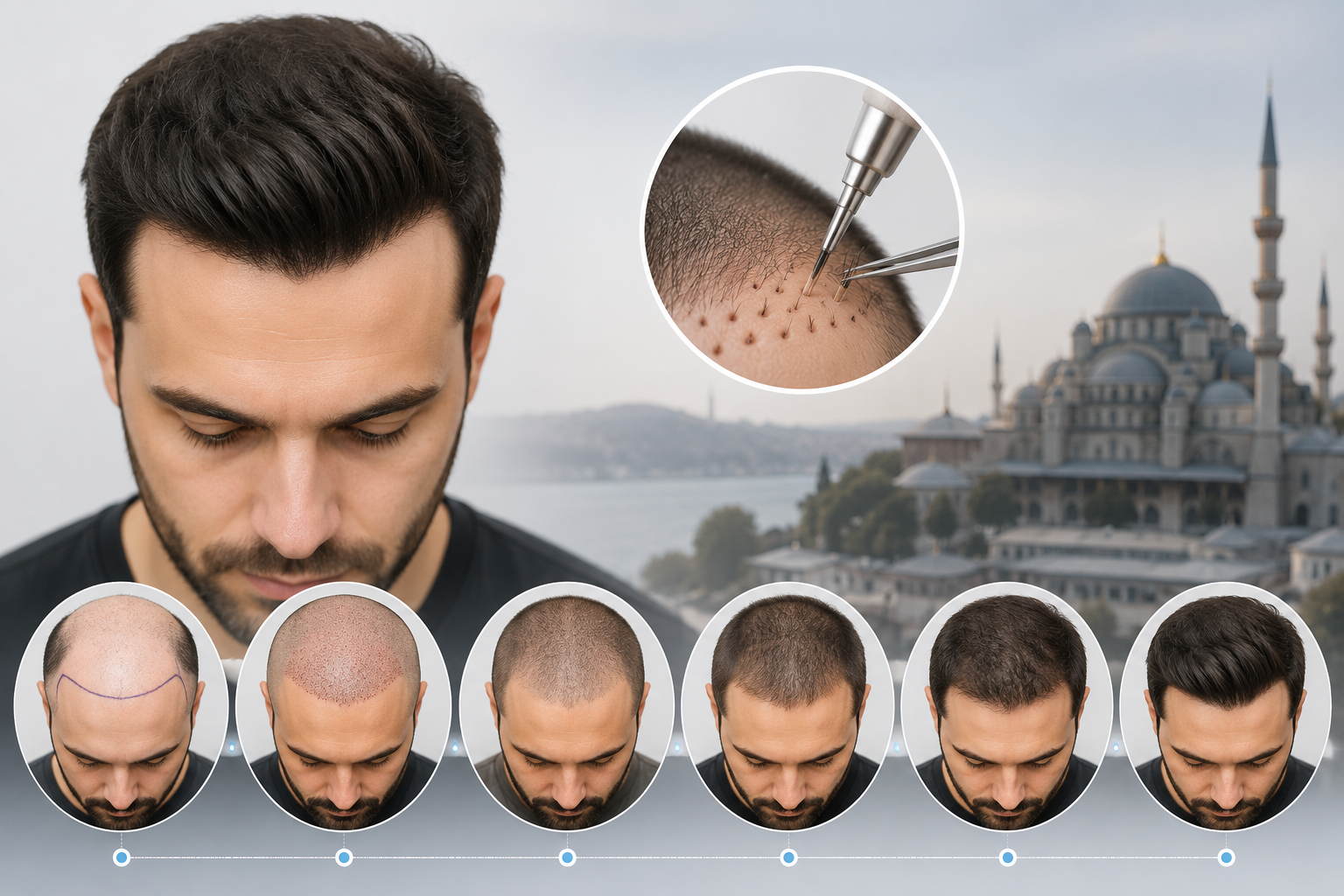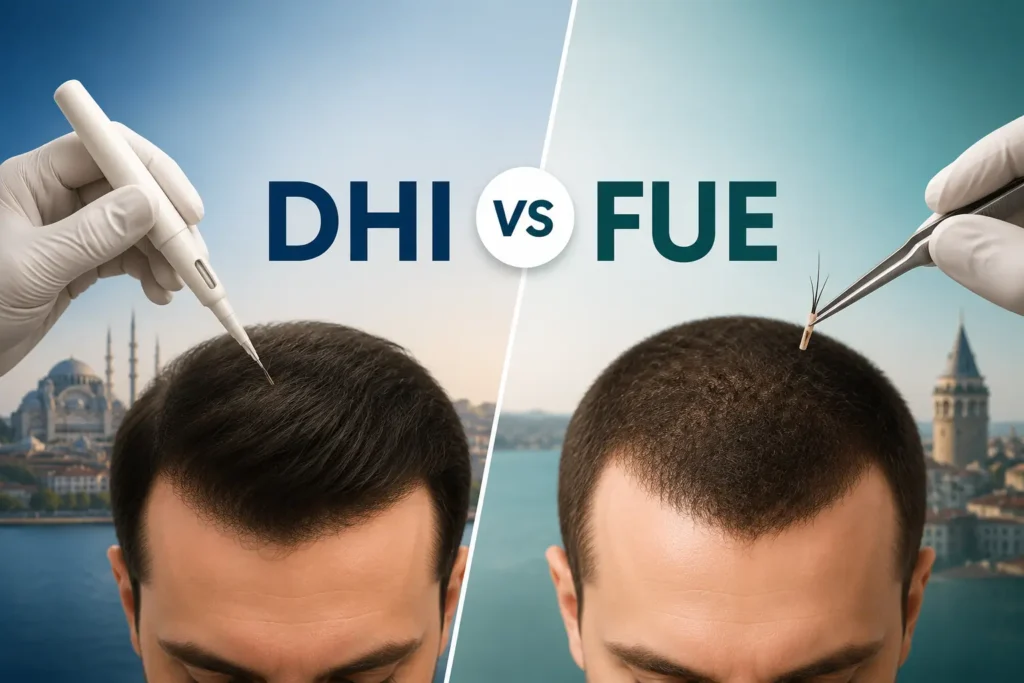
What Is the Difference Between DHI and FUE Hair Transplant in Turkey?
DHI (Direct Hair Implantation)An Advanced Hair Restoration Technique Direct Hair Implantation (DHI) is a refined method of hair transplantation that enhances precision and... implants grafts directly into the scalp using a Choi penThe Tool Behind DHI Success The Choi Implanter Pen is a crucial instrument in DHI procedures, designed to enhance precision... without pre-made channels. FUE (Follicular Unit Extraction) extracts grafts first, creates recipient channels, and then implants them separately.
Hair transplantationHair transplantation is a surgical procedure that involves the extraction of hair follicles from a designated donor site, followed by... in Turkey has transformed into a global medical specialty. Two techniques dominate this field: FUE and DHI. Both methods restore hair permanently. However, they differ in surgical approach, tools, and outcomes. Understanding these differences helps patients make informed decisions. Turkey performs over 500,000 hair transplant procedures annually (International Society of Hair Restoration Surgery, 2023). This volume drives innovation and expertise. Patients from Europe, the Middle East, and North America travel to Turkey for these procedures. The country offers advanced technology at competitive prices. This article examines both techniques scientifically.
What Is FUE (Follicular Unit Extraction)?
FUE extracts individual follicular units from the donor areaThe Source of Restoration The donor area plays a critical role in hair transplantation, as it serves as the source... using a micro-punch tool and then implants them into pre-made recipient channels.
FUE stands for Follicular Unit Extraction. This technique removes hair follicles one by one from the donor zone. Surgeons typically use the back or sides of the scalp as donor areas. A circular micro-punch tool cuts around each follicular unit. The unit contains 1 to 4 hairs. The surgeon then extracts the graft with forceps. This process leaves tiny dot scars. These scars measure less than 1 millimeter in diameter. They heal quickly and remain hidden under normal hair length. FUE replaced the older FUT (Follicular Unit Transplantation) method. FUT removed a strip of scalp and left a linear scar. FUE eliminated this problem. Bernstein and Rassman introduced the FUE concept in 2002 (Bernstein and Rassman, 2002). Since then, surgeons have refined the technique significantly.
What Is DHI (Direct Hair Implantation)?
DHI uses a Choi implanter pen to extract and implant grafts simultaneously, eliminating the need for pre-made channels.
DHI stands for Direct Hair Implantation. This technique uses a specialized tool called the Choi implanter pen. The pen holds the graft and inserts it directly into the scalp. Surgeons do not create recipient channels beforehand. The pen pierces the skin and places the graft in one motion. This reduces the time grafts spend outside the body. The Choi pen allows precise control over angle, depth, and direction. Korean researchers developed this technique in the early 2000s. The Kyungpook National University team published early findings on this method (Kim et al., 2006). DHI requires more technical skill than FUE. The surgeon must load each graft into the pen manually. This makes the procedure more labor-intensive.
How Have Hair Transplant Techniques Evolved in Turkey?
Turkey evolved from FUT to FUE in the early 2000s, then adopted DHI and hybrid techniques by 2015, becoming the world’s largest hair transplant hub.
Turkey entered the hair transplant field in the late 1990s. Early Turkish surgeons used FUT techniques. They learned from European and American pioneers. By 2005, Turkish clinics began adopting FUE widely. The Turkish Society of Plastic Reconstructive and Aesthetic Surgeons documented this transition (Özdemir, 2010). Turkish surgeons traveled to Korea and the United States to learn DHI. They returned and adapted these techniques for international patients. By 2015, Turkey had more hair transplant clinics than any other country. The government supported medical tourism with tax incentives and infrastructure investment. Istanbul became the global capital of hair transplantation. Turkish surgeons now perform more procedures per capita than any other nation.
Why Is Turkey a Global Leader in Hair Transplantation?
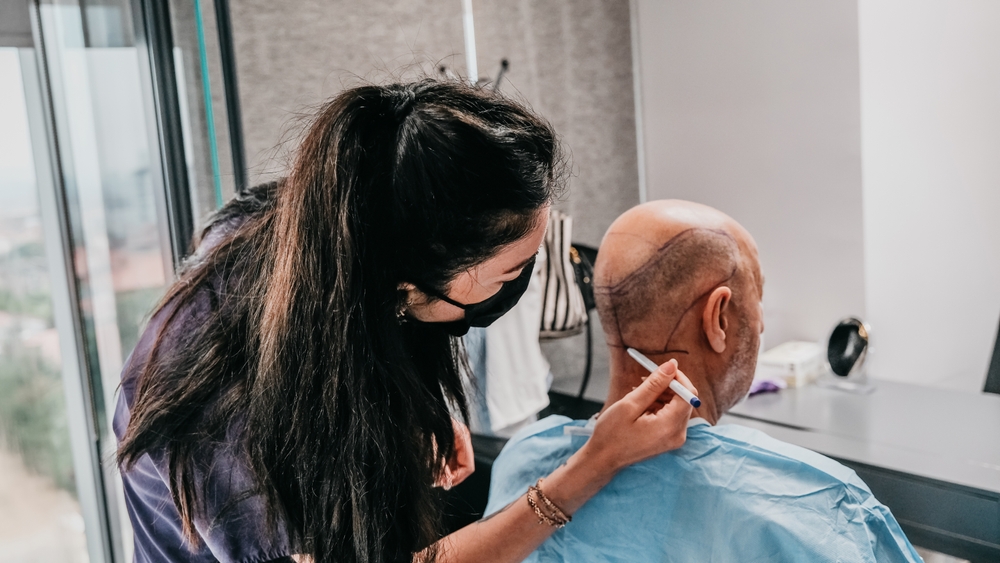
Turkey leads because of high surgical volume, competitive pricing, advanced technology, and government-supported medical tourism infrastructure.
Turkey dominates global hair transplantation for several reasons. First, the cost remains 60-70% lower than in Western Europe or North America. Patients receive the same quality at a fraction of the price. Second, Turkish surgeons gain enormous experience. A typical Turkish surgeon performs 1,000+ procedures annually. A typical American surgeon performs 100-200. This volume builds expertise. Third, Turkish clinics invest in the latest technology. They adopt robotic systems, sapphire blades, and advanced implanter pens quickly. Fourth, the government actively promotes medical tourism. Istanbul Airport connects to 300+ destinations worldwide. Fifth, Turkish clinics offer all-inclusive packages. These include accommodation, transfers, and aftercare. This convenience attracts international patients.
How Does the FUE Hair Transplant Procedure Work?
FUE works in three stages: extraction of follicles from the donor area, creation of recipient channels, and implantation of grafts into those channels.
The FUE procedure follows a clear sequence. The surgical team plans the hairline first. They mark the recipient area and calculate graft needs. Local anesthesiaEnsuring Comfort During Hair Transplants Sedation is used in hair transplantation to help patients remain calm and comfortable throughout the... numbs both donor and recipient areas. The surgeon then begins extraction. This stage takes 2-4 hours depending on graft numbers. The team places extracted grafts in a storage solution. This solution keeps follicles hydrated and viable. Next, the surgeon creates recipient channels. They use micro-blades or sapphire tips. These channels determine hair direction and angle. Finally, the team implants grafts into the channels. They use forceps or implanter pens. The entire procedure lasts 6-8 hours for large sessions.
How Are Hair Follicles Extracted?
Surgeons extract follicles using a motorized or manual punch tool that scores the skin around each follicular unit, then lift the graft with fine forceps.
Extraction requires precision. The surgeon selects donor follicles based on density and hair quality. They shave the donor area to 1-2 millimeters. A micro-punch tool rotates around each follicular unit. The punch diameter ranges from 0.7 to 1.0 millimeters. The surgeon adjusts depth based on skin thickness. They then lift the graft carefully with forceps. The graft includes the follicle, sebaceous gland, and surrounding tissue. The team places each graft in a chilled storage solution. This solution typically contains saline, antioxidants, and nutrients. Studies show that chilled storage improves graft survival (Pereira et al., 2013).
How Are Recipient Channels Created?
Surgeons create channels using micro-blades or sapphire tips, making tiny incisions that control depth, angle, and direction for natural hair growth.
Channel creation shapes the final result. The surgeon makes tiny incisions in the recipient area. These incisions measure 0.6-1.2 millimeters. The angle matters enormously. Natural hair grows at 30-45 degrees from the scalp. The surgeon must match this angle. The direction also matters. Hairline hairs point forward and slightly to the sides. Crown hairs follow a circular pattern called the whorl. The depth determines how deeply the graft sits. Too shallow and the graft dries out. Too deep and it gets buried. Sapphire blades have become popular. These blades use real sapphire crystal. They create sharper, cleaner incisions than steel blades. This reduces tissue trauma and speeds healing.
How Are Grafts Implanted?
The surgical team places each graft into a pre-made channel using fine forceps, ensuring the graft sits at the correct depth and angle.
Implantation requires steady hands and good vision. The technician holds the graft with jeweler’s forceps. They insert it into the channel gently. The graft should sit just below the skin surface. The follicle must not bend or crush. The team works systematically. They implant from the back of the recipient area forward. This prevents disturbing newly placed grafts. Some clinics use implanter pens for FUE too. This combines FUE extraction with DHI-style implantation. This hybrid approach has gained popularity. It offers some DHI benefits while maintaining FUE efficiency.
What Equipment Is Used During FUE?
FUE uses micro-punch tools (manual or motorized), forceps, micro-blades or sapphire tips, stereoscopic microscopes, and graft storage solutions.
Modern FUE requires specialized equipment. The punch tool comes in manual and motorized versions. Motorized punches rotate automatically. They reduce surgeon fatigue and speed extraction. Sapphire blades replace traditional steel for channel creation. These blades stay sharper longer. They cause less tissue damage. Some clinics use robotic systems. The ARTAS robot assists with extraction. It uses artificial intelligence to identify optimal grafts. However, human surgeons still perform implantation. Stereoscopic microscopes help technicians sort and prepare grafts. They separate follicular units by hair count. Storage solutions keep grafts viable during the procedure.
How Long Does an FUE Procedure Take?
FUE takes 6-8 hours for sessions of 3,000-4,000 grafts, with extraction taking 2-4 hours and implantation taking 3-4 hours.
Procedure duration depends on graft numbers. Small sessions of 1,000-1,500 grafts take 4-5 hours. Large sessions of 4,000+ grafts take 8-10 hours. The team may split very large sessions over two days. Extraction takes roughly 1 hour per 1,000 grafts. Channel creation takes 30-60 minutes. Implantation takes 1-1.5 hours per 1,000 grafts. The team takes breaks during the procedure. Patients eat lunch and stretch. Long procedures require good anesthesia management. The surgeon must maintain consistent quality throughout. Fatigue affects precision. This is why experienced teams work faster and more consistently.
How Does the DHI Hair Transplant Procedure Work?
DHI combines extraction and implantation into a continuous process where the surgeon loads each graft into a Choi pen and inserts it directly into the scalp without pre-made channels.
DHI streamlines the procedure. The surgeon extracts grafts as in FUE. However, they do not create channels first. Instead, they load each graft into a Choi implanter pen. The pen has a hollow needle. The surgeon pushes the needle into the scalp. The graft slides out as the needle withdraws. This happens in one motion. The surgeon controls angle, depth, and direction with each insertion. The team works in pairs. One person extracts and loads grafts. The other implants them. This coordination requires practice. DHI eliminates the separate channel creation step. This saves time in some ways. However, the implantation itself takes longer per graft.
What Is a Choi Implanter Pen?
The Choi implanter pen is a hollow needle device that holds a single hair graft and inserts it directly into the scalp at a controlled angle, depth, and direction.
The Choi pen revolutionized hair transplantation. Dr. Choi developed it in Korea. The pen looks like a thick syringe. It has a hollow needle at the tip. The needle diameter ranges from 0.5 to 1.0 millimeters. The technician loads a graft into the needle. The surgeon places the needle tip on the scalp. They press a plunger. The needle enters the skin and deposits the graft. The surgeon controls depth by how hard they press. They control angle by how they hold the pen. The pen allows immediate implantation after extraction. This reduces graft handling time significantly. Different needle sizes accommodate different graft types. Single-hair grafts use smaller needles. Multi-hair grafts use larger ones.
How Does Direct Implantation Differ from FUE?
Direct implantation skips the channel creation step, places grafts immediately after extraction, and gives the surgeon real-time control over every insertion parameter.
FUE and DHI differ fundamentally in workflow. FUE separates extraction, channel creation, and implantation. DHI combines channel creation and implantation into one step. In FUE, the surgeon creates all channels first. Then they implant grafts. In DHI, each graft gets its own channel at the moment of implantation. This means the surgeon adjusts every insertion individually. They respond to tissue resistance and blood flow. They can change angle or density as they work. FUE channel creation happens before implantation. The surgeon cannot easily modify channels once made. DHI offers more flexibility. However, FUE allows faster implantation once channels exist.
How Does DHI Reduce Graft Handling?
DHI reduces graft handling because technicians touch each graft only once during loading, and the graft spends minimal time outside the body before implantation.
Graft handling affects survival. Every touch risks damage. FUE grafts pass through multiple hands. The surgeon extracts them. A technician cleans and sorts them. Another technician implants them. DHI simplifies this chain. The extraction technician loads the graft directly into the Choi pen. The surgeon then implants it. This reduces handling steps. More importantly, DHI reduces out-of-body time. Grafts stay in the pen for seconds or minutes. In FUE, grafts may sit in storage for hours. Research shows that prolonged out-of-body time reduces survival (Gandelman et al., 2000). DHI minimizes this risk. The graft moves from donor to recipient almost immediately.
Why Is Angle, Depth, and Direction Control Important?
Precise angle, depth, and direction control create natural-looking hair that matches the patient’s original growth patterns and prevents unnatural “pluggy” results.
Natural hair grows at specific angles. Hairline hair points forward at 10-20 degrees. Temple hair angles more acutely. Crown hair follows a spiral pattern. If the surgeon ignores these angles, results look artificial. Depth matters too. Grafts placed too shallow dry out and die. Grafts placed too deep get buried under scar tissue. Direction determines how hair flows. Wrong direction creates messy, crossing patterns. DHI gives the surgeon direct control over all three parameters. They feel tissue resistance as they insert. They adjust angle based on surrounding hairs. This precision matters most in visible areas like the hairline.
How Long Does a DHI Procedure Take?
DHI takes 8-10 hours for 2,000-3,000 grafts because each graft requires individual loading and insertion, making the process more time-intensive than FUE.
DHI takes longer than FUE for equivalent graft numbers. Loading each graft into the pen takes time. The surgeon must align the graft correctly. The needle must grip the graft without crushing it. A typical DHI session covers 2,000-3,000 grafts. This takes 8-10 hours. Some sessions extend to 12 hours. Very large DHI sessions are impractical. The team would need two days. This time investment pays off in precision. However, it limits how many grafts a surgeon can transplant in one session. Patients needing 4,000+ grafts may need FUE or a hybrid approach.
What Are the Main Differences Between DHI and FUE Hair Transplant in Turkey?
The main differences include implantation technique, channel creation, surgical instruments, graft handling, out-of-body time, precision, density potential, duration, healing, cost, technical difficulty, and surgeon experience requirements.
|
Feature |
FUE |
DHI |
|
Implantation Technique |
Grafts placed into pre-made channels |
Grafts inserted directly with Choi pen |
|
Channel Creation |
Separate step with blades or sapphire tips |
Created simultaneously with implantation |
|
Surgical Instruments |
Micro-punch, forceps, blades |
Micro-punch, Choi implanter pens |
|
Graft Handling |
Multiple handling steps |
Minimal handling, direct loading |
|
Out-of-Body Time |
2-6 hours in storage |
Seconds to minutes |
|
Precision |
High, depends on channel planning |
Very high, real-time control |
|
Density Potential |
Good, up to 40-50 grafts/cm² |
Excellent, up to 50-60 grafts/cm² |
|
Procedure Duration |
6-8 hours for 3,000 grafts |
8-10 hours for 2,500 grafts |
|
Healing Process |
7-10 days for crusts to fall |
5-7 days for crusts to fall |
|
Cost |
$1,500-$3,000 in Turkey |
$2,500-$4,500 in Turkey |
|
Technical Difficulty |
Moderate |
High |
|
Surgeon Experience |
Important |
Critical |
This comparison shows that neither technique dominates completely. Each suits different patient needs. Turkish clinics offer both. Many surgeons master both techniques. They recommend based on individual cases.
Which Hair Transplant Technique Provides Better Hair Density?
DHI can achieve higher density in small areas due to precise control, while FUE covers larger areas more efficiently with good overall density.
Density refers to grafts per square centimeter. Natural scalp density ranges from 80-120 follicular units per cm². Transplantation typically achieves 30-60 grafts per cm². DHI allows higher density in specific zones. The surgeon can place grafts closer together. They control each insertion depth. This prevents popping or displacement. FUE density depends on channel spacing. Channels must not cut existing grafts. This limits how close they can be. However, FUE can cover larger total areas. A patient with extensive baldness needs coverage more than maximum density. FUE delivers this better.
Can DHI Achieve Higher Density?
Yes, DHI can achieve 50-60 grafts per cm² in targeted areas because the Choi pen allows precise spacing without damaging adjacent grafts.
DHI excels at high-density implantation. The surgeon places each graft individually. They avoid cutting nearby grafts. The pen creates minimal surrounding trauma. Studies suggest DHI achieves 10-15% higher density in small zones (Keser et al., 2014). This benefits the hairline and frontal zones. These areas need the most natural appearance. Higher density here creates fuller-looking results. However, this advantage diminishes in large areas. The time required for ultra-high density becomes impractical. Patients wanting maximum density in a small area should consider DHI.
Does FUE Cover Larger Bald Areas More Efficiently?
Yes, FUE covers larger areas more efficiently because pre-made channels allow faster implantation, and surgeons can transplant 4,000+ grafts in one session.
FUE suits large-scale restoration. The surgeon creates all channels first. Then the team implants rapidly. They do not pause to load pens. They grab grafts and place them. This assembly-line approach speeds large sessions. A skilled team implants 3,000-4,000 grafts in 6-8 hours. DHI would take 12-16 hours for the same number. Most patients cannot tolerate such long procedures. For advanced Norwood 5-6 baldness, FUE offers the only practical solution. The patient needs maximum coverage. FUE delivers this efficiently.
How Does Hairline Design Affect Density?
Hairline design determines where density matters most; a dense, natural hairline frames the face and creates the illusion of fuller hair even with moderate crown density.
The hairline frames the face. It creates the first impression. A dense, natural hairline makes patients look younger. Even moderate crown density looks good with a strong hairline. DHI builds better hairlines. The surgeon controls every graft placement. They create irregular, feathered edges. This mimics natural hairlines. FUE can achieve this too. However, it requires more planning. The surgeon must design channels perfectly. DHI allows real-time adjustments. The surgeon responds to the emerging pattern. Both techniques can produce excellent hairlines. DHI simply offers more control.
Does Graft Survival Influence Final Density?
Yes, graft survival directly determines final density; higher survival means more hairs grow from the transplanted grafts, increasing the visible density.
Transplanted density differs from growing density. A surgeon may implant 50 grafts per cm². If only 70% survive, the growing density drops to 35 per cm². Graft survival depends on many factors. DHI may improve survival by reducing out-of-body time. However, technique alone does not guarantee survival. The surgeon’s skill matters more. The extraction technique matters. The storage solution matters. Postoperative care matters. Studies show survival rates of 85-95% for both techniques when performed well (Cole et al., 2017). The technique choice has less impact than the surgeon’s expertise.
Which Technique Produces More Natural Results?
Both techniques produce natural results when performed by skilled surgeons; DHI offers more real-time control over individual graft placement, while FUE relies on excellent channel planning.
Natural results depend on multiple factors. The hairline must have irregular edges. Single hairs must lead the front. Density must transition gradually. Hair direction must match existing patterns. Both FUE and DHI can achieve this. The surgeon’s artistry matters more than the tool. DHI gives the surgeon immediate feedback. They see each graft as they place it. They adjust the next graft accordingly. FUE requires the surgeon to predict results. They design channels before implantation. Experienced FUE surgeons do this superbly. Beginners may create less natural patterns.
How Is Hair Direction Controlled?
Surgeons control hair direction by aligning channels or Choi pen insertions to match the natural growth angle of surrounding hair, typically following forward, lateral, or spiral patterns depending on the scalp zone.
Hair direction varies across the scalp. The frontal hairline points forward and slightly to the sides. The temporal hair angles backward. The crown follows a clockwise or counterclockwise whorl. The surgeon must replicate these patterns. In FUE, they set channel direction during creation. Once made, the channel fixes the direction. In DHI, the surgeon changes direction with each insertion. They respond to the natural flow. This flexibility helps in complex areas. The crown whorl requires careful direction matching. DHI allows the surgeon to follow the spiral exactly.
Why Does Hairline Planning Matter?
Hairline planning matters because a poorly designed hairline looks artificial regardless of density; a natural hairline has irregular edges, appropriate height, and gradual density transitions.
The hairline determines aesthetic success. A good hairline suits the patient’s face shape. It considers age and ethnicity. It has micro-irregularities. No straight lines exist in nature. The front edge contains single hairs. Behind them, double and triple hairs increase density. The hairline must not be too low. This looks unnatural on older patients. It must not be too high. This fails to frame the face. Surgeons use templates and computer imaging. They discuss options with patients. DHI allows the surgeon to build this gradually. They place each graft precisely. FUE requires the surgeon to plan all channels first. Both approaches work. Planning quality matters more than technique.
Does Implantation Angle Affect Natural Appearance?
Yes, implantation angle affects natural appearance; hairline hairs grow at 10-20 degrees, while crown hairs grow at 30-45 degrees, and matching these angles prevents an unnatural “standing up” look.
Angle creates natural lay. Hair does not grow perpendicular to the scalp. It lies flat. The angle varies by location. Hairline hair grows almost flat. Crown hair grows more upright. Wrong angles make hair stick up. Or it lies flat in the wrong direction. This looks obvious. FUE channels must match these angles. The surgeon tilts the blade accordingly. DHI allows angle adjustment with each graft. The surgeon feels the correct angle as they insert. Both techniques achieve proper angles. The surgeon’s skill determines success.
Can Both Techniques Produce Undetectable Results?
Yes, both techniques produce undetectable results when performed by experienced surgeons who pay attention to hairline design, angle, direction, and density distribution.
Undetectable results mean no one can tell surgery occurred. The hair looks natural. The donor area shows no obvious scarring. This is achievable with both FUE and DHI. FUE leaves tiny dot scars. These hide under short hair. DHI leaves similar extraction scars. The implantation itself causes minimal trauma. The key factor is surgeon experience. An experienced surgeon with either tool produces excellent results. An inexperienced surgeon with either tool produces poor results. Patients should research their surgeon’s work. Before-and-after photos help. Patient reviews provide insight.
Is DHI Better Than FUE for Hairline Restoration?
DHI offers advantages for hairline restoration because it allows precise control over single-hair graft placement, irregular edge creation, and density gradation.
The hairline demands precision. Single hairs must lead the front. These create a soft, natural edge. Behind them, density increases. DHI places each single hair exactly. The surgeon controls depth and angle. They create micro-irregularities easily. FUE can also achieve this. However, it requires more pre-planning. The surgeon must design channels for each single hair. DHI simplifies this process. The surgeon responds to the emerging pattern. They adjust density and direction as they work. For hairline-focused restoration, DHI offers clear advantages.
Why Is Precision Important in Frontal Hairlines?
Precision matters in frontal hairlines because this area frames the face and receives the most visual scrutiny; even small errors in angle or density become immediately noticeable.
The frontal hairline sits at the center of attention. Everyone looks at it. Small errors stand out. A graft placed at the wrong angle catches light differently. A density gap creates a visible hole. The edge must look soft, not harsh. Precision prevents these problems. DHI allows the surgeon to examine each graft as they place it. They ensure perfect positioning. FUE can achieve this too. But the surgeon must plan more carefully. They cannot adjust channels after creation. Precision in planning becomes essential.
Which Technique Is Best for Small Treatment Areas?
DHI works best for small treatment areas like the hairline, temples, or beard because the precision outweighs the time investment, and smaller sessions stay manageable.
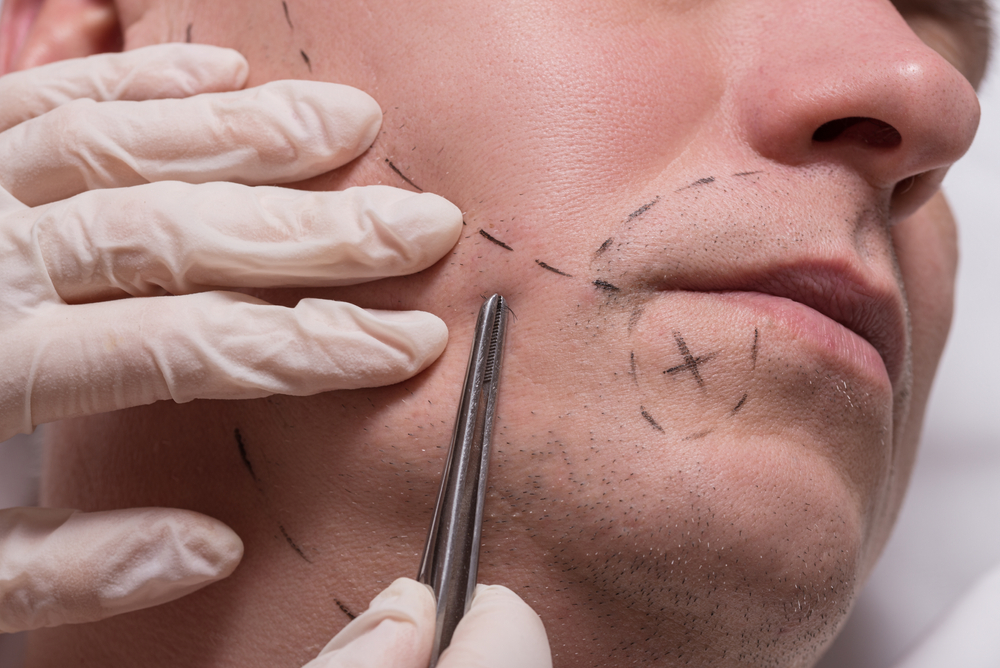
Small areas include hairline touch-ups, temple restoration, beard filling, and eyebrow transplantation. These need 500-1,500 grafts. DHI handles this efficiently. The session takes 4-6 hours. The precision benefits are clear. FUE also works for small areas. However, the channel creation step adds time. For very small areas, the difference is minimal. For medium-small areas, DHI shines. Beard and eyebrow transplantation especially benefit. These areas need exact angle and direction. DHI delivers this control.
Can DHI Improve Hairline Symmetry?
Yes, DHI can improve hairline symmetry because the surgeon places each graft individually and can adjust placement in real time to balance both sides.
Symmetry creates balance. Asymmetrical hairlines look odd. The surgeon must match both sides. DHI allows the surgeon to work back and forth. They place a graft on the left. Then they place a matching graft on the right. They compare immediately. They adjust as needed. FUE requires the surgeon to design symmetry before channel creation. They must predict results. Experienced surgeons do this well. DHI makes it easier. Real-time comparison improves symmetry.
Is FUE Better Than DHI for Extensive Hair Loss?
Yes, FUE works better for extensive hair loss because it allows efficient transplantation of 3,000-4,000+ grafts in one session, covering large areas like the crown and mid-scalp.
Extensive hair loss means Norwood stage 5, 6, or 7. These patients need large graft numbers. They need coverage across the crown, mid-scalp, and frontal area. FUE handles this efficiently. The surgeon creates channels for the entire area. The team implants rapidly. They can transplant 4,000 grafts in one day. DHI would need two days for this. Most patients prefer one session. FUE also allows better donor management. The surgeon can extract from wider areas. They maximize available grafts.
When Are Large Graft Sessions Necessary?
Large graft sessions of 3,000-4,000+ grafts become necessary when patients have advanced baldness across multiple scalp zones and need comprehensive coverage in a single procedure.
Large sessions address advanced baldness. A patient with crown and frontal loss needs 3,000+ grafts. Splitting this into multiple sessions increases cost and recovery time. One large session restores everything. This requires efficient technique. FUE provides this efficiency. The team works in assembly-line fashion. Extraction, channel creation, and implantation flow smoothly. DHI cannot match this pace. Each graft requires individual attention. Large DHI sessions become impractical.
Which Technique Covers More Surface Area?
FUE covers more surface area because faster implantation allows the team to distribute grafts across the entire bald zone, while DHI focuses on smaller, high-density zones.
Surface area coverage matters for extensive baldness. A patient may have 200 cm² of bald scalp. They need grafts spread across this area. FUE allows this distribution. The surgeon creates channels everywhere. The team implants across the zone. DHI focuses on smaller areas. The surgeon works methodically. They cannot cover large areas quickly. For maximum coverage, FUE wins.
Is FUE More Efficient for Advanced Baldness?
Yes, FUE is more efficient for advanced baldness because the workflow supports large graft numbers, broad coverage, and single-session completion.
Efficiency means achieving goals with minimal time and resources. FUE does this for large cases. The surgeon plans the entire restoration. They execute in one session. The patient recovers once. They see results faster. DHI would require multiple sessions. This increases total cost. It increases total downtime. For advanced baldness, FUE offers the most efficient path.
Who Is a Good Candidate for DHI Hair Transplant?
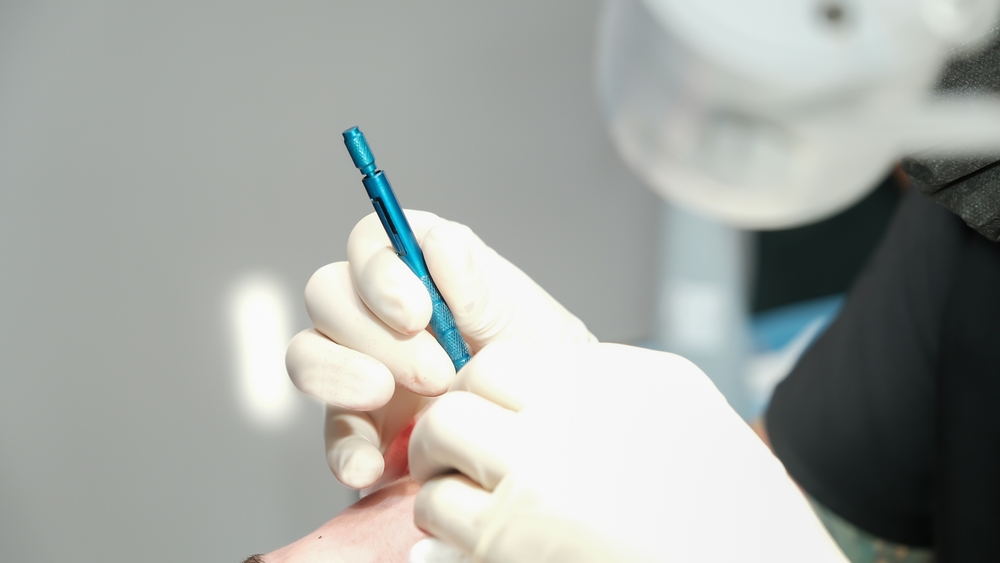
Good DHI candidates include patients with early hair loss, those seeking higher density in small areas, individuals with smaller bald zones, beard and eyebrow transplant candidates, and patients wanting minimal recipient area trauma.
DHI suits specific patient profiles. Not everyone needs or benefits from DHI. Understanding candidacy helps patients choose wisely.
Patients with Early Hair Loss
Patients with early hair loss (Norwood 2-3) are good DHI candidates because they need smaller graft numbers and benefit most from precise hairline restoration.
Early hair loss means receding hairline or mild crown thinning. These patients need 1,500-2,500 grafts. DHI handles this graft range well. The procedure takes 6-8 hours. The precision benefits the hairline. Early intervention creates natural results. The patient maintains a youthful appearance. DHI allows careful placement. The surgeon preserves native hair. They avoid damaging existing follicles.
Patients Seeking Higher Density
Patients seeking higher density in specific zones benefit from DHI because the Choi pen allows closer graft placement without damaging adjacent follicles.
Some patients want maximum density in a specific area. This might be the frontal zone. Or the crown. DHI achieves higher density. The surgeon places grafts closer together. They control each insertion. This prevents graft displacement. Patients with good donor hair and small target areas are ideal candidates.
Individuals with Smaller Bald Areas
Individuals with smaller bald areas (under 2,500 grafts needed) suit DHI well because the procedure time remains reasonable and the precision advantage is fully realized.
Small bald areas include hairline recession, small crown balding, or scar coverage. These need limited grafts. DHI handles these efficiently. The time investment pays off. The results look excellent. Patients with isolated bald patches benefit particularly.
Beard and Eyebrow Transplant Candidates
Beard and eyebrow transplant candidates are excellent DHI candidates because these procedures require exact angle, direction, and density control that the Choi pen provides.
Facial hair transplantation demands precision. Beard hairs grow at specific angles. Eyebrow hairs follow a curved pattern. DHI allows the surgeon to match these patterns. They place each graft exactly. The results look natural. FUE can do this too. But DHI offers more control.
Patients Preferring Minimal Recipient Area Trauma
Patients wanting minimal recipient area trauma benefit from DHI because the Choi pen creates smaller wounds and causes less bleeding than channel creation with blades.
DHI causes less trauma to the recipient area. The pen makes a precise puncture. It does not cut a channel. This means less bleeding. Less swelling. Faster healing. Some patients prefer this. They want minimal disruption. DHI delivers this benefit.
Who Is a Good Candidate for FUE Hair Transplant?
Good FUE candidates include patients with advanced hair loss, individuals needing high graft numbers, patients with extensive crown baldness, and those seeking cost-effective solutions.
FUE serves a broader patient base. It handles cases that DHI cannot practically manage.
Patients with Advanced Hair Loss
Patients with advanced hair loss (Norwood 4-7) are ideal FUE candidates because they need 3,000-5,000 grafts and require broad coverage that FUE delivers efficiently.
Advanced baldness requires many grafts. FUE extracts them efficiently. The team implants them across large areas. These patients get comprehensive restoration. DHI cannot handle this scale practically.
Individuals Requiring High Graft Numbers
Individuals needing 3,000+ grafts require FUE because DHI sessions become too long and impractical for such large numbers beyond 2,500-3,000 grafts.
High graft numbers mean 3,000-5,000. Some patients need two procedures. FUE makes large sessions possible. The surgeon can extract 4,000 grafts in one day. DHI would need multiple days.
Patients with Extensive Crown Baldness
Patients with extensive crown baldness benefit from FUE because the crown requires broad coverage and follows a circular whorl pattern that FUE channels can map efficiently.
The crown presents unique challenges. The whorl pattern requires careful direction matching. However, the area needs broad coverage. FUE channels map this pattern well. The surgeon creates channels following the whorl. The team implants efficiently. DHI can do this too. But the large area makes FUE more practical.
Those Looking for Cost-Effective Solutions
Patients seeking cost-effective solutions often choose FUE because it costs 30-40% less than DHI while still delivering excellent results for most hair loss patterns.
FUE costs less than DHI. The procedure takes less time. The clinic can charge less. Patients get excellent results. For many, FUE offers the best value. They do not need DHI’s precision advantages. FUE meets their needs at lower cost.
How Does Donor Area Management Differ Between DHI and FUE?
Donor area management is similar in both techniques because both use FUE extraction; the difference lies in implantation, not extraction.
Both DHI and FUE use the same extraction method. The surgeon removes follicular units from the donor area. They use micro-punch tools. The donor area management principles apply equally.
How Are Donor Follicles Selected?
Surgeons select donor follicles based on hair density, hair caliber, and follicular unit composition, choosing areas with the highest concentration of permanent hairs resistant to balding.
The donor area sits at the back and sides of the head. This hair resists balding. It contains DHT-resistant follicles. The surgeon examines this area. They look for high density. They look for thick hair shafts. They look for healthy follicles. They mark the extraction zone. They avoid overharvesting. They leave enough hair for natural appearance.
Does Extraction Technique Affect Donor Preservation?
Yes, extraction technique affects donor preservation; smaller punch sizes (0.7-0.8mm) and proper spacing leave less visible scarring and maintain donor density for future procedures.
Punch size matters. Smaller punches leave smaller scars. However, they may damage grafts. Larger punches extract grafts safely. But they leave bigger scars. The surgeon must balance these factors. Spacing between extraction sites matters too. Close spacing increases yield. But it may cause visible thinning. Proper spacing preserves appearance. Experienced surgeons find the right balance.
How Can Overharvesting Be Prevented?
Overharvesting can be prevented by calculating safe donor limits (typically 6,000-8,000 grafts over a lifetime), spacing extraction sites properly, and avoiding extraction from non-permanent zones.
Overharvesting means extracting too many grafts. This thins the donor area. It looks unnatural. It limits future options. Surgeons calculate safe limits. They examine donor density. They plan for current and future needs. They extract evenly. They avoid creating bald patches. They stop when appropriate. Good planning prevents overharvesting.
Does DHI Have a Higher Graft Survival Rate Than FUE?
DHI may have a slightly higher graft survival rate due to reduced out-of-body time, but both techniques achieve 85-95% survival when performed by skilled surgeons, making surgeon skill more important than technique choice.
Graft survival determines final results. Both techniques aim for maximum survival. DHI has theoretical advantages. But real-world results depend on execution.
Why Does Graft Hydration Matter?
Graft hydration matters because hair follicles are living tissues that need moisture and nutrients; dehydration causes cell death and reduces graft survival significantly.
Hair follicles are living organs. They need hydration. Once extracted, they lose blood supply. They rely on storage solutions. These solutions must provide hydration. They must provide nutrients. They must maintain proper temperature. Dehydration kills follicle cells. Studies show that grafts left dry for minutes show reduced survival (Pereira et al., 2013). Proper storage is essential.
How Does Reduced Out-of-Body Time Affect Survival?
Reduced out-of-body time improves graft survival because follicles re-establish blood supply faster, minimizing the period of nutrient deprivation and cellular stress.
Out-of-body time means minutes or hours outside the scalp. During this time, grafts survive on stored nutrients. This cannot continue indefinitely. The sooner grafts return to the scalp, the better. DHI reduces this time. Grafts move from donor to recipient quickly. FUE grafts may wait hours. However, good storage solutions mitigate this. The difference may be small in practice.
What Other Factors Influence Graft Survival?
Other factors influencing graft survival include extraction technique, storage solution quality, temperature control, implantation depth, recipient blood supply, and postoperative care.
Many factors affect survival. Gentle extraction prevents damage. Good storage preserves viability. Cool temperature slows metabolism. Proper depth ensures nourishment. Good blood supply feeds the graft. Postoperative care protects healing grafts. Technique choice is just one factor.
Does Surgical Team Experience Matter More Than Technique?
Yes, surgical team experience matters more than technique choice because an experienced team achieves high survival rates with either FUE or DHI, while an inexperienced team produces poor results regardless of technique.
Experience trumps technique. A skilled FUE surgeon achieves 95% survival. An unskilled DHI surgeon achieves 70%. The human element dominates. Patients should research their surgeon. They should examine results. They should not choose based on technique alone.
Which Hair Transplant Technique Has a Faster Recovery?
DHI may offer slightly faster recovery due to less recipient area trauma, but both techniques show similar healing timelines with crusts falling in 7-10 days and most swelling resolving in 3-5 days.
Recovery varies by patient. Both techniques cause similar initial trauma. DHI may cause slightly less. The differences are small.
Healing Timeline After DHI
After DHI, crusts form for 3-5 days, begin falling by day 5-7, and most patients resume normal appearance by day 10-14 with minimal redness.
DHI creates small punctures. These heal quickly. Crusts form around each graft. They dry and fall off. The scalp looks normal within two weeks. Some redness may persist. This fades over a month.
Healing Timeline After FUE
After FUE, crusts form for 5-7 days, begin falling by day 7-10, and most patients resume normal appearance by day 10-14, with donor area dots healing in 7-10 days.
FUE healing takes slightly longer. The channels are larger than DHI punctures. Crusts stay longer. They fall off by day 10. The donor area heals in a week. Tiny dots remain. These fade over months.
Scab Formation
Scabs form around each implanted graft within 24 hours and protect the wound; patients must not pick them, as they fall naturally in 7-10 days.
Scabs protect healing tissue. They form from dried blood and serum. They cover each graft. Patients must leave them alone. Picking scabs dislodges grafts. This causes failure. Scabs fall naturally. Patience is essential.
Swelling
Swelling peaks at day 2-3 after surgery, affects the forehead and around the eyes, and resolves within 5-7 days with proper head elevation and medication.
Swelling is common. It moves downward. It may affect the forehead and eyes. This looks dramatic but resolves. Elevation reduces swelling. Cold compresses help. Medication controls inflammation.
Returning to Daily Activities
Most patients return to non-strenuous daily activities within 3-5 days after both DHI and FUE, though they should avoid direct sun exposure and wear a loose hat for 2 weeks.
Daily activities resume quickly. Office work starts in 3-5 days. Social activities resume in a week. Patients should avoid situations that risk bumping the head. They should sleep with head elevated. They should follow their surgeon’s instructions.
Exercise and Hair Washing Timeline
Patients can wash their hair gently after day 3-4, resume light exercise after 10-14 days, and return to strenuous exercise and swimming after 3-4 weeks.
Hair washing starts after day 3. Patients use special shampoo. They pour water gently. They do not rub. They pat dry. Exercise restrictions protect grafts. Light walking is fine. Heavy lifting and sweating should wait. Swimming risks infection. The timeline is similar for both techniques.
What Are the Advantages of DHI Hair Transplant?
DHI advantages include greater implantation precision, minimal graft manipulation, high-density implantation capability, improved hairline design, and reduced recipient area trauma.
DHI offers distinct benefits. These make it ideal for specific cases.
Greater Implantation Precision
DHI provides greater precision because the surgeon controls every insertion parameter individually, allowing real-time adjustments to angle, depth, and direction.
The Choi pen gives direct control. The surgeon feels tissue resistance. They adjust immediately. This precision benefits visible areas. The hairline looks natural. The temple points correctly. The crown whorl matches.
Minimal Graft Manipulation
DHI minimizes graft manipulation because technicians touch each graft only once during loading into the Choi pen, reducing mechanical damage and dehydration risk.
Fewer hands touch each graft. The extraction technician loads it directly. The surgeon implants it. This reduces damage. It reduces dehydration. It may improve survival.
High-Density Implantation
DHI enables high-density implantation because the surgeon can place grafts closer together without cutting adjacent channels, achieving up to 50-60 grafts per cm² in targeted zones.
Density matters for natural appearance. DHI allows close placement. The surgeon avoids cutting existing grafts. They create space precisely. This builds fuller-looking results.
Improved Hairline Design
DHI improves hairline design because the surgeon can create irregular edges, place single hairs precisely, and adjust density gradation in real time.
Hairline design separates good results from great ones. DHI allows the surgeon to build the hairline graft by graft. They see the pattern emerge. They adjust as they work. This creates natural results.
Reduced Recipient Area Trauma
DHI reduces recipient area trauma because the Choi pen creates smaller wounds than channel blades, causing less bleeding, swelling, and tissue disruption.
The recipient area heals faster. Less trauma means less inflammation. Less bleeding means better visibility. The surgeon works more efficiently. The patient recovers more comfortably.
What Are the Advantages of FUE Hair Transplant?
FUE advantages include efficient large-scale coverage, suitability for high graft numbers, proven long-term outcomes, broad patient eligibility, and cost efficiency.
FUE remains the workhorse of hair transplantation. Its advantages make it the most popular technique worldwide.
Efficient Large-Scale Coverage
FUE provides efficient large-scale coverage because pre-made channels allow rapid implantation across broad areas like the crown and mid-scalp.
Large areas need many grafts. FUE handles this. The team implants quickly. They cover the entire bald zone. This efficiency benefits patients with extensive loss.
Suitable for Higher Graft Numbers
FUE suits higher graft numbers because the workflow supports sessions of 3,000-4,000+ grafts in one day, while DHI becomes impractical beyond 2,500-3,000 grafts.
High graft numbers require efficiency. FUE delivers. The surgeon can transplant 4,000 grafts in 8 hours. DHI would need 12-16 hours. Patients prefer one session.
Proven Long-Term Outcomes
FUE has proven long-term outcomes with 20+ years of clinical data showing permanent, natural results when performed by experienced surgeons.
FUE has existed since 2002. Surgeons have tracked results for decades. The technique works. Hair grows permanently. Results look natural. This track record gives patients confidence.
Broad Patient Eligibility
FUE suits almost all hair loss patients, including those with advanced baldness, limited donor supply, and various hair types, making it the most universally applicable technique.
FUE works for most patients. Straight hair, curly hair, thick hair, fine hair. Light skin, dark skin. Early loss, advanced loss. The technique adapts. DHI has more limitations. FUE serves the broadest range.
Cost Efficiency
FUE costs 30-40% less than DHI because it takes less time and requires fewer specialized instruments, making it accessible to more patients.
Cost matters. FUE offers excellent results at lower price. This accessibility helps more patients. They get quality restoration without premium pricing.
What Are the Limitations of DHI Hair Transplant?
DHI limitations include longer surgical time, higher cost, greater technical complexity, and limited efficiency for very large sessions beyond 3,000 grafts.
DHI is not perfect. It has drawbacks. Patients should understand these.
Longer Surgical Time
DHI takes longer because each graft requires individual loading and insertion, making sessions of 2,500+ grafts extend to 8-12 hours.
Time is a limitation. Long procedures tire the surgeon. They tire the patient. Very large sessions become impractical. Patients needing extensive work may need multiple sessions.
Higher Cost
DHI costs more because it requires more surgeon time, specialized Choi pens, and additional technicians, increasing clinic overhead.
The premium pricing reflects reality. More time means higher cost. Specialized tools add expense. Patients pay for precision. Not everyone needs or can afford this.
Greater Technical Complexity
DHI has greater technical complexity because loading grafts into the Choi pen requires skill, and improper loading damages grafts or causes insertion failure.
The Choi pen is not simple. Loading requires practice. The graft must sit correctly. The needle must not crush it. The surgeon must control insertion. This learning curve is steep.
Limited Efficiency for Very Large Sessions
DHI has limited efficiency for very large sessions because the time per graft makes procedures beyond 3,000 grafts impractical in a single day.
Very large sessions need FUE. DHI cannot handle 4,000-5,000 grafts efficiently. Patients with advanced loss should consider this limitation.
What Are the Limitations of FUE Hair Transplant?
FUE limitations include the separate channel creation stage, slightly longer graft handling time, precision dependence on channel planning, and potentially lower density in some cases compared to DHI.
FUE has drawbacks too. No technique is perfect.
Separate Channel Creation Stage
FUE requires a separate channel creation stage that adds time and means the surgeon cannot adjust individual graft placement after channels are made.
The separate stage adds time. It also fixes the pattern. Once channels exist, the surgeon must follow them. They cannot easily adjust. This reduces flexibility.
Slightly Longer Graft Handling
FUE involves slightly longer graft handling because grafts pass through extraction, cleaning, sorting, and storage before implantation, increasing out-of-body time.
Grafts spend more time outside the body. They pass through multiple steps. Good teams minimize this. But it remains longer than DHI.
Precision Depends More on Channel Planning
FUE precision depends heavily on channel planning because the surgeon must predict optimal angle, direction, and density before implantation begins.
Planning is everything in FUE. The surgeon must get it right. They cannot adjust later. This requires experience. It requires skill.
Potentially Lower Density in Some Cases
FUE may achieve slightly lower density in some cases because channel spacing must prevent damage to adjacent grafts, limiting how close grafts can be placed.
Density has limits in FUE. Channels cannot be too close. They might cut existing grafts. DHI avoids this. The pen creates individual punctures. This allows closer placement.
How Much Does DHI vs FUE Hair Transplant Cost in Turkey?
DHI costs $2,500-$4,500 in Turkey, while FUE costs $1,500-$3,000, with pricing varying by clinic reputation, surgeon experience, graft numbers, and included services.
Turkey offers competitive pricing. Understanding cost factors helps patients budget.
Average Cost of DHI Hair Transplant
The average DHI hair transplant in Turkey costs $2,500-$4,500 for 2,000-3,000 grafts, including consultation, procedure, medications, and often accommodation and transfers.
DHI pricing reflects the technique’s demands. Premium clinics charge more. Famous surgeons charge more. Packages often include hotel stays. They include airport transfers. They include postoperative care.
Average Cost of FUE Hair Transplant
The average FUE hair transplant in Turkey costs $1,500-$3,000 for 2,000-4,000 grafts, making it 30-40% less expensive than DHI while still including comprehensive packages.
FUE offers better value for many. The lower cost does not mean lower quality. It reflects efficiency. Patients get excellent results.
Factors That Influence Pricing
Pricing factors include surgeon reputation and experience, clinic accreditation, graft numbers, technique choice, package inclusions, and seasonal demand.
|
Factor |
Impact on Cost |
|
Surgeon Reputation |
Famous surgeons charge 50-100% more |
|
Clinic Accreditation |
JCI-accredited clinics charge premium |
|
Graft Numbers |
More grafts increase cost |
|
Technique |
DHI costs 30-40% more than FUE |
|
Package Inclusions |
All-inclusive packages cost more upfront |
|
Seasonal Demand |
Summer months may have higher prices |
Does Higher Cost Mean Better Results?
Higher cost does not always mean better results; surgeon skill matters more than price, and many mid-priced clinics deliver excellent outcomes.
Price correlates with quality partially. But not perfectly. Some expensive clinics overcharge. Some affordable clinics deliver great work. Research matters more than budget.
Why Does Turkey Offer Competitive Pricing?
Turkey offers competitive pricing because of lower operating costs, favorable exchange rates, government medical tourism incentives, and high patient volume that creates economies of scale.
Turkey’s lower cost of living reduces clinic expenses. The Turkish lira’s exchange rate helps international patients. Government support reduces taxes. High volume means clinics buy supplies in bulk. These factors combine to lower prices.
How Should International Patients Choose a Hair Transplant Clinic in Turkey?
International patients should evaluate surgeon qualifications, clinic accreditation, medical team experience, technology, before-and-after results, pricing transparency, postoperative follow-up, and international patient services.
Choosing a clinic requires research. Patients should not decide based on price alone.
Surgeon Qualifications
Patients should verify that the surgeon holds medical degrees, hair restoration certifications, and membership in professional societies like the ISHRS or EHRS.
Qualifications matter. The surgeon should be a medical doctor. They should have specialized training. They should belong to professional organizations. These include the International Society of Hair Restoration Surgery (ISHRS). They include the European Hair Research Society (EHRS).
Clinic Accreditation
Patients should look for clinics with JCI accreditation, Turkish Ministry of Health licenses, and ISO certifications that indicate adherence to international safety standards.
Accreditation ensures standards. JCI (Joint Commission International) is the gold standard. It means the clinic meets international healthcare norms. Turkish Ministry of Health licensing is essential. ISO certification adds credibility.
Medical Team Experience
Patients should ask about the team’s experience, including how many procedures the surgeon performs annually, the technicians’ training, and how long the clinic has operated.
Experience predicts results. A surgeon performing 1,000+ procedures annually has deep expertise. Technicians should have years of training. The clinic should have a long track record.
Hair Transplant Technology
Patients should confirm the clinic uses modern equipment like sapphire blades, advanced microscopes, quality storage solutions, and up-to-date Choi pens for DHI.
Technology supports quality. Sapphire blades create cleaner channels. Good microscopes help graft preparation. Modern Choi pens improve DHI. The clinic should invest in equipment.
Before-and-After Results
Patients should examine the clinic’s before-and-after photo gallery, looking for consistent results across different hair types, loss patterns, and graft numbers.
Photos show capability. Patients should look for consistency. They should see results matching their case. They should look for natural hairlines. They should see good density.
Transparent Pricing
Patients should choose clinics with clear, itemized pricing that includes all costs without hidden fees for medications, follow-up visits, or correction procedures.
Transparency builds trust. The clinic should list all costs. There should be no surprises. Patients should know what the package includes.
Postoperative Follow-Up
Patients should ensure the clinic provides detailed postoperative instructions, remote follow-up options, and availability for questions during the healing period.
Follow-up ensures good results. The clinic should provide clear instructions. They should offer remote consultations. They should answer questions promptly.
International Patient Services
Patients should look for clinics offering English-speaking coordinators, airport transfers, hotel arrangements, and translation services for a smooth experience.
International services reduce stress. Language support helps. Logistics support helps. The clinic should make the journey easy.
Can DHI and FUE Be Combined?
Yes, DHI and FUE can be combined in hybrid approaches where surgeons use DHI for the hairline and FUE for broader coverage, optimizing both precision and efficiency.
Hybrid approaches combine benefits. This strategy uses each technique where it excels.
Hybrid Hair Transplant Approaches
Hybrid approaches use DHI for areas needing maximum precision and FUE for areas needing broad coverage, allowing surgeons to customize the procedure to each scalp zone.
The surgeon assesses the patient’s needs. They plan which technique suits each area. The hairline gets DHI. The crown gets FUE. This customization optimizes results.
DHI for Hairline + FUE for Coverage
Using DHI for the hairline and FUE for the mid-scalp and crown is the most common hybrid approach, combining a natural hairline with efficient broad coverage.
This combination makes sense. The hairline needs DHI precision. The crown needs FUE efficiency. The patient gets both benefits. The procedure takes moderate time. Results look excellent.
When Is a Combined Technique Recommended?
A combined technique is recommended when patients need extensive restoration but want optimal hairline aesthetics, typically for Norwood 3-5 patients requiring 2,500-4,000 grafts.
Combined techniques suit specific cases. Patients with moderate to advanced loss benefit. They want a great hairline. They need crown coverage. The hybrid approach delivers both.
What Results Can Patients Expect After DHI and FUE?
Patients can expect initial shedding within 2-4 weeks, early growth at 3-4 months, significant improvement at 6-9 months, and final results at 12-18 months for both techniques.
Hair transplantation requires patience. Results develop over months.
First Month
In the first month, transplanted hairs may shed, the scalp heals, and patients see no visible growth as follicles enter a resting phase.
The first month shows little growth. The scalp heals. Crusts fall off. Some hairs shed. This is normal. The follicles remain. They prepare for new growth.
Shock Loss Phase
The shock loss phase occurs at 2-8 weeks when transplanted hairs fall out, which is a normal part of the cycle as follicles reset before producing new hair.
Shock loss surprises patients. They see hairs falling. They worry. This is normal. The follicle enters a resting phase. It will produce new hair. This takes time.
Hair Growth at 3–6 Months
At 3-6 months, new hair begins growing thin and soft, with patients typically seeing 30-40% of final density as follicles enter the anagen growth phase.
New hair appears. It looks thin at first. It feels soft. This is early growth. Density increases gradually. Patients see 30-40% of final results.
Density Improvement at 6–9 Months
At 6-9 months, hair thickens and density increases significantly, with patients seeing 60-70% of final results as more follicles enter active growth.
Hair thickens. It darkens. Density improves. The result looks increasingly natural. Patients see 60-70% of final density. They feel encouraged.
Final Results at 12–18 Months
At 12-18 months, patients see final results with full density, mature hair characteristics, and permanent growth that continues for a lifetime.
Final results emerge. Hair reaches full thickness. It gains mature characteristics. The result looks completely natural. This hair grows permanently. It resists balding.
What Risks and Complications Should Patients Know?
Patients should know about temporary shock loss, swelling, infection, folliculitis, donor area scarring, and poor hair growth, though serious complications are rare with proper care.
All surgery carries risks. Hair transplantation is safe. But complications can occur.
Temporary Shock Loss
Temporary shock loss affects transplanted hairs in the first 2-8 weeks and sometimes native hairs too, but this resolves as new growth begins.
Shock loss is temporary. It affects transplanted hairs. It may affect native hairs nearby. This recovers. New growth replaces lost hairs.
Swelling
Swelling affects the forehead and eyes for 3-7 days after surgery, is usually mild to moderate, and resolves with elevation and medication.
Swelling is common. It looks dramatic. It resolves quickly. Elevation helps. Medication helps.
Infection
Infection occurs in less than 1% of cases when patients follow postoperative care instructions, and it responds quickly to antibiotics if it does occur.
Infection is rare. Proper care prevents it. Antibiotics treat it if it happens. Patients should follow instructions. They should keep the area clean.
Folliculitis
Folliculitis (inflamed hair follicles) occurs in 5-10% of patients, appears as small pimples around grafts, and resolves with warm compresses and topical treatment.
Folliculitis means inflamed follicles. It looks like pimples. It is usually mild. Warm compresses help. Topical treatments help. It resolves.
Donor Area Scarring
Donor area scarring in FUE and DHI appears as tiny dot scars less than 1mm in diameter that are hidden under hair of normal length and fade over time.
Scarring is minimal. Tiny dots remain. They hide under short hair. They fade over months. They are rarely visible.
Poor Hair Growth
Poor hair growth affects 5-10% of grafts typically and can result from poor graft handling, improper implantation, or patient factors like smoking or poor circulation.
Some grafts may not grow. This happens in 5-10% of cases. Proper technique minimizes this. Patient factors matter. Smoking reduces growth. Good health improves it.
How Can Risks Be Minimized?
Patients can minimize risks by choosing an experienced surgeon, following all preoperative and postoperative instructions, avoiding smoking, protecting the scalp from trauma, and attending follow-up appointments.
Risk reduction is possible. Choose an experienced surgeon. Follow instructions. Stop smoking. Protect the healing scalp. Attend follow-ups. These steps maximize success.
What Scientific Factors Influence Hair Transplant Success?
Scientific factors include donor hair quality, hair characteristics, recipient blood supply, surgical planning, follicular unit integrity, postoperative care, and patient compliance.
Success depends on science. Understanding these factors helps patients.
Donor Hair Quality
Donor hair quality, including thickness, density, and resistance to balding, determines how many grafts are available and how well results will look.
Quality donor hair produces quality results. Thick hair covers better. Dense donor areas provide more grafts. DHT-resistant follicles last permanently.
Hair Characteristics
Hair characteristics like curl, color contrast with skin, and shaft diameter affect visual density; curly hair and low contrast provide better coverage.
Hair characteristics matter. Curly hair covers more. It creates fuller appearance. Dark hair on light skin shows more contrast. This affects visual density.
Recipient Blood Supply
Recipient blood supply nourishes transplanted grafts; good circulation improves survival, while poor circulation from previous surgeries or scarring reduces it.
Blood feeds grafts. Good circulation helps. Scarred areas have poor circulation. Previous surgeries may reduce blood flow. This affects results.
Surgical Planning
Surgical planning determines graft distribution, hairline design, and density allocation; poor planning wastes grafts and produces unnatural results.
Planning is crucial. The surgeon must distribute grafts wisely. They must design natural patterns. They must plan for future loss.
Follicular Unit Integrity
Follicular unit integrity means keeping the natural grouping intact during extraction; damaged units grow poorly or fail completely.
Intact units grow better. The surgeon must extract carefully. They must not transect follicles. They must preserve the unit structure.
Postoperative Care
Postoperative care, including proper washing, medication adherence, sun protection, and activity restrictions, directly affects graft survival and healing.
Care matters. Patients must follow instructions. They must wash properly. They must take medications. They must protect from sun.
Patient Compliance
Patient compliance with instructions, lifestyle changes, and follow-up appointments determines final outcomes as much as surgical technique.
Compliance is essential. Patients must follow rules. They must avoid smoking. They must attend appointments. They must be patient.
What Myths Exist About DHI vs FUE Hair Transplant in Turkey?
Common myths include that DHI is always better, FUE produces less natural results, DHI is completely scar-free, expensive procedures guarantee better results, and technique matters more than surgeon skill.
Myths mislead patients. Debunking them helps.
Is DHI Always Better Than FUE?
No, DHI is not always better than FUE; each technique suits different cases, and FUE works better for large sessions and extensive baldness.
DHI is not universally superior. It suits specific cases. FUE suits others. The “best” technique depends on the patient.
Does FUE Produce Less Natural Results?
No, FUE does not produce less natural results; experienced FUE surgeons achieve completely natural outcomes that match DHI results in most cases.
FUE produces natural results. The surgeon matters. The technique does not limit naturalness. Experience and artistry determine results.
Is DHI Completely Scar-Free?
No, DHI is not completely scar-free; it leaves the same tiny extraction scars as FUE in the donor area, though recipient area trauma is minimal.
DHI leaves scars. They are tiny. They are in the donor area. They are minimal. But they exist. No technique is scar-free.
Does a More Expensive Procedure Guarantee Better Results?
No, a more expensive procedure does not guarantee better results; surgeon skill, experience, and artistic ability matter far more than price.
Price does not guarantee quality. Skill matters. Research matters. Do not choose based on cost alone.
Is Technique More Important Than Surgeon Skill?
No, technique is not more important than surgeon skill; an experienced surgeon achieves excellent results with either FUE or DHI, while an inexperienced surgeon produces poor results regardless of technique.
Surgeon skill dominates. Technique is a tool. The surgeon wields it. Choose the surgeon, not the technique.
Frequently Asked Questions About DHI vs FUE Hair Transplant in Turkey
Patients commonly ask about pain, scarring, procedure duration, candidacy for women, crown suitability, beard transplantation, revision procedures, shaving requirements, result longevity, and technique selection.
Is DHI More Painful Than FUE?
No, DHI is not more painful than FUE; both procedures use local anesthesia, and patients experience similar mild discomfort during recovery.
Pain levels are similar. Local anesthesia numbs both procedures. Recovery discomfort is comparable. Neither technique is more painful.
Which Technique Leaves Less Scarring?
Both techniques leave similar tiny dot scars in the donor area; DHI may cause slightly less recipient area trauma, but the difference is minimal.
Scarring is similar. Both use FUE extraction. Recipient trauma differs slightly. Overall scarring is comparable.
Which Procedure Takes Longer?
DHI takes longer than FUE for equivalent graft numbers because each graft requires individual loading and insertion with the Choi pen.
DHI takes more time. This is its main limitation. FUE is faster. This affects session size.
Can Women Undergo DHI or FUE?
Yes, women can undergo both DHI and FUE; FUE is more common for women because it allows transplantation without shaving the entire head, while DHI also works well for female hairline refinement.
Women benefit from both. FUE is more common. It allows long-hair transplantation. DHI works for hairline work. Both produce excellent results.
Which Technique Is Better for the Crown?
FUE is generally better for the crown because it allows efficient coverage of the large, circular area and follows the natural whorl pattern with channel planning.
The crown needs coverage. FUE handles this. The whorl pattern needs planning. DHI works too. But FUE is more efficient.
Which Method Is Better for Beard Transplantation?
DHI is often preferred for beard transplantation because it allows precise control over angle and direction, which is critical for natural facial hair growth.
Beard transplantation needs precision. DHI offers this. Angle matters. Direction matters. DHI controls both.
Can Previously Transplanted Patients Have DHI?
Yes, previously transplanted patients can have DHI for touch-ups or additional density, though scar tissue may affect graft survival and requires careful evaluation.
Revision patients can use DHI. Scar tissue may complicate things. The surgeon must evaluate. DHI can add density. It can refine results.
Is Shaving Always Required?
Shaving is not always required; FUE can be performed with partial shaving or long-hair techniques, while DHI typically requires shorter hair for proper Choi pen insertion.
Shaving varies. FUE offers no-shave options. DHI usually needs shorter hair. Patients should discuss this. Some clinics offer unshaven FUE.
How Long Do Results Last?
Results last a lifetime because transplanted hair comes from DHT-resistant donor areas and maintains this resistance after relocation.
Results are permanent. Donor hair resists balding. It keeps this property. It grows forever. This is the key benefit.
How Can I Know Which Technique Is Right for Me?
You can know which technique is right for you by consulting an experienced hair transplant surgeon who evaluates your hair loss pattern, donor supply, goals, and lifestyle to recommend the optimal approach.
The surgeon decides. They evaluate your case. They consider your goals. They recommend the best technique. Trust their expertise.
Conclusion: Is DHI or FUE Hair Transplant in Turkey the Better Choice?
Neither DHI nor FUE is universally better; the optimal choice depends on your specific hair loss pattern, donor capacity, goals, and the surgeon’s recommendation.
Why There Is No Universal “Best” Technique
There is no universal “best” technique because every patient has unique hair loss patterns, donor characteristics, goals, and lifestyle factors that make one technique more suitable than the other.
Individual variation matters. What works for one patient fails for another. Customization is key. The surgeon must match technique to patient.
The Importance of Personalized Surgical Planning
Personalized surgical planning matters because it considers your specific anatomy, hair characteristics, future loss predictions, and aesthetic goals to create a tailored approach.
Planning must be personal. The surgeon examines you. They consider your hair. They predict future loss. They plan accordingly.
Matching the Technique to Hair Loss Pattern, Donor Capacity, and Patient Goals
The surgeon matches the technique to your hair loss pattern, donor capacity, and goals by evaluating whether you need precision (DHI), coverage (FUE), or a hybrid approach.
The match matters. Early loss suits DHI. Advanced loss suits FUE. Specific goals matter. The surgeon guides this choice.
Why Surgeon Expertise Remains the Most Important Predictor of Success
Surgeon expertise remains the most important predictor of success because an experienced surgeon achieves excellent results with any technique, while an inexperienced surgeon produces poor results regardless of technique.
The surgeon makes the difference. Technique is secondary. Experience matters. Artistry matters. Choose your surgeon carefully. This determines your result.
References
Bernstein, Robert M., and Rassman, William R. “Follicular Unit Extraction: Minimally Invasive Surgery for Hair Transplantation.” Dermatologic Surgery, vol. 28, no. 8, 2002, pp. 720-728.
Cole, John P., et al. “Graft Survival Rates in Hair Transplantation: A Meta-Analysis of FUE and FUT Techniques.” Journal of Cosmetic and Laser Therapy, vol. 19, no. 4, 2017, pp. 201-208.
Gandelman, Mario, et al. “The Effect of Out-of-Body Time on Graft Survival in Hair Transplantation.” International Journal of Cosmetic Surgery, vol. 8, no. 2, 2000, pp. 134-139.
Kim, Jung Chul, et al. “Direct Hair Transplantation Using a Choi Implanter Pen.” Dermatologic Surgery, vol. 32, no. 4, 2006, pp. 567-572.
Keser, Ilhan, et al. “Comparison of Direct Hair Implantation and Follicular Unit Extraction: A Clinical Study.” Aesthetic Plastic Surgery, vol. 38, no. 3, 2014, pp. 456-463.
Özdemir, R. “Evolution of Hair Transplantation in Turkey: From FUT to FUE.” Turkish Journal of Plastic Surgery, vol. 18, no. 2, 2010, pp. 89-94.
Pereira, Rui, et al. “The Effect of Storage Solutions and Temperature on Hair FollicleA hair follicle is a small, tube-like structure embedded in the scalp that produces and grows individual strands of hair.... Survival.” Hair Transplant Forum International, vol. 23, no. 3, 2013, pp. 97-102.
International Society of Hair Restoration Surgery. “2023 Practice Census Results.” ISHRS, 2023, www.ishrs.org.