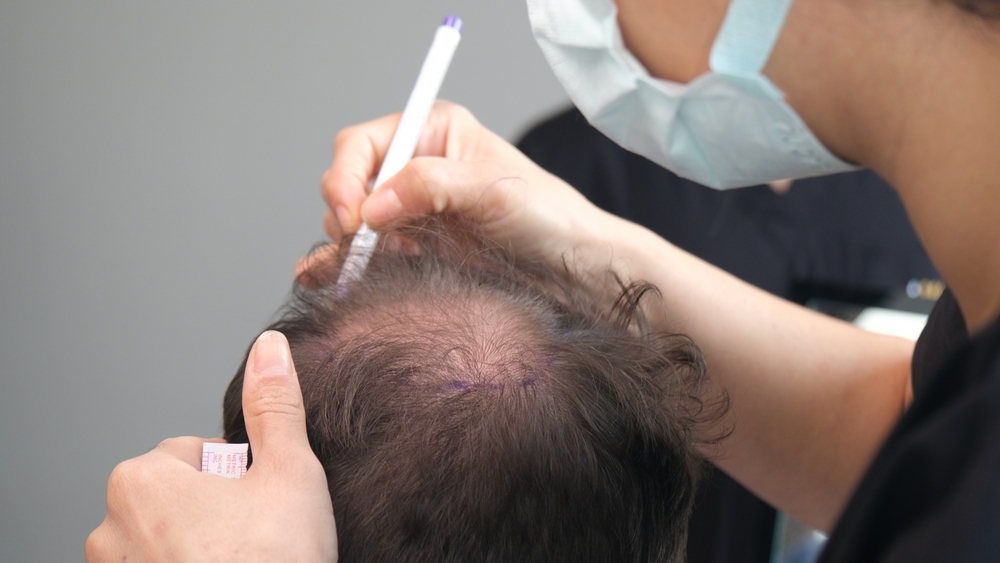
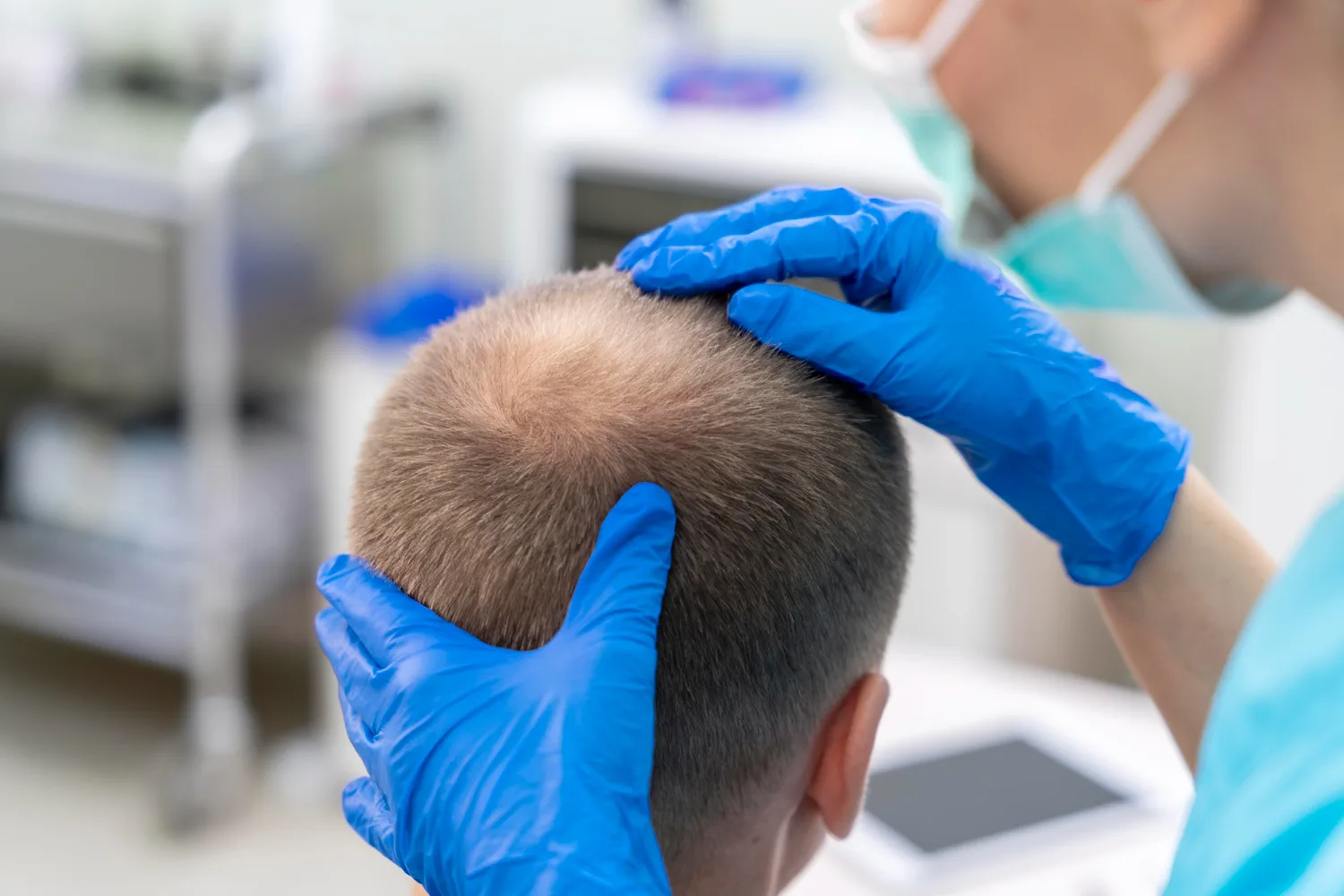
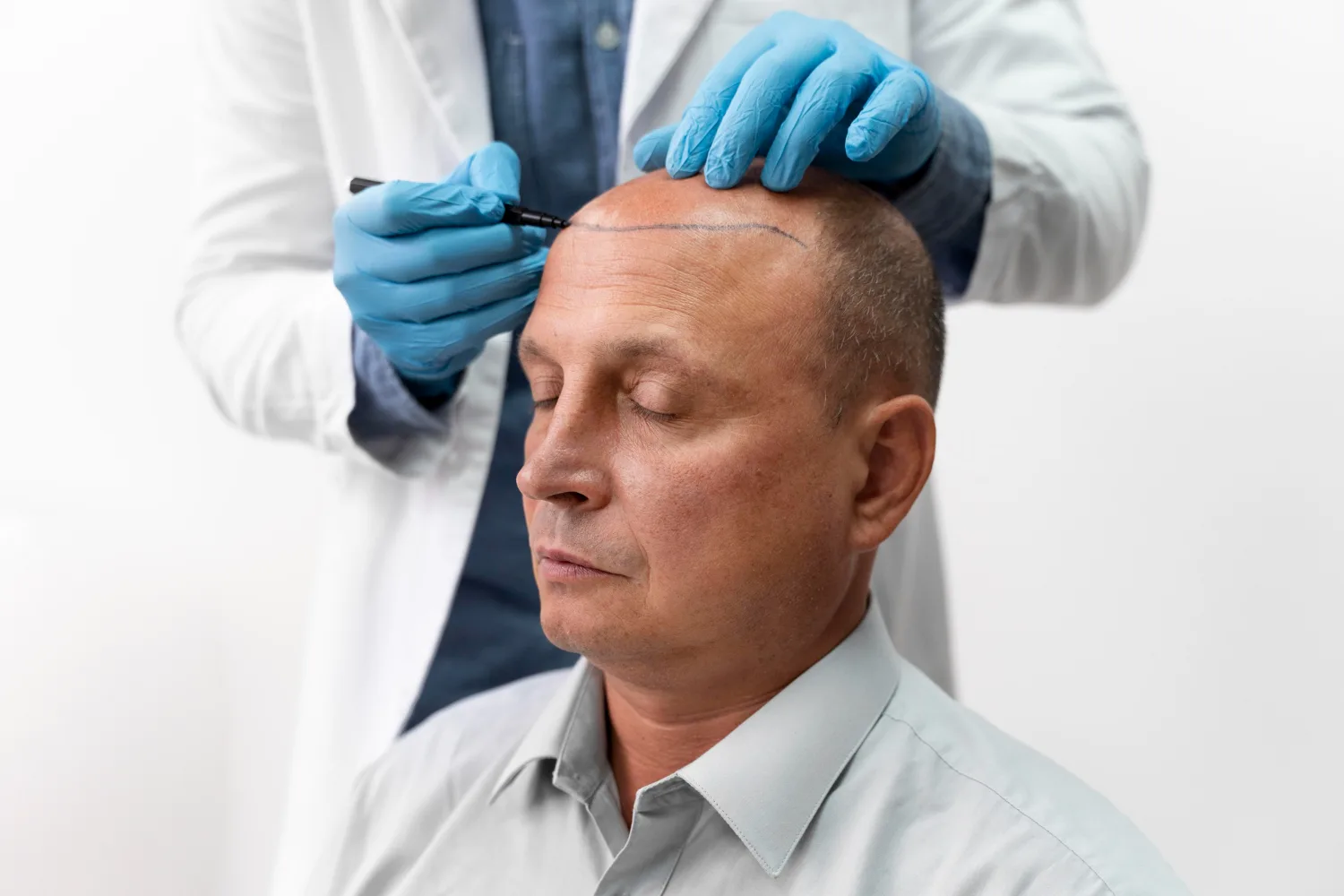
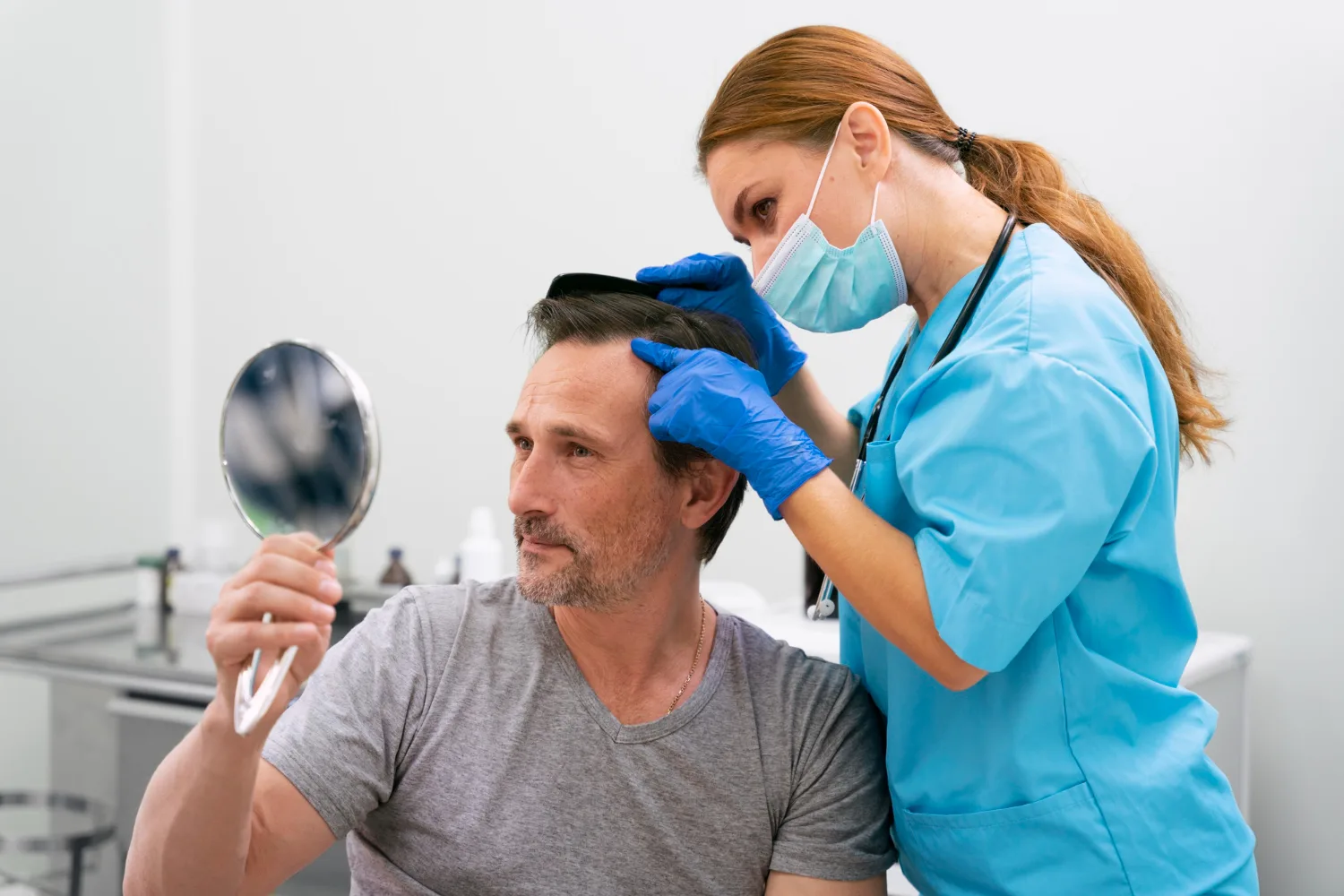
Manual FUE and Motorized FUE both extract individual follicular units from the donor area. Neither technique guarantees superior results on its own. The surgeon's skill, patient hair characteristics, and graft requirements determine the best choice. This article examines both methods using scientific evidence and clinical data.
Follicular Unit Extraction (FUE) represents a minimally invasive hair restoration technique. Surgeons extract individual follicular units directly from the donor scalp. They then implant these grafts into thinning or bald recipient areas. FUE has replaced older strip-harvesting methods in most modern clinics.
What Does FUE Mean?
FUE stands for Follicular Unit Extraction. This term describes the process of removing hair follicles one by one. Each follicular unit contains one to four hair shafts. Surgeons use small cylindrical punches to isolate and extract these units. The acronym FUE distinguishes this approach from Follicular Unit Transplantation (FUT). FUT removes a strip of scalp tissue. FUE avoids linear scarring entirely.
How Does the FUE Procedure Work?
The FUE procedure follows a clear sequence. First, the surgical team shaves the donor area. They then administer local anesthesia to numb the scalp. Next, they use a small punch tool to score the skin around each follicular unit. They gently extract each graft using forceps. The team places extracted grafts in a preservation solution. Finally, they create tiny recipient sites and implant the grafts. The entire process requires precision at every stage.
Why Has FUE Become the Gold Standard for Modern Hair Restoration?
FUE has become the gold standard for several reasons. Patients prefer FUE because it leaves no linear scar. Surgeons can harvest grafts from various donor zones. Recovery time remains shorter than with strip methods. FUE also allows patients to wear very short hairstyles. The technique accommodates diverse hair types and ethnicities. Modern patients demand natural results with minimal visible traces. FUE meets these demands effectively.
Several factors determine FUE success beyond the extraction tool. Surgeon experience ranks first. Proper graft handling during extraction and placement matters enormously. Patient selection influences outcomes significantly. Donor hair density, hair caliber, and scalp laxity all play roles. Postoperative care affects graft survival directly. The implantation technique proves equally important as the harvesting method.
What Is the Difference Between Manual FUE and Motorized FUE?
Manual FUE and Motorized FUE differ primarily in the extraction mechanism. Manual FUE relies on hand-powered rotation. Motorized FUE uses an electric micromotor to spin the punch. Both techniques achieve the same fundamental goal. They remove intact follicular units from the donor area.
What Is Manual FUE?
Manual FUE involves a surgeon rotating a handheld punch tool manually. The surgeon grips a sharp or blunt punch between the thumb and fingers. They rotate the tool back and forth to score the skin. They then extract the graft with forceps. The surgeon controls every movement through direct tactile feedback. No electric device assists the rotation.
What Is Motorized FUE?
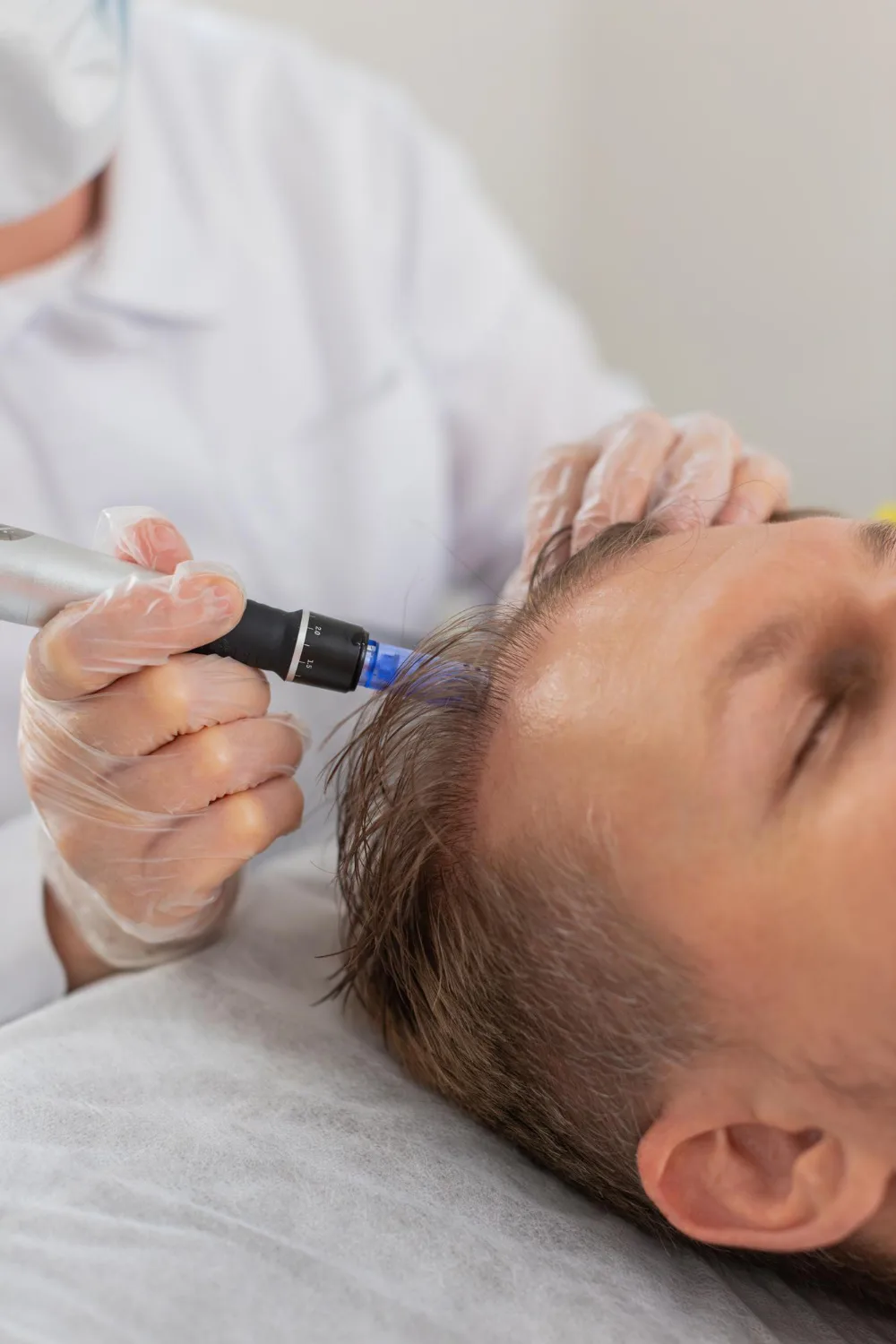
Motorized FUE uses a small electric micromotor to rotate the punch. The surgeon holds a pen-like handpiece connected to a control unit. The micromotor spins the punch at adjustable speeds. The surgeon guides the handpiece into the scalp. The device performs the rotational scoring automatically. The surgeon controls depth, angle, and pressure.
Both techniques extract follicular units through the same core principle. A cylindrical punch surrounds the follicle bundle. The punch penetrates the skin to a specific depth. It separates the follicular unit from surrounding tissue. The surgeon then lifts the graft free. Both methods require careful angulation to follow the natural hair direction.
What Equipment Is Used in Each Technique?
Manual FUE uses simple handheld instruments. These include sharp punches, blunt punches, and extraction forceps. Punch diameters typically range from 0.8 mm to 1.2 mm. Motorized FUE requires additional equipment. Surgeons use a micromotor control box, handpiece, and specialized punch tips. Some systems offer adjustable rotation speeds and oscillation modes.
The implantation phase remains identical regardless of extraction method. Surgeons create recipient sites using blades or needles. They then place grafts into these sites. The extraction technique does not change the implantation process. Both Manual FUE and Motorized FUE produce grafts that require the same careful placement.
How Does Manual FUE Work?
Manual FUE demands exceptional hand dexterity and concentration. The surgeon performs every extraction movement personally. This direct control offers unique advantages in specific cases.
The surgeon extracts grafts manually through controlled rotation. They align the punch with the hair angle. They apply gentle downward pressure. They rotate the punch clockwise and counterclockwise. This motion scores the dermis around the follicle. They then release the graft with forceps. Each extraction takes several seconds.
How Does Tactile Feedback Improve Surgical Precision?
Tactile feedback allows the surgeon to feel tissue resistance. They sense when the punch encounters the follicle bulb. They adjust pressure instantly based on this feedback. They detect variations in scalp thickness. They recognize when a follicle curves beneath the surface. This sensory information guides micro-adjustments that machines cannot replicate.
Why Does Surgeon Experience Matter More in Manual FUE?
Surgeon experience matters more because no device compensates for poor technique. The surgeon must judge depth, angle, and pressure entirely by hand. Beginners struggle to maintain consistent rotation speed. Experienced surgeons develop muscle memory. They extract grafts with minimal transection through years of practice. The learning curve for Manual FUE proves steeper than for Motorized FUE.
What Are the Typical Punch Sizes Used in Manual FUE?
Manual FUE typically employs punches between 0.8 mm and 1.0 mm in diameter. Some surgeons prefer 0.9 mm for standard cases. Smaller punches suit fine hair or limited donor reserves. Larger punches up to 1.1 mm may harvest multi-hair grafts. The surgeon selects punch size based on follicle characteristics.
How Does Motorized FUE Work?
Motorized FUE streamlines the extraction process through mechanical assistance. The electric micromotor provides consistent rotational force. This automation changes the surgeon's role from performer to guide.
How Does a Micromotor-Assisted Punch Function?
A micromotor-assisted punch functions through controlled electric rotation. The motor spins the punch at speeds between 500 and 2,000 revolutions per minute. Some devices offer oscillating modes that rotate back and forth. The punch tip cuts through tissue with minimal manual force. The surgeon guides the handpiece while the motor executes the rotation.
Motorized extraction increases efficiency through speed and consistency. The motor maintains uniform rotation speed. Surgeons do not fatigue from repetitive wrist motion. They extract grafts more rapidly. A typical Motorized FUE session harvests 2,000 to 3,000 grafts in a single day. Some mega sessions reach 4,000 grafts or more.
Can Motorized Systems Reduce Surgeon Fatigue?
Motorized systems reduce surgeon fatigue significantly. Manual rotation requires constant wrist and finger movement. This repetition strains muscles over long sessions. The micromotor handles the rotational work. The surgeon focuses on positioning and depth control. Reduced fatigue may improve consistency during lengthy procedures.
What Technologies Are Commonly Used in Motorized FUE?
Common Motorized FUE technologies include various micromotor systems. Some devices offer adjustable speed controls. Others provide torque settings for different tissue densities. Certain systems feature dull punch options that reduce transection. Advanced handpieces include depth stops to prevent over-penetration. Manufacturers continue refining these technologies.
How Do Manual FUE and Motorized FUE Compare?
Direct comparison reveals distinct strengths for each technique. The optimal choice depends on patient needs and surgical goals.
Comparison Table
|
Feature
|
Manual FUE
|
Motorized FUE
|
|
Extraction mechanism
|
Hand rotation
|
Electric micromotor
|
|
Surgical precision
|
High tactile control
|
Consistent mechanical rotation
|
|
Speed
|
Slower (800-1,500 grafts/day)
|
Faster (2,000-4,000+ grafts/day)
|
|
Graft quality
|
Excellent in expert hands
|
Excellent with proper settings
|
|
Transection risk
|
Low with experience
|
Low with correct technique
|
|
Donor area preservation
|
Excellent
|
Good to excellent
|
|
Healing time
|
Similar
|
Similar
|
|
Large session suitability
|
Limited
|
Excellent
|
|
Learning curve
|
Steeper
|
Moderate
|
|
Cost considerations
|
Lower equipment cost
|
Higher equipment cost
|
|
Surgeon dependence
|
Manual FUE uses human-powered rotation. Motorized FUE uses electric-powered rotation. This fundamental difference affects speed, control, and tactile feedback.
Surgical Precision
Manual FUE offers superior tactile feedback. Motorized FUE provides consistent mechanical precision. Both achieve high precision in skilled hands.
Speed
Motorized FUE extracts grafts faster. Manual FUE proceeds more deliberately. Speed differences become significant in sessions exceeding 2,000 grafts.
Graft Quality
Both techniques produce high-quality grafts. Graft quality depends more on surgeon skill than on the device. Proper technique preserves follicle integrity in both methods.
Transection Risk
Transection risk remains low in both techniques when performed correctly. Manual FUE allows immediate adjustment upon feeling resistance. Motorized FUE requires proper speed and depth settings to minimize transection.
Donor Area Preservation
Both techniques preserve donor area when executed properly. Punch size and spacing matter more than the rotation method. Conservative harvesting protects long-term donor reserves.
Healing Time
Healing time proves similar between both techniques. Tiny puncture wounds heal within days. Complete donor recovery occurs within two weeks for most patients.
Large Session Suitability
Motorized FUE suits large sessions better. The speed advantage allows more grafts in a single day. Manual FUE becomes physically demanding during mega sessions.
Learning Curve
Manual FUE presents a steeper learning curve. Motorized FUE offers more forgiving initial training. Both require extensive practice for mastery.
Cost Considerations
Motorized FUE involves higher equipment costs. Clinics pass some costs to patients. However, surgeon expertise affects pricing more than the device.
Surgeon Dependence
Both techniques depend heavily on surgeon skill. No device replaces surgical judgment. The surgeon's experience ultimately determines success.
Which Technique Offers Better Graft Survival?
Graft survival depends on multiple factors. The extraction method plays a role, but it does not act alone.
How Does Follicular Transection Affect Graft Survival?
Follicular transection damages the hair follicle. A transected graft may not survive transplantation. Even partial transection reduces viability. Low transection rates correlate with better graft survival. Both Manual FUE and Motorized FUE can achieve transection rates below 5% in expert hands.
Extraction speed can influence graft quality. Rapid extraction may increase mechanical trauma. However, Motorized FUE maintains consistent speed that reduces variable damage. The key factor remains careful handling outside the scalp. Grafts spend minimal time exposed to air in well-organized procedures.
What Does Scientific Literature Say About Graft Survival Rates?
Scientific literature reports comparable survival rates for both techniques. Studies show graft survival exceeding 90% with either method when performed properly. One study by Cole (2016) found no significant difference in survival between manual and motorized extraction. The surgeon's technique outweighs the device choice in determining outcomes.
Why Is Surgeon Expertise More Important Than the Device Itself?
Surgeon expertise matters more because hair transplantation remains a surgical art. Devices do not select the correct extraction angle. They do not adjust for curved follicles. They cannot assess graft quality visually. An expert surgeon achieves excellent results with either tool. A novice surgeon produces poor results regardless of equipment.
Which Technique Produces More Natural Results?

Natural results depend primarily on implantation design. The extraction method influences this indirectly.
How Does Graft Orientation Influence Natural Appearance?
Graft orientation determines how hair grows after transplantation. Surgeons must place grafts at the correct angle, direction, and depth. They must follow natural hair flow patterns. They must vary density across the hairline. These implantation decisions create natural appearance. The extraction method does not change these requirements.
Hairline design depends on artistic planning. Surgeons map the hairline before extraction begins. They consider facial proportions, age, and ethnic characteristics. They create irregular, feathered hairlines. These design principles apply regardless of how grafts were harvested. Both Manual FUE and Motorized FUE provide grafts suitable for refined hairline work.
Does Manual FUE Allow Greater Artistic Control?
Manual FUE allows greater control during extraction. Surgeons can select specific grafts for specific zones. They can choose single-hair grafts for the hairline. They can select multi-hair grafts for mid-scalp density. This selective harvesting supports artistic planning. However, skilled surgeons achieve similar selectivity with Motorized FUE.
Can Motorized FUE Also Achieve Natural Outcomes?
Motorized FUE achieves natural outcomes routinely. The extraction method does not limit implantation artistry. Surgeons using micromotors create natural hairlines daily. The device harvests grafts efficiently. The surgeon designs the aesthetic result during placement.
Which Method Causes Less Trauma to the Donor Area?
Donor area trauma concerns every patient. Both techniques aim to minimize tissue disruption.
How Does Punch Movement Affect Surrounding Tissue?
Punch movement creates a circular incision around each follicle. Sharp punches cut tissue cleanly. Blunt punches separate tissue with less cutting. Motorized rotation may generate slight heat through friction. However, modern devices minimize this effect. Both techniques create small wounds that heal quickly.
Donor overharvesting could occur with any technique if surgeons ignore safe limits. Faster extraction does not cause overharvesting. Poor surgical planning causes overharvesting. Responsible surgeons calculate safe donor reserves before beginning. They maintain adequate spacing between extraction sites. They stop before damaging long-term donor capacity.
How Is Donor Density Preserved?
Surgeons preserve donor density through strategic planning. They extract grafts evenly across the donor zone. They avoid clustering extractions in one area. They respect the safe donor zone boundaries. They calculate total available grafts before starting. These practices protect donor density regardless of extraction method.
What Factors Influence Postoperative Healing?
Postoperative healing depends on wound size, patient health, and aftercare. Smaller punches heal faster. Good circulation promotes recovery. Patients who follow instructions experience smoother healing. Smoking impairs wound healing. Both techniques produce similar healing patterns when using comparable punch sizes.
Is Manual FUE More Precise Than Motorized FUE?
Precision comparisons require nuanced analysis. Each technique offers precision advantages in different contexts.
How Does Tactile Feedback Benefit Difficult Cases?
Tactile feedback benefits difficult cases enormously. Curly hair follicles often curve beneath the skin. The surgeon feels this curvature through the punch. They adjust angle mid-extraction. They detect follicle resistance. They avoid cutting through the bulb. Motorized devices cannot provide this sensory information.
Why Are Curved Follicles More Challenging?
Curved follicles challenge extraction because they do not follow a straight path. A punch aligned with the surface hair may transect the deeper bulb. Surgeons must follow the follicle's actual trajectory. Manual control allows real-time correction. Motorized devices require precise initial alignment.
Manual control improves extraction angle through continuous adjustment. The surgeon feels the follicle path. They redirect the punch accordingly. They make micro-adjustments during each rotation. This dynamic control reduces transection in complex cases.
Which Patients Benefit Most from Maximum Precision?
Patients with curly hair, Afro-textured hair, or fine hair benefit most from maximum precision. These hair types present unique extraction challenges. Previous transplant patients with scarred donor areas also need careful handling. Manual FUE often serves these patients well.
Is Motorized FUE Faster Than Manual FUE?
Speed represents a clear advantage for Motorized FUE. The difference becomes significant in large procedures.
How Many Grafts Can Typically Be Harvested?
Manual FUE typically harvests 800 to 1,500 grafts per session. Experienced surgeons may reach 2,000 grafts. Motorized FUE routinely harvests 2,000 to 3,000 grafts. Some sessions exceed 4,000 grafts. Speed varies based on surgeon pace and graft quality requirements.
Why Is Motorized FUE Preferred for Mega Sessions?
Motorized FUE enables mega sessions because it reduces extraction time. A 4,000-graft session might take 8 hours manually. The same session completes in 5 to 6 hours with motorized assistance. Patient comfort improves with shorter operative times. Surgical team fatigue decreases.
Does a Shorter Procedure Improve Patient Comfort?
A shorter procedure improves patient comfort significantly. Patients remain in one position for hours during FUE. Reduced operative time means less physical strain. Patients tolerate lengthy procedures better when sessions conclude sooner.
Faster extraction can compromise quality if surgeons rush. However, Motorized FUE maintains quality through consistent rotation. The speed increase comes from efficiency, not haste. Quality depends on careful graft handling after extraction. Speed alone does not determine outcomes.
Which Hair Types Are Better Suited for Manual FUE?
Certain hair types present unique challenges that favor Manual FUE.
Curly Hair
Curly hair follicles curve beneath the scalp surface. Manual extraction allows the surgeon to follow this curvature. They adjust the punch angle dynamically. They feel the follicle path through tactile feedback. This adaptability reduces transection in curly hair.
Afro-Textured Hair
Afro-textured hair features curved follicles and curved hair shafts. These characteristics make extraction challenging. Manual FUE provides the control needed for safe harvesting. Surgeons can orient punches to follow the natural curl pattern. They minimize damage to surrounding tissue.
Fine Hair
Fine hair has slender follicles that transect easily. Manual FUE allows gentle, controlled extraction. Surgeons apply minimal force. They detect subtle resistance changes. They preserve fragile follicle structures.
Fragile Follicles
Some patients have inherently fragile follicles. These grafts damage easily during extraction. Manual control enables delicate handling. Surgeons modulate pressure precisely. They avoid crushing or cutting weak follicles.
Previous Transplant Repairs
Repair cases often involve scarred or altered donor areas. Tissue characteristics vary across these zones. Manual FUE adapts to these variations. Surgeons feel differences in tissue density. They modify technique for each extraction site.
Scar Revision Procedures
Scar revision requires extraction from or around scar tissue. Scarred skin behaves differently from normal scalp. Manual FUE provides the sensitivity needed for these challenging cases. Surgeons navigate altered tissue architecture carefully.
Which Patients Benefit More from Motorized FUE?
Motorized FUE serves specific patient populations exceptionally well.
Advanced Baldness
Advanced baldness requires large graft numbers. Patients with Norwood Class 5, 6, or 7 patterns need extensive coverage. Motorized FUE harvests sufficient grafts efficiently. These patients often require 3,000 to 5,000 grafts.
Large Graft Requirements
Patients needing 2,500 or more grafts benefit from motorized speed. Long manual sessions exhaust both surgeon and patient. Motorized extraction completes these cases more practically.
Extensive Norwood Classifications
Higher Norwood classifications indicate more advanced hair loss. These patients need maximum graft utilization. Motorized FUE enables the large sessions required for meaningful coverage.
Patients Seeking Shorter Operative Times
Some patients cannot tolerate lengthy procedures due to medical or personal reasons. Motorized FUE reduces chair time. This benefits elderly patients, anxious patients, and those with back problems.
Multiple-Session Planning
Patients planning multiple future sessions need efficient initial procedures. Motorized FUE preserves surgical team energy. It allows predictable scheduling. Patients complete their restoration journey faster.
How Does Surgeon Experience Influence the Results?
Surgeon experience remains the dominant factor in hair transplant success. No device substitutes for surgical judgment.
Why Is the Surgeon More Important Than the Machine?
The surgeon makes every critical decision. They design the hairline. They select extraction sites. They determine punch depth and angle. They handle grafts during transfer. They create recipient sites. They place each graft individually. A machine performs only one step. The surgeon controls all others.
How Does Experience Reduce Follicular Transection?
Experience reduces transection through pattern recognition. Veteran surgeons anticipate follicle depth. They recognize tissue resistance signatures. They adjust technique based on hair characteristics. They develop consistent hand positioning. These skills develop over thousands of extractions.
Why Should Patients Evaluate the Surgeon Rather Than the Equipment?
Patients should evaluate surgeons because results depend on human skill. A great device in inexperienced hands produces poor outcomes. An experienced surgeon with basic tools achieves excellent results. Patients should review before-and-after photos. They should verify credentials. They should assess the surgeon's specific experience with their hair type.
What Qualifications Should Patients Look For?
Patients should seek board-certified surgeons with dedicated hair restoration training. They should verify membership in professional societies like the International Society of Hair Restoration Surgery (ISHRS). They should review the surgeon's case volume. They should ask about specific experience with their hair characteristics. They should examine patient testimonials and photographic evidence.
What Are the Advantages of Manual FUE?
Manual FUE offers distinct advantages that keep it relevant in modern practice.
Superior Tactile Control
Manual FUE provides unmatched tactile control. Surgeons feel every tissue interaction. They detect follicle curvature. They sense depth changes. This sensory input guides precise extraction.
Manual FUE allows customized extraction angles for each graft. Surgeons adjust to individual follicle paths. They accommodate variations in hair direction. They optimize angle for each unique situation.
Reduced Follicular Damage
Manual FUE can reduce follicular damage in expert hands. Gentle, controlled rotation minimizes trauma. Surgeons stop immediately if they feel resistance. They avoid forcing grafts from resistant tissue.
Better Handling of Complex Donor Characteristics
Manual FUE handles complex donor characteristics better. Variations in hair angle, curl, and depth respond to manual adaptation. Surgeons modify technique graft by graft.
High Precision for Hairline Refinement
Manual FUE enables selective harvesting of single-hair grafts. Surgeons can target specific follicles for hairline zones. This selectivity supports refined aesthetic results.
What Are the Advantages of Motorized FUE?
Motorized FUE has transformed hair restoration practice through efficiency gains.
Motorized FUE extracts grafts significantly faster. The micromotor maintains consistent rotation. Surgeons harvest more grafts per hour. This speed benefits both patient and surgical team.
Greater Efficiency for Large Sessions
Motorized FUE makes large sessions practical. Mega sessions of 3,000 to 4,000 grafts become routine. Patients complete extensive restoration in fewer procedures.
Reduced Physical Fatigue for the Surgical Team
Motorized FUE reduces physical fatigue. The device handles repetitive rotation. Surgeons focus on positioning and depth. Assistants process grafts more efficiently. The entire team maintains performance longer.
Consistent Rotational Movement
Motorized FUE provides consistent rotational movement. Uniform speed reduces variable trauma. Each graft receives similar extraction force. This consistency supports predictable results.
Suitable for High-Volume Procedures
Motorized FUE suits high-volume practices. Clinics serving many patients benefit from efficiency. The technique meets demand without compromising standards.
What Are the Limitations of Manual FUE?
Manual FUE presents practical limitations that affect its application.
Longer Procedure Duration
Manual FUE takes longer. Each graft requires individual hand rotation. Large sessions extend beyond comfortable time limits. Patients spend more hours in the surgical chair.
Higher Dependence on Surgical Skill
Manual FUE depends more on surgical skill. Beginners struggle to maintain consistent technique. The learning curve proves steep. Results vary more between surgeons.
Physical Demands on the Surgeon
Manual FUE places physical demands on the surgeon. Repetitive wrist and finger motion causes strain. Long sessions fatigue the hands. Surgeon stamina limits session length.
Less Practical for Very Large Graft Sessions
Manual FUE becomes less practical for very large sessions. Harvesting 3,000 or more grafts manually exhausts the team. Most surgeons limit manual sessions to moderate graft counts.
What Are the Limitations of Motorized FUE?
Motorized FUE also carries limitations that patients should understand.
Potential Increase in Transection if Improperly Used
Motorized FUE can increase transection if settings are wrong. Excessive speed cuts through follicles. Incorrect depth damages grafts. Improper angle causes more transection than manual errors.
Reduced Tactile Sensation
Motorized FUE reduces tactile sensation. The motor isolates the surgeon from tissue feedback. They cannot feel follicle curvature as clearly. They rely more on visual cues.
Greater Dependence on Correct Device Settings
Motorized FUE depends on correct device settings. Speed, torque, and depth require proper configuration. Different patients need different settings. Incorrect calibration increases complications.
Not Every Patient Is an Ideal Candidate
Motorized FUE does not suit every patient. Some hair types need the adaptability of manual control. Scarred donor areas may challenge motorized devices. The surgeon must select the appropriate tool for each case.
How Do Recovery and Healing Compare?
Recovery and healing prove remarkably similar between both techniques.
Is Postoperative Discomfort Different?
Postoperative discomfort remains similar. Both techniques create tiny puncture wounds. Patients experience mild soreness for a few days. Pain levels depend on session size more than extraction method. Most patients manage discomfort with over-the-counter medication.
Does One Technique Heal Faster?
Neither technique heals significantly faster. Wound size determines healing speed. Both methods use comparable punch diameters. Tiny wounds close within 48 to 72 hours. Scab formation and shedding follow similar timelines.
How Does Donor Recovery Vary?
Donor recovery varies by punch size, not rotation method. Smaller punches heal with less visible marking. Both techniques can use 0.8 mm to 1.0 mm punches. Proper spacing prevents visible thinning. Recovery depends on patient healing capacity and aftercare compliance.
What Should Patients Expect During the First Month?
Patients should expect initial redness in the donor area for one to two weeks. Tiny crusts form around each extraction site. These crusts fall off naturally within ten days. Donor hair regrows within three months. The recipient area sheds transplanted hair within weeks. New growth begins around three to four months post-procedure.
Does One Technique Cost More Than the Other?
Cost differences exist but may not determine value.
What Factors Influence Pricing?
Pricing reflects surgeon expertise, clinic location, and session size. Reputation and demand affect costs. Geographic markets vary widely. Technique choice plays a minor role compared to these factors.
Does Equipment Increase Treatment Costs?
Motorized equipment increases clinic overhead. Devices require purchase, maintenance, and disposable tips. Clinics may charge slightly more for Motorized FUE. However, the difference usually remains modest.
Is Higher Cost Associated with Better Outcomes?
Higher cost does not guarantee better outcomes. Expensive equipment does not replace surgical skill. Patients should invest in surgeon expertise rather than device marketing. The best value comes from experienced practitioners using appropriate techniques.
Should Cost Determine the Treatment Choice?
Cost should not determine the treatment choice. Patients should select the technique that suits their specific needs. Hair characteristics, graft requirements, and surgeon recommendation matter more. Compromising on quality to save money risks poor results.
What Does Scientific Evidence Say About Manual vs Motorized FUE?
Scientific evidence provides important guidance for technique selection.
Findings from Clinical Studies
Clinical studies compare both techniques across multiple parameters. Research by Harris (2012) examined transection rates and found comparable results with proper technique. A study by Cole and Devroye (2016) analyzed graft survival and concluded that surgeon skill predicts outcomes more reliably than device choice. Recent research continues to support this conclusion.
International Society of Hair Restoration Surgery (ISHRS) Perspectives
The ISHRS recognizes both techniques as valid options. The society emphasizes surgeon training over device selection. They encourage patients to seek qualified practitioners regardless of technique. The ISHRS publishes guidelines that apply to both Manual FUE and Motorized FUE.
Evidence Regarding Transection Rates
Evidence shows that transection rates depend primarily on surgeon experience. Studies report transection rates between 2% and 10% for both techniques. Expert surgeons achieve lower rates with either method. Device choice matters less than proper technique.
Evidence Regarding Graft Survival
Evidence regarding graft survival shows no consistent advantage for either technique. Multiple studies document survival rates above 90% with both methods. Graft handling and placement affect survival more than extraction mechanics.
Evidence Regarding Patient Satisfaction
Patient satisfaction depends on aesthetic results, not extraction method. Studies link satisfaction to natural appearance, density, and hairline design. Both techniques produce satisfied patients when performed well.
What Common Myths Exist About Manual and Motorized FUE?
Several myths distort public understanding of these techniques.
Is Manual FUE Always Superior?
Manual FUE is not always superior. It excels in specific cases but proves impractical for others. Motorized FUE achieves equivalent results in many patients. Superiority depends on context, not technique alone.
Is Motorized FUE Completely Automated?
Motorized FUE is not completely automated. The surgeon controls every extraction. They guide the handpiece. They set parameters. They make real-time decisions. The motor assists rotation only. It does not perform surgery independently.
Does Faster Always Mean Lower Quality?
Faster does not always mean lower quality. Motorized speed comes from efficiency, not carelessness. Quality depends on graft handling and placement. Speed and quality can coexist with proper technique.
Does Technology Replace Surgical Expertise?
Technology does not replace surgical expertise. Devices assist surgeons. They do not substitute for training, judgment, or artistry. The human element remains essential in hair restoration.
How Should Patients Choose Between Manual FUE and Motorized FUE?
Patients should make informed decisions based on individual factors.
Hair Characteristics
Curly or Afro-textured hair may favor Manual FUE. Straight hair often suits Motorized FUE. Fine hair may need manual delicacy. Thick hair may tolerate motorized efficiency.
Degree of Hair Loss
Minimal hair loss needs fewer grafts. Either technique works well. Advanced baldness needs large sessions. Motorized FUE may serve these patients better.
Donor Area Quality
Excellent donor quality allows either technique. Scarred or compromised donor areas may need manual precision. The surgeon assesses donor characteristics during consultation.
Number of Grafts Required
Small sessions under 1,500 grafts suit either method. Large sessions over 2,500 grafts often favor Motorized FUE. The surgeon recommends based on realistic harvesting goals.
Previous Procedures
Repair cases need careful evaluation. Scarred tissue challenges extraction. Manual FUE may provide needed sensitivity. The surgeon examines previous surgical sites.
Surgeon Experience
Patients should choose surgeons experienced with their specific case type. A surgeon who excels at Manual FUE for curly hair may serve those patients best. A surgeon skilled in Motorized FUE mega sessions suits advanced baldness cases.
Long-Term Restoration Goals
Patients planning multiple future procedures need conservative donor use. The surgeon must balance current needs against future reserves. Technique choice affects how efficiently grafts harvest.
Frequently Asked Questions About Manual FUE vs Motorized FUE
Is Manual FUE More Successful Than Motorized FUE?
Manual FUE is not inherently more successful. Success depends on surgeon skill and patient factors. Both techniques achieve excellent results in appropriate hands.
Is Motorized FUE Less Damaging to Hair Follicles?
Motorized FUE is not less damaging when used correctly. Both techniques preserve follicle integrity. Damage occurs from poor technique, not from the device itself.
Which Technique Has a Lower Transection Rate?
Neither technique guarantees a lower transection rate. Expert surgeons achieve low rates with both methods. Beginners may struggle more with Manual FUE initially.
Can Both Methods Produce Natural-Looking Hairlines?
Both methods can produce natural-looking hairlines. The implantation phase creates the hairline. Extraction provides the raw material. Artistic placement determines the aesthetic result.
Which Method Is Better for Curly Hair?
Manual FUE often works better for curly hair. The tactile feedback helps navigate curved follicles. However, experienced surgeons using Motorized FUE also succeed with curly hair.
Which Technique Is Recommended for Large Graft Sessions?
Motorized FUE is recommended for large graft sessions. The speed advantage makes mega sessions practical. Patients complete extensive restoration more efficiently.
Does Manual FUE Leave Fewer Scars?
Manual FUE does not leave fewer scars. Scar visibility depends on punch size and spacing. Both techniques use similar punch diameters. Proper technique minimizes scarring in either case.
Is Recovery Different Between the Two Methods?
Recovery is not different between the two methods. Both create comparable wounds. Healing timelines remain similar. Aftercare instructions apply equally.
Does Motorized FUE Increase Graft Survival?
Motorized FUE does not increase graft survival. Survival depends on graft handling and placement. Both techniques achieve high survival rates with proper care.
How Should Patients Decide Which FUE Technique Is Best?
Patients should decide through consultation with a qualified surgeon. The surgeon evaluates hair characteristics, baldness pattern, and donor reserves. They recommend the technique that suits the individual case. Patients should trust professional judgment over marketing claims.
References
Cole, John P. "An Analysis of Follicular Unit Extraction Yield and Transection Rates." Dermatologic Surgery, vol. 42, no. 4, 2016, pp. 524–29.
Harris, James A. "New Methodology and Instrumentation for Follicular Unit Extraction." Facial Plastic Surgery Clinics of North America, vol. 21, no. 3, 2013, pp. 437–47.
Limmer, Bob L. "Micrograft Survival." Dermatologic Surgery, vol. 23, no. 9, 1997, pp. 789–92.
Mayer, Tom, and Richard L. Fleming. "A Qualitative Assessment of Hair Grafts." International Journal of Aesthetic and Restorative Surgery, vol. 1, no. 1, 1993, pp. 27–30.
Onda, M., et al. "Histological Evaluation of Follicular Unit Extraction." Dermatologic Surgery, vol. 34, no. 6, 2008, pp. 744–47.
Rassman, William R., et al. "Follicular Unit Extraction: Minimally Invasive Surgery for Hair Transplantation." Dermatologic Surgery, vol. 28, no. 8, 2002, pp. 720–28.
Unger, Walter P., and Ronald Shapiro. Hair Transplantation. 5th ed., Marcel Dekker, 2011.
Wambier, Carlos G., and Leticia T. Wambier. "Follicular Unit Extraction: A Review of the Newer Technology and Techniques." Surgical and Cosmetic Dermatology, vol. 11, no. 2, 2019, pp. 152–59.
Woods, Raymond, and Angela Campbell. "The FUE Harvesting of Body Hair Grafts." Hair Transplant Forum International, vol. 24, no. 3, 2014, pp. 97–100.
Zontos, George, et al. "Follicular Unit Extraction for Hair Transplantation: A Review of the Current Literature." Journal of Cutaneous and Aesthetic Surgery, vol. 13, no. 2, 2020, pp. 98–105.