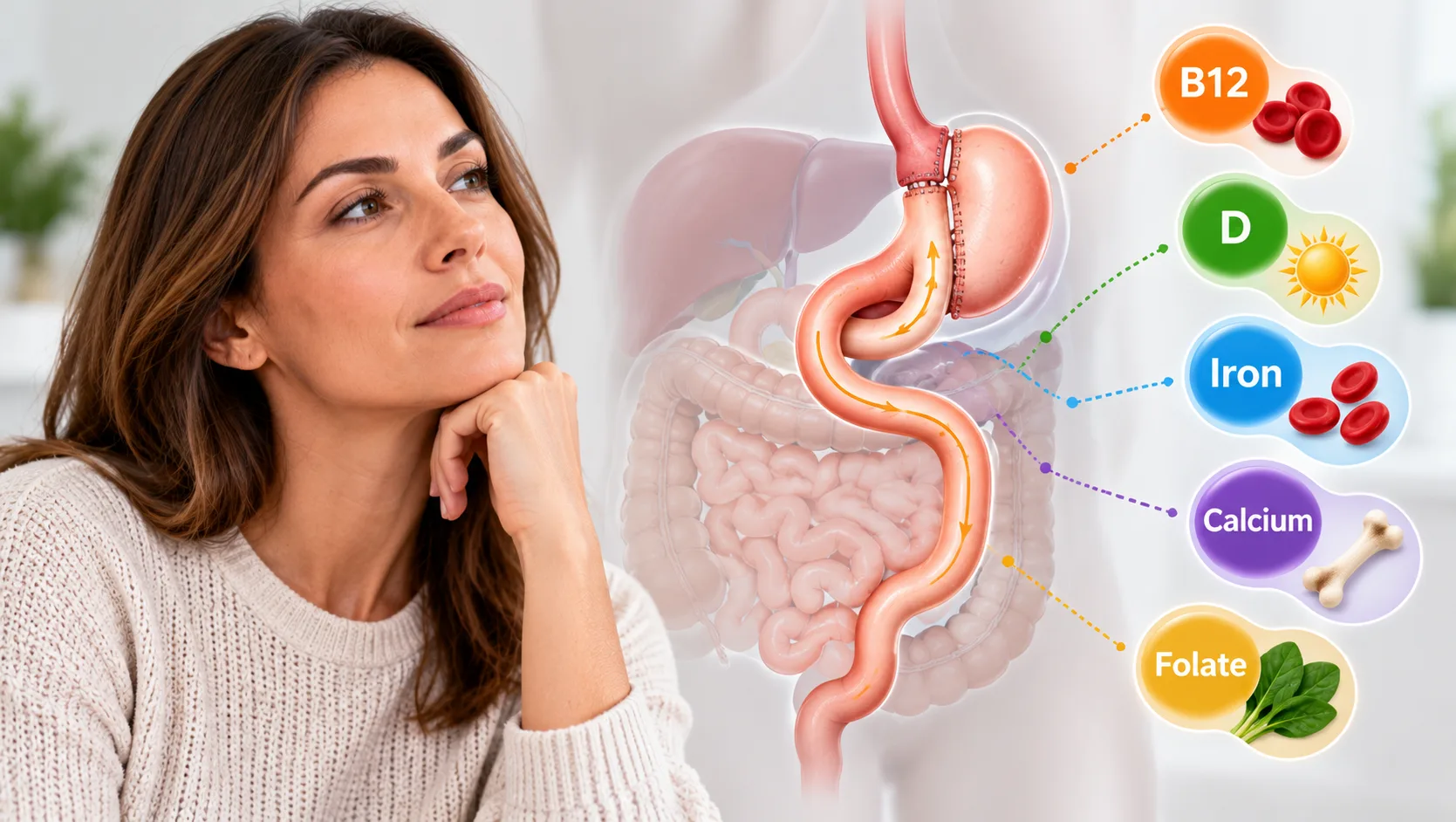
How Does Bariatric Surgery Affect Your Hormones?
Bariatric surgery changes hormones far beyond simple food restriction. It alters gut-derived appetite signals, improves insulin function, reshapes reproductive hormones, and shifts thyroid, growth, and bone-related endocrine activity. Some of these changes drive the benefits of surgery. Others require long-term monitoring.
Why Does Bariatric Surgery Change Hormonal Function?
Bariatric surgery changes hormonal function because it restructures two endocrine organs: the stomach and the small intestine. These organs release hormones that control hunger, satiety, glucose regulation, reproduction, and energy balance.
Modern research reframes the stomach and intestine as endocrine organs, not just digestive tubes (de Hollanda et al., 2015). When surgeons remove the gastric fundus or reroute nutrient flow, they directly change how endocrine cells secrete hormones. The gastrointestinal tract communicates with the brain through the gut-brain axis. So anatomical changes produce immediate endocrine consequences.
The hormonal response also depends on the surgical procedure, the degree of weight loss, nutritional status, and individual biology. This distinction matters: some endocrine changes come directly from the operation, while others follow from weight loss itself. The next section explains how gut-brain communication makes this possible.
How Does the Gut-Brain Axis Respond to Bariatric Surgery?
Bariatric surgery amplifies gut-brain signaling. Altered nutrient delivery stimulates enteroendocrine cells, which release hormones that travel to the brain and change appetite behavior within days of the operation.
The gut-brain axis links the gastrointestinal tract and the central nervous system through neural, hormonal, and metabolic pathways. After Roux-en-Y gastric bypass (RYGB), nutrients reach the distal intestine faster. This accelerated delivery stimulates L-cells in the ileum and colon, which release satiety hormones. Peterli et al. (2009) documented that these hormonal shifts appear within the first postoperative week, long before major weight loss occurs.
Because the brain receives stronger "fullness" signals and weaker hunger signals, patients eat less without conscious effort. These hormonal changes explain why bariatric surgery produces metabolic improvements beyond what calorie restriction alone can achieve. The clearest example of this mechanism involves ghrelin, the primary hunger hormone.
What Happens to Ghrelin After Bariatric Surgery?
Ghrelin typically falls after sleeve gastrectomy because the operation removes most ghrelin-producing tissue. After Roux-en-Y gastric bypass, findings are inconsistent, with studies reporting increases, decreases, or no change.
Ghrelin is an orexigenic hormone. The stomach fundus produces most of it, and circulating levels rise before meals to stimulate hunger. Cummings et al. (2002) first reported that gastric bypass patients showed abnormally low ghrelin levels, reduced meal-related fluctuations, and no diurnal rhythm.
However, later research complicated this picture. Xu et al. (2019) pooled data from multiple studies and found high variability in post-bypass ghrelin responses. The pattern depends on whether the surgical technique preserves contact between nutrients and the gastric fundus, and on whether researchers measure total or acylated ghrelin.
Sleeve gastrectomy shows a more consistent result. Karamanakos et al. (2008) found significant fasting ghrelin suppression after the sleeve procedure, which removes roughly 80 percent of the ghrelin-producing fundus. This suppression contributes to reduced hunger in the early postoperative period. While ghrelin governs hunger, another hormone pair governs the feeling of fullness.
How Do GLP-1 and PYY Influence Appetite After Surgery?
GLP-1 and PYY rise sharply after meals following gastric bypass and sleeve gastrectomy. This surge increases satiety, reduces food intake, and improves glucose regulation.
Glucagon-like peptide-1 (GLP-1) is an incretin hormone. L-cells release it in response to nutrients. It stimulates insulin secretion, inhibits glucagon, slows gastric emptying, and reduces food intake. Peptide YY (PYY), released from the same L-cells, activates hypothalamic pathways that terminate meals.
Jirapinyo et al. (2018) confirmed through meta-analysis that postprandial GLP-1 rises substantially after RYGB. Le Roux et al. (2007) showed that GLP-1 and PYY increases correlate directly with reduced hunger scores and increased fullness after bypass. Importantly, equivalent weight loss through dieting does not produce these hormonal increases (Bose et al., 2010). The change is a surgical effect, not a weight-loss effect.
These hormones also drive the rapid improvements in glucose metabolism that appear after surgery, which the following section examines.
What Changes Occur in Insulin and Blood Sugar Regulation?
Insulin sensitivity improves within days of surgery, often before substantial weight loss occurs. Incretin hormones, especially GLP-1, drive enhanced insulin secretion and support beta-cell recovery.
In type 2 diabetes, bariatric surgery produces glycemic improvements that outpace what equivalent dieting achieves. The mechanism involves three simultaneous events: rising GLP-1 amplifies glucose-dependent insulin release, falling glucagon reduces hepatic glucose output, and improving insulin sensitivity in liver and muscle enhances glucose disposal.
One endocrine complication deserves attention. Some patients develop postprandial hypoglycemia months to years after bypass, driven by exaggerated GLP-1-stimulated insulin release and an inadequate glucagon counter-response during meals. This condition, called hyperinsulinemic hypoglycemia, affects a minority of patients but can significantly disrupt daily life. Improved insulin action pairs closely with changes in the hormone that reports energy stores to the brain: leptin.
How Does Bariatric Surgery Affect Leptin and Energy Balance?
Leptin falls as adipose tissue mass shrinks. This decline reflects reduced fat mass rather than a direct hormonal effect of the operation, and it accompanies improved insulin sensitivity.
Leptin is produced by adipocytes in proportion to fat mass. It signals energy sufficiency to hypothalamic receptors. In obesity, chronically elevated leptin produces central resistance, so the brain stops responding to satiety signals even at high leptin levels.
Substantial weight loss after bariatric surgery lowers circulating leptin substantially, often within the first months. This reduction partly relieves leptin resistance and accompanies improvements in insulin sensitivity and inflammation. In banding patients, leptin dropped from 19.7 ng/mL to 6.9 ng/mL over 12 months alongside 45.7% excess weight loss (Anastasiou et al., 2025).
The key interpretive point: leptin change is a consequence of losing fat tissue, not a direct product of gastrointestinal rearrangement. This same logic, tissue change versus direct surgical effect, becomes essential when examining reproductive hormones.
What Happens to Female Reproductive Hormones After Bariatric Surgery?
Weight loss after bariatric surgery raises sex hormone-binding globulin (SHBG), lowers excess testosterone and estradiol, and often normalizes luteinizing hormone (LH) and follicle-stimulating hormone (FSH) patterns. These shifts improve menstrual regularity for many women.
Obesity distorts female reproductive endocrinology through several pathways. Excess adipose tissue raises aromatization of androgens to estrogens, promotes insulin resistance that stimulates ovarian androgen production, and suppresses SHBG, which frees more testosterone into circulation.
After surgery, weight loss reverses these distortions. SHBG rises, which binds free testosterone. Ovarian androgen production falls as insulin levels decline. LH-to-FSH ratios improve in women with polycystic patterns. Skubleny et al. (2016) confirmed these endocrine shifts in their meta-analysis of women undergoing bariatric surgery.
Not every patient responds identically. Age, menopausal status, baseline ovarian reserve, and the speed of weight loss all modify the hormonal trajectory. These reproductive changes connect directly to one of the most common endocrine disorders in reproductive-age women: PCOS.
Can Bariatric Surgery Affect PCOS, Fertility, and Menstrual Function?
Yes. Bariatric surgery can reduce PCOS prevalence, restore menstrual regularity, and improve fertility. Meta-analysis data show PCOS incidence falling from 45.6% preoperatively to 6.8% at 12 months.
PCOS links obesity, insulin resistance, and androgen excess in a reinforcing cycle. Weight loss interrupts this cycle at multiple points. Skubleny et al. (2016) found that bariatric surgery significantly reduced PCOS, hirsutism, and menstrual irregularity in severely obese women. Mechanistically, falling insulin reduces ovarian androgen production, while rising SHBG lowers free testosterone.
Fertility also improves, but with a critical caveat. Johansson et al. (2015) documented increased pregnancy rates after bariatric surgery alongside higher risks of small-for-gestational-age infants when pregnancy occurs during rapid weight loss. Clinical guidance recommends delaying conception for 12 to 18 months post-surgery.
The improvements in PCOS derive mainly from weight reduction and insulin sensitization, not from a direct hormonal action of the operation itself. Men experience a parallel but distinct reproductive shift.
How Can Bariatric Surgery Change Male Sex Hormones?
Substantial weight loss after bariatric surgery raises testosterone in men with obesity-related hypogonadism. Meta-analysis data show bariatric surgery increases total testosterone more than equivalent dieting.
Obesity suppresses the male hypothalamic-pituitary-gonadal axis through several mechanisms: excess aromatization converts testosterone to estradiol, elevated leptin and insulin blunt gonadotropin-releasing hormone pulsatility, and chronic inflammation damages Leydig cell function.
Corona et al. (2013) analyzed 24 studies and found that body weight loss increased both total and free testosterone, with bariatric surgery producing a larger effect than caloric restriction alone (an 8.73 nmol/L versus 2.87 nmol/L rise). Weight loss also increased gonadotropins, indicating recovery of central hypothalamic signaling.
Men and women do not share identical hormonal responses. Men gain testosterone; women lose excess testosterone. Beyond reproduction, bariatric surgery also shifts the axis that governs growth and tissue maintenance.
What Happens to Growth Hormone and IGF-1 After Bariatric Surgery?
Growth hormone secretion typically recovers after bariatric surgery, but IGF-1 responses are inconsistent. Some studies show IGF-1 rising only after one year, while others show no change.
Obesity suppresses the somatotropic axis. High insulin and free fatty acids blunt growth hormone (GH) release, producing a state called functional hyposomatotropism. This suppression persists despite obesity being a high-energy state.
Al-Regaiey et al. (2020) found that GH levels increased sharply after sleeve gastrectomy while IGF-1 did not change significantly. A larger cohort study showed GH rising within two weeks of surgery, while IGF-1 dipped transiently before recovering at 24 to 52 weeks (Anastasiou et al., 2025). This dissociation suggests nutritional intake, inflammation, and binding protein dynamics modulate IGF-1 independently of GH.
Protein intake and micronutrient status strongly influence this axis. Malnutrition after surgery can keep IGF-1 low even when GH normalizes. Thyroid hormones show a different pattern, one governed largely by metabolic rate changes.
How Does Bariatric Surgery Affect Thyroid Hormones?

Thyroid-stimulating hormone (TSH) typically falls toward normal after bariatric surgery, especially in patients with obesity-related subclinical hypothyroidism. Bariatric surgery does not directly cause thyroid dysfunction.
Obesity elevates TSH through mechanisms involving leptin signaling, insulin resistance, and low-grade inflammation of the hypothalamic-pituitary-thyroid axis. Weight loss reverses this state, and TSH frequently normalizes within months of surgery without any change in thyroid medication.
Patients with pre-existing autoimmune hypothyroidism still require standard thyroid management after surgery. Two factors complicate interpretation: rapid weight loss temporarily alters thyroid hormone binding proteins, and micronutrient deficiencies involving selenium and iron can impair thyroid function.
Clinicians should interpret thyroid labs alongside weight trajectory, nutritional markers, and symptoms rather than in isolation. The parathyroid glands and bone metabolism present a more direct nutritional concern.
What Happens to Parathyroid Hormone and Bone Metabolism?
Parathyroid hormone can rise after bariatric surgery when calcium and vitamin D absorption fall. This condition, called secondary hyperparathyroidism, is one of the most common endocrine complications after bypass procedures.
The parathyroid glands regulate calcium and phosphate through parathyroid hormone (PTH). Bypass procedures, especially those that shorten the common channel, reduce calcium and vitamin D absorption. Falling serum calcium triggers PTH release, which mobilizes calcium from bone to protect blood levels.
This adaptation preserves serum calcium at the expense of skeletal density. Rapid weight loss adds a mechanical and hormonal challenge to bone, since falling estrogen and leptin levels accelerate bone turnover. Research connects gut hormone changes, particularly GLP-1 and PYY, with osteoblast activity, but the skeletal effects of massive weight loss currently outweigh these potential hormonal benefits (Anastasiou et al., 2025).
Postoperative monitoring of calcium, 25-hydroxyvitamin D, and PTH, combined with consistent supplementation, protects bone health. The adrenal axis shows a very different, and far less documented, picture.
Can Bariatric Surgery Affect Adrenal Hormones and Cortisol?
Evidence for adrenal hormone changes after bariatric surgery remains limited and inconsistent. Cortisol changes are not a universal outcome of surgery, and current data do not support strong conclusions.
Cortisol, released by the adrenal glands under hypothalamic-pituitary-adrenal (HPA) axis control, regulates stress responses, blood pressure, and glucose production. Obesity elevates cortisol production in adipose tissue through local regeneration of cortisol by the enzyme 11β-hydroxysteroid dehydrogenase type 1, even when systemic cortisol stays normal.
Whether bariatric surgery normalizes this local cortisol production remains an open question. Some small studies report reduced urinary cortisol metabolites after weight loss, while others show no significant change. Researchers lack large, long-term trials examining the HPA axis after surgery.
The adrenal section of the evidence base is one of the thinnest. This is an honest gap, not a hidden benefit or risk. Hormonal changes also reach beyond glands and organs, into domains like sexual health that combine endocrine and psychosocial factors.
Why Can Hormonal Changes Influence Sexual Health After Surgery?
Bariatric surgery can improve sexual desire, arousal, lubrication, and satisfaction in women, driven by hormonal normalization, improved body image, and better metabolic health.
Reproductive hormones, vascular health, and psychological factors all contribute to sexual function. Weight loss improves endothelial function and increases SHBG, which normalizes androgen availability. It also reduces inflammation and improves self-image.
Youssef et al. (2017) prospectively studied women after bariatric surgery and documented significant improvements in sexual function scores across desire, arousal, lubrication, and satisfaction domains. One caveat matters: this evidence concerns women specifically, and results should not be automatically generalized to men, whose sexual function follows different hormonal logic.
Hormonal changes in these domains do not appear and disappear on a single schedule. Their duration varies considerably.
How Long Do Hormonal Changes Last After Bariatric Surgery?
Some hormonal changes begin within days of surgery, while others develop over months to years. GLP-1 and PYY surge immediately; leptin falls as weight drops; reproductive hormones shift over the first postoperative year.
Longitudinal studies reveal distinct timelines for different axes. Gut hormones change first: GLP-1 and PYY rise within two days of RYGB (Korner et al., 2005). Insulin sensitivity improves within weeks. Leptin falls progressively as fat mass shrinks over months. Reproductive hormones stabilize across the first year as weight stabilizes.
Bone-related changes follow the slowest trajectory, with bone density declining over the first 12 to 24 months before stabilizing. De Hollanda et al. (2015) showed that gastrointestinal hormone elevations persist for years, though their association with weight maintenance weakens over time.
No single clock governs postoperative endocrinology. The procedure type further shapes every one of these timelines.
Do Different Bariatric Procedures Produce Different Hormonal Responses?
Yes. Roux-en-Y gastric bypass and sleeve gastrectomy produce strong gut hormone changes, while adjustable gastric banding produces minimal hormonal disruption.
Hormone | Roux-en-Y Gastric Bypass | Sleeve Gastrectomy | Adjustable Gastric Banding |
Ghrelin | Increases, decreases, or unchanged | Consistently suppressed | No consistent change |
GLP-1 | Strong post-meal increase | Moderate increase | Little to no increase |
PYY | Strong post-meal increase | Moderate increase | Little to no increase |
Insulin sensitivity | Rapid improvement | Rapid improvement | Gradual improvement |
Primary mechanism | Hormonal and restrictive | Hormonal and restrictive | Restrictive only |
The anatomical difference explains the endocrine difference. Bypass and sleeve procedures accelerate nutrient delivery to the distal intestine, which drives L-cell secretion. Banding restricts intake without changing anatomy, so hormone levels remain largely intact. Karamanakos et al. (2008) directly compared RYGB and sleeve gastrectomy and found the hormonal advantage of bypass was strongest in the early postoperative weeks, with the gap narrowing by three months (Peterli et al., 2009).
This comparison shows why treating all bariatric procedures as hormonally identical is a mistake. The same logic applies when weighing benefits against risks.
Which Hormonal Changes Are Beneficial and Which Require Monitoring?
Rising GLP-1, PYY, and improved insulin function count as beneficial changes. Falling leptin supports the metabolic shift. Bone turnover, thyroid function, and glucose extremes require surveillance.
Beneficial changes | Changes requiring monitoring |
Increased GLP-1 and PYY (better satiety) | Secondary hyperparathyroidism (bone loss) |
Improved insulin sensitivity | Vitamin D and calcium deficiency |
Normalized reproductive hormones | Postprandial hypoglycemia |
Rising testosterone in hypogonadal men | Thyroid function shifts |
Rising growth hormone | Nutritional deficiencies affecting endocrine axes |
The balance tilts strongly toward benefit. Better appetite regulation and glucose control resolve major obesity-related diseases. Yet endocrine outcomes are individualized. A patient with strong incretin responses may thrive metabolically while facing significant bone loss. Another may see minimal hormonal disruption but slower weight loss. These individual patterns depend on measurable factors.
What Factors Determine an Individual's Hormonal Response?
The type of procedure, magnitude of weight loss, pre-existing conditions, nutritional adherence, reproductive status, medications, and individual metabolic biology all shape hormonal outcomes.
Each factor operates through a distinct pathway. Procedure type sets the anatomical baseline. Faster, larger weight loss amplifies leptin decline and metabolic adaptation. Pre-existing diabetes, hypothyroidism, or PCOS alter the starting hormonal landscape. Supplementation adherence determines whether the bone and thyroid axes stay stable. Menopausal status modifies reproductive hormone trajectories.
Medications also interact with surgical endocrinology. GLP-1 receptor agonists, thyroid hormone replacements, and corticosteroids each require dose reassessment after surgery. Borg et al. (2006) showed that even the slope of hormone recovery varies between patients with identical procedures.
No algorithm can fully predict an individual response. This unpredictability makes structured follow-up the final determinant of endocrine safety.
How Should Hormones Be Monitored After Bariatric Surgery?
Hormone monitoring should be individualized, based on surgical history and clinical risk. A universal hormone panel does not fit every patient.
Evidence-informed monitoring focuses on specific domains rather than blanket testing:
Glucose regulation: fasting glucose, HbA1c, and post-meal glucose when symptoms suggest hypoglycemia.
Thyroid function: TSH in patients with pre-existing thyroid disease or suggestive symptoms.
Reproductive hormones: testosterone, SHBG, LH, FSH, and estradiol when clinically indicated.
Bone health: calcium, 25-hydroxyvitamin D, and PTH.
Nutritional markers: iron, ferritin, B12, folate, and zinc, since deficiencies distort endocrine function.
Interpretation matters more than measurement. A falling TSH during rapid weight loss may reflect normalization, not hyperthyroidism. A rising PTH may signal malabsorption before symptoms appear. Longitudinal comparison against the patient's own baseline adds more value than population reference ranges. Even with good monitoring, the evidence base itself has limits that patients should understand.
What Does Current Research Still Need to Clarify About Hormonal Changes?
Most bariatric hormone studies show associations, not causation. Long-term data remain scarce, and evidence quality varies sharply between hormonal systems.
Several gaps stand out. First, gut hormone research dominates the literature while adrenal, thyroid, and growth axis data remain thin. Second, most studies follow patients for one to two years, not the decades needed to assess bone and reproductive outcomes. Third, procedure-specific comparisons often lack statistical power to detect modest differences.
Long-term follow-up data present a cautionary example: elevated GLP-1 and PYY levels persist for years after surgery, but their correlation with continued weight maintenance weakens over time (De Hollanda et al., 2015). This suggests other mechanisms, including behavioral adaptation and neural plasticity, share responsibility for long-term outcomes.
Researchers need larger randomized comparisons and standardized hormone assay methods. Until then, clinicians should read the existing evidence for what it is: strong in some domains, preliminary in others.
What Does Bariatric Surgery Mean for the Endocrine System?
Bariatric surgery works as a metabolic intervention that rewires endocrine signaling across multiple body systems. Its hormonal effects produce both the therapeutic benefits and the complications that follow surgery.
Gut hormones, insulin, leptin, reproductive hormones, thyroid function, growth hormone, and bone metabolism do not operate in isolation. They form a connected network, and bariatric surgery alters many nodes at once. Rising GLP-1 and PYY control appetite. Improved insulin function reverses diabetes. Normalized sex hormones restore reproductive health in many patients.
The same intervention also raises PTH, accelerates bone turnover, and occasionally triggers hypoglycemia. These are not contradictions. They are the predictable consequences of changing the body's largest endocrine interface.
Long-term outcomes depend on three commitments: individualized monitoring, consistent nutritional management, and honest follow-up that treats each hormonal axis as its own clinical question.
References
Anastasiou, Ioanna A., et al. "Hormonal Alterations in Individuals with Obesity After Metabolic Bariatric Surgery: A Narrative Review." Medicina, vol. 61, no. 10, 2025, p. 1724.
Al-Regaiey, Khalid A., et al. "Effects of Gastric Sleeve Surgery on the Serum Levels of GH, IGF-1 and IGF-Binding Protein 2 in Healthy Obese Patients." Hormone Research in Paediatrics, 2020.
Borg, Cynthia M., et al. "Progressive Rise in Gut Hormone Levels after Roux-en-Y Gastric Bypass Suggests Gut Adaptation and Explains Altered Satiety." British Journal of Surgery, vol. 93, no. 2, 2006, pp. 210–215.
Bose, Mousumi, et al. "Superior Appetite Hormone Profile after Equivalent Weight Loss by Gastric Bypass Compared to Gastric Banding." Obesity, vol. 18, no. 6, 2010, pp. 1085–1091.
Corona, Giovanni, et al. "Body Weight Loss Reverts Obesity-Associated Hypogonadotropic Hypogonadism: A Systematic Review and Meta-Analysis." European Journal of Endocrinology, vol. 168, no. 6, 2013, pp. 829–843.
Cummings, David E., et al. "Plasma Ghrelin Levels after Diet-Induced Weight Loss or Gastric Bypass Surgery." New England Journal of Medicine, vol. 346, no. 21, 2002, pp. 1623–1630.
De Hollanda, Alberto, et al. "Gastrointestinal Hormones and Weight Loss Maintenance Following Roux-en-Y Gastric Bypass." Journal of Clinical Endocrinology and Metabolism, vol. 100, no. 12, 2015, pp. 4677–4684.
Jirapinyo, Pichamol, et al. "A Meta-Analysis of GLP-1 after Roux-en-Y Gastric Bypass: Impact of Surgical Technique and Measurement Strategy." Obesity Surgery, vol. 28, no. 3, 2018, pp. 615–626.
Johansson, Kari, et al. "Outcomes of Pregnancy after Bariatric Surgery." New England Journal of Medicine, vol. 372, no. 9, 2015, pp. 814–824.
Karamanakos, Spyridon N., et al. "Weight Loss, Appetite Suppression, and Changes in Fasting and Postprandial Ghrelin and Peptide-YY Levels after Roux-en-Y Gastric Bypass and Sleeve Gastrectomy." Annals of Surgery, vol. 247, no. 3, 2008, pp. 401–407.
Korner, Judith, et al. "Effects of Roux-en-Y Gastric Bypass Surgery on Fasting and Postprandial Concentrations of Plasma Ghrelin, Peptide YY, and Insulin." Journal of Clinical Endocrinology and Metabolism, vol. 90, no. 1, 2005, pp. 359–365.
Le Roux, Carel W., et al. "Gut Hormones as Mediators of Appetite and Weight Loss after Roux-en-Y Gastric Bypass." Annals of Surgery, vol. 246, no. 5, 2007, pp. 780–785.
Peterli, Ralph, et al. "Improvement in Glucose Metabolism after Bariatric Surgery: Comparison of Laparoscopic Roux-en-Y Gastric Bypass and Laparoscopic Sleeve Gastrectomy." Annals of Surgery, vol. 250, no. 2, 2009, pp. 234–241.
Skubleny, Daniel, et al. "The Impact of Bariatric Surgery on Polycystic Ovary Syndrome: A Systematic Review and Meta-Analysis." Obesity Surgery, vol. 26, no. 1, 2016, pp. 169–176.
Xu, H. C., et al. "Systematic Review and Meta-Analysis of the Change in Ghrelin Levels after Roux-en-Y Gastric Bypass." Obesity Surgery, vol. 29, no. 4, 2019, pp. 1343–1351.
Youssef, Andrew, et al. "Association of Bariatric Surgery With Women's Sexual Health." JAMA Surgery, vol. 152, no. 7, 2017, e170549.