What Is Graft Transection?
Graft transection means a surgeon accidentally cuts or damages a hair follicle while removing it from the donor area.
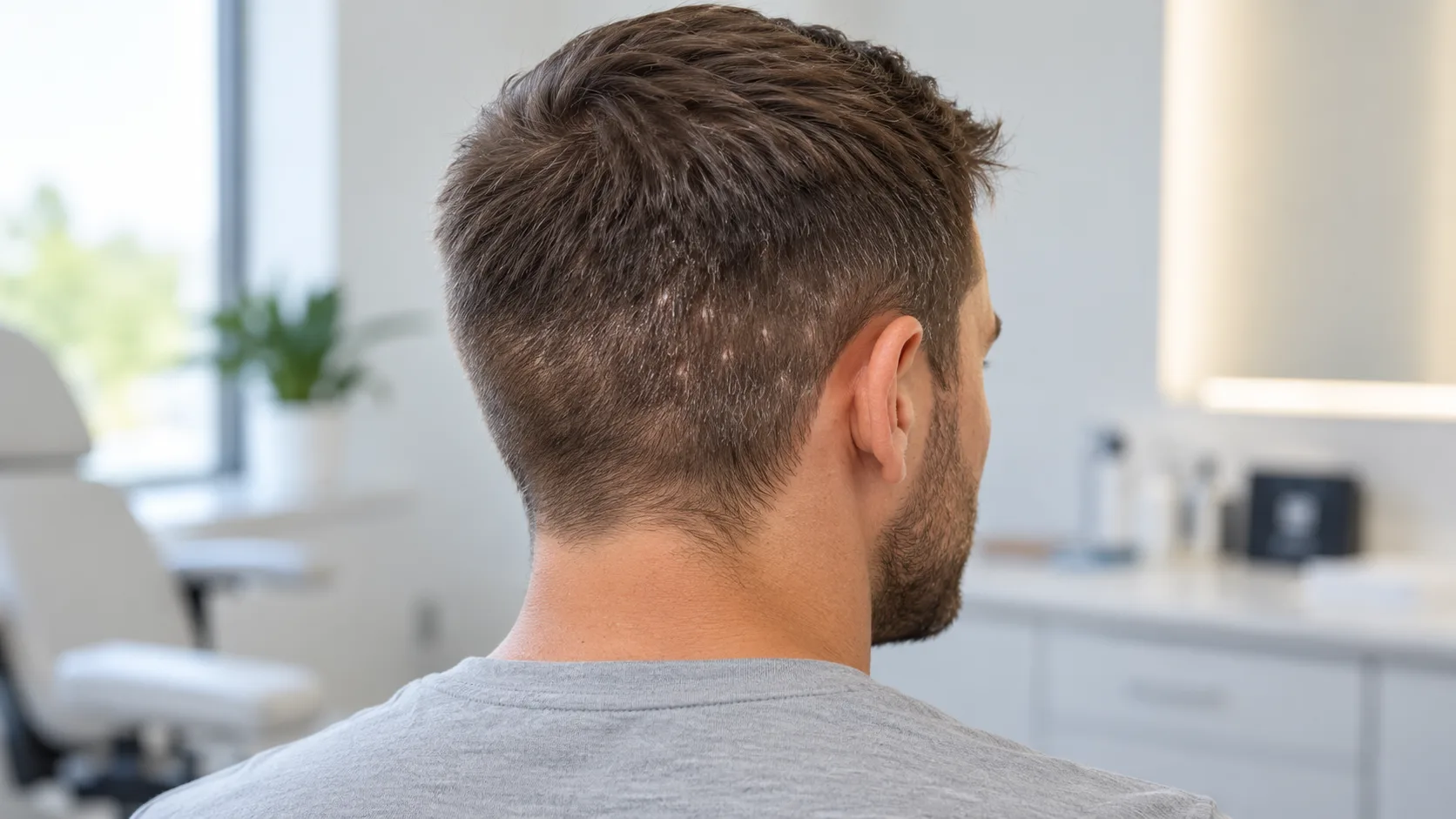
Graft transection occurs when a hair transplant surgeon slices through a follicular unit during harvesting. This damage happens most often during follicular unit excision (FUE). In this procedure, the surgeon removes individual grafts using a small cylindrical punch. The punch can intersect the follicle if the angle, depth, or alignment is wrong. Dua and Dua note that scientific literature identifies follicular transection as one of the principal technical limitations of FUE (2010). When transection happens, the graft loses part of its structure. This injury can reduce graft survival and lower the final hair density. Patients need to understand that graft count does not equal hair count. A clinic may extract 2,000 grafts, but transection can reduce the number of viable hairs that actually grow.
What Is a Hair Graft?
A hair graft is a small piece of tissue that contains one or more hair follicles.
Patients often confuse grafts with individual hairs. This confusion leads to unrealistic expectations. A clear understanding of graft anatomy helps patients evaluate transplant quality.
What Does the Term "Graft" Mean in Hair Transplantation?
In hair transplantation, a graft means a tiny tissue bundle that holds one or more hair follicles.
A graft is a piece of tissue that contains hair follicles. Surgeons extract these grafts from the donor area, usually the back of the scalp. Each graft contains a follicular unit. A follicular unit is a natural grouping of one to four hair follicles that share blood vessels and connective tissue. The follicle itself is the organ that produces the hair shaft. The hair shaft is the visible strand that grows out of the skin. So a graft holds the follicle, and the follicle produces the hair. Bernstein and Rassman explain that follicular transplantation relies on preserving these natural groupings to achieve natural-looking results (2005). When surgeons count grafts, they count these tissue bundles, not individual hairs.
How Many Hairs Can a Graft Contain?
A graft can contain one, two, three, or four hairs.
Grafts vary in their hair content. Single-hair grafts contain one follicle. Two-hair grafts contain two follicles. Three-hair and four-hair grafts contain three or four follicles respectively. Some patients have multi-hair follicular units that contain even more hairs. The composition of grafts affects the final density. A patient who receives 1,000 single-hair grafts gets 1,000 hairs. Another patient who receives 1,000 three-hair grafts gets 3,000 hairs. This difference matters for cosmetic planning. Surgeons place single-hair grafts at the hairline for a natural look. They place multi-hair grafts behind the hairline to add density.
What Does Graft Transection Mean?
Graft transection means the cutting or partial severing of a hair follicle during the harvesting process.
Transection is a form of mechanical injury. It happens when the extraction instrument intersects the follicle. This injury can occur at different levels and with different severity.
How Does Transection Damage a Hair Follicle?
Transection damages a follicle when the punch or blade cuts through the follicular structure below the skin surface.
The surgeon inserts a punch into the skin to encircle the graft. If the punch trajectory does not match the follicle angle, the cutting edge slices through the follicle. Partial transection cuts through part of the follicle. Complete transection severs the follicle entirely. Both types of damage compromise follicular viability. Dua and Dua emphasize that the surgeon must align the punch with the direction of the follicle to avoid this damage (2010). Transection differs from other forms of graft trauma. Crushing happens when forceps compress the graft. Dehydration occurs when grafts dry out outside the body. Rough handling can tear the tissue. Each type of trauma reduces survival, but transection is the most direct form of follicular destruction.
Is a Transected Graft Always Lost?
No, some partially transected grafts may survive, but they often grow weaker or thinner hair.
The outcome depends on the level and extent of damage. Er and colleagues studied transected follicles and found that proximal segments can survive transplantation, but the growth rate is not satisfactory (2006). The researchers transplanted different portions of transected follicles and observed that proximal one-third segments showed a mean regrowth of 3 hairs, while proximal two-thirds segments showed a mean regrowth of 6.2 hairs at the recipient site after one year (Er et al. 2006). However, the transected parts produced thinner hair than original follicles. Surgeons generally aim to preserve intact follicular units. They do not intentionally transplant damaged sections.
Why Does Graft Transection Happen During FUE?
Graft transection happens during FUE because the surgeon must predict the hidden path of each follicle beneath the skin and align the punch perfectly.
FUE requires the surgeon to extract individual follicular units using a punch. The visible hair shaft does not always show the true path of the follicle below the surface.
Why Is the Anatomy of the Hair Follicle Important?
The hair follicle follows a curved or angled path beneath the skin, and the visible shaft does not reveal this hidden trajectory.
Hair follicles extend 4 to 5 millimeters into the dermis and subcutaneous tissue. The follicle often curves or changes direction as it descends. This phenomenon is called follicular divergence. The visible hair shaft emerges from the skin at one angle, but the deeper follicle may point in a different direction. Dua and Dua explain that the punch must cut around the whole follicular unit, which is not a rigid structure but can subtly change angle (2010). This anatomical reality makes FUE extraction inherently challenging. The surgeon must predict the subcutaneous trajectory based on limited surface information.
How Does the Punch Angle Affect Transection?
An incorrect punch angle misaligns the cutting edge with the follicle and causes transection.
The surgeon must align the punch with the underlying follicular trajectory. Incorrect punch orientation is a leading cause of transection. If the punch enters at the wrong angle, the cutting edge intersects the follicle instead of encircling it. Misalignment with the follicular unit occurs when the surgeon misjudges the direction of the hair group. Excessive penetration depth increases the risk of hitting the follicle at a deeper level. The relationship between punch trajectory and follicle direction determines whether the graft comes out intact or damaged.
How Does Punch Size Influence Graft Damage?
A punch that is too small fails to encircle the follicular unit, while a punch that is too large causes unnecessary tissue injury.
Punch diameter affects both transection risk and tissue trauma. A sufficiently large punch diameter encircles the entire follicular unit. A sufficiently small punch diameter minimizes tissue injury and scarring. Surgeons must balance these competing goals. Kuka Epstein and colleagues note that modern FUE uses punches between 0.8 and 1.15 millimeters in diameter, with 0.9 millimeters being the most widely used size (2020). However, no single size works for every patient. Hair caliber, follicular unit density, and skin thickness all influence punch selection.
Can Surgeon Fatigue Increase Transection?
Yes, surgeon fatigue increases transection rates, especially during long procedures.
Ahmad and Mohmand investigated the relationship between procedure duration and transection rates. They found that the surgeon's workload increases hair transection during FUE (2020). As the procedure continues, hand-eye coordination declines. Precision decreases. The surgeon may rush extractions or lose optimal positioning. This evidence shows that lengthy FUE procedures carry higher transection risk in their later stages. Proper scheduling, breaks, and team coordination can help manage this risk.
What Factors Increase the Risk of Graft Transection?

Patient hair characteristics, donor area anatomy, surgical technique, and extraction technology all influence transection risk.
Several factors work together to determine how likely transection becomes. Patients and surgeons should understand these variables.
What Hair and Follicle Characteristics Increase Transection Risk?
Curly hair, sharp follicular angles, deep follicles, and coarse hair increase transection risk.
Curly or tightly curled hair presents a special challenge. The curl continues below the skin surface, making the follicle path harder to predict. Follicular angulation refers to the angle at which the hair emerges from the scalp. Sharp angles require precise punch alignment. Follicular depth varies among patients. Deep follicles require deeper punch penetration, which increases the chance of intersecting the follicle. Hair caliber also matters. Coarse hair occupies more space and may not fit well in a standard punch. These characteristics demand individualized surgical planning.
How Does Donor Area Anatomy Affect Transection?
Different scalp regions have different hair angles and densities, which causes varying transection rates.
Mohmand and Ahmad studied transection rates across different scalp areas. They found that the transection rate was lowest in the mid-occipital zone and higher on the sides of the scalp (2020). The total number of follicular units and hairs was higher in the center zone compared to the sides. The right side showed a transection rate of 17.7 percent, while the left side showed 16.3 percent (Mohmand and Ahmad 2020). These variations occur because hair direction, skin thickness, and follicular density differ between central and lateral donor regions. Surgeons must adjust their technique based on the specific area they are harvesting.
Scalp Region | Transection Rate |
Mid-occipital zone | Lowest rate |
Left side | 16.3% |
Right side | 17.7% |
How Does Surgical Technique and Experience Affect Transection?
Experienced surgeons with proper training, magnification, and controlled extraction speed achieve lower transection rates.
Surgeon training builds the hand-eye coordination necessary for precise punch alignment. Magnification allows the surgeon to see follicular details more clearly. Punch control depends on steady hands and proper instrument handling. Extraction speed matters because rushing increases errors. Team coordination ensures that grafts move quickly from extraction to preservation, reducing overall procedural time. Gupta and colleagues emphasize that innovative FUE methods and proper technique have successfully minimized transection rates (2020).
How Does Extraction Technology Affect Transection?
Modern devices and punch designs reduce transection, but technology cannot replace surgical skill.
Manual FUE relies entirely on the surgeon's hand control. Motorized extraction uses rotating or oscillating punches. Rotational systems spin the punch to cut through tissue. Oscillatory systems move the punch back and forth. Sharp punches cut cleanly but can transect follicles if misaligned. Blunt punches dissect tissue rather than cut it. Hybrid punches combine features of both. Serrated punches have teeth that grip tissue. Flared punches widen at the tip to accommodate the graft. Gupta and colleagues review how punch shapes such as flared, hybrid, and edge out reduce transections by keeping the cutting edge away from the follicles under the skin (2020). Technology helps when surgeons select appropriate tools for each patient. Equipment does not replace expertise.
Punch Type | Design Feature | Effect on Transection |
Sharp | Cutting edge at tip | Higher risk if misaligned |
Blunt | Dull tip dissects tissue | Lower transection, more tissue trauma |
Hybrid | Combines sharp and blunt features | Nearly 50% reduction vs sharp (Devroye 2020) |
Edge out | Thick walls, internal bevel | Directs graft to center, reduces transection |
Flared | Widens at tip | Reduces compression on follicle |
What Is a Transection Rate?
The transection rate is the percentage of follicular units that suffer cutting damage during extraction.
Clinics use this metric to measure surgical quality. Patients should understand how clinics calculate this number.
How Is the Transection Rate Calculated?
Divide the number of transected follicular units by the total extracted follicular units, then multiply by 100.
The formula is simple:
Transection Rate = (Number of Transected Follicular Units / Total Extracted Follicular Units) x 100
However, definitions vary. Some clinics measure graft transection rate. Others measure follicular transection rate. Partial transection counts differently than complete transection. Patients should ask how the clinic defines and measures transection. Percentages mean little without knowing the measurement method.
What Is Considered a Low Transection Rate?
Well-performed FUE can achieve transection rates below approximately 4 percent, though rates vary widely.
Kuka Epstein and colleagues report that properly performed FUE can achieve transection rates below approximately 4 percent (2020). However, individual studies show substantial variation. Rates depend on surgeon experience, technique, punch design, patient anatomy, and study methodology. Patients should be cautious about comparing percentages without knowing how the clinic defines and measures transection. A clinic that advertises a 2 percent rate may use a different counting method than a clinic that reports 5 percent.
How Does Graft Transection Affect Hair Transplant Results?
Graft transection reduces the number of viable hairs that grow, which lowers density and can compromise the aesthetic outcome.
Transection directly impacts the final result. Fewer viable grafts mean fewer growing hairs.
Can Transection Reduce Graft Survival?
Yes, mechanical injury from transection compromises follicular viability and reduces growth potential.
When a punch cuts through a follicle, the injury disrupts the blood supply and cellular structure. This damage reduces the graft's ability to survive after implantation. Transection differs from postoperative shedding or shock loss. Shedding is a normal temporary response to transplantation. Shock loss affects native hairs near the recipient site. Transection is permanent damage to the harvested graft itself. Graft survival also depends on dehydration, hypoxia, blunt trauma, temperature, and handling after extraction. Transection is one of several factors that determine whether a graft lives or dies.
Can Transection Reduce Hair Density?
Yes, transection reduces the effective number of hairs available for implantation, which lowers density.
Each transected graft represents a lost or weakened hair. If a surgeon extracts 2,000 grafts but transects 10 percent, the patient effectively receives fewer viable hairs. The donor area yields less than expected. The recipient area receives fewer growing hairs. This reduction affects the overall density. Patients who need high density for coverage may face disappointing results if transection rates are high.
Can Transection Affect the Final Aesthetic Result?
Yes, higher transection rates reduce the number of successfully growing hairs and can compromise density and coverage.
Aesthetic success depends on hair count, not just graft count. A higher proportion of damaged grafts means thinner coverage. The hairline may look sparse. The crown may lack fullness. The patient may need additional procedures to achieve the desired look. This outcome increases cost, recovery time, and donor area depletion.
How Can Surgeons Minimize Graft Transection?
Surgeons minimize transection through careful donor assessment, correct punch alignment, modern punch designs, magnification, and gentle graft handling.
Multiple strategies work together to protect follicles during extraction.
How Does Proper Donor Assessment Help?
Donor assessment reveals hair angles, density, and skin characteristics before extraction begins.
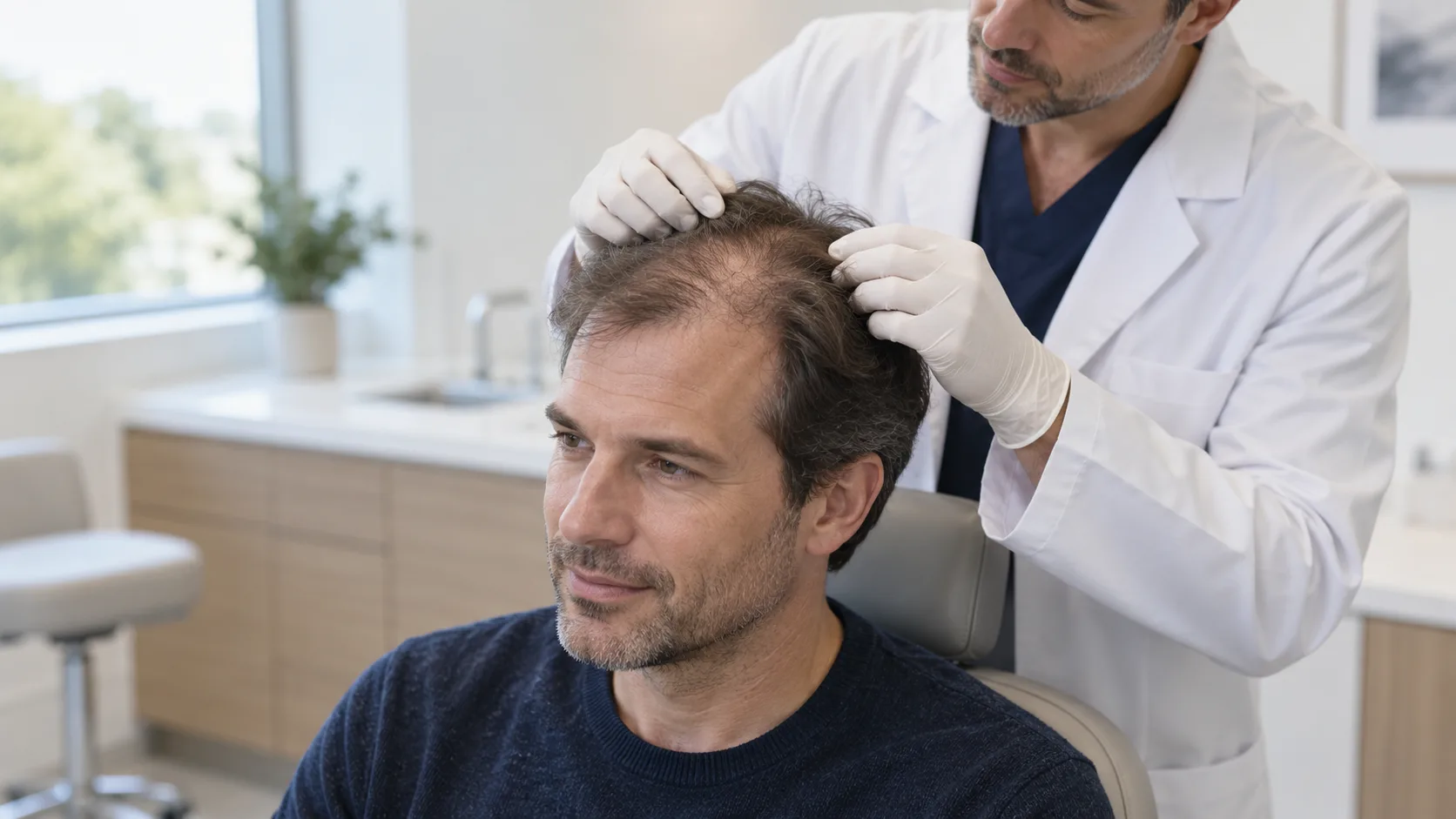
The surgeon should evaluate follicular direction and donor characteristics before starting. This evaluation helps the surgeon decide whether FUE is technically appropriate for the patient. The historical FOX test assessed FUE candidacy by testing extraction in a small area. Difficult follicular anatomy increases the risk of incomplete extraction and transection. Lam emphasizes that safe planning and decision making guide the beginner surgeon to harvest grafts safely and uniformly (2024). Proper assessment prevents the surgeon from proceeding with a technique that carries unacceptably high risk for a particular patient.
How Does Correct Punch Alignment Protect Follicles?
Aligning the punch with the underlying follicular trajectory keeps the cutting edge away from the follicle.
The surgeon should study the hair emergence angle and predict the subcutaneous path. The punch should follow this predicted path. The surgeon should avoid excessive depth. Controlled rotational or oscillatory movements help the punch glide around the follicle rather than through it. Dua and Dua stress that the surgeon must keep the hair shaft in the center of the punch to avoid transection (2010). This alignment requires constant attention and adjustment.
How Do Modern Punch Designs Reduce Transection?
Modern punches use blunt tips, hybrid edges, flared shapes, and serrated designs to keep cutting edges away from vulnerable follicles.
Sharp punches with depth control allow precise scoring of the skin. Blunt punches dissect tissue without cutting follicles. Hybrid punches combine sharp and blunt features. Flared punches widen at the tip to reduce compression. Serrated designs grip tissue without slicing. Trivellini and Gupta introduced the edge out punch, which has thick walls and an internal bevel that places the sharp cutting edge on the outer diameter (2020). This design directs the graft into the center of the punch and keeps the sharp edge away from the follicles deeper in the dermis. Devroye compared sharp and hybrid punches and found that the hybrid punch produced nearly 50 percent reduction in transection rate compared to the sharp punch (2020). These innovations give surgeons better tools for follicle preservation.
Why Is Magnification Important?
Magnification allows the surgeon to inspect follicular anatomy and identify damaged grafts before implantation.
Loupes or microscopes enlarge the surgical field. The surgeon can see the exact angle of hair emergence. The team can examine extracted grafts under magnification. This inspection identifies partially transected or crushed grafts. The clinic can then exclude nonviable grafts from implantation. Quality control at this stage prevents the transplantation of damaged tissue.
Why Does Graft Handling Matter After Extraction?
Proper handling keeps grafts hydrated, cool, and free from additional trauma before implantation.
Once the surgeon extracts a graft, the clock starts ticking. Grafts need moisture to survive. The team should place grafts in a holding solution immediately. They should minimize mechanical manipulation. Forceps can crush delicate tissue. The team should reduce the time grafts remain outside the scalp. Temperature control matters too. Grafts should stay cool but not frozen. These steps protect grafts from additional trauma before implantation.
Can Transected Grafts Be Used in a Hair Transplant?
Completely transected grafts generally should not be used, but partially transected ones may survive with weaker growth.
Clinics must decide whether to implant damaged grafts.
What Happens to Completely Transected Grafts?
Completely transected grafts have poor transplantation potential and clinics usually discard them.
When a punch severs the follicle completely, the graft loses its structural integrity. The follicle cannot establish a new blood supply in the recipient area. The clinic should identify and exclude visibly nonviable grafts. Implanting these grafts wastes recipient site space and gives false hope.
What Happens to Partially Transected Follicular Units?
Partially transected follicles may survive but often produce weaker, thinner, or incomplete hair growth.
Er and colleagues demonstrated that the survival rate of transected hair follicles is directly related to the level of transection (2006). Proximal segments containing more follicular structure showed better survival than distal segments. However, even surviving transected parts produced thinner hair than original follicles. The researchers recommend that surgeons not transplant sectioned parts and remain careful when transection rates run high (Er et al. 2006).
Should Patients Ask How Damaged Grafts Are Counted?
Yes, patients should ask whether quoted graft numbers include extracted, viable, implanted, or only intact grafts.
Transparent graft accounting matters. Some clinics count every extracted graft, including transected ones. Others count only viable grafts suitable for implantation. This difference affects the final hair yield. A patient who pays for 2,000 grafts deserves to know how many were actually usable.
Is Graft Transection the Same as Graft Damage?
No, transection is one specific type of graft damage, but other forms of trauma also threaten graft survival.
Patients should understand the full spectrum of graft injury.
What Is the Difference Between Transection and Mechanical Trauma?
Transection means cutting through the follicle, while mechanical trauma includes crushing, compression, and other physical injuries.
Transection specifically refers to cutting or intersecting follicular structures. Blunt trauma means physical crushing or compression from forceps or rough handling. Dehydration causes loss of viability when grafts dry out. Thermal or chemical injury can occur if grafts encounter extreme temperatures or inappropriate solutions. Multiple types of trauma can occur during the extracorporeal phase. Each type reduces survival in different ways.
Can a Graft Look Intact but Still Be Damaged?
Yes, microscopic injury can damage a graft even when it looks whole to the naked eye.
Visual inspection alone cannot always determine follicular viability. A graft may appear intact under low magnification, but microscopic examination may reveal internal damage to the follicle or surrounding tissue. This hidden injury explains why some grafts fail to grow despite looking healthy during implantation.
Is Graft Transection More Common With FUE?
Yes, FUE carries a specific risk of follicular transection because each graft requires individual punch extraction.
FUE extracts one follicular unit at a time. The punch must encircle each unit without touching the follicle. This requirement creates inherent technical difficulty. In contrast, follicular unit transplantation (FUT) removes a strip of scalp tissue. Technicians then dissect the strip into individual grafts under a microscope. This method allows direct visualization of follicles during dissection. Rassman and colleagues introduced FUE as a minimally invasive alternative but acknowledged its technical challenges (2002). Historical FUE literature identifies higher transection risk as a central technical challenge. Advances in punch design, devices, and surgical technique have substantially improved graft harvesting. Modern literature often uses the term follicular unit excision (FUE) alongside follicular unit extraction.
Feature | FUE | FUT |
Extraction method | Individual punch extraction | Strip removal with microscopic dissection |
Visualization | Blind, surface-guided | Direct stereomicroscopic visualization |
Historical transection risk | Higher | Lower |
Modern advances | Reduced with improved punches | Well-established low rates |
Scarring | Minimal dot scars | Linear scar |
How Can Patients Evaluate a Clinic's Approach to Graft Transection?
Patients should ask about transection rates, measurement methods, surgical technique, and graft accounting practices.
Informed patients make better decisions. Several questions reveal a clinic's commitment to quality.
Should Patients Ask About the Clinic's Transection Rate?
Yes, patients should ask whether the clinic measures transection routinely and how it calculates the rate.
Patients should ask whether the clinic tracks transection. They should ask how the clinic defines transection. They should ask whether the figure refers to partial or complete transection. A clinic that measures and reports this metric demonstrates accountability.
What Should Patients Look for During a Consultation?
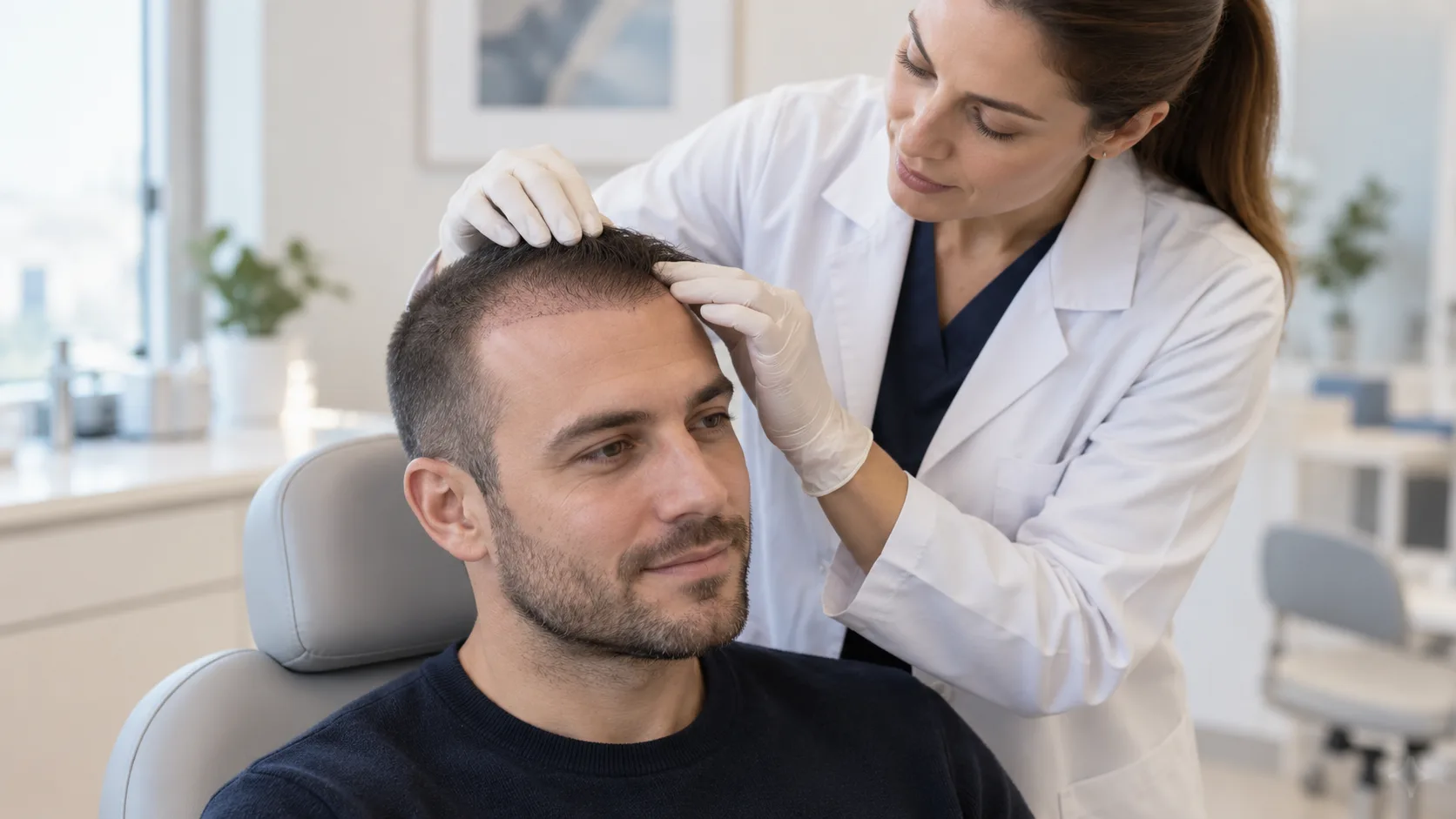
Patients should look for physician-led donor assessment, clear technique explanation, individualized planning, transparent graft counting, and realistic expectations.
The consultation should include a thorough donor examination by the physician, not just a salesperson. The surgeon should explain the extraction technique clearly. The plan should match the patient's specific hair characteristics. The clinic should explain how it counts grafts. The surgeon should use magnification and appropriate technology. The clinic should set realistic expectations regarding graft survival.
Why Should Patients Avoid Choosing a Clinic Based Only on Graft Numbers?
Graft quantity does not equal hair quantity, and high graft numbers with high transection rates yield poor results.
A clinic that advertises 4,000 grafts may sound impressive. But if the clinic transects 20 percent of those grafts, the patient receives only 3,200 viable grafts. Worse, if the clinic uses mostly single-hair grafts, the total hair count remains low. Graft composition and follicular integrity matter more than raw numbers. A smaller number of intact, multi-hair grafts can produce better density than a larger number of damaged grafts.
What Are the Most Common Questions About Graft Transection?
Patients commonly ask about permanence, regrowth, acceptable rates, survival impact, prevention, technique comparisons, surgeon experience, implantation of damaged grafts, failure criteria, and success verification.
The following questions appear frequently in patient education materials.
Is Graft Transection Permanent?
Yes, transection causes permanent damage to the harvested follicle.
Once the surgeon cuts through a follicle during extraction, the injury does not heal. The follicle cannot repair itself. The damaged graft either dies or grows weak hair.
Can a Transected Hair Follicle Grow Again?
A completely transected follicle generally cannot grow again, but partially transected proximal segments may produce weak regrowth.
Er and colleagues showed that proximal segments of transected follicles can survive, but the growth rate is not satisfactory (2006). The hair that grows from these segments is thinner than normal.
What Is a Good FUE Transection Rate?
Well-performed FUE can achieve transection rates below approximately 4 percent, though this varies by patient and technique.
Kuka Epstein and colleagues report that properly performed FUE maintains transection under 4 percent (2020). However, patients should not treat this number as a universal guarantee. Individual factors affect every case.
Does Transection Affect Hair Transplant Survival?
Yes, transection directly reduces graft survival by damaging the follicular structure.
Mechanical cutting disrupts the blood supply and cellular architecture. This damage lowers the chance that the graft will establish itself in the recipient area.
Can Transection Be Prevented Completely?
No, even skilled surgeons cannot prevent every transection, but they can minimize it significantly.
FUE is a blind extraction technique. The surgeon cannot see the full follicular path beneath the skin. This limitation makes zero transection impossible. However, proper technique, technology, and experience can reduce rates to very low levels.
Is Transection More Common With FUE Than FUT?
Yes, FUE historically carries a higher transection risk than FUT because FUE extracts grafts blindly while FUT allows microscopic dissection.
FUT removes a strip of tissue. Technicians then dissect individual grafts under direct stereomicroscopic vision. This visualization reduces transection. FUE relies on surface cues to guide the punch. This blind nature creates higher inherent risk.
Does an Experienced Surgeon Have a Lower Transection Rate?
Yes, experienced surgeons generally achieve lower transection rates through better technique and judgment.
Ahmad and Mohmand found that workload and fatigue increase transection, implying that controlled, experienced performance reduces errors (2020). Surgeons with extensive FUE experience develop better hand-eye coordination and angle prediction skills.
Can Transected Grafts Be Implanted?
Clinics generally should not implant completely transected grafts, and they should use partially transected ones with caution.
Implanting damaged grafts wastes recipient sites. The patient gets no benefit from nonviable tissue. Clinics should inspect grafts under magnification and discard severely damaged ones.
Does Graft Transection Mean the Hair Transplant Has Failed?
No, a low level of transection does not mean the transplant failed, but high transection rates can compromise results.
Some transection occurs in nearly every FUE procedure. The key is keeping the rate low enough that the remaining viable grafts still achieve the desired density. If transection rates are excessive, the final result may fall short of expectations.
How Can I Know How Many Grafts Were Successfully Transplanted?
Ask the clinic for transparent reporting that distinguishes extracted grafts from viable, implanted grafts.
Reputable clinics track these numbers. They can tell you how many grafts they extracted, how many they deemed viable, and how many they actually implanted. This transparency helps you evaluate the true value of the procedure.
What Is the Key Takeaway About Graft Transection?
Graft transection is avoidable mechanical damage during harvesting, and minimizing it is essential for maximizing hair transplant success.
Graft transection means cutting or damaging a hair follicle during extraction. This injury reduces graft survival, lowers hair density, and can compromise the aesthetic result. Low transection is an important component of effective graft preservation. However, it is only one factor that determines hair transplant success. Surgical skill, donor assessment, appropriate technology, careful graft handling, and realistic treatment planning all play vital roles. Patients should evaluate graft quality and viability rather than graft numbers alone. Ask your surgeon about transection rates, measurement methods, and graft accounting. Choose a clinic that prioritizes follicular integrity over marketing claims.
References
Ahmad, Muhammad, and Mohammad Humayun Mohmand. "Effect of Surgeon's Workload on Rate of Transection During Follicular Unit Excision/Extraction (FUE)." Journal of Cosmetic Dermatology, vol. 19, no. 3, 2020, pp. 720-724.
Bernstein, Robert M., and William R. Rassman. "Follicular Unit Transplantation: 2005." Dermatologic Clinics, vol. 23, no. 3, 2005, pp. 393-414.
Devroye, Jean M. "Sharp and Hybrid Punches: A Detailed Comparison of Different Quality Control Markers." Hair Transplant Forum International, vol. 30, no. 1, 2020, pp. 1-6.
Dua, Aman, and Kapil Dua. "Follicular Unit Extraction Hair Transplant." Journal of Cutaneous and Aesthetic Surgery, vol. 3, no. 2, 2010, pp. 76-81.
Er, Ergin, et al. "In Vivo Follicular Unit Multiplication: Is It Possible to Harvest an Unlimited Donor Supply?" Dermatologic Surgery, vol. 32, no. 11, 2006, pp. 1322-1326.
Gupta, Aditya K., et al. "Innovations Hair Restoration Surgeons Have Made to Adapt to the Challenges of Follicular Unit Excision." Journal of Cosmetic Dermatology, vol. 19, no. 8, 2020, pp. 1883-1891.
Kuka Epstein, Gorana, et al. "Follicular Unit Excision: Current Practice and Future Developments." Facial Plastic Surgery Clinics of North America, vol. 28, no. 2, 2020, pp. 169-176.
Lam, Samuel M. "Follicular Unit Excision (FUE) Basics." Facial Plastic Surgery, vol. 40, no. 2, 2024, pp. 158-167.
Mohmand, Mohammad Humayun, and Muhammad Ahmad. "Transection Rate at Different Areas of Scalp During Follicular Unit Extraction/Excision (FUE)." Journal of Cosmetic Dermatology, vol. 19, no. 7, 2020, pp. 1705-1708.
Rassman, William R., et al. "Follicular Unit Extraction: Minimally Invasive Surgery for Hair Transplantation." Dermatologic Surgery, vol. 28, no. 8, 2002, pp. 720-728.
Trivellini, Roberto, and Aditya K. Gupta. "The Edge Out Punch: An Advancement That Reduces Transections in Follicular Unit Excision Hair Transplantation." Journal of Cosmetic Dermatology, vol. 19, no. 9, 2020, pp. 2194-2200.