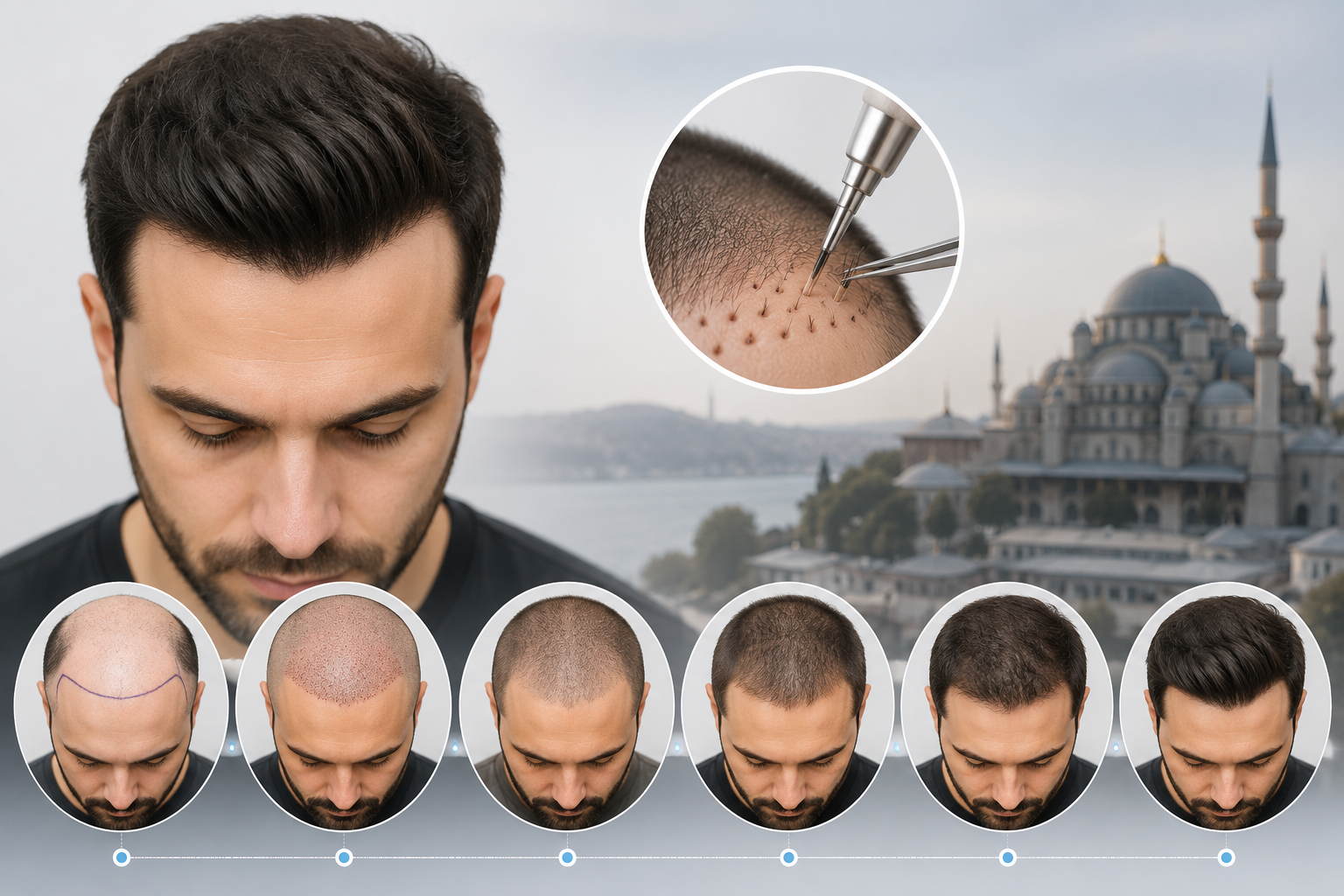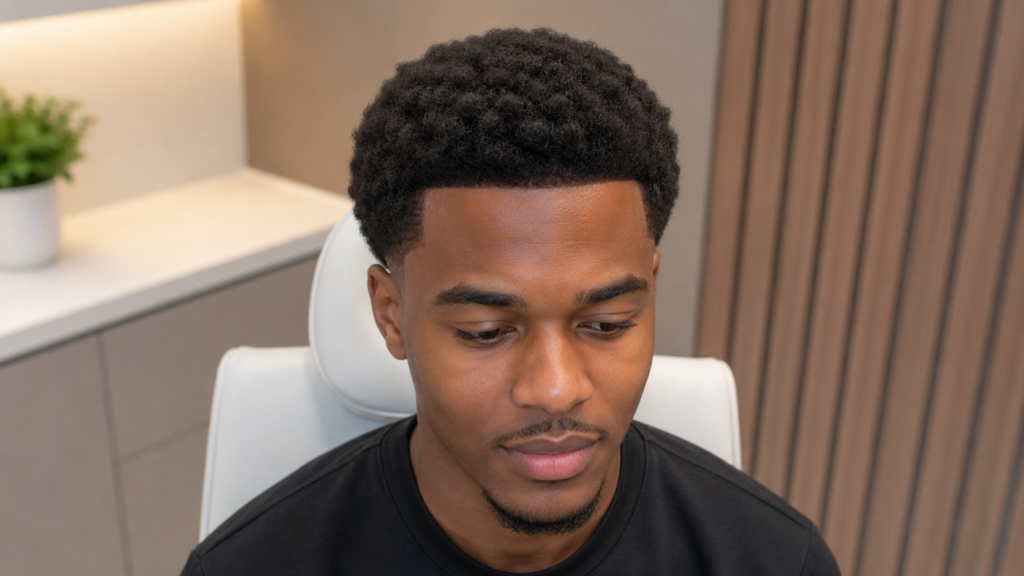
Afro-textured hair demands unique surgical approaches. Turkey has emerged as a leading destination for patients seeking specialized Afro hair restoration. Skilled surgeons in Istanbul and other major cities now offer advanced techniques tailored specifically to curved follicles and tight curl patterns. This article explains every aspect of the procedure. Patients will learn why specialized care matters and how modern clinics deliver natural, lasting results.
What Is an Afro Hair Transplant and Why Does It Require Specialized Techniques?
An Afro hair transplant moves hair follicles from a donor areaThe Source of Restoration The donor area plays a critical role in hair transplantation, as it serves as the source... to thinning or balding regions. This procedure requires modified tools and techniques because Afro-textured hair grows from curved follicles beneath the scalp. Standard methods designed for straight hair often damage these curved roots.
Loussouarn et al. confirmed that Afro hair shows the tightest curl pattern among all ethnic groups (Loussouarn et al., 2007). Bernard established that the hair follicleA hair follicle is a small, tube-like structure embedded in the scalp that produces and grows individual strands of hair.... programs curl shape from the bulb upward (Bernard, 2003). These findings explain why surgeons must adapt every step of the procedure. The curved follicles extend in C-shaped or helical paths under the skin. A straight punch cannot follow this curve. The transection risk rises dramatically when clinics use standard tools.
Turkey attracts thousands of international patients each year. Clinics in Istanbul invest heavily in ethnic hair expertise. Surgeons train specifically on African, African-American, and Afro-Caribbean hair types. They understand that preserving curl pattern requires more than basic extraction skills. Patients choose Turkey because experienced teams offer affordable, high-quality care with specialized protocols.
Why Is Afro Hair Anatomically Different from Other Hair Types?
Afro hair differs from straight or wavy hair at every structural level. These differences start deep within the scalp and extend to the visible shaft.
What Does the Unique Structure of Afro Hair Look Like?
Afro hair features curved follicles beneath the scalp and tight coils above the skin. The hair shaft has an elliptical cross-section rather than a circular one. De la Mettrie et al. documented this elliptical shape across diverse populations and linked it directly to curl intensity (De la Mettrie et al., 2007).
The follicle curves in a C-shape or J-shape under the skin. This curvature continues through the dermis. The curl does not stop at the surface. Thibaut et al. proved that the bulb programs this shape during growth, making the curl an intrinsic biological feature (Thibaut et al., 2005).
Why Do Curved Follicles Make Surgery More Challenging?
Curved follicles increase transection risk during extraction. A straight punch cuts through the curved root. The surgeon loses the graft. Westgate et al. noted that this structural complexity demands specialized instrumentation and training (Westgate et al., 2013).
The follicle also sits at an acute angle. The surgeon must follow the natural curvature. Any deviation damages the bulb. The dermis surrounding Afro hair tends to be thicker and denser. This adds resistance during extraction.
How Does Hair Curl Influence Final Density?
Curly hair creates excellent visual density. Each curl occupies more space than a straight strand. Patients often need fewer grafts to achieve full coverage. The optical density exceeds the actual graft count. This natural volume benefits patients with limited donor reserves.
Who Is an Ideal Candidate for an Afro Hair Transplant in Turkey?
Many patients with Afro-textured hair qualify for transplantation. The surgeon evaluates each case individually.
Which Men Benefit Most?
Men with male pattern hair loss represent the largest group. Receding hairlines and vertex thinning respond well to transplantation. Candidates need stable donor density at the back and sides of the scalp.
Which Women Qualify?
Women with traction alopecia seek restoration frequently. Samrao et al. identified traction alopecia as a leading cause of hair loss in women of African descent (Samrao et al., 2011). Early-stage cases respond best. Women with diffuse thinning also qualify if the donor area remains strong.
Can Patients with Scarring Alopecia Undergo Transplantation?
Selected patients with stable scarring alopecia can receive transplants. The disease must remain inactive for at least one year. Surgeons avoid operating on active inflammatory conditions. McMichael reviewed scarring alopecias in ethnic populations and emphasized the need for careful patient selection (McMichael, 2003).
Do Beard and Eyebrow Restoration Work?
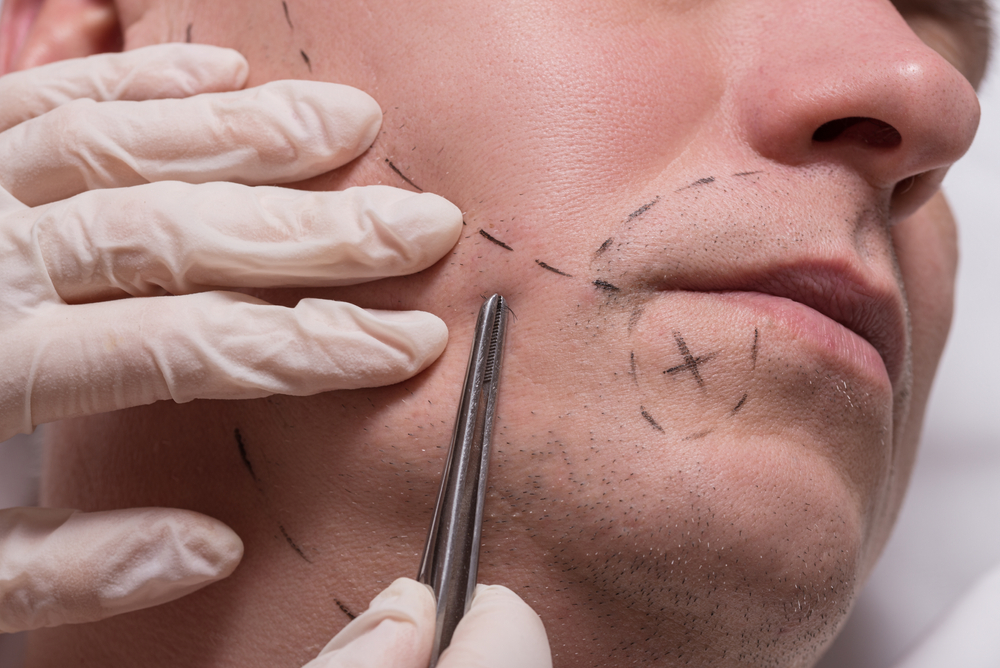
Yes. Patients seeking beard thickening or eyebrow reconstruction benefit from specialized techniques. The surgeon adapts angle and curl direction for each facial zone.
Can Previous Failed Transplants Be Corrected?
Patients with poor results from earlier surgeries often undergo corrective procedures. Surgeons extract new grafts and camouflage old scars. This requires advanced skill but delivers significant improvement.
What Makes Afro Hair TransplantationHair transplantation is a surgical procedure that involves the extraction of hair follicles from a designated donor site, followed by... More Technically Demanding?
Several factors increase the difficulty of Afro hair surgery. Surgeons must address each challenge methodically.
How Does Curved Root Anatomy Affect Extraction?
The C-shaped root extends several millimeters under the skin. The surgeon cannot see the full curvature. A straight punch cuts the follicle at the curve. This destroys the graft. Clinics use larger punch diameters or curved punches to capture the entire follicle.
Why Do Variable Hair Angles Complicate Surgery?
Afro hair exits the scalp at unpredictable angles. The curl direction changes across the scalp. The surgeon must map these angles before extraction. Each graft requires individual angle adjustment.
How Does Thick Dermis Impact the Procedure?
The dermis in Afro-textured scalps tends to be thicker and more fibrous. This increases tissue resistance. The surgeon must apply precise force. Too much pressure damages the graft. Too little leaves the follicle behind.
What Is the Real Risk of Graft Damage?
Transection rates can reach 80 percent with improper technique. Modern clinics reduce this to under 10 percent. Specialized tools and experience make this possible. Grimes emphasized that ethnic hair surgery demands specific expertise to avoid graft loss (Grimes, 2000).
Why Does Experience Matter So Much?
An experienced surgeon recognizes curl patterns instantly. The team adjusts punch size, depth, and angle in real time. This intuition develops only after hundreds of Afro hair cases.
Which Hair Transplant Techniques Are Used for Afro Hair?
Two primary techniques dominate the field. Each offers distinct advantages for Afro-textured hair.
How Does Follicular Unit Extraction Work?
Follicular Unit Extraction, or FUE, removes individual grafts directly from the scalp. The surgeon uses a small punch to isolate each follicular unit. This method avoids linear scars.
How Do Surgeons Modify FUE for Afro Hair?
Surgeons make three key modifications. First, they use larger punch diameters, often 1.0 to 1.2 millimeters. Second, they reduce rotation speed to prevent heat damage. Third, they follow the curved extraction pathway rather than punching straight down.
Bernard explained that the follicle shape demands these adjustments to preserve bulb integrity (Bernard, 2003). The extraction angle matches the natural curl direction. The surgeon moves slowly to avoid transection.
What Are the Advantages of FUE?
FUE leaves tiny dot scars that hide easily. Patients can wear short hairstyles. Recovery takes less time than strip methods. The surgeon can select grafts from across the donor zone.
What Are the Limitations of FUE?
FUE takes longer than strip surgery. The transection risk remains higher without proper tools. Very curly hair may require manual extraction rather than motorized devices.
How Does Direct Hair Implantation Work?
Direct Hair Implantation, or DHI, uses a Choi penThe Tool Behind DHI Success The Choi Implanter Pen is a crucial instrument in DHI procedures, designed to enhance precision... to implant grafts immediately after extraction. The surgeon loads each graft into a hollow needle and inserts it directly into the scalp. This reduces graft handling time.
What Benefits Does DHI Offer for Afro Hair?
DHI minimizes graft exposure to air. The team implants grafts within seconds of extraction. This preserves hydration and reduces trauma. The Choi pen allows precise control over angle and depth.
When Do Surgeons Prefer DHI?
Surgeons prefer DHI for hairline work and dense packing. The pen creates recipient sites and implants simultaneously. This speeds up the procedure and improves graft survival.
How Do FUE and DHI Compare for Afro Patients?
|
Feature |
FUE |
DHI |
|
Extraction method |
Individual punch extraction |
Same extraction, different implantation |
|
Implantation tool |
Forceps or implanter pen |
Choi pen |
|
Graft handling time |
Moderate |
Minimal |
|
Angle control |
Good |
Excellent |
|
Density achievable |
High |
Very high |
|
Best use case |
Large areas, beard work |
Hairline, eyebrows |
What Special Surgical Techniques Are Used for Afro Hair?
Surgeons employ multiple specialized techniques to ensure success.
Which Punch Types Work Best?
Curved punches and larger-diameter punches capture C-shaped follicles. Standard 0.8-millimeter punches fail with tight curls. Clinics often use 1.0 to 1.2-millimeter punches. Some advanced systems use skin-responsive devices that adjust torque automatically.
How Do Customized Extraction Angles Prevent Damage?
The surgeon maps the curl direction before punching. The entry angle follows the follicle curve. This prevents transection. The team may trim the hair almost flush with the scalp to reveal the true exit angle.
Why Does Low-Tension Handling Matter?
Grafts with curved roots break easily. The team handles each graft gently. They avoid squeezing the bulb. Forceps grip the graft below the bulb, never at the root.
What Hydration Protocols Protect Grafts?
The team stores grafts in chilled holding solution. Temperature control maintains cell viability. The solution mimics the natural extracellular environment. Grafts never dry out.
How Do Surgeons Create Customized Recipient Sites?
The surgeon plans curl direction before making incisions. Each site follows the natural hair angle. The team spaces sites to accommodate curl volume. This prevents grafts from competing for space.
Why Is Hairline Design Different for Afro Hair Patients?
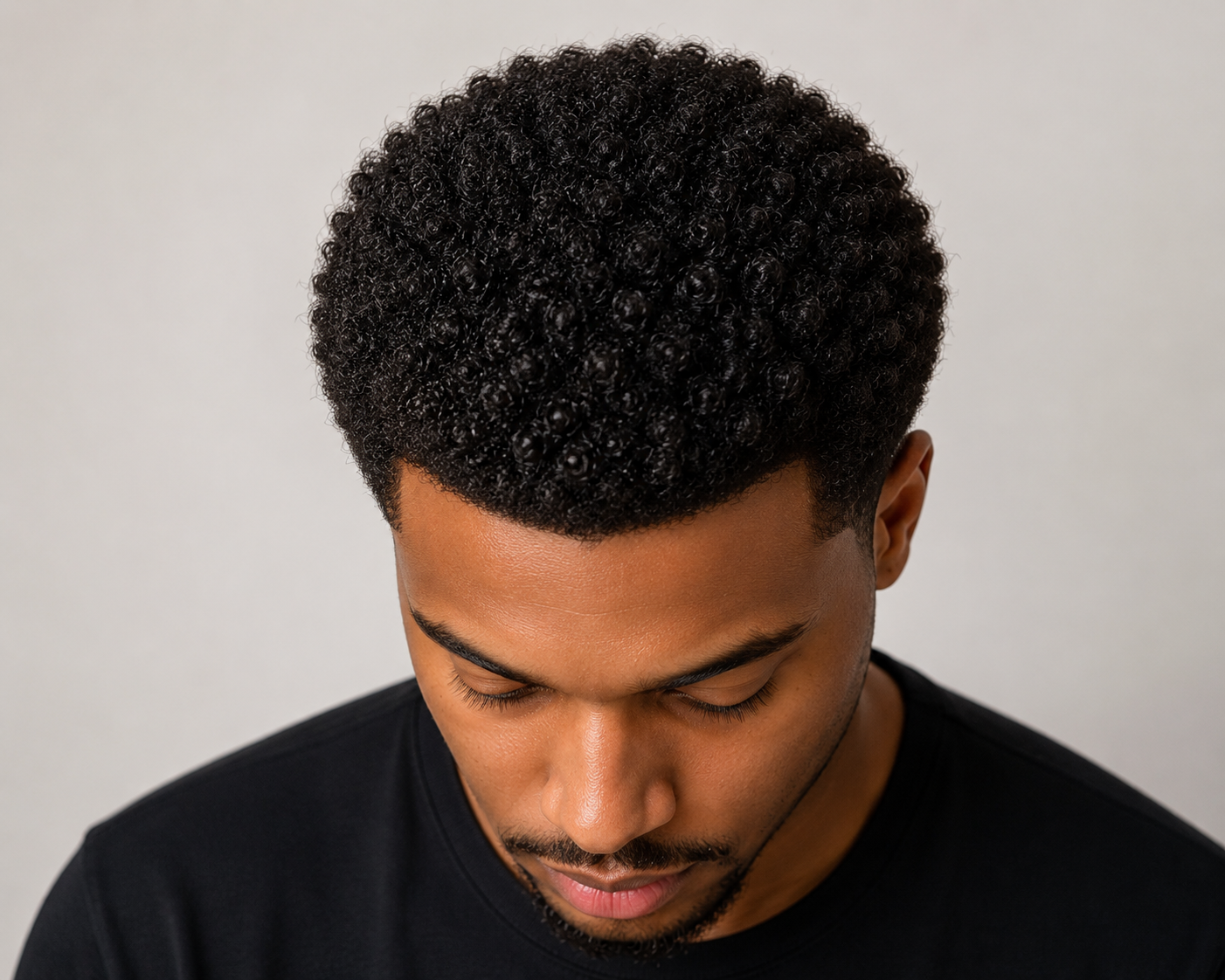
Hairline design requires cultural sensitivity and technical precision.
How Do Surgeons Preserve Ethnic Identity?
The surgeon studies the patient’s natural hairline shape. Afro hairlines often feature a straighter or subtly curved contour. The surgeon avoids overly aggressive recession or unnatural angulation. The goal matches the patient’s ethnic features.
What Role Does Facial Harmony Play?
The hairline frames the face. Surgeons consider forehead height, brow position, and facial proportions. Men often prefer a straight, strong hairline. Women may seek a softer, rounded contour.
How Does Gender Affect Planning?
Male patients typically need temple restoration and frontal density. Female patients often require edge thickening and temporal framing. The surgeon adjusts density and shape accordingly.
Why Does Curl Orientation Matter at the Hairline?
The surgeon must account for how curls fall forward. Each graft points in the direction of natural growth. Incorrect angulation produces awkward sticking or uneven coverage.
How Many Grafts Are Usually Needed?
Graft numbers vary by hair loss severity and curl characteristics.
What Do Mild Cases Require?
Mild hair loss needs 800 to 1,200 grafts. This covers minor hairline recession or small crown thinning.
What Do Moderate Cases Require?
Moderate hair loss needs 1,500 to 2,500 grafts. This restores the frontal zone or mid-scalp.
What Do Advanced Cases Require?
Advanced hair loss may need 2,500 to 3,500 grafts. Some severe cases require multiple sessions.
Which Factors Affect Graft Numbers?
Donor density limits the available supply. Tight curls create more visual coverage per graft. Thick hair shafts block scalp visibility better than fine strands. The surgeon calculates density goals based on these variables.
How Is the Donor Area Evaluated in Afro Hair?
Donor assessment requires careful analysis.
How Do Surgeons Measure Donor Density?
The team counts follicular units per square centimeter. Afro hair often shows lower numerical density than straight hair. However, each follicular unit contains more hairs. This partially compensates for the lower count.
Why Does Curl Pattern Evaluation Matter?
The curl pattern reveals how follicles curve under the skin. The surgeon palpates the scalp and studies trimmed hair. This predicts extraction difficulty.
How Does Hair Shaft Thickness Influence Planning?
Thick shafts provide better coverage. The surgeon notes shaft caliber across the donor zone. Uniform caliber produces consistent results.
What Is Donor Capacity?
Donor capacity means the total number of grafts available without causing visible thinning. Overharvesting creates a moth-eaten appearance. The surgeon sets strict limits.
How Do Surgeons Prevent Overharvesting?
They extract grafts evenly across the donor zone. They leave adequate spacing between extraction sites. They stop when density drops below safe thresholds.
Can Body Hair Be Used in Afro Hair Transplants?
Body hair serves as a secondary donor source when scalp supply runs low.
How Does Beard Hair Perform?
Beard hair grows thick and curly. It resembles scalp hair in texture. Beard grafts survive well and integrate naturally. The jawline and neck provide the best source.
How Does Chest Hair Perform?
Chest hair grows finer and straighter. It has a shorter growth cycle. Chest grafts may not match scalp texture perfectly. Surgeons use chest hair for filling rather than frontal coverage.
When Do Surgeons Recommend Body Hair?
Surgeons recommend body hair for advanced cases with depleted scalp donors. They also use it for scar camouflage and beard restoration.
What Are the Advantages and Limitations?
Body hair expands the donor pool. However, it introduces texture variation. Beard hair retains its curl after transplantation. Chest hair may grow slower and thinner than scalp hair.
What Is the Afro Hair Transplant Procedure Step by Step?
The procedure follows a structured sequence.
What Happens During the Initial Consultation?
The surgeon examines the scalp and reviews the patient’s history. They discuss goals and expectations. They explain the specialized techniques required.
How Does Hair Analysis Work?
The team photographs the scalp from multiple angles. They may use trichoscopy to study follicle density and health. They measure the curl pattern and shaft thickness.
What Does the Medical Assessment Include?
The surgeon reviews medications, allergies, and prior surgeries. They screen for bleeding disorders and keloid tendency. They check for active scalp diseases.
How Does the Surgeon Design the Hairline?
The surgeon draws the proposed hairline with the patient. They consider ethnic features, facial proportions, and age. They mark the recipient zones.
What Happens During Donor Preparation?
The team trims the donor hair short. They apply local anesthesiaEnsuring Comfort During Hair Transplants Sedation is used in hair transplantation to help patients remain calm and comfortable throughout the.... They map extraction angles based on curl direction.
How Does Graft Extraction Proceed?
The surgeon extracts grafts one by one. They use modified punches and slow rotation. They check each graft for damage.
How Do Teams Preserve Grafts?
Technicians place grafts in chilled holding solution. They sort grafts by size and hair count. They keep grafts moist and cool throughout the procedure.
How Do Surgeons Prepare Recipient Sites?
The surgeon creates tiny incisions in the recipient zone. They match the angle and direction of natural hair growth. They space sites to accommodate curl volume.
How Does Implantation Work?
The team places each graft into its designated site. They avoid crushing the bulb. They ensure the curl direction aligns with the surrounding hair.
What Does Postoperative Evaluation Include?
The surgeon reviews the graft placement. They check for bleeding or swelling. They provide immediate aftercare instructions.
How Long Does Recovery Take?
Recovery follows a predictable timeline.
What Happens in the First Week?
The scalp heals from extraction and implantation. Small crusts form around each graft. Patients experience mild swelling and tenderness. The team provides washing instructions.
What Changes Occur in the First Month?
The transplanted hair enters a resting phase. Some shedding occurs. This is normal. The scalp returns to its normal appearance.
What Is the Shock Loss Phase?
Shock loss means existing native hair temporarily falls out. This happens due to surgical trauma. The hair regrows within months.
What Growth Appears at Three Months?
New hair begins to emerge. Early growth looks fine and soft. The curl pattern becomes visible gradually.
What Development Occurs at Six Months?
Significant density builds. The hair thickens and lengthens. Patients see a clear cosmetic improvement.
When Do Final Results Appear?
Final results mature at twelve months. The hair reaches full density and length. The curl pattern settles into its permanent form.
What Results Can Patients Expect?
Realistic expectations help patients appreciate their outcomes.
Does the Transplant Preserve Natural Curl?
Yes. Transplanted hair retains its original curl pattern. The follicle programs the shape from the bulb. The curl does not change after relocation.
What Density Should Patients Expect?
Patients achieve natural-looking density. Curly hair creates the illusion of more volume than straight hair. The final appearance often exceeds numerical expectations.
How Does the Hairline Look?
The hairline looks natural when the surgeon follows ethnic design principles. The curl falls forward in a natural direction. The transition zone looks soft and undetectable.
Are the Results Permanent?
Yes. The transplanted hair comes from genetically resistant donor zones. It continues to grow for a lifetime. Patients may experience ongoing native hair loss, so medical therapy helps preserve overall density.
What Are the Benefits of Choosing Turkey for Afro Hair Transplantation?
Turkey offers distinct advantages for international patients.
Why Does Turkey Offer High Surgical Experience?
Turkish clinics perform thousands of hair transplants annually. Surgeons encounter diverse ethnic hair types daily. This volume builds expertise rapidly.
Where Can Patients Find Specialized Afro Hair Expertise?
Leading Istanbul clinics employ surgeons who train specifically on Afro-textured hair. They study curved follicle anatomy and modified extraction techniques. They attend international conferences on ethnic hair restoration.
What Advanced Technologies Do Clinics Use?
Clinics invest in skin-responsive FUE devices, advanced microscopes, and precision implanters. They maintain sterile, modern facilities. They adopt innovations quickly.
How Do Prices Compare to Western Countries?
Turkey offers treatment at 60 to 80 percent lower cost than the United States or United Kingdom. Patients receive comparable or superior quality. The savings cover travel and accommodation expenses.
What Services Support International Patients?
Clinics provide airport transfers, hotel arrangements, and interpreter services. They offer online consultations before travel. They coordinate follow-up care remotely.
What Should International Patients Know Before Traveling to Turkey?
Preparation ensures a smooth experience.
How Does the Online Consultation Work?
Patients submit photos and medical history through a secure portal. The surgeon evaluates candidacy and estimates graft numbers. They explain the technique and timeline.
Which Medical Documentation Is Required?
Patients bring recent blood tests and a list of current medications. They disclose any history of keloid scarring or bleeding disorders. They inform the team about allergies.
How Should Patients Plan Travel?
Patients arrive one day before surgery. They stay for three to five days total. This allows time for the procedure and initial follow-up.
Where Do Patients Stay?
Clinics partner with nearby hotels. Staff arrange transportation between the hotel and clinic. Patients rest comfortably during recovery.
Do Patients Need Interpreter Services?
Most Turkish clinics employ English-speaking coordinators. Some offer French, Arabic, or other languages. Communication flows smoothly throughout the visit.
What Follow-Up Care Is Available?
The clinic schedules check-ups before departure. They review wound care and washing protocols. They prescribe medications if needed.
How Does Remote Monitoring Work After Returning Home?
Patients send photos at regular intervals. The surgeon tracks progress and answers questions. This continues for twelve months.
What Risks and Challenges Should Patients Be Aware Of?
Every surgical procedure carries risks. Understanding them helps patients make informed decisions.
What Is Follicle Transection?
Transection means cutting the follicle during extraction. The damaged graft cannot grow. Specialized tools and experience reduce this risk significantly.
How Does Overharvesting Harm the Donor Area?
Overharvesting extracts too many grafts from one zone. The donor area looks thin or patchy. Skilled surgeons distribute extractions evenly.
Why Does Poor Hairline Design Matter?
An unnatural hairline looks obvious and disappoints patients. Ethnic hairlines require specific shapes and angles. The surgeon must respect natural patterns.
What Infection Risks Exist?
Infection is rare in accredited clinics. Surgeons use sterile technique and prescribe antibiotics. Patients follow washing instructions to prevent infection.
What Is Shock Loss?
Shock loss means temporary shedding of native hair. It occurs due to surgical trauma. The hair regrows in most cases.
Why Does Growth Sometimes Seem Delayed?
Afro hair grows slightly slower than straight hair. The curl pattern also makes early growth harder to see. Patients must wait the full twelve months before judging results.
How Do Experienced Surgeons Reduce These Risks?
They select appropriate candidates. They use proper instrumentation. They follow strict protocols. They monitor patients closely throughout recovery.
How Can Patients Prepare Before Surgery?
Proper preparation improves outcomes and reduces complications.
Why Does Medical Evaluation Matter?
The surgeon identifies contraindications. They adjust plans for patients with diabetes, hypertension, or bleeding disorders. They ensure the patient can tolerate surgery safely.
Which Laboratory Tests Are Required?
Patients complete blood count, coagulation studies, and infectious disease screening. These tests reveal hidden risks.
How Do Smoking and Alcohol Affect Surgery?
Smoking reduces blood flow to the scalp. This impairs healing. Alcohol thins the blood and increases bleeding risk. Patients stop both for at least two weeks before surgery.
What Hair Care Steps Should Patients Take?
Patients avoid chemical relaxers, tight braids, and heat treatments for one month before surgery. They keep the scalp clean and healthy.
Why Does Medication Review Matter?
Some medications increase bleeding or interact with anesthetics. The surgeon reviews all prescriptions and supplements. Patients may need to pause blood thinners.
How Do Nutrition and Hydration Help?
A balanced diet supports healing. Protein, vitamins, and minerals strengthen hair follicles. Good hydration maintains scalp circulation.
What Are the Essential Aftercare Instructions?
Aftercare protects grafts and speeds healing.
What Does the Washing Protocol Involve?
Patients start gentle washing on day two or three. They use a special shampoo and pour water carefully. They avoid rubbing or scratching the grafts.
Which Sleeping Position Is Best?
Patients sleep with their head elevated for the first week. This reduces swelling. They avoid pressing the grafts against the pillow.
What Activity Restrictions Apply?
Patients avoid heavy exercise for two weeks. They skip swimming and saunas for one month. They protect the scalp from direct sun exposure.
How Important Is Sun Protection?
The sun can darken healing skin. Patients wear hats or use sunscreen after the initial healing period. This prevents hyperpigmentation.
When Can Patients Remove Scabs?
Soft scabs fall off naturally within ten days. Patients do not pick at them. Gentle washing helps them dissolve.
How Do Follow-Up Appointments Work?
The clinic checks healing at one week, one month, three months, six months, and twelve months. They address any concerns promptly.
What Long-Term Hair Care Is Recommended?
Patients avoid tight hairstyles that cause traction. They use mild, moisturizing products. They treat the scalp gently to preserve both transplanted and native hair.
How Does Afro Hair Transplant Compare with Other Hair Types?
Afro hair presents unique surgical characteristics. The table below summarizes key differences.
|
Feature |
Afro Hair |
Straight Hair |
Wavy Hair |
|
Follicle shape |
Curved (C-shaped) |
Straight |
Slightly curved |
|
Surgical difficulty |
High |
Moderate |
Moderate |
|
Transection risk |
Higher |
Lower |
Moderate |
|
Visual density |
High |
Moderate |
Moderate |
|
Specialized tools required |
Yes |
Sometimes |
Sometimes |
|
Grafts needed for coverage |
Fewer |
More |
Moderate |
|
Keloid risk |
Elevated |
Lower |
Lower |
|
Hairline design |
Ethnic-specific |
Universal |
Universal |
What Are the Most Common Myths About Afro Hair Transplants?
Misinformation prevents patients from seeking help. Here are the facts.
Does Afro Hair Resist Transplantation?
No. Afro hair transplants successfully every day. Surgeons simply need the right techniques. Thousands of patients achieve excellent results annually.
Does the Procedure Destroy Curl Pattern?
No. The transplanted hair keeps its natural curl. The follicle bulb determines the shape. Relocation does not alter this biology.
Is FUE the Only Option?
No. Surgeons use FUE, DHI, and other methods. They select the best technique for each patient. DHI often works well for hairline refinement.
Are Results Less Natural?
No. Results look completely natural when an experienced surgeon performs the procedure. The key lies in proper angle, direction, and density planning.
Does Afro Hair Always Need More Grafts?
No. Afro hair often needs fewer grafts than straight hair. The curl creates volume. Patients achieve full coverage with lower numerical density.
Frequently Asked Questions About Afro Hair Transplant in Turkey
Is Afro Hair Transplantation Permanent?
Yes. The transplanted follicles come from genetically permanent zones. They continue to grow for life.
Is DHI or FUE Better for Afro Hair?
Both work well. DHI offers excellent angle control for hairlines. FUE covers large areas efficiently. The surgeon recommends the best option after examination.
Does Curly Hair Improve Visual Density?
Yes. Curly hair covers more scalp per strand. Patients enjoy fuller appearance with fewer grafts.
How Many Grafts Are Usually Needed?
Most patients need 1,500 to 2,500 grafts. Mild cases may need fewer. Advanced cases may need more.
Can Women Undergo Afro Hair Transplantation?
Yes. Women commonly seek treatment for traction alopecia and thinning. The procedure works safely for female patients.
Can Beard Hair Be Used?
Yes. Beard hair provides an excellent secondary donor source. It matches scalp texture closely.
Will Transplanted Hair Maintain Its Curl Pattern?
Yes. The curl remains unchanged. The follicle bulb programs the shape.
How Long Before Final Results Appear?
Final results mature at twelve months. Patients see significant improvement by six months.
Is the Procedure More Painful Than a Standard Hair Transplant?
No. Surgeons use local anesthesia. Patients feel pressure but not pain. Recovery discomfort is mild and brief.
What Should Patients Look for When Choosing a Clinic?
Patients should seek surgeons with proven Afro hair experience. They should review before-and-after photos of similar cases. They should verify clinic accreditation and patient reviews.
Conclusion: Why Does Specialized Expertise Matter in Afro Hair Transplantation?
Afro-textured hair carries unique anatomical features. The curved follicles, elliptical shafts, and tight curl patterns demand modified surgical techniques. Standard approaches designed for straight hair fail here. They produce high transection rates, poor density, and unnatural results.
Turkey has invested heavily in ethnic hair expertise. Surgeons in Istanbul train specifically on Afro-textured cases. They use curved punches, customized angles, and low-tension handling. They design hairlines that respect ethnic identity. They offer advanced technology at accessible prices.
Patients must choose clinics with documented experience in Afro hair restoration. The surgeon’s skill determines the outcome more than any device. When experts apply the right techniques, patients achieve natural, dense, permanent results. The curl pattern stays intact. The hairline looks authentic. The confidence returns.
The science is clear. The tools exist. The expertise grows. Afro hair transplantation in Turkey offers a proven path to restoration for patients worldwide.
References
Bernard, Bruno A. “Hair shape of curly hair.” Journal of the American Academy of Dermatology, vol. 48, no. 6, 2003, pp. S120-S126.
De la Mettrie, Roland, et al. “Shape variability and classification of human hair: a worldwide approach.” Human Biology, vol. 79, no. 3, 2007, pp. 265-281.
Grimes, Pearl E. “Skin and hair cosmetic issues in women of color.” Dermatologic Clinics, vol. 18, no. 4, 2000, pp. 659-665.
Loussouarn, Geneviève, et al. “Worldwide diversity of hair curliness: a new method of assessment.” International Journal of Dermatology, vol. 46, 2007, pp. 2-6.
McMichael, Amy J. “Hair and scalp disorders in ethnic populations.” Dermatologic Clinics, vol. 21, no. 4, 2003, pp. 629-644.
Mirmirani, Paradi, and Nonhlanhla P. Khumalo. “Traction alopecia.” Dermatologic Clinics, vol. 32, no. 2, 2014, pp. 153-161.
Samrao, Aman, et al. “Traction alopecia: the root of the problem.” Dermatology Online Journal, vol. 17, no. 12, 2011.
Thibaut, Sylvie, et al. “Human hair shape is programmed from the bulb.” British Journal of Dermatology, vol. 152, no. 4, 2005, pp. 632-638.
Westgate, Gillian E., et al. “The biology of hair diversity.” International Journal of Cosmetic Science, vol. 35, no. 4, 2013, pp. 329-336.
Unger, Walter P., and Ronald Shapiro. Hair Transplantation. 5th ed., Marcel Dekker, 2011.