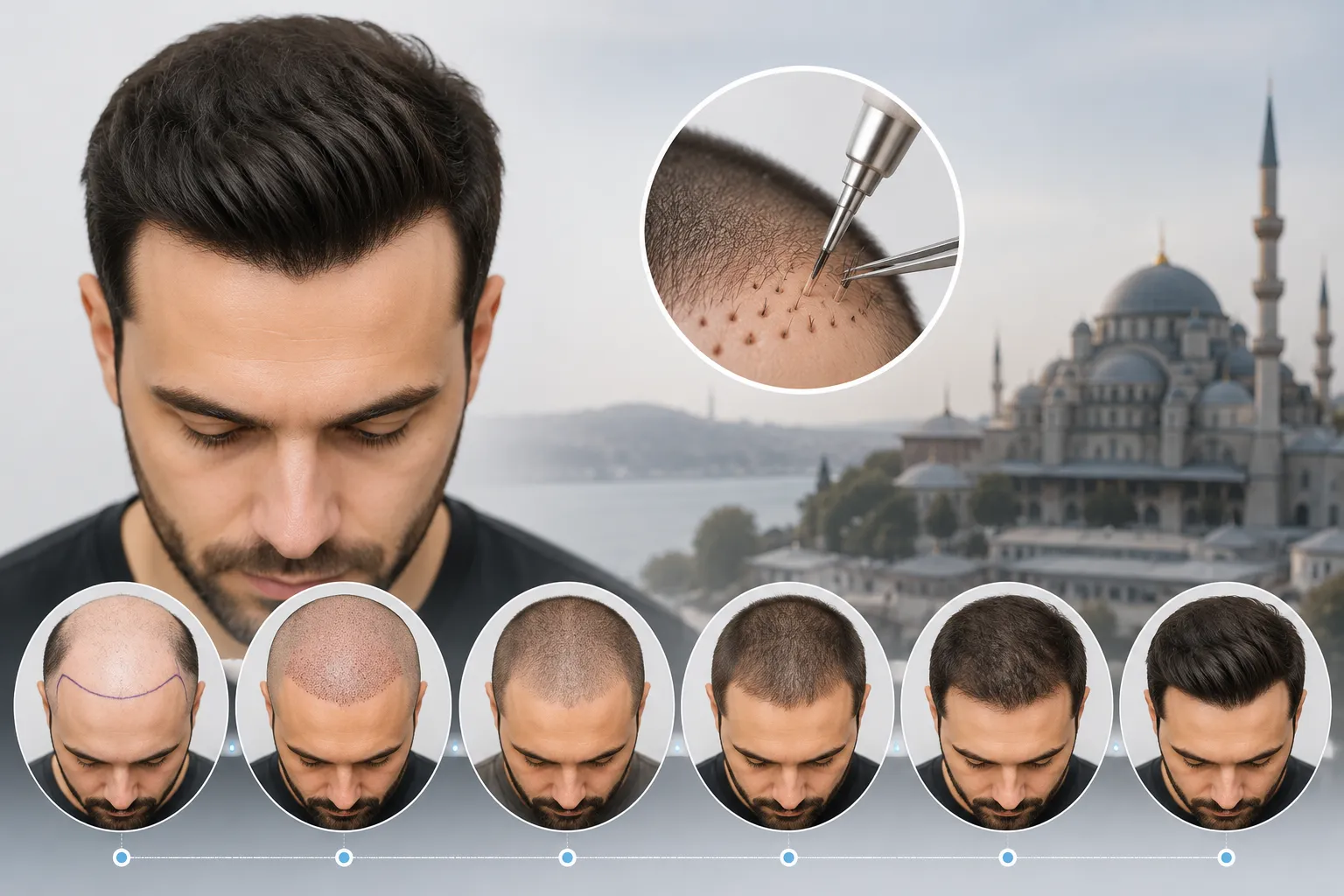
Hair transplantation stands as one of the most sought-after cosmetic procedures worldwide. Turkey leads this global industry with thousands of international patients visiting every month. Follicular Unit Extraction, known as FUE, remains the dominant technique in Turkish clinics. Understanding the recovery timeline helps patients plan their medical travel, manage expectations, and protect their investment. This guide breaks down every phase of healing from the moment you leave the operating room through the final results at 18 months. We base this information on peer-reviewed clinical studies, surgical protocols, and documented patient outcomes.
Patients leave the clinic with bandaged donor areas, tiny grafts in the recipient zone, and a list of strict post-operative rules. The first 24 hours set the foundation for graft survival.
What Occurs During the First Few Hours After Surgery?
The surgical team finishes the procedure and applies antibiotic ointment to the donor area. They place a loose bandage over the back and sides of the scalp. The recipient area remains open to air. Tiny red dots mark each graft site. The clinic provides pain medication, antibiotics, and anti-inflammatory tablets. Most patients feel mild tightness rather than sharp pain. The scalp looks pink and slightly swollen. Staff review washing instructions and emergency contact numbers. Patients receive a written aftercare sheet in their native language.
Donor area care: The donor area needs protection during the first night. The bandage stays in place for 12 to 24 hours. Patients should not touch, scratch, or remove the dressing early. Sleeping on a clean pillowcase prevents infection. Some clinics apply a spray sealant to the donor wounds. This sealant reduces bleeding and speeds early closure.
Recipient area appearance: The grafts sit slightly elevated above the scalp surface. Each graft contains one to four hairs. Small crusts begin forming within hours. The area looks like a dense field of tiny red seeds. Some clear fluid may weep from the sites. This fluid contains plasma and signals normal healing. Patients must not touch the grafts with fingers or towels.
Bandaging and medications: Surgeons typically prescribe a three-day course of antibiotics. Pain relievers such as paracetamol manage discomfort. Anti-inflammatory medication reduces swelling. Some clinics add corticosteroid tablets to minimize facial swelling. Patients take the first dose at the clinic before departure.
Why Is the First Night So Important?
The first night determines graft anchoring and swelling control. Proper positioning prevents graft dislodgement and facial edema.
Sleeping position: Patients must sleep on their back with their head elevated at 45 degrees. This position uses gravity to reduce blood flow to the scalp. It also prevents the head from rubbing against pillows. Some patients use travel neck pillows for stability. Sleeping on the stomach or sides risks crushing the grafts.
Avoiding pressure on grafts: The grafts lack strong anchoring during the first 72 hours. Any direct pressure can push them out or angle them incorrectly. Patients should avoid resting their head on headrests in cars or planes. They should not lean forward for long periods.
Swelling prevention: Facial swelling typically peaks on day three. Elevation during sleep reduces this risk. Cold compresses on the forehead (never on the grafts) help constrict blood vessels. Avoiding salty foods limits fluid retention.
What Should Patients Avoid During the First 24 Hours?
Patients must avoid touching grafts, drinking alcohol, smoking, exercising, and sun exposure during the first day.
Touching grafts: Fingers carry bacteria. Touching grafts introduces infection risk. It also creates mechanical disturbance. Even gentle contact can dislodge newly placed follicles. Patients should keep hands away from the scalp entirely.
Alcohol: Alcohol thins the blood. It increases bleeding risk from donor and recipient sites. It also dehydrates the body. Dehydration slows healing and reduces graft survival. Patients should avoid alcohol for at least seven days.
Smoking: Nicotine constricts blood vessels. This reduces oxygen delivery to healing tissues. Studies show smokers experience lower graft survival rates. Carbon monoxide in cigarette smoke further compromises blood flow. Patients must stop smoking at least one week before and two weeks after surgery.
Exercise: Physical activity raises blood pressure. Elevated blood pressure increases bleeding risk. It also produces sweat, which irritates the scalp. Patients should avoid gyms, running, and heavy lifting for two weeks.
Sun exposure: UV rays damage healing skin. Direct sunlight on the scalp causes redness and pigmentation changes. Patients should wear a loose hat when outdoors. They should avoid direct sun for one month.
What Is the FUE Hair Transplant Recovery Timeline Day by Day?
Recovery follows a predictable daily pattern from immediate post-op care through scab removal and graft stabilization over the first two weeks.
Day 1
The first day involves a clinic check-up, initial scalp assessment, and confirmation that grafts remain in place.
First clinic check-up: Most Turkish clinics schedule a morning appointment the day after surgery. A nurse or technician removes the donor bandage. They inspect the donor area for bleeding or infection. They check the recipient area for graft stability. They take photographs for the medical record. Patients receive their first professional scalp wash or detailed instructions for home washing.
Initial scalp assessment: The medical team looks for signs of complications. They check for excessive swelling, unusual bleeding, or allergic reactions. They confirm that grafts sit at the correct angle. They answer questions about sleeping, medication, and daily activities.
Days 2–3
Swelling, redness, and mild discomfort peak during this period. Patients begin saline spraying to keep grafts moist.
Swelling progression: Forehead and eye swelling often appears on day two. Gravity pulls fluid from the scalp downward. Some patients develop puffy eyelids. This looks dramatic but resolves naturally. Cold compresses on the forehead reduce swelling.
Redness: The recipient area remains pink. The donor area shows small red dots. This redness signals active blood flow and healing. It fades gradually over two weeks.
Mild discomfort: Patients feel tightness and tenderness. Pain levels usually stay below three out of ten. Over-the-counter pain medication provides relief. Some patients report itching as nerves begin regenerating.
Saline spraying: Clinics recommend spraying sterile saline on the recipient area every few hours. Saline keeps grafts moist and prevents crust hardening. It also reduces itching. Patients should use a fine mist spray bottle. They should not rub or pat the area.
Days 4–7
Scabs form over graft sites, itching intensifies, and patients begin gentle washing routines.
Formation of scabs: The body forms protective crusts over each graft. These scabs look like tiny brown dots. They protect the grafts from bacteria and mechanical damage. Scabs should never be picked or scratched. Premature removal dislodges grafts.
Itching: Itching peaks during this window. It signals nerve regeneration and healing. Patients must resist scratching. Scratching removes grafts and introduces infection. Some clinics recommend antihistamine tablets for severe itching.
Beginning gentle washing: Most patients start washing on day three or four. The clinic provides specific instructions. Patients pour diluted shampoo foam over the scalp. They let the foam sit for a few minutes. They rinse with lukewarm water using a cup. They do not use shower pressure directly on the scalp. They do not rub with towels.
Days 7–10
Scabs begin falling off naturally, grafts stabilize firmly, and the scalp appearance improves dramatically.
Scab removal process: Between day seven and day ten, scabs loosen and shed. Patients can soak the scalp longer during washing. Gentle circular motions with fingertips help loosen crusts. They should never force scabs off. Forced removal pulls grafts with the scab.
Graft stabilization: By day ten, grafts anchor firmly into the scalp. The risk of dislodgement drops significantly. Blood vessels reconnect to the follicles. The grafts enter a resting phase.
Improved appearance: The scalp looks cleaner as scabs fall away. Redness fades to pink. Swelling disappears completely. Most patients feel comfortable returning to social activities.
Days 10–14
The donor area heals visibly, patients return to office work, and recovery milestones become clear.
Donor area healing: The tiny extraction wounds in the donor zone close completely. Small scabs fall off. The skin returns to normal color. Hair growth in the donor area begins to camouflage the extraction sites.
Return to office work: Most patients resume desk jobs after ten days. They no longer need to hide their scalp. The remaining pinkness looks like a mild sunburn. Some patients use loose caps for comfort.
Visible recovery milestones: By day fourteen, the scalp looks nearly normal. All scabs have fallen off. The grafts enter the telogen resting phase. Patients see no new hair yet. This quiet period before growth is completely normal.
What Happens Week by Week After an FUE Hair Transplant?
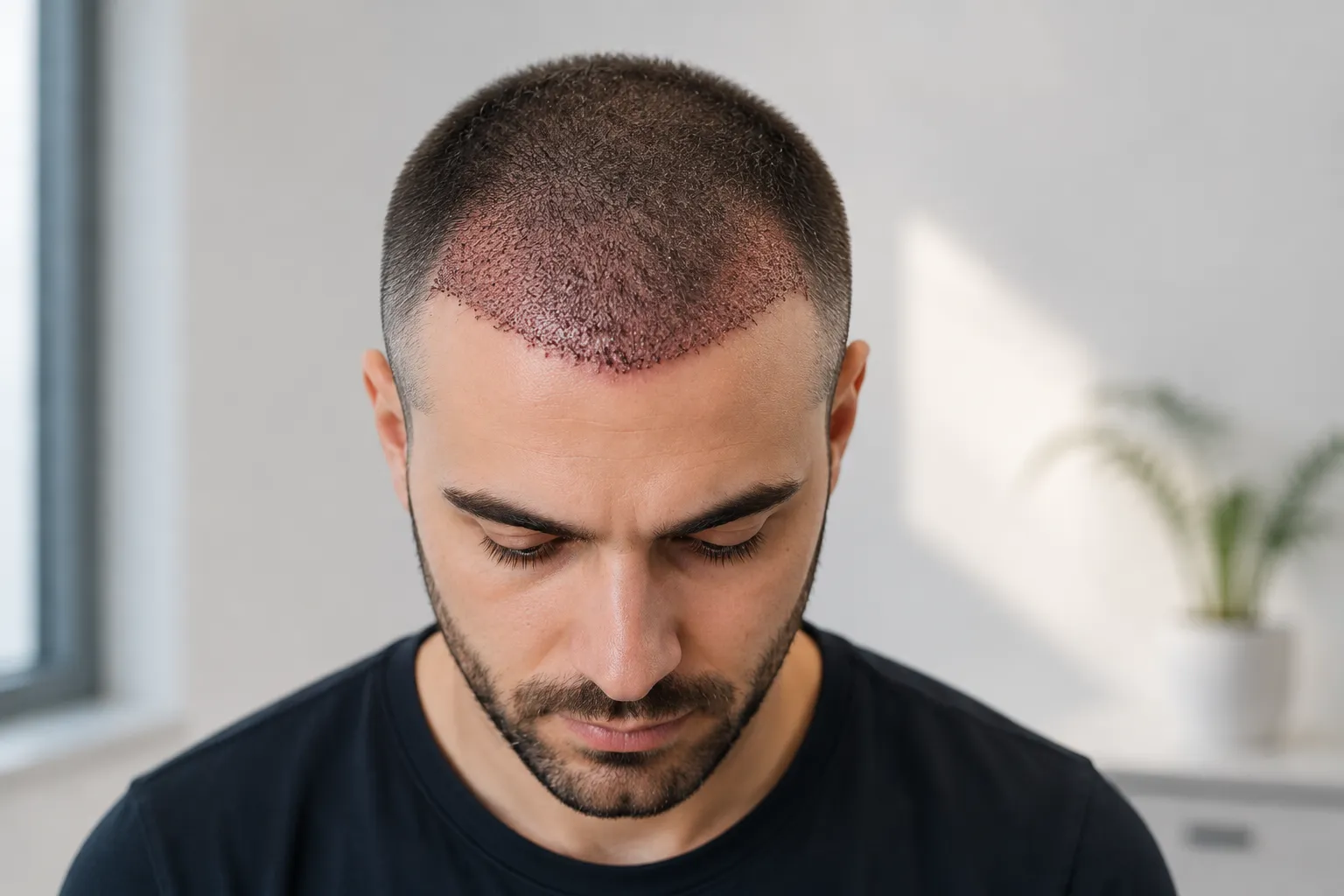
Weekly recovery moves from shock loss through dormancy, then into visible growth, thickening, and final maturation over 12 to 18 months.
Weeks 2–4
Transplanted hairs enter shock loss. The hairs shed, but the follicles remain alive and healthy beneath the skin.
Shock loss explained: Shock loss describes the shedding of transplanted hairs. The hair shafts fall out. The follicles stay anchored in the scalp. This process is normal and expected. It occurs because the trauma of transplantation pushes follicles into a resting phase.
Why transplanted hairs shed: The surgical movement disrupts the blood supply temporarily. The follicle conserves energy by releasing the hair shaft. The root structure remains intact. New hair will grow from the same follicle.
Why follicles remain healthy: Follicles contain stem cells in the bulge region. These cells survive the transplantation process. They regenerate the hair shaft during the next growth cycle. Research by Bernstein and Rassman confirms that properly handled grafts maintain high survival rates despite temporary shedding (Bernstein and Rassman 2005).
Weeks 4–8
The scalp enters a dormant phase with no visible growth. Patience becomes essential during this quiet period.
Dormant phase: The follicles rest beneath the skin. No new hair pushes through the surface. The scalp looks exactly as it did before surgery. Some patients panic during this phase. They fear the procedure failed. This reaction is common but unnecessary.
Normal scalp changes: The skin returns to its normal texture. Any remaining numbness fades. The donor area shows no visible signs of surgery. Patients can resume most normal activities.
Emotional expectations: The dormant phase tests patient patience. Anxiety rises when no visible progress occurs. Clinics should prepare patients for this phase during consultation. Understanding that dormancy is normal reduces stress.
Months 3–4
The first new hairs emerge. They look thin and wispy at first.
First new hair growth: Fine, colorless hairs push through the scalp. They look like baby hair. They lack pigment and thickness. This early growth signals that the follicles have re-entered the anagen growth phase.
Early texture changes: New hair feels soft and downy. It lacks the coarseness of mature hair. Some hairs grow at odd angles. They will straighten and thicken over time.
Months 4–6
Hair density increases visibly. The hairline begins taking shape.
Increased density: More follicles enter the growth phase. The scalp shows fuller coverage. Hairs grow longer and gain pigment. The transformation becomes noticeable to friends and family.
Hairline becoming visible: The frontal hairline shows the most dramatic improvement. Individual hairs blend together. The hairline looks natural rather than patchy. Patients can style hair with confidence.
Months 6–9
Existing hairs thicken and provide improved coverage across the transplant zone.
Hair thickening: Each hair shaft gains diameter. The hair feels stronger and looks darker. The scalp shows less translucency. The overall appearance moves from "thinning" to "full."
Improved coverage: Gaps between grafts fill in. The scalp looks uniformly covered. The donor area shows no signs of over-harvesting. The hairline looks mature and natural.
Months 9–12
Patients see significant cosmetic improvement. Most visible results appear during this period.
Significant cosmetic improvement: The transplant zone reaches approximately 80 percent of final density. Haircuts look normal. Patients style their hair without concealing thin areas. The transformation feels complete to most observers.
Most patients' visible results: By month twelve, the casual observer sees a full head of hair. Only the patient and surgeon notice areas that may still thicken further.
Months 12–18
Final maturation completes. The crown area catches up, and long-term density reaches its peak.
Final maturation: Hair shafts reach maximum diameter and pigment density. The texture matches native hair perfectly. The scalp shows no surgical signs.
Crown area recovery: The crown often matures slower than the hairline. Final crown density appears between months 12 and 18. This delay is normal due to slower blood circulation in the vertex region.
Long-term density: The scalp reaches 100 percent of achievable density. Results remain stable for years. The transplanted hair resists balding because it retains genetic resistance to dihydrotestosterone.
Why Does Shock Loss Occur After an FUE Hair Transplant?
Shock loss occurs because surgical trauma pushes transplanted follicles into a resting phase. The hair shafts fall out, but the follicles survive and regrow later.
What Is Shock Loss?
Shock loss is the temporary shedding of transplanted hairs within two to four weeks after surgery.
Shock loss represents a normal physiological response to surgical trauma. The follicle shuts down hair production to conserve energy. The hair shaft loosens and falls out. The follicle remains alive in the dermis. It reactivates after several months. Studies document shock loss rates between 50 and 90 percent of transplanted hairs (Unger et al. 2011).
When Does It Begin?
Shock loss typically begins between week two and week four.
Some patients notice shedding as early as day ten. Others see gradual thinning over a month. The timing varies by individual. Grafts placed in dense existing hair may shed later. Grafts in bald scalp often shed faster.
How Long Does It Last?
The shedding phase lasts two to four weeks. The dormant phase lasts until month three or four.
Shedding stops once all transplanted hairs have fallen. The scalp then remains quiet for two to three months. New growth begins around month three. Full recovery from shock loss takes four to six months total.
Can Shock Loss Be Prevented?
No method completely prevents shock loss. Gentle surgical technique reduces its severity.
Surgeons minimize graft handling and trauma. They keep grafts moist during placement. They avoid crushing the follicles. Post-operative care also matters. Avoiding nicotine, alcohol, and trauma helps. However, some degree of shock loss remains inevitable.
When Should Patients Become Concerned?
Patients should worry only if redness, pain, or pus accompany shedding. Simple shedding without other symptoms is normal.
Excessive bleeding, pus, or fever signals infection. Patchy bald areas with inflammation suggest poor graft survival. Normal shock loss occurs uniformly across the transplant zone. It causes no pain or scalp irritation.
How Long Should Patients Stay in Turkey After an FUE Hair Transplant?
Most patients should stay four to seven days. Three days is the absolute minimum.
Is 3 Days Enough?
Three days covers the immediate post-op period but leaves no margin for complications.
Some patients book short trips to save money. They arrive the day before surgery and leave two days after. This schedule allows for one clinic check-up. However, it leaves no time for the first wash or follow-up. Complications such as bleeding or infection may develop after departure.
Why Do Many Clinics Recommend 4–7 Days?
A longer stay allows for professional washing, scab management, and complication screening.
Clinics prefer patients stay through the first wash appointment. This appointment occurs on day three or four. The staff demonstrates proper technique. They remove early crusts. They assess healing. A follow-up on day five or six catches any delayed issues.
First Washing Appointment
The first professional wash occurs on day three or four. Staff teach patients the correct technique.
This appointment is crucial. Patients watch professionals wash their scalp. They learn how much pressure to use. They see how to apply foam. They understand rinsing technique. This visual learning prevents mistakes at home.
Follow-up Examination Before Departure
A final check-up on day five or six confirms graft stability and donor healing.
The surgeon checks for signs of infection. They confirm scabs are loosening properly. They answer questions about the flight home. They provide a travel certificate if needed for airport security regarding medications.
Traveling Safely After Surgery
Patients can fly after three days, but they should wear a loose cap and stay hydrated.
Airplane cabins have low humidity. Dry air irritates the scalp. Patients should drink water during the flight. They should avoid touching their head. A loose, clean cap protects grafts from accidental contact. They should not wear tight headphones.
What Activities Should Be Avoided During Recovery?
Patients must avoid exercise, swimming, saunas, haircuts, tight hats, direct sun, styling products, alcohol, and smoking during specific recovery windows.
Exercise
Avoid all exercise for 14 days. Light walking is acceptable after 7 days.
Weightlifting, running, and cycling raise blood pressure. This increases bleeding risk. Sweat contains salt that irritates fresh grafts. Gyms harbor bacteria that cause infection. Patients should resume exercise gradually after two weeks.
Swimming
Avoid swimming pools, oceans, and hot tubs for one month.
Chlorine dries and irritates the scalp. Salt water stings healing wounds. Pools contain bacteria. Submersion creates pressure on grafts. Ocean waves risk mechanical trauma.
Sauna and Steam Rooms
Avoid saunas and steam rooms for one month.
Heat dilates blood vessels. This increases swelling and bleeding risk. Steam rooms harbor bacteria. Excessive sweating irritates the scalp.
Haircuts
Avoid haircuts for one month. Use scissors only for the first three months.
Clippers vibrate against the scalp. This vibration dislodges grafts. Scissors provide a safer option. Barbers should avoid touching the recipient area. Patients should inform barbers about recent surgery.
Wearing Hats and Helmets
Avoid tight hats and helmets for one month. Loose caps are acceptable after 10 days.
Tight hats compress grafts. They reduce blood flow. Helmets create pressure and friction. Loose, breathable caps protect from sun and dust. They should not touch the grafts directly.
Direct Sunlight
Avoid direct sun exposure for one month. Wear a loose hat outdoors.
UV rays damage healing skin. They cause pigmentation changes. Sunburn on the scalp delays healing. Patients should use SPF spray on the scalp after one month.
Hair Styling Products
Avoid gels, sprays, and waxes for one month.
Chemicals in styling products irritate grafts. They clog follicles. They require rubbing during application. Patients should use only mild shampoo during recovery.
Alcohol and Smoking
Avoid alcohol for 7 days. Avoid smoking for 14 days minimum.
Alcohol thins blood and dehydrates. Nicotine constricts vessels and reduces oxygen. Both habits compromise graft survival. Studies show smokers have lower graft yield than non-smokers (Cole 2014).
What Is the Recommended Hair Washing Routine After FUE?
Patients begin gentle washing on day three or four. They use diluted shampoo, no direct shower pressure, and pat-dry only.
When Should the First Wash Occur?
The first wash occurs on day three or four after surgery.
Some clinics allow washing on day two. Others prefer day three. The exact timing depends on graft stability and scab formation. Patients should follow their specific clinic's protocol.
Step-by-Step Washing Instructions
Pour foam over the scalp, let it sit, rinse with a cup, and pat dry gently.
- Fill a cup with lukewarm water.
- Mix special shampoo with water in a separate cup to create foam.
- Gently pour the foam over the scalp.
- Let the foam sit for three to five minutes.
- Rinse by pouring clean water over the scalp.
- Pat dry with a soft paper towel.
- Do not rub or wipe.
Which Shampoos Are Recommended?
Use mild, pH-balanced, sulfate-free shampoos.
Clinics often provide medicated shampoo. Baby shampoo works as an alternative. Avoid products with strong fragrances, tea tree oil, or menthol. These ingredients irritate healing skin.
How Long Should Gentle Washing Continue?
Continue gentle washing for 14 days. Normal showering resumes after two weeks.
The first two weeks require the cup-rinsing method. After day 14, patients can use gentle shower pressure. They should still avoid rubbing with towels. Normal hair washing routines resume after one month.
Common Washing Mistakes to Avoid
Never use direct shower pressure, rub with towels, or pick at scabs.
Direct water pressure dislodges grafts. Rubbing with towels creates friction. Picking scabs removes grafts with the crust. Using hot water increases bleeding. Using fingernails to scratch causes infection.
What Symptoms Are Normal During Recovery?
Redness, swelling, itching, numbness, small scabs, mild tenderness, and temporary shedding are all normal parts of healing.
Redness
Pink or red scalp color persists for two to four weeks.
The recipient area looks pink because of increased blood flow. This blood flow delivers nutrients and oxygen. It fades gradually. Some patients with fair skin notice redness longer.
Swelling
Forehead and eye swelling peaks on day three and resolves by day seven.
Fluid shifts from the scalp to the face. This looks alarming but causes no harm. Elevation and cold compresses speed resolution.
Itching
Itching begins around day three and peaks during week two.
Itching signals nerve regeneration and healing. It indicates the scalp is repairing itself. Antihistamines help control severe itching.
Numbness
Numbness in the donor area lasts two to eight weeks.
Nerve endings regenerate slowly. The donor area feels numb or tingly. This sensation fades as nerves heal. Permanent numbness is rare with modern FUE techniques.
Small Scabs
Tiny crusts form over each graft and fall off between day seven and day ten.
Scabs protect healing wounds. They look like brown dots. They loosen naturally with washing. Forced removal causes bleeding and graft loss.
Mild Tenderness
The scalp feels tender for seven to ten days.
Tenderness feels like a mild sunburn. Pain medication controls discomfort. Tenderness fades as inflammation resolves.
Temporary Shedding
Transplanted hairs shed between week two and week four.
This is shock loss. It is normal and expected. The follicles remain alive beneath the skin. New hair grows later.
Persistent bleeding, fever, increasing pain, pus, severe swelling, infection signs, or allergic reactions need urgent medical care.
Persistent Bleeding
Bleeding that continues beyond 24 hours or restarts after stopping requires attention.
Some oozing is normal for 12 hours. Continuous dripping or soaking through bandages is abnormal. It may indicate clotting problems or graft site damage.
Fever
Temperature above 38 degrees Celsius signals possible infection.
Fever with chills, fatigue, or body aches requires antibiotic review. It may indicate a bacterial infection in the scalp.
Increasing Pain
Pain that worsens after day three is abnormal.
Pain should decrease daily after surgery. Increasing pain suggests infection, hematoma, or nerve compression. Patients should contact their surgeon immediately.
Pus or Unusual Discharge
Yellow or green pus indicates bacterial infection.
Clear fluid is normal. Thick, colored discharge requires culture and antibiotic adjustment. Foul odor also signals infection.
Severe Swelling
Swelling that closes the eyes completely or spreads to the neck is excessive.
Mild facial swelling is normal. Severe swelling suggests allergic reaction or infection. It requires medical evaluation.
Signs of Infection
Red streaks, warmth, expanding redness, or red patches spreading beyond the transplant zone indicate infection.
Cellulitis requires immediate antibiotic treatment. Early intervention prevents graft loss and scarring.
Allergic Reactions
Hives, difficulty breathing, or facial swelling beyond the forehead suggests allergy to medications or topical products.
Patients should seek emergency care for breathing difficulties. They should stop all new medications until evaluated.
Which Factors Influence the FUE Hair Transplant Recovery Timeline?
Age, smoking, health, graft count, donor quality, technique, surgeon skill, aftercare compliance, and individual healing response all affect recovery speed.
Patient Age
Younger patients heal faster than older patients.
Collagen production slows with age. Skin elasticity decreases. Blood vessel regeneration takes longer. Patients over 60 may need extra recovery time.
Smoking Status
Smokers heal slower and experience lower graft survival.
Nicotine reduces blood flow by 40 percent. Carbon monoxide reduces oxygen delivery. Smokers face higher infection rates. They should quit at least one week before surgery.
Overall Health
Diabetes, autoimmune disease, and poor circulation delay healing.
Well-controlled diabetes allows normal healing. Uncontrolled diabetes increases infection risk. Autoimmune conditions may trigger inflammation. Patients should optimize health before surgery.
Number of Grafts Transplanted
Large sessions of 4000+ grafts require longer recovery.
More grafts mean more wounds. The scalp needs more time to heal. Large sessions may cause more swelling. They require more meticulous aftercare.
Donor Area Quality
Dense, elastic donor skin heals faster than thin, scarred skin.
Good donor density allows even extraction. Scarred or previously harvested skin heals slower. Skin elasticity affects wound closure speed.
Surgical Technique
Sharp, precise extraction causes less trauma than dull or large punches.
Smaller punch sizes (0.8 to 1.0 mm) create smaller wounds. These wounds heal faster. Motorized punches with controlled speed reduce tissue damage.
Surgeon Experience
Experienced surgeons place grafts with minimal trauma.
Skillful handling preserves follicle integrity. Proper depth and angle reduce graft exposure time. Experienced teams work efficiently, limiting graft dehydration.
Compliance with Aftercare Instructions
Patients who follow instructions exactly achieve better outcomes.
Washing correctly, avoiding prohibited activities, and taking medications properly all matter. Non-compliance causes graft loss and delayed healing.
Individual Healing Response
Genetics determine baseline healing speed.
Some patients naturally heal faster. Others form scars more easily. Individual variation is normal and expected.
How Can Patients Speed Up Healing After an FUE Hair Transplant?
Proper nutrition, hydration, sleep, medication adherence, scalp hygiene, graft protection, nicotine avoidance, and following clinic recommendations all accelerate healing.
Proper Nutrition
Eat protein-rich foods, vitamins, and minerals.
Hair consists of protein. Patients need adequate protein for follicle repair. Eggs, fish, chicken, and legumes provide protein. Vitamin C supports collagen formation. Zinc aids wound healing. Biotin supports hair structure.
Hydration
Drink at least two liters of water daily.
Water transports nutrients to healing tissues. It removes waste products. Dehydration slows cell regeneration. Patients should avoid excessive caffeine and alcohol.
Sleep Quality
Sleep seven to eight hours nightly with head elevated.
Sleep triggers growth hormone release. This hormone repairs tissues. Elevation reduces swelling. Quality sleep supports immune function.
Medication Adherence
Take all prescribed antibiotics and anti-inflammatory medications on schedule.
Skipping doses allows bacterial growth. It also prolongs inflammation. Patients should set reminders for medication times.
Scalp Hygiene
Keep the scalp clean but not overwashed.
Clean skin heals faster. However, overwashing strips natural oils. Patients should follow the clinic's specific washing schedule.
Protecting Grafts
Avoid touching, rubbing, or exposing grafts to trauma.
Physical protection prevents dislodgement. It also reduces infection risk. Patients should be mindful of their head position in cars, beds, and public spaces.
Avoiding Nicotine
Eliminate all nicotine products for at least two weeks.
Nicotine is the single biggest preventable factor in poor healing. Patients should avoid cigarettes, vaping, nicotine patches, and gum during recovery.
Following Clinic Recommendations
Trust the specific protocol provided by your surgical team.
Each clinic tailors aftercare to their technique. Their recommendations reflect years of experience. Patients should not mix advice from multiple sources.
What Results Can Patients Expect at Every Stage?
Recovery moves through distinct biological stages from implantation through full maturation over 18 months.
|
Recovery Stage
|
Expected Appearance
|
Biological Process
|
|
Day 1
|
Fresh grafts visible
|
Follicle implantation
|
|
Week 1
|
Scabbing across recipient zone
|
Initial healing and clot formation
|
|
Week 2
|
Cleaner scalp, scabs falling
|
Graft stabilization
|
|
Month 1
|
Shock loss, hairs shedding
|
Follicle resting phase (telogen)
|
|
Month 3
|
First fine hairs emerging
|
New growth begins (early anagen)
|
|
Month 6
|
Noticeable improvement
|
Active growth phase
|
|
Month 9
|
Better density and coverage
|
Hair thickening continues
|
|
Month 12
|
Nearly final result
|
Hair maturation near completion
|
|
Month 18
|
Final outcome achieved
|
Full maturation and density
|
This table shows the typical progression. Individual timelines vary by 10 to 20 percent. Some patients see faster growth. Others need the full 18 months. The biological process follows predictable patterns regardless of speed.
Frequently Asked Questions About FUE Hair Transplant Recovery in Turkey
Most patients have similar questions about recovery duration, work return, exercise, shock loss, and result timing.
How Long Does FUE Recovery Take?
Surface healing takes 10 to 14 days. Full cosmetic results take 12 to 18 months.
The scalp looks normal after two weeks. However, hair growth requires months. Patience is essential for satisfactory outcomes.
When Can I Return to Work?
Desk jobs allow return after 7 to 10 days. Physical jobs require 14 to 21 days.
Office workers can wear loose caps. They should avoid strenuous tasks. Jobs involving dust, heat, or heavy lifting need longer absence.
When Can I Exercise Again?
Light walking resumes after 7 days. Normal exercise resumes after 14 days. Heavy weightlifting resumes after 21 days.
Gradual return prevents complications. Patients should stop if they feel pain or see bleeding.
Is Shock Loss Permanent?
No. Shock loss is temporary. The follicles remain alive and regrow hair.
Permanent loss would require follicle death. Shock loss only involves the hair shaft. New growth begins around month three.
When Can I Wear a Hat?
Loose caps are acceptable after 10 days. Tight hats require one month.
The hat should not touch the grafts. It should not create pressure. Breathable fabrics work best.
Can I Travel by Airplane After Surgery?
Yes, after 3 days. Stay hydrated and wear a loose cap.
Cabin pressure does not affect grafts. Dry air and accidental contact pose the main risks.
When Will the Transplanted Hair Start Growing?
New growth begins around month three. Visible improvement appears by month four.
Some patients see early growth at month two. Others wait until month five. Both timelines are normal.
When Are the Final Results Visible?
Final results appear between month 12 and month 18.
The hairline matures faster than the crown. Patients should wait 18 months before judging final density.
Is Recovery Different for Large Graft Sessions?
Yes. Large sessions cause more swelling and require longer initial healing.
Sessions over 3000 grafts may need 14 days for surface healing. Donor area tightness lasts longer. However, the long-term timeline remains similar.
Conclusion
Recovery from an FUE hair transplant in Turkey follows predictable healing phases. The journey begins in the operating room and continues through 12 to 18 months of maturation. Early healing, temporary shock loss, and gradual regrowth represent expected milestones rather than complications. Each phase serves a biological purpose. The initial scabbing protects grafts. The dormant phase allows follicles to reset. The growth phase rebuilds density.
Following post-operative instructions carefully maximizes graft survival and aesthetic outcomes. Patients who protect their grafts, avoid nicotine, maintain proper hygiene, and exercise patience achieve the best results. Choosing an experienced clinic in Turkey provides professional monitoring during the critical first week. Maintaining realistic expectations prevents unnecessary anxiety during the dormant phase. The investment of time and care pays off with natural, permanent hair restoration.
References
Bernstein, Robert M., and William R. Rassman. "Follicular Unit Extraction: Minimally Invasive Surgery for Hair Transplantation." Dermatologic Surgery, vol. 31, no. 3, 2005, pp. 309–15.
Cole, John P. "State of the Art and Future of Hair Restoration." Facial Plastic Surgery Clinics of North America, vol. 22, no. 4, 2014, pp. 531–37.
Gho, Coen G., et al. "Stability of Sebaceous Glands in Hair Follicles During Hair Regeneration." Dermatologic Surgery, vol. 37, no. 9, 2011, pp. 1307–13.
Jimenez, Fabio, and Yazmina Carbajal. "Histological Evaluation of the Sebaceous Glands in the Human Scalp Hair Follicles." Dermatologic Surgery, vol. 28, no. 12, 2002, pp. 1116–19.
Unger, Walter P., et al. Hair Transplantation. 5th ed., Marcel Dekker, 2011.
Wong, Jerry. "Hair Transplantation: A Practical Guide to the Care of Hair Transplant Patients." Journal of Cutaneous and Aesthetic Surgery, vol. 4, no. 2, 2011, pp. 131–36.
Zontos, George, et al. "Follicular Unit Extraction for Hair Transplantation: An Overview of Technique and Patient Selection." Journal of Cosmetic Dermatology, vol. 19, no. 8, 2020, pp. 1987–94.