Yes. Both hypothyroidism and hyperthyroidism disrupt the hair growth cycle. Research proves that thyroid hormones directly control follicle activity. Hair loss often improves once doctors restore normal hormone levels.
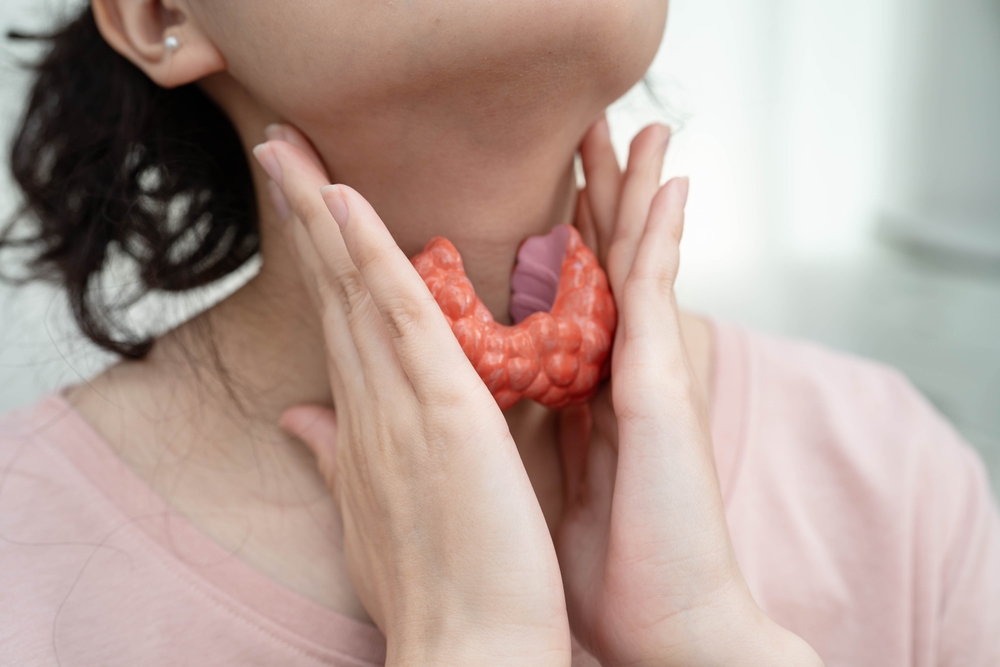
The thyroid gland sits at the front of your neck. It produces two key hormones. These are thyroxine (T4) and triiodothyronine (T3). These hormones regulate metabolism throughout the body. They also control how fast your cells grow and divide. Hair follicles belong to the fastest-dividing cell populations in the human body. Because of this, they react quickly to hormone changes.
Thyroid levels can drop too low. They can also rise too high. Either shift makes the follicles suffer. Many patients notice diffuse thinning across the scalp. Some patients also lose eyebrow hair and body hair. Doctors call this connection the thyroid-skin axis. Paus (2010) coined this term to describe how deeply thyroid function links to skin and hair biology. This article explains the mechanisms behind thyroid-related hair loss. It covers diagnosis, treatment, and recovery timelines.
What Does the Thyroid Gland Do for Your Body?
The thyroid gland produces T3 and T4. These hormones regulate metabolism, heart rate, body temperature, and cell growth. Every organ in your body needs thyroid hormones to function well.
The thyroid weighs about 20 grams. It sits below the Adam’s apple. The pituitary gland controls the thyroid. It releases thyroid-stimulating hormone (TSH). When TSH rises, the thyroid releases more T3 and T4. These hormones enter every cell in your body. They bind to nuclear receptors. They switch genes on or off.
Slominski et al. (2002) found that human skin expresses hypothalamic-pituitary-thyroid axis genes. This means skin and hair follicles participate directly in thyroid hormone signaling. The follicles even contain deiodinase enzymes. Bianco et al. (2000) showed that these enzymes convert inactive T4 into active T3 inside target tissues. Your hair follicles can make this conversion themselves. This local production matters. It allows precise control of hormone levels inside the follicle.
How Do Thyroid Hormones Control Hair Growth?
T3 and T4 bind to receptors in hair follicles. They prolong the growth phase and stimulate matrix keratinocyte division. Without adequate thyroid hormones, follicles enter the resting phase too early.
Human hair growth depends on a precise cycle. Thyroid hormones influence every stage of this cycle. They affect stem cells in the bulge region. They regulate keratin production. They even control hair pigment. When thyroid disease disrupts these processes, patients see tangible changes. These changes include reduced hair density and altered texture.
What Is the Normal Hair Growth Cycle?
Human hair cycles through three phases. Anagen is the active growth phase. Catagen is the short transition phase. Telogen is the resting phase when shedding occurs. Healthy scalps maintain 85% to 90% of hairs in anagen at any time.
Each follicle operates on its own timeline. Anagen lasts two to seven years. During this time, matrix keratinocytes divide rapidly. These cells form the hair shaft. Catagen lasts about two weeks. The follicle shrinks. It detaches from the blood supply. Telogen lasts three to four months. At the end of telogen, the old hair falls out. A new anagen phase begins immediately.
Paus and Cotsarelis (1999) explained that this cycle depends on precise molecular signaling. Growth factors, cytokines, and hormones all play roles. Thyroid hormones rank among the most important endocrine signals. They maintain the anagen phase. They prevent premature entry into catagen.
How Do T3 and T4 Directly Affect Hair Follicles?
T4 increases hair matrix keratinocyte proliferation. T3 reduces apoptosis in follicular cells. Both hormones prolong anagen and support pigment production.
Van Beek et al. (2008) performed landmark research on this topic. They cultured human hair follicles in vitro. They added T3 and T4 directly. T4 increased proliferation of matrix keratinocytes. T3 and T4 both reduced programmed cell death. T4 also prolonged anagen duration. It did this by lowering TGF-beta2. This factor triggers catagen.
The researchers also found that thyroid hormones stimulate melanin synthesis inside the follicle. This explains why some hypothyroid patients develop premature graying. The follicles express thyroid hormone receptor beta1. Messenger (2000) confirmed this expression. Because these receptors exist, thyroid hormones exert direct genomic effects on follicle behavior.
Which Thyroid Disorders Lead to Hair Loss?
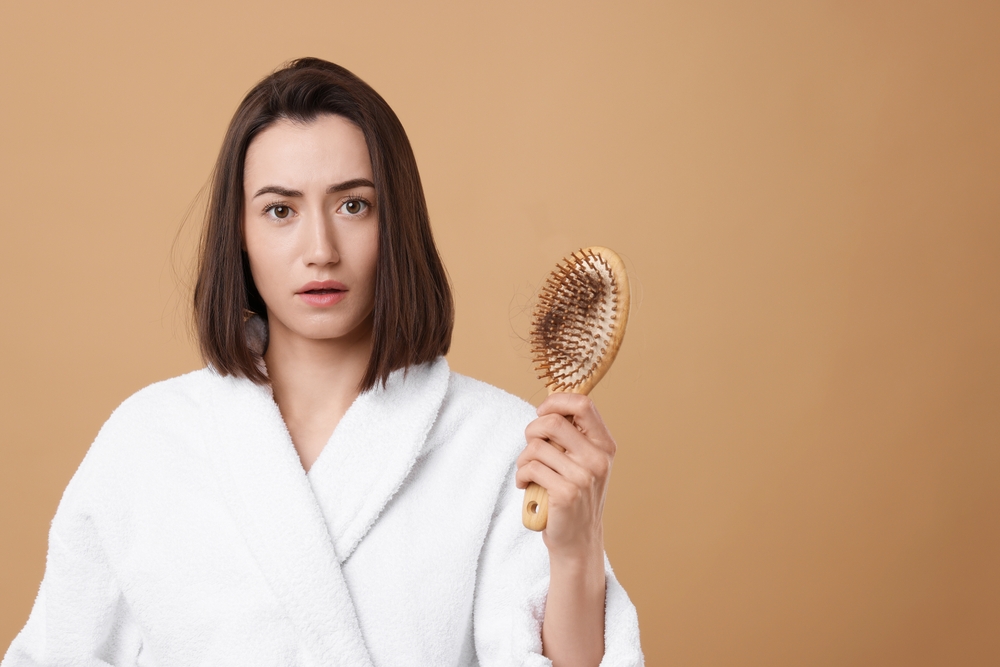
Hypothyroidism, hyperthyroidism, and autoimmune thyroid diseases all cause hair loss. Hashimoto’s thyroiditis and Graves’ disease represent the most common autoimmune forms.
Doctors divide thyroid disorders into three main categories. Each category affects hair differently. Some patients develop dry, brittle hair. Others develop fine, limp hair. Autoimmune forms may trigger patchy hair loss through shared immune pathways.
How Does Hypothyroidism Change Your Hair?
Hypothyroidism slows metabolism. This reduction causes dry, brittle, coarse hair. Patients often notice diffuse thinning across the entire scalp.
Hypothyroidism means the thyroid produces too little hormone. Hashimoto’s thyroiditis causes most cases in developed countries. Iodine deficiency causes most cases worldwide. When T3 and T4 levels drop, cell division slows down. Hair matrix keratinocytes divide less frequently.
Freinkel (1972) documented hair changes in hypothyroid patients decades ago. The hair becomes dry and coarse. It loses its shine. The outer cuticle layer breaks down. Telogen hairs increase in number. Schell et al. (1991) used DNA flow cytometry to study this phenomenon. They found disrupted cell cycle kinetics in anagen bulbs from hypothyroid patients. The matrix cells simply stop dividing at normal rates.
How Does Hyperthyroidism Affect Hair Quality?
Hyperthyroidism speeds up metabolism. This acceleration produces fine, soft, weak hair. Patients often experience increased shedding and reduced hair diameter.
Graves’ disease causes most cases of hyperthyroidism. Toxic nodular goiter causes some cases. Excess T3 and T4 push cells into overdrive. You might think faster metabolism means faster hair growth. But the opposite occurs. The follicles cannot sustain accelerated activity. The anagen phase shortens. The hair shaft becomes thinner.
The hair feels soft and silky. But it breaks easily. Some patients develop diffuse alopecia. The scalp may look shiny because of reduced hair density. Both hypo- and hyperthyroidism cause hair loss. The mechanism differs. But the result looks similar. Both produce diffuse thinning.
Why Do Autoimmune Thyroid Diseases Connect to Alopecia Areata?
Autoimmune thyroid disease and alopecia areata share genetic risk factors. Both conditions involve T-cell attacks on self-tissues. Patients with one condition face higher risks for the other.
Hashimoto’s thyroiditis and Graves’ disease both involve autoantibodies. Anti-thyroid peroxidase (anti-TPO) and anti-thyroglobulin (anti-Tg) antibodies attack the thyroid. In alopecia areata, T-cells attack hair follicles. Mostaghimi et al. (2024) analyzed over 3 million patients. They found that patients with alopecia areata had significantly higher risks of developing autoimmune diseases. The adjusted hazard ratio for autoimmune comorbidity was 2.7.
Lee et al. (2023) studied offspring of mothers with alopecia areata. These children showed increased risks for hypothyroidism. The shared immune pathways explain this link. Cytokines like interferon-gamma and interleukin-15 appear in both conditions. When the immune system loses tolerance, it can target both thyroid tissue and hair follicles.
What Happens Inside Hair Follicles When Thyroid Levels Change?
Thyroid disorders disrupt the hair cycle at the molecular level. They alter protein synthesis, cell division, and immune signaling inside the follicle.
Hair follicles contain some of the most metabolically active cells in the body. They need constant energy and building blocks. Thyroid hormones control both the supply and demand sides of this equation. When levels shift, the follicle responds immediately.
How Does Thyroid Imbalance Disrupt the Hair Cycle?
Low or high thyroid levels push hair follicles into telogen prematurely. This shift increases the ratio of resting hairs to growing hairs.
In hypothyroidism, T3 deficiency reduces mitochondrial activity. The matrix keratinocytes lack energy. They stop dividing. The follicle cannot sustain anagen. It enters catagen and then telogen too early. In hyperthyroidism, excess T3 may exhaust the follicle. The accelerated metabolic demand depletes cellular resources. The follicle also enters telogen early.
Doctors call this process telogen effluvium. Up to 70% of scalp hairs can enter telogen at once. Normal scalps shed 50 to 100 hairs daily. Patients with telogen effluvium shed 150 to 300 hairs daily. This shedding starts two to four months after the thyroid imbalance begins.
What Cellular Changes Occur in Follicular Cells?
Thyroid disorders alter keratin production, stem cell activity, and programmed cell death inside follicles.
Tiede et al. (2010) studied human hair follicleA hair follicle is a small, tube-like structure embedded in the scalp that produces and grows individual strands of hair.... stem cells. They found that thyroid hormones stimulate keratin 15 expression. This protein marks epithelial stem cells in the bulge region. Without adequate thyroid hormones, these stem cells differentiate too quickly. They lose their regenerative capacity.
Thyroid hormones also regulate apoptosis. van Beek et al. (2008) showed that T3 suppresses programmed cell death in matrix cells. In hypothyroidism, this protection disappears. More matrix cells die. The hair shaft grows thinner. It may stop growing entirely. Radoja et al. (1997) identified thyroid hormone response elements in keratin genes. This finding proves that thyroid hormones control hair structure at the genetic level.
What Are the Clinical Signs of Thyroid-Related Hair Loss?
Thyroid-related hair loss causes diffuse thinning, not patchy bald spots. The hair becomes dry or fine. Patients may also lose eyebrow and body hair.
Doctors look for specific patterns when they examine thyroid patients. The loss affects the entire scalp evenly. Patients do not develop isolated bald patches unless they also have alopecia areata. The hair quality changes dramatically. Associated symptoms help confirm the thyroid connection.
How Can You Recognize Hypothyroidism Hair Changes?
Look for dry, coarse, brittle hair that breaks easily. Check for thinning at the outer eyebrows. Watch for slow-growing hair that lacks shine.
Hypothyroid patients often notice these changes gradually. The hair loses moisture because sebaceous glands slow down. The scalp feels dry and itchy. Body hair may also thin. Some patients lose underarm and leg hair. The nails become brittle too. These signs accompany systemic symptoms. These include fatigue, weight gain, and cold intolerance.
How Can You Recognize Hyperthyroidism Hair Changes?
Look for fine, soft hair that feels limp. Watch for increased shedding during brushing or washing. Notice any scalp visibility through thinning hair.
Hyperthyroid patients often describe their hair as “lifeless.” It lacks body and volume. The increased shedding may clog shower drains. Some patients develop warm, moist skin because of increased sweating. The hair loss accompanies weight loss, anxiety, and heat intolerance. These systemic clues help doctors separate thyroid-related loss from other forms.
What Associated Symptoms Should You Watch For?
Hypothyroidism causes fatigue, weight gain, constipation, and cold intolerance. Hyperthyroidism causes weight loss, rapid heartbeat, anxiety, and heat intolerance.
The table below compares key differences.
|
Feature |
Hypothyroidism |
Hyperthyroidism |
|
Hair texture |
Dry, coarse, brittle |
Fine, soft, limp |
|
Hair shine |
Dull |
Normal or greasy |
|
Shedding amount |
Moderate to heavy |
Heavy |
|
Eyebrow loss |
Often affects outer third |
Less common |
|
Body hair |
Reduced |
Reduced or unchanged |
|
Skin feel |
Dry, cool |
Warm, moist |
|
Weight change |
Gain |
Loss |
|
Energy level |
Low |
High or jittery |
|
Temperature preference |
Cold intolerance |
Heat intolerance |
What Is Telogen Effluvium and How Does Thyroid Dysfunction Trigger It?
Telogen effluvium means sudden shedding after a body stressor. Thyroid disorders act as major triggers. Up to 70% of hairs can enter the resting phase at once.
Telogen effluvium represents the second most common form of hair loss in women. It also affects men. Any major systemic disturbance can trigger it. Thyroid dysfunction ranks among the most frequent endocrine triggers.
How Does Acute Telogen Effluvium Differ from Chronic Telogen Effluvium?
Acute telogen effluvium lasts less than six months. Chronic telogen effluvium persists longer than six months. Thyroid disorders can cause either form.
Acute cases resolve once doctors fix the thyroid problem. The shedding stops within three to six months. Chronic cases suggest ongoing hormonal imbalance or multiple triggers. Some patients have both thyroid disease and iron deficiency. Others have thyroid disease and high stress. These combined factors prolong the shedding period.
How Do Doctors Diagnose Thyroid-Related Hair Loss?
Doctors use blood tests, scalp exams, and hair pull tests. They check TSH, free T3, free T4, and thyroid antibodies.
Diagnosis requires more than a scalp look. Doctors must confirm the thyroid dysfunction. They must also rule out other causes of hair loss. Many conditions mimic thyroid-related thinning.
Which Blood Tests Reveal Thyroid Hair Loss?
TSH screening provides the first clue. Free T3 and free T4 confirm the hormone levels. Anti-TPO and anti-Tg antibodies reveal autoimmune causes.
High TSH with low free T4 indicates hypothyroidism. Low TSH with high free T4 indicates hyperthyroidism. Anti-TPO positivity suggests Hashimoto’s thyroiditis. These tests give doctors objective data. They also establish a baseline for treatment.
How Do Doctors Rule Out Other Causes?
Doctors compare thyroid-related loss against androgenetic alopecia, iron deficiency, and zinc deficiency. They examine the pattern, test nutrient levels, and review family history.
The table below shows key differences.
|
Condition |
Pattern |
Key Test |
Associated Findings |
|
Thyroid-related loss |
Diffuse thinning |
TSH, free T4 |
Fatigue, weight changes, temperature intolerance |
|
Androgenetic alopecia |
Crown and frontal recession |
Clinical exam |
Family history, gradual onset |
|
Iron deficiency |
Diffuse thinning |
Ferritin |
Fatigue, brittle nails, craving for ice |
|
Zinc deficiency |
Diffuse thinning |
Plasma zinc |
Poor wound healing, skin rashes |
|
Alopecia areata |
Patchy bald spots |
Clinical exam |
Exclamation mark hairs, nail pitting |
Doctors also perform a hair pull test. They grasp 50 to 60 hairs and pull gently. More than 10% extraction suggests active shedding. In thyroid-related telogen effluvium, many telogen hairs come out easily.
What Treatments Restore Hair After Thyroid Disorders?

Doctors treat the underlying thyroid disease first. Hormone normalization usually restores hair growth. Some patients need topical minoxidil or nutritional supplements.
Treatment follows a clear hierarchy. Step one fixes the hormone imbalance. Step two addresses visible hair loss. Step three prevents future damage through lifestyle changes.
How Does Hormone Replacement Therapy Help Hair Regrow?
Levothyroxine restores normal T4 levels in hypothyroidism. Methimazole or propylthiouracil reduces hormone production in hyperthyroidism. Normalized hormones restart normal follicle cycling.
Doctors prescribe levothyroxine for hypothyroid patients. This synthetic T4 replaces missing hormone. The body converts T4 to T3 as needed. Most patients need daily dosing. Blood tests guide dose adjustments.
Some patients worry that levothyroxine itself causes hair loss. Temporary shedding can occur during the first three months. This happens because the follicles re-enter anagen. Old telogen hairs fall out. They make room for new growth. One case report described an infant who lost hair after levothyroxine overdose. The doctors reduced the dose. Hair regrew dramatically within 15 days. This proves that proper dosing matters. Too much hormone also harms follicles.
What Adjunctive Therapies Support Hair Recovery?
Minoxidil stimulates blood flow to follicles. Iron, zinc, and biotin correct nutritional gaps. Low-level laser therapy may help some patients.
Topical minoxidil remains the only FDA-approved treatment for female pattern hair loss. It also helps telogen effluvium. It prolongs anagen and enlarges miniaturized follicles. Patients apply 2% or 5% solution daily. Results appear after four to six months.
Nutritional support matters too. Thyroid patients often have low ferritin. Iron supports matrix keratinocyte division. Zinc helps hormone conversion and protein synthesis. Biotin supports keratin infrastructure. Selenium helps deiodinase enzymes function. Patients should test levels before supplementing. Excess selenium can cause toxicity.
How Long Does Hair Recovery Take After Thyroid Treatment?
Hair recovery takes three to six months after hormone normalization. Full density may require 12 to 18 months.
Hair follicles do not recover overnight. They must complete the current telogen phase. Then they must restart anagen. Then they must grow a new shaft long enough to cover the scalp. This biology takes time.
Most patients notice reduced shedding within three months. New growth appears as short, fine hairs along the hairline. These hairs thicken over time. Patients with long-standing untreated disease may need longer recovery periods. Some patients develop chronic telogen effluvium. This condition persists even after thyroid correction. Doctors then investigate other triggers.
When Should You See a Doctor for Hair Loss?
See a doctor if you shed more than 100 to 150 hairs daily. See a doctor if hair loss accompanies fatigue, weight changes, or temperature intolerance. See a doctor if thinning appears suddenly and diffusely.
Early diagnosis prevents prolonged follicle damage. The longer follicles sit in telogen, the harder they are to reactivate. Blood tests provide quick answers. Treatment offers clear benefits.
What Questions Do Patients Most Often Ask About Thyroid Hair Loss?
Patients want to know about regrowth timelines, medication effects, and early warning signs. The answers below provide clear guidance.
Does Thyroid Hair Loss Grow Back?
Yes. Thyroid-related hair loss usually grows back completely. You must restore normal hormone levels first. Regrowth takes several months.
The follicles remain alive in telogen effluvium. They have not died. They merely rest. Once hormones normalize, they re-enter anagen. New hair pushes out the old shafts. Full recovery occurs in most patients.
How Long Does Recovery Take?
Most patients see reduced shedding within three months. Visible regrowth takes six to twelve months. Full density returns within 18 months.
The timeline depends on disease duration. It also depends on treatment adherence. Patients who start therapy early recover faster. Patients with prolonged untreated disease need more time.
Can Thyroid Medication Stop Hair Loss?
Yes. Properly dosed thyroid medication stops the root cause. Some patients notice temporary shedding when starting levothyroxine. This resolves within three months.
The medication restores the hormonal environment. Follicles sense this change. They shift from telogen back to anagen. Consistent daily dosing matters more than brand choice.
Is Hair Loss the First Sign of Thyroid Disease?
Sometimes. Hair loss often appears months after other symptoms. Fatigue and weight changes usually come first. But some patients notice hair changes early.
Doctors do not consider hair loss a definitive early marker. They look at the whole clinical picture. Blood tests confirm the diagnosis.
What Vitamins Help Thyroid-Related Hair Loss?
Iron, zinc, biotin, and selenium all support recovery. But patients should test levels first. Unnecessary supplementation wastes money and may cause harm.
Iron deficiency commonly accompanies hypothyroidism. Correcting ferritin above 70 ng/mL helps regrowth. Zinc supports the deiodinase enzymes that activate thyroid hormone. Biotin strengthens the hair shaft. Selenium supports thyroid antibody reduction in Hashimoto’s patients.
What Do Recent Studies Reveal About Thyroid Hormones and Hair?
Recent research confirms direct thyroid hormone action on follicles. Scientists have identified receptor targets and local hormone conversion mechanisms.
Oláh et al. (2016) tested a thyroid hormone analogue called eprotirome. They applied it to human hair follicles ex vivo. The analogue prolonged anagen significantly. This finding opens doors for topical thyroid hormone therapies.
Paus (2010) argued that dermatologists should view the thyroid-skin connection as a fundamental clinical axis. He questioned why endocrinology and dermatology remain so separate. Future research may bridge this gap. Scientists now study how thyroid hormones interact with Wnt signaling and BMP pathways in follicles. These pathways control stem cell activation.
What Is the Bottom Line on Thyroid Disorders and Hair Loss?
Thyroid disorders cause real, measurable hair loss. Scientists understand the molecular mechanisms. Doctors can diagnose the problem with blood tests. Treatment reverses the loss in most cases.
Thyroid hormones directly control hair follicle cycling. They regulate cell division, apoptosis, and pigment production. Hypothyroidism slows follicles down. Hyperthyroidism exhausts them. Both conditions push hairs into premature telogen.
The good news is clear. This form of hair loss is reversible. Levothyroxine, methimazole, and other standard treatments restore hormonal balance. Hair regrows once balance returns. Patients should seek prompt evaluation. They should not assume hair loss is purely genetic or purely cosmetic. The thyroid-skin axis demands respect. Integration of endocrinology and dermatology offers the best path forward.
References
Bianco, Antonio C., et al. “The deiodinase family: selenoenzymes regulating thyroid hormone availability and action.” Cellular and Molecular Life Sciences, vol. 57, no. 13, 2000, pp. 1853-1863.
Freinkel, R.K. “Hair growth and alopecia in hypothyroidism.” Archives of Dermatology, vol. 106, no. 3, 1972, pp. 349-352.
Lee, S., et al. “Autoimmune, inflammatory, atopic, thyroid, and psychiatric outcomes of offspring born to mothers with alopecia areata.” JAMA Dermatology, 2023.
Messenger, Andrew G. “Thyroid hormone and hair growth.” British Journal of Dermatology, vol. 142, no. 4, 2000, pp. 633-634.
Mostaghimi, Arash, et al. “Immune-mediated and psychiatric comorbidities among patients newly diagnosed with alopecia areata.” JAMA Dermatology, 2024, doi:10.1001/jamadermatol.2024.2404.
Oláh, Arpad, et al. “The thyroid hormone analogue KB2115 (Eprotirome) prolongs human hair growth (Anagen) ex vivo.” Journal of Investigative Dermatology, vol. 136, no. 8, 2016, pp. 1711-1714.
Paus, Ralf. “Exploring the ‘thyroid-skin connection’: concepts, questions, and clinical relevance.” Journal of Investigative Dermatology, vol. 130, no. 1, 2010, pp. 7-10.
Paus, Ralf, and George Cotsarelis. “The biology of hair follicles.” New England Journal of Medicine, vol. 341, no. 7, 1999, pp. 491-497.
Radoja, N., et al. “Specific organization of the negative response elements for retinoic acid and thyroid hormone receptors in keratin gene family.” Journal of Investigative Dermatology, vol. 109, no. 4, 1997, pp. 566-572.
Schell, H., et al. “Cell cycle kinetics of human anagen scalp hair bulbs in thyroid disorders determined by DNA flow cytometry.” Dermatologica, vol. 182, no. 1, 1991, pp. 23-27.
Slominski, Andrzej, et al. “Expression of hypothalamic-pituitary-thyroid axis related genes in the human skin.” Journal of Investigative Dermatology, vol. 119, no. 6, 2002, pp. 1449-1455.
Tiede, S., et al. “Endocrine controls of primary adult human stem cell biology: thyroid hormones stimulate keratin 15 expression, apoptosis, and differentiation in human hair follicle epithelial stem cells in situ and in vitro.” European Journal of Cell Biology, vol. 89, no. 10, 2010, pp. 769-777.
van Beek, Nina, et al. “Thyroid hormones directly alter human hair follicle functions: anagen prolongation and stimulation of both hair matrix keratinocyte proliferation and hair pigmentation.” Journal of Clinical Endocrinology & Metabolism, vol. 93, no. 11, 2008, pp. 4381-4388.