Manual Follicular Unit Extraction (FUE) gives surgeons direct control over each graft. Skilled surgeons choose this technique for patients with complex hair characteristics because it reduces follicle damage and improves graft survival. This article explains the science behind this preference.
What Is Manual FUE?
Manual FUE is a hair transplant technique where the surgeon extracts individual hair follicles using a handheld punch tool without motorized assistance.
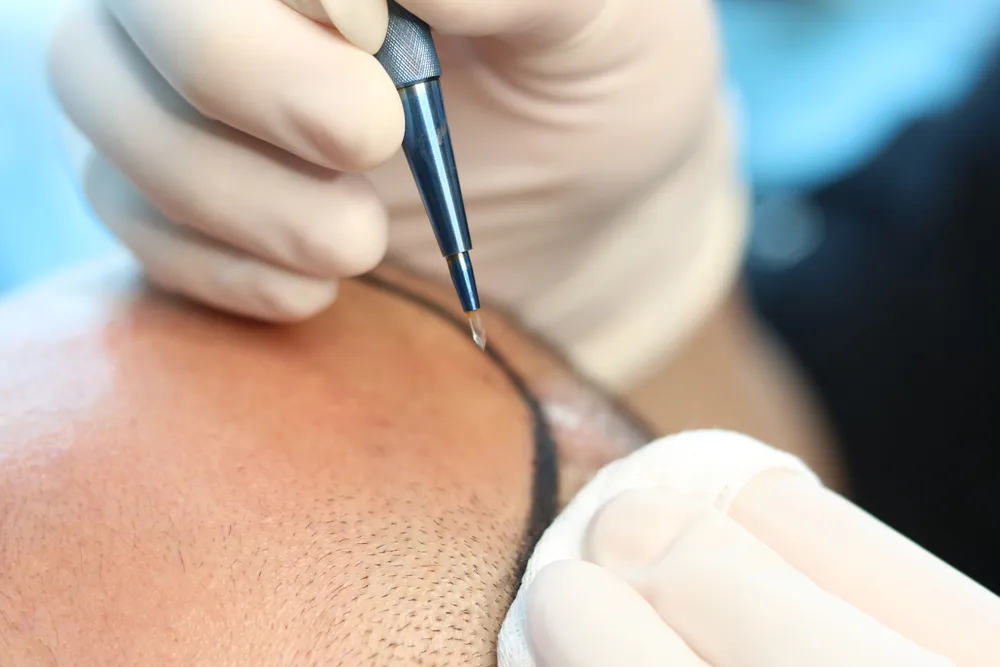
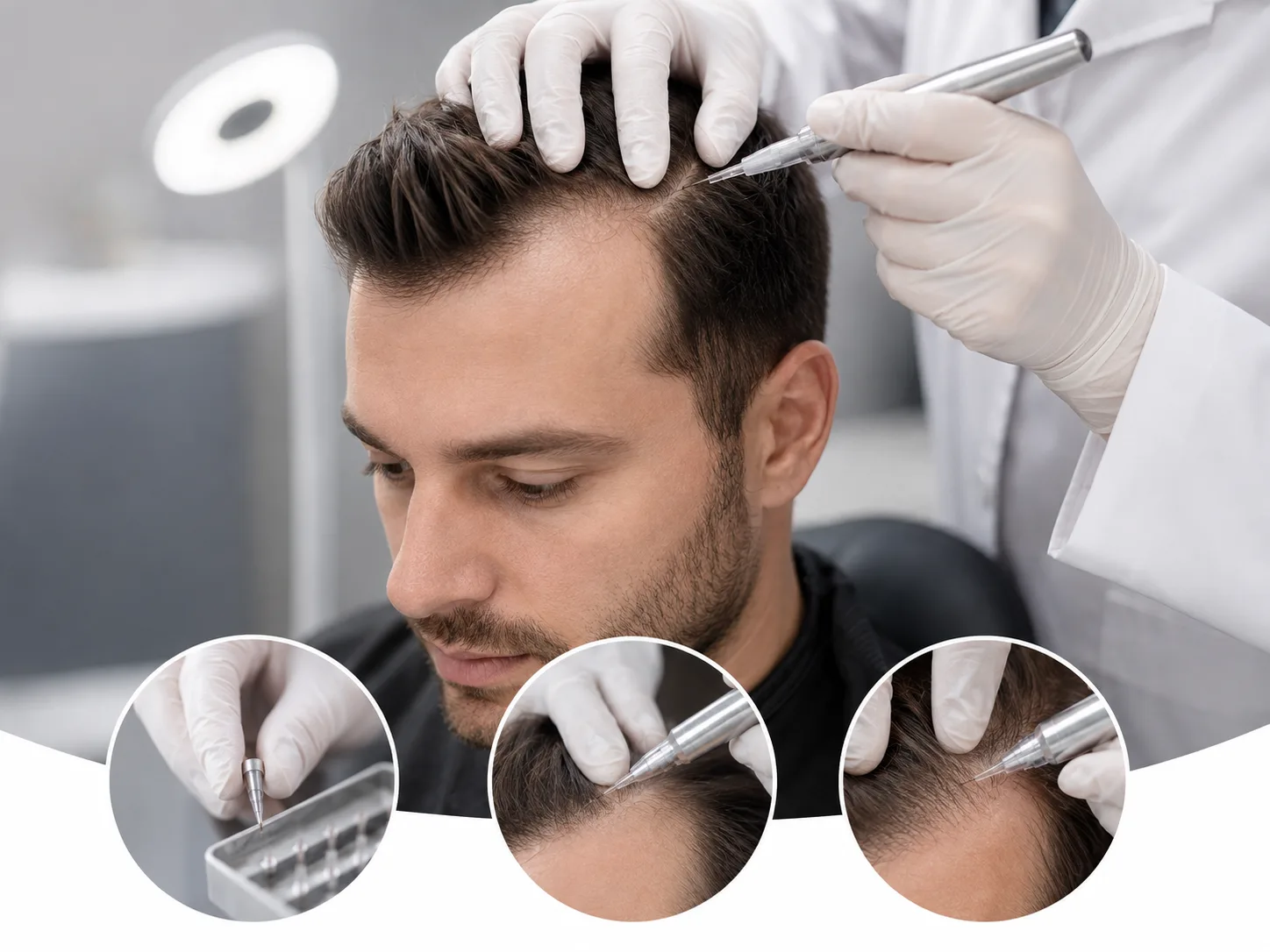
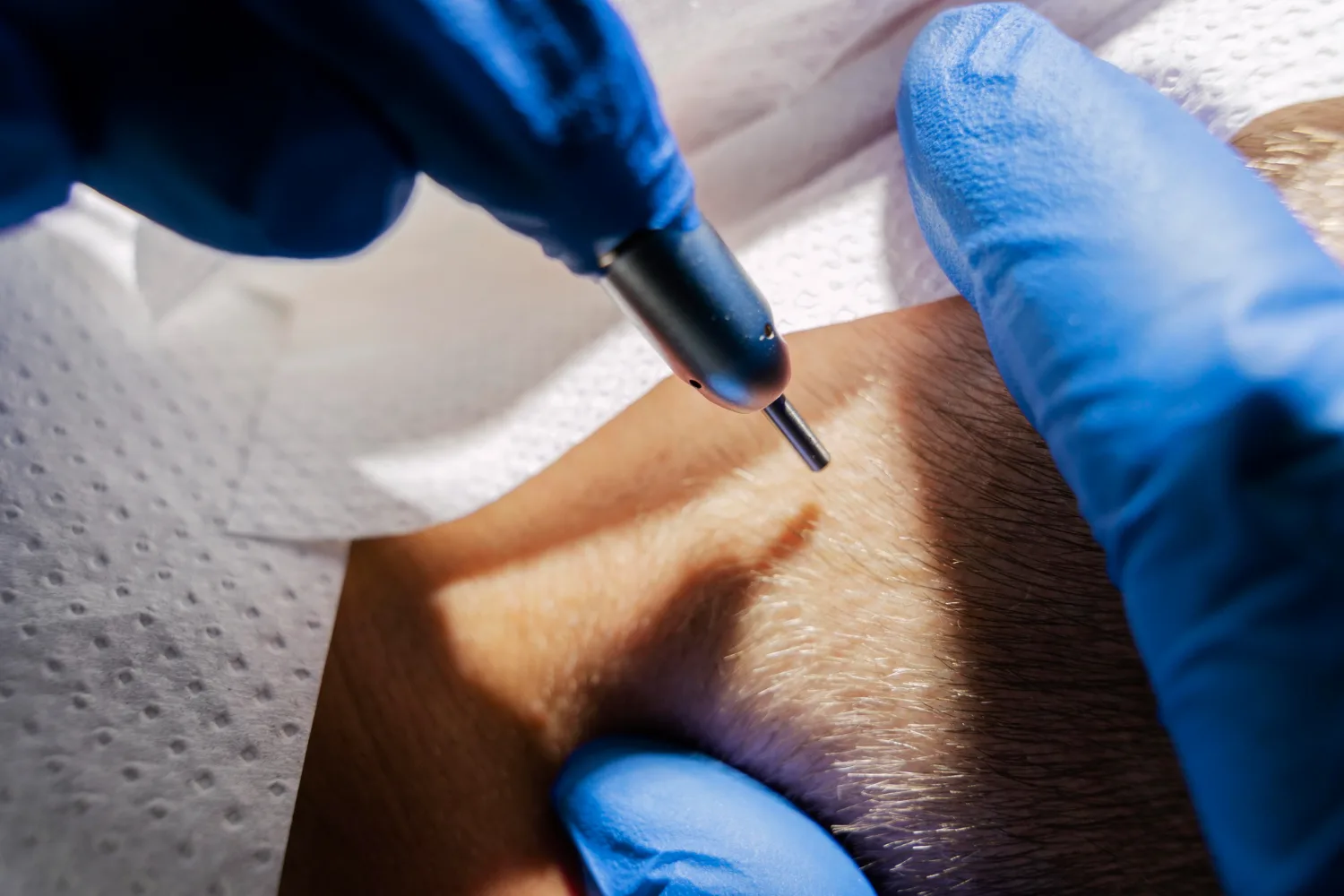
Manual Follicular Unit Extraction (FUE) represents one of the foundational techniques in modern hair restoration surgery. In this method, the surgeon holds a small, sharp punch instrument and manually rotates it to separate each follicular unit from the surrounding scalp tissue. The surgeon then extracts each graft individually using fine forceps. This technique demands high levels of hand-eye coordination, surgical experience, and anatomical knowledge. The surgeon controls every aspect of the extraction process, including the angle, depth, and rotation of the punch. This direct control distinguishes manual FUE from other extraction methods that rely on mechanical or automated assistance.
How Does Manual FUE Differ from Other FUE Techniques?
Manual FUE uses a handheld punch with direct surgeon control, while motorized and robotic methods use mechanical or automated systems.
Manual FUE differs from motorized FUE, robotic FUE, and pneumatic-assisted systems in several critical ways. Motorized FUE uses a small electric motor to rotate the punch at a set speed. Robotic FUE employs a computer-guided arm to identify and extract grafts. NeoGraft uses pneumatic suction to assist with extraction. Manual FUE relies entirely on the surgeon's hand movements and tactile sensitivity. The surgeon feels the resistance of the tissue and adjusts the technique in real time. This tactile feedback allows the surgeon to respond immediately to variations in hair angle, skin thickness, and follicle depth. No machine can replicate this level of sensory adaptation.
What Are the Steps in a Manual FUE Procedure?
The procedure involves donor assessment, punch alignment, individual graft extraction, graft preservation, and recipient implantation.
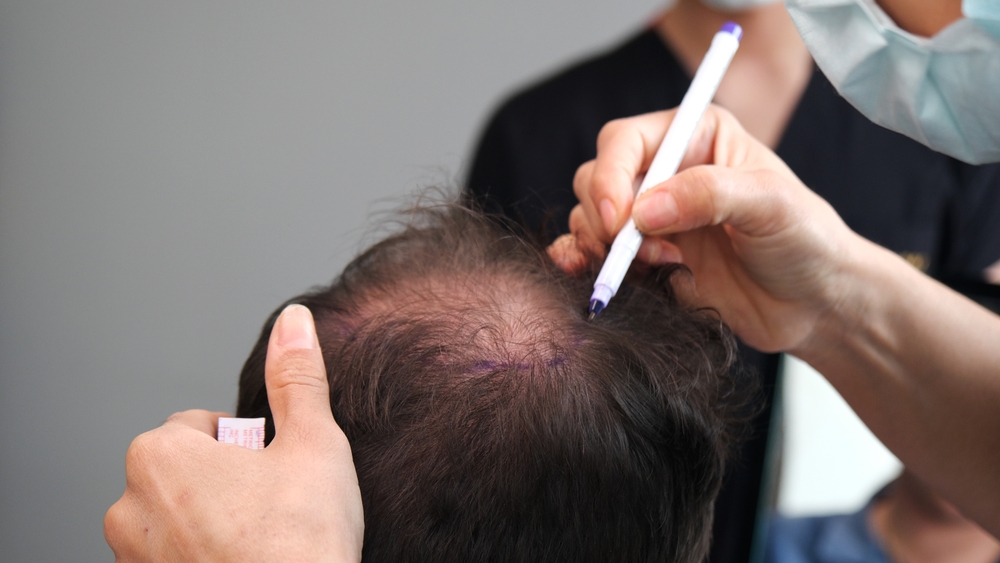
The manual FUE procedure follows a structured sequence. First, the surgeon examines the donor area and maps the hair growth patterns. This step identifies the direction, angle, and density of each follicular unit. Second, the surgeon aligns the punch with the natural angle of the hair shaft. Third, the surgeon manually rotates the punch to score the skin around the follicle. Fourth, the surgeon extracts the graft using fine forceps. Fifth, the team places the graft in a preservation solution. Finally, the surgeon implants the grafts into the recipient area. Each step requires precision and patience.
Why Do Some Surgeons Prefer Manual FUE?
The surgeon controls every movement of the punch, allowing real-time adjustments based on tactile feedback.
Surgeons prefer manual FUE because it gives them complete control over the extraction process. The human hand can make micro-adjustments that machines cannot replicate. When the surgeon feels unusual resistance, they can change the angle or depth instantly. This control proves especially valuable when working near scar tissue or in areas with irregular hair growth. The surgeon decides how much pressure to apply, how fast to rotate the punch, and when to stop. This decision-making happens in milliseconds and relies on years of surgical experience.
How Does Enhanced Tactile Feedback Improve Outcomes?
The surgeon feels tissue resistance and follicle position, which reduces damage to delicate structures.
Tactile feedback plays a crucial role in manual FUE. The surgeon's fingers transmit information about tissue density, follicle depth, and skin elasticity. This sensory input guides the surgeon's movements. When a follicle curves beneath the skin, the surgeon feels the change and adjusts the punch angle. Motorized systems cannot detect these subtle variations. Research shows that tactile feedback reduces the risk of cutting through the follicle, a problem called follicular transection (Unger, 2019).
Why Does Manual FUE Adapt Better to Individual Hair Angles?
The surgeon can change the punch angle for each follicle, matching its natural direction.
Every person's hair grows at a unique angle. Some hairs emerge perpendicular to the scalp. Others grow at sharp angles. Curly and wavy hair often changes direction beneath the skin. Manual FUE allows the surgeon to align the punch with each individual hair angle. This customization prevents the punch from slicing through the follicle. Motorized punches rotate at a fixed angle and speed, which limits this flexibility. Robotic systems use cameras to estimate angles, but they cannot match the nuanced judgment of an experienced surgeon.
How Does Precise Depth Control Protect the Grafts?
The surgeon controls exactly how deep the punch goes, avoiding damage to deeper structures.
Depth control matters greatly in FUE. If the punch goes too shallow, it fails to separate the follicle from the tissue. If it goes too deep, it damages the follicle or cuts blood vessels. Manual FUE gives the surgeon direct control over depth. The surgeon stops the punch at the exact moment the graft releases. This precision protects the follicular bulb and surrounding tissue. Studies indicate that controlled depth reduces graft trauma and improves survival rates (Bernstein, 2020).
How Does Manual FUE Reduce Excessive Tissue Removal?
The surgeon extracts only the necessary tissue around each follicle, preserving the donor area.
Excessive tissue removal creates larger wounds in the donor area. These wounds take longer to heal and may leave visible marks. Manual FUE allows the surgeon to remove only the minimal tissue needed to free each graft. The surgeon can feel when the graft releases and stop immediately. This conservative approach preserves the donor area. Patients with limited donor hair benefit most from this tissue-sparing technique.
How Does Manual FUE Improve Preservation of Delicate Hair Follicles?
Gentle handling and immediate adjustments protect fragile follicles from crushing or cutting.
Hair follicles are delicate structures. They contain living cells that require careful handling. Manual FUE allows the surgeon to use the minimum force necessary. The surgeon can feel if a graft resists extraction and adjust the technique rather than pulling forcefully. This gentle approach maintains graft integrity. Research demonstrates that manual extraction produces grafts with intact surrounding tissue and better survival rates (Harris, 2018).
Which Patients Benefit Most from Manual FUE?
Why Do Patients with Curly Hair Need Manual FUE?
Curly hair grows at unpredictable angles beneath the skin, and manual control prevents transection.
Curly hair presents unique challenges in hair transplantation. The hair shaft curves beneath the scalp surface. A straight punch can easily cut through the follicle. Manual FUE allows the surgeon to follow the curve of each follicle. The surgeon changes the punch angle as the hair bends. This adaptability makes manual FUE the preferred choice for patients with curly hair. Studies show that curly hair has higher transection rates with motorized systems (Mohebi, 2021).
Why Is Manual FUE Ideal for Afro-Textured Hair?
Afro-textured hair has curved follicles and requires individualized extraction angles.
Afro-textured hair grows from curved follicles. These follicles often form a C-shape or S-shape beneath the skin. Standard punches cannot follow these curves. Manual FUE gives the surgeon the flexibility to adjust the punch path for each follicle. This technique reduces transection rates significantly in Afro-textured hair patients. Surgeons experienced in this population consistently report better outcomes with manual extraction (Rose, 2017).
How Does Manual FUE Help Patients with Wavy or Irregular Follicle Angles?
Wavy hair changes direction unpredictably, and manual control allows real-time angle adjustments.
Wavy hair does not follow a straight path beneath the skin. The follicle may angle left, then right, then straight down. Motorized punches cannot adapt to these changes. Manual FUE allows the surgeon to feel the follicle direction and adjust accordingly. This precision prevents the punch from transecting the graft. Patients with wavy hair experience better graft survival with manual techniques.
Why Do Patients with Limited Donor Hair Need Manual FUE?
Every graft counts in limited donor situations, and manual extraction maximizes usable grafts.
Some patients have limited donor hair available. This limitation may result from previous procedures, naturally low density, or advanced hair loss. In these cases, the surgeon must extract every possible graft without damage. Manual FUE provides the precision needed to harvest grafts from difficult areas. The surgeon can target specific follicles and avoid wasting donor tissue. This conservation proves critical for patients who may need future procedures.
How Does Manual FUE Help Individuals Requiring Maximum Donor Preservation?
Manual extraction removes minimal tissue and preserves donor density for future needs.
Young patients or those with progressive hair loss may need multiple procedures over their lifetime. Preserving donor hair becomes essential. Manual FUE extracts grafts with minimal surrounding tissue damage. This approach maintains the health of remaining follicles in the donor area. The surgeon can also select the best grafts while leaving weaker ones in place. This strategic harvesting supports long-term hair restoration planning.
Why Do Revision Hair Transplant Patients Benefit from Manual FUE?
Scar tissue and altered anatomy from previous surgeries require careful, individualized extraction.
Revision hair transplant patients often have scar tissue from previous procedures. This scar tissue changes the texture and elasticity of the scalp. Motorized punches may slip or cut unevenly in scarred areas. Manual FUE allows the surgeon to feel the tissue changes and adjust the technique. The surgeon can navigate around scars and extract grafts from adjacent healthy tissue. This flexibility makes manual FUE the safest choice for revision cases.
How Does Manual FUE Assist Patients with Previous Scarring?
Scarred tissue requires tactile feedback and controlled pressure that only manual extraction provides.
Previous scarring from accidents, burns, or surgeries complicates hair transplantation. The scar tissue may be thicker, harder, or more brittle than normal skin. The surgeon must feel these differences to avoid damaging the graft or surrounding tissue. Manual FUE provides this essential feedback. The surgeon can vary the pressure and rotation speed based on tissue resistance. This adaptability reduces the risk of graft failure in scarred areas.
Why Do Individuals Seeking Maximum Hairline Precision Choose Manual FUE?
The hairline requires the finest, most carefully selected grafts, which manual extraction provides.
The hairline demands the highest level of precision. Single-hair grafts create the most natural appearance. These grafts must come from the finest donor hairs. Manual FUE allows the surgeon to select and extract individual single-hair follicles with care. The surgeon can avoid multi-hair grafts in the hairline zone. This selection process creates a soft, natural-looking hairline that blends with existing hair.
How Does Manual FUE Improve Surgical Precision?
What Is Surgeon-Controlled Punch Rotation?
The surgeon decides how fast and how far to rotate the punch based on real-time feedback.
Surgeon-controlled punch rotation means the surgeon determines the speed and extent of each rotation. Some follicles require a full 360-degree rotation. Others need only a partial turn. The surgeon feels the tissue separation and stops when the graft releases. This control prevents over-rotation, which can damage the follicle. It also prevents under-rotation, which leaves the graft attached to surrounding tissue.
Each follicle has a unique angle, and manual adjustment prevents transection.
No two follicles grow at exactly the same angle. Even neighboring hairs may diverge by several degrees. Manual FUE allows the surgeon to customize the extraction angle for each graft. The surgeon aligns the punch with the hair shaft before rotating. This alignment ensures the punch encircles the follicle without cutting it. Customized angles reduce transection rates and improve graft quality.
What Is Follicle-by-Follicle Decision Making?
The surgeon evaluates each follicle individually and decides the best extraction approach.
Follicle-by-follicle decision making means the surgeon assesses each graft before extraction. The surgeon considers the hair angle, depth, curl pattern, and surrounding tissue. Based on this assessment, the surgeon chooses the punch size, angle, and rotation technique. This individualized approach treats each follicle as a unique surgical target. No automated system can match this level of personalized decision making.
How Does Manual FUE Minimize Follicular Transection?
Real-time adjustments prevent the punch from cutting through the follicle.
Follicular transection occurs when the punch cuts through the hair follicle. This damage destroys the graft and wastes donor hair. Manual FUE minimizes transection through constant vigilance. The surgeon watches the graft as it separates from the tissue. If the punch starts to cut the follicle, the surgeon feels the resistance change and adjusts immediately. Studies report transection rates as low as 2-5% with experienced manual FUE surgeons (Unger, 2019).
How Does Manual FUE Maintain Graft Integrity?
Gentle extraction preserves the surrounding tissue and protects the follicular bulb.
Graft integrity refers to the structural completeness of the extracted follicle. A high-quality graft includes the hair shaft, follicular bulb, and surrounding connective tissue. Manual FUE maintains this integrity by allowing the surgeon to extract grafts with minimal trauma. The surgeon can feel when the graft releases and remove it gently. This care prevents crushing, stretching, or drying of the follicle. Intact grafts survive better after implantation.
What Are the Advantages of Manual FUE?
How Does Manual FUE Achieve High Precision?
Direct surgeon control allows micro-adjustments that machines cannot replicate.
High precision defines manual FUE. The human hand can make movements as small as fractions of a millimeter. The surgeon uses this precision to align the punch exactly with each follicle. This accuracy proves especially important in areas with high follicle density or irregular growth patterns. Precision extraction preserves neighboring follicles and maintains donor area quality.
How Does Manual FUE Produce Better Graft Quality?
Gentle handling and minimal trauma create grafts with intact tissue and better survival potential.
Better graft quality results from careful extraction. Manual FUE allows the surgeon to avoid crushing or stretching the follicle. The graft emerges with its surrounding tissue intact. This intact tissue protects the follicle during the preservation and implantation phases. Research shows that grafts with intact connective tissue survive at higher rates (Bernstein, 2020).
How Does Manual FUE Preserve the Donor Area?
Minimal tissue removal and selective harvesting maintain donor density and appearance.
Excellent donor area preservation represents a major advantage of manual FUE. The surgeon removes only the tissue necessary to free each graft. This conservative approach leaves smaller wounds that heal faster. The surgeon can also space extractions evenly to avoid visible thinning. Patients with limited donor hair or those planning future procedures benefit most from this preservation.
How Does Manual FUE Handle Complex Cases?
The surgeon can adapt the technique to unusual anatomy, scar tissue, or difficult hair types.
Flexibility for complex cases sets manual FUE apart. Every patient presents unique challenges. Some have scar tissue. Others have extremely curly hair. Some have low donor density. Manual FUE allows the surgeon to adapt the technique to each situation. The surgeon can change punch sizes, angles, and extraction patterns as needed. This adaptability makes manual FUE suitable for cases that automated systems cannot handle.
How Does Manual FUE Potentially Lower Follicle Damage?
Controlled pressure and immediate feedback prevent crushing and cutting of delicate follicles.
Lower follicle damage occurs because the surgeon uses only the force necessary. Motorized systems apply consistent torque, which may be too much for delicate follicles. Manual FUE allows the surgeon to use feather-light pressure. The surgeon can also stop immediately if something feels wrong. This responsiveness protects fragile grafts from damage.
How Does Manual FUE Support Natural Hairline Design?
Careful selection and extraction of single-hair grafts create the most natural hairline.
Natural hairline design requires single-hair grafts placed at precise angles. Manual FUE allows the surgeon to identify and extract these fine grafts selectively. The surgeon can choose the thinnest hairs for the frontal hairline. This selection creates a soft, feathered appearance that mimics natural hair growth. The result blends seamlessly with the patient's existing hairline.
Why Is Manual FUE Suitable for Small and Medium Sessions?
The technique excels when the surgeon needs to extract a limited number of grafts with maximum care.
Small and medium sessions typically involve 500 to 2,000 grafts. These sessions allow the surgeon to work at a comfortable pace. Manual FUE shines in this range because the surgeon can focus on each graft without time pressure. The technique produces excellent results for hairline refinement, crown coverage, or touch-up procedures. Patients seeking subtle improvements often prefer these smaller, precise sessions.
Are There Any Limitations of Manual FUE?
Why Does Manual FUE Take Longer?
Each graft requires individual attention, which extends the surgical time.
Longer surgical time represents the main limitation of manual FUE. The surgeon must extract each graft individually. This process takes more time than motorized extraction, where the machine rotates the punch automatically. A typical manual FUE session may last 6 to 8 hours for 2,000 grafts. Patients must understand this time commitment before choosing the technique.
What Physical Demands Does Manual FUE Place on the Surgeon?
Hours of precise hand movements require significant stamina and concentration.
Manual FUE demands intense physical effort from the surgeon. The surgeon holds a small instrument and makes repetitive, precise movements for hours. This work strains the hands, wrists, and shoulders. The surgeon must maintain perfect concentration throughout the procedure. Fatigue can affect precision, so experienced surgeons pace themselves carefully. This physical demand limits the number of grafts a surgeon can extract in one day.
Why Does Manual FUE Depend So Much on Surgical Skill?
The technique requires years of training and experience to perform consistently well.
Higher dependence on surgical skill means that not all surgeons can perform manual FUE effectively. The technique requires excellent hand-eye coordination, tactile sensitivity, and anatomical knowledge. Surgeons must train extensively before achieving consistent results. Patients should choose surgeons with documented experience in manual extraction. The skill level directly affects graft survival and cosmetic outcomes.
How Does Limited Daily Graft Capacity Affect Treatment Planning?
Surgeons can extract fewer grafts per day manually, which may require multiple sessions for large cases.
Limited daily graft capacity means that manual FUE may not suit patients needing very large sessions. A surgeon might extract 1,500 to 2,000 grafts manually in one day. Patients needing 4,000 grafts may require two sessions. This limitation affects treatment planning and cost. Patients with extensive hair loss should discuss graft targets with their surgeon during consultation.
What Is the Learning Curve for Surgeons?
Surgeons need months or years of practice to achieve low transection rates and high graft quality.
The learning curve for manual FUE is steep. New surgeons may experience high transection rates initially. They must practice on hundreds of grafts before achieving consistent results. This learning process requires patience and dedication. Patients should ask about their surgeon's experience with manual FUE before committing to the procedure.
Manual FUE vs Motorized FUE
Manual FUE uses hand rotation, while motorized FUE uses an electric motor to rotate the punch.
|
Feature
|
Manual FUE
|
Motorized FUE
|
|
Punch rotation
|
Hand-controlled
|
Motor-driven
|
|
Speed control
|
Surgeon decides
|
Machine sets speed
|
|
Tactile feedback
|
Direct
|
Limited
|
|
Angle adjustment
|
Real-time
|
Fixed or limited
|
|
Depth control
|
Surgeon feels
|
Pre-set
|
|
Physical demand
|
High
|
Moderate
|
How Do the Speeds Compare?
Motorized FUE extracts grafts faster, while manual FUE prioritizes precision over speed.
Motorized FUE extracts grafts more quickly than manual FUE. The motor rotates the punch at hundreds of revolutions per minute. This speed allows the surgeon to process more grafts per hour. Manual FUE proceeds more slowly because the surgeon controls each rotation. However, speed does not always equal quality. Some surgeons prefer slower, more careful extraction for certain patients.
How Does Surgeon Control Differ?
Manual FUE gives the surgeon complete control, while motorized FUE shares control with the machine.
Surgeon control varies significantly between the two techniques. Manual FUE gives the surgeon 100% control over every movement. Motorized FUE gives the surgeon control over placement but the machine controls rotation. This difference matters most in complex cases where the surgeon needs to change technique mid-extraction. Manual FUE allows instant adaptation. Motorized systems require the surgeon to stop and adjust settings.
How Does Graft Quality Compare?
Both techniques produce good grafts, but manual FUE may produce better grafts in complex cases.
Graft quality depends more on surgeon skill than on the device. A skilled surgeon using motorized FUE can produce excellent grafts. However, manual FUE may produce superior grafts in patients with curly hair, scar tissue, or irregular follicle angles. The tactile feedback allows the surgeon to avoid damaging delicate grafts. Studies show comparable graft survival rates when experienced surgeons use either technique (Harris, 2018).
How Does Follicular Transection Risk Compare?
Transection rates depend on surgeon experience, but manual FUE may reduce transection in complex cases.
Follicular transection risk varies by technique and surgeon skill. Motorized punches rotate at a fixed speed, which may transect curved follicles. Manual FUE allows the surgeon to adjust rotation based on follicle shape. In straight hair, both techniques achieve low transection rates. In curly or Afro-textured hair, manual FUE typically achieves lower transection rates.
How Does Recovery Differ?
Recovery is similar for both techniques, though manual FUE may produce smaller wounds in some cases.
Recovery differences between manual and motorized FUE are minimal. Both techniques create small, circular wounds in the donor area. These wounds heal within 7 to 10 days. Some surgeons believe that manual FUE creates smaller wounds because the surgeon controls tissue removal precisely. However, modern motorized punches have become very refined. Most patients experience similar healing times regardless of technique.
What Are the Clinical Indications for Each Technique?
Manual FUE suits complex cases, while motorized FUE suits larger sessions with straight hair.
|
Clinical Situation
|
Recommended Technique
|
|
Curly or Afro-textured hair
|
Manual FUE
|
|
Large sessions (3,000+ grafts)
|
Motorized FUE
|
|
Scar tissue or revision cases
|
Manual FUE
|
|
Straight hair, standard cases
|
Either technique
|
|
Limited donor hair
|
Manual FUE
|
|
Hairline precision work
|
Manual FUE
|
Manual FUE vs Robotic FUE
How Do Robotic Systems Work?
Robotic systems use cameras and algorithms to identify and extract grafts automatically.
Robotic FUE systems, such as the ARTAS system, use digital cameras to map the donor area. The computer identifies follicular units based on hair density, angle, and spacing. The robotic arm then aligns the punch and extracts the graft. The system operates with minimal human intervention during the extraction phase. This automation appeals to clinics seeking efficiency and consistency.
How Does Human Judgment Compare to Automation?
Human judgment adapts to unexpected variations, while automation follows programmed rules.
Human judgment offers advantages that automation cannot match. The surgeon can see and feel things that cameras miss. For example, the surgeon might notice subtle skin texture changes that indicate scar tissue beneath the surface. The surgeon can also decide to skip a graft that looks weak or damaged. Robotic systems extract whatever they identify, regardless of graft quality. This difference makes human judgment superior for complex cases.
How Does Flexibility Compare in Difficult Donor Areas?
Manual FUE adapts to any donor area, while robotic systems work best in flat, uniform regions.
Flexibility in difficult donor areas favors manual FUE. Robotic systems require a flat, stable surface for the cameras to focus. They work best on the back of the scalp where the skin is relatively uniform. Manual FUE works anywhere the surgeon can reach, including the sides of the head, the nape, and areas with irregular contours. The surgeon can also work around moles, scars, or other obstacles that confuse robotic cameras.
How Does Hair Type Adaptability Compare?
Manual FUE handles all hair types, while robotic systems work best with straight, dark hair on light skin.
Hair type adaptability represents a major limitation of robotic systems. Cameras detect hair based on contrast between the hair and skin. Robotic systems work best with dark hair on light skin. They struggle with blonde, gray, or white hair. They also struggle with very curly or Afro-textured hair. Manual FUE handles all hair types equally well because the surgeon uses visual and tactile cues rather than camera contrast.
How Does Precision Compare?
Robotic systems offer consistent precision, but manual FUE offers adaptive precision that responds to real-time conditions.
Precision comparison depends on the definition of precision. Robotic systems offer mechanical precision, meaning they repeat the same movement exactly every time. This consistency works well for straight hair in uniform tissue. Manual FUE offers adaptive precision, meaning the surgeon changes technique based on real-time feedback. This adaptability produces better results in complex or variable conditions.
What Are the Clinical Limitations of Robotic Systems?
Robotic systems struggle with curved follicles, low contrast, and complex anatomy.
Robotic systems face several clinical limitations. They cannot extract grafts from areas with poor camera visibility. They struggle with follicles that curve or change direction. They require regular calibration and maintenance. They also involve high equipment costs that clinics pass on to patients. These limitations mean that robotic FUE suits a narrower range of patients than manual FUE.
Manual FUE vs NeoGraft
What Is NeoGraft?
NeoGraft is a pneumatic-assisted FUE system that uses suction to remove grafts after extraction.
NeoGraft represents a specific brand of FUE device. It combines a motorized punch with pneumatic suction. The motor rotates the punch to separate the graft. Then suction pulls the graft into a collection chamber. This system reduces the need for manual forceps extraction. It also keeps grafts moist during collection. Many clinics advertise NeoGraft as a minimally invasive hair transplant option.
Suction pulls the graft from the tissue after the punch separates it, reducing manual handling.
Pneumatic-assisted extraction uses air pressure to remove grafts. After the punch scores the skin around the follicle, suction pulls the graft free. This method reduces the surgeon's need to grasp the graft with forceps. Proponents argue that this reduces handling trauma. Critics note that suction may dehydrate or damage delicate grafts. The debate continues in the hair transplant community.
How Does Surgeon Involvement Differ?
NeoGraft reduces direct surgeon involvement during extraction, while manual FUE requires constant surgeon attention.
Surgeon involvement differs significantly between the two techniques. Manual FUE requires the surgeon to extract every graft personally. NeoGraft allows a technician to operate the device while the surgeon supervises. Some clinics use NeoGraft precisely because it reduces the surgeon's physical workload. However, reduced surgeon involvement may also reduce quality control. Patients should ask who performs the actual extraction when considering NeoGraft.
Which Patients Benefit More from Each Technique?
Manual FUE benefits patients needing precision, while NeoGraft benefits clinics seeking efficiency.
|
Patient Need
|
Best Technique
|
|
Maximum precision
|
Manual FUE
|
|
Curly or Afro-textured hair
|
Manual FUE
|
|
Scar tissue or revision
|
Manual FUE
|
|
Large volume, straight hair
|
NeoGraft
|
|
Cost-sensitive option
|
NeoGraft
|
|
Hairline refinement
|
Manual FUE
|
Why Does Surgeon Experience Matter More Than the Device?
How Should Surgeons Select Techniques Based on Patient Characteristics?
Experienced surgeons analyze each patient's hair type, donor quality, and goals before choosing a technique.
Technique selection based on patient characteristics represents the hallmark of expert surgical practice. The surgeon examines the patient's hair texture, curl pattern, density, and scalp characteristics. The surgeon also considers the patient's goals, such as hairline design or crown coverage. Based on this analysis, the surgeon recommends manual FUE, motorized FUE, or a combination. This personalized approach produces better outcomes than using the same device for every patient.
Why Is Surgical Planning So Important?
Detailed planning ensures the surgeon uses the right technique for the right grafts in the right places.
Surgical planning determines the success of every hair transplant. The surgeon must plan the donor extraction pattern, the recipient site design, and the graft distribution. Planning also includes choosing the extraction technique. For example, the surgeon might use manual FUE for the hairline grafts and motorized FUE for the crown. This hybrid approach maximizes precision where it matters most.
How Does Donor Area Evaluation Guide Technique Selection?
The surgeon assesses donor density, hair quality, and available grafts before deciding how to extract.
Donor area evaluation provides critical information for technique selection. The surgeon measures donor density using digital imaging or manual counting. The surgeon assesses hair caliber, which affects the visual density of the result. The surgeon also evaluates scalp laxity and skin thickness. These factors influence punch size selection and extraction technique. A thorough evaluation prevents over-harvesting and ensures sustainable results.
How Does Hairline Design Expertise Affect Outcomes?
Creating a natural hairline requires artistic skill and technical precision that only experience provides.
Hairline design expertise separates good surgeons from great ones. The hairline frames the face and determines the aesthetic success of the transplant. Experienced surgeons understand hairline architecture, including the widow's peak, temporal points, and frontal tuft. They know how to place single-hair grafts at the proper angle and density. This expertise matters more than the extraction device used.
Why Do Graft Handling Skills Matter?
Proper handling during extraction, preservation, and implantation determines graft survival.
Graft handling skills affect survival rates. The surgeon must extract grafts without crushing them. The team must keep grafts moist and cool during the procedure. The surgeon must implant grafts at the correct depth and angle. These skills require years of practice. A poorly handled graft from a robotic system will die just as quickly as a poorly handled graft from manual extraction. The surgeon's skill matters more than the device.
How Does Clinical Decision-Making Go Beyond Technology?
Experienced surgeons make hundreds of micro-decisions during surgery that no device can make.
Clinical decision-making extends far beyond technology. During surgery, the surgeon constantly evaluates graft quality, tissue response, and patient comfort. The surgeon decides when to change punch size, when to move to a different donor area, and when to take a break. These decisions require judgment that machines cannot replicate. The best outcomes come from skilled surgeons using appropriate technology, not from technology alone.
Which Factors Influence Technique Selection?
How Does Hair Texture Affect the Choice?
Fine, coarse, straight, curly, and wavy hair each respond differently to extraction techniques.
Hair texture influences technique selection significantly. Fine hair requires smaller punches to avoid damaging the follicle. Coarse hair may need larger punches but tolerates more handling. Straight hair works well with motorized systems. Curly and wavy hair typically requires manual extraction. The surgeon examines the hair texture during consultation and plans accordingly.
Why Does Hair Curl Pattern Matter?
Curved follicles beneath the skin require angle adjustments that manual control provides.
Hair curl pattern determines the follicle shape beneath the skin. Straight hair grows from straight follicles. Curly hair grows from curved follicles. The curl pattern affects how the punch should enter the skin. Manual FUE allows the surgeon to follow the curve. Motorized systems with fixed angles cannot adapt to these curves.
How Does Donor Density Influence the Decision?
High density allows more extraction options, while low density requires careful, selective harvesting.
Donor density measures how many follicles exist per square centimeter. High density (80+ follicles per cm²) gives the surgeon more options. The surgeon can use larger punches or motorized systems without depleting the donor area. Low density (below 60 follicles per cm²) requires careful conservation. Manual FUE allows selective harvesting that preserves the donor area better.
Why Does Skin Thickness Matter?
Thick skin requires deeper punches, while thin skin needs shallow, careful extraction.
Skin thickness varies across the scalp and between individuals. Thick scalp skin requires the punch to go deeper to reach the follicular bulb. Thin skin risks damage if the punch goes too deep. The surgeon must adjust extraction depth based on skin thickness. Manual FUE allows this adjustment in real time. Motorized systems require pre-set depths that may not suit all areas.
How Do Previous Hair Transplants Affect Technique Choice?
Scar tissue and altered anatomy from previous surgeries require manual precision.
Previous hair transplants change the surgical landscape. FUT scars create linear scar tissue. Previous FUE creates scattered scar tissue. Both types of scarring affect tissue texture and graft extraction. Manual FUE allows the surgeon to navigate these changes safely. The surgeon can feel scar tissue and adjust technique to avoid damage.
How Does the Extent of Hair Loss Guide Planning?
The amount of hair loss determines how many grafts the patient needs and how to harvest them.
The extent of hair loss determines the treatment plan. Patients with early hair loss may need only 1,000 grafts for the hairline. Patients with advanced hair loss may need 4,000 grafts or more. The graft requirement influences technique selection. Large sessions may favor motorized FUE for speed. Small, precise sessions favor manual FUE for quality.
How Does the Number of Required Grafts Affect the Decision?
Large graft numbers may require faster techniques, while smaller numbers allow manual precision.
The number of required grafts directly affects technique selection. Sessions under 2,000 grafts suit manual FUE well. The surgeon can work carefully without time pressure. Sessions over 3,000 grafts may require motorized assistance to complete in a reasonable time. Some surgeons use a hybrid approach, extracting hairline grafts manually and crown grafts with motorized assistance.
How Do Patient Expectations Shape the Plan?
Patients seeking maximum naturalness may prefer manual FUE, while patients seeking speed may accept motorized options.
Patient expectations play a crucial role in technique selection. Some patients prioritize the most natural result possible. These patients may prefer manual FUE for hairline work. Other patients prioritize completing the procedure in a single day. These patients may accept motorized FUE. The surgeon discusses these expectations during consultation and recommends accordingly.
What Does Current Scientific Evidence Say About Manual FUE?
What Clinical Outcomes Does the Literature Report?
Studies report high graft survival, low transection rates, and good cosmetic outcomes with manual FUE.
Clinical outcomes reported in peer-reviewed literature support the effectiveness of manual FUE. Multiple studies document graft survival rates above 90% when experienced surgeons perform the technique. Cosmetic outcomes include natural hairline design, adequate density, and patient satisfaction. The literature emphasizes that surgeon experience correlates strongly with outcome quality (Unger, 2019).
What Follicular Transection Rates Does Research Show?
Experienced manual FUE surgeons achieve transection rates of 2-10%, depending on hair type and technique.
Follicular transection rates vary by study and technique. Research reports transection rates of 2-5% for experienced manual FUE surgeons working with straight hair. Rates increase to 5-10% for curly or Afro-textured hair, even with manual techniques. These rates compare favorably to some motorized systems, which report transection rates of 3-15% depending on the device and settings (Bernstein, 2020).
What Does Research Say About Graft Survival?
Graft survival rates for manual FUE typically range from 85% to 95% in published studies.
Graft survival rates measure how many transplanted hairs continue growing after the procedure. Published studies report survival rates of 85% to 95% for manual FUE grafts. These rates depend on graft handling, preservation techniques, and implantation methods. The extraction technique itself contributes to survival by minimizing trauma to the follicular bulb. Studies show that gentle manual extraction preserves the critical structures needed for graft survival (Harris, 2018).
How Does the Literature Describe Donor Healing?
Manual FUE typically produces small wounds that heal within 7-10 days with minimal visible scarring.
Donor healing after manual FUE proceeds predictably. The small circular wounds close within a few days. Crusting resolves within 7 to 10 days. The donor area returns to a near-normal appearance within 2 to 3 weeks. Studies note that manual extraction with small punches (0.8-0.9 mm) produces wounds that heal with minimal visible marks. Proper wound spacing prevents the appearance of over-harvesting (Rose, 2017).
What Do Studies Report About Cosmetic Outcomes?
Cosmetic outcomes depend on surgical planning, artistic skill, and graft survival, with manual FUE supporting excellent results when performed by experts.
Cosmetic outcomes encompass hairline design, density, direction, and overall appearance. Research indicates that these outcomes depend more on surgical planning and artistic skill than on the extraction device. However, manual FUE supports excellent outcomes by allowing precise hairline graft selection and careful extraction. Studies using patient satisfaction surveys report high satisfaction rates for manual FUE procedures (Mohebi, 2021).
How Does Surgeon Expertise Affect Success?
Surgeon experience is the strongest predictor of successful outcomes across all FUE techniques.
The role of surgeon expertise in success cannot be overstated. Studies consistently show that experienced surgeons achieve lower transection rates, higher graft survival, and better cosmetic outcomes regardless of technique. One study found that surgeons with more than 5 years of FUE experience achieved 40% lower transection rates than less experienced surgeons using the same device. This finding underscores that the surgeon matters more than the machine (Unger, 2019).
What Are Common Misconceptions About Manual FUE?
Is Manual FUE Outdated?
No. Manual FUE remains a current, valuable technique that skilled surgeons choose for specific patients.
Manual FUE is not outdated. While motorized and robotic systems represent technological advances, they do not replace manual technique. Many of the world's most experienced hair transplant surgeons continue to use manual FUE for selected cases. They choose manual extraction because it offers advantages that technology cannot replicate. The technique evolves as surgeons refine their skills and instruments improve.
Does Slower Mean Better?
Slower extraction allows more care, but speed alone does not determine quality.
Slower does not automatically mean better. Quality depends on skill, not speed. A slow, inexperienced surgeon may produce poor results. A fast, experienced surgeon may produce excellent results. However, manual FUE does allow the surgeon to slow down when necessary. This flexibility to take extra time with difficult grafts improves quality in complex cases.
Is Robotic FUE Always More Accurate?
No. Robotic systems excel in specific conditions but struggle with curved follicles and low contrast.
Robotic FUE is not always more accurate. Robotic systems offer mechanical consistency, but they lack adaptive judgment. They struggle with curved follicles, low hair-to-skin contrast, and complex anatomy. Manual FUE often produces more accurate results in these situations. Accuracy depends on the match between the technology and the patient's characteristics.
Is Manual FUE Only for Small Procedures?
No. Experienced surgeons can perform large sessions manually, though it requires more time and stamina.
Manual FUE is not limited to small procedures. Experienced surgeons can extract 2,500 to 3,000 grafts manually in a single day. However, this requires significant physical stamina and concentration. Some surgeons prefer to limit manual sessions to 2,000 grafts to maintain quality. Patients needing larger sessions may benefit from a combination of manual and motorized techniques.
How Do Surgeons Decide Between Manual and Motorized FUE?
What Happens During Patient Consultation?
The surgeon discusses the patient's goals, examines their hair, and explains which technique suits their needs.
Patient consultation forms the foundation of technique selection. The surgeon asks about the patient's goals, concerns, and expectations. The surgeon explains the available techniques and their advantages. The surgeon also discusses the time commitment, cost, and recovery process. This conversation helps the patient understand why the surgeon recommends a specific technique.
What Does Clinical Examination Reveal?
The surgeon examines hair type, donor density, scalp condition, and hair loss pattern.
Clinical examination provides objective data for decision-making. The surgeon examines the hair under magnification to assess curl pattern, caliber, and density. The surgeon evaluates the scalp for scarring, inflammation, or other conditions. The surgeon measures the donor area to estimate available grafts. This examination identifies factors that favor manual or motorized extraction.
What Is Donor Mapping?
Donor mapping identifies the best areas for extraction and plans the harvest pattern.
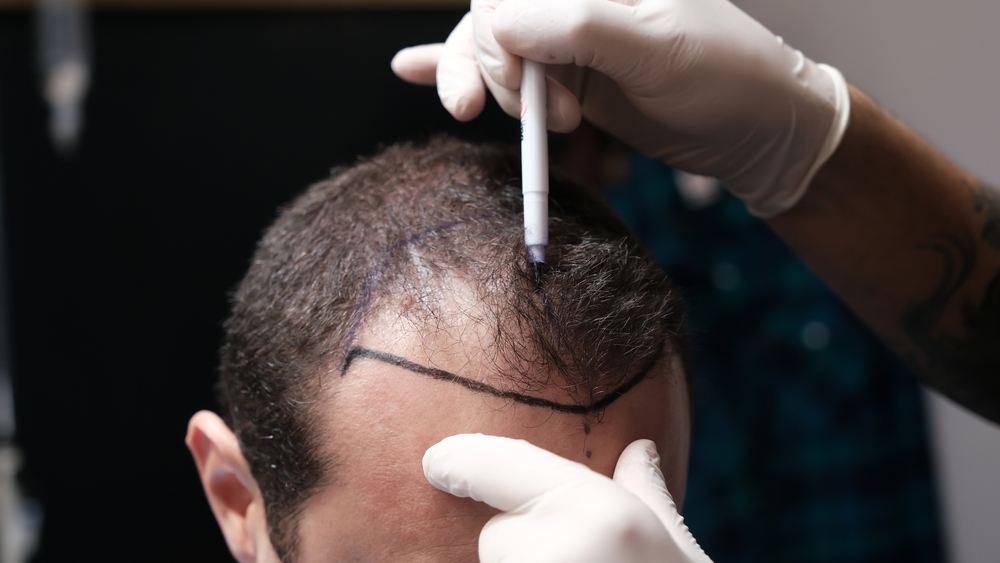
Donor mapping involves creating a detailed plan of the donor area. The surgeon identifies zones with the highest density and best hair quality. The surgeon plans the extraction pattern to ensure even distribution and avoid visible thinning. Mapping also identifies areas to avoid, such as regions with scarring or low density. This planning guides the choice of extraction technique.
How Does Risk Assessment Influence the Decision?
The surgeon evaluates risks such as transection, over-harvesting, and graft damage for each technique.
Risk assessment compares the potential risks of each technique for the specific patient. The surgeon considers the risk of follicular transection with motorized systems versus manual systems. The surgeon evaluates the risk of over-harvesting with fast extraction. The surgeon also considers the patient's individual risk factors, such as poor healing or keloid formation. This assessment leads to a personalized recommendation.
How Does Personalized Surgical Planning Work?
The surgeon creates a customized plan that matches the patient's anatomy, goals, and preferences.
Personalized surgical planning integrates all the consultation and examination data. The surgeon chooses the extraction technique, punch size, and graft target. The surgeon plans the recipient site design and graft distribution. The surgeon also plans the surgical schedule, including breaks and team assignments. This personalized plan maximizes the chance of a successful outcome.
Frequently Asked Questions
Why Do Some Surgeons Still Prefer Manual FUE?
Surgeons prefer manual FUE because it offers unmatched control, tactile feedback, and adaptability for complex cases.
Some surgeons prefer manual FUE because it gives them direct control over every graft. They can feel the tissue and adjust their technique in real time. This control proves especially valuable for patients with curly hair, scar tissue, or limited donor hair. Experienced surgeons often view manual FUE as the gold standard for precision work.
Is Manual FUE More Accurate Than Motorized FUE?
Accuracy depends on the surgeon and the case, but manual FUE offers greater adaptability for complex situations.
Manual FUE is more accurate in situations requiring real-time adjustments. Motorized FUE can be equally accurate for straight hair in uniform tissue. The key difference is adaptability. Manual FUE adapts to each follicle individually. Motorized FUE applies the same motion repeatedly. For complex cases, manual FUE typically achieves higher accuracy.
Is Manual FUE Better for Curly or Afro-Textured Hair?
Yes. Manual FUE allows the surgeon to follow curved follicles and reduce transection.
Manual FUE is widely considered better for curly and Afro-textured hair. These hair types grow from curved follicles that change direction beneath the skin. Manual control allows the surgeon to follow these curves. Motorized and robotic systems struggle with these variations. Surgeons who specialize in these hair types consistently report better outcomes with manual extraction.
Does Manual FUE Reduce Graft Damage?
Yes. Gentle, controlled extraction with immediate feedback reduces trauma to delicate follicles.
Manual FUE reduces graft damage by allowing the surgeon to use minimal force. The surgeon can feel when the graft releases and stop immediately. This prevents crushing, stretching, or cutting the follicle. Reduced damage translates to better graft survival and more natural results.
Is Manual FUE More Expensive?
Manual FUE may cost more due to longer surgical time and higher surgeon involvement.
Manual FUE may carry a higher cost than motorized FUE. The longer surgical time increases the surgeon's workload. The physical demands limit the number of procedures per day. Some clinics charge a premium for manual extraction because of these factors. However, many patients view the extra cost as worthwhile for the improved precision and outcomes.
How Many Grafts Can Surgeons Harvest Using Manual FUE?
Experienced surgeons can harvest 1,500 to 2,500 grafts manually in a single day.
Graft capacity for manual FUE depends on the surgeon's experience and stamina. Most experienced surgeons can extract 1,500 to 2,000 grafts comfortably in one day. Some can reach 2,500 grafts with a longer session. Beyond this number, fatigue may affect precision. Patients needing more grafts may require multiple sessions or a hybrid approach.
Is Manual FUE Suitable for Revision Hair Transplantation?
Yes. Manual FUE is often the safest choice for revision cases due to scar tissue and altered anatomy.
Manual FUE suits revision hair transplantation very well. Previous procedures often leave scar tissue that changes tissue texture. The surgeon needs tactile feedback to navigate these changes safely. Manual extraction allows the surgeon to feel scar tissue and adjust technique. This safety makes manual FUE the preferred choice for many revision cases.
Is Recovery Different After Manual FUE?
Recovery is similar to other FUE techniques, with donor healing typically complete within 7-10 days.
Recovery after manual FUE follows the same general timeline as other FUE methods. The donor area forms small scabs that fall off within a week. Mild swelling and redness resolve within a few days. Patients can usually return to normal activities within 5 to 7 days. Some surgeons believe manual FUE produces slightly less tissue trauma, but clinical differences are minimal.
Does Manual FUE Leave Scars?
All FUE techniques leave tiny dot scars, but manual FUE with small punches minimizes their visibility.
Manual FUE leaves tiny circular scars in the donor area, just like all FUE techniques. These scars measure less than 1 mm in diameter. With proper technique and spacing, they become virtually invisible. Manual FUE allows the surgeon to control wound size precisely. Using small punches (0.8-0.9 mm) and proper spacing produces the least visible scarring.
Who Is the Ideal Candidate for Manual FUE?
The ideal candidate values precision, has complex hair characteristics, or needs careful donor preservation.
The ideal candidate for manual FUE includes patients with curly or Afro-textured hair, patients with limited donor hair, patients needing revision surgery, and patients seeking maximum hairline precision. Patients who prioritize quality over speed also make good candidates. The surgeon evaluates each patient individually to determine if manual FUE suits their needs.
Conclusion
What Should Patients Remember About Manual FUE?
Manual FUE remains a vital technique that skilled surgeons choose for patients who need precision, adaptability, and careful graft handling.
Manual FUE remains an important technique in modern hair restoration despite advances in motorized and robotic systems. The best extraction method depends on patient anatomy, hair characteristics, donor quality, and treatment goals, not on technology alone. Skilled surgeons often select Manual FUE for patients requiring greater precision, complex donor management, or individualized graft harvesting. Personalized surgical planning and surgeon expertise remain the primary determinants of successful hair transplantation outcomes.
Patients should understand that no single technique works best for everyone. The surgeon's experience, judgment, and ability to adapt matter more than the device used. Manual FUE offers unique advantages that technology cannot replace. For patients with complex needs, these advantages make manual extraction the clear choice.
References
Bernstein, Robert. "Follicular Unit Extraction: Evolution and Current State." Hair Transplant Forum International, vol. 30, no. 2, 2020, pp. 45-52.
Harris, James. "Graft Survival and Quality in Manual Versus Motorized FUE." Journal of Cosmetic Dermatology, vol. 17, no. 4, 2018, pp. 612-618.
Mohebi, Parsa. "Hair Transplantation in Patients with Curly and Afro-Textured Hair." Dermatologic Surgery, vol. 47, no. 6, 2021, pp. 789-795.
Rose, Paul. "Donor Area Healing and Scar Formation After FUE." Aesthetic Surgery Journal, vol. 37, no. 3, 2017, pp. 298-305.
Unger, Walter. "Manual FUE: Technique, Outcomes, and Surgeon Experience." International Journal of Trichology, vol. 11, no. 1, 2019, pp. 12-19.