DHI offers excellent precision for hairline restoration, but current clinical evidence does not prove it universally superior to FUE. Surgeon expertise, patient characteristics, and individualized planning determine the final outcome more than the implantation technique alone.
The hairline frames the face. It shapes first impressions. It defines facial symmetry. For this reason, surgeons and patients alike scrutinize every detail of frontal hairline restoration. Direct Hair Implantation, or DHI, has emerged as a leading technique for this delicate task. This article examines the evidence. It explores how DHI works. It compares DHI with FUE. It answers the central question: does DHI actually deliver better hairline restoration results?
What Is a DHI Hair Transplant?
DHI stands for Direct Hair Implantation. Surgeons extract individual follicles from the donor area and immediately implant them into the recipient zone using a specialized Choi implanter pen.
Direct Hair Implantation represents a refined approach to hair transplantation. The technique builds upon the foundations of Follicular Unit Extraction, or FUE. Both methods share the same extraction process. Surgeons harvest individual follicular units from the donor area, typically at the back of the scalp. The critical difference lies in implantation.
How Did DHI Evolve from FUE?
FUE transformed hair transplantation in the early 2000s. Surgeons no longer needed to remove a linear strip of scalp. Instead, they extracted individual follicles using small punches. This reduced scarring. It accelerated recovery. However, the implantation stage remained largely unchanged. Surgeons created recipient sites first. They then placed grafts into those pre-made incisions.
DHI introduced a paradigm shift. Dr. Choi developed the Choi implanter pen in South Korea during the 1990s. This device combined channel creation and graft placement into a single action. The pen allowed surgeons to implant follicles directly without pre-making recipient sites. This innovation reduced handling time. It preserved graft viability. It enhanced placement precision.
How Does DHI Work Step by Step?
The DHI procedure follows a clear sequence:
- Donor Assessment: The surgeon evaluates donor hair density, texture, and quality. This step determines graft availability.
- Local Anesthesia: The medical team administers local anesthesia to both donor and recipient areas. Patients remain awake throughout.
- Individual Graft Extraction: Using micro-punches, the surgeon extracts follicular units one by one. Each graft contains 1-4 hairs.
- Graft Preservation: The team places extracted grafts in a specialized solution. This solution maintains hydration and temperature.
- Direct Implantation: The surgeon loads each graft into the Choi implanter pen. The pen creates a micro-incision and inserts the graft simultaneously.
- Recovery: The patient receives postoperative instructions. Healing begins immediately.
The entire process demands meticulous coordination. The surgical team works in synchronized pairs. One member extracts. Another loads grafts into implanter pens. The surgeon places each follicle with deliberate precision.
How Is Hairline Restoration Different from General Hair Transplantation?
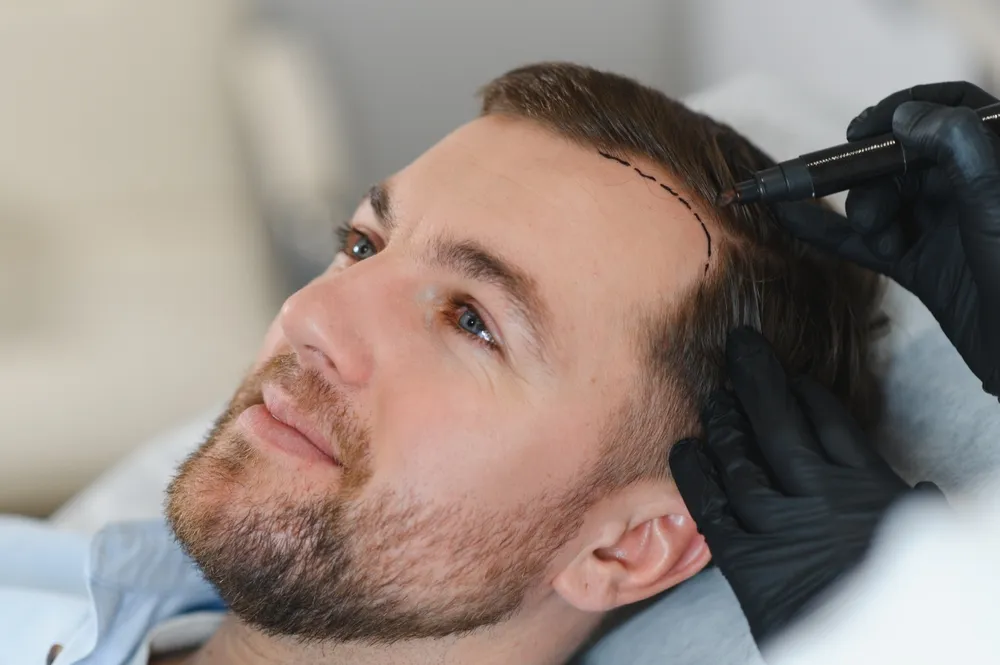
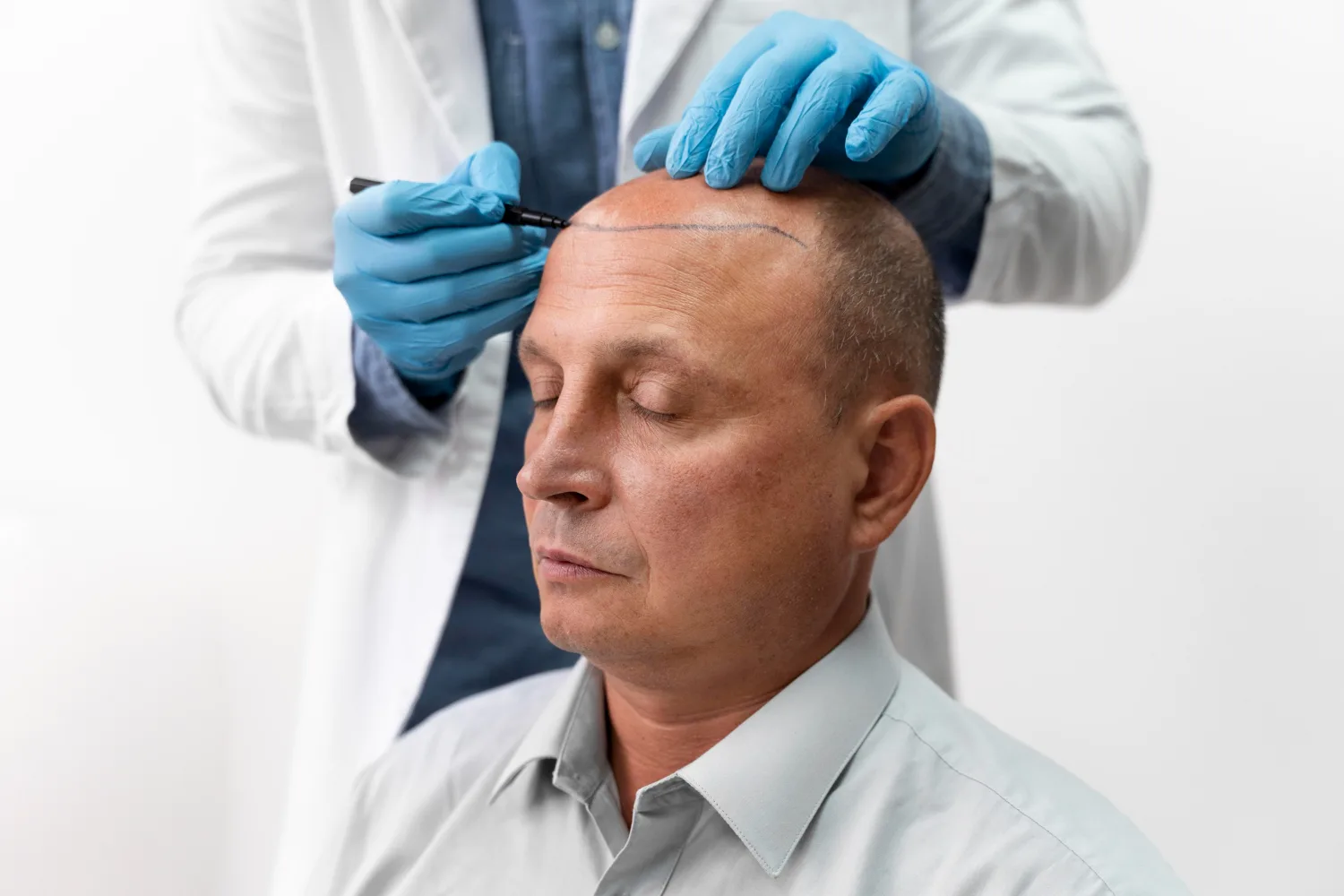
Hairline restoration demands higher artistic precision than general transplantation. Surgeons must control hair direction, angle, density transition, and facial symmetry while placing single-hair grafts at the frontal edge.
The frontal hairline presents unique challenges. It sits at the center of facial aesthetics. Every graft placement decision affects the overall appearance. This section explains why hairline restoration requires specialized expertise.
Why Does the Frontal Hairline Demand Special Attention?
The frontal hairline serves as the face's natural frame. It determines perceived age, attractiveness, and facial balance. Several factors make this zone particularly challenging:
- Facial Symmetry: The hairline must align with facial midlines and proportions. Even minor asymmetry becomes immediately visible.
- Natural Hair Angles: Hairs at the frontal edge emerge at acute angles, typically 10-15 degrees from the skin surface. This differs from crown hair angles.
- Hair Direction: Frontal hairs follow a whorl-like pattern. They point forward and slightly to the sides. Surgeons must replicate this natural flow.
- Density Transition: The hairline requires a feathered edge. Density increases gradually from the frontal edge toward the mid-scalp. This creates a natural appearance.
- Single-Hair Graft Placement: The frontal edge must contain exclusively single-hair follicles. Multi-hair grafts create an unnatural, plug-like appearance.
General hair transplantation often prioritizes coverage and volume. Hairline restoration prioritizes aesthetics and naturalness. This distinction shapes technique selection.
What Role Does Artistic Planning Play?
Hairline design transcends technical execution. It requires artistic vision. Surgeons must consider:
- The patient's age and future hair loss patterns
- Ethnic hairline characteristics
- Forehead height and shape
- Temporal recession patterns
- Existing native hair density
A well-designed hairline looks natural at age 30 and remains appropriate at age 60. Surgeons must plan for long-term hair loss progression. This foresight prevents future aesthetic complications.
Why Does DHI Offer Greater Precision for Hairline Design?
The Choi implanter pen allows surgeons to control implantation angle, direction, and depth with exceptional accuracy. This simultaneous channel-creation and implantation reduces graft handling and mechanical trauma.
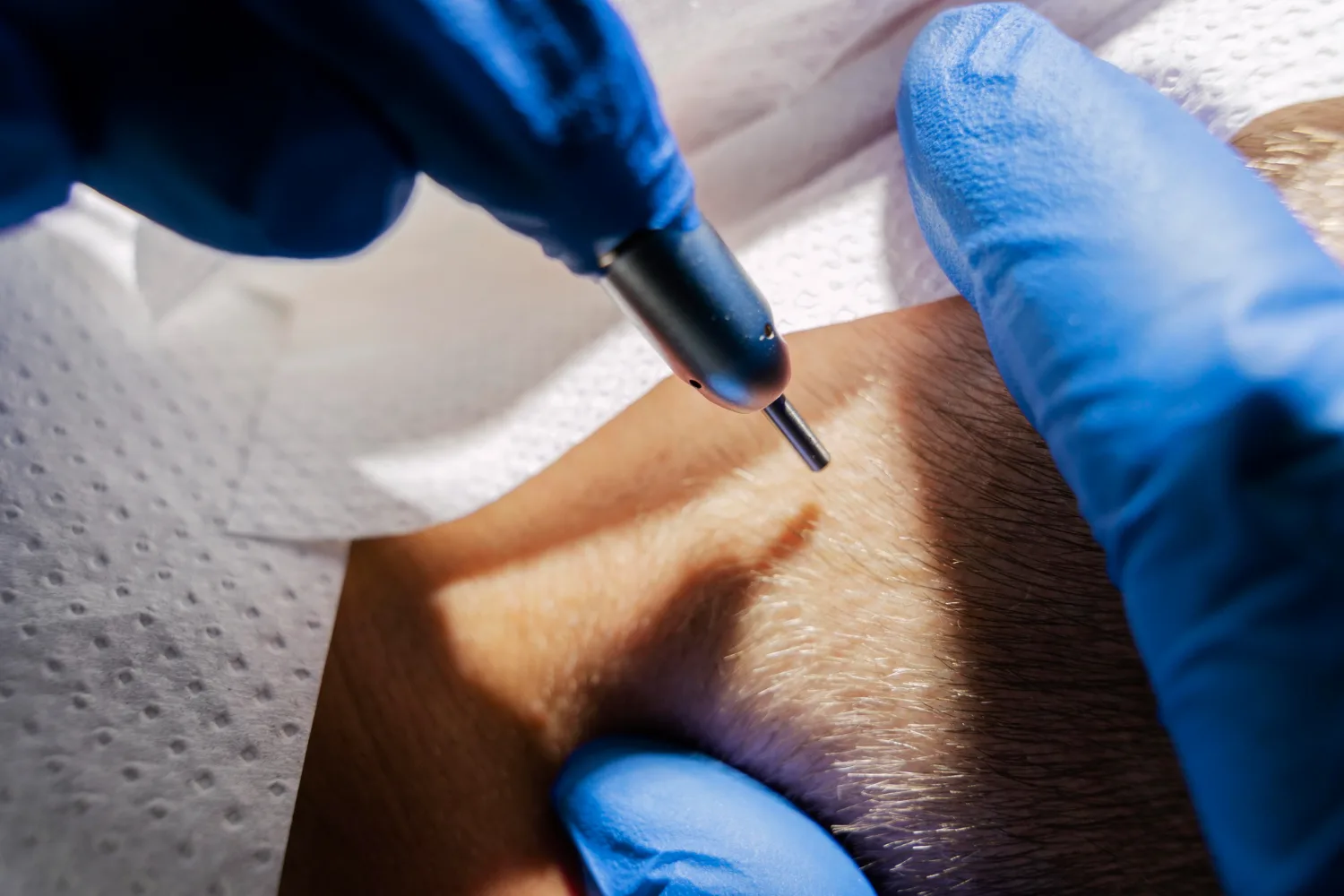
The Choi implanter pen distinguishes DHI from traditional FUE implantation. This handheld device resembles a pen. It contains a hollow needle and a plunger mechanism. Understanding its function explains DHI's precision advantages.
How Does the Choi Implanter Pen Improve Accuracy?
The implanter pen enables simultaneous channel creation and graft placement. This dual action offers several mechanical advantages:
- Angle Control: The surgeon holds the pen at the exact desired angle. The needle follows this trajectory precisely. This allows acute angles necessary for natural hairline emergence.
- Direction Control: The surgeon rotates the pen to match natural hair flow patterns. This matches the whorl and sweep of native hair.
- Depth Control: The plunger mechanism limits insertion depth. This prevents grafts from sitting too deep or too shallow. Proper depth ensures adequate blood supply and natural emergence.
Traditional FUE requires two distinct steps. First, the surgeon creates recipient sites using blades or needles. Then, the team places grafts into those sites. This separation introduces variables. Grafts may compress. They may bend. They may not seat perfectly.
How Does Reduced Graft Handling Affect Results?
DHI minimizes graft manipulation. In traditional FUE, technicians handle grafts multiple times:
- Extraction from donor area
- Transfer to storage solution
- Sorting under microscope
- Loading into placement forceps
- Insertion into recipient site
Each handling step risks desiccation, mechanical trauma, or temperature damage. DHI reduces this chain. The surgeon loads the graft directly into the implanter pen. The pen inserts it immediately. This streamlined process preserves graft viability.
Does DHI Reduce Mechanical Trauma?
Research suggests that reduced handling correlates with better graft survival. The Choi pen's hollow needle creates a channel exactly matching the graft diameter. This minimizes tissue compression. It reduces surrounding tissue disruption.
However, the implanter pen itself can cause trauma if misused. The needle must match graft caliber. Excessive force can shear grafts. Improper loading can bend follicles. Therefore, the surgeon's skill with the Choi pen remains paramount.
Is DHI Better Than FUE for Hairline Restoration?
DHI excels in hairline precision and small-area refinement. FUE remains more efficient for large sessions and extensive baldness. Neither technique is universally superior. Surgeon expertise determines outcomes more than method selection.
This comparison requires nuance. Both techniques produce excellent results in skilled hands. The following table highlights key distinctions:
|
Feature
|
DHI
|
FUE
|
|
Implantation Technique
|
Choi implanter pen
|
Pre-made recipient sites
|
|
Hairline Precision
|
Higher control
|
Excellent with expert planning
|
|
Angle Control
|
Excellent
|
Excellent in experienced hands
|
|
Direction Control
|
Excellent
|
Excellent with proper site creation
|
|
Density Control
|
Very high
|
High
|
|
Large Session Efficiency
|
Less efficient
|
More efficient
|
|
Procedure Duration
|
Longer
|
Shorter
|
|
No-Shave Option
|
Often possible
|
Less common
|
|
Best Indication
|
Hairline and small areas
|
Larger coverage areas
|
|
Cost
|
Typically higher
|
Typically lower
|
|
Graft Handling
|
|
What Are the Practical Differences?
DHI suits patients who need meticulous hairline work. The technique allows dense packing in small zones. It enables precise single-hair placement at the frontal edge. It often permits procedures without shaving the recipient area.
FUE suits patients requiring extensive coverage. Large sessions of 3,000+ grafts proceed more efficiently with pre-made sites. The team can create hundreds of sites rapidly. Then, they place grafts systematically.
Why Does Surgeon Expertise Matter More Than Technique?
A master surgeon using FUE can outperform a novice using DHI. The reverse also holds true. Technique selection matters less than:
- Surgical experience with the chosen method
- Understanding of hairline aesthetics
- Graft handling expertise
- Team coordination
- Patient selection
The implanter pen does not guarantee superior results. It provides tools for precision. The surgeon must wield those tools effectively.
Can DHI Create a More Natural-Looking Hairline?
DHI can create highly natural hairlines through precise control of hair direction, angulation, and density gradients. However, naturalness depends more on surgical planning and artistry than on the implantation device alone.
Natural hairlines contain subtle irregularities. They are not straight lines. They are not uniformly dense. They contain micro-variations that mimic nature. DHI facilitates these nuances.
How Does Hair Direction Affect Naturalness?
Native hair follows specific directional patterns. Frontal hairs point forward and laterally. They create a feathered sweep across the forehead. DHI allows the surgeon to place each graft at the exact directional vector. This replicates natural flow.
The Choi pen's rotational control enables this precision. The surgeon adjusts the pen's orientation for every single graft. This granular control exceeds what traditional site-making blades offer.
What Role Does Hair Angulation Play?
Hair exit angle determines how hair lies against the scalp. Natural frontal hair emerges at shallow angles, typically 10-20 degrees. Steeper angles create a "poky" appearance. Shallower angles create a flat, pasted-down look.
DHI allows the surgeon to set the needle trajectory precisely. This controls the final emergence angle. The result matches native hair behavior.
Why Are Density Gradients Essential?
Natural hairlines do not start at full density. The frontal edge contains sparse, fine hairs. Density increases gradually behind this edge. This creates a soft, feathered transition.
DHI enables this gradient through controlled spacing. The surgeon places single-hair grafts at wider intervals at the edge. They pack multi-hair grafts more densely behind. This layering mimics natural patterns.
What Are Micro-Irregularities?
Perfectly straight hairlines look artificial. Natural hairlines contain micro-irregularities. They have slight undulations. They contain tiny gaps. They vary in height across the forehead.
DHI allows the surgeon to introduce these irregularities deliberately. They can vary graft placement depth. They can adjust spacing. They can create subtle asymmetries that appear natural.
Does DHI Improve Hair Density Along the Hairline?
DHI enables dense packing along the hairline. Surgeons can place grafts closer together. However, actual density depends on donor availability, scalp characteristics, and graft survival, not just technique.
Density represents a key patient concern. Everyone wants a thick, full hairline. DHI offers advantages for achieving this goal.
How Does Dense Packing Work?
Dense packing means placing grafts at higher-than-standard densities. Traditional spacing often places grafts 1.0-1.2 millimeters apart. Dense packing achieves 0.6-0.8 millimeter spacing.
DHI facilitates this because the Choi pen creates minimal surrounding tissue disruption. The needle makes a precise, narrow channel. This leaves adjacent tissue intact. Surgeons can place the next graft closer without compromising blood supply.
What Is the Difference Between Cosmetic Density and Actual Density?
Patients must understand this distinction. Actual density refers to the number of follicles per square centimeter. Cosmetic density refers to the visual appearance of fullness.
DHI improves cosmetic density through:
- Precise angle control that makes hair appear fuller
- Dense packing that increases visible coverage
- Natural direction that prevents hair from lying flat
However, actual follicle density depends on:
- Donor hair density
- Graft survival rate
- Number of grafts transplanted
- Scalp thickness and vascularity
Can DHI Preserve Surrounding Native Hair?
DHI may reduce trauma to existing native hairs. The implanter pen creates a pinpoint channel. This minimizes disruption of adjacent follicles. Patients with early hair loss benefit from this preservation.
However, surgeons must still avoid placing grafts too close to native hairs. Competition for blood supply can shock existing follicles. Proper planning prevents this complication.
Is DHI Less Traumatic for Hairline Tissue?
DHI may reduce implantation-related tissue trauma in some cases. The Choi pen creates smaller recipient wounds. However, overall recovery depends on surgical technique, patient health, and postoperative care.
Tissue trauma affects healing speed, swelling, and final results. Patients naturally prefer less invasive procedures.
How Does DHI Affect Tissue Manipulation?
Traditional FUE requires two tissue interventions. First, the surgeon creates recipient sites. This involves multiple blade incisions. Then, the team places grafts into these sites. This requires forceps insertion and tissue compression.
DHI combines these into one action. The needle penetrates once. The graft follows immediately. This reduces total tissue incision count.
What Happens to Recipient Site Trauma?
The Choi pen needle creates a channel matching the graft caliber. This means less tissue removal. Traditional sites require removing a small tissue core to create space. DHI displaces rather than removes tissue.
This distinction may reduce:
- Bleeding during the procedure
- Postoperative swelling
- Crusting during healing
- Scarring risk
Does DHI Heal Faster?
Some patients report faster initial healing with DHI. The smaller wounds may close more rapidly. However, scientific literature does not conclusively prove faster overall recovery. The extraction phase remains identical between DHI and FUE. Therefore, donor area healing proceeds at the same pace.
Patient factors heavily influence recovery:
- Age
- General health
- Smoking status
- Adherence to postoperative instructions
- Scalp characteristics
Who Is the Best Candidate for DHI Hairline Restoration?
Ideal candidates include patients with mild to moderate frontal recession, intact donor areas, early androgenetic alopecia, high cosmetic expectations, and women preferring minimal shaving.
Patient selection determines success more than technique choice. Not everyone benefits equally from DHI.
What Patient Characteristics Favor DHI?
The following profiles align well with DHI advantages:
Patients with Mild to Moderate Frontal Recession: These patients need refined hairline work rather than extensive coverage. DHI's precision suits this focused requirement.
Patients with Intact Donor Areas: Adequate donor density ensures sufficient graft supply for dense packing. Thin donor areas limit graft availability regardless of technique.
Patients with Early Androgenetic Alopecia: Younger patients with early hair loss need conservative, natural hairlines. DHI allows meticulous placement that ages well.
Patients with High Cosmetic Expectations: Individuals who demand the most natural possible result benefit from DHI's granular control.
Women with Diffuse Thinning: Female pattern hair loss often preserves the frontal edge but thins behind it. DHI can fill this area precisely without shaving.
Patients Preferring Minimal Shaving: DHI often allows unshaven or partially shaven procedures. This appeals to patients who cannot shave for professional or personal reasons.
When Does DHI Deliver the Best Results?
DHI shines in specific scenarios:
- Hairline refinement after previous transplant
- Temporal point reconstruction
- Eyebrow transplantation
- Beard hairline restoration
- Scar camouflage in small areas
These applications require the precision that DHI provides.
When Might FUE Be a Better Choice?
FUE suits patients with extensive baldness, large graft requirements, crown restoration needs, budget constraints, and those requiring faster large-session procedures.
FUE remains the workhorse of hair transplantation. It offers distinct advantages for specific patient populations.
Which Patients Benefit More from FUE?
Patients with Extensive Baldness: Large areas require many grafts. FUE's efficiency in large sessions makes it practical.
Patients Needing Crown Restoration: The crown requires different graft placement patterns. FUE's site-making approach works well for this radial, swirling pattern.
Patients with Lower Budgets: FUE typically costs less than DHI. The shorter procedure time reduces surgical fees.
Patients Needing Faster Large Sessions: FUE allows teams to create sites rapidly. This shortens total operative time for big cases.
Why Are FUE and DHI Complementary?
Many surgeons view these techniques as complementary tools rather than competitors. A comprehensive treatment plan might use:
- DHI for the frontal hairline and temporal areas
- FUE for the mid-scalp and crown
- Combined approaches in the same session
This strategy leverages each technique's strengths. It maximizes aesthetic outcomes while maintaining efficiency.
How Important Is Hairline Design Compared to the Technique?
Hairline design matters more than implantation technique. Age-appropriate planning, facial proportion analysis, ethnic considerations, and future hair loss prediction determine long-term success.
The world's best implanter pen cannot save a poorly designed hairline. Aesthetic planning precedes technical execution.
What Does Age-Appropriate Hairline Design Mean?
A 25-year-old patient needs a different hairline than a 55-year-old patient. Young patients require conservative, higher hairlines. These accommodate future recession. Lower, aggressive hairlines on young patients create unnatural appearances as aging progresses.
Surgeons must predict hair loss patterns. They must design hairlines that remain appropriate for decades.
How Do Facial Proportions Influence Design?
The hairline must harmonize with facial features. Key measurements include:
- The distance from hairline to glabella (between eyebrows)
- The distance from glabella to nasal tip
- The distance from nasal tip to chin
- The width of the forehead relative to cheekbones
These proportions guide hairline height and shape. A technically perfect DHI procedure fails if the hairline sits too low or too high.
Why Does Ethnicity Matter?
Different ethnic groups have characteristic hairline patterns:
- Caucasian hairlines often show M-shaped recession
- African hairlines typically have straighter configurations
- Asian hairlines often feature lower, flatter patterns
- Middle Eastern hairlines frequently show deep temporal recession
Surgeons must respect these ethnic variations. DHI allows the precision to replicate them accurately.
How Does Future Hair Loss Progression Affect Planning?
Androgenetic alopecia progresses over time. A hairline designed for today may look isolated in ten years if surrounding hair recedes further. Surgeons must:
- Leave adequate graft reserves for future procedures
- Design hairlines that blend with predicted future loss
- Avoid overusing donor hair in early sessions
This long-term thinking separates excellent surgeons from average ones.
What Results Can Patients Expect After DHI Hairline Restoration?
Patients see initial healing within one week, shedding at 2-4 weeks, early regrowth at 3 months, noticeable density at 6 months, significant maturation at 9 months, and final results at 12-18 months.
Hair transplantation follows a predictable timeline. Understanding this schedule helps patients maintain realistic expectations.
What Is the Recovery Timeline?
|
Time Period
|
Expected Changes
|
|
First Week
|
Crusts form around implanted grafts. Mild swelling may occur. Patients must avoid touching the area.
|
|
2-4 Weeks
|
The shedding phase begins. Transplanted hairs fall out. This is normal and expected.
|
|
3 Months
|
Early regrowth starts. Fine, thin hairs emerge. Coverage appears minimal at this stage.
|
|
6 Months
|
Noticeable density improvement occurs. Hairs thicken and lengthen. The hairline shape becomes visible.
|
|
9 Months
|
Significant maturation continues. Hair gains diameter and pigmentation. Styling becomes possible.
|
|
12-18 Months
|
Final aesthetic outcome emerges. Hair reaches full thickness and length. The result appears natural and mature.
|
Why Does the Shedding Phase Occur?
Transplanted follicles enter a resting phase after surgery. The hair shafts fall out. The follicles remain alive beneath the skin. They re-enter the growth phase after several months. This process, called effluvium, surprises many patients. Education prevents unnecessary anxiety.
When Can Patients Style Their New Hairline?
At 6 months, sufficient length exists for basic styling. At 9 months, most patients cut and style normally. At 12 months, the hairline behaves like native hair. It grows, cuts, and styles without restriction.
Does DHI Have Any Limitations?
DHI requires longer operating times, costs more, demands significant surgeon training, limits graft numbers per session, and imposes greater technical demands than FUE.
Every technique carries trade-offs. DHI is no exception.
Why Does DHI Take Longer?
Each graft requires individual loading into the implanter pen. The surgeon must align each insertion precisely. This granularity consumes time. A 1,500-graft DHI session may take 6-8 hours. An equivalent FUE session might take 4-6 hours.
Why Does DHI Cost More?
Several factors increase DHI costs:
- Longer operative time
- Higher surgeon skill requirements
- Specialized implanter pens and needles
- Larger surgical teams
- More intensive training
Patients must weigh these costs against the potential precision benefits.
What Is the Surgeon Learning Curve?
The Choi implanter pen requires extensive practice. Novice surgeons may damage grafts during loading. They may insert at wrong angles. They may create poor depth control. Mastery requires hundreds of supervised procedures.
Why Does DHI Limit Graft Numbers?
Prolonged operative time constrains session size. Most DHI sessions accommodate 1,500-2,500 grafts. Larger cases require multiple sessions or hybrid FUE/DHI approaches.
What Factors Influence Hairline Restoration Success Besides DHI?
Donor hair quality, graft survival, surgeon experience, team expertise, implantation angle, postoperative care, patient health, and long-term hair loss management all determine success.
Technique selection represents just one variable. The following factors carry equal or greater weight.
How Does Donor Hair Quality Affect Results?
Donor hair characteristics include:
- Density: Higher density provides more grafts
- Hair caliber: Thicker hair creates fuller appearance
- Curl: Straight hair shows scalp more easily than curly hair
- Color contrast: Dark hair on light skin requires more grafts for coverage than light hair on light skin
These characteristics matter regardless of implantation technique.
What Determines Graft Survival?
Graft survival depends on:
- Extraction technique quality
- Storage solution composition
- Temperature control during surgery
- Time outside the body
- Insertion trauma
- Postoperative care
DHI may improve some of these factors. It cannot compensate for poor extraction or storage.
Why Does Surgeon Experience Matter?
An experienced surgeon:
- Designs appropriate hairlines
- Selects optimal grafts
- Minimizes extraction trauma
- Places grafts at correct angles
- Manages density appropriately
- Anticipates complications
This expertise transcends technique labels.
How Does Postoperative Care Affect Results?
Patient compliance determines outcomes. Patients must:
- Sleep with head elevated
- Avoid touching grafts
- Follow washing protocols
- Avoid sun exposure
- Refrain from smoking
- Take prescribed medications
Negligence in these areas undermines even the best surgical technique.
Common Myths About DHI Hairline Restoration
DHI does not guarantee better results, does not universally improve graft survival, is not completely scar-free, does not suit every patient, and does not replace surgeon skill.
Misinformation circulates widely in hair transplantation marketing. This section clarifies common misconceptions.
Myth 1: DHI Guarantees Better Results
Reality: DHI provides tools for precision. It does not guarantee outcomes. Results depend on surgeon skill, patient characteristics, and postoperative care. A skilled FUE surgeon can achieve results equal to or better than a novice DHI surgeon.
Myth 2: DHI Has a Higher Graft Survival Rate in Every Patient
Reality: Some studies suggest improved survival with DHI due to reduced handling. However, other studies show equivalent survival rates between DHI and FUE when performed by experienced teams. Individual patient factors influence survival more than technique selection.
Myth 3: DHI Is Completely Scar-Free
Reality: DHI, like FUE, leaves tiny dot scars in the donor area. These scars are small and camouflaged by surrounding hair. However, they exist. The recipient area may also show pinpoint marks. No hair transplant is entirely scar-free.
Myth 4: DHI Is Suitable for Everyone
Reality: Patient selection matters. Patients with extensive baldness, limited donor supply, or very curly hair may not benefit from DHI. Some cases require FUE's efficiency. Others require strip harvesting for maximum graft yield.
Myth 5: Technique Matters More Than Surgeon Skill
Reality: Surgeon skill remains the primary determinant of success. The best technique in unskilled hands produces poor results. Patients should prioritize surgeon experience, reputation, and results over technique marketing.
Frequently Asked Questions
Is DHI the Best Technique for Hairline Restoration?
DHI excels in hairline precision, but "best" depends on individual patient needs. Patients requiring extensive coverage may benefit more from FUE. Patients needing meticulous refinement may prefer DHI.
Does DHI Produce a More Natural Hairline?
DHI facilitates natural hairlines through precise angle and direction control. However, naturalness ultimately depends on surgical artistry and planning, not just the implantation device.
Can DHI Achieve Higher Hair Density?
DHI enables dense packing through minimal tissue disruption. Actual achievable density depends on donor supply, scalp characteristics, and graft survival.
Is DHI More Painful Than FUE?
Both procedures use local anesthesia. Patients experience similar comfort levels during surgery. Postoperative discomfort varies by individual but generally remains mild for both techniques.
How Many Grafts Are Needed for Hairline Restoration?
Most hairline restorations require 800-2,000 grafts. The exact number depends on:
- Degree of recession
- Desired density
- Hair caliber
- Hairline width
Can Women Undergo DHI Hairline Restoration?
Yes. Women with frontal thinning, temporal recession, or high hairlines benefit from DHI. The technique often allows procedures without shaving, which appeals to many female patients.
How Long Does DHI Hairline Surgery Take?
Sessions typically last 4-8 hours depending on graft count. Smaller cases of 800-1,000 grafts may take 4-5 hours. Larger cases of 2,000+ grafts may require 7-8 hours.
When Will I See Final Hairline Results?
Final results emerge at 12-18 months. Patients see noticeable improvements at 6 months. Significant maturation occurs at 9 months.
Does DHI Require Shaving?
DHI often allows no-shave or partial-shave procedures. This appeals to patients who cannot shave for professional or personal reasons. However, some cases still benefit from shaving for optimal access.
Is DHI Worth the Additional Cost?
Value depends on patient priorities. Patients seeking maximum precision for hairline refinement often find the additional cost worthwhile. Patients needing large-area coverage may find FUE offers better value.
Conclusion
DHI provides excellent precision for frontal hairline restoration. The Choi implanter pen enables controlled placement with meticulous attention to angle, direction, and depth. This technique particularly advantages patients needing refined hairline design, smaller treatment areas, and high placement accuracy.
However, current clinical evidence does not establish DHI as inherently superior to FUE for every patient. Surgeon expertise, individualized planning, donor hair quality, and long-term treatment strategy remain the primary determinants of natural, durable outcomes. Patients should select surgeons based on demonstrated skill and results rather than technique marketing alone.
The hairline defines facial aesthetics. Its restoration demands the highest standards of surgical care. Whether through DHI, FUE, or combined approaches, successful hairline restoration requires artistry, precision, and patient-centered planning. The technique serves the surgeon. The surgeon serves the patient. This hierarchy ensures the best possible outcomes.
References
Bernstein, Robert M., and William R. Rassman. "Follicular Unit Transplantation: 2005." Dermatologic Surgery, vol. 31, no. 6, 2005, pp. 823–33.
Cole, John P. "State of the Art in Hair Restoration." Facial Plastic Surgery Clinics of North America, vol. 22, no. 4, 2014, pp. 541–48.
Gho, Coen A., et al. "Follicular Unit Extraction: A New Method for Hair Transplantation." Dermatologic Surgery, vol. 30, no. 5, 2004, pp. 758–62.
Haber, Robert S. "Emerging Technologies in Hair Restoration." Dermatologic Clinics, vol. 31, no. 1, 2013, pp. 141–48.
Jimenez, Francisco, et al. "Histological Analysis of Follicular Unit Extraction and the Transsection Rate." Dermatologic Surgery, vol. 36, no. 8, 2010, pp. 1236–42.
Kim, Jae Chul, et al. "Regeneration of Hair Follicles from Transected Hair Roots." Dermatologic Surgery, vol. 28, no. 8, 2002, pp. 721–26.
Marzola, Monica. "Single-Hair Follicular Unit Transplantation for Hairline Restoration." Dermatologic Surgery, vol. 31, no. 7, 2005, pp. 785–89.
Rose, Paul T. "The Latest Innovations in Hair Transplantation." Journal of Cutaneous and Aesthetic Surgery, vol. 4, no. 2, 2011, pp. 131–36.
Unger, Walter P., et al. Hair Transplantation. 5th ed., Marcel Dekker, 2011.
Avram, Marc R., and Nicole Rogers. "Platelet-Rich Plasma for Hair Loss: Review of the Literature." Dermatologic Surgery, vol. 43, no. 12, 2017, pp. 1445–54.